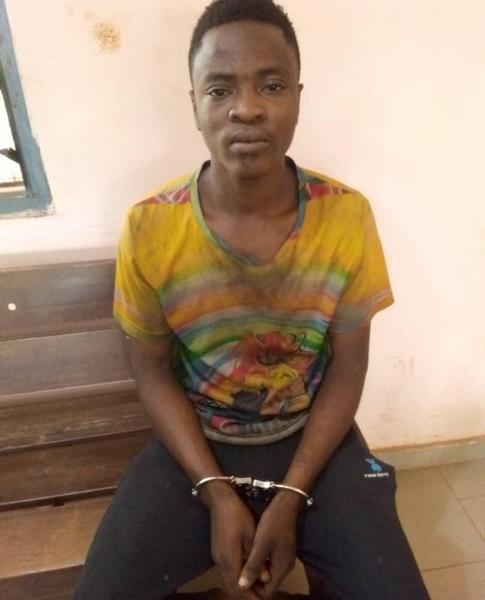
A 20-year-old unemployed individual identified as Njandi has received a six-month prison sentence from the Nkwanta South District Court in the Oti Region for stealing a Techno mobile phone.
Detective Inspector Bright Nkansah, the prosecuting officer in the case, disclosed to the court that Tadir Njandi, aged 21, had stolen the phone from a residence in Pibilla, a farming community situated in Nkwanta North of the Oti Region. The phone in question was valued at GHC1,100.
Following the theft, Njandi went into hiding, However, the victim promptly reported the incident to fellow residents, leading to Njandi’s apprehension by members of the community. He was subsequently handed over to the police for legal action.
Njandi appeared before the Nkwanta Magistrate Court, facing charges of theft. He entered a guilty plea to the offense. In response, the presiding judge, Joseph Annang Okorokpa, handed down a sentence based on the defendant’s own admission of guilt.
During the delivery of the verdict, Judge Okorokpa emphasized that this sentencing was intended to send a clear message to potential thieves in the region. He highlighted that it serves as a robust deterrent aimed at safeguarding the community from such criminal activities in the future.
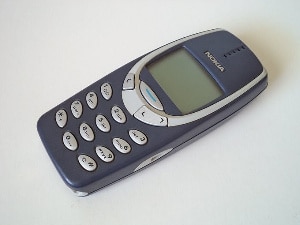
On September 1, 2000, Nokia, the renowned mobile phone manufacturer, introduced one of its iconic phone models, the Nokia 3310, as a successor to the 3210 model.
This phone, which holds a special place in the memories of countless users, achieved remarkable global sales, exceeding 126 million units. In Ghana, the Nokia 3310 continues to evoke strong nostalgia among many users.
The phone’s enduring popularity can be attributed to its distinctive features, including an array of unique ringtones and an exceptionally long-lasting battery life. Users formed strong attachments to the device due to its robust build, efficient phonebook, and convenient speed dialing functionality.
Among the notable features of the Nokia 3310 was its monochrome graphical screen, which could display a variety of screensavers. The phone also boasted the capacity to store up to 250 phone numbers and their corresponding names, allowing users to assign specific ringtones to individual contacts.
Users had the option to choose from a range of ringtones, and the phone even offered a composer function for creating custom tones. Additionally, it provided entertainment through games such as Snake II and Space Impact, among others.
The Nokia 3310 facilitated comprehensive SMS text messaging, featuring T9 predictive text input and basic graphic picture messaging capabilities. The phone also included additional utilities like a clock, stopwatch, calculator, and calendar.
Although obtaining this phone may pose a challenge in today’s market, its iconic status ensures it will forever hold a cherished place in the memories of its numerous users.
It’s regular to witness young people with their heads buried in phones, jumping from one social media platform to the other.
In search for fun activities or trends to hop on from TikTok to Instagram, then Facebook, to WhatsApp among others.
Most often, these people get overwhelmed by online activities, which results in spending hours behind their devices.
As rampant as is it, the individuals involved in this are second-cycle students, who per the standards of Ghana Education Service (GES), are not permitted to carry nor use phones on their premises.
File photo
Although there have been calls by various stakeholders for phones to be tolerated in schools, the GES maintains that phones will be a form of distraction among other things.
Despite the stringent rule, some students have the courage to be seen pressing their smartphones whilst in uniforms at bus terminals in the mornings to school and afternoons after school.
On a number of occasions, my encounters with such students got me worried as they kept giggling at their screens at the funny videos, they watched on their preferred social media platforms.
It’s understandable if youngsters want to keep up with trends and be abreast of new technology. But their constant use of phones has created some kind of over-dependence on these devices for trivial information.
Information like simple mathematical formulas, proper use of English expressions, basic science and social studies, which should be at their fingertips should they study.
This dependence has translated into phones playing key roles in the preparations towards, during and after the West Africa Senior School Certificate Examination (WASSCE).
Months before the exams, students make payments to be added to group chats where possible questions for various subjects will be sent for them to study.
It’s no surprise reports from the education think tank, Africa Education Watch found that out of the 20 WASSCE papers monitored for the 2021 examination, 11 of them leaked.
Heads of the WAEC Ghana National Office, Mrs. Wendy E. Addy-Lamptey
The education think tank said its online monitoring team joined over 30 free WhatsApp and Telegram Pages to observe proceedings before and during the examinations.
Most of these platforms have over 200,000 subscribers who pay between ¢30 and ¢100 each at the beginning of the examinations for the paper.
For some papers whose answers are supposed to be sent the morning of that subject paper, students sneak foreign materials [phones] into the exam hall which has accounted for an increasing number of students who take phones to the exam hall each year.
Statistics
This phenomenon has translated into an upsurge in phone-related malpractices over the years.
Reports by the West African Examination Council (WAEC) prove that the leading cause of malpractice is the smuggling of cell phones to examination centres.
In 2018, it also led to cancellation of some papers of 1,339 candidates and 174 others having their entire results cancelled.
A year after (2019), some 48,555 candidates had their entire results withheld by WAEC for investigations to be carried out for suspected involvement in cases of examination malpractice.
In 2020 some 2,383 candidates saw subject results cancelled and the entire results of 480 candidates.
Fortunately, in 2021 the figure dropped, as some 1,339 candidates had their subject results cancelled and for 174 candidates, an entire result cancelled.
This year, however, the number of malpractices more than doubled from that of 2021 with some 3,845 candidates having a subject paper cancelled and the entire results of 518 candidates cancelled.
2022 WASSCE in Ghana [Source: WAEC]
Concerns
This phenomenon has raised a lot of questions in the minds of stakeholders about the continuous rise in examination malpractices.
In a recent interview on Joy News, the Executive Director of Africa Education Watch, Kofi Asare expressed worry about the apparent doubling of exam malpractices through the years.
Kofi Asare is the Executive Director of Africa Education Watch
He mentioned that the examination council sees an almost exponential rise in students involved in malpractice annually.
But what is the driving force behind this disturbing trend despite the annual ‘scapegoating’ of candidates? Do candidates believe, for some unfathomable reason, that they will be able to evade the authorities with their hidden mobile phones and unapproved gadgets?
I don’t think it is worth it. The risk of suffering penalties like inability to further their education, and suspension from writing WASSCE for the 3 to five years, is too expensive a price to pay.
WASSCE performance in Ghana [Source: WAEC]
The Problem
Is it Generation Z’s desperation for quick ways to succeed, an addiction to phones, or parents’ failure to monitor the activities of their children?
Whichever the cause may be, I believe the sooner this issue is addressed the better it will be for Ghana’s future leaders.
Generally, teenagers have the propensity to quickly adopt new character traits. This is also the dominant age group in the country’s second-cycle institutions.
So why do these same candidates, with all this cognitive ability, need to smuggle in mobile phones for an examination they had three years to prepare for?
If the situation is not curbed, it could become a phenomenon where the number of students who passed their examination by dint of hard work will be equivalent to those involved in phone-related malpractices.
The way forward
Parents should make sure their children do not carry their phones to school. Teachers must inspect students to make sure they do not carry phones to the classroom.
Teachers must let students know that they do not need leaked questions or ‘apor’ to pass their examination.
Months before the WASSCE, there must be a forum for WAEC officials to answer questions on the minds of the students.
This will sensitise them and get them mentally prepared for the examination.
If possible, schools should invite old students who worked hard to get into universities to inspire students that hard work pays and that there is no simpler way to succeed.
The Eastern Regional Police Command has apprehended a 35-year-old man, Elisha Asante, a mobile phone repairer at Ekye Amanfo in the Kwahu Afram Plains South District of the Eastern Region for alleged armed robbery and murder.
The suspect was said to have in the company of others, robbed the phone shop of one Mr Samuel Agbozo and also killed Mr Bright Narh at Ekye Amanfrom on October 9, 2021.
Eastern Regional Police Public Relations Officer (PRO) Deputy Superintendent of Police (DSP) Ebenezer Tetteh told the Ghana News Agency (GNA) in an interview that the suspect, on police intelligence, was arrested at Adawso near Koforidua on October 30, by the Adawso Anti Armed Robbery Task Force.
He said two new Techno Camon and Infinix smartphones were retrieved from the repair shop of the suspect.
The mobile handsets were suspected to have been those that were stolen from the shop of the victim, Mr Agbozo.
DSP Tetteh said the suspect was currently in police custody assisting in investigations.
Regular hand washing, use of hand sanitizers, practicing social distancing, avoid touching of the face (nose, mouth and eyes) are some of the foremost measures health experts have recommended against getting or spreading Coronavirus.
While it is one thing to stop touching your face, it is another thing to stop touching your phone to keep germs out of your fingertips.
Phones are considered “high-touch” surfaces by the America Center for Disease Control Nd Prevention and it has the potential of becoming a carrier of the Coronavirus.
Phones also spend better part of the day in our hands and we press them up against our face multiple times a day.
How do you clean your phone?
To begin with, wipe your phone with a product that has 70 percent ethanol or isopropyl alcohol, both Apple and Samsung have recommended.
Make sure to wipe the front and back of your phone gently without too much pressure.
Many people use phone case or cover, make sure to clean them as well using alcohol-based wipes.
What you should not do?
Do not dip your phone into any alcohol-based solution/substance.
Avoid using bleach or aerosol sprays to try to clean your phone. It can affect the function of the phone.
Also avoid passing your phones to people. In situations you want them to look at a photo a something on your phone, forward it to them via Whatsapp or any appropriate channel.
Why should you take these measures serious?
A study in 2017 found high level of bacterial contamination on 27 phones owned by teenagers. The study hypothesized that phones “may play a role in the spread of infectious agents in the community.”
Parliament is to ban the use of mobile phones used by Members of Parliament in the chamber to avoid distractions.
Speaking during the presentation of the Business statement, Majority Leader, Osei Kyei Mensah Bonsu argued that the decision is contained in the new standing orders to be approved soon.
Speaking on the floor of Parliament today March 5 2020, the Majority Leader argued that over the years, whenever proceedings are ongoing, and Parliament receives special guests Members of Parliament will be seen fidgeting with their phones and others going out to receive calls whilst proceedings are ongoing.
Reports indicate that this was triggered by an action from North Tongu MP , Samuel Okudzeto Ablakwa who asked a question during the presentation of the business statement but when Osei-Mensah Bonsu was ready to deliver the answer, according to the Majority leader, Samuel Okudzeto Ablakwa was fidgeting with his phone so he drew his attention to the fact that he was ready to answer his question.
On the floor of Parliament, the Majority Leader who doubles as the Member of Parliament for Suame cited situations where Members are constantly on their phones in the chamber when the House is in session as the basis for the move adding these he believes that these practices serve as distractions during Parliamentary proceedings
”Weeks ago, a popular TV station was discussing how Members of Parliament while proceedings are ongoing use their phones. A time is coming where no member will be allowed to bring cellphones into the Chamber. We need to demonstrate seriousness in this House. When the President of the Republic is talking, MPs are on the phone, when a Minister comes here MPs are on their phones. The Parliament of Ghana is not the only Parliament in the world and there are other established Parliaments in the world who do not allow members to use their cellphones in Parliament. Mr Speaker , we should apply this to our Parliament”.