Tag: mobile phones

  • Netherlands to ban phone in schools to halt disruption

    Netherlands to ban phone in schools to halt disruption

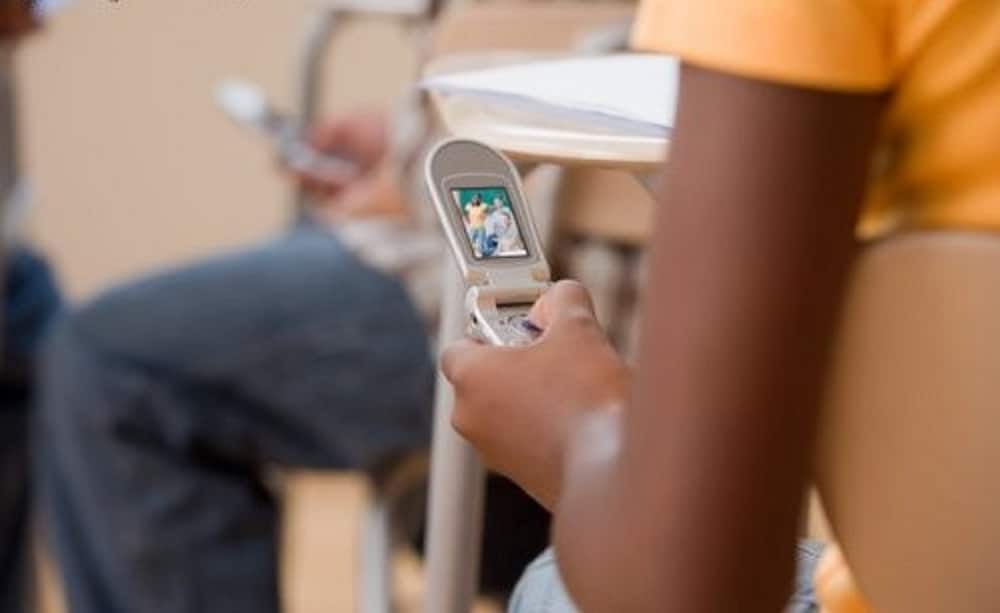
    The Dutch government has announced a new initiative to ban devices such as mobile phones from classrooms in order to prevent disruptions to learning.

    This collaborative effort with schools is set to be implemented at the beginning of the upcoming year. While there will be exceptions for students with medical requirements or disabilities, as well as for classes specifically focused on digital skills, the general aim is to restrict the presence of devices during regular classroom activities.

    Although the ban does not currently carry legal enforcement, there is a possibility that it may become legally binding in the future.

    “Even though mobile phones are almost intertwined with our lives, they do not belong in the classroom,” said Education Minister Robbert Dijkgraaf.

    “Students must be able to concentrate there and be given every opportunity to learn well. We know from scientific research that mobile phones disrupt this.”

    Multiple studies have demonstrated a correlation between limiting children’s screen time and improvements in cognition and concentration. To further support this notion, the Dutch government has announced a ban on various tech devices, including mobile phones, tablets, and smartwatches, in classrooms.

    Under this new policy, individual schools will have the flexibility to establish specific rules in consultation with teachers, parents, and students. While some schools may choose to completely prohibit devices on their premises, others may adopt different approaches.

    The ban is the result of a collaborative effort between the ministry, educational institutions, and related organizations. Its effectiveness will be assessed at the end of the 2024/2025 school year to determine whether a legal ban should be implemented.

    This decision by the Dutch government follows a similar move by Finland, where the law will be amended to facilitate the restriction of phone usage in schools. Other countries, including England and France, have also proposed banning mobile phones in educational settings to enhance the learning environment.

  • Effective technology integration affected by no phone policy – Teacher

    Effective technology integration affected by no phone policy – Teacher

    Joel Baah, an ICT tutor at Asuansi Technical Institute (ASUTECH) School, has urged the government to take into account the use of mobile phones at the different Senior High Schools (SHS).

    According to him, effective technology integration in the classroom is being hampered by the ban on cell phones in second-cycle institutions.

    As a result, its introduction and control are required to enhance student technology use.

    “I want to humbly but passionately state that the banning of the usage of mobile phones in the second cycle institutions is rather now a hindrance to the effective technology integration and technology application in the classroom,” Mr Baah said.

    Mr Baah said the ban would never promote digital divide, that the mirage of academic taboo was imposing thievery, deceitfulness and technologically undynamic on the students.

    The mobile phone had become an auxiliary to digitization and was to allow but regulate the usage of mobile phones in the second cycle institutions.

    ‘When a student gains admission into tertiary education, the mobile phone, the then immediate abominable academic gadget, suddenly becomes the most valuable technological tool to complement academic success’.

    The ICT tutor noted that the mobile phones assist in research, teaching and learning which helps both teachers and students.

    Additionally, the mobile phone could serve so many purposes just by installing a particular app on it, adding that they could install CalcEX to turn your mobile phone into a scientific calculator and flashlight to turn your phone into a torch.

    He commended the government’s effort to champion digitization in schools and in the country at large adding that it was time to bridge the gender gap in ICT and STEM.

    Baah appealed for more infrastructure on campus to support quality service delivery on campus as it focuses on STEM education.

  • Suspected thief grabbed in an attempt to resell stolen phone

    Suspected thief grabbed in an attempt to resell stolen phone

    A young man suspected to have stolen a phone was nearly lynched after he was grabbed by citizens in an attempt to resell the phone.

    According to reports, he was beaten by some persons for allegedly stealing a phone of a lady he gave a lift to.

    According to a tweep named Dr Tony Brown, the culprit, after taking the lady’s phone headed to Circle to trade it for cash.

    Luck eluded the young man as the shop he visited was where the victim worked.

    In a video gone viral on the bird app – Twitter, the victim was shocked as the culprit – in a yellow hoodie denied knowing her.

    “You don’t know me?” the lady was heard in the background asking the suspected thief amidst beatings.

    “I nor know am,” he responded in Pidgin English after he was forced to answer the question.

    Dr Tony Brown who shared the video asserted that, “You man be the reason why girls shun dey sit for DV cars inside. He go rent DV cars (Benz, you know the flashy ones) and pick only women. Only for him to point gun at you in the car to take your phone…You girls for stay woke!”

    He added that, “After taking one girls phone, he took the phone to circle to sell not knowing the shop he entered is where the girl also works. Chairman do yawa.”

  • Parents advised to m­onitor children’s use of phones

    Parents advised to m­onitor children’s use of phones

    The Director of Young Executive School at Kasoa Opeikuma, Francis Essel-Okyeahene, has called on parents to monitor the use of mobile phones by their children.

    That, he said, was to ensure that children did not abuse the use of mobile phone.

    According to him, a lot of social vices going on in the country were picked up by some persons at a very tender age during their usage of phones when they visited certain sites unguided.

    According to him, a lot of children used their phones to download unnecessary things while others were using Internet to watch criminal activities, and that if care was not taken it would have devastating effects on the society at large.

    Mr Essel-Okyeahene, therefore, entreated parents to monitor what their children used their phones for and compel them to make good use of social media.

    Honour

    Mr Essel Okyeahene disclosed this when he awarded five best teachers with a plot of land each.

    Others were also presented with refrigerators.

    The event also formed part of the graduation ceremony of the Young Executive School.

    Mr Essel-Okyeahene, who is also the Chief Executive Officer of the Onua Francis International School, noted that children were the future leaders and needed to be guided to develop into responsible adults.

    At the event, the Chief of Kontomponia Afari in the Ashanti Region, Nana Kwesi Awuah, commended Dr Essel-Okyeahene for what he had done for his teachers.

    He, therefore, entreated Ghanaian workers to be faithful to their employers since they did not know when they would be rewarded.

    The teachers honoured commended the director of the school for what he had done because they were not expecting such rewards.

    Source: Graphic.com.gh

  • I’ve not banned the use of phones in Parliament – Bagbin

    The Speaker of Parliament, Alban Bagbin, has denied banning the use of mobile phones in the gallery of the House.

    This comes after Daily Guide in a publication claimed that the Speaker of Parliament had issued a directive banning the use of mobile phones in Parliament as part of enhanced security measures.

    But a statement issued by the Office of the Speaker of Parliament rejected the report, describing it as false.

    “Mr. Speaker has issued no such directive banning the use of phones in Parliament,” the office said in the statement.

    Mr. Bagbin’s office also said, “no member of Parliament has been stopped from using his phone in the chamber.”

    “The press corps who operate from the press gallery have equally not received any directive banning them from using their phones in the execution of their functions as parliamentary reporters”.

    There have been suggestions in the past for MPs to be banned from using their phones in Parliament.

    In 2020, the Majority Leader remarked that phones were a source of distractions during proceedings in Parliament.


  • No child should own a phone until they get to the university – Pastor Ibiyeomie

    Celebrated Nigerian preacher, Pastor Davido Ibiyeomie, has sent a warning to parents who buy mobile phones for their kids who are not of age.

    Pastor Ibiyeomie of the Salvation Ministries stated that no child should be allowed to own a phone or tablet until they get to the university. He believes that the child at that age will be mature enough to use it wisely.

    Speaking in a sermon that has gone viral, the popular preacher argued that parents who gift children the latest iPhones are only leading them to destruction.

    Pastor Ibiyeomie mentioned that his advice will be faced with stiff opposition despite it being the right way to train a child just as he did with his son.

    “Don’t buy a phone for any child who hasn’t gone to university. It may sound very awkward, I know you are too civilized but don’t do it… I refused to buy my son a phone until he got to the university. I told him, he’ll never use a phone until he gets to the university,” he cautioned.

    He further said: “Don’t buy a phone it is not civilization…many things pop up on phones and tablets. They can use their own phone, buy a landline and put it in your parlour. Let them use it, they will not agree but stand your ground…you are now buying an Apple phone for a 12-year child all because you say you’re civilized.”

  • Chinese phones with built-in malware sold in Africa

    Malware which signed users up to subscription services without their permission has been found on thousands of mobiles sold in Africa.

    Anti-fraud firm Upstream found the malicious code on 53,000 Tecno handsets, sold in Ethiopia, Cameroon, Egypt, Ghana and South Africa.

    Manufacturer Transsion told Buzzfeed it was installed in the supply chain without its knowledge.

    Upstream said it was taking advantage of the “most vulnerable”.

    “The fact that the malware arrives pre-installed on handsets that are bought in their millions by typically low-income households tells you everything you need to know about what the industry is currently up against,” said Geoffrey Cleaves, head of Upstream’s Secure-D platform.

    The Triada malware found by the firm on the Android smartphones installs malicious code known as xHelper which then finds subscription services and submits fraudulent requests on behalf of users, doing so invisibly and without the user’s knowledge.

    If the request is successful, it consumes pre-paid airtime, the only way to pay for digital services in many developing countries.

    In total, Upstream found what it described as “suspicious activity” on more than 200,000 Tecno smartphones.

    According to research firm IDC, Transsion Holdings is one of China’s leading phone manufacturers and in Africa it is the top-selling mobile manufacturer.

    The BBC contacted the firm for a statement but did not receive a response.

    It told Buzzfeed that it was unaware that the malware was on its smartphones, blaming an unidentified vendor “in the supply chain process”.

    On its website it writes: “Each link of the supply chain is crucial to ensure high quality products,” adding that it has “strict quality standards and rigorous criteria for suppliers”.

    Common problem

    At the beginning of the year, security firm Malwarebytes warned that similar pre-installed apps were found on another Chinese Android phone – the UMX U686CL. This handset was offered to low-income families in the US via a government scheme.

    And in 2016, researcher Ryan Johnson found that more than 700 million Android smartphones had malware installed.

    Google, which developed the Android operating system, is aware of the issue.

    In a blog written last year it blamed third-party vendors, used by manufacturers to install features such as face unlock, for pre-installing Triada malware.

    It said it had worked with manufacturers to remove the threat from devices.

    Source: bbc.com