Tag: Mohamed Hamdan Dagalo

  • Delay in evacuation of Nigerian students from Sudan due to ‘logistical’ challenge – Officials

    Delay in evacuation of Nigerian students from Sudan due to ‘logistical’ challenge – Officials

    The Nigerian government has said that its efforts to evacuate thousands of students and civilians stuck in the crisis-hit Sudan were hindered by “a few logistical delays.”

    The fighting in the country entered its 12yh day on 27 April with over 500 people killed and at least 3,700 wounded, according to UN agencies.

    Nigerian government critics accuse officials of undue delay in evacuating her nationals, especially students, out of the north-east African country.

    To date, some 5,500 Nigerians are stranded in Sudan, Nigeria’s foreign ministry says.

    “When there is [a] problem of this nature people are only agitated because they want to see the final result,” Ezekiel Manzo, an official of the Nigeria Emergency Management Agency (NEMA), tells The Africa Report of the government’s evacuation efforts.

    “This thing, it has a process. One is the crisis itself. It broke out [and] there was no preparation or planning for the crisis. Secondly, this is a crisis that is internal, within the country, and the people that are the arrowheads of this crisis are the leaders of the country.”

    Nigerian government has been having sleepless nights following the ongoing crisis in Sudan.
    Our officials are doing a lot, coordinating with the Embassy in Khartoum, the Sudanese and Ethiopian governments trying to ensure the safety of the large number of our citizens there. pic.twitter.com/nZTgQVxata
    
    — Garba Shehu (@GarShehu) April 23, 2023

    Nations evacuate nationals

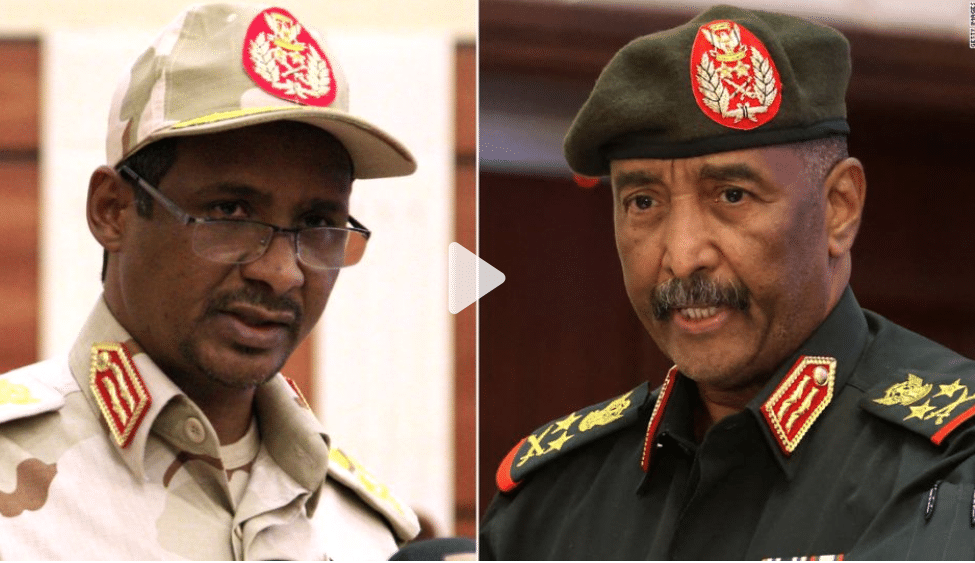
    The latest crisis in Sudan erupted on 15 April following a disagreement between the country’s two most powerful military forces, the SAF (Sudan Armed Forces) led by General Abdel Fattah al-Burhan and paramilitary RSF (Rapid Support Forces) led by General Mohamed Hamdan Dagalo, also known as Hemeti.

    The crisis triggered a large-scale evacuation of foreign nationals from the country. As of 25 April, several EU and Middle East countries, including China, the UK, and the US launched emergency evacuation operations for their citizens.

    On Tuesday, the first batch of stranded Indians left Port Sudan for Jeddah, Saudi Arabia, aboard INS Sumedha. The Indian foreign ministry said 278 people were onboard.

    The Netherlands carried out a fourth evacuation operation on Monday night, moving a total of around 100 Dutch nationals and 70 others, from 14 different nationalities, out of Sudan.

    The US government says it evacuated its diplomats and their families on 23 April.

    Nigeria’s Foreign Minister, Geoffrey Onyeama, said the West African country began evacuation plans at the same time as those who had already evacuated their nationals.

    “The advantage that these people have is that the US, Italy, [or] France, don’t have 5,000 citizens in Sudan,” Onyeama told Channels Television on 23 April.

    “There is also a risk that they took. The US helicopters… they have a naval base close by, they have those kinds of resources and evidently, they were ready to take certain risks to move those helicopters and other things in there and pull their people out.

    “If we did the same, we would be being very selective. Because 100 people out of 5,500, who do you take?”
    Heading to Egypt

    As of 25 April, Nigerian officials say buses have been hired to move nationals to Sudan’s border with Egypt. From there, they will bring them to the southern Egyptian cities of Aswan and Luxor where they would be airlifted to Nigeria.

    A student told Nigeria’s Arise Television on Tuesday that they are “really pained” over the government’s slow pace of evacuation.

    “Other countries are evacuating their nationals, they are eager, they are showing that care, they are valuing their lives. But for us, our own country is full of excuses, that there is no money, and it’s going to cost a lot. Is it that the money is more valued than the 4,000 lives of Nigerian citizens living in Sudan?”

    💥
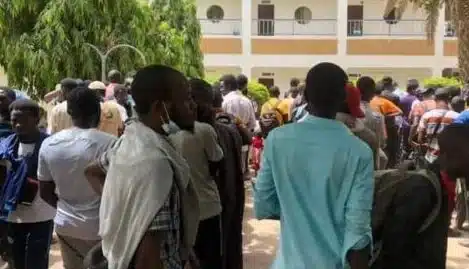
    Nigerian students at the registration point in #Sudan waiting to the convey to Egypt Before Airlifting to Nigeria.🍁 pic.twitter.com/FIgpqc6YCe
    
    — يامير™🍁 (@Sheikh_Ameer_O1) April 26, 2023

    On Tuesday, Abike Dabiri-Erewa, head of the Nigerians in Diaspora Commission, shared on Twitter a receipt showing the payment of N150m ($330,000) for the hiring of buses for the evacuation of the students.

    Onyeama later told journalists on Wednesday that the actual amount spent on hiring 40 buses for the evacuation is $1.2m.

    “Of course you know, because of the risks involved and so many other things, a lot of people are going to also take advantage, you’re going to hike up the price. We saw that the French convoy was attacked and so forth. It was difficult procuring these buses. But we had to do it because you know, Nigerians’ lives matter to us.”

    Sources, however, told The Africa Report that the Nigerian government would have to sort out the issue of security escorts for the buses before the evacuation.

    “There must be [an] arrangement for security to accompany the buses to the border of Egypt. Then from Egypt, the military of Egypt will now take over from there and accompany them to Aswan,” says a source who preferred not to be named because he was not authorised to speak about it. “The buses are going to be moving in convoys and Aswan is like 45 hours or so from Khartoum, by road.”

    Dabiri-Erewa did not respond to phone calls and messages requesting comments. But she posted a photo of the buses, taken at nightfall, and added that the Nigerian government had sorted out “a bit of some logistics delay.”

    It’s late in the night . Will get a clearer view in the morning . But in that dark shot are buses that will convey Nigerian students to nearby borders in Egypt . More buses are arriving. A bit of some logistics delay but all now sorted by @nemanigeria and the Nig mission,Sudan pic.twitter.com/AYUGCPfF6u
    
    — Abike Dabiri-Erewa (@abikedabiri) April 25, 2023

    Airline’s offer

    On Monday, Nigerian carrier, Air Peace Airlines, offered to airlift Nigerian citizens in Sudan free of charge if they are taken to a safe, neighbouring country.

    “If they are moved to Kenya or Uganda or any other country, we will move in to get them out,” Allen Onyema, the airline’s CEO said in a statement. “Some parents have started calling on us to help. We are ready to do this again and again.”

    Manzo says the government had already assembled Nigerians in a holding area in Khartoum, the Sudanese capital, awaiting their conveyance to Aswan.

    “It is from Aswan that Air Peace will go and lift because many people are saying that Air Peace is ready to carry Nigerians but that the authorities are not allowing it. Do we own Sudan? We don’t own Sudan?

    “Air Peace cannot land in Sudan as we speak. They will have to go to a safe location and that is Aswan.”

    On Wednesday, Onyema told Arise Television that the first batch of the stranded Nigerians would be flown out of Egypt on Friday.
  • Ukraine declines the offer from Iraq to facilitate talks with Russia

    Ukraine declines the offer from Iraq to facilitate talks with Russia

    Cairo authorities claim that since fighting broke out between different military factions on Saturday, they have been working around the clock to ensure the safety of Egyptian people who live, work, and study in the neighboring Sudan.

    The two generals who took control of Sudan in a coup in 2021—the army head, Abdel Fattah Al-Burhan, and his deputy, Mohamed Hamdan Dagalo, who is in charge of the potent paramilitary Rapid Support Forces—had been engaged in power conflicts for weeks before the violence broke out.

    As of Monday, the conflict has claimed the lives of at least 97 civilians, according to medics who spoke to the AFP news agency. Authorities in Cairo say they are alert to the deteriorating situation and the safety of their citizens caught up in the violence.

    There are an estimated 10,000 Egyptian citizens currently in Sudan, including around 5,000 students, most of whom live in the capital, Khartoum, which has witnessed significant clashes in recent days.

    In a statement, Soha Gendy, Egypt’s minister of emigration and expatriate affairs, said it was difficult to provide an accurate figure for the number of Egyptians currently in Sudan as many do not register upon arrival.

    Nevertheless, the presence of such a large Egyptian community in Sudan represents a serious diplomatic challenge for Cairo, which is striving to achieve stability for its crisis-stricken neighbor while at the same time looking out for the safety of its citizens.

    Among those based in the county are a large number of Egyptian engineers developing water management infrastructure and irrigation systems on the Nile River in cooperation with their Sudanese counterparts.

    Hani Sewilam, Egypt’s minister of water resources and irrigation, says he and his colleagues have been in constant contact with his ministry’s mission in Sudan to check on the condition of its workforce, particularly those operating in areas of conflict.

    Sewilam confirmed in a statement that he is following up around the clock on the situation of the mission’s personnel in Sudan and is coordinating with the relevant ministries to provide all necessary care and support.

    “The Egyptian irrigation mission in Sudan includes a number of Egyptian experts, engineers, and workers,” Ahmed Abdel Moaty, an Egyptian commentator, told Arab News.

    “It is a mission that has existed for years, especially with the increase in cooperation between the two countries in the field of irrigation and water resources.”

    Of particular concern are the many Egyptian students studying at Sudanese universities.

    Ayman Ashour, Egypt’s minister of higher education and scientific research, said his department is in regular contact with the Egyptian Ministry of Foreign Affairs to help ensure their safety.

    “The cultural affairs and missions’ sector in the ministry will send emails to Egyptian students studying in Sudanese universities to check on their safety,” he said in a statement.  

    “The Egyptian Embassy in Khartoum confirmed the stability of the conditions of Egyptian students and that it is in constant contact with our students around the clock until the end of the current situation.”

    The minister urged Egyptian students in Sudan to communicate with the embassy if they are in need of support or if they are exposed to threats to their safety.

    Since the uptick in violence began over the weekend, Khartoum and other cities across Sudan have witnessed air strikes, tanks on the streets, artillery fire and heavy gunfire in crowded neighborhoods, triggering international calls for an immediate ceasefire.

    On Monday, UN Secretary-General Antonio Guterres called on Sudan’s warring parties to “immediately cease hostilities, restore calm, and begin a dialogue to resolve the crisis.”

    Guterres said “any further escalation” of the conflict between the army and paramilitary forces led by rival generals “could be devastating for the country and the region.”

    Meanwhile, Egyptian officials have been working behind the scenes to help reduce tensions.

    In a statement, Obaida ElDandarawy, head of the Egyptian delegation participating in a meeting of the Council of the League of Arab States to address the crisis, stressed the necessity of “coordinating Arab positions to restore stability in Sudan, as Sudan is an integral part of Egyptian and Arab national security.”

    ElDandarawy called on the Sudanese parties to exercise restraint.

    In a statement to Arab News, he said: “The Egyptian missions in Sudan, including the educational missions, Al-Azhar, the Egyptian Irrigation Mission, the National Bank of Egypt, the Egyptian consulates in Port Sudan and Wadi Halfa, as well as the Egyptian private sector companies, EgyptAir, and the Middle East News Agency, are all safe.

    “Sudan represents the strategic depth of Egypt, as the fate of the people of the Nile Valley is a common destiny, and I affirm Egypt’s support for stability in Sudan and the need to settle contentious points to get out of the current crisis.”

    In a phone call on Monday, Ahmed Aboul Gheit, secretary-general of the Arab League, spoke to Abdalla Hamdok, the former prime minister of Sudan removed in the 2021 coup, during which they exchanged views on the current crisis and ways to stop military confrontations in the country.

    According to his spokesperson, Aboul Gheit told Hamdok that escaping the current crisis will require all components of the political spectrum, whether civilians or military, to unite and work together in the public interest.

    Aboul Gheit agreed with Hamdok on the priority of de-escalation, the immediate cessation of armed clashes, ensuring the security of the civilian population, and restoring calm, and emphasizing that all problems can be addressed through dialogue.

    On Sunday, Aboul Gheit also spoke to Guterres, during which he discussed ways of coordination between the Arab League and the UN in dealing with the ongoing crisis in Sudan.  

    The RSF was created under Sudan’s former ruler Omar Al-Bashir in 2013. It emerged from the Janjaweed militia that his government unleashed against non-Arab ethnic minorities in Darfur a decade earlier, drawing accusations of war crimes.

    The latest fighting broke out after disagreements between Burhan and Dagalo over the planned integration of the RSF into the regular army — a key condition for a final deal aimed at ending a crisis since the 2021 coup.

    The coup derailed a transition to civilian rule following the 2019 ouster of Al-Bashir, triggering international aid cuts and sparked near-weekly protests met by a deadly crackdown.

    Burhan, who rose through the ranks under the three-decade rule of now-jailed Al-Bashir, has said the coup “necessary” to include more factions in politics.

    Dagalo later called the coup a “mistake” that failed to bring about change and reinvigorated remnants of Al-Bashir’s regime ousted by the army in 2019 following mass protests.  

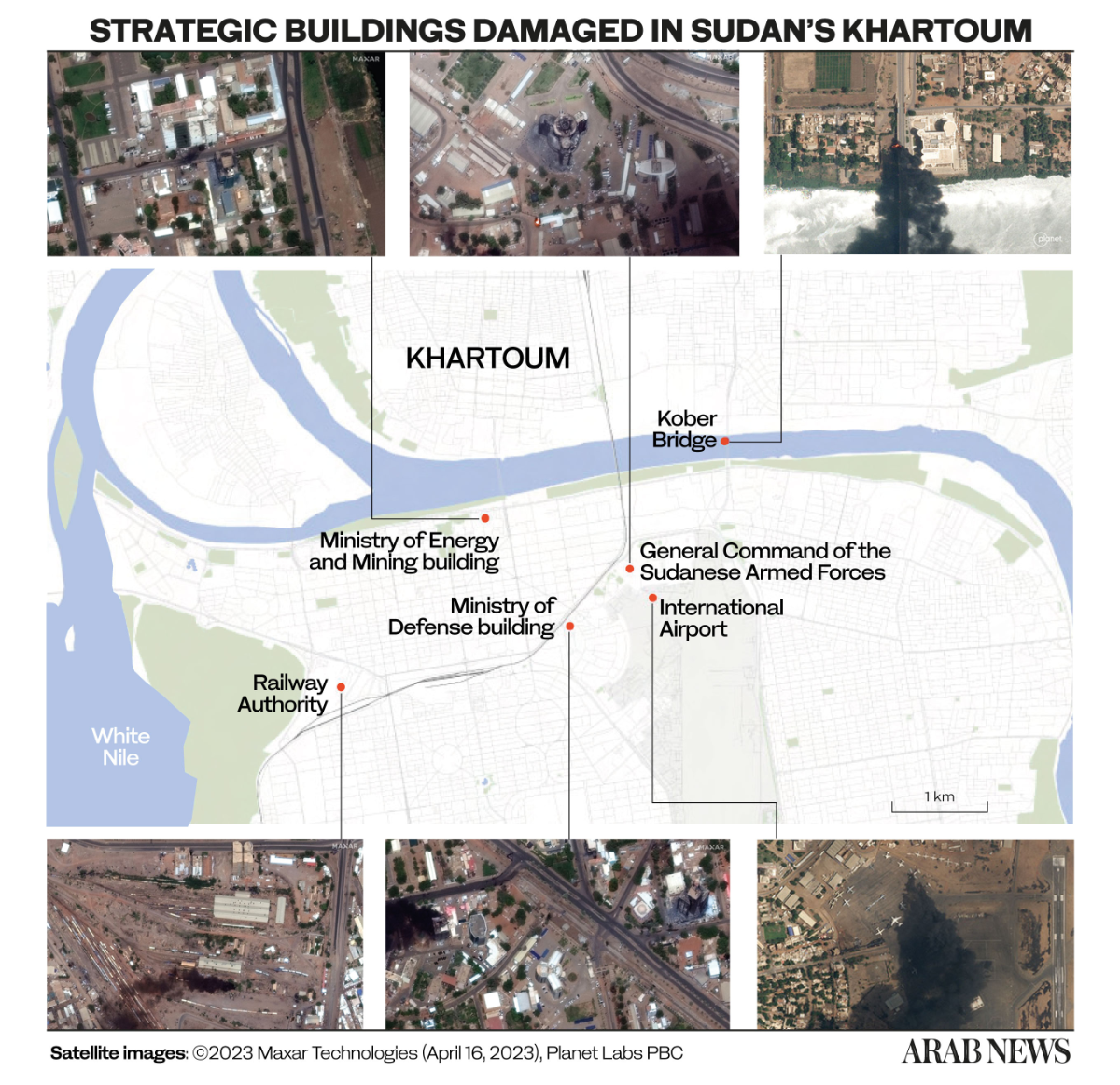
    The two sides accuse each other of starting the fighting, and both claim to be in control of key sites, including the airport and the presidential palace.

    On Monday, the RSF claimed on its social media accounts to have taken control of Merowe Airport, about 350 km north of Khartoum.

    “The strategic goal of the Rapid Support Forces in Merowe is not the airport, but rather the Merowe Dam,” Hassan Al-Saouri, a Sudanese political expert and professor of political science, said in a statement circulated by activists on social media.

    “It is true that Merowe Airport is the alternative to Khartoum International Airport, but the Rapid Support Forces seem to be targeting the Merowe Dam specifically, given that it works to guard it and therefore can control it, stop it, and form an economic blockade by striking energy as it controls water in the northern region of Sudan, which is an important, vital, and strategic area for Sudan.”

  • Sudan’s military commander accuses rival of trying to stage a coup

    Sudan’s military commander accuses rival of trying to stage a coup

    After a day of fierce combat that saw hospitals attacked by missiles as they fought to save lives and left at least 180 people dead in the country, Sudan’s military leader denounced what he called a “attempted coup.”

    According to Abdel Fattah al-Burhan, who is participating in the brutal power struggle that has seized Sudan for three days, the paramilitary organization Rapid Support Forces (RSF) is in charge of “an attempted coup and rebellion against the state.”

    The country’s military and the RSF, led by Mohamed Hamdan Dagalo, also known as Hemedti, began clashing on Saturday. Hemedti told CNN on Sunday that the army had violated a UN-mediated interim humanitarian ceasefire.

    Burhan, who alongside Dagalo ousted Sudan’s long-time leader Omar al-Bashir in 2019 and played a key role in the military coup two years later, said his former ally had “mutinied” against the state, and if captured, would be tried in court of law.

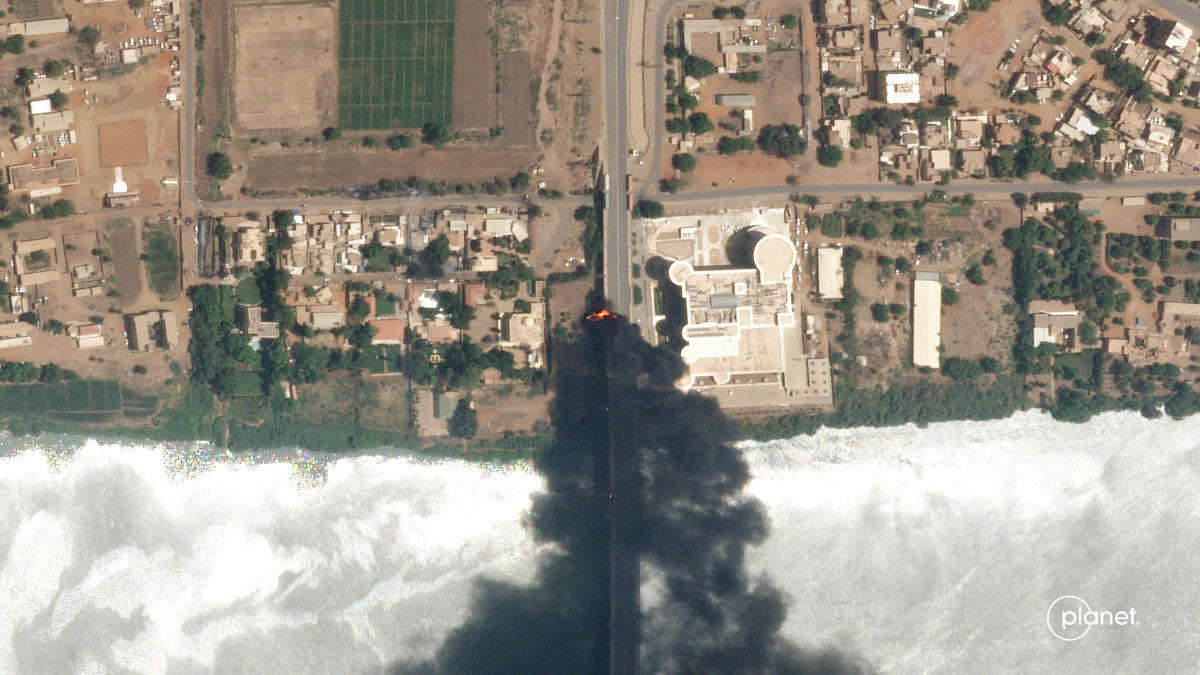
    On Monday, residents in the capital Khartoum endured sounds of artillery and bombardment by warplanes. Clashes re-erupted around the Army Command building and the Presidential Palace in the capital Khartoum, eyewitnesses said, as fighter jets hovered over the capital, and ground anti-aircraft defenses fired at the planes.

    An eyewitness sheltering in the Sudanese capital told CNN that Monday has been the heaviest day of shelling since the outbreak of violence began on Saturday.

    Heavy bomb blasts were heard in the city of Bahri in the north of the capital Khartoum, witnesses added.

    Hospitals in the country – which are short of blood supplies and life-saving equipment – are being targeted with military strikes by both the Army and the RSF, according to eyewitness accounts to CNN and two doctors’ organizations, leaving medical personnel unable to reach the wounded and to bury the dead.

    One doctor at a Khartoum hospital – whom CNN is not naming for security reasons – said his facility has been targeted since Saturday. “A direct strike hit the maternity ward. We could hear heavy weaponry and lay on the floor, along with our patients. The hospital itself was under attack.”

    CNN has reached out to the Sudanese military and the RSF for comment.

    Another doctor at the same al-Moallem Hospital told CNN that hospital staff stayed on site under bombardment from the RSF for two days, before being evacuated by the Sudanese military. “We were living in a real battle,” the doctor said. “Can you believe that we left the hospital and left behind children in incubators and patients in intensive care without any medical personnel? I can’t believe that I survived dying at the hospital, where the smell of death is everywhere.”

    International leaders have urged for calm.

    The European Union ambassador to Sudan was assaulted in his residency in Sudan, the bloc’s top diplomat, Josep Borrell said on Monday.

    “A few hours ago, the EU Ambassador in Sudan was assaulted in his own residency,” Borrell said on Twitter, without providing further details on the incident, which he described as a “a gross violation of the Vienna Convention.”

    He added that “security of diplomatic premises and staff is a primary responsibility of Sudanese authorities and an obligation under international law,” he said.

    Borrell also said the EU is working to persuade the leadership of the two rival parties to “consider humanitarian pause” in Sudan.

    The White House condemned the escalating violence and called “for an immediate ceasefire without conditions between the Sudanese armed forces and the rapid deployment of support forces,” National Security Council Coordinator for Strategic Communications John Kirby told reporters.

    The sound of gunshots rang out in the background as Burhan spoke to CNN on Monday, despite an agreed-on ceasefire at 4 p.m. local time (10 a.m. ET). He claimed that for a second day, the RSF’s leader had violated that agreed ceasefire.

    “Yesterday and today a humanitarian ceasefire proposal was put forward and agreed upon. Sadly, he did not abide by it. You can hear right now the attempts to storm the Army headquarters, and indiscriminate mortar attacks. He’s using the humanitarian pause to continue the fight,” he said.

    When asked about that allegation, a spokesperson for the RSF told CNN that the RSF was trying to abide by the ceasefire, but “they keep firing which leaves no choice” but for the RSF to “defend itself by firing back.”

    Hemedti said Monday his group will pursue the leader of Sudan’s Armed Forces Abdel Fattah al-Burhan “and bring him to justice,” while Sudan’s army called on paramilitary fighters to defect and join the armed forces.

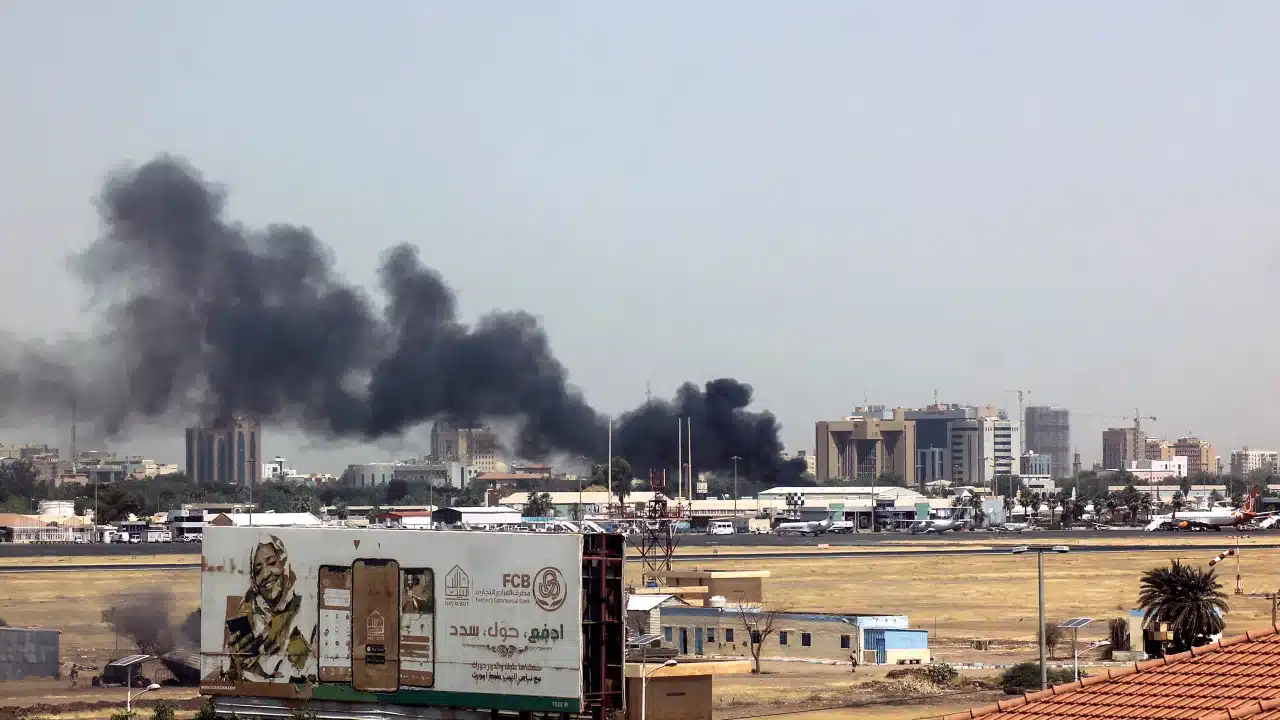
    Verified video footage shows military jets and helicopters hitting the airport; other clips show the charred remains of the army’s General Command building nearby after it was engulfed in fire on Sunday.

    Residents in neighborhoods east of the airport told CNN they saw warplanes bombing sites east of the command. “We saw explosions and smoke rising from Obaid Khatim Street, and immediately after that, anti-aircraft artillery fired massively towards the planes,” one eyewitness said.

    An eyewitness, Amal Bakhit, spoke to CNN alongside her cousin Asiel Mohamed. Both women are United States residents, but recently traveled to Khartoum to visit family, and are now stuck inside the country.

    She said shelling on Monday was the heaviest since the fighitng began. “It’s been going on since early morning today. Today was the heaviest artillery we have heard during the past three days. We couldn’t sleep,” she said.

    Bakhit said that people in Sudan are used to hearing artillery and gunshots since 2018 when widespread unrest rocked the country, but the past several days have not been the same.

    “This time it’s different because it’s between two forces, and we seem not to be ready for that. This is war. We are not prepared for that.” she said.

    Amid the chaos, both parties to the fighting are working to portray a sense of control in the capital. The armed forces said Monday the Rapid Support Forces are circulating “lies to mislead the public,” reiterating the army have “full control of all of their headquarters” in the capital Khartoum.

    Sudan’s national state television channel came back on air on Monday, a day after going dark, and is broadcasting messages in support of the army.

    A banner on the channel said “the armed forces were able to regain control of the national broadcaster after repeated attempts by the militias to destroy its infrastructure.” Although the armed forces appear to have control of the television signal, CNN cannot independently verify that the army is in physical control of the Sudan TV premises.

    A banner on the channel said “the armed forces were able to regain control of the national broadcaster after repeated attempts by the militias to destroy its infrastructure.”

    In the Kafouri area, north of Khartoum, clashes and street fights broke out at dawn Monday, prompting residents to begin evacuating women and children from the area, Sudanese journalist Fathi Al-Ardi wrote on Facebook. In the Kalakla area, south of the capital, residents reported the walls of their houses shaking from explosions.

    Reports also emerged of battles hundreds of miles away in the eastern city of Port Sudan and the western Darfur region over the weekend.

    As of Monday, at least 180 people have been killed and at least 1800 others were injured in the ongoing clashes, according to Volker Perthes, the UN Secretary General’s Special Representative for Sudan.

    The WHO has warned that doctors and nurses are struggling to reach people in need of urgent care, and are lacking essential supplies.

    Water and power cuts are affecting the functionality of health facilities, and shortages of fuel for hospital generators are also being reported,” the WHO added.

    In the CNN interview, Dagalo blamed the military for starting the conflict and claimed RSF “had to keep fighting to defend ourselves.”

    He speculated that the army chief and his rival, al-Burhan, had lost control of the military. When asked if his endgame was to rule Sudan, Dagalo said he had “no such intentions,” and that there should be a civilian government.

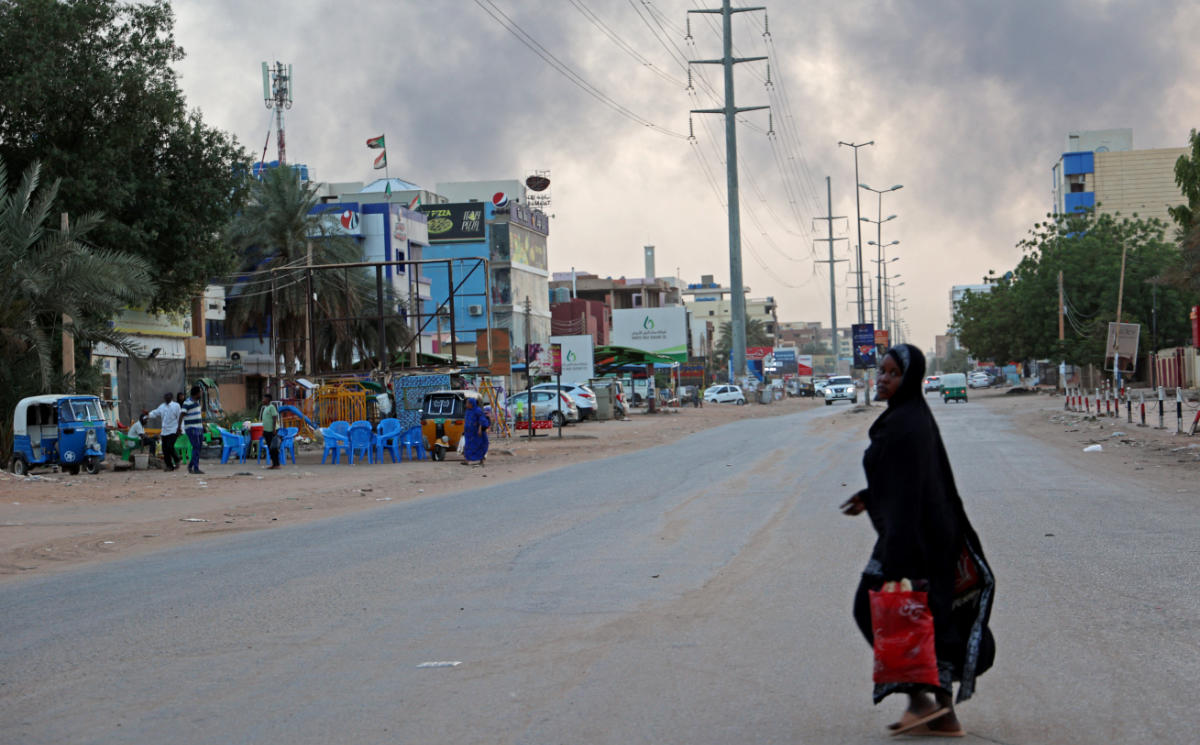
    Amid the fighting, civilians have been warned to stay indoors. One local resident tweeted that they were “trapped inside our own homes with little to no protection at all.”

    “All we can hear is continuous blast after blast. What exactly is happening and where we don’t know, but it feels like it’s directly over our heads,” they wrote.

    Access to information is also limited, with the government-owned national TV channel now off the air. Television employees told CNN that it is in the hands of the RSF.

    The conflict has put other countries and organizations on high alert. The United Nations along with its humanitarian partners will temporarily shut down many of its more than 250 programmes across Sudan amid the intense hostilities taking place in the country, UN aid chief Martin Griffiths said Monday in a statement.

    This comes after the UN’s World Food Program temporarily halted all operations in Sudan after three employees were killed in clashes on Saturday.

    UN and other humanitarian facilities in Darfur have been looted, while a WFP-managed aircraft was seriously damaged by gunfire in Khartoum, impeding the WFP’s ability to transport aid and workers within the country, the international aid agency said.

    Qatar Airways announced Sunday it was temporarily suspending flights to and from Khartoum due to the closure of its airport and airspace.

    On Sunday, Dagalo told CNN the RSF was in control of the airport, as well as several other government buildings in the capital.

    Meanwhile, Mexico is working to evacuate its citizens from Sudan, with the country’s foreign minister saying Sunday it is looking to “expedite” their exit.

    The United States embassy in Sudan said Sunday there were no plans for a government-coordinated evacuation yet for Americans in the country, citing the closure of the Khartoum airport. It advised US citizens to stay indoors and shelter in place, adding that it would make an announcement “if evacuation of private US citizens becomes necessary.”

  • Fighting between competing military factions in Sudan begins its second day

    Fighting between competing military factions in Sudan begins its second day

    As months of hostilities between a paramilitary group and the country’s army burst into violence, fierce fighting spread across Sudan and into its second day.

    Heavy weapons were used in clashes near the army headquarters and presidential palace in the capital Khartoum. There have also been rumours of battles taking place hundreds of kilometres distant in the western Darfur region and the eastern city of Port Sudan.

    According to the Central Committee of Sudan Doctors, the skirmishes have resulted in at least 56 fatalities and close to 600 injuries.

    “Since yesterday we have not been able to leave the hospital for our homes because the clashes are taking place near the hospital and armed men from the army are roaming inside the hospital with their weapons,” a female doctor in Khartoum told CNN.

    “We are in a real state of terror with the sound of explosions and bullets, we escaped death many times,” she added.

    Sudan’s paramilitary chief Mohamed Hamdan Dagalo claimed to have seized most of Khartoum’s official sites after clashes erupted between his armed group and the country’s military on Saturday.

    On Sunday, Dagalo’s Rapid Support Forces (RSF) released a video declaring it had gained control of the Meroe airport in the north of the country. Dagalo told CNN the RSF is in control of the presidential palace, Khartoum airport and the General Command headquarters.

    The country’s military leader, Gen. Abdel Fattah al-Burhan, disputed Dagalo’s claims on Saturday and said the military has maintained control over government sites.

    CNN has been unable to independently verify either side’s claims.

    As fighting continues in Khartoum and other parts of Sudan, the World Health Organization is urging all parties to the conflict to respect the neutrality of health care and ensure unrestricted access to health facilities for those injured by the hostilities.

    More than 83 people have been killed and at least 1,126 injured since April 13 “across Khartoum, South Kordofan, North Darfur, Northern State and other regions,” the organization said, noting the “heaviest concentration of fighting” is now in Khartoum City.

    “There are also reports of shortages of specialized medical personnel, including anesthesiologists,” the WHO said in a statement Sunday. “Water and power cuts are affecting the functionality of health facilities, and shortages of fuel for hospital generators are also being reported.”

    In an interview with Al Jazeera, Dagalo – also known as Hemedti – described Burhan as a “criminal,” accusing him of instigating the fighting.

    “It was not us who did this,” Dagalo told CNN’s Larry Madowo. “We were defending ourselves. We’re sorry and we tell the Sudanese people that this crisis will end, and Sudan will be even better than before. And this will be a lesson to learn in the future.”

    Dagalo accused the Sudanese army of breaking a United Nations-brokered temporary humanitarian ceasefire Sunday evening.

    “We’re under attack from all directions,” Dagalo said. “We stopped fighting and the other side did not, which put us in a predicament, and we had to keep fighting to defend ourselves,” he claimed.

    Dagalo also speculated that Burhan has lost control of his military, saying “they don’t seem to be listening to him.”

    Dagalo’s rise to power began when he was a leader of Sudan’s notorious Janjaweed forces, implicated in human rights violations in the Darfur conflict of the early 2000s. His group killed at least 118 people in pro-democracy protests in June 2019 after troops opened fire at a peaceful sit-in.

    He and Burhan were pivotal in the 2019 overthrow of President Omar al-Bashir but have since become locked in a power struggle, with tensions over the RSF’s integration into the army.

    There have been widespread calls for calm. Sudan’s former Prime Minister Abdalla Hamdok on Sunday warned of civil war and called for immediate negotiations.

    “This war has to stop today … peace is the only option to avoid slipping into a civil war,” he said at a news conference in Abu Dhabi.

    The US and UN also called for an end to the fighting.

    African leaders were holding emergency meetings on Sunday in response to the situation. Sudan’s neighbors Egypt and South Sudan have offered to mediate.

    The UN’s political mission in Sudan has said the country’s two warring factions have agreed to a “proposal” although it is not yet clear what that entails.

    The military has been in charge of Sudan since a coup in 2021, with Burhan and Dagalo at the helm. The 2021 coup ended a power-sharing arrangement, following the 2019 ouster of al-Bashir.

    A CNN investigation also uncovered another link between the two men: their involvement in Russia’s exploitation of Sudan’s gold resources to fund its Ukraine war, with Dagalo’s forces also being key recipients of Russian training and weaponry.

    But recent talks have led to cracks in the alliance between the two military leaders. The negotiations have sought to integrate the Rapid Support Forces into the country’s military, as part of the effort to transition to civilian rule.

    Sources in Sudan’s civilian movement and Sudanese military sources told CNN the main points of contention included the timeline for the merger of the forces, the status given to RSF officers in the future hierarchy, and whether RSF forces should be under the command of the army chief, rather than Sudan’s commander-in-chief, who is currently Burhan.

    The hostilities, sources told CNN, are the culmination of what both parties view as an existential fight for dominance, one with Burhan, they said, seeking support from Sudan’s former Islamist rulers, resurrecting the specter of days many Sudanese fought to leave behind.

    Dagalo told CNN he had no intention to rule Sudan.

    “There should be a civilian government. This has always been my stance,” he said.