Prior to their round of 16 matchup against Spain at the 2022 World Cup in Qatar, Morocco‘s head coach Walid Regragui revealed that his team spent four days developing a gameplan.
After a scoreless draw, the Atlas Lions shocked Spain 3-0 in a shootout to go to the World Cup quarterfinals.
After 120 minutes, there was no way to separate the two teams, and Spain’s three penalties—two of which were beautifully saved by goalie Bounou—were all missed.
That left Hakimi to win it for the North Africans with his nerveless spot-kick and spark jubilant scenes in the stands at the Education City Stadium.
“We had agreed not to take possession, not out of fear,” he said.
“Nobody had managed to steal the ball from them, so I accepted not having the ball, I’m not a magician. We worked for four days on this gameplan.”
Morocco are the last African side following the exit of African champions Senegal, Ghana, Tunisia and Cameroon and also the only remaining Arab team left in the tournament.
Vahid Halilhodzic believes he was left “out in the rain” as he watched Morocco advance to the World Cup quarterfinals.
With a 5-2 overall victory over the Democratic Republic of the Congo in the third round of CAF qualifying in March, Halilhodzic ensured Morocco’s qualification for the finals in Qatar.
Halilhodzic, however, was fired in August, which was his third firing from a national team position prior to a World Cup after guiding a side to qualification.
The Bosnian lost to Japan in 2018 and Ivory Coast in 2010, although he did guide Algeria to the round of 16 in 2014.
Halilhodzic came under fire for not picking enough locally based players and leaving out Hakim Ziyech, who did not feature in the qualification campaign.
“When you arrive in a country, you don’t know all the good players. So we have to look for them,” Halilhodzic added.
“How many tapes I watched in Morocco! At least a thousand. I updated 80 per cent of the team. We have to find them, the players who can play for the national team.
“What makes a coach credible are the results. And never has the Moroccan team got better results than with me in the World Cup qualifiers. Seven wins, one draw having scored three goals per game on average.
“What I didn’t appreciate were the smear campaigns, to create animosity between supporters of different clubs, between locals and Moroccans abroad, that locals would be prevented from playing for their country.
“This pressure from the federation had already been going on for a long time. They wanted me to take three-four players, while the team had achieved results without them. I did not give in, because you lose your credibility when the players feel that we decide for you.
“Some refused to play for Morocco because they had entourages who preferred them to play for Spain, Italy or France. And afterwards, they change their minds when there is a World Cup!
“I felt that with the Moroccan team that I had built, we could do something at the World Cup. I would have liked to end my career with a successful World Cup and say enough!”
Morocco’s goalkeeper Yassine Bouno, has expressed his joy at helping his team defeat Spain 3-0 in a shootout to advance to the World Cup quarterfinals following a scoreless draw.
After 120 minutes, Spain’s three penalties—two of which goalie Bounou superbly saved—were not successful in separating the two teams.
That left Hakimi to win it for the North Africans with his nerveless spot-kick and spark jubilant scenes in the stands at the Education City Stadium.
“I’m so happy for the team — they did a great job all through the game,” Bounou told beIN Sports.
“We understood (how to play) the game from the start, so I’m so happy for this win.”
Morocco are the last African side following the exit of African champions Senegal, Ghana, Tunisia and Cameroon.
Coach Walid Regragui’s side are also only remaining Arab team left in the tournament and will face Portugal in the quarterfinals in Qatar.
By defeating Belgium and Croatia in their group, Morocco broke a 36-year curse to get to this stage of the World Cup in Qatar.
At their Round of 16 match against Spain on Tuesday at the Education City Stadium in Al Rayyan, the Atlas Lions will be armed with the confidence they garnered from their group-stage victory.
Morocco head coach Walid Regragui has challenged his team to aim at winning the ultimate trophy since they can achieve it.
Having toppled Belgium, Croatia and Canada in their group, Morocco had a very good defensive record conceding just once after three games and that puts no fears in them against Spain.
They have now allowed only one goal in their last seven matches and since Regragui took over as head coach.
Spain weren’t so convincing during the group stages after advancing with just four points, a win against Costa Rica, a draw with Germany and a defeat to Japan.
However, Luis Enrique’s side hopes to count on their head-to-head record against Morocco to secure a place in the quarter-finals after the game.
Spain have not lost to the Atlas Lions in their three previous meetings with two wins and a draw in the process.
The last meeting was in 2018 in Russia where Spain scored in stoppage time to earn a point when they were trailing.
Spain haven’t reached the quarter-finals of the World Cup since their last in 2010 where they eventually won the tournament in the end.
North African country, Morocco, will spend $13bn on green investments over next 4 years.
This was announced by King Mohammed VI, who chaired a meeting on Saturday December 03, 2022 at the Royal Palace in Rabat and made a presentation of the new green investment programme of the OCP Group (2023-2027) and the signing of the relevant protocol agreement between the government and OCP group.
The ceremony is part of the proactive orientation promoted by the King, for many years, in matters of transition towards green energies and low-carbon economy.
The ceremony came in the morrow of the work meeting presided over by the Sovereign, last November 22, devoted to the development of renewable energies and to the new perspectives in the field.
At the beginning of the ceremony, OCP group Chairman and Chief Executive Officer, Mostafa Terrab, presented before the King the results of the group’s first investment programme, subject of the High Royal Guidelines in 2012, and which helped solidly anchor OCP in the fertilizers market.
The group relied on research and development capabilities of the Mohammed VI Polytechnic University (UM6P) to seize the opportunities offered by the new industrial and digital technologies and to develop an expertise in innovative technologies for balanced fertilization to take up the challenges of sustainable agriculture and food security.
Mr. Terrab then made an exposé before the Sovereign on the group’s new investment programme. The programme revolves around increasing the fertiliser production capacities, while committing to achieve carbon neutrality before 2040 by relying on the unique source of renewable energies as well as on the Kingdom’s progress in this field, under the leadership of King Mohammed VI.
By investing in solar and wind power, the group plans to feed all its industrial facilities with green energy by 2027. The low-carbon energy will also be used to supply the new seawater desalination capacities in order to meet the group’s needs and provide the areas around OCP sites with drinking and irrigation water.
This investment will help the group, first world importer of ammonia, to eventually end reliance on these imports by also investing in renewable energy – green hydrogen – green ammonia sector, allowing the group to strongly enter the market of green fertilizer and of fertilization solutions adapted to the specific needs of different soils and crops.
This ambition will be backed by supporting programs for industrial Small and Medium Enterprises and those operating in the sectors of energy and agriculture, hence, favoring the emergence of an innovative national ecosystem and the creation of new employment and job integration opportunities for the youth.
The new programme, which will help consolidate OCP’s world position, provides for a global investment of 13 billion dollars (130 billion dirhams) over the period 2023-2027, the achievement of a local integration rate of 70%, the backing of 600 Moroccan industrial enterprises and the creation of 25000 direct and indirect jobs.
This ceremony was attended by the Head of Government, the Advisors to His Majesty the King and members of the government.
Morocco head coach Walid Regragui has praised fans for their support as they drew goalless with Croatia in their 2022 World Cup opener on Wednesday.
A well-drilled Morocco held the runners-up four years ago to a draw at Al Bayt Stadium.
Only four players from their final defeat by France in 2018 started this game and they lacked an attacking spark throughout, but came closest through Nikola Vlasic’s toe-poked effort. Morocco were impressive, but failed to create clear-cut opportunities.
“We feel that we are home and I am happy to be in Qatar.”
“The Moroccan and Arab fans in the stands supported us and gave us strength when we felt tired,” the former Wydad Casablanca boss said after the game.
Morocco’s draw means African sides are yet to win a match at this year’s World Cup after Senegal lost to the Netherlands and Tunisia held Denmark to a goalless draw on Monday and Tuesday respectiively.
UN Secretary-General Antonio Guterres held a meeting with Morocco’s King Mohammed VI on Wednesday, where they discussed the disputed Western Sahara region.
Western Sahara – a former Spanish colony – is considered a “non-self-governing territory” by the United Nations.
Morocco controls 80% of the territory and the rest is held by the Polisario movement – which fought with Morocco for years after Spanish forces withdrew in 1975.
🔴Statement by the Royal Office: His Majesty King Mohammed VI, may God assist him, received, today at the Rabat Royal Palace, the Secretary General of the United Nations, Mr. António Guterres.
The two leaders met on Wednesday on the side-lines of the United Nations Alliance of Civilizations held in the Moroccan city of Fez.
King Mohammed reaffirmed Morocco’s position that the dispute be resolved “on the basis of the autonomy initiative, within the framework of the sovereignty and territorial integrity of the Kingdom”.
Walid Regragui, the Moroccan coach, presented his 26-player World Cup roster on Thursday.
The Chelsea winger Hakim Ziyech, who has rejoined the national team after being benched by the previous coach Vahid Halilhodzic, will be relied upon by the Atlas Lions for his offensive skills.
Another returnee is Abderrazak Hamdallah (Ittihad FC), who publicly apologized for having slammed the door at the CAN 2019
The big surprise in the selection is a teenager from Belgium by the name of Bilal El Khannouss, who is only 18 years old.
“We have an amazing team, to be honest, with a lot of quality, a lot of players who play in big leagues in Europe, also for big teams. I think we can do something special, something nobody is thinking, I think we can achieve that,” said Noussair Mazraoui, Morocco and Bayern Munich defender.
Morocco will play in group F and will on November 23 play their first match against Croatia. The Atlas Lions will then face Romelu Lukaku’s Belgium before meeting Alphonso Davies of Canada.
A new manager and the return of an exiled player are ingredients for an intriguing World Cup finals for Morocco.
It’s a baptism of fire for Walid Regragui, who took the top job in September – three months before the Qatar showpiece event.
The former Morocco international replaced Vahid Halilhodzic, who was fired due to disagreements with the country’s football federation over preparations for the World Cup.
Regragui will be looking to lead the Atlas Lions into the knockout round after failing in their last three attempts.
The North African nation came agonizingly close in 2018 Russia, conceding a last-gasp own goal to lose 1-0 to Iran and allowing Spain to steal a 2-2 draw with a late goal.
Can Hakim Ziyech turn the tide for Morocco?
Redemption is on the cards for the Chelsea winger, who returned from exile following Halilhodzic’s exit. The 29-year-old was so unhappy under the disciplinarian Halilhodzic that he even announced his international retirement.
Ziyech is clearly part of Regragui’s plans after he was deployed alongside Angers winger Sofiane Boufal to support Sevilla striker Youssef En-Nesyri in a 2-0 friendly win over Chile last month.
The new-look attacking trident should get plenty of scoring chances if Achraf Hakimi is in form. The Paris Saint-Germain right back is one of the best attacking fullbacks in world soccer and has pace, skill, good passing and an eye for shooting with eights goals in 53 games for Morocco.
Morocco, which is playing in its sixth World Cup after making its first appearance in 1970, became the first African team to reach the knockout round in 1986.
The Atlas Lions will need to be at their best as they face 2018 World Cup finalists Croatia in the tournament opener (23 November), before meeting European heavyweights Belgium four days later. Their final Group F clash will be against Canada (1 December).
Belgium has described as “good basis”, Morocco’s autonomy plan, presented in 2007, for a solution accepted by the parties” regarding resolution of the Sahara issue.
This statement came in a joint declaration issued after talks between Nasser Bourita, Minister of Foreign Affairs, African Cooperation and Moroccan Expatriates, and Hadja Lahbib, Belgium’s Minister of Foreign Affairs, European Affairs and Foreign Trade and Federal Cultural Institutions.
“Belgium considers the autonomy plan, presented in 2007, as a serious and credible Moroccan effort and as a good basis for a solution accepted by the parties,” says the joint declaration.
In this context, the Belgian Minister reiterated Belgium’s long-standing support for the UN-led process for a just, lasting and mutually acceptable political solution.
According to the Joint Statement, the two ministers agreed on the exclusivity of the UN in the political process and reaffirmed their support for UN Security Council Resolution 2602, which noted the role and responsibility of all parties in the search for a realistic, pragmatic, sustainable and compromise-based political solution.
Morocco and Belgium also welcomed the appointment of the Personal Envoy of the UN Secretary General, Staffan de Mistura, and reaffirm their active support to his efforts to advance the political process on the basis of the relevant UN Security Council resolutions, the Joint Statement said.
With this position, Belgium joins the list of European countries that clearly support the autonomy plan such as Spain, France, Germany, the Netherlands, Cyprus, Luxembourg, Hungary, Romania, Portugal and Serbia.
Ibrahim Tanko, the coach of the Black Meteors, has selected 22 players for their match against Mozambique in a CAF U-23 Championship qualifying match on Sunday.
The addition of former U-20 AFCON champion and Rio Ave player in the Portuguese division Philemon Baffour has strengthened the team
The team departed Accra for Maputo on Thursday, October 20,2022 for the crucial qualifier.
A delegation made up of 22 players, technical staff and officials left Accra on Thursday evening for the game which is scheduled for Sunday, October 23 at the Estadio Nacional do Zimpeto.
The winner will move on to play the winner of the tie between Algeria and DR Congo.
The fourth edition of the U-23 Africa Cup of Nations will take place in Morocco in June 2023.
Coach Tanko was in charge of the team which finished fourth at the 2019 tournament won by hosts Egypt, which ensured Ghana missed out on the 2020 Olympic Games.
Morocco fans gathered Thursday (Oct 20) to support their team near the Qatar 2022 FIFA World Cup countdown clock as it marked thirty days left before the tournament, in the Qatari capital Doha.
Team anthems and jerseys: no doubt Moroccan fans in Qatar are getting in the World Cup mood.
Supporters gathered Thursday next to the countdown clock on Corniche road in Doha, with less than a month to go until the 22nd FIFA tournament kicks off.
“We are really excited to welcome our team”, Karim shared.
“We hope we can see them in the semi-finals or finals; why not? This really affects us, we are ready to support our country with our best.”
The Atlas Lions will face a battle against Canada, Belgium and Croatia in group F.
A new coach was appointed early september to lead the squad. Fans look forward to the team’s sixth appearance in the competition.
“I am very happy because our team is participating in the World Cup, the Moroccan audience is very excited and we are gathered here”, Ana said.
On November 20, the world cup will get started at the sixty thousand-seat Al Bayt Stadium.
All 64 games over the course of 29 days involving 32 teams will be held in the Doha area.
Morocco’s first game will take place on November 23. The team is one the five African countries qualified for the biggest football tournament.
About 1.2 million visitors are expected in Qatar for the first World Cup.
Prior to their CAF U-23 Championship qualifying match against Mozambique on Sunday, Black Meteors are anticipated to arrive in Maputo today following a brief transit in Johannesburg.
On ThurFoosday, October 20,2022, coach Ibrahim Tanko and his players left Accra for Maputo in preparation for the vital qualifying match.
A delegation made up of Twenty- two players, technical staff and officials left Accra on Thursday evening for the game which is scheduled for Sunday, October 23 at the Estadio Nacional do Zimpeto.
Kurt Okraku was at the airport to see off the team as they embark on a journey to ensure qualification to the U-23 Championship in Morocco.
Meanwhile, the squad has been boosted with the arrival of former U-20 AFCON winning defend Philemon Baffour who currently plays for Rio Ave in the Portuguese league.
The winner will move on to play the winner of the tie between Algeria and DR Congo.
The fourth edition of the U-23 Africa Cup of Nations will take place in Morocco in June 2023.
Tanko was in charge of the team which finished fourth at the 2019 tournament won by hosts Egypt, which ensured Ghana missed out on the 2020 Olympic Games.
Ghana’s U-23 side, the Black Meteors have left the shores of the country today, Thursday, October 20, for their CAF Championship qualifier encounter against Mozambique.
Ibrahim Tanko and his charges will be hosted at the Estadio Nacional do Zimpeto on Sunday, October 23, 2022.
The team has been in camp for the past six weeks as part of preparations as they seek to secure a qualification.
In a doubleheader, Ghana will play Mozambique, with the winner going on to play the winner of the match between Algeria and DR Congo.
Morocco will host the fourth edition of the U-23 Africa Cup of Nations in June 2023.
Tanko oversaw the squad that placed fourth in the 2019 competition, won by hosts Egypt won, ensuring that Ghana would not be participating in the 2020 Olympics.
Morocco signed a “green partnership” deal with the European Union in Rabat, Tuesday (Oct 18). The two parties hope the agreement will bolster cooperation on renewable energy.
Morocco’s top diplomat Nasser Bourita welcomed Tuesday the EU Commission deputy head Frans Timmermans. The statesmen officially launched in Rabat, the European Union and Moroccan “green partnership” deal aimed at bolstering cooperation on renewable energy.
The sun-baked North African country is seeking to offer alternatives for European nations trying to wean themselves off fossil fuels.
“First of all, the context shows that we are on the eve of COP27 and this is an important moment to show that the discussion on climate change is first and foremost a question of will and vision, but it is also a question of action”.
“Actions to transform commitments into reality and what Morocco is trying to do through this green partnership”, Nasser Bourita concluded.
The memorandum of understanding, is the “first of its kind” according to Frans Timmermans.
It is also set to boost cooperation in the fight against climate change, with private sector involvement.
“It aims to foster the transition to a decarbonised industry through investment in green technology, renewable energy production, sustainable mobility and clean production in industry,” it reads.
In 2009, Morocco adopted an energy strategy aimed at increasing the share of renewables in electricity production to over 52 percent of the country’s energy mix — up from around a fifth today.
The COP27 also known as the 27th session of UN Climate Change Conference will take place in Sharm el—Sheikh Egypt, in November.
The Kingdom of Morocco has taken various preemptive measures by building over 50 large and medium-scale dams to tackle the perennial water challenges faced by the Kingdom and make drinking water available to all.
King Mohammed VI, King of Morocco noted that “Since my accession to the throne, I have keenly sought to continue the policy of building dams.
More than 50 large and medium-sized dams have been built, and 20 more are under construction.
The King stated that regardless of the rainfall they may receive in the years ahead, he was keen to make sure they speed up the completion of the projects planned under the National Priority Program for Water in all regions and corners of the Kingdom.
Speaking at the first opening session of the second legislative year of the 11th legislature, the King noted that aside from the pressing challenges of water, investment promotion ought to be fast-forwarded.
He noted that the Kingdom was “counting on productive investment as a lever for boosting our economy and making sure our country engages in the promising sectors which provide job opportunities for young people as well as funding for various social and development programs.
“I expect the new investment charter to significantly enhance Morocco’s attractiveness as far as both domestic and foreign investment is concerned.”
Below is the full text:
Rabat, 14/10/2022 (MAP) – His Majesty King Mohammed VI, accompanied by HRH Crown Prince Moulay El Hassan, delivered, on Friday, a speech to the Parliament on the occasion of the opening of the first session of the second legislative year of the 11th legislature.
Here follows the full text of the Royal Speech:
“Praise be to God,
May peace and blessings be upon the Prophet, His Kith and Kin
Honourable Members of Parliament,
The opening of Parliament, an occasion provided for in the Constitution, is not merely an opportunity to renew contact with the representatives of the nation. Rather, I see it as an important annual event to address the nation’s major issues, especially matters of priority.
Today, I have decided to focus on two important questions:
– The first one concerns the problem of water, the pressing challenges it poses today and others that could surface in the future.
– As for the second question, it relates to the qualitative leap forward that needs to be made in the promotion of investment.
Ladies and Gentlemen,
Almighty God said: “We made from water every living thing”. True is the Word of God.
Water is the source of all life. It is an essential ingredient in the development process, and it is critical for all projects and productive sectors.
Hence, it has become urgent to address the water resource management issue, especially as Morocco is experiencing a period of severe drought – the most serious in more than three decades.
To face up to this situation, we have taken a series of preemptive measures, since last February, under the plan to combat the effects of drought. The aim is to make sure drinking water is available, to provide assistance to farmers and to safeguard the livestock.
Realizing the structural nature of this phenomenon in our country, I have always devoted my full attention to all aspects relating to water.
Thus, several working sessions have been devoted to this issue, leading to the formulation of the 2020-2027 National Priority Program for Water.
Since my accession to the throne, I have keenly sought to continue the policy of building dams. More than 50 large and medium-sized dams have been built, and 20 more are under construction.
Regardless of the rainfall we may receive in the years ahead, I am keen to make sure we speed up the completion of the projects planned under this program, in all regions and corners of the Kingdom.
I am referring, in particular, to the completion of the construction of planned dams, the development of hydraulic interconnections and the construction of sea water desalination plants, as well as the implementation of a stronger water efficiency policy, especially in the area of irrigation.
Morocco is not the only country facing the problem of drought and water scarcity. This issue has become a global phenomenon, one that is further compounded by climate change.
The current water resource situation challenges us all government, institutions and citizens. It requires us to be frank and responsible in dealing with the issue and in addressing whatever inadequacies there maybe.
Morocco is now in a situation of chronic water stress, and not all problems can be solved by simply building the water facilities planned, notwithstanding their great importance and of the need for them.
I therefore call for all aspects of the water issue to be addressed seriously, putting, in particular, an end to all forms of squandering and of irrational, irresponsible use of this vital resource.
Also, the water issue should not be exploited for political outbidding purposes, nor should it be used to stoke social tensions.
As Moroccans, we should all exert greater efforts to ensure rational, responsible use of water.
This requires a real change in our behavior regarding water. In this respect, public administrations and institutions should lead by example.
It is also necessary to ensure optimal management of the demand in light of the accomplishments made in mobilizing water resources.
In the medium term, we need to strengthen our proactive policies in the water sector and make up for lost time.
It is both our duty and our responsibility today to adopt sustainable, integrated policies, commit to the spirit of solidarity and ensure efficiency under the new national water plan, which should be implemented as soon as possible.
At this point, I should like to emphasize the following:
Firstly, we need to launch more ambitious programs and initiatives, and to leverage modern technology for water saving and wastewater reuse purposes.
Secondly, we must pay special attention to the rational use of groundwater and preserve the water table by tackling illegal pumping and the erratic drilling of wells.
Thirdly, we should keep in mind that the water policy is not just a sectoral policy; rather, it lies at the intersection of a great many sectors.
This means we need to update sectoral strategies on a continuous basis, in light of the pressure on water resources and the future development of those resources.
Fourthly, the real cost of water needs to be taken into account at each stage of the water mobilization process, keeping in mind the need to be transparent and to raise awareness about all aspects relating to water costs.
Ladies and Gentlemen,
The second part of this address will concern the question of investment, a sector I care deeply about.
Today, we are counting on productive investment as a lever for boosting our economy and making sure our country engages in the promising sectors which provide job opportunities for young people as well as funding for various social and development programs.
I expect the new investment charter to significantly enhance Morocco’s attractiveness as far as both domestic and foreign investment is concerned.
This requires removing the obstacles that still prevent a real take-off of domestic investment at all levels.
Regional investment centers are expected to oversee the entire investment process; they should also improve the efficiency and quality of the services they provide in terms of accompanying and guiding project holders until the actual achievement of their projects.
In return, all the stakeholders concerned should provide regional investment centers with the support they need, both at the central and regional levels.
As regards the business environment, the structural reforms we have introduced have made it possible to improve Morocco’s image and standing in this respect.
Despite the results achieved, however, further efforts are still needed to unlock the nation’s full potential, encourage private initiative and attract greater foreign investment.
I should like, in this regard, to insist, once more, on the need to implement the administrative devolution charter in full, simplify and digitalize procedures, facilitate access to real estate as well as to green energies, and provide financial support to project holders.
To boost investor confidence in our country as a destination for profitable investment, I call for the rules of fair competition to be enhanced and for arbitration and mediation mechanisms to be resorted to in order to settle disputes in this area.
Since investment concerns all institutions as well as the private sector, I wish to insist on the need for everyone to be mobilized and commit to a keen sense of responsibility in order to promote this sector, which is of critical importance for our country’s development.
The strategic goal, in all this, is for the private sector to take its rightful place in the investment environment and be the real driving force behind our national economy.
Moroccan businesses and their national, regional and sectoral organizations are called upon to serve as a lever for the promotion of investment and entrepreneurship.
Similarly, the national banking and financial sector is expected to support and finance the new generation of investors and businesspeople, especially youths and small and medium enterprises.
In this regard, I invite you, once again, to pay particular attention to the investments made and the initiatives undertaken by the members of the Moroccan community abroad.
To achieve the desired goals, I have instructed the government to make sure, jointly with the private and banking sectors, that the commitments made by each party are fulfilled under a national investment contract scheme.
The latter aims to raise 550 billion dirhams for investment, and create 500,000 jobs between 2022 and 2026.
Ladies and Gentlemen,
I am sure you are aware of the role of Parliament in the areas of legislation, evaluation and oversight, be it with respect to the water and investment issues, or any question that is of concern to the nation and the citizens.
I pray that Almighty God assist you as you shoulder your tremendous national responsibility, especially in the current domestic circumstances and the global volatile environment.
I can think of no better way to conclude this address than the following words of the Almighty: “and (He) sent down rain from the heavens; and brought forth there with fruits for your sustenance”. True is the Word of God.
“Every group is tough whatever it is that’s why you’ve qualified for the competition. Which group do you want to be in? God knows what he is doing.
“What we have to do is to prepare well to progress in the group. I don’t see it as an easy group but it depends on your preparations and how you approach every match. The most important thing is your preparations,” Coach Annor Walker told Ghanasportspage in an interview.
The 2023 CHAN is scheduled to be played from January to February next year.
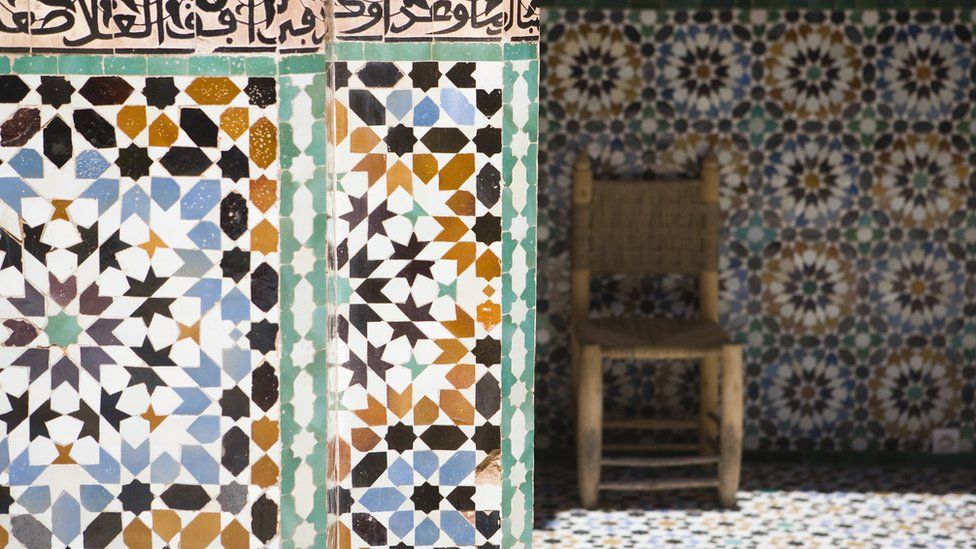
However the geometric blue, teal and yellow design is a pattern called zellige, which is common in Moroccan mosaics, the ministry’s lawyer said.
The neighbouring nations have a long history of tensions, as they continue to dispute Western Sahara.
Lawyer Mourad Elajouti wrote on Facebook that he had issued a legal warning to Adidas, on behalf of Morocco’s Ministry of Culture.
In a letter to the company’s chief executive Kasper Rorsted, Mr Elajouti said the new design was cultural appropriation and “an attempt to steal a form of Moroccan cultural heritage and use it outside its context”.
He has demanded the German sportswear brand remove the design within two weeks.
Mr Elajouti added that Algeria’s 2022-2023 season kit “contributes to the loss and distortion of the identity and history of these [zellige] cultural elements”.
The BBC has contacted Adidas for comment.
IMAGE SOURCE,GETTY IMAGES
Image caption, Morocco’s culture ministry claims the designs are too similar to zellige, a style of Moroccan mosaic tilework
Algeria and Morocco share a nearly 2,000 km (1,242 miles) border, which has been a source of tension since independence from French colonial rule.
In 1963, they had the Sand War over Morocco’s claim to territory in Algeria.
Later on, Algeria backed the Polisario Front’s campaign for Western Sahara’s independence from Morocco, leading to the 1975-1991 Western Sahara War.
The border was then closed in 1994 for security reasons after militant Islamists bombed a hotel in the historic Moroccan city of Marrakesh.
More recently, in 2021 Algeria cut diplomatic ties with its neighbour, accusing Morocco of “hostile acts”. Morocco called the move “completely unjustified”.
At least 19 people have died in Morocco’s northern city of Ksar el-Kebir after drinking toxic alcohol at a roadside shop.
Local media reports that dozens of other people were taken to hospital in critical condition, with two in intensive care.
A 48-year-old man has been arrested in connection to the incident. Police are said to have recovered about 50 litres of the alcohol at his store.
In Morocco, selling alcohol to Muslims is forbidden, but it is often discreetly sold in restaurants and stores.
In August, eight people died after drinking contaminated alcohol in the northern Oriental region, and at least 20 died in July last year in a similar incident in Oujda in eastern Morocco.
A British headteacherwho groomed at least 131 children worldwide using social media while working at a school in Iraq has been jailed for 20 months.
Using Facebook Messenger, Nicholas Clayton, 38, of The Wirral, made contact with kids as young as 10 and requested their images with the intention of sexually abusing them.
He was apprehended after paying a 13-year-old Cambodian boy to come to Malaysia so they could meet and asking the boy for pictures of his bare upper torso.
When he returned to the UK, the National Crime Agency (NCA) detained him after receiving information about the communication.
Investigators found Clayton had been messaging hundreds of boys from across the globe, spanning the Philippines, Sri Lanka, Singapore, Thailand, Indonesia, Iraq, Morocco, Turkey and others over a period of just three months.
He appeared at Liverpool Crown Court on 23 August where he admitted three counts of sexual communication with a child under 16 years and one charge of inciting the sexual exploitation of a child.
On Tuesday, he was sentenced to 20 months imprisonment and made the subject of a sexual harm prevention order for 15 years.
New Facebook plans will ‘hide similar predators’
The case has prompted fresh calls for a “robust” Online Safety Bill, with the NSPCC warning plans by Meta, which owns Facebook, to introduce end-to-end encryption will “blindfold” authorities to similar predators.
Andy Burrows, head of child safety online policy at the charity, said: “Clayton’s case highlights the ease with which offenders can contact large numbers of children on social media with the intention of grooming and sexually abusing them.
“Private messaging is the frontline of child sexual abuse online. It’s therefore concerning that Meta plans to press on with end-to-end encryption on Facebook Messenger, which will blindfold themselves and law enforcement from identifying criminals like Clayton.
“The UK government can show global leadership in tackling online child abuse by delivering without delay a robust Online Safety Bill that embeds child protection at the heart of every social media site.”
New Culture Secretary Michelle Donelan has previously said there are no plans to water down the proposals for new internet safety laws, which Mr Burrows welcomed as “really encouraging”.
Hazel Stewart, from the NCA, said: “Nicholas Clayton abused his position of trust as a headteacher by attempting to sexually contact and exploit children, using technology to access hundreds of potential victims across the globe.
“Clayton was very cautious and careful in his communications, making them appear to be innocent, but as NCA investigators we could see the patterns of predatory grooming he was using on vulnerable children.
“Protecting children from sex offenders is a priority for the NCA, and we continue to pursue criminals in the UK and internationally to ensure abusers like Clayton are held to account.”
Facebook ‘taking our time to get it right’
A Facebook spokesperson said: “We have no tolerance for child exploitation on our platforms and are building strong safety measures into our plans.
“We’re focused on preventing harm by banning suspicious profiles, defaulting under-18s to private or ‘friends only’ accounts, and more recently introduced restrictions that stop adults from messaging children they’re not connected with.
“We’re also encouraging people to report harmful messages to us so we can see the contents, respond swiftly and make referrals to the authorities. As we roll out this technology we’re taking our time to get it right and working with outside experts to help keep people safe online.”
The predicament of the Moroccan guy who was given a death sentence in Ukraine has received little attention says his sister.
A Russian proxy court tried Brahim Saaudun, 21, and two Britons who were arrested while fighting with the Ukrainian army as mercenaries.
The British and Ukrainian governments have condemned the trial but Morocco is yet to comment.
Iman Saaudun told the BBC he had been “left aside” as attention focused on the other men.
“At first, when they captured all of them, then it was like different news about every person,” she told the BBC.
“There wasn’t much attention on my brother… Maybe it’s because of my government, they are not doing much about it, they are literally silent.”
The BBC has contacted the Moroccan government for a response.
Like many countries in Africa and the Middle East, Morocco has avoided taking sides in the conflict in Ukraine, calling instead for a peaceful resolution to the war which started with Russia’s invasion of the country in February this year.
On 13 June, Morocco’s king underlined his country’s “solid friendship” with Russia in a message to President Vladimir Putin on the occasion of Russia’s National Day, without mentioning Mr Saaudun’s case.
He moved to Ukraine to study and received Ukrainian nationality in 2020 after undergoing military training required to access aerospace technology studies at a university in Kyiv, his father Tahar Saaudun said in an email to the Reuters news agency.
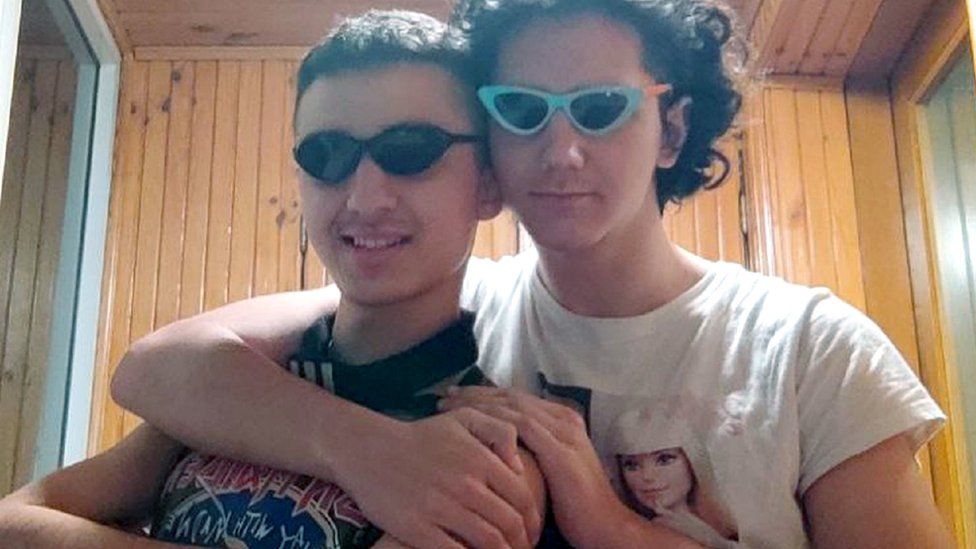
IMAGE SOURCE, PA MEDIA Image caption, Brahim (L) moved to Ukraine to study and his friends in Kyiv are campaigning for his release
After his capture alongside Britons Aiden Aslin and Shaun Pinner, all three were tried by a proxy court in the so-called Donetsk People’s Republic, a pro-Russian breakaway region in eastern Ukraine. They were tried as mercenaries rather than being treated as prisoners of war, whose rights are protected under the Geneva Convention.
The court is not recognized internationally, but Russia’s foreign minister has defended the death sentences it gave the men.
Iman said she feared that her brother did not know that people were trying to help him.
“I just want to tell him you’re loved. I just want to tell him, like, things will be OK. Don’t be scared. He’s my little brother. That’s what a big sister should do, but I could not do that. I cannot do that,” she said.
Moroccan rights activist Saida el-Alami has lost her appeal against her conviction for insulting public officials and has had her sentence increased from two to three years in prison.
She was arrested in March after denouncing on social media the Moroccan authorities’ treatment of journalists and activists.
Rights groups say the kingdom has stepped up its harassment of opponents, often using bogus charges to have them thrown behind bars.
Some final year students pursuing their education in Morocco under a Government of Ghana funded scholarship are taking shelter in churches due to non-payment of rent.
According to the aggrieved students, failure of the government to pay their stipends which have been in arrears for the past eight months, has resulted in this.
They also stated that the situation has left them in extreme poverty.
Isaac Ofori Agyekum, an affected student disclosed that they now have to survive by borrowing money and food from friends and other nationals.
“For the past eight months we have not received anything from the government. We received a communique from the embassy saying that all final year students are supposed to go home and their stipends will be paid in Ghana [but] some of us have to pay for apartments and other utilities so we have to go borrowing,†he shared.
Vice President of the Ghanaian Student Association in Morocco, Nana Kwabena Dankwa also lamented over the situation.
He was particularly concerned about the fact that most of the students are financially constrained as a result of the development and, therefore, would have to starve.
“Feeding is one of the biggest challenges that students are facing here,†he said, adding that some of the students are highly indebted due
to the situation.
“Students borrow from shops, some of them eat on credit, others also borrow from other nationalities to buy foodstuff and now they have borrowed till people no longer want to offer them help,†he added.
Also, “students are sleeping in church auditoriums here in Morocco.â€
Amuzu Delali, also an affected student, confirmed this. “The major problem is our feeding. Students depend on other nationals for food.
These days when we get to the apartments of friends, they begin to close their doors because they think we are coming to beg for food,†he said.
They are, therefore, appealing to the government to come to their aid in order to alleviate their economic woes.
“We are pleading with the government that they should come to their aid,†Amuzu stated.
Former Hasaacas Ladies forward, Evelyn Badu, has written her name in African football history after winning big at the 2022 Confederation of African Football(CAF) Awards in Rabat, Morocco.
The Black Princesses captain won two inaugural awards at the event, which took place on Thursday, July 21, 2022.
The double awards add to Badu’s three previous CAF debut awards, making her the first African female footballer to win five CAF debut awards.
The Alvaldsnes forward won her previous three at the inaugural edition of the CAF Women’s Champions League in 2021.
Here are all five CAF debut awards won by Badu
CAF Interclub Player of the Year Awards (Women)
Badu won the Interclub award at the 2022 CAF Awards.
She beat two Mamelodi Sundowns Ladies players, Andile Dlamini and Bambanani Mbanie, to claim the new category.
CAF Young Player of the Year (Women)
Badu landed her second of the night at the awards gala, winning the Women’s Young Player of the Year award.
She defeated former teammate Doris Boaduwaa (Ghana & Sekondi Hasaacas Ladies) and Yasmine Zouhir (Morocco & AS Saint-Etienne).
 CAF Women’s Champions League Player of the Group Stage
During the 2021 CAFWCL, Evelyn Badu became the first player to win the group stage award.
She netted three goals in three games and won back-to-back woman-of-the-match awards.
Player of the tournament
Badu ended up being named the best player of the tournament after her stellar performance that gained her prominence on the continent.
CAF Women’s Champions League top scorer
Badu won the top scorer of the tournament with five goals, three in the group stage and two in the knockout round.
The second game in Group A will take place on Sunday when the Ugandan Cranes open their account against Senegal.
This was the first match at a WAFCON finals in four years after the 2020 edition was cancelled because of the coronavirus pandemic, which the Confederation of African Football (Caf) had said it was reluctant to do.
The first finals to feature 12 teams, after Caf expanded the tournament in 2019, this WAFCON is also taking place on North African soil for the first time and a healthy crowd was in attendance after local organisers offered free entry to fans for all games.
Host nation Morocco is currently midway through an ambitious four-year investment plan into women’s football, with the aim of hugely increasing the women’s game’s popularity in the country.
Little expense has been spared, as shown by the fact that Reynald Pedros, who led French side Lyon to two European Champions League titles in 2018 and 2019, was brought in as coach in late 2020.
He has been rebuilding the side ever since and although his team looked as if they would run away with the game at times, the former France international showed his frustration that the lead was never extended
With far more limited resources than their wealthy rivals, Burkina Faso were playing their first competitive match since qualifying in February and the fatigue showed as early as the first half when one of their players went down for cramp, a scenario suffered by others after the break.
Nonetheless, the Burkinabe – who had never played an official women’s fixture before 2007 – were still in the game late on and could have fashioned an unlikely draw but for some brave goalkeeping from Khedija Errmichi, who twice denied substitute Limata Nikiema late on.
At the other end, Tottenham Hotspur striker Rosella Ayane struggled to get into the game despite being presented with some presentable chances.
Midfielder Salma Amani, who impressed throughout, almost doubled Morocco’s lead late in the first half only to fire over from close range after Assanatou Nako had cleared off the line, the first of two such saves from the Burkinabe defender.
Further chances came and went for Morocco, who will be relieved to have finally won their second game at the finals nearly a quarter of a century on from their first, when beating Egypt 4-1 in 1998.
Burkina Faso, who face Senegal on Tuesday, will look forward to an extra day of rest after their young and inexperienced squad, over half of which is 21 or younger and all but two of whom are based at home, admirably adapted to the bright lights of a major international competition for the first time.
A protest was held outside the UNHCR’s office in Rabat Morocco by African migrants on Tuesday.
It comes after dozens died Friday while attempting to cross by force into the Spanish autonomous city of Melilla from Moroccan territory.
The Spanish Attorney General’s Office announced on Tuesday the opening of an investigation into the incident.
“We went to the city of Nador and they beat us badly. They killed our friends and family. The Moroccan government said there were 23 dead, but we know there are more than 70, it’s inhumane. We call for no discrimination between migrants. “Â Omar, a Sudanese migrant said at the demonstration.
At least 23 migrants died and 140 police officers were injured, according to Moroccan authorities, when some 2,000 migrants tried to cross the high wire fence separating Melilla from the northern Moroccan border town of Nador.
“Many of these incidents were not filmed, there are many dead among us and currently, many young people are in prison, and several seriously injured. “We ask today to see the bodies and to identify them in order to inform their families in Sudan of what happened,” We ask the human rights associations to intervene to treat the wounded, and at the same time we ask them to immediately evacuate us to safe countries, because we do not feel safe here.” Omar added.
Melilla tragedy: investigation in Spain, UN denounces “excessive use of force
The Spanish Public Prosecutor’s Office announced that it had “requested an investigation to shed light on what happened,” hours after the UN demanded an independent inquiry into the tragedy, the deadliest ever recorded on the borders between Morocco and the two Spanish enclaves of Ceuta and Melilla, the EU’s only borders on the African continent.
The Spanish prosecutor’s office motivated its decision by “the seriousness of the events that occurred, which could affect the human rights and fundamental rights of people”.
For its part, the UN called on both countries to ensure “an effective and independent investigation” and denounced “excessive use of force” against migrants.
“This is unacceptable,” said UN spokesman Stephane Dujarric, noting that the excessive use of force has been noted by the UN “on both sides of the border.”
“We were shocked by the images of violence seen at the border between Morocco and Spain this weekend and which resulted in the death of dozens of human beings, asylum seekers, migrants,” he said.
In Rabat, about fifty migrants demonstrated on Tuesday in front of the office of the UN High Commissioner for Refugees (UNHCR) in Rabat against the “inhumane” treatment inflicted by Moroccan law enforcement agencies on Friday and to claim refugee status, AFP noted.
“In Nador, we were beaten in an inhuman way,” Omar, a Sudanese migrant who fled “war and prison” in his country, told AFP. “We don’t feel safe here, our lives are in danger,” he added.
“June 24 is a black day. There was pushing and shoving and then the police beat many of our brothers,” said Ahmed, an Eritrean, denouncing a “butchery”. “We want to know what happened so that we can explain it to the relatives of the deceased,” he pleaded.
“Where are the rights of refugees in Morocco?” the protesters’ placards read.
“The European Union, its member countries and Morocco are responsible for this disaster,” said the Platform of Sub-Saharan Associations and Communities in Morocco (P.ASCOMS) in a petition published Tuesday.
The majority of new migrants flowing into Morocco come from Sudan, particularly from Darfur, where a new outbreak of violence has recently left hundreds dead and 50,000 displaced.
Many are coming through Libya and Algeria – despite an officially closed border with Morocco – to reach the Cherifian kingdom.
In the midst of a crisis with Algeria, Morocco has pointed the finger of blame at its neighbor in the Melilla tragedy, criticizing its “deliberate laxity” in controlling its borders with the kingdom, according to Spanish media citing a statement from the Moroccan embassy in Spain.
A statement described as a “flight forward” by the Algerian diplomat in charge of the Western Sahara issue, Amar Belani, who accused Rabat of looking for “scapegoats to get rid of its responsibilities”, on the Algerian news website.
Four women in Morocco have filed complaints of sexual harassment against French insurance tycoon Jacques Bouthier.
Now aged between 26 and 28, they had been employed by his firm in Tangier.
The women said they had been sacked after refusing to give in to harassment and intimidation.
The 75-year-old is under formal investigation in France for raping a minor and trafficking. He reportedly says he is the victim of blackmail.
Considered to be one of France’s richest men, Mr Bouthier resigned as CEO of insurance brokers Vilavi, formerly known as Assu 2000, last month.
On Friday, the Moroccan Association for the Rights of Victims held a news conference about the allegations alleged to have occurred in Tangier between 2018 until April 2022.
Some of Mr Bouthier’s alleged victims appeared, wearing face masks and dark glasses to hide their identities, to tell journalists about their experiences.
“He asked to sleep with me and when I said no, he asked me to introduce him to a sister, a female cousin or a friend, saying he would give me a nice present in exchange,” one is quoted by AFP news agency as saying.
The women also accused other French and Moroccan executives of involvement.
“Jacques on his own is not scary, but with his accomplices, above all in Tangier, that’s when he’s scary. So they started to harass me morally, real harassment once again, they pushed me to resign,” another said.
French police suspect the businessman of keeping up to seven teenagers in a flat over a number of years.
The French investigation began earlier this year when a 22-year-old woman went to a police station in the capital, Paris, saying she had been held captive by him for five years – forced to provide sex in return for food and lodging.
Exactly forty-six years ago today (November 6, 1975), King Hassan II of Morocco made a historic speech calling on the Moroccan people to undertake a long, peaceful march to the south to liberate the Sahara which was under Spanish occupation.
It is famously known as the Green March, an unprecedented event in the history of the 20th century and the African continent, which gathered 350,000 volunteers in a bid to put an end to the Spanish occupation without resorting to violence.
About 45 years earlier, on the Asian continent, Mahatma Gandhi started the Salt March, an act of nonviolent civil disobedience, in colonial India to wrest independence from the British.
On the occasion of the anniversary of the Green March, we look back at two historic moments, when peaceful actions changed the destiny of a Nation.
This spectacular action has some striking similarities to the “Salt March†started by Gandhi, on March 12, 1930, real concretisation of his doctrine of non-violence.
Indeed, on February 15, 1930, Gandhi announced to his companions of the Congress, the Indian independence party that he had chosen as the objective of the civil disobedience campaign the abrogation of the law that forced them to pay a tax on salt.
It was then an offence to make salt, possess it, sell it, buy it or even to take away natural salt left on a beach.
On the morning of March 12, 1930, Gandhi, then 61-years-old, left the city of Ahmedabad with 79 companions.
They proposed to reach by foot the village of Dandi located at the edge of the Indian Ocean, at 380 kilometers of distance.
This history-making activity attracted global attention as international press covered the event with keen interest.
After 25 days of walking and meetings, Gandhi picked up on the beach a little salt forgotten by the waves.
However, it took many more years of struggle before India’s independence was finally achieved on August 15, 1947, but this Salt March was a significant event because it was peaceful, but ultimately a key process of gaining independence.
Back to Morocco, the Moroccan Kingdom began the process of completing its territorial integrity in 1956, the official year of independence.
Decolonization of the Western Sahara territory took place in a completely different context from the other decolonisation phases of the Moroccan Kingdom.
On one hand, Franco’s Spain had no intention of retroceding the disputed semi-metropolitan Western Sahara province, especially after the discovery of phosphate deposits in the region in 1972.
On the other hand, the Algerian regime, aided by the Eastern bloc, had undeclared claims to the territory, motivated by the Cold War between the United States of America and the Soviet Union.
The idea for the Algerian regime and its allies was, and still is today, to set up a republic under its absolute control in the image of the old Syrian/Lebanese governance model.
Faced with this challenge, King Hassan II developed an exceptional idea, which was an echo of the Salt March.
On November 6, 1975, he made a historic speech calling on the Moroccan people to undertake a long, peaceful march to the South to liberate the Western Sahara from Spanish occupation.
This call triggered an immense popular fervour.
During his speech, he concluded by asking the Moroccans to be courteous when meeting the Spanish, to greet them and to invite them to share their meal.
He added that the Moroccans did not feel any resentment and that if they had wanted to fight against Spain, it would not be unarmed civilians who would show up but rather a military force.
He concluded by saying that their intentions were not at all warlike and that they were reluctant to shed any blood.
There were 350,000 Moroccans, including 35,000 women, who marched in joy and prayer towards the southern provinces to recover the Moroccan Sahara.
King Hassan II insisted on the participation of women, as a symbol of pacification of the Green March.
Dozens of foreign personalities and delegations from different countries participated in the march.
The number of volunteers was not left to chance: it was the number of people born in Morocco every year. It was a real Morocco in a nutshell, where all provinces and social conditions were represented.
Unlike the Salt March in India, the Green March was a real logistical nightmare and a human challenge for Morocco at the time.
It required the mobilisation of 7,800 trucks and means of transport, 17,000 tons of food, 63,000 tons of water, 5,500 tons of fuel, 500 doctors and health assistants, 220 ambulances, and more than 10,000 people to organise and supervise the 350,000 marchers.
The Green March started from the region of Tarfaya braving the Spanish military and the barbed wire at the borders.
Confronted by the determination of the marchers, Spain had no choice but to disengage from the region.
This was made concrete by an official letter sent by its permanent representative to the UN on February 26, 1976.
Following this, a handover ceremony was organised between Morocco and Spain.
The Green March and the Salt March, unique in their kind, are national epics characterised by a fierce patriotism that have marked the national destinies of Morocco and India.
Hearts of Oak will depart to Morocco on Thursday evening with a 24-man squad ahead of their CAF Champions League preliminary round second leg game against Wydad Athletic Club.
The Phobians defeated Wydad Athletic Club 1-0 in the first leg encounter at the Accra Sports Stadium on Sunday.
Isaac Mensah scored the only goal of the game to give the Ghana Premier League champions an advantage ahead of the second-leg encounter this weekend.
The team will fly to Morocco with a 43-man contingent made up of 24 players, seven technical staff, management members.
Ghana FA Executive Council member Dr Randy Abbey will be the leader of delegation for the team to Morocco.
Hearts will board the Emirate airline to Rabat for the game later today.
The Phobians will be hoping to make the money zone for the first time since 2006.
The United States sent back to his native country a Moroccan detainee at Guantanamo Bay on Monday, the first such transfer under Joe Biden, as Washington reaffirmed its goal of closing the controversial prison.
Abdellatif Nacer, born in 1965 in Casablanca, had joined the forces of Al Qaeda in Afghanistan, where he fought the U.S. army in 2001. He was handed over to Moroccan authorities on Monday morning, according to the Pentagon.
In Rabat, the judiciary announced Monday the opening of “an investigation with the person concerned for his alleged involvement in the commission of terrorist acts. The legal effects will be determined by the prosecutor’s office in the light of the results of the investigation,” the prosecutor’s office said in a statement.
His transfer brings to 39 the number of detainees in the notorious military prison erected in 2002 at the U.S. military base in Guantanamo Bay, Cuba, to house prisoners of war alleged to be al-Qaeda accomplices.
Ten other prisoners who are no longer considered a threat to U.S. national security have already received their release orders and 17 others may join them. Their departure from Guantanamo depends on the willingness of their home country or a third country to accept them.
Transferable detainees
“The Biden administration remains committed to a thoughtful and careful process to responsibly reduce the prison population and ultimately close Guantanamo Bay,” a senior administration official who requested anonymity told reporters.
She did not say how many negotiations were underway with countries that could take transferable detainees and which countries were involved.
In a statement, the State Department praised Morocco’s efforts to take in Abdellatif Nasser, and took the opportunity to call on other countries to repatriate their jihadist nationals from Syria, where they are imprisoned in camps run by the U.S.-allied Syrian Democratic Forces.
“Morocco’s leadership role in repatriating Abdellatif Nacer, as well as its past goodwill in facilitating the return of jihadists who fought in northeast Syria, should encourage other countries to repatriate their citizens,” noted U.S. diplomatic spokesman Ned Price.
A spokeswoman for the individual rights organization ACLU welcomed the departure of the Moroccan detainee. “It is a shame that Abdellatif Nasser has continued to languish at Guantanamo five years after being deemed transferable,” said Hina Shamsi of the ACLU. “Ending two decades of unjust and abusive military detention of Muslims at Guantanamo is a humanitarian obligation and a national security necessity.”
Obama Administration
The release of Abdellatif Nacer, accused of supplying weapons to al-Qaeda but never charged, had been recommended by the Obama administration in 2016, “subject to security and humane treatment safeguards” according to the Pentagon, but he remained imprisoned during the presidency of his successor, Donald Trump.
Barack Obama had ordered the closure of Guantanamo in January 2009, when he came to power, with the idea of having the prisoners tried by civilian courts. But the decision, very unpopular, was blocked in Congress. Instead, he quietly released hundreds of detainees whose release had been approved by the Presidential Review Commission.
These releases were interrupted under Donald Trump. They have resumed under Joe Biden, with five detainees having had their releases approved since January. “Our goal is to close Guantanamo Bay,” Biden’s spokeswoman Jen Psaki reiterated Monday, without advancing a date for closing the military detention center.
Illegal detention
The Guantanamo Bay prison was opened in 2002, on U.S. soil in Cuba, to hold members of al-Qaida and alleged accomplices of the perpetrators of the 9/11 attacks. The prison has become a thorn in the side of Washington, accused of illegal detention, human rights violations and torture. It has held up to 780 “prisoners of war,” most of whom were incarcerated despite weak evidence of their involvement. Many were tortured at secret CIA sites before being transferred to Guantanamo.
Ten Guantanamo detainees, including Khalid Sheikh Mohammed, the alleged mastermind of the 9/11 attacks, are awaiting trial by a military commission, which has issued only two convictions in two decades.
A Casablanca court sentenced prominent Moroccan journalist and activist Omar Radi to six years in prison on Monday after finding him guilty of espionage and sexual assault.
His colleague, Imad Stitou, was convicted of “participation in rape†and sentenced to 12 months in prison, with six months suspended.
The Casablanca court ordered Radi and Stitou to pay the equivalent of more than $22,300 to the victim of the alleged sexual assault.
Charges held against Radi have been heavily criticized by rights groups who claim they are politically motivated. Since his arrest in July 2020, the investigative journalist has always denied any wrongdoings.
Omar Radi’s arrest had once more fuelled concerns, with many denouncing a crackdown on news media, and a harrassment of critics of the government.
In a June 2020 report, Amnesty International said Moroccan authorities had unlawfully spied on the journalist through his phone by using sophisticated surveillance software.
A claim disputed by the Moroccan government.
However Radi was found to have been amongst 189 journalists around the world identified as being on a list of allegedly targeted clients of Israeli-based NSO Group, a hacker-for-hire group using the “Pegasus” military-grade malware for potential spying on journalists, human rights activists and political dissidents, as reported by a global media consortium this week.
NSO Group’s Pegasus is smartphone spyware. It gives an attacker complete access to a phone’s messages, media, microphone, camera, calls and contacts. @omarradi is latest of scores of activists to be targeted. This needs to stop. pic.twitter.com/MXpV463AYt
A Malian woman gave birth to nonuplets in Morocco on Tuesday and all nine babies are “doing wellâ€, according to a statement from the Mali Health Ministry.
Anadolu Agency reports that Halima Cisse, 25, delivered five girls and four boys.
According to the evaluation of doctors both in Mali and Morocco, Cisse was initially expected to have septuplets but gave birth by cesarean section to nonuplets, shocking the doctors, who had not noticed another two siblings during ultrasounds.
After a two-week medical stay at a hospital in the Malian capital Bamako, the doctors requested specialist care for the rare case of Cisse.
Abdul Karim Zito Head Coach of the National under-20 team, the Black Satellites, has said his charges are ready to beat Morocco on Friday to firm up their qualification to the next round of the 2021 Total U-20 Africa Cup of Nations tournament in Mauritania.
Ghana would take on Morocco in their second Group C game on Friday, February 19, 2021, in Nouadibou
At a pre-match press conference on Thursday evening, Coach Zito, though Morocco seems to have a similar style of play like the Satellites, his players were adequately to face them and overcome their threat.
“I think it would be an interesting game because we are coming in as Champions of West Africa Zone B and they are champions of their zone as well. We all want to win and confirm qualification so it would be tough. But we are ready for them,†Coach Zito said.
“Football is football and we all have unique styles of play but Morocco plays quite similar to us. I studied the game based on how the opponent sets up and how they approach the game. So once I see their team tomorrow I would know how to position my players.
“It would be a crucial match and we know winning the game would depend highly on taking our chances in the game,†he added.
Defender Emmanuel Agyeman Duah who also attended the press conference expressed confidence that the Black Satellites would emerge victorious against their Moroccan counterparts.
“We are really prepared and we know they are good tactically but we can assure you of good football tomorrow. We can also assure all Ghanaians that we will be victorious tomorrow†the wing-attacker stated.
Both Ghana and Morocco won their opening and a win for either side will propel them to the next round of the competition.
Ghana top the Group with three points, Morocco sits second with three points. While The Gambia and Tanzania occupy the 3rd and fourth positions respectively with no point.
Ghana U-20 coach Karim Zito says his team is ready for North African zonal champions Morocco for the second Group C match at the Africa U-20 Cup of Nations in Mauritania.
The WAFU Champions Ghana began the tournament with a thumping win against debutants Tanzania with Morocco edging the Gambia.
Zito is hoping to lead Ghana to a fourth U-20 success but insists they will be taking a game at a time.
“I think it will be an interesting game because we are coming in as Champions of West Africa B and they are champions of their zone as well. We all want to win and confirm qualification so it will be tough. But we are ready for them,” Coach Zito told the press at Thursday’s pre-match conference.
“Football is football and we all have unique styles of play but Morocco plays quite similarly to us. I study the game based on how the opponent sets up and how they approach the game. So once I see their team tomorrow I will know how to position my team.
“It will be a very crucial match and we know winning the game will depend highly on taking our chances in the game,” he concluded.
Donald Trump announced on twitter the US had recognized Morocco’s sovereignty over the disputed Western Sahara region.
The announcement is part of a deal, which makes Morocco the latest Arab league country to agree to normalize relations with Israel.
With US help, the kingdom becomes the fourth state to normalize relations with Israel since August.
Another HISTORIC breakthrough today! Our two GREAT friends Israel and the Kingdom of Morocco have agreed to full diplomatic relations – a massive breakthrough for peace in the Middle East!
Prime Minister Benjamin Netanyahu of Israel celebrated the announcement at a prearranged, televised Hanukkah lighting ceremony at the Western Wall in the Old City of Jerusalem.
“I think that this is the foundation on which we can now build. This peace will resume liaison offices quickly between Israel and Morocco and work as rapidly as possible to establish full diplomatic relations. We’ll also institute direct flights between Morocco and Israel and Israel and Morocco giving this bridge of peace an even more solid foundation. This will be a very warm peace. Peace as never. The light of peace on this Hanukah day has never shown brighter than today in the Middle East.” Benjamin Netanyahu, Prime Minister of Israel:
Netanyahu had been accompanied by David M. Friedman, the American ambassador to Israel.
On the subject of the Western Sahara, Morocco has always maintained the region is part of its territory although the African Union recognizes it as an independent state.
The disputed region which is a former Spanish colony, was annexed by Morocco in 1975. It has since then been the subject of a long-running territorial dispute between Morocco and its indigenous Saharawi people, which is led by the pro-independence Polisario Front.
Morocco recognized the United States in 1777. It is thus fitting we recognize their sovereignty over the Western Sahara.
Delegates of Libya’s rival administrations have met for talks in Morocco two weeks after the two sides declared a ceasefire.
Five delegates each met from the UN- recognised government in Tripoli and the rival parliament based in the eastern city of Tobruk.
Moroccan Foreign Minister, Nasser Bourita, while opening the meeting in the town of Bouznika, said that Morocco had no specific agenda but wanted to give Libyans a chance to discuss the issues dividing them.
Morocco hosted talks in 2015 that led to the creation of the UN-recognised government in Tripoli.
The Moroccan authorities have imposed tight new restrictions on movement in Casablanca and Marrakesh – the country’s main tourist hubs – following a spike in coronavirus infections.
Several districts of the two cities will be closed off, with restaurants, coffeehouses and businesses operating at reduced hours.
Some public parks and beaches in Casablanca have been closed.
On Tuesday, partial lockdowns were ordered in the capital, Rabat, and the port city of Tangiers, with armoured vehicles patrolling the streets and police manning checkpoints.
Morocco has recorded more than 46,000 cases of the coronavirus and over 740 deaths.
Some 313 coronavirus cases have been reported in Moroccan jails following mass testing for Covid-19.
The authorities say Ouarzazate prison in central Morocco recorded 303 cases, while 10 other cases were in Oudaya prison in Marrakesh and Ksar Kebir prison in the north-west.
Most of the cases involved prisoners, but a small number of prison warders were also diagnosed.
The mass testing started after one person in Ouarzazate prison tested positive last week.
The authorities say they have isolated all positive cases and all warders have been issued with protective gear.
There are nearly 80,000 inmates in Moroccan prisons. In early April, more than 5,654 inmates were pardoned by the king to reduce the risk of spreading the virus in notoriously overcrowded prisons.
Morocco has 4,252 confirmed cases of coronavirus, including 165 deaths.
Some 313 coronavirus cases have been reported in Moroccan jails following mass testing for Covid-19.
The authorities say Ouarzazate prison in central Morocco recorded 303 cases, while 10 other cases were in Oudaya prison in Marrakesh and Ksar Kebir prison in the north-west.
Most of the cases involved prisoners, but a small number of prison warders were also diagnosed.
The mass testing started after one person in Ouarzazate prison tested positive last week.
The authorities say they have isolated all positive cases and all warders have been issued with protective gear.
There are nearly 80,000 inmates in Moroccan prisons. In early April, more than 5,654 inmates were pardoned by the king to reduce the risk of spreading the virus in notoriously overcrowded prisons.
Morocco has 4,252 confirmed cases of coronavirus, including 165 deaths.
Police in Morocco have arrested more than 3,000 people in the past 24 hours for breaking restrictions imposed to combat coronavirus.
The Moroccan state news agency says half have been placed in custody while their cases are investigated.
More than 50,000 people have been arrested in the country since a nationwide lockdown was introduced in mid-March and wearing a mask outside the home became compulsory.
There are 3,377 confirmed coronavirus cases in Morocco, making it the third worst-hit country on the continent.
Moroccans who venture outside their homes without wearing face masks risk prison sentences of up to three months and a fine of up to $126 (£102).
The new order takes effect on Tuesday for those leaving their homes during the coronavirus lockdown, which began in mid-March.
The decision was announced on Monday after a government meeting about how to control the spread of the virus.
Face masks are to be sold at a subsidised price of $0.08 each.
By next week, Morocco plans to be producing almost six million face masks a day, an increase from the current figure of 3.3 million, industry ministry spokesman Taoufiq Moucharraf told the Reuters news agency.
The North African nation has so far reported 1,141 coronavirus cases and 83 deaths.
It imposed a month-long public health state of emergency on 19 March. People can leave their homes to buy food or medicine – but only those with permits can go to work.
Since then, more than 8,600 people have been arrested and prosecuted for flouting lockdown rules, including failing to produce a permit, illegally transporting people, or selling counterfeit goods, according to an official report quoted by Le Figaro newspaper.
At the moment the World Health Organization (WHO) does not recommend face masks to be worn by the general public, advising them for the sick or those caring for patients with coronavirus.
It says frequent hand-washing and social distancing are more effective at stopping the spread of the virus, but a WHO panel is assessing further research on the matter.
Experts warn that face masks must be worn correctly, changed frequently, removed and disposed of properly and be used in combination with good hygiene.
Over the weekend, Americans were advised to use clean cloth or fabric to cover their faces whilst in public.
European advisers say reusable cloth masks may increase the chance of infection as there is a high chance virus particles could go through cloth and problems with moisture could also mean the cloth retains the virus.
King Mohammed VI on Sunday pardoned more than 5,000 inmates to prevent the new coronavirus from contaminating Moroccan prisons, the Justice Ministry announced.
The monarch “granted a pardon to 5,654 inmates and ordered to take all necessary measures to strengthen the protection of inmates in prisons,†the ministry said in a statement.
The pardoned detainees were selected according to “their age, state of health, length of detention and good conduct,†according to the text.
Their release will take place “in stagesâ€, taking into account “the exceptional circumstances associated with the state of health emergency and the precautions requiredâ€.
The ministry does not specify whether detainees of the “Hirakâ€, a protest movement that has agitated Morocco in 2016-2017, are among those pardoned.
Morocco, which on Sunday recorded 960 cases of contamination with 66 deaths and 69 recoveries, took drastic measures by closing its borders and declaring a state of health emergency in mid-March to limit the spread of the Covid-19 pandemic.
In this country of 35 million inhabitants known for its overcrowded prisons (an incarceration rate of 232 per 100,000 inhabitants), human rights defenders recently called for the release of “political prisoners†as well as other priority categories of detainees (on remand, vulnerable or at the end of their sentences).
For its part, the prison administration has taken protective measures for its staff, reinforced health measures, reduced visiting rights and suspended all activities involving outside actors.
The UN High Commissioner for Human Rights Michelle Bachelet called on 25 March for the urgent release of detainees around the world to prevent the pandemic from “wreaking havoc†in these closed, often overcrowded places. Her appeal was followed by several countries.