The European Parliament bases its work on emotions, the Kremlin spokesperson Dmitry Peskov told Russian media as reported by TASS news agency, adding that Moscow takes its resolve into little consideration.
His remarks came after the EU institution labelled Russia a state sponsor of terrorism, a move that is not legally binding but rather symbolic.
“It’s no secret to us that in the recent years the European Parliament has had little love for us. In return, we have had little desire to take into account what’s going on there,” Peskov was quoted as saying.
“And emotions is such a changeable thing. Today they are Russophobic, tomorrow there will be something else. And then, maybe a moment of clarity will come,” he said, adding that Russia belived the European parliament lacked a professional approach.
United Nations officials announced on Friday, 18 November, a second shipment of Russian fertiliser will go to West Africa after a first attempt was blocked in European ports because of sanctions imposed due to the conflict in Ukraine.
The move follows talks between Moscow and the UN .
Secretary General of UN’s trade and development agency UNCTAD, Rebeca Grynspan, told journalists: “There are around 300,000 tonnes of fertiliser in the different European ports.
“The first shipping will get out of a Netherlands port going to Malawi, the vessel is loading right now. And the date that has been established for the vessel to go is on the 21st of November, to Malawi through Mozambique.”
As part of the implementation of the two agreements signed on 22 July in Istanbul to ensure unhindered access to food and fertiliser from Ukraine and Russia, the WFP earlier announced it would facilitate the donation of 260,000 tonnes of fertiliser by the Russian fertiliser company Uralchem-Uralkali to the neediest countries in Africa, with Malawi as its first destination.
Grynspan added: “Beyond Malawi, with the help again with the donation from Uralchem/Uralkali, the intervention of WFP, and the help of the World Bank and France, we hope that the next destination of the fertilisers will be West Africa. That has been very affected by the affordability crisis of fertilisers.”
Agricultural products and fertilisers do not fall under the sanctions against Russia, but because of the risks linked to the conflict in the Black Sea, shipowners no longer wanted to hire their ships because they could not find insurance.
After intensive discussions, Russiaand the UN have established a framework for insurance, financial transactions and other matters which is compatible with the three existing sanctions systems (US, UK and EU) put in place following the Russian invasion of Ukraine on 24 February.
Last week, the Black Sea Grain Initiative, signed on 22 July between Turkey, Ukraine, Russia and the UN allowing Ukrainian grain exports from Ukrainian ports, was extended for 120 days from 19 November.
Griner, the US basketball star and Olympic gold medalist, has been transferred to a penal colony 300 miles from Moscow, while Russian national Bout was apprehended in a sting in 2008.
Russia hopes to make a prisoner swap with the United States in exchange for the release of basketball star Brittney Griner in exchange for a convicted arms trafficker known as the “Merchant of Death.”
According to Russian Deputy Foreign Minister Sergei Ryabkov, Moscow and Washington are currently discussing a possible exchange.
According to her lawyers, Griner was transferred to a penal colony in Mordovia, about 500 kilometres (300 miles) southeast of Moscow.
The all-star centre with the WNBA’s Phoenix Mercury and two-time Olympic gold medal winner was detained in February when customs agents said they found vape canisters containing cannabis oil in her luggage at Moscow’s Sheremetyevo Airport.
At her trial, Griner admitted having the canisters in her luggage, but testified she packed them inadvertently in haste to make her flight and had no criminal intent.
Her defence team presented written statements saying she had been prescribed cannabis to treat chronic pain.
She was convicted in August and sentenced to nine years in prison.
Speaking about the possibility of a prisoner swap, Mr Ryabkov said: “I want to hope that the prospect not only remains but is being strengthened, and that the moment will come when we will get a concrete agreement.”
“The Americans are showing some external activity, we are working professionally through a special channel designed for this.
“Viktor Bout is among those who are being discussed, and we certainly count on a positive result.”
Who is Viktor Bout?
Variously dubbed “the merchant of death” and “the sanctions buster” for his ability to get around arms embargoes, Bout was one of the world’s most wanted men prior to his 2008 arrest on multiple charges related to arms trafficking.
For almost two decades, Bout was one of the world’s most notorious arms dealers, selling weaponry to rogue states, rebel groups and murderous warlords in Africa, Asia, and South America.
Ever since his capture in an elaborate US sting, the Russian state has been keen to bring him back.
Police say they are investigating the ‘suspected homicide’ of the students in the college town of Moscow.
Police in the US state of Idaho say they are investigating the deaths of four university students whose bodies were found in a home near the campus.
The deaths have been classified as suspected homicides, according to police in Moscow, acollege town in north-central Idaho.
The bodies of the students from the University of Idaho were discovered on Sunday after police responded to a report about an unconscious person, the city administration said in a statement.
No additional details were available, including the cause of death.
All classes for Monday were cancelled, the university said, and are set to resume on Tuesday.
“It is with deep sadness that I share with you that the university was notified today of the death of four University of Idaho students living off-campus believed to be victims of homicide,” the university’s president, Scott Green, said in a statement.
Soon after the bodies were found, the university alerted students to shelter in place for about an hour until police concluded that there was no threat to others in the area.
When Vladimir Kara-Murza announced he was returning to Moscowearlier this year, his wife Evgenia knew the risk but did not try to stop him.
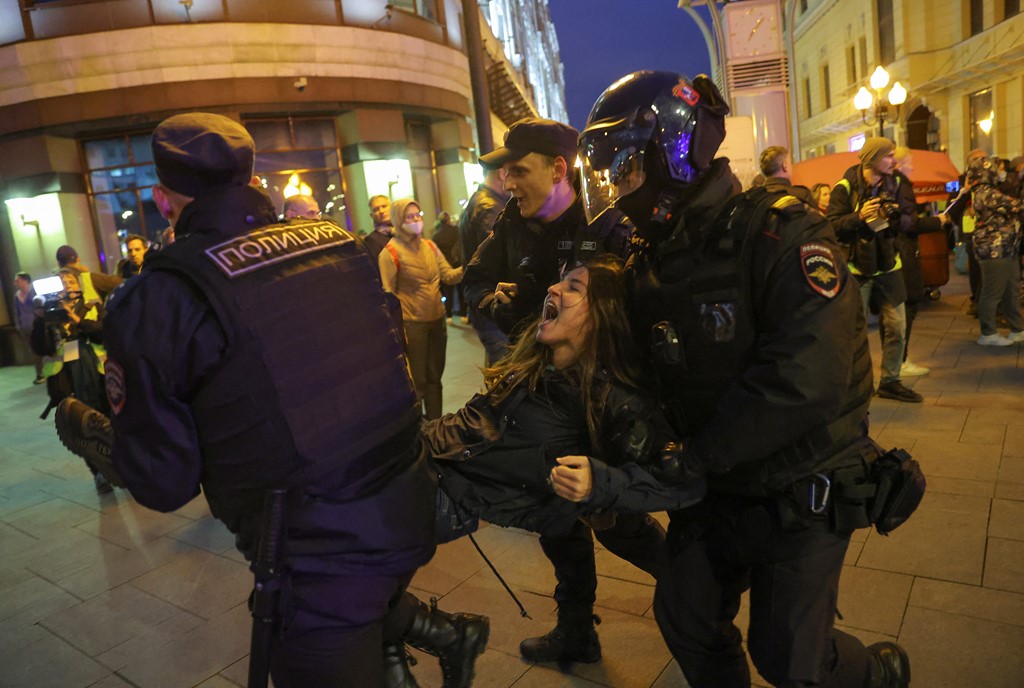
Russia had invaded Ukraine and made it a crime to call it a war. Thousands of protesters had been arrested. Vladimir himself was a sworn opponent of President Vladimir Putin and an outspoken critic of atrocities committed by his military.
Still, the opposition activist insisted on being in Russia.
Now he has been locked up and charged with treason and Evgenia has not been allowed to speak to him since April.
But in a series of letters to me from Detention Centre No. 5, Vladimir – who has twice been the victim of a mysterious poisoning – says he has no regrets, because the “price of silence is unacceptable”.
Opposing President Putin was dangerous even before the invasion, but since then the repression of dissent has intensified. Almost all prominent critics have either been arrested or left the country. Even so, the treatment of Vladimir is especially harsh.
All the charges against him are for speaking out against the war and against President Putin and yet his lawyer calculates he could spend 24 years behind bars.
“We all understand the risk of opposition activity in Russia. But I couldn’t stay silent in the face of what’s happening, because silence is a form of complicity,” Vladimir explains in a letter from his cell.
The first Evgenia heard of her husband’s arrest was a call from his lawyer, who had been tracking the activist’s phone as he always did when his client and friend was in town. On 11 April, the phone had come to a stop at a Moscow police station.
Vladimir was eventually allowed to call his wife, who lives in the US with their children for safety. There was just time to say: “Don’t worry!”
Evgenia smiles at the absurdity of that instruction.
The couple were children of perestroika, growing up during Russia’s democratic awakening after the Soviet collapse. Vladimir then studied history at Cambridge, and simultaneously began a career in Russian politics as an adviser to the young reformer Boris Nemtsov.
This is the longest the pair have been apart since their marriage on Valentine’s Day in 2004 and the activist says not seeing his family is the hardest thing. “I think about them every minute of every day and cannot imagine what they’re going through,” he says.
“I love and hate this man for his incredible integrity,” Evgenia told me on a recent trip to London.
“He had to be there with those people who went out on the streets and were arrested,” she said, referring to the many Russians detained for opposing the war. “He wanted to show that you shouldn’t be afraid in the face of that evil and I deeply respect and admire him for that. And I could kill him!”
Image caption, Evgenia has not been allowed to speak to her husband since he was jailed
Vladimir was initially detained for disobeying a police officer, but once in custody the serious charges began raining down.
The activist was first accused of “spreading false information” about Russia’s military and “higher leadership”.
The rights group OVD-Info has recorded more than 100 prosecutions under that so-called “fake news” law since the war began: a local councillor, Alexei Gorinov, was sentenced to seven years in July and activist Ilya Yashin will go on trial soon after referring to the murder of civilians in Bucha.
Vladimir’s case is based on a speech in Arizona where he said Russia was committing war crimes in Ukraine with cluster bombs in residential areas and “the bombing of maternity hospitals and schools”.
That has all been independently documented, but according to the charge sheet I have seen, Russian investigators deem his statements to be false because the defence ministry “does not permit the use of banned means… of conducting war” and insists that Ukraine’s civilian population “is not a target”.
The facts on the ground are ignored.
Another charge stems from an event for political prisoners at which the activist referred to what investigators term Russia’s “supposedly repressive policies”.
Then last month he was charged with state treason.
The activist responded to that in his latest letter: “The Kremlin wants to portray Putin’s opponents as traitors… the real traitors are those who are destroying the well-being, the reputation, and the future of our country for the sake of their personal power, not those who are speaking out against it.”
Political persecution
The treason charge is based on three speeches abroad, including one in which Vladimir said that in Russia political opponents were persecuted.
Investigators maintain that he was speaking on behalf of the US-based Free Russia Foundation, which is banned in Russia, where any “consultancy” or “assistance” to a foreign organisation considered a security threat can now be classed as treason.
No secrets have to be divulged.
“State treason for public speeches? That’s just absurd. It’s quite simply persecution for free speech. For opinion. Not for any real crime,” Vladimir’s lawyer, Vadim Prokhorov, argues by phone from Moscow.
He says the activist had no link to the foundation at the time.
“This is a political case. They’re trying to stigmatise the absolutely normal, civilised Russian opposition.”
IMAGE SOURCE,EVGENIA Image caption, Vladimir has written to the BBC from his jail cell
Vladimir himself points out that the last person accused of treason for political opposition was the Nobel Prize-winning writer Alexander Solzhenitsyn in 1974. “All I can say is that I am honoured to be in such company.”
Evgenia finds it harder to sound so calm.
This is not the first time she has been scared for her husband. He nearly died, twice, in Moscow, and the cause of his poisoning has never been identified.
When he first collapsed in 2015 and slipped into a coma, Evgenia was told he had a 5% chance of survival, but he defied the odds.
She nursed him back to health, helping him learn to function again, even to hold a spoon. He would then insist on working on his laptop on their couch, despite being sick every half hour.
“The moment he could walk, he packed his bags and went to Russia. That fight is bigger than his fears.”
For Evgenia, that has meant seven years sleeping with her phone, ”afraid I will get that call from him, or from someone else because he can’t talk anymore”.
She gave up persuading her husband not to go to Moscow long ago: her only protest was to refuse to help pack his bags. But before his last visit, after the war started, Evgenia accompanied him first to France.
“I wanted to make the trip beautiful,” she remembers, forcing back tears as she recalls long strolls through the streets of Paris, talking endlessly. “Deep inside, I knew what was coming.”
Nemtsov’s Place
Since Vladimir’s arrest, Evgenia has taken on his advocacy work: speaking out about the war in Ukraine and political repression in Russia, as well as her husband’s case.
On Monday she will unveil the Boris Nemtsov Place in London, the result of a long campaign by Vladimir to honour his mentor and friend. The prominent opposition politician was shot beside the Kremlin in 2015 in a contract killing for which the contractor has never been caught.
The renamed London street, actually a roundabout, is close to the Russian trade delegation in Highgate.
IMAGE SOURCE,EVGENIA KARA-MURZA Image caption, Boris Nemtsov (left) was a friend and mentor to Vladimir (right)
“The idea was that every car that comes to the big gate will see the Boris Nemtsov plaque,” Evgenia explains. Her husband hopes a different Russia will one day be proud of that name.
For several years, the politician worked closely with Vladimir to lobby Western governments to sanction senior Russian officials for human rights violations. Their success infuriated a political elite that had enjoyed travelling abroad and channelling funds there.
In Moscow once, Vladimir told me he had concluded that those “Magnitsky” sanctions are why both he and Mr Nemtsov were targeted.
Standing-in for her husband is taking a heavy toll on Evgenia, but it is also kept her going.
“I am doing what I need to do so that he can be brought back to the kids and this hideous war stops and this murderous regime can be brought to justice.”
Vladimir is not staying silent, either.
His long, handwritten prison letters set out his convictions that Russia is not doomed to autocracy and its people are not all brainwashed Putin devotees.
He points to the large number of letters he gets from supporters who openly criticise the Ukraine invasion and the Kremlin, and to those who still protest publicly, despite the risk. He urges the West not to isolate that part of Russian society that “wants a different future for our country”.
“For Putin, compromise is a sign of weakness and an invitation to further aggression,” he says. “If he’s allowed a face-saving exit from the war, then in a year or two we will have another one.”
Vladimir tells me he is coping with imprisonment with a mixture of exercise and prayer, books and letters. As a historian, he has a particular interest in Soviet-era dissidents and has been reading more about them as he awaits trial.
“Their favourite toast back then was ‘To the success of our hopeless cause!’” he writes. “But as we know, it wasn’t so hopeless after all.”
But in the following weeks Ukraine began to make gains in the south of the country, advancing along Dnipro river towards Kherson and putting Russian forces under increasing pressure.
Finally, Russian forces withdrew and Ukrainian troops entered the city on Friday.
Locals were seen celebrating, some reuniting with loved ones they had not seen for months. The mood in the city was one of jubilation and relief, but also trepidation and fear of what may come next, the BBC’s Jeremy Bowen reported.
In his visit on Monday, Mr Zelensky told troops that Ukraine is “ready for peace, peace for all our country,” the Reuters news agency reported.
He thanked Nato and other allies for their support in the war against Russia, adding that high mobility artillery rocket systems (Himars) from the United States had made a big difference for Kyiv.
The president addressed a crowd gathered in Kherson’s main square, some of whom waved Ukrainian flags or wore them draped across their shoulders, a Reuters journalist in Kherson said.
Mr Zelensky said he is “really happy” about the liberation, as are the people of Ukraine.
Asked where Ukrainian forces might advance next, he said: “Not Moscow…We’re not interested in the territories of another country.”
Mr Zelensky had previously said that investigators have uncovered more than 400 war crimes in areas of Kherson abandoned by Russian forces as they retreated.
The BBC has been unable to verify these allegations, and Moscow denies that its troops intentionally target civilians.
All Russian forces and equipment have been relocated to the Dnieper River’s eastern bank, according to the Russian defence ministry
Russia has completed its troop withdrawal from the western bank of the Dnieper River in Ukraine’s southern Kherson region, a major setback for Moscow in its nearly nine-month war in Ukraine.
According to Russian news agencies, the withdrawal was completed by 5 a.m. Moscow time (02:00 GMT) on Friday, and not a single military unit was left behind.
According to the ministry, all Russian forces and equipment have been transferred to the Dnieper’s eastern bank.
It was also stated that no personnel or equipment were lost during the withdrawal from the strategic city of Kherson.
Serhiy Khlan, a deputy for Kherson Regional Council, told a briefing many Russian soldiers had been unable to leave Kherson city after months of occupation, and had changed into civilian clothing.
Ukrainian officials were wary of the Russian pullback announced this week, fearing their soldiers could get drawn into an ambush in Kherson city, which had a pre-war population of 280,000. Military analysts also predicted it would take Russia’s military at least a week to complete the troop withdrawal.
Serhii Tamara removes debris from her son’s house, which was destroyed during a Russian attack [Valentyn Ogirenko/Reuters]
‘No regrets’
The Kremlin remained defiant on Friday, insisting the development in no way represented an embarrassment for President Vladimir Putin. Moscow continues to view the entire Kherson region as part of Russia, Kremlin spokesman Dmitry Peskov told reporters.
“This is a subject of the Russian Federation. There are no changes in this and there cannot be changes,” said Peskov, adding Moscow had “no regrets” about the move.
He added the Kremlin did not regret holding festivities just a month ago to celebrate the annexation of Kherson and three other occupied or partially occupied regions of Ukraine.
Russia ordered the withdrawal on Wednesday after it said attempts to maintain its position and supply troops were “futile” in the face of a mounting Ukrainian counteroffensive.
Putin proclaimed Kherson and three other regions of Ukraine as part of Russia in a triumphal ceremony at the Kremlin on September 30. Ukraine, its Western allies, and an overwhelming majority of countries at the United Nations General Assembly condemned the annexations as illegal.
Ukrainian troops reclaimed dozens of landmine-littered settlements abandoned by Russian forces in southern Ukraine and were advancing on Kherson on Friday. President Volodymyr Zelenskyy said in an overnight video address that Ukrainian forces had liberated 41 settlements.
Counteroffensive
Ukraine’s general staff said it was keeping its latest movements under wraps but listed 12 settlements it said had been freed as of Wednesday: one of them, Blagodatne, lies 30km (20 miles) from the centre of Kherson, a port at the mouth of the Dnieper River.
“Offensive actions in the specified direction continue,” it said. “Due to the safety of the operation, the official announcement of the results will be made later.”
Russia still has 40,000 soldiers in the region and intelligence showed its forces remained in and around the city, Ukraine’s Defence Minister Oleksii Reznikov said on Thursday.
Having previously warned the Russian retreat might be a trap, some quarters of the Ukrainian government barely disguised their glee at the pace of the withdrawal.
“The Russian army leaves the battlefields in a triathlon mode: steeplechase, broad jumping, swimming,” Andriy Yermak, a senior presidential adviser, tweeted.
Social media videos apparently filmed by soldiers on routes towards Kherson showed villagers hugging the Ukrainian troops.
Recapturing the city could provide Ukraine with a strong position from which to expand its southern counteroffensive to other Russian-occupied areas, potentially including Crimea, which Moscow seized in 2014.
From its forces’ new positions on the eastern bank, however, the Kremlin could try to escalate the war.
The state of the key Antonovsky Bridge that links the western and eastern banks of the Dnieper remained unclear.
Russian media reports suggested the bridge was blown up following the Russian withdrawal. Pro-Kremlin reporters posted footage of the bridge missing a large section.
But Sergey Yeliseyev, a Russian-installed official in Kherson, told the Interfax news agency “the Antonovsky Bridge hasn’t been blown up, it’s in the same condition”.
Over in Moscow, our Russia editor Steve Rosenberghas filmed a quick press preview, mopping up the Russian media’s framing of the announced pullout from Kherson.
What’s interesting, he notes, is the Kremlin’s decision to distance President Putin from the decision – putting it all on the military men: Defence Minister Sergei Shoigu and General Sergei Surovikin.
See that and more in Steve’s clip below.
In today’s Russian papers: reaction to Russia’s Kherson retreat. Plus: “Our system is geared to the search for a great leader. His decisions are not up for discussion. So he mustn’t make mistakes, for there’s no mechanism to correct them.” #ReadingRussiapic.twitter.com/KvVaaBvWcT
Brittney Griner, a convicted US basketball player, is being transferred from a Russian prison to a penal colony.
She was arrested in February at an airport near Moscow after cannabis oil vapes were discovered in her bags.
In August, the two-time Olympic gold medalist was convicted of smuggling and possessing cannabis oil and sentenced to nine years in a penal colony.
While the use of cannabis is illegal in Russia, Moscow has been accused of using Griner “as a political pawn”.
On Wednesday, the 32-year-old’s legal team said the transfer began last week and Griner was on her way to a penal colony, but they added that they had not been told where she currently is or where she is being sent to.
The US embassy is normally informed of where international prisoners are held. Griner’s team believe they may not be told for two weeks.
Penal colonies are the descendants of Soviet-era enforced labour camps, otherwise known as gulags.
In them, prisoners are housed in barracks and perform labour. Penal colonies are also a source of income, with some containing factoriesthat produce items such as food or clothing, while some inmates undertake construction work.
IMAGE SOURCE,GETTY IMAGES Image caption, Griner is the first woman in the league to consistently dunk
At the time of her trial, Griner pleaded guilty, but said she had made an “honest mistake” and had not meant to break the law.
Last month, Griner – who is seen by many as the greatest female basketball player of all time – and her legal team appealed against her nine-year sentence, but a court near Moscow upheld it, with the state prosecutor calling it “fair”.
The double Olympic winner apologised for her “honest mistake” in the appeal hearing via video link, saying her imprisonment had been “very, very stressful” and “traumatic”.
Speaking afterwards, the WNBA star’s lawyer, Alexander Boykov, said his team hoped that a prisoner exchange would be possible.
Mr Boykov has also criticised Griner’s sentence for being unduly harsh: “No judge, hand on heart, will honestly say that Griner’s nine-year sentence is in line with Russian criminal law,” he said after her appeal was rejected.
In Russia, possession of less than 6g of cannabis is normally punishable by a fine or 15 days in detention. Griner is thought to have had less than 1g when she entered Russia to play basketball during the US off-season.
Following the rejection of her appeal, Griner’s wife, Cherelle Griner, told the CBS Mornings programme that the basketball star was a “hostage” of the Russian government.
She said she did not know if her spouse “has anything left in her tank to continue to wake up every day and be in a place where she has no-one”.
IMAGE SOURCE,GETTY IMAGES Image caption, The basketball star has remained dominant in WNBA since her rookie year
Speaking after Griner’s transfer to the undisclosed penal colony, White House press secretary Karine Jean-Pierre said that the US was “unwavering” in attempts to free her and other detained Americans.
She added that US President Joe Biden had ordered his administration to swiftly “prevail on her Russian captors to improve her treatment and the conditions she may be forced to endure in a penal colony”.
Secretary of State Antony Blinken said the US expected Russian authoritiesto provide its embassy officials with access to Brittney and other Americans detained in Russia.
In late July, the Biden administration proposed a prisoner swap with Russia to secure Griner’s release, as well as ex-marine Paul Whelan, who Moscow accuses of spying. Officials said Russia had yet to respond positively to the suggestion and said diplomacy should not be conducted in public.
Russia’s invasion of Ukraine a week after Griner’s arrest and the US’s backing of Kyiv have further inflamed tensions between the two countries.
Moscow-installed authorities in occupied Khersonappear to have backtracked shortly after declaring a “round-the-clock curfew” as a Ukrainian counteroffensive nears the southern city.
“In the city of Kherson there are absolutely no restrictions that would limit the life of the city,” Kirill Stremousov, the Russia-backed deputy governor of the Kherson region, said on Telegram.
Stremousov’s remarks came about an hour after he posted a video announcing the curfew on the same channel.
A 24-hour curfew has been imposed in the Russian-controlled city of Kherson, a local Moscow-installed official has said.
Kirill Stremousov, the Russia-backed deputy governor of the Kherson region, said in a video message posted on Telegram that the measure was necessary “in order to defend our city of Kherson” from what he referred to as “terrorist attacks”.
Stremousov repeated earlier calls for civilians to leave Kherson city, saying that columns of Ukrainian vehicles had been spotted on areas of the frontline and that an attack was possible.
Ukrainian forces have in recent weeks drawn closer to the city, the only regional capital to fall to Moscow since it launched its invasion on February 24.
President Vladimir Putin has said Russia is suspending – but not ending – its participation in a deal that allows safe passage to vessels carrying Ukrainian grain exports.
Moscow pulled out of the UN-brokered agreement on Saturday, alleging that Ukraine had used a safety corridor in the Black Sea to attack its fleet.
The UN says there were no ships inside the corridor that night.
Ukraine has not claimed responsibility for the attack.
Ukrainian President Volodymyr Zelensky said the deal would be honoured and accused Russia of “blackmailing the world with hunger” – a claim Russia denies.
Despite the fallout, 12 ships containing 354,500 tons of food, including grain, left Ukraine’s Black Sea ports on Monday, Ukraine’s infrastructure ministry said. This constituted a record volume of exports since the grain deal began, said a spokesperson for Odesa’s military administration quoted by Reuters.
One of the vessels carrying 40,000 tons of grain was destined for Ethiopia, where “the real possibility of mass starvation” existed, the infrastructure ministry added.
After Russia invaded Ukraine in February, its navy imposed a blockade on Ukraine’s Black Sea ports, trapping about 20 million tonnes of grain meant for export inside the country, along with other foodstuffs such as maize and sunflower oil.
But in July, a deal between Ukraine and Russia was brokered by Turkey and the UN, agreeing to resume grain exports through the Black Sea ports.
On Monday, however, President Putin said the deal was being suspended, citing the “massive” drone attack on its fleet in Crimea that he alleged Kyiv was responsible for.
He said maritime safety must be ensured and that implementing grain exports under such conditions were too risky.
“Ukraine must guarantee that there will be no threats to civilian vessels,” Mr Putin said in a televised address.
Kyiv has not admitted responsibility for the attack, saying Moscow had long planned to abandoned the internationally-brokered deal and used the attack as a pretext to do so.
“In conditions when Russia is talking about the impossibility of guaranteeing the safety of shipping in these areas, such a deal is hardly feasible, and it takes on a different character – much more risky, dangerous and unguaranteed,” Kremlin spokesman Dmitry Peskov said.
Russia’s withdrawal from the deal has been condemned by the US, who said Moscow was “weaponising food”.
The EU’s foreign policy chief, Josep Borrell, has urged Russia to reverse its decision, saying jeopardising the export of grain and fertilisers would impact the global food crisis.
The Russian ambassador to the US has rejected accusations that his country was exacerbating a global food crisis, saying it was unfair to criticise Russia.
The suspension comes as Russia says it has expanded its evacuations of the occupied Kherson region, despite stating over the weekend that these had come to an end.
President Recep Tayyip Erdogan says Turkeyis determined to “serve humanity” and move forward with the UN-brokered Black Sea grain export deal after Moscow withdrew from the initiative over the weekend.
“Even if Russia behaves hesitantly because it didn’t receive the same benefits, we will continue decisively our efforts to serve humanity,” Erdogan said in a televised address.
“Our effort to deliver this wheat to countries facing the threat of starvation is evident. With the joint mechanism that we established in Istanbul, we contributed to the relief of a global food crisis,” the Turkish leader added, noting the deal had already provided 9.3 million tonnes of food to world markets.
Russia has warned that it would be “risky” for Ukraine to continue exporting grain via the Black Sea after Moscow suspended its participation in an initiative to facilitate shipments.
“In conditions when Russia is talking about the impossibility of guaranteeing the safety of shipping in these areas, such a deal is hardly feasible, and it takes on a different character – much more risky, dangerous and unguaranteed,” Kremlin spokesman Dmitry Peskov told reporters.
Peskov said Russian contacts with Turkey and the United Nations, who brokered the grain export deal in July, were continuing. He declined to comment when asked what needed to happen, from Russia’s point of view, for the deal to be resumed.
Moscow has said it will supply hundreds of thousands of tonnes of grain to poor countries over the next four months, with assistance from Turkey.
TASS news agency, citing agriculture minister Dmitry Patrushev, said only 3% of food exported under an UN-brokered deal had gone to the poorest countries and that Western nations accounted for half of all shipments.
The agreement was signed back in July to release several million tonnes of grain from blockaded Ukrainian ports.
The World Food Programme said the war in Ukraine has exacerbated a global hunger crisis as the conflict has pushed up the costs of food, fuel, and fertilizers.
Moscow has claimed that explosions at the Nord Stream 1 and 2 gas pipelines were caused by a UK navy unit.
It provided no evidence to support its claim.
Last month, at least 50 metres of the underwater pipeline that transports Russian gas to Europe were destroyed.
Danish police have said “powerful explosions” caused four holes in the pipelines.
German, Danish, and Swedish authorities have been investigating the incident but it is still not known who or what caused the blasts.
In a statement, Russia’s Defence Ministry said: “According to available information, representatives of this unit of the British Navy took part in the planning, provision and implementation of a terrorist attack in the Baltic Sea on September 26 of this year.”
Although Western leaders have not directly accused Russia of being behind the attack, the EU has previously said Moscow was using its gas supplies as a weapon against the West.
The war in Ukraine has put pressure on gas supplies, pushing up prices for many European countries.
He went on to say that Moscow had carried out 4,500 missile strikes and over 8,000 air raids in total.
Mr Zelensky, speaking from Kyiv and standing next to what appeared to be a downed Iranian Shahed drone, pledged to “clip the wings” of Moscow’s air power.
Western officials believe Iran has supplied a large number of drones to Russia, but Moscow and Tehran deny it.
It comes as US Secretary of State Antony Blinken called Russia’s aggressive use of drones “appalling”.
The top US diplomat accused Russian commanders of using the devices to “kill Ukrainian civilians and destroy the infrastructure they rely on for electricity, for water, for heat” during a visit to the Canadian capital Ottawa.
“Canada and the United States will keep working with our allies and partners to expose, to deter, and to counter Iran’s provision of these weapons,” Mr Blinken said.
In recent weeks, Russian attacks have targeted Ukraine’s civilian infrastructure, damaging the country’s electricity and water supply just as temperatures begin to drop.
Western countries say Iran is supplying its domestically developed drones to Moscow and that Iranian military experts are on the ground in Russian-occupied Crimea to provide technical support to pilots.
Kyiv has identified the drones used in some attacks on its infrastructure as Iranian Shahed-136 drones. They are known as “kamikaze” drones because they are destroyed in the attack – named after the Japanese fighter pilots who flew suicide missions in World War Two.
But Tehran has repeatedly denied that it has struck any arms deal with the Kremlin, and Moscow also denies using Iranian drones.
On Wednesday, Iran’s Foreign Minister Hossein Amir-Abdollahian called the accusations “baseless” and urged Ukraine to “present any evidence supporting the accusations”.
“If… it becomes clear to us that Russia has used Iranian drones in the war against Ukraine, we will definitely not be indifferent about this issue,” he added.
Tehran’s regional adversary, Israel, has also attacked Iran over the alleged exports. During a meeting with US President Joe Biden at the White House on Thursday, President Isaac Herzog slammed the regime’s activities.
“The fact that Iran, following its activities in killing its own citizens, in working towards nuclear weapons endlessly, endangering the entire world and the region — and now killing innocent civilians in Ukraine, clearly that gives you a picture of what Iran is all about,” Mr Herzog said.
Prior to the visit, he had pledged to share “proof” with Mr Biden that Iran was supplying the weapons.
Meanwhile, US officials have said they will supply Ukraine with an additional $275m (£237m) of military aid, according to the Associated Press.
The assistance is expected to be used to restock ammunition for Ukrainian artillery systems,including the HIMARS launchers that Kyiv’s forces have used to great effect.
On the ground, fighting has slowed in recent days, with a much anticipated Ukrainian advance on the southern city of Kherson stalled due to poor weather.
Norway’s security services say they have arrested a university lecturer accused of spying for Russia.
The man was arrested on his way to work by Oslo’s internal security agency, the PST after he was identified as a “threat to fundamental national interests.”
The suspect, said to be in his 30s, had posed as a Brazilian academic, but officials say he is actually Russian.
Moscow’s embassy in Oslo told local media it was unaware of the man’s identity.
Norwegian officials said the man had worked as a researcher at the University of Tromso in the north of the country since 2021. His lawyer told local media that he denies the allegations.
But the PST’s deputy chief, Hedvig Moe, told reporters that investigators had become concerned that the man “may have acquired a network and information about Norway’s policy” in the north of the country.
“Even if this … is not a threat to the security of the kingdom, we are worried it could be misused by Russia,” she added. She declined to say what had prompted the arrest, simply saying “that it was was the right point to stop the activity he was involved in”.
Officials believe the suspect was working in Norway as part of Russia’s so-called “illegals” programme.
First operated by the KGB during the Cold War, and revived in recent years by President Vladimir Putin, Russia’s intelligence agencies craft fake identities, or “legends”, for spies before deploying them to foreign countries.
“Typically illegal agents are talent scouts recruiting agents for later, and preparing the ground for other spies to do traditional intelligence work,” Ms Moe said. “It is a long-term project to have an illegal agent. It costs a lot of money. Major state actors only use them and it is known Russia has used them in the past.”
The man has not been officially identified, but local media reported that his social media accounts showed he had won a masters from the University of Calgary’s Centre for Military, Security and Strategic Studies in 2018.
The suspect arrived in Norway in December last year to work on a research group that worked with Norwegian government agencies on “hybrid threats” linked to “Arctic Norway”.
The group’s head said the man was working as an unpaid researcher, which was unusual but not unprecedented.
“He first contacted me in autumn last year… We assessed him like we would other researchers. One of his references was a professor I knew very well,” said Gunhild Hoogensen Gjoerv, a professor of security studies at the University of Tromso.
“He was a really lovely guy, very good at his job,” she said. “We had no reason to suspect him of being anything else than what he said he was.”
She told the Guardian that while the man did not have access to classified information, he did “get an understanding and insights into the sort of discussions and debates that we are having about security”.
In recent weeks, Norway’s security services have arrested several Russian citizens accused of working for Russia as spies. Eight people have been arrested for flying drones near, or taking pictures of, critical infrastructure.
The country – a key Nato member that has replaced Russia as the biggest gas supplier to Europe – has been concerned by sightings of drones near critical oil and gas infrastructure.
Ukrainian refugees have been told by their government not to return until spring to help relieve pressure on the energy system following a wave of Russian attacks.
“The networks will not cope,” said Deputy Prime Minister Iryna Vereshchuk. “You see what Russia is doing.”
“We need to survive the winter,” she added.
Ukrainian President Volodymyr Zelenskysaid Russian air strikes had destroyed more than a third of the country’s energy sector.
Ms Vereshchuk said that although she would like Ukrainians to return in the spring, it was important to refrain from returning for now because “the situation will only get worse”.
“If it is possible, stay abroad for the time being,” she added.
Ukraine’s economy has suffered badly since the war began. Mr Zelensky has called on the world for help urgently to cover an expected budget deficit of $38bn (£33bn) next year.
The International Monetary Fund (IMF) said Ukraine would need $3bn every month to survive the next year – and $5bn if Moscow’s bombardment intensified.
The deputy mayor of the western city of Lviv, Serhiy Kiral, told the BBC on Saturday that Russia’s strategy was to damage critical infrastructure before the winter and bring the war to areas beyond the front line.
Russia says it began attacking Ukraine’s energy networks in retaliation for an attack on a bridge linking mainland Russia to occupied Crimea, although Kyiv has not said it was behind the bridge attack.
Areas targeted by the latest attacks include the Cherkasy region, southeast of the capital Kyiv, and the city of Khmelnytskyi, further west.
On Friday Mr Zelensky accused Russia of planting mines at a hydroelectric dam in the Kherson region of southern Ukraine, which is under the control of Moscow’s forces.
He said that if the Kakhovka hydropower plant was destroyed, hundreds of thousands of people would be in danger of flooding. Russia has denied planning to blow up the dam and said Ukraine was firing missiles at it.
Since the Russian invasion of Ukraine in February, the UN’s refugee agency has recorded about 7.7 million refugees from Ukraine across Europe, including Russia, out of a population of about 44 million.
A Russian court has rejected Brittney Griner’s appeal against her nine-year prison sentence on drug charges.
The sentence was upheld by a court near Moscow, with the state prosecutor calling it “fair.”
The double Olympic winner apologized for her “honest mistake” in her appeal hearing via video link, saying it had been “very, very stressful”.
Griner, 32, was convicted in August of smuggling and possessing cannabis oil.
It was not immediately clear whether all her legal routes had been exhausted. She is due to serve her sentence in a penal colony.
The sportswoman’s lawyer, Alexander Boykov, said his team hoped that a prisoner exchange would be possible.
In August, the Kremlin posed the possibility of a prisoner swap between the US and Russia involving the basketball player.
Reports in US media suggest imprisoned Russian arms trafficker Viktor Bout – known as the Merchant of Death – could be transferred by Washington to the Russian authorities as part of the deal.
Mr Boykov said: “No judge, hand on heart, will honestly say that Griner’s nine-year sentence is in line with Russian criminal law.“
He added his legal team would be in talks with Griner as to whether she would want to pursue a further appeal.
The White House called the legal proceedings a “sham”.
In a statement, a US national security adviser, Jake Sullivan, said Griner was being “wrongfully detained under intolerable circumstances” and that President Joe Bidenhad called for her release immediately.
A top US diplomat, who attended the hearing, called the sentence “excessive and disproportionate”.
The sports star spoke to the appeals court of three judges remotely from her detention centre in a town near Moscow.
“I really hope that the court will adjust this sentence because it has been very very stressful and very traumatic,” she had told the court.
“People with more severe crimes have gotten less than what I was given,” she added.
Considered one of the world’s top players, she was detained on 17 February at an airport near Moscow when vape cartridges containing cannabis oil were found in her luggage.
She had come to Russia to play club basketball during the US off-season.
Her case has become subject to high-profile diplomacy between the US and Russia, whose relations plummeted after Russia invaded Ukraine on 24 February.
Western governmentshave expressed worry about the scale of nuclear bluster from senior Russian officials, including President Putin, over Ukraine, particularly in the aftermath of the February incursion.
How does Moscow react to charges it is engaging in such rhetoric and threats?
I asked one of Russia’s most powerful officials, Sergei Naryshkin, head of the SVR Foreign Intelligence Service, to respond to international criticism.
He denied any Russian nuclear rhetoric, even though there’s been plenty.
Mr Naryshkin pointed the finger back at the West.
“Will you state categorically that Russia will not use nuclear weapons in Ukraine or engage in other provocative actions, such as exploding a dirty bomb, or blowing up a dam?” I asked Mr Naryshkin.
Russia’s spy chief didn’t answer the question directly. “We are, of course, very concerned about Western rhetoric about the possibility of using nuclear weapons,” Sergei Naryshkin responded.
“Yesterday Russia’s defence minister talked by phone with his colleagues from Turkey, the US, and France. He told them about the possible plans of the Ukrainian leadership to use a so-called ‘dirty nuclear bomb’,” Mr Naryshkin continued.
“But there is no evidence to back up that claim,” I pointed out.
On Sunday the UK, US, and French governments issued a joint statement on the Russian government’s claims. They rejected what they called “Russia’s transparently false allegations” against Kyiv, adding: “The world would see through any attempt to use this allegation as a pretext for escalation. We further reject any pretext for escalation by Russia.”
I was speaking to Sergei Naryshkin at the opening of an exhibition at the Russian Army Museum.
It is a sobering experience – an exhibition that transports you back to a time when the world was on the edge of nuclear Armageddon.
It marks the 60th anniversary of the Cuban Missile Crisis. On the wall,there is a giant photograph of Soviet leader Nikita Khrushchev and US President John F Kennedy. There are images of the Soviet missiles Moscow sent to Cuba, which the Kennedy White House demanded the Kremlin remove.
In the eyes of Vladimir Putin’s Russia, what are the lessons of the Cuban Missile Crisis?
“The lesson of the Cuban Missile Crisis is that political leaders must find the inner strength to reach compromises to resolve global problems,” Sergei Naryshkin told me.
It’s true that Kennedy and Khrushchev compromised to end a potentially devastating crisis. Khrushchev removed nuclear missiles from Cuba; Kennedy promised to remove American missiles from Turkey.
But six decades on, there is no sign that Russia’s current leader, Vladimir Putin, is prepared to compromise. Once more there is concern about a possible nuclear conflict.
And yet the war in Ukraine is very different from the Cuban Missile Crisis.
Back in February the Kremlin leader invaded a neighbouring country, a sovereign state; the war has been raging for eight months. Despite major setbacks on the battlefield, President Putin still seems determined to secure some kind of victory, both over Ukraine and against the West.
The Estonian Prime Minister has called for a special tribunal to investigate Moscow.
“We have agreed sanctions in Iran because they are participating in the war … we are going to discuss Iran today, and we are going to discuss China and developments there,” Kallas said on her way to the second day of an EU summit.
“We definitely have to discuss the legal response to the crimes of aggression that have been committed in Ukraine … that can only be addressed by a separate tribunal,” she added.
Elon Musk, the inventor of Tesla, has become increasingly significant in discussions about the Ukraine conflict, amid new accusations that he has communicated with Vladimir Putin.
He drew severe criticism after proposing a peace plan in which Ukraine ceded Crimea to Russia.
His latest intervention involves a somewhat bizarre Twitter exchange with former Russian prime minister, senior Kremlin official, and prominent Putin ally Dmitry Medvedev.
Musk had complimented Mr Medvedev on a “pretty good troll” after he ridiculed outgoing prime minister Liz Truss.
He then asked the deputy chairman of the Security Council of Russia about it the current situation in Bakhmut, which has faced intense Russian shelling over recent days.
Mr Medvedev concluded (for now at least) the seemingly friendly discussion by suggesting he would see Musk “in Moscow on the Victory Day”.
The war in Ukraine is still ongoing after nearly eight months. Ukrainian counter-offensives continue to make progress, while Russian forces continue to press elsewhere.
However, it is a one-sided affair on the internet.
“This is a meme nation,” says Olena, a Kyiv entrepreneur who manages teams of social media volunteers.
“If this was a war of memes, we would be winning.”
Olena is not her real name. Due to the sensitive nature of the work she and her teams carry out on behalf of Ukraine’s defence ministry, she has asked to remain anonymous.
Her teams work round-the-clock, reacting within hours to news from around the country, producing punchy videos, often set to music, for the ministry’s audiences at home and abroad.
Just as Ukraine’s President Volodymyr Zelensky tailors speeches to foreign parliaments to take account of local history, culture, and sensibility, so Olena’s five-strong international team targets their messages.
A June video thanking Britain for its military assistance featured the music of Gustav Holst and The Clash, with glimpses of Shakespeare, David Bowie, Lewis Hamilton, and a montage of British-supplied anti-tank weapons in action.
More recently, French President Emmanuel Macron’s decision to supply Caesar with self-propelled guns was greeted with a video that declared: “Romantic gestures take many forms”.
Images of red roses, chocolates, and the Paris skyline, followed by the guns in action, were set – perhaps inevitably – to the sound of Serge Gainsbourg and Jane Birkin’s breathless Je T’aime Moi Non-Plus.
With nods to a Macron-Zelensky bromance, it was suggestive and thoroughly tongue-in-cheek.
Olena says one of her favourite “thank you” videos praised Sweden for its value-for-money investment in Ukraine: $20,000 (£17,900) Carl Gustav rocket launchers, capable of knocking out Russian T-90 tanks worth $4.5m.
The tune? You guessed it: Abba’s Money, Money, Money.
IMAGE SOURCE, DEFENSE OF UKRAINE
Thanks to the team’s efforts, the defence ministry’s Twitter feednow has 1.5m followers around the world. Some of the videos have been viewed more than a million times.
Their most successful video, released in August after several mysterious attacks on Russian targets in annexed Crimea, has racked up 2.2m views. It mocked Russians for going on holiday on the peninsula and was set to the Bananarama song Cruel Summer.
“The main idea is to speak to the international audience and show that Ukraine is actually capable of winning,” she says. “Because nobody wants to invest in losers.”
But another of Olena’s teams carries out more subversive work, designed to highlight Russian losses and demoralise Ukraine’s invaders.
Targeting Russian audience
With a wealth of videos depicting Russian military setbacks being posted on social media platforms, the team is not short of material. But they’ve learned through trial and error what works and what doesn’t.
“We started displaying dead Russian bodies,” Olena says. “And then we realised that it actually didn’t work. It only united them against us.”
The team then tried to appeal to the consciences of Russian soldiers by showing images of dead Ukrainian civilians. Again, it seemed to fall on deaf ears.
“We realized they were actually proud of it. They were not condemning this at all,” she says. “We realised that we have to do this in a much more sophisticated way.”
IMAGE SOURCE, DEFENCE OF UKRAINE Image caption, Ukrainian videos warn Russians that they will suffer more big losses
Now the volunteers scrutinise Russian social media platforms, looking to press buttons and probe weaknesses in specific parts of the country.
“If you do it in Saratov you have to know what’s going on in Saratov,” Olena says. “If you do it in Nizhny Novgorod, you have to know what’s going on in Nizhny Novgorod.”
It’s extremely hard to gauge the impact this work is having, but Vladimir Putin’s recent partial mobilisation has given the volunteers lots of material to work with.
“We were waiting for the mobilisation,” Olena says. “We knew that it would be very demoralising for them.”
The single richest seam of material is to be found on the messaging service Telegram. Olena calls it “the Wild Wild West”.
The volunteers providing material for the defence ministry are just a small part of a vast, vibrant, fiercely patriotic, and wildly irreverent community reacting to events on the ground, sometimes with amazing speed.
IMAGE SOURCE, AFP Image caption, Ukrainians quickly exploited the dramatic attack on Russia’s Kerch Bridge in the information war
Scores of Telegram channels attract huge numbers of followers.
One, called “Ukrainian Offensive”, has 96,485 followers. Its slogan is “fighting on the civil-meme frontlines of the information war since 2014.”
It provides a diet of military updates, out-and-out trolling of Moscow, and occasional digs at Western media coverage (including the BBC).
Like most other channels, it doesn’t shy away from showing suffering, including footage of dead or dying Russian soldiers.
The recent explosion on Russia’s Kerch Bridge, linking Russia with occupied Crimea, triggered a tidal wave of videos, jokes, and memes as Ukraine’s internet army celebrated wildly.
But the country didn’t turn into a nation of digital ninjas overnight. Eight years of war in the eastern Donbas region has given people lots of time to hone their skills, from countering disinformation to circulating humorous content designed to boost morale.
The current social media environment, says Ihor Solovey, head of Ukraine’s Centre for Strategic Communication and Information Security, reflects a rare convergence of official and popular sentiment.
“We’re witnessing perhaps the first time in history when civil society trusts the state and is helping it,” he told me.
“The armed forces do their own thing, while society is creating content, memes, creative works on their own. Because everyone feels responsible for their own future.”
What, if anything, is Russia throwing back at Ukraine?
Strangely, given Russia’s reputation for troll farms and shady scammers with alleged links to the Kremlin, the answer seems to be: not much.
Earlier this month, two well-known Russian pranksters did manage to con Ukraine’s Foreign Minister Dmytro Kuleba into thinking he was talking to a former US ambassador to Moscow, Michael McFaul.
Excerpts were broadcast on Russian state media, in which Mr Kuleba appeared to admit that Ukraine was responsible for recent attacks in Crimea and Russia – although the prank was conducted before the 8 October Kerch Bridge explosion.
But if Russia does have a similarly inventive internet army, Olena says she has seen little sign of it.
“Russians haven’t managed to come up with anything interesting,” she says. “No humour, no beauty. Not even pain. No compassion.”
Image caption, A mural of a hacker has appeared on the streets of Kyiv
Russia’s Geneva U.N. envoy told Reuters on Thursday that Moscow has expressed reservations to the UN about a pact on Black Sea grain exports and is prepared to reject renewing the accord next month unless its demands are met.
The July accord, mediated by the UN and Turkey, allowed Ukraine to resume grain exports from Black Sea ports that had been closed since Russia’s invasion. Moscow obtained assurances for its own grain and fertiliser exports.
The agreement helped stave off a global food crisis: Russia and Ukraine are two of the world’s biggest grain exporters and Russia is the number one fertiliser exporter. But Moscow has repeatedly complained about its implementation, arguing it still faces difficulty selling fertilizer and food.
In an interview with Reuters, Gennady Gatilov, Russia’s ambassador to the United Nations in Geneva, said Moscow had delivered a letter to U.N. Secretary-General Antonio Guterres on Wednesday setting out a list of complaints. U.N. officials are due in Moscow on Sunday to discuss the renewal of the agreement.
“If we see nothing is happening on the Russian side of the deal – export of Russian grains and fertilisers – then excuse us, we will have to look at it in a different way,” he said.
He declined to make a copy of the letter available. A spokesperson for the United Nations did not immediately respond to a request for comment.
\Asked if Russia might withhold support for the grains deal’s renewal over the concerns, he said: “There is a possibility…We are not against deliveries of grains but this deal should be equal, it should be fair and fairly implemented by all sides.”
Gatilov, a career diplomat who was deputy minister of foreign affairs before taking up the Geneva post, said that he saw fading prospects for a negotiated settlement to the nearly eight-month war in Ukraine. He cited what he called “terrorist acts” such as an explosion on a bridge to Crimea.
“All this makes it more difficult to reach a political solution,” he said.
Washington has said that Russian claims to be open to talks on the war’s future amount to “posturing” as it continues to strike Ukrainian cities.
Asked about the prospect of a meeting between President Vladimir Putin and U.S. President Joe Biden, Gatilov said it was not feasible given the levels of U.S. military support for Ukraine. “It makes the U.S. a part of the conflict,” he said.
However, he was more upbeat on other negotiated outcomes such as on aid access and a further prisoner swap, calling these “a possibility”.
Vladimir Saldo,the Russian-installed head of Ukraine’s southern Kherson region, has urged citizens to flee, alleging daily rocket assaults by advancing Ukrainian soldiers.
He advised them to “save themselves” by going to Russia for “leisure and study,” and he requested assistance from Moscow.
His call was later backed up by Russian Deputy Prime Minister Marat Khusnullin in a message on state television.
Ukraine rejects accusations that it targets its own civilians.
Its troops have recently retaken some areas of north-western Kherson, closing in on the regional capital, Kherson city.
“The government took the decision to organise assistance for the departure of residents of the [Kherson] region to other regions of the country,” said Mr Khusnullin, who has special responsibility for southern Russia and Crimea.
“We will provide everyone with free accommodation and everything necessary.”
The first group of people from Kherson would arrive on Friday in Russia’s Rostov region, said its governor Vasily Golubev, according to Russian state news agency Tass.
“The Rostov region will accept and accommodate everyone who wants to come to us from the Kherson region,” he added.
Kyiv has been using US-supplied Himars rocket systems Among other weaponry to great effect.
It has targeted key Russian-held military targets and threatened to cut off the bulk of the occupying forces on the west bank of the Dnieper river (known as Dnipro in Ukraine).
Kherson is the only regional capital seized by Russian forces since Moscow’s invasion began on 24 February.
Ukraine’s military has been tight-lipped about its troop advances in the key region that borders Crimea – the southern Ukrainian peninsulaannexed by Moscow in 2014.
In other major developments on Thursday:
All of Ukraine – with the exception of Crimea – was for some time under air raid alert, and Russian missile strikes were reported on energy and military targets in the Kyiv region and Lviv, in the west
Two people were killed in shelling in the southern city of Mykolaiv, and dramatic footage showed a young boy being rescued from the rubble of a destroyed house, although he later died, officials said
Both Kyiv and Moscow confirmed that 20 Ukrainian service personnel were exchanged for 20 Russian soldiers – in the latest such swap
Russia accused Ukraine of hitting a residential building in the Russian border city of Belgorod
Russian President Vladimir Putin met his Turkish counterpart Recep Tayyip Erdogan and proposed building a gas hub in Turkey as an alternative supply route to Europe following problems with the Nord Stream pipelines
Nato said it would provide Ukraine with dozens of jammers – transmitters used to disrupt signals – to counteract Russian and Iranian drones. The head of the military alliance, Jens Stoltenberg, also said members had agreed to increase the protection of critical infrastructure after what he called the “sabotage” of the Nord Stream pipelines
Speaking on Thursday, Mr Saldo said many towns in the region – including the two major cities of Kherson and Nova Kakhovka – were now under daily rocket attacks by Ukrainian troops.
“Such strikes are causing serious damage,” he said, urging residents across the whole region – and especially those on the west bank of the Dnieper river – to evacuate to Russia or Crimea.
And he appealed to the government in Moscow to help organise the process. “Russia is not abandoning its people,” he stressed, using a popular saying.
Earlier this month, President Putin declared the annexation of the Kherson and Zaporizhzhiaregions in Ukraine’s south, as well as Donetsk and Luhansk in the east.
Ukraine and its Western allies condemned the move, saying it had no legal power. The Kremlin does not fully control any of the four regions.
On Wednesday, the United Nations General Assembly voted overwhelmingly to condemn the Russian annexation attempt.
The assembly’s resolution was supported by 143 countries, while 35 states – including China and India – abstained. As well to Russia, four countries rejected the resolution – Belarus, North Korea, Syria, and Nicaragua.
Although symbolic, it was the highest number of votes against Russia since the invasion.
Erdoganhas stated that despite the challenges on the ground, Turkey will continue to advocate for peace between Russia and Ukraine.
“Our goal is to continue the momentum that has been achieved and bring an end to the bloodshed as soon as possible,” the Turkish leader said in his address to the summit of the Conference on Interaction and Confidence-Building Measures in Asia. The summit is being held in Kazakhstan’s capital, Astana.
Erdogan was referring to agreements that Turkey helped broker which allowed Ukrainians to resume grain exports and led to a prisoner swap between Ukraine and Russia.
“We are all closely experiencing the effects of the crisis in Ukraine on a regional and global scale,” he said. “I always say that a just peace can be established with diplomacy, that there are no winners in war and no losers in equitable peace.”
Turkey has retained close tieswith both Moscow and Kyiv during the war and has repeatedly offered to organise peace talks between the two sides.
Moscow expects Turkish President Recep Tayyip Erdogan will “officially” offer to mediate negotiations with Ukraine, a Kremlin aide said.
“The Turks are offering their mediation. If any talks take place, then most likely they will be on their territory: in Istanbul or Ankara,” Kremlin foreign policy adviser Yuri Ushakov told reporters in Moscow.
“Erdogan will probably propose something officially” during Thursday’s talks with President Vladimir Putin in the Kazakh capital, Astana.
Turkey has good relations with Russia and Ukraine and has refrained from joining Western sanctions on Moscow.
“Turkey on principle does not join the illegal sanctions of the West. And this position of Turkey gives an additional impetus for the expansion of trade and economic cooperation,” Ushakov said.
In recent weeks, there has been a lot of discussion over whether President Vladimir Putin will launch a nuclear attack.
Now, a NATO official has said a Russian nuclear strike will change the course of the conflict in Ukraine and almost certainly trigger a “physical response” from Ukraine, its allies, and potentially from NATO.
The senior NATO official said any use of nuclear weapons by Moscow would have “unprecedented consequences” for Russia.
“It would almost certainly be drawing a physical response from many allies, and potentially from NATO itself”, he said.
The official added that Moscow was using its nuclear threats mainly to deter NATO and other countries from directly entering its war on Ukraine.
Another senior Russian commander has been sacked as the Kremlin‘s war effort continues to falter.
Colonel-General Alexander Chaiko, commander of Moscow’s Eastern Military District, has been removed in the latest top brass reshuffle, Russian news site RBC reported.
The Eastern Military District covers troops based in Russia’s the Far East, though much of its strength is currently deployed in Ukraine.
He is believed to have been replaced by Lieutenant-General Rustam Muradov, a senior officer who has already been sanctioned by the EU.
Are Christmas festivities set to be cancelled in the Russian capital?
Moscow authorities are set to discuss whether New Year and Christmas events in the capital should be cancelled, according to Russian news site GazettaRu.
As we understand it, their tweet about it reads: “Moscow authorities announced a discussion on the cancellation of New Year and Christmas events in the capital”
A few other Russian cities have already announced that they are canceling festivities.
❗️Власти Москвы анонсировали обсуждение вопроса отмены новогодних и рождественских мероприятий в столице
Following Moscow’s illegitimate annexation of four areas of Ukraine during its months-long conflict, EU member states agreed Wednesday to impose a price cap on Russian oil as well as further sanctions, according to EU officials.
Diplomats struck the deal in Brussels that also includes curbs on EU exports of aircraft components to Russia and limits on steel imports from the country, according to an official statement from the Czech rotating EU presidency.
The 27-nation bloc will impose a ban on transporting Russian oil by sea to other countries above the price cap, which the Group of Seven wealthy democracies wants in place by Dec. 5, when an EU embargo on most Russian oil takes effect. A specific price for the future cap has yet to be defined.
A deal on the price cap was not easy to reach because several EU countries were worried it would damage their shipping industries. More details about the sanctions will be published as soon as Thursday.
“We have moved quickly and decisively,” von der Leyen said as she welcomed the deal. “We will never accept Putin’s sham referenda nor any kind of annexation in Ukraine. We are determined to continue making the Kremlin pay.”
The new sanctions also include an “extended import ban” on goods such as steel products, wood pulp, paper, machinery and appliances, chemicals, plastic, and cigarettes, the Czech presidency said.
A ban on providing IT, engineering, and legal services to Russian entities will also take effect.
The package, which will also include new criteria for sanctions circumvention, builds on already-unprecedented European sanctions against Russia as a result of its invasion of Ukraine in February.
EU measures to date include restrictions on energy from Russia, bans on financial transactions with Russian entities, including the central bank, and asset freezes against more than 1,000 people and 100 organizations.
Prince Mohammed’s decision to strengthen relations has alarmed allies, but he has long admired the Russian leader.
hey both started wars in neighbouring countries, hold significant sway over energy markets, are known to brook no dissent, and covet spots in history. Russia’s embattled president, Vladimir Putin, and Saudi Arabia’s de facto ruler, Mohammed bin Salman, seem to have a lot in common.
Nearly eight months into Russia’s invasion of Ukraine, relations between Riyadh and Moscow are at a high point. As much of Europe, the US and the UK double down on attempts to combat an ever more menacing Russian leader, Prince Mohammed has instead chosen to deepen ties.
An Opec+ meeting in Vienna on Wednesday is the latest landmark in a growing relationship that is increasingly defying the demands of Riyadh’s allies and appearing to give Putin comfort at a critical juncture in the war. Both countries are likely to seek to raise oil prices by cutting global supply by 1-2m barrels a day.
Such a move would follow widespread disruption to gas supplies to Europe caused by the warand predictions of a worsening energy security crisis as the northern winter approaches. It would also alienate Washington, an ally that has tried to recruit Riyadh to the cause of decreasing supply pressures by opening valves to its enormous reservoirs.
Instead, Joe Biden finds himself staring down a partner in the Middle East whom he had personally visited during the summer as the extent of the supply crisis became apparent. Biden walked away empty-handed and, as a result, faces the uncomfortable prospect of taking high bowser prices to midterm elections. Perhaps more importantly for the US president, a rise in oil prices could be seen as helping fund Putin’s war effort.
“Previous Saudi administrations would have been much more sensitive to the US’s feelings and to messaging, even though they would likely do the same thing,” said Robin Mills, the chief executive of Qamar Energy. “Saudi has pretty much always done what it wanted in oil regardless of favours to the US but it usually sugar-coated it. Not this time.”
Another sign of a deepening bond between Moscow and Riyadh emerged last month when, in a rare moment of global diplomacy, Saudi diplomats secured the release of international prisoners, including five Britons, captured during fighting inside Ukraine. The optics were stark, and appeared sanctioned by Putin to give Riyadh a moment on a world stage; here were Saudi diplomats a long way from home brokering a deal that had nothing obvious to do with the Middle East.
“This was a gift from Putin to MBS,” said a British official familiar with the political dynamics. “Putin wanted it to happen, and he wanted it to seem as though the Saudis had achieved this through diplomacy.”
After four years of global fallout from the assassination of the Saudi dissident and journalist Jamal Khashoggi by Prince Mohammed’s security aides in Istanbul, the heir to the Saudi throne is in the midst of a global comeback. His attempts to position the kingdom as a regional power and global mover are among the 37-year-old’s core goals. Saudi officials have not condemned Putin’s invasion, and nor has Moscow weighed into Saudi Arabia’s invasion of Yemen over the past five years – a war that has left its eastern neighbour impoverished and in ongoing need of significant aid.
NGOs warned this week that the non-renewal of a ceasefire in Yemen would exacerbate the suffering of millions. Widespread destruction and humanitarian suffering in Ukraine, meanwhile, have not been a focus of Saudi discourse. Prince Mohammed seems unperturbed by Putin’s recommitment to blood and soil nationalism and a bid to reclaim the lost glories of the Soviet Union. There have, in fact, been frequent signs that he would like to emulate the veteran Russian tyrant, with a blood and oil nationalism of his own.
In 2016, when Prince Mohammed was still deputy defence minister, the then 30-year-old summoned British diplomats, among them senior MI6 officers, to Riyadh. The sole purpose of the meeting was to seek the UK’s advice on how to deal with Putin.
“He was fascinated by him,” one of the Britons told the Observerseveral years later. “He seemed to admire him. He liked what he did.”
In the years since Prince Mohammed has come to emulate the man he studied.His crackdown on dissent has strong echoes of the Russian leader and so does the nascent emergence of a Saudi police state – built on Arab nationalist foundations and secured by controlling dissenters, co-opting oligarchs and consolidating a power base.
Both men have been further united in recent months by their dislike of Biden, whose administration has led the push to arm the Ukrainian military and forced the Russian army into a series of humiliating retreats. Biden had also led the push to sideline Prince Mohammed, who had taken pleasure in a US leader traveling to Jeddah with cap in hand and leaving empty-handed.
“Putin sees this as new world order stuff, and thinks he can bring MBS along with him,” said the British official. “The Saudis sit on a very powerful asset in oil, which still has a strategic role to play. Don’t write off carbon as a political tool for decades. MBS knows the optics of being seen to help out Putin, but he doesn’t care. Neither are progressive liberals. They see leadership through the same lens.”
A Russian TV journalist famous for staging an on-air protest against Russia’s war, confirmed she had escaped house arrest over charges of spreading fake news again, saying she had no case to answer.
Marina Ovsyannikova wrote on Telegram: “I consider myself completely innocent, and since our state refuses to comply with its own laws, I refuse to comply with the measure of restraint imposed on me as of 30 September 2022 and release myself from it.”
Ms Ovsyannikova, 44, gained international attention in March after bursting into a studio broadcast on the flagship Channel One with a placard that read “Stop the war” and “They’re lying to you”.
Her lawyer said she was due to turn up to a hearing at 10:00 Moscow time (7am UK time) at a Moscow district court, but that investigators failed to establish her whereabouts.
Ms Ovsyannikova was given two months’ house arrest in August over a protest in July when she stood on a river embankment opposite the Kremlin and held up a poster calling Vladimir Putin a murderer and his soldiers fascists.
Her house arrest was due to last until 9 October but the state-run news outlet Russia Today reported on Saturday that she had fled along with her 11-year-old daughter.
How she left and where she went are still unclear, but on Monday, her name could be seen on the interior ministry’s online list of fugitives from justice, accompanied by a photo.
In Wednesday’s statement on her Telegram social media feed, she confirmed her escape, criticising the article of the criminal code being used to prosecute her and saying she was being persecuted “for telling the truth”.
Russia passed new laws against discrediting or distributing “deliberately false information” about the armed forces on 4 March, eight days after invading Ukraine.
Anatoly Antonov, the Russian ambassador to the US, referred to it as an “urgent threat” to Moscow and labelled the US as “a participant in the battle.”
Earlier, the US announced another $625m (£547m) in military aid to Ukraine.
Advanced US weaponry has been credited with helping Ukraine build momentum against occupying Russian forces.
Ukrainian troops have made significant advances in the country’s northeast and south in recent weeks.
The latest US hardware includes another four of the high-precision Himars multiple rocket systems.
In all, Washington has committed nearly $17bn in military support for Kyiv since Russian President Vladimir Putin invaded Ukraine on 24 February.
In a statement on Thursday, Mr Antonov warned that the US decision “to continue pumping the Kyiv regime with heavy weapons only secures Washington’s status as a participant of the conflict”.
He said this would result in “protracted bloodshed and new casualties”.
After suffering a string of major defeats on the battlefield in Ukraine in recent weeks, Russia has vowed to defend itself with all means available – not ruling out the use of its nuclear weapons.
Moscow is also pushing ahead with its annexation attempts of four Ukraine regions: Donetsk and Luhansk in the east, and Kherson and Zaporizhzhia in the south.
However, Russia does not fully control any of the regions, and Ukrainian troops have been making rapid advances in the Kherson region in recent days.
Mr Antonov’s warning comes shortly after US President Joe Biden and Vice-President Kamala Harris discussed further military co-operation with Ukraine’s President Volodymyr Zelensky.
In a statement, the White House stressed that “the United States will never recognize Russia’s purported annexation of Ukrainian territory.
“President Biden pledged to continue supporting Ukraine as it defends itself from Russian aggression for as long as it takes.”
The statement said the new military aid package included “Himars, artillery systems and ammunition, and armoured vehicles”.
The US-made HIMARS -High Mobility Artillery Rocket System – has been used to hit Russian targets such as command posts and ammunition depots.
An ex-US marine has been sentenced to four and a half years in Russian prison for kicking a police officer while drunk.
Police removed Robert Gilman from a train after complaints from fellow passengers in January.
He was then arrested for kicking an officer while in custody.
Gilman told the court in Voronezh, south-western Russia, that he did not remember the incident but “apologised to Russia” and to the officer.
After being found guilty, Gilman – 28 and from Massachusetts – said the sentence requested by the prosecution was too strict.
The lawyers told TASS, the Russian state news agency, that Gilman was in Russia to study and obtain citizenship.
Gilman was reportedly staying in Sochi, but headed by train to Moscow to replace his damaged passport at the US Embassy.
His lawyers said they would appeal against the court’s decision and contact US officials to seek a prisoner exchange.
There have been several high-profile cases of Americans being sentenced to lengthy prison terms in Russia recently.
This could lead to prisoner swaps, a process often seen as “hostage diplomacy”, where countries try to use people as bargaining chips.
Another ex-marine, Trevor Reed, was freed in April in a prisoner swap after being found guilty of violence against a police officer on a night out in Russia.
And another former US marine, Paul Whelan, is serving 16 years for spying charges after a short trial was conducted entirely behind closed doors.
He maintains his innocence, and describes himself the victim of “greasy, slimy Russian politics”.
US basketball star Brittney Griner was sentenced to nine years in prison on drug charges by a Russian court in August.
The double Olympic winner admitted possessing cannabis oil, but told the court she had made an “honest mistake”.
The US claims she’s being wrongfully detained. It is unclear how long she will spend behind bars, as the US and Russia have reportedly discussed a prisoner swap involving Russian arms trafficker, Viktor Bout.
According to the Polish gas pipeline operator, gas has begun to flow via the new Baltic Pipe network from Norway to Poland via Denmark and the Baltic Sea.
The pipeline is at the heart of Poland’s plan, which was developed years before Moscow’s invasion of Ukraine in February, to diversify its gas supply away from Russia.
A Gaz-System spokeswoman told the Reuters news agency that flows started at 6:10 am (4:10 GMT) and nominations, or requestsfor sending gas through the pipeline on October 1, totalled 62.4 million kilowatt-hours.
In Moscow’s Red Square, arrangements are being made for a large event that will formally ratify Russia’s takeover of four regions of Ukraine.
The area has been closed to visitors and tourists for the works and a stage, giant video screens, and billboards can be seen that read, “Donestsk, Luhansk, Zaporizhzhia, Kherson – Russia”, declaring the inclusion of the regions into Russian territory.
A pop concert is also planned on Red Square.
Vladimir Putin’s spokesman Dmitry Peskov has said the Russian president will sign accession documents in an ornate Kremlin hall, give a speech, and meet leaders of the self-styled Russian-backed Donetsk People’s Republic and Luhansk People’s Republic as well as the Russian-installed leaders of the parts of Kherson and Zaporizhzhia that Russian forces occupy.
Mr Peskov did not say whether Mr Putin will attend the Red Square celebration, as he did a similar event in 2014 after Russia proclaimed it had annexed Ukraine’s Crimea region – however, the Russian leader is widely expected to be there.
In a move that follows a plodding and predictable script Russia will recognise the four territories it has occupied and captured in conquest.
Under the country’s 1993 constitution there needed to be a popular vote for this to happen – hence the hurried fake referenda.
Like other autocratic police states, pseudo- legalism is of the utmost importance in Russia – we’ll hear a lot more turgid legal language today as a way of giving this international outrage a veneer of legitimacy.
Moving to annex Russia has overturned centuries of convention – that you don’t steal land with force.
Putin is also returning Europe to a period pre-WW2.
Most European lawmakersappear to believe that Russia was responsible for these explosions. Threats to react are frequent in the furious speech.
For one thing, proving, beyond doubt, that this was a Russian attack will prove challenging. The evidence is at the bottom of the sea, for a start. The waters are very turbulent and there is a huge amount of methane rushing from bottom to top. We won’t get definitive answers quickly, so expect lots of speculation, veiled threats, and strong words.
Russia has, obviously, denied any involvement in blowing up its own pipelines and joined calls for an investigation, saying that the explosions have cost it a fortune in lost gas reserves.
But this does look, on the face of it, like a classic example of how Team Putin likes to unsettle the wider world – through unpredictable acts to disrupt and cajole – the Salisbury poisonings in the UK, for example, or explosions in Bulgaria, Moldova, and the Czech Republic.
If energy infrastructure is now a target, then European navies will have to respond. Already Norway has said it “will raise preparedness” around oil and gas installations – a couple of months ago, the Royal Navy said it had trailed Russian submarines as they traveled south from the Arctic along the Norwegian coastline.
Norway could be an important factor in this story – a new pipeline, linking it to Poland, was opening at almost the same time as these explosions happened. The pipeline will help Poland wean itself away from Russian energy supplies – cutting further Russia’s gas revenue.
So (if Russia was behind this) it could be simply a symbolic gesture to warn the world that Moscow’s reach cannot be underestimated.
Or it could be something much more sinister – the first step in an assault against Europe’s undersea infrastructure – energy and communication links that do much to sustain the continent’s day-to-day life. Is that a genuine threat? Outside the Kremlin, nobody really knows.
Ultimately, it would be one thing for Russia to be accused of blowing up its own pipeline. But if it were now to menace infrastructure belonging to EU countries – that would be a lot more inflammatory.
Russia launched a “partial” mobilisation last week to reinforce its troops in Ukraine, and there are 200,000 people with dual Moldovan-Russian citizenship who live in the breakaway Moldovan region of Transnistria.
Maia Sandu, Moldova’s pro-Western president, said there was a risk that someof those people could be called up by Russia to fight.
“To prevent that happening, we are analysing the possibility of applying the process of revoking Moldovan citizenship for those people (with Russian passports) who fight on the side of the aggressor,” she said, adding Moldova was holding consultations with Moscow to prevent cases of its citizens being called up.
Russia has had peacekeeping troops stationed in Transdniestria since the early 1990s when an armed conflict saw pro-Russian separatists wrest most of the region from Moldovan control [File: Dmitri Lovetsky/AP]
People are out on the streets after Putingave a partial mobilization announcement earlier today, according to Sky news’ Diana Magnay’s reports from the city.
“We haven’t seen protests in cities for the last five or six months, people have been so scared of the fact that they will be detained and that is clearly what is happening.
“But this mobilisation announcement has brought people out onto the streets here in Moscow and in various other cities across the country.
“I’m not saying everybody in this country is against this partial mobilization, I’ve been out on the streets talking to people today and some people, especially the older generation, are saying, ‘this is what we have to do, we have to save the people of Donbas’, and they soak up Vladimir Putin’s rhetoric.
“But there are people here who don’t agree with this, who are worried about this escalation, who don’t want to go and have to fight.
“This is something that the Kremlin has avoided, they have said this entire duration, that they are not considering a partial or full mobilisation, and just two weeks after that counteroffensive, president Putin makes that announcement.”
The application process would take longer and the charge will increase from €35 (£30; $34) to €80 (£69; $79) for Russians seeking entry to the EU.
This should continue as long as Moscow wages its war of aggression
against Ukraine, the EU Commission said.
More than a million Russians have travelled to EU countries since the invasion of Ukraine in February.
Margaritis Schinas, an EU Commission vice-president, said Russia had “completely undermined” the trust on which the existing EU-Russia visa agreement was based.
Under that agreement, Russians had for 15 years enjoyed a streamlined process for getting EU visas.
EU Commission President Ursula von der Leyen tweeted to say that the visa agreement should be suspended as there “can be no business as usual” with Russia.
Tuesday’s move follows a decision last week by EU foreign ministers when they agreed in principle to suspend the existing visa agreement with Moscow.
The plan had been seen as a compromise, with Ukraine and some EU member states calling for a blanket ban – but others like France and Germany opposed to going that far.
Some EU countries bordering Russia had already begun to tighten border controls.
Separately, the EU Commission is proposing that the member states refuse to recognize Russian passports issued in occupied Ukraine.
“Russians should not have easy access to the European Union and traveling to the EU as a tourist is not a human right,” said EU home affairs commissioner Ylva Johansson.
There is somber music playing within the House of Unions’ Columned Hall. On the balcony, a sizable Gorbachev image in black and white is displayed.
In an open casket, the former president is surrounded by a guard of honor.
As they pass by, the people lay flowers. There is a sea of red carnations.
It was here that Gorbachev’s predecessors, Soviet leaders like Lenin, Stalin, and Brezhnev, lay in state, too.
Many Russians blame Mikhail Gorbachev for launching reforms that caused economic chaos and for letting the Soviet Union fall apart.
But in the streets around the Hall of Unions, long lines of Muscovites – young and old – are queuing up to pay their respects.
Liberal politician Grigory Yavlinsky is there and he says: “These people came to Gorbachev to say ‘Thank you Mr Gorbachev. You gave us a chance, but we lost this chance.”
One man who is not here is Vladimir Putin. The Kremlin’s official explanation: No space in his schedule. However, this is widely seen as a snub.
Mr Putin once called the dissolution of the USSR the “greatest geopolitical catastrophe of the century”.
Mr Gorbachev took power in 1985, introducing bold reforms and opening the USSR to the world.
But he was unable to prevent the collapse of the union in 1991, and many Russians blame him for the years of turmoil that ensued.
Outside Russia, he was widely respected, with the UN Secretary-General António Guterres saying he had “changed the course of history”, and US President Joe Biden calling him a “rare leader”.
But Saturday’s ceremony is not a state funeral – a sign that the current Kremlin leadership has little interest in honouring Mr Gorbachev’s legacy.
It was well known that Mr Putin and Mr Gorbachev had a strained relationship – their last meeting was reportedly in 2006.
IMAGE SOURCE,REUTERS
Image caption,
Former Soviet leaders who died lay in state in the same imposing Columned Hall of the House of Unions
Most recently, Mr Gorbachev was said to have been unhappy with Russia’s invasion of Ukraine, even though he had supported the annexation of Ukraine’s Crimea peninsula in 2014.
In recent years, his health had been in decline and he had been in and out of the hospital. In June, international media reported that he had been admitted after suffering from a kidney ailment.
He is seen in the West as an architect of reform who created the conditions for the end of the Cold War in 1991 – a time of deep tensions between the Soviet Union and Western nations, including the US and Britain.
He was awarded the Nobel Peace Prize in 1990 “for the leading role he played in the radical changes in East-West relations”.
But in the new Russia that emerged after 1991, he was on the fringes of politics, focusing on educational and humanitarian projects.
Gorbachev made one ill-fated attempt to return to political life in 1996, receiving just 0.5% of the vote in presidential elections.
IMAGE SOURCE, GETTY IMAGES
Image caption,
Ronald Reagan and Mikhail Gorbachev signed the Intermediate-Range Nuclear Forces Treaty in 1987
Russian state investigators said Darya Dugina, daughter of idealogue Alexander Dugin, was killed after a suspected explosive device detonated on the Toyota Land Cruiser she was traveling in on Saturday evening.
State news agency TASS quoted Andrei Krasnov, who knew Ms Dugina, as saying the vehicle belonged to her father and he was probably the intended target.
Father and daughter had been attending a festival outside Moscow and Ms Dugin had decided to switch cars at the last minute, Russian government newspaper Rossiiskaya Gazeta reported.
TV footage accompanying the statement showed investigators collecting debris and fragments from the site of the explosion.
Investigators from the Moscow region who described Darya Dugina as a journalist and political expert said they had opened a murder case.
They said they would be carrying out forensic examinations to determine what had happened.
Russia had sealed off its markets in February to restrict money from leaving the country during the war.
In a statement, the Moscow Exchange said it would be reopening its bond market to “non-resident clients from countries that are not hostile, as well as non-residents whose ultimate beneficiaries are Russian legal entities or individuals”.
China and Turkey are likely to be among these nations, as they have not imposed sanctions against Russia.
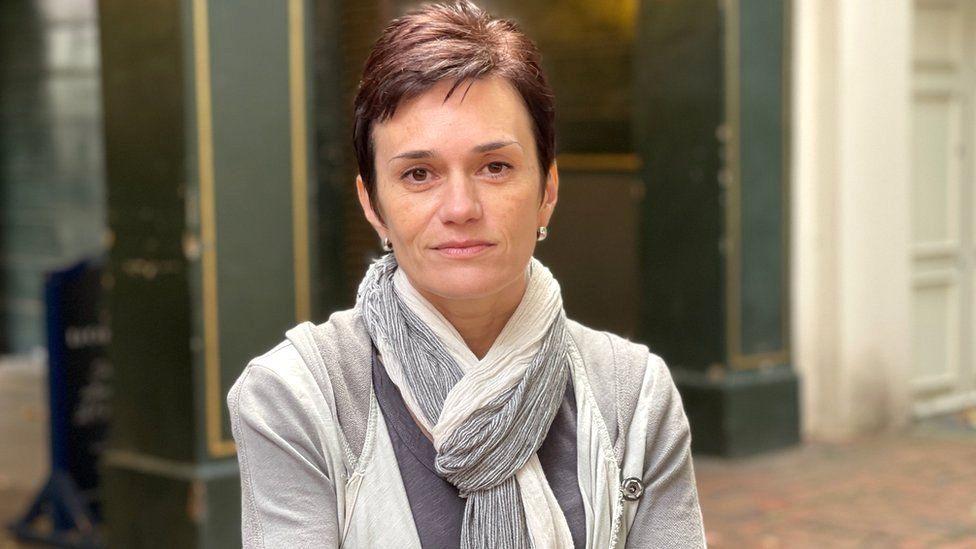
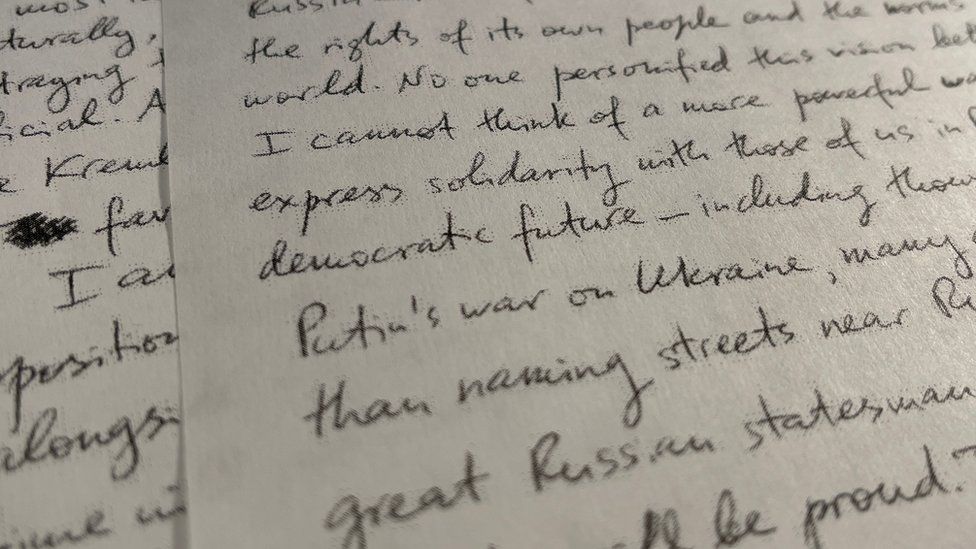
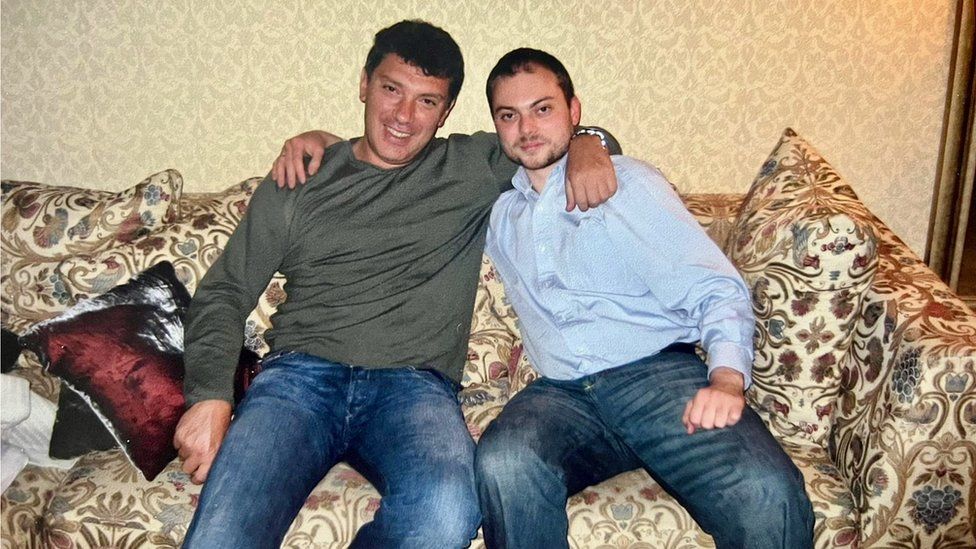


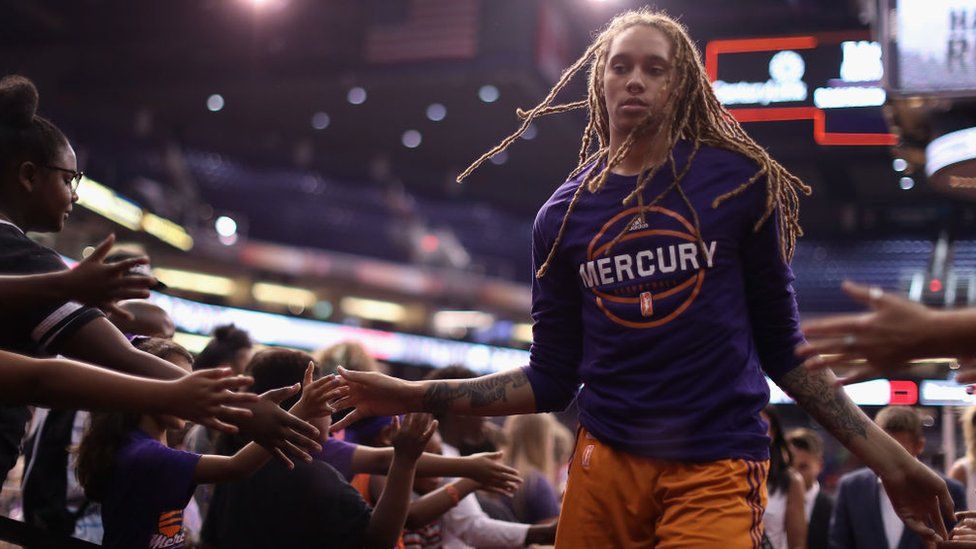
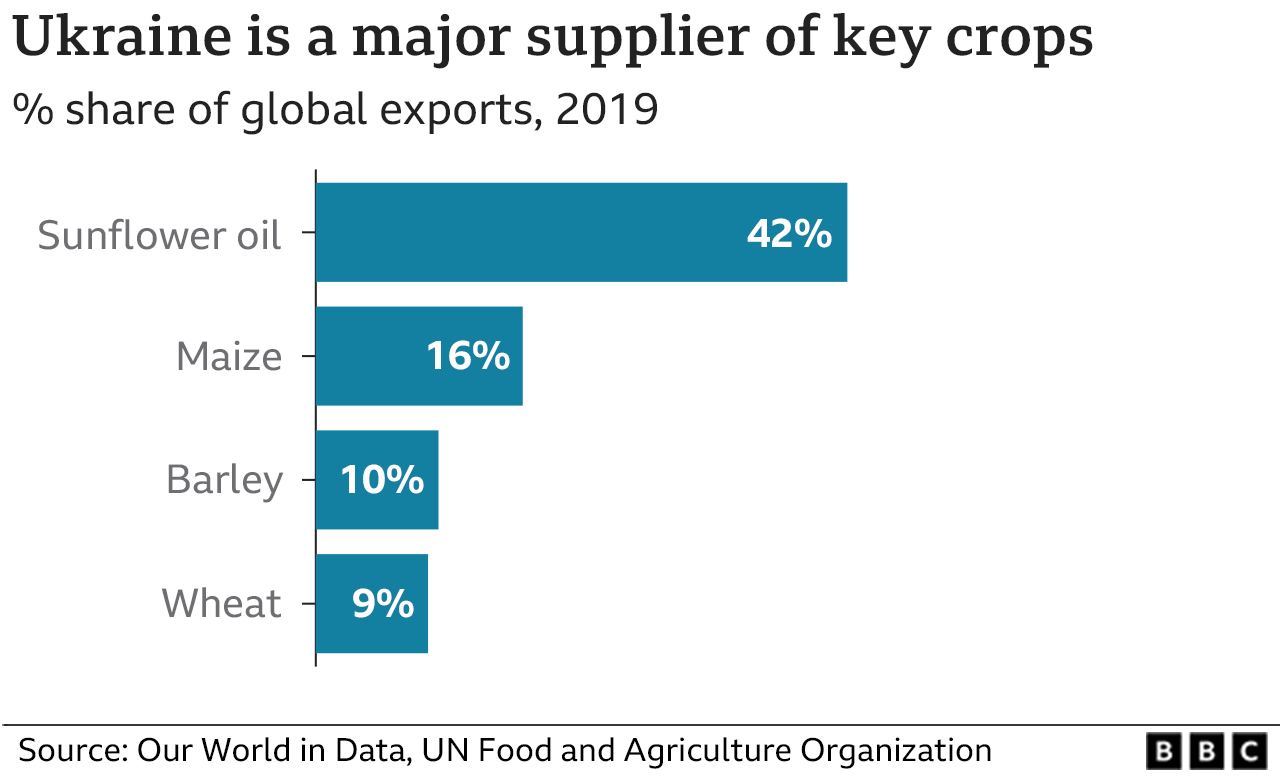

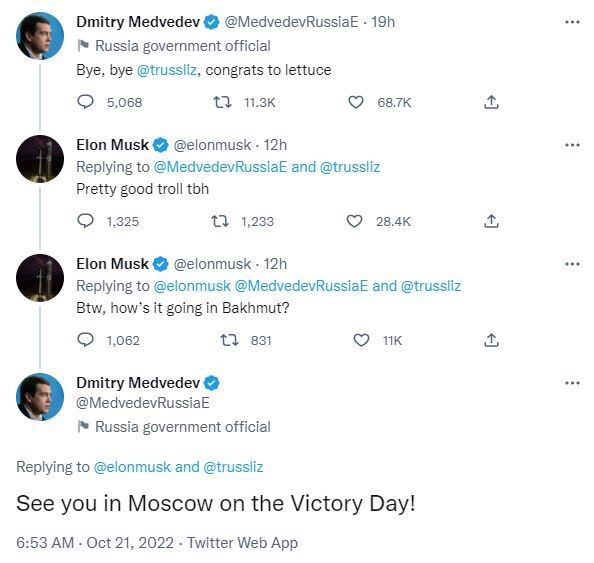
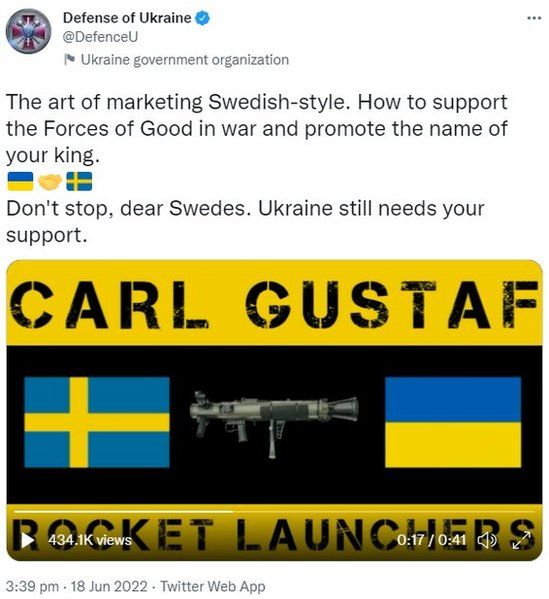
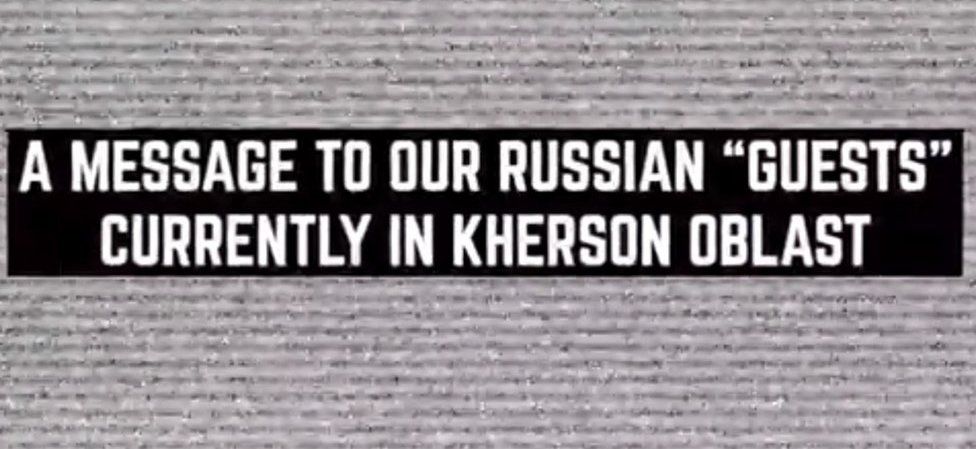
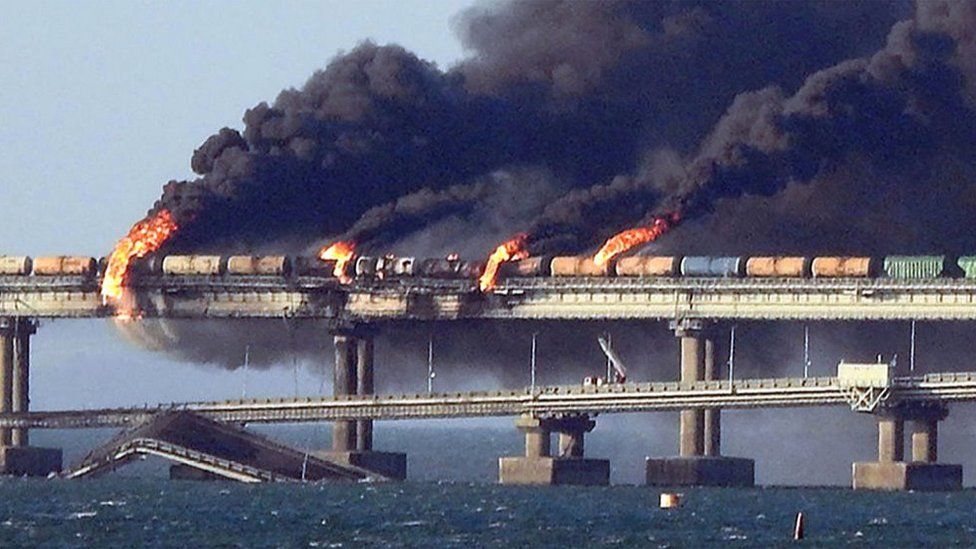
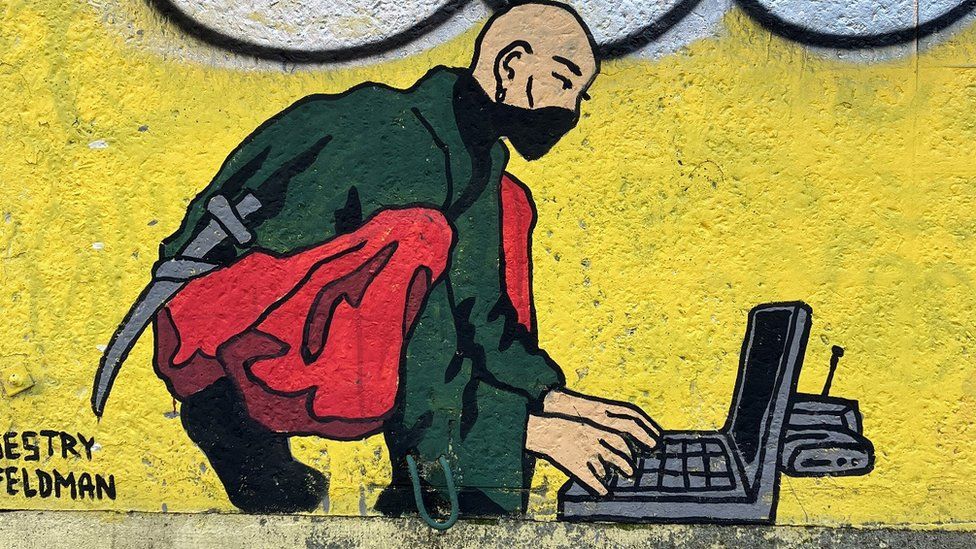
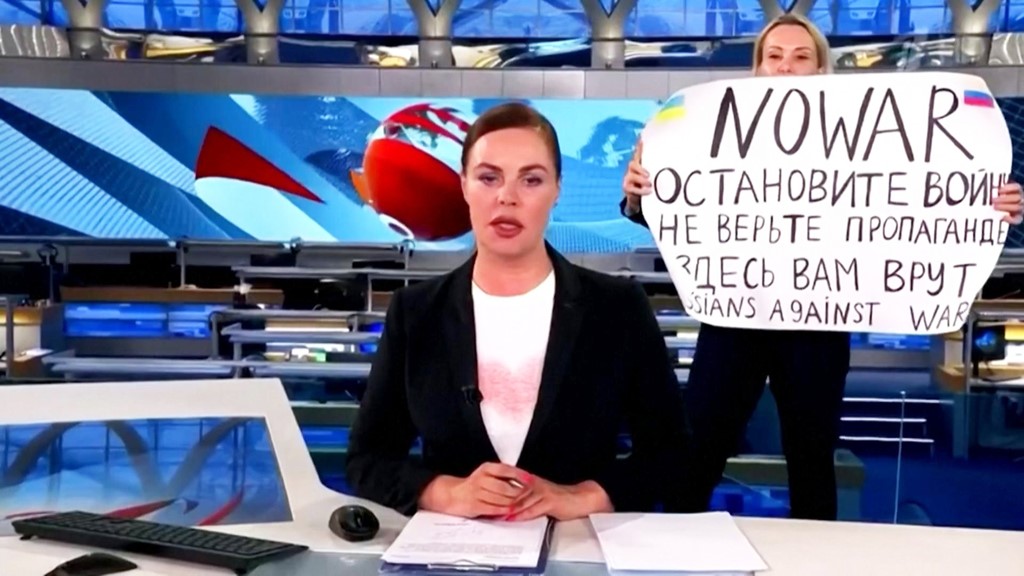
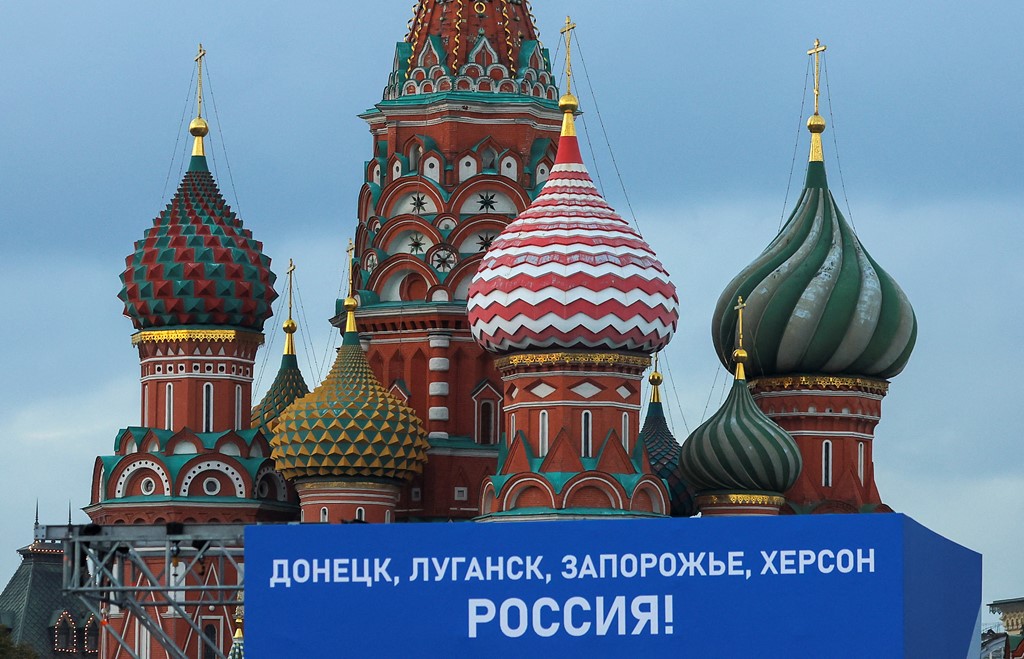
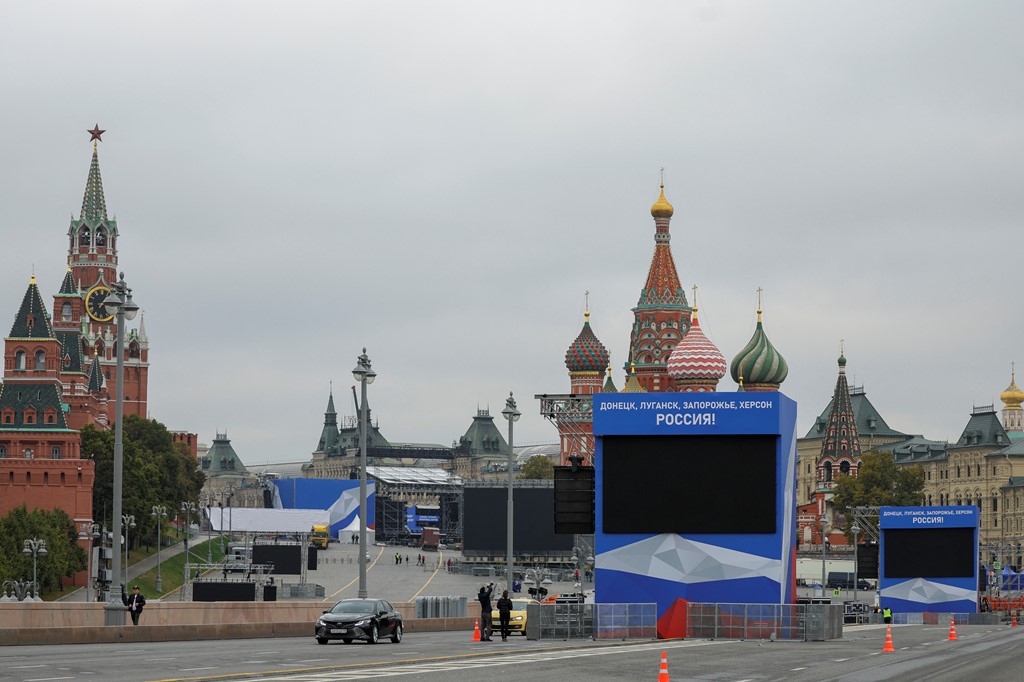
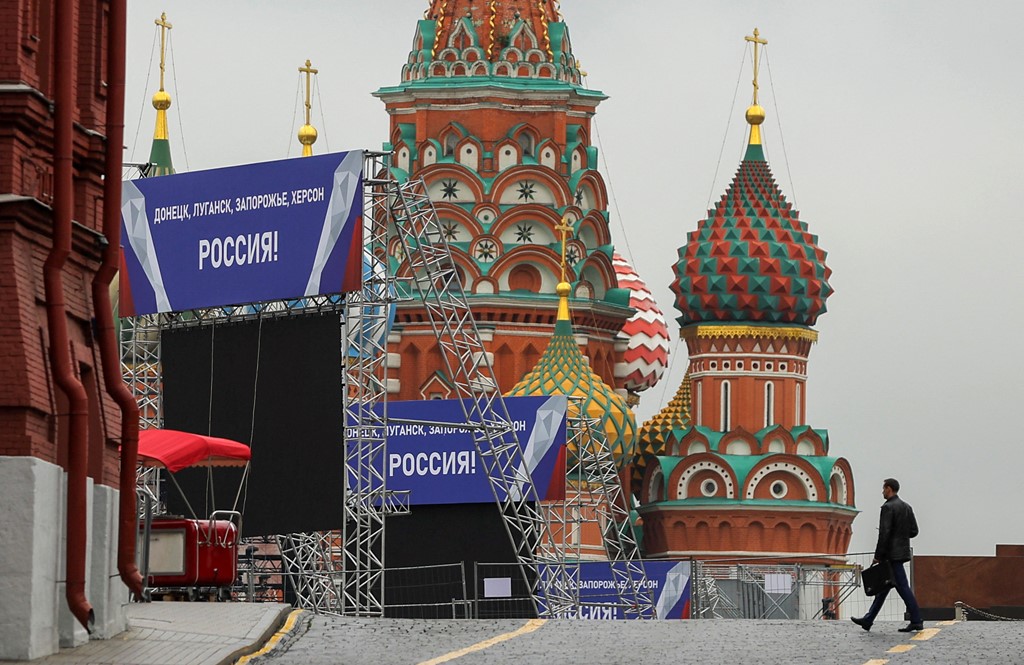
![A woman walks past the Operational Group of Russian Forces headquarters in Tiraspol in 2021, the capital of the breakaway region of Transnistria, a disputed territory unrecognised by the international community, in Moldova [File Photo: Dmitri Lovetsky/AP]](https://www.aljazeera.com04/Transnistria.jpg?w=770&resize=770%2C510)