Tag: mosque

  • Africa’s largest mosque inaugurated in Algeria

    Africa’s largest mosque inaugurated in Algeria

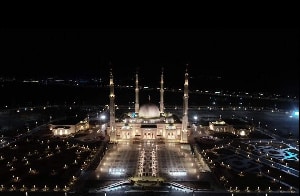
    After years of political turmoil, Algeria inaugurated a colossal mosque on its Mediterranean shore, symbolizing a transformation from a symbol of state-sponsored strength to one of delays and overspending.

    Constructed by a Chinese firm throughout the 2010s, the Great Mosque of Algiers boasts the world’s tallest minaret, standing at 869 feet (265 meters). Ranking as the third largest mosque globally and the largest outside Islam’s holiest cities, it can accommodate 120,000 worshippers in its prayer room.

    Combining modernist design with Arab and North African influences, the mosque pays homage to Algerian tradition and culture.

    Notable features include a helicopter landing pad and a library capable of housing 1 million books.

    Ali Mohamed Salabi, the General Secretary of the World Union of Muslim Ulemas, expressed hope that the mosque would guide Muslims toward “goodness and moderation.”

    Inaugurated by Algerian President Abdelmajid Tebboune, the ceremony marked the fulfillment of a promise made amidst much fanfare, although the mosque has been accessible to international tourists and state visitors for five years.

    The timing coincides with the start of Ramadan, allowing the mosque to officially open to the public for nightly prayers.

    Despite its grandeur, the mosque was plagued by delays and controversies, including seismic concerns about its location. While the state denied these allegations, delays and cost overruns fueled public discontent.

    Originally envisioned by former President Abdelaziz Bouteflika, who intended it to be Africa’s largest mosque, the project faced setbacks following his resignation amidst nationwide protests in 2019.

    Accusations of corruption also marred its construction, reflecting broader suspicions during Bouteflika’s tenure.
  • Dozens killed while praying in Burkina Faso mosque attack

    Dozens killed while praying in Burkina Faso mosque attack

    Officials in Burkina Faso reports that a mosque was attacked on the same day as a church, resulting in multiple casualties.

    The gunmen came to the mosque in Natiaboani town during early-morning prayers on Sunday.

    A resident of the area informed AFP that all the victims were Muslim and the majority of them were males.”
    Insurgents control over one third of Burkina Faso right now.

    According to reports, the attackers were Islamist fighters who also attacked soldiers and a local self-defence group on the same day.

    The news in the local media says that there were many armed attackers on motorcycles.

    Al-Qaeda’s group in the Sahel region said it took over an army base in Natiaboani, but there is no proof from other sources. It did not say that there was an attack on a mosque.

    Unconfirmed information on social media says that the number of people who died in the mosque attack might be more than what the officials have said.

    Natiaboani is in a dangerous part of Burkina Faso where many armed groups are active.

    On the same day, at least 15 people praying at a church were killed in an attack in Essakane during Sunday mass. A person from the church said that they think Islamist militants are responsible for the attack.

    No connection has been proven between the two attacks, but a newspaper in Burkina Faso called L’Observateur Paalga is asking if they were planned together.

    Attacks on religious leaders happen often in Burkina Faso.

    A priest was taken by force from the town of Djibo five years ago and has not been found. In 2021, the leader of the mosque in Djibo was taken by armed people and later found dead.

    Humanitarian workers say that Burkina Faso is one of the most overlooked crises in the world.

    For many years, there has been a lot of fear and uncertainty, causing over two million people to leave their homes. The UN says that one in four young children are not growing well because they don’t have enough food to eat.

    The army took control two years ago,saying they would defeat the rebels, but there is still fighting.

  • Former Defence Minister, Joseph Henry Smith, to be laid to rest Dec 23

    Former Defence Minister, Joseph Henry Smith, to be laid to rest Dec 23


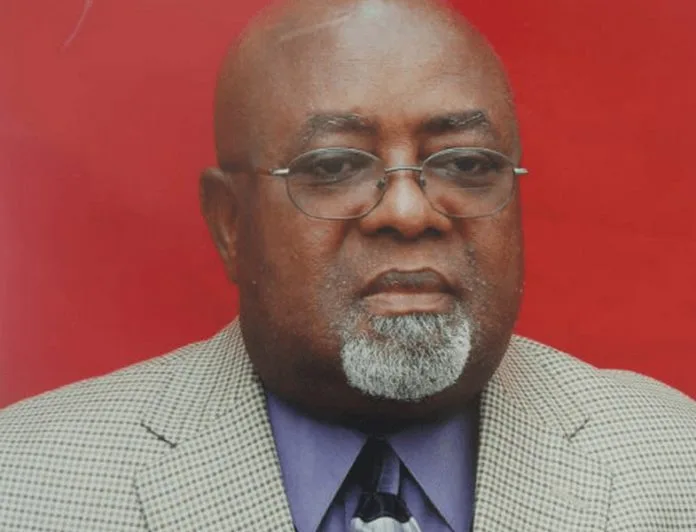
    The final farewell for the late Minister of Defence, Lieutenant General Joseph Henry Smith, is scheduled for Saturday, December 23, 2023.

    The burial service will commence at 7:00 am at the Al-Azziz Mosque, situated in Burma Camp, Accra.

    Ambassador Victor Smith, representing the family, released a statement on Wednesday confirming the details of the ceremony.

    In adherence to Muslim traditions, the former Army Commander and Ambassador to the United States will receive a full Military burial.

    Lt General Smith, who passed away on Tuesday, December 19, after a brief illness at the age of 78, served as Minister of Defence during the presidency of John Evans Atta Mills.

    His extensive career also included the role of Ghana’s Ambassador to the USA.

  • Furious Egyptians angry slam government over new flashy mosque amid economic squeeze

    Furious Egyptians angry slam government over new flashy mosque amid economic squeeze

    It is perplexing when voters criticize the government for investing in infrastructure because it represents a significant portion of government spending.

    Over in North Africa, a section of the Egyptian population is expressing discontent with the decision of the Abdul Fattah Al-Sisi government to invest in a new giant mosque in the new city in Africa’s second most populous nation.

    Even though the government celebrated the US$25.9 million new Islamic Cultural Center facility, poor Egyptians battling with rising cost of living and galloping inflation (over 30% in March) took to social media to protest the investment.

    A Yahoo News report profiling the country’s economy said: Egypt is facing a deepening economic crisis. Its currency has lost half of its value against the dollar over the past year, causing inflation to reach its highest level in five years.

    The country has also been selling state assets to Gulf investors to help plug a widening budget deficit, the report added.

    Why spend on lavish project amid economic headwinds?

    Some of the critical remarks posted online included one by a Facebook user who said:

    “Overspending, insanity and waste of money. The tallest pulpit, the heaviest chandelier and people can’t find anything to eat. Sell this chandelier and pulpit and the whole mosque if this will help solve the problem.”

    For yet another critic, it was worrying that the facility was closed for nine months, open for three months so a hundred people can use it, then it is closed again.

    A third spelled out the economic difficulties that government chose to sidestep to spend on the giant project.

    “Well, what should we do with people who can’t find what to eat or young men who can’t get married? It does not matter. We have the largest mosque, heaviest chandelier, and the biggest foreign debt that we will continue to pay till Doomsday.”

    About the lavish mosque poor Egyptians are protesting against

    a. The facility costs 80 million Egyptian pounds (equivalent to US$25.9 million)

    b. It is located in the country’s new administrative city which government is building to ease congestion in Cairo.

    c. The facility, known as the Islamic Cultural Center covers over 19,000 square meters of land.

    d. It is capable of hosting 107,000 worshippers at a time making it the biggest mosque in the country.

    e. State media reported that it had the highest pulpit in the world, standing at 16.6m (54.5ft) and handcrafted from the finest types of wood.

    f. It is reputed that main chandelier of the mosque is the heaviest in the world at 24,300kg (53,572lb), and the largest, with a diameter of 22m (72.2ft) and comprising four levels.

    g. The new purpose-built city is situated 45km east of the political capital, Cairo.

  • Elderly man set on fire while returning from the mosque after he was sprayed

    Elderly man set on fire while returning from the mosque after he was sprayed

    An elderly man was walking home from a mosque when someone approached him and set him on fire.

    Just after 7 o’clock last night, he was confronted by another man after leaving the Birmingham place of worship on Dudley Road.

    They exchanged a few words on Brixham Road in the Edgbaston neighborhood before the victim was doused in an unknown liquid and his jacket caught fire.

    He was rushed to the hospital with serious injuries, including burns to his face, but it is not thought that they are life-threatening.

    Footage has been circulating on social media, showing a man in a backpack pointing at – and at one point pushing – another man before setting him alight. 

    The police said they are looking into the video as part of their investigation but no details about the clip have been officially confirmed.  

    One local, who only gave his name as Ibraheem, captured an attack on his home’s CCTV.

    man set on fire walking home from Birmingham Mosque
    The man was attacked on Brixham Road, in the neighbourhood of Edgbaston, Birmingham (Picture: Twitter/@CrimeLdn)

    He said: ‘The footage shows an older man walking on the path, I understand he had been to evening prayers at the mosque and was going home.

    ‘Out of nowhere a man approached him and in other video online he was heard asking the man: “Do you speak Arabic?”

    ‘The victim said he didn’t speak Arabic but spoke Punjabi. He suddenly got out a flammable spray and doused the man with it. It looked like the victim managed to turn away so his jacket protected his body.

    ‘Suddenly there was a whooshing sound and he was on fire and the man who did it just walked away.

    ‘The fact that the attacker was black and asking if the victim spoke Arabic suggests to me it wasn’t racially motivated but you never know.

    ‘This is a close knit area where people know each other. My dad knows of the victim and he is a lovely, genuine, honest man.’

    Councillor Rizwan Jalil, who is also from West Midlands fire authority, told BirminghamLive: ‘I’m absolutely appalled by this vile attack on an elderly respected gentleman.

    ‘He is a pillar of this community who has lived here for well over 20 years.’

    A women who lives close to where the violence took place said: ‘I’m hoping it was a grievance and not a racist attack. – we have a good community.

    ‘Why would someone do that? It’s the lowest of the low.’

    Superintendent James Spence said: ‘I’ve been speaking to people this morning, and so I know just how concerned they are, and that people are after answers. 

    ‘We are determined to find the person responsible and get those answers as soon as possible, and I’d urge the community to work with us and to avoid any speculation at this stage.’ 

    The force has deployed extra officers in the area to reassure locals.  

    Anyone who thinks they might have information on the crime has been asked to come forward. 

  • Coventry stabbing: Two men arrested after a fatal stabbing outside mosque

    Armed police in the area quickly detained a 56-year-old guy, and early this morning they detained a second suspect, a 27-year-old man.

    After a man in Coventry was fatally stabbed outside a mosque, two men have been taken into custody.

    West Midlands Police were called to the Jamiah Masjid & Institute just after 9 pm on Sunday after reports of a fight involving a large group of men, some armed with knives.

    Officers found two men who had been injured, including a 52-year-old man who died a short time later.

    A second man, aged 44, suffered a small stab wound.

    A 56-year-old man was arrested by armed officers nearby a short time later, while a second suspect aged 27 was arrested in the early hours of this morning.

    Both men are being questioned on suspicion of murder.

    Detective Superintendent Shaun Edwards, overseeing the investigation, said: “We’re supporting the family of the man who has died at what is a truly awful time for them, and our thoughts go out to them.

    “We’ve made some really good early progress in this investigation, but there is still a lot of work to be done in identifying all of those involved in what happened last night.

    “We don’t believe this is linked to any other incidents or disputes either in Coventry or the wider West Midlands, and it appears to have been an isolated dispute which has ended in tragedy.”

    He said patrols in the area are being stepped up and asked anyone who may have seen what happened on a mobile phone or dashcam to get in touch with the police.


  • Anger over profane billboard near National Mosque at Kanda

    A section of Muslims in Ghana have taken an exception to a sexually provocative billboard close to the 15,000 seater-capacity Ghana National Mosque complex at Kanda in Accra.

    The billboard that has partially naked skinny ladies in Bikinis with Ghanaian hip-hop and Afrobeat musician, entrepreneur Desmond Kwesi Blackmore, known by his stage name D-Black was used in advertising an event dubbed Fiesta Tropical.

    According to checks by MyNewsGh.com, the four-day event was held between January 4 and 8, 2021 was held at the Maha Beach Resort near Axim in the Western Region with various sponsors.

    Few months after the event, the attention of the Muslim Community has been drawn to it with sections describing it as very offensive to the customs and beliefs.

    A Facebook user who could not comprehend why organisers specifically decided to site the billboard on that part of the road wrote “Can someone inform this company that the position of their advert on this billboard near our Central Mosque at Kanda is an insult to Islam and our values. Pls remove it”

    After support from colleagues, the billboard later vanished from the location though it is not known if it was taken off by the advertising company or the organisers of the event.


    Source: My News GH

  • Man electrocuted at a mosque in Kumasi

    A fifty-year-old man was on Saturday afternoon electrocuted by an exposed electric cable at a mosque at Nima Junction in the Asokore-Mampong Municipality.

    The deceased, Baba Haruna Suleiman, was said to be cleaning the mosque together with other committee members when the incident occurred.

    Mr Basiru Sheihu, an eyewitness, told Ghana News Agency (GNA) that following the easing of restrictions on public gathering by the President, the Committee at the Al- Albayan Mosque decided to clean and tidy the place for prayers on Saturday.

    He said due to the dusty nature of the woolen carpets in the mosque, they decided to use an electric hover to speed up the process.

    Mr Sheihu said whilst hovering the dust, a power fluctuation occurred and Baba Suleman, who was then holding the hover was electrified by an exposed cable and he fell down unconscious.

    He was rushed to the hospital but died on arrival.


    Source: GNA

  • Hohoe mosques remain closed

    All mosques in the Hohoe Municipality of the Volta Region remain closed to daily prayers, including the Friday prayer; “?al?t al-Jumu?ah” to prevent the spread of the novel Coronavirus disease.

    Consequently, Muslims are continuing their individual prayers at homes, checks by the Ghana News Agency (GNA) reveals.

    Alhaji Mahmud Issaka, the Hohoe Municipal Chief Imam, in an interview with GNA said although the restrictions on religious activities were eased, the requirements demanded before the mosques were opened, are “a lot”.

    He said a meeting held by all Imams in the Municipality, therefore, concluded that all mosques should remain closed until positive Covid-19 cases decreased and all restrictions are lifted.

    Alhaji Issaka said they also realised that once the mosques were opened, a lot would be required to effect the protocols and breaching them after reopening would be counterproductive.

    Mallam Mohammed Awal, an opinion leader at Hohoe Zongo noted that it was better to allow mosques to remain closed despite the easing of restrictions to curb the spread of the disease than to have even one person infected.

    He called on all Muslims to continue to observe their individual prayers and pray for the end of the pandemic.

    Meanwhile, the Hohoe Municipal Office of Zoomlion Ghana Limited is fumigating churches ahead for their opening for services on Sunday, June 7.


    Source: GNA

  • Kumasi: Drama as Imam halts sermon to throw out congregant without face mask

    There was drama at the Ussifiyya Mosque in Kumasi after the Imam paused his sermon during the Friday prayers and asked one of his congregants to leave the mosque for failing to put on a face mask.

    The mandatory wearing of the face mask was part of measures announced by the government prior to the reopening of Mosques and Churches after COVID-19 induced restrictions were eased.

    Although some religious leaders have declared their intentions not to reopen their places of worship despite the easing of the restrictions, majority of mosques in Kumasi on Friday reopened for the first time after a ban on social gathering due to COVID-19.

    The various mosques set-up a task force which was enforcing the measures at their premises.

    Members of the task force ensured that persons coming to the mosques washed their hands, used sanitizers and their body temperature also checked before they were allowed into the main auditorium.

    Posters containing COVID-19 sensitization inscriptions were also placed at entrances of mosques and other vantage locations to educate congregants on how to prevent the spread of the virus.

    At the Kumasi Central Mosque, an ambulance was stationed with paramedics and personnel from the National Disaster Management Organization(NADMO) stationed to attend to emergencies.

    Imam of the Ussifiyya Mosque, Sheik Yussif Alhassan Umar, who ensured that all the measures announced by the Government were adhered to by attendees at his mosque, used part of his sermon to reiterate the need for all to ensure compliance with the guidelines.

    While delivering the Friday sermon and noticed that a member of his congregation was not wearing the face mask which has become mandatory at his mosque, he paused and walked him out.

    “There was a meeting after directives by the Government and I told all the members that we have to try as much as possible to do what we can do to apply the directives because it is prevention for all of us. And we are denying people entering the mosque without the mask, how can you a member enter the mosque without the mask?”

    “No one is above the law. If you are commanding somebody not to enter the mosque without the mask, how can you enter without the mask? You have to lead by example. That is why I sacked him. And when I sacked him, he went out to get the mask before I allowed him to sit in the mosque,” Sheik Ussifiyya explained.

    Muslim leaders have said they will try their best to sustain the enforcement of COVID-19 prevention measures announced by the government.


    Source: citinewsroom 

  • We wont die if we dont go to church, mosque Ghanaians react to easing of restrictions

    Some Ghanaians have expressed mixed reactions to the reopening of places of worship and schools after some two months of closure.

    In a televised address on Sunday, May 31, 2020 President Akufo-Addo announced a phased approach to easing some of the restrictions imposed due to the Coronavirus pandemic which includes allowing places of worship to operate with a congregation of not more than hundred in 1 hour and schools to equally open for final year students to take their exit exams.

    But while some Ghanaians are pleased with the directive for schools to reopen for final year students, others are not particularly thrilled, especially with the reopening of places of worship, arguing that the time allotted for services to be conducted is simply not enough.

    There is more in the report below:

    Source: abcnewsgh.com

  • Lydia Alhassan fumigates Ayawaso West Wuogon mosques, churches & schools

    In an attempt to ensure academic and religious life returns to normalcy in Ayawaso West Wuguon, the Member of Parliament for the area, Madam Lydia Seyram Alhassan has fumigated schools, mosques and churches in the constituency.

    The exercise which began on Monday, June 1, 2020 forms part of preparations toward the reopening of schools, churches and mosques.

    Madam Lydia Seyram Alhassan was optimistic that the fumigation will help fight the spread of the deadly COVID-19 pandemic in her constituency.

    She also urged Ghanaians to adhere to the safety measures of Health officials to curb the spread of the disease.


    Source: Peace FM

  • Coronavirus: Mosques ready to enforce ‘One Muslim One Mat’ as congregation resumes on Friday

    Following the president’s announcement on the easing of restrictions last Sunday, Muslims across the country are preparing for what could possibly be their first congregational prayer after a ban on social gatherings was imposed on March 15, to curb the spread the of COVID-19 in the country.

    Ahead of Friday, June 5, 2020, where the ease on the ban on religious gathering comes into effect, mosques across the country are putting in place measures to ensure hygienic measures outlined by government are enforced. Visiting some mosques in Nima today, their leaderships informed GhanaWeb that with the plans in place to congregate tomorrow, they were going to ensure all safety and hygienic protocols are adhered to including the policy of each congregant coming with their own mat for prayers.

    Per the directives outlined by the government, mosques are to ensure that each worshipper uses their personal mat (Sajaada), or disinfect mats provided by the mosque before and after use. Further to the directives by government, the Office of the Chief Imam in a release also recommended that each worshiper comes to a mosque along with their own mat (Sajaada) for prayers.

    At the Islamic Research Institute Mosque where a fumigation exercise had already been carried out earlier in the morning, a member of the COVID-19 Taskforce at the mosque, Musah Ahmed, told GhanaWeb that all is set for congregational prayers tomorrow and indicated that the mosque’s task force is going to ensure that social distancing and other hygienic protocols are enforced.

    “By the grace of God tomorrow we are going to pray and we are going to give the distance that the authorities asked us. We will stand at the gate and put the Veronica Bucket outside and before you come in you will wash your hands outside. We have already announced that they should do their ablution in the house or unless you come with your butar or pure water with a Sajaada, which, is a separate mat for you alone.”

    At the Masjid Abubakar Saddique where a fumigation exercise was underway, the Imam of the mosque, Imam Zakaria Omaru Ginko said while the leadership of the mosque continues to prepare for the reopening, the leadership is scheduled to meet with the community to outline measures that will be implemented during the congregation tomorrow. The Imam, however, said the directive to ensure that details of all congregants and their contacts are recorded to for contact tracing in case of a recorded case will be hard to follow since a lot of the community members, especially the elderly who may not have mobile phones.

    “We will ensure adherence to the permitted number (not more than 100 congregants), provide Veronica Buckets for handwashing and also register our congregants. But the register will be a problem because we are supposed to write their names and their phone numbers. Most of the aged don’t,” the Imam said.

    President Akufo-Addo in his address to the nation on Sunday announced the first stage of easing of restrictions starting on Friday, June 5, 2020. The President said “an abridged format for religious services can commence. Twenty-five percent (25%) attendance, with a maximum number of one hundred (100) congregants, can worship at a time in church or at the mosque, with a mandatory one-metre rule of social distancing between congregants. In addition to the mandatory wearing of masks for all persons at all times in churches and mosques, a register of names and contact details of all worshippers and handwashing facilities and sanitisers must be provided, with a maximum duration of one (1) hour for each service.”

    Source: www.ghanaweb.com

  • COVID-19: Government to trial new app to monitor religious gatherings, others

    The government is set to trial an app to monitor religious gatherings, among others as the coronavirus restrictions are eased.

    The app is expected to keep track of events and details of persons who attend these events.

    At a press briefing on Monday evening, the Minister of Communication Ursula Owusu Ekuful said the app, known as PANABIOS (Pan African BioSurveillance Application) is “to help us stay compliant with all of these [conditions for resuming certain public gatherings].”

    The minister expects the app to ready in 48 hours.

    “We are trialling in Ghana and hopefully it will be rolled out on the rest of the continent,” Mrs. Owusu-Ekuful.

    Providing a few details on how the app would work she said a passcode or a USSD code will be generated for people to book for a registered event.

    “Event organisers will have to download the application and register the event and venue that the event is taking place,” the minister explained.

    Mrs. Ekuful stressed the need to comply with conditions put in place for the resumption of religious gatherings and other events.

    “For our collective peace of mind, every event needs to keep an accurate register of everyone who attends those functions so that when need be, you can provide that information to the health authorities and they can help all of us.”

    President Akufo-Addo announced a review of social gathering protocols in Ghana in a televised address on May 31.

    Religious gatherings, schools, weddings among others can resume partially under strict conditions.

    Churches and mosques, for example, are to allow only 100 congregants while schools are to open for final year students.

    The cap on participants for private burials has also been raised to 100 persons.


    Source: citinewsroom 

  • Virus-hit Iran to reopen mosques for holy nights

    Virus-hit Iran will reopen its mosques for three nights over the next week so that worshippers can pray during one of the holiest times of year, a minister said Tuesday.

    The Islamic republic shut its mosques and shrines in March as part of its efforts to contain the Middle East’s deadliest outbreak of the novel coronavirus.

    The reopening was granted for Laylat al-Qadr – a high point during the fasting month of Ramadan that marks when the Koran was revealed to Prophet Mohammed.

    But Health Minister Saeed Namaki sounded a note of caution as he announced that worshippers would be allowed to attend mosques and ceremonies for three of the next five nights.

    “The biggest strategic mistake is to think that coronavirus is finished,” he said in remarks broadcast on state television.

    “At any time, we can go back to bad circumstances” due to “negligence”, said Namaki.

    “Our priority is to hold ceremonies outdoors” such as “in stadiums”, he said, “so that social distancing is properly observed.”

    Namaki said his ministry agreed in a meeting to help “organise ceremonies from midnight to 2:00 am during the nights of Qadr”.

    Supreme leader ‘concern’

    He said the move came in response to “concern” expressed by Ayatollah Ali Khamenei, but stressed the supreme leader “always supports all measures” to contain the virus.

    All gatherings would need to respect “sanitary protocols to the maximum”, he added.

    But he warned: “They shouldn’t blame the health ministry and say they wanted to open mosques but didn’t care about people’s health”.

    Iran has struggled to contain its outbreak of the virus that causes COVID-19 since announcing its first cases in the Shiite holy city of Qom on February 19.

    The government closed schools, postponed major events and banned inter-city travel but it has eased restrictions gradually since April 11.

    It allowed mosques to reopen on May 4 in 132 counties where the virus was deemed to be under control.

    And on Friday last week worshippers were able to attend the main weekly prayers for the first time in more than two months, except for in the capital.

    The government warned on Monday of a setback in its efforts to contain the virus as the official death toll hit 6,685.

    “We have regressed in Khuzestan due to (people) not observing health protocols,” Deputy Health Minister Alireza Raisi said, referring to a southwestern province that is now the epicentre of the country’s outbreak.

    “This can happen to any other province if we are not careful,” he added, noting that tighter measures would be reimposed in other places too if needed.

    Experts inside and outside Iran have cast doubt on the country’s official COVID-19 figures, and say the real toll could be much higher.

    Source: france24.com

  • Iran’s mosques temporarily reopen

    All mosques in Iran are due to reopen temporarily on Tuesday, as part of the government’s plan to ease Coronavirus restrictions.

    They will be open for three days to commemorate specific nights during the holy month of Ramadan, and have been asked to comply with strict health protocols.

    It is unclear whether they will stay open, according to the Fars news agency.

    Iran’s Supreme Leader Ayatollah Khamenei on Monday called on officials to pay attention to people’s need for prayers during this critical time and particularly in the fasting month of Ramadan.

    Last week, mosques in low-risk areas reopened in more than 160 cities and towns, but most have been shut for almost two months since the beginning of Iran’s outbreak.

    Iran has seen 109,286 diagnosed cases, and a total of 6,685 deaths.

    Source: bbc.com

  • Norway mosque shooter pleads not guilty

    A Norwegian man who admitted to killing his step-sister before opening fire in a mosque near Oslo last year pleaded not guilty as his trial started on Thursday.

    Wearing a dark suit, 22-year-old Philip Manshaus appeared before the court outside Oslo, making the “OK” sign with his hand, used by some to signify white supremacy, as he entered.

    Manshaus stands accused of murder and committing an act of terror.

    He was arrested on August 10, 2019 after opening fire in the Al-Noor mosque in the affluent Oslo suburb of Baerum while wearing a bullet-proof vest and a helmet with a camera strapped to it.

    Just three worshippers were in the mosque at the time, and there were no serious injuries as a 65-year-old man overpowered Manshaus.

    According to the charge sheet, Manshaus’ aim was to “kill as many Muslims as possible”.

    The body of his 17-year-old step-sister was later found in their home.

    Adopted from China by his father’s girlfriend, Johanne Zhangjia Ihle-Hansen was killed by four bullets, police said.

    Manshaus has admitted to the facts of the case but pleaded not guilty, claiming his actions came out of “necessity”.

    Norwegian media reported that Manshaus showed no remorse in the courtroom but rather expressed regret that he had “not been able to inflict more damage”.

    According to the prosecution, Manshaus had a racist motive and was inspired by the attacks in Christchurch in New Zealand in March 2019, when Brenton Tarrant killed 51 people in shootings at two mosques.

    Tarrant in turn has said he was inspired by Norwegian Anders Behring Breivik, who in July 2011 killed 77 people in a truck bomb blast near government offices in Oslo and a shooting spree at a Labour Party youth camp on the island of Utoya.

    The Manshaus trial is due to last until May 26.

    He faces 21 years in prison if convicted, but the prosecutor’s office has said they have not ruled asking for a custodial sentence, which would keep Manshaus behind bars until he is no longer deemed a danger to society.

    Source: AFP

  • Inside the new Ghana national mosque whose completion has delayed since 2016

    Ghanaian Muslims are readying to worship in the new $10 million ultra-modern national mosque built by the Turkish Hudai Foundation in Accra with the support of the Turkish government.

    The 15,000 seater-capacity mosque complex built on a 40-acre land at Kanda has ancillary facilities including a library complex, office and residence for the Chief Imam, research complex, a senior high school complex, a clinic, an administration block, an auditorium, and a conference center.

    The complex has been in the completion stage since March 2016 when former president John Mahama promised it would be finished in the next two or three months during the visit of Turkish President Recep Tayyip Erdogan to the country.

    In February 2017, Vice President Dr. Mahamudu Bawumia also promised an end of year completion of the mosque during an inspection of the construction in the company of the National Chief Imam Osman Nuhu Sharubutu and other Muslim clerics.

    Now scheduled to be opened to the public in 2020, the mosque in its incomplete state is a beauty to behold and qualifies to be one of the must-visit national assets in the country.

    Through the lenses of Alex Tackie, a filmmaker and photographer who was commissioned to document its beauty, GhanaWeb gives you a glimpse of what will soon be one of the busiest locations in Accra in the next century and over.

    Watch the video below:


    Source: www.ghanaweb.com

  • Burkina Faso mosque attack kills 15 worshippers

    At least 15 people have been killed and two seriously injured in an attack on a mosque in northern Burkina Faso.

    Gunmen entered the Grand Mosque in the village of Salmossi on Friday evening as those inside were praying.

    The attack prompted many locals to flee the village which is close to the Malian border.

    Hundreds of people have been killed in the country over the past few years, mostly by jihadist groups.

    Read:New Zealand orders highest-level inquiry into mosque attack

    One resident from the nearby town of Gorom-Gorom told AFP news agency: “Since this morning, people have started to flee the area.”

    He added that there was a “climate of panic despite military reinforcements” put in place following the attack.

    No group has admitted carrying out the attack.

    Jihadist attacks have increased in Burkina Faso since 2015, forcing thousands of schools to close down.

    The conflict spread across the border from neighbouring Mali where Islamist militants took over the north of the country in 2012 before French troops pushed them out.

    Read:Christchurch shootings: First funerals for victims of mosque attacks

    The UN Refugee Agency says more than a quarter of a million people in Burkina Faso have been forced to flee their homes over the past three months.

    Last week, 20 people were killed in an attack on a gold-mining site in the north.

    On Saturday, about 1,000 people protested in the capital Ouagadougou to denounce violence in their country and the presence of foreign military forces in the region.

    Source: bbc.com