Tag: mpox

  • Mpox: Ghana Health Service announces 11 new cases, urges public to stay alert

    Mpox: Ghana Health Service announces 11 new cases, urges public to stay alert

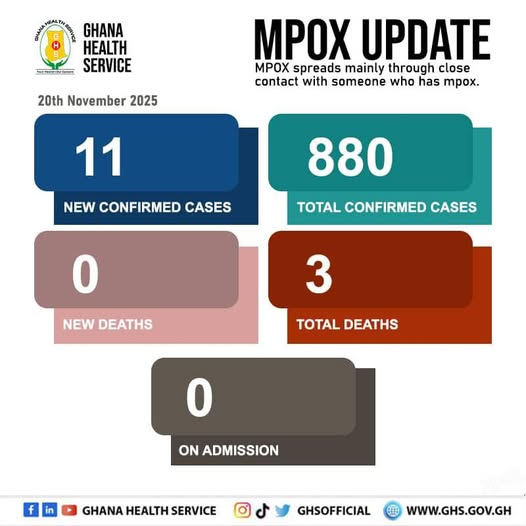
    Ghana has recorded 11 new cases of Monkeypox (Mpox) infections, the Ghana Health Service (GHS) has reported in its latest update.

    These new cases bring the total number of confirmed cases in Ghana to 880, with no deaths recorded so far since the last three. The health regulator noted this in its report following the previous update on October 14, when 22 new infections were recorded, pushing the total to 735 at the time.

    The GHS has intensified its response through workshops on typical Mpox presentations, wound care, home isolation procedures, and psychosocial support in eight selected regions.

    These sessions are being held for staff at ART sites, STI clinics, and other facilities to improve detection and case management. Public education has also increased. Weekly social media updates are ongoing, along with a multilingual telephone poll to assess public awareness of Mpox prevention messages.

    As of mid-October, more than 14,490 people, representing 73.9 per cent of the target group, had been vaccinated. Most of the vaccinated individuals were between twenty and thirty-nine years old.

    On August 28, 21 new cases brought the total to 467, while on August 25, the Service reported 22 cases, which pushed the cumulative figure at the time to 446.

    On August 20, 15 new cases were recorded, bringing the number at the time to 424. Currently, there is no patient on admission. As of August 14, 409 total cases had been confirmed after 37 new cases were recorded.

    According to earlier reports, 26 new cases of infection were confirmed on August 11, increasing the total to 372, compared to 346 cases reported on August 7. However, the national death toll stands at two.

    Unfortunately, all 16 regions have recorded cases of the disease so far. The rising number of cases continues to raise concerns. In the meantime, the country can breathe a sigh of relief as 33,600 vaccines have been secured by the Health Ministry to strengthen Ghana’s fight against the monkeypox (Mpox) virus. “This is another milestone in safeguarding the health and well-being of our citizens,” the ministry said in a Facebook post.

    Months ago, the Ministry of Health received a significant boost in its fight against the ongoing Mpox outbreak following the donation of essential medical supplies and public health materials from the World Health Organisation (WHO).

    During a brief ceremony held at the Ministry, the WHO Regional Director for Africa, Professor Mohamed Yakub Janabi, reaffirmed the organisation’s commitment to supporting Ghana’s public health response and acknowledged the country’s commendable leadership in managing the outbreak. The donation, valued at USD 36,700, includes personal protective equipment (PPE) for frontline health workers, 780 GeneXpert cartridges to improve diagnostic capacity, and 9,000 risk communication posters along with 40 pull-up banners to support community sensitisation efforts.

    The PPE will help strengthen infection prevention and control, while the GeneXpert cartridges are expected to facilitate rapid and accurate testing, particularly at decentralised levels. The risk communication materials are aimed at promoting public awareness and behavioural change.

    The Minister for Health, Honourable Kwabena Mintah Akandoh, who received the items on behalf of the government, thanked the WHO for its continued support. He indicated that Ghana is keen to adopt vaccines as part of its response strategy and called on the WHO to expedite assistance in that regard. He also encouraged the public to maintain good hygiene practices and to seek prompt medical attention if they experience symptoms such as fever, cough, headache, or skin rashes.

    He noted that the Ministry remains committed to strengthening public health systems and working closely with partners to contain the outbreak and protect the health of all Ghanaians.

    Health officials explained that Mpox primarily spreads through direct contact with an infected person. Common symptoms include fever, skin rashes, and swollen lymph nodes. The Ghana Health Service is urging the public to avoid close interactions with symptomatic individuals, maintain regular handwashing with soap and water, avoid touching the face frequently, and use masks when caring for patients.

    The Service added that it is closely monitoring the outbreak, conducting contact tracing, and strengthening public education with the support of regional health directorates.

    Following the detection of 20 new infections as of Wednesday, July 30, the Ghana Health Service (GHS) on Monday, July 27, reported the unfortunate demise of one of the individuals who had contracted the disease. Since Ghana recorded its first Mpox case in June 2022, with five cases, this marks the first time any infected person has succumbed to the disease.

    In its regular updates, the Ghana Health Service noted that as of July 22, 23 new cases were recorded, pushing the total confirmed cases to 257 at the time. Ghana’s confirmed Mpox cases rose to 234 following the detection of 16 new cases as of July 18. The number of cases stood at 218 after 21 new infections were detected as of July 14. The Service reported 197 confirmed cases after 11 new infections were recorded as of July 11.

    While revealing this information, the Service described the trend as a gradual yet manageable increase and called for sustained public vigilance. The country has seen a slight uptick in infections; however, health officials maintain that the overall situation remains under control. Although many cases are mild, early medical care is crucial to avoid complications.

    In light of the growing Mpox cases, the GHS is boosting nationwide information campaigns to ensure citizens remain aware and cautious. Preventive actions such as avoiding direct contact with sick individuals, practicing proper hygiene, and promptly seeking care when symptoms appear are being emphasised. Officials stress the importance of swift case detection and notification, with field teams and community health workers diligently monitoring developments.

    The public is being encouraged to stay alert, adhere to health precautions, and contribute to collective efforts to stop the virus from spreading. The government is also engaging international organisations for assistance in procuring vaccines to help curb the rising number of cases.

    The World Health Organization (WHO) in Ghana has provided laboratory PCR reagents to enhance the country’s diagnostic capacity.

  • Mpox cases hit 713 as GHS records 26 new infections

    Mpox cases hit 713 as GHS records 26 new infections

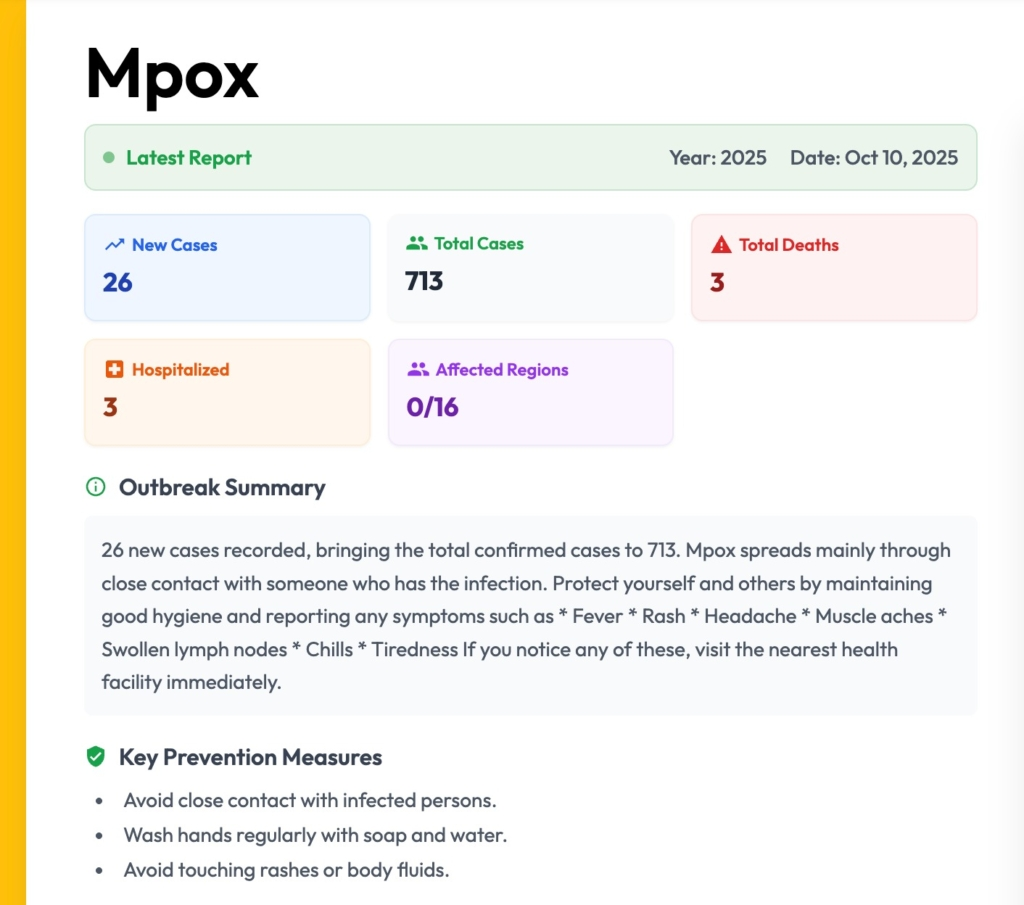
    Twenty-six more people have been infected with the monkeypox (Mpox) virus, according to the latest update released by the Ghana Health Service (GHS).

    The new cases bring the total number of infections to 713 as of October 10, 2025. No additional deaths have been reported since the last one, keeping the death toll at three. The most recent Mpox-related death occurred on September 18 in the Eastern Region, and the GHS noted that the patient had underlying health conditions.

    Currently, three patients are on admission and receiving treatment.

    The GHS reminded the public that Mpox spreads mainly through close contact with an infected person. Common symptoms include fever, rash, headache, muscle aches, swollen lymph nodes, chills, and fatigue.

    Health authorities urged individuals who experience these symptoms to immediately visit the nearest health facility for examination and treatment.

    The Service also advised Ghanaians to maintain good personal hygiene and observe preventive measures to help reduce the spread of infection.

    As of Thursday, September 18, the Ghana Health Service had reported ten (10) new Mpox cases, raising the total number of confirmed cases to 565.

    However, in a Facebook post on Wednesday, September 24, the Service announced another 18 new cases, bringing the total to 583.

    This marked a surge from the 519 confirmed cases reported on Thursday, September 11. At that time, two patients were on admission.

    Earlier, on August 28, 21 new cases had been recorded, bringing the total to 467, while on August 25, the Service reported 22 new infections, raising the cumulative figure to 446.

    On August 20, 15 new cases were confirmed, bringing the total to 424. At that point, no patient was on admission.

    As of August 14, 37 new cases had been reported, raising the total to 409.

    According to earlier updates, 26 new cases were confirmed on August 11, increasing the total to 372, compared to 346 cases recorded on August 7.

    The national death toll, however, remained at two.

    Unfortunately, all 16 regions have now recorded Mpox cases, and the rising number of infections continues to raise concern.

    However, the country can breathe a sigh of relief as 33,600 vaccines have been secured by the Ministry of Health to strengthen Ghana’s fight against the Mpox virus.

    “This is another milestone in safeguarding the health and well-being of our citizens,” the Ministry said in a Facebook post.

    Months ago, the Ministry of Health received a major boost in its fight against the ongoing Mpox outbreak following the donation of essential medical supplies and public health materials from the World Health Organization (WHO).

    During a brief ceremony held at the Ministry, the WHO Regional Director for Africa, Professor Mohamed Yakub Janabi, reaffirmed the organisation’s commitment to supporting Ghana’s public health response and commended the country’s leadership in managing the outbreak.

    The donation, valued at USD 36,700, included personal protective equipment (PPE) for frontline health workers, 780 GeneXpert cartridges to improve diagnostic capacity, and 9,000 risk communication posters along with 40 pull-up banners to support community sensitisation efforts.

    The PPE will help enhance infection prevention and control, while the GeneXpert cartridges are expected to facilitate rapid and accurate testing, especially at decentralised levels.

    The risk communication materials aim to promote public awareness and behavioural change.

    The Minister for Health, Honourable Kwabena Mintah Akandoh, who received the items on behalf of the government, thanked the WHO for its continued support.

    He indicated that Ghana is keen to adopt vaccines as part of its response strategy and called on the WHO to expedite assistance in that regard. He also encouraged the public to maintain good hygiene practices and seek prompt medical attention if they experience symptoms such as fever, cough, headache, or skin rashes.

    He noted that the Ministry remains committed to strengthening public health systems and working closely with partners to contain the outbreak and protect the health of all Ghanaians.

    Health officials explained that Mpox spreads primarily through direct contact with an infected person. Common symptoms include fever, skin rashes, and swollen lymph nodes.

    The Ghana Health Service urged the public to avoid close interactions with symptomatic individuals, wash hands regularly with soap and water, refrain from touching the face frequently, and wear masks when caring for infected persons.

    The Service added that it is closely monitoring the outbreak, conducting contact tracing, and intensifying public education with the support of regional health directorates.

    Following the detection of 20 new infections as of Wednesday, July 30, the Ghana Health Service announced on Monday, July 27, the death of one of the infected persons.

    Since Ghana recorded its first Mpox case in June 2022, with five confirmed cases, this was the first reported death associated with the disease.

    In its regular updates, the GHS stated that as of July 22, 23 new cases had been recorded, bringing the total number of confirmed cases to 257 at the time.

    By July 18, Ghana’s confirmed Mpox cases had risen to 234 following the detection of 16 new infections, compared to 218 cases after 21 new cases were recorded on July 14.

    The Ghana Health Service reported 197 confirmed cases after detecting 11 new infections as of July 11.

    The Service described the trend as a gradual yet manageable increase and called for sustained public vigilance.

    Although the number of cases continues to rise slightly, health officials maintain that the overall situation remains under control.

    While most infections are mild, the GHS emphasised that early medical attention is crucial to avoid complications.

    In response to the increase in cases, the Service has intensified information campaigns nationwide to ensure citizens remain alert and cautious. Preventive actions such as avoiding contact with infected individuals, maintaining hygiene, and seeking medical care early are being emphasised.

    Officials stressed the importance of swift case detection and reporting, with field teams and community health workers actively monitoring developments.

    The public is encouraged to remain vigilant, follow health guidelines, and support national efforts to contain the spread of the virus.

    The government continues to engage international organisations to secure more vaccines to combat the rise in infections.

    The World Health Organisation (WHO) in Ghana recently provided laboratory PCR reagents to enhance diagnostic capacity. The donation was officially presented to the GHS at the National Public Health Reference Laboratory.

    Receiving the supplies on behalf of the GHS, Acting Deputy Director-General Dr Caroline Reindorf Amissah expressed gratitude for WHO’s ongoing logistical and technical support.

    “We promise from our end to do our bit, collaborate, go out there, and look for the cases to make sure this is really brought under control,” she said.

    WHO Country Representative Dr Fiona Braka emphasised that the organisation hopes the reagents will enable rapid diagnosis and timely public health responses.

    The supplies can test approximately 3,400 suspected Mpox samples, while additional kits will allow clade determination for 625 confirmed positive cases.

    Background on Mpox

    The monkeypox virus was first identified in Denmark in 1958 in monkeys kept for research, according to the World Health Organization (WHO).

    The first human case was recorded in 1970 in the Democratic Republic of Congo, involving a nine-month-old boy.

    Following the eradication of smallpox in 1980 and the end of smallpox vaccination worldwide, Mpox gradually emerged in central, east, and west Africa.

    Since then, Mpox has been reported sporadically in these regions, Clade I (central and east Africa) and Clade II (west Africa).

    In 2003, an outbreak in the United States was linked to imported wild animals (Clade II).

    Since 2005, thousands of cases have been reported annually in the Democratic Republic of the Congo.

    In 2017, Mpox re-emerged in Nigeria and continues to spread among people across the country and in travellers to other destinations, according to the WHO.

  • One dead as Ghana’s Mpox cases hit 565

    One dead as Ghana’s Mpox cases hit 565

    Another person who contracted the Monkeypox (Mpox) disease has been confirmed dead, the Ghana Health Service (GHS) has reported. This raises the total number of Mpox-related deaths to two.


    The first death was recorded in July this year. The total confirmed cases of monkeypox in Ghana now stand at five hundred and sixty-five (565). The current update by the Ghana Health Service (GHS) follows the confirmation of 10 new cases recorded as of Thursday, September 18.

    This reflects a surge from 519 confirmed cases reported on Thursday, September 11. On August 28, 21 new cases brought the total to 467, while on August 25, the Service reported 22 cases, which pushed the cumulative figure at the time to 446.


    On August 20, 15 new cases were recorded, making the number at the time 424. Currently, there’s no patient on admission. As of August 14, four hundred and nine (409) total cases were confirmed after thirty-seven (37) new cases were recorded.


    According to previous reports, twenty-six (26) new cases of infection were confirmed on August 11, increasing the total to 372, compared to 346 cases reported on August 7. However, the national death toll remains at one.


    Unfortunately, all 16 regions have recorded cases of the disease so far in the country. The increasing number of cases in the country continues to raise concerns. In the meantime, the country can breathe a sigh of relief as 33,600 vaccines have been secured by the Health Ministry to strengthen Ghana’s fight against the monkeypox (Mpox) virus.


    “This is another milestone in safeguarding the health and well being of our citizens,” the ministry said in a Facebook post.Months ago, the Ministry of Health received a significant boost in its fight against the ongoing Mpox outbreak following the donation of essential medical supplies and public health materials from the World Health Organization (WHO).


    During a brief ceremony held at the Ministry, the WHO Regional Director for Africa, Professor Mohamed Yakub Janabi, reaffirmed the organization’s commitment to supporting Ghana’s public health response and acknowledged the country’s commendable leadership in managing the outbreak.


    The donation, valued at USD 36,700, includes personal protective equipment (PPE) for frontline health workers, 780 GeneXpert cartridges to improve diagnostic capacity, and 9,000 risk communication posters along with 40 pull-up banners to support community sensitization efforts.


    The PPE will help enhance infection prevention and control, while the GeneXpert cartridges are expected to facilitate rapid and accurate testing, particularly at decentralized levels.


    The risk communication materials are aimed at promoting public awareness and behavioural change. The Minister for Health, Honourable Kwabena Mintah Akandoh, who received the items on behalf of the government, thanked the WHO for its continued support.


    He indicated that Ghana is keen to adopt vaccines as part of its response strategy and called on the WHO to expedite assistance in that regard. He also encouraged the public to maintain good hygiene practices and to seek prompt medical attention if they experience symptoms such as fever, cough, headache, or skin rashes.


    He noted that the Ministry remains committed to strengthening public health systems and working closely with partners to contain the outbreak and protect the health of all Ghanaians.


    Health officials explained that the Mpox disease primarily spreads through direct contact with an infected individual. Common signs include fever, skin rashes, and swollen lymph nodes.


    The Ghana Health Service is urging the public to avoid close interactions with symptomatic persons, maintain regular handwashing with soap and water, refrain from frequently touching the face, and use masks when caring for patients.


    The Service added that it is closely monitoring the outbreak, conducting contact tracing, and strengthening public education with the support of regional health directorates.


    Following the detection of twenty (20) new infections as of Wednesday, July 30, the Ghana Health Service (GHS) on Monday, July 27, reported the unfortunate demise of one of the individuals who had contracted the disease.


    Since Ghana recorded its first Mpox case in June 2022, with five cases, this is the first time any of the infected persons has succumbed to the disease. In its regular updates, the Ghana Health Service noted that as of July 22, twenty-three (23) new cases were recorded, pushing the total confirmed cases to 257 at the time.


    Ghana’s confirmed Mpox cases rose to 234 following the detection of sixteen (16) new cases as of July 18.The number of cases stood at 218 after twenty-one (21) new infections were detected as of July 14.
    The Ghana Health Service reported 197 confirmed cases following the detection of eleven (11) new infections as of July 11.

    The Service, while revealing this information, described the trend as a gradual yet manageable increase and called for sustained public vigilance.


    The country has seen a slight uptick in infections. Health officials, however, maintain that the overall situation remains under control. Although many cases are mild, early medical care is crucial to avoid complications.


    In light of the growing Mpox cases, the GHS is boosting nationwide information campaigns to ensure citizens remain aware and cautious.
    Preventive actions such as avoiding direct contact with sick individuals, practicing proper hygiene, and promptly seeking care when symptoms show are being emphasized.


    Officials stress the importance of swift case detection and notification, with field teams and community health workers diligently monitoring developments.


    The public is being encouraged to stay watchful, adhere to health precautions, and contribute to collective efforts to stop the virus from spreading.


    The government is engaging international organizations for assistance in procuring vaccines to help curb the rising number of cases being reported.


    The World Health Organization (WHO) in Ghana has provided laboratory PCR reagents to enhance the country’s diagnostic capacity. The donation was officially handed over to the Ghana Health Service (GHS) at the National Public Health Reference Laboratory.


    Receiving the supplies on behalf of the GHS, Acting Deputy Director General Dr. Caroline Reindorf Amissah expressed gratitude for WHO’s ongoing logistical and technical support. “We promise from our end to do our bit, collaborate, go out there, and look for the cases to make sure that this is really brought under control,” she stated.


    WHO Country Representative Dr. Fiona Braka emphasized that the organization hopes the reagents will enable rapid diagnosis and prompt public health responses. The supplies are capable of testing 3,400 suspected Mpox samples, and additional kits provided will allow clade determination for 625 confirmed positive cases.


    Global Data


    The monkeypox virus was first discovered in Denmark in 1958 in monkeys kept for research, according to the World Health Organization (WHO). A nine-month-old boy from the Democratic Republic of Congo in 1970 was the first person to contract the virus.


    According to the World Health Organization, following the eradication of smallpox in 1980 and the end of smallpox vaccination worldwide, Mpox steadily emerged in central, east, and west Africa.


    “Since then, mpox has been reported sporadically in central and east Africa (clade I) and west Africa (clade II). In 2003, an outbreak in the United States of America was linked to imported wild animals (clade II).


    Since 2005, thousands of cases have been reported in the Democratic Republic of the Congo every year. In 2017, mpox re-emerged in Nigeria and continues to spread between people across the country and in travellers to other destinations,” the WHO reports.


    In May 2022, an outbreak of Mpox appeared suddenly and rapidly spread across Europe, the Americas, and then all six WHO regions. Since 2022, there has also been an upsurge in Mpox cases and deaths in the Democratic Republic of the Congo.


    In some areas of the country, a new offshoot of clade I, called clade Ib, has been spreading person-to-person. As of mid-2024, the clade has also been reported in other countries.


    Over 120 countries have reported Mpox between January 2022 and August 2024, with over 100,000 laboratory-confirmed cases and more than 220 deaths among confirmed cases.


    Following the meeting of the International Health Regulations (2005) Emergency Committee regarding the upsurge of Mpox in 2024, held on June 5, 2025, the World Health Organization stated that “Over the past 12 months, the majority of mpox cases have continued to be reported from the African continent, largely driven by outbreaks of MPXV clade Ib in East African countries, including the DRC, where clade Ia is co-circulating.


    Sierra Leone, however, is experiencing a rapidly evolving outbreak, which, based on available genomic sequencing results, appears to be driven by MPXV clade IIb.


    “Outside of the African region, there continues to be a steady report of monthly cases (between about 500 – 1000 monthly), from all regions, mostly reflecting ongoing circulation of MPXV clade IIb among men who have sex with men (MSM),” the WHO added.


    WHO Director-General Dr. Tedros Adhanom Ghebreyesus has declared Mpox a Public Health Emergency of International Concern (PHEIC) twice. The first was in May 2022, and the second time was in August 2024.


    The World Health Organization continues to work with member states and partners to prevent and respond to outbreaks of Mpox.
    This includes coordinating research on vaccines and treatments, strengthening country health systems, and working to facilitate equitable access to vaccines, therapeutics, diagnostics, and other tools.
  • Ghana’s confirmed Mpox cases surge to 565

    Ghana’s confirmed Mpox cases surge to 565

    The total confirmed cases of monkeypox (Mpox) in Ghana now stand at five hundred and sixty-five (565). The current update by the Ghana Health Service (GHS) follows the confirmation of 10 new cases recorded as of Thursday, September 18.

    This reflects a surge from 519 confirmed cases reported on Thursday, September 11. On August 28, 21 new cases brought the total to 467, while on August 25, the Service reported 22 cases, which pushed the cumulative figure at the time to 446.

    On August 20, 15 new cases were recorded, making the number at the time 424. Currently, there’s no patient on admission. As of August 14, four hundred and nine (409) total cases were confirmed after thirty-seven (37) new cases were recorded.

    According to previous reports, twenty-six (26) new cases of infection were confirmed on August 11, increasing the total to 372, compared to 346 cases reported on August 7. However, the national death toll stands at two.

    Unfortunately, all 16 regions have recorded cases of the disease so far in the country. The increasing number of cases in the country continues to raise concerns. In the meantime, the country can breathe a sigh of relief as 33,600 vaccines have been secured by the Health Ministry to strengthen Ghana’s fight against the monkeypox (Mpox) virus.

    “This is another milestone in safeguarding the health and well being of our citizens,” the ministry said in a Facebook post.Months ago, the Ministry of Health received a significant boost in its fight against the ongoing Mpox outbreak following the donation of essential medical supplies and public health materials from the World Health Organization (WHO).

    During a brief ceremony held at the Ministry, the WHO Regional Director for Africa, Professor Mohamed Yakub Janabi, reaffirmed the organization’s commitment to supporting Ghana’s public health response and acknowledged the country’s commendable leadership in managing the outbreak.

    The donation, valued at USD 36,700, includes personal protective equipment (PPE) for frontline health workers, 780 GeneXpert cartridges to improve diagnostic capacity, and 9,000 risk communication posters along with 40 pull-up banners to support community sensitization efforts.

    The PPE will help enhance infection prevention and control, while the GeneXpert cartridges are expected to facilitate rapid and accurate testing, particularly at decentralized levels.

    The risk communication materials are aimed at promoting public awareness and behavioural change. The Minister for Health, Honourable Kwabena Mintah Akandoh, who received the items on behalf of the government, thanked the WHO for its continued support.

    He indicated that Ghana is keen to adopt vaccines as part of its response strategy and called on the WHO to expedite assistance in that regard. He also encouraged the public to maintain good hygiene practices and to seek prompt medical attention if they experience symptoms such as fever, cough, headache, or skin rashes.

    He noted that the Ministry remains committed to strengthening public health systems and working closely with partners to contain the outbreak and protect the health of all Ghanaians.

    Health officials explained that the Mpox disease primarily spreads through direct contact with an infected individual. Common signs include fever, skin rashes, and swollen lymph nodes.

    The Ghana Health Service is urging the public to avoid close interactions with symptomatic persons, maintain regular handwashing with soap and water, refrain from frequently touching the face, and use masks when caring for patients.

    The Service added that it is closely monitoring the outbreak, conducting contact tracing, and strengthening public education with the support of regional health directorates.

    Following the detection of twenty (20) new infections as of Wednesday, July 30, the Ghana Health Service (GHS) on Monday, July 27, reported the unfortunate demise of one of the individuals who had contracted the disease.

    Since Ghana recorded its first Mpox case in June 2022, with five cases, this is the first time any of the infected persons has succumbed to the disease. In its regular updates, the Ghana Health Service noted that as of July 22, twenty-three (23) new cases were recorded, pushing the total confirmed cases to 257 at the time.

    Ghana’s confirmed Mpox cases rose to 234 following the detection of sixteen (16) new cases as of July 18.The number of cases stood at 218 after twenty-one (21) new infections were detected as of July 14.

    The Ghana Health Service reported 197 confirmed cases following the detection of eleven (11) new infections as of July 11.The Service, while revealing this information, described the trend as a gradual yet manageable increase and called for sustained public vigilance.

    The country has seen a slight uptick in infections. Health officials, however, maintain that the overall situation remains under control. Although many cases are mild, early medical care is crucial to avoid complications.

    In light of the growing Mpox cases, the GHS is boosting nationwide information campaigns to ensure citizens remain aware and cautious.

    Preventive actions such as avoiding direct contact with sick individuals, practicing proper hygiene, and promptly seeking care when symptoms show are being emphasized.

    Officials stress the importance of swift case detection and notification, with field teams and community health workers diligently monitoring developments.

    The public is being encouraged to stay watchful, adhere to health precautions, and contribute to collective efforts to stop the virus from spreading.

    The government is engaging international organizations for assistance in procuring vaccines to help curb the rising number of cases being reported.

    The World Health Organization (WHO) in Ghana has provided laboratory PCR reagents to enhance the country’s diagnostic capacity. The donation was officially handed over to the Ghana Health Service (GHS) at the National Public Health Reference Laboratory.

    Receiving the supplies on behalf of the GHS, Acting Deputy Director General Dr. Caroline Reindorf Amissah expressed gratitude for WHO’s ongoing logistical and technical support. “We promise from our end to do our bit, collaborate, go out there, and look for the cases to make sure that this is really brought under control,” she stated.

    WHO Country Representative Dr. Fiona Braka emphasized that the organization hopes the reagents will enable rapid diagnosis and prompt public health responses. The supplies are capable of testing 3,400 suspected Mpox samples, and additional kits provided will allow clade determination for 625 confirmed positive cases.

    Global Data

    The monkeypox virus was first discovered in Denmark in 1958 in monkeys kept for research, according to the World Health Organization (WHO). A nine-month-old boy from the Democratic Republic of Congo in 1970 was the first person to contract the virus.

    According to the World Health Organization, following the eradication of smallpox in 1980 and the end of smallpox vaccination worldwide, Mpox steadily emerged in central, east, and west Africa.

    “Since then, mpox has been reported sporadically in central and east Africa (clade I) and west Africa (clade II). In 2003, an outbreak in the United States of America was linked to imported wild animals (clade II).

    Since 2005, thousands of cases have been reported in the Democratic Republic of the Congo every year. In 2017, mpox re-emerged in Nigeria and continues to spread between people across the country and in travellers to other destinations,” the WHO reports.

    In May 2022, an outbreak of Mpox appeared suddenly and rapidly spread across Europe, the Americas, and then all six WHO regions. Since 2022, there has also been an upsurge in Mpox cases and deaths in the Democratic Republic of the Congo.

    In some areas of the country, a new offshoot of clade I, called clade Ib, has been spreading person-to-person. As of mid-2024, the clade has also been reported in other countries.

    Over 120 countries have reported Mpox between January 2022 and August 2024, with over 100,000 laboratory-confirmed cases and more than 220 deaths among confirmed cases.

    Following the meeting of the International Health Regulations (2005) Emergency Committee regarding the upsurge of Mpox in 2024, held on June 5, 2025, the World Health Organization stated that “Over the past 12 months, the majority of mpox cases have continued to be reported from the African continent, largely driven by outbreaks of MPXV clade Ib in East African countries, including the DRC, where clade Ia is co-circulating.

    Sierra Leone, however, is experiencing a rapidly evolving outbreak, which, based on available genomic sequencing results, appears to be driven by MPXV clade IIb.

    “Outside of the African region, there continues to be a steady report of monthly cases (between about 500 – 1000 monthly), from all regions, mostly reflecting ongoing circulation of MPXV clade IIb among men who have sex with men (MSM),” the WHO added.

    WHO Director-General Dr. Tedros Adhanom Ghebreyesus has declared Mpox a Public Health Emergency of International Concern (PHEIC) twice. The first was in May 2022, and the second time was in August 2024.

    The World Health Organization continues to work with member states and partners to prevent and respond to outbreaks of Mpox.

    This includes coordinating research on vaccines and treatments, strengthening country health systems, and working to facilitate equitable access to vaccines, therapeutics, diagnostics, and other tools.
  • Confirmed Mpox cases in Ghana reach 519

    Confirmed Mpox cases in Ghana reach 519

    The total confirmed cases of monkeypox (Mpox) in Ghana now stand at five hundred and nineteen (519).

    The current update by the Ghana Health Service follows the confirmation of 25 new cases recorded as of Thursday, September 11. It reflects a surge from August 28, when 21 new cases brought the total to 467. On August 25, the Service reported 22 cases, which pushed the cumulative figure at the time to 446.

    On August 20, 15 new cases were recorded, making the number at the time 424. Currently, there’s no patient on admission. As of August 14, four hundred and nine (409) total cases were confirmed after thirty-seven (37) new cases were recorded.

    According to previous reports, twenty-six (26) new cases of infection were confirmed on August 11, increasing the total to 372, compared to 346 cases reported on August 7. However, the national death toll remains at one.

    Unfortunately, all 16 regions have recorded cases of the disease so far in the country. The increasing number of cases in the country continues to raise concerns. In the meantime, the country can breathe a sigh of relief as 33,600 vaccines have been secured by the Health Ministry to strengthen Ghana’s fight against the monkeypox (Mpox) virus.

    “This is another milestone in safeguarding the health and well being of our citizens,” the ministry said in a Facebook post.Months ago, the Ministry of Health received a significant boost in its fight against the ongoing Mpox outbreak following the donation of essential medical supplies and public health materials from the World Health Organization (WHO).

    During a brief ceremony held at the Ministry, the WHO Regional Director for Africa, Professor Mohamed Yakub Janabi, reaffirmed the organization’s commitment to supporting Ghana’s public health response and acknowledged the country’s commendable leadership in managing the outbreak.

    The donation, valued at USD 36,700, includes personal protective equipment (PPE) for frontline health workers, 780 GeneXpert cartridges to improve diagnostic capacity, and 9,000 risk communication posters along with 40 pull-up banners to support community sensitization efforts.

    The PPE will help enhance infection prevention and control, while the GeneXpert cartridges are expected to facilitate rapid and accurate testing, particularly at decentralized levels.

    The risk communication materials are aimed at promoting public awareness and behavioural change. The Minister for Health, Honourable Kwabena Mintah Akandoh, who received the items on behalf of the government, thanked the WHO for its continued support.

    He indicated that Ghana is keen to adopt vaccines as part of its response strategy and called on the WHO to expedite assistance in that regard. He also encouraged the public to maintain good hygiene practices and to seek prompt medical attention if they experience symptoms such as fever, cough, headache, or skin rashes.

    He noted that the Ministry remains committed to strengthening public health systems and working closely with partners to contain the outbreak and protect the health of all Ghanaians.

    Health officials explained that the Mpox disease primarily spreads through direct contact with an infected individual. Common signs include fever, skin rashes, and swollen lymph nodes.

    The Ghana Health Service is urging the public to avoid close interactions with symptomatic persons, maintain regular handwashing with soap and water, refrain from frequently touching the face, and use masks when caring for patients.

    The Service added that it is closely monitoring the outbreak, conducting contact tracing, and strengthening public education with the support of regional health directorates.

    Following the detection of twenty (20) new infections as of Wednesday, July 30, the Ghana Health Service (GHS) on Monday, July 27, reported the unfortunate demise of one of the individuals who had contracted the disease.

    Since Ghana recorded its first Mpox case in June 2022, with five cases, this is the first time any of the infected persons has succumbed to the disease. In its regular updates, the Ghana Health Service noted that as of July 22, twenty-three (23) new cases were recorded, pushing the total confirmed cases to 257 at the time.

    Ghana’s confirmed Mpox cases rose to 234 following the detection of sixteen (16) new cases as of July 18.The number of cases stood at 218 after twenty-one (21) new infections were detected as of July 14.

    The Ghana Health Service reported 197 confirmed cases following the detection of eleven (11) new infections as of July 11.The Service, while revealing this information, described the trend as a gradual yet manageable increase and called for sustained public vigilance.

    The country has seen a slight uptick in infections. Health officials, however, maintain that the overall situation remains under control. Although many cases are mild, early medical care is crucial to avoid complications.

    In light of the growing Mpox cases, the GHS is boosting nationwide information campaigns to ensure citizens remain aware and cautious.

    Preventive actions such as avoiding direct contact with sick individuals, practicing proper hygiene, and promptly seeking care when symptoms show are being emphasized.

    Officials stress the importance of swift case detection and notification, with field teams and community health workers diligently monitoring developments.

    The public is being encouraged to stay watchful, adhere to health precautions, and contribute to collective efforts to stop the virus from spreading.

    The government is engaging international organizations for assistance in procuring vaccines to help curb the rising number of cases being reported.

    The World Health Organization (WHO) in Ghana has provided laboratory PCR reagents to enhance the country’s diagnostic capacity. The donation was officially handed over to the Ghana Health Service (GHS) at the National Public Health Reference Laboratory.

    Receiving the supplies on behalf of the GHS, Acting Deputy Director General Dr. Caroline Reindorf Amissah expressed gratitude for WHO’s ongoing logistical and technical support. “We promise from our end to do our bit, collaborate, go out there, and look for the cases to make sure that this is really brought under control,” she stated.

    WHO Country Representative Dr. Fiona Braka emphasized that the organization hopes the reagents will enable rapid diagnosis and prompt public health responses. The supplies are capable of testing 3,400 suspected Mpox samples, and additional kits provided will allow clade determination for 625 confirmed positive cases.

    Global Data

    The monkeypox virus was first discovered in Denmark in 1958 in monkeys kept for research, according to the World Health Organization (WHO). A nine-month-old boy from the Democratic Republic of Congo in 1970 was the first person to contract the virus.

    According to the World Health Organization, following the eradication of smallpox in 1980 and the end of smallpox vaccination worldwide, Mpox steadily emerged in central, east, and west Africa.

    “Since then, mpox has been reported sporadically in central and east Africa (clade I) and west Africa (clade II). In 2003, an outbreak in the United States of America was linked to imported wild animals (clade II).

    Since 2005, thousands of cases have been reported in the Democratic Republic of the Congo every year. In 2017, mpox re-emerged in Nigeria and continues to spread between people across the country and in travellers to other destinations,” the WHO reports.

    In May 2022, an outbreak of Mpox appeared suddenly and rapidly spread across Europe, the Americas, and then all six WHO regions. Since 2022, there has also been an upsurge in Mpox cases and deaths in the Democratic Republic of the Congo.

    In some areas of the country, a new offshoot of clade I, called clade Ib, has been spreading person-to-person. As of mid-2024, the clade has also been reported in other countries.

    Over 120 countries have reported Mpox between January 2022 and August 2024, with over 100,000 laboratory-confirmed cases and more than 220 deaths among confirmed cases.

    Following the meeting of the International Health Regulations (2005) Emergency Committee regarding the upsurge of Mpox in 2024, held on June 5, 2025, the World Health Organization stated that “Over the past 12 months, the majority of mpox cases have continued to be reported from the African continent, largely driven by outbreaks of MPXV clade Ib in East African countries, including the DRC, where clade Ia is co-circulating.

    Sierra Leone, however, is experiencing a rapidly evolving outbreak, which, based on available genomic sequencing results, appears to be driven by MPXV clade IIb.

    “Outside of the African region, there continues to be a steady report of monthly cases (between about 500 – 1000 monthly), from all regions, mostly reflecting ongoing circulation of MPXV clade IIb among men who have sex with men (MSM),” the WHO added.

    WHO Director-General Dr. Tedros Adhanom Ghebreyesus has declared Mpox a Public Health Emergency of International Concern (PHEIC) twice. The first was in May 2022, and the second time was in August 2024.

    The World Health Organization continues to work with member states and partners to prevent and respond to outbreaks of Mpox.

    This includes coordinating research on vaccines and treatments, strengthening country health systems, and working to facilitate equitable access to vaccines, therapeutics, diagnostics, and other tools.

  • Mpox detected in Nkwanta North for the first time

    Mpox detected in Nkwanta North for the first time

    The viral disease, monkeypox (Mpox) , has been recorded for the first time at Nkwanta North District in Oti Region. The disclosure comes at a time the country is witnessing a surge in the disease in some parts of the country.

    During a press briefing, the District Health Director for Nkwanta North, Eric Kojo Agboka, stated that the confirmation follows a Ghanaian traveler started exhibiting the disease’s symptoms after visiting the Accra Konkomba market.

    According to the District Health Director for Nkwanta North, a thorough assessment and testing on the victim revealed he had contracted the disease.

    The total number of confirmed Mpox cases in the country now surges to 425 cases. On August 20, 15 new cases were recorded making the number at the time 424. Currently, there’s no patient on admission.
    As of August 14, four hundred and nine (409) total cases were confirmed after thirty-seven (37) new cases were recorded.


    According to previous reports, twenty-six (26) new cases of infection were confirmed on August 11, increasing the total to 372, compared to 346 cases reported on August 7. However, the national death toll remains at one.

    In the meantime, the country can breathe a sigh of relief following as 33,600 vaccines have been secured by the Health Ministry to strengthen Ghana’s fight against the monkeypox (Mpox) virus.


    “This is another milestone in safeguarding the health and well being of our citizens,” the ministry said in a Facebook post.


    Months ago, the Ministry of Health received a significant boost in its fight against the ongoing Mpox outbreak following the donation of essential medical supplies and public health materials from the World Health Organization (WHO).


    During a brief ceremony held at the Ministry, the WHO Regional Director for Africa, Professor Mohamed Yakub Janabi, reaffirmed the organization’s commitment to supporting Ghana’s public health response and acknowledged the country’s commendable leadership in managing the outbreak.


    The donation, valued at USD 36,700, includes personal protective equipment (PPE) for frontline health workers, 780 GeneXpert cartridges to improve diagnostic capacity, and 9,000 risk communication posters along with 40 pull-up banners to support community sensitization efforts.


    The PPE will help enhance infection prevention and control, while the GeneXpert cartridges are expected to facilitate rapid and accurate testing, particularly at decentralized levels. The risk communication materials are aimed at promoting public awareness and behavioural change.


    The Minister for Health, Honourable Kwabena Mintah Akandoh, who received the items on behalf of the government, thanked the WHO for its continued support. He indicated that Ghana is keen to adopt vaccines as part of its response strategy and called on the WHO to expedite assistance in that regard.


    He also encouraged the public to maintain good hygiene practices and to seek prompt medical attention if they experience symptoms such as fever, cough, headache, or skin rashes.

    He noted that the Ministry remains committed to strengthening public health systems and working closely with partners to contain the outbreak and protect the health of all Ghanaians.

    Health officials explained that the Mpox disease primarily spreads through direct contact with an infected individual. Common signs include fever, skin rashes, and swollen lymph nodes.

    The Ghana Health Service is urging the public to avoid close interactions with symptomatic persons, maintain regular handwashing with soap and water, refrain from frequently touching the face, and use masks when caring for patients.


    The Service added that it is closely monitoring the outbreak, conducting contact tracing, and strengthening public education with the support of regional health directorates.


    Following the detection of twenty (20) new infections as of Wednesday, July 30, the Ghana Health Service (GHS) on Monday, July 27, reported the unfortunate demise of one of the individuals who had contracted the disease.

    Since Ghana recorded its first Mpox case in June 2022, with five cases, this is the first time any of the infected persons has succumbed to the disease. In its regular updates, the Ghana Health Service noted that as of July 22, twenty-three (23) new cases were recorded, pushing the total confirmed cases to 257 at the time.

    Ghana’s confirmed Mpox cases rose to 234 following the detection of sixteen (16) new cases as of July 18.

    The number of cases stood at 218 after twenty-one (21) new infections were detected as of July 14. The Ghana Health Service reported 197 confirmed cases following the detection of eleven (11) new infections as of July 11.

    The Service, while revealing this information, described the trend as a gradual yet manageable increase and called for sustained public vigilance.


    The country has seen a slight uptick in infections. Health officials, however, maintain that the overall situation remains under control. Although many cases are mild, early medical care is crucial to avoid complications.


    In light of the growing Mpox cases, the GHS is boosting nationwide information campaigns to ensure citizens remain aware and cautious. Preventive actions such as avoiding direct contact with sick individuals, practicing proper hygiene, and promptly seeking care when symptoms show are being emphasized.

    Officials stress the importance of swift case detection and notification, with field teams and community health workers diligently monitoring developments. The public is being encouraged to stay watchful, adhere to health precautions, and contribute to collective efforts to stop the virus from spreading.


    The government is engaging international organizations for assistance in procuring vaccines to help curb the rising number of cases being reported. The World Health Organization (WHO) Ghana has provided laboratory PCR reagents to enhance the country’s diagnostic capacity. The donation was officially handed over to the Ghana Health Service (GHS) at the National Public Health Reference Laboratory.


    Receiving the supplies on behalf of the GHS, Acting Deputy Director General Dr. Caroline Reindorf Amissah expressed gratitude for WHO’s ongoing logistical and technical support. “We promise from our end to do our bit, collaborate, go out there, and look for the cases to make sure that this is really brought under control,” she stated.


    WHO Country Representative Dr. Fiona Braka emphasized that the organization hopes the reagents will enable rapid diagnosis and prompt public health responses. The supplies are capable of testing 3,400 suspected Mpox samples, and additional kits provided will allow clade determination for 625 confirmed positive cases.


    Global Data
    The monkeypox virus was first discovered in Denmark in 1958 in monkeys kept for research, according to the World Health Organization (WHO). A nine-month-old boy from the Democratic Republic of Congo in 1970 was the first person to contract the virus.


    According to the World Health Organization, following the eradication of smallpox in 1980 and the end of smallpox vaccination worldwide, Mpox steadily emerged in central, east, and west Africa.


    “Since then, mpox has been reported sporadically in central and east Africa (clade I) and west Africa (clade II). In 2003, an outbreak in the United States of America was linked to imported wild animals (clade II).


    Since 2005, thousands of cases have been reported in the Democratic Republic of the Congo every year. In 2017, mpox re-emerged in Nigeria and continues to spread between people across the country and in travellers to other destinations,” the WHO reports.


    In May 2022, an outbreak of Mpox appeared suddenly and rapidly spread across Europe, the Americas, and then all six WHO regions. Since 2022, there has also been an upsurge in Mpox cases and deaths in the Democratic Republic of the Congo.

    In some areas of the country, a new offshoot of clade I, called clade Ib, has been spreading person-to-person. As of mid-2024, the clade has also been reported in other countries.


    Over 120 countries have reported Mpox between January 2022 and August 2024, with over 100,000 laboratory-confirmed cases and more than 220 deaths among confirmed cases.


    Following the meeting of the International Health Regulations (2005) Emergency Committee regarding the upsurge of Mpox in 2024, held on June 5, 2025, the World Health Organization stated that “Over the past 12 months, the majority of mpox cases have continued to be reported from the African continent, largely driven by outbreaks of MPXV clade Ib in East African countries, including the DRC, where clade Ia is co-circulating.

    Sierra Leone, however, is experiencing a rapidly evolving outbreak, which based on available genomic sequencing results, appears to be driven by MPXV clade IIb.”


    “Outside of the African region, there continues to be a steady report of monthly cases (between about 500 – 1000 monthly), from all regions, mostly reflecting ongoing circulation of MPXV clade IIb among men who have sex with men (MSM),” the WHO added.


    WHO Director-General Dr. Tedros Adhanom Ghebreyesus has declared Mpox a Public Health Emergency of International Concern (PHEIC) twice. The first was in May 2022, and the second time was in August 2024.


    The World Health Organization continues to work with member states and partners to prevent and respond to outbreaks of Mpox. This includes coordinating research on vaccines and treatments, strengthening country health systems, and working to facilitate equitable access to vaccines, therapeutics, diagnostics, and other tools.

    The Ministry of Health has successfully secured 33,600 vaccines to strengthen Ghana’s fight against the monkeypox (Mpox) virus.
    “This is another milestone in safeguarding the health and wellbeing of our citizens,” the ministry said in a Facebook post.


    Months ago, the Ministry of Health received a significant boost in its fight against the ongoing Mpox outbreak following the donation of essential medical supplies and public health materials from the World Health Organization (WHO).


    During a brief ceremony held at the Ministry, the WHO Regional Director for Africa, Professor Mohamed Yakub Janabi, reaffirmed the organization’s commitment to supporting Ghana’s public health response and acknowledged the country’s commendable leadership in managing the outbreak.


    The donation, valued at USD 36,700, includes personal protective equipment (PPE) for frontline health workers, 780 GeneXpert cartridges to improve diagnostic capacity, and 9,000 risk communication posters along with 40 pull-up banners to support community sensitization efforts.


    The PPE will help enhance infection prevention and control, while the GeneXpert cartridges are expected to facilitate rapid and accurate testing, particularly at decentralized levels. The risk communication materials are aimed at promoting public awareness and behavioural change.


    The Minister for Health, Honourable Kwabena Mintah Akandoh, who received the items on behalf of the government, thanked the WHO for its continued support. He indicated that Ghana is keen to adopt vaccines as part of its response strategy and called on the WHO to expedite assistance in that regard.


    He also encouraged the public to maintain good hygiene practices and to seek prompt medical attention if they experience symptoms such as fever, cough, headache, or skin rashes. He noted that the Ministry remains committed to strengthening public health systems and working closely with partners to contain the outbreak and protect the health of all Ghanaians.

    Health officials explained that the Mpox disease primarily spreads through direct contact with an infected individual. Common signs include fever, skin rashes, and swollen lymph nodes.

    The Ghana Health Service is urging the public to avoid close interactions with symptomatic persons, maintain regular handwashing with soap and water, refrain from frequently touching the face, and use masks when caring for patients.


    The Service added that it is closely monitoring the outbreak, conducting contact tracing, and strengthening public education with the support of regional health directorates.


    Following the detection of twenty (20) new infections as of Wednesday, July 30, the Ghana Health Service (GHS) on Monday, July 27, reported the unfortunate demise of one of the individuals who had contracted the disease.

    Since Ghana recorded its first Mpox case in June 2022, with five cases, this is the first time any of the infected persons has succumbed to the disease.


    In its regular updates, the Ghana Health Service noted that as of July 22, twenty-three (23) new cases were recorded, pushing the total confirmed cases to 257 at the time.

    Ghana’s confirmed Mpox cases rose to 234 following the detection of sixteen (16) new cases as of July 18. The number of cases stood at 218 after twenty-one (21) new infections were detected as of July 14.

    The Ghana Health Service reported 197 confirmed cases following the detection of eleven (11) new infections as of July 11. The Service, while revealing this information, described the trend as a gradual yet manageable increase and called for sustained public vigilance.


    The country has seen a slight uptick in infections. Health officials, however, maintain that the overall situation remains under control. Although many cases are mild, early medical care is crucial to avoid complications.


    In light of the growing Mpox cases, the GHS is boosting nationwide information campaigns to ensure citizens remain aware and cautious. Preventive actions such as avoiding direct contact with sick individuals, practicing proper hygiene, and promptly seeking care when symptoms show are being emphasized.

    Officials stress the importance of swift case detection and notification, with field teams and community health workers diligently monitoring developments.

    The public is being encouraged to stay watchful, adhere to health precautions, and contribute to collective efforts to stop the virus from spreading.


    The government is engaging international organizations for assistance in procuring vaccines to help curb the rising number of cases being reported.

    The World Health Organization (WHO) Ghana has provided laboratory PCR reagents to enhance the country’s diagnostic capacity. The donation was officially handed over to the Ghana Health Service (GHS) at the National Public Health Reference Laboratory.


    Receiving the supplies on behalf of the GHS, Acting Deputy Director General Dr. Caroline Reindorf Amissah expressed gratitude for WHO’s ongoing logistical and technical support. “We promise from our end to do our bit, collaborate, go out there, and look for the cases to make sure that this is really brought under control,” she stated.


    WHO Country Representative Dr. Fiona Braka emphasized that the organization hopes the reagents will enable rapid diagnosis and prompt public health responses.

    The supplies are capable of testing 3,400 suspected Mpox samples, and additional kits provided will allow clade determination for 625 confirmed positive cases.


    Global Data


    The monkeypox virus was first discovered in Denmark in 1958 in monkeys kept for research, according to the World Health Organization (WHO). A nine-month-old boy from the Democratic Republic of Congo in 1970 was the first person to have contracted the virus.


    According to the World Health Organization, following the eradication of smallpox in 1980 and the end of smallpox vaccination worldwide, Mpox steadily emerged in central, east, and west Africa.


    “Since then, mpox has been reported sporadically in central and east Africa (clade I) and west Africa (clade II). In 2003, an outbreak in the United States of America was linked to imported wild animals (clade II).


    Since 2005, thousands of cases have been reported in the Democratic Republic of the Congo every year. In 2017, mpox re-emerged in Nigeria and continues to spread between people across the country and in travellers to other destinations,” the WHO reports.


    In May 2022, an outbreak of Mpox appeared suddenly and rapidly spread across Europe, the Americas, and then all six WHO regions. Since 2022, there has also been an upsurge in Mpox cases and deaths in the Democratic Republic of the Congo.

    In some areas of the country, a new offshoot of clade I, called clade Ib, has been spreading person-to-person. As of mid-2024, the clade has also been reported in other countries.


    Over 120 countries have reported Mpox between January 2022 and August 2024, with over 100,000 laboratory-confirmed cases and more than 220 deaths among confirmed cases.


    Following the meeting of the International Health Regulations (2005) Emergency Committee regarding the upsurge of Mpox in 2024, held on June 5, 2025, the World Health Organization stated that “Over the past 12 months, the majority of mpox cases have continued to be reported from the African continent, largely driven by outbreaks of MPXV clade Ib in East African countries, including the DRC, where clade Ia is co-circulating.

    Sierra Leone, however, is experiencing a rapidly evolving outbreak, which based on available genomic sequencing results, appears to be driven by MPXV clade IIb.”


    “Outside of the African region, there continues to be a steady report of monthly cases (between about 500 – 1000 monthly), from all regions, mostly reflecting ongoing circulation of MPXV clade IIb among men who have sex with men (MSM),” the WHO added.


    WHO Director-General Dr. Tedros Adhanom Ghebreyesus has declared Mpox a Public Health Emergency of International Concern (PHEIC) twice. The first was in May 2022, and the second time was in August 2024.


    The World Health Organization continues to work with member states and partners to prevent and respond to outbreaks of Mpox.

    This includes coordinating research on vaccines and treatments, strengthening country health systems, and working to facilitate equitable access to vaccines, therapeutics, diagnostics, and other tools.
  • Ghana’s Mpox cases surge to 197 – Ghana Health Service

    Ghana’s Mpox cases surge to 197 – Ghana Health Service

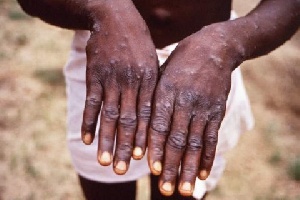
    Ghana’s confirmed monkeypox (Mpox) cases have risen to 197 following the detection of 11 new infections as of July 11. 

    The Ghana Health Service (GHS), while revealing this information, described the trend as a gradual yet manageable increase and called for sustained public vigilance.

    The country has seen a slight uptick in infections. Health officials, however, maintain that the overall situation remains under control. No hospitalisations or deaths have occurred in this latest update.

    Mpox, formerly known as monkeypox, spreads primarily through close physical contact. Common symptoms include fever, tiredness, swollen lymph nodes, and a noticeable rash. Although many cases are mild, early medical care is crucial to avoid complications.

    In light of the growing Mpox numbers, the GHS is boosting nationwide information campaigns to ensure citizens remain aware and careful.

    Preventive actions such as avoiding direct contact with sick individuals, practicing proper hygiene, and promptly seeking care when symptoms show are being emphasized.

    Officials stress the importance of swift case detection and notification, with field teams and community health workers diligently monitoring developments.

    The public is being encouraged to stay watchful, adhere to health precautions, and contribute to collective efforts to stop the virus from spreading.

    The government is engaging international organizations for assistance in procuring vaccines to be able to curb the surging number of cases being reported.

    The World Health Organization (WHO) Ghana has provided laboratory PCR reagents to enhance the country’s diagnostic capacity.

    The donation was officially handed over to the Ghana Health Service (GHS) at the National Public Health Reference Laboratory.

    Receiving the supplies on behalf of the GHS, Acting Deputy Director General Dr. Caroline Reindorf Amissah expressed gratitude for WHO’s ongoing logistical and technical support.

    “We promise from our end to do our bit, collaborate, go out there, and look for the cases to make sure that this is really brought under control,” she stated.

    WHO Country Representative Dr. Fiona Braka emphasized that the organization hopes the reagents will enable rapid diagnosis and prompt public health responses.

    The supplies are capable of testing 3,400 suspected Mpox samples, and additional kits provided will allow clade determination for 625 confirmed positive cases.

  • Africa CDC warns mpox outbreak remains uncontrolled across the continent

    Africa CDC warns mpox outbreak remains uncontrolled across the continent

    The Africa Centres for Disease Control and Prevention (Africa CDC) have raised concerns that the mpox outbreak across the continent remains uncontrolled, with infections still rising in several nations.

    Following the identification of a new variant, the World Health Organisation (WHO) declared the outbreak a public health emergency of international concern.

    African countries are grappling with this latest health crisis, coming so soon after the COVID-19 pandemic, which exposed significant weaknesses in the region’s healthcare systems.

    According to Africa CDC data, mpox cases have surged by 177%, while deaths have risen by 38.5% compared to the same time last year.

    “We can say today that mpox is not under control in Africa. We still have this increase of cases that is worrying for all of us,” Jean Kaseya, director general of Africa CDC, told a weekly briefing on the outbreak.

    In one week 2,912 new cases were reported compared with the previous week including a new country, Morocco, where a case was reported, confirming the spread of the disease in all four regions of the continent.

    So far, 15 of the 55 member states of the African Union have reported cases, Africa CDC said.

    “We still have people dying from mpox in Africa. In one week, we lost 14 people,” Kaseya added.

    He noted that in countries like Cameroon and the Democratic Republic of Congo, two different strains of the disease were circulating. However, due to inadequate surveillance and testing capabilities, it is unclear whether this is also happening in other nations.

    Kaseya mentioned that Rwanda has already initiated its vaccination campaign, while the Democratic Republic of Congo, the outbreak’s epicentre, is expected to begin vaccinations in early October.

  • Morocco reports its first mpox case in the latest outbreak

    Morocco reports its first mpox case in the latest outbreak

    The Moroccan health ministry has confirmed a case of mpox in a man located in Marrakech.

    This marks the first discovery of its kind since the World Health Organization (WHO) declared the ongoing outbreak a global health emergency last month.

    The declaration was made in response to the swift spread of a new variant, or clade, of the virus in central Africa. Moroccan officials have not yet disclosed which variant the infected individual has contracted.

    According to the health ministry, the man is undergoing treatment and remains in stable condition. Authorities are actively tracing and monitoring all individuals who have been in contact with him. As of Thursday afternoon, none of them have shown any symptoms, per the official statement.

    Mpox spreads through close contact with an infected person.

    It can also be transmitted by handling virus-contaminated items, such as bedding, clothing, or towels.

    In most cases, the infection clears up on its own within 14 to 21 days. However, it can be deadly, especially for vulnerable groups, such as young children.

    Severe cases may involve widespread lesions, particularly affecting the mouth, eyes, and genital areas.

    The WHO advises that treatment focuses on caring for the rash, managing pain, and preventing complications.

    So far in 2024, over 20,000 cases and 500 deaths have been recorded across 14 African nations, with the Democratic Republic of Congo (DRC) at the epicenter, reporting more than 5,000 cases this year.

    While vaccines, seen as critical in curbing the spread, have reached the DRC, logistical challenges may delay their distribution to the hardest-hit areas in the eastern part of the country by several weeks.

    When declaring the outbreak a public health emergency on 14 August, WHO director-general Dr Tedros Adhanom Ghebreyesus said it was “clear that a co-ordinated international response is needed to stop these outbreaks and save lives”.

  • How Ghana plans to ‘fight’ Mpox

    How Ghana plans to ‘fight’ Mpox

    The Ministry of Health (MoH) has activated its emergency response plan in reaction to the World Health Organisation’s (WHO) recent classification of Mpox as a Public Health Emergency of International Concern (PHEIC).

    Mpox is an illness caused by the monkeypox virus. It is a viral infection which can spread between people, mainly through close contact, and occasionally from the environment to people via things and surfaces that have been touched by a person with mpox.

    The ministry, in a press release dated August 16, 2024, noted that it has issued a directive to all implementing agencies and stakeholders to heighten surveillance systems at all levels.

    This directive includes enhanced monitoring at Points of Entry (such as airports and border crossings) and increased vigilance within communities nationwide.

    Also, the Ghana Health Service, on the directive of the ministry, has released a detailed technical advice on the symptoms of Mpox and the necessary steps for early detection, reporting, and treatment.

    Ghana recorded 120 cases of Mpox in 2022 and 8 cases in 2023, with no cases reported in 2024 thus far. Despite this, the country remains vigilant to prevent any potential resurgence.

    Director-General of the World Health Organisation (WHO), Dr. Tedros Adhanom Ghebreyesus, has voiced growing concerns about the spread of Mpox, driven by significant outbreaks in the Democratic Republic of the Congo (DRC) and other African nations a Public Health Emergency of International Concern (PHEIC).

    This decision follows the recommendation of an IHR Emergency Committee, which reviewed data from WHO and affected nations.

    The Committee highlighted the potential for Mpox to spread further across Africa and beyond.

    Previously, Mpox was designated a PHEIC in July 2022 due to its rapid spread via sexual contact in various countries. This status was lifted in May 2023 after a global decline in cases.

    However, Mpox has persisted in the DRC for over a decade, with cases surging significantly last year and surpassing previous totals this year.

    A new strain, clade 1b, has emerged in the DRC, spreading mainly through sexual networks and detected in neighboring countries like Burundi, Kenya, Rwanda, and Uganda, where it had not been previously reported.

    The true number of cases is likely higher due to underreporting and insufficient testing.

    WHO’s Strategic Advisory Group of Experts on Immunization endorses two vaccines for Mpox, which are also approved by national regulatory authorities in affected countries, including Nigeria and the DRC.

  • All you need to know about mpox terrorizing African countries

    All you need to know about mpox terrorizing African countries

    On Wednesday, August 15, 2024, the World Health Organization (WHO) declared the mpox outbreak in Africa a global health emergency due to its rapid spread, particularly in the Democratic Republic of Congo (DRC) and other African nations.

    WHO Director-General Dr. Tedros Adhanom Ghebreyesus explained that the surge in mpox cases in the DRC and several neighboring countries meets the criteria for a public health emergency of international concern (PHEIC) as per the International Health Regulations (2005).

    In declaring the PHEIC, Dr. Tedros said, “The emergence of a new clade of mpox, its rapid spread in the eastern DRC, and the reporting of cases in several neighbouring countries are very worrying. On top of outbreaks of other mpox clades in the DRC and other countries in Africa, it’s clear that a coordinated international response is needed to stop these outbreaks and save lives.”

    The WHO Regional Director for Africa, Dr. Matshidiso Moeti, said, “Significant efforts are already underway in close collaboration with communities and governments, with our country teams working on the frontlines to help reinforce measures to curb mpox. With the growing spread of the virus, we’re scaling up further through coordinated international action to help countries bring the outbreaks to an end.”

    Since the beginning of the year, Africa has reported over 17,000 mpox cases and more than 500 deaths across 13 countries. The Africa Centres for Disease Control and Prevention has labeled the outbreak as a “very high risk event.”

    What is Mpox?

    Mpox, previously known as monkeypox, is a zoonotic disease transmitted from animals to humans. It is typically found near tropical rainforests where the virus-carrying animals reside. Transmission occurs through contact with bodily fluids, skin lesions, respiratory droplets, and contaminated objects.

    Symptoms

    Mpox symptoms usually appear within 5 to 16 days after exposure but can develop up to 21 days later. Symptoms include fever, headache, muscle aches, swollen lymph nodes, chills, exhaustion, and a rash with lesions that evolve through several stages before healing. Most individuals recover within four weeks, depending on the severity of symptoms.

    Ghana’s Response

    Dr. Franklin Asiedu-Bekoe, Director for Public Health at the Ghana Health Service, announced an increase in surveillance efforts. Health professionals are now actively monitoring for early signs of mpox, with re-trained clinicians on alert.

    Although Ghana has had some cases in the past two years, no new cases have been reported recently.

    Dr. Asiedu-Bekoe noted that Ghana’s reference laboratory capabilities have improved, enhancing case confirmation processes beyond reliance on Noguchi Memorial Institute.

    Clinical epidemiologist Professor Fred Binka emphasized the importance of vigilance.

    “The rate of spread shows that the ‘Clade 1b’ strain is highly infectious so for countries like Ghana, all 16 regions must be ready and looking out for both positive and negative results.

    “In this case, negative results are also important and people must report. Once we suspect that there are cases, we must make sure that we are supplying the facilities with reagents so that they will be able to do the initial diagnosis and then send it to our reference laboratories for confirmation,” he advised.

    He advised the public to seek medical attention for symptoms similar to malaria.

    “When you have a fever, feel nauseous, or have muscle pain, do a test. If it doesn’t confirm malaria, remember that it can be some other disease, like in this case, mpox, and then seek further tests to be done,” he advised.

  • Africa public health body declares mpox emergency

    Africa public health body declares mpox emergency

    Africa’s top public health body declared what it termed a “public health emergency of continental security” on Tuesday over an outbreak of mpox that has spread from the Democratic Republic of Congo to neighbouring countries.

    The Africa Centres for Disease Control and Prevention (Africa CDC) had warned last week of an alarming rate of spread of the viral infection, which is transmitted through close contact and causes flu-like symptoms and pus-filled lesions.

    Most cases are mild but it can kill.

    “We declare today this public health emergency of continental security to mobilize our institutions, our collective will, and our resources to act swiftly and decisively,” Director General Jean Kaseya said in a briefing that was live-streamed on Zoom.

    The outbreak in Congo began with the spread of an endemic strain, known as Clade I. But the new variant, known as Clade Ib, appears to spread more easily through routine close contact, particularly among children.

    Kaseya said in the briefing that the continent needs more than 10 million doses of the vaccine, but only about 200,000 are available. He promised that Africa CDC would work to quickly increase the supply to the continent.

    “We have a clear plan to secure more than 10 million doses in Africa, starting with 3 million doses in 2024,” he added, without saying where the vaccines would be sourced.

    The health body said that more than 15,000 mpox cases and 461 deaths were reported on the continent this year so far, representing a 160% increase from the same period last year. A total of 18 countries have reported cases.

    Mpox has been endemic in parts of Africa for decades after it was first detected in humans in the Democratic Republic of Congo in 1970.

    A milder version of the virus spread to more than a hundred countries in 2022, largely through sexual contact, prompting the World Health Organization (WHO) to declare a public health emergency of international concern, its highest level of alert.

    The WHO ended the emergency 10 months later, saying the health crisis had come under control.

    The U.S. Centers for Disease Control and Prevention (CDC) issued a second health alert last week to notify clinicians and health departments about the deadly new strain.

    Also last week, Africa CDC said it had been granted $10.4 million in emergency funding from the Africa Union for its mpox response.

    WHO chief Tedros Adhanom Ghebreyesus has promised to convene an emergency committee to discuss whether the outbreak in Congo represents a public health emergency of international concern.

    Source: Reuters

  • GHS beefs up surveillance amid mpox emergency declaration in Africa

    GHS beefs up surveillance amid mpox emergency declaration in Africa

    The Ghana Health Service (GHS) has ramped up its surveillance efforts following the declaration of a Public Health Emergency of International Concern by the Africa CDC, due to a significant surge in Mpox cases across 15 African countries.

    The GHS is taking proactive measures to minimize Ghana’s exposure to the disease, which, though rare, can be fatal.

    This move comes as the World Health Organisation (WHO) reported 2,030 cases and 13 deaths so far this year, a sharp increase compared to the 1,145 cases and seven deaths recorded in 2023.

    Notably, four countries—Burundi, Kenya, Rwanda, and Uganda—have reported their first-ever Mpox cases since mid-July 2024.

    Director of Public Health at GHS, Dr. Franklin Asiedu Bekoe,emphasized the importance of heightened vigilance among Ghanaians, particularly regarding unusual skin rashes.

    “We are going to activate our surveillance system. We aim to raise awareness so that people do not mistake Mpox for chickenpox. We will also enhance our coordination efforts,” Dr. Bekoe stressed.

    He further clarified that Ghana should not have been listed on the Africa CDC website as one of the 15 African countries with confirmed Mpox cases, noting that the last recorded case in Ghana was in April 2023.

    “In Ghana, our last case was in April 2023. Since we have had cases in the past, we are activating our system to manage any potential cases,” he added.

    Mpox, which can cause severe lesions across the body, spreads from animals to humans and between people through close contact, including skin-to-skin interaction and respiratory transmission. Symptoms include fever, muscle aches, and body-wide lesions, and the disease can be deadly if left untreated.

    Two main strains of the virus exist, with the milder one responsible for the global outbreak in 2022 that spread primarily through sexual contact. The more deadly strain, endemic to Central Africa, is the cause of the recent variant detected in DR Congo.

    There are three available vaccines for Mpox, but they are typically reserved for individuals at high risk or those who have been in close contact with an infected person.

  • South Africa records second death from mpox

    South Africa records second death from mpox

    South Africa’s health minister, Joe Phaahla, has announced a second death from monkey pox (mpox) less than 24 hours after the country reported its first fatality from the virus.

    The deceased men, aged 37 and 38, tested positive for the virus, according to Mr. Phaahla.

    Mr. Phaahla further disclosed that South Africa has recorded six cases of mpox this year: two in Gauteng and four in KwaZulu-Natal.

    All cases were severe, requiring hospitalisation, and involved men aged between 30 and 39 who had not traveled to countries experiencing outbreaks, indicating local transmission of the disease.

    Mpox, previously known as monkeypox, is a viral infection spread through close contact.

    Symptoms typically start with fever, headaches, swellings, back pain, and muscle aches, which may progress to a rash.

    While the World Health Organisation (WHO) declared a public health emergency during a 2022 outbreak, reporting has shown continued low levels of cases in certain countries even after the emergency was lifted last year.

    “One death is too many, especially from a preventable and manageable disease,” Mr Phaahla said on Wednesday, urging those with suspected symptoms to seek medical attention and help trace contacts.

    According to Mr. Phaahla, the six patients diagnosed with mpox since the beginning of May had pre-existing immunodeficiencies.

    The virus has been documented in over 100 countries since 2022.

    Of those infected, two have been discharged home, while two are still hospitalised. Close contacts of the deceased individuals will undergo a 21-day monitoring period.

    The first human case of mpox was reported in the Democratic Republic of the Congo in 1970, where the disease continues to be endemic, as stated by the World Health Organisation (WHO).