Former secular musician turned gospel minister, Yaw Siki, has claimed that many top-tier secular artistes feel spiritually empty despite their fame and financial success.
Speaking in an interview with Nana Romeo on Okay FM on February 24, 2026, he argued that outward success in the secular music space does not necessarily translate into inner fulfilment.
“Every A-list secular artiste knows that they’re empty even though they seem happy and making more money. They’re empty because they’re not doing what God wants them to do,” he noted.
Drawing from his personal journey, Yaw Siki said his perspective is shaped by his past involvement in secular music before he gave his life to Christ. According to him, many artistes who produce secular songs are aware of the motivations behind their craft.
“Musicians who sing secular songs for people to be happy, we are aware they’re doing it for the money because I’ve been there before,” he said.
He explained that the pursuit of fame and wealth often makes it difficult for artistes to walk away from secular music after they have invested years of hard work into building their brands.
“It’s sometimes difficult to repent when artistes get the fame and it’s due to how they toiled hard to get to that point,” he shared.
Yaw Siki therefore advised emerging musicians to think carefully about their choices before fully committing to the secular path, especially if they are still at the early stages of their careers.
“If you’re now coming into the industry, it’s not too late. If you’re not big like the A-list artistes, don’t bother yourself to be a secular artiste,” he advised.
He also encouraged secular artistes who feel called to serve God not to be afraid of losing popularity, money, or public admiration.
“You should understand that God can restore whatever you would lose while trying to move away from the secular world,” he said.
Ending his remarks, he urged artistes to focus on fulfilling their divine assignment, stressing that true satisfaction comes from spiritual alignment rather than material achievement.
“They shouldn’t be scared of what they’ll lose or the people who will criticize them. If they’re able to serve their purpose in life, they’ll be satisfied spiritually and physically,” he added.
The funeral of the late KODA was marked by a poignant moment as his fellow musicians came together to honor him during the procession.
A remarkable turnout of gospel artists filled the venue, each contributing their own tributes, but the most emotional highlight was when they united to perform KODA’s beloved song, “Yesu Adi Nkunim.”
Veteran gospel artist Elder Mireku led the heartfelt rendition, with musicians taking turns to sing and harmonize, creating a powerful atmosphere as the pallbearers carried the casket.
A brass ensemble accompanied the family as they followed the procession to the private burial site.
Many prominent figures from the gospel music community attended, including Joe Mettle, Uncle Ato, Ceccy Twum, Mary Ghansah, Sonnie Badu, Daughters of Glorious Jesus, Eugene Zuta, Francis Amo, Diana Hamilton, Nii Okine, and Akese Brempong, among others, all coming together to pay their final respects.
The solemn ceremony took place at the Kingsway International Christian Centre (KICC) Dominion Centre on Spintex Road in Accra on Friday, September 20, 2024, concluding with a private burial.
Family, friends, and fans from across the nation gathered to celebrate KODA’s life and legacy.
Gospel artist Minister OJ has shared insights on how musicians can carve out a unique identity in their field.
He emphasized the importance of stepping out of one’s comfort zone, suggesting that true recognition comes from breaking away from the norm.
“Celebration comes when you stray from the ordinary,” he asserted, advising musicians to embrace their individuality. “To stand out and make an impact, you need to do things differently. If you stick to the conventional, you’ll only achieve conventional results.”
Minister OJ discussed his own approach, revealing that he sometimes deliberately incorporates imperfections in his music to capture attention.
“It’s not enough to just perform well or arrange a song neatly,” he explained. “There must be something distinctive that sets you apart.”
Drawing a parallel to God’s creation of humanity, he noted that even God gives each person unique attributes, like varying sizes of feet.
This, he argued, underscores the value of being unconventional in art.
The musician stressed that his focus is always on guiding his audience towards spiritual enlightenment through Jesus. “Every song I create is infused with a message of salvation. My goal is to always bring Jesus into the music,” he said.
Minister OJ also praised the distinctive nature of the Journey to Heaven program on No. 1 FM 105.3, hosted by Taller Dee. He remarked on the program’s unique format, where the host shares interview time with bloggers. “I chose to participate in this interview because Taller Dee stands out,” he noted.
Renowned Ghanaian rapper and producer E.L has encouraged fellow artists to learn the art of producing their own beats.
He believes this skill empowers musicians to maintain the authenticity of their creative vision without relying on others.
Speaking on 3FM on July 25, 2024, E.L, also known as Elom Adablah, emphasized the benefits of producing one’s own beats.
He highlighted that personally creating beats allows artists to directly express their ideas, which he finds more efficient than involving additional contributors.
“I have told this to all my friends, the earlier you start learning how to produce your own beats if you are a musician, the better. I have gotten through a few of them and they realise it’s so much easier to bring out the idea directly yourself than to go through someone,” he said.
Reflecting on his musical journey, E.L recalled his early experiences singing in church and later joining a rap group during his time at PRESEC Legon.
He described music as gradually becoming his calling rather than a sudden realization.
“I wouldn’t say there was a specific time in my life where I knew I was going to do music. It crept up on me in stages. My earliest memory of having that musical experience was me being in church singing in the choir. They got me a keyboard and I started playing it and the piano.
“It was a very evolutionary process that led me to this place. I was in PRESEC and I joined Skillions, a rap group, and before you knew it, I was on stage performing. I have just been led to this path by my Guardian angel,” E.L shared.
After a hiatus from the music scene, E.L has announced the upcoming release of his new album, ‘Bar 7’. Featuring 13 tracks, the album is set to debut on July 26, 2024, across various streaming platforms.
Esteemed Highlife singer known for hits like ‘Abusua Kyiri Ka,’ Samuel Owusu shared invaluable advice for aspiring musicians.
Drawing upon his extensive musical journey that began with the release of his debut album in 1992, Owusu emphasised the importance of supplementing a music career with alternative sources of income.
The seasoned artist encouraged young individuals venturing into the music industry to diversify their pursuits.
Owusu cautions against solely relying on music for sustenance, asserting that such dependence might lead to disappointment.
During the interview, he highlighted his own approach by revealing involvement in other businesses and stresses the need for a holistic approach to career planning.
Owusu’s guidance extends beyond musical proficiency; he actively prompts aspiring artists to assess their education and skill set.
He queried whether they have pursued education and acquired additional skills, reinforcing the idea that a well-rounded foundation enhances one’s prospects in the competitive music industry.
In conclusion, the veteran Highlife maestro advocates for a balanced strategy, urging aspiring musicians to chase their musical dreams while simultaneously securing alternative avenues of income through education or additional vocational skills.
Popular Ghanaian gospel artist Akesse Brempong has expressed his belief that there is nothing wrong with musicians aligning with the ideologies of a political party in the country.
In a recent interview on Joy Prime’s Celeb Biz Saturday, the ‘God is working’ hitmaker questioned the societal intolerance towards gospel artists supporting a political party, especially during an election year.
Brempong emphasised that musicians can be partisan and still connect with a polarised society.
He urged Ghanaians to be more accepting of divergent political views, highlighting the potential harm of intolerance to the nation’s survival.
The artist stressed that gospel musicians, as individuals with their own ideologies, can identify with a political party without compromising their ministry.
He urged for greater acceptance of artists supporting a party, emphasising Ghanaians’ ability to tolerate such affiliations.
Brempong criticised the hypocrisy and vilification faced by individuals who openly support a political party.
He called for an end to such practices and emphasised the need for a more inclusive and tolerant society.
Additionally, the gospel artist disclosed that he does not receive financial support from his church for his pastoral duties.
He expressed his desire not to be a financial burden to his church and revealed that he relies on multiple streams of revenue, aside from his music career, to sustain himself.
“As much as the gospel musician is an individual, has ideologies, and can identify with the ideologies of a political party, the gospel musician can belong to a political party.
“But the other thing is when you know that the people your ministry is for are cross-partisan and that you align with this party, especially in Ghana.
“Ghanaians can tolerate the idea of gospel musicians supporting a party. I don’t know why it is,”Akesse Brempong stated.
Reggie Rockstone has drawn attention to what he deems as rampant corruption in the Ghanaian music scene, asserting that certain artists are artificially boosting their popularity by purchasing online streams.
In a conversation on Property FM in Cape Coast, Reggie Rockstone voiced apprehension regarding the authenticity of the remarkable streaming figures boasted by numerous Ghanaian musicians.
He specifically highlighted the use of streaming farms, where artists employ various methods to artificially inflate their streaming numbers.
“The huge number of streams some musicians get are sometimes not genuine because they have streaming farms. The corruption that has infiltrated into music nowadays is a whole topic for another day that we need to discuss,” he asserted.
Not only did Reggie Rockstone criticize musicians, but he also implied that the makers of well-known digital streaming services, like Spotify, are making sizable profits off of musicians.
He made it clear that the majority of the money raised goes to help people in other countries.
“The white people are really enjoying our money out of the digital streaming platforms they’ve created like Spotify and the rest. They’re really spending our money, and they always find a new way to rip, so we have a lot of things that we have to look at,” Rockstone lamented.
A social media user has questioned Mr. Eazi’s decision to organize a concert in Accra during a period when there’s a growing call among some Ghanaians for limiting foreign music.
This issue surfaced after the artist shared updates on the preparations at the location for his ‘Detty Rave’ concert, set for December 27, 2023. ‘Detty Rave’ is an annual event hosted by Mr. Eazi in Accra, Ghana, since 2017.
Despite this, a skeptical netizen is questioning the rationale behind the Nigerian singer’s plan to hold a concert in Ghana, especially at a time when there are voices advocating for a reduction in foreign music.
“Accra wen want ban 9ja music na im u dey go do show,” the netizen quizzed.
Mr. Eazi furiously attacked the social media user in return, questioning if he had any evidence to support his claims.
Mr. Eazi asked if he had seen any legislation to that effect or heard the president make any pronouncement about it, characterizing the netizen as naive and uninformed.
“Olodo so you see am for presidential declaration abi the law pass for parliament?! Next time use your brain small!” Mr. Eazi responded.
Nigerians refuse to support Ghanaian musicians Black Sherif and others
There are reports that a segment of Nigerians is actively avoiding Black Sherif, who holds considerable popularity in Nigeria and boasts a substantial fan base, even surpassing some local artists.
This development follows the circulation of a video wherein certain musicians were seen advocating for the promotion of Ghanaian music during the festive season.
Black Sherif, in particular, has since been singled out and subjected to intense backlashes from Nigerians.
Background
A group of Ghanaian artistes, including Samini, Reggie Rockstone, Smallgod, DJ Mensah, and Black Sherif, have been vocal about promoting 100% Ghanaian music this December.
Their advocacy aims to highlight the richness and diversity of the local music scene during the festive season.
Notably, there has been no mention of banning foreign music, specifically Nigerian tracks as perceived.
Michy, a well-known socialite, actress, TV host, and musician, has voiced her complaints about the situation of the Musicians Union of Ghana (MUSIGA) at the moment.
When asked about how to revive MUSIGA during a guest appearance on the program “Ultimate Entertainment Records” on Ultimate 106.9 FM, Michy passionately argued that the day-to-day administration of the union should not be left to old men and old women but rather be given to young men and young women who have the energy to run the union.
“The old folks are old and they do not know the demands of modern-day music which is dominated by young folks so they aren’t fit to lead the current generation,” she said.
According to Michy, the older generation’s inclination towards adhering to practices from their era, even if they might not be relevant today, renders them unsuitable for leading the Union.
Established in December 1975, the Musicians Union of Ghana (MUSIGA) aimed to foster and safeguard Ghana’s culture by empowering local musicians to be self-sufficient, innovative, and diligent through education.
Unfortunately, the union has become entangled in numerous legal disputes and member grievances since the tenure of its former president, Bice Osei Kuffour, concluded in 2019.
Since Bessa Simons was appointed as acting president, the union has been unable to elect a permanent president.
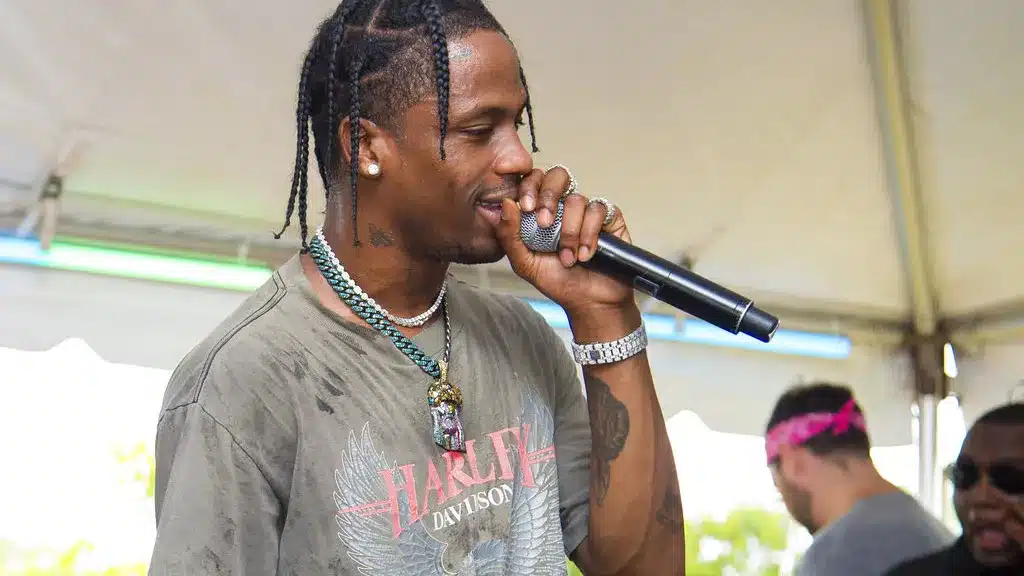
The Egyptian musicians‘ union has issued a ban on the upcoming concert of American rapper Travis Scott, which was scheduled to take place on July 28 at the Giza pyramids. The union argued that the concert violated the respect for the “traditions of the Egyptian people.”
It is common for international pop stars to hold large concerts at the iconic pyramids in Cairo, such as the American hip-hop group Black Eyed Peas did in October 2021.
Although the musicians’ union rarely opposes such events, it has long been critical of Egyptian urban music, particularly rap.
Egypt is currently engaged in a campaign against what it perceives as a “reimagining” of its history, particularly in relation to African-American movements that claim connections to the Pharaohs.
In a press release, the musicians’ union, which has authority over concerts and music broadcasts in Egypt, stated that it welcomes concerts as long as they do not undermine the customs and ancestral traditions of the Egyptian people.
“After examining the opinions expressed on social networks and the positions of the artist, the union has found images and documented information about the strange rituals he performs which go against our traditions”, continues the text.
The statement, however, never defines these “rituals” which it attributes to Travis Scott, American hip-hop heavyweight, currently on a world tour.
It appears that the former Black Stars Captain is a ‘serial benefactor’ and this can be deduced from the gravity of support he has offered others.
Although social media have witnessed a number of celebrities announcing their ‘kind gestures’ to others publicly, some prefer to keep a low profile while helping others who are dear to their hearts.
Asamoah Gyan happens to fall in the category of celebrities who give out without ever posting a single picture on social media.
Interestingly, two astute celebrities have come out to narrate how they have benefited from the footballer’s benevolence.
There could be other ‘celebrity beneficiaries’ the public isn’t privy to.
Let’s take a look at some celebrities who have disclosed how Asamoah Gyan once financially supported them
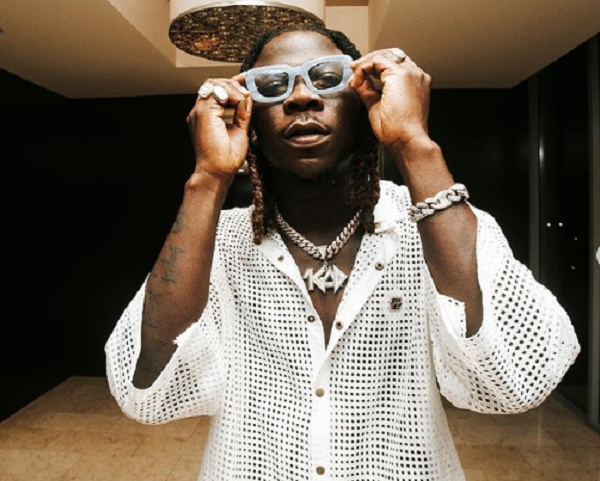
Earlier in January 2023, Stonebwoy disclosed that Asamoah Gyan took care of the cost of his knee surgery seven years ago.
The dancehall artiste’s right leg was deformed after he was involved in an accident about two decades ago. Reports suggest the same accident took away his twin brother’s life.
Having been limping for many years, the BET award winner finally went under the knife to fix his knee and has now revealed that Gyan paid for the procedure.
“Asamoah Gyan you came through for me around this same time 7 years on. You decided to take my surgery cost, I’m forever Grateful,” he wrote on Twitter.
Nacee
In a recent interview with KofiTV, gospel singer Nacee, disclosed that Asamoah Gyan once came through for him and his former group, ‘No Tribe’, at a time they needed it the most.
He recounted that Asamoah Gyan supported a ‘No Tribe’ concert with an 8,000-dollar donation after he (Nacee) called on him for support.
Nacee made these statements while explaining his reasons for paying homage to the Black Stars player in his popular ‘Boys Boys’ song.
“I mentioned Asamoah Gyan in the song because he had helped me. In 2015 we were preparing for a concert and I was struggling to get money to pay for certain things. Asamoah Gyan gave me $8000. I just want to get the opportunity to meet him once again and say thank you. He is a good person,” he emphasized.
Asamoah Gyan is a Ghanaian professional footballer born on 22 November 1985) and the former captain of the Ghana national team
Gyan began his career in 2003 with Ghanaian Premier League club Liberty Professionals scoring ten goals in sixteen matches then spent three seasons with Serie A club Udinese via two loan at Modena netting on fifteen occasions in 53 league matches and at Udinese where he scored 11 times in 39 league matches. In 2008, Gyan joined Ligue 1 club Rennes, netting fourteen times in forty-eight league matches during two seasons. In 2010, Gyan joined Premier League club Sunderland, breaking the club’s transfer record and netting on ten occasions in thirty-four Premier League matches during two seasons
In 2011, Gyan joined Al Ain of the UAE Pro-League on loan and became the league’s top-goalscorer, scoring 24 times in 27 matches. In the following season, Gyan permanently joined Al Ain and once again became the league’s top-goalscorer while he helped Al Ain retain the UAE Pro-League title, scoring an impressive 28 goals in 32 matches. In the 2013–14 season, Gyan scored on 44 occasions in 40 matches with Al Ain.
Gyan is the all-time leading goalscorer of the Ghana national team, with 51 goals.He represented Ghana at the 2006, 2010 and 2014 FIFA World Cups. With 6 goals, he is the top African goalscorer in the history of the World Cup. Gyan has also represented Ghana at the 2004 Summer Olympics and in seven Africa Cup of Nations in 2008, 2010, 2012, 2013, 2015, 2017 and 2019, helping them finish in third-place in 2008 and runner-up in 2010 and 2015. He launched his memoir, titled “Legandry,” at the Kempinski Gold Coast Hotel in Accra.
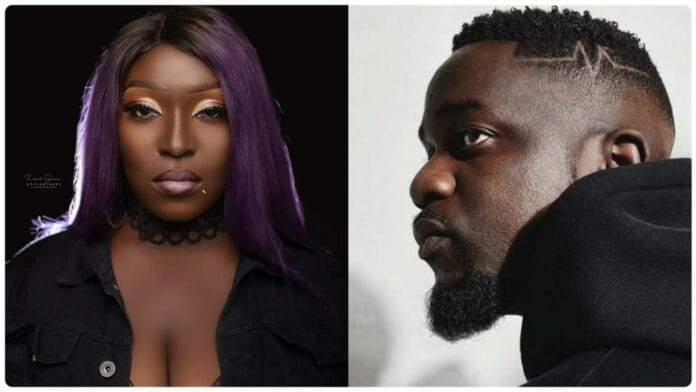
Sarkodie is not the landlord of Ghana rap, this is according to Ghanaian artist, Eno Barony.
According to her, there is no single person who owns or lords the Ghanaianrap industry.
The reason she believes that the ascription of the ‘landlord’ title to Sarkodie is a wrong move considering that other formidable rappers like herself are still around.
In her latest rap track, Eno Barony sent a daring message toSarkodieeven after quashing the Landlord’s title.
“We living on the land with no lords. No Man’s land, Nobody be landlord.”
Sarkodie has been locally hailed as the Landlord of Ghanana rap and to a large extent the one icon of the Ghanaian music industry.
In fact, Obidi is viewed as the most popular Ghanaian artist who has a wide international audience that his music appeals.
Therefore, many believe with his body of work, relevance, impact and how long he has been around, it is not far-fetched for Sarkodie to be seen and described as the Landlord of Ghana Music.
Eno Barony disagrees.
What, many think could settle this, is for Sarkodie and Eno Barony to lock horns in a musical rap beef to ascertain who’s who.
UK-based Ghanaian musician, Stephanie Benson, has revealed that, unlike other musicians, she has her shows organized exclusively for a private audience.
She described her audience as wealthy people who wanted her performances to be exclusively for them. She premised this on a question she was tagged with by Happy 98.9 FM Evening Drive’s Akua Sika, inquiring how she spent her Christmas holidays.
“The kind of shows I do are private; I can’t take my phone and film them for my audience.” she disclosed, and she further added that her audience is usually the rich, who pay good money for an exclusive show. “My audience is like the rich and wealthy who organize their black-tie events,” she explained, referring to the audience’s exclusivity and limited nature.
However, Selina indicated that her shows organized for charity are usually shared for public viewing. “It’s low-key; I can post it when I do charity ones, but most of the time I can’t,” she explained.
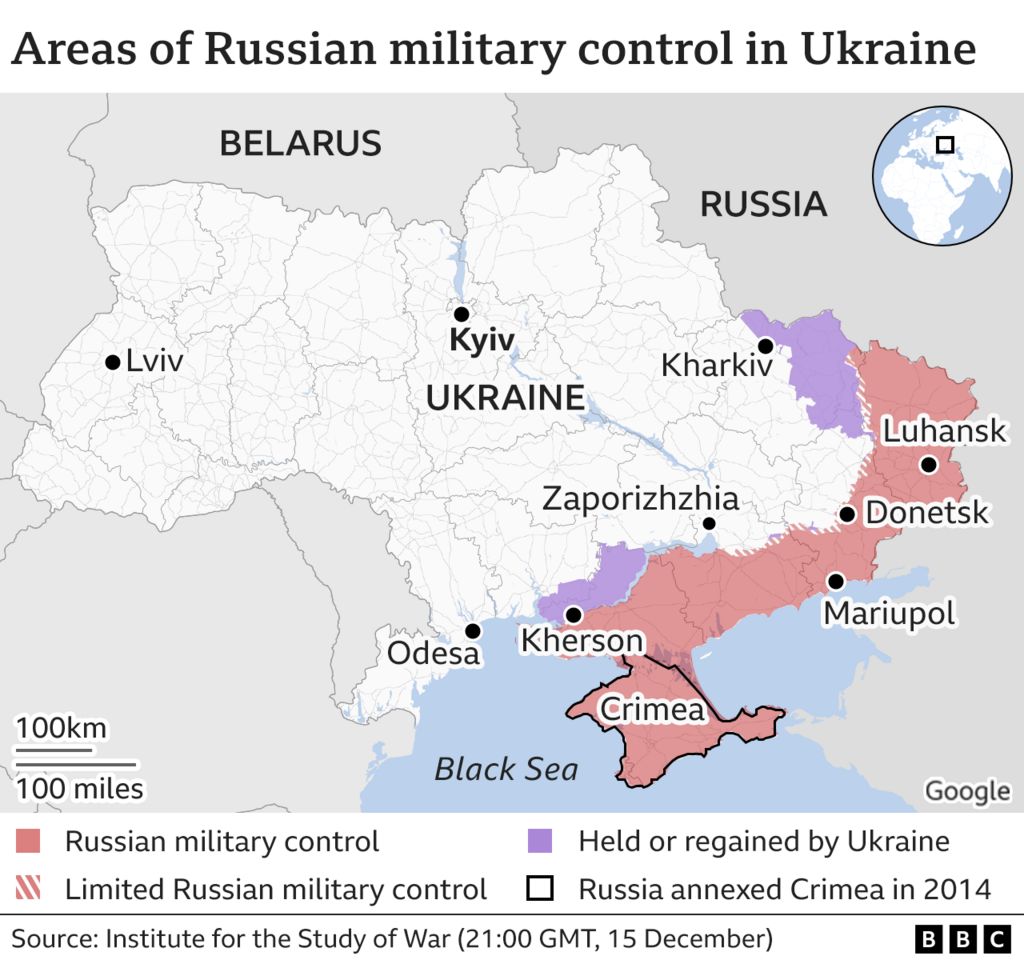
Russia says it will deploy musicians to the front lines of its war in Ukraine in a bid to boost morale.
The defence ministry announced the formation of the “front-line creative brigade” this week, saying it would include both vocalists and musicians.
The UK’s ministry of defence highlighted the brigade’s creation in an intelligence update on Sunday.
Meanwhile, Russian Defence Minister Sergei Shoigu visited frontline troops in Ukraine, the government said.
In a statement posted to Telegram, the defence ministry said Mr Shoigu “flew around the areas of deployment of troops and checked the advanced positions of Russian units in the zone of the special military operation”.
It added that he “spoke with troops on the frontline” and at a “command post” – but the BBC cannot confirm when the visit took place or whether Mr Shoigu visited Ukraine itself.
The reported visit comes as UK defence officials said low morale continues to be a “significant vulnerability across much of the Russian force”.
The UK said the new creative brigade – which follows a recent campaign, urging the public to donate musical instruments to troops – is in keeping with the historic use of “military music and organised entertainment” to boost morale.
But they questioned whether the new brigade would actually distract troops, who have been primarily concerned about “very high casualty rates, poor leadership, pay problems, lack of equipment and ammunition, and lack of clarity about the war’s objectives”.
According to the Russian outlet RBC news, the brigade will consist of troops mobilised under President Vladimir Putin’s recruitment drive, as well as “professional artists who voluntarily entered military service”.
The new unit will be tasked with maintaining “a high moral, political and psychological state [among] the participants of the special military operation,” the outlet cited the defence ministry as saying.
Meanwhile, intense fighting has continued around the town of Bakhmut in the eastern Donbas region on Saturday, Ukraine’s general staff said.
The area has seen heavy clashes between Ukrainian and Russian troops for months, as Russia seeks to retain territory following a string of defeats in eastern Ukraine earlier this year.
Western intelligence officials have previously said Russian attacks on the town are being spearheaded by the private military contractor, Wagner Group.
Moscow hopes to use the town as a staging ground to launch attacks on the Ukrainian-held cities of Kramatorsk and Sloviansk.
Elsewhere, heating has been restored to the Ukrainian capital of Kyiv, after Russian launched widespread strikes on Friday that targeted power and water infrastructure, Mayor Vitali Klitschko said.
Moscow launched 76 missiles on Friday, hitting nine power supply stations and plunging much of the country into darkness. Ukraine said it intercepted 60.
J Hus has been named the top Afrobeats artist in the UK over the past 12 months, as the genre finally gets its own chart.
Based on streaming data and sales, he’s followed by Nigeria’s Burna Boy and Hackney collective NSG.
The Official UK Afrobeats Top 20 will be announced on BBC Radio 1Xtra on Sunday.
Mark Strippel,​ 1Xtra’s head of programmes​ said the chart was “much-needed and long overdue”.
Afrobeats has quickly grown to dominate playlists and radio, with UK artists developing their own style and sound (Afroswing/Afro bashment) from its origins in west Africa.
Young T & Bugsey’s Don’t Rush has been named the top Afrobeats track of the past year.
An Afrobeats History
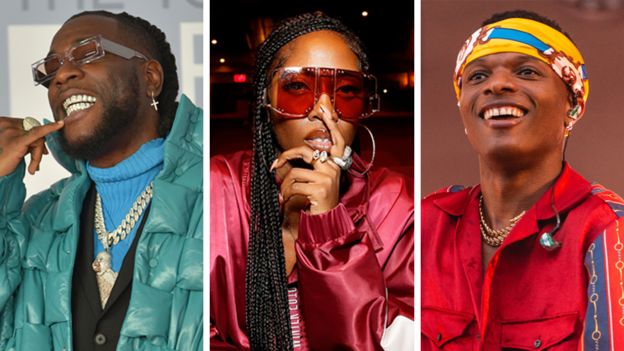
Burna Boy, Tiwa Savage and Wizkid are among the genre’s superstars
The ‘s’ in Afrobeats is crucial.
Don’t confuse it with Afrobeat – which was pioneered in the late 1960s by Nigerian artist and activist Fela Kuti.
Fela and his drummer Tony Allen formed a movement when they fused funk and jazz with Ghanaian highlife, traditional Yoruba music and conscious lyrics.
The 2010s saw the rise of another musical movement out of Nigeria with a completely different sound, dubbed Afrobeats.
D’Banj’s 2012 hit Oliver Twist, which reached number nine in the UK charts, was probably the first time the sound really took hold in the UK.
Oliver Twist by D’Banj reached number nine in the UK charts
Big tracks from Fuse ODG like Antenna and Azonto followed, but more recently in the UK, the lines have been blurred between sounds from the West Indies, London and West Africa.
Brixton rapper Sneakbo’s music hinted at the genesis to come at the start of the decade, and by the end of it artists like Yxng Bane and Not3s were at the forefront of what was being dubbed Afro bashment, or Afroswing.
Along with the likes of NSG, Juls, Naira Marley and Afro B, they’ve helped popularise the sound in the UK – while J Hus and his producer JAE5 have arguably had the most success combining dancehall with West African sonics and black British genres and flows.
Fuse ODG is from London but got his musical identity after returning to Ghana
Afrobeats reached new levels internationally when Drake featured Wizkid on 2016’s One Dance.
It’s arguably not got too much of an Afrobeats sound – borrowing more from dancehall and UK funky house – but it put a spotlight on Wizkid and the genre he flies the flag for.
Fuse ODG’s spoken of wanting to create a new image of Africa through Afrobeats music too.
His Tina movement – which stands for This Is New Africa – “urges Africans in the Motherland and the diaspora to use their skills to rebuild their community and show the world the more beautiful side of Africa”.
An Afrobeats Hijack?
In 2019, Afrobeats artists collectively spent 86 weeks in the Official Chart Top 40, up from 24 weeks in 2017.
The number of tracks featuring a lead or featured Afrobeats act has also doubled in the same period, led predominantly by British artists.
“London is the home of Afrobeats outside of Africa,” says Folabi Ogonkoya, who runs CocoCure – a venue dedicated to the genre.
Born in Lagos, Folabi’s been putting on Afrobeats nights in the UK for 13 years to reflect the music he enjoyed when he was growing up.
“I was listening to Afrobeats before it even had a name,” he says.
“The parties started off a bit slow but they picked up as the genre got more popular and so I decided to stay in the UK. ”
Folabi Ogonkoya nearly moved back to Nigeria but saw an Afrobeats opportunity
He says lots of British artists have “hijacked” Afrobeats in a good way, moving the music forward and increasing its popularity.
“The fans are huge now. At first it was Africans in the diaspora but now everyone’s embraced it. Things have worked out for the best.”
From Manchester to London to Lagos
Male artists dominate the Afrobeats scene but Manchester-born Ezi Emela is one of several female singers making their mark.
“I can see Afrobeats becoming the world’s biggest musical genre soon,” she says.
Until January 2019, she was living in London but decided she wanted a change. During a holiday to Nigeria, she phoned her mum to tell her she was sticking around.
“My sounds has grown so much since I’ve been here,” she tells Radio 1 Newsbeat, from her home in Lagos.
Ezi Emela has released tracks including Chineke Meh, Confam It and new single No Love
Nigeria is her parents’ birth country and Ezi says “being in the actual continent where my genre stems from” has given her “a new juj”.
“In the UK, I don’t think I was connected to the music and I felt I was faking it a little bit.
“I hadn’t connected to the culture.”
She thinks every artist “getting into the African swing of things” should try to get to Africa at some point (travel restrictions permitting obviously).
“It’s changed me a lot. It has changed my style. It has given me a lot of inspiration and it’s all made a big difference to my music.”
The UK’s Official Top 10 Afrobeats artists of the past 12 months are:
Some African artistes have tasted their shares of successes in recent years. A lot of them have been able to take their art beyond the shores of their nations and have also linked up with their counterparts in other countries.
Despite the lockdown some of these musicians have still been able to rack up millions into their accounts. Here’s a list of African wealthiest artistes from the richest downwards:
1. Don Jazzy (Nigeria)
According to Forbes, Don Jazzy was rated the 39th “most powerful celebrity in Africa”. He is the current CEO of Mavins record label, he makes his money from multiple sources including juicy endorsement deals. He is reportedly worth $100 million.
2. Akon (Senegalese – American)
The US – based singer has seen his fair share of music fortune. He has made good profit from a range of business ventures like Konvict clothing, Pepsi soccer Ad campaign etc. He has a $80 million.
3. Black Coffee (South Africa)
With a net worth of about $60 million, Black Coffee comes second after Akon when ranking the richest African musicians. It is so obvious that he is occupying this position considering that he is one of the sought after producers in Africa. He is the richest artiste in his home country south Africa.
4. Davido (Nigeria)
Born to a wealthy family, nobody flashes wealth better than David Adeleke also known as Davido. Apart from his show offs, Davido has got multiple worldwide hits and collaborations with various international stars. He is reportedly worth $20 million.
5. WizKid (Nigeria)
He has been in the business for a few years, there is no doubt Wizkid is unarguably the king of contemporary afro beats music. He has worked with international stars and Grammy winning producers. He is worth $12 million.
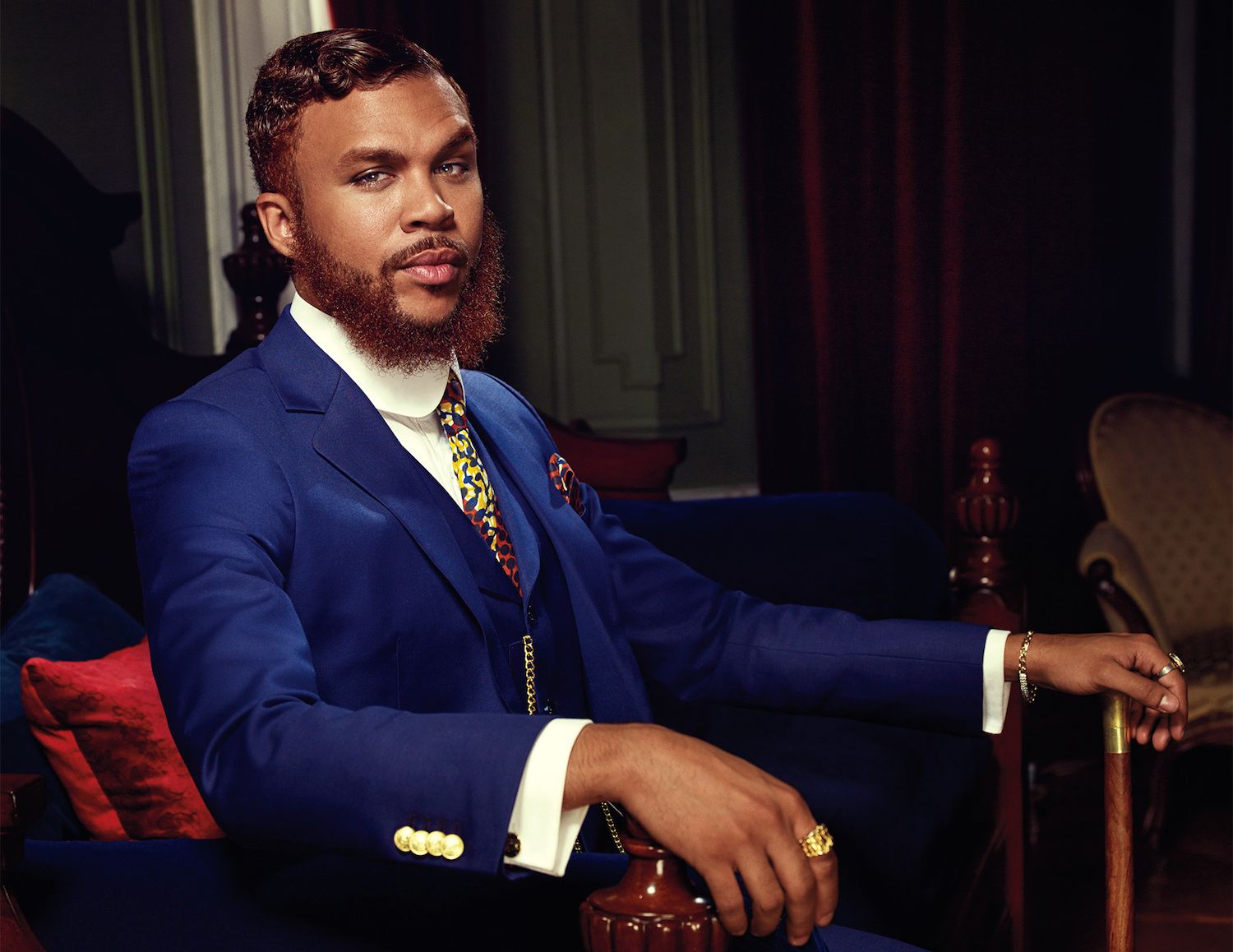
6. Jidenna (Nigerian – American)
Jidenna was born in the united states but fully accepts his African roots. The 35 years old rapper, songwriter and record producer knew he would be in the music industry even from age 10. He got his first breakthrough with the hit song “Classic Man” with millions of copies sold around the world. He is reportedly worth $7 million.
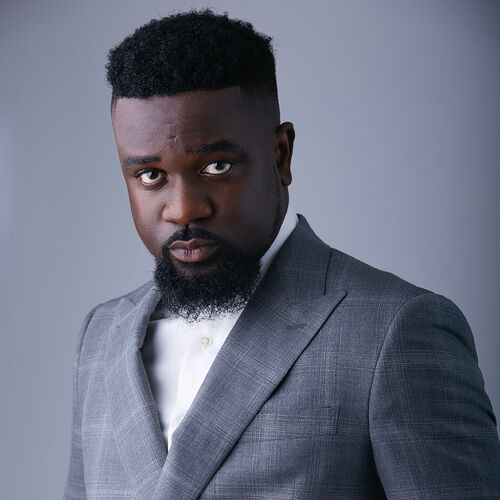
7. Sarkodie (Ghana)
He is one of the best that has come out of Ghana. Michael Owusu Addo also known as Sarkodie has been rated one of the best rappers in Africa. He is worth $7 million.
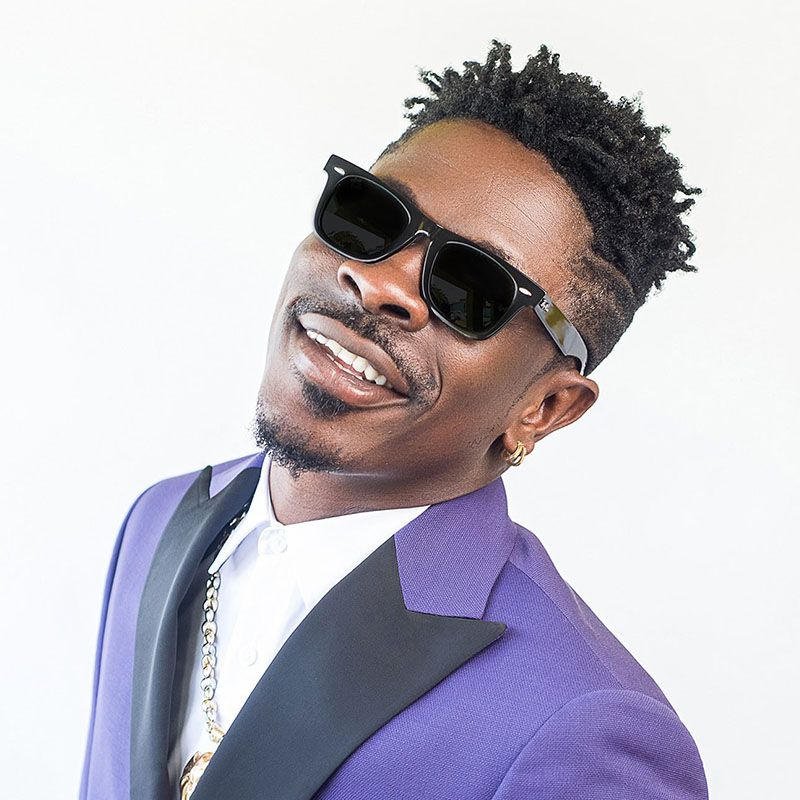
8. Shatta Wale (Ghana)
He won the artiste of the year in 2014. The bandana dancehall king effortlessly flaunts his luxury cars and mansions on social media. He is worth $6.2 million.
The management team of the Ghana Music Rights Organization (GHAMRO), a collective society for music-right owners, has introduced a welfare scheme for the aged music-right owners, whom have been members of the society for over 30 years.
The scheme, Aged Right Owners Monthly Stipend (AGRIMS), will make monthly payments to aged members who are 60 years and above outside the normal royalty payment.
This was made known by the Chief Operations Officer (COO) of the organization, Abraham Adjatey, in an interview with BEATWAVES.
He revealed that the scheme was geared at curbing situations of financial struggles among aged music right owners.
The idea of paying the aged right owners monthly was created and proposed by the welfare committee of the society, with over 180 aged right owners benefiting, he said.
The operations officer hinted that the society was yet to establish a database of right owners who had become incapacitated during their musical lives; and to register all targeted beneficiaries with the scheme.
He mentioned that since his administration took over the management of the society, its administrative system had been restructured and professionals had been recruited to run affairs.
He indicated that copyright and royalties were all about ensuring that the property of right owners are protected and money that accrues from using such property was paid to the rightful owners.
The outspoken COO hinted that this year, the society had adopted an aggressive strategy to force music users to pay royalties due right owners.
“It has also put measures in place to monitor the activities of music users,†he said.
On the accusations of the lack of transparency, Mr. Adjatey responded, “The board is very transparent and for the years that we have operated, we have stayed on course.â€
The organization, he said, had plans of embarking on outreach programmes by the close of the year to educate music users on the operation of the society.
According to him, the workshop on music piracy is essential because of the music piracy menace that has engulfed the country through illegal music downloads on storage devices without the authorization of the music-right owners.
He assured right owners that steps were being taken to impose levy on other devices such as mobile phones, pen drives, hard discs and computers to raise more funds for them.
Father’s are very precious in life especially the role they play in families as the head. They serve as motivators and inspiration to many people. Sometimes people underrate their fathers since their mothers were always seen performing some duties. The love of some father’s cannot be explained. Mostly mothers are well celebrated especially when it comes to mother’s Day as compare to father’s Day. But some Ghanaian celebrities have shown that their success was not inspired by just their mums but their fathers also played a significant role.
Mr. Charles Nii Armah Mensah Snr. is the father of Charles Nii Armah Mensah Jnr. popular known as Shatta Wale. Shatta Wale is a music artist and a song writer who has won many awards. His father is a business man and a politician.
View pictures in AppÂ
Mr. Livingston Satekla Snr. is the father of award winning music artist Livingston Este Satekla popularly known as Stonebwoy. He has been an inspiration to many people and his family.
Mr. John Dumelo Snr. Is the father of actor and politician John Dumelo. He has been a motivator to many people and his family.
Mr. Isaac Kwaku Acheampong is the father of singer and song writer Rebecca Akosua Acheampoma Acheampong popularly known as Becca. He is a businessman and inspirer.
Mr. Alex Marfo is the father of music artist Eugene Kwame Marfo with the stage name Kwame Eugene. He has been a motivator and inspiration since he is also a singer.
Mr. Ernest Hamenoo-Kpeda is the father of music artist and a song writer Vera Hamenoo-Kpeda popularly known as Mzvee. He has been a backbone to many people and his family.
Mr. Kwadwo Akwaboah Snr. Is the father of music artist and song writer Kwabena Akwaboah Jnr. He is a pianist and motivator to young people and his family.
Mr. Okoro Nelson is the father of actress Yvonne Okoro. He has been a backbone and motivator to many people and his family.
Mr. Augustine Owusu Addo is the father of award winning music artist and rapper Michael Owusu Addo popularly known as Sarkodie. His father has been a motivator and inspirer to many people in Africa.
Are you a fan of music, well there are a lot of musicians in Ghana who does well when it comes to rap, hip-hop, and many more.
Who is your best artist, being it is it male or female. Have you ever wondered where they had their education? Which Senior High School they completed. However, it could be that a top musician completed in your school but you don’t know.
Well below are eight (8) musician and their SHS Background.
SARKODIE
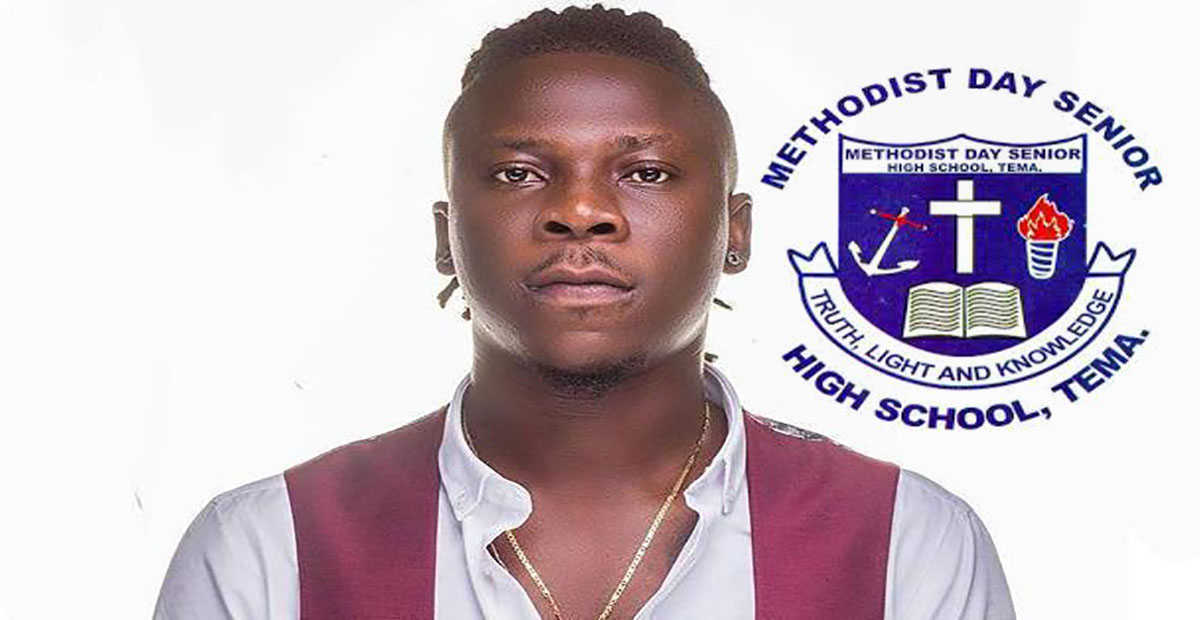
Michael Owusu Addo popularly known as Sarkodie got his high school certificate Tema Methodist Day School (MEDASS) in Tema Ghana
KUAMI EUGENE
Eugene Kwame Marfo popularly Kuami Eugene got his high school certificate Salvation Army Senior High school in Akim Wenchi in the Eastern Region of Ghana.
STONEBWOY
Livingstone Etse Satekla popularly known as Stonebwoy  Methodist Day Secondary School.
FAMEYE
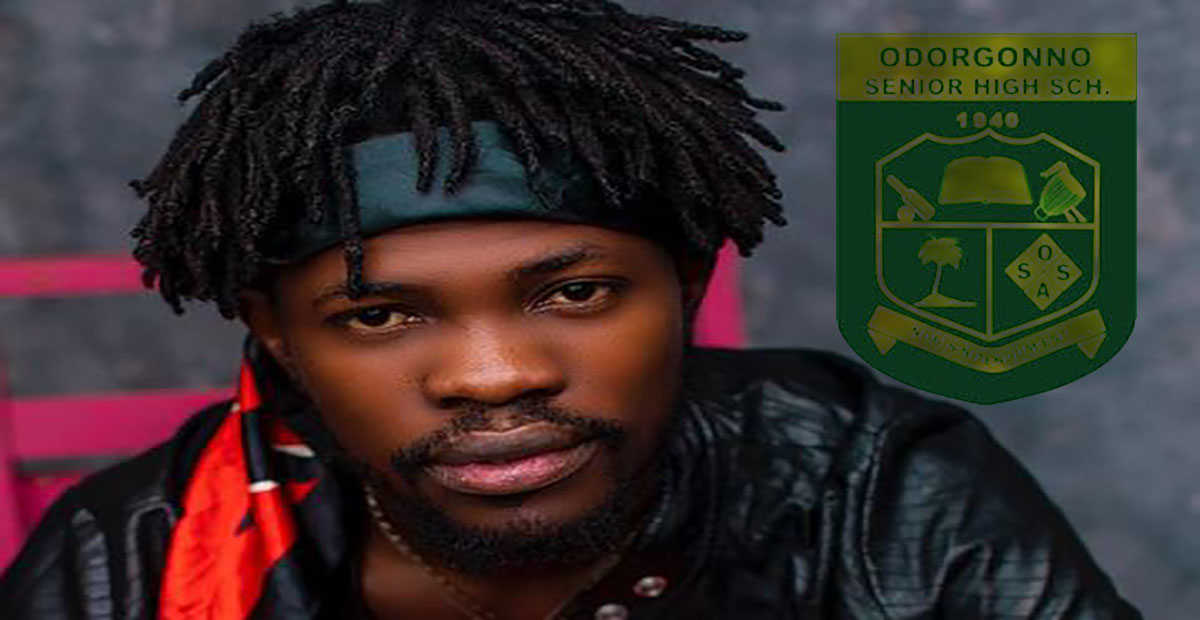
Peter Famiyeh Bozah popularly known as Fameye got his high school certificate at Odorgonno Secondary School in Woshie Accra.
MEDIKAL
Samuel Adu Frimpong, popularly known as Medikal got his high school certificate Odorgonno Secondary School in Woshie Accra
SHATTA WALEÂ
Charles Nii Armah Mensah Jnr popularly known as Shatta Wale got his high school certificate at Winneba Secondary School.
KIDI
Dennis Nana Dwamena popularly known as Kidi got his high school certificate at Accra Academy
obviously in Accra
PATAPAA
People are photoshopping the results of Patapaa’s Wikipedia search to include that he either attended Adisadel College or even Wesley Girls’ High School, which as the name suggests is a girls-only senior high school making it impossible for him to have attended that school.
However we still cant trace the senior high school Patapaa attended.
Spotify has introduced a new feature allowing artists to receive “tips” or donate money to charity.
Bands can pin an “Artist Fundraising Pick” badge to the top of their Spotify profile, highlighting a fundraising destination where fans can send cash.
As well as fundraising for themselves, artists can give money to charity or to road crews who are out of work while tours are on hold due to Covid-19.
Spotify said it hoped the feature would help artists affected by the lockdown.
“First and foremost, this feature enables artists who are interested in raising money to support themselves, their bands, or their crews, to get the word out to their fans on their Spotify artist profiles,” it said in a blog post announcing the initiative.
“Given the urgency and impact of the Covid-19 crisis, we’re working as quickly as we can to develop this new product and get it out to as many artists as possible. However, we’ve never built a fundraising feature like this before.”
“We consider this a first version that will evolve as we learn how to make it as helpful as possible for the music community.”
Dance act Marshmello was one of the first to sign up, encouraging his 33m monthly listeners to donate to the Musicares coronavirus relief fund, set up by the Grammys to support out-of-work musicians.
“So many of us have been affected by the Covid-19 virus, and now more than ever we need to stand together and help each other,” he said.
Singer-songwriter Taylor Vick, who releases music under the moniker Boy Scouts, is using the feature to try to remain solvent.
“Like so many others right now, I am out of work as our tours have been cancelled or postponed because of Covid-19,” she said. “Any help is appreciated as we keep in our efforts to find new ways to get by.”
Online “tipping” has become commonplace on streaming sites like Twitch and the podcast app Himalaya.
In China, the feature is baked into streaming services like QQ Music, Kugou and Kuwo and the karaoke app WeSing – which are all run by tech conglomerate Tencent.
Writers can also be tipped for their stories through WeChat and podcasters for their episodes on Himalaya, China’s biggest spoken-word audio platform.
Artists broadly welcomed Spotify’s foray into the world of tipping, but some suggested the site could make a bigger impact by increasing the royalties it paid musicians.
Last month, a petition was set up by Evan Greer asking Spotify to triple its royalty payments following the loss of earnings that has arisen through the coronavirus pandemic.
The Swedish company has not responded to those demands; but has separately pledged up to $10 million in donations to organizations supporting artists in need, including MusiCares and the UK charities Help Musicians and the PRS Foundation.
Fast-rising Ghanaian-based Nigerian artiste, KashBwoy has revealed how he gets motivation from Ghanaian musicians.
Kashbwoy believes most legendary artistes in Ghana are the pace-setters of African music; hence his decision to look up to them for hit songs.
KashBwoy who mentioned the likes of E.T Mensah, Kojo Antwi, added he listens to ace group VVIP as his daily dose of motivation.
Explaining what makes him prefer Ghanaian songs just like Nigeria song, he hinted his motivators take time to compose their songs and produces excellent rhythm to go with it.
“They were real musicians in Africa who brought these sounds we enjoy now so we need to tap their intelligence. We need to go back to the roots and come back with newer stuff,†he said in an exclusive with Gershon Mortey.
Kashbwoy is, however, looking forward to collaborations with top Ghanaian acts in order to establish his songs in the heart of Ghanaians.