Tag: Myanmar’s military junta

  • Armed forces in Niger send reinforcements after missing deadline to surrender power

    Armed forces in Niger send reinforcements after missing deadline to surrender power

    Just hours after the military junta in charge of the country rejected an important regional bloc’s deadline to surrender control, a military source informed CNN that Niger’s armed forces have started deploying reinforcements to the capital in preparation for a potential military intervention.

    Around 40 pick-up trucks came in a convoy at dusk on Sunday night, carrying troops from other regions of the nation to comfort a worried populace and be ready for a possible conflict.

    Since late last month, when the presidential guard overthrew President Mohamed Bazoum in a coup d’état, Niger has been mired in political upheaval. Days thereafter, the Economic Community of West African States (ECOWAS) reacted by imposing sanctions and giving the military junta in power a week to abdicate or risk military intervention.

    Sunday came and went without any political shift as a result of that deadline. Bazoum is still in exile, and nobody knows for sure where he is. The junta’s official name, the National Council for the Safeguard of the Homeland, continues to effectively rule Niger. According to a junta leader, Niger’s armed forces would close the nation’s airspace owing to the possibility of military involvement.

    It’s not obvious what happens next. Although the leaders of ECOWAS have stated that they prefer a peaceful resolution to the issue, they have also stated that they are willing to use force as a last resort to restore the democratically elected government of Niger. On Thursday, the group will meet once more to discuss the situation.

    The capital, Niamey, has been shaken by the uncertainty. While others tried to evacuate, other individuals flocked to supermarkets to stock up on essentials like rice and cooking oil. Most lines out of the capital, according to local bus company employees, were fully packed.

    On Monday, many customers purchasing food and supplies at the crowded Wadata market, located east of the capital’s core, expressed concern about what might happen.

    Mariama Sabo, a 31-year-old cleaner, said, “Our country is on the verge of descending into a crisis that we have never encountered. We’re genuinely terrified.

    Fruit vendor Salifou, 27, was concerned for his company’s future. Even though the border between the two countries is currently blocked, he imports his produce from Benin.

    Salifou stated, “My stock is completely depleted and that really worries me.”

    Concerns about the rising price of food were voiced by others.

    A woman by the name of Salamatou remarked, “The authorities should show some sense of responsibility towards us or else it will be difficult.” “They need to bring peace and lower prices at the same time.”

    Meanwhile, pro-junta protesters gathered on Sunday in a 30,000-seat stadium in Niamey to declare their allegiance to the military regime and opposition to ECOWAS sanctions.

    Niger is still one of the world’s poorest nations despite having a plethora of natural resources. Many Nigerians, especially the younger generation, continue to blame France, an imperial power, for the country’s persistent poverty. Those who support the new military government see it as a chance to break diplomatic ties with French influence.

    A bricklayer named Ali Maikano who resides in the nation’s capital declared he was prepared to fight alongside the army to oppose French interests there.

    At the Wadata market, Maikano told CNN, “Enough is enough, we’ve suffered a lot under this regime that’s given everything to France, and we’re not afraid of ECOWAS or anyone else.”

    The democratic neighbours and Western allies of Niger are particularly interested in the future of the country’s elected administration. On the grounds that Niger was a reasonably stable democracy in a region rife with political unrest, terrorism, and Islamist insurgencies, the United States and France stationed hundreds of troops, many of whom support counterterrorism activities.

    Russia has tried to use the geopolitical crisis in West Africa in recent years to increase its power and influence, particularly through the mercenary company Wagner. Wagner has operations in a number of nations, including the neighbouring Mali, where a military coup in 2021 resulted in the establishment of a military government. Wagner soldiers have been hired to repress resistance and support local defence forces in their fight against uprisings and insurrections.

    Wagner made contact with the coup leaders in Niger, according to the French Foreign Ministry, but it was not apparent if the two parties were working towards a cooperation.

    According to a ministry spokesperson, “We can see that Wagner is in an opportunistic and predatory logic, so they may be tempted to take advantage of the whole situation.”

    Yevgeny Prigozhin, the leader of Wagner, appeared to pitch the private military business to the new government of Niger shortly after the coup was carried out.

    Given the vulnerability of West African democracies like those in Mali and Burkina Faso, where a coup occurred in 2022, Niger’s democratic neighbours are concerned that the coup could have a cascading effect.

    Currently, both nations are supporting the junta in Niger. They said last week that any military action in Niger would be viewed as “an act of war” against all three nations.

    According to the Malian Armed Forces, both nations are sending delegations to the Nigerian capital Niamey “in solidarity with the people of Niger.”

    Regarding sending delegations to Niger, Burkina Faso has not yet made any public statements, and the country’s ministry of foreign affairs has not yet acknowledged CNN’s request for confirmation of their attendance.
  • Horrific fallout from a strike in Myanmar kills 100 people

    Horrific fallout from a strike in Myanmar kills 100 people

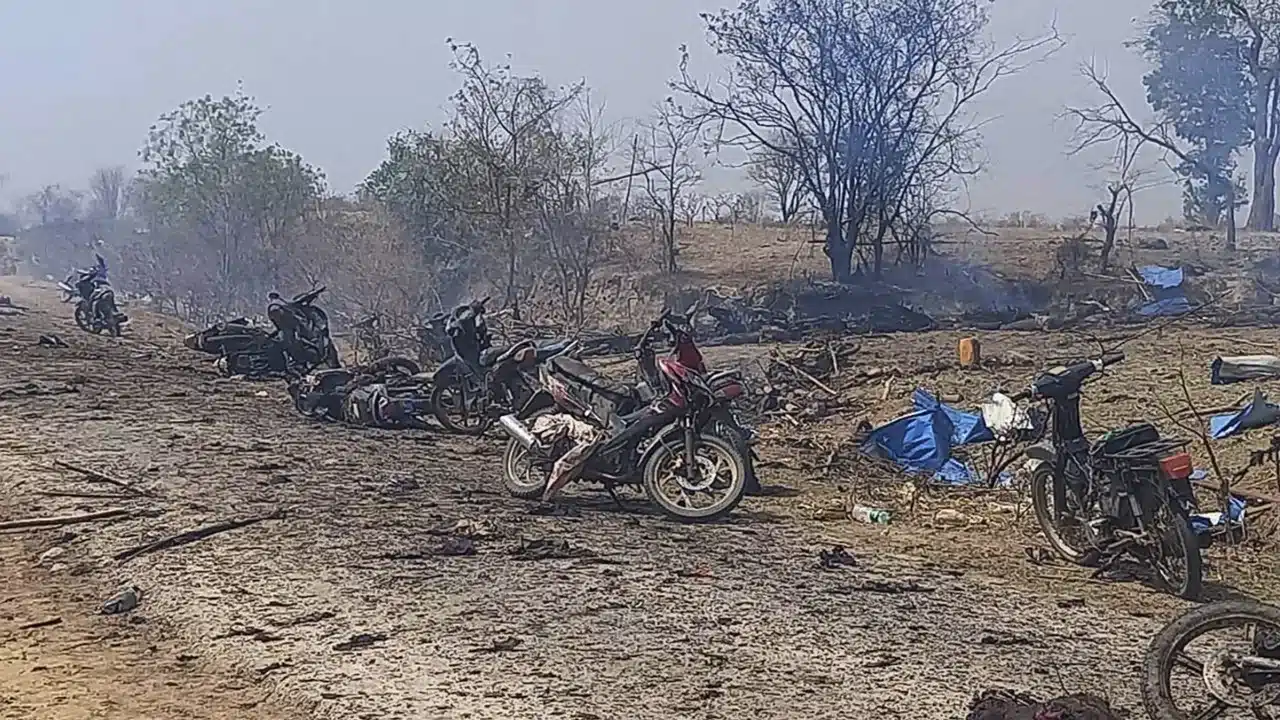
    The day after one of the bloodiest strikes since the junta’s takeover of power two years ago, relatives were still gathering the burned bodies and limbs of those slain in a military airstrike on a village in central Myanmar.

    As he approached the location of the military bombing, an eyewitness who had been hiding in a tunnel during the attack reported a sight of horror, with children dying, women wailing, and dead piled up on the ground.

    At least 100 people, including women and children, were killed after Myanmar’s military junta bombed Kanbalu township in the central Sagaing region on Tuesday, according to the Kyunhla activist group, which was at the scene. The group said at least 20 children were killed in the strike and 50 people injured.

    About 300 people had gathered in Pazigyi Village early on Tuesday morning to celebrate the opening of a local administration office, an eyewitness told CNN on the condition of anonymity because he fears retribution. Families had traveled from nearby villages for the event, where tea and food was offered and which coincided with the start of the Thingyan New Year celebrations.

    Like much of Sagaing, the area is not under the control of the military junta. The new town office was being opened under the authority of the shadow National Unity Government (NUG), for the people, as part of the anti-junta resistance.

    “We didn’t have any warning,” the eyewitness said. “Most of the villagers were inside the event, so they didn’t notice the jet.”

    Just before 8 a.m., a junta aircraft bombed the village where the ceremony was being held, the eyewitness and local media reported. An Mi35 helicopter then circled and fired on the village minutes later, the eyewitness told CNN.

    “When I arrived at the scene we tried to search for people still alive,” he said. “Everything was terrible. People were dying (as they were being transported) on motorbikes. Children and women. Some lost their heads, limbs, hands. I saw flesh on the road.”

    The eyewitness said he saw dozens of bodies after the attack, including children as young as five. He said he lost four family members in the strike, and a young child from his village was among the dead.

    “I saw lots of people coming onto the scene to search for their kids, crying and screaming,” he said.

    At around 5:30 p.m. the junta jets returned and shot the same place they had bombed that morning, he said.

    CNN cannot independently verify the incident but the eyewitness’s account matches reports in local media and from the NUG.

    Videos and images from the aftermath, shown to CNN from witnesses and a local activist group, also show bodies, some burned and in pieces, as well as destroyed buildings, vehicles and debris.

    Myanmar’s junta spokesman Maj. Gen. Zaw Min Tun confirmed the airstrike on Pazigyi Village and said if civilian casualties occurred it was because they were forced to help “terrorists,” Reuters reported.

    The junta has designated the NUG and resistance groups known as the People’s Defense Force in the country as terrorists.

    “At 8 a.m…. NUG (National Unity Government) and PDF (People’s Defense Force) conducted an opening ceremony of the public administration office at Pazigyi village,” Zaw Min Tun said on the military’s Myawaddy TV channel.

    “We had launched the attack on them. We were informed that PDF were killed at that event under the attack. They are opposing our government.”

    The strike was condemned internationally, with one top UN official saying global indifference to the situation in Myanmar contributed to the attack.

    “The Myanmar military’s attacks against innocent people, including today’s airstrike in Sagaing, is enabled by world indifference and those supplying them with weapons,” said Tom Andrews, the United Nations Special Rapporteur on the Situation of Human Rights in Myanmar.

    “How many Myanmar children need to die before world leaders take strong, coordinated action to stop this carnage?”

    The US Department of State said it was “deeply concerned” about the airstrikes and called on the regime to “cease the horrific violence.”

    “These violent attacks further underscore the regime’s disregard for human life and its responsibility for the dire political and humanitarian crisis in Burma following the February 2021 coup,” it said, using an alternative name for Myanmar.

    It’s been just over two years since the military seized power, ousting the democratically elected government and jailing its leader Aung San Suu Kyi. In order to crush resistance, the junta regularly carries out airstrikes and ground attacks on what it calls “terrorist” targets.

    The attacks have killed civilians, including children, and targeted schools, clinics, hospitals and other civilian infrastructure. Whole villages have been burned by junta soldiers and thousands of people have been displaced in the attacks, according to local monitoring groups.

    Battles between the military and resistance groups unfold daily across Myanmar. These rebel groups, some of whom have aligned with some of the country’s long-established ethnic militias, effectively control parts of the country out of the junta’s reach.

    Resistance groups and humanitarian organizations have repeatedly accused Myanmar’s military of carrying out mass killings, air strikes and war crimes against civilians in the regions where fighting has raged, charges the junta repeatedly denies – despite a growing body of evidence.

    “They’re losing control of the country. They’re losing ground. Things are much more unstable on the ground than they’ve ever been,” the UN’s Andrews told CNN on Wednesday. “As a result of that, they’re using air power more and more and, of course, as they do so, more and more civilians are being killed.”

    On Monday, junta airstrikes hit a town in western Chin state’s Falam Township, killing nine people when bombs dropped on a school, according to local media Myanmar Now and The Irrawaddy.

    Last week, 8,000 refugees in southern Karen state fled across the border to Thailand, escaping fighting in Myawaddy township, according to a statement from Thailand’s Tak provincial office public relations department, posted to Facebook.

    In March, at least 22 people, including three monks, were killed at a monastery in southern Shan state. And a military airstrike on a school in Sagaing in September killed at least 13 people, including seven children.

    The eyewitness to Tuesday’s attack said the “situation in Myanmar is worse now.”

    “People are dying like dogs or cows. We don’t have any weapons to compare with what the military has. We need the help of the international community,” he said.