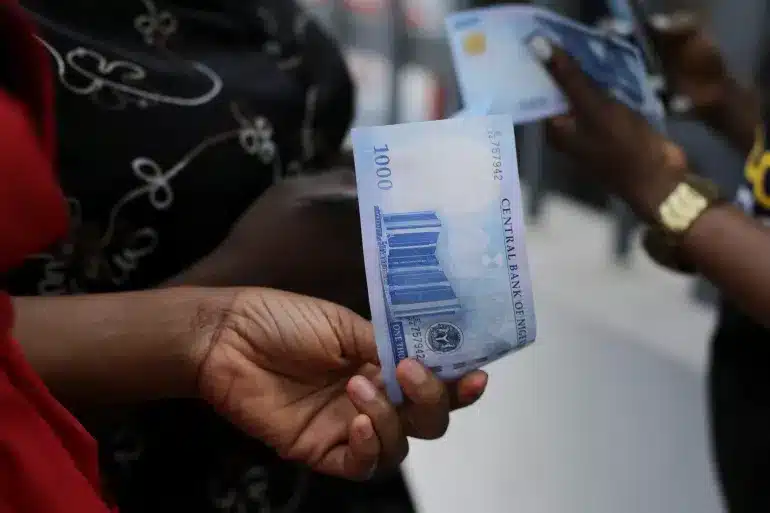
Popular crossdresser, Bobrisky, has reportedly pleaded guilty to charges related to the abuse of the Naira before a Federal High Court in Lagos.
The charges were brought against him by the Economic and Financial Crimes Commission (EFCC), consisting of six counts, with four pertaining to abusing the Naira and two to money laundering. However, two of the charges on money laundering were dropped during the proceedings.
Bobrisky’s arrest followed a video surfacing showing him spraying wads of cash at the premiere of Eniola Ajao’s ‘Beasts of Two Worlds’ movie on March 24, 2024.
In his defense, he stated that he was unaware that tampering with the Naira note or coin is an offense punishable by law. He expressed remorse to the court, promising to educate his followers against such actions if given a second chance. Additionally, he pledged to upload a video on the subject matter and vowed never to repeat the mistake.
Justice Abimbola Awogboro convicted Bobrisky after reviewing the facts of the case. The EFCC’s investigation found that aside from the March 24 incident, Bobrisky had tampered with the Naira on several occasions in 2023.
Additionally, he was charged with two counts of money laundering for allegedly failing to report the activities of his company, Bob Express, to appropriate institutions. The EFCC stated that significant amounts of money were deposited into the company’s account on different occasions, raising suspicions.
“In count five, Bobrisky, while trading under the name and style of Bob Express between 1 September 2021 and 4 April 2024 in Lagos, failed to submit to the Special Control Unit Against Money Laundering a declaration of the activities of the said company, (Bob Express), within which period the total sum of N127.7m was paid into the company account domiciled with Ecobank.”
“In count six, Bobrisky is also accused of failing to submit a declaration of the activities of the company within the same period when another N53 million was paid into the company’s account, thereby committing an offence contrary to Section 6(1)(a), and Section 19(1) (f) of the Money Laundering (Prevention And Prohibition) Act and punishable under Section 19 (2) (b) of the same Act.”
However, in court on Friday, the money laundering charges were struck out by Justice Abimbola Awogboro.
This was after the EFCC’s prosecution counsel, Suleiman Suleiman, prayed to the court to strike out counts five and six (money laundering charges) and arraign him on counts one to four.
Access Holdings Plc, the parent company of Nigeria’s largest bank by assets, intends to raise approximately $1.8 billion to fuel its expansion plans over the next four years, aiming to establish itself as one of Africa’s premier financial institutions.
The ambitious fundraising initiative involves raising $1.5 billion or its naira equivalent through the issuance of shares, bonds, or other financial instruments to support a growth strategy spanning five years, initiated last year.
Additionally, Access plans to generate up to 365 billion naira ($257 million) by offering shares to existing investors.
“What we are going into the market right now is for a rights issue,” Bolaji Agbede, acting group chief executive officer, said on the call.
The acting group CEO, Bolaji Agbede, emphasized that the current market activity pertains to a rights issue during an investor conference call held in Lagos, Nigeria’s economic hub.
Access Bank aims to venture into new territories such as Morocco, Egypt, and the United States, aiming to double its assets’ share beyond its domestic market by 2027 and secure a position among Africa’s top five banks. Presently, the bank operates across 22 countries, including the United Arab Emirates and the UK.
Agbede assumed the role of acting group CEO following the recent passing of co-founder and former CEO, Herbert Wigwe.
In a recent development, Access announced the acquisition of National Bank of Kenya Ltd. from KCB Group Plc, enhancing its presence in East Africa’s largest economy.
Roosevelt Ogbonna, CEO of Access Bank Plc, emphasized the importance of establishing an optimal capital structure to support the organization’s strategic objectives over the next five years, focusing on swift execution.
This capital mobilization initiative aligns with a directive from the Central Bank of Nigeria, urging domestic banks to bolster their capital reserves to withstand potential risks arising from the naira’s significant depreciation, which has plummeted by 70% over the past year.
Ogbonna highlighted that the additional capital infusion will empower banks to pursue significant initiatives, while also mitigating and managing associated risks effectively.
Binance, one of the world’s largest cryptocurrency exchanges, has announced that it will discontinue all Nigerian Naira (NGN) services.
This decision will impact users who hold NGN balances on the platform and those who use NGN for trading or other transactions.
According to the announcement, users are encouraged to withdraw their NGN balances, trade their NGN assets, or convert NGN into cryptocurrency before the discontinuation of NGN services.
Binance will not support deposits of NGN after 2024-03-05 14:00 (UTC), and withdrawals of NGN will not be supported after 2024-03-08 06:00 (UTC).
Any remaining NGN balances in users’ Binance accounts after 2024-03-08 08:00 (UTC) will be automatically converted to USDT at a conversion rate of 1 USDT = 1,515.13 NGN.
This conversion rate is based on the average closing price of the USDT/NGN trading pair on Binance Spot over the last seven days. The conversion process may take up to 24 hours or longer, and USDT tokens will be credited to users’ Spot wallets.
Binance will also delist all existing NGN spot trading pairs, including BTC/NGN and USDT/NGN, at 2024-03-07 03:00 (UTC). All open spot orders with respect to these trading pairs will automatically be closed when trading ceases. Users are advised to ensure they have not selected “Hide Small Balances” in all of their wallets to view their assets after trading ceases.
Additionally, Binance Convert will delist NGN and all corresponding pairs at 2024-03-07 02:00 (UTC), and Binance Auto-Invest will delist NGN after 2024-03-06 03:00 (UTC). Binance P2P had already delisted all NGN trading pairs at 2024-02-28 15:00 (UTC), and Binance Pay will remove NGN from the list of supported payment options at 2024-03-06 03:00 (UTC).
Binance expressed gratitude for the support of its users as it continues to build the crypto ecosystem in a way that promotes transparency and long-term, sustainable growth.
The Federal Government might seek over $10 billion from Binance as a penalty in efforts to bolster the value of the naira.
In an interview with the BBC on Friday morning, Bayo Onanuga, the Special Adviser to the President on Information and Strategy, disclosed this potential action.
Onanuga asserted that Binance reaped significant profits from what he termed as “illegal transactions” in Nigeria, causing substantial losses to the nation.
He further contended that Binance lacks registration or physical presence in Nigeria. Moreover, he highlighted how certain users exploited the platform to manipulate dollar-naira rates, leading to a drastic depreciation of the naira’s value.
In further clarification to Punch’s correspondent, Onanuga emphasized, “I mentioned compensation discussions and potential fines. I used the term ‘May’.”
The Presidential Spokesperson affirmed Binance’s cooperation with the Nigeriangovernment, providing valuable information and suspending naira-denominated transactions.
The Office of the National Security Adviser confirmed Nigerian authorities’ investigation into the cryptocurrency exchange platform.
This development follows Binance’s guilty plea and agreement to pay $4.3 billion to settle criminal money laundering charges brought by the U.S. Department of Justice.
Notable figure in Nigeria’s Nollywood industry, Oluwadarasimi Omoseyin, has been sentenced to six months in prison for tampering with recently issued naira notes.
The incident took place last year when Omoseyin was captured on video spraying and stepping on the redesigned currency at a party in Lagos.
Arrested in February of the same year after the video went viral, Omoseyin initially pleaded not guilty but later changed her plea to guilty, according to authorities. The video showed her displaying bundles of the newly issued currency while dancing at a friend’s wedding in Lekki, Lagos.
The Economic and Financial Crimes Commission (EFCC), Nigeria’s anti-fraud agency, revealed that Omoseyin was recorded with 100,000 naira worth of notes during the event. In her statement to the commission, she asserted that she received the new naira notes from fans at the party and denied knowledge of the individuals who gave her the money.
During her court appearance, Omoseyin, also known as Simi Gold, appealed for leniency through her lawyer, citing her status as a first-time offender and a mother of one. She requested a non-custodial sentence, which the EFCC conveyed to the court.
In response, Justice Chukwujekwu Aneke sentenced Omoseyin to six months in prison with the option to pay a $250 fine. It remains uncertain whether she intends to appeal against the ruling.
The incident unfolded against the backdrop of a severe scarcity of naira cash following the controversial withdrawal of old 200, 500, and 1,000 notes from circulation. In November, the Central Bank of Nigeria announced that the old banknotes would remain legal tender, resolving months of uncertainty surrounding the issue.
Below is a statement from the Economic and Financial Crimes Commission (EFCC):
Oluwadarasimi Omoseyin was taken by the police in February in Lagos because a video of her at a party was seen on the internet.
The Nollywood actor showed off a lot of the new money.
The authorities said she admitted that she was guilty after saying she was not guilty at first.
The Nollywood star was caught on camera dancing at a friend’s wedding with a lot of money in Nigeria. The country’s anti-fraud agency, the Economic and Financial Crimes Commission (EFCC), reported this happened in Lekki, Lagos a year ago.
Omoseyin told the commission that she got the new naira notes as a gift from her fans at the party, and she didn’t know who gave her the money.
On Thursday, Omoseyin went to court and admitted she was guilty because there was a lot of evidence against her, according to a statement from the EFCC on X.
The actress asked for forgiveness through her lawyer. She said it was her first time getting in trouble and she has a child.
Omoseyin, also known as Simi Gold, requested not to be sent to jail, as reported by EFCC.
Justice Chukwujekwu Aneke decided that the defendant should go to jail for six months. But, the defendant can choose to pay a $250 fine instead.
It is uncertain if the actress will challenge the court decision.
The incident happened when there was not enough naira cash because the old 200, 500 and 1,000 notes were taken out of circulation.
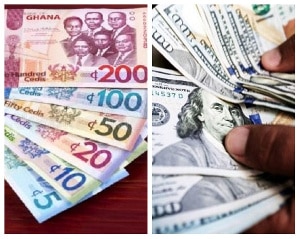
As of today, December 12, 2023, the Interbank forex rates released by the Bank of Ghana indicate that the Ghana Cedi is engaged in trading against the US Dollar at a buying rate of 11.6300 and a selling rate of 11.6416.
In the capital city, Accra, at a local Forex bureau, the exchange rate for the US Dollar stands at a buying price of 12.00 and a selling price of 12.25.
Against the Pound Sterling, the Ghana Cedi is listed at a buying rate of 14.5910 and a selling rate of 14.6067. In Accra’s Forex bureaus, the Pound Sterling is bought at 14.90 and sold at 15.40.
For the Euro, the trading rates are established at a buying price of 12.5277 and a selling price of 12.5401. In Accra, Forex bureaus are transacting the Euro at a buying rate of 12.80 and a selling rate of 13.30.
The South African Rand is currently valued at a buying rate of 0.6155 and a selling rate of 0.6161. Meanwhile, at Accra’s forex bureaus, the South African Rand is bought at 0.40 and sold at 1.10.
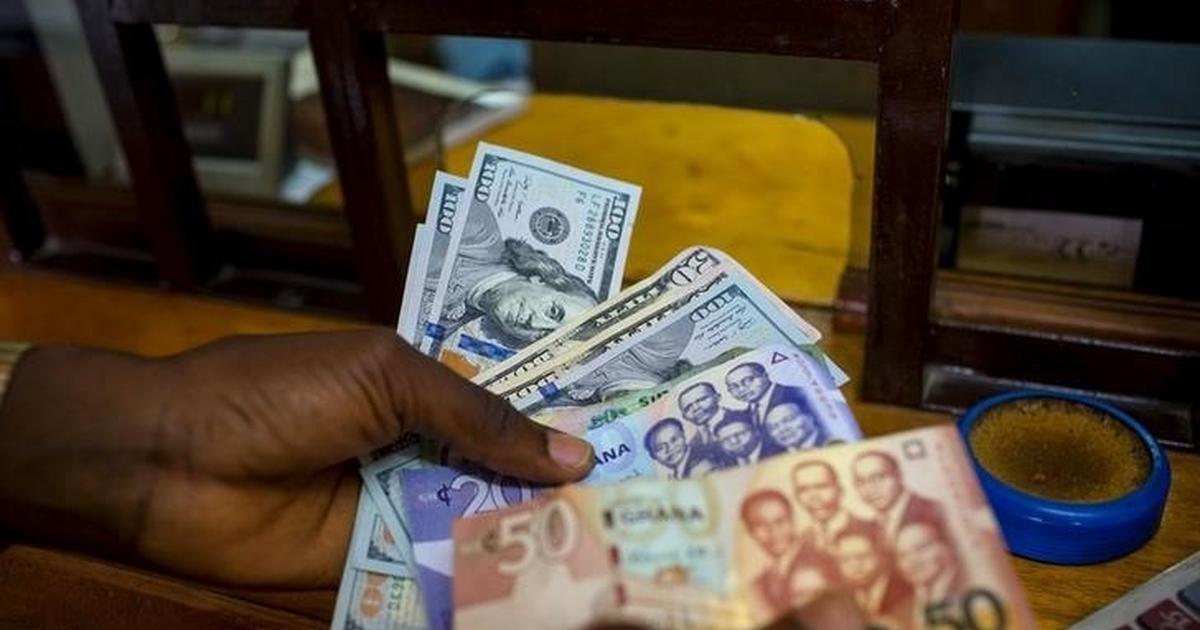
Concerning the Nigerian Naira, the buying rate is 71.7613, and the selling rate is 71.9332. In Accra, Forex bureaus are exchanging Nigerian Naira at a buying rate of 9.00 Naira for every 1 Cedi and selling at a rate of 15.00.
Finally, the CFA Franc is trading at a buying rate of 52.3088 and a selling rate of 52.3605. At Accra’s forex bureaus, the CFA is bought at a rate of 17.30 CFA for every 1 Cedi and sold at a rate of 19.80 CFA for every 1 Cedi.
The prominent pay-TV provider in Africa, MultiChoice, has reported its third consecutive semi-annual loss, citing challenges with foreign exchange rates in Nigeria and persistent power outages in South Africa.
According to a filing on Wednesday, the largest pay-TV company in Africa disclosed a net loss of 1.32 billion rand ($72.4m) for the six months ending September 30.
The loss was attributed to the weakened performance of the Nigerian naira against the US dollar, following a 40 per cent devaluation after Nigeria allowed the naira to trade more freely in mid-June.
The company mentioned being affected by inflationary pressures in key markets such as Nigeria and typical trends following a FIFA World Cup or Northern Hemisphere football off-season.
“A total of 0.1m subscribers were added to end the period at 13.0m 90-day active subscribers. The active subscriber base was broadly stable at 8.9 million subscribers and subscription revenues grew 14 per cent organically.
“Revenue of ZAR10.5bn was flat (+13 per cent organic) with a weaker ZAR against the USD on conversion, offsetting the impact of weaker local currencies relative to the USD.
“The RoA (return on assets) segment delivered a trading profit of ZAR330m (+ZAR2.2bn YoY on an organic basis) which was underpinned by specific cost interventions around decoder subsidies and content costs.”
Weaker currencies continued to be a major barrier to profitability gains, according to the company, with average first-half exchanges falling precipitously against the dollar.
“The sharp fall of the naira resulted in a large proportion of the previously recognised losses incurred on cash remittances now being recorded in trading profit.
“The net effect of these forex movements was a negative ZAR1.6bn impact on the segment’s trading profit for the period,” it stated.
On November 6, 2023, the Interbank forex rates from the Bank of Ghana reveal the following exchange rates for the Ghana Cedi:
Against the US Dollar, the buying price is 11.4960, and the selling price is 11.5076. In a forex bureau in Accra, the US Dollar is being bought at a rate of 11.85 and sold at 12.10.
Against the Pound Sterling, the buying price is 14.2287, and the selling price is 14.2440. At a forex bureau in Accra, the Pound Sterling is being bought at a rate of 14.30 and sold at a rate of 14.80.
The Euro is trading at a buying price of 12.3448 and a selling price of 12.3560. In a forex bureau in Accra, the Euro is being bought at a rate of 12.50 and sold at a rate of 12.90.
The South African Rand has a buying price of 0.6306 and a selling price of 0.6313. At a forex bureau in Accra, the South African Rand is being bought at a rate of 0.35 and sold at a rate of 0.95.
The Nigerian Naira has a buying price of 67.8355 and a selling price of 68.4745. In a forex bureau in Accra, the Nigerian Naira is being bought at a rate of 8.50 Naira for every 1 Cedi and sold at a rate of 14.50.
For the CFA, the buying price is 53.0881, and the selling price is 53.1363. At a forex bureau in Accra, the CFA is being bought at a rate of 17.00 CFA for every 1 Cedi and sold at a rate of 19.50 CFA for every 1 Cedi.
Note that these rates may be different at a forex bureau near you. Our forex bureau rates are provided by Afriswap Bureau De Change in Osu, Accra.
Our forex bureau rates are provided by Afriswap Bureau De Change in Osu, Accra.
On Thursday, October 25, Nigerian billionaire Femi Otedola marked his inauguration as the chancellor of a private university in Lagos with a generous contribution of nearly a million dollars.
He pledged one million naira to each of the 750 students at Augustine University, emphasizing his commitment to supporting institutions he is affiliated with.
The cumulative amount of 750 million naira exceeds US$950,000.
Femi Otedola, an entrepreneur and philanthropist who serves as the Executive Chairman of Geregu Power PLC, underscored that this donation would not only benefit the students but also provide relief to parents during these challenging times.
“Today, I was inaugurated as the Chancellor of Augustine University. I strongly believe in transforming establishments that I am associated with. I gave a gift of One Million to each of the Seven Hundred and Fifty Students. I hope this donation of Seven Hundred and Fifty Million Naira assists the plight of the parents of our students in this difficult time…” he posted on Twitter (now X).
Pictures from his inauguration ceremony, where he first saw his gown and carried out his new duties, were posted with the post.
Today, I was inaugurated as the Chancellor of Augustine University. I strongly believe in transforming establishments that I am associated with. I gave a gift of One Million to each of the Seven Hundred and Fifty Students. I hope this donation of Seven Hundred and Fifty Million… pic.twitter.com/uaz5eVhMci
In the second quarter of 2023, Nigerian insurance companies handed over 63.4% of their generated business to foreign counterparts, a significant violation of the local content law.
This law stipulates that only 30% of oil and gas business should be underwritten by foreign insurers, while the remaining 70% must remain within Nigeria.
The Q2’23 report from the National Insurance Commission (NAICOM) revealed that insurance companies generated N113.8 billion in oil and gas businesses, with N81.6 billion transferred to foreign insurers. Local insurers retained just N32.2 billion of the oil and gas business.
During the first quarter of 2023, Nigerian insurers had transferred 74.8% of their oil and gas business income to foreign companies, showing a recurring trend of dollarization in this sector, which significantly affects local retention.
Olasupo Sogelola, the Managing Director/Chief Executive Officer of International Energy Insurance, pointed out that the continuous depreciation of the Naira, along with challenges in accessing foreign exchange, makes compliance with local content law difficult. He noted that as oil and gas insurance transactions are conducted in dollars, the depreciation of the Naira leads to lower retention and increased risk value.
Additionally, Sogelola mentioned that many Nigerian insurance companies have limited capacity due to relatively low capital, making it challenging to engage in the oil and gas business. The dollarization of this sector also results in higher claims payments for insurers.
He added: “Claims are also affected because the claims that you have incurred that you have not paid, by the time it crystallises, you will pay at a higher value.”
The Nigerian naira has reached fresh lows on the parallel market due to declining reserves and limited dollar inflows, posing challenges for the Central Bank of Nigeria in meeting the demand for the greenback from both corporate entities and individuals.
The local currency slipped to 1,030 naira per dollar on Wednesday, down from 1,015 naira the previous day. These figures were reported by Abubakar Mohammed, the CEO of Forward Marketing Bureau de Change Ltd., which compiles data on the informal market in Lagos, Nigeria’s commercial hub.
This rate has further diverged from the official rate, which stood at 765.8 naira per dollar on the FMDQ OTC trading platform.
The widening gap signals continued pressure to devalue the currency after Nigeria, the most populous nation in Africa, adopted a more flexible exchange rate system in June as part of economic reforms aimed at attracting foreign investment and bolstering the economy.
In addition, the country has experienced a 33% drop in capital inflows in the three months through June, with foreign investors expressing concerns about capital controls and the country’s economic stability.
Nigeria’s external reserves have also fallen to a two-year low, amounting to $33.2 billion, as reported by data from the central bank.
“People are looking for dollars, both the seller and the buyer,” said Umar Salisu, a foreign-exchange operator in Lagos. “Until there’s enough supply, you can’t predict the exchange rate.”
Bank of Ghana’s Interbank forex rates for today, August 30, 2023, shows that the Ghana Cedi is currently being traded against the US Dollar with a buying price of 11.0097 and a selling price of 11.0207.
In Accra’s forex bureaus, the US Dollar is being purchased at a rate of 11.40 and sold at a rate of 11.65.
Against the Pound Sterling, the Cedi’s exchange rate is 13.8733 for buying and 13.8894 for selling.
At forex bureaus in Accra, the Pound Sterling is bought at 14.50 and sold at 15.00.
For the Euro, the buying price stands at 11.9392 and the selling price is 11.9520.
In Accra’s forex bureaus, the Euro is being bought at 12.20 and sold at 12.70.
The South African Rand’s exchange rates are 0.5959 for buying and 0.5963 for selling.
In Accra, the South African Rand is purchased at 0.35 and sold at 0.95.
Regarding the Nigerian Naira, the buying price is 70.1748, and the selling price is 70.2202.
At forex bureaus in Accra, the Nigerian Naira is bought at a rate of 11.00 Naira for every 1 Cedi and sold at a rate of 16.00.
As for the CFA Franc, it is being traded at a buying price of 54.8826 and a selling price of 54.9415.
In Accra’s forex bureaus, the CFA Franc is bought at 16.50 CFA for every 1 Cedi and sold at 20.50 CFA for every 1 Cedi.
Note that these rates may be different at a forex bureau near you. Our forex bureau rates are provided by Afriswap Bureau De Change in Osu, Accra.
Our forex bureau rates are provided by Afriswap Bureau De Change in Osu, Accra.
Prominent integrated sugar business, Dangote Sugar Refinery Plc, owned by Africa’s renowned entrepreneur Aliko Dangote, encountered substantial foreign exchange losses exceeding $100 million in the first half of 2023.
These staggering foreign exchange losses, amounting to N83.1 billion ($107.3 million), were a consequence of the devaluation of the Naira.
This devaluation adversely affected the company’s earnings capacity, leading to the revaluation of its foreign currency obligations.
As a result, Dangote Sugar experienced a significant loss of N27.98 billion ($36.17 million) during the first six months of 2023.
This is in stark contrast to the N20.24 billion ($26.2 million) profit recorded in the first half of 2022, when foreign exchange losses amounted to only N1.89 billion ($2.44 million).
Despite a growth in sales and revenue during the first half of 2023, with revenue rising from N185.45 billion ($240.6 million) to N202.78 billion ($263.1 million), Dangote Sugar’s profit was heavily impacted by the foreign exchange losses.
While the company’s total assets saw an increase during the same period, rising from N492.43 billion ($638.8 million) at the beginning of the year to N565.98 billion ($734.32 million), its retained earnings experienced a decline, falling from N158.84 billion to N112.64 billion.
In a strategic move aimed at creating value for its shareholders, including Aliko Dangote, who holds a 72.7-percent stake in the company, Dangote Sugar announced plans for a proposed merger with Nascon Allied Industries Plc and Dangote Rice Limited, both subsidiaries of the Dangote Group.
The proposed merger aims to establish a formidable food conglomerate with a diverse product portfolio, encompassing sugar, rice, salt, vegetable oil, tomato paste, seasoning, and savory products.
This merger is anticipated to herald a significant transformation in Nigeria’s food and consumer goods industry.
The consolidation of these businesses is projected to reshape the market landscape and usher in new growth opportunities, paving the way for a transformative chapter in the country’s economic landscape.
The International Money Transfer Operators (IMTOs) have been ordered by the Central Bank of Nigeria (CBN) to start sending beneficiaries remittances in Naira in addition to foreign currency.
Additionally, it has mandated that the rate for such Naira payouts be determined using the Investors and Exporters’ Window foreign currency rate.
The Director of Trade and Exchange issued a CBN circular with the following reference: FED/FEM/PUB/FPC/001/004. Ozoemena Nnaji, M.D.
According to CBN, the new circular, issued July 10, 2023, was a continuation of an earlier circular, dated November 30, 2022, with reference number: FED/FEM/FPC/01/011 which set forth rules on the payout policy of beneficiaries receiving remittances from the diaspora.
The payment of dollars to recipients of diaspora remittances through international money transfer operators (IMTO) through the selected bank of their choosing and with unlimited access to their funds was made official by that November 30, 2022 circular.
The Naira payment was only one of three options for receiving remittances from the diaspora, along with US dollars and E-Naira, according to the latest circular.
“Further to the circular referenced FED/FEM/FPC/01/011 dated November 30, 2022 in respect of the foregoing subject, the Central Bank of Nigeria hereby announces Naira as a payout option for receipts of proceeds of International Money Transfers,” the circular’s complete text reads.
“Accordingly, all recipients of Diaspora remittances through the CBN-approved International Money Transfer Operators (IMTOs) on the attached list shall henceforth have the option of receiving Naira payment in addition to USD and e-Naira as payout options.
“For the avoidance of doubt, IMTOs are required to pau out the proceeds using the Investors’ & Exporters’ window rate as the anchor rate on the date of the transaction.
“The regulation takes effect immediately.”
Recall that the CBN announced the consolidation of all forex market segments in Nigeria by merging all windows into the Investors & Exporters (I&E) window in the middle of last month.
The action was seen as a part of the new administration’s initiatives to increase market stability and liquidity by luring foreign capital into the Nigerian economy.
The RT200 program and the Naira4dollar remittance plan were both discontinued by the apex bank last month.
Recall that the CBN announced the consolidation of all forex market segments in Nigeria by merging all windows into the Investors & Exporters (I&E) window in the middle of last month.
The action was seen as a part of the new administration’s initiatives to increase market stability and liquidity by luring foreign capital into the Nigerian economy.
The RT200 program and the Naira4dollar remittance plan were both discontinued by the apex bank last month.
The Federal Government has expressed worry about Nigeria’s Value Added Tax, which is the lowest in the region of West Africa.
The administration emphasized the need for a shift in policy while labeling the situation as alarming, saying that the country’s VAT rate was less than 1% of Gross Domestic Product.
During the opening ceremony of a three-day workshop on the harmonization of Nigeria’s VAT Act with ECOWAS guidelines, Basheer Abdulkadir, Director of Tax Policy in the Federal Ministry of Finance, Budget, and National Planning, voiced his concern.
The initiative was put together by the ECOWAS Commission as part of the support program for West Africa’s tax transition.
The PATF sought to achieve better coordination in the ECOWAS and West African Economic and Monetary Union areas as well as improved management of local revenue.
In order for poor households to benefit from the VAT policy, Abdulkadir, who claimed that Nigeria’s VAT exemptions did not line up with those of ECOWAS, urged for the exemption of a select few items and services from VAT.
Nigeria has established itself as the third-largest investment management hub in sub-Saharan Africa, following South Africa and Morocco, with an estimated N3.5 trillion ($7.8 billion) worth of assets under management by the end of 2022.
According to a report by Agusto & Co, this growth represents a significant 25 percent increase compared to the previous year’s figures.
The report attributes the growth to factors such as increased investor confidence due to rising yields on naira-denominated investments during the latter part of the year. Additionally, there has been growth in dollar-denominated portfolios as Nigerians seek to protect themselves against the continuous devaluation of the naira.
However, despite this positive growth and the substantial inflow of foreign exchange remittances from Nigerians in the diaspora, amounting to $20.9 billion (or N9.3 trillion) in 2022, the report highlights that the asset management industry in Nigeria continues to face challenges.
The industry’s growth is constrained by factors such as a significant informal sector, estimated to account for 65 percent of the country’s GDP, a high poverty rate of 40 percent, and limited investment opportunities within the Nigerian capital market.
The report emphasizes that the difficult operating environment in Nigeria has led to a decline in real incomes and purchasing power, resulting in investors’ increasing preference for dollar-denominated assets. The year-over-year inflation rate, which rose from 15.6 percent in January 2022 to 21.37 percent in December 2022, further reflects the unfavorable macroeconomic climate in the country.
“In addition, the parallel market exchange rate stood at N750/$ as of 31 December 2022, indicating a 63 per cent arbitrage from the official market rate and a 32 per cent depreciation from N570/$ recorded in the corresponding period of the prior year. Naira-denominated investments have lost their lustre in light of current market conditions, and investors are instead looking to high-yield alternatives and FCY- denominated investments.”
According to the report, in 2022, segregated portfolios accounted for more than half of total managed assets (52 per cent), which amounted to N1.76tn as of December 31, 20225 – 40.2 per cent higher than in 2021.
Segregated portfolios include privately managed discretionary and non-discretionary client funds as well as other private collective investment schemes. They provide investment options that are tailored to the unique risk profiles and investment objectives of individual clients.
Collective investment schemes, on the other hand, accounted for 42 per cent (N1.37tn) of AuM in 2022, while alternative assets – comprising publicly-listed private equity and infrastructure funds – accounted for the remaining 6 per cent (N345bn) of the asset management industry’s managed assets as at the same date.
The report added that investors have shown a growing inclination towards privately managed portfolios rather than the often more restrictive and conservative collective investment schemes, as they seek to gain relatively higher yields from investments.
President of the policy think tank IMANI Africa, Franklin Cudjoe, has said that the World Bank takes an active role in Ghana’s energy sector recovery effort; as a result, the Bank’s claim that a significant portion of the nation’s debt originates from that sector is dubious.
He noted that some expensive power agreements signed by the previous administration that was to be reviewed were extended without caution from the World Bank despite being an active financial supporter.
In a post on June 5, 2023, he wrote “It is true that some take or pay power contracts signed by the NDC were very expensive. The current government set up committees to review them. However, the terms of these contracts were extended.
“In effect, as ACEP’s Ben Boakye puts it,” the same power plants the World Bank director complains about have been extended to long-term agreements without caution from the Bank”. The World Bank in Ghana has been a very active financial supporter of Ghana’s Energy Sector Recovery Programme for the past four years. So, there you are,” he added.
The World Bank (WB) Country Director to Ghana, Pierre Frank Laporte, has stated that Ghana’s energy sector debt is a major contributor to the country’s debt woes.
According to Laporte, the deficiencies in the sector characterized by the tariff systems and management issues coupled with expensive power purchases by the state in addition to the transmission losses were the major problems in the energy sector driving Ghana’s debts.
He said the mismatch between the production cost of the Independent Power Producers (IPPs) vis-à-vis how much consumers paid led to an upsurge of debts since the Government could not make financial commitments to them (IPPs).
Laporte also said the Power Purchasing Agreements (PPAs) the Government had signed were expensive. In addition to the exorbitant power purchases the country was paying for energy it does not use due to the “take or pay contracts.”
“In the case of Ghana, those contracts that have been signed as PPAs are just expensive and the kind of PPAs signed are take or pay. You pay although you do not use it. The fact is that in the past few years, Ghana entered into an agreement at the wrong rate and the wrong price, and it has impacted the debt situation,” he said.
The Nigeria Labour Congress, or NLC, has given the federal government a seven-day deadline to settle the fuel and naira crises. If this deadline is not met, the NLC has threatened to mobilize for widespread protests.
NLC President, Joe Ajaero, issued this waring in Abuja while addressing newsmen on the outcome of a meeting convened by the Central Working Committee of the congress.
Ajaero said Nigerians, especially workers, had been pushed to the wall and could no longer keep quiet.
He said, “It is actually difficult for Nigerian workers to access their hard-earned money in banks and Nigerians are questioning the inability of banks to provide them their money which they were asked to pay into the bank.
“You would also have noticed that it is difficult to see petroleum products. Where you see in some parts of this country, a litre costs as much as N350 and above.
“On the issue of cash crunch, the NLC is giving the federal government of Nigeria and agencies of government, including the Central Bank of Nigeria and other banking institutions seven working days to address the issue of the cash crunch.
“If they fail to do this at the expiration of the seven days, the congress will direct all workers in the country to stay at home because it has become very difficult to access money to enter vehicles to their workplaces.
“On this issue of fuel, the congress wishes to inform the federal government that we’ll no longer keep quiet on this issue of perennial fuel scarcity and arbitrary increases on petroleum.”
The widespread rejection of the old N500 and N1,000 notes ended on March 14, as banks and People begun to accept the notes in accordance with the Central Bank of Nigeria’s (CBN) mandate.
The Supreme Court’s decision that the old notes must continue to be legal tender alongside the newly designed notes through December 31, 2023 was followed by the CBN on Tuesday night.
Consequently, banks yesterday began to accept the old N500 and N1,000 notes from customers without requesting for the CBN cash return reference code.
Vanguard survey also showed increasing acceptance of the old notes among Nigerians, while rejection persisted in some segments especially among transporters.
Banks pay, accept old notes
Vanguard’s visits to banks around Igando and Ikotun areas of Lagos revealed that banks have started dispensing and receiving old notes without the CBN reference code.
A Fidelity Bank security guard disclosed that the bank paid N10,000 over the counter while Mrs. Uju Okorojie, a customer of the bank confirmed it saying: “I just withdrew N10,000 from the bank. The cashier told me I can deposit old notes without the CBN reference code.”
Similarly, a customer of Stanbic IBTC Bank confirmed she deposited old notes without the reference code saying: “I have been trying to deposit the N100,000 old notes with me for weeks now. When I heard the news I decided to visit the bank and was given a deposit slip to fill without a reference code from the CBN website.
In Abuja, some of the banks visited by Vanguard such as United Bank for Africa and Zenith paid customers the old notes while the long queues which have characterised banking premises and Automated Teller Machines in the last two months had disappeared.
At the Ceddi Plaza Branch of the UBA, for instance, customers were allowed to withdraw N20, 000 each, while Zenith, Ogbmosho Street, Area 8, Garki paid only N5, 000 per customer at the counter.
However, none of the branches of Fidelity, Access and Union banks visited by our correspondents paid money to customers.
It was also observed that none of the ATMs in the capital city dispensed cash as they were all empty.
A bank staff member who spoke in confidence said that the banks were yet to be given the old notes by the CBN, as at the time of filing this report at about 2.30 pm.
The staff said that the available notes were not yet enough to feed the ATMs and that the management of the banks decided that withdrawals would only be done at the counters until the apex bank released the old notes earlier returned to it by the banks.
It was learnt that the banks that paid customers were those that had the old notes in their vaults and decided to disburse them since the CBN has made the necessary pronouncement.
Traders accept old notes
A groundnut oil seller, Mrs Dupe Olayinka said: “In this Igando market, everybody is now accepting old notes. I thank the government for considering the masses as people and businesses have suffered from this crisis.
“Though people are still used to paying for their goods through transfers, I think with time they will embrace accepting the old notes.”
A wrist watch and wrist accessories seller at Iyanaba said: “The federal government has done well in accepting the ruling of the Supreme Court.
Also speaking, a trader identified as Iya Deborah, said that she has never rejected the old note even after the President broadcast.
“I have been collecting the old note and I will continue. I was very happy when the Supreme Court gave us the go ahead to collect the money.
“Some of my fellow traders have not been collecting the money but they collect transfers either direct or via Point of Sales, PoS”, she said.
But Mrs. Temitope Olaniran, a PoS agent said she has not visited the bank to withdraw the old notes for fear that customers might reject them.
“I have not visited the bank to withdraw the old notes. I had a bad and stressful experience depositing them and I don’t want to pass through such stress again.
“I have decided to wait and see the outcome of business transactions made today with the old notes to decide whether I will make transactions with it or not.”
Transporters reject old notes
However, some commercial drivers and motorcycle riders rejected the old notes from passengers, claiming they were not aware of the CBN directive.
Speaking to Vanguard, a commercial driver, Mr. Willington Nkemerulam, said he cannot accept the old notes because the President Muhammadu Buhari, has not given the go ahead.
Asked if he was aware of the CBN directive, he said he only heard passengers (Commuters) discussing it in his bus but he was not aware.
Nkemerulam said: “I had a heated argument with a woman very early this morning because she gave me an old N1000 note and I rejected the money. There was no insult I did not receive from her, but my concern is she must pay me. She actually paid with N200 new note.
“CBN might have said they should be collecting it but I have not heard, once everybody starts collecting the money including banks, I will collect. But you don’t expect me to be collecting money that even the bank would give me stress to deposit.”
The Supreme Court reaffirmed on Wednesday that the new naira action will soon be heard,
During a court proceeding, the attorney for Lagos State, Moyosore Onigbanjo, asked the court to order the Attorney General of the Federation, Abubakar Malami, to cease representing the respondents while acting in violation of the court’s initial orders because he was “coming off-handedly to ask for reliefs.”
He said that the “issue of contempt, overrides issue of jurisdiction.”
Responding to this, Justice John Okoro, said, “you are not a stranger to this country.
We don’t want a situation where the judiciary will be a scapegoat. We refuse to be the scapegoat”.
“We are hearing this matter today. We don’t intend to keep this matter longer… whether they obey it or not,” Mr Onigbanjo expressed.
The injunction followed a lawsuit brought on February 3 by the state governments of Zamfara, Kogi, and Kaduna against the Attorney-General of the Federation.
As co-plaintiffs, additional states, including Lagos, Ondo, Ekiti, Kano, Sokoto, Ogun, and Cross River, have also joined the lawsuit.
The branch manager of a commercial bank in Abuja, the nation’s capital, has been detained by the Nigerian agency that looks into financial crimes for reportedly refusing to load ATMs with cash despite having the newly designed banknotes in the vaults.
Nigeria just underwent a currency makeover, but the transition has not gone as planned due to a lack of new notes.
This has sparked resentment and caused unplanned protests at banks. Friday is the last day to utilize old currency.
It said the bank had 29 million Naira ($63,000; £52,000) of the new banknotes in its vaults – which officers ordered to be loaded on ATMs.
It’s unclear if the arrested bank manager has commented on the accusation, but the commission said some banks were “sabotaging government’s monetary policy”.
EFCC Arrests Operations Manager of a Commercial Bank for Hoarding New Naira Notes in Abuja
An Operations Manager of a leading Commercial bank in Abuja Central Area was today, February 6, 2023, arrested by operatives of the Economic and Financial Commission, EFCC,… pic.twitter.com/nP2rbgNTOc
In an effort to further its goal of transforming Africa’s largest economy into a cashless society and saving the nation foreign transaction fees, Nigeria’s central bank has launched a domestic card programme to compete with foreign cards like Mastercard and Visa.
Godwin Emefiele, the governor of the Central Bank of Nigeria (CBN), made the announcement on Thursday. The CBN had previously introduced the e-naira, Africa’s first digital currency, in October 2021.
Emefiele stated during the virtual launch of the AfriGo card programme that even though card payments have become more prevalent in Nigeria over time, many people are still left out.
“The challenges that have limited the inclusion of Nigerians include the high cost of card services as a result of foreign exchange requirements of international card schemes and the fact that existing card products do not address local peculiarities of the Nigerian market,” he said.
Emefiele said Nigeria was joining China, Russia, India and Turkey in launching a domestic card scheme. AfriGo is owned by CBN and Nigerian banks.
The operations of international card service providers like Mastercard and Visa would not end, he said, as AfriGo is meant to provide more options for domestic consumers in a “cost-effective and competitive manner”.
Nigeria, Africa’s biggest economy, has more than 200 million people and the majority still use cash because they live in rural areas where there are no banks.
To promote “financial inclusion” in remote areas, the central bank announced last week the launch of a cash swap programme introducing a redesigned version of the local currency, the naira.
Nigerians have challenged the centralbank’s proposal to “redesign” the local currency of the nation in order to stop money laundering and large-scale hoarding outside of the banking system.
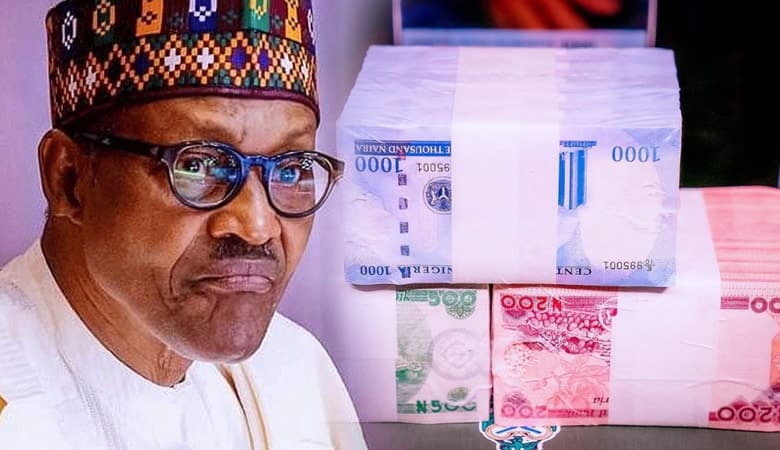
The new 200, 500, and 1,000 naira notes were unveiled by President Muhammadu Buhari on Wednesday. He said that “the new Naira banknotes have been fortified with security elements that make them harder to counterfeit.”
The new notes resemble the ones that are already in use quite a bit. The Central Bank of Nigeria’s headquarters and the nation’s coat of arms are still prominently displayed on the highest-value 1,000-naira note’s design. The color has changed from a primarily brown underprint to blue, which is the only discernible difference.
The Central Bank of Nigeria (CBN) says that the redesigned notes will replace notes currently in circulation by Jan. 2023.
But many locals are not impressed, describing the supposedly redesigned banknotes as a mere color revamp, given their similarities to the old notes.
“Snapchat filter, a waste of time and resources, so a whole CBN cannot employ experts to redesign the naira notes. This is a revamp not a redesign,” one Nigerian tweeted.
“What a waste of time and resources … what is the difference?” another questioned.
CNN has asked the CBN for comment.
Leading economist Bismarck Rewane tells CNN that changing the currency’s look adds nothing to its value and is insignificant in curbing counterfeiting.
The government says new security features were added to the new notes, but Rewane says the changes to the currency are not significant enough to curb counterfeiting.
Nigerian naira has been in a decline in recent years, falling to a record low on the black market where it traded at nearly 800 to the US dollar as of Friday.
“It doesn’t change anything,” Rewane says of the redesigning of the naira. “It doesn’t increase the value,” he also says, adding: “There was no redesign. The color of the currency changed that’s all. The change is not significant enough to stop counterfeiting.”
Nigeria’s 1000- and 500-naira denominations are the most counterfeited, according to the CBN’s annual report last year.
News of redesigning the naira — first announced last month — generated mixed feelings among Nigerians, some of whom questioned the cost of printing new banknotes at a time the country is grappling with dwindling oil revenues, its main source of income.
Central Bank Governor Godwin Emefiele expects the introduction of the new banknotes to help control inflation, which recently rose to its highest level in 17 years, and also fight corruption.
These goals, Rewane says, may not be achieved.
“It’s just a change in color. I cannot see the correlation between the color of the currency and the desired goals. If the goal is to reduce inflation, it will not achieve that. [Changing the look of the currency] has no macroeconomic impact whatsoever,” he tells CNN.
‘Overdue for a new look’
At the unveiling of the new notes on Wednesday President Buhari said it had beennearly 20 years since the country did a major redesign of its banknotes.
The Nigerian leader added that replacing the current currency with the redesigned notes will help to combat the hoarding of funds outside of the banking system.
“It is on this basis that I gave my approval for the redesign of the 200, 500, and 1,000 banknotes,” he said.
Old naira notes will be completely phased away by the end of January next year, the CBN says, as locals scramble to deposit their old notes at commercial banks.
Some financial expertshave commended the Central Bank of Nigeria (CBN) for its decision to redesign the naira, saying that it would have positive effect on the economy.
The experts spoke in separate interviews with the News Agency of Nigeria (NAN) in Abuja on Thursday.
They spoke against the backdrop of announcement by the CBN that new designs of the N200, N500 and N1,000 denominations would be produced and circulated on Dec. 15.
According to Prof. Umhe Uwaleke, a financial economist and professor of capital market at the Nasarawa State University, Keffi, the decision will be positive for the economy in the medium to long term.
Uwaleke said the measure would go a long way to ensure that the naira in circulation outside the banking system were brought into the banking system.
He said the measure would also provide enough liquidity for banks, and more money for the banks to lend.
“The measure does not amount to demonetisation of big currency notes often carried out by central banks to curb black money and corruption.
“But it will go a long way in ensuring that a lot of naira notes circulating outside the banks are crowded in.
“If it leads to large deposits in banks, it means the banks will have more money to lend which may reduce interest rates.
“Perhaps more importantly, with increased currency in circulation now in the vault of banks, I expect to see improvement in monetary policy transmission,” he said.
Uwaleke said it might also have the effect of reducing speculative attacks on the naira in the parallel market in the medium term.
“I expect that the Financial Intelligence Unit will be on the look out for huge deposits as a way of monitoring illegitimate transactions.
“Despite the huge cost involved in changing currency notes, I think it’s time to sanitise the system, especially now that electioneering activities have kicked off,” he said.
He, however, said the deadline of Jan. 31, 2023 was too short, considering the number of naira denominations involved, urging the CBN to consider extending it.
An economist, Dr Tope Fasua, also said the measure would have significant effect on the economy, adding that it was essentially about “black money.”
He suggested that the CBN should take such measures more frequently.
“When central banks do this, they try to pull in monies people are hiding; illegal money, corruption money, kidnapping money. Nigeria has managed to become a hub for these kinds of illegalities.
“I will even suggest that the CBN does this more often, maybe every 10 years. You will see a scenario where the banks are awash with liquidity.
“There are many people sitting on billions in naira, and even in dollars. The CBN should also see how it can pull in the dollars,” he said.
Fasua advised that the idea of individuals operating personal domiciliary bank accounts should be banned, adding that nobody needed it.
“People are speculating against their own currency in their own country. That is not allowed in any economy.
“They should pull in illegal, black naira and then see how they can pull in illegal dollars. The CBN can control these things through the Deposit Money Banks,” he said.
However, Mr Okechukwu Unegbu, a financial expert, and past President of the Chattered Institute of Bankers of Nigeria (CIBN), said redesigning the naira was not the most important problem facing the economy.
Unegbu, said the apex bank should have simply ensured that the scarce lower naira denominations, like N100 and N200 were readily available by printing more. (NAN)