Tag: Narcotics

  • Three arrested in suspected drug trafficking operation

    Three arrested in suspected drug trafficking operation

    Three suspects are in police custody for their alleged involvement in a narcotics operation in the Accra metropolis. The trio, Bright Ayivor, Ifeanyi Ijeoba, and Kwabena Botwe, were apprehended between April 10 and April 11, during a series of coordinated operations by the police.

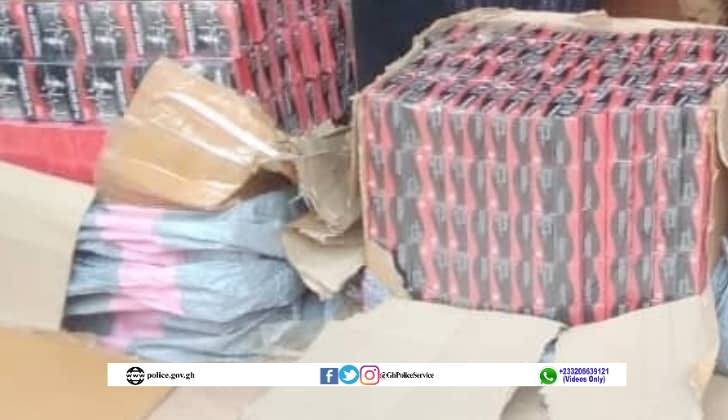
    In a related development, the Oti Regional Police Command at Dambai, Oti Region intercepted a DAF long trailer with registration number GW 1943-09, carrying 4,000 parcels of suspected narcotics in February.

    The police, in a press release, disclosed that the interception was made possible following intelligence gathered by their officers.


    According to the statement, thousands of compressed dried leaf parcels, wrapped in yellow masking tape and hidden in secret compartments sealed with six metal plates, were discovered by the officers.


    “The concealed compartments beneath the trailer were opened in the presence of suspect Amidu Jubril, aged 40. A search in the secret compartments led to the discovery of Four Thousand (4000) parcels of compressed dried leaf substances wrapped in a yellow masking tape suspected to be narcotics, carefully concealed within the compartments,” the statement said.


    Meanwhile, driver, Amidu Jubril, is in police custody. Last month, a 50-year-old commercial driver, Atampugri Akanyani, was nabbed by the police after 714 slabs of suspected Indian hemp were found in his possession.


    The slabs, which were hidden in nine nylon sacks were discovered during a routine snap check by police officers at the Asanso checkpoint along the Bekwai–Aputogya road on Tuesday, January 26, 2026.


    Atampugri Akanyani disclosed that an unknown individual at the Kejetia Lorry Terminal in Kumasi handed over the suspected Indian hemp to him for delivery, at a fee of six hundred Ghana cedis, to another unidentified person in Obuasi.


    Meanwhile, Atampugri Akanyani has since been arraigned before the court. Last year, 600 sacks of Indian hemp fertiliser, weighing a total of 47,530kg and valued at about GH¢4.2 billion, were destroyed by the Volta Regional Police Command.


    The destruction exercise, which occurred on Monday, November 17, was carried out pursuant to an order from the Ho Circuit Court. This information was contained in a statement issued on Thursday, November 20, and signed by Chief Inspector Francis Kwaru Gomado, Head of the Public Affairs Unit of the Volta Region.


    Parts of the statement read, “the six hundred sacks contained a total of forty-seven thousand, five hundred and thirty kilograms (47,530kg) with an estimated face value of about 4.2 billion Ghana cedis.”


    In August 2025, the Central East Regional Police Command arrested two suspects in possession of 519 compressed parcels of dried leaves suspected to be Indian Hemp.


    The suspects, identified as Eric Nkyeke, 30, and Francis Klu, 28, were held in police custody. The Toyota Hilux pick-up with registration number GS 6849-21 was impounded at Nyanyano in the Gomoa East District.


    This was revealed in a statement issued by the Nyanyano District police command. In June, the police nabbed two suspects for having in their possession 84 parcels of substances suspected to be Indian hemp.


    The police team, through an intelligence-led operation on June 15, intercepted an Opel Astra vehicle with registration number GT 6430-13 driven by suspect John Dzeble, together with suspect Adzobi Mesiwotso on board.


    A search conducted on the vehicle revealed 86 compressed parcels of substances suspected to be Indian hemp, discreetly concealed in the inner compartments of the car, including the engine, doors, and boot.


    In addition to the compressed parcels, the officers retrieved a portable measuring scale machine and a roll of masking tape, also concealed, believed to have been used in the packaging of the substances.

    The suspects, along with the exhibits, are currently in Police custody and assisting with the investigation.


    The Oti Regional Police Command has commended the swift and professional action of the personnel involved in the arrest and reaffirmed its commitment to curbing drug trafficking and related criminal activities.


    The arrest comes after a recent incident where the police captured one Christopher Partey for unlawful possession of 40 parcels of a substance suspected to be narcotic drugs.


    The National Highway Patrol Unit of the Ghana Police Service arrested on Wednesday, June 11.


    The team intercepted a Ford Transit bus with registration number AS 524-16 near the outskirts of Ayikuma township while on routine patrol along the Accra–Somanya corridor.


    A search of the vehicle revealed 40 tightly wrapped parcels concealed in a fertilizer sack in the vehicle’s boot. Upon interrogation, Christopher Partey, a passenger on board, admitted ownership of the items.


    The exhibits retrieved have been handed over to the Drug Law Enforcement Unit at the Police Headquarters for further investigation.

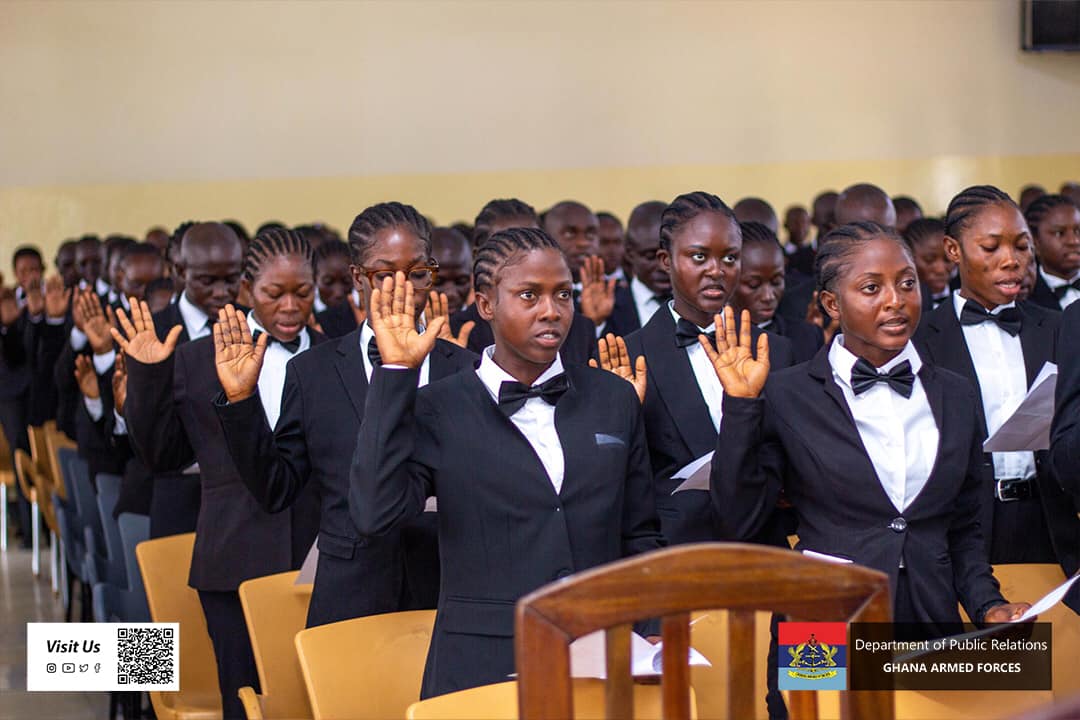
    The suspect is currently in police custody, assisting investigations, and will be put before the court. In April, a total of 189 Cadets were officially inducted into service to support Ghana’s ongoing efforts to combat narcotic drug trafficking and related crimes.


    The induction, held at the Eastern Naval Command, marked a significant collaboration between the Leadership Training School (LTS) and the Narcotics Control Commission (NACOC).


    The event, which featured the ceremonial swearing of an oath of allegiance, signified the commitment of the recruits to serve the nation with dedication and uphold the values of integrity and national security.


    The training, led by the Commanding Officer of LTS, is designed to build the capacity of cadets by focusing on the fundamentals of narcotics law and enforcement.

    The course places particular emphasis on confidence-building, professional discipline, and a thorough understanding of legal procedures necessary for their roles in narcotics control.


    As part of the induction, NACOC leadership underscored the importance of adherence to institutional rules and the responsible handling of classified information.


    The Commission reiterated its mission to disrupt the narcotics trade and act as a stabilizing force in communities vulnerable to the influence of drug-related activities.


    NACOC reaffirmed its commitment to making Ghana an unattractive hub for drug trafficking, prioritizing public safety and the protection of the nation’s borders.


    Calls have also been made for increased government support to enhance the Commission’s operational capacity, including the recruitment of additional personnel and the provision of improved financial and logistical resources.


    The new cadets are expected to play a key role in reinforcing the Commission’s enforcement operations across the country.

  • Ghana Navy’s special boat squadron intercepts 37 sacks of narcotics at sea

    Ghana Navy’s special boat squadron intercepts 37 sacks of narcotics at sea

    The Special Boat Squadron (SBS) of the Ghana Navy successfully intercepted a canoe conveying suspected narcotics during a maritime operation conducted on Fri 27 Mar 26.

    The seized items were subsequently conveyed to Eastern Naval Command for further action.

    Acting on credible intelligence, SBS operatives tracked, pursued, and intercepted the suspect canoe as it beach-landed approximately 950 yards South of Sege.

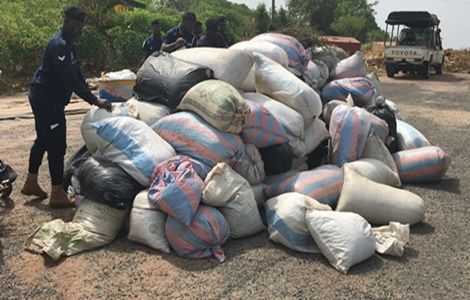
    A thorough search of the canoe revealed 37 sacks containing compressed botanical material suspected to be Indian hemp. The canoe and exhibits were towed to Tema Fishing Harbour and formally handed over to the Narcotics Control Commission (NACOC) by the Eastern Naval Command for further investigation, forensic examination, and procedural documentation. Also recovered during the operation were 2 gallons of premix fuel, 5 empty gallons and an outboard motor. Preliminary examination by the NACOC indicated an estimated 70 parcels per sack

    The operation underscores the Ghana Navy’s sustained vigilance in the conduct of maritime security operations and its resolve to combat illicit drug trafficking and transnational organised crime within Ghana’s maritime domain.

    The successful interdiction reaffirms the commitment of the Ghana Armed Forces to safeguarding national security and maintaining the integrity of the maritime environment.

    By Sarah Ofori Dei Appiah, 1 GAR PR Det

  • Truck with 4k parcels of suspected narcotics intercepted at Dambai

    Truck with 4k parcels of suspected narcotics intercepted at Dambai

    A DAF long trailer with registration number GW 1943-09, carrying 4,000 parcels of suspected narcotics, was intercepted by the Oti Regional Police Command at Dambai, Oti Region, on Wednesday, February 11.


    The police, in a press release, disclosed that the interception was made possible following intelligence gathered by their officers.

    According to the statement, thousands of compressed dried leaf parcels, wrapped in yellow masking tape and hidden in secret compartments sealed with six metal plates, were discovered by the officers.


    “The concealed compartments beneath the trailer were opened in the presence of suspect Amidu Jubril, aged 40. A search in the secret compartments led to the discovery of Four Thousand (4000) parcels of compressed dried leaf substances wrapped in a yellow masking tape suspected to be narcotics, carefully concealed within the compartments,” the statement said.


    Meanwhile, driver, Amidu Jubril, is in police custody. Last month, a 50-year-old commercial driver, Atampugri Akanyani, was nabbed by the police after 714 slabs of suspected Indian hemp were found in his possession.


    The slabs, which were hidden in nine nylon sacks were discovered during a routine snap check by police officers at the Asanso checkpoint along the Bekwai–Aputogya road on Tuesday, January 26, 2026.


    Atampugri Akanyani disclosed that an unknown individual at the Kejetia Lorry Terminal in Kumasi handed over the suspected Indian hemp to him for delivery, at a fee of six hundred Ghana cedis, to another unidentified person in Obuasi.Elevate your investment strategy with structured decision-making workflows luxen verix site.


    Meanwhile, Atampugri Akanyani has since been arraigned before the court. Last year, 600 fertiliser sacks of Indian hemp, weighing a total of 47,530kg and valued at about GH¢4.2 billion, were destroyed by the Volta Regional Police Command.


    The destruction exercise, which occurred on Monday, November 17, was carried out pursuant to an order from the Ho Circuit Court. This information was contained in a statement issued on Thursday, November 20, and signed by Chief Inspector Francis Kwaru Gomado, Head of the Public Affairs Unit of the Volta Region.


    Parts of the statement read, “the six hundred sacks contained a total of forty-seven thousand, five hundred and thirty kilograms (47,530kg) with an estimated face value of about 4.2 billion Ghana cedis.”


    In August 2025, the Central East Regional Police Command arrested two suspects in possession of 519 compressed parcels of dried leaves suspected to be Indian Hemp.


    The suspects, identified as Eric Nkyeke, 30, and Francis Klu, 28, were held in police custody. The Toyota Hilux pick-up with registration number GS 6849-21 was impounded at Nyanyano in the Gomoa East District.


    This was revealed in a statement issued by the Nyanyano District police command. In June, the police nabbed two suspects for having in their possession 84 parcels of substances suspected to be Indian hemp.


    The police team, through an intelligence-led operation on June 15, intercepted an Opel Astra vehicle with registration number GT 6430-13 driven by suspect John Dzeble, together with suspect Adzobi Mesiwotso on board.


    A search conducted on the vehicle revealed 86 compressed parcels of substances suspected to be Indian hemp, discreetly concealed in the inner compartments of the car, including the engine, doors, and boot.


    In addition to the compressed parcels, the officers retrieved a portable measuring scale machine and a roll of masking tape, also concealed, believed to have been used in the packaging of the substances. The suspects, along with the exhibits, are currently in Police custody, assisting with investigations.


    The Oti Regional Police Command has commended the swift and professional action of the personnel involved in the arrest and reaffirmed its commitment to curbing drug trafficking and related criminal activities.


    The arrest comes after a recent incident where the police captured one Christopher Partey for unlawful possession of 40 parcels of a substance suspected to be narcotic drugs.


    The National Highway Patrol Unit of the Ghana Police Service arrested on Wednesday, June 11.


    The team intercepted a Ford Transit bus with registration number AS 524-16 near the outskirts of Ayikuma township while on routine patrol along the Accra–Somanya corridor.


    A search of the vehicle revealed 40 tightly wrapped parcels concealed in a fertilizer sack in the vehicle’s boot. Upon interrogation, Christopher Partey, a passenger on board, admitted ownership of the items.


    The exhibits retrieved have been handed over to the Drug Law Enforcement Unit at the Police Headquarters for further investigation.
    The suspect is currently in police custody, assisting investigations, and will be put before the court.

    In April, a total of 189 Cadets were officially inducted into service to support Ghana’s ongoing efforts to combat narcotic drug trafficking and related crimes.


    The induction, held at the Eastern Naval Command, marked a significant collaboration between the Leadership Training School (LTS) and the Narcotics Control Commission (NACOC).


    The event, which featured the ceremonial swearing of an oath of allegiance, signified the commitment of the new recruits to serve the nation with dedication and uphold the values of integrity and national security.


    The training, led by the Commanding Officer of LTS, is designed to build the capacity of cadets by focusing on the fundamentals of narcotics law and enforcement.


    The course places particular emphasis on confidence-building, professional discipline, and a thorough understanding of legal procedures necessary for their roles in narcotics control.


    As part of the induction, NACOC leadership underscored the importance of adherence to institutional rules and the responsible handling of classified information.


    The Commission reiterated its mission to disrupt the narcotics trade and act as a stabilizing force in communities vulnerable to the influence of drug-related activities.


    NACOC reaffirmed its commitment to making Ghana an unattractive hub for drug trafficking, prioritizing public safety and the protection of the nation’s borders.


    Calls have also been made for increased government support to enhance the Commission’s operational capacity, including the recruitment of additional personnel and the provision of improved financial and logistical resources.


    The new cadets are expected to play a key role in reinforcing the Commission’s enforcement operations across the country.

  • Police seize narcotics, arrest seven at Cape Coast

    Police seize narcotics, arrest seven at Cape Coast

    Seven suspects have been arrested in an intelligence-led swoop targeting narcotic drug peddling networks within the Cape Coast Metropolis on Saturday, December 13. The suspects have been identified as Robert Kobbina, Abu Issifu, Janet Mensah, Emmanuel Quarshie, Osei Boateng, Animful Emmanuel, and Charity Nkrumah.

    Led by the Central Regional Police Command, the operation raided hotspots believed to be hubs for the sale and use of prohibited substances. Meanwhile, the police also seized large quantities of cigarettes, tobacco products, lighters, and three jackpot gaming machines.

    This information comes at a time when more than 11 nationwide intelligence-led swoops have been conducted between March and December this year by the Narcotics Control Commission (NACOC), aimed at cracking down on illicit drug activities.

    Speaking to the media on Friday, December 19, the Acting Director of Public Affairs and International Relations at NACOC, PNCO Francis Opoku Amoah, indicated that during that period, the swoops were carried out in areas such as:

    “From March till now, we have conducted more than 11 swoops, which, in our line of work, is a good number because investigations take time. For us to have achieved this means we are doing well.

    “This year, we have carried out swoops in Fadama, Effiakuma in the Western Region, Atinkpoko, parts of the Ashanti Region, and other areas. It all depends on where the intelligence is coming from and the type of intelligence we receive,” he said.

    In September, 1,195 boxes of Tramadol Hydrochloride 120mg, locally known as ‘Red,’ were confiscated, with six individuals arrested following a joint operation by the Ghana Police Service and NACOC. The seizure took place at Gbintri, near Nalerigu in the North East Region, on Thursday, September 18.

    This information was contained in a statement signed by Deputy Superintendent of Police (DSP) Robert Anabiik Anmain of the Public Affairs Unit and issued by the North East Regional Police Command on September 21.

    The trucks, with registration numbers GR 1712-16 and AW 4417-14, were loaded with Tramadol en route to Gbintri from Sankase in the Republic of Togo.

    The suspects have been identified as Alhassan Braimah, Yakubu Muntaka, Abdulai Shakur, Mumuni Iddrisu, Mumuni Yakubu, and Moses Ayorik.

    “The North East Regional Police Command in collaboration with the Narcotics Control Commission (NACOC) in Nalerigu has intercepted 1,195 boxes of Tramadol Hydrochloride 120mg, popularly known as ‘Red,’ a restricted drug concealed in a truck and arrested six suspects at Gbintri near Nalerigu in the North East Region.

    “A search of the trucks uncovered the 1,195 boxes of Tramadol Hydrochloride 120mg, popularly known as ‘Red,’ concealed among other goods in the truck with registration number GR 1712-16. The exhibits have since been secured for evidential purposes.

    “During interrogation, the suspects admitted that the consignment was destined for Moses Ayorik at Gbintri for onward delivery to another individual at Gushegu,” part of the statement read.

    According to the statement, the apprehended individuals are in police custody assisting with investigations. In addition, efforts are underway to trace and arrest other individuals connected to the case.

    Officials of the Ghana Revenue Authority (GRA) at the Transit Terminal on Thursday, June 19, intercepted a shipment disguised as general merchandise and headed for Niger. The officials uncovered 100 cartons of Tramadol (50 of 250mg and 50 of 120mg), also known on the streets as “Red.”

    The operation, led by CRO William Kpodo and the monitoring team, has now been escalated to the Tema Collection’s Investigation Unit in collaboration with the Narcotics Board, Port Security, and the Joint Port Control Unit (JPCU).

    In March, the Ghana Revenue Authority (GRA) Customs Division intercepted contraband goods at Tema Port. Boxes containing opioids were confiscated before noon.

    There were 26 cartons of Rahol Tapentadol 250mg, 160 cartons of Tafradol Tapentadol 120mg, 40 cartons of Timaking Tapentadol 120mg, four cartons of Timaking Tapentadol 250mg, 190 cartons of Diazole Loperamide 2mg, and 320 cartons of Chlorpheniramine Maleate.

    The drugs were worth approximately GH₵20 million. The shipment was en route to Niger, its final destination. Engaging the media, Health Minister Mintah Akandoh condemned the use of land borders to smuggle drugs and announced that the impounded consignment would remain in the safe custody of the Authority.

    “There are only two designated areas for the import and export of medication—Tema Port and Kotoka International Airport. Drugs are not imported through our land borders,” he said.

    He called on stakeholders and security agencies to confiscate any drugs brought in through the land borders. The Health Minister indicated that authorities would swiftly seek a court order for the proper disposal of the consignment. Following the court order, the consignment was disposed of.

    Ghana is witnessing a surge in drug consumption and addiction among young people. As such, the Ministry of Youth Development and Empowerment, led by George Opare Addo, has introduced an initiative to address the rising issue of substance abuse among young people through a campaign dubbed “Ghana Against Drugs (GAD) – Red Means Stop,” which aims to combat the problem effectively.

    In a recent interview, the Minister for Youth Development and Empowerment, George Opare Addo, revealed that a survey conducted among tertiary students discovered that about 28 out of every 100 university or college students abuse codeine and cough syrup. On Thursday, August 28, he indicated that 12 in every 100 tertiary students are involved in cocaine abuse. The Minister further reported that 11% of participants admitted to overusing heroin.

    “Codeine and cough syrups stand at 28%. And then you will be amazed to know that 12% of our university and tertiary students are abusing cocaine and 11% heroin,” he added.

    According to him, more than half of the respondents admitted to consuming marijuana-infused products. In July, Minister for Health, Hon. Kwabena Mintah Akandoh, declared opioid abuse a national emergency.

    During the induction of a new cohort of pharmacists joining the Pharmacy Council of Ghana, the inductees were charged to support the government’s efforts in combating the opioid crisis, particularly the misuse of tramadol. Hon. Akandoh reminded the new pharmacists of their motto, “Amicus Humanis Generis” — Friends of the Human Race — urging them to uphold it with compassion, ethics, and excellence.

    The ceremony, held under the theme “The Future is Now: Young Pharmacists at the Forefront of Preventing Opioid Misuse in Ghana,” highlighted both the promise and responsibility that lie ahead for the nation’s newest healthcare professionals.

    Hon. Akandoh described the event as a “special day” marking the beginning of a crucial professional journey. “You have reached this milestone through dedication, hard work, and perseverance,” he said.

    The Minister emphasised the critical and evolving role of pharmacists in Ghana’s healthcare landscape, describing them as “frontline healthcare providers, educators, patient advocates, and guardians of public health.” He noted that pharmacists’ work has a direct impact on health outcomes and the well-being of the public.

    The Minister highlighted how pharmacists are central to the government’s broader health agenda, including the MahamaCares and Free Primary Health Care initiatives. These programmes, he said, rely on pharmacists to deliver accessible, quality healthcare and manage chronic diseases at the community level.

    The Ministry of Health extended its heartfelt congratulations to all newly inducted pharmacists and commended the Pharmacy Council for its unwavering commitment to excellence in healthcare delivery.

    In April, the Ministry of Health destroyed a significant consignment of illicit opioid-containing drugs that had entered Ghana under questionable circumstances.

    The consignment, which consisted of 128 boxes of Tafrodol, 92 boxes of Timaking Tapentadol, and 10 boxes of Rahol Tapentadol—totalling 230 boxes—posed serious risks to public health, particularly due to the potential for widespread misuse and addiction among the youth.

    The destruction of the drugs took place at Vigour-DW Enterprise, a waste management company based in Ashaiman, and was supervised by key regulatory and legal authorities.

    The operation was carried out in strict compliance with a court order. In a rare and highly symbolic gesture, the Ministry chose to publicly incinerate the drugs, sending a strong message to those involved in the illegal drug trade.

    Minister for Health, Hon. Kwabena Mintah Akandoh, emphasised that this action was only the beginning in the fight against illicit drug trafficking.

    “We will not stop here. After the safe disposal of this consignment, we will further investigate the clearing agent and the importer, and hand them over to the Attorney General for prosecution,” he stated firmly.

    A BBC Africa Eye investigation uncovered that Aveo Pharmaceuticals, based in Mumbai, has been producing unlicensed, highly addictive opioids that are illegally exported to West Africa.

    These drugs, packaged to resemble legitimate medications, contain a dangerous combination of tapentadol, a powerful opioid, and carisoprodol, a muscle relaxant banned in Europe due to its addictive properties.

    This combination, which is not licensed for medical use anywhere in the world, can cause severe side effects, including respiratory distress, seizures, and fatal overdoses.

    Despite these risks, the drugs have gained popularity as cheap, readily available street substances in Ghana, Nigeria, and Côte d’Ivoire.

    The Pharmaceutical Society of Ghana (PSGH) has condemned the illegal importation of dangerous opioids and called for a thorough investigation into the matter.

    The Society urged multiple agencies—including the Food and Drugs Authority (FDA), the Pharmacy Council, the Ghana Revenue Authority (GRA) Customs Division, the Criminal Investigation Department (CID) of the Ghana Police Service, the Narcotics Control Authority, and the National Intelligence Bureau—to probe the issue and hold those responsible accountable.

    “If any local pharmaceutical company is found to have breached regulatory protocols, appropriate sanctions should be enforced to maintain the integrity of the pharmaceutical supply chain in Ghana,” PSGH stated in a press release issued on February 24.

    Ghana’s Food and Drugs Authority (FDA) has revoked the Good Manufacturing Practices (GMP) certification of Aveo Pharmaceuticals, an Indian pharmaceutical company, after investigations linked it to the illegal distribution of opioid-based medications in West Africa.

    As part of the crackdown, the FDA has also directed Samos Pharma, a Ghana-based importer, to terminate all business relations with Aveo Pharmaceuticals and Westfin International.

    Additionally, the registration of six products from Masters Pharmaceutical Limited, which intended to use Aveo as a contract manufacturer, has been suspended.

    However, despite persistent appeals from traditional leaders and locals, the offenders continued their illegal activities.

  • 189 Narcotics Cadets inducted to aid fight against narcotic drugs, related crimes

    189 Narcotics Cadets inducted to aid fight against narcotic drugs, related crimes

    A total of 189 Cadets have officially been inducted into service to support Ghana’s ongoing efforts to combat narcotic drug trafficking and related crimes.

    The induction, held at the Eastern Naval Command, marked a significant collaboration between the Leadership Training School (LTS) and the Narcotics Control Commission (NACOC).

    The event, which featured the ceremonial swearing of an oath of allegiance, signified the commitment of the new recruits to serve the nation with dedication and uphold the values of integrity and national security.

    The training, led by the Commanding Officer of LTS, is designed to build the capacity of cadets by focusing on the fundamentals of narcotics law and enforcement. The course places particular emphasis on confidence-building, professional discipline, and a thorough understanding of legal procedures necessary for their roles in narcotics control.

    As part of the induction, NACOC leadership underscored the importance of adherence to institutional rules and the responsible handling of classified information. The Commission reiterated its mission to disrupt the narcotics trade and act as a stabilizing force in communities vulnerable to the influence of drug-related activities.

    NACOC reaffirmed its commitment to making Ghana an unattractive hub for drug trafficking, prioritizing public safety and the protection of the nation’s borders. Calls have also been made for increased government support to enhance the Commission’s operational capacity, including the recruitment of additional personnel and the provision of improved financial and logistical resources.

    The new cadets are expected to play a key role in reinforcing the Commission’s enforcement operations across the country.

  • Police officers and civilian clash over search on suspicion of weapon, narcotics possession

    Police officers and civilian clash over search on suspicion of weapon, narcotics possession

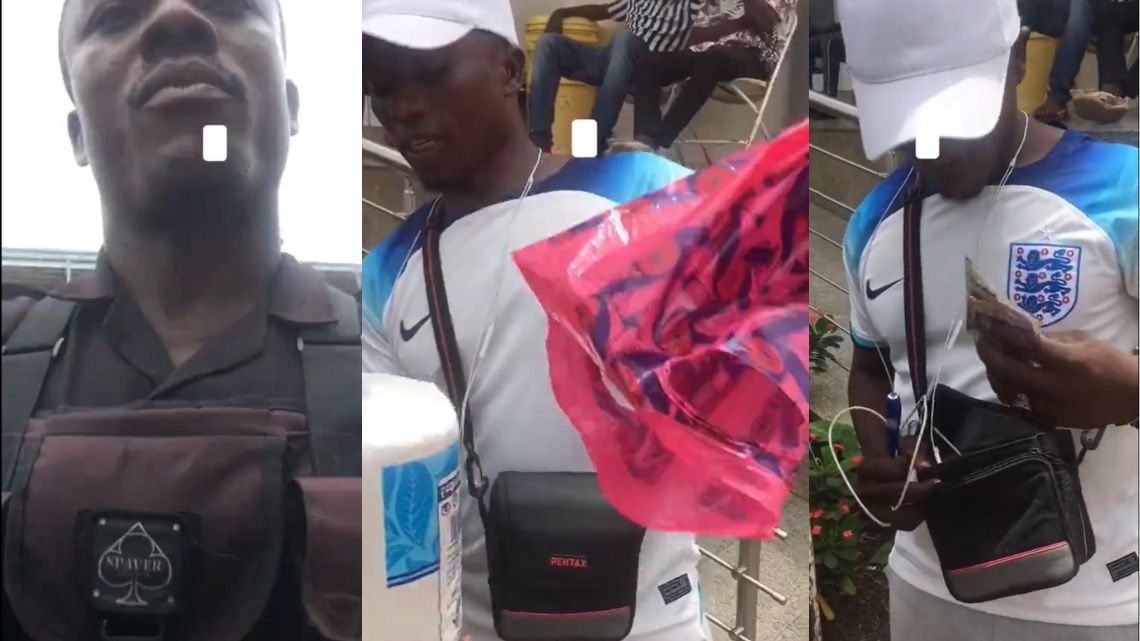
    In Kumasi, an altercation between two police officers and a civilian escalated after the officers approached the civilian for a search on suspicion of possessing hard drugs or a gun.

    The civilian, feeling offended by the officers’ decision to search him, began recording the encounter on his phone. This action further agitated the officers, who were also offended by being recorded.

    The incident, which occurred in a public area, quickly attracted the attention of onlookers. Tensions rose as the civilian refused to comply with the officers’ requests and continued to record the interaction.

    The male civilian later gave in and removed the items from his bag as the police officers took over the recording after the civilian handed over his phone to them.

    No drugs were found. An ID card, money and tissues were found.

    Later, the civilian requested that his phone be returned to him. The Police officers refused and questioned the civilian on his mandate to record them.

    They engaged in a banter and finally the civilian got hold of his phone.

    The conduct of the officers per the law can be deemed as unprofessional.

    According to the Ghana Police Service Standard Operating Procedures (Legal and Prosecutions Directorate) based on Act 1960 (Act 30) of Ghana’s Criminal Procedure Code with the subject ‘Searches of dwellings, other premises and persons’ here’s what we know.

    1. Purpose.

    To define the search and seizure activities of the Police in full accordance with the law.

    2. Procedures.

    2.1. Searches without a warrant.

    2.1.1. A Police Officer may search without a warrant if he has reasonable cause to believe that a person has concealed on himself or is conveying;

    a. An article which has been stolen or unlawfully obtained.

    b. An article in respect of which a criminal offence has been, is being or about to be committed.

    2.1.2. A Police Officer not below the rank of Assistant Superintendent of Police or who being below the rank has been authorized in writing by an officer of the said rank may enter a house, shop, warehouse, yard, boat, vessel, or other premises which the Police Officer has reasonable cause to believe contains property which has been stolen or obtained by unlawful means.

    2.2. Searches with a warrant.

    2.2.1. Where a Police Officer has reasonable grounds to suspect that there is in a building, vessel or any other premises;

    a. A thing in respect of a which an offence has been committed.

    b. A thing which is intended to be used for the purpose of committing an offence.

    c. A thing which has been unlawfully obtained.

    d. A thing of which possession is unlawful’.

  • Downtown smoke shop accused of trafficking illicit narcotics and firearms

    Downtown smoke shop accused of trafficking illicit narcotics and firearms

    A store in downtown Edmonton has been caught selling illegal weapons and things used for drugs, according to the police.

    Edmonton Police are looking into 5 Star Gift and Smoke Shop on 107 Avenue because people in the neighborhood have complained about violence.

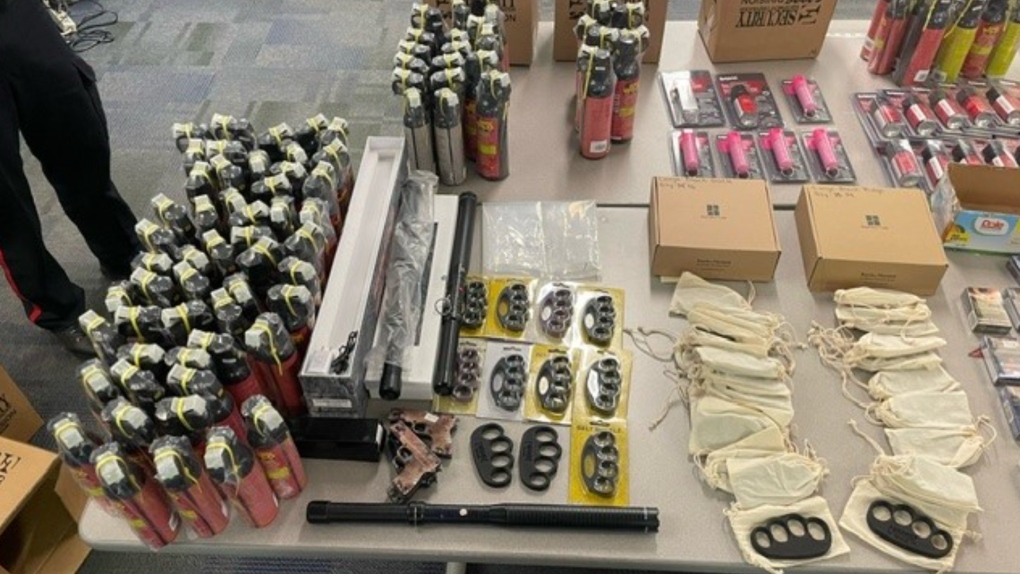
    On Thursday, police took 10 sword canes, over 120 cans of bear spray, five cattle prods that look like flashlights, and many butterfly knives and brass knuckles during a search.

    The police also found illegal tobacco and a plant called khat, which is believed to have stimulating effects.

    The 41-year-old person who owns a store has been charged with selling weapons and illegally moving them around.

    This news story is still being updated. Come back later for more information.

  • $27m worth of “scorpion” cocaine found in narcotics seized in Colombia

    $27m worth of “scorpion” cocaine found in narcotics seized in Colombia

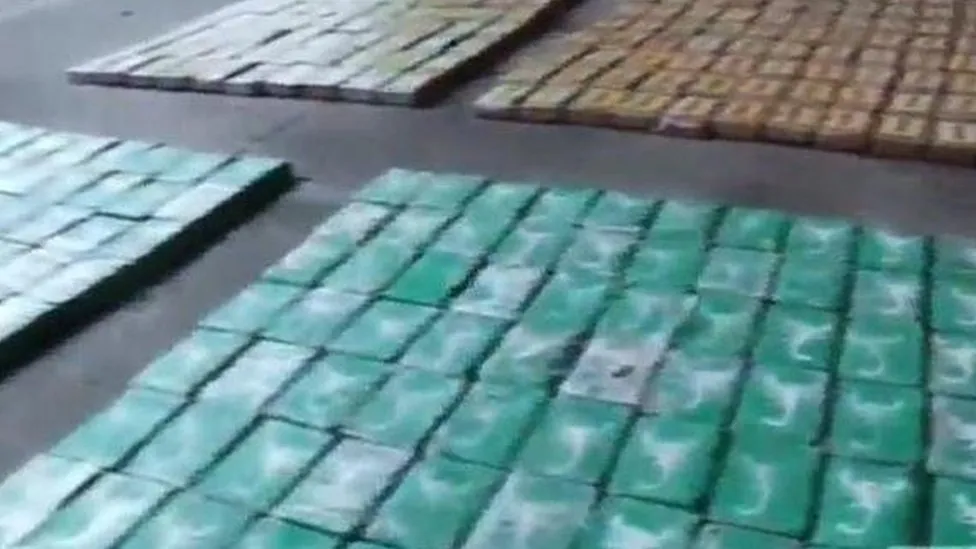
    The Colombian Navy stopped a semi-submersible boat that had almost 800kg of cocaine on it. Some of the cocaine was marked with a scorpion symbol.

    A 50-foot-long “narco-sub” was found in Colombian waters. It is the first one to be discovered this year.

    The navy thinks the stuff they found is worth $27m (£21m) and thinks the submarine was on its way to the US or Europe.

    Three individuals who were inside the vehicle have been taken into custody.

    The navy stopped the underwater boat that was moving through the Pacific Ocean on Sunday.

    On the ship, there were packages of cocaine with a scorpion image or labeled “Winnie” and “Carnal”.

    The navy said the drugs and the people suspected of smuggling them were taken to Buenaventura, a port city in Colombia. More information about the suspects has not been given yet.

    The Colombian Navy stopped drug trafficking organizations from getting almost $27 million by seizing the drugs. This prevented about two million doses from being sold on the streets around the world.
    The Colombian Navy shared a picture of the drug submarine.

    Drug smuggling boats called narco-subs are a common way to secretly transport drugs. They can avoid being noticed and can be sunk in the water after delivering the drugs. They are usually made at home, using fibreglass and plywood.

    Colombia makes the most cocaine in the world.

    In 2023, the Colombian Navy found and stopped 30 tonnes of drugs and over five tonnes of marijuana.

    In May of last year, the biggest drug-smuggling submarine ever found in Colombia was stopped with three tons of cocaine inside, as reported by CBS News, a partner of the BBC in the US. It was around 100 feet long and 10 feet wide.

    The UN said that in 2022, Colombia made a lot of cocaine. They used a lot of coca leaves and spread them over a very big area.

    Belgian officials found a lot of cocaine at the port of Antwerp last year. The port is now the main way drugs from South America enter Europe.

  • Four men appear in court after narcotics seizure in Cork

    Four more men have showed up in court charged in association to final week’s cocaine seizure off the Irish coast.

    Seven individuals have presently been charged in association to the greatest drugs seizure within the history of the Irish state.

    The four men showed up at Mallow Area Court in Plug.

    All four are charged with contriving together to have cocaine for the reason of providing the medicate, at a time when their advertise esteem was more than €13,000 (£11,284).

    The men, 48-year-old Cumali Ozgen, from the Netherlands, 37-year-old Saeid Hassani, from Iran, and 30-year-old Mykhailo Gavryk and 31-year-old Vitaliy Vlasoi, both from Ukraine were blocked from applying for safeguard since of the nature of the charges they confront.

    The judge remanded all of them in care for a week.

    They are due to seem in court in Mallow following week.

  • Largest Irish narcotics haul ever discovered following ship raid

    Irish police have said that the recent discovery of over two tonnes of cocaine off the coast of Ireland is the biggest drugs capture in the country’s history.

    Officials found 2,253kg of drugs after they took control of a ship called MV Matthew, which is registered in Panama, and kept it to investigate on Tuesday.

    Officials said the cocaine was worth around €157m (£136m) when sold on the streets.

    Garda Assistant Commissioner Justin Kelly said that a dangerous South American cartel group provided the drug.
    The top soldiers from the Army Ranger Wing attacked the boat with help from the Navy, Air Force, Garda National Drugs and Organised Crime Bureau, and customs officers.

    Mr Kelly said it was a very important and widespread operation involving several countries, including the United States, UK, France, and Portugal, working together to fight drug trafficking.

    He said the drugs were going to Ireland and other parts of Europe.

    Three older men, aged 60, 50, and 31, were taken into custody as part of the operation.

    The boat had around 25 people working on it and the police said that more people might be arrested and they will continue searching.
    A big group of different agencies worked together after they received a warning that a fishing boat got stuck on the east coast on Sunday night.

    The boat asked for help, so different groups like the Irish Naval Service, police, a lifeboat crew, and a Coast Guard helicopter came to assist.

    Two men were rescued and brought to safety from the sinking ship.

    It is stuck on a sandy area near the coast of Rosslare in County Wexford, which is in the south of Ireland.

    Irish TV station RTÉ shared that a rescue mission turned into a big security operation.

    The Irish Defence Forces asked for help and sent a ship, two helicopters, and two planes.

    The Irish authorities had been following MV Matthew for a few days.

  • Maritime distress signal prompts alleged narcotics operation

    The Irish Coast Guard saved two people from a boat in the middle of a big security operation focused on stopping drug smuggling.

    The fishing boat got stuck on the shore on Sunday night near County Wexford, which is in the south of Ireland.

    The distress signal was sent, which caused multiple groups to join together, including the Irish Navy, police, a lifeboat crew, and a Coast Guard helicopter team.

    Two men were lifted up to safety from the broken boat.

    The Irish broadcaster RTÉ said that a rescue mission turned into a big security operation.

    It said officials later got on and took control of a large ship and it was being guided to Cork Port.

    It is believed that the ship is involved in illegal drug smuggling.

    RTÉ reported that the ship did not follow instructions to let the authorities board it, and it is believed that well-trained military personnel were involved.

    The security operation is still happening for two days. The gardai and Irish Naval Service said they won’t give any comments.
    The Irish Coast Guard said that the fishing boat made a call for help at around 22:10 on Sunday night.

    The boat was stuck on a sandbank near Blackwater, a little ways up from Rosslare Port.

    A helicopter from the Coast Guard and a local crew from RNLI (Royal National Lifeboat Institution) came to help.

    The Coast Guard said that they were not able to tow the ship, so they used a winch to bring the injured people off the ship.

  • South Korea conducts narcotics raids at US military camp

    South Korea conducts narcotics raids at US military camp

    South Korean police are looking into the case of 17 American soldiers and five others who are suspected of smuggling or using fake marijuana through military mail.

    This means that there were raids in at least two US army bases in May, including Camp Humphreys, which is the biggest base outside of the US.

    A person from the Philippines and someone from South Korea were taken into custody while lawyers are studying the evidence for all 22 people involved.

    A suggestion from a branch of the US Army led to a four-month investigation by Korean authorities.

    According to Cha Min-seok, a senior detective in South Korea, US media reported that it was one of the biggest incidents in recent years involving American soldiers.

    South Korean police and the US Army’s Criminal Investigation Division worked together to search the homes of 22 suspects. During these raids, they discovered 77g (2. 7oz) of synthetic cannabis, over 4kg of “mixed liquids” used for vaping, and a total of $12,850 (£10,440) in cash.

    They are said to have brought synthetic marijuana (also called K2 and Spice) into the country using the US military’s postal service.


    Seven people, which includes five soldiers, are believed to have taken part in selling drugs. Out of the total number, 12 were drug users and three acted as mediators. The police told the BBC that the husband or wife of a soldier and the person engaged to another soldier are also part of this.

    The police said that there are 17 soldiers right now at Camp Humphreys, which is about 48km (30 miles) south of Seoul. There are also some soldiers at Camp Casey, an army outpost about 40km north of Seoul.

    They supposedly shared the drugs at the locations and talked through Snapchat.

    The United States Forces in Korea said on Wednesday that they know about the investigation. There are no soldiers being held or confined right now, according to a statement.

    Synthetic marijuana is created to imitate THC, the primary compound in marijuana that causes mind-altering effects.

    Although it has similar effects to cannabis, it is usually stronger and can cause harmful health issues like sudden episodes of mental illness, extreme paranoia, and intense restlessness.

    The police said it’s hard to find because people often use it in liquid form with legal e-cigarette devices.

    In South Korea, people who are found guilty of selling marijuana can be sentenced to prison for a minimum of five years and possibly for the rest of their lives. Having drugs can lead to getting a punishment of up to five years in jail or having to pay around 50 million won ($37,200; £30,300).

  • Driver caught in possession of narcotic drug fined GHS6,000

    Driver caught in possession of narcotic drug fined GHS6,000

    A 56-year-old driver has been sentenced by an Accra Circuit Court for the unlawful possession of narcotics.

    The driver, Mr. Emmanuel Mensah, had 45 white and gold foil wraps of cocaine weighing 1.410 grams and 19 foil wraps of heroin weighing 2.3634 grams in his possession.

    Mr. Mensah pleaded guilty to two counts of unlawful possession of narcotic drugs. The court, presided over by Mr. Jojo Amoah Hagan, convicted Mr. Mensah based on his guilty plea and subsequently sentenced him.

    He was ordered to pay a fine of 500 penalty units, equivalent to GH₵6,000.00, and in default, serve 15 months of imprisonment with hard labor.

    The prosecution, represented by Deputy Superintendent of Police (DSP) Emmanuel Nyamekye, stated that the complainants were police officers stationed at the Drug Law Enforcement Unit of CID Headquarters, Accra.

    They arrested Mr. Mensah at a narcotic drug peddling base in Tudu, Accra, on March 2, 2023, following intelligence gathered. Subsequent searches conducted on Mr. Mensah led to the discovery of the narcotics.

  • 2 remanded for trafficking narcotic drugs

    2 remanded for trafficking narcotic drugs

    Two persons have been remanded over drug trafficking.

    The Jasikan Circuit Court remanded into Police custody the two, Raphael Agbele, the 42-year-old driver and Daniel Sakyi, a 26-year-old student for trafficking 410 parcels of narcotic drugs suspected to be Indian hemp.  

    They both pleaded not guilty to the charge.  

    The case was adjourned to July 25, 2023, for the suspects to reappear. 

    Assistant Superintendent of Police (ASP) Seth Vincent Kpod, Prosecuting, told the Court presided over by Mr Alfred Kwabena Asiedu that the complainant was an Assemblyman.  

    He said on May 24, 2023, Agbele was in charge of a Benz bus container with registration number GT8496-N travelling from Hohoe to Dormabin.  

    ASP Kpodo said Sakyi who was also on the same vehicle, was the driver’s mate.  

    He said upon reaching the Asukawkaw Bridge, the vehicle veered off the road and got involved in an accident.  

    ASP Kpodo said the complainant, hearing of the accident, rushed to the scene and realised that there were sacks inside a secret compartment in the Benz bus which had broken down because of the accident. 

    He said several of the said sacks were also seen scattered on the road, which the Assemblyman quickly packed to prevent people from stealing them.  

    ASP Kpodo said the Assemblyman subsequently informed the Police about the incident. 

    He said the Police rushed to the scene and found 12 sacks and ten parcels of the wrapped Indian hemp that were retrieved from the accident vehicle. 

    ASP Kpodo said Police proceeded to the Asukawkaw Clinic and arrested the suspects who had been treated and discharged because of the accident. 

    He said the suspects in their investigation caution statements to police denied any wrongdoing.  

    ASP Kpodo said the suspects mentioned one Selasie Zigah of Hohoe as the owner of the vehicle who sent them to load charcoal at Dormabin and were not aware of the content of the vehicle. 

    He said efforts were being made to get the said owner of the vehicle arrested for investigations, but he has since gone into hiding.

  • Woman sent narcotics to boyfriend who was incarcerated

    Woman sent narcotics to boyfriend who was incarcerated

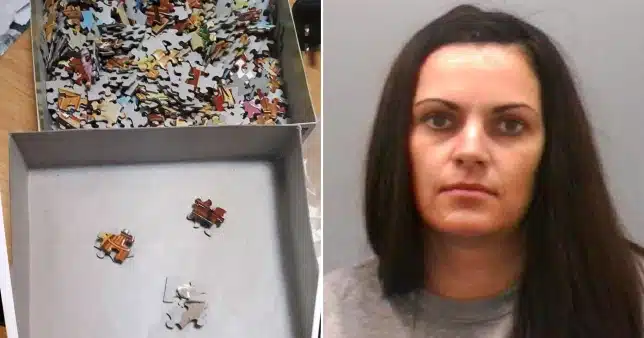
    By concealing the narcotics in puzzles and artwork, a woman sent drugs to her partner who was incarcerated.

    After the guidelines for loved ones sending gifts to inmates were loosened during Covid, Charmaine Orange delivered Dean Wright various substances by hiding them in jigsaw and matchstick puzzles and blending them with paint.

    In addition, according to evidence presented at Newcastle Crown Court, $17,000 went through her bank accounts after she chose to ignore the fact that her ex-boyfriend Wright was using her information to receive money from his drug trafficking business within HMP Northumberland.

    However, after a judge was told mum-of-two Orange was in a controlling relationship with Wright, he spared her an immediate spell behind bars.

    Liam O’Brien, prosecuting, said the drugs supply offences happened in April and May 2020. He told the court: ‘She did so in a couple of different ways.

    ‘During lockdown, the prison changed the rules so family members could send things like puzzles and jigsaws.

    ‘On one occasion the defendant sent a matchbox puzzle containing drugs and another time a jigsaw had drugs hidden in it.

    ‘There was also a painting with paint which had drugs mixed with it. Another time, blue powder was put in a bag and hidden between two pieces of paper. It leaked and went all over the post and the whole of the prison post had to be binned as it was contaminated.’

    Orange, 35, of Walling Road, Blakelaw, Newcastle, was traced as the sender as her bank card had been used to pay for postage.

    The 34-year-old, who has two previous convictions for an environmental and a driving matter, pleaded guilty to supplying buprenorphine, diazepam and a psychoactive substance – flualprazolam.

    She was sentenced to nine months suspended for 12 months with a one-month curfew between 8pm and 6pm. She faces proceedings under the Proceeds of Crime Act.

    Jamie Adams, defending, said: ‘This woman was leading a very hard-working lifestyle and had two children to look after. She met Dean Wright and he was not physically abusive but intensely emotionally abusive.

    ‘That’s what brought her to this offending.’

    Mr Adams said when Orange sought to break up with Wright, he wrote what appeared to be a suicide note blaming her and branding her a ‘murderer’ for what he was threatening to do to himself.

    Mr Adams added: ‘She accepts there are monies that have gone into her account which had emanated from drugs she sent in to him when he was in custody. He was clearly making some profit out of what was sent in.

    ‘He was giving people her bank details. She was not profiting from it at all.’

    The court heard her bank details were found in at least five prison cells occupied by inmates other than Wright.

  • Parliament passes Narcotics Bill

    Parliament passes Narcotics Bill

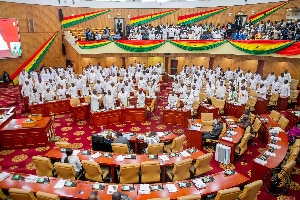
    On July 12, 2023, Ghana’s Parliament passed the Narcotics Control Commission Amendment Bill, granting the Minister for the Interior the power to issue licenses for industrial cannabis cultivation.

    Regarding the Supreme Court’s previous ruling on the unconstitutionality of a clause in the bill, Speaker of Parliament Alban Bagbin clarified that Parliament was not reviewing the decision but rather rectifying an error made by the Supreme Court.

    The Minister for the Interior, Ambrose Dery, presented and initiated the first reading of the Narcotics Regulation Commission Amendment Bill, 2023, in Parliament on July 6.

    The Supreme Court invalidated the law granting licenses for cannabis cultivation, commonly known as ‘wee’, due to a lack of parliamentary debate as required by Article 106 (5) (6) of the 1992 Constitution.

    Expressing dissatisfaction with the ruling, the Speaker highlighted the country’s missed opportunities and revealed that he had conveyed his displeasure during a meeting with the Supreme Court justices.

    He urged the court to consult Parliament for comprehensive briefings when making such decisions.

  • NaCoC reaches out to stakeholders for ways to tackle drug trafficking

    NaCoC reaches out to stakeholders for ways to tackle drug trafficking

    Kenneth Adu-Amanfoh, the Director-General of the Narcotics Control Commission (NaCoC), has called for a unified and collaborative approach to combat drug trafficking and abuse in Ghana.

    He emphasized that such an approach would not only improve public health but also disrupt criminal networks and significantly reduce the supply of illicit drugs.

    Adu-Amanfoh made this appeal during the opening session of a workshop organized for Judges and Magistrates in Sunyani, Bono region.

    The workshop, themed “The Narcotics Control Commission Act 2020 (Act 1019): Effective Implementation of the Act and the Role of Judges and Magistrates in Handling People Who Use Drugs,” was jointly organized by the Judicial Training Institute, the POS Foundation, and the Open Society Initiative for West Africa (OSIWA), a non-governmental organization.

    The workshop aimed to provide participants with the necessary knowledge about the changes introduced by Act 1019 and the jurisdiction granted to trial courts under the Act.

    Adu-Amanfoh emphasized that combating drug trafficking requires the collective effort of various stakeholders, including security services, the judiciary, and the public. He stressed that the responsibility cannot be borne by the Commission alone and appealed for widespread public support.

    Superintendent Stephen Nti, in charge of Records, expressed regret over the overcrowding situation at the Sunyani Central Prisons, which currently houses 915 inmates despite its initial capacity of 450.

    He highlighted that 31 inmates had been convicted of narcotics offenses, serving sentences ranging from 15 years and below, primarily for drug possession cases. Additionally, six other inmates were awaiting sentencing for various narcotics offenses while in remand.

    By addressing drug trafficking and abuse through collaborative efforts and effective implementation of the Narcotics Control Commission Act, the aim is to mitigate the impact of drugs on society and promote a safer environment.

    Kenneth Adu-Amanfoh, the Director-General of the Narcotics Control Commission (NaCoC), has called for a unified and collaborative approach to combat drug trafficking and abuse in Ghana. He emphasized that such an approach would not only improve public health but also disrupt criminal networks and significantly reduce the supply of illicit drugs.

    Adu-Amanfoh made this appeal during the opening session of a workshop organized for Judges and Magistrates in Sunyani, Bono region. The workshop, themed “The Narcotics Control Commission Act 2020 (Act 1019): Effective Implementation of the Act and the Role of Judges and Magistrates in Handling People Who Use Drugs,” was jointly organized by the Judicial Training Institute, the POS Foundation, and the Open Society Initiative for West Africa (OSIWA), a non-governmental organization.

    The workshop aimed to provide participants with the necessary knowledge about the changes introduced by Act 1019 and the jurisdiction granted to trial courts under the Act.

    Adu-Amanfoh emphasized that combating drug trafficking requires the collective effort of various stakeholders, including security services, the judiciary, and the public. He stressed that the responsibility cannot be borne by the Commission alone and appealed for widespread public support.

    Superintendent Stephen Nti, in charge of Records, expressed regret over the overcrowding situation at the Sunyani Central Prisons, which currently houses 915 inmates despite its initial capacity of 450. He highlighted that 31 inmates had been convicted of narcotics offenses, serving sentences ranging from 15 years and below, primarily for drug possession cases. Additionally, six other inmates were awaiting sentencing for various narcotics offenses while in remand.

    By addressing drug trafficking and abuse through collaborative efforts and effective implementation of the Narcotics Control Commission Act, the aim is to mitigate the impact of drugs on society and promote a safer environment.

  • Nigeria gets hold of narcotics worth $1.2m

    Nigeria gets hold of narcotics worth $1.2m


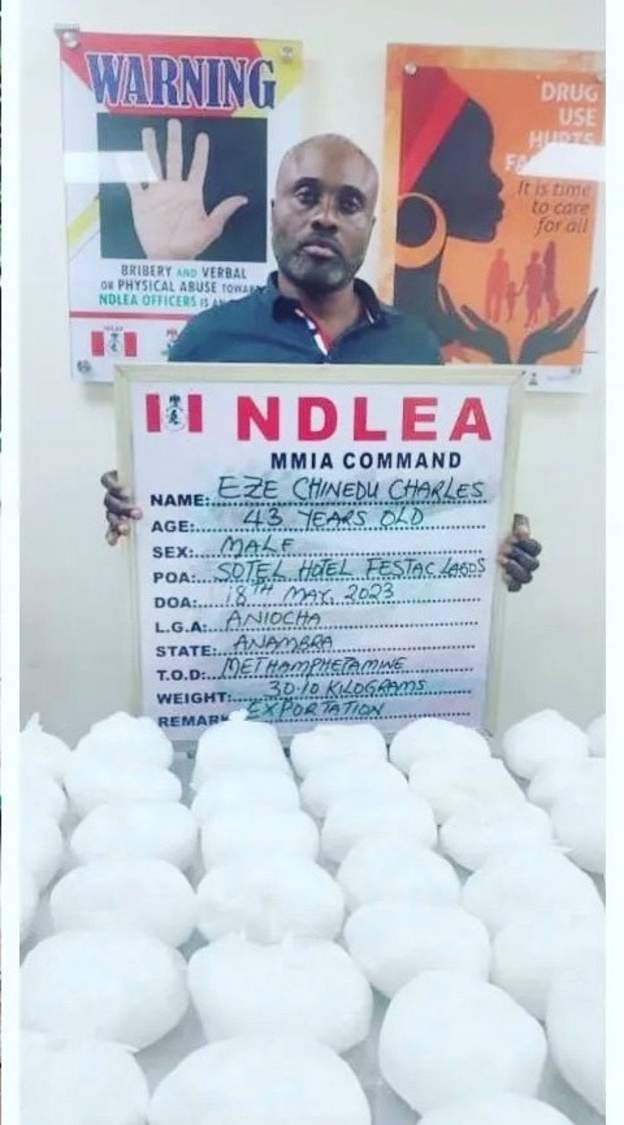
    Nigeria’s anti-narcotics agency has made a significant seizure of methamphetamine, amounting to 30kg and valued at $1.2 million (£960,000), which was intended to be shipped to the United Kingdom via Lagos’ main airport.

    The National Drug Law Enforcement Agency (NDLEA) revealed in a statement on Sunday that the methamphetamine was concealed within containers of powdered custard, forming part of a consolidated cargo destined for London.

    During the operation, the NDLEA arrested three individuals, including the suspected drug baron Charles Chinedu Eze, at the Murtala Muhammed International Airport.

    Following a search, detectives discovered Mr. Eze’s personal identification documents, leading them to seize his property located in the upscale Lekki suburb.

    According to reports, the main suspect had allegedly fled the United Kingdom in December 2022, following his suspected involvement in a drug-related offense. As of now, Mr. Eze has not responded to the allegations made against him.

  • The horrors of ‘drug life’ – Ghanaian drug addict bares it all

    The horrors of ‘drug life’ – Ghanaian drug addict bares it all

    Kwabena Josiah, a young guy from Ghana who worked as a seaman in the 1970s, had the chance to travel the world and explore many cultures.

    The man, who will age 71 in June, claims that it was this exposure that resulted in his lifetime of drug addiction.

    He claims that when in Europe in 1977, he met a Moroccan woman who introduced him to narcotics and, ever since, his life has been worse.

    “The first time I take drug in Europe [it was] through my girlfriend, ebe Moroccan girl… The first time I take drug massa the way the drug take my eye I feel so good, I’m happy,” he said of his first experience, adding that he took the drug for two consecutive days and when he didn’t take it on the third day, “ebe like they put pepper on my body,” he recounted in an interview with Kofi Adoma Nwanwanii.

    While still working as a seaman, people paid him between $5,000 – $10,000 to deliver some parcels to other people for them, and on one such occasion, he decided to open the parcel to see what was in it.

    “I didn’t know what was in the bags but when I found out, I said to myself ‘so these people they come give me $5,000, $10,000 and they go carry millions of dollars? Ok, next time I will advise myself’.

    “So one time they came I took the goods and money and when they left, I opened it and saw several kilos of drugs. Then I went to town, I had a girlfriend who was a prostitute and she connected me to a drug pusher to buy. He asked me how much I had. I had about 5 kilos but I told him one kilo so he took it, tested it, and gave me my money when he confirmed it was pure,” he narrated.

    Talking about the dangers of the drug business, he recounted witnessing a Nigerian being killed and opened up to retrieve some balls of cocaine he had swallowed.

    “They opened him up with a knife and cut all his intestines to retrieve several balls of drugs he had swallowed and left the body there.”

    To escape a similar fate, Kwabena Josiah left the boat he was working on and found his way back to Ghana.

    “They [the people who gave him the drugs to deliver] were looking for me to kill me so I run from the boat, sold the drugs and bought tickets back to Ghana. With the drug money, I built houses and bought cars.”

    He built three houses, ones he describes as villas, and bought several vehicles for both private and commercial use.

    But to keep satisfying his need for drugs, Kwabena Josiah ended up selling almost all his properties. The only thing he didn’t sell was one of his houses and that was because his wife at the time advised him to rather use it for a long lease.

    “Drug life is very expensive… I’ve sold two of my houses… I had a truck, MAN Diesel 10 wheelers taking container from habour, I sold it, I had five 207s I sold all, there were four taxis… I sold all. I lost plenty things.” He recounted.

    “The lease will expire in about 4 years 6 months,” he said of the remaining house.

    He said due to his lifestyle, all his important documents including those for the leased property are with family members who can properly take care of them.

  • Court orders lunacy test on Uber driver behind viral police audio

    Court orders lunacy test on Uber driver behind viral police audio

    The District court in Achimota presided over by His Worship Prince Owusu, has ordered an insanity test to be conducted on the suspect, Patrick Asiedu, who is behind the widely circulated audio in claiming the police stopped and put narcotics in his vehicle.

    The court gave the order on Tuesday, January 31, 2023, when the accused reappeared before it.

    The accused who also claimed to be a doctor was again remanded into police custody to reappear on 14th February 2023.

    A preliminary police investigation established that Patrick Asiedu was not a medical doctor as he claimed in the audio but an Uber driver.

    The police also revealed that it had confirmed that the narrative he recorded and shared on social media in the viral audio did not happen.

    “The investigations show that the entire story narrated in the audio tape is false and a total fabrication by the suspect.”

    “The supposed military intervention and the alleged fight between the Police officers and the Military described in such dramatic detail in the audio tape are all false and a figment of the suspect’s imagination,” the police statement dated January 18, 2023, signed and issued by Assistant Commissioner of Police (ACP) Grace Ansah-Akrofi, the Director of Police Public Affairs on Wednesday night said.

  • Man in viral audio alleging police planted narcotics in his car arrested

    Man in viral audio alleging police planted narcotics in his car arrested

    Patrick Asiedu, the man behind a viral audio alleging some police officers planted ‘wee’ and cocaine in his car has been arrested.

    According to the police, the arrest was carried on Thursday, January 18, 2023, after investigations proved that the allegations in the said audio were mere fabrications and not the truth.

    Also, the police through their investigations established Patrick is an Uber driver and not a medical doctor as he claimed in the audio.

    “The police, today, 18th January 2023 have arrested a man suspected to be the person in the audio tape describing an alleged elaborate incident of criminal behaviour on the part of the police.

    “In the audio tape that has been widely circulated, the man who introduced himself as Dr Patrick Asiedu claimed that he had been stopped by some police officers who planted substances suspected to be narcotics in his car and attempted to extort money from him.

    “The police investigation so far has established that the man who has been arrested and is in police custody, is indeed called Patrick Aseidu, he is an Uber driver and not a doctor,” potions of the police statement read.

    The police also revealed that Patrick confessed that ” he had once witnessed a similar incident happen to one of his passengers” and that was the motivation for the audio.

    Police arrest ‘fake doctor’ who accused some officers of planting ‘wee’, cocaine in his car

    The statement added that the supposed military intervention and the alleged fight between the police officers and the military described in the said audio are false.

    Read the full statement

    Source: The Independent Ghana

  • Four arrested for possessing over 104 bags of suspected narcotics

    Four arrested for possessing over 104 bags of suspected narcotics

    Police intelligence operation on 5th January 2023, led to the arrest of four suspects for the unlawful possession of over 104 bags of substances suspected to be narcotics at Lolonya near Sege in the Greater Accra Region.

    The four suspects, Ntow Prince, Felix Owusu, Jery Quartey and Daitey Mashack were arrested while discharging sacks of the compressed plant materials into a boat at the seaside at Sege.

    During the arrest, suspect Daitey Mashack who is the Assemblyman of the area attempted to bribe the arresting officers with an amount of GH₵ 20,000.00.

    The loaded truck with the substances has been impounded at the Tema Regional Police Headquarters together with the attempted bribe money.

    The four suspects were subsequently put before the Ashaiman Circuit Court on Friday, 6th January 2023, where they have been remanded into Police custody to re-appear on 23rd January 2023.

    Meanwhile, the Police administration has thanked the Police team for their dedication and service to the country.

  • Court sentences trader ten years for possessing narcotics

    An Accra Circuit Court has sentenced a 39-year-old petty trader to ten years imprisonment in hard labour for unlawful possession of narcotics.

    Samuel Hagan, alias “Tuga,” denied the offence but he was found culpable after trial.

    Police Chief Inspector Benson Benneh told the Court presided over by Mrs Evelyn Asamoah that

    complainants, in this case, were Police Officers stationed at Mamprobi and Hagan was a petty trader who lived at Dansoman Beach Road.

    On February 4, 2022, at about 1800 hours, Mamprobi Police command embarked on an operation to arrest suspected drug peddlers and users within its jurisdiction, he told the Court.

    Chief Inspector Benneh said the team, acting on a tip-off, went to a ghetto at Dansoman Beach where undercover men were placed among the people present, adding that whilst there, Hagan, the convict, was spotted with a multi-coloured polythene bag containing wrappers of dried plant materials suspected to be narcotic drugs which he was selling out.

    The prosecution said the team was called in and the convict was arrested with 42 wrappers of dried plant materials suspected to be narcotic drugs.

    He said the convict together with the exhibits were sent to the station for investigation.

    Chief Inspector Benneh said Hagan claimed ownership of the 42 dried plant materials suspected to be narcotic drugs and that he was selling them.

    He said cautioned statement was obtained from the convict and the exhibit was forwarded to Police Forensic Science Laboratory for examination.

    The Court heard that Hagan was charged with the offence and put before the court as the laboratory result came out positive.

    Source: GNA