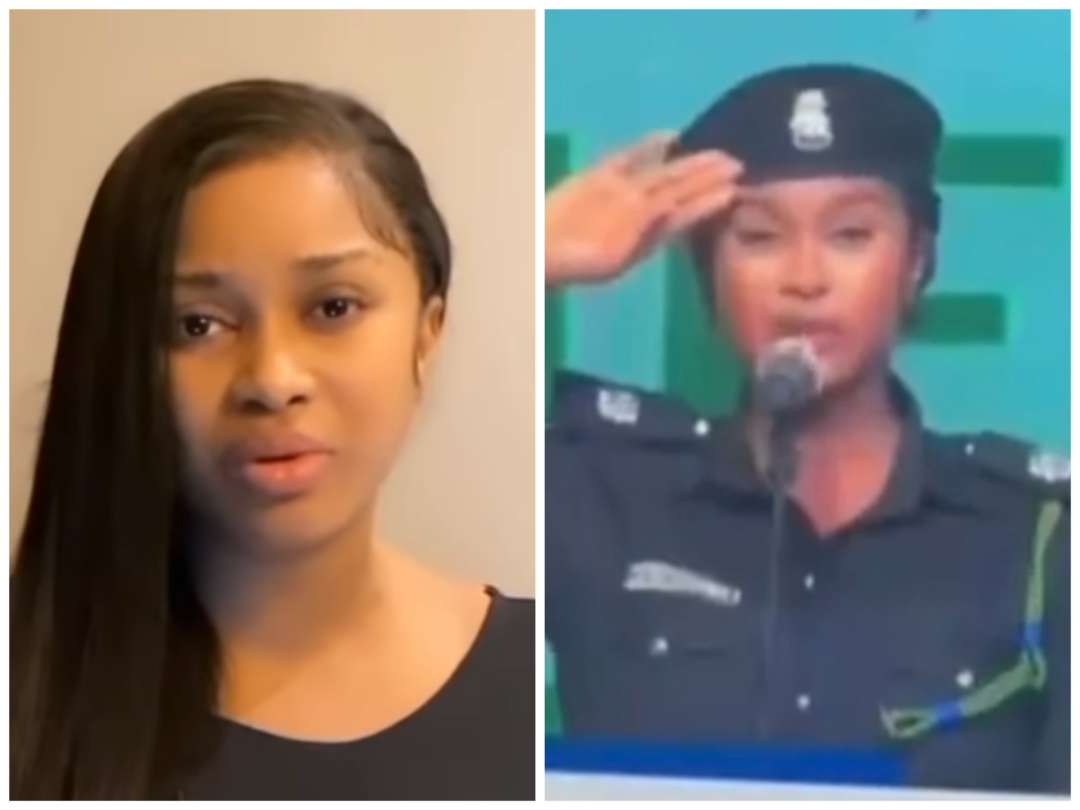
During a conference and retreat for senior police officers in Imo State, Nigerian actress and singer Mercy Isoyip, popularly known as Descushiel, was assigned the task of reciting the National Anthem.
The event, attended by dignitaries and politicians, including Imo State Governor Hope Uzodinma, was broadcast live on various TV stations on Monday, October 30.
At a certain juncture in the proceedings, a policewoman was seen taking the stage to recite the National Anthem, but she encountered difficulties and made mistakes in her rendition.
A video of this incident, showing the police officer singing incorrect lyrics, has since gone viral on social media platforms, with Nigerians sharing their perspectives on the matter.
Nigerian actress and singer Mercy Isoyip, popularly known as Descushiel, has issued an apology to the Nigerian police force and the citizens of Nigeria for a national anthem slip-up during the Conference and Retreat for Senior Police Officers in Imo State.
The event on Monday, October 30, featured a collaboration between the police force and the entertainment industry, with actress Descushiel representing the police on stage.
However, during her performance of the National Anthem, she sang the wrong lyrics, which has drawn criticism from viewers.
Nigerian Police una Weydon o
U don use bribe and extortion from road users block una brain finish that you can not recite National Anthem that you fight to uphold pic.twitter.com/zCFMEaNjmW
In response via a post on Instagram, she has publicly apologized for the mistake.
“I sincerely apologize for the error I made during the recital of the National Anthem; I know such errors are inexcusable.”
“My good people of our country, please accept my apology, as well as my assurance that I will be more careful in the future to prevent such incidents from recurring. God bless the Nigerian police force God bless the Federal Republic of Nigeria,” she wrote.
The National Commission for Civic Education (NCCE) has raised alarm about the growing lack of respect for patriotic values among Ghanaian citizens.
In a press release issued on June 12, 2023, the NCCE expressed its concern that this trend is gradually eroding the country’s national identity.
“As citizens with deeply held religious values, we must not just say the words but sing and recite them with great commitment,” the statement said.
The NCCE’s statement comes after a viral video from the 2023 edition of the Green Ghana Day Celebration, which was organized at the University of Ghana, in which President Nana Addo Dankwa Akufo-Addo is seen angrily directing the Greater Accra Regional Minister, Henry Quartey, to tell the Mempeasem Chief and his elders to stand up and observe the national anthem.
According to the Chief, he was not in the best shape hence had to sit to conserve his energy to protect his health.
Following this, the NCCE has emphasized that it is the civic duty of every Ghanaian to stand in reverence when the National Anthem is played and when reciting the National Pledge, as a gesture of respect towards the nation and its cherished symbols.
“No one is born a good citizen and that is why the NCCE believes that we must be deliberate about nurturing good citizens with patriotic values,” the statement said.
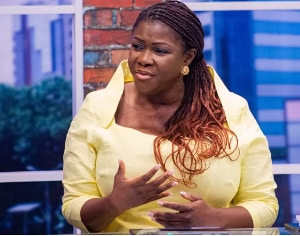
Miss Kathleen Addy, Chairperson of the National Commission for Civic Education (NCCE), has called on Ghanaians not to just say the words of the pledge and the national anthem but do so with commitment.
That, she said, was important because the words of the national anthem and pledge, among others, embodied our values as a people with a destiny.
She cited her favourite line from the national anthem, “Cherish, Fearless, Honesty” as example and urged a, “focus on the words of our national anthem and pledge.”
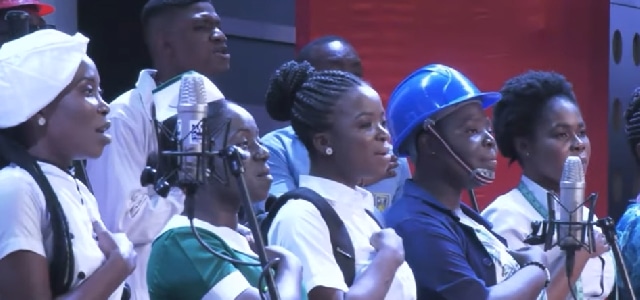
She made the call at a civic forum to celebrate the 2023 Citizenship Week at Anyanui E.P. Mission, Anloga District, which had in attendance the District Chief Executive, heads of departments, traditional leaders, pupils from Anyanui-Dzita enclave and the public.
Miss Addy told the gathering that fearless honesty had to do with truthfulness, which was an ingredient to becoming a responsible and good citizen and not telling “small lies” to conceal inadequacies, failures, wrongs and others saying, “good citizens just don’t happen.”
She underscored the need for people to remind themselves of their citizenship, saying it had been “30 years of our Republic, Constitution and our institution and together, we’ve been able to hold our country together…we have come far – 30 years of peace and growth.”
The Chairperson also urged people to foster national unity, loyalty to Ghana, volunteerism to address societal ills and, to protect the environment while calling for political tolerance explaining, “partake in all political activities but do not let anyone lead you down the wrong road.”
The forum, which was also held in honour of the NCCE Boss, saw her and other dignitaries plant memorial trees at the school, some presentations and cultural performance and poetry recitals from the pupils.
Dr David Normanyo, Volta Regional Executive Secretary, National Peace Council, talked about the important roles of the executive, judicial and legislature, the traditional authority played in the past, which had now been taken up by government.
He said the chiefs were expected to remain relevant in present times by contributing to education and development of their people towards a peaceful society.
Mr Kenneth Kponor, Volta Regional Director, NCCE, in an interview with Ghana News Agency, thanked the District NCCE Director, Torgbui Hatsu III for his efforts in the organisation of the forum.
He explained it was opened to the public so the adults could also learn about their civic rights and responsibilities.
This year’s Citizenship Week, one of the flagship programmes of the NCCE instituted in 2012 to serve as a platform to actively engage young ones to inculcate in them the spirit of oneness, Ghanaian values and patriotism was on the theme: “30 Years of Consolidating Constitutional Democracy and Building National Cohesion: The Role of the Ghanaian Child.”
Miss Addy and attendees to the Citizenship Week celebration took turns to plant trees as the event coincided with Green Ghana Day.
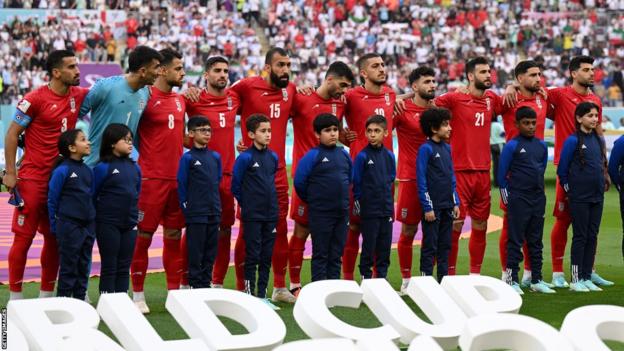
Iran declined to sing their national anthem before their World Cup match with England in an apparent expression of support for anti-government protests in their home country.
Some fans shouted and jeered during the anthem and others held up signs saying “Woman, Life, Freedom”.
Iran state TV cut its coverage of the anthem and switched to a previously shown wide shot of the stadium.
Mass protests have been met with a fierce crackdown in recent months.
They have been sparked by the death in custody in September of Mahsa Amini, a 22-year-old woman who was detained by morality police for allegedly breaking the strict rules around head coverings.
Human rights activists have said more than 400 protesters have been killed and 16,800 others arrested in a crackdown by Iran’s security forces.
Iran’s leaders say the protests are “riots” orchestrated by the country’s foreign enemies.
Iranian fans could also be heard chanting “Ali Karimi” in the first-half in reference to the former footballer who is one of the most outspoken critics of the Islamic Republic and one of the most popular faces of the protest movement.
The fans could also be heard chanting “Be-Sharaf”, which means dishonourable in Persian. This is an adjective that protesters have used against security forces in Iran.
Many opponents of the Islamic Republic have criticised the football team for not openly supporting the protests and for meeting with President Ebrahim Raisi last week.
Speaking before the game, Iran captain Ehsan Hajsafi said the players “support” those who have died.
Manager Carlos Queiroz has said his players were “free to protest” over women’s rights in their home country as long as it “conforms with the World Cup regulations and is in the spirit of the game”.
Iran’s players also covered up their national team badge when they played two warm-up internationals in September.
Let the kids play football – Queiroz
After Monday’s 6-2 defeat in Group B, Queiroz said the political unrest at home had taken a toll on his squad.
“To those who come to disturb the team with the issues that are not only about the football opinions, they’re not welcome because our boys, they’re just simple football boys,” the Portuguese said.
“Let the kids play the game. Because this is what they’re looking for. They wanted to represent the country, to represent the people, as any other national team that are here. And all the national teams, there are issues at home.”
The former Manchester United assistant added: “It is not right to come to this World Cup and ask them to do things that are not their responsibility. They want to bring pride and joy for the people.
“You don’t even imagine behind the scenes what these kids have been living in the last few days, just because they want to express themselves as footballers.”
Speaking about the incident at half-time, BBC Match of the Day presenter Gary Lineker said: “It was a powerful and very, very significant gesture.
“Football is trying to use its power for good.”
All the Iran players stood in silence as their national anthem played at the Khalifa International Stadium in Doha
‘It was a lively football game, but it was much more than that’ – Analysis
Shaimaa Khalil, BBC News, Doha
It was impossible to escape the symbolic gestures in the game. All of Iran’s players refused to sing the national anthem as it sounded across the Khalifa International Stadium.
A fan I spoke to was in tears as he heard it in the stands. “For my people…” he told me, his voice breaking. “They’re killing my people.”
Cheers for the Iranian side were loud and relentless. “Iran. Iran” sounded with the beat of a drum, adorned with the colours, the name and map of the country painted on it.
Women with their hair fully on display were wrapped with the Iranian flag, and screamed every time their team got close to the net. It was a lively football game, but it was much more than that.
In the sea of Iranian and English flags, a woman stood with a small poster saying “Woman, Life, Freedom” in solidarity with the protesters back in her home country. She didn’t want to show her face or share her name, but she did want her message to get across.
As I walked through the stands, another Iranian fan whispered to me: “Please tell our story. No pictures please. I want to go back to the country one day and I don’t want problems.”