Libya’s government energy company has announced that it cannot fulfill its contracts because protests have stopped oil production at the Al-Sharara oilfield.
Force majeure is a law that lets people off the hook for their responsibilities in a contract if something really bad happens that they couldn’t control, like a war or a big natural disaster.
The field stopped making oil a few days ago because of protests in the area, according to the National Oil Corporation. It used to make up to 300,000 barrels a day.
The shutdown has stopped the flow of crude oil from the field to Zawiya terminal, the oil company reported.
The NOC did not give details about what the protesters want, but they said they are talking to try to start making things again.
Libya has had trouble producing oil because of protests since the revolt against its former leader Muammar Gaddafi in 2011.
Tag: National Oil Corporation
-
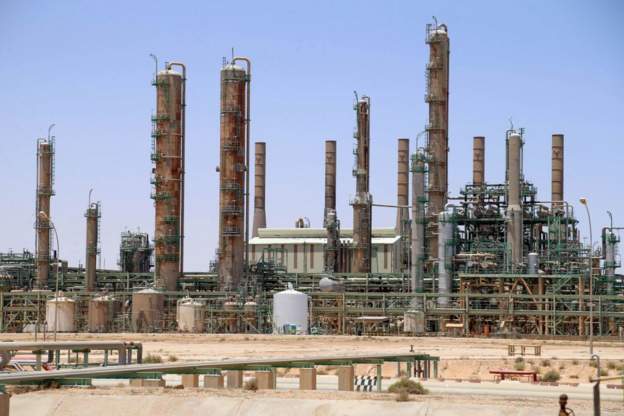
Libya declares oilfield force majeure in the midst of demonstrations
-
Libya seeks to resume oil operations with global oil companies
The Libyan Government of National Unity, centred in Tripoli, has encouraged foreign oil companies with contracts with the national oil company to begin operations there.
The country’s National Oil Corporation, NOC, stated that it would assist the companies’ return and provide a safe working environment “in cooperation with the civil and military authorities in Libya.”

NOC Chief Farhat Bengdara Over the past ten years, armed groups and demonstrators have repeatedly invaded oil fields, leading to production halts.
The ongoing struggle between opposing governments in the country’s west and east for control of resources and power has increased tensions.
With the greatest crude oil reserves in Africa, Libya is desperately trying to boost output in order to finance much-needed improvements to the nation’s infrastructure for housing, transportation, and energy.
Your Friends Also Read: Business Edge | Ethiopia Continues Deregulation DriveThe National Unity Government also on said it had lifted the force majeure for oil and gas explorations. During the last major bout of conflict, groups affiliated with eastern commander Khalifa Haftar cut nearly all of Libya’s oil output for eight months.
“This call comes within the corporation’s efforts to lift force majeure after an objective follow-up and evaluation based on a realistic and logical analysis of the security situation, which has begun to improve dramatically,” NOC said.
It added that the improvement of the security situation has led to “the commencement of excavation work in sites where it was difficult to work in the recent past, in which there are now many global service companies.”
Your Friends Also Read: Ghana Owes Bretton Wood Institutions, Others $7.9bnNOC Chief Farhat Bengdara said in November that oil output had risen to 1.2 million barrels per day (bpd) from 600,000 bpd three months ago and that NOC does not expect any disruption in production.