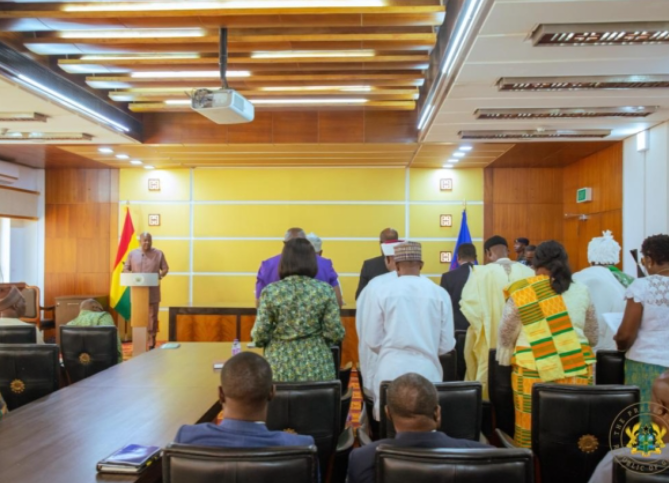
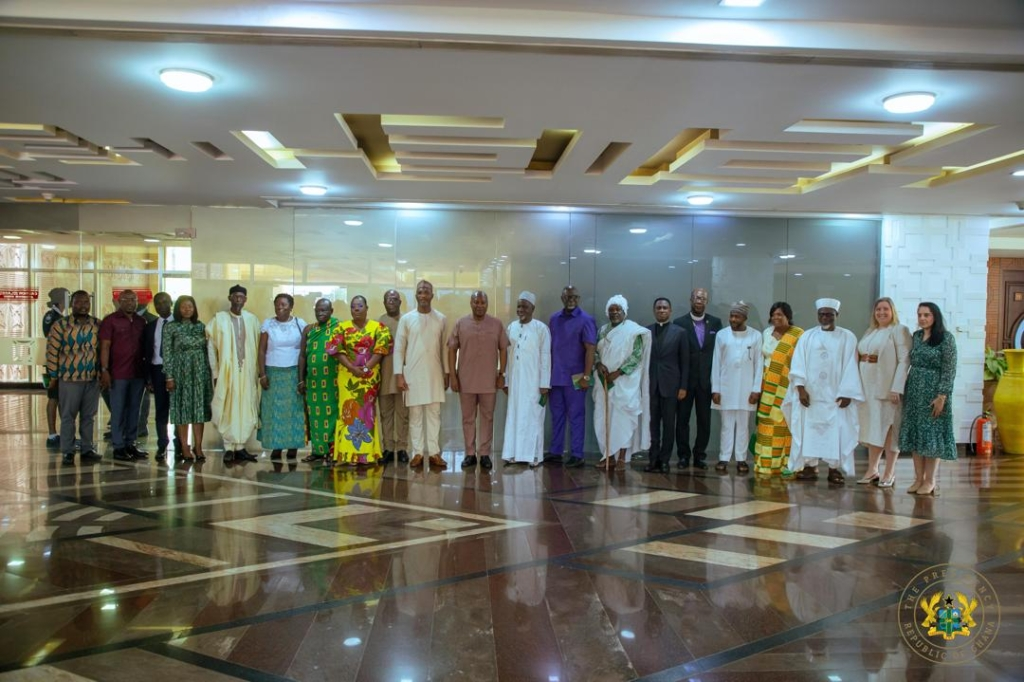
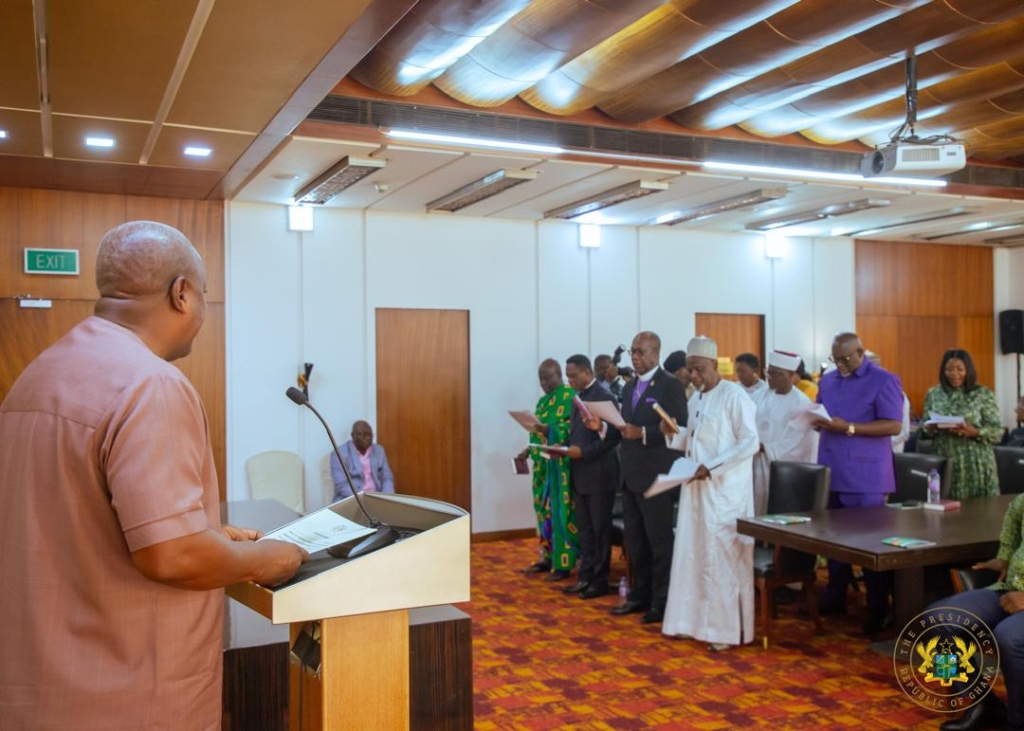
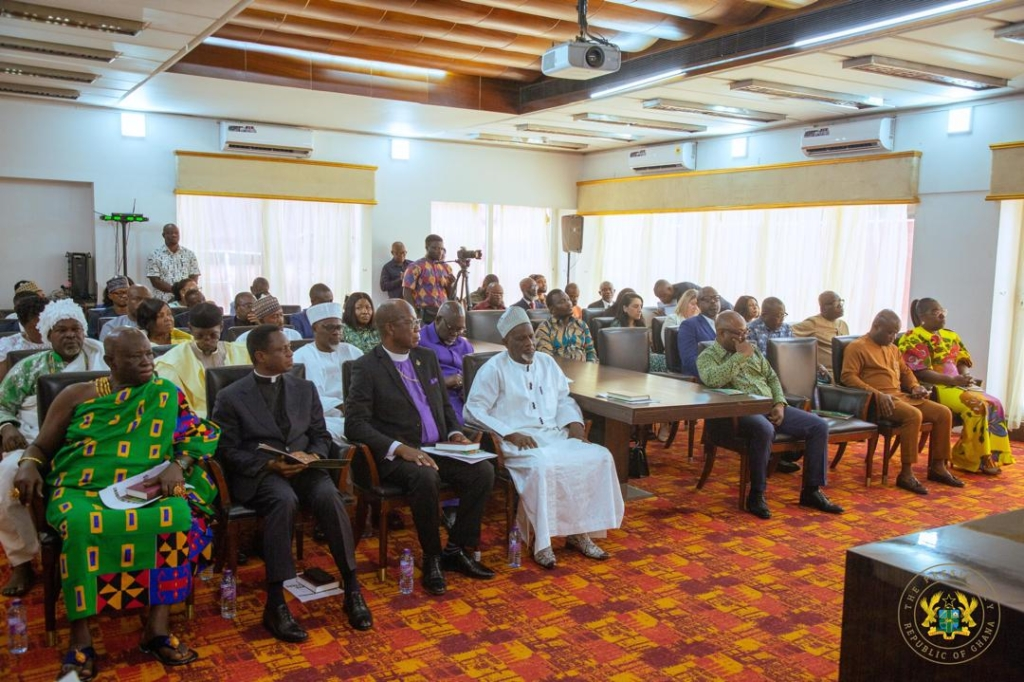
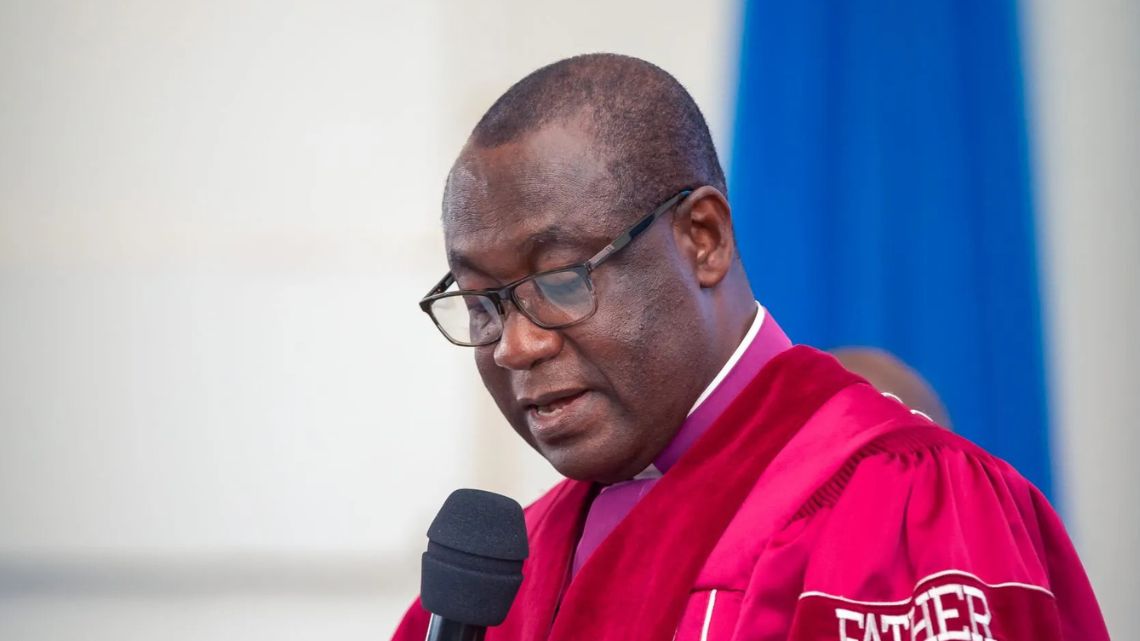
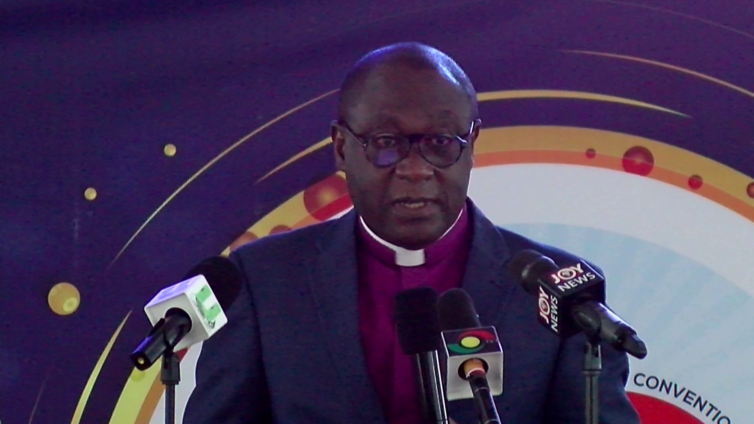
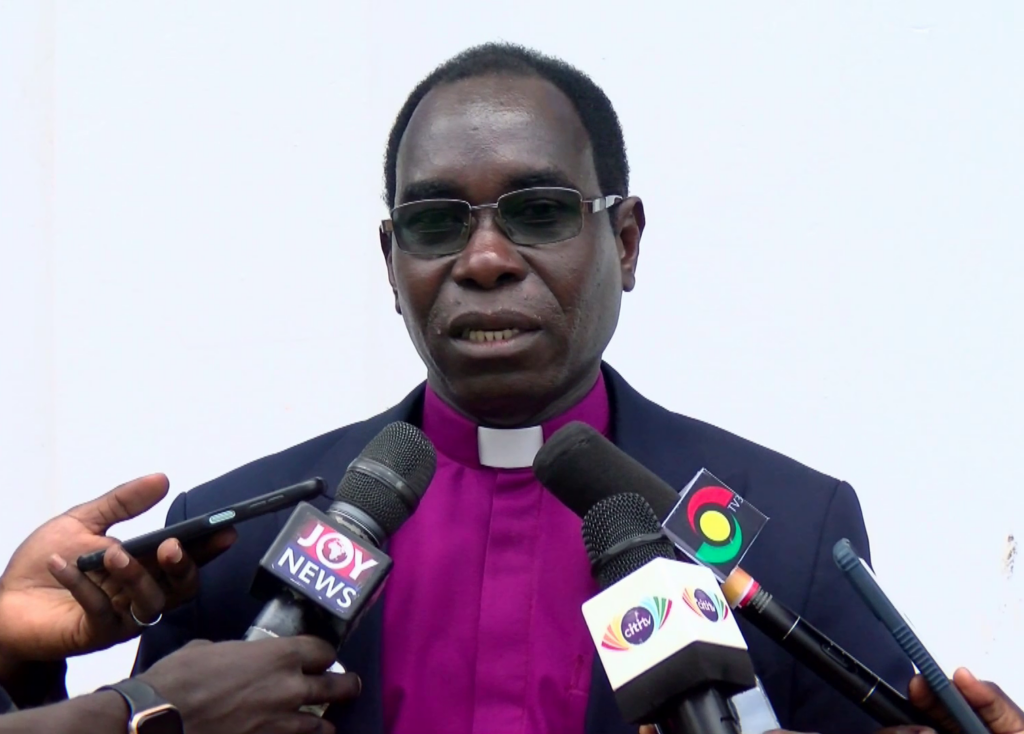
President John Mahama has officially inaugurated the newly reconstituted Governing Board of the National Peace Council (NPC).
The swearing-in ceremony took place on May 7 at the Jubilee House, where key religious figures, traditional leaders, and civil society representatives gathered.
The newly appointed board members are expected to lead the Council’s efforts in fostering peace, encouraging dialogue, and strengthening national unity.
Here is the list of members serving on the reconstituted National Peace Council:
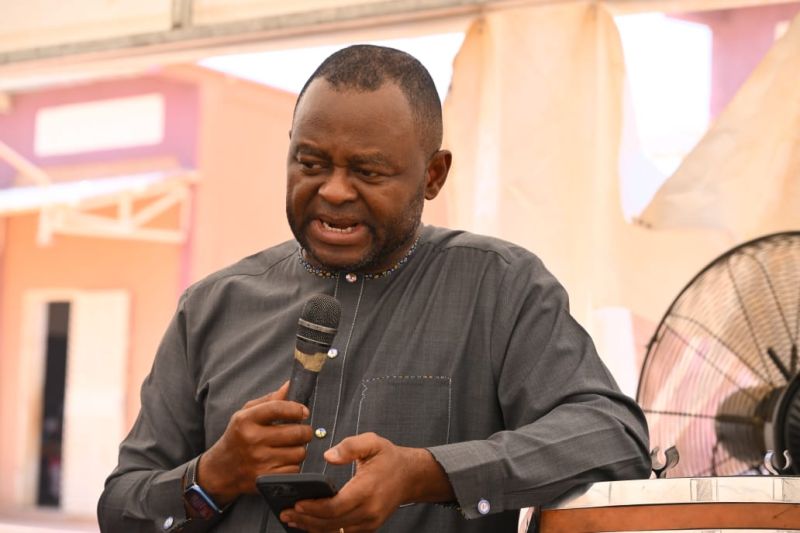
Executive Secretary of the National Peace Council, Dr. George Amoh, has identified deep-seated distrust among factions as the primary obstacle to lasting peace in Bawku, a community grappling with prolonged conflict.
Speaking on Joy News’ PM Express, Dr. Amoh stressed the critical role of trust and effective leadership in resolving the longstanding chieftaincy dispute in the area.
“The issue of trust is critical in peacebuilding, and I think that has been the biggest challenge in the Bawku crisis,” he stated, emphasizing that misunderstandings often arise due to entrenched suspicions between factions.
“Even when people mean well, the level of distrust is so significant that intentions are often misunderstood or ignored,” he added.
Dr. Amoh described former President John Mahama’s recent visit to Bawku as a significant gesture toward reconciliation, explaining that such actions can have a positive psychological impact in conflict resolution.
“In peacebuilding, signals are very important, and his presence there, the words he’s spoken, are very critical,” he noted.
Commending Mahama’s decision to prioritize Bawku as a key destination outside Accra, Dr. Amoh highlighted its importance in the broader peace process.
“This is his first trip outside of Accra, apart from Pomadze, where he joined the Ahmadiyya community last week. Going to Bawku is very significant. He has met the Bawku Naba, and I believe he will also meet the Nayiri, which is very critical,” he said.
The National Peace Council, according to Dr. Amoh, has remained steadfast in advocating for dialogue and coexistence as pillars of peace.
“If you look at the statement we issued, we are trying to emphasize the need for us to coexist and promote peace. Without peace, no development can stand, so we are in search of peace,” he reiterated.
Drawing comparisons to unrest in other regions like Ejura, Dr. Amoh called for impartial leadership and urged that appointees in conflict areas be seen as neutral figures capable of unifying divided communities.
Former Defence Minister Dominic Nitiwul’s recent comments on trust issues in Bawku were echoed by Dr. Amoh, who further underscored the need for credible leadership.
“Trust has been damaged to the extent that even if you mean well, people do not give your actions the attention they deserve. This is why leaders need to be deliberate about restoring faith and confidence,” he said.
Dr. Amoh called on all stakeholders, including political leaders, traditional authorities, and civil society organizations, to collaborate more effectively to restore peace in Bawku.
He concluded by reaffirming the Peace Council’s commitment to facilitating dialogue and reconciliation efforts in the region.
“President Mahama’s visit is a step in the right direction, but we need sustained efforts and consistent engagement to rebuild trust and ensure peace,” Dr. Amoh stated.
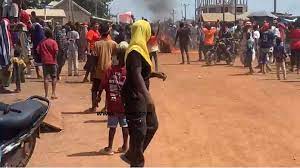
The Bawku conflict, rooted in a chieftaincy dispute, has led to significant violence and displacement of residents, posing serious challenges to the region’s stability and development.
Former Chairman of the Church of Pentecost,Apostle Dr. Opoku Onyinah,has urged Ghanaian pastors to refrain from publicly prophesying election outcomes.
He noted that these prophecies often lead to confusion within the Christian community, as multiple pastors frequently offer conflicting predictions regarding election results.
“The National Peace Council of Ghana recently organised a forum in Accra for prophets, aimed at helping them in handling their prophetic messages responsibly to avoid inciting unrest in the upcoming election.
“I had the privilege of serving as the facilitator. During our discussions, one prophet raised the concern that politicians in Ghana often show little respect for pastors and prophets, despite seeking their support during election years.
“In response, I pointed out that, in many cases, it is we, the pastors and prophets, who may contribute to this lack of respect. For example, it is not uncommon for one pastor to prophesy that a candidate from one party will win, while another pastor claims the victory of an opposing candidate.
“This kind of contradiction brings disrepute to the name of God and creates confusion. Moreover, such prophecies have the potential to incite unrest in the country. Therefore, it is appropriate to keep these prophecies private rather than making them public and fuelling instability,” he said.
He explained that this issue becomes particularly problematic when one pastor predicts victory for a particular political Party and another predicts success for a different one.
In a Facebook post on October 8, 2024, Apostle Onyinah stated, “Unfortunately, not all prophets attended the meeting, and these problematic prophecies have become all too common in our country.
“Currently, we see two major streams of prophecy: one predicting that the NPP flagbearer will win, and the other foretelling victory for the NDC flagbearer.
“When politicians hear prophecies in their favour, they often align themselves with the prophets, celebrating favourable predictions. It is natural for people to gravitate towards good news about themselves. Even in the Bible, we see examples of individuals who acted to fulfil prophecies that favoured them, such as Jehu and Hazael (e.g., 2 Kings 8–9).
“Conversely, those who received unfavourable messages, like Zechariah, Micaiah, and Jeremiah, were sometimes mistreated or killed (e.g., 1 Kings 22:1–40; Jeremiah 37:9–20; 2 Chronicles 24:20–22).
“But, is this trend helpful? Does it promote national development, or are we simply causing harm? When two divergent prophecies are given, one is bound to fail, and in the current climate, this creates division and instability. What will happen to our nation after the election if this continues? Will we not face confusion and disgrace? Why should the men of God place the nation in such a precarious position?.”
Dr. Onyinah called on Ghanaians to vote based on their conviction of who can best lead the country rather than relying on prophetic messages.
“While damage has already been done, I believe it is not beyond remedy. I appeal to my fellow pastors and prophets: let us refrain from delivering these divisive public prophecies.
“I also urge political flagbearers and politicians not to cling to these predictions but to continue their campaigns with integrity, trusting that God’s will for their lives will unfold in his time.
“Finally, I encourage all Ghanaians not to rely on prophecies when casting their votes. Instead, vote for the candidate you believe can lead Ghana effectively in these times.
“May the Lord bless our homeland Ghana!” he added.
The National Peace Council has acknowledged the recent arrests of individuals participating in a demonstration in Accra organized by the Democratic Hub, aimed at protesting illegal mining activities.
They have assured the public that they are collaborating with various stakeholders to maintain peace and stability in the country.
Among those arrested are Ralph Williams, the convener of the #FixTheCountry movement, Elorm Ababio Esq. (also known as Ama Governor), and 37 others.
They have been remanded by the Circuit Courts in Accra on multiple charges, including conspiracy, unlawful assembly, causing damage, disorderly conduct, assaulting a public officer, and vandalism of public property.
The demonstration aimed to highlight the detrimental effects of illegal mining, known as galamsey, which has significantly harmed Ghana’s forest reserves and water bodies.
However, law enforcement stated that during the protest, participants engaged in actions deemed unlawful, which necessitated their intervention.
Rev. Dr. Ernest Adu Gyamfi, Chairman of the National Peace Council, has advised the National Democratic Congress (NDC) to let the Electoral Commission (EC) finalize the cleaning of the voters’ register before requesting a forensic audit.
Dr. Gyamfi suggested that the NDC should first present any identified errors to the EC for correction and wait for the updated voters’ register before pursuing further audits.
“If errors have been identified, we believe that the best forum is to present those errors, get them corrected and then we can go back to look at what the correction is. Where are we? Have we corrected all the issues and the challenges we have? If it is not? Then we look at the way forward.
“But if we have not done the correction and we are calling for an audit, then I’m wondering what else we may identify because we need to find those errors now, clean-up and we can move forward,” he said on Monday, September 16.
He emphasized that addressing and correcting these errors first would be more constructive than calling for an audit without resolving the existing issues.
He noted that the EC had denied the NDC’s request for a forensic audit but proposed a meeting to discuss their concerns, which the NDC declined.
“I think the most important thing is go the discussion table and put out the issues there, just putting them in the public domain does not solve any problem,” he added.
He continued: “Let them finish the clean-up, if they finish the clean-up and then we realise that there are still errors, I think that everybody in this country will agree with you.”
Instead of airing grievances publicly, Dr. Gyamfi encouraged the NDC to engage directly with the EC to address their issues.
Dr. Gyamfi also mentioned that the Peace Council is planning an IPAC meeting with all political parties and the EC on Wednesday, September 18, where he hopes the NDC will present their concerns for resolution.
“We were working towards a possible IPAC meeting today [September 16] so that we they could have resolved all the issues, the NDC thought it will disrupt their plans for their protest. The EC also had challenges because by the L.I that regulates the filing of nominations, they have to vet the presidential candidates between today and tomorrow to determine those who qualify on Wednesday.
“But there’s already a scheduled IPAC meeting on Wednesday and we are hoping that at that meeting, whatever issues there are, we expect that the NDC presents its grievances for it to be looked at,” he stated.
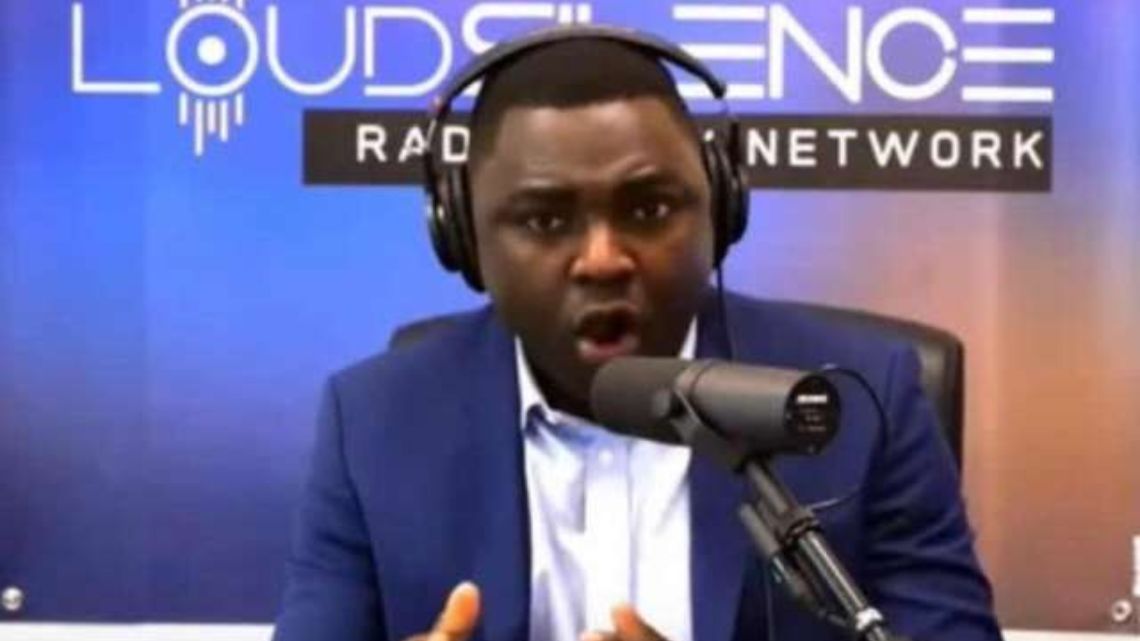
US-based vlogger and journalist, Kevin Taylor, has condemned the National Peace Council of Ghana for its recent plea for financial assistance as it gears up for the upcoming 2024 general elections.
Reverend Dr. Adu Gyamfi, Chairman of the Council, has highlighted the necessity for approximately $1 million to bolster their operational capabilities in preparation for managing potential challenges surrounding the electoral process.
“In dollar terms, we estimate that $1 million is required for election-related activities. While we have received some support from donors, additional funding is crucial,” Dr. Gyamfi disclosed during discussions.
Reacting to this, Kevin Taylor said “The funniest story I have seen in 2024. Herhh Ghana is full of idiots.”
The National Peace Council plays a pivotal role in promoting peaceful elections by mediating conflicts, facilitating dialogue among political parties, and overseeing the electoral process’s integrity. However, the increasing demands for their services, particularly in election monitoring and violence mitigation, necessitate substantial financial and human resources.
Dr. Gyamfi also acknowledged the strain on their regional secretaries, who are currently overwhelmed by their workload. “Our regional secretaries have expressed concerns about being overburdened. They urgently require additional support, including drivers and logistical resources, which we currently lack,” he remarked.
The National Peace Council of Ghana has raised urgent concerns about its financial capacity as it gears up for the upcoming 2024 general elections.
Reverend Dr Adu Gyamfi, Chairman of the Council, underscored the critical need for additional funding to effectively carry out essential election-related activities amidst increasing demands and challenges.
Dr Gyamfi emphasized that the current workload has stretched their resources thin, hindering their ability to perform crucial functions such as mediating conflicts, facilitating dialogue among political parties, and ensuring a peaceful electoral process.
“In dollar terms, we need approximately $1 million for election-related activities. Some donors have shown interest in assisting, but more support is necessary,” Dr Gyamfi disclosed during a recent statement.
The Council, known for its pivotal role in maintaining peace and stability during elections, faces mounting pressures exacerbated by the complex electoral environment in Ghana.
The need for adequate financial resources is critical to enable the Council to effectively manage and mitigate potential election-related conflicts and violence.
Addressing concerns raised during inter-party dialogues on election violence mitigation, Rev. Adu Gyamfi highlighted the strain on regional secretaries who are currently overburdened with their responsibilities.
“Our regional secretaries urgently require additional support, including more staff and logistical resources such as drivers. The workload has increased significantly, necessitating a bolstering of our capabilities,” Rev. Gyamfi stressed.
Member of the National Peace Council (NPC), Maulvi Mohammed Bin Salih, has advised the Electoral Commission (EC) against the abuse of their mandate as an independent entity to reject consultation and what he describes as “wisdom of our elders”.
He has urged the Commission to remain receptive to feedback as the country approaches December for its general elections.
He mentioned this during an engagement with the media highlighting the need for the EC to consider various perspectives to ensure the elections maintain transparency and fairness.
“Independent they are, yes. But that doesn’t stop them from listening to Ghanaians, listening to the wisdom of our elders, and so on and so forth.
They should not, under any circumstances, hide behind the independence to refuse to consult and listen,” Maulvi Mohammed Bin Salih stated.
He emphasised the importance of the EC considering diverse viewpoints to ensure the integrity of the upcoming December elections.
Bin Salih underscored that failure to do so might result in irreparable consequences, highlighting that history would not be forgiving if any challenges arise during the electoral process.
“If they put their act together and do it well, they can put Ghana together and they can place Ghana on a pedestal of peace and progress.
But if they don’t act well, they can also break Ghana and posterity will notforgive them if it so happens,” he added.
The National Peace Council has called upon religious leaders to prioritize and advocate for peace in the lead-up to the December 2024 general elections.
Highlighting the vital role of the church in nation-building and upholding the peace and stability of the nation, the Council emphasized the responsibility of religious leaders in fostering harmony among citizens.
Addressing attendees at the annual Minister’s Conference of the Ghana Baptist Church, the Chairman of the Council, Rev Dr Ernest Adu-Gyamfi, urged religious leaders to refrain from making inflammatory remarks that could provoke electoral unrest.
He encouraged church leaders to utilize their platforms to promote unity among members of the Christian community.
He encouraged church leaders to utilize their platforms to foster unity among members of the Christian community.
“Every minister of the gospel will understand that we have a responsibility to protect the peace, stability, and unity of our country and that whatever we do in this country, we must ensure that we maintain the peace, stability, and cohesion of our country.
“If 72 per cent of us are Christians, then I expect that a lot of these people will be in the churches and therefore pastors have a responsibility through their pulpit to educate church members.
“Let’s avoid insults, cutting down people, and those things that reduce people to nothing, and ensure that at the end of all these elections, Ghana will be peaceful and intact. Be careful what you say, how you say it, and the environment in which those things are said,” Rev Dr Adu-Gyamfi stated.
President of the Ghana Baptist Convention, Rev Dr Charles Owusu Ampofo
For his side, the President of the Ghana Baptist Convention, Rev Dr Charles Owusu Ampofo charged political leaders and the government to uphold the statute of truthfulness and accountability.
“We model our political leaders, those who make decisions for our nation and so we preach to them when things are not good, we send them messages. On occasions like this, we speak to them through this media for them to know that Ghana belongs to all of us.
“It doesn’t belong to the incumbent, it doesn’t belong to the opposition. We are all Ghanaians and so public figures in general should be truthful in the work they do and keep faith to the citizens of this nation,” he said.
The Chairman of the National Peace Council (NPC), Dr. Ernest Adu Gyamfi, has responded to persistent allegations of bribery and corruption directed at the council.
He clarified that their involvement with the council is purely voluntary, emphasizing that the accusations of financial misconduct are baseless and unjust.
Dr. Gyamfi highlighted that neither himself nor any other council members receive any form of compensation for their efforts.
In an interview on UTV’s Adekye Nsroma on March 15, 2024, Dr. Gyamfi emphasized the misconception among Ghanaians regarding the council’s operations, stating, “They don’t pay anybody at the peace council, and Ghanaians don’t understand, so they always accuse us of taking money, cars, and other things, and they always insult us.”
He further debunked rumors of financial incentives, stating, “But none of us are been paid, it is just voluntary work. All the pastors are working, so those outside saying the Peace Council has received money and stuff are all false. Someone like Archbishop Duncan-Williams which kind of bribe are you going to give to him?
Dr. Gyamfi pointed out the lack of material benefits received by council members, noting, “We didn’t even have cars, just recently that they brought us two cars. The only allowance that we take is a board sitting allowance.
He underscored the council’s dedication to serving the country and dismissed insults directed at them as futile, stating, “We are just serving the country, so those who insult us are just wasting their time, that is why we don’t talk and keep mute when they insult us.”
Dr. Gyamfi highlighted the irony of being accused of bribery when the council operates solely on goodwill and voluntary contributions.
The National Peace Council plays a crucial role in fostering cooperation among stakeholders in peacebuilding efforts in Ghana.
It focuses on promoting collaborative problem-solving approaches to conflicts, institutionalizing conflict response processes, and facilitating outcomes that lead to conflict transformation, social cohesion, and reconciliation across various sectors.
His comments follow the Council’s boss’s remarks that his outfit is yet to take a stance on Sam George’s advocacy and activism against gay rights in the country.
Sam George, in response, called the council a band of ‘bipartisan hypocrites’ who should be disbanded for the peace of Ghana.
“The Peace Council is a disgrace and a shame. I have said this before and I will say it again. They are hypocrites—extremely hypocritical.
We’ve seen the posture of the Peace Council. The Peace Council has become a political organisation; it should be disbanded for the santity of Ghana’s peace. The Peace Council is a threat to our peace, yes ” he fumed during an appearance on 3FM’s Sunrise on March 5, 2024.
Using the analogy of the biblical story of Essau and Jacob, Sam George chided the members of the Council for having sold their consciences.
“It’s a bunch of hypocrites who have sold their conscience, like Essau sold his birthright for a bowl of porridge. The men and women who sit on the peace council , if they have conscience and if they fear the God that they say they serve and worship, should bow their heads in shame, he fumed.
“The Peace Council has become a very political organization, it is a threat to the peace and sanctity of the country- Hon Sam Nartey George on #3FMSunrisepic.twitter.com/Z1h7Dqvfx8
The Chairman of the National Peace Council, Rev. Dr. Ernest Adu-Gyamfi, clarified that the council remains neutral on Ghana’s Parliament approving the anti-LGBT+ bill, citing their role as mediators and abstaining from taking sides on contentious issues.
Speaking on TV3’s Hot Issue program, he mentioned that the council is closely monitoring the situation and will consider mediation if conflicts arise.
He emphasized,”We don’t have a position on the passage of the anti-LGBTQ+ bill because we are mediators; we don’t take sides on issues like this”.
The passage of the bill has sparked debate within Ghana, drawing attention from the international community, including concerns raised by the U.S. embassy in Accra.
Gabby Otchere-Darko, a leading member of the New Patriotic Party (NPP), defended Parliament’s decision, urging those opposed to the bill to seek legal recourse if they find it unconstitutional.
“There are several issues that have come to us that people expected us to take sides on, but we realized it was important to remain neutral when they later came for conflict resolution.
“We are waiting to see how things will unfold so we know if to mediate/intervene in the event of a conflict.”
He emphasized the democratic process but acknowledged the potential consequences, urging media and politicians to inform the public about the bill’s pros and cons.
Mr Otchere-Darko highlighted the importance of respecting Ghana’s sovereign state status and cultural norms while suggesting a balance between traditional family values and values of tolerance and diversity.
“Ghana’s Parliament, in which is vested the sovereign will of the people, has democratically passed a harsher anti-LGBTQ+ Bill. Yes, democratically! In fact, the threat of being unseated for standing for the rights of gays, etc., certainly created its own culture of silence in the House! But, it is the decision of Parliament and one which enjoys huge popular support in the country.
“The world must understand that. But Ghanaians must also understand that it comes with consequences. Choices have consequences. We expect the media and the politicians to be fair to the people by letting them know the pros and cons of this decision to impose stiffer penalties against gays, etc. We also expect those who believe the bill is constitutionally wrong to do what is right and go to court.
“That is democracy! Our institutions of democracy are still strong and alive. Let’s have faith in our democracy. Let’s respect the choices we make and their consequences and believe in the process. Ghana remains a sovereign state with cultural norms that cannot be wished away but must be respected.
“I still believe, though, that we can balance our traditional family values with our traditional values of tolerance and diversity. That’s the Ghanaian way. The Ghanaian culture. The Ghanaian spirit. Our history. Our DNA. That is Ghanaian,” he expressed.
Commissioner of the Commission on Human Rights and Administrative Justice (CHRAJ), Joseph Whittal, expressed concerns about potential legal challenges if the bill is signed into law by the President. He advised careful handling due to the bill’s possible impact, emphasizing the need to respect Ghanaian values.
The National Peace Council assures Ghanaiansof its unwavering commitment to address and potentially bring an end to the Bawku conflict.
Chairman Rev. Dr. Ernest Adu Gyamfi emphasizes ongoing engagements despite the conflict’s resurgence, aiming for a peaceful resolution.
“The situation is becoming much more difficult but on our part, we have not given up. The Otumfuo committee is actively working. The Inter-Ethnic committee is also working and we hope that given a little bit more time, there might be some way to resolve the conflict,” he said.
He was speaking on January 19, 2024, on JoyFM’s Top Story.
In order to motivate the security personnel to give their all in resolving the conflict, Rev. Dr. Gyamfi urged the public to support them rather than scrutinize them.
“We need to support the military and the police to bring stability to the area. Sometimes, I think that an attack on the military and the police is wrong because if we lose them, then we don’t have anybody there to help us,”he said.
His remarks come in the wake of the rekindled Bawku conflict, resulting in the loss of five lives within the past 48 hours.
Amidst this tragic situation, another distressing incident unfolded as a bus, transporting around 45 students from the Presbyterian Nurses Training College in Bawku, fell prey to an ambush by two armed individuals on motorcycles near Binduri in the Upper East region on Friday.
Several students sustained injuries during the attack and were promptly rushed to the Bawku Presbyterian Hospital for medical attention.
Reports from JoyNews indicate that the students, who had recently concluded their term, were en route to Bolgatanga when the two assailants on motorbikes launched the ambush.
The National Peace Council (NPC) has challenged Nufialaga Mawufemor Kobla Nornyigbey, the spokesperson of the Nogokpo Traditional Council, over his allegations that certain chiefs involved in mediating the dispute between Perez Chapel Founder, Bishop Charles Agyinasare, and Nogokpo, were influenced by bribes from the Council.
On Thursday, October 26, media reports circulated Nornyigbey’s claims that Torgbiga Adamah III, the Paramount Chief of Some Traditional Area and President of the Some Traditional Council, had been compromised following a visit from the NPC.
Furthermore, Nornyigbey advocated for the dissolution of the NPC, contending that the Council’s actions did not align with the pursuit of peace.
But the NPC has dismissed Nornyigbey’s assertions, labelling them as “not only false and unsubstantiated but totally unconscionable.”
In a response statement, the Council clarified that its primary aim was to engage all relevant parties in order to facilitate a peaceful resolution to the conflict that stemmed from Agyinasare’s characterization of “Nogokpo as the demonic headquarters of the Volta Region” in May 2023.
The Council outlined that it initiated discussions with the Chief of Nogokpo, Torgbi Saba V, on June 5, 2023, and provided him with a “conflicts complaint form.” Torgbi Saba V completed the form and returned it on June 9, 2023.
Furthermore, the NPC disclosed that on June 29, 2023, an eight-member delegation from the NPC convened a meeting with the Some Traditional Council. This meeting was led by Torgbiga Adamah III and his 13-member Traditional Council team, including Torgbi Saba V of Nogokpo and Torgbi Atsu-Gledza of Nogokpo-Agbakofe.
The NPC firmly denied the presence of Nufialaga Mawufemor Nornyigbey at the meeting, emphasizing that it was an open gathering with over twenty attendees. The Council categorically refuted any claims of a private or separate meeting with Torgbiga Adamah III.
As a result, the NPC has urged Nufialaga Mawufemor Nornyigbey to issue a retraction and extend an apology for his erroneous and detrimental statements.
The Greater Accra Regional Branch of the National Peace Council has made an appeal to the government for support in its efforts to promote peace and tolerance within the region.
Alhaji Khuzaima Mohammed Osman, a member of the National Peace Council, Greater Accra branch, has expressed concern that since 2017, none of the council’s programs in Greater Accra has received financial assistance from the government.
“It is baffling to think that the seating allowances of the eminent members of the Greater Accra Regional Peace Council are in arrears for over a full year,” Alhaji Khuzaima, who is also the Executive Secretary of the Tijjaniya Muslims Movement of Ghana (TMMG) and a founding member of the Christian-Muslim Forum for Dialogue and Mutual Relations, told the Ghana News Agency in an interview in Tema.
Alhaji Khuzaima Mohammed Osman highlighted that the nature of the National Peace Council’s work often necessitated discretion in their peacebuilding activities and community initiatives. He explained that their movements were typically unannounced unless absolutely necessary.
The peace council’s preferred approach was to collaborate quietly with partners until the goal of peace was achieved. He emphasized that they played a crucial role in preventing conflicts and possessed the necessary skills, experience, and manpower to ensure peaceful outcomes.
Alhaji Khuzaima used examples from various places and communities in countries like Nigeria, Niger, Burkina Faso, Mali, and Chad to illustrate the importance of peace. In these areas, the presence of bandits, economic challenges, religious tensions, and political unrest had created conditions where even something as simple as food vending became perilous, limiting the basic freedoms and livelihoods of the affected populations.
Mr Khuzaima said, “To think of the fact that some people can’t even roam around their communities freely and safely in some parts of West Africa is just enough reason for a Ghanaian to thank God for the blessings of fresh air and the ability to purchase fresh and clean water anytime and anywhere in Ghana.”
Mr. Khuzaima emphasized the significance of recent developments in West Africa, particularly the transitions from democratic governance to military rule in some areas. He stressed that Ghanaian politicians should take heed and learn from these events, recognizing the power of the masses. The public’s support or disapproval of any form of governance could potentially present a significant challenge, highlighting the importance of responsive and accountable governance in maintaining stability and democracy.
“Peace, to all of us, means the freedom to breathe, live, pray, and work for your future with dignity and respect while upholding your moral values without fear of intimidation, injustices to yourself, your family, or your loved ones,” he stated. “Peace is achieved when we ensure that the concerns and welfare of every citizen are guaranteed by the state or community,” he noted.
In the most recent Global Peace Index, published on June 28, 2023, Sierra Leone surpassed Ghana as the most peaceful country in West Africa.
Ghana has also dropped from second to fourth place in Africa in the 2022 index this year.
Commenting on the current index, Rev Dr. Ernest Adu-Gyamfi, Chairman of the Governing Board of the National Peace Council (NPC), said the development calls for additional action because the fall is not healthy for Ghana.
He was addressing during a two-day national dialogue in Prampram on Tuesday, July 12, 2023, on Improving civilian-security agency interactions for the prevention of violent extremism in Ghana.
The 17th edition of the Global Peace Index (GPI) from the international think-tank, the Institute for Economics and Peace (IEP), indicated that conflict deaths at the greatest level this century are causing world peace to fall.
The national dialogue was organized by the NPC and Catholic Relief Services (CRS) with funding from the Netherlands Embassy with the goal of strategically building consensus and trust to improve civilian-security agency relations in Ghana in order to prevent violent extremism through the Prevention of Violent Extremism Through Social Accountability (PoVETSA) project.
Security services, including the Ghana Police Service, as well as officials from several political parties, attended the meeting.
The Wasipe Youth Forum, a group based in the North Gonja District of the Savanna Region, is urgently requesting the National Security to withdraw the police presence in the Daboya community.
Following a recent raid that resulted in the arrest of four suspects, in addition to the previous arrest of 118 individuals this month, the concerned youth took to the streets of Daboya to express their discontent.
They burned tires as a form of demonstration, highlighting their dissatisfaction with the ongoing arrests and what they perceive as ongoing mistreatment and abuse of residents.
“Their Rambo style of arresting innocent residents is unprofessional and an outright infringement on our human rights and the National Peace Council must intervene,” the group said.
“We believe in our minds that the some big names at the presidency are hiding behind camera to sponsor the rift between Gonjas and Mamprusis.
“The torture and brutality meted out to our people by the police is an indication they have the backing of some big wigs.
“We are saddened that till now the security despite all the ill treatment and brutality imposed on the people, cannot tell the reason for their actions.”
The Lukula and Mempeasem communities were totally burnt following a renewed land dispute between Gonjas and Mamprusis.
TheNational Peace Councilstated that it will meet with various political parties and security organizations in the coming days to discuss the recent rise in incendiary remarks made by politicians.
The comment by the Council comes on the back of Abetifi Member of Parliament, Bryan Acheampong indicating that the NPP will not hand over power to the opposition National Democratic Congress (NDC) adding that it will do everything possible to remain in power.
Speaking to Citi News on such utterances by political actors, the Chairman of the Peace Council, Rev. Dr. Ernest Adu-Gyamfi called on politicians to be circumspect in their commentary ahead of the2024 general elections.
“We’ve received some footage by several political actors from both the NDC and the NPP that we think need to be addressed, and we want to appeal to the political actors to be careful and guard what they say and how they say it. Our intention is to invite the parties to the table to review the things we discussed and see the challenges that we have now and see what we can do going forward.”
Dr. Adu-Gyamfi also disclosed that the Council has scheduled a meeting with the various security agencies on addressing possible conflict issues.
“We’ve also scheduled a meeting with the security agencies which will be coming on next month to look at the things that we need to address between now and the next elections and these will be continuous meetings.”
And when asked if the Abetifi lawmaker, Bryan Acheampong, must be punished for his recent statements deemed reckless, Dr. Adu-Gyamfi said “If somebody does something that is criminal, we expect the security agencies to take up the responsibility if they think so.”
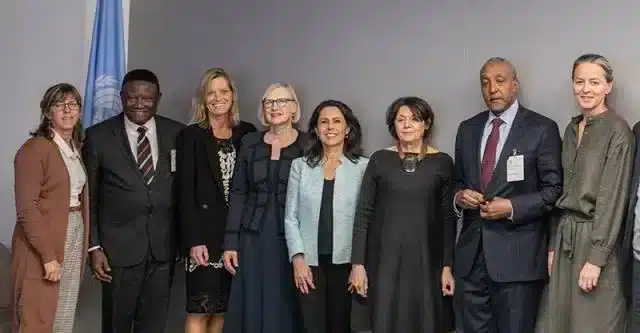
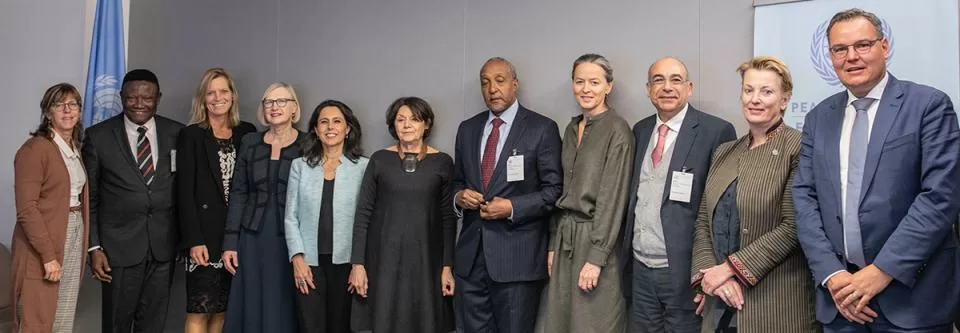
Former Chairman of the National Peace Council, Rev. Prof. Emmanuel Asante, has been appointed Chairperson by the United Nations Secretary-General, Antonio Guterres, to lead the Seventh Advisory Group of the Peace Building Fund.
Members of the Seventh Advisory Group are imminent personalities from UN Member States with rich and diverse qualities of experience in matters relating to peace and conflict resolution in various endeavours across the globe.
The Advisory Group provides advice and oversight on the allocations, programming and policies of the Peacebuilding Fund. The Group provides important inputs and ideas on how financing can support and strengthen the efforts of the UN towards peacebuilding and sustaining peace.
The Most Rev. Professor Asante is a Ghanaian academic, theologian and minister of religion. He is the current Chairman of the National Africa Peer Review Mechanism, Ghana Council (NARPM-GC). He served as the 3rd Presiding Bishop of the Methodist Church Ghana, The Christian Council of Ghana, and completed two terms as the Chairman of the National Peace Council of Ghana.
The members are:
Professor Emmanuel Asante, former Chairperson of the National Peace Council, Ghana.
H.E. Jingye Cheng, Ambassador (ret.), China.
Ms. Kjersti Dale, Director, International Development CARE, Norway.
H.E. Mohamed Edrees, Ambassador (ret.), Egypt.
H.E. Lise Filiatrault, Ambassador (ret.), Canada.
H.E. Macharia Kamau, Principal Secretary, Kenyan Ministry of Foreign Affairs, Kenya.
Ms. Sara Pantuliano, Chief Executive, ODI (formerly the Overseas Development Institute), United Kingdom.
H.E. Stéphane Rey, Ambassador of Switzerland to Zimbabwe, Zambia & Malawi, Switzerland.
Ms. Marriët Schuurman, Director, Stabilization and Humanitarian Aid, Ministry of Foreign Affairs, Netherlands.
Ms. Almut Wieland-Karimi, former Executive Director, Center for International Peace Operations, Germany.
GBC News has learnt that the National Peace Council is taking steps towards resolving the various disagreements between the government and organized labour amicably in the current rising tensions among worker unions in the country.
The Council has already engaged with the labour unions to get them to reach an agreement with the government in the matter of the ongoing new Base Pay for public sector employees on the Single Spine Structure for 2023, the negotiation of which has stalled following a breakdown in the discussions.
The Executive Secretary at the Ashanti Regional Secretariat of the Peace Council, Reverend Emmanuel Badu Amoah, made this known to GBC News.
The intervention by the Peace Council, according to the Executive Secretary, is pursuant to the Council’s mandate to pre-empt for resolution as well as amicable management of potential or real conflict that could disturb the general peace, safety, security and stability of the country.
Touching on the recently announced government’s policy of the Debt Exchange Programme which has since ruffled feathers among the labour movement and other interested parties, Reverend Badu Amoah, assured that, the Council is not losing its guard in that matter and that there is an urgent need for all parties to appreciate the concerns of each other in the ultimate national interest.
Former workers of the defunct Groupe Nduom (GN) Savings and Loans Limited have appealed to the government to facilitate the immediate release of their locked up provident fund (PF).
According to the aggrieved workers, their PF, which had been outstanding since August 2019, was locked up with the National Pensions Regulatory Authority (NPRA).
The group, therefore, urged the NPRA to remove the embargo placed on the trustee for the fund to be advanced to them.
They further entreated the National Peace Council (NPC) to intervene to ensure “this matter is resolved expeditiously to save the lives and livelihoods of the vulnerable beneficiaries”.
This was contained in a statement issued by the former staff who refer to themselves as concerned ex-employees of GN Savings and Loans Ltd.
Establishment of fund
They explained that a pension fund scheme was established for them during their active service with the bank but it was subsequently stalled.
“The PF was stalled as a result of the revocation of the financial institution’s licence and entrusted to Pentrust Limited for disbursement to contributors,” they said.
The group, however, claimed that after refunding 50 per cent of their money in November and December 2019, Pentrust Limited halted subsequent payments, with claims that the rest of the 50 per cent was non-refundable because it had been invested at GN.
According to the group, the trustee further claimed that the ex-workers required validation and payment from the receiver, PricewaterhouseCoopers (PwC), before the rest of the money could be paid.
“For over three years since the bank’s licence was revoked, the remaining 50 per cent of our PF contributions remains unpaid to date.
“The real value has diminished over time through inflation and the depreciation of the cedi. The non-payment of the fund has been very devastating, with many losing hope in life due to the harsh economic conditions in the country,” they added.
The group said on August 16, this year, Pentrust announced that the receiver had released a portion of the money to be refunded to qualified beneficiaries, and that payment would resume forthwith.
“However, the refund was not made,” they said.
They also alleged that when they called on the NPRA to intervene, the authority responded by asking the “trustee and the custodian bank to suspend all processes underway for the payment”.
The authority also proposed the appointment of a new trustee to handle the matter, they said.
“Our PF scheme effectively came to an end at the revocation of the GN licence. The beneficiaries cannot make any more contributions, since they are out of job.
“We trust that this matter will be resolved expeditiously to save the lives and livelihoods of the vulnerable beneficiaries,” the group added.
The Most Reverend Professor Emmanuel Asante, the former Chairman of the National Peace Council (NPC), has called on the Ministry of Culture, Arts and Tourism to promote dialogue among various ethnic groups in the country.
This would greatly enhance social cooperation, foster and deepen the unity required for national progress, he said.
Prof. Asante made the call when he was speaking at a forum to mark the 2022 International Peace Day in Sunyani.
In 1981, the United Nations General Assembly declared the third Tuesday of September as International Peace Day to strengthen the ideals of peace around the world.
The Bono Regional Secretariat of the NPC organised the forum attended by school children, Islamic scholars, civil society organisations and political party representatives.
Speaking on the topic: “Ethnicism on Sustainable Peace in Ghana”, Prof. Asante said concerted efforts must be made to make Ghanaians understand the need to tolerate each other’s ethnic values and diversities to deepen national peace, tranquility and social cohesion.
He emphasised God created human beings with ethic and cultural differentiations, saying “any attempt to deny who we are impedes our co-existence, growth and social progress”.
However, Prof. Asante said internal conflicts, which remained the bane of Africa’s development, were often characterised by ethnicity, tribalism and religion, and thereby threatened societal peace, required for national growth and development.
Prof. Asante said humans were social beings with diversities, hence the need for Ghanaians to accept and forbear each other’s cultural backgrounds and avoid ethnocentrism that turned to divide the people.
Ethnocentrism, he explained, was the tendency to judge others culture as inferior, and expressed worry that ethnocentric politics in the country continued to undermine and threatened the prevailing peace of the nation.
Professor Emmanuel Asante
Prof. Asante said politically Ghana was practicing a multi-party democracy that enjoined everybody, irrespective of ethnic or tribal background to join a political party of his or her choice, saying “our differences must not impede our healthy growth because reality is diverse”.
”This country must cautiously and deliberately practice ethnic balancing in areas of social and political endeavours, including employments and allocation of national resources in order not to exacerbate latent tensions in the country”, he added.
In speech read on his behalf, Rev. Father William Kyere, the Chairman of the Bono Regional Peace Council, expressed appreciation to all stakeholders, including traditional authorities for their support towards promoting peace in the region.
Earlier, Alhaji Suallah Abdallah Quandah, the Bono Regional Executive Secretary of the NPC, said the members of the Regional NPC had ended their service, saying a new council would be re-constituted.
He urged the people to continue to support the NPC to tackle the diverse problems that threatened the peace of the region.
Alhaji Quandah mentioned perennial chieftaincy disputes and land litigation as some of the pressing challenges and called on the judicial committee of the Bono Regional House of Chiefs to facilitate adjudication of the cases to sustain the prevailing peace in the region.
The Ghana Journalist Association (GJA) has added its voice to calls for the perpetrators of the mysterious deaths happening in Wa in the Upper West Region.
GJA President, Mr Albert Kwabena Dwumfour, who made the call on behalf of journalists in the country urged the Police to ensure that the killers of five people in Wa are brought to justice.
He made the appeal at the 2022 International Peace Day press conference in Accra, which was organised by the National Peace Council (NPC) in collaboration with the United Nations (UN) in Ghana.
“As we celebrate this year’s Peace Day, it is my hope that Ghana and the world will witness a lasting peace,” Mr Dwumfour stated.
“This week alone, we all learnt with shock the dastardly killing of five persons in Wa. This has heightened tension in the Region which, if not handled well can disturb the peace we are all yearning for.”
He called on the Police to do everything within their powers to arrest the perpetrators of this heinous crime.
He said the Police must intensify security in the northern sector of the country, particularly, in Wa and work towards crime prevention, since it was the only way peace could be guaranteed.
The International Day of Peace was established in 1981 by the UN General Assembly to commemorate and strengthen the ideals of peace both within and among all nations and peoples as a period of non-violence and cease-fire.
The Global theme for this year’s commemoration is “End Racism. Build Peace”.
The NPC, in seeking to harness Ghana’s existing inter-ethnic and inter-religious ties and to promote tolerance, unity and a more inclusive society, has domesticated the theme: “Managing Ethnic Diversity in Ghana for Sustainable Peace”.
Mr Dwumfour appealed to the Peace Council, the Police Service and institutions of peace to collaborate with the GJA in building the capacity of journalists on security issues, aimed at ensuring a lasting peace in our communities and country.
He also called on the Interior Ministry to always update the media on the state of insecurity of the country to enable us the media and the citizenry to work towards creating the enabling environment for peace to reign.
“In achieving peace, we all need to put our shoulders to the wheel and commit to it. We need to “walk the talk and not talk the talk”,” Mr Dwumfour said.
He said the citizenry must also assist the Police with information to enable them fight crime which was a major threat to peace; saying “peace is a collective responsibility”.
He reiterated the GJA’s resolve and unwavering commitment to supporting the Peace Council to deliver on their mandate, which ultimately is ensuring peace in the country.
Reverend Ernest Adu-Gyamfi, Chairman, Governing Board, NPC, said the local theme for the celebration was to allow them to address Ghana’s peculiar challenge of ethnic and tribal sentiments that are gaining root in the country and gradually eroding the peace we have as a people.
He called on Ghanaians, institutions of state and civil society to join forces to remove barriers to the realization of a just, fair, open, and inclusive society for all the peoples of Ghana.
He appealed to the chiefs and people of the Bawku traditional area to cease fire; declaring that “Nobody gains from protracted conflicts. I am not sure any body involved in the conflict is happy that children are not in school, the sick cannot access health service, movement of goods and people have been restricted and freedoms curtailed”
Mr Charles Abani, the United Nations Resident Coordinator in Ghana, said in terms of peace, Ghana was a crown of jewel in the sub-region; adding that Ghana’s peace architecture was a model for other countries to emulate.
Mrs Afi Azaratu Yakubu, Executive Secretary, National Commission on Small Arms and Light Weapons, said small arms and light weapons continue to play a terrible role in robbing the nation of its peace; saying “indeed, small arms and light weapons fuel a lot of our conflicts”.
For the sake of peace, she appealed to Ghanaians to use dialogue in resolving their differences.
The event was attended by members of the Queen Mothers Foundation Ghana and students from Labone Senior High School and Accra High School.
Immediate Past Chairman of the National Peace Council, Most Rev. Emmanuel Asante says the National Democratic Congress (NDC) cannot be allowed to compromise the peace Ghana currently enjoys.
According to him, the NDC must appreciate the importance of the 42 days set aside for election petition to seek redress in Court and not on the streets of Ghana.
“Former President Mahama and the NDC are saying they will not accept the results of the election, there is nothing wrong with that.
“They have every right to express their views, but they do not have the right to compromise the peace of this country in expressing their views.
“If they feel strongly that they have been given a raw deal, they should rather take the legal path to seek redress,†he said.
He went on to state that the actions of the NDC put a strain on the peace pact the presidential candidate of the NDC, former President Mahama and President-elect, Akufo-Addo signed prior to the 2020 general elections,
He urged the NDC to go to Court to settle their claims and assertions.
“I am waiting to see that they take that step rather than hitting the streets, burning tyres and inciting people to match to different places to demand what they consider to be their right,†he said,
The Christian Council of Ghana (CCG) has called on Christians to avoid wearing political party paraphernalia to church on Sunday, 13 December 2020 for the sake of peace, unity, and national cohesion following the declaration of the winner of the 7 December Presidential election by Electoral Commission.
The main opposition leader John Dramani Mahama has rejected the election result after the incumbent President Nana Akufo-Addo was declared the winner.
This decision by Mr. Mahama and the NDC is causing tension to rise in some parts of the country.
To this end, the CCG, in a statement urged supporters of the winning candidate to celebrate moderately and avoid comments that can inflame violence with political opponents.
“We also appeal to supporters of the losing candidate to accept the loss graciously,†the statement signed by Rev. Dr. Cyril Fayose CCG General Secretary said.
The CCG further encouraged pastors to use the coming Sunday to thank God for a peaceful election and to preach unity among the Ghanaian people.
Members of the National Peace Council (NPC) who intervened to engage the leadership of the opposition National Democratic Congress (NDC) over their rejection of the results of the election declared by the Electoral Commission (EC) were attacked by some supporters of the NDC on Wednesday.
The Chairman of the NPC, Rev Dr. Ernest Adu-Gyamfi who made this known said the incident has “traumatized” some of the members of the NPC and they feel that they should be allowed to psychologically recompose themselves before they can re-engage the leadership of the NDC.
The incidents reportedly happened in the residence of the NDC presidential candidate John Dramani Mahama and the party’s national headquarters at Adabraka in Accra.
“We were attacked, two of our vehicles were damaged and we thought that that was very very unfortunate.”
“When we met the leadership [of the NDC], they were very cooperative in terms of our discussions, and we thought those incidents were very very unfortunate, and it shouldn’t happen again.”
Rev Adu Gyamfi, who made this known in a radio interview with Accra-based Joy FM on Thursday night [December 10, 2020] said the members were safe.”
“The board met today [Thursday]” but added that “most of the members are traumatized because the attacks were very physical and in some situations, some gunshots were fired while we were there. And so most members are traumatized and they think that we need to let them maybe, psychologically recompose themselves before we can re-engage,” Rev Dr. Adu-Gyamfi said.
The National Peace Council (NPC) on Tuesday expressed concern over the declaration of the results of the December 7 polls by both the ruling New Patriotic Party (NPP) and the main opposition National Democratic Congress (NDC).
The Reverend Dr Ernest Adu-Gyamfi, NPC Chairman, said the Council had noted with grave concern the press conferences organized by the two main political parties to declare their results of the just-ended elections.
“We would like to reiterate that the Electoral Commission (EC) is the only constitutionally mandated institution to declare the results of the presidential elections,” Rev Dr Adu-Gyamfi stated at a press conference organized by the NPC and the West Africa Network for Peacebuilding (WANEP) in Accra.
“We, therefore, call on all actors involved to respect and adhere to the laws of the country and exercise patience as the EC undertake its mandate,” he said.
He expressed gratitude to Ghanaians for their patriotism on Election Day and their patience in the post-voting activities.
He called on the National Election Security Taskforce to take control of the situation and respond appropriately.
“We continue to encourage all media houses to be circumspect in their reportage of the ongoing counting and coalition processes and appeal to Ghanaians and as we wait for the EC’s declaration of the official results,” Rev Dr Adu-Gyamfi said.
“We entreat the international observer missions in the country to continue their preventive diplomatic engagement with the stakeholders to neutralize the tension.”
The press conference was to formally bring to a closure the WANEP/NPC’s Electoral violence Monitoring, Analysis and Mitigation (EMAM) Election Situation Room (ESR).
The Reverend Dr. Ernest Adu-Gyamfi, Chairman of the National Peace Council, has appealed to political parties and the citizenry to wait patiently for the Electoral Commission to formally declare the presidential election results of the 2020 polls.
He said that was the only way to ensure peace prevailed ahead of the declaration and asked political parties to refrain from organizing press conferences.
Rev. Adu-Gyamfi made the appeal when he granted an interview to the Ghana News Agency in Accra on Tuesday.
He said press conferences by the two main political parties were brewing tension and must be discouraged.
The Chairman of the Peace Council maintained that Ghana was a beacon of democracy and must be seen as giving hope to the continent and urged all political parties and their supporters to relax and wait patiently for the formal declaration by the EC.
The EC had planned to formally declare results of the presidential elections in 24 hours after polls ended but unlikely to declare the results early as scheduled.
The National Commission for Civic Education (NCCE), has entreated all political parties and Ghanaians to exercise restraint in their actions and words as they await the electoral results from the Electoral Commission
“The Commission entreats all political parties and the general public to be measured in their utterances and actions as well as exercise restraint and allow the Electoral Commission to perform its constitutional mandate of declaring the election results.â€
The counting of ballots started yesterday, December 7, 2020, after the voting process ended at about 5 pm nationwide and is currently ongoing.
In a statement released by the NCCE, the commission expressed concern over the isolated reports of violence that happened in a few places.
Isolated reports of violence
ï‚· Alleged shooting incident at the Step to Christ Polling Centre in the Awutu Senya-East Constituency, where a journalist was injured. ï‚· Alleged shooting of a journalist at Ablekuma Central Constituency ï‚· Alleged shooting of a ballot box snatcher at Obrachire in the Awutu Senya West Constituency. ï‚· Death of two and injuring of one person after an alleged shooting incident at the Modak Hotel, Korley Wokon in the Odododiodio Constituency. Gunshots at the City Engineers cluster of Polling stations also in the Odododiodioo Constituency. ï‚· Burning down of the Electoral Commission office in the Fomena Constituency.
They stated that: “the NCCE commends the Security Services for the efforts of maintaining law and order before, during, and after the close of polls. The NCCE further calls on the Election Security Taskforce to step up efforts to protect and preserve our national peace in order to maintain and jealously guard the gains made in our democratic journey.â€
Reverend Nicholas Duncan-Williams of the Action Chapel, the chairman of the National Peace Council, Reverend Dr Ernest Adu-Gyamfi, the chairperson of the National Commission for Civic Education (NCCE) Josephine Osei, and observers from some international organizations have been spotted at the premises of the Electoral Commission.
GhanaWeb has been told that these highly revered persons who are key figures in ensuring peace and stability in the country arrived at the EC premise in the late hours of Tuesday, December 8.
GhanaWeb can report that the leadership of the Electoral Commission are in meeting with the aforementioned figures.
It is understood that a press conference will be held after the meeting where the EC will update Ghanaians on progress made so far.
Mr. Kennedy Atiibo Ayatah, the acting Ahafo Regional Executive Secretary of the National Peace Council (NPC), has called on the youth in ‘hotspots communities’ not to devalue themselves and allow political parties to use them as tools to cause political violence before, during and after Election 2020.
He reminded the youth that vigilantism and related activities had been outlawed in the country, saying any youth who allowed politicians to use him or her for such political violent activities would face the consequences.
In an interview with the Ghana News Agency (GNA) on the sidelines of a dialogue session held at Goaso, Mr. Ayatah advised the youth to instead, serve as peace ambassadors and guard against behaviours that could trigger political violence and disturb the prevailing peace of the nation.
The NPC in collaboration with Ashesi University, with support from Commonwealth, organised the two-day meeting, which was attended by 35 youth groups in the Region.
They were selected from political “hotspot communities” including Sankore, Kwapong, Kukuom, Nkasiem, Dadiesoba, Acherensua, and Hwidiem.
As a new region, Mr. Ayatah noted peace was required to give Ahafo strong footings to facilitate rapid socio-economic development saying “if the search for peace is not achieved, all other efforts will not lead to anything”.
“So, peace is a central development requirement and human development indicator, that should not be undermined at all,” he added.
Mr. Ayatah indicated that the youth who were the future leaders of the country had been actively involved in political activities since 1960 with accompanying conflicts that often threatened the peace architecture of the nation.
Their youthful exuberance and eagerness to participate in decision-making activities that affected them, make them prone to being manipulated by older people and some politicians to their advantage to cause mayhem in the country.
Despite all these, Mr. Ayatah expressed regret that the focus on conflict prevention in the country had been mainly on equipping traditional, religious, and community leaders and professional bodies in promoting non-violence to the neglect of youth associations who had become vulnerable to violent vigilante activities.
He, therefore, called on the leadership of the various political parties to be sincere to the people they sought to govern saying, “if you use violence to acquire political power, it would not bring any development to the people”.
Mr. Ayatah reminded the youth that they were rather going to suffer the consequences of any post-election violence, hence the need for them to be mindful and appreciate the country’s prevailing peace.
Dr. Enyonam C. Kudonoo, a Senior Lecturer, Ashesi University, and a facilitator told the youth they had potentials in them and so they should not engage in political violence that would ruin their future.
The National Peace Council in collaboration with the Stanford Seed Transformation Network (STN) Ghana has called on Ghanaians to work together and contribute to the country’s peace.
They urged the citizens to promote and maintain in all activities before, during, and after the elections.
A statement issued by the two organisations said in peace messages captured in short video productions appealed to Ghanaians to make a conscious effort during this campaign season to avoid matters and acts that would generate conflict and violence to mar the peace the country was currently enjoying. It said the Council was excited about the collaboration to bring the message of peace to citizens and asked Ghanaians to work together to ensure violence-free elections
It said the Ulti Leaf Foundation, a youth-led organisation, who also collaborated with the parties in the campaign said the project aligns with its objective of shaping peace together with young people.
Explaining the reason behind the peace video production, it said they decided to undertake the peace campaign as a result of the rising violence currently being experienced in the country in the build-up to the elections.
The statement said they felt the need to be part of efforts to encourage Ghanaians to avoid such acts and rather work to maintain national peace.
“Ghana is known to be a peaceful country and under no circumstance should political campaigns throw the country into chaos and confusion,” it said. It said it was their responsibility as citizens, particularly as business leaders, to join in efforts to maintain the peace narrative.
The statement asked Ghanaians to think about their family, children, mothers, the elderly, and the precious lives that God has given freely to them each time they were compelled to be violent to help them restrain themselves.
“They asked Ghanaians to opt for a peaceful election to keep our motherland safe,” it added.
The National Peace Council has called on the government to develop comprehensive and sustainable programmes for the youth to be productive and help resolve any form of violence in the country.
The Council believes that the absence of a coherent, pragmatic and sustainable socio-economic policy for the youth in terms of job creation, access to education, and their social welfare makes them fall prey to politicians to perpetrate violence before, during, and after elections.
The Right Reverend Samuel Kofi Osabutey, the Chairperson, Greater Accra Regional Peace Council for Youth Ambassadors for Conflict Prevention ahead of 2020 Elections said this on Thursday at a dialogue session with youth in selected “hotspots” on conflict prevention, before, during, and after 2020 elections, funded by the Commonwealth Secretariat.
The programme brought together peace ambassadors in Nima and Ashaiman community to be trained to educate their constituents on the need to ensure peace ahead of the December polls.
He called for continuous stakeholder dialogue to address issues of insecurity in the country due to mistrust from the public on political leaders and the security agencies.
In 2019, there were about 1.2 billion youth aged 15-24 years constituting 16% of the global population.
Ghana has a young age structure with 57% under the age of 25, which has serious socio-political, cultural and economic implications for the country.
He said the youth of the country had great potential when given the needed attention and investment, stressing that the future of the country could be jeopardized if the youth are allowed to go astray with disregard to one another’s socio-cultural differences.
The establishment Act 818 of the National Peace Council mandates the Council in Section Two to facilitate and develop mechanisms for conflict prevention, management, resolution and to build sustainable peace in the country.
The Act also mandates the Council to increase awareness on the use of non-violent strategies to prevent, manage, and resolve conflict and build sustainable peace.
Rt Rev Osabutey stated that since its inception, the Council had played a key role in conflict prevention and management and ensuring peaceful elections in the country, especially in the 2008, 2012 and 2016 elections.
He advised the youth to exhibit a high sense of tolerance, trust, mediation, diversity, dignity, honesty and respect for one another since these values were the cornerstones for peacebuilding.
“I urge all of us to have respect for divergence views to enhance our national development and an uncompromising commitment to peaceful co-existence and peaceful resolutions to conflicts and disputes,” he said.
He stated that it was not only the prerogative of the government to ensure that there was peaceful co-existence among all, but a collective responsibility of all well-meaning Ghanaians to actively contribute to the peace agenda of the country.
Dr Enyonam Kudonoo, a Senior Lecturer, Ashesi University advised the youth not to be used by any politician to cause mayhem in the lead up to the elections.
“Do not allow anybody to use you to disrupt the peace of the country in serving their parochial interests but be resolute and say no such tendencies,” he said.
She encouraged them to add value to their lives and not be brainwashed by material offers to indulge in acts that would destabilise the enviable peace of the country.
The participants pledged their commitment to becoming agents of change in sanitising the youth for peaceful elections.
The National Media Commission (NMC), Media Foundation for West Africa (MFWA) and the Ghana Peace Council have held deliberations over minimizing hate speech and violence before, during and after the 2020 general elections.
According to a member of the Commission, Addoquaye Moffat all entities have met to fine-tune a document intended to guide citizens and the media in maintaining peace and tranquillity in the upcoming general elections.
“The highlights of the documents were centered on hate speech, abusive language, and election-related violence which averts to peace especially in an election year. We encourage the media in Ghana to maintain a middle line to ensure that through them a balance will be maintained to avert any unnecessary conflicts ahead, during and after the upcoming elections.â€
Addoquaye Moffat said this at a National Forum on Media and Peaceful Elections in Ghana on Thursday, October 22, 2020. The event which was held in Accra was organised by the Media Foundation For West Africa (MFWA).
Meanwhile, the Media Foundation for West Africa at the Forum provided an Elections Communication Guide to be used by the media ahead of the elections to assist their operations.
Executive Director of Media Foundation for West Africa, Suleimana Braimah urged the media to be circumspect in their reportage and called on all media houses to desist from allowing hateful and inciteful messaging on their platforms as Ghana soon heads to the polls.
Some guests that graced the forum were, Addoquaye Moffat of the National Media Commission, Director of Public Affairs for the Ghana Police Service, Supt. Sheila Kessie Abayie-Buckman, Micheal Boadu of the Electoral Commission, Chairperson of the NCCE, Ms. Josephine Nkrumah, Rev. Prof. Emmanuel Asante, Chairperson of the National Peace Council, Netherlands Ambassador to Ghana, H.E Ron Strikker.
The Northern Regional office of the National Peace Council has denied reports that the National Identification Authority (NIA) staff, who was killed in Sanguli in the Saboba district in the Northern Region was in a National Peace Council meeting before he met his untimely death.
Two weeks ago there were reports that some gunmen had allegedly attacked a National Peace Council delegation at a district in the Northern Region leaving several others injured.
According to the spokesperson of the National Peace Council, Rev. Father Thaddeus, the meeting was not organised by the National Peace Council. He thus called on citizens to disregard such misleading information.
“The fact is that the Northern Regional office of the National Peace Council in collaboration with the District Assemblies of Saboba and Chereponi set up two peace committees in the two districts to support the work of the District Security Councils with regard to the recurring conflicts in the two districts.â€
“Other partner organisations invite committee members to assist in the implementation of district-level activities and as a result, Saboba Peace Committee Chairman was invited to chair an implementation committee office which he went there, not as the peace committee chairman but the chairman of the implementation committee. So that activity cannot be said to be Peace Council activity. It is therefore misleading to associate the activity with the Peace Council.â€
The National Peace Council is asking the Police Service to be more transparent with investigations into the incidents of violence recorded during the voter registration exercise.
The National Chairman of the National Peace Council, Rev. Prof Emmanuel Asante, told Citi News the police needed to “institute a platform that will regularly inform the public about the progress of such ongoing investigations.â€
He stressed that it was important to influence the perception of the Ghanaians because “people think that when people do these things, they get away with it.â€
“They should ensure that people who flouted the law and did what was wrong must be brought to book… It is their responsibility. It is the responsibility of the law enforcement agencies to crack the whip when these things do happen,†the Peace Council Chairman added.
Some of the high profile incidents of violence during the voter registration included the Awutu Senya East Constituency Member of Parliament, Mavis Hawa Koomson, firing a gun at a registration centre during a clash between National Democratic Congress and New Patriotic Party members.
The MP was invited for interrogation in July but there has been no update on the case in recent times.
Mrs. Koomson claimed that she fired the weapon in self-defence and has received backing from NPP executives and government appointees.
The Asawase constituency in the Ashanti Region also recorded scuffle between supposed national security personnel and a police officer.
In Banda, Silas Wulochamey, a 28-year-old man was stabbed to death at a registration centre at Banda in the Bono Region during an altercation between some NDC and NPP supporters.
Similar call from CODEO
The Coalition of Domestic Election Observers (CODEO) earlier called on the Inspector-General of Police to fast track investigations and prosecution of persons who perpetrated violence during the voter registration exercise.
CODEO also asked the IGP to make available findings of its investigations public to foster confidence in the security agencies.
It cited the incidents at Banda and Dormaa West all in the Bono Region and Awutu Senya East in the Central Region in a report.
“CODEO urges the Police administration to share updates of these investigations with the Ghanaian public to foster confidence in the security agencies and to also serve as a deterrent against future incidents of this nature. Failure to enforce the rule of law will erode confidence in the security agencies and the rule of law,†it said.
The National Peace Council (NPC) has called on the police to quicken the investigations being conducted into the circumstances that led to the violence associated with the just-ended voters registration exercise.
The Council in a statement to the Inspector General of Police said there was the need to speed up the investigations in order to forestall the problem from recurring.
There were isolated cases of violence during the registration exercise.
The two main political parties, the governing New Patriotic Party (NPP) and the main opposition National Democratic Congress (NDC), traded accusations among themselves regarding who caused the violence.
But the NPC believes that the investigations will unravel the cause of the violence.
“The NPC encourages the Ghana Police Service and, particularly, the Inspector General of Police to expedite action regarding ongoing investigations into all the criminal matters which came up during the registration exercise,†the Council said in a statement.
The National Peace Council has called on the two leading political parties, (NDC, NPP) to strictly adhere to the roadmap and the Code of Conduct, on the eradication of political vigilantism and election-related violence following the recorded skirmishes in some registration centres.
A statement issued by the Peace Council asked both NPP and NDC to “disassociate itself from any violent activity by any of their members during and after the registration process and to go further to facilitate the arrest of such people who are bent on dragging the path of peace Ghana has taken backwards.â€
There have been incidences and pockets of violence in some Registration Centres in the ongoing mass registration exercise by the Electoral Commission.
News reports confirmed that clashes between the supporters of the New Patriotic Party and the National Democratic Congress culminated in some sporadic shootings, machete wounds on some identified party activists that resulted in the arrest of perpetrators.
Areas where this violence occurred included, Ejura-Sekyere-Odumase Constituency in the Ashanti Region, Kasoa in the Central Region, Asutifi South, and Tano South Constituencies in the Ahafo Region, Dormaa West Constituency in the Bono Region, Ho West in the Volta Region as well as Fadama and New Town in the Greater Accra Region.
Meanwhile, the NPC has commended the Security Personnel detailed at the E. P church voter registration centre in Accra New Town for arresting and prosecuting some seven persons who allegedly obstructed the security from performing their legitimate duty on July 7, 2020.
“It is in this respect that the Council calls on the Inspector General of Police and the Ghana Police Service, to rise up to the occasion as they usually do by arresting any other persons whose actions have the potential to derail the peace of the country.”
“The Police should always be guided by their motto “Service with Integrity†to ensure human lives and property are protected by enforcing the laws without fear or favour.â€
Residents of Ketu South municipality have been urged to go about their daily duties “without fearâ€.
This followed a meeting by the Volta Regional Peace Council with authorities, local and traditional.
The Council paid a visit to the municipality on Tuesday, June 30 following concerns raised about the presence of security officers in the border town.
The presence of the joint security team has generated agitation among the residents, some of whom have threatened to retaliate in case of attack by any security officer.
The Minister of Defence, Dominic Nitiwul, had told the nation last Monday that the security officers have been stationed not only in the Volta Region but in all other border regions as a result of heightened surveillance at the borders.
Mr Nitiwul said even the south, bordered by the Atlantic Ocean, has seen security officers discharging their duties.
But the presence in the Volta Region, according to some residents, is a tacit attempt by central government to intimidate them from taking part in the new voter registration exercise.
The Volta Caucus in Parliament, led by Chairman Emmanuel Bedzrah of Ho West Constituency, warned of reprisal attacks, confirming suspicion by the people.
But the Regional Peace Council said it has the assurance of the Chairman of the Ketu South Municipal Security Council and, indeed, heads of all the security agencies that “the security personnel deployed on the ground will adhere to the highest professional ethos in the discharge of their respective mandatesâ€.
In a statement issued on Wednesday, July 1, the Peace Council called on residents within the municipality to go about their daily chores, particularly going to register for the December 7 elections, “without fearâ€.
The residents have also been told to report any act by any duty bearer that they may deem to be an infringement of their rights to the appropriate quarters for redress.
The meeting by the Peace Council involved but not limited to the Paramount Chief of Aflao Traditional Area, Torgbui Fiti V, the Municipal Chief Executive, Edem Elliot Agbenorwu, and heads of the security agencies in the municipality.