Tag: nations

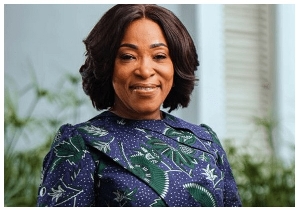
  • Ayorkor Botchwey sworn in as Commonwealth Secretary-General

    Ayorkor Botchwey sworn in as Commonwealth Secretary-General

    Shirley Ayorkor Botchwey has officially assumed office as the Secretary-General of the Commonwealth Nations, a momentous occasion for both Ghana and the African continent.

    As Ghana’s former Minister of Foreign Affairs, her election marks a historic first she is the first African woman to lead the 56-member intergovernmental body, which is dedicated to promoting democracy, development, and international cooperation.

    She takes over from Baroness Patricia Scotland, whose tenure ended in March 2025.

    With a distinguished career in politics and diplomacy, Ayorkor Botchwey served as Ghana’s Minister for Foreign Affairs from 2017 to 2024, during which she played a crucial role in advancing the country’s foreign policy and strengthening international partnerships.

    Her leadership saw Ghana assume significant roles within key global organizations, including the United Nations, the African Union, and ECOWAS. In addition to her diplomatic work, she served four consecutive terms as the Member of Parliament for Weija Gbawe.

    During her swearing-in ceremony, Ayorkor Botchwey expressed her gratitude for the trust placed in her and emphasized the need for collaboration in addressing global challenges.

    “As I take on this role, I do so with profound optimism and unwavering belief in what we can achieve together. With the support of our team at the Secretariat, drawn from all across the Commonwealth, I will work every day to honour and repay the trust and confidence which has been placed in me.

    “The challenges we face are real and serious but together, we are more than equal to them. Sustained by the values that bind us, democracy, good governance, peace, human rights, and equal opportunity for all.”

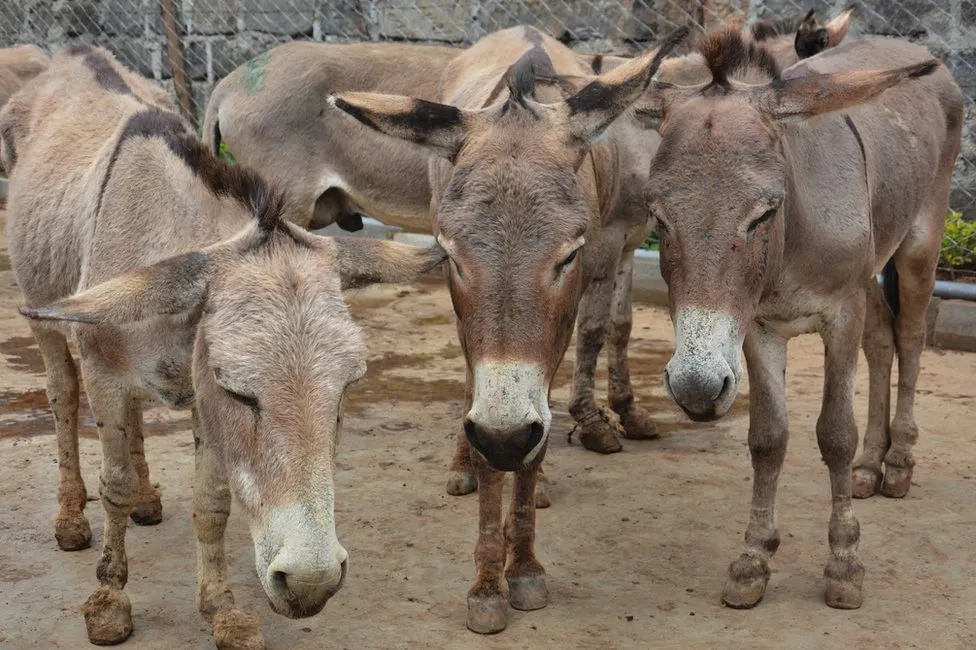
  • Fugitive donkey skin trade outlawed in 55 nations

    Fugitive donkey skin trade outlawed in 55 nations

    Charities that help animals are happy about a ban in Africa on the trade of donkey skins.

    It will be against the law to kill donkeys for their skin in 55 countries in Africa.

    The animals’ skins are needed because a lot of people want to use them for a Chinese medicine called Ejiao, which is made from donkey hides.

    African leaders agreed to ban something at the end of their meeting in Ethiopia.

    The Donkey Sanctuary charity said that the trade is very cruel and causing a lot of harm to donkeys all over the world, especially in Africa and South America.

    Some people think Ejiao can make you look younger and keep you healthy, but there’s no proof of this. Chinese companies used to get the skins of donkeys from China to make their products. However, when the number of animals in the country fell, they started to look in other countries.

    “Initially, our governments thought this was a good chance, so many legal slaughterhouses started in Africa,” said Dr. Solomon Onyango from the Donkey Sanctuary in Kenya.

    “In Kenya, from 2016 to 2019, about half of our donkeys were killed for the trade,” he said.

    Dr Onyango said to media that the ban will help protect donkeys and the people who depend on them.

    Roughly 35 million donkeys out of a total of 53 million in the world can be found in Africa. Poor people in rural areas use them to travel and transport things like water, food, and other stuff.

    A recent study in Ethiopia found that owning a donkey can make a big difference in how much money you make. It could mean the difference between being very poor and having enough to live on.

    Raphael Kinoti, the boss of The Brooke animal charity in East Africa, said it’s a great time for African communities that have been using donkeys for a very long time.

    “He said that killing donkeys for their skin in Africa has taken away peoples’ ways of making a living and has caused the continent to lose its culture, different kinds of plants and animals, and who they are as a people. ”

    “We ask all AU members to follow the decision for the benefit of everyone. “

  • Nations we provide arms to shoud follow laws of war – US warns

    Nations we provide arms to shoud follow laws of war – US warns

    US President Joe Biden said that countries getting American weapons must follow the rules of international law in a memo on Thursday night.

    The new rule says that countries getting military help must promise in writing that they are following the rules of war.

    The president admits that Israel went too far in its response in Gaza. This led to the decision to move.

    Israel gets the most money for the military from the United States.

    President Biden wrote in a memo saying that if foreign governments want to get weapons from the US, they must promise in writing to use them the right way, following international laws.

    Foreign governments also need to promise that they will make sure US aid gets to civilians in war zones.

    The memo says that Congress and the president should be given this information regularly.

    All 100 countries that get weapons from the US have to promise within the next 180 days. But the countries in conflict, like Israel, only have 45 days to respond to the order.

    The memo says that if a problem comes up, we need to make a plan to fix it.

    It means that they might stop giving weapons or other support, until the problem is fixed.

    Every year, Washington gives Israel about $3. 8 billion in military aid, which makes Israel the biggest recipient of this kind of funding in the world.

    Government officials said on Thursday that the order does not focus on any specific country. This comes after Democratic lawmakers expressed worries about Israel’s military actions in Gaza and if they followed international laws.

    Senator Chris Van Hollen is happy that Congress is trying to make sure that countries who receive military aid have to obey international rules.

    Sen Van Hollen said he thinks this will help Biden make sure that all countries getting US military help, like Israel, follow the rules of international humanitarian law and work together to give out humanitarian aid.

    The military campaign started because Hamas attacked Israel on October 7th and killed 1,300 people, according to Israeli officials. 250 more people were kidnapped.

    Since Israel’s counterattack, over 27,800 Palestinians have been killed and at least 67,000 have been injured, according to the health ministry run by Hamas.

    Video from the air above Gaza shows that many buildings in the area have been damaged or destroyed. Approximately 17 million people, which is more than 80% of Gaza’s population, have to leave their homes and stay in other places.

    Since the war in October, there hasn’t been as much aid going to the people in Gaza. The UN has said that many people there are in danger of not having enough food to eat.

    Earlier this week, the leader of Israel, Benjamin Netanyahu, said that the military has been told to get ready to go to Rafah, a city next to Egypt where 1. 5 million Palestinians are living.

    Mr Netanyahu said Israel will soon have a complete victory over Hamas.

    The US said on Thursday that attacking the city without a good plan would be a bad idea.

    The White House said it wouldn’t support big operations without thinking about the refugees there first.

  • COP15: Nations reach ‘historic’ deal to protect nature

    In a “historic” accord designed to maintain biodiversity, nations have committed to protect a third of the world by 2030.

    There will also be targets for protecting vital ecosystems such as rainforests and wetlands and the rights of indigenous peoples.

    The agreement at the COP15 UN biodiversity summit in Montreal, Canada, came early on Monday morning.

    The summit had been moved from China and postponed due to Covid.

    China, which was still in charge of the meeting, brought down the gavel on the deal despite a last minute objection from the Democratic Republic of Congo.

    The main points of the agreement include:

    • Maintaining, enhancing and restoring ecosystems, including halting species extinction and maintaining genetic diversity
    • “Sustainable use” of biodiversity – essentially ensuring that species and habitats can provide the services they provide for humanity, such as food and clean water
    • Ensuring that the benefits of resources from nature, like medicines that come from plants, are shared fairly and equally and that indigenous peoples’ rights are protected
    • Paying for and putting resources into biodiversity: Ensuring that money and conservation efforts get to where they are needed.

    The summit in Montreal had been regarded as a “last chance” to put nature on a path to recovery. Throughout the talks there was division over the strength of ambition and how to finance the plans.

    One big sticking point was over how to fund conservation efforts in the parts of the globe that harbour some of the world’s most outstanding biodiversity.

    Biodiversity refers to all the Earth’s living things and the way they are connected in a complex web of life that sustains the planet.


    Lady birdImage source, Getty Images
    Image caption,

    Biodiversity includes all living things, big and small, and the way they fit together in a web of life

    A new text of the agreement was released by China on Sunday.

    Delegates convened a full session of the summit early on Monday morning after hours of delays, but then agreed to the text quickly.

    The president of COP 15, Minister Huang Runqui, declared the deal approved despite objections from the Democratic Republic of Congo, which said it couldn’t back the deal.

    Georgina Chandler, senior international policy advisor for the Royal Society for the Protection of Birds said people and nature should both be better off thanks to the deal struck in Montreal.

    “Now it’s done, governments, companies and communities need to figure out how they’ll help make these commitments a reality.”

    Sue Lieberman of the Wildlife Conservation Society said the agreement was a compromise, and although it had several good and hard-fought elements, it could have gone further “to truly transform our relationship with nature and stop our destruction of ecosystems, habitats and species”.

    The agreement follows days of intense negotiations. On Saturday, ministers made impassioned speeches about the need to agree on clear goals to put nature on a path to recovery by the end of the decade.

    “Nature is our ship. We must ensure it stays afloat,” said EU Commissioner for Environment, Oceans and Fisheries, Virginijus Sinkevicius.

    Colombia’s environment minister, Susana Muhamed, drew applause when she called for ambition in protecting the planet for the good of all. “Nature does not have boundaries,” she said.

    Source: BBC

  • Coronavirus: G20 delays poor nations’ debt payments

    Nations belonging to the G20 group of leading economies have agreed to suspend debt payments owed to them by some of the world’s poorest countries.

    The agreement covers money that is due to be paid to G20 governments up to the end of 2020.

    The aim is to help countries deal with the health and economic impacts of the coronavirus pandemic.

    The Jubilee Debt Campaign group has described the move as a first step, but called for much more.

    The UK-based charity estimates that the delay will cover $12bn (£9.6bn) of payments.

    But it is only a delay and the campaign group understands that the payments will instead have to be made between 2022 and 2024, along with interest accrued in the meantime.

    In all, 77 countries are due to benefit from the agreement.

    The plan was provisionally agreed on Tuesday by the G7 leading developed countries, but it was conditional on support from the wider G20.

    Some countries, notably China and Saudi Arabia, which are in the G20 but not the G7, are significant lenders to developing countries. The G7 wanted a contribution to the debt payment suspension from those nations.

    Cancellation call

    The move reflects the widely shared view that low-income countries face an especially severe challenge in coping with both the health and economic consequences of the pandemic.

    The G20 has also called for private lenders to take similar steps for debts owed to them by the poorest countries. However, the G20 suggested this could be done on a voluntary basis.

    The Jubilee Debt Campaign has said that is not enough. It wants to see legal changes to ensure that private creditors cannot use the courts to sue developing countries if they miss payments.

    That is particularly relevant to the UK and New York, because most developing-country debt agreements use those jurisdictions’ laws.

    The campaigners also say that the payments should be cancelled outright rather than merely deferred.

    That was in effect done earlier this week for a more limited amount of debt payments owed to the International Monetary Fund. It decided to use its own resources to make the payments due in the next six months from 25 low-income countries, mainly in Africa.

    Source: bbc.com

  • Coronavirus: The porous borders where the virus cannot be controlled

    As nations shut borders, a surge of people pouring unmonitored over international boundaries in a volatile and vulnerable part of the world has sparked warnings about the unchecked spread of the virus there.

    In March, more than 150,000 Afghans spontaneously returned from Iran, one of the countries worst hit by the coronavirus – thousands more arrive daily.

    Tens of thousands have also recently returned from Pakistan – among the worst affected countries in South Asia.

    Officials are struggling to control this unprecedented movement across what have always been porous and often lawless borders.

    So far, Afghanistan is not among countries severely hit by the virus, reporting 423 cases and 14 deaths, but this influx has raised fears of much higher transmission rates.

    “With the numbers of likely infected people who have crossed the border, I expect the numbers of cases and deaths [in Afghanistan] to go up significantly,” says Natasha Howard, associate professor of global health and conflict at the National University of Singapore.

    If there is an explosion of cases, like we’ve seen in the US, Spain and Italy, war-ravaged and impoverished Afghanistan’s health system would be completely overwhelmed.

    Iran crossing: Overwhelmed by numbers

    Abdul Maez Mohammadi and his family were in Iran for eight years. But after the boss at the construction company where he worked stopped paying his salary, he gathered his wife, brother and one-year-old son and headed home.

    This week they crossed from the Islam Qala border into Herat as undocumented migrants and will head back to their Taliban-controlled village where there are no health facilities.

    “The situation in Iran of Covid-19 is very dangerous and I heard there is nowhere to admit cases,” says Mr Mohammadi.

    At this border crossing there is no quarantine centre on either side. The provincial authorities are conducting basic health checks, but they are overwhelmed by the number of people.

    Herat has a shortage of Covid-19 testing kits and results take four or five days for those who do get tested – and by then it is likely they would have already left for their villages.

    Mr Mohammadi says he will have to earn money as soon as he is back in his village, but he knows they will have to take precautions.

    “We have to do hand-washing when we wake up from sleep, brush teeth three times a day, avoid mass gatherings, not travel to neighbouring areas and food should be well cooked,” he says.

    The International Organization for Migration (IOM), part of the UN, has set up centres to provide humanitarian assistance for the most vulnerable of those crossing back into Afghanistan.

    Aziz Ahmad Rahimi, senior regional director for IOM in Herat province, says when they see anyone showing Covid-19 symptoms they transfer them to the local hospitals. Ten to 15 people so far have tested positive he says.

    Pakistan crossing: Forced to abandon controls A similar situation is playing out on the border with Pakistan.

    The Afghan government requested Pakistani authorities to open border crossings to allow Afghans who had become stranded after Pakistan shut its borders to return home.

    Authorities said they would allow 1,000 people a day but 20,000 are reported to have crossed at the Chaman border in the last two days prompting authorities to abandon the stipulation that only those with valid documents be allowed to cross.

    Afghan authorities had made arrangements to quarantine 4,000 Afghans for 14 days at Torkham but were quickly overwhelmed by the numbers, reports say.

    In total 60,000 crossed into Afghanistan in three days, according to IOM.

    An unverified video that has been widely shared by media outlets shows people rushing across the border without showing any documentation.

    And these are the people going through official checkpoints. For many years there has been illegal cross-border movement between Afghanistan and Pakistan – those numbers are much harder to track.

    All of this has led aid agencies and NGOs working in the region to give a dire warning about the spread of coronavirus across these borders.

    And if, as they fear, cases erupt in the next few weeks, how Afghanistan might deal with the numbers given developed countries with top-class health systems are struggling, is leading to some daunting estimates.

    How can Afghanistan cope? The Afghan ministry of public health forecasts that 16 million out of a population of more than 30 million could get the coronavirus, citing the World Health Organization (WHO).

    Waheed Ullah Mayar, the spokesperson for the ministry of public health, says in the worst-case scenario 700,000 people will require hospitalization, 220,000 of them may require ICU treatment. From that number 110,000 people may die due to COVID-19.

    Afghanistan has 10,400 hospital beds in the entire country. In Herat province, some estimates put the number of ventilators at as little as 12.

    “Afghanistan will not have such a number of beds even in 10 years,” he says, adding that health authorities are focused on preventative measures.

    Kabul is now under complete lockdown and public gatherings have been banned in Herat.

    But this is a population where many have pre-existing conditions like tuberculosis, cancer, diabetes and there are approximately 2.5 million malnourished children, according to the charity Save the Children.

    Source: bbc.com


  • Crisis at Botswana’s Ministry of Water Resources

    Ministry of Lands Management, Sanitation and Water Resources top management and Public Procurement and Asset Disposal Board’s (PPADB) failure to listen to the advice from their Project Management Officers (PMOs) has come back to haunt them and has thrown the whole government into financial mess.

    The two entities found themselves in the multibillion tenders which they withdrawn from China Jiangsu International after the advice of the Directorate of Intelligence Services (DIS) that the company is involved in massive corruption and are a threat to national security.

    Last week High Court confirmed the fears of PMO when delivering judgment stating that the withdrawal of an award for the award of the tender for the Design, Supply and Build of Water Distribution Network, Sanitation, Reticulation, Telemetry and SCADA and other associated Works in Maun was illegal.

    Delivering judgment, Acting Judge Rahim Khan ordered that MLWS to issue a letter of notification of award to China Jiangsu International for the Maun Project immediately and forthwith.

    This judgment came after MLWS advised PPADB to withdraw the awarding of the tender to the Chinese State company because DIS has indicated that they are involved in massive corruption and are threat to national security.

    The withdrawal of the P1.5 billion tender didn’t sit well with the Chinese company who applied for an expedited appeal at the Court of Appeal whilst waiting for the review of the decision which was before Justice Khan. The Court of Appeal Justice Isaac Lesetedi dismissed the application with costs.

    Immediately after the Court of Appeal, senior leadership at MLWS ordered the speedily re-awarding of the P1.5 billion Maun Water Reticulation project to the second bidder Zhengtai Group Botswana.

    The PMOs then advised the ministry senior leadership that the matter is still before the court and insisted that they should first wait for the judgment on the review.

    This was prompted by the statement made by Justice Dube and Khan that PPADB cannot rely on the mere correspondence from DIS in withdrawing the tender.

    Dube stated that the information from DIS advising the procuring entities not to conduct business with China Jiangsu International could not be admissible in court because it was introduced outside the procurement process.

    Justice Khan echoed the same statement when throwing confusion at the government enclave regarding the Maun Water project tender.

    “The note by DISS which makes certain allegations without being substantiated is unacceptable as criteria to be considered in the evaluation process,” stated Justice Khan.

    He said that PPADB has statutory obligations in terms of its mandate to fulfill and that it cannot transfer those responsibilities to a third party as this is not permissible in terms of the legislation.

    “Its reliance on the note by DISS is entirely misplaced and therefore the contents of the note by DISS must be ignored as a basis for the rejection by the 1st respondent (PPADB) of the tender,” he stated.

    Another concern for the PMOs is that the difference between the first bidder China Jiangsu and Zhengtai Group is P300 million, which they argue, doesn’t make economic sense for the ministry and government.

    China Jiangsu International had won the tender to the value of P1.5 billion with Zhengtai Group coming second with a quote of P1.8 billion.

    On the 21st December DIS Director General Peter Magosi wrote a letter to PPADB advising them to terminate all the tenders awarded to China Jiangsu International as their investigations have shown that the company is involved in massive corruption and threat to national security.

    In February 2019 PPADB withdrew all the tenders awarded to China Jiangsu.

    MLWS through Water Utilities Corporation (WUC) will soon find themselves in another predicament regarding the over P800 million tender for the design supply, installation and commissioning of the Mmamashia Water Treatment Plant-Tender No. WUC 015(2018). The tender was won by China Jiangsu International but DIS instructed WUC to withdraw the awarding of the tender to the state owned Chinese company. Lobatse High Court Judge Justice Tebogo Tau instructed that an International arbitrator be appointed to mediate on the matter.

    Justice Khan smells rat

    In delivering judgment on the Maun Water Reticulation project, Justice Khan hinted that the conduct of the respondents appeared to be employing tactics which will allow the case to drag on indefinitely whilst at the same time the contract is being implemented.

    Immediately after China Jiangsu lost the appeal at the court of Appeal, MLWS is said to have instructed PPADB to sign contract with Zhengtai Group. The company was immediately given P180 million by MLWs as advance payment.

    “That there has been substantial progress in the implementation of the contract so that this court should not reverse the progress made in implementation and that on a balance of convenience it would be preferable for the contract to continue rather than impede its implementation,” observed Justice Khan.

    He said that it is clear that the implementation of the project whilst the matter is still before the courts was to try to ensure that the project even if the matter is appealed; a period of time will elapse and benefit MLWS.

    “So as implementation would have occurred and the courts are reluctant to impede a contract where substantial progress has been made and it would not be expeditious to prevent their progress in a contract,” he said.

    Source: allafrica.com