Joe Biden’s recent press conference, where he reaffirmed his intention to continue his presidential campaign, has failed to quell dissent within his own party. Three Democratic leaders have now joined others in urging Biden to withdraw from the race.
Calls for the 81-year-old to step aside have intensified since his uneven performance in a televised debate against Republican Donald Trump last month.
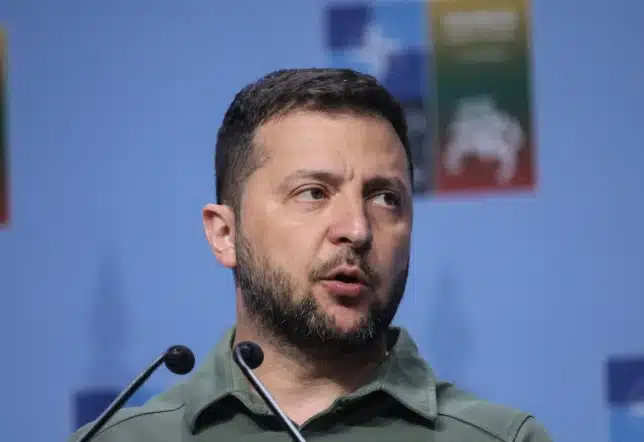
During a lengthy briefing on Thursday night, Biden appeared more composed and articulate, but there were notable slip-ups. In one instance, he mistakenly referred to his vice president, Kamala Harris, as “Vice President Trump,” and earlier in the day at a NATO event, he initially referred to Ukraine’s President Volodymyr Zelensky as “President Putin” before correcting himself.
Despite his efforts, doubts persist about Biden’s candidature, compounded by potential defections in the coming days. Several donors, including actor George Clooney, have withdrawn their financial support, questioning his competence for another term.
A Democratic fundraiser, speaking to the BBC, acknowledged Biden’s adequate performance at the conference but noted it wasn’t enough to sway sceptics within the party.
Looking ahead, Biden faces relentless scrutiny at every public appearance. Any misstep is seized upon as evidence of his alleged inadequacy to run for re-election. Shortly after the press conference, Connecticut Congressman Jim Himes praised Biden’s public service record but urged him to step aside from the campaign.
The strongest candidate to confront the “threat” posed by Trump, he wrote, was no longer Joe Biden. Illinois congressman Eric Sorensen also posted on social media that Mr Biden ran in 2020 “with the purpose of putting country over party. Today I am asking him to do that again”.
California congressman Scott Peters was the third to speak out, saying the “stakes are high, and we are losing course”. They bring the tally of Democratic politicians calling on Mr Biden to go to 19.
During the briefing, Biden insisted to reporters that he’s in the race to “complete the job”.
“If I slow down and can’t get the job done, that’s a sign I shouldn’t be doing it,” he said. “But there’s no indication of that yet.” Many of his supporters in Congress came out immediately after the news conference to echo his belief that he is the best candidate. “We’ve got to stop the nitpicking and then focus on the work ahead. This guy has done it, he’s done it in the past,” said Democratic National Committee chairman Jaime Harrison.
US allies have voiced their support for President Biden.UK Prime Minister Keir Starmerpraised Biden’s demeanour during their recent summit meeting, describing him as “very impressive.” French President Emmanuel Macron characterised Biden’s errors as minor slips of the tongue, emphasizing Biden’s command of issues.
Meanwhile, former President Trump took a jab at Biden over his Kamala Harris gaffe, sarcastically commenting, “Great job, Joe!” on Truth Social.
Let me start off by putting my support for Ukraine in their struggle against the Russian invasion on the line. I also believe that western allies should be helping Ukraine in this struggle.
In the past, I have offered arguments for why Vladimir Putin may have been justified in renewing his steadfast demands that NATO not admit Ukraine or other Eastern Europeans to their club, and I still stand by those claims.
Ben Wallace, the UK’s defence secretary, made an important—and immediately divisive—point this week, though, as the war between the two nations shows little promise of coming to an end anytime soon.
During the ongoing NATO summit, where Ukrainian President Volodymyr Zelensky is once again pushing for more support in terms of more powerful military equipment, and that his homeland hadn’t been issued a timeframe for joining the bloc, Wallace spoke with typical frankness about the situation.
Wallace said: ‘Whether we like it or not, people want to see a bit of gratitude.
‘Sometimes you are asking countries to give up their own stocks [of weapons]. Sometimes you have to persuade lawmakers on the [Capitol] Hill in America.’
He added: ‘You know, we’re not Amazon. I told them that last year, when I drove 11 hours to be given a list.’
There was immediate outcry at Wallace’s bluntness.
He was accused of being ‘wrong’ and ‘out of order’ and was even gently slapped down by the Prime Minister Rishi Sunak, who said that everyone agreed Zelensky had expressed his gratitude.
But here’s the thing – I genuinely think Wallace is right.
Many of the British public are struggling with the cost of living crisis, and making ends meet is becoming increasingly difficult.
So when they hear that the Ukrainian leader is moaning about a perceived lack of action despite the billions the UK has already pledged, they can be forgiven for feeling a little aghast.
That’s all Wallace was saying, not that the aid should stop, not that the Ukrainian cause was not just, simply that Zelensky needed to recognise that ‘war fatigue’ in countries battling economic crises is a real threat, and that gratitude always helps.
And I think he’s entirely correct.
In total Ukraine has received around $150billion from countries around the globe in the year since Putin’s invasion.
Meanwhile, Afghanistan, a country that the West played a pretty significant part in destabilising, is in dire need of around $4.6billion in humanitarian aid this year, according to the UN.
There’s no rush by NATO to plug that significant gap, and I don’t think it’s anti-Ukraine of me to point out that there may be a hint of hypocrisy at play.
And nor do Wallace’s comments don’t mean *he* is anti-Ukraine, just that we need to be realistic about the levels of aid that the UK is giving to them and just how long that is sustainable.
There are estimated to be as many as 32 countries around the world engaged in armed conflict, but Russia’s invasion of Ukraine is too often considered by politicians and parts of the media as the only one worth paying attention to.
I won’t speculate as to why, but I think it is important that Zelensky doesn’t forget that this is not the only country facing a fight, and that’s what the Defence Secretary’s comments might help achieve.
Wallace may be an outlier in the UK – and I suspect he feels liberated by the fact that he has consistently ruled himself out of standing for the Tory leadership – but he isn’t the only player on the world stage who feels resources and the attitude of western citizens need to be taken into account.
The American national security adviser, Jake Sullivan, told a public forum at the same NATO summit: ‘The American people do deserve a degree of gratitude from the United States government for their willingness to step up and from the rest of the world as well.’
President Biden has always said the USA will continue supporting Ukraine for as long as it takes, but a recent poll showed a 5% fall in support for the US backing Zelensky’s country in reclaiming territory, something that could have informed Sullivan’s comments.
I wouldn’t suggest the West stops all funding and aid to Ukraine, but fatigue is a real danger, and Zelensky needs to be aware, and yes grateful, about how much this is truly costing his allies.
There is “no risk-free option,” according to NATO Secretary General Jens Stoltenberg, when it comes to providing Ukraine with long-term security guarantees.
His remarks followed a warning from the Kremlin that any such action would be “badly mistaken and potentially very dangerous.”
Despite Mr. Stoltenberg’s claim that Ukraine “is now closer to NATO than ever before,” the alliance once more refrained from issuing a formal invitation.
Instead, a group of G7 countries and other allies have promised to provide Kyiv with a security package to help ‘end the war’ and deter future aggression.
Asked if the move brings the West closer to direct war with Russia, Mr Stoltenberg told reporters at the NATO summit in Vilnius ‘there is already a fully-fledged war going on in Europe’.
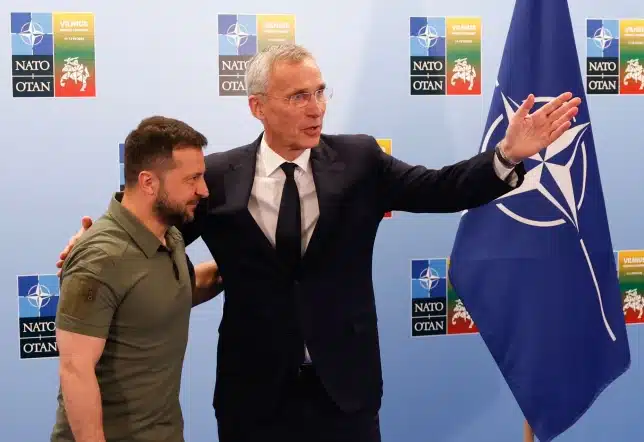
Standing beside Ukrainian President Volodymyr Zelensky, he went on: ‘There is no risk-free option, no risk-free option for NATO allies either. But the biggest risk is if President Putin wins.
‘Because then the message is that when he uses military force, when he violates international law, when he invades a neighbour, then he gets what he wants.
‘That’s exactly why it is so important for NATO allies to support Ukraine. It will be a tragedy for Ukraine if President Putin wins, but it will be dangerous for us. It will make us more vulnerable.’
Earlier, Kremlin spokesman Dmitry Peskov said the proposed security assurances were a mistake which Moscow would be forced to factor into its future decision-making.
‘We consider this move to be badly mistaken and potentially very dangerous,’ he told reporters.
‘Because by providing any kind of security guarantees for Ukraine, these countries would be ignoring the international principle on the indivisibility of security. By providing guarantees to Ukraine, they would be impinging on the security of the Russian Federation.’
Providing such assurances ‘is fraught with highly negative consequences in the medium, long and even short term’, Mr Peskov went on, adding: ‘By taking such a decision, these countries will make Europe much more dangerous for many, many years to come.’
Dmitry Medvedev, former Russian president and deputy chair of the powerful security council, went a step further and warned: ‘World War Three is coming.’
Mr Stoltenberg said Ukraine ‘has the right to choose its own path and what kind of security arrangements it wants to be a part of’.
He said: ‘Russia has been against every enlargement of NATO. It’s for NATO allies and for Ukraine to decide when to become a member. Moscow doesn’t have a veto on that.’
The secretary general added: ‘The most urgent task is to of course ensure that Ukraine prevails, because unless Ukraine prevails then there is no membership issue to be discussed at all.
‘So, the message is that we stand by Ukraine for as long as it takes, and the urgent need is to provide the weapons they need.’
President Zelensky said the results of the summit have been good, but added an offer of membership would have been ‘ideal’.
Rishi Sunak said the G7 security agreement marked the ‘new high point in support’ for Ukraine but was not a ‘substitute’ for NATO membership.
In a readout of the meeting between the Prime Minister and Ukrainian President Volodymyr Zelensky, a Downing Street spokeswoman said: ‘The Prime Minister welcomed the fact that the MAP (membership action plan) requirement for Ukraine had now been removed, smoothing the path to full Nato membership in the future.
‘The Prime Minister and the president agreed on the importance of the security arrangements to be announced by the G7 this afternoon.
‘They marked a new high point in support from the international community and would give Ukraine an even greater level of endurance against Russian aggression, the Prime Minister said.
‘Both agreed the arrangements will not be a substitute for NATO membership and looked forward to building on the new security framework as soon as possible.’
On the second day of the NATO summit in Vilnius, Lithuania, Volodymyr Zelensky, Rishi Sunak, and Joe Biden appeared to the cameras to be longtime friends.
The group, who were seated side by side, were seen laughing before starting work.
The Ukrainian president has displayed diplomatic skill throughout the war, beguiling world leaders as both guests and hosts to win their support against Russia.
Like a rock star, he received huge support from the crowds, and was seen shaking hands with politicians.
Zelensky said it was ‘good news’ that they could advance discussions on security guarantees for his nation.
The PM has consistently stated that he sees Ukraine’s place as being in Nato but its pathway to entry has proved tricky for allies in Vilnius.
Behind the scenes, he has been working on a non-Nato multilateral defence and economic agreement for Ukraine to give it long-term support against current and future Russian aggression.
All members of the G7 – made up of the UK, the US, France, Germany, Italy, Japan and Canada – are set to sign the pact, which has the potential to ‘return peace to Europe’.
Little detail has been published about what the G7 pact entails but No 10 said it would lead to increased intelligence sharing, further training of Ukraine’s forces and plans to boost the country’s own defence industry.
Some eastern European experts have warned that Zelensky’s position has only got ‘weaker’ after the summit despite his positive messages to his people.
Sergej Sumlenny said in a retweet to the president’s comment about the Nato-Ukraine council: ‘Don’t fool yourself: it is not a sign of happiness.
‘Zelensky is trying to calm down his domestic critics and sweeten the pill for the Ukrainians. His positions got weaker after the Nato summit.
‘One of multiple bad consequences of the weak and short-sighted Nato summit decision.’
On Wednesday, North Korea claimed to have launched an intercontinental ballistic missile using solid fuel, just days after threatening to take down US Navy reconnaissance aircraft over neighbouring waters.
The launch comes after a number of other recent intercontinental ballistic missile (ICBM) tests by North Korea, which have alarmed rivals as the isolated, autocratic country intensifies its efforts to create weapons that could potentially strike important US cities.US Navy
The launch, according to a White House statement, “risks destabilising the security situation in the region.”
Japanese Prime Minister Fumio Kishida, speaking from the sidelines of the NATO summit meeting on Wednesday, called the launch “unacceptable’” and a threat to regional stability and the international community.
Wednesday’s test was of the Hwasong-18, a powerful solid-fueled ICBM of a type that Pyongyang last launched in April, according to the state-run Korean Central News Agency (KCNA).
Leader Kim Jong Un said at the time the Hwasong-18 would provide the country with a “powerful strategic attack means” and boost its nuclear capabilities.
Pyongyang tested the liquid-fueled Hwasong-17 in March.
The ICBM fired on Wednesday flew about 1,000 kilometers, staying airborne for 74 minutes, according to Japan’s Defense Ministry – a marginal advancement on the ballistic missiles it tested earlier this year.
Here’s what we know about the ICBMs in North Korea’s arsenal.
Unknown to most, Kim Jong Un’s sister has become the defiance voice against the US
The Hwasong-17 is a liquid-fueled ICBM unveiled in 2022, when North Korea held its first long-range missile test in more than four years. Liquid-fuel technology is comparatively easier to master.
The Hwasong-18, meanwhile, is a solid-fueled missile, according to Pyongyang – which makes it far more advanced, and would allow North Korea to launch long-range nuclear strikes more quickly.
Solid-fueled ICBMs are more stable, and can be moved more easily to avoid detection before a launch that can be initiated in a matter of minutes, experts say – compared to liquid-fueled missiles that may need hours before launch, giving time for adversaries to detect and neutralize the weapon.
North Korea’s advancement from the Hwasong-17 last year to the Hwasong-18 this year suggests its missile program is making progress, experts say, reflecting Kim’s goal of matching the military capabilities of other nations like the United States or European countries.
Successive launches allow North Korea to gather more data to refine its missile technology.
ICBMs could, at least theoretically, put the entire US mainland in range of a North Korean nuclear warhead – but there’s a lot of unknowns about the missile’s capability to deliver a nuclear payload on target.
Past tests have shown the possible range of North Korea’s missiles – the tests in March and April all traveled about 1,000 kilometers (621 miles). And the Hwasong-17 test last year flew 1,090 kilometers (681 miles), lasting 68 minutes before landing in the sea.
The 74-minute flight time of the latest missile is a few minutes longer than those tested in March and April.
It’s not clear what kind of payloads were involved in these tests. The weight of the payload affects how far a missile can fly, so without this information, observers cannot know for sure the missile’s actual range.
Another question is whether a North Korean nuclear warhead could survive reentry into Earth’s atmosphere.
ICBMs are fired into space, where they speed along outside Earth’s atmosphere before their payloads undergo a fiery reentry process, much like a space shuttle or space capsule, before plunging down on their targets.
If the process of reentering the atmosphere isn’t executed with pinpoint accuracy and with materials that can withstand the immense heat generated, the warhead will burn up before reaching its target. The angle at which the warhead reenters the atmosphere can make the process more difficult.
“The launch of Hwasong-18 shows that it has a range of about 15,000 kilometers based on the altitude, distance and the flight time of the missile,” said Yang Wook, a researcher at Asan Institute for Policy Studies in Seoul.
“However, it cannot be evaluated that North Korea has succeeded in obtaining full technology of an ICBM as it hasn’t proved the functions for reentry and accuracy using multi-warheads that are required for the use of the missile,” Yang said.
Here’s how US missile defense could be fooled by an ICBM
Kim has laid out an ambitious plan to give North Korea a credible nuclear deterrent, meaning an arsenal powerful enough to prevent any adversary, most notably the US, from attacking.
Experts have said the leader has set a long list of weapons modernizations in recent years that he is now working through – with ICBMs only one of those items. Other goals may include launching a military satellite, or putting a nuclear-powered submarine to sea.
Previously, North Korea has announced plans to enhance the accuracy of its missiles and increase the range up to 15,000 kilometers (9,320 miles).
These ambitions were made clear last year when Kim dramatically ramped up the frequency and intensity of weapons testing, which eased slightly this year, but remains at much higher levels than in past years.
The country fired more missiles in 2022 than any other year on record – at one point launching 23 missiles in a single day.
These tests also refocused attention on North Korea’s nuclear goals, with Kim vowing to develop his nuclear forces at the “highest possible” speed last year. The US and international observers began warning last year that an underground nuclear test could be imminent, after satellite imagery showed new activity at North Korea’s nuclear test site. Such a test would be the country’s first since 2017.
Joseph Dempsey, research associate for defense and military analysis at the International Institute for Strategic Studies, said more North Korean tests are likely in the works.
“North Korea’s emergent ICBM force is still relatively untested … further developmental tests to verify their reliability and operation within a range of flight parameters are to be expected,” he told CNN.
The test on Wednesday sparked strong condemnation from neighboring countries.
South Korean President Yoon Suk Yeol, currently at the NATO summit in Lithuania, said he would call for “strong international solidarity” among bloc members in response to the launch. On Wednesday morning, he presided over an emergency National Security Council meeting from Lithuania.
US and South Korean officials met shortly after the test to share information, according to South Korea’s Joint Chiefs of Staff (JCS). Both countries are analyzing the launch.
The Japanese chief cabinet secretary lodged a protest against North Korea through embassy channels in Beijing.
The United Nations Security Council has passed resolutions prohibiting Pyongyang’s ballistic missile testing, but last year China and Russia blocked new resolutions, which the US sees as a green light for North Korea to continue its programs.
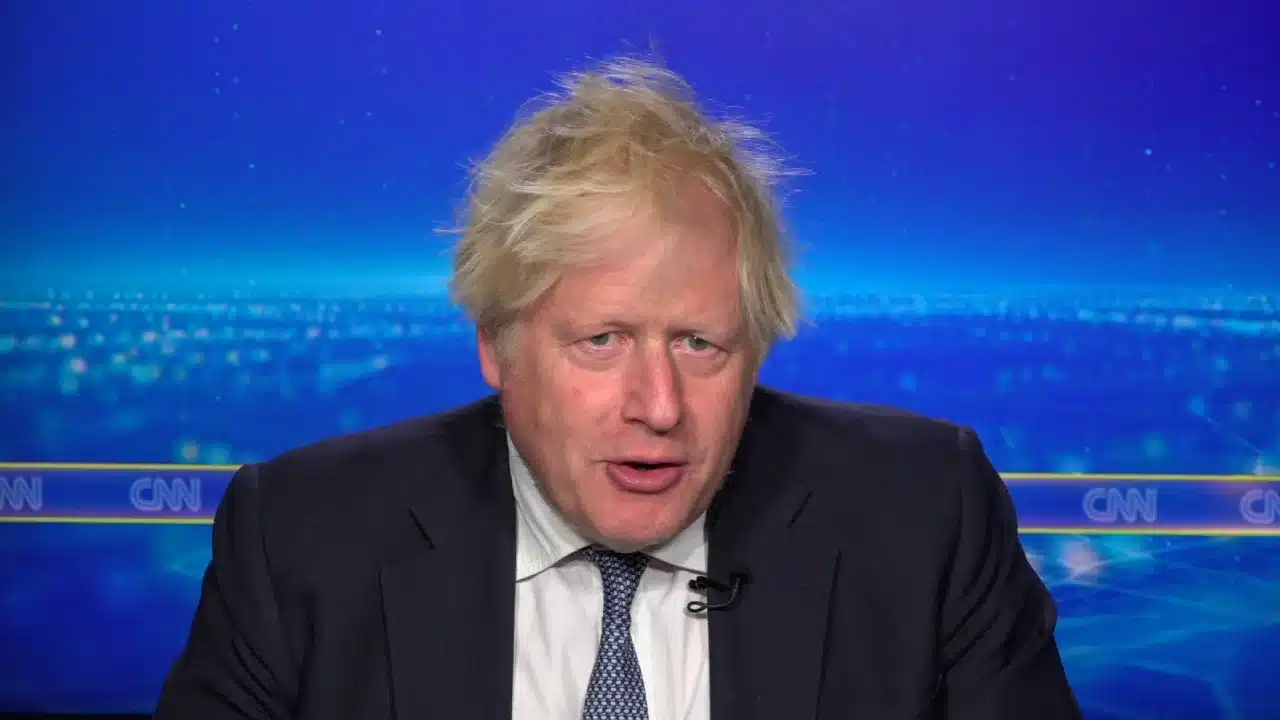
Former British Prime Minister Boris Johnson told CNN that defeating Moscow is crucial and urged the United States not to lose interest in Ukraine’s arduous conflict with Moscow.
During a CNN interview Johnson urged the US to continue supporting Ukraine, including the constant delivery of weapons, on Wednesday as a significant NATO meeting came to an end, according to tonight’s Laura Coates. According to him, there is “no possible justification” for delaying Ukraine’s NATO membership.
“There can be no possible excuse or reason to keep faffing around and delaying,” Johnson said, adding that it was “very important” to establish that Ukraine was on the path to NATO membership. “The last remaining objection was that it was going to be provocative to Vladimir Putin. Well, we’ve seen what happens when you don’t have Ukraine in NATO, you provoke the worst war in Europe in 80 years.”
US President Joe Biden and G7 leaders unveiled a substantial show of support for Ukraine Wednesday at the NATO Summit in Vilnius, Lithuania, offering a joint declaration of support aimed at bolstering Kyiv’s military capability.
Biden acknowledged that the alliance did not invite Ukraine to membership during the summit as it works on “necessary reforms,” but said it would continue to boost the country’s security. Biden has emphasized that Ukraine is not ready to enter NATO, telling CNN in an exclusive interview last week that Russia’s war in Ukraine needs to end before the alliance can consider adding Kyiv to its ranks.
When Zelensky arrived in Lithuania on Tuesday he issued a blistering statement expressing his frustration at not receiving more specific details on when and how Ukraine would join the alliance. Biden said on Wednesday that he had talked to Zelensky about the “kind of guarantees we could make in the meantime.”
During his time as Britain’s Prime Minister, Johnson was a vocal supporter of Ukraine and developed a close working relationship with Zelensky, becoming one of the first foreign leaders to make the precarious trip to Kyiv. Johnson resigned as Prime Minister in September 2022 and as a Member of Parliament in June, in the wake of scandals over his handling of the UK’s coronavirus crisis.
On Wednesday he warned that aside from the Russian army, the biggest enemy that the Ukrainians have in the conflict is “Ukraine fatigue.”
“It’s the exhaustion of the rest of the world, and particularly the supporters of Ukraine, in making sure that they win.”
“But they’ve got to win, it’s absolutely crucial,” he added, explaining that a Ukrainian victory is “vital for democracy and freedom around the world.”
In the interview, Johnson also said that he was supportive of Biden’s decision to provide Ukraine with anti-cluster munitions, despite the UK condemning the move. “I think President Biden has done the right thing to supply them and the faster the Ukrainians can use them to recapture their territory, the more lives will be saved.”
However, he stopped short of calling on the UK government to also send the weaponry, pointing out that Britain is a member of the Convention on Cluster Munitions treaty. More than 100 countries, including the UK, France, and Germany, have outlawed the munitions under the treaty. However, the US and Ukraine are not signatories to the ban.
The White House announced on Friday that President Biden had approved the transfer of cluster munitions to Ukraine – a controversial decision which was met with both praise and criticism.
When asked if the possible re-election of Donald Trump in the next presidential elections could jeopardize US support for Ukraine, Johnson pointed out that it was Trump who first approved sending Javelin anti-tank weapons to Ukraine in 2019, prior to the outbreak of war.
“Trump has a strong record already in helping the Ukrainians,” he claimed.
Johnson did not mention, however, the circumstances surrounding Trump’s hold up of military aid to Ukraine in 2019 that was at the heart of the first impeachment inquiry. In a phone call with the newly elected Zelensky in July 2019, Trump appeared to pressure him to investigate his then-Democratic rival Joe Biden in exchange for releasing the aid.
The fact that four leaders from the Asia-Pacific region attended this week’sNATO summit implies that there are other important security issues on the alliance’s (European-North American) defence agenda in addition to Ukraine.
Since the end of the Cold crisis, the crisis in Ukrainehas drawn the US-led alliance’s members closer together than ever before. On Monday, NATO Secretary General Jens Stoltenberg encapsulated their shared worries that what is occurring in Asia today may happen in Asia tomorrow.
“The Chinese government’s increasingly coercive behaviour abroad and repressive policies at home challenge NATO’s security, values, and interests,” Stoltenberg said on the website of Foreign Affairs.
Autocratic nations, including China, were looking at Russia’s actions in Ukraine, and weighing the costs and benefits of offensive action, he said.
On Tuesday the US-led alliance underscored these concerns, making several references to China in a strongly worded communique issued midway into the two-day summit, in which it said Beijing’s stated ambitions posed “systemic challenges” to “Euro-Atlantic security.”
While noting the alliance remained “open to constructive engagement” with China, it singled out what it said was the “deepening strategic partnership” between Beijing and Moscow and their “mutually reinforcing attempts to undercut the rules-based international order.”
And in language that closely mirrored Stoltenberg’s earlier remarks, the leaders’ communique condemned China’s confrontational rhetoric and disinformation.
China employs a “broad range of political, economic, and military tools to increase its global footprint and project power, while remaining opaque about its strategy, intentions and military build-up,” noted the communique, which called on Beijing “to abstain from supporting Russia’s war effort in any way.”
While neither Stoltenberg nor the joint communique named the island of Taiwan, the self-governing democracy is the most obvious point of comparison with recent events in Europe, given China’s ruling Communist Party remains committed to unifying it with the mainland – by force if necessary.
“When I visited Japan and South Korea at the start of this year, their leaders were clearly concerned that what is happening in Europe today could happen in Asia tomorrow,” Stoltenberg said Monday.
For its part, China says Taiwan is an internal matter and it sees no role for countries in the region, let alone NATO members, to be interfering.
“We will not allow anyone or any force to meddle in China’s own affairs under the disguise of seeking peace,” Foreign Ministry spokesperson Wang Wenbin said at a regular press briefing in May.
CNN reporters explain one of the most contentious issues of US-China relations.
The Asia-Pacific contingent at the NATO talks includes Japanese Prime Minister Fumio Kishida, South Korean President Yoon Suk Yeol, Australian Prime Minister Anthony Albanese and New Zealand Prime Minister Chris Hipkins.
All four nations have expressed views that what has happened in Ukraine cannot happen in the Pacific.
Mirna Galic, senior policy analyst at the US Institute of Peace, said the presence of the four Pacific leaders in Vilnius, Lithuania, “is a testament to … [NATO’s] interest in the Indo-Pacific and the focus on the challenges that China poses for the alliance.”
On that point, Stoltenberg looks to be in lockstep with US President Joe Biden, with the two pledging to strengthen NATO ties to the Pacific when they met at the White House last month.
And the leaders of the four Pacific nations also seem to be striving for a united approach.
Kim Sun-hye, senior secretary to the South Korean President, said Yoon will preside over a side meeting of four Pacific countries to strengthen common awareness, solidarity, and cooperation on emerging security threats.
There may be a push for greater involvement from Asia-Pacific leaders in the alliance, but there’s no consensus on the role NATO should take in the Pacific.
While Stoltenberg and others would like to see NATO open a liaison office in Japan to enable smoother communications with its Pacific partners, French President Emmanuel Macron is against such a plan, and has informed the secretary general of Paris’ opposition, according to Japanese public broadcaster NHK.
The French stance is reportedly that NATO is a North American and European alliance, not a global one.
France can effectively veto any Tokyo office plan as establishing it would require unanimous approval of the 31 NATO nations, NHK reported.
The idea of not letting NATO’s focus drift outside of the “North Atlantic” in its name is backed up by Article 5 of the NATO treaty, its mutual defense clause, which stipulates an armed attack on one alliance member is to be treated like an attack on all.
However, the article explicitly limits the response to attacks that occur in Europe and North America.
So military actions against US forces stationed in Japan or South Korea, or even the US Pacific territory of Guam, do not fall under NATO’s collective self-defense remit.
But outside of NATO, its members have been increasing their military visibility in the Pacific.
British forces have been training in Japan; a Canadian warship was accompanying a US destroyer when the American vessel was involved in a near collision with a Chinese warship in June; and German Defense Minister Boris Pistorius announced at the Shangri-La Dialogue defense summit last month that Berlin will send two naval vessels to the Pacific next year.
France, despite its opposition to a liaison office in Tokyo, is a frequent military visitor to the Pacific, with 10 fighter jets participating in exercises with the US in the Pacific islands even as the NATO summit is about to start in Lithuania.
And those deployments display what Stoltenberg, the secretary general, said in his op-ed.
“NATO is a regional alliance of Europe and North America, but the challenges we face are global,” he wrote, noting the summit invitations for the Pacific leaders.
“We must have a common understanding of the security risks we face and work together to strengthen the resilience of our societies, economies, and democracies.”
Russia has warned that if the conflict in Ukraine worsens, there would be “catastrophic consequences” for Europe.
The military alliance’s chiefs are getting ready to send Kyiv a “positive message” on its potential future membership.
However, the Kremlin claimed that one of the main reasons for its decision to invade Ukraine 17 months ago was NATO’s eastern expansion and that Moscow would respond forcefully and openly if Ukraine opted to join the organisation.
Konstantin Gavrilov, a Vienna-based senior Russian security negotiator, accused the United States of fuelling the conflict by pouring arms into Ukraine ahead of the NATO summit.
He said Europe would be the first to face ‘catastrophic consequences’ if the war escalated – but he did not say what these consequences would be.
Gavrilov also accused the United States of seeking to ‘undermine’ Russia.
He said: ‘Let’s look at the facts – the fate of Europe is of little interest to the United States.’
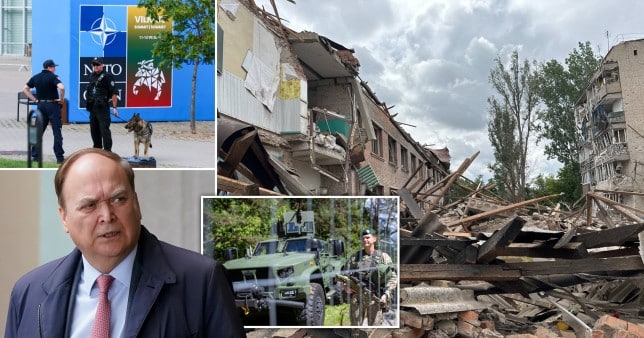
Earlier, Russia’s ambassador to the United States, Anatoly Antonov, made a similar criticism of what he called Washington’s ‘anti-Russian’ stance at the summit in Vilnius.
‘Everything is being done to prepare local public opinion for the approval of any anti-Russian decisions that will be made in Vilnius in the coming days,’ Antonov said in a post on the embassy’s Telegram channel.
NATO leaders are set to approve the alliance’s first comprehensive plans since the end of the Cold War to defend against any attack by Moscow at the summit in Lithuania.
Russia’s ambassador to Belgium, Alexander Tokovinin, in comments cited by RIA, said those plans would make NATO’s confrontation with Moscow more tense and prolonged.
Diplomats said differences were narrowing among the allies over Ukraine’s push for NATO membership, though it will not be invited to join the alliance while the war still rages.
‘Both the United States and NATO understand that time is not working for them. They are losing in Ukraine,’Gavrilov said.
Kyiv’s counteroffensive, which began last month, has been proceeding more slowly than hoped, but Ukraine’s military said on Monday its forces had caught occupying Russian troops ‘in a trap’ in the shattered eastern city of Bakhmut.