Tag: Nato

  • US classified documents on Ukraine leaked – report

    US classified documents on Ukraine leaked – report

    New York Times says, war plans that have been shared on social media allegedly include graphs, information on weapon deliveries, and other sensitive information.

    Secret documents that outline US and NATO preparations to assist Ukraine in getting ready for a spring onslaught against Russia have leaked onto social media sites, according to the New York Times.

    The alleged leak appeared to be a Russian disinformation campaign to cast doubt on Ukraine’s intended counteroffensive, a Ukrainian presidential official claimed on Friday.

    Mykhailo Podolyak told Reuters news agency the data contained a “very large amount of fictitious information” and Russia was trying to seize back the initiative in its invasion.

    The Pentagon said on Thursday it is assessing the apparent security breach.

    “We are aware of the reports of social media posts, and the department is reviewing the matter,” Deputy Press Secretary Sabrina Singh said.

    The documents were spread on Twitter and Telegram, and reportedly contain charts and details about weapons deliveries, battalion strengths and other sensitive information, the Times said.

    There was no explanation as to how the plans were obtained.

    Information in the documents is at least five weeks old with the most recent dated March 1, the report said. The plans did not provide specific action such as when Ukraine would launch the offensive.

    One of the documents summarised the training schedules of 12 Ukraine combat brigades, and said nine were being trained by US and NATO forces. About 250 tanks and more than 350 mechanised vehicles are required for the operation, the newspaper said.

    The classified documents, at least one of which carried a “top secret” label, were circulated on pro-Russian government channels, it said.

    Information in the documents also details expenditure rates for munitions under Ukraine military control, including for the HIMARS rockets, the US-made artillery systems that have proven highly effective against Russian forces, it added.

    “To the trained eye of a Russian war planner, field general or intelligence analyst … the documents no doubt offer many tantalizing clues and insights,” the Times said.

    The report quoted military analysts who warned some documents appear to have been altered in a disinformation campaign by Russia, with one inflating Ukrainian troop deaths and minimising Russian battlefield losses.

    The leak comes as fighting continues in the town of Bakhmut in eastern Ukraine, which has been one of the deadliest battles of the war so far.

    While Western analysts have played down its strategic significance, Kyiv has framed its dogged defence of the city as a way of wearing down Russian forces ahead of the expected counteroffensive bolstered by advanced Western-supplied weapons.

    Russian President Vladimir Putin has called the invasion a “special military operation” necessary to eliminate Ukrainian Nazis and defend Russia from a hostile West. Ukraine and its allies call it an unprovoked war of conquest.

    The conflict has killed thousands of people, wrecked cities and destabilised the global economy. Millions of Ukrainians have fled to neighbouring nations while others have been internally displaced.

  • NATO’s border extends as 31st member joins

    NATO’s border extends as 31st member joins

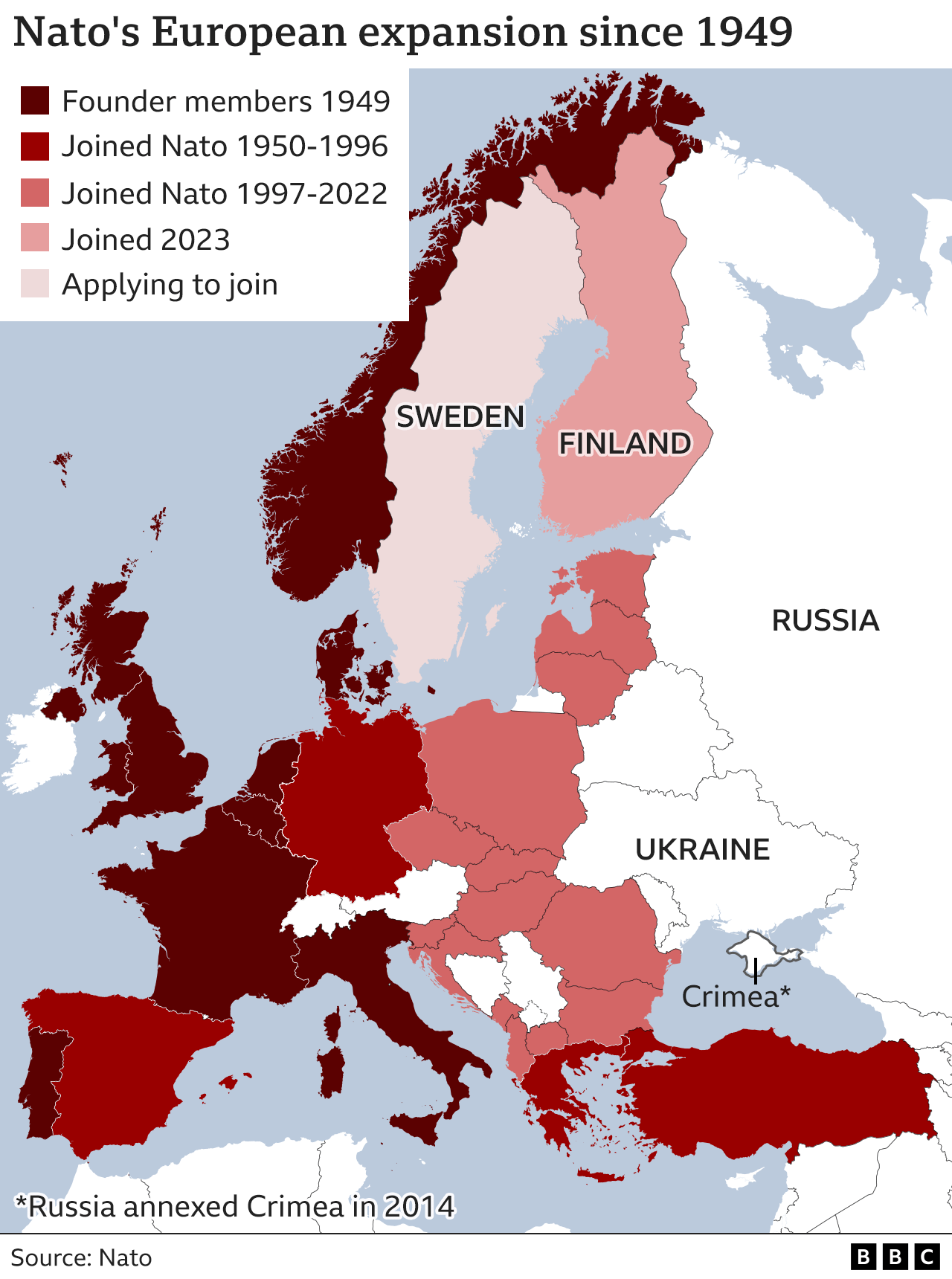
    Finland has become the 31st member of the Nato security alliance, doubling the length of member states’ borders with Russia.

    The Finnish foreign minister handed the accession document to the US secretary of state who declared Finland a member.

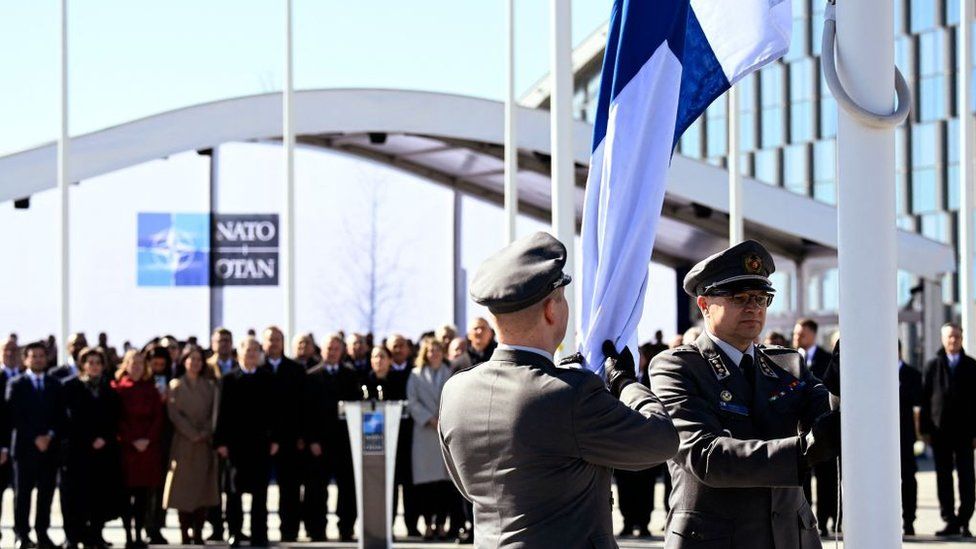
    Then in bright sunshine in front of Nato’s gleaming new headquarters, Finland’s white-and-blue flag joined a circle of 30 other flags.

    Finland’s accession is a setback for Russia’s Vladimir Putin.

    He had repeatedly complained of Nato’s expansion before his full-scale invasion of Ukraine.

    US Secretary of State Antony Blinken said by attacking his neighbour, the Russian leader had triggered exactly what he had sought to prevent.

    Kremlin spokesman Dmitry Peskov warned that Russia would be “watching closely” what happens in Finland, describing Nato’s enlargement as a “violation of our security and our national interests”.

    A military band played Finland’s national anthem followed by the Nato hymn. Beyond the perimeter fence a small group of protesters waving Ukrainian flags chanted “Ukraine in Nato”, a reminder of why non-aligned Finland had asked to join along with Sweden in May 2022.

    Finnish military personnel install the Finnish national flag at the NATO headquarters in Brussels, on April 4, 2023
    Image caption, Finnish military personnel raised their country’s flag at Nato headquarters for the first time

    Finland shares a 1,340-km (832-mile) eastern frontier with Russia and after the war in Ukraine began Helsinki chose the protection of Nato’s Article Five, which says an attack on one member is an attack on all.

    In effect, it means if Finland were invaded or attacked, all Nato members – including the US – would come to its aid.

    Russia’s invasion prompted a surge in Finnish public opinion towards joining Nato to 80% in favour.

    “It is a great day for Finland,” said Finnish President Sauli Niinisto, proclaiming a new era for his country. Finland would be a reliable ally and its membership would not be a threat to anyone, he said. “Security and stability are those elements which we feel very strongly; if people can live in secure stable circumstances that’s the basic element of happy life.”

    “This will make Finland safer and Nato stronger,” said Secretary General Jens Stoltenberg earlier, describing it as a proud day for him and the alliance.

    “President Putin had a declared goal of the invasion of Ukraine to get less Nato along its borders and no more membership in Europe, he’s getting exactly the opposite.”

    Jens Stoltenberg
    Kenzo TRIBOUILLARD/AFP

    Finland will get an iron-clad security guarantee. Article 5 – our collective defence clause “One for all and all for one” – will now from today apply for Finland

    US Secretary of State Antony Blinken said he was “tempted to say this is maybe the one thing we can thank Mr Putin for, because he once again here has precipitated something he claims to want to prevent by Russia’s aggression”.

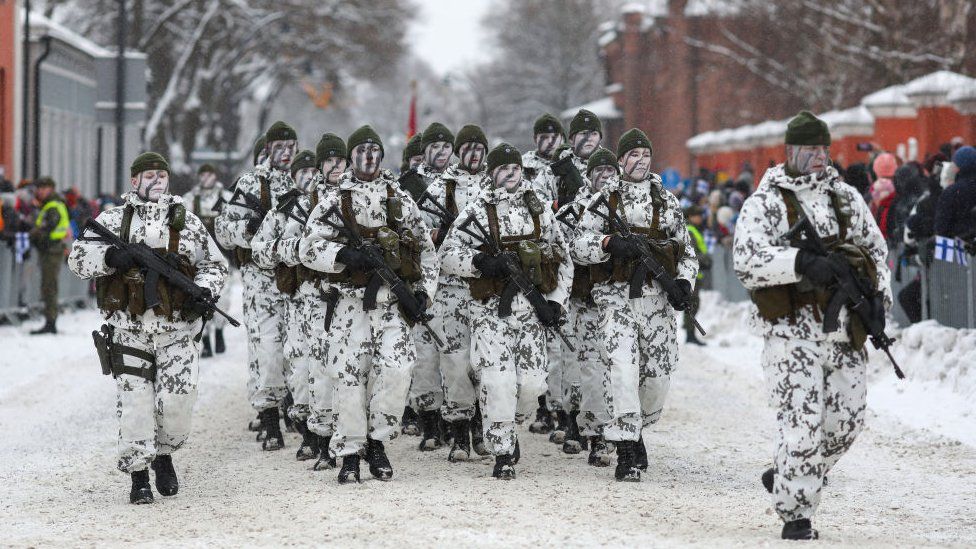
    Finland brings with it a well-equipped and trained, active armed force of about 30,000. It can also call on 250,000 reserves.

    It also provides a challenge for Nato to help keep its long border with Russia secure, but it is already being included in Nato’s latest defence plans to keep the alliance secure.

    Soldiers of the Finnish Armed Forces are seen marching during the Independence Day parade in Hamina city
    Image caption, Finland has a highly trained military and a very big reserve force

    Sweden’s application has for now become stuck, with Turkish President Recep Tayyip Erdogan accusing Stockholm of embracing Kurdish militants and allowing them to demonstrate on the streets. Hungary is also yet to approve Sweden joining.

    As he handed over the accession document to Mr Blinken, Finnish Foreign Minister Pekka Haavisto said he had a very important initial task: “The task is to give to you for the deposit also our ratification for Swedish membership.”

    Mr Stoltenberg said the most important thing was that Sweden joined as soon as possible and the Finnish president said he looked forward to welcoming his Nordic neighbour at Nato’s next summit in Lithuania in July.

    Helsinki’s journey to accession has lasted less than a year, and Tuesday’s ceremony coincides with the 74th anniversary of Nato’s founding in 1949.

    “Finland’s a terrific ally, very capable, shares our values and we expect a seamless transition into its proper seat at the table,” US ambassador to Nato Julianne Smith told the BBC.

    The Kremlin said that Russia was being forced to take counter-measures to ensure its own security, tactically and strategically, but pointed out it had never had disagreements with Helsinki in the way that Ukraine had become “anti-Russian”.

    Meanwhile, Defence Minister Sergei Shoigu said on Tuesday that Russia’s short-range Iskander-M ballistic missile system had been handed over to Belarus and was capable of carrying nuclear as well as conventional weapons. Some Belarusian fighter jets were also capable of carrying nuclear weapons, he said.

    Jens Stoltenberg said Nato had not yet seen any changes to Russia’s nuclear posture that would require any change by the alliance. He added there would be no Nato troops stationed in Finland without the consent of the government in Helsinki.

    Nato will now have seven members on the Baltic Sea, further isolating Russia’s coastal access to St Petersburg and its small exclave of Kaliningrad.

    Mr Peskov told the BBC that Russia would be watching closely how Nato used Finnish territory “in terms of basing weapons systems and infrastructure there which will be right up close to our borders, potentially threatening us”.

    “Based on that, measures will be taken,” the Kremlin spokesman said.

    Nato membership
  • Belarus jets are now able to carry nuclear weapons

    Belarus jets are now able to carry nuclear weapons

    According to Sergei Shoigu, the minister of defense for Russia, some jets from Belarus can currently transport nuclear bombs.

    The action is thought to be a reaction to Finland’s anticipated NATO membership, which is expected to be confirmed later today.

    On a conference call at the military department, Shoigu stated that “some of the Belarusian ground attack planes have achieved the capability to strike against enemy targets with nuclear-armed weapons.”

    He also confirmed that a number of Iskander rocket systems had been transferred to Belarus, which could be used to carry conventional or nuclear missiles.

    Russian Defence Minister Sergei Shoigu announced the move on the same day Finland joins Nato

    Meanwhile, Nato chief Jens Stoltenberg said Finland’s accession to Nato later on Tuesday will be a historic event and a direct result of Russia’s invasion of Ukraine, which prompted the Scandinavian nation and neighbouring Sweden to submit a joint application to the bloc.

    ‘President Putin had as a declared goal of the invasion of Ukraine to get less NATO,’ he told reporters ahead of a meeting of the alliance’s foreign ministers.

    ‘He is getting exactly the opposite… Finland today, and soon also Sweden will become a full fledged member of the alliance,’ he said.

    Sweden’s application has for now become stuck, with Turkish President Erdogan accusing Stockholm of embracing Kurdish militants and allowing them to demonstrate on the streets.

    Hungary is also yet to approve Sweden’s application.

    Elsewhere, Belarusian President Alexander Lukashenko met with the head of Russia’s Foreign Intelligence Service Sergei Naryshkin to speak of ‘unbelievable threats.’

    In an address to the Belarusian people on March 31, Lukashenko claimed that Nato countries were preparing for an imminent invasion of the country.

    During a press conference, he said: ‘Taking into consideration various developments going on in the world, and not the last factor here is fight against terrorism, we see that the special military operation of the Russian Federation prompted us to have a scrupulous look at law enforcement, military and security services.

    ‘As I often say, had this not happened, we would have had to come up with something else to spur ourselves to take action. Thus we had to get the ball rolling.

    ‘Yet, threats are very serious, sometimes unbelievable.’

    He also claimed that in addition to nuclear support, Moscow had been working to bolster Belarus’ intelligence services.

    ‘All sorts of b******s come to the surface in our country and yours [Russia], and they side with foreign terrorists,’ Lukashenko told Naryshkin.

    ‘I cannot define them otherwise. This is not intelligence, not counterintelligence, these are our enemies,’ he added.

    Russia has long threatened to bolster its defences along the Finnish border if Nato provides any military assistance its Scandinavian neighbour.

    Finland shares an 832-mile land border with Russia, the largest in Europe, and its entry will more than double the size of Nato’s border with Russia.

    The move is a strategic and political blow to Vladimir Putin, who has long complained about Nato’s expansion towards Russian territory.

  • Finland officially joins NATO after a brief welcoming ceremony

    Finland officially joins NATO after a brief welcoming ceremony

    Sweden joins the largest military alliance in the world, NATO, becoming it’s 31st member.

    The Nordic country’s policy of neutrality has been formally ended by Finland’s historic decision to join NATO.

    The move was hailed as “a good day for Finland’s security, for Nordic security, and for NATO as a whole” on Tuesday by Jens Stoltenberg, the leader of the largest military alliance in history.

    Finland applied for NATO membership a year ago in May, alongside Sweden, as fears of Russian aggression rose in northern Europe following Moscow’s invasion of Ukraine.

    But Sweden is still waiting to join the group, which now comprises 31 members.

    Finland’s border with Russia stretches across 1,300km (800 miles).

    Russia casts NATO enlargement as a threat to its security and has said it will respond to Finnish membership by boosting its military capacity in its western and northwestern regions.

    More soon…

  • Finland soon to be NATO’s new bee, Russia infuriated, threatening counter measures

    Finland soon to be NATO’s new bee, Russia infuriated, threatening counter measures

    Russia has issued a warning as Finland joins the largest military alliance in the world as its 31st member.

    According to NATO Secretary General Jens Stoltenberg, Finland will join the world’s largest military alliance on Tuesday, becoming its 31st member.

    In response, Russia has warned that it will strengthen its defences.

    “This is a historic week,” Stoltenberg told reporters on Monday on the eve of a meeting of NATO foreign ministers in Brussels.

    “From tomorrow, Finland will be a full member of the alliance.”

    He said he hopes Sweden, who applied for membership at the same time as Finland, will also be able to join NATO in the coming months.

    The former Norwegian prime minister said on Tuesday “we will raise the Finnish flag for the first time here at the NATO headquarters.

    It will be a good day for Finland’s security, for Nordic security and for NATO as a whole”.

    Stoltenberg said Turkey, the last NATO country to have ratified Finland’s membership, will hand its official texts to US Secretary of State Antony Blinken on Tuesday.

    Stoltenberg said he would then invite Finland to do the same.

    Finnish President Sauli Niinistö and Defence Minister Antti Kaikkonen will attend the ceremony along with Foreign Minister Pekka Haavisto.

    “It is a historic moment for us,” Haavisto said in a statement. “For Finland, the most important objective at the meeting will be to emphasise NATO’s support to Ukraine as Russia continues its illegal aggression.

    We seek to promote stability and security throughout the Euro-Atlantic region.”

    Russian Deputy Foreign Minister Alexander Grushko said Moscow would respond to Finland becoming a NATO member by bolstering its defences.

    “We will strengthen our military potential in the west and in the northwest,” Grushko said in remarks carried by the state RIA Novosti news agency.

    “In case of deployment of forces of other NATO members on the territory of Finland, we will take addition steps to ensure Russia’s military security.”

  • Nato military alliance to welcome Finland on Tuesday

    Nato military alliance to welcome Finland on Tuesday

    Nato’s secretary general has announced that Finland will join the Western military alliance as its 31st member on Tuesday.

    The invasion of Ukraine by Russia, which Finland shares a long border with, served as the impetus for the application.

    Turkey had put off submitting the application because it believed Finland was aiding “terrorists.”

    Sweden made a similar application to join NATO in May of last year, but Turkey is preventing it due to related grievances.

    Recep Tayyip Erdogan, the president of Turkey, has accused it of supporting Kurdish militants and enabling them to demonstrate in Stockholm’s streets.

    Any Nato expansion needs the support of all its members.

    “We will raise the Finnish flag for the first time here at Nato headquarters. It will be a good day for Finland’s security, for Nordic security and for Nato as a whole,” Nato Secretary General Jens Stoltenberg said in Brussels.

    “Sweden will also be safer as a result,” he said.

    Finland’s membership is one of the most important moments in Nato’s recent history.

    Finland, a country with a 1,340km (832 mile) border with Russia and one of the most powerful arsenals of artillery pieces in Western Europe, decided to ditch its neutrality and join the alliance in response to Russia’s full-scale invasion of Ukraine.

    Sweden also abandoned a longstanding commitment to neutrality in applying to join Nato, but unlike its neighbour it does not share a border with Russia.

    One of Nato’s founding principles is the that of collective defence – meaning an attack on one member nation is treated as an attack on them all.

    For Russian President Vladimir Putin, Finland’s accession is a major strategic setback.

    He sent his army into Ukraine last year in the expectation it would check Nato’s expansion and weaken Western collectivism. In fact, it has achieved the exact opposite.

    In response to Mr Stoltenberg’s announcement, Russia’s Deputy Foreign Minister, Alexander Grushko, said: “In the event that the forces and resources of other Nato members are deployed in Finland, we will take additional steps to reliably ensure Russia’s military security.” He did not specify.

    Finland will become the seventh Nato country on the Baltic Sea, further isolating Russia’s coastal access at St Petersburg and on its small exclave of Kaliningrad.

    Finnish public opinion has been radically altered by Russia’s invasion of Ukraine. Almost overnight last spring, support for Nato membership leapt from an underwhelming one-third of Finns to almost 80%.

  • Explainer: Why NATO allies are unlikely to send more advanced jets to Ukraine

    In one of the most significant escalations of military support to Ukraine from a NATO member since the Russian invasion, Polish President Andrzej Duda on Thursday became the first leader from the security alliance to pledge fighter jets to Kyiv.

    Duda announced that four MiG-29 fighters will be handed over to Ukraine in the coming days – the rest, he said, are being serviced and will likely be handed over successively. Four might sound a modest number, but it is a monumental step from a year ago, when a NATO member sending such sophisticated lethal support to Ukraine was politically unthinkable.

    It is unsurprising this step was taken by Poland – a country with a pronounced anxiety of Russian expansionism kindled by deep historical experience of Russian aggression.

    Will it make a difference? On a political level, it certainly could. By normalizing such support, it could start a domino effect whereby more European countries go on to provide fighter jets to Ukraine.

    Less than a day after Poland’s pledge, Slovakian Prime Minister Eduard Heger announced his government would send a fleet of 13 MiG fighter jets to support the defense of Ukraine. It is plausible that more European countries will follow suit, and free up their Soviet-designed MiGs as they modernize their own air forces.

    This is exactly what Poland is doing. Last year the country signed a historically large $14.5 billion defense deal with South Korea which included the purchase of 48 FA-50 light aircraft, and it has also added American F-35 Lighting II stealth fighters to its fleet. Another practical advantage is that because many European countries have MIG-29s, their parts are more readily available for the repair and maintenance of Ukrainian aircraft.

    On the question of a military advantage, the Kremlin has been predictably dismissive, claiming the gift of more Soviet-era MiGs to Ukraine will not alter the course of the conflict. Which might be why it is F-16s – and not MiGs – that are in fact at the top of President Volodymyr Zelensky’s wish list.

    For obvious reasons, the precise make-up of Ukraine’s air force, most likely around a tenth of the size of Russia’s, remains shrouded in secrecy. Ukraine inherited dozens of Soviet-made MiG-29 planes after the collapse of the Soviet Union in 1991, about five years after they entered service. But its fleet took a hit after Russia illegally annexed Crimea.

    MiG-29s are analog aircraft, using older flight technology. Zelensky’s sought-after F-16s are digital. MiGs can be used for short combat missions, they can deploy weaponry and shoot down Russian aircraft with good maneuverability at short range. But F-16s can fly for longer, are more versatile, possess integrated weapons systems and have dramatically better long range and radar capability, therefore providing improved early warning.

    Defense analyst Alex Walmsley, an associate fellow of the Royal United Services Institute (RUSI) in London, uses the analogy of comparing a “1990s laptop with the latest MacBook. Or a Ford Escort and a Porsche. Basically they do the same things – fly and launch missiles – but MIGs are not as responsive or powerful.”

    The US has so far resisted calls to provide F-16s to Ukraine on the grounds of avoiding escalation with Russia, as well as impracticality. The desire to avoid a cataclysmic spill-over of the conflict was front of mind this week after the downing of a $32 million US Reaper drone over the Black Sea by a Russian jet – the first time Russian and American aircraft have come into direct contact since the war began. The potentially incendiary incident was seized on by Russia as proof of direct American involvement in the conflict.

    Still, the shift from resistance to delivery has happened before; the US came around to supplying Ukraine with M1 Abrams tanks after Germany reversed their own policy on Leopard II tanks.

    But the impracticality argument is not a mere political fig leaf. The Ukrainian Air Force already operates MiG jets so they will be able to use them as soon as they arrive, whereas it would take months to train a MiG-29 pilot to a high level of comfort and efficacy on an F-16. Not to mention that Ukrainian pilots are in short supply.

    Retired US Lieutenant General Mark Hertling notes that while the Ukrainians have been very adaptable incorporating new kit like user-friendly Himars and Javelins, F-16s are a “whole different ballgame.” They have different engine parts, design and fire control systems for shooting and dropping bombs. “Lots of people want things to happen right now in Ukraine,” says Hertling, “but without years of peacetime training and establishment of sustainment and repair, you’re just not going to get the results you think you’re going to get.”

    The first pledges of jets will uplift Ukraine’s air defense, but in no way decisively alter or provide an edge for Ukraine in the conflict. Former RAF F-16 Fighter Pilot William Gilpin tells CNN: “There’s a saying – if you’re a generation behind, there’s no point turning up. Right now the Ukrainian Air Force is a generation behind the Russians. The F-16s would move them a generation ahead.”

    This is the dilemma. The impracticality of supplying Ukraine with F-16 jets, requiring a huge burden of training in the middle of an active conflict, is clear. But without them, obtaining air superiority is further out of reach.

  • Finland awaits Hungary’s vote to join NATO

    Finland awaits Hungary’s vote to join NATO

    Finland’s NATO membership will be approved in a vote later this month, according to a statement released by Hungary’s ruling party on Friday.

    According to a statement from the head of the ruling Fidesz Party, Máté Kocsis, the group will vote unanimously in favour of Finland’s bid on March 27.

    The group would decide later on Sweden’s request to join the military alliance, according to Kocsis.

    Turkey and Hungary have been the remaining obstacles preventing the entry of both Nordic countries; however, earlier on Friday, Turkey announced that it would approve Finland’s membership.

    Western officials had generally considered getting Turkey’s blessing the most significant hurdle to NATO expansion.

    More background: Finland announced its intention to join NATO in May, along with Sweden, after Russia’s invasion of Ukraine caused a sudden shift in attitudes toward joining the bloc.

    That announcement was welcomed by almost all of NATO’s leaders, but under NATO rules just one member state can veto a new applicant’s membership.

    Turkish President Recep Tayyip Erdogan put a spoke in the wheel when he said he was not looking at both countries joining NATO “positively,” accusing them of housing Kurdish “terrorist organizations.”

    Friday’s announcement clears the way for Finland’s accession, but Sweden’s application has been stalled by Ankara’s accusations, which Sweden denies.

  • Scholz, Macron joins Zelenskyy in Munich Security Conference open

    Scholz, Macron joins Zelenskyy in Munich Security Conference open

    This year’s gathering is centred on Russia’s invasion of Ukraine. Attending the annual high-level conference are representatives from 96 different nations.

    The Russian invasion of Ukraine, the main topic of discussion at this year’s high-level gathering, served as the backdrop for the opening of the annual Munich Security Conference (MSC) on Friday.

    Representatives from 96 nations will discuss important defence topics over the coming days.

    ‘No alternative to Ukrainian victory’ — Zelenskyy

    Ukraine’s President Volodymyr Zelenskyy made the opening address by videolink and urged allies to speed up support for his country, warning that lives were hanging in the balance.

    “We need to hurry up. We need speed — speed of our agreements, speed of our delivery… speed of decisions to limit Russian potential. There is no alternative to speed because it is the speed that the life depends on,” Zelenskyy told those gathered, stressing there was “no alternative to a Ukrainian victory.”

    Zelenskyy likened the battle against Russia’s invasion to the biblical fight between David and Goliath and said that while Ukraine had David’s courage, it still needed the sling with which to defeat “the Russian Goliath.”

    Scholz calls on allies to send tanks to Ukraine

    German Chancellor Olaf Scholz told the conference that Putin’s “revisionism” would not prevail and called on allies who were in a position to do so, to send battle tanks to Ukraine.

    “Those who can send such battle tanks should really do so now,” Scholz said.

    In January, Germany approved the export of Leopard 2 battle tanks to Ukraine from its own stocks as well as from third-party allies.

    The German chancellor said that his country would provide support with training, supplies and logistics.

    In a sentiment shared by other speakers, Scholz was of the opinion that there war in Ukraine would not be over soon. 

    “I think it’s wise to prepare for a long war,” Scholz told the conference.

    ‘Not the time for dialogue’ — Macron

    French President Emmanuel Macron took the podium after the German leader and said there needed to be readiness for “prolonged conflict” in Ukraine, while calling on EU members to invest substantially in defense spending.

    “We absolutely need to intensify our support and our effort to the resistance of the Ukrainian people and its army and help
    them to launch a counter-offensive which alone can allow credible negotiations, determined by Ukraine, its authorities
    and its people”, Macron said

    The French president also said that it was not the time to attempt dialogue with Russia as it ramped up hostilities in the east of Ukraine.

    “It is not the time for dialogue because we have a Russia which has chosen war, which has chosen to intensify the war, and which has chosen to go as far as committing war crimes and to attacking civilian infrastructures,” Macron said.

    ADVERTISEMENT

    Putin committed ‘breach of civilization’ — Heusgen

    The conference is being chaired for the first time this year by Christoph Heusgen — former foreign policy advisor to ex-German Chancellor Angela Merkel — and successor of Wolfgang Ischinger who served as chair for 15 years.

    Heusgen began proceedings by saying the 2022 conference had closed with the hope that Russian President Vladimir Putin “would be impressed by the unity the international community demonstrated … We all know what happened,” Huesgen said. 

    “Vladimir Putin committed a breach of civilization,” the MSC chair said, adding that it was the first time since World War II, that a country in Europe “denied the right of existence of another country and started an all out war.”

    First conference for Pistorius as German defense minister

    Ahead of the conference, German Defense Minister Boris Pistorius reaffirmed the need to boost military funding by going beyond the target of 2% of gross domestic product, while highlighting the importance of the platform. The MSC “has always been a place of understanding and dialogue,” he said.

    “What is new is that all this is taking place while a war is being waged on European soil by Russia against Ukraine,” Pistorius added.

    It will be Pistorius’ first MSC in office, and NATO Secretary-General Jens Stoltenberg’s last as he plans to step down from his post in October.

    Participants at the conference include 40 heads of state and government and nearly 100 ministers.

    Who is attending?

    Russia will again be a notable absence, with its leadership for the first time in two decades not being invited.

    Other high-profile speakers expected on Friday include China’s top foreign policy official Wang Yi and US Vice President Kamala Harris.

  • NATO cautions of donor ammunition shortages

    NATO cautions of donor ammunition shortages

    Jens Stoltenberg of NATO says Ukraine was using ammunition more quickly than NATO members could produce it. 

    Moscow and Kiev both report significant fighting around Bakhmut in the meantime. 

    As the transatlantic military alliance’s ammunition supply has been rapidly depleted in the conflict in Ukraine, Jens Stoltenberg, secretary general of NATO, announced to reporters on Monday that the organisation would be raising its targets for ammunition stockpiles.

    “The war in Ukraine is consuming an enormous amount of ammunition,” Stoltenberg said. “The current rate of Ukraine’s ammunition expenditure is many times higher than our current production rates. This puts our defense industries under strain. (…) So we need to ramp up new production and invest in our production capacities.” 

    Stoltenberg also said NATO members would “step up and sustain” support for Ukraine, saying: “NATO stands with Ukraine for as long as it takes.” 

    Ammunition resupply has been a concern for Ukrainian and Russian forces alike for months.

    DW’s correspondent in Kyiv, Nick Connolly, said he had spoken with Ukrainian commanders who said they were having to make “very tough choices” about ammunition usage.

    “I’ve met commanders of howitzers, of artillery pieces, who’ve told me that they don’t know how long they can keep on doing their job, if they will be forced to withdraw and move away from positions and wait for more artillery,” Connolly said. “This is a very real problem.” 

    “Right now, you’re seeing Ukraine and its allies scrambling around the world, looking as far afield as Pakistan and South Korea for artillery munitions,” Connolly said. “We’ve had reports of Pakistani-made Soviet-caliber munitions heading this way, [and] of US troops being asked to send munitions that they had stockpiled in South Korea to Europe for Ukraine.” 

    Meanwhile, at NATO’s Brussels headquarters, Stoltenberg also touched on several other topics related to the war. 

    Among other things, he said he expected the possible supply of NATO aircraft to Ukraine to be a topic of discussion when the alliance’s defense ministers assemble on Tuesday. Kyiv has been calling for western-built combat aircraft on and off since the conflict began, and with renewed intensity since the most recent agreement on sending battle tanks was approved just a few weeks ago.

    The issue is also liable to be raised at this week’s Munich Security Conference. The MSC’s chairman Christoph Heusgen, formerly Chancellor Angela Merkel’s foreign and security policy advisor, told DW ahead of the event that in his opinion it might be wise for politicians to ask for military advice on the matter.

    “Instead of putting red lines, I think we have to see what is needed,” Heusgen said. “When you talk to military experts, they say that when you fight a war like this, you need a combination of several weapons. (…) I think this should be a military decision.” 

    Asked about a possible Russian offensive in Ukraine, NATO’s Stoltenberg said it had already begun. 

    “We see no sign whatsoever that [Russian] President [Vladimir] Putin is preparing for peace,” he said. “We see how they are sending more troops, more weapons, more capabilities.” 

  • Poland decision to send jets to Ukraine ‘not easy’ says Poland’s Andrzej Duda

    Poland decision to send jets to Ukraine ‘not easy’ says Poland’s Andrzej Duda

    One of Ukraine’s closest allies has questioned whether Ukraine would be able to give President Volodymyr Zelenksy the fighter jets he claims are required to defeat Russia in war.

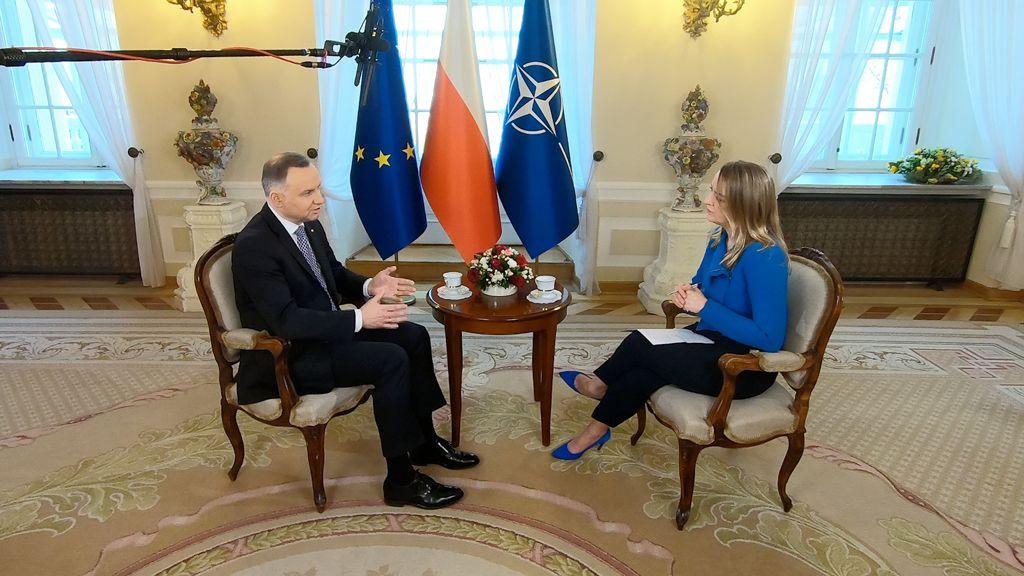
    Andrzej Duda, the president of Poland, said sending F-16 aircraft would be a “very serious decision” that was “not easy to take” in an exclusive interview with Laura Kuenssberg on Sunday.

    Since Russia’s invasion, Poland has been one of Ukraine’s loudest supporters.

    It was one of several nations that announced plans to send more tanks, ammunition, and equipment to the front lines last month.

    President Duda’s comments come despite him and President Zelensky having spoken this week, at the end of the Ukrainian leader’s surprise headline-grabbing European tour. In London, President Zelensky used his speech in Parliament to call for the means to help fight Russia in the air:

    “I appeal to you and the world with the simple, and yet most important words – combat aircraft for Ukraine, wings for freedom.”

    Ukraine’s leader repeated that call in Paris and Brussels, in a rare departure from his country, under the tightest of security. He made headlines right around the world.

    In Warsaw, President Duda told me sending F-16 jets would pose a “serious problem” because, with fewer than 50 of the aircraft in the Polish air force, “we have not enough… and we would need many more of them.”

    He also stressed that combat aircraft, like the F-16s, have a “very serious need for maintenance” so it’s “not enough just to send a few planes”.

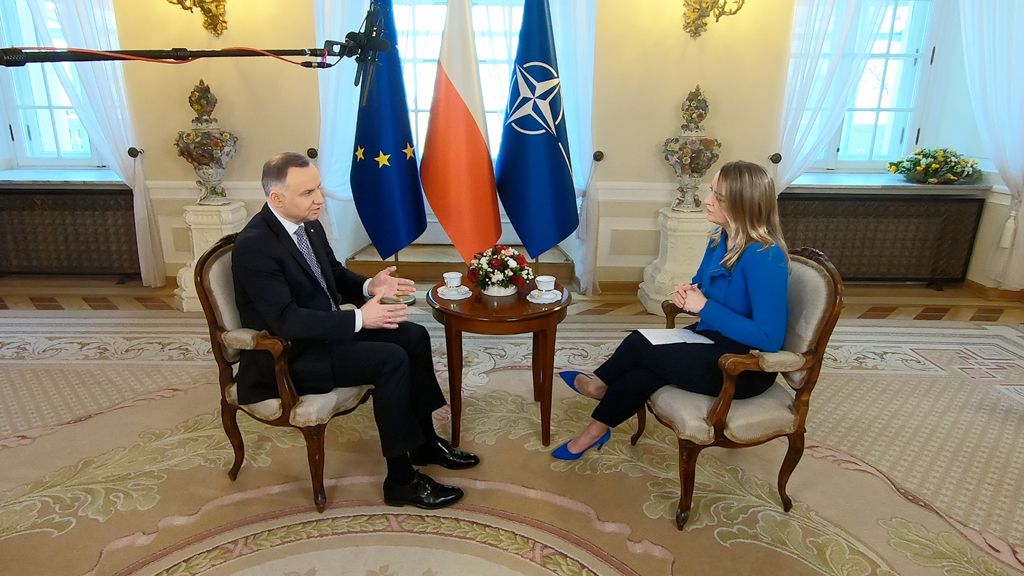
    President Duda with Laura Kuenssberg
    Image caption,President Duda with Laura Kuenssberg in Warsaw

    With Poland being a Nato member, said Mr Duda, any decision to provide fighter jets had to be a “joint decision” – rather than one for any single country to take.

    There are also nerves about whether providing planes would pull Nato directly into the conflict—and even into war against Russia itself. At the start of the Russian invasion in 2022, Duda said sending jets would “open a military intervention in the Ukrainian conflict.” But in direct response to Ukraine’s request for planes this week, the Polish leader’s comments are significant.

    As Ukraine’s neighbour, President Duda has been one of the most ardent supporters of President Zelensky and has contributed vast amounts of military aid, becoming the main supplier of heavy weaponry, including infantry fighting vehicles and artillery, drones, and ammunition.

    Duda was also at the forefront of pushing other allies to promise to provide tanks in recent weeks.

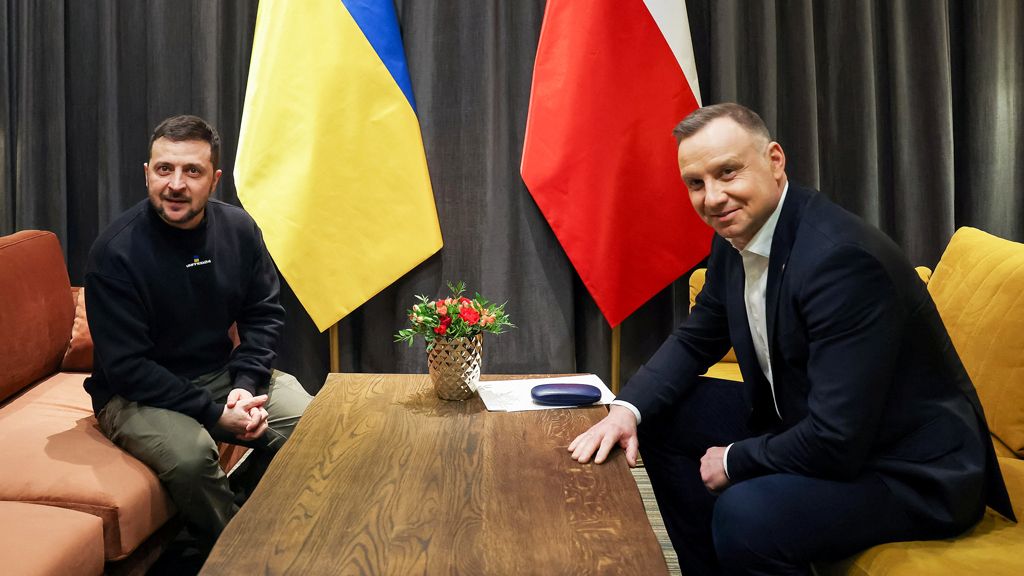
    Ukrainian President Volodymyr Zelensky and Polish President Andrzej Duda meet in Poland, 10 February 2023
    Image caption,President Zelensky (l) met Mr Duda in Poland on Friday at the end of his surprise European tour

    After notable reluctance from Germany, and a fraught debate across Europe about the risks of escalating the conflict, Leopard tanks will arrive in Ukraine, along with Challengers from the UK and Abrams from the US.

    Poland has also provided homes to millions of Ukrainian refugees.

    President Duda is adamant that “weaponry has to be delivered to Ukraine all the time… it needs armaments.” But it is clear he doesn’t think sending combat aircraft in large numbers is likely from Poland or any other ally, at least in the short term.

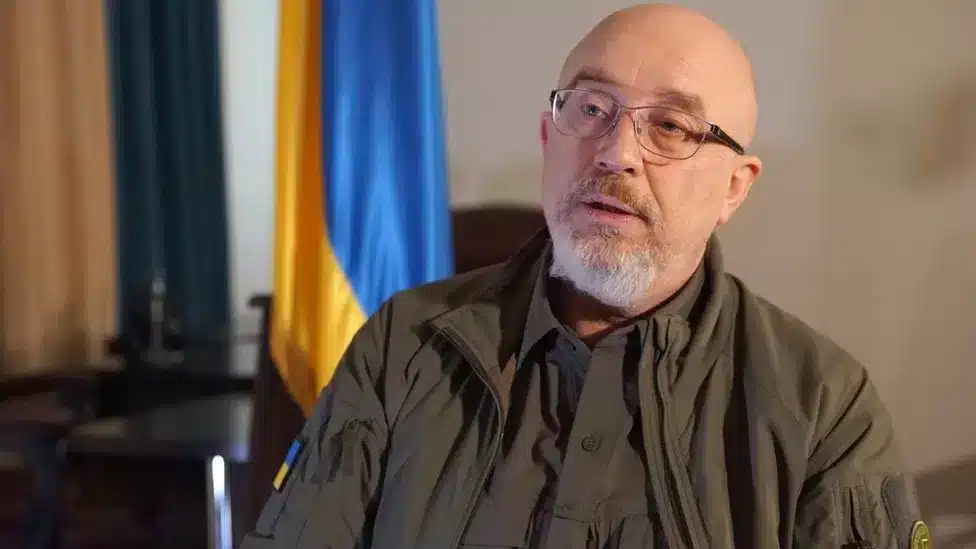
    The UK also made it pretty Oleksii Reznikov to be replaced by Ukraine amid corruption scandal clear pretty quickly that sending planes to Ukraine was not realistic in the immediate future.

    Yes, Prime Minister Rishi Sunak said “nothing was off the table” while he savoured his photo opportunity with President Zelensky in front of a tank this week – jeans tucked into unlaced boots and tieless, alongside the Ukrainian leader in his familiar army sweatshirt and combat trousers.

    But before too long, Defence Secretary Ben Wallace was making plain that would mean training for pilots and other support first. No UK jets will take off for Ukraine any time soon.

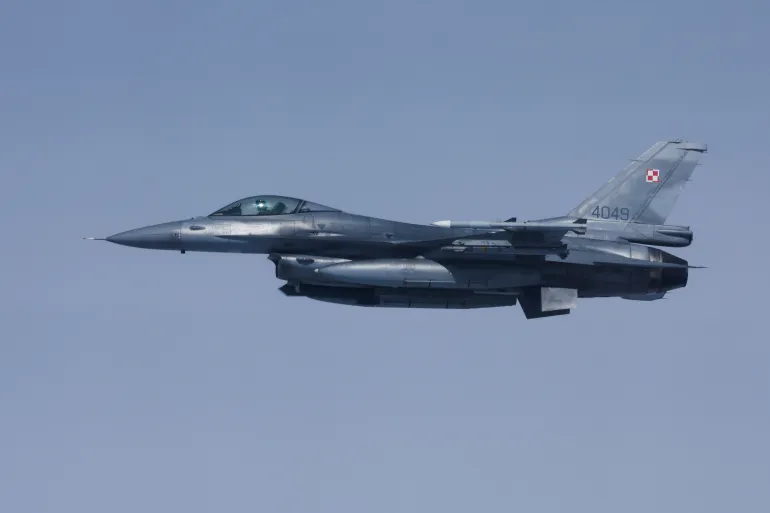
    F-16 fighter jets takes part in a Nato exercise near the air base in Lask, central Poland, 12 October 2022
    Image caption,Polish F-16 fighter jets taking part in a Nato exercise, 12 October 2022

    All week, British politicians have been falling over themselves to associate with the biggest political celebrity in the world right now, President Zelenksy, sharing their blurry phone snaps of his historic Westminster Hall speech and giving interviews about how moving it was to be there.

    In Paris, French President Emmanuel Macron greeted him like a film star in front of the Elysee Palace. EU leaders then frantically tweeted pictures of their own “grip and grin” moments with the Ukrainian leader later.

    There is staunch support for President Zelensky without doubt. It’s not just shown in flowery language and promises of commitment but, as President Duda explains, with guns, tanks and drones, plus support for refugees, rather than selfies with MPs. Western allies emphasise how countries have come together in a way that will have disappointed and frustrated Vladimir Putin.

    Leaders, like Poland’s president, underline the threat they feel to their own countries. Talking to him in Warsaw about the conflict is a world away from conversations in Westminster, with the Russian border at Kaliningrad only about 200 miles away.

    The dilemma over jets is another example of the fraught calculations our leaders face. What is practically possible in terms of supporting Ukraine? And what is politically and diplomatically viable, without provoking a wider war?

    Poland and other countries’ firm backing does not mean the West, or even Ukraine’s closest allies, will or can say “yes” to his every request. One senior diplomatic source suggests President Zelensky is, of course, well aware of this.

    His headline-grabbing journey this week was not just about the jets, and it doesn’t look like it will soon result in “wings for freedom.” But as we approach the anniversary of Russia’s invasion, his careful choreography and powerful imagery on his European tour will have reminded not just Western politicians but also their publics of what is at stake.

  • Some Eastern EU countries are still pro-Russia

    Some Eastern EU countries are still pro-Russia

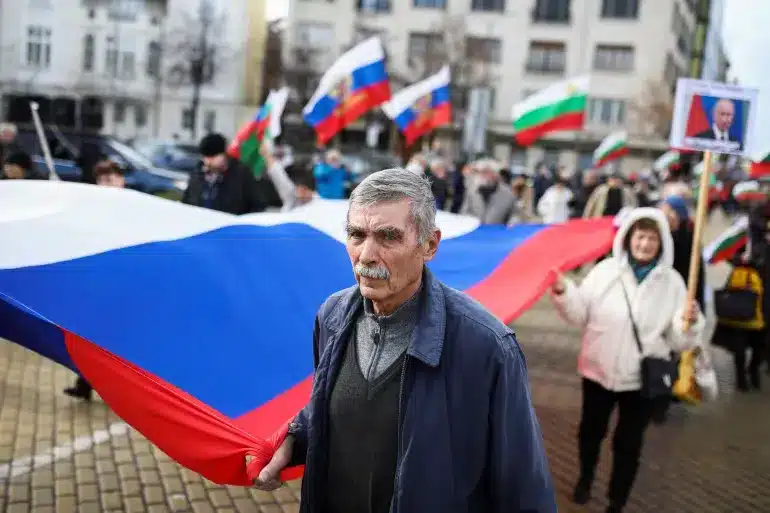
    Despite recent memories of Russian aggression and occupation, some Eastern European countries still fall for Russian disinformation.

    Russia’s large-scale invasion of Ukraine, launched a year ago, changed Europe overnight. It has set in motion tectonic shifts in political and economic relations, disrupting energy markets and upending existing supply chains. It has challenged the very core of the post-World War II European project: peace.

    The brutal attack on Ukraine has been particularly unsettling for Eastern Europe, which has relatively recent memories of Russian hostility and occupation. This explains why there was such significant support in the region for severe sanctions on Russia, financial, military, and humanitarian aid for Ukraine, reinforcement of NATO’s eastern flank and a warm welcome for millions of Ukrainian refugees.

    Yet, there are some countries in Eastern Europe that still harbour baffling sympathies for Russia, despite having faced Russian aggression in the past. Slovakia, Bulgaria and Hungary have stood out over the past year as particularly pro-Russia in their attitudes.

    A September poll conducted in Slovakia shows that the majority of Slovaks would welcome a Russian military victory over Ukraine. In another survey conducted in May, only 33 percent of Bulgarians and 45 percent of Hungarians perceived Russia as a threat. Hungary, Slovakia, and Bulgaria also tend to show the weakest support in the region for European Union sanctions against Russia, according to a Eurobarometer survey conducted in the fall of 2022.

    These attitudes have been reflected in government policies and rhetoric. Bulgaria and Hungary are the only NATO and EU members to have officially refused to deliver arms to Ukraine, echoing the popular belief that doing so would drag these countries into the conflict. Bulgaria’s previous government had to secretly provide Kyiv with ammunition and fuel, concealing the fact from the public.

    While the Slovak government has extended bold and open help to Ukraine, including supplies of heavy weaponry, and is among its top backers internationally in terms of aid given as a percentage of gross domestic product (GDP), it has sided with Hungary when it comes to economically uncomfortable decisions, such as last year’s EU oil ban, for which it negotiated an exemption.

    Both Bratislava and Budapest have also threatened to pay for Russian gas in roubles, if push came to shove, following Moscow’s decision to receive gas payments only in its currency. The Hungarian administration has repeatedly blocked sanctions against Russia in Brussels, while ramping up domestic anti-EU propaganda.

    The persistent pro-Russian sentiments in these three countries have a lot to do with recent history and Russian opportunism.

    The transition from communism in Eastern Europe came with high expectations for freedom, democracy and prosperity that have not always been met. The pursuit of the Western model of development not only failed to deliver in the eyes of some Eastern Europeans, but produced feelings of inadequacy and disillusionment.

    This disappointment created a space for foreign malignant interference, buttressed by the growth of social media and other unregulated digital spaces in the past 15 years. Moscow, using its Cold War propaganda toolkit, cleverly tapped into these anxieties and irrational nostalgia for the “comfort” of communism, exploiting the ideas of pan-Slavic unity, and similarities across languages, history, and culture.

    Of course, these strategies succeed better where weak democratic fundamentals enable them to. Surging energy prices, the cost-of-living crisis, poverty, and high inflation have also fed popular frustration and further fuelled pro-Russia sentiments.

    This is not just Slovakia, Bulgaria and Hungary’s problem, but the EU’s at large and it must be addressed. Clinging to such attitudes perpetuates the long-standing east-west rift within the EU, weakens the EU resolve on backing Ukraine, and opens the door to Russia’s “divide and conquer” tactics.

    Tackling the economic crisis and intergenerational change in institutions can help mitigate some factors that feed Euroscepticism and pro-Russia sentiments. But they are in no way a comprehensive solution.

    Pro-Russian propaganda across Eastern (and Western) Europe should be tackled head-on.

    The average share of Eastern European households with internet access has risen markedly compared to a decade ago, to 93 percent in 2022, providing malignant actors with an excellent opportunity to reach the masses. Social media platforms have been, indeed, shaping the ways in which events – such as the COVID-19 pandemic or the war in Ukraine – are understood, narrated, and remembered.

    That is why Moscow has ramped up its disinformation campaign after the full-scale invasion of Ukraine. Restrictions imposed by the EU on its propaganda channels, such as RT and Sputnik, have not limited the reach of its fake news.

    The Kremlin has not only looked for new online channels to reach targeted audiences, but also weaponised its diplomats and expanded a network of paid commentators in various European countries, who push its propaganda on traditional media channels. In Bulgaria, for example, a senior member of the previous government revealed that public figures are paid 2,000 euros ($2,150) to spread pro-Kremlin propaganda in the public space.

    There are several things that can be done to take the narrative back. In Europe, the war has highlighted the benefits of information space regulation, personal data protection, policies that increase the transparency of online platforms, and understanding of algorithms and content moderation.

    Awareness campaigns that caution users about online spaces’ misuse and risks should be instituted to shield the general public, especially vulnerable groups, such as the elderly, as social media platforms are now a dominant source of information, as well as a space for social interaction.

    Brussels is also late to adopt policies on digital literacy for children and young adults. In a 2021 study, only about half of 15-year-olds in the EU reported being instructed on how to detect fake or biased information, despite the pandemic having hastened the trend towards internet use and online learning. The displacement of traditional, more carefully curated information sources, such as encyclopedias and journals, demands new skills, including fact-checking and critical thinking, for students and teachers to be able to navigate this new complexity.

    Indeed, information resilience may look like an uphill battle, but it is crucial for the EU to pursue it. The unhindered spread of falsehoods can threaten the integrity and security of entire nations and undercut an effective EU response to the war in Ukraine.

    DISCLAIMER: Independentghana.com will not be liable for any inaccuracies contained in this article. The views expressed in the article are solely those of the author’s, and do not reflect those of The Independent Ghana

  • China, UK, EU several other countries pledge support to  Turkey, Syria

    China, UK, EU several other countries pledge support to Turkey, Syria

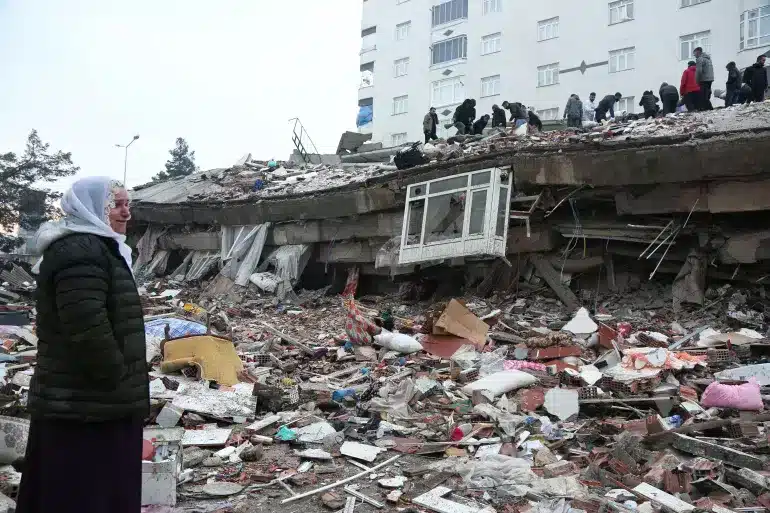
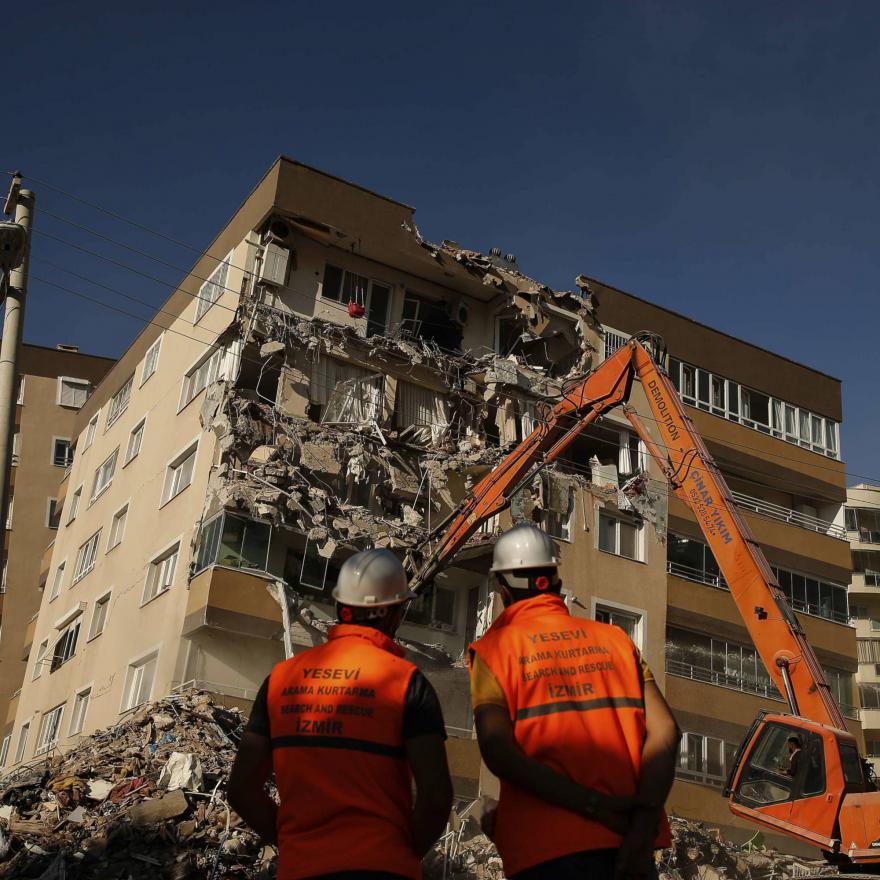
    Strong earthquakes and their aftershocks have wreaked havoc across Turkey and Syria.

    Following an earthquake disaster that has  left more than 1,800 people dead, dozens of nations and organisations have offered to help with rescue operations in southeast Turkey and northwest Syria.

    The international assistance that has been mobilised and offered since the Monday morning earthquake are listed below. It will be revised appropriately.

    Following an earthquake disaster that left more than 1,800 people dead, dozens of nations and organisations have offered to help with rescue operations in southeast Turkey and northwest Syria.

    The international assistance that has been mobilised and offered since the Monday morning earthquake is listed below. It will be revised appropriately.

    China

    China is willing to provide humanitarian emergency aid to earthquake-struck Turkey and Syria, the State Council’s foreign aid agency said.

    China expressed condolences and concern for the loss of life and property, and is in communications with both Turkey and Syria, a spokesperson from China International Development Cooperation Agency said.

    European Union

    Ten search-and-rescue teams from eight European Union countries have been mobilised to help first responders in Turkey, the European Commission said in a statement.

    The units come from Bulgaria, Croatia, the Czech Republic, France, Greece, the Netherlands, Poland and Romania. Italy and Hungary have also offered to send teams to Turkey, the Commission wrote.

    Germany

    A spokesperson for the German government said his country would contribute to the swift delivery of aid.

    Greece

    Kyriakos Mitsotakis, prime minister of Greece, offered condolences and support to Turkey, saying his country was mobilising its resources and will assist immediately.

    India

    The Indian government said two teams from its National Disaster Response Force comprising 100 personnel with specially trained canine squads and equipment were ready to be flown to the disaster area for search-and-rescue operations.

    Medical teams were also being readied, and relief material was being sent in coordination with the Turkish authorities.

    Iran

    Foreign ministry spokesperson Nasser Kanaani expressed “condolences and deep sympathy” to the quake-hit countries and expressed readiness to help the victims.

    Hailing Iran’s “good relationship” with both countries, Kanaani said: “If there is a need for the presence of relief and health institutions of the Islamic Republic of Iran in the earthquake-affected areas, we will fulfil our moral responsibility.”

    He described the offer of help as a “moral, human and Islamic responsibility”.

    Italy

    Prime Minister Giorgia Meloni said Italy’s Civil Protection was standing by to contribute support and provide first aid.

    Israel

    Israeli Prime Minister Benjamin Netanyahu said all authorities had been instructed to make immediate preparations to provide medical and search-and-rescue assistance.

    Defence minister Yoav Gallant said Israel’s security forces are ready to provide any assistance needed, while foreign minister Eli Cohen added that a swift aid programme was being prepared.

    NATO

    Voicing full solidarity with Turkey, NATO chief Jens Stoltenberg said on Twitter: “I am in touch with President Recep Tayyip Erdogan and Foreign Minister Mevlut Cavusoglu, and NATO Allies are mobilizing support now.”

    Norwegian Refugee Council (NRC)

    “NRC is assessing the situation in order to provide direct support to those most affected across Syria. A massive scale up is needed and our organisation will be part of it,” said Carsten Hansen, Middle East regional director for NRC.

    Poland

    Poland will send rescue group HUSAR, consisting of 76 firefighters and eight rescue dogs, Interior and Administration Minister Mariusz Kamiński said.

    Qatar

    The emir of Qatar, Sheikh Tamim bin Hamad Al Thani, expressed his condolences in a phone call with Turkish President Recep Tayyip Erdogan.

    State news agency QNA said the emir expressed Qatar’s support for the “sisterly” country “in mitigating the serious humanitarian repercussions left by the earthquake”.

    Spain

    Spanish urban rescue teams are preparing to travel to Turkey, Spain’s interior ministry said, and officials from the defence ministry and other departments were coordinating to send the crews immediately to Turkey.

    Russia

    Russian President Vladimir Putin expressed his condolences and offered assistance.

    “Please accept my deep condolences on the numerous human casualties and large-scale destruction … in your country,” Putin said.

    “We are ready to provide the necessary assistance in this regard,” he added.

    Ukraine

    President Volodymyr Zelenskyy said Ukraine was ready to send support.

    On Twitter, Zelenskyy wrote: “I express my sincere condolences to President Erdogan, the Turkish people and the families of the victims of the earthquake in the southeast of Turkey.

    “I wish a speedy recovery to all the victims. We will stand by the Turkish people in this difficult time. Ready to provide the necessary assistance to overcome the consequences of the disaster.

    United Kingdom

    The UK says it will send search and rescue specialists and an emergency medical team to Turkey.

    Britain will send 76 search and rescue specialists, four search dogs and rescue equipment that will arrive in Turkey on Monday evening, the British foreign ministry said.

    “We stand ready to provide further support as needed,” James Cleverly, the UK’s foreign secretary, said in a statement.

    United States

    White House National Security Advisor Jake Sullivan said the US is “profoundly concerned” about the incident.

    “I have been in touch with Turkish officials to relay that we stand ready to provide any & all needed assistance. We will continue to closely monitor the situation in coordination with Turkiye,” Sullivan said on Twitter, using Turkey’s official name.

    WHO

    The United Nations’ World Health Organization chief, Tedros Ghebreyesus, said emergency medical teams had been activated to provide essential health care for the injured and most vulnerable.

  • Turkey, Syria earthquake: Russia extends helping hand to close allies

    Turkey, Syria earthquake: Russia extends helping hand to close allies

    Russia’s Vladimir Putin has offered Turkey and the Syrian government assistance.

    Russia, a close ally of Syrian President Bashar al-Assad, keeps a sizable military presence there and participates in ongoing combat operations against opposition forces.

    Putin also gets along well with Turkey’s President Tayyip Erdogan, who is a NATO member but has attempted to mediate the conflict between Russia and Ukraine.

    “Please accept my deep condolences on the numerous human casualties and large-scale destruction caused by a powerful earthquake in your country,” Putin said in his message to Erdogan on Monday.

    Separately, Putin told Assad that Russia shared “the sadness and pain of those who lost their loved ones” and said Russia was ready to provide help.

    earthquake
    A man reacts as people search for survivors through the rubble in Diyarbakir, Turkey [Ilyas Akengin/AFP]
  • German envoy summoned by Turkey over consulate closure

    German envoy summoned by Turkey over consulate closure

    This week, a number of European nations, including Germany, temporarily closed their consulates in Istanbul due to security reasons. But Turkey says this is part of their “psychological warfare,”

    The Turkish government strongly rebuked foreign diplomatic missions on Friday who had warned of terrorist threats following Quran burnings at demonstrations against Ankara’s stance on NATO expansion abroad.

    “If they want to create the image that Turkey is unstable and that there is a danger of terrorism, then that is incompatible with friendship and partnership,” Foreign Minister Mevlut Cavusoglu said after summoning Germany’s ambassador — the ninth envoy to receive a summons this week.
    On Thursday, Turkey summoned several ambassadors following the temporary closure of a number of European consulates in Istanbul.

    According to a diplomatic source cited by the AFP news agency, envoys from Germany, Belgium, Britain, France, Italy, the Netherlands, Switzerland, Sweden and the United States were called to attend a meeting at the Foreign Ministry.

    Germany shut its Istanbul consulate on Wednesday, citing a heightened risk of terror attacks following Quran-burning incidents in some European countries. At least six other countries took the same step as a precaution.

    The US consulate remains open, as the complex is not in Istanbul’s city center and is therefore considered to be a less vulnerable target. Washington has, however, joined a number of other governments in issuing travel warnings advising citizens to be vigilant and avoid tourist hotspots.

    Why are there security concerns?

    Tensions between Turkey and Western countries have been rising over Ankara’s refusal to approve Sweden and Finland’s NATO membership bids.

    Recent protests in Denmark, Sweden and the Netherlands, at which far-right activists burned or desecrated copies of the Quran, the Muslim holy book, have only strained ties further.

    The actions have infuriated Muslims in Turkey and other parts of the world.

    Norwegian police said Thursday they had canceled a planned anti-Islam protest in Oslo, saying security could not be ensured. The group behind the protest had reportedly planned to burn the Quran outside the Turkish Embassy.

    The German Foreign Ministry on Friday confirmed that Berlin’s ambassador to Turkey had been summoned for talks after Germany closed its consulate.

    The ambassador was summoned together with counterparts from several other countries, a ministry spokesperson said.

    Turkey alleges ‘psychological warfare’

    Turkish officials have reacted angrily to the Quran burnings and travel warnings, and the government on Friday issued a strong rebuke over the closure of the foreign diplomatic missions.

    Speaking Thursday, Interior Minister Suleyman Soylu called the measures an attempt to meddle in Turkey’s election campaign ahead of presidential and parliamentary votes on May 14.

    “They are waging psychological war against Turkey,” Soylu told Turkey’s NTV news channel. “They are trying to destabilize Turkey.”

    Soylu, who is known for his anti-Western rhetoric, said the travel alerts and consulate closures were part of a plot to prevent Turkey’s tourism sector from rebounding after the coronavirus pandemic.

    Meanwhile, the chief spokesman for President Recep Tayyip Erdogan’s ruling party said Turkey was a safe country and that the security alerts from the West were “irresponsible.”

    “Some embassies and consulates are making statements to raise concerns about our country’s security conditions,” spokesman Omer Celik tweeted. “This type of irresponsible behavior is unacceptable.”

    In apparent retaliation for the security alerts from Western countries, Turkey issued its own warnings over the weekend. It told its citizens there was a risk of “possible Islamophobic, xenophobic and racist attacks” in the US and Europe.

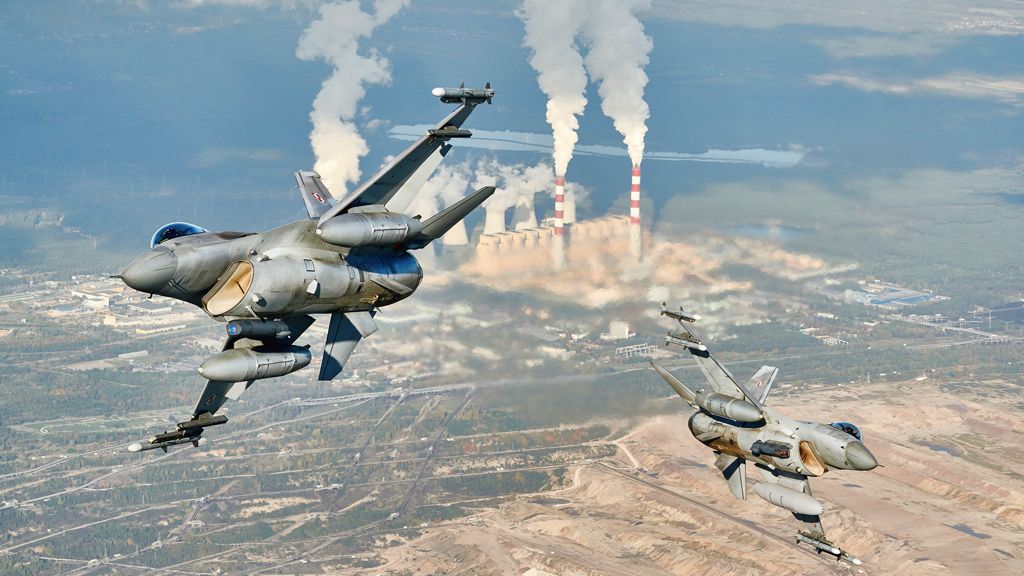
  • F-16s to give Ukraine an upper hand but risk escalation

    F-16s to give Ukraine an upper hand but risk escalation

    Experts say Ukraine would need to use cutting-edge Western missiles because fighter jets perform best with radar support.

    According to experts in air defense, US-made F-16 fighter jets would give Ukraine an advantage over the Russian air force, but only if they were used in conjunction with potent missiles and targeting data that the West would also have to supply, drawing it more actively into the conflict.

    Konstantinos Zikidis, a Hellenic Aerospace Industry aerospace engineer with extensive F-16 experience, said of the technology: “It’s not a panacea, not a game-changer.”

    Despite President Joe Biden’s Monday statement that the United States would not send F-16s to Ukraine, the majority of NATO members in Europe have left the option open.

    “The Sukhoi-35 is larger and faster and has a more powerful radar,” Zikidis told Al Jazeera of the Russian fighter jet the F-16 would be up against.

    But the F-16 could overcome the Sukhoi-35 if it carried powerful Western missiles and received tracking data from airborne radar, Zikidis said.

    If Ukraine were to receive F-16s, they would likely come from Poland, which has said it is ready to hand over part of its fleet.

    These carry the AIM-9X Sidewinder missile, a 10-20km (6-12-mile) range short-range infrared guided missile “undetectable by the target plane’s defence systems”, Zikidis said.

    “And they have the AIM-120 AMRAAM, which covers larger distances of up to 100km (62 miles)… [and] can continue to receive target updates from the aircraft that fired it.”

    Both missiles are among NATO’s most advanced.

    Wing commander Thanasis Papanikolaou, who has flown and commanded formations of F-16s, agrees that, if networked, the F-16 would offer Ukraine a clear advantage.

    “The Russians are using older tactics, whereas Western tactics have evolved to use planes in combination with the navy, ground forces, [airborne] and naval radar intelligence – this Western type of warfare is very advanced,” Papanikolaou told Al Jazeera.

    “The Su35 may have great abilities, but it is behind the F-16 if equipped with Link 16,” said Papanikolaou, referring to a NATO communications technology that data-links planes, ships and ground forces. “This enables every asset on the battlefield to share the same picture.”

    If NATO’s AWACS airborne radar were to operate at the limit of Romanian airspace, it could illuminate virtually all of Crimea, a territory Ukraine says it wants to recapture, and reports suggest the White House is willing to consider helping Ukraine do.

    Ukraine wants new tech

    Ukraine has suggested it wants some of the most advanced versions of the F-16.

    “If we get them, the advantages on the battlefield will be just immense … It’s not just F-16s. Fourth-generation aircraft, this is what we want,” Yuriy Sak, an adviser to defence minister Oleksiy Reznikov, told Reuters.

    Poland, which operates fourth-generation F-16 Block 52+ planes, confirmed on Monday it was prepared to send them to Ukraine if NATO approved the move.

    Experts say these carry a “sophisticated” on-board computer and powerful radar.

    At the beginning of the war, Ukraine’s air force was spearheaded by 50 MiG-29 fighters and 32 Sukhoi-27s, but they were “overmatched” said a recent RUSI report.

    “Russian aircraft could generally see and shoot further while their countermeasures were effective against Ukrainian air-to-air munitions,” the report said.

    Moscow’s highly publicised aircraft losses in the opening days of the war dropped after the Russian air force brought in air defences and started jamming Ukrainian radar and hunting Ukrainian anti-air batteries.

    Ukrainian pilots partly compensated for their disadvantage in numbers and technology by flying below enemy radar, but the limitations of this tactic were made painfully obvious last October when a Ukrainian Sukhoi-27 and a Sukhoi-24 were shot out of the sky by Russian missiles after performing a “jump” – a brief thrust into higher altitude – to fire at kamikaze drones or enemy air defences.

    Western airborne radar failed to spot the incoming missiles, leading to suspicion that Russia may have begun to deploy its fearsome R-37M, a hypersonic missile believed to have been fired more than 200km (124 miles) away by a Sukhoi-57, Russia’s still-experimental multirole stealth fighter.

    Against such a combination of arms, even the F-16 Block 52+ may not be a match, say experts, but it does underline Ukraine’s need for a generational leap in air attack capabilities.

    Can it be done?

    There are clear advantages to the F-16.

    It is the world’s most-produced fighter jet, with many being decommissioned in Europe as NATO members transition to the F-35.

    Lockheed Martin, which produces the F-16, told the Financial Times it can increase production to replace planes sent to Ukraine.

    COO Frank St John said the company was “going to be ramping production on F-16s in Greenville [South Carolina, US] to get to the place where we will be able to backfill pretty capably any countries that choose to do third-party transfers to help with the current conflict”.

    The Netherlands’ foreign minister, Wopke Hoekstra, said there were “no taboos” on weapons supplies to Ukraine, and recent reports had suggested that the US Pentagon had seriously considered sending F-16s.

    But there are practical and symbolic concerns.

    Training Ukrainian pilots on F-16s might not be carried out in time to make a difference in the war this year, say experts.

    “The altimeter in Western planes, for example, is in feet. The Soviet altimeter is in metres. It’s two different ways of thinking,” said Papanikolaou.

    “It would take many months, and they might have to be piloted by [Western] volunteer veterans,” said Zikidis.

    Bringing in Western pilots, even as privateers, could create political complications.

    “The Russians will try to present that NATO is directly involved in the Ukraine war, and will threaten nuclear war,” said Papanikolaou.

    Ukraine has reportedly prepared a batch of 50 pilots who have flown in Western military exercises and could be trained in three months. And US Congressman Adam Kinzinge introduced a bill to train Ukrainian pilots and support crew on F-15 and F-16 fighter jets as early as June 23 last year. That bill was approved.

    The symbolic concern is over losses of aircraft.

    Western weaponry has proven largely superior to Soviet-era weaponry during the course of the Ukraine war. But Russia’s development of hypersonic missiles could prove a match for the F-16, ending the narrative of NATO superiority.

    “It carries a risk,” said Zikidis. “If you lose an F-16 it will be a big story. Sukhois are falling out of the sky, but that’s not a story.”

    Perhaps for such reasons, there are still naysayers in the Western alliance.

    German chancellor Olaf Scholz, after bowing to pressure to send Leopard 2 battle tanks to Ukraine, said he would not be sending the jets.

    “I made it clear very early on that we are not talking about combat aircraft, and I am doing the same here,” he told the Bundestag this month.

  • NATO chief requests South Korea “step up” its military assistance to Ukraine

    NATO chief requests South Korea “step up” its military assistance to Ukraine

    Jens Stoltenberg recommends that Seoul rethink its prohibition on the export of weapons to nations engaged in hostilities.

    NATO Secretary-General Jens Stoltenberg has urged South Korea to “step up” its military support for Ukraine, citing other nations that have altered their export laws in response to the Russian invasion.

    On Monday, Stoltenberg made the appeal in Seoul, the capital of South Korea.

    He is in the city for the first leg of a trip to Asia that will also stop in Japan and is intended to strengthen ties with the democratic allies in the region in light of the conflict in the Ukraine and the escalating rivalry with China.

    In meetings with senior South Korean officials, Stoltenberg argued that events in Europe and North America are interconnected with other regions, and that the alliance wants to help manage global threats by increasing partnerships in Asia.

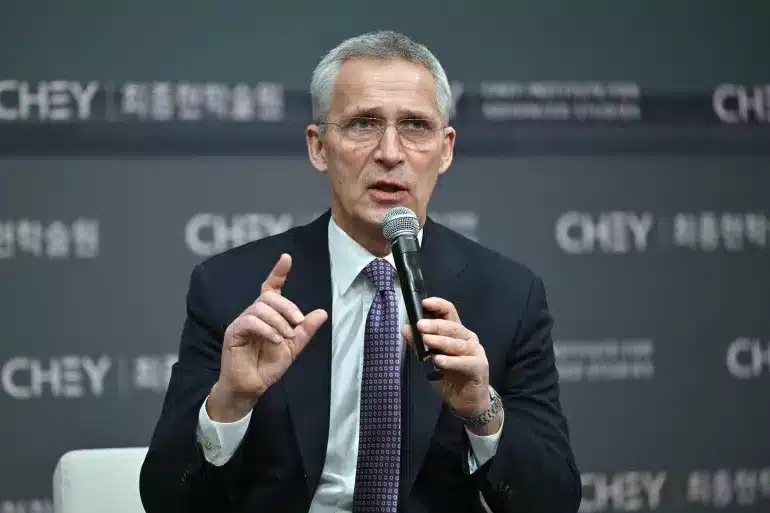
    Speaking at the Chey Institute for Advanced Studies in Seoul, he thanked South Korea for its nonlethal aid to Ukraine but urged it to do more, adding there was an “urgent need” for ammunition. Russia calls the invasion a “special operation”.

    He pointed to countries like Germany and Norway that had “longstanding policies not to export weapons to countries in conflict” that were revised after Russian President Vladimir Putin ordered the invasion of Ukraine in February last year.

    “If we believe in freedom, democracy, if we don’t want autocracy and totalitarian to win then they need weapons,” he said.

    South Korea is an increasingly important global arms exporter and has recently signed deals to sell hundreds of tanks to European countries, including NATO-member Poland. But South Korean law bans the export of weapons to countries in active conflict, which Seoul has said makes it difficult to provide arms directly to Kyiv.

    South Korea opened its first diplomatic mission to NATO last year.

    Stoltenberg said it was unclear when the conflict in Ukraine would end, saying Putin was preparing for “more war” and actively acquiring weapons from countries, including North Korea.

    In a statement carried by state media on Monday, North Korea called Stoltenberg’s visit a “prelude to confrontation and war as it brings the dark clouds of a ‘new Cold War’ to the Asia-Pacific region”.

    Pyongyang on Sunday denied sending weapons to Moscow, accusing the United States of spreading a “groundless rumor”.

    “Trying to tarnish the image of [North Korea] by fabricating a non-existent thing is a grave provocation that can never be allowed and that cannot but trigger its reaction,” said Kwon Jong Gun, director general of North Korea’s Department of US Affairs.

    He also called it “a foolish attempt to justify its offer of weapons to Ukraine”.

    Earlier this week, US President Joe Biden promised 31 Abrams tanks, one of the most powerful and sophisticated weapons in the US army, to help Kyiv fight off Moscow’s invasion.

  • ‘This is mad’ – Croatian president blasts Western arms deliveries to Ukraine

    ‘This is mad’ – Croatian president blasts Western arms deliveries to Ukraine

    The Western policies toward Russia and the Balkans have received repeated criticism from President Zoran Milanovic.

    On Monday, the president of Croatia criticised the West for arming Ukraine with heavy tanks and other weapons for its defence against invading Russian forces, saying that such deliveries would only serve to prolong the conflict.

    Zoran Milanovic told reporters in the Croatian capital that it is “mad” to believe that Russia can be defeated in a conventional war.

    “I am against sending any lethal arms there,” Milanovic said. “It prolongs the war.”

    “What is the goal? Disintegration of Russia, change of the government? There is also talk of tearing Russia apart. This is mad,” he added.

    Milanovic won the presidential election in Croatia in 2019 as a left-leaning liberal candidate, a counterpoint to the conservative government currently in power in the European Union and NATO-member state.

    But he has since made a turn to populist nationalism and criticised Western policies toward Russia as well as the Balkans.

    Milanovic has built a reputation of being pro-Russia, which he has repeatedly denied.

    Yet in recent months, he has openly opposed the admission of Finland and Sweden into NATO as well as the training of Ukrainian troops in Croatia as part of EU aid to the embattled country.

    After months of hesitation, the US said last week that it would send 31 of the 70-ton Abrams battle tanks to Ukraine, and Germany announced it will dispatch 14 Leopard 2 tanks and allow other countries to do the same.

    Milanovic said that “from 2014 to 2022, we are watching how someone provokes Russia with the intention of starting this war.”

    “What is the goal of this war? A war against a nuclear power that is at war in another country? Is there a conventional way to defeat such a country?” Milanovic asked on Monday.

    “Who pays the price? Europe. America pays the least,” he said. “A year has passed and we are only now talking about tanks,” Milanovic said.

    “Not a single American tank will go to Ukraine in a year. Only German tanks will be sent there.”

    Although the presidential post is mostly ceremonial in Croatia, Milanovic is formally the supreme commander of the armed forces.

    His latest anti-Western outbursts have embarrassed and irritated the country’s government which has fully supported Ukraine.

  • Russia-Ukraine war: Boris Johnson has accused Putin of threatening him with missile strike

    Russia-Ukraine war: Boris Johnson has accused Putin of threatening him with missile strike

    In the lead-up to Russia’s invasion of Ukraine, Boris Johnson says Vladimir Putin threatened him with a missile strike during an “extraordinary” phone call.

    It “would only take a minute,” according to the then-prime minister, who quoted Mr. Putin.

    The remark, according to Mr. Johnson, was made following his warning that the war would be an “utter catastrophe.”

    A BBC documentary on Mr. Putin’s interactions with world leaders over the years makes the assertion that this was a “lie,” the Kremlin spokesman declared.

    Mr Johnson warned Mr Putin that invading Ukraine would lead to Western sanctions and more Nato troops on Russia’s borders.

    He also tried to deter Russian military action by telling Mr Putin that Ukraine would not join Nato “for the foreseeable future”.

    But Mr Johnson said: “He threatened me at one point, and he said, ‘Boris, I don’t want to hurt you but, with a missile, it would only take a minute’ or something like that. Jolly.

    “But I think from the very relaxed tone that he was taking, the sort of air of detachment that he seemed to have, he was just playing along with my attempts to get him to negotiate.”

    President Putin had been “very familiar” during the “most extraordinary call”, Mr Johnson said.

    No reference to the exchange appeared in accounts released to the media of the call given by both Downing Street and the Kremlin.

    From the 2014 seizure of Crimea to the invasion of Ukraine, this is the inside story of a decade of clashes – as told by the Western leaders who traded blows with Putin’s Russia

    It is impossible to know if Mr Putin’s threat was genuine.

    However, given previous Russian attacks on the UK – most recently in Salisbury in 2018 – any threat from the Russian leader, however lightly delivered, is probably one Mr Johnson would have had no choice but to take seriously.

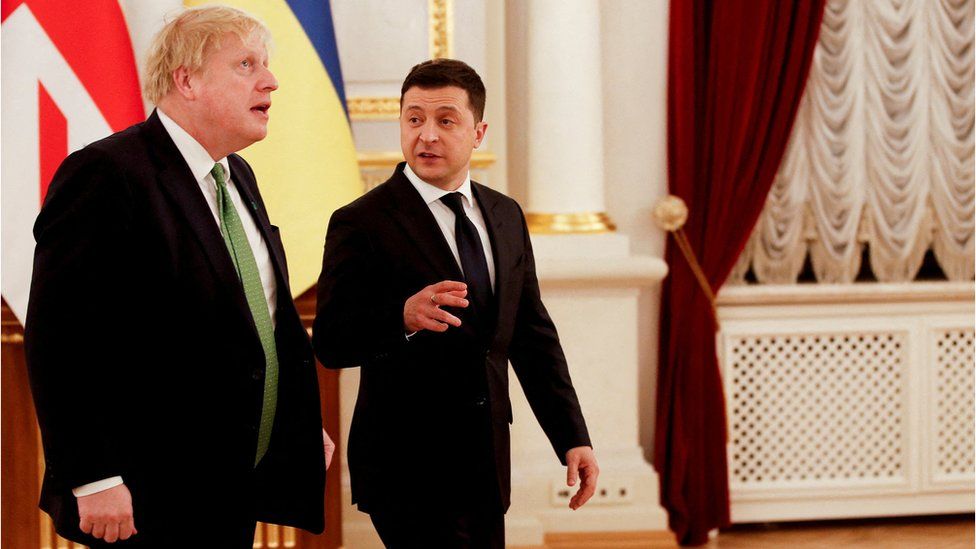
    Boris Johnson met Volodymyr Zelensky in Kyiv on 1 February 2022
    Image caption,Boris Johnson received a call from President Putin the day after he met Volodymyr Zelensky in Kyiv

    In his response, Mr Putin’s spokesman said the former prime minister’s claim was “either a deliberate falsehood, in which case you need to ask Mr Johnson why he lied, or it was not a deliberate lie. That is, he didn’t understand what President Putin was saying to him”.

    “There were no threats to use missiles,” Dmitry Peskov told the BBC.

    The Kremlin leader, he said, had simply pointed out that “if Ukraine joined Nato the potential deployment of Nato or US missiles near Russia’s border would mean that any missile could reach Moscow within minutes”.

    Since the invasion, President Putin has warned countries that may try to interfere, that Russia’s response would be immediate – even hinting at the use of nuclear weapons.

    Nine days after Mr Johnson’s conversation with President Putin, on 11 February, Defence Secretary Ben Wallace flew to Moscow to meet his Russian counterpart, Sergei Shoigu.

    The BBC documentary Putin Vs the West reveals Mr Wallace left with assurances that Russia would not invade Ukraine, but he said both sides knew it was a lie.

    He described it as a “demonstration of bullying or strength, which is: I’m going to lie to you, you know I’m lying and I know you know I’m lying and I’m still going to lie to you.

    “I think it was about saying ‘I’m powerful’,” Mr Wallace said.

    He said the “fairly chilling, but direct lie” had confirmed his belief that Russia would invade.

    As he left the meeting, he said Gen Valery Gerasimov – Russia’s chief of general staff – told him “never again will we be humiliated”.

    Another significant encounter in the months leading up to Russia’s invasion of Ukraine was with CIA director William Burns, who landed in Moscow on 2 November 2021.

    Mr Burns had been circling the Russian capital for hours, as heavy fog prevented his landing, but when he finally arrived at the Kremlin he discovered Mr Putin was not there. Instead, he was sheltering in the southern Russian city of Sochi amid a spike in Covid infections.

    The pair spoke over the phone.

    The CIA director said he was direct in laying out the message President Biden had sent him to deliver: the US knew what Mr Putin was up to and he would pay a heavy price if he launched such an invasion.

    He said the Russian president did not deny planning was underway and listed grievances about Ukraine and the West.

    “I was troubled before I arrived in Moscow. And I was even more troubled after I left,” Mr Burns added.

    Less than a fortnight after the UK defense secretary left Moscow, as tanks rolled over the border on February 24, Mr. Johnson received a phone call in the middle of the night from President Zelensky.

    “Zelensky’s very, very calm,” Mr Johnson recalled. “But, he tells me, you know, they’re attacking everywhere.”

    Mr Johnson says he offered to help move the president to safety.

    “He doesn’t take me up on that offer. He heroically stayed where he was.”

    Putin vs. the West will be broadcast on Monday, January 30 on BBC Two at 21:00 and will be available on the iPlayer in the UK.

  • French battlegroup conducts NATO combat drill in Romania

    French battlegroup conducts NATO combat drill in Romania

    It is reported that about 600 French soldiers were deployed to take part in a military drill at a NATO battlegroup in Romania.

    The aim was to test the 30-nation military alliance’s readiness on its eastern flank amid Russia’s war in neighbouring Ukraine.

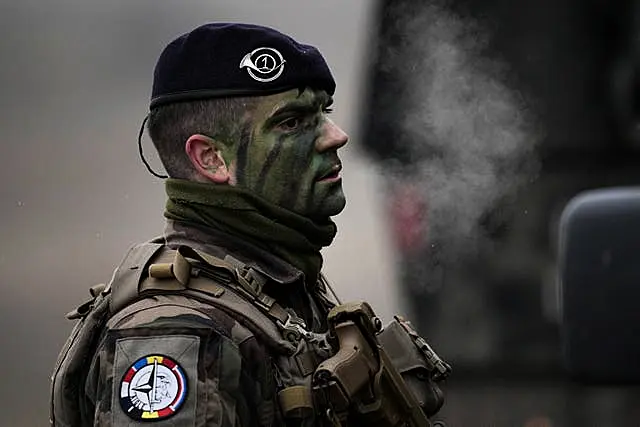
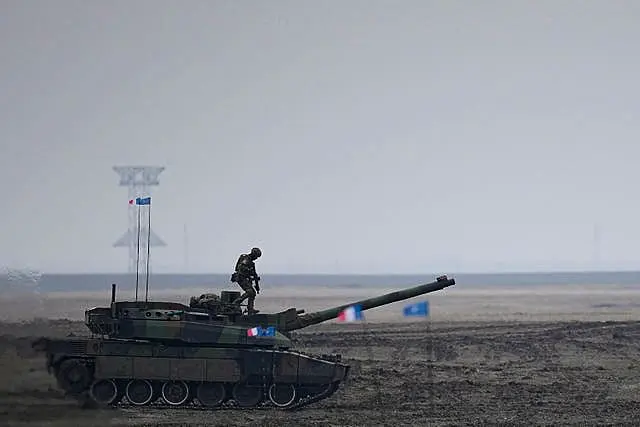
    The drill at a training range near Romania’s eastern town of Smardan on Wednesday involved some 200 military vehicles, including four French Leclerc battle tanks that practiced firing live ammunition.

    A French serviceman takes part in an exercise at a training range in Smardan, eastern Romania
    A French serviceman takes part in an exercise at a training range in Smardan, eastern Romania (Vadim Ghirda/AP)

    Romania’s defense ministry said the main purpose of the exercise was to train the battlegroup “on the rapid deployment capability and execution of a combat mission” within a collective NATO defense operation.

    The Leclerc tanks used are the same model French President Emmanuel Macron said on Sunday he asked his defence minister to “work on” possibly sending to Ukraine.

    Kyiv has persistently requested tanks from its western allies to help its war efforts.

    After much hesitation, that request was finally granted by Germany on Wednesday when Chancellor Olaf Scholz said his government would provide German-made Leopard 2 battle tanks and also approve requests by other countries to do the same.

    A French serviceman stands on a Leclerc main battle tank during the exercise
    A French serviceman stands on a Leclerc main battle tank during the exercise (Vadim Ghirda/AP)

    In response to Russia’s invasion of Ukraine last February, Nato bolstered its presence on Europe’s eastern flank, including by sending additional multinational battlegroups to alliance members Romania, Hungary, Bulgaria and Slovakia.

    This month, the alliance deployed two surveillance planes to Romania, from where they will fly missions for several weeks to monitor Russian military activity near Nato’s borders.

    The Awacs aircraft, which Nato refers to as its “eyes in the sky”, belong to a fleet of 14 usually based in west Germany.

    Since the war started, Awacs have patrolled regularly over eastern Europe and the Baltic Sea region to track Russian warplanes.

  • Russia’s Lavrov hails Moscow-Beijing relations, accusing the US of provocations

    Russia’s Lavrov hails Moscow-Beijing relations, accusing the US of provocations

    The top diplomat for Russia claims that the West is looking for opportunities to enrage China on a variety of topics, including Taiwan and Tibet.

    Sergey Lavrov, the foreign minister of Russia, has praised Moscow and Beijing’s joint military exercises as a step toward solidifying their newly formed strategic alliance.

    Speaking to reporters on Wednesday in Moscow, Lavrov also charged that the West was looking for opportunities to enrage China on a variety of topics, including the status of Tibet and Taiwan.

    He claimed that because China is far more powerful than the United States, Washington is compelled to “mobilize” the West to support its anti-Beijing agenda.

    As the war in Ukraine rages, China and Russia have put aside decades of mutual distrust and stepped up military exercises to align their foreign policies.

    They signed a “no limits” partnership last February, days before Moscow sent its armed forces into Ukraine and their economic links have boomed as Russia’s connections with the West have shrivelled.

    However, Beijing is treading carefully.

    President Vladimir Putin has publicly acknowledged that his Chinese counterpart, Xi Jinping, has “concerns” over Russia’s actions in Ukraine.

    Lavrov warned that Russia’s showdown with the West over Ukraine was part of a global policy shift that will evolve over a long period.

    “The process of forming a multipolar world order will be long; it will take an epoch,” he said. “And we are in the middle of that process now.”

    He cited Western efforts to hamper the widening cooperation between Russia and China, maintaining they would not success.

    Russia’s relations with the West “will never be the same”, he said, as he accused the West of failing to observe signed agreements with Moscow.

    “Never again there will be a situation when you lie, sign documents and then refuse to fulfil them,” he said.

    Last month, the Chinese and Russian navies held joint drills in the East China Sea.

    According to China’s Eastern Theater Command of the People’s Liberation Army, the exercises were designed to demonstrate “the determination and capability of the two sides to jointly respond to maritime security threats”.

    Meanwhile, Russia and China are also said to be “sharing a toolkit” of approaches and strategies to undermine NATO, according to Julianne Smith, US ambassador to NATO.

    “Those two are increasingly sharing a toolkit that should concern the NATO alliance, Smith told the Financial Times in an article published in December.

    “There’s just no question that the [People’s Republic of China] and Russia are both working to divide … the transatlantic partners. And we are now very aware, we all have a deeper appreciation of those efforts and are intent on addressing them,” Smith said in an interview.

    NATO in June listed China among its strategic challenges for the first time, saying Beijing’s ambitions and “coercive policies” undermined the Western military bloc’s “interests, security and values”.

    Lavrov compares West’s approach to Hitler’s ‘final solution’

    Elsewhere in his speech on Wednesday, Lavrov said the US had assembled a coalition of European countries to solve “the Russian question” using Ukraine as a proxy, in the same way Adolf Hitler had sought a “final solution” to eradicate Europe’s Jews.

    “Just as Hitler wanted a ‘final solution’ to the Jewish question, now, if you read Western politicians … they clearly say Russia must suffer a strategic defeat,” he said.

    Al Jazeera’s Ali Hashem, reporting from Moscow, said Lavrov’s news conference was an attempt to contextualise the war into the “Russian-Western confrontation”.

    Source: Aljazeera.com

  • We are a de facto member of Nato alliance – Ukraine defence minister

    We are a de facto member of Nato alliance – Ukraine defence minister

    The Ukrainian defense minister claims that due to a shift in Western nations’ “thinking approach,” Ukraine has effectively joined NATO. Previously, Western nations were afraid that providing military assistance may be perceived by Russia as an escalation.

    In an interview with the BBC, Oleksii Reznikov said he was sure Ukraine would receive long-sought weapons, including tanks and fighter jets, as both Ukraine and Russia seemed to be preparing for new offensives in the spring.

    “This concern about the next level of escalation, for me, is some kind of protocol,” Mr Reznikov said.

    “Ukraine as a country, and the armed forces of Ukraine, became [a] member of Nato. De facto, not de jure (by law). Because we have weaponry, and the understanding of how to use it.”

    Russian President Vladimir Putin has framed his invasion of Ukraine as an existential battle against Western countries that want to weaken Russia.

    Russian figures have argued they are fighting Nato in Ukraine, as the West has supplied the country with weapons in what they call a war of aggression.

    Ukraine, for years, has sought to join the military alliance between the US, Canada and 28 European countries, something President Vladimir Putin has described as a security threat for Russia.

    Ukrainian President Volodymyr Zelensky has pushed for fast-track accession, but it is unclear whether full membership is something the alliance members will seriously consider even after the war is over, despite pledges of support.

    Article 5 of the Nato Treaty says an armed attack against any member should be considered an attack against all.

    Mr Reznikov, however, denied that his comments would be seen as controversial, not only by Russia but, perhaps, by Nato itself, as the alliance has taken steps not to be seen as a party to the conflict.

    “Why [would it be] controversial? It’s true. It’s a fact,” Mr Reznikov said. “I’m sure that in the near future, we’ll become member of Nato, de jure.”

    Ukrainian forces fire at Russian positions at the front line near Soledar, Donetsk region, Ukraine
    Image caption, Soledar, a small town in the eastern Donetsk region, has been experiencing some of the war’s most intense fighting

    The defence minister spoke in the capital, Kyiv, as Ukrainian and Russian forces continued to fight for the small town of Soledar, in the eastern Donetsk region, in some of the most intense battles in the nearly 11-month-old war.

    The Russian offensive is led by the mercenary Wagner Group, whose founder Yevgeny Prigozhin, a long-time Putin ally, has become a vocal critic of the Russian army’s performance in Ukraine.

    On Tuesday, Mr Prigozhin claimed that his fighters had seized control of the town, an allegation that was dismissed by Ukraine and, remarkably, by the Kremlin, in what was considered a rebuff to Mr Prigozhin.

    The situation in Soledar was “very difficult”, Mr Reznikov said, but “under control”. He said Wagner fighters were being used in “wave after wave after wave” of attacks, leading to a high number of deaths, and that Mr Prigozhin was interested in the possible economic benefits of seizing the town, home to Europe’s largest salt mines.

    “They’ll earn money from blood,” he said.

    Soledar is about 10km (six miles) from Bakhmut, a strategic city where Ukrainian and Russian forces have been engaged in a months-long war of attrition that has caused widespread destruction and heavy losses on both sides. There, Wagner mercenaries have also been deployed in large numbers, and Mr Prigozhin is believed to have made the capture of Bakhmut a personal goal.

    The group, Mr Reznikov said, “need to deliver some kind of proof to declare they’re better than the regular armed forces of the Russian Federation”. If seized, Bakhmut could pave the way for a Russian push towards Kramatorsk and Slovyansk, two Ukrainian strongholds in Donetsk, a region that has been a key target for President Putin.

    Map shows areas of control in the Donetsk region of eastern Ukraine

    Any gains would be, more than anything else, of extreme symbolic value for Russia. They would come after a series of humiliating setbacks, including a chaotic retreat from the north-eastern region of Kharkiv and the withdrawal from the southern city of Kherson, the only regional capital Russian forces had captured in the war.

    Mr Reznikov claimed that “approximately 500 or 600” Russian fighters were being killed every day across the country, while Ukraine was losing a tenth of that, figures that could not be independently verified. He believed Russia could be trying to gather “forces, ammunition and weapons” for an offensive from areas it already occupies in the south and east.

    Ukraine, in the meantime, needed time to regroup and rearm while it waited for the delivery of Western weapons. “Spring is the best period to refresh the movement for all sides,” he said. “We understand they’ll be ready to start and, surely, we have to be ready to start.”

    However, he did not repeat a claim that Russia could be preparing another invasion from Belarus, a warning that has been dismissed by the head of the Ukrainian military intelligence agency. The movement from the north, Mr Reznikov said, “would take a lot of time and they [Russia] have no resources”.

    Mr Reznikov spoke a day after the Russian defence ministry replaced the commander of its forces in Ukraine, a surprise announcement that was seen as a sign of a power struggle. Gen Valery Gerasimov, one of the architects of last year’s invasion, would return to the post that was being held by Gen Sergei Surovikin, who had been appointed in October.

    The change, Mr Reznikov said, was a result of the “conflict between Mr Prigozhin and the armed forces of the Russian Federation”. Gen Surovikin oversaw the recent brutal attacks on Ukraine’s energy infrastructure that, according to Mr Reznikov, “reduced the [Russian missile] stocks without any results”, repeating a Ukrainian claim that “they’re running out of missiles”.

    As Poland and Britain revealed plans to deliver battle tanks for the first time, Mr Reznikov said he was sure Ukraine would receive “tanks, fighting aircrafts or jets, and long-range weaponry to hit targets in 300km (186 miles) as well”, because “things were changing” in Western countries.

    He dismissed concerns that the announcements could trigger a Russian response, despite now-familiar threats from Moscow. “I have a war in my country,” he said. “They’re hitting my cities, my hospital, my kindergartens, my schools. They killed a lot of civilians, a lot of civilians. They’re an army of rapists, murderers and looters. What’s the next level of escalation?”

    Source: BBC

  • ISIL fighters dead in Afghanistan raids, Taliban says

    ISIL fighters dead in Afghanistan raids, Taliban says

    The raids come after a string of ISIL assaults, including a deadly bombing close to a checkpoint in Kabul.

    According to a senior Taliban government spokesman, eight ISIL (ISIS) fighters have been killed and a number of others have been arrested in a series of raids targeting prominent figures in a wave of attacks in Kabul.

    The raids in the capital city and western Nimroz province the day before were directed at ISIL members who were responsible for the recent attacks on Kabul’s Longan Hotel, Pakistan’s embassy, and the military airport, according to Taliban spokesman Zabihullah Mujahid on Thursday.

    Eight ISIL fighters, including foreign nationals, were killed and seven others arrested in Kabul, while a separate operation in western Nimroz province resulted in two more ISIL arrests, Mujahid said.

    “These members had a main role in the attack on the [Logan] hotel and paved the way for foreign [ISIL] members to come to Afghanistan,” the spokesperson said in a tweet.

    ISIL claimed responsibility for a deadly bombing near a checkpoint at the Afghan capital’s military airport on Sunday. The group said that attack was carried out by someone that also took part in the Longan Hotel assault in mid-December.

    ISIL had published a photo of the attacker, identifying him as Abdul Jabbar, saying he withdrew safely from the attack on the hotel after he ran out of ammunition. It added he detonated his explosives-laden vest targeting the soldiers gathered at the checkpoint.

    Mujahid said light weapons, hand grenades, mines, vests and explosives were confiscated by the Taliban’s security forces during the raids on an ISIL hideout in the Shahdai Salehin neighbourhood of Kabul. Residents reported sounds of several explosions and an hours-long gun battle.

    ISIL’s regional affiliate – known as the Islamic State in Khorasan Province (ISIS-K) – is a key rival of the Taliban and has increased its attacks in Afghanistan since the Taliban takeover in 2021. Targets have included Taliban patrols and members of Afghanistan’s Shia minority.

    The Taliban swept across the country in August 2021, seizing power as United States and NATO forces were in the last weeks of their final withdrawal from Afghanistan after 20 years of war.

    Source: Aljazeera.com
  • Belarus, Russia relations: Alexander Lukashenko ‘unlikely’ to enter war

    Alexander Lukashenko and Vladimir Putin spoke yesterday in Minsk, sparking rumours that Putin may be trying to convince Belarus to join the conflict.

    According to experts, Belarus will not directly enter the conflict because Belarusian President Alexander Lukashenko “likely deflected” Mr. Putin’s efforts.

    Belarus needs to defend its borders against the West and NATO, according to US-based think tank The Institute for the Study of War, which claimed Mr. Lukashenko was doing this to avoid taking part in the invasion.

    In a joint news conference after the talks, both presidents refrained from discussing the invasion.


    The ISW said that if Mr Lukashenko were planning on joining the war, he would likely “adjust his rhetoric to create some plausible explanation to his own people about why he was suddenly turning away from the fictitious NATO invasion threat”.

    This is not to say the Kremlin hadn’t planned to pressure Belarus.

    According to the think tank, Moscow has “attempted to conceal Putin’s likely original intentions to pressure Lukashenko”.

    The ISW pointed out that Kremlin spokesperson Dmitry Peskov dismissed the speculation as “foolish” – and that he had avidly denied Russia’s intention to invade days before the war.

    “But this denial is more likely an attempt to cover up Putin’s desperation to involve Lukashenko in the war and apparent failure – again – to do so,” the ISW said.


  • Swedish court denies extradition of Turkish journalist

    One of Ankara’s main demands in order to approve Stockholm’s NATO membership is the extradition of Bulent Kenes.

    Ankara’s main demand for Stockholm to ratify its NATO membership—the extradition of a Turkish journalist in exile—was rejected by Sweden’s Supreme Court.

    Bulent Kenes, the former editor-in-chief of the Zaman daily, was unable to return because of “several hindrances,” the court stated on Monday. Turkey accuses Kenes of taking part in an attempt to assassinate President Recep Tayyip Erdogan in 2016.

    The political nature of the case, some of the charges against Kenes, and the fact that he was granted asylum in Sweden made extradition impossible, the court added.

    “There is also a risk of persecution based on this person’s political beliefs. An extradition can thusly not take place,” judge Petter Asp said in a statement.

    As a result, “the government … is not able to grant the extradition request”.

    ‘Fabricated’ allegations

    Kenes, who now works for the Stockholm Center for Freedom – an association founde

    d by other Turkish dissidents in exile – told the AFP news agency that he was “happy” by the decision and stressed the allegations against him were “fabricated by the Erdogan regime”.

    The exiled journalist is the only person Erdogan has identified by name among dozens of people Ankara wants extradited in exchange for approving Sweden’s membership bid.

    When pressed about “terrorists” he wanted extradited from Sweden, Erdogan told reporters during a joint news conference with Swedish Prime Minister Ulf Kristersson in early November in Ankara that Kenes was on the list.

    Ankara has blocked Sweden’s membership process, with the extradition of Kurdish refugees and other Turkish dissidents the main sticking point.

    Stockholm has repeatedly stressed that its judiciary is independent and has the final say in extraditions.

    Source: Aljazeera.com 

  • US on concluding ends on Patriot air defence system for Ukraine

    Analysts believe, Ukraine’s Patriot air defence capability would be “significant” in defending civilians and critical infrastructure from attacks.

    Following an urgent request from Kiev for more powerful weapons to shoot down Russian missiles and drones that have severely damaged the nation’s electric grid and left millions without heat in the bitterly cold winter, the United States is finalising plans to send its sophisticated Patriot air defence system to Ukraine.

    According to US government officials quoted by the news agencies Reuters and Associated Press, Washington could make a decision regarding the Patriot as soon as Thursday.

    Wednesday morning’s early testing of Ukraine’s air defence systems came after Mayor Vitali Klitschko announced that emergency services had been sent to the Shevchenkivskyi district following explosions.

    “Details later,” he added on his Telegram channel.

    Ukrainian President Volodymyr Zelenskyy pressed Western leaders as recently as Monday to provide more advanced weapons to his country. The Patriot would be the most advanced surface-to-air missile system the West has provided to Ukraine.

    Gaining Patriot air defence capability would be “very, very significant” for Kyiv, said Alexander Vindman, a retired Army lieutenant colonel and onetime leader of Ukraine policy at the White House.

    “These are going to be quite capable of dealing with a lot of different challenges the Ukrainians have, especially if the Russians bring in short-range ballistic missiles.”

    A woman sitting on the stopped escalator of a Kyiv metro station after an air raid warning. Other residents are also sheltering there.
    Russia has continued with air raids on Ukraine, which have destroyed vital infrastructure necessary to provide power, heating and water [Dimitar Dilkoff/AFP]

    The Pentagon declined to comment and there was no immediate comment from Ukrainian officials.

    Former Russian President Dmitry Medvedev has warned NATO against equipping Kyiv with Patriot missile defences, and it is likely the Kremlin will view the move as an escalation.

    Russia invaded Ukraine on February 24 and is now embroiled in a grinding war in the industrialised Donbas region in Ukraine’s east.

    Getting through winter

    The US has given Ukraine $19.3bn in military assistance since the invasion, which is Europe’s biggest conflict since World War Two.

    As a result of Russia’s relentless barrage, the US and its allies have been delivering more air defences to Kyiv, everything from Soviet-era systems to more modern, Western ones.

    Millions of civilians are living with cuts to electricity, heating and water as temperatures plummet.

    In Paris, about 70 countries and institutions pledged just over 1 billion euros ($1.06 billion) to help maintain Ukraine’s water, food, energy, health and transport in the face of Russia’s attacks, French Foreign Minister Catherine Colonna said.

    In his nightly video address, Zelenskyy hailed the pledges as good news.

    “Every day, we are gaining new strength for Ukraine to get us through this winter,” he said.

    In an address to New Zealand’s parliament on Wednesday, he also called for more assistance to deal with the mines and unexploded ordnance created by the conflict.

    “As of now, 174,000 square kilometres (67,000 square miles) of Ukrainian territory are contaminated with mines and unexploded ordnance,” Zelenskyy told legislators.

    That is an area roughly the size of Cambodia, Syria or Uruguay.

    Zelenskyy urged New Zealand, whose military has extensive experience in mine clearing, to help lead the clean-up effort.

    “There is no real peace for any child who can die from a hidden Russian antipersonnel mine,” he said.

    Training needed

    White House and Pentagon leaders have argued consistently that providing Ukraine with additional air defences is a priority, and Patriot missiles have been under consideration for some time. Officials said that as the winter closed in and the Russian bombardment of civilian infrastructure escalated, that consideration took on increased priority.

    One of the US officials told the Reuters news agency that Ukrainian forces would probably be trained in Germany before the Patriot equipment was delivered. Vindman said the training could take several months.

    The administration’s potential approval of a Patriot battery was first reported by CNN.

    According to officials, the US plan would be to send one Patriot battery. A truck-mounted Patriot battery includes up to eight launchers, each of which can hold four missiles.

    The entire system, which includes a phased array radar, a control station, computers and generators, typically requires about 90 soldiers to operate and maintain. However, only three soldiers are needed to actually fire it, according to the US Army.

  • The Great Wall of China dividing Biden and Macron

    Despite the public bonhomie during the French president’s US visit last week, they don’t see eye to eye on China.

    The world is not divided between “democracies and autocracies”. Washington’s approach to China is dangerously confrontational. The Ukraine conflict is about getting Russia to the negotiating table. Unilateral sanctions are not legitimate. The United States is instigating a trade war against Europe. NATO should stop opposing European defence.

    To say that France doesn’t see eye-to-eye with the US on most topics would be a serious understatement. Yet, during last week’s high-profile state visit by French President Emmanuel Macron to “his friend Joe” in Washington, both partners put on a great act, giving the impression they were living in the land of milk and honey.

    President Biden should be credited for pulling out all the stops. He arranged for “his friend Emmanuel” to have the first state visit of his presidency, a distinctive honour for France. Amidst much pomp and regalia, we were carefully treated to long displays of chumminess between the two leaders, including effusive backslapping and a friendly dinner outing in DC with their spouses.

    At a joint press conference, Biden even seemed to have made efforts to curb his notorious propensity for droning on out of consideration for Macron’s time in the limelight.

    There were also a couple of meatier morsels for French diplomats to go home with as proof that they had held the line of being “allied but non-aligned” with the US, and that they had pushed Washington in the right direction. Biden stated that he would be ready to meet with Vladimir Putin to end the Ukraine conflict, a reversal of his earlier position and a nod to Macron’s efforts to keep diplomatic channels open with Russia’s leader. Since then, the White House has signalled that the conditions were “just not at a point” for such a meeting to take place yet.

    The US president promised to look at what he called “glitches” in his signature multi-billion Inflation Reduction Act (IRA), which significantly hurts the European electric vehicle industry through “buy American” restrictions and massive state subsidies to US companies. A day earlier, the French president had denounced the package as “super aggressive” and posing the risk of nothing less than “fragmenting the West”.

    Their joint communiqué painstakingly listed the two countries’ shared positions on everything from Ukraine and the security of Europe to Iran, the Middle East, climate change, “the importance of African voices in multilateral fora” and a commitment to strengthening the global financial architecture.

    But there was one notable omission: How to deal with China, which Biden has identified as the biggest threat to US interests and security.

    “China represents the most consequential challenge to the global order and the United States must win the economic arms race with the superpower if it hopes to retain its global influence,” the current US National Security Strategy states. If that’s indeed the case, surely it should figure in a statement meant to demonstrate the closeness between Washington and Paris?

    Except, the approaches of the two countries couldn’t be further apart.

    While the joint communiqué does mention “China’s challenge to the rules-based international order”, it only states that the two countries have pledged to “coordinate their concerns” – an indirect acknowledgement that they are currently anything but coordinated. This shouldn’t come as a surprise.

    Paris has always been highly suspicious of the Biden doctrine that defines the present era fundamentally as “a contest between democracies and autocracies”. Viewed from France, this black-and-white framework is seen as overly ideological, geopolitically inapplicable and transparently self-serving. “A lot of people would like to see that there are two orders in this world,” Macron stated during a trip to the G20 in Indonesia last November. “This is a huge mistake, even for both the US and China. We need a single global order.”

    It is no secret that France and several other European countries have been less than enthralled by what they perceive as Washington’s overly aggressive stance towards China, including the escalatory rhetoric about a possible conflict in the Taiwan Strait.

    It’s not that France has any illusions about the inescapability of the rivalry between the world’s two biggest economies, or about China’s hegemonist moves in the Indo-Pacific in recent years. But Paris believes that differences should be managed within the existing multilateral framework, and aimed at lowering, not heightening, tensions.

    At the G20 summit, the French president stressed that China had clearly distanced itself from Russia over time and could play an important mediating role in the Ukraine conflict. He also stressed that Beijing was committed to the existing world order and that President Xi Jinping shared his commitment to the United Nations – a transparent rebuke to the US position that systematically casts Beijing as a revisionist power intent on displacing the West.

    The following day in Bangkok, Macron’s comments were even more pointed: “We are in the jungle and we have two big elephants, trying to become more and more nervous,” he told the audience. “If they become very nervous and start a war, it will be a big problem for the rest of the jungle.”

    France has long been a proponent of a multipolar order in which big powers balance each other and agree to play by common rules. This suits both its traditional Gallic diffidence towards US hegemony and France’s self-perception as a “middle power with global influence”, according to the famous expression coined by Hubert Védrine, a former foreign minister. “We don’t believe in hegemony, we don’t believe in confrontation, we believe in stability,” Macron had told his Asian audience last month.
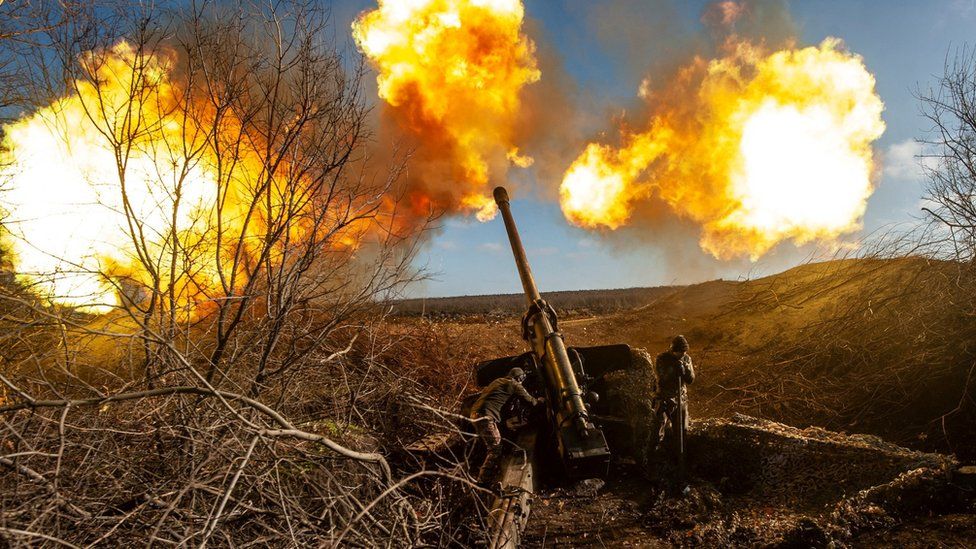
    To Washington’s ears, it may have sounded self-serving, but the reality is that for most of the world, this is a much preferable alternative to a new cold war between two economic and military hegemons.

    The public show of bonhomie between Biden and Macron can’t hide those deeper tensions. Their teams have hailed the French president’s visit to Washington as a success. But in terms of addressing the biggest risk factor in international relations – the possibility of escalation between the US and China – the results were of a far more modest kind: the big nothing burger.

    DISCLAIMER: Independentghana.com will not be liable for any inaccuracies contained in this article. The views expressed in the article are solely those of the author’s, and do not reflect those of The Independent Ghana

    Source: Aljazeera.com 

  • Suicide bombings: Trial of 10 begins in Belgium over 2016 attacks

    The trial is expected to last seven months, with the judgement delivering its verdict after hearing from approximately 370 witnesses.

    Ten men are on trial in Belgium on charges of involvement in two suicide bombings that killed 32 people and injured over 300 in Brussels in 2016.

    The ISIL (ISIS) armed group claimed responsibility for the attacks, in which three of the group’s alleged perpetrators – Khalid el-Bakraoui, Ibrahim el-Bakraoui, and Najim Laachraoui – were killed.

    Presiding Judge Laurence Massart will confirm the identities of all parties to the case, including the defendants and lawyers representing approximately 1,000 people affected by the attacks, on Monday.

    She will then address the jury, selected from a pool of 1,000 Belgians last week in a process lasting 14 hours.

    The event will take place at the Court of Assizes – the one which deals with the country’s biggest criminal cases and was also NATO’s former headquarters in Belgium.

    Link to Paris attacks

    The Brussels bombings trial has clear links to the French trial over the November 2015 Paris attacks.

    Six of the Brussels bombings accused were sentenced to jail terms of between 10 years and life in France in June, but the Belgian trial will be different in that it will be settled by a jury, not judges.

    People pay their respects at the monument for the victims of the 2016 three suicide bombings on the fifth anniversary of the attacks, in central Brussels, Belgium March 22, 2021. REUTERS/Yves Herman/Pool
    People pay their respects at the monument for the victims of the 2016 suicide bombings in central Brussels [File: Yves Herman/Reuters]

    The twin bombings at Brussels Airport and a third bomb on the city’s metro on March 22, 2016 killed 15 men and 17 women – Belgians, Americans, Dutch, Swedish, British, Chinese, French, German, Indian, Peruvian and Polish, many based in Brussels, the home to EU institutions and military alliance NATO.

    Nine men are charged with multiple murders and attempted murders in a “terrorist” context, with potential life sentences, and all 10 with participating in the activities of a “terrorist group”.

    They include Mohamed Abrini, who prosecutors say went to the airport with two suicide bombers but fled without detonating his suitcase of explosives, and Osama Krayem, a Swedish national accused of planning to be a second bomber on the Brussels metro.

    Salah Abdeslam, the main suspect in the Paris trial, is also an accused, along with others prosecutors say hosted or helped certain attackers.

    One of the 10, presumed killed in Syria, will be tried in absentia.

    In accordance with Belgium court procedure, the defendants have not declared whether they are innocent or guilty.

    Prosecutors are expected to start reading from the 486-page indictment on Tuesday before hearings of about 370 experts and witnesses can begin.

    The trial is expected to last seven months and is estimated to cost at least 35 million euros ($36.9m).

  • Madrid: Ukraine embassy explosion injures one person, officials say

    Officials have revealed that an explosion occurred on Wednesday at Ukraine’s embassy in Madrid, injuring one Ukrainian employee who was handling a letter addressed to the country’s ambassador to Spain.

    According to Spain’s foreign ministry, the individual was slightly injured and is being treated at a hospital, while police are investigating.

    It was later revealed that the envelope was intended for Kyiv’s ambassador to Spain, Serhil Pohoreltsev.

    In response, Ukraine has increased security at all of its embassies.

    Oleg Nikolenko, a spokesperson for Ukrainian Foreign Minister Dmytro Kuleba, said the life of the injured employee “is not at risk,” and descsribed the staffer’s position as “commandant.”

    Police say it is too early to know whether the explosion took place when the embassy worker tried to open an envelope, or simply move it. Nikolenko said no one else had been injured, and that Kuleba “has issued an urgent instruction to step up security at all Ukrainian embassies abroad” following the incident.

    “Whoever is behind this explosion they will not succeed in intimidating Ukrainian diplomats or stopping their daily work to strengthen Ukraine and to counter Russian aggression,” Nikolenko quoted Kuleba as saying.

    Spanish Foreign Affairs Minister Jose Manuel Albares spoke to Ambassador Pohoreltsev after the incident, Madrid said. The person injured was a Ukrainian worker, according to the statement.

    Spain, a NATO country, has sent military equipment to Ukraine to help its armed forces fight Russia’s invasion.

    The Ukrainian embassy is located in the Hortaleza district in northeastern Madrid.

  • Former US envoy asserts that the US and NATO are failing Ukraine

    Former US ambassador to NATO, Robert Hunter, has expressed concern about the amount of military aid being provided to Ukraine by NATO members.

    “It’s surprising that the alliance led by the US hasn’t done more so far in terms of anti-drone and anti-missile defences,” Hunter said from Washington DC to Al Jazeera.

    Hunter stated that it was clear throughout the autumn that, while the Ukrainians would continue to fight a “valiant fight,” Russia would try to gain an advantage by targeting Ukraine’s sources of power and heat.

    In response to Ukraine’s foreign minister’s earlier appeal at a meeting of NATO foreign ministers in Bucharest, Hunter said, “Faster, faster, faster, has to mean immediately, not something to be talked about and maybe done in a few months.”

    The former US envoy said that steps could have been taken to counter the destruction Russia was doing in Ukraine instead of just repairing the damage.

    “The US and the NATO, quite frankly, are failing Ukraine.”

    People wait in line to collect water, in Kyiv, Ukraine, Thursday, Nov. 24, 2022. Residents of Ukraine's bombed but undaunted capital clutched empty bottles in search of water and crowded into cafés for power and warmth Thursday, switching defiantly into survival mode after new Russian missile strikes a day earlier plunged the city and much of the country into the dark. (AP Photo/Evgeniy Maloletka)
    People wait in line to collect water, in Kyiv, Ukraine, Thursday, Nov. 24, 2022. Residents of Ukraine’s capital clutched empty bottles in search of water and crowded into cafés for power and warmth, switching defiantly into survival mode after new Russian missile strikes a day earlier plunged the city and much of the country into the dark. [Evgeniy Maloletka/AP]
  • NATO says Ukraine will one day join alliance as it promises further aid

    NATO foreign ministers met in Bucharest in Romania to work out how to keep millions of Ukrainian civilians safe and warm and sustain Kyiv’s military through winter.

    “Russia does not have a veto” on countries joining the security alliance, he said in reference to the recent entry of North Macedonia and Montenegro.

    The former Norwegian prime minister said Russian President Vladimir Putin will also “get Finland and Sweden as NATO members soon”, after they applied for membership in April over concerns Russia might target them next.

    “We stand by that, too, on membership for Ukraine,” he added.

    It came as NATO foreign ministers met in Bucharest in Romania to pledge to step up support for Ukraine and help repair its energy infrastructure as Russian strikes knock out power supplies and heating for millions.

    “We will continue and further step up political and practical support to Ukraine as it continues to defend its
    sovereignty and territorial integrity… and will maintain our support for as long as necessary,” the statement added.

    UK Foreign Secretary James Cleverly said Russia was targeting energy infrastructure to “freeze” Ukrainians into submission.

    “We have seen Vladimir Putin attempting to weaponise energy supplies right from the very start of this conflict,” he said before the meeting.

    Romanian Foreign Minister Bogdan Aurescu, British Foreign Secretary James Cleverly and NATO Secretary General Jens Stoltenberg attend arrivals and doorsteps of the NATO foreign ministers meeting in Bucharest, Romania
    Image:Romanian Foreign Minister Bogdan Aurescu, British Foreign Secretary James Cleverly and NATO Secretary-General Jens Stoltenberg in Bucharest

    Call for Patriot missiles and power transformers

    Ukraine’s foreign minister called for NATO members to supply it with air defence systems and transformers.

    “We need air defence, IRIS, Hawks, Patriots, and we need transformers,” Dmytro Kuleba said on the sidelines of the meeting, identifying various Western air defence systems.

    “If we have transformers and generators, we can restore our energy needs. If we have air defence systems, we can protect from the next Russian missile strikes. In a nutshell: Patriots and transformers is what Ukraine needs the most.”

    Focus on defeating Russia

    Ukraine is unlikely to join NATO anytime soon, as Russia has annexed the Crimean Peninsula, and troops and pro-Moscow separatists hold parts of the south and east, meaning it is unclear what the country’s borders would look like.

    Many of NATO’s 30 members believe the focus should now be on defeating Russia and Mr Stoltenberg warned any attempt to move ahead on membership could divide them.

    “We are in the midst of a war and therefore we should do nothing that can undermine the unity of allies to provide military, humanitarian, financial support to Ukraine, because we must prevent President Putin from winning,” he said.

    The two-day meeting in Romania, which shares NATO’s longest land border with Ukraine, will likely see NATO make new pledges of non-lethal support to Ukraine including fuel, generators, medical supplies, winter equipment and drone-jamming devices.

    Individual nations are also likely to announce new shipments of military equipment to Ukraine, such as air defence systems and ammunition, but NATO as an organisation will not make such a commitment to avoid being dragged into a wider war with nuclear-armed Russia.

    Source:Skynews.com 

  • UK summons Chinese ambassador after arrest of BBC journalist

    The United Kingdom has summoned the Chinese ambassador in London for a rebuke after the arrest and alleged assault of a BBC journalist covering protests against Beijing’s zero-COVID-19 policy.

    Zheng Zeguang was called in to the foreign office on Tuesday after the incident involving Ed Lawrence in Shanghai, which Foreign Secretary James Cleverly called “deeply disturbing”.

    “It is incredibly important that we protect media freedom,” Cleverly told reporters at a NATO meeting in Romania, confirming Zheng had been summoned.

    “It’s incredibly important that journalists are able to go about their business unmolested and without fear of attack,” the foreign minister said.

    Lawrence was hauled away by police on Sunday evening while filming a protest against COVID restrictions, one of many that have rocked China in recent days.

    The BBC said he was assaulted by police before being released several hours later.

    China hit back against British criticism of the journalist’s treatment and Downing Street’s urging that police show respect towards the COVID protesters.

    “The UK side is in no position to pass judgement on China’s COVID policy or other internal affairs,” an embassy spokesperson said before Zheng was summoned, noting Britain’s high pandemic death rate.

    The government in London this month also expressed concern over reports that Beijing has been operating undeclared police outposts in foreign countries, including Britain.

    A senior Chinese diplomat was summoned to the foreign office last month after his consulate colleagues in Manchester in northwest England were accused of beating up a Hong Kong pro-democracy protester.

    The incidents have fuelled political pressure on the new government of Prime Minister Rishi Sunak to get tough with China.

    But Sunak is treading a fine line between defending freedoms and antagonising the world’s second-biggest economy.

    In a speech on Monday, he described the “golden era” of UK-China relations declared by former Prime Minister David Cameron as “over”.

    But Sunak also called for “robust pragmatism” in dealing with Britain’s competitors, disappointing critics who want him to go further in confronting Beijing.

    Changes on the business front

    Separately on Tuesday, the UK removed the Chinese nuclear firm CGN from construction of its new Sizewell C nuclear power station, which will now be built only with French commercial partner EDF.

    That decision was taken after UK government departments were ordered last week to stop installing Chinese-made surveillance cameras at “sensitive sites”.

    The week before, a Chinese company was ordered to sell most of its majority stake in Britain’s biggest semiconductor maker, Newport Wafer Fab.

    A spokesman for Sunak declined to say if national security factors drove the decision on CGN.

    But he told reporters: “Certainly we think it’s right that the UK has more energy security, energy independence.”

    Source: Aljazeera.com 

  • NATO faces new challenge as Ukraine war spills into Poland

    The military alliance and analysts say the deadly blast in Poland highlights the need to further strengthen NATO’s eastern flank.

    Russia’s war in Ukraine jolted NATO this week when a missile exploded in a Polish village near the Ukrainian border, killing two people.

    Immediately after Tuesday’s blast, Polish President Andrzej Duda said the explosive that hit Przewodow, a village of hundreds of people, was “most likely Russian-made” as an investigation was still ongoing.

    His statement sent shockwaves across the world, and NATO leaders expressed their will to defend every inch of territory in the world’s largest military alliance, of which Poland is a member.

    Military analysts took to social media to suggest that this could be a moment when the alliance would invoke Article 4, a consultation between NATO countries when one member feels threatened, or Article 5, when an attack is considered violence against the entire alliance, allowing NATO to decide on action it deems fit to protect its members.

    The same day, Russia pummelled critical Ukrainian infrastructure with a wave of missile strikes.

    Ukrainian President Volodymyr Zelenskyy called the explosion in Poland “a very significant escalation” and said, “We must act.”

    But NATO and Western nations, including the United States have since calmed fears, suggesting the missile was a stray, likely part of Ukraine’s air defence systems. Nevertheless, they said Russia bears overall responsibility as the aggressor and instigator of the war.

    NATO Secretary General Jens Stoltenberg has maintained a cautious stance throughout the episode and did not blame Russia as he waited for Polish intelligence.

    A day after the explosion, Duda joined his Western allies to say the blast was probably a Ukrainian accident and did not invoke any NATO article.

    Stoltenberg said a preliminary analysis suggests a Ukrainian air defence missile landed in Poland and was fired to defend Ukrainian territory against Russian cruise missile attacks.

    “But let me be clear, this is not Ukraine’s fault,” he said, stressing that Russia was still ultimately responsible.

    Jim Townsend, US deputy assistant defence secretary for Europe and NATO under former President Barack Obama, welcomed NATO’s approach.

    “I think NATO did a great job of being very deliberative and cautious, by putting a story together based on facts,” he told Al Jazeera. “I think the US was like that too amid an environment where everything was very murky with a lot of conflicting information out there.”

    “The conflicting information was mainly picked up by the press, and it became a real frenzy,” he said.

    Alexander Lanoszka, assistant professor of international relations at Canada’s University of Waterloo, told Al Jazeera that the incident demonstrates that “NATO territory cannot be purely insulated from the air defence challenges that Ukraine faces”.

    But a direct military intervention against Russia “is too risky”, he said, “because of states’ reasonable concerns about nuclear escalation. Nevertheless, they might let go of some of the hang-ups they have had about the provision of certain platforms to Ukraine.”

    Had NATO concluded the missile was Russian and the blast was an intentional attack, the most likely response would have been “an increase of that military assistance”, Lanoszka said.

    “Most likely with air defence but perhaps involving the MGM-140 Army Tactical Missile System surface-to-surface missiles that Ukraine has long been coveting,” he added.

    Speaking from the G20 summit in Bali, Indonesia, US President Joe Biden said “it was unlikely” the missile was fired by Russia.

    His restraint was lavished with rare praise by the Kremlin.

    But Russia slammed some Western countries, especially Poland, over their initial responses.

    “We have witnessed another hysterical, frenzied Russophobic reaction, which was not based on any real data,” Kremlin spokesman Dmitry Peskov told reporters.

    The blast occurred a day before NATO was due to convene a virtual meeting of the Ukraine Defence Contact Group, in which participants would decide on future packages of military assistance.

    “Whatever the actual course of events that led to the tragedy in that Polish village,” Lanoszka said, “it took place on a day when Russia launched a massive missile barrage across all of Ukraine.

    “Whenever Russia has suffered a very visible loss on the battlefield, it has tended to retaliate by launching a major air attack against Ukrainian cities.

    “Part of the strategy is to create a situation of terror that would have psychological effects on the Ukrainian population so that, as the theory goes, it would be more willing to accept Russian terms.”

    Harry Nedelcu, geopolitics director at Rasmussen Global and leader of its Ukraine Advisory Service, also stressed that the incident happened on a day “when a string of Russian missiles hit several Ukrainian cities with an aim of terrorising civilians and targeting power grids. Ukraine, in turn, used its air defence systems. So whichever way you look at it, context matters.”

    Townsend said that with Moscow’s intensified campaign, the West and NATO must focus on sending more air defence systems to Poland and countries bordering Russia and Ukraine.

    “They may need some more Patriot [missile] systems or something along those lines because there could be other missiles down the road as the war continues,” he said. “Next time it might be a real Russian missile, and we need to be ready for it.”

    Speaking to reporters in Brussels, Stoltenberg said the blast in Poland underscores the importance of strengthening the alliance’s eastern flank further and supporting Ukraine.

    “At least in the winter weeks ahead, air defence systems will help Ukraine because already we see that the country’s air defence is managing to target a lot of Russian missiles,” Nedelcu said. “So now it’s just about closing that gap and making sure that Russian missiles do not hit their targets.”

    Meanwhile, as NATO nations continue to support Poland with its investigation, Townsend said he hopes a sort of “future action report” detailing the entire process of the investigation and the pathway ahead will be made available.

    “Pretty early on, NATO nations decided to stay prudent and cautious every step of the way whilst gathering evidence,” he told Al Jazeera. “The alliance did a good job in handling this crisis, but a lot of lessons are also being learned as NATO wades through handling this war and supporting Ukraine.”

    “So a study to look at what NATO did right and where more work needs to be done to prevent future incidents like this could be useful,” he said.

    For now, Ukraine has requested access to the area where the missile landed, which Poland will likely grant.

    As late as Tuesday evening, Zelenskyy maintained that the missile was a “message from Russia to the G20 summit”.

    Since Poland and other nations such as Latvia were quick to blame Russia, “this incident further reinforces Russia’s narrative of the West ‘pushing for World War III’,” Kamil Zwolski, associate professor of international politics at the University of Southampton, told Al Jazeera. “But Russia’s reaction was entirely predictable.”

    Source: Skynews.com 


  • What has the chancellor announced?

    Chancellor Jeremy Hunt is laying out his plan for the country’s finances going forward in the House of Commons.

    Here is what the chancellor has announced:

    • Tax as a percentage of GDP will increase by just 1% over the next five years;
    • On personal tax, he will reduce the threshold at which the 45p rate becomes payable from £150,000 to £125,140. Those earning £150,000 or more will pay just over £1,200 more a year;
    • The annual exempt amount for capital gains tax will be cut from £12,300 to £6,000 next year and then to £3,000 from April 2024;
    • Confirmed two new fiscal rules – the first is that underlying debt must fall as a percentage of GDP by the fifth year of a rolling five-year period. The second is that public sector borrowing, over the same period, must be below 3% of GDP;
    • From April 2025, electric cars will no longer be exempt from Vehicle Excise Duty;
    • On windfall taxes, from 1 January until March 2028 he will increase the energy profits levy from 25% to 35%;
    • Also from 1 January, “we have also decided to introduce a new, temporary 45% levy on electricity generators… together these taxes raise £14bn next year”.
    • Stamp duty cuts will stay in place until March 2025;
    • While the employers’ national insurance contributions threshold is frozen until April 2028, the employment allowance will be retained at its new, higher level of £5,000 until March 2026;
    • Hunt confirms the UK will continue to maintain the defence budget at least 2% of GDP to be consistent with our NATO commitment – but there is no 3% commitment as previously promised.
    • 600,000 more people on Universal Credit will be asked to meet with a work coach to increase hours or earnings;
    • On education, the chancellor has said he will invest an extra £2.3bn per year in schools;
    • A £2.8bn funding increase for the social care sector;
    • With regards to the NHS, the government will increase the budget for healthcare by £3.3bn.

    Source: Skynews.com 

  • World reacts to missile blast in Poland

    An explosion in eastern Poland near Ukraine’s border killed two, prompting world leaders to call for an investigation.

    A missile hit Przewodow village in eastern Poland near the Ukrainian border and killed two people on Tuesday, raising alarm among world leaders about a possible escalation of the war in Ukraine.

    The blast occurred as Russian attacks hit cities and towns throughout Ukraine.

    While Russia and Ukraine were quick to trade blame over the incident, the United States and NATO adopted a cautious approach to ease tensions.

    Ultimately, US President Joe Biden said the missile that struck the village in Poland was “unlikely” to have been fired from Russia.

    Poland’s President Andrzej Duda, who on Tuesday suggested the missiles were Russian, changed track on Wednesday and said it is “very likely” that the rocket was from Ukraine’s air defence system.

    Here is how some world leaders reacted:

    President Duda of Poland, a strong ally of Kyiv, said on Wednesday the missile appeared to be from Ukraine’s air defence.

    “Absolutely nothing indicates that this was an intentional attack on Poland … It’s very likely that it was a rocket used in anti-missile defence, meaning that it was used by Ukraine’s defence forces,” he told reporters.

    Previously, he had said it was “most probably” a Russian attack but that its origins were still being verified.

    “We are acting with calm,” he said. “This is a difficult situation.”

    Polish Foreign Minister Zbigniew Rau earlier summoned the Russian ambassador and “demanded immediate detailed explanations”, the government said.

    Ukraine

    Zelenskyy told G20 leaders there was a “terrorist state” among them and accused Russia of the missile attack.

    He also had a call with Duda to express his condolences and reiterate Ukraine’s support for Poland.

    “We exchanged available information and are clarifying all the facts. Ukraine, Poland and all of Europe and the world must be fully protected from terrorist Russia,” Zelenskyy wrote on Twitter.

    After NATO and Poland said the blast was likely a Ukrainian accident, officials in Kyiv demanded to visit the site of the blast and asked that allies share their information.

    Russia

    Vasily Nebenzya, head of the permanent mission of Russia to the United Nations, said the missile blast was an attempt to provoke a direct clash between Russia and NATO.

    Dmitry Polyanskiy, the first deputy permanent representative of Russia to the UN, wrote on Twitter: “I advise everyone to analyse facts before rushing to conclusions. It’s obvious that impact of direct rocket strike would be significantly bigger than the pictures show.”

    The Russian defence ministry said the explosion had been caused by a Ukrainian air defence missile, and that Russian strikes in Ukraine had been no closer than 35km (22 miles) from the Polish border.

    “The photos published in the evening of Nov. 15 in Poland of the wreckage found in the village of Przewodow are unequivocally identified by Russian defence industry specialists as elements of an anti-aircraft guided missile of the S-300 air defence system of the Ukrainian air force,” the Russian defence ministry said in a statement.

    On Wednesday, the Kremlin decried Poland’s initial response as hysterical and said the US had been more “measured” – rare praise.


    United States

    US President Joe Biden attended an “emergency” meeting of the G7 and NATO leaders in Indonesia on Wednesday morning for consultations over the explosion, and later said the missile was “unlikely” to have been fired from Russia.

    “There is preliminary information that contests that,” Biden told reporters when asked if the missile had been fired from Russia. “It is unlikely in the lines of the trajectory that it was fired from Russia, but we’ll see.

    “I’m going to make sure we find out exactly what happened,” he said. “And then we’re going to collectively determine our next step as we investigate.”

    Unnamed US officials told The Associated Press news agency the missile was fired by Ukrainian forces at an incoming Russian missile.

    Biden called Duda to express his condolences.

    On Twitter, Biden promised “full support for and assistance with Poland’s investigation”.

    NATO secretary-general

    Jens Stoltenberg said even though the Ukrainian air defence missile likely caused the explosion, Russia should be ultimately blamed since it is behind the war.

    “This is not Ukraine’s fault. Russia bears ultimate responsibility as it continues its illegal war against Ukraine,” he said.

    He had called an emergency meeting of the alliance’s envoys in Brussels on Wednesday. Like Biden, he offered his condolences to Duda.

    “NATO is monitoring the situation and Allies are closely consulting. Important that all facts are established,” Stoltenberg wrote on Twitter.

    Turkey

    Turkey’s President Recep Tayyip Erdogan, who holds good ties with both warring sides, said Russia had “nothing to do” with the missiles and that he respects Moscow’s statement denying the accusation.

    “Russia saying this has nothing to do with them and Biden saying these missiles are not Russian-made show that this has nothing to do with Russia,” Erdogan said at a news conference during the G20 summit in Bali, Indonesia.

    “It could be a technical glitch or something else. That’s why it’s necessary to investigate and research into this.”

    He said pointing fingers at Russia after finding out that the missile is not Russian-made “will cause provocation”, as Turkey has been working to “gather Russia and Ukraine around the same table” for negotiations.

    European Union

    European Commission President Ursula von der Leyen said the G20 summit participants discussed the blast in Poland and expressed their continued solidarity with Ukraine.

    “We offer our full support to Poland and assistance with the ongoing investigation. We will remain in close contacts with our partners on the next steps. We will stand with Ukraine as long as it takes,” she said.

    Italy

    Prime Minister Giorgia Meloni said the origin of the missile does not change much since Russia is still to blame for attacking infrastructure in Ukraine.

    “The possibility that the missile falling on Poland was not a Russian missile but a Ukrainian one changes very little,” she said.

    Meloni said she spoke to Polish Prime Minister Mateusz Morawiecki.

    China

    Chinese foreign ministry spokeswoman Mao Ning called for calm.

    “Under the current situation, all relevant parties should stay calm and exercise restraint to avoid escalation of the situation,” she told a press briefing.

    United Kingdom

    Prime Minister Rishi Sunak spoke to Duda about the missile blast and “reiterated the UK’s solidarity with Poland and expressed condolences for the victims”, he wrote on Twitter.

    Germany

    Chancellor Olaf Scholz called for a careful inquiry.

    “This destruction must be investigated, the rocket parts must be investigated and then we must wait for the results before they are publicly released,” Scholz told reporters in Indonesia.

    “In such a serious matter, there must not be any hasty conclusions about the course of events before this careful investigation.”

    Meanwhile, a German government spokesperson dismissed Ukraine’s call for a no-fly zone, saying such a move would threaten a direct confrontation between Russia and NATO.

    Ukraine’s presidential adviser Mykhailo Podolyak had earlier tweeted that European countries should “close the sky” over Ukraine after the blast.

    Source: Aljazeera.com 


  • What we know about the explosion in Poland

    The missile blast has intensified global fears about the Ukraine war spiralling even further.

    A blast in NATO member Poland, near the Ukraine border, on Tuesday sent shockwaves across the world, with fears of a direct confrontation between the alliance and Russia.

    After the incident, Polish President Andrzej Duda said the explosive, which killed two people in the eastern village of Przewodow, was “most likely Russian-made”.

    But on Wednesday, he said it was “very likely” that the missiles were from Ukraine’s air defence.

    “Absolutely nothing indicates that this was an intentional attack on Poland,” he said. “It’s very likely that it was a rocket used in anti-missile defence, meaning that it was used by Ukraine’s defence forces.”

    Washington and NATO have made similar statements, suggesting the blast was unintentional.

    An investigation is ongoing.

    Russia immediately denied its missiles struck Poland while Ukraine was quick to blame Moscow.

    Here’s what you need to know.

    What do we know about the explosion?

    First news of the incident was reported by Polish Radio ZET, which said on Tuesday that two missiles had hit Przewodow, a village in eastern Poland about six kilometres (3.5 miles) from the border with Ukraine, killing two men.

    Residents of the village, with a population in the hundreds, told local media that a missile had hit a grain drying facility, near a school.

    President Duda said “it was most likely a Russian-made missile” but noted Warsaw had no conclusive evidence on who fired it and that the incident was still under investigation.

    He also described the incident as “a one-off event” and said there was “no indication” it would be repeated.

    A day later, he said there was no evidence the blast was an intentional attack, and, in line with NATO, claimed the missile was likely part of Ukraine’s defensive air systems.

    What was happening in Ukraine at the time?

    The explosion in Poland came on a day of sustained Russian shelling in Ukraine.

    Moscow’s forces launched 110 missiles and 10 Iranian-made attack drones throughout the country, the general staff of Ukraine’s armed forces said, leaving millions of households without power.

    Ukraine said more than 70 missiles were shot down, but some hit the city of Lviv, near the border with Poland to the west.

    Al Jazeera’s Jonah Hull, reporting from Kyiv, said it had been a “hugely kinetic” day.

    “The explosion in Poland … only added to a sense of crisis,” Hull said.

    The turmoil started “receding” on Wednesday, as information suggested the blast was the result of a Ukrainian attempt to down a Russian missile.

    “NATO member after NATO member is now standing back and urging caution and saying they are awaiting the outcome of an investigation [into the incident],” Hull said.

    How did Ukraine and Russia react?

    Ukraine was quick to blame Russia for the missile blast.

    President Volodymyr Zelenskyy said on Tuesday, without producing evidence, that Russian missiles hit Poland in a “significant escalation” of the conflict.

    “The longer Russia feels impunity, the more threats there will be to anyone within reach of Russian missiles. To fire missiles at NATO territory. This is a Russian missile attack on collective security. This is a very significant escalation. We must act,” Zelenskyy said in his nightly video address.

    Russia said the explosion was caused by a Ukrainian air defence missile.

    “The photos published in the evening of November 15 in Poland of the wreckage found in the village of Przewodow are unequivocally identified by Russian defence industry specialists as elements of an anti-aircraft guided missile of the S-300 air defence system of the Ukrainian air force,” the Russian defence ministry said in a statement on Wednesday.

    The ministry also said that Russian attacks in Ukraine on Tuesday had been 35km (22 miles) from the Polish border at their nearest point to the NATO member state.

    Kremlin spokesman Dmitry Peskov accused a number of countries of having made “baseless statements” about Russia’s involvement “without having any idea of what had happened”.

    In rare praise for Washington, he lauded its “measured” response after United States President Joe Biden said it was “unlikely” the missile had come from Russia.

    As fears of an escalation eased, Ukraine said it wants access to the site of the explosion and to see the information that provided the basis for its allies’ conclusions.

    What have the US and NATO said?

    The US and its NATO were cautious in their early responses.

    Asked whether it was too early to say that any missile was fired from Russia, Biden said that the trajectory suggested otherwise.

    “There is preliminary information that contests that,” he told reporters at the G20 summit in Indonesia. “I don’t want to say that until we completely investigate it but it is unlikely … that it was fired from Russia, but we’ll see.”

    NATO Secretary-General Jens Stoltenberg said the alliance’s member states were “monitoring” the situation and “closely consulting” with one another.

    “[It is] Important that all facts are established,” he tweeted on Tuesday.

    On Wednesday, NATO said the blast was most likely the result of a Ukrainian accident but ultimately blamed Russia as the aggressor force.

    Was the incident talked about at the G20?

    Al Jazeera’s Rob McBride, reporting from the G20 summit in Indonesia, said the explosion in Poland was “very much overshadowing” the last day of the meeting – Wednesday – which is being attended by Sergey Lavrov, Russia’s foreign minister.

    Western leaders convened an emergency roundtable in Bali after reports of the blast on Tuesday.

    “I think the point that will be made by the US and its allies, even if it is determined to have been a Ukrainian missile, is that it was fired as a direct result of Russia’s invasion of Ukraine,” McBride said.

    What will happen next?

    The explosion has sparked concern that NATO, which Poland joined in 1999, might be drawn into the conflict between Russia and Ukraine.

    Poland, which has put its military on heightened alert following the blast, is protected by NATO’s commitment to collective defence enshrined in Article 5 of its founding treaty.

    If it is determined that Moscow was to blame for the blast, which seems very unlikely following NATO’s statement on Wednesday, it could trigger Article 5, starting deliberations on a potential military response.

    While the situation was less clear, Warsaw was expected to request urgent consultations under Article 4 of the NATO Treaty, which is invoked when any member state feels their “territorial integrity, political independence or security” are at risk.

    Any response by the alliance will be heavily influenced by whether the incident was accidental or intentional – and for now, the former seems the most probable scenario.

    Even so, Ukraine is still demanding more investigations.

    Source: Aljazeera.com 


  • This was the moment Western leaders feared

    This was the moment Western leaders have feared since Russia launched its all-out invasion in February: that the war might spill over onto the territory of one of Ukraine’s Nato neighbours, forcing Nato to respond and thus widening the conflict.

    But early fears that Russia might have deliberately attacked Poland quickly faded, as analysts and then Western politicians lined up to say this did not look like a deliberate Russian attack.

    After this morning’s Nato meeting, the alliance’s Secretary General, Jens Stoltenberg, said that his preliminary analysis showed that the wreckage filmed at the site was part of a Ukrainian air defence missile.

    But, he added, this was not Ukraine’s fault. After all, none of this would have happened if Russia hadn’t launched dozens of cruise missiles yesterday at targets all across Ukraine.

    Not Ukraine’s fault, but questions will be raised about Kyiv’s early denial that one of its air defence missiles was involved.

    Ukraine’s Foreign Minister, Dmytro Kuleba, last night tweeted that any suggestion a Ukrainian missile had landed in Poland was a Russian “conspiracy theory”.

    In light of subsequent comments from Joe Biden, his Polish counterpart, Duda, Stoltenberg, the Danish defence minister and others, Kuleba’s tweet seems hasty.

    DISCLAIMER: Independentghana.com will not be liable for any inaccuracies contained in this article. The views expressed in the article are solely those of the author’s, and do not reflect those of The Independent Ghana

    Source: BBC.com 

  • Sweden will provide Ukraine with its largest military aid package yet

    Sweden will provide 3 billion crowns ($287 million) in new military aid to Ukraine, its largest package of defence material to date, including an air defence system, Prime Minister Ulf Kristersson announced.

    Sweden’s previous contributions to NATO, along with neighbouring Finland, have ranged from simple equipment such as helmets and body armour to rocket-propelled grenades and missiles.

    “It’s a bigger military support package than all eight previous packages combined,” Kristersson told a news conference. “It’s the single largest we’ve done, and we follow exactly the Ukrainian priority list of what they themselves think they need just now.”

    Defence Minister Pal Johnson said the new package of military equipment included an air defence system and ammunition from the stock piles of its armed forces, much needed to defend Ukraine against a fierce onslaught of Russian missiles in recent weeks.

    Sweden’s previous Social Democrat government, which lost to Kristersson right-wing coalition in elections in September, had agreed several tranches of aid to Ukraine, both military and humanitarian, worth well over 1 billion crowns.

    The Archer artillery system has been high on the Ukrainian wish list for some time but was not included in the fresh aid package, though Johnson did not rule it out for the future and said more support would be forthcoming.

    Kristersson also said the government was closely following developments concerning the explosion in Poland near the Ukrainian border on Tuesday and that more information was needed to gain a clearer picture of what happened.


  • Up to Ukraine to decide what terms for talks with Russia are acceptable: NATO chief

    NATO Secretary-General Jens Stoltenberg has said it is up to Ukraine to decide what terms are acceptable for negotiations with Russia to bring an end to the war.

    “It is for Ukraine to decide what kind of terms are acceptable. It is for us to support them,” Stoltenberg said during a press conference with members of the Dutch government in The Hague.

    “We should not make the mistake of underestimating Russia … They still control large parts of Ukraine … What we should do is strengthen Ukraine’s hand,” Stoltenberg added.

    Source: Aljazeera.com 

  • Kherson: President Zelensky pays a visit to the liberated city

    President Volodymyr Zelensky visited Kherson just days after Ukrainian troops liberated the city.

    He told soldiers gathered in the city that Ukraine is “moving forward” and prepared for peace.

    The loss of Kherson, which occurred early in the invasion, is a major setback for Russia.

    Moscow had declared it the administrative centre of the illegally annexed Kherson region, and it was the only occupied regional capital.

    Kherson was captured in March, one of Russia’s first major victories in the war.

    The region was then one of four to be illegally annexed after self-styled referendums were held in September.

    At a ceremony in Moscow, Russian President Vladimir Putin said the annexation of Luhansk, Donetsk, Zaporizhzhia and Kherson was “non-negotiable”.

    But in the following weeks Ukraine began to make gains in the south of the country, advancing along Dnipro river towards Kherson and putting Russian forces under increasing pressure.

    Finally, Russian forces withdrew and Ukrainian troops entered the city on Friday.

    Locals were seen celebrating, some reuniting with loved ones they had not seen for months. The mood in the city was one of jubilation and relief, but also trepidation and fear of what may come next, the BBC’s Jeremy Bowen reported.

    In his visit on Monday, Mr Zelensky told troops that Ukraine is “ready for peace, peace for all our country,” the Reuters news agency reported.

    He thanked Nato and other allies for their support in the war against Russia, adding that high mobility artillery rocket systems (Himars) from the United States had made a big difference for Kyiv.

    The president addressed a crowd gathered in Kherson’s main square, some of whom waved Ukrainian flags or wore them draped across their shoulders, a Reuters journalist in Kherson said.

    Mr Zelensky said he is “really happy” about the liberation, as are the people of Ukraine.

    Asked where Ukrainian forces might advance next, he said: “Not Moscow…We’re not interested in the territories of another country.”

    Mr Zelensky had previously said that investigators have uncovered more than 400 war crimes in areas of Kherson abandoned by Russian forces as they retreated.

    The BBC has been unable to verify these allegations, and Moscow denies that its troops intentionally target civilians.

  • Johnson’s words on Ukraine still carry weight

    He may be a former British prime minister, but any comment made by Boris Johnson on the war in Ukraine still carries weight, especially when it comes to nuclear weapons.

    His uniquely close relationship with Ukrainian President Volodymyr Zelenskyy and his decision to be a leading voice amongst western allies in supporting Ukraine from the outset of the invasion has made London one of Kyiv’s most trusted and valued partners.

    It also gave Mr Johnson privileged access during his time in office to the private thoughts of Mr Zelenskyy, as well as a deep understanding of Ukraine’s need to defeat Russia’s invasion and the threats it could face – all the way up to Vladimir Putin launching a nuclear strike.

    Having been the leader of a nuclear power, Mr Johnson would have been carefully briefed by officials about the risk of nuclear escalation by Russia and how western allies, led by the United States, might respond.

    NATO allies have a deliberate policy of “strategic ambiguity” when it comes to anything nuclear – refusing to set out in public how they might retaliate should the Kremlin choose to break the nuclear taboo and use an atomic weapon against Ukraine.

    However, Mr Johnson made clear there would have to be a western response, noting in his interview with Sky News’s Mark Austin that there “are all sorts of options”.

    A decision by the UK to send anti-tank weapons to Ukraine, the first of any European nation, in the run-up to the war – followed by a steady flow of increasingly lethal munitions – has made Mr Johnson a legendary figure amongst the Ukrainian public and leadership.

    It will be interesting to see how or if the former prime minister will choose to use this special relationship, especially with President Zelenskyy, going forwards.

    It is a status his latest successor, Rishi Sunak, will find almost impossible to fill given the personal chemistry that the two men enjoyed.

    Mr Johnson was the first foreign leader who Mr Zelenskyy called early on the morning of 24 February, when Russia launched its all-out war.

    Britain’s then prime minister then became one of the first western allies to venture to Kyiv as the war raged and even chose a trip to see Mr Zelenskyy as his swansong on the international stage before stepping down from office.

    Source: Skynews.com, Deborah Haynes


  • UK: PM accused of ‘shamelessly swapping red boxes for political support’

    A Labour MP has slammed Rishi Sunak’s decision to promote a key ally despite their previous dismissal for national security reasons.

    Gavin Williamson, a former education secretary who oversaw the pandemic exam fiasco, was appointed minister without portfolio last night.

    Questioning Mr Sunak in the Commons, Labour’s Stephen Kinnock accuses the prime minister of trying to “shamelessly swap red boxes for political support”.

    He says there are “serious consequences to all this horse trading” and asks whether the PM sought any advice on security concerns about Mr Williamson, who was sacked previously for leaking sensitive information relating to national security.

    Mr Sunak says this happened four years ago, although the Labour MP is “right” to raise the topic of national security.

    He says that four years ago, Labour was busy supporting Jeremy Corbyn – who had wanted to abolish NATO.

    “We won’t take any lectures on national security,” he says.


  • Defense Secretary Ben Wallace could resign if Jeremy Hunt scraps defence spending boost

    Defence spending had been set to rise to 3% of GDP by 2030-but Chancellor Jeremy Hunt refuses to make that commitment.

    The UK’s new chancellor has raised the possibility of ditching a key pledge by Liz Truss to boost defence spending – a move that would likely be a resigning matter for her defence secretary, Ben Wallace.

    Jeremy Hunt on Saturday refused to commit to lifting the amount of money spent on the armed forces to 3% of national income by 2030, as promised by the prime minister.

    He also said the Ministry of Defence, like all other departments, would have to make additional savings.

    Mr Wallace, one of the most experienced and well-regarded members of the embattled prime minister’s cabinet, has fought hard over the past three years to secure much-needed increases in defence spending at a time of growing security threats.

    Asked whether any backtracking on defence spending goals would be a resigning issue, a defence source said Mr Wallace would hold the prime minister to the pledges made.

    This includes a commitment to increase defence spending to 2.5% of gross domestic product (GDP) by 2026 from around 2% at present and then to 3% of GDP by 2030 in what would equate to around an extra £157billion over eight years.

    But speaking about tough times ahead, Mr Hunt told Sky News: “I’m going to ask all departments to find more efficiencies than they were planning to find.”

    He repeated this on Radio 4’s Today programme and was asked specifically if a “difficult tough decision” would be taken over the defence budget.

    Mr Hunt replied: “We do need to increase defence spending, but I can’t make a promise to you here and now about the timings of that.”

    He continued: “The long-term ability to fund an increase in defence spending will depend on stability in the economic situation and a healthily growing economy.”

    Pressed on how he was leaving open the possibility of the 3% defence spending pledge not being delivered by 2030, Mr Hunt said: “I am leaving open all possibilities this morning. I wish I could give you more detail, but I will be presenting to parliament in a fortnight on Monday exactly what is going to happen and the answer to all those questions.”

    He was referring to 31 October when the chancellor is due to issue a fiscal statement.

    As well as a failure to commit to defence spending, Mr Hunt also made a flawed assessment that long-term defence spending can only be secured if there is economic stability.

    In reality, there can be no economic stability without security.

    The energy price rise – as the prime minister keeps saying – is caused by Vladimir Putin using energy as a weapon, reducing the flow of Russian oil and gas to pressure Western nations to stop their crucial support to Ukraine, which has helped thwart his invasion so far.

    Had the Conservatives – and Labour before them – genuinely demonstrated the mantra that national security is their first priority the UK would not have seen successive governments slash defence spending and military capability over the past three decades.

    NATO allies are less likely to invest in defense if the UK doesn’t

    Hollowed-out defences – and this is a simplification of a time that also included the disastrous Iraq and Afghanistan wars – have left the UK and fellow European NATO allies less able to deter the existential threats posed by authoritarian regimes like Russia’s.

    So, it makes no sense to use the economic crisis, triggered in part by Russia’s war in Ukraine, as a reason to backtrack on a vital need to rebuild the UK’s armed forces.

    Russia’s Vladimir Putin, Xi Jinping of China, North Korea’s Kim Jong-un, and all other leaders who prefer authoritarian rule over the values of democratic governments – human rights, rule of law, and other freedoms – will be laughing.

    Britain is one of the strongest voices in NATO, urging increased defence spending among all 30 allies – it is a live debate right now, with hopes to lift a minimal expenditure target to 2.5% of GDP from 2%.

    If the UK were to lead by example and reduce ambitions to grow defence spending, it would make it far less likely other European allies will feel under pressure to boost their budgets.

    The MoD has a largely poor track record of procurement, with programmes to build warships, aircraft, and tanks too often running billions of pounds over budget and delivered late or not at all. That is inexcusable and also needs to change.

    But ordering more efficiencies is going to make a bad situation even worse.

    Many people have tried and failed to make the MoD and the armed forces more efficient.

    The thing is, the UK’s military, security and intelligence services are too vital to fail and too important not to fund adequately, especially at a time of war in Europe, and the very real threat of escalation with Russia and China.


  • Ukraine: Putin says Germany committed a “mistake” by siding with NATO

    The Russian leader also chided Germany for canceling the Nord Stream 2 gas project following Russia’s invasion of Ukraine, about which he said he had “no” regrets.

    Putin’s comments on Friday focused on Germany were thinly veiled admonishments of disapproval

    Russian President Vladimir Putin said at a press conference in the Kazakh capital of Astana Friday that Germany had made a “mistake” in siding with NATO in the war in Ukraine.

    He claimed that the decision to cancel the Nord Stream 2 pipeline was a German one and that it was an error to prioritize NATO and European security over what Moscow believes to be Germany’s national interest.

    “German citizens, businesses, and its economy are paying for this mistake because it has negative economic consequences for the eurozone as a whole, and in Germany,” he said, in reference to Nord Stream 2.

    By contrast, Putin believes Russia “is doing everything right” in its stalled effort to conquer Ukraine, which has led Russia to be accused of frequent rights abuses, war crimes and violations of international law.

    What else did Putin say about NATO?

    Any direct confrontation between NATO forces and Russian troops would be a “global catastrophe,” he said.

    Putin relayed that he had no regrets about his decision to invade Ukraine despite the hugely unpopular mobilization and Russia’s minimal battlefield gains in the months since the war began.

    He added he would want the humanitarian corridors for Ukrainian grain closed should it emerge they are being used for what he termed “acts of terror.” Turkey, a NATO member state, and the UN brokered a deal to bring Ukrainian grain to world markets in July.

    Earlier this month, the Kerch Bridge connecting Russia to Crimea, which Moscow illegally annexed in 2014, was targeted by a truck bomb Russia has since blamed on Ukraine.

    While Kyiv residents and government officials celebrated the act of sabotage and the Ukrainian postal service ordered up commemorative stamps, Ukraine did not formally claim its forces were behind the attack. Russia has blamed Ukraine’s military intelligence.

    What else did Putin say about Ukraine?

    At the news conference following the summit of the Collective Security Treaty Organization (CSTO), Putin claimed that the partial mobilization he ordered would be over in two weeks.

    He added that there are no future plans at present for further call-ups. Sixteen thousand reservists are currently engaged in military activities, he noted.

    “Nothing additional is planned. No proposals have been received from the defense ministry and I don’t see any additional need in the foreseeable future,” he said.

    Though Putin once said the invasion and capture of Ukraine would be over swiftly, he ordered 300,000 reservists be called up to fight in Ukraine last month. Nearly as many men of military age left the country than to avoid mobilizing.
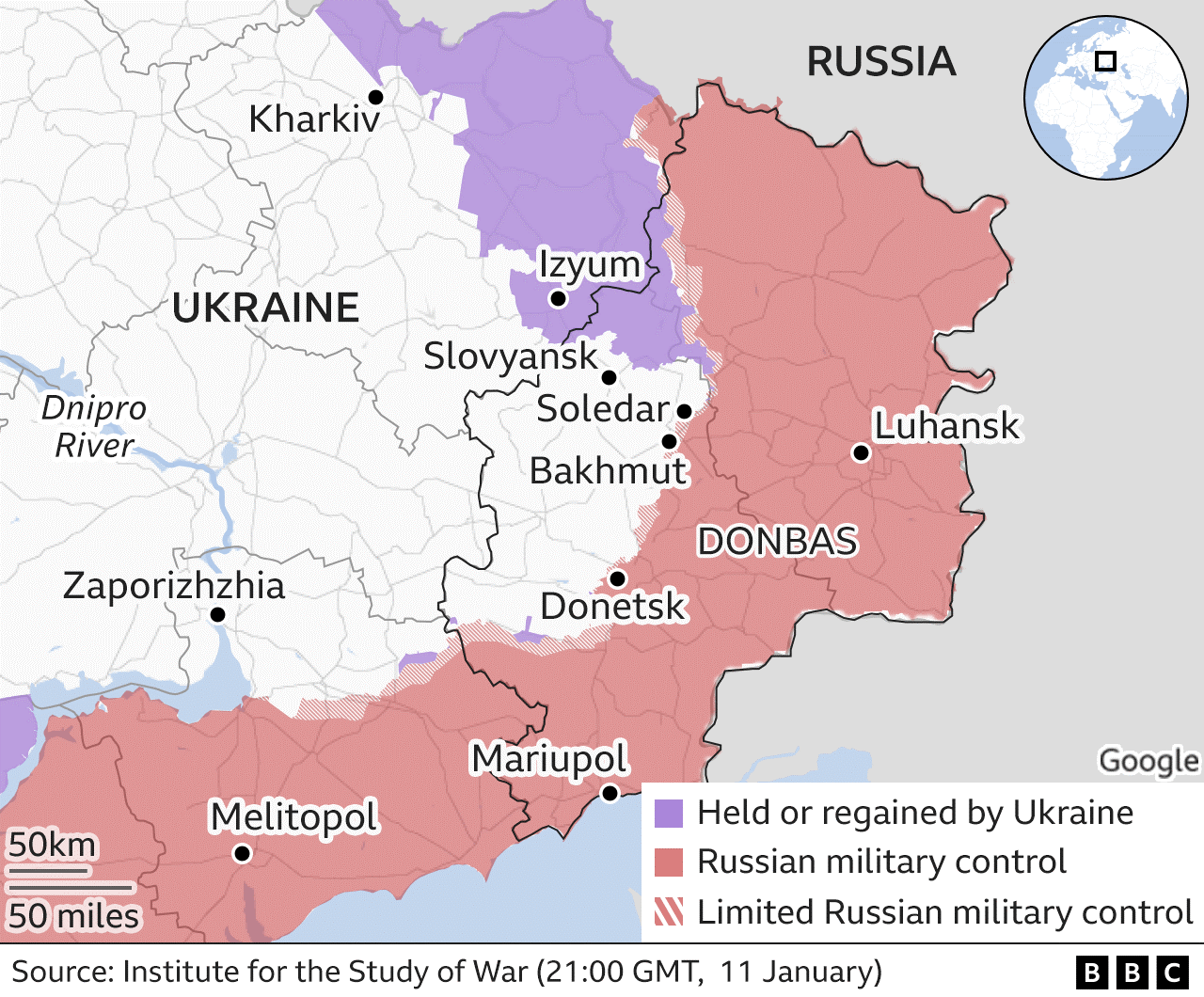
    Mobilized Russian soldiers lack equipment, food

    And he said there was no need for massive strikes on Ukraine “for now,” following a week of missile barrages on Ukrainian towns and cities.

    “Our aim is not to destroy Ukraine,” Putin said.

    What does Putin say about other countries’ perceptions of Russia’s war on Ukraine?

    Putin noted that China and India favor a “peaceful dialogue” over Ukraine after their leaders clashed with him at a different summit in Uzbekistan last month.

    While some countries once occupied by the Soviet Union are “worried,” Putin said he believes there has been no change in “the character and depth of the Russian Federation’s relations with these countries.”

    The Collective Security Treaty Organization consists of Russia and five other countries that were once considered part of the Soviet Union: Armenia, Belarus, Kazakhstan, Kyrgyzstan, and Tajikistan.

    As with the Warsaw Pact that once existed in satellite countries under Russian tutelage during the Cold War, members of the organization have only seen Russian forces be used to suppress civil disturbances in their countries.

    The Russian leader also said he finds “no need” for future talks with US President Joe Biden, who earlier in the week dismissed the idea of dialogue with Putin.

    Putin said he has not made a decision yet on whether to attend the G20 summit in Bali next month, which would be his first encounter with leaders who stand vehemently opposed to his war against Ukraine.


  • EU will not slap more sanctions on Iran over alleged drone deal with Russia

    European Union foreign ministers meeting in Luxembourg on Monday would not take any decisions on additional Iran sanctions after reports of drones delivered from Tehran to Moscow, Reuters has reported, citing an unnamed senior EU official.

    The official added that the 27-nation bloc is still trying to find independent evidence for the alleged use of Iranian drones by Russia in Ukraine.

    Iran, which blames NATO as the root of the Ukraine conflict, has denied supplying Russia with arms.

    “The Islamic Republic of Iran has by no means supplied any side with arms to be used in the war in Ukraine, and its policy is to oppose arming either side with the aim of ending the war,” Hossein Amirabdollahian, Iran’s foreign minister, told his Polish counterpart on Sunday.

    Source: Aljazeera.com


  • Belarus on high alert for terrorism

    Belarusian President Alexander Lukashenko said his country is on high alert for terrorism due to tensions on its borders.

    Mr. Lukashenko linked the decision to his declaration on Monday that he had ordered Belarusian troops to deploy along Belarus’s southern border with Ukraine alongside Russian forces.

    “In connection with the escalation of tension, a regime of heightened terrorist danger has been introduced,” Mr Lukashenko said in a Russian TV interview.

    “Therefore we began a procedure with the Union group of forces, the basis of which, as I already said, is the Belarusian army, which will be supplemented by units from the Russian Federation. Everything is going according to plan.”

    Belarus is allied with Moscow but wedged between Russia, Ukraine, and three NATO countries.

    Belarus allowed Russia to use its territory as one of the launchpads for its 24 February invasion.

    Its latest troop movements have raised concern in Kyiv and the West that Mr Lukashenko may be about to commit his army to support Russia’s faltering war effort.

    Political analysts say that is an unappealing option for him but that he may not be in a position to refuse if Russian President Vladimir Putin demands it.

    Belarus depends on Russia politically and economically, and Mr Putin’s support helped Mr Lukashenko survive mass pro-democracy protests in 2020.

    Mr Lukashenko crushed the demonstrations and all leading opposition figures have been jailed or forced to flee abroad.


  • Germany and its NATO allies aim to jointly purchase air defence systems

    In order to jointly acquire air defence systems that shield allied territory from missiles, Germany and more than a dozen NATO allies have their sights set on the Israeli Arrow 3 system, the US Patriot, and German IRIS-T units, among other options.

    “With this initiative, we are living up to our joint responsibility for security in Europe – by bundling our resources,” Christine Lambrecht, Germany’s defence minister, said during a ceremony at NATO’s Brussels headquarters where 14 countries signed a letter of intent.

    Estonia wasn’t present at the event but will also be part of the initiative, dubbed “European Sky Shield”. In total it comprises half of NATO’s members – including Germany, the United Kingdom, Slovakia, Norway, Latvia, Hungary, Bulgaria, Belgium, Czechia, Finland, Lithuania, the Netherlands, Romania, and Slovenia.

    Ground-based air defence systems such as Raytheon’s Patriot units or the more recently developed IRIS-T are in short supply in many Western nations, which were reluctant to invest too much money in military capabilities after the end of the Cold War.


  • UK to provide missiles to Ukraine to defend against Russian airstrikes

    A shortage of defence systems means Western allies are struggling to meet increasingly urgent requests to protect Ukraine’s skies from missile and drone attacks.

    The UK will for the first time give Ukraine a number of powerful missiles to defend against Russian airstrikes, but it is not providing the weapons that launch them.

    Instead, the AMRAAM rockets – capable of shooting down cruise missiles – will help to arm air defence systems that will be given to Ukraine by the United States.


  • NATO official: Russia running low on precision-guided ammunition

    Russian forces have depleted a significant proportion of their precision-guided ammunition and the Kremlin cannot produce all kinds of ammunition and weapon systems due to Western sanctions, a NATO official has said.

    The official also suggested it could take months for Russia to mobilise the number of fighters it was aiming for.

    Russia’s defence minister Sergei Shoigu has previously suggested 300,000 men with military experience would be called up to bolster Russia’s war efforts in Ukraine, although Mr Putin’s decree did not disclose a number.

    Officials from two separate regions also said this week they had received new orders to mobilise troops, raising fears a second wave of men could be called up to serve in the army.

    The governor of Russia’s Rostov region said he had received a “new mobilisation assignment”, while the deputy head of the Kursk region was quoted as saying they had been given a “second” mobilization target.


  • NATO would ‘almost certainly draw physical response’ to Russian nuclear strike

    In recent weeks, there has been a lot of discussion over whether President Vladimir Putin will launch a nuclear attack.

    Now, a NATO official has said a Russian nuclear strike will change the course of the conflict in Ukraine and almost certainly trigger a “physical response” from Ukraine, its allies, and potentially from NATO.

    The senior NATO official said any use of nuclear weapons by Moscow would have “unprecedented consequences” for Russia.

    “It would almost certainly be drawing a physical response from many allies, and potentially from NATO itself”, he said.

    The official added that Moscow was using its nuclear threats mainly to deter NATO and other countries from directly entering its war on Ukraine.