Tag: NDC

  • Explainer: Ghana’s new presidential jet and the old Falcon 900EX [Video]

    Explainer: Ghana’s new presidential jet and the old Falcon 900EX [Video]

    Ghana has taken delivery of a new Falcon 6X aircraft, following Parliament’s approval of a US$60.68 million purchase agreement in December 2025.

    But how did the country get here, and what is the connection between the new aircraft and the existing presidential jet?

    The new jet is meant to replace the existing one, a Falcon 900EX, which has served as the presidential aircraft since 2010 and is now 16 years old.

    Government Spokesperson Felix Kwakye Ofosu, who announced the delivery on November 16, 2026, said the old jet has had maintenance problems and that the Falcon 6X’s longer range means fewer refuelling stops.

    The old jet has a political history of its own. It was ordered under President John Agyekum Kufuor’s NPP government in 2008 and delivered in 2010 under President John Evans Atta Mills’ NDC government, when then Vice President John Mahama commissioned it.

    The two parties still disagree on what happened. The NPP says its order covered two jets and the NDC cut it to one. The NDC said it objected to buying two and to how the purchase was handled. Mr Kufuor said his government had only put in a bid for a second aircraft.

    The argument came back under President Nana Addo Dankwa Akufo-Addo, whose government was criticised for chartering private jets for foreign trips. Mr Mahama, then in opposition, said GH¢68 million was spent on presidential trips in the first nine months of 2019 alone.

    When the government later moved to buy a new jet, NDC figures called it a misplaced priority.

    By 2025, the Falcon 900EX was in trouble. The Defence Minister told Parliament it had been grounded in France since March 11, 2025. It was handed back to the Air Force on November 10, 2025, after eight months of repairs, according to Bright Simons of IMANI Africa.

    In the same period, Mr Mahama’s travel on commercial flights, and later on a jet belonging to his brother, drew criticism from NPP figures. The government and the Air Force described the Falcon as ageing.

    The August 6, 2025 helicopter crash then pushed fleet safety to the top of the agenda. A government committee investigating it recommended urgent safety upgrades for the Air Force.

    On December 4, 2025, Parliament approved two deals: the Falcon 6X for US$60.68 million, and four Airbus helicopters, one H160 and three H175, for €125.97 million. The defence committee said relying on the ageing Mi-17 helicopters and the Falcon 900EX had become financially unsustainable and operationally inefficient.

    The Minority supported the retooling, though NPP voices have since accused the NDC of reversing its past stance.

    The Falcon 6X is an Air Force aircraft for executive travel, so it will serve the presidents who come after Mr Mahama. It is not yet clear what will happen to the Falcon 900EX.

    DISCLAIMER: Independentghana.com will not be liable for any inaccuracies contained in this article. The views expressed in the article are solely those of the author’s, and do not reflect those of The Independent

  • NDC Greater Accra Deputy Youth Organiser passes on

    NDC Greater Accra Deputy Youth Organiser passes on

    The National Democratic Congress (NDC) Deputy Greater Accra Regional Youth Organiser, Eric Atsu Afeme, popularly known as “Agabus”, has passed away after a short illness. This was contained in a statement issued by the party’s Greater Accra Regional Secretariat on Thursday, November 19.

    The party acknowledged his dedication to grassroots mobilisation during his tenure as Trobu Constituency Youth Organiser, a position he held before joining the Greater Accra Regional Executive.

    His death comes days after the party held its regional executive elections on Saturday, November 14, 2026, with some regions completing their voting over the weekend of November 14–15. 

    The elections were conducted across all 16 regions as part of the party’s internal reorganisation ahead of the 2028 general elections.

    In its tribute, the party described Afeme as a dedicated servant of the NDC and Ghana, highlighting his courage, discipline and commitment to mobilising support at the grassroots level.

    The statement, signed by Regional Secretary Amorse Amos Blessing, Esq., also conveyed the party’s sympathy to the Greater Accra Regional Youth Wing, the Trobu Constituency, his family, friends and associates.

    The NDC further prayed for comfort and strength for all those mourning his death and called for his soul to find eternal rest.

  • NDC holds regional elections today to choose new executives

    NDC holds regional elections today to choose new executives

    The elections for regional executives of the ruling National Democratic Congress (NDC) are scheduled for today, Saturday, November 14.

    This comes after the party wrapped up vetting of candidates this week, with some disqualified candidates suing the party over it.

    The last NDC regional executives’ elections before the current 2026 exercise were held in November 2022, from Friday, November 11 to Sunday, November 13, 2022.

    The elections are being held across the country as part of the party’s reorganisation ahead of its national executive elections scheduled for December 19, 2026, and its preparations for the 2028 general elections.

    The NDC is set to hold its regional executive elections on November 14 and 15, following the party’s Regional Youth and Women’s Conference on Friday, November 13.

    The Electoral Commission is expected to oversee the voting process across all 16 regions, with the Ghana Police Service responsible for security during the exercise.

    Deputy Director of Elections and IT, Rashid Tanko Computer, told Citi News on November 11 that preparations had been completed, with election materials sent to the regions and national officers assigned to supervise the polls.

    Voting will take place at designated centres between 7 a.m. and 5 p.m. Delegates are required to present their NDC membership cards or Ghana Cards for identification. The party has also ruled out proxy voting, meaning delegates must be physically present to cast their ballots.

    The elections will determine officers for various regional positions, including chairman, vice-chairman, secretary, organiser, treasurer, communications officer, women’s organiser and youth organiser, as well as their deputies and representatives of the Zongo Caucus.

    Attention is expected to focus on several regional chairmanship races, particularly in Greater Accra, Ashanti, Upper East, Eastern and Northern, where incumbents are facing competition.

    In Greater Accra, incumbent chairman Emmanuel Nii Ashie Moore is seeking another term against Michael Tetteh Kwetey and Benjamin Danso, among other contenders.

    In the Ashanti Region, outgoing Regional Chairman Andrews Augustus Nana Kwesi is facing a challenge from former Regional Organiser Isham Alhassan Yaw Bonsu.

  • A nation must never become a prisoner of its political history: The dangerous politics of erasing our

    A nation must never become a prisoner of its political history: The dangerous politics of erasing our

    There is something fundamentally troubling about a government that appears more interested in reshaping the historical narrative of a nation than building upon the collective achievements of its people.

    Ghana’s history is not a political inheritance to be selectively distributed, manipulated, or discarded according to the preferences of whichever political party happens to occupy the seat of government. It is the collective story of our struggles, sacrifices, disagreements, triumphs, and the remarkable contributions of generations of Ghanaians who helped shape the country we proudly call our homeland.

    The recent decision by the NDC government to introduce redesigned Ghanaian banknotes, departing from the established representation of the Big Six, raises serious questions about the direction in which we are taking our national identity. While currency redesign and modernisation are legitimate responsibilities of the Bank of Ghana, the historical and symbolic implications of removing established national representations can not simply be dismissed as an ordinary administrative decision.

    A nation’s currency is not merely paper printed with monetary value. It is a national symbol, a reflection of collective identity and, in many respects, a mobile historical monument that passes through the hands of millions of citizens every day. The personalities represented on our banknotes communicate something about who we are, where we came from, and the sacrifices that brought us this far. To alter such representations without sufficient national conversation raises legitimate concerns about whether we are modernising our currency or gradually redefining our historical consciousness to accommodate contemporary political preferences.

    The Big Six is not the property of any political party. They are part of Ghana’s national story. Dr Kwame Nkrumah, Ebenezer Ako-Adjei, Edward Akufo-Addo, Joseph Boakye Danquah, Emmanuel Obetsebi-Lamptey and William Ofori Atta were individuals whose names became permanently associated with a defining period in our struggle for independence. They came from different backgrounds, held different political convictions, and, in some instances, disagreed profoundly on the future direction of the country. Yet their historical significance can not be erased by the changing fortunes of political parties.

    Indeed, one of the greatest demonstrations of national maturity is the ability to acknowledge the contributions of people with whom we may disagree politically. We can not claim to be building a united nation while selectively celebrating historical personalities based on their ideological or political associations. History is not a political campaign platform, and national recognition must never become a reward reserved for those whose political affiliations are convenient to the government of the day.

    This is precisely why the development deserves more than casual political commentary. It raises the uncomfortable question of whether Ghana is gradually drifting towards a culture in which every incoming administration feels compelled to redefine national symbols, revise historical representations and establish its own preferred version of the country’s past. If this becomes an acceptable political culture, what happens to historical continuity? What happens to the contributions of personalities who do not fit into the ideological preferences of the government in power? Must every administration embark on a symbolic exercise of displacing the historical footprints of its predecessors and political opponents?

    That would be a dangerous direction for any democracy.

    Ghana’s independence history is much longer than the political interests of the NDC or the NPP. It encompasses the struggles of the United Gold Coast Convention, the contributions of the Convention People’s Party, the National Liberation Movement, the Danquah-Dombo-Busia tradition and the many other individuals and movements that contributed to our political evolution. It includes the struggles for constitutional governance, the sacrifices of ordinary citizens, the contributions of traditional authorities, women, organised labour, religious institutions, and countless unsung patriots.

    No single political tradition has a monopoly over the making of Ghana.

    Equally, no government should have the authority, whether directly or indirectly, to diminish the historical contributions of individuals and movements simply because their ideological roots are associated with political opponents. Such conduct, if allowed to become institutional practice, risks transforming our national heritage into an instrument of partisan score-settling. What should be a celebration of our collective identity becomes a subtle competition over whose historical footprints deserve to remain visible.

    That is where the suspicion of a political vendetta becomes difficult to ignore. When an established historical representation is displaced in a manner that disproportionately affects personalities associated with a particular political tradition, the government must appreciate that citizens will naturally question the motives and historical considerations behind the decision. Such perceptions can not simply be dismissed as partisan opposition. They deserve transparent explanations and a convincing national justification.

    The NDC government must understand that winning an election does not confer ownership of the country’s historical narrative. Electoral victory grants a political administration the mandate to govern within the constitutional order; it does not grant it the authority to redefine the country’s collective memory according to partisan convenience. The state is bigger than the government, and Ghana’s heritage is greater than the political ambitions of any administration.

    If the intention is to celebrate additional Ghanaian heroes, nobody should object to that. Ghana has produced countless distinguished personalities whose contributions deserve recognition. We can honour our cultural icons, traditional rulers, independence activists, women of exceptional courage, national development pioneers, and other historical figures. But why must celebrating one chapter of our history require diminishing another? Why must modernisation become synonymous with displacement? Why must national recognition appear to be a zero-sum political exercise?

    A confident nation adds to its history; it does not selectively subtract from it.

    There is also a generational responsibility here. What historical account are we preparing to hand over to our children? What will future generations understand about the personalities, political movements, and sacrifices that shaped modern Ghana if every government is permitted to rearrange national historical representations according to its political preferences? We can not teach patriotism while encouraging historical selectivity. We can not demand national unity while allowing partisan considerations to determine which historical contributions deserve public recognition.

    The NDC government must, therefore, reconsider the broader implications of this decision and appreciate that national symbols require national sensitivity. The Bank of Ghana should provide adequate historical justification and encourage a broader conversation about the preservation of our national heritage. Currency modernisation should focus on security, efficiency, durability, and innovation without unnecessarily creating the impression that Ghana’s history is being subjected to partisan revision.

    And let it be clearly stated: when the New Patriotic Party returns to government, the traditional representation of the Big Six should be restored to Ghana’s currency, subject to the necessary institutional and technical processes. Not as an act of revenge, not to erase anybody else’s contribution, but as a reaffirmation that national heritage must be protected from the changing political preferences of successive governments. Our commitment must extend beyond the Big Six to the preservation of Ghana’s entire historical identity, including the contributions of personalities and movements across the political spectrum.

    Ultimately, the question before us is bigger than the design of banknotes. It is about the kind of country we want to become. Do we want a Ghana where national history is respected as a permanent inheritance of the people, or one where every government assumes the responsibility of rewriting the past to suit the political narrative of the present?

    I believe our country deserves better.

    Ghana is not the personal property of the NDC. It is not the personal property of the NPP. It belongs to its people, and its history belongs to every generation of Ghanaians.

    We must never allow temporary political power to become permanent authority over our national memory. Governments will come and go. Presidents will change. Political parties will win and lose elections. But Ghana must remain Ghana, with its history intact, its heritage respected, and its national identity protected.

    WE CAN CHANGE GOVERNMENTS, BUT WE MUST NEVER CHANGE HISTORY TO SATISFY THE POLITICAL EGO OF THOSE IN POWER.

    GHANA’S HISTORY IS NOT A POLITICAL PLAYGROUND. OUR NATIONAL HERITAGE MUST NEVER BECOME A CASUALTY OF PARTISAN VENDETTA.

  • NDC National Executive Elections: 23 aspirants fail vetting

    NDC National Executive Elections: 23 aspirants fail vetting

    Of the 121 aspirants seeking various national executive positions, 23 will not advance to the next stage after failing the vetting process. They were disqualified for failing to meet the requirements outlined in the party’s constitution and accompanying electoral guidelines.


    The committee’s spokesperson, Dr Peter Boamah Otokunor, made this known while speaking to the media on Friday, November 13.


    “122 individuals filed, and one was absent for the vetting, so it means that 121 undertook the vetting. Out of that, we had 23 disqualified. So if 23 were disqualified, then it means that we have about 98 people cleared to contest.

    “Almost all of them were disqualified on a clause that provides a prerequisite for individuals who contest for national executive positions. And they didn’t meet that clause, that requirement, and so they had to be disqualified,” he said.

    The vetting process commenced on Wednesday, November 11, and is scheduled to conclude on Thursday, November 12.

    The contestants are seeking various leadership roles, including National Chairman, National Vice Chairman, General Secretary, National Organiser, Deputy National Youth Organiser, National Communications Officer, National Women’s Organiser and Deputy National Women’s Organiser.


    The party is expected to conclude its reorganisation process with the election of new national executives at its 9th National Delegates Congress scheduled for Saturday, December 19, 2026, ahead of the 2028 general elections.

  • 121 NDC aspirants undergo vetting for National Executive roles

    121 NDC aspirants undergo vetting for National Executive roles

    A total of 121 aspirants seeking various national executive positions in the National Democratic Congress (NDC) are undergoing vetting by the party’s Elections Committee. The vetting process commenced on Wednesday, November 11, and is scheduled to conclude on Thursday, November 12.

    The screening exercise is intended to ensure that all candidates meet the necessary requirements before being cleared to participate in the party’s national executive elections. 

    The contestants are seeking various leadership roles, including National Chairman, National Vice Chairman, General Secretary, National Organiser, Deputy National Youth Organiser, National Communications Officer, National Women’s Organiser and Deputy National Women’s Organiser.

    Meanwhile, the Former National Chairman of the National Democratic Congress, Dr Samuel Ofosu-Ampofo, has announced that he will not contest in the party’s upcoming national chairmanship election.

    This comes after his supporters from all 16 regions of Ghana purchased and picked up NDC national chairmanship nomination forms for him. His aides later revealed his boss will communicate his intention regarding the chairmanship position.A few days later, on Monday, 9 November 2026, he officially announced in a formal statement that he would not contest the chairmanship election, citing his intention to focus and commit to his role as the Political Adviser to the Vice President and Board Chairman of COCOBOD.

    According to the statement, his commitment to these responsibilities is critical to the successful implementation of the government’s resetting agenda and the delivery of its promises to Ghanaians.

    Meanwhile, it is alleged that his decision stemmed from his engagement with some senior figures within the NDC and government.

    “After careful consideration, Hon. Dr Ofosu-Ampofo has decided not to proceed with his participation in the NDC National Chairmanship race, a decision he has taken in the overriding interest of the party and his commitment to serving the party and the nation in other capacities,” the statement said.

    He continued that, “The strength of the NDC lies in its collective experience, unity, institutional memory and shared commitment to its ideals.”

    He therefore remains committed to discharging these duties with dedication, integrity and a strong sense of responsibility.

    Despite his decision not to contest, Ofosu-Ampofo reaffirmed his commitment to the NDC, indicating that his 34 years of experience in party politics and governance would remain available to support the party.

    He also urged party members and aspirants to conduct themselves with unity and mutual respect throughout the ongoing internal electoral processes.

    “The strength of the NDC lies in its collective experience, unity, institutional memory and shared commitment to its ideals,” the statement noted.

    Ofosu-Ampofo, who served as NDC National Chairman from 2018 to 2022, lost his re-election bid to Johnson Asiedu Nketia by a margin of 2,677 votes at the party’s National Delegates Congress in December 2022

  • NPP Youth Wing has a pattern of disrespecting the Presidency – Shamima Muslim

    NPP Youth Wing has a pattern of disrespecting the Presidency – Shamima Muslim

    Deputy Government Spokesperson Shamima Muslim has expressed displeasure with the conduct of the opposition New Patriotic Party (NPP) youth wing, citing its consistent disrespect for the presidency.

    Her comments come after she received a petition from the opposition youth wing during its ‘Yɛgye Yɛ Sika’ demonstration on Tuesday, November 3.

    Speaking on Accra-based Citi FM, Ms Muslim urged the NPP leadership to call the youth to order.

    According to her, while she met the leadership of the protesters to receive their petition with courtesy, she was not allowed to speak when she tried to address them.

    Whenever she tried to speak, she was interrupted with singing and chanting immediately after she took the microphone, making it difficult for her to deliver her response.

    She explained that she had intended to acknowledge receipt of the petition and inform the demonstrators that it would be sent to the Chief of Staff’s Office for onward submission to the President.

    “I received it, and I was supposed to now make a very final comment about accepting the petition and assuring them that the petition will be submitted to the Chief of Staff’s Office for onward referral to the President’s attention,” she said.

    Ms Muslim said the incident was not an isolated occurrence, recalling similar encounters involving other government officials and members of the presidential staff.

    “They did it to Nana Yaa Jantua, they did it to Sammy Ayeh, a presidential staffer, when they refused to hand over their petition because they said they wanted a senior person from the Presidency,” she said.

    “It’s a character thing, and they should look at it and try to advise themselves before they set out. You know, it’s a character thing. It’s not a one-off thing,” she said.

    The Deputy Government Spokesperson maintained that political demonstrations should not be an excuse for disregarding basic courtesies, insisting that protesters were expected to show respect while presenting their concerns.

    She stressed, however, that opposition groups were free to organise demonstrations and submit petitions, adding that the government was willing to listen to their concerns.

    “They can protest as many times as they want. As you have seen, we have not arrested anybody. We did not manhandle anybody,” she said.

    Ms Muslim also disclosed that the petition presented by the NPP youth wing had been sent to the Office of the Chief of Staff for review.

    According to her, the government would consider the concerns outlined in the petition and act on them where necessary if they were deemed legitimate.

  • NPP sets GHS5k filing fee for 2028 Parliamentary Primaries

    NPP sets GHS5k filing fee for 2028 Parliamentary Primaries

    Applications by prospective parliamentary candidates seeking to contest the New Patriotic Party’s (NPP) parliamentary primaries ahead of the 2028 General Elections have been pegged at GH¢5,000.

    Interested individuals have been given 10 days, from November 1 to November 10, to apply. This information was contained in a press release issued on Sunday, November 1, by the Party.

    In a related development, persons seeking to contest the National Democratic Congress (NDC) National Chairman and General Secretary positions are expected to pay GH¢100,000 and GH¢80,000, respectively, according to the party’s Functional Executive Committee (FEC).


    Other positions, including national organisers, communications officers, youth and women’s organisers, as well as members of the National Executive Committee, will also attract filing fees. The National Organiser position has been priced at GH¢70,000.


    Aspirants seeking the National Communication Officer position will pay GH¢50,000, while the National Youth Organiser and National Zongo Caucus Coordinator positions each attract GH¢40,000. National Vice Chairman and Deputy General Secretary positions attract GH¢60,000.

    All aspirants seeking to contest any of the positions will pay GH¢2,000 to obtain a nomination form.


    Meanwhile, female candidates and persons with disabilities contesting any position, except National Women’s Organiser and Deputy National Women’s Organiser, are entitled to a 50 per cent discount on the approved filing fees.

    The New Patriotic Party recently elected John Boadu as its National Chairman after defeating former Energy Minister Boakye Agyarko and former National Chairman Paul Afoko in the party’s national executive elections.


    The former NPP General Secretary secured 2,888 votes at the party’s National Delegates Conference held at the Baba Yara Sports Stadium in Kumasi on Saturday, October 3, 2026.


    Mr Agyarko followed with 2,048 votes, while Mr Afoko polled 490 votes.
    Mr Boadu’s victory came after a last-minute deal with Sammy Crabbe, who withdrew from the race and threw his support behind the former General Secretary.


    Mr Crabbe announced his decision as voting got underway on Saturday, calling on his supporters to back Mr Boadu.


    Mr Boadu had been considered one of the frontrunners in the chairmanship race, having featured prominently in several pre-election surveys.


    The elections, which attracted more than 7,000 delegates, were held to elect officers to nine national executive positions as the NPP prepares for the 2028 general elections.


    Meanwhile, Justin Frimpong Kodua retained his position as General Secretary after securing 4,486 votes.


    He was followed by former Ngleshie Amanfro MP Sylvester Tetteh, who polled 1,340 votes. Eugene Boakye Antwi and Dr Charles Dwamena secured 162 and 126 votes, respectively.


    In the National Youth Organiser race, Abanga Fuseini Yakubu emerged victorious with 1,550 votes.


    He defeated Alfred Kumi Ababio, who polled 25 votes; Vera Oye Bram-Larbi, 44; Michael Osei Boateng, 78; Clement Opoku Gyamfi, 631; and Chris Lloyd Nii Kwei Asamoah, the then Deputy National Youth Organiser, who secured 46 votes.


    The newly elected executives are expected to lead the party as it begins preparations towards the 2028 general elections.

  • I don’t take criticism personally – President Mahama

    I don’t take criticism personally – President Mahama

    President John Dramani Mahama has stated that criticism directed at his administration makes him a better leader rather than offending him.

    He noted that he is receptive to opposing views and public scrutiny, adding that criticisms of his government’s policies and decisions allowed him to reassess his approach and make the necessary adjustments.

    “I don’t mind if people tell me I am leading the country in the wrong direction because I am trying to do my best. Criticism helps me to do better. So when people criticise me and say this is not right, I am not offended. So all your TikToks and things, don’t think I don’t see them. I see them.”

    He made this known during an engagement with members of the Ghanaian community in Moscow, Russia.

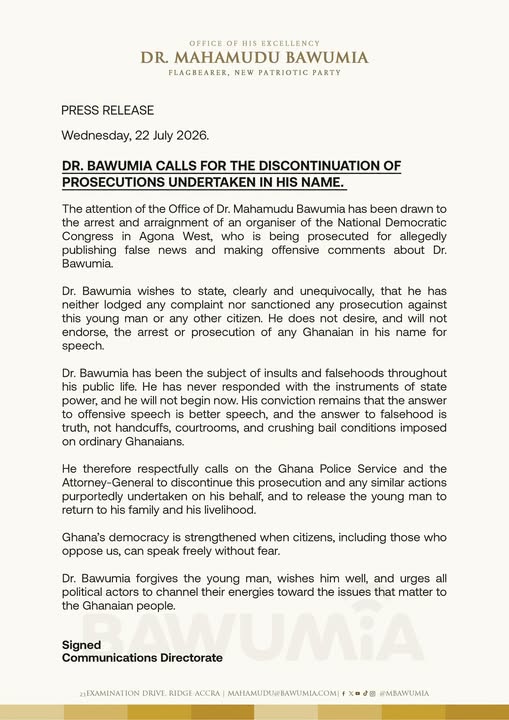
    Meanwhile, the former Vice President, Dr Mahamudu Bawumia, has noted that Ghana’s democracy can only be strengthened when citizens are free to express themselves without fear of arrest or prosecution for their speech.


    In an official statement, Dr Bawumia noted that those who oppose and speak freely against politicians should not face arrest or prosecution for expressing their views, as they all contribute to strengthening Ghana’s democracy through open and free public discourse.


    “Ghana’s democracy is strengthened when citizens, including those who oppose us, can speak freely without fear”.


    His comment follows a plea urging the government to release a National Democratic Congress (NDC) organiser in Agona West who is facing charges over alleged offensive comments made about him.


    According to Dr Bawumia, he neither lodged complaints nor sanctioned the prosecution of individuals who spoke against him during his tenure as Vice President or while the NPP was in government, believing such actions would be imprudent and contrary to democratic principles.


    The statement said, “Dr. Bawumia wishes to state, clearly and unequivocally, that he has neither lodged any complaint nor sanctioned any prosecution against this young man or any other citizen. He does not desire, and will not endorse, the arrest or prosecution of any Ghanaian in his name for speech.


    “He therefore respectfully calls on the Ghana Police Service and the Attorney-General to discontinue this prosecution and any similar actions purportedly undertaken on his behalf, and to release the young man to return to his family and his livelihood”.


    Meanwhile, Dr Bawumia has added to the many individuals cautioning President John Dramani Mahama against assenting to the recently passed Tribunals Bill, 2026 passed by Parliament.


    The Tribunals Bill, 2026, was passed by Parliament on Thursday July 16, following the completion of its third reading and subsequent approval by members of the House.President John Dramani Mahama is expected to give his assent in the coming days before it becomes law.The Tribunals Bill therefore seeks to address the lacuna in the legal framework of Ghana regarding tribunals.

  • NDC elects New Constituency Executives nationwide

    NDC elects New Constituency Executives nationwide

    The National Democratic Congress (NDC) held an election on Saturday, October 24, to elect new constituency executives nationwide.


    Some incumbent chairmen retained their positions following the polls, while new entrants were elected to replace others.

    The constituency elections delivered mixed results across the board. In Volta Region’s Adaklu, former Secretary Hayford Amenuvie captured the chairmanship on 236 votes, seeing off Charles Agbesi and Rev. Fred Agbogbo, both ex-Presiding Members, who managed 192 and 47 votes.

    Samuel Amafu took Vice Chairman unopposed, while Eugene Akpatsa won Secretary by 253 votes to Habel Segbe Agbee’s 220.


    In Upper West’s Lawra, incumbent Joseph Bati held on for a second term as Chairman with 281 votes from 809, just ahead of James Lonteng’s 272. Nicholas Nangzie became Vice Chairperson with 323 votes from 815 ballots.

    The Communications Officer race was deadlocked at 230 votes apiece for Simon Dery Sobrkyile and Stephen Gandaanuo out of 820 votes, and has been referred to the party headquarters.


    In Greater Accra’s Ablekuma-North, Chairman Harry Akoto stayed in office with 1,067 votes to Clifford Mensah Adjei’s 922. Secretary Nadia Gifty Tetteh also survived with a commanding 1,562 votes against Samuel Addo’s 405.


    In Volta’s Akatsi South, Anthony Kojo Owusu extended his stay to a third term as Chairman, polling 786 votes against Anthony Solo Adotevi’s 406. Lord Percivals Agbavor won Vice Chairman with 745 votes, and Daniel Agordzetor took Secretary with 763 votes to Francis Dotsey Bedzo’s 435.


    In Oti’s Akan, 24 executives were elected, led by Eric Kwadwo Apeadu as Chairman and Maxwell Komla Kokroko as Vice Chairman. Voter participation was high at 98 per cent, with 1,049 of 1,069 delegates casting ballots.

  • NDC’s executives elections is today

    NDC’s executives elections is today

    The National Democratic Congress (NDC) is holding its constituency executive elections across the country, today, Saturday October 24.

    About 15,000 aspirants are expected to contest various executive positions across the party’s 276 constituencies.

    The positions include constituency chairman, vice-chairman, secretary, treasurer, organiser, deputy organiser, communications officer, women’s organiser and youth organiser, among other roles within the party’s organisational structure.

    The election is being conducted as part of efforts to reorganise its grassroots structures.

    Earlier this month the New Patriotic Party (NPP)’s elected a new team of national executives to manage the affairs of the party, while some retained their positions and others beat their predecessors to take on the new role.

    John Boadu was elected National Chairman, while Justin Frimpong Kodua retained his position as General Secretary.

    Kojo Fosu Boadu, popularly known as Kojo Bamba, was elected First Vice Chairman of the New Patriotic Party (NPP), with Henry Nana Boakye, also known as Nana B, taking the Second Vice Chairman position.

    Nana Akomea will serve as the party’s Third Vice Chairman, while Nii Kwartei Titus-Glover has been elected National Organiser.Former Member of Parliament for Awutu-Senya East, Mavis Hawa Koomson also emerged as the National Women’s Organiser, with Abanga Fuseini elected National Youth Organiser.

    Alfred Kojo Thompson was elected National Treasurer, while Alhaji Mohammed Ali Suraj secured the position of Nasara Coordinator and Miracles Aboagye emerged as the National Communications Officer.

    The new executives were sworn into office immediately after the declaration of the results, marking the start of their tenure as the NPP’s new national leadership.

  • NDC Nkwanta North constituency elections halted by court

    NDC Nkwanta North constituency elections halted by court

    An interlocutory injunction has been placed on the National Democratic Congress (NDC) Nkwanta North Constituency Executive Elections, which were scheduled for Saturday, October 24.

    The High Court in Dambai has also barred the NDC and its officials from submitting, certifying or using the register of branch executives compiled following elections held in June and July 2026, until further notice. 

    The development come after Gmajobe Yaw and 22 other members of the NDC in the Nkwanta North Constituency initiated the legal action against the party, constituency chairman Isaiah Kudjo Dordoe, and election committee chairman Jonathan Makunaye.

    The injunction is expected to remain in force until the court reaches a final determination of the case or issues another order. In a separate incident, persons seeking to contest the National Democratic Congress National Chairman and General Secretary positions are to pay GH¢100,000 and GH¢80,000, respectively, according to the party’s Functional Executive Committee (FEC).

    Other positions, including national organisers, communications officers, youth and women’s organisers, as well as members of the National Executive Committee, will also attract filing fees. The National Organiser position has been priced at GH¢70,000.

    Aspirants seeking the National Communication Officer position will pay GH¢50,000, while the National Youth Organiser and National Zongo Caucus Coordinator positions each attract GH¢40,000. National Vice Chairman and Deputy General Secretary positions attract GH¢60,000. All aspirants seeking to contest any of the positions will pay GH¢2,000 to obtain a nomination form.

    Meanwhile, female candidates and persons with disabilities contesting any of the positions, except National Women’s Organiser and Deputy National Women’s Organiser, are entitled to a 50 per cent discount on the approved filing fees. Recently, the New Patriotic Party (NPP) elected John Boadu as its National Chairman after defeating former Energy Minister Boakye Agyarko and former National Chairman Paul Afoko in the party’s national executive elections.

    The former NPP General Secretary secured 2,888 votes at the party’s National Delegates Conference held at the Baba Yara Sports Stadium in Kumasi on Saturday, October 3, 2026.

    Mr Agyarko followed with 2,048 votes, while Mr Afoko polled 490 votes.

    Mr Boadu’s victory came after a last-minute deal with Sammy Crabbe, who withdrew from the race and threw his support behind the former General Secretary.

    Mr Crabbe announced his decision as voting got underway on Saturday, calling on his supporters to back Mr Boadu.

    Mr Boadu had been considered one of the frontrunners in the chairmanship race, having featured prominently in several pre-election surveys.

    The elections, which attracted more than 7,000 delegates, were held to elect officers to nine national executive positions as the NPP prepares for the 2028 general elections.

    Meanwhile, Justin Frimpong Kodua retained his position as General Secretary after securing 4,486 votes.

    He was followed by former Ngleshie Amanfro MP Sylvester Tetteh, who polled 1,340 votes. Eugene Boakye Antwi and Dr Charles Dwamena secured 162 and 126 votes, respectively.

    In the National Youth Organiser race, Abanga Fuseini Yakubu emerged victorious with 1,550 votes.

    He defeated Alfred Kumi Ababio, who polled 25 votes; Vera Oye Bram-Larbi, 44; Michael Osei Boateng, 78; Clement Opoku Gyamfi, 631; and Chris Lloyd Nii Kwei Asamoah, the then Deputy National Youth Organiser, who secured 46 votes.

    The newly elected executives are expected to lead the party as it begins preparations towards the 2028 general elections.

  • Obuasi SHTS headmaster steps down as NDC Juaben secretary, exits chairmanship race

    Obuasi SHTS headmaster steps down as NDC Juaben secretary, exits chairmanship race

    The headmaster of Obuasi Senior High Technical School (SHTS), Zakaria Abdulai, has resigned as Juaben Constituency Secretary of the National Democratic Congress (NDC) and withdrawn his candidature for the constituency chairmanship with immediate effect. This information was contained in a letter addressed to the General Secretary of the NDC from Mr Abdulai.

    The development comes amid allegations of sexual abuse involving female students at Obuasi Senior High Technical School.

    Reacting to the allegations, Mr Abdulai said he was exploring avenues to clear his name and vindicate his position, while expressing gratitude to his friends and family for standing by him amid the situation.

    “I wish to express my profound gratitude to my friends, relatives, and all well-wishers who have stood by me and maintained their faith in my innocence in the face of the allegations levelled against me and my office.

    “At this time, I intend to devote my attention and resources to pursuing all lawful avenues to clear my name and vindicate my position. I remain hopeful that, once these matters are resolved, I will be able to return to active political engagement and continue contributing to the ideals and aspirations of the NDC,” part of the statement read.

    Earlier, the Functional Executive Committee (FEC) of the National Democratic Congress had decided to allow Zakaria Abdulai to contest the election amid sexual abuse allegations.


    In an October 19 statement, the Committee disclosed that its decision was based on the need to respect the constitutional rights of all parties involved.


    According to the statement, the Committee initially sought to disqualify Zakaria Abdulai from contesting the Juaben Constituency chairmanship or have him voluntarily withdraw from the race.


    Zakaria Abdulai has faced allegations of sexual misconduct involving female students at Obuasi Senior High Technical School.

    This information came to light after Manasseh Azure Awuni’s latest documentary, Inside the Dreaded Headmaster’s Bungalow. So far 19 students have allegedly been sexually abused by Zakaria Abdulai.


    Meanwhile, Zakaria Abdulai has been suspended following the documentary. Ghana has recorded several cases of sexual abuse by headmasters.

    Last year, the Headmaster of Dzodze-Penyi Senior High School, Mr. Joshua Vidzro, was temporarily relieved of his duties by the Ghana Education Service (GES) over his alleged involvement in sexual misconduct with some female students.


    In September, the Ghana Education Service announced the removal of the Assistant Headmaster (Academic) of KNUST Senior High School, Mr. Charles Akwasi Aidoo, from office over alleged misconduct.

    He was spotted in a viral video with a female student in a compromised position.


    In response, management of GES released a statement declaring their stance on the matter. “Management views this matter with utmost seriousness. In line with our commitment to safeguarding the integrity of the teaching profession and ensuring the safety and welfare of students under our care, Mr. Aidoo has already been removed from office and prohibited from going to the school while thorough investigations are being carried out,” the statement read.


    The GES assured the general public, stakeholders, parents, and students that due process will be followed, and the appropriate disciplinary action will be taken in accordance with the code of conduct of the Ghana Education Service.


    Months ago, the Ghana Education Service directed school authorities to ensure that practical fees for the 2025 West African Senior School Certificate Examination (WASSCE) received from students are refunded effective Monday, July 28.


    A press statement dated Monday, July 28, indicated that teachers and school heads who fail to adhere to the directive shall face severe sanctions.”The Government of Ghana has released full funding to cover the costs of the 2025 WASSCE practical examinations, including required materials and resources.

    “Management notes with concern that some Heads have engaged in the collection of monies from Candidates/Parents/Guardians for these same practicals. The Heads involved are therefore directed to refund any monies collected from students in respect of WASSCE practicals,” parts of the statement read.


    It instructed that school authorities ensure the refund process is properly documented and official receipts are issued to acknowledge repayment.


    GES added that Regional Directors should be notified once the monies are refunded, emphasising, “Compliance with this directive will reduce the financial burden on students and parents and ensure that no learner is excluded from participation over lack of money.”


    “Failure to comply will be considered a serious breach of official instructions and may attract administrative sanctions. Regional Directors are by this letter requested to share this information with all Heads of schools through their respective Municipal/Metro/District Directors of Education,” it stated.

  • NDC to clear Obuasi SHTS Headmaster to contest Juaben Chairmanship amidst sexual abuse allegations

    NDC to clear Obuasi SHTS Headmaster to contest Juaben Chairmanship amidst sexual abuse allegations

    The Functional Executive Committee (FEC) of the National Democratic Congress (NDC) has decided not to disqualify headmaster of Obuasi Senior High Technical School, Zakaria Abdulai, from contesting the Juaben Constituency chairmanship election amid sexual abuse allegations.

    In an October 19 statement, the Committee disclosed that its decision was based on the need to respect the constitutional rights of all parties involved.

    According to the statement, the Committee initially sought to disqualify Zakaria Abdulai from contesting the Juaben Constituency chairmanship or have him voluntarily withdraw from the race.

    Zakaria Abdulai has faced allegations of sexual misconduct involving female students at Obuasi Senior High Technical School. This information came to light after Manasseh Azure Awuni’s latest documentary, Inside the Dreaded Headmaster’s Bungalow. So far 19 students have allegedly been sexually abused by Zakaria Abdulai.

    Meanwhile, Zakaria Abdulai has been suspended following the documentary. Ghana has recorded several cases of sexual abuse by headmasters.


    Watch the documentary here:


    Last year, the Headmaster of Dzodze-Penyi Senior High School, Mr. Joshua Vidzro, was temporarily relieved of his duties by the Ghana Education Service (GES) over his alleged involvement in sexual misconduct with some female students.


    In September, the Ghana Education Service announced the removal of the Assistant Headmaster (Academic) of KNUST Senior High School, Mr. Charles Akwasi Aidoo, from office over alleged misconduct. He was spotted in a viral video with a female student in a compromised position.


    In response, management of GES released a statement declaring their stance on the matter. “Management views this matter with utmost seriousness. In line with our commitment to safeguarding the integrity of the teaching profession and ensuring the safety and welfare of students under our care, Mr. Aidoo has already been removed from office and prohibited from going to the school while thorough investigations are being carried out,” the statement read.


    The GES assured the general public, stakeholders, parents, and students that due process will be followed, and the appropriate disciplinary action will be taken in accordance with the code of conduct of the Ghana Education Service.


    Months ago, the Ghana Education Service directed school authorities to ensure that practical fees for the 2025 West African Senior School Certificate Examination (WASSCE) received from students are refunded effective Monday, July 28.


    A press statement dated Monday, July 28, indicated that teachers and school heads who fail to adhere to the directive shall face severe sanctions.”The Government of Ghana has released full funding to cover the costs of the 2025 WASSCE practical examinations, including required materials and resources. Management notes with concern that some Heads have engaged in the collection of monies from Candidates/Parents/Guardians for these same practicals. The Heads involved are therefore directed to refund any monies collected from students in respect of WASSCE practicals,” parts of the statement read.


    It instructed that school authorities ensure the refund process is properly documented and official receipts are issued to acknowledge repayment.


    GES added that Regional Directors should be notified once the monies are refunded, emphasising, “Compliance with this directive will reduce the financial burden on students and parents and ensure that no learner is excluded from participation over lack of money.”


    “Failure to comply will be considered a serious breach of official instructions and may attract administrative sanctions. Regional Directors are by this letter requested to share this information with all Heads of schools through their respective Municipal/Metro/District Directors of Education,” it stated.

  • NDC sets GHS100k filing fee for Chairman aspirants, GHS80k for General Secretary

    NDC sets GHS100k filing fee for Chairman aspirants, GHS80k for General Secretary

    Persons seeking to contest the National Democratic Congress (NDC) National Chairman and General Secretary positions are expected to pay GH¢100,000 and GH¢80,000, respectively, according to the party’s Functional Executive Committee (FEC). 

    Other positions, including national organisers, communications officers, youth and women’s organisers, as well as members of the National Executive Committee, will also attract filing fees. The National Organiser position has been priced at GH¢70,000. 

    Aspirants seeking the National Communication Officer position will pay GH¢50,000, while the National Youth Organiser and National Zongo Caucus Coordinator positions each attract GH¢40,000. National Vice Chairman and Deputy General Secretary positions attract GH¢60,000. All aspirants seeking to contest any of the positions will pay GH¢2,000 to obtain a nomination form. 

    Meanwhile, female candidates and persons with disabilities contesting any of the positions, except National Women’s Organiser and Deputy National Women’s Organiser, are entitled to a 50 per cent discount on the approved filing fees. Recently, the New Patriotic Party (NPP) elected John Boadu as its National Chairman after defeating former Energy Minister Boakye Agyarko and former National Chairman Paul Afoko in the party’s national executive elections.

    The former NPP General Secretary secured 2,888 votes at the party’s National Delegates Conference held at the Baba Yara Sports Stadium in Kumasi on Saturday, October 3, 2026.

    Mr Agyarko followed with 2,048 votes, while Mr Afoko polled 490 votes.

    Mr Boadu’s victory came after a last-minute deal with Sammy Crabbe, who withdrew from the race and threw his support behind the former General Secretary.

    Mr Crabbe announced his decision as voting got underway on Saturday, calling on his supporters to back Mr Boadu.

    Mr Boadu had been considered one of the frontrunners in the chairmanship race, having featured prominently in several pre-election surveys.

    The elections, which attracted more than 7,000 delegates, were held to elect officers to nine national executive positions as the NPP prepares for the 2028 general elections.

    Meanwhile, Justin Frimpong Kodua retained his position as General Secretary after securing 4,486 votes.

    He was followed by former Ngleshie Amanfro MP Sylvester Tetteh, who polled 1,340 votes. Eugene Boakye Antwi and Dr Charles Dwamena secured 162 and 126 votes, respectively.

    In the National Youth Organiser race, Abanga Fuseini Yakubu emerged victorious with 1,550 votes.

    He defeated Alfred Kumi Ababio, who polled 25 votes; Vera Oye Bram-Larbi, 44; Michael Osei Boateng, 78; Clement Opoku Gyamfi, 631; and Chris Lloyd Nii Kwei Asamoah, the then Deputy National Youth Organiser, who secured 46 votes.

    The newly elected executives are expected to lead the party as it begins preparations towards the 2028 general elections.

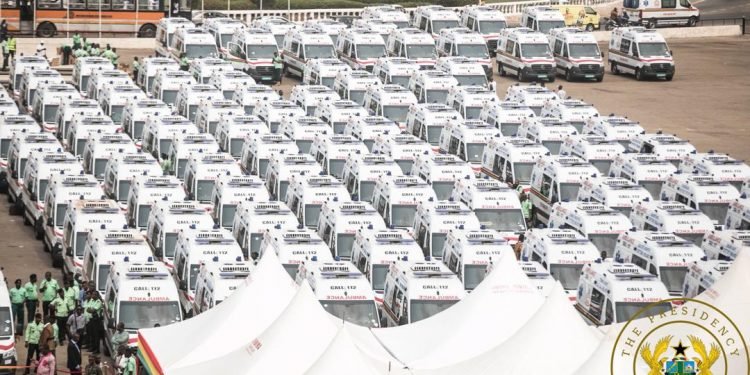
  • NDC took over uninsured and non-functional ambulances – Health Minister

    NDC took over uninsured and non-functional ambulances – Health Minister

    The National Democratic Congress (NDC) government inherited an uninsured and non-functional ambulance fleet, Health Minister Kwabena Mintah Akandoh has revealed.

    Speaking to the media, he noted that all the ambulances were subsequently insured in 2025 by the incumbent government.

    “When we took office, there were a lot of them that were grounded. And so in 2025 we insured all our ambulances.But as I speak to you now, we have more than 200 ambulances functioning. We are going to add brand new ones, with 100 vehicles. Well, we have not taken the decision yet.

    “But I believe that if you have an ambulance within a particular area, and that ambulance is faulty, or is no longer functional, it’s only fair to replace that ambulance. We can only build on that as a system, and governance is a continuum.If we think that that system has served us well, why do we have to revamp?.

    “The status of the ambulances is also that we came to hear a situation where none of our ambulances were insured. I get this feedback that we don’t have ambulances, and all our ambulances have been grounded, and all that,” he said.

    The Minister’s comments come against the backdrop of concerns previously raised about the operational status of Ghana’s ambulance fleet.

    In 2024, Mintah Akandoh revealed that out of the 307 ambulances imported and commissioned by President Nana Akufo-Addo in 2020, 91 were non-operational, with 79 having completely broken down and 12 involved in accidents.

    Mr. Akandoh previously raised the concerns during a budget estimates debate for the Ministry of Health, where he also drew attention to funding challenges facing the National Ambulance Service.

    “In 2022, the National Ambulance Service recorded not less than 41,000 cases; in 2023, as at the time they appeared before us, they had recorded only 27,000 cases.”

    “Mr. Speaker, as I have read from the report, out of about GH¢67 million in allocation, they have received only GH¢20 million. Mr. Speaker, out of the 307 ambulances that were imported into this country in 2020, about 79 have completely broken down and are not in operation, and about 12 have been involved in accidents. All in all, about 91 of the ambulances are not in operation, and if we continue this way, four years from now, we will not have any ambulances left in the fleet.”

    The figures highlight the pressure on the National Ambulance Service to maintain an operational fleet amid demand for emergency medical services.

    In 2022 alone, the service recorded more than 41,000 cases, while 27,000 cases had been recorded by the time officials appeared before Parliament in 2023.

    The funding shortfall also remains a concern, with the service receiving GH¢20 million out of an allocation of approximately GH¢67 million, according to the figures cited by Mr. Akandoh.

    The Health Minister’s latest comments indicate that the government is seeking to strengthen the ambulance fleet, including through the possible addition of 100 new vehicles.

  • Over 15k aspirants cleared for NDC’s constituency elections

    Over 15k aspirants cleared for NDC’s constituency elections

    More than 15,000 aspirants have been cleared to contest the National Democratic Congress’ (NDC) upcoming constituency executive elections, while 25 aspirants were disqualified during the vetting process.

    Speaking to the media on Wednesday, September 30, the party’s Director of Elections and IT, Mahdi Gibril, said about 480 aspirants are the only candidates contesting their respective positions and will therefore go unopposed.

    He noted that, “From what we receive as submitted, we’re talking about almost 15,000-plus that have been able to submit their forms for the elections. However, by the end of the vetting, just about only 25 people were disqualified. So we don’t have a huge number that have been disqualified across the country. So we are still within the 15,000 who are now our candidates for the election.”

    The upcoming constituency executive elections is to determine who will manage and organise the party at the constituency level. Meanwhile, the New Patriotic Party (NPP) is set to conduct its National Officers’ Elections on October 3.

    The election is expected to determine who will occupy key leadership positions at the party’s national level and help direct its activities.

    The 47 aspirants contesting the National Officers’ Elections are vying for nine categories of national officer positions: National Chairman, National Vice-Chairperson, General Secretary, National Treasurer, National Organiser, National Youth Organiser, National Women’s Organiser, National Nasara (Zongo) Organiser, and National Communications Director.

    According to a statement signed by the Chairman of the National Officers’ Elections Committee, Frederick Opare-Ansah, all 47 aspirants who appeared before the committee satisfied the requirements to contest the elections.


    The National Vice-Chairperson race had the most aspirants, with 13 candidates cleared. This was followed by the National Organiser position, which has eight candidates.


    Six aspirants were cleared for the National Youth Organiser position, while five qualified to contest the National Nasara Organiser race.

    Four aspirants were cleared to contest the National Chairman, General Secretary, and National Treasurer positions.


    Two candidates were cleared for the National Women’s Organiser position, while only one aspirant was cleared for the National Communications Director position.

  • Ghana’s second chance: How President Mahama’s return offers historic opportunity for transformation

    Ghana’s second chance: How President Mahama’s return offers historic opportunity for transformation

    History rarely gives a nation a second chance with a leader who returns to office wiser, more experienced and determined to leave a lasting legacy. President John Dramani Mahama is one of those rare figures, not only in Ghana but across Africa.

    Few democratic leaders have travelled the path he has: from vice president to president, from defeated incumbent to opposition leader, and from former president back to the presidency through the ballot box. It is a journey that has exposed him to both the privileges of power and the humbling lessons of political defeat.

    As an entrepreneur who has navigated my own share of successes and setbacks, I understand the value of resilience. Challenges often become our greatest teachers. President Mahama’s political journey has given him a unique perspective, one forged not only by governing but also by reflection, renewal and the hard-earned trust of the people.

    Evidence of resurgence

    When I watch him engage world leaders, connect effortlessly with ordinary Ghanaians across the country and champion transformational initiatives, I see a leader who understands both the possibilities and limitations of government. His return to office is not simply a political comeback but the return of a leader who appreciates the urgency of turning vision into delivery.

    That perspective is already evident in the agenda taking shape since his inauguration in January 2025.

    The clearest example is the Accra-Kumasi Expressway. For decades, Ghanaians have understood the importance of a modern highway linking our two largest economic centres. Yet progress remained elusive. The recent acquisition of the right-of-way represents a breakthrough that many believed would never happen.

    What impresses me even more is how Ghana has chosen to fund the project. Only two years ago, our country stood as a sorry example of the consequences of fiscal mismanagement, crushed by debt and effectively locked out of international capital markets.

    Today, Ghana has mobilised $2 billion ahead of the award of one of the most ambitious road projects in our nation’s history.

    That achievement should mean more to us Ghanaians. For me, it is a powerful statement of confidence.

    At a time when many developing nations remain heavily dependent on external borrowing, Ghana is demonstrating faith in its own financial strength and capacity to deliver.

    With construction expected to begin next year, the Accra-Kumasi Expressway promises to ease congestion, cut transport costs, improve logistics and unlock new economic opportunities across the country. As we all know, roads do more than connect cities. They connect people to jobs, businesses to markets and ambition to opportunity.

    Mining sector reforms

    Beyond infrastructure, President Mahama’s reforms in the mining sector signal a determination to ensure that Ghana derives greater value from its natural wealth.

    For decades, artisanal gold lleaked away while the country exported billions of dollars’ worth of minerals while capturing only a portion of the benefits. Today, there is a growing effort to change that reality through the Gold Board mechanism and other policies that capture more artisanal gold and increase local participation, encourage value addition and create opportunities for Ghanaian businesses and professionals throughout the mining value chain.

    Particularly encouraging is the move towards more pragmatic fiscal policies, including sliding-scale royalty mechanisms at a time when gold prices are hitting record highs.

    That forward looking approach allows the nation to benefit more when commodity prices are high while maintaining competitiveness during downturns. As a citizen and businessman, I have come to realise that good policy is not about choosing between investors and citizens. It is about creating a framework that serves both interests.

    Equally important is the emphasis on localisation. In today’s economy, resource ownership is no longer just about what lies beneath the ground. It is about controlling supply chains, building expertise, developing technology and creating sustainable businesses. By encouraging greater indigenous participation in mining and related industries, Ghana is investing in long-term prosperity rather than short-term extraction and President Mahama deserves the credit for championing that.

    Airport expansion and SoEs reforms

    His government’s focus on strategic infrastructure also extends beyond roads and mining. The modernisation and expansion of airport infrastructure reflects an understanding that connectivity drives economic growth. Countries that aspire to become regional hubs must invest aggressively in transportation networks that facilitate trade, tourism and investment.

    Modern airports are gateways to global markets and with Ghana hosting the secretariate of the Africa Continental Free Trade Area, this should mean more to us. Modernised airports move people, goods, capital and ideas. By expanding critical infrastructure, Ghana is strengthening its competitiveness and reinforcing its position as a preferred destination for business in West Africa.

    Another area where President Mahama has shown commendable resolve is the reform of state-owned enterprises.

    For too long, many public enterprises have been viewed as burdens on taxpayers rather than engines of national development. Weak governance, inefficiency and limited accountability have often undermined their potential. The current drive to improve performance and demand measurable results is therefore both necessary and overdue.

    Ghanaians deserve institutions that create value, not merely consume resources. State-owned enterprises must contribute to economic growth, support national priorities and deliver tangible benefits to citizens.

    The emerging emphasis on performance, accountability and efficiency suggests a government willing to confront difficult realities in pursuit of better outcomes.

    Perhaps the greatest advantage of President Mahama’s return, however, lies in his understanding of governance itself.

    Role of appointees

    Many leaders come to office with ambition. Few arrive with the benefit of having experienced every stage of the democratic process. President Mahama has governed, lost power, listened from the opposition benches and earned another mandate from the people. That experience provides insights that cannot be learned from advisers, reports or briefings.

    Ghana stands at an important moment in its development journey. We have abundant natural resources, a dynamic and youthful population, vibrant entrepreneurs and one of Africa’s most stable democracies. What we have often lacked is the sustained execution required to transform potential into prosperity.

    The progress on the Accra-Kumasi Expressway, reforms in the mining sector, the push for localisation, investment in strategic infrastructure and renewed efforts to improve the performance of state-owned enterprises all point to a government seeking to address structural challenges rather than pursue short-term political gains.

    History will ultimately judge President Mahama not by his return to power, but by what he does with this second opportunity.

    Yet one thing is already clear: Ghana has been given a rare chance to benefit from the experience, perspective and determination of a leader who has seen public service from every angle. If harnessed effectively, that experience could help drive the transformation that generations of Ghanaians have long hoped to see.

    Ultimately, a president is only as successful as the team he entrusts with his vision. President Mahama’s appointees have shown encouraging signs of purpose and commitment, and it is hoped that they will remain focused on delivery.

    For in the end, they will either make or unmake this presidency. If they stay the course, Ghana’s second chance could become one of its greatest success stories.

    The writer is a philanthropist and founder of the collapsed Heritage Bank Ltd.

    DISCLAIMER: Independentghana.com will not be liable for any inaccuracies contained in this article. The views expressed in the article are solely those of the author and do not reflect those of The Independent Ghana

  • Ghana commemorates Dr Nkrumah’s 117th birth anniversary today

    Ghana commemorates Dr Nkrumah’s 117th birth anniversary today

    Today, Monday, September 21 has been declared a statutory holiday in commemoration of the 117th birth anniversary of Ghana’s first president, Osagyefo Dr Kwame Nkrumah.

    Kwame Nkrumah Memorial Day is an annual event marking the birth of Dr. Kwame Nkrumah, born on September 21, 1909, in Nkroful, near Axim, in the Nzema East Municipality of Ghana’s Western Region.

    September 21, now observed as Founder’s Day, is a statutory holiday reinstated by Parliament on June 25, 2025.

    It commemorates Dr. Nkrumah’s contributions to Ghana’s independence, his nation-building efforts, and his influence on Pan-Africanism, while offering a chance to assess how his ideals continue to shape Africa’s development agenda.

  • You have two weeks to act – President Mahama orders inter-agency task force to tackle drug trafficking

    You have two weeks to act – President Mahama orders inter-agency task force to tackle drug trafficking

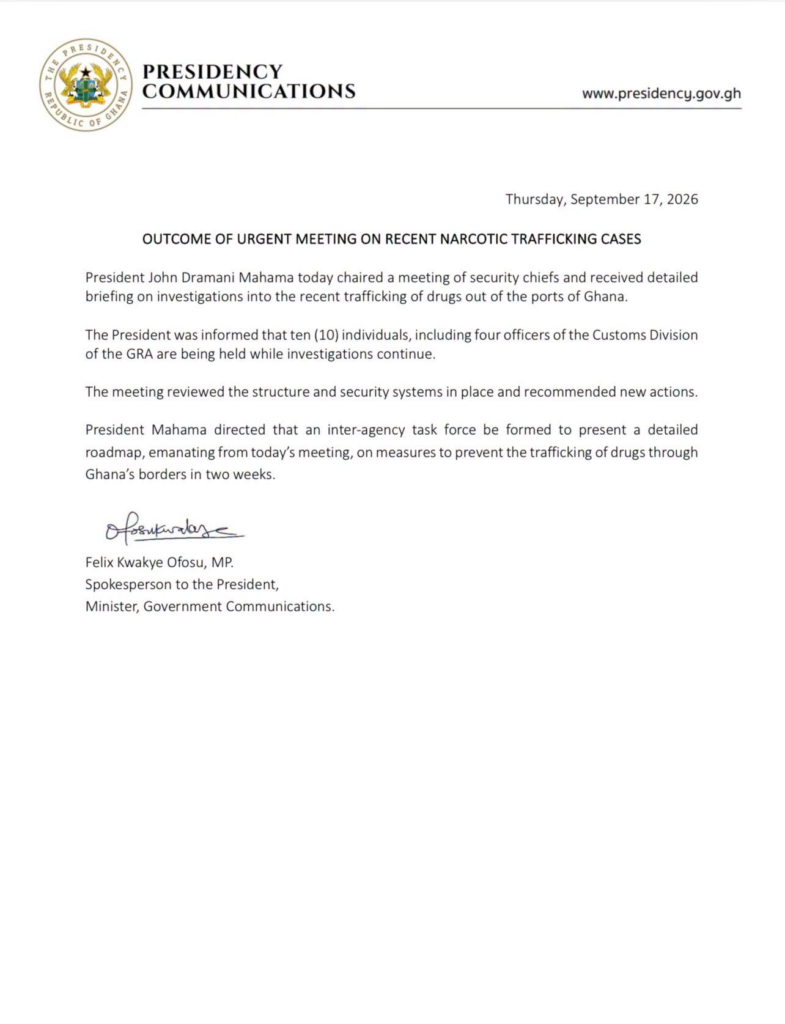
    The formation of an inter-agency task force is expected in the next 14 days as part of efforts to curb trafficking of drugs out Ghana. The group has been tasked by President John Dramani Mahama to develop a detailed roadmap on measures to prevent the trafficking of drugs through Ghana’s borders.

    This information was contained in a press release by issued by the President on Thursday, September 17 after the President met with security chiefs and Ministers at the Jubilee House.

    The statement read, “President John Dramani Mahama today chaired a meeting of security chiefs and received detailed briefing on investigations into the recent trafficking of drugs out of the ports of Ghana. The President was informed that ten (10) individuals, including four officers of the Customs Division of the GRA are being held while investigations continue.


    The meeting reviewed the structure and security systems in place and recommended new actions.

    “President Mahama directed that an inter-agency task force be formed to present a detailed roadmap, emanating from today’s meeting, on measures to prevent the trafficking of drugs through Ghana’s borders in two weeks”.

    The meeting follows the seizure by French customs of nearly 3.9 tonnes of cocaine, valued at about €225 million, at the northern port of Dunkirk on September 10.


    The seizure was carried out on Thursday, September 10, at the northern port of Dunkirk. The drugs were hidden in a container that was reportedly en route to Antwerp, Belgium, in part.


    Authorities in France say the interception came after judicial police targeted a criminal syndicate believed to be behind the consignment. Meanwhile, ten (10) individuals, including four officers of the Customs Division of the GRA are being held while investigations continue.


    Over the past 18 months, Ghana has been featured repeatedly in major trafficking cases. On 4 March 2025, more than 3.3 tonnes of cocaine concealed beneath sand and reportedly travelling from Takoradi to Accra, with an estimated street value exceeding US$350 million, were intercepted.


    More recently, government authorities have stepped up efforts to curb the illegal smuggling and sale of prohibited goods, including narcotic drugs, across the country.

    In August, three persons were remanded by an Accra Circuit Court for allegedly concealing 869 slabs of suspected cocaine in bags of gari and cassava powder in Tema.


    The accused persons are Gilano Jorgino Holwin, a Dutch security guard; Alhaji Iddrisu Haruna, a 56-year-old transporter; and John Mensah Sarbah, a 41-year-old clearing agent.


    On August 5, police officers stationed at the Tema Regional Criminal Investigations Department apprehended the defendants at the Golden Suvineur warehouse at the Main Harbour in Tema, after acting on intelligence.


    The latest interception comes months after the Narcotics Control Commission (NACOC) seized a consignment containing approximately five million Tramadol tablets valued at an estimated GH¢100 million at the Accra International Airport (AIA) following an intelligence-led operation.


    Three suspects were also arrested in connection with the intercepted consignment. In a related development, the Police in March arrested nine public officers, including five Customs officials, for their alleged involvement in an undeclared Tramadol consignment at Tema Port.


    The remaining four comprised one officer each from the Narcotics Control Commission, Port Security, the Energy Commission, and the Ghana Standards Authority.

  • Wontumi is still in custody, sleeping on a student mattress on the bare floor – Palgrave Boakye

    Wontumi is still in custody, sleeping on a student mattress on the bare floor – Palgrave Boakye

    A spokesperson for former Ashanti Regional NPP Chairman Bernard Antwi Boasiako, popularly known as Chairman Wontumi, has revealed that the incarcerated politician remains in custody and is serving his sentence under difficult conditions.

    This revelation by Palgrave Boakye-Danquah is a response to claims that Chairman Wontumi has been released from prison custody. According to him, Chairman Wontumi remains in custody and sleeping on a student mattress on the bare floor.

    “Please ignore the rumours that Chairman Wontumi has been released. He is still in prison. Chairman Wontumi is still in prison. He is sleeping on the bare floor and a student mattress,” he said.

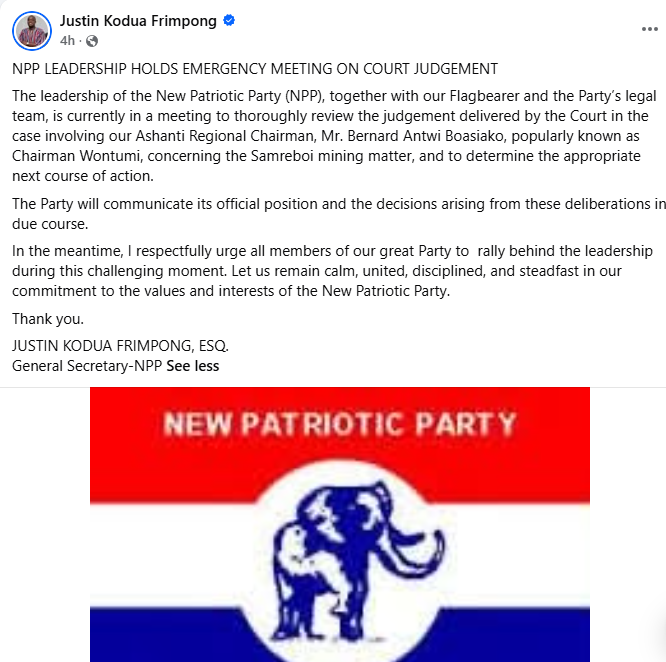
    Chairman Wontumi has been sentenced to 20 years in prison on each of the two counts after the High Court in Accra found him guilty in the Akonta Mining illegal mining case on Monday, July 20.
    The two prison terms will run concurrently.

    Justice Audrey Kocuvie-Tay convicted Wontumi on Counts One and Four, while Akonta Mining Limited was convicted on Counts Three and Six.


    Additionally, he was fined 10,000 penalty units on each count. Before the verdict, the defence filed a last-minute application seeking to delay the judgment and refer constitutional questions to the Supreme Court.


    In April, his bid to halt the ongoing criminal proceedings in the alleged Samreboi illegal mining case was dismissed by the Court of Appeal. Justice Audrey Kocuvie-Tay delivered the ruling on Tuesday, April 21.


    Last year, the court adjourned two related cases involving Wontumi. In the first case, which concerns allegations that he permitted mining activities on his concession at Samreboi without the required approval, proceedings were adjourned to November 12.


    The second case, in which he is accused of conducting mining operations in the Tano Nimire Forest Reserve without authorisation, was also adjourned to December 4 because the presiding judge was on leave.


    The adjournment followed a request by the prosecution to serve the defence with the required disclosures.


    Wontumi has been accused of facilitating illegal mining by allowing individuals to operate on the Samreboi concession without the required licence. His lawyer has maintained that there is no evidence to support the illegal mining charges brought against his client.


    NPP responds to Wontumi’s sentence


    The New Patriotic Party (NPP) strongly criticised the government after the court handed a 20-year jail sentence to its Ashanti Regional Chairman, Bernard Antwi-Boasiako, popularly known as Chairman Wontumi, calling the conviction a “travesty of justice” and insistingit will challenge the ruling through the appellate process.


    In a statement issued after the High Court’s judgment, the party said it respected the authority of the judiciary but could not remain silent in the face of what it believes is a fundamentally flawed decision.


    According to the NPP, the prosecution failed to provide evidence to support the offence for which Chairman Wontumi was convicted, arguing that his acquisition of the mineral concession in question was lawful and never disputed during the trial.


    The party claimed that the Mahama administration may seek to portray the conviction as evidence of its commitment to the fight against illegal mining but rejected such a narrative.


    “This is no trophy,” the NPP declared, arguing that Ghanaians would question why similar urgency had not been demonstrated in addressing allegations involving individuals linked to the governing party.

  • I will continue inherited govt polices, but not Akufo-Addo’s National Cathedral – President Mahama

    I will continue inherited govt polices, but not Akufo-Addo’s National Cathedral – President Mahama

    President John Mahama has noted that his administration does not plan to continue the National Cathedral project.

    Speaking at a citizens’ engagement during his tour of the Upper West Region he indicated that the project was a personal pledge by the former President Nana Akufo-Addo to God and not a national policy.

    Therefore, it is unwise for his administration to complete what he describes as a personal vow between Akufo-Addo and his God.

    “The only one is the National Cathedral, but that was not a national policy. It was a personal pledge by the former president. It was a personal pledge by the former president to God. So that one, it wasn’t national policy,” President Mahama said.

    He added that, the Ghanaian Christian community has the capacity to complete the project.

    “Projects and policies we inherited, we have continued the only one is the National Cathedral. But that was not a national policy. It was a personal pledge by the former president. It was a personal pledge by the former president to God,” he said.

    Earlier this year, President John Dramani Mahama tasked the audit firm Deloitte Touche with conducting an independent audit of the National Cathedral project.

    The report, which covered activities from December 2021 to December 2023, accused the Secretariat of procurement breaches, unsupported expenditures, and governance lapses.

    During a press briefing on Friday, July 18, Felix Kwakye Ofosu disclosed that the Secretariat spent 18,500 Ghana cedis on the expenses of one Kharis Psalmist; however, it failed to document the full cost rendered in its records.

    “A key example involves academic payment for Mr Kharis Psalmist who was lodged at the Movenpick Hotel from 16th to 28th February 2022 at a cost of 18,500 Ghana cedis. However, only 4,976.00 Ghana Cedis was recorded in the books with no documentation accounting for the remaining 13,524.00 Ghana Cedis, which reportedly a refund issued by the hotel but not traceable in the financial records,” he stated.

    As a result, the Attorney-General (AG) was instructed by President John Dramani Mahama to ensure all legal processes are initiated for the revocation of the board’s mandate.

    “The National Cathedral Ghana was registered limited by guarantee. In view of that, the Attorney General has been directed to take legal steps… and we expect that to be done in the coming days.”

    The report further explained that, contrary to the $58 million claimed by the former NPP government spent on the National Cathedral project, an outstanding $39 million owed to the contractor brings the total cost to $97 million. But the Executive Director of the National Cathedral Secretariat, Dr. Paul Opoku-Mensah, branded the report as false and incomplete.

    “While the government press conference made reference to audit findings, what was presented was not the actual audit report but rather audit queries that had been responded to in detail. This audit report does not exonerate anyone. However, it confirms that there has been no misuse of state funds. All payments made were supported by contracts and guided by legal and financial protocols,” the memo noted.

    The National Cathedral, originally proposed under the administration of former President Nana Addo Dankwa Akufo-Addo, was envisioned as a monumental Christian worship centre in Ghana.

    But the project progressed at a snail’s pace, spiralling costs and the use of public funds in a secular state. According to reports, a total amount of $58 million was spent on the project deemed to be Ghana’s most expensive.

    Over a year ago, Member of Parliament for North Tongu, Samuel Okudzeto Ablakwa, raised concerns with the Commission on Human Rights and Administrative Justice (CHRAJ), alleging irregularities in the project’s construction and the operations of the National Cathedral Secretariat.

    After investigating the case for several months, the Commission recommended that the Office of the Auditor-General intervene and conduct a forensic audit to ascertain whether funds allocated for the project were used for their intended purposes.

    The Commission highlighted that GHS225.9 million in “seed money” had been spent on activities including site preparation, contractor mobilization, and consultancy services as of May 31, 2022. CHRAJ’s detailed report recommended the potential prosecution of the board of trustees overseeing the National Cathedral project, citing their role in awarding the contract to Ribade Company Limited.

    The report highlighted multiple violations of procurement regulations and warned that the failure of those involved to address the issues could tarnish Ghana’s reputation both locally and internationally.

    The government, in April this year, dissolved the National Cathedral Secretariat after noting that it would no longer provide funding for the abandoned project.

    Meanwhile, the government has revealed its plans to repurpose the stalled National Cathedral project into a National Cultural Convention Centre (NCCC) to become a central hub for Ghana’s creative economy and cultural diplomacy.

    Under the new “SH0W24” plan, part of the 24-hour economy for the creative sector, the NCCC will be developed with support from the African Continental Free Trade Area (AfCFTA) Secretariat and host exhibitions, film festivals, trade expos, and major summits.

    The project, the government notes, offers a smart solution to infrastructure challenges without clashing with religious or national values.

    “At the national level, a bold flagship intervention is proposed: converting the National Cathedral site into the National Cultural Convention Centre (NCCC), in partnership with the AfCFTA Secretariat. This venue will serve as Africa’s premier cultural diplomacy and creative economy forum, hosting international exhibitions, film festivals, trade shows, and summits—filling a critical infrastructure gap without conflicting with national values or faith institutions,” the document stated.

    The National Cultural Convention Centre (NCCC) is a key component of a wider strategy to revitalise Ghana’s creative arts, culture, and tourism sectors as major drivers of economic transformation.

    Its development marks a major policy shift regarding the use of the contested National Cathedral site, which has faced public criticism due to delays, rising costs, and questions about its necessity.

    Under the SH0W24 initiative, the NCCC is expected to become the flagship infrastructure project for the creative economy, with the capacity to host global exhibitions, festivals, and large-scale cultural events.

    The first phase of SH0W24 (2025–2026) will focus on feasibility studies, while the centre is expected to be fully operational in Phase 3 (2028–2030). Phase 2 will see the rollout of the Ghana Cultural Passport, regional programmes, and creative districts aimed at energising local economies. Phase 3 will take things further, focusing on exports and cross-border cultural partnerships.

    In addition, the SH0W24 strategy includes the creation of a National Creators Academy, which will train young people in fields such as music, film, fashion, digital media, and cultural performance, using modern tools like AI and virtual reality, along with business and cultural education.

  • Saglemi Housing: 700 units to be completed by March 2027 – President Mahama

    Saglemi Housing: 700 units to be completed by March 2027 – President Mahama

    Saglemi Affordable Housing Project will soon be completed as the government intensifies efforts to resolve outstanding issues. President Mahama announced a tour of the Saglemi housing project on Thursday, August 20. 

    He disclosed that the first 700 housing units at the Saglemi Affordable Housing Project are expected to be completed and commissioned by March 2027 with a total of 1,500 units targeted for completion by the end of 2027.

    “When the portal is open, those who want to move to the beautiful home should register,” President Mahama said. 

    Meanwhile, the property developer, Kojo Aduhene, has assured the public that the project will be completed soon, noting that work is already underway to put the necessary infrastructure in place. 

    We’re doing all the underground cabling, clearing the weeds, and water will not be a problem because we’ve got a water plant ready in the Dawa Industrial Area and it’s enough to supply water for all the units,” Mr Aduhene said. 

    The Saglemi Housing Project, situated in Prampram in the Greater Accra Region, began in 2012 during President John Dramani Mahama’s first term as an initiative to address Ghana’s housing shortage.

    The project, however, came to a halt after 2017 when the Akufo-Addo administration took over, leaving the site inactive for almost eight years.

    In late 2024, the previous government revealed that a private developer, the Quarm-LMI Consortium, had been chosen to finish the project. The state’s earlier investment was counted as equity, and no additional public funds were to be provided.

    The consortium was expected to complete the remaining units by early 2026.

    The project was initially meant to provide 5,000 housing units on 300 acres, but only 1,506 units were partially completed before work stopped in 2017, even though around $200 million had already been spent.

    Former administration appointees claimed that many of the buildings lacked key infrastructure, such as water, electricity, and sewage systems.

    Government officials say a current review will determine the best way to complete the project while protecting public interest.

    Earlier last year, Minister of Works, Housing and Water Resources, Kenneth Gilbert Adjei, assured that contractors will soon return to the Saglemi Affordable Housing Project site to continue construction.

    During a recent working visit to housing developments at Shai Hills and Ningo Prampram in the Greater Accra Region, Mr. Adjei emphasized that the government is actively engaging key stakeholders to revive the long-stalled project.

    “We know of the Saglemi housing project, among other projects, has stalled halfway. When I resumed office, I started engaging with key stakeholders, and very soon, we will move to site, and then work will begin,” he stated.

    His tour also included inspections of the National Homeownership Fund Affordable Housing Projects in Shai Hills and Tema Community 22, alongside the Ningo Prampram Coastal Sea Defence Project.

    Mr. Adjei highlighted the government’s renewed focus on ensuring that projects are seen through to completion without unnecessary delays or financial losses.

    “We will put in plans to ensure that we don’t start projects and end midway, but to ensure that all projects get to their finishing line,” he said.

    He also urged contractors to adhere to set timelines to avoid further setbacks.

    “Some of the projects are behind schedule, some too are on schedule, and I would advise our contractors that going forward, we don’t want any delays in our projects. If we give timelines, we should stick to the timelines. Those are things I’m going to meet and discuss with the contractors,” he stated.

    The minister further reiterated the government’s commitment to safeguarding lives and properties in coastal areas. He assured that ongoing sea defence projects in Axim, Cape Coast, Dansoman, and Dixcove would be expedited, with alternative funding sources being explored to ensure their completion.

    Former Minister of Works and Housing, Collins Dauda, along with Dr. Kwaku Agyemang-Mensah (former Minister of Water Resources, Works and Housing) and Alhaji Ziblim Yakubu (Chief Director in the Ministry of Water Resources, Works and Housing), were initially accused of contributing to the mishandling of funds in the $200 million Saglemi Housing project.

    Businessman Andrew Clocanas (who passed away) and Nouvi Tetteh Angelo (CEO of Ridge Management Solutions Ghana Limited) were also part of the list of accused individuals. They faced multiple charges related to misusing public funds, which were filed in January 2023.

    However, an Accra High Court ruled in favor of Collins Dauda, and three others by discharging them from all charges.

    The decision, announced on Tuesday, February 24, 2025, came after state prosecutors informed the court that the Attorney General had decided to withdraw the charges against the defendants.

    Dr. Ayine, during a press briefing on February 12, 2025, justified the decision to drop the case by noting that part of the funds were used for the construction of houses, which should have been considered in assessing the charges.

    “In other words, the value of that built environment is, in my considered opinion, a key determinant of how much of the total sum was allegedly misapplied by the Honorable Collins Dauda. Discounting the value of the built environment renders those charges, in my considered opinion, defective,” he stated.

    Furthermore, Dr. Ayine highlighted that payments made by other ministers, such as the $5 million approved by Atta Akyea in 2017, had not been included in the evaluation of the state’s financial losses.

    He questioned why Akyea, who was involved in these payments, was not charged while Dauda had been.

    “For instance, Atta Akyea, as Minister of Works and Housing, approved a payment of $5 million in 2017 that ought to have been considered in determining the value of state funds that Collins Dauda had misapplied. But that wasn’t done. And note, ladies and gentlemen of the media, that Atta Akyea was never charged, even though Collins Dauda was,” he pointed out.

    In his closing remarks, Dr. Ayine emphasized the importance of clarity in legal charges, asserting that accusations must be precise to ensure fairness in the trial process. He argued that the charges filed in this case did not meet the necessary legal standards to proceed.

  • Okoe Boye wins NPP Greater Accra Chairmanship race

    Okoe Boye wins NPP Greater Accra Chairmanship race

    The Former Minister of Health, Dr. Bernard Okoe-Boye has been elected the New Patriotic Party’s (NPP) Greater Accra Regional Chairman.

    He was elected the party’s regional executive elections held on Saturday, August 15.

    Dr Okoe Boye polled 490 votes to defeat Alfred Boye, who secured 172 votes, giving him a 318-vote margin.

    Dr Okoe Boye’s new role mandates him to work with constituency executives to strengthen the NPP’s presence across Greater Accra.

    A number of aspirants who contested in various positions, included Regional Chairman, First and Second Vice Chairpersons, Secretary, Treasurer, Organiser, Women’s Organiser, Youth Organiser, Communications Officer and Nasara Coordinator.

    Meanwhile, the NPP elected its flagbearer on Saturday, January 31.

    The former Vice President, Dr Mahamudu Bawumia, was declared the winner of the NPP presidential election, securing 57% of the votes.

    Out of the total valid votes cast, Dr. Bawumia secured 110,643 votes (56.48%), followed by Kennedy Agyapong with 46,554 votes (23.76%), Bryan Acheampong earned 36,303 (18.53%), Dr. Yaw Osei Adutwum and Ing. Kwabena Agyepong trailed with 1,999 votes (1.02%) and 402 votes (0.21%) respectively.

    More than 211,000 delegates took part in the polls which were conducted at 333 voting centres spanning all 275 constituencies nationwide.

    Throughout the process, heightened security arrangements were put in place, while party officials closely monitored proceedings to guarantee orderliness.

    Across several constituencies, the sorting and compilation of votes are currently in progress, and preliminary results have started filtering in from parts of the country. Party leaders have assured stakeholders of openness and fairness as the process moves forward.

    Prior to the election, the Executive Director of Global InfoAnalytics, Mussa Dankwah predicted the Former Vice President, Dr. Mahamudu Bawumia, to win 14 out of the 16 regions.

    Speaking to the media on Wednesday, January 28, he noted that Dr. Bawumia would sweep massive votes in the party’s stronghold, the Ashanti Region.

    He added, “Yes, [Bawumia will win in 14 regions out of 16 regions].“All the areas we have looked at are pointing in one direction, and that direction is that Bawumia will win this Saturday’s election one-touch.

    According to him, “Based on our model, his lowest score will be 54 percent, which is the 57 percent we are giving him minus the three percent margin of error, or he could get up to 60 percent”.The Executive Director of Global InfoAnalytics emphasised that the data is consistent across all regions. “I am very confident in Bawumia’s numbers because they are more stable in terms of variability. There is no noise in the data,” he added.

    Last year, the National Tracking Poll by Global InfoAnalytics disclosed that 56 per cent of voters and 72 per cent of committed NPP delegates want former Vice President Dr Mahamudu Bawumia as their flagbearer for the 2028 general elections.

  • Trial of criminal cases involving NPP officials in vacation unprecedented and discriminatory – Lawyers file protest

    Trial of criminal cases involving NPP officials in vacation unprecedented and discriminatory – Lawyers file protest

    Counsel for former National Buffer Stock Company (NAFCO) Chief Executive Officer Hanan Abdul-Wahab, his wife, Faiza Seidu Wuni, and Kwabena Adu-Boahen have objected to the Court’s decision to continue the trial while the courts are on vacation.

    The objection comes after the Chief Justice directed Justice Francis Achibonga, who is handling the two separate cases, to adjourn proceedings to 11 and 12 August.

    According to a separate letter from the lawyers addressed to the Chief Justice, proceeding with the trial would hinder their clients’ right to a fair defence.

    The lawyers, including former Attorney General Godfred Yeboah Dame, representing Abdul-Wahab, and Samuel Atta Akyea, representing Adu-Boahen , have urged the Chief Justice to halt proceedings scheduled during the judiciary’s legal vacation.

    Lawyer Dame in the letter indicated that, “the warrant for Justice Achibonga to commence the hearing of the instant criminal matter, without the consent of the parties in the matter, is thus most irregular and contrary to law. There is no urgency to this matter as the accused persons were arraigned before the court only on on 5th May 2026, after earlier charges were withdrawn by the Republic through no fault of the accused.

    “Respectfully, we, of Messrs. Dame & Partners, having worked throughout the legal year and cooperated for the conduct of the instant criminal matter, are not in the position to attend court in the vacation for the conduct of the trial”.

    Samuel Atta Akyea, lawyer for Kwabena Adu-Boahen has stated that, the Chief Justice’s directive will disrupt their personal schedules.

    Part of the letter read, “these unprecedented criminal justice delivery arrangements as we consider the Judiciary as the last bastion of refuge in our constitutional democracy. We accordingly and respectfully pray that your directive be reconsidered, the warrant withdrawn and the hearing days vacated with the matter adjourned to abide term-time in a manner consistent with the treatment afforded other pending cases”.

    The letter added, “Indeed, your directive will throw in disarray all the private personal engagements and travel plans of the members of our law firm”.

    The defendants, who served during the New Patriotic Party (NPP) administration, are standing trial for causing financial loss to the state.

    Read the letters here:

  • 150 underserved districts benefit from Free Primary Healthcare Policy — Ato Forson

    150 underserved districts benefit from Free Primary Healthcare Policy — Ato Forson

    150 underserved districts across the country will benefit from the first phase of the government’s Free Primary Healthcare Policy, according to Finance Minister Dr Cassiel Ato Forson.

    According to him, the government remains committed to ensuring that every Ghanaian has access to quality primary healthcare, regardless of income or location, and has supplied more than 24,000 pieces of medical equipment to health facilities.

    He made the comment during the presentation of the 2026 Mid-Year Budget Review to Parliament on Thursday, July 23.

    He added, “Following the launch of the Free Primary Healthcare Policy in April 2026, the first phase of implementation is targeting 150 underserved districts across the country. Mr. Speaker, Government has distributed more than 24,000 pieces of medical equipment to strengthen diagnostic, emergency, maternal and neonatal care. In addition, community screening for hypertension, diabetes, cancers and other non-communicable diseases has been expanded.”

    The government’s flagship Free Primary Health Care Programme was launched on Wednesday, April 15, by President John Dramani Mahama at Dodowa in the Greater Accra Region.


    The Free Primary Healthcare Policy is the government’s bold initiative to ensure that every resident, especially vulnerable populations, can access essential health services without paying out-of-pocket at the point of care.

    The initiative forms part of the key steps adopted towards achieving Universal Health Coverage (UHC) by 2030.


    Ahead of its Free Primary Healthcare policy rollout, the Health Minister Kwabena Mintah Akandoh who was speaking at the Government Accountability Series noted that the had received over 24,534 pieces of medical equipment.


    “In preparation for implementation, we have procured and are ready to deploy 24,534 pieces of essential medical equipment across the country. This is intended to ensure our facilities and health workers are equipped and ready.”


    Meanwhile, the National Health Insurance Authority (NHIA) has disbursed over GH¢392 million in vetted claims to healthcare providers across Ghana between December 2025 and January 2026.


    The payments cover services provided under the National Health Insurance Scheme (NHIS).


    According to the Finance Directorate of the NHIA, the funds were released following an extensive vetting and approval process of claims submitted by health facilities. In December 2025, the Authority paid GH¢301,658,338.13, while in January 2026, healthcare providers received GH¢90,373,513.13.


    The NHIA in early July 205 disbursed an amount of GH¢267.67 million as claims to health facilities across the country. The disbursement became possible following approval by Chief Executive Dr. Victor Asare-Bampoe.

    The total payments made by the NHIA in the past seven months stand at over GH¢1.5 billion. Out of the total amount, public health facilities received GH¢120,700,932.62, which constitutes 45 percent of the total.


    Private health facilities have been paid GH¢100,210,906.44, representing 37 percent of the total amount, while mission health facilities have been allotted GH¢446,761,808.96, which makes up 17 percent of the total funds.


    One of the ways the National Health Insurance Authority (NHIA) seeks to ease the financial burden on citizens, ensure equal access to healthcare, and reduce illegal fees is by proposing a 120 per cent increase in service tariffs, pending approval from its Board and the Minister of Health.


    This was revealed by the Chief Executive Officer of the NHIA, Dr. Victor Asare Bampoe, during an appearance on Channel One TV’s The Point of View on Wednesday, November 26. According to Dr. Bampoe, the proposed tariff increase, if approved, would help reduce the extra charges patients pay at hospitals for medical care and services.


    He explained that the proposed increase was planned in consultation with a group of independent experts mandated to review tariffs under Sections 33 and 34 of the National Health Insurance Act, which require annual revisions of both medicines and service tariffs.


    “Regarding the 120% tariff increase: this is proposed after comprehensive work by a group of experts. The law requires an annual review of service and medicine tariffs (Sections 33 and 34). Although the review was delayed, the proposal is now ready and will go to our board and the Minister of Health for approval. Once approved, it will be implemented. This is partly to address the problem of illegal fees at hospitals, ensuring health providers are paid realistic tariffs so patients no longer have to pay out-of-pocket,” he said.


    As the “cash manager” of Ghana’s health insurance system, Dr. Bampoe explained that the NHIA is mandated to collect funds, set tariffs, and pay hospitals, clinics, and pharmacies for services provided to insured patients.


    However, he noted that the Authority plans to move beyond this traditional role and become more of a “strategic health purchasing provider.”


  • Ghana’s democracy is strengthened when citizens can speak freely – Bawumia

    Ghana’s democracy is strengthened when citizens can speak freely – Bawumia

    Former Vice President and the New Patriotic Party’s (NPP) 2028 presidential candidate, Dr Mahamudu Bawumia, has noted that Ghana’s democracy can only be strengthened when citizens are free to express themselves without fear of arrest or prosecution for their speech.

    In an official statement, Dr Bawumia noted that those who oppose and speak freely against politicians should not face arrest or prosecution for expressing their views, as they all contribute to strengthening Ghana’s democracy through open and free public discourse.

    “Ghana’s democracy is strengthened when citizens, including those who oppose us, can speak freely without fear”.

    His comment follows a plea urging the government to release a National Democratic Congress (NDC) organiser in Agona West who is facing charges over alleged offensive comments made about him.

    According to Dr Bawumia, he neither lodged complaints nor sanctioned the prosecution of individuals who spoke against him during his tenure as Vice President or while the NPP was in government, believing such actions would be imprudent and contrary to democratic principles.

    The statement said, “Dr. Bawumia wishes to state, clearly and unequivocally, that he has neither lodged any complaint nor sanctioned any prosecution against this young man or any other citizen. He does not desire, and will not endorse, the arrest or prosecution of any Ghanaian in his name for speech.

    “He therefore respectfully calls on the Ghana Police Service and the Attorney-General to discontinue this prosecution and any similar actions purportedly undertaken on his behalf, and to release the young man to return to his family and his livelihood”.

    Meanwhile, Dr Bawumia has added to the many individuals cautioning President John Dramani Mahama against assenting to the recently passed Tribunals Bill, 2026 passed by Parliament.

    Addressing the nation on Sunday, July 19, Dr. Bawumia expressed concern over the passage of the bill, adding that such a move could undermine justice delivery and be used as a tool for injustice.

    Dr Bawumia further urged President Mahama to consult key stakeholders for thorough deliberations on the matter.

    He added, “The bill will soon be transmitted to the president for his assent, and I have one respectful request of President Mahama. Mr. President, do not assent to this bill. Pause and let the nation ponder and deliberate on this very important matter”.

    “This is not a partisan request. The Trades Union Congress and the voice of millions of Ghanaian workers have called for the bill to be withdrawn, warning that in its current form, it could become a potent tool for weaponising justice delivery.

    According to him, “Those are the words of Ghanaian workers, not of any political party. Consider also the government’s own process. The president established the Constitution Review Committee and it recommended removing regional tribunals from the constitution because the High Court has long carried their case loads.”

    “My call is simple and constructive, withhold your assent. Convene genuine national engagement. Invite the Ghana Bar Association and other lawyer groups, Organised Labour, CSOs and the political parties including my own and we will come in good faith and consult the judiciary itself.

    “Justice belongs to no government and no party, it belongs to the Ghanaian people and a law that reshapes the architecture of justice should rest on national consensus and not a headcount.

    “Mr. President, the pen is in your handy, use it not to assent to this bill but write an invitation to the nation.”

    The Tribunals Bill, 2026, was passed by Parliament on Thursday July 16, following the completion of its third reading and subsequent approval by members of the House.

    President John Dramani Mahama is expected to give his assent in the coming days before it becomes law.

    The Tribunals Bill therefore seeks to address the lacuna in the legal framework of Ghana regarding tribunals.

    As part of measures to address this lacuna, the Tribunals Bill seeks to establish a clear constitutional and statutory basis for the operation of tribunals within the present democratic system, address the historical stigma associated with public tribunals by emphasising the role of public tribunals in ensuring access to justice and protecting rights of citizens, and to ensure the effective and efficient administration of justice, particularly in cases which require specialised adjudication or expeditious resolution.

    The Bill also seeks to ensure the participation of ordinary citizens in the administration of justice and to show clearly the position of tribunals within the court structure to provide for operational clarity.

  • Wontumi’s 20-year sentence is justice and not retaliation – Dafeamekpor

    Wontumi’s 20-year sentence is justice and not retaliation – Dafeamekpor

    The conviction of New Patriotic Party (NPP) Ashanti Regional Chairman Bernard Antwi Boasiako, popularly known as Chairman Wontumi, is justice and not politically motivated, the Majority Chief Whip and Member of Parliament for South Dayi, Rockson-Nelson Dafeamekpor, has emphasized.

    Speaking to the media on Monday, July 20, he said Wontumi’s sentencing followed due process without interference from the National Democratic Congress (NDC) government.

    “The record must reflect that it was not the NDC that went after him. It was his own government that established those facts before we came to inherit it”.

    “The record must reflect that it was not the NDC that went after him. It was his own government that established those facts before we came to inherit it,” he said.

    Chairman Wontumi was sentenced to 20 years in prison on each of the two counts after the High Court in Accra found him guilty in the Akonta Mining illegal mining case on Monday, July 20.

    The two prison sentences will be served at the same time. Justice Audrey Kocuvie-Tay found Wontumi guilty on Counts One and Four, while Akonta Mining Limited was convicted on Counts Three and Six.

    Additionally, Chairman Wontumi has been fined 10,000 penalty units for each count. Prior to the verdict, a last-minute application was submitted by the defence seeking to delay judgment and refer constitutional questions to the Supreme Court.

    In April, Chairman Wontumi’s bid to halt his ongoing criminal trial in the alleged Samreboi illegal mining case was thrown out by the Court of Appeal. The presiding judge, Justice Audrey Kocouvi-Teyon, gave the ruling on Tuesday, April 21.

    Last year, the court suspended two trial cases involving Wontumi, which were postponed. In the first case, which concerns allegations that he permitted mining activities on his concession at Samreboi without the required approval, proceedings were adjourned to November 12.

    The second case, in which Wontumi is accused of mining operations in the Tano Nimire Forest Reserve without authorization, was also postponed to December 4 because the presiding judge is currently on leave.

    The adjournment became necessary on the back of a request from the prosecution to enable them to serve the defense with necessary disclosures.

    Chairman Wontumi has been accused of aiding individuals to mine without a proper licence at the Samreboi concession. Wontumi’s lawyer has noted that there is no evidence to support the galamsey charges levelled against his client.

    Speaking to the media on Friday, October 10, Enoch Afoakwa noted that Chairman Wontumi is unshaken in his insistence on innocence in the face of all galamsey charges.

    He added, “So certainly his position has not changed. He still maintains his innocence. Once he has pleaded not guilty to the various counts that he has been charged with, his presumption of innocence under Article 19(2c) triggers — and that means he is presumed innocent until proven.”

    “When he was arraigned, he pleaded not guilty to all the several counts of allegations that have been levelled against him. So certainly his position has not changed. He still maintains his innocence. Once he has pleaded not guilty to the various counts that he has been charged with, his presumption of innocence under Article 19(2c) triggers — and that means he is presumed innocent until proven”.

    Chairman Wontumi, was released from police custody after spending three nights in detention on Friday, October 10.

    His release followed the fulfillment of bail requirements totaling GHS25 million, imposed in connection with two separate illegal mining cases currently before the court.

    On October 7, he was unable to meet the bail conditions set by the Criminal Division of the High Court in Accra. In one of the cases, the court granted him GHS15 million bail with two sureties, while in the other, an additional GHS10 million bail was set, also with two sureties—one of whom must justify with landed property.

    The court further directed Wontumi to report to investigators once every week for the first month and prohibited him from traveling outside the country without explicit approval.


  • Illegal Mining: NPP leadership calls emergency meeting over Chairman Wontumi’s 20-year jail sentence

    Illegal Mining: NPP leadership calls emergency meeting over Chairman Wontumi’s 20-year jail sentence

    After about 11 months of legal tussle, the Accra High Court, presided over by Justice Samuel Bright Mensah, gave a verdict earlier today.

    And the embattled Ashanti Regional Chairman of the New Patriotic Party (NPP), Bernard Boasiako, affectionately referred to as Chairman Wontumi, was given a 20-year jail term on charges of Illegal mining operations in Samreboi without a valid license, contravention of environmental regulations by engaging in mining activities that caused ecological damage possession and use of mining equipment without authorisation and failure to comply with Minerals Commission directives regarding community safety and environmental standards.

    Following the sentence, the leadership of the party convened in an emergency meeting to discuss his sentence and to determine what the next course of action would be; the General Secretary of the party, Justin Kodua, announced on his Facebook page.

    “The leadership of the New Patriotic Party (NPP), together with our Flagbearer and the Party’s legal team, is currently in a meeting to thoroughly review the judgement delivered by the Court in the case involving our Ashanti Regional Chairman, Mr Bernard Antwi Boasiako, popularly known as Chairman Wontumi, concerning the Samreboi mining matter, and to determine the appropriate next course of action”, parts of the post announced.

    It added that, 

    “The party will communicate its official position and the decisions arising from these deliberations in due course,” the statement noted.

    Mr Kodua Frimpong also appealed to party members to remain calm and united as the leadership deliberates on the matter.

    He urged NPP supporters to rally behind the leadership during what he described as a challenging moment, stressing the need for discipline, unity, and steadfastness in protecting the values and interests of the party.

    The NPP said it will announce the outcome of the meeting and its official position after the deliberations are concluded.

    “In the meantime, I respectfully urge all members of our great Party to rally behind the leadership during this challenging moment. Let us remain calm, united, disciplined, and steadfast in our commitment to the values and interests of the New Patriotic Party”, the Secretary added.

  • Come home and face the law, we  beg you father – President Mahama to Ofori-Atta

    Come home and face the law, we beg you father – President Mahama to Ofori-Atta

    Former Finance Minister Ken Ofori-Atta, has been urged by President John Dramani Mahama to return to Ghana face charges leveled against him.

    During his Resetting Ghana Tour in the Volta Region today, Mr. Mahama dismissed claims that the government is not doing enough to bring Ofori-Atta home to face the law.

    According to him, bringing Ofori-Atta follow international procedures and respect the rights of the individual.

    Mr. Mahama stated that repatriating an individual from another country involves legal processes that must comply with international law and uphold the person’s rights.

    “The person has the right to take a lawyer, go before a judge, and if he doesn’t want to come, he can argue against coming.

    “We are begging you, Father, come back. Your children are calling you to come back,” the President stated.

    The Office of the Special Prosecutor (OSP) has weighed in on the debate over whether former Finance Minister Kenneth Ofori-Atta can be tried in absentia after being granted permanent residency in the United States (U.S.).

    The Director of Strategy, Research, and Communications at the OSP, Sammy Darko, explained that due process must be followed first as a trial cannot start in someone’s absence unless they have first been officially charged and properly notified through legal procedures.

    He added that, “Trial in absentia is not triggered by the mere filing of charges. It is triggered when a person who has been properly charged and properly notified of the proceedings refuses to come before the court.”

    On the other hand, an Anti-corruption campaigner, Edem Senanu, has stated that the former Finance Minister can still face the law despite his current residency in the U.S.

    While addressing the media on Wednesday, June 17, he explained that the current development does not exempt Ofori-Atta from being extradited should the government decide to pursue legal action against him.

    However, he added that U.S. authorities can still consider the request, depending on whether it meets the legal requirements for extradition under existing international arrangements.

    “It has no bearing, as it were, on the request for extradition that the government applied for. These are two separate, distinct legal initiatives. Resident status should not have any impact on the extradition request and legal process,” he said.

    United States (U.S.) court on Monday, June 15, approved Ghana’s embattled former Finance Minister’s application for permanent residency in the United States.

    The development follows a decision by Application to Register Permanent Residence or Adjust Status (Form I-485), which was sponsored by his U.S. citizen son. The court considered the petition during proceedings before granting the application.

    But speaking to the media on Tuesday, June 16, Davis Ansah Opoku noted that legal proceedings should still continue against Ofori-Atta, even if he fails to appear before the court.

    “Even a foreigner, somebody who is not of Ghanaian descent, when he commits a crime in our land, the person is punishable by Ghanaian laws. The fact that somebody has gone for American citizenship or has gone for a green card does not mean that we cannot punish the person,” he added.

    Circumstances leading to approval of his petition

    The former Minister’s lawyer, detailing how the petition finally gained the approval of the US court, indicated that the court reviewed the issues surrounding the charges and investigations linked to Mr Ofori Atta back home in Ghana.

    According to reports, the judge raised concerns about how Mr Ofori Atta’s case was handled by Ghana’s Office of the Special Prosecutor (OSP), particularly when he was declared a fugitive from justice at a time when he was receiving medical treatment in the United States and at a time when his legal representatives were still engaging with investigators in Ghana.

    Evidence was also presented by a witness familiar with international policing and Interpol procedures, who reportedly questioned aspects of the process adopted by the Ghanaian authorities in pursuing the case.

    His securing US citizenship, experts believe, could affect his case in Ghana, particularly with his extradition to face charges levelled against him. Mr Ofori-Atta remains the subject of multiple criminal charges in Ghana arising from decisions taken during his tenure as Finance Minister.

    The substantive criminal matters against the former minister remain under the jurisdiction of Ghana’s courts and are expected to proceed in accordance with Ghanaian law.

    Earlier, it was reported that a United States (U.S.) immigration court is expected to hear the residency bid of former Finance Minister Ken Ofori-Atta, as well as Ghana’s efforts to secure his return to face criminal charges, on Monday, June 15.

    The hearing is expected to be a virtual session before Judge David A. Gardey at the Annandale Immigration Court in Virginia at 1:00 pm.Ofori-Atta has been in the U.S. Immigration and Customs Enforcement (ICE) detention since January 2026 over issues related to his immigration status.

    His release follows confirmation by his legal team that he had reunited with his family after leaving custody. Earlier, the US judge presiding over the immigration hearing for Ghana’s former Finance Minister denied his bail application, citing an extradition request from Ghanaian authorities.

    Mr Ofori-Atta was tried on Tuesday, January 20, in a private hearing at his lawyers’ request. He had been in detention since his arrest on 6 January by the U.S. Immigration and Customs Enforcement (ICE). Consequently, his lawyers requested bail so that he could be released while his case is pending.

    However, this was rejected by the government lawyers over his extradition links, though the judge, David A. Gardey, didn’t make any final decision on the extradition but noted that no documents were shown in court to prove that an extradition request had actually been submitted.

    “The court cannot act on assertions without proof,” the judge indicated, directing the federal government to file any evidence of an extradition request on or before February 19, 2026. The case has been adjourned to Thursday, April 27, at 1 pm, when the tribunal is expected to hear both the bail application and any documents the government may submit.

    “At the time, Mr Ofori-Atta had to remain in ICE detention. When his detention was first announcedHis detention was first announced on January 7 by his Ghanaian legal representatives, Minkah-Premo, Osei-Bonsu, Bruce-Cathline & Partners (MPOBB), who said he had been taken into custody a day earlier over concerns about his immigration status.

    “The United States Immigration and Customs Enforcement (ICE), as of January 6, 2026, detained the former Minister for Finance, Mr Ken Ofori-Atta, regarding the status of his current stay in the United States,” the firm said in a public notice signed by Justice Kusi-Minkah Premo, Esq.According to the lawyers, Mr Ofori-Atta has a pending petition for adjustment of status, a legal process that allows individuals to remain in the US beyond the validity of their visa. Under US law, a change of status by this method is common,” the statement added, stressing that the former minister is “a law-abiding person” and is fully cooperating with ICE.Official records from the US Department of Homeland Security indicate that Mr Ofori-Atta is currently being held at the Caroline Detention Facility in Bowling Green, Virginia.

    The development has attracted attention in Ghana, especially given Mr Ofori-Atta’s recent legal and medical history. On January 7, Ken Ofori-Atta’s lawyers, Menka-Premo, Osei-Bonsu, Bruce-Cathline and Partners, issued a statement confirming their client’s arrest by US Immigration and Customs Enforcement (ICE) over his immigration status.

    While it was widely reported that he had been detained for overstaying his visa term, the Attorney General’s Department has clarified that his visa was revoked in June last year and he was given up to November 29 to leave the USA; however, he ignored the order, leading to his detention by ICE.

    “ICE will not come for you unless you have visa issues; that is what has happened. In June 2025, his visa was revoked; it’s not an expiration of the Visa. The information we have is that his visa was revoked. So he has been living in America without a visa,” he said on the KeyPoints on TV3 Saturday, January 10.

  • President Mahama hints at reshuffling to boost government performance

    President Mahama hints at reshuffling to boost government performance

    The government is expected to carry out a reshuffling exercise in the coming days as part of efforts to boost performance.

    President John Dramani Mahama gave the hint while speaking during the Reset Tour and citizens’ engagement in the Volta Region on Friday, July 17.

    According to him, the upcoming exercise will aide reduce the size of government, curb public expenditure and give others the opportunity to serve.

    He noted that, “There’ll be reshuffles and reshuffles and reshuffles, so just stand in readiness. Who knows, your turn will come and you’ll be invited to serve”.

    “We’ve kept it lean and mean and that is how we’re able to cut down some of the waste”.

    In June, President John Dramani Mahama revealed plans to reshuffle ministers and chief executive officers of state institutions after assessing their performance.

    He indicated that the exercise will determine their retention, reassignment, or removal from office. This was contained in a statement issued by the Presidency on Monday, June 8, Secretary to the President, Callistus Mahama.

    Part of the statement read, “The increasing trend of Ministers of State, Chief Executive Officers of State Institutions, and other public officials participating in and accepting awards from various private organisations… has the potential to undermine the integrity of public service, create misconceptions regarding government performance assessment, and expose the Government to unnecessary public criticism and embarrassment.

    “The findings of this review shall constitute a key basis for decisions relating to retention in office, reassignment of responsibilities, and any future Cabinet or executive restructuring”.

    Earlier this year, a government-led performance assessment found that more than half of the Metropolitan, Municipal and District Assemblies (MMDAs) fell short of expectations.

    This was made known by the Local Government Minister, Ahmed Ibrahim, at the Government Accountability Series in Accra on Monday, April 20.

    Mr Ibrahim explained that out of the 261 assemblies assessed, only 118 met the benchmark, while 143 failed.

    “Because of that, all the donor partners who were supporting Ghana’s decentralisation said if you can’t help yourself, we will not help you. I am happy to announce to you that in 2025, we were able to reset the decentralisation concept of the district assemblies in 2024, and in the assessment, out of the 261 Metropolitan, Municipal and District assemblies, 143 of them failed and 118 of them passed. The passed mark was 36/100,” he added.

    Last year, President Mahama warned that MMDCEs who do not live up to expectations shall be sacked following the assessment exams.

    “The Minister of Finance is about to release the first quarter of the District Assemblies Common Fund. As I said, 80% of the money is going directly to the regions for you to decide how to use it. So, MMDCEs, you have no excuse.

    “We will send you the guidelines, approved at the last Cabinet meeting, to show how the funds should be disbursed. This will serve as your Key Performance Indicators. Every year, we will assess your performance, and based on that, we will decide whether you stay or go,” he said.

    Meanwhile, the government has pledged a minimum of ₵25 million each to all Metropolitan, Municipal, and District Assemblies across the country this year.

    The Fund is to support district assemblies in executing their duties in the regions.

    The president made this known at an orientation and training programme held in Accra on Wednesday, June 18.

    “This year, every assembly—from the largest to the smallest—will receive not less than GH₵25 million. The NDC manifesto outlines a bold and people-centred agenda that puts local government at the heart of national development. You are the first line of the economy,” he stated.

    The government earlier announced the distribution of 80% of the District Assembly Common Fund (DACF) to MMDCEs.

    The remaining 20% of the fund, he noted, will be designated for projects managed by agencies such as the National Disaster Management Organization (NADMO), ensuring continued support for critical national initiatives.

    In a separate development, President John Dramani Mahama has shared that his government, in the coming years, will allow citizens to elect the next Municipal and District Chief Executives (MMDCEs).

    He explained that this is to allow citizens to have a direct say in choosing their local leaders. Addressing the MMDCEs during an orientation and training programme on Wednesday, July 18, in Accra, he noted that the upcoming system will be dependent on the recommendations by the National Review Committee established by the government.

    “MMDCEs, you may be the last batch of MMDCEs appointed. The National Review committee is going round and will present its recommendation in August this year, and one of the major items that has come up is the election of the MMDCEs. There is no doubt that Ghanaians want the MMDCEs elected. Those who succeed you might have to go through elections,” he stated.

    President Mahama further called on all MMDCEs to declare their assets by July 15.

    “I wish to remind you that you are among the office holders required to declare your assets, and so I expect that by July 15, all of you will have declared your assets,” he said.

    The legal framework guiding asset declaration is the Public Office Holders (Declaration of Assets and Disqualification) Act, 1998 (Act 550).

    The Act mandates public officials to declare their assets before assuming office, every four years, and at the end of their term, submitting the forms no later than six months after any of these events.

    Importantly, Section 8 of the Act provides that allegations of non-compliance must be referred to the Commission on Human Rights and Administrative Justice (CHRAJ), which is empowered to investigate and take appropriate action.

    President John Dramani Mahama submitted his asset declaration forms to the Auditor General on February 18 and issued a firm order to his appointees to follow suit by March, warning of sanctions for defaulters.

    A report by The Fourth Estate revealed that several high-ranking officials have yet to fulfill their constitutional obligations. Out of 55 ministers and deputy ministers, nine have failed to declare their assets.

    Additionally, eight out of 32 presidential staffers and 37 out of 84 heads of state institutions appointed between January 15 and March 18 had not complied with the president’s directive.

    On May 6, the president sanctioned his appointees who missed the March 31 deadline by directing them to forfeit their three months’ salary, which he noted will be channeled into the Ghana Medical Trust Fund, also known as The MahamaCares, a landmark initiative aimed at providing financial assistance to individuals living with chronic diseases across the country.

    He gave a May 7 ultimatum, emphasizing that any official who fails to meet the deadline will be sacked. As no government official has been relieved of his or her duties, it is believed that all government officials have declared their assets.

    In the meantime, civil society groups and anti-corruption advocates have supported the full publication of asset declarations as a means to promote integrity and accountability.

    Meanwhile, Special Prosecutor, Kissi Agyebeng, has expressed his opposition to the declaration of assets by government officials as mandated by the Public Office Holders Act.

    Justifying his opposition, he indicated such an initiative puts public officers in a position where they expose themselves to unnecessary attention and potential threats against their lives and their loved ones.

    “I do not and I will not add my voice to calls for the publication of assets for public scrutiny. In our experience, it will be unhelpful and would merely subject public officers to inordinate public curiosity and a specter of the real likelihood of reprisals against the assets,” he said.

    To him, fighting corruption effectively in the country requires striking a balance between transparency and the protection of individual rights.

    “In my estimation, publication of who has declared or has not declared his assets in the context of a workable asset verification and treason model would be sufficient to assure the integrity of the asset declaration system,” he added.

  • NDC’s National Headquarters renamed after J. J Rawlings

    NDC’s National Headquarters renamed after J. J Rawlings

    The National Democratic Congress’ (NDC) national headquarters has been named after its founder, Jerry John Rawlings. The decision forms part of the party’s efforts to honour and remember his lasting contributions and legacy, as well as mark what would have been his 79th birthday.

    Senior party officials, supporters, and dignitaries gathered for the unveiling ceremony on Monday, June 22, held under the theme, “From Revolution to Fourth Republic: The Rawlings Legacy.”
    Flt Lt Rawlings, who founded the NDC in 1992, remains one of the most influential figures in Ghana’s political history.

    He led the country as Head of State under the Provisional National Defence Council (PNDC) and later served two constitutional terms as President under the Fourth Republic.


    In mid-May, before this announcement, the NDC said it would rename the party’s headquarters after the late president.


    This was confirmed by the party’s General Secretary of the National Democratic Congress (NDC), Fiifi Fiavi Kwetey, during a media briefing where he was officially announcing activities for the NDC Month of June 2026, citing that the annual observance is dedicated to reflection, remembrance, recommitment and renewal of the ideals upon which the party was founded.


    He indicated that the headquarters will now be known as “Rawlings House” as part of activities marking the 2026 NDC Month celebration.
    Mr Kwetey said, “The National Democratic Congress has declared the month of June every year as NDC Month, a period dedicated to reflection, remembrance, recommitment and renewal of the ideals that gave birth to our great Party and continue to shape our collective political tradition.

    “This year’s NDC Month began on 15th May 2026, a date of profound historical significance. May 15 is an important precursor to the political evolution that gave rise to the Provisional National Defence Council (PNDC) and, subsequently, the National Democratic Congress. It is therefore fitting that we commence this national observance from today, as we retrace the path of sacrifice, patriotism, accountability and social justice that has defined our political tradition.”


    Mr Kwetey noted that the theme for this year’s celebration, “Strengthening State Institutions: Lessons from the June 4, 1979 Uprising,” reflects the party’s commitment to accountability, integrity, discipline and social justice.


    “The June 4 uprising was not merely an event in history. It represented a demand for integrity in public life, accountability in governance, discipline in leadership, social equity and responsible stewardship of state resources,” he stated.

  • NDC to host party HQ renaming, exhibition, others in honour of Rawlings on June 22

    NDC to host party HQ renaming, exhibition, others in honour of Rawlings on June 22

    The late former president and founder of the National Democratic Congress (NDC), Flt Lt Jerry John Rawlings, would have turned 79 on June 22 if he were alive. Hence, in honour of him, the party is renaming its headquarters after him.

    The party announced this in a statement signed by the NDC’s Deputy National Communications Officer, Godwin Ako Gunn, who described the commemoration as an opportunity to reflect on Rawlings’ role in Ghana’s political transformation and his lasting influence on the country’s democratic journey.

    “This commemoration is not just a remembrance of our founder, but an opportunity to reflect on his pivotal role in Ghana’s political transformation and to recommit ourselves to the democratic ideals he championed,” parts of the statement said.

    Aside from the renaming, there is a line-up of commemorative activities the party, in collaboration with the J.J. Rawlings Foundation, will hold on Monday, June 22.

    The events, which are expected to attract senior government officials, party executives, supporters, political activists and members of the public, will be held under the theme: “From Revolution to Fourth Republic: The Rawlings Legacy.”

    Major event of the day

    The event, slated for 9 in the morning, will begin at the party’s headquarters in Accra, which will be named after its founder, and a bust in his honour will also be unveiled.

    Ghana’s President John Mahama is expected to lead the ceremony and pay homage to the man whose contribution to Ghana’s current democratic landscape cannot be overlooked.

    Other leading figures of the governing party are also expected to address the gathering and reflect on Rawlings’ contributions to national development, democratic governance and the growth of the NDC.

    After the unveiling, a commemorative public lecture and exhibition will be held later in the day, around 4 pm, at the auditorium of the Ghana Academy of Arts and Sciences in Accra, to showcase the life and legacy of the former President.

    At the lecture, lawyer and academic Tsatsu Tsikata will deliver the keynote address, focusing on the historical significance of Rawlings’ political journey and his impact on Ghana’s transition from military rule to constitutional democracy.

    The programme will also feature presentations by former Minister for Local Government and current Board Chairman of the Ghana Investment Promotion Centre, Dr Akwasi Opong-Fosu, and former Minister for Information and National Security, Mr Kofi Totobi Quakyi, both of whom worked closely with the late statesman.

    Second phase of the exhibition

    Following Justice Tsikata and the close statesmen to the late president,  a second phase of the exhibition will follow with a showcase of photographs, documents and memorabilia chronicling Rawlings’ life, political career and contributions to Ghana’s democratic development.

    Honouring a lasting legacy

    Flt Lt Rawlings, who founded the NDC in 1992, remains one of the most influential figures in Ghana’s political history. He led the country as Head of State under the Provisional National Defence Council (PNDC) and later served two constitutional terms as President under the Fourth Republic.

    Before this announcement, the NDC in mid-May announced that it would rename the party’s headquarters after the late president.

    This was confirmed by the party’s General Secretary of the National Democratic Congress (NDC), Fiifi Fiavi Kwetey, during a media briefing where he was officially announcing activities for the NDC Month of June 2026, citing that the annual observance is dedicated to reflection, remembrance, recommitment and renewal of the ideals upon which the party was founded.

    He indicated that the headquarters will now be known as “Rawlings House” as part of activities marking the 2026 NDC Month celebration.

    Mr Kwetey said, “The National Democratic Congress has declared the month of June every year as NDC Month, a period dedicated to reflection, remembrance, recommitment and renewal of the ideals that gave birth to our great Party and continue to shape our collective political tradition. This year’s NDC Month begins today, the 15th of May 2026, a date of profound historical significance.

    May 15 represents an important precursor to the political evolution that birthed the Provisional National Defence Council (PNDC) and, subsequently, the National Democratic Congress. It is therefore fitting that we commence this national observance from today, as we retrace the path of sacrifice, patriotism, accountability and social justice that has defined our political tradition.”

    Mr Kwetey noted that the theme for this year’s celebration, “Strengthening State Institutions: Lessons from the June 4, 1979 Uprising,” reflects the party’s commitment to accountability, integrity, discipline and social justice.

    “The June 4 uprising was not merely an event in history. It represented a demand for integrity in public life, accountability in governance, discipline in leadership, social equity and responsible stewardship of state resources,” he stated.

  • Political appointments at Presidency drop by 124

    Political appointments at Presidency drop by 124

    President John Dramani Mahama’s administration has significantly reduced the number of political appointees. The Mahama-led government currently has 233 political appointees from 357.

    These individuals are supported by 575 civil and public service staff, making a total of 808 employees at Jubilee House and its auxiliary offices.

    President John Dramani Mahama is expected to reshuffle ministers and chief executive officers of state institutions in the coming days after assessing their performance.


    The upcoming exercise will determine their retention, reassignment, or removal from office. This was contained in a statement issued by the Presidency on Monday, June 8, Secretary to the President, Callistus Mahama.


    Part of the statement read, “The increasing trend of Ministers of State, Chief Executive Officers of State Institutions, and other public officials participating in and accepting awards from various private organisations… has the potential to undermine the integrity of public service, create misconceptions regarding government performance assessment, and expose the Government to unnecessary public criticism and embarrassment.

    “The findings of this review shall constitute a key basis for decisions relating to retention in office, reassignment of responsibilities, and any future Cabinet or executive restructuring”.


    Earlier this year, a government-led performance assessment found that more than half of the Metropolitan, Municipal and District Assemblies (MMDAs) fell short of expectations.


    This was made known by the Local Government Minister, Ahmed Ibrahim, at the Government Accountability Series in Accra on Monday, April 20.


    Mr Ibrahim explained that out of the 261 assemblies assessed, only 118 met the benchmark, while 143 failed.


    “Because of that, all the donor partners who were supporting Ghana’s decentralisation said if you can’t help yourself, we will not help you. I am happy to announce to you that in 2025, we were able to reset the decentralisation concept of the district assemblies in 2024, and in the assessment, out of the 261 Metropolitan, Municipal and District assemblies, 143 of them failed and 118 of them passed. The passing mark was 36/100,” he added.


    Last year, President Mahama warned that MMDCEs who do not live up to expectations shall be sacked following the assessment exams.


    “The Minister of Finance is about to release the first quarter of the District Assemblies Common Fund. As I said, 80% of the money is going directly to the regions for you to decide how to use it. So, MMDCEs, you have no excuse.


    “We will send you the guidelines, approved at the last Cabinet meeting, to show how the funds should be disbursed. This will serve as your Key Performance Indicators. Every year, we will assess your performance, and based on that, we will decide whether you stay or go,” he said.


    Meanwhile, the government has pledged a minimum of ₵25 million each to all Metropolitan, Municipal, and District Assemblies across the country this year.


    The Fund is to support district assemblies in executing their duties in the regions.


    The president made this known at an orientation and training programme held in Accra on Wednesday, June 18.


    “This year, every assembly—from the largest to the smallest—will receive not less than GH₵25 million. The NDC manifesto outlines a bold and people-centred agenda that puts local government at the heart of national development. You are the first line of the economy,” he stated.


    The government earlier announced the distribution of 80% of the District Assembly Common Fund (DACF) to MMDCEs.


    The remaining 20% of the fund, he noted, will be designated for projects managed by agencies such as the National Disaster Management Organization (NADMO), ensuring continued support for critical national initiatives.


    In a separate development, President John Dramani Mahama has shared that his government, in the coming years, will allow citizens to elect the next Municipal and District Chief Executives (MMDCEs).


    He explained that this is to allow citizens to have a direct say in choosing their local leaders. Addressing the MMDCEs during an orientation and training programme on Wednesday, July 18, in Accra, he noted that the upcoming system will be dependent on the recommendations by the National Review Committee established by the government.


    “MMDCEs, you may be the last batch of MMDCEs appointed. The National Review committee is going round and will present its recommendation in August this year, and one of the major items that has come up is the election of the MMDCEs. There is no doubt that Ghanaians want the MMDCEs elected. Those who succeed you might have to go through elections,” he stated.


    President Mahama further called on all MMDCEs to declare their assets by July 15.


    “I wish to remind you that you are among the office holders required to declare your assets, and so I expect that by July 15, all of you will have declared your assets,” he said.


    The legal framework guiding asset declaration is the Public Office Holders (Declaration of Assets and Disqualification) Act, 1998 (Act 550).


    The Act mandates public officials to declare their assets before assuming office, every four years, and at the end of their term, submitting the forms no later than six months after any of these events.


    Importantly, Section 8 of the Act provides that allegations of non-compliance must be referred to the Commission on Human Rights and Administrative Justice (CHRAJ), which is empowered to investigate and take appropriate action.


    President John Dramani Mahama submitted his asset declaration forms to the Auditor General on February 18 and issued a firm order to his appointees to follow suit by March, warning of sanctions for defaulters.


    A report by The Fourth Estate revealed that several high-ranking officials have yet to fulfill their constitutional obligations. Out of 55 ministers and deputy ministers, nine have failed to declare their assets.


    Additionally, eight out of 32 presidential staffers and 37 out of 84 heads of state institutions appointed between January 15 and March 18 had not complied with the president’s directive.


    On May 6, the president sanctioned his appointees who missed the March 31 deadline by directing them to forfeit their three months’ salary, which he noted will be channeled into the Ghana Medical Trust Fund, also known as The MahamaCares, a landmark initiative aimed at providing financial assistance to individuals living with chronic diseases across the country.


    He gave a May 7 ultimatum, emphasizing that any official who fails to meet the deadline will be sacked. As no government official has been relieved of his or her duties, it is believed that all government officials have declared their assets.


    In the meantime, civil society groups and anti-corruption advocates have supported the full publication of asset declarations as a means to promote integrity and accountability.


    Meanwhile, Special Prosecutor, Kissi Agyebeng, has expressed his opposition to the declaration of assets by government officials as mandated by the Public Office Holders Act.


    Justifying his opposition, he indicated such an initiative puts public officers in a position where they expose themselves to unnecessary attention and potential threats against their lives and their loved ones.


    “I do not and I will not add my voice to calls for the publication of assets for public scrutiny. In our experience, it will be unhelpful and would merely subject public officers to inordinate public curiosity and a specter of the real likelihood of reprisals against the assets,” he said.


    To him, fighting corruption effectively in the country requires striking a balance between transparency and the protection of individual rights.


    “In my estimation, publication of who has declared or has not declared his assets in the context of a workable asset verification and treason model would be sufficient to assure the integrity of the asset declaration system,” he added.

  • Playback: President Mahama speaks at Ghana-UK investment Summit 2026

    Playback: President Mahama speaks at Ghana-UK investment Summit 2026

    On Monday, June 1, President John Dramani Mahama made appearance at the Ghana-UK Investment Summit 2026 which held in London.

    The Summit, which is organized annually, brings together distinguished individuals from all parts of the world.

    Global investors, government officials, and policymakers gather to discuss economic partnerships and business opportunities during the event.

    Speaking at the event, President Mahama urged attendees to invest in Ghana’s business opportunities.

    He highlighted the country’s political stability, strong democratic credentials, strategic location, and investor-friendly policies as key advantages for growth.

    President Mahama added, “In that changing global landscape, Ghana offers something increasingly valuable, political stability, democratic maturity, strategic geographical access, improving macroeconomic fundamentals and a government committed to creating a transparent and investor-friendly business environment”.

    Watch the playback here:

    https://www.facebook.com/share/v/1BDAeM4F3T/?mibextid=wwXIfr

  • 13th All-African Games: Former Sports Minister distances himself from GHC579m irregularities

    13th All-African Games: Former Sports Minister distances himself from GHC579m irregularities

    Former Minister for Youth and Sports and Member of Parliament for Yagaba/Kubori, Mustapha Ussif, has distanced himself from a recent allegation contained in an Auditor-General’s report on the 13th All-African Games, Accra 2023. The report flags the Minister and other officials for financial irregularities.

    According to the report, the Minister and his associates must be probed over a GH¢579 million sum flagged by the Auditor-General for alleged misapplication and lack of supporting documentation.

    But reacting to the allegations, the Minister has insisted he is not responsible for any such of irregularities.

    “My attention has been drawn to the release of an audit report, which report is titled: Comprehensive Audit Report on the 13th African Games, Accra 2023. The said report, I understand attributes various irregularities to me. I however deny being responsible for any such irregularities, if any at all”.

    “It is my understanding that the report of the audit will be presented to Parliament and persons who may have answers to findings will be invited to respond accordingly. Therefore, I look forward to the opportunity to respond to all the claims of impropriety in the said report,” he added.
    In late 2025, President John Dramani Mahama ordered a forensic audit into Ghana’s hosting and organisation of the 2023 13th African Games that began late February 2024 and ended in mid-March of the same year, following a National Intelligence Bureau (NIB) report highlighting concerns of possible financial irregularities. 

    Consequently, President Mahama issued the directive to the Auditor‑General to conduct the audit.

    About six months on, the findings from the report have indicated that Ghana spent in excess of $40 million on avoidable costs, highlighting the millions of dollars and cedis in questionable claims, inflated rates, omitted works and avoidable costs across several projects.

    Facilities audit 

    The audit discovered possible financial irregularities in several African Games projects, including contract changes that may not have followed proper procedures, discrepancies in project cost estimates, and cases where the final work delivered appeared to be less than what was originally planned. These issues were identified at the Borteyman Sports Complex, University of Ghana Stadium, Games Village hostels, cricket facilities and access roads.

    One of the major highlights of the report is the Borteyman  Sports Complex project, which was supposed to be Ghana’s flagship facility for the 2023 African Games.

    The report found that parts of the original Borteyman Sports Complex project were either omitted or scaled back, including a warm-up football field valued at $3.213 million, the conversion of a multipurpose hall into lecture halls valued at $3.06 million, single- and double-lane access roads valued at $11.22 million each, drainage works worth $3.366 million, an electrical substation valued at $850,000, while concrete sidewalks and a children’s playground were reduced by $2.014 million and equipment installations such as CCTV, irrigation and security systems were reduced by $1.6 million.

    Despite the scope reductions, auditors noted that consultant supervision fees increased from 3 per cent to 3.83 per cent after the rescoping exercise.

    At the University of Ghana Stadium project, the Audit Service flagged claims amounting to $2.814 million as opportunity costs arising from variations and delays, citing a $388,856.78 in interest on delayed payments, $1.136 million in prolongation costs due to a 10-month extension, $769,490.72 for adjustment in cost changes, $519,899.88 in outstanding statutory payments, $62,745.25 variation for extension of the warm-up track

    While contractors claimed they delivered more work than originally planned at some facilities, auditors found inconsistencies in payment records and questioned the validity of some claims. They also concluded that portions of the University of Ghana hostel refurbishment were scaled back or omitted, resulting in an estimated loss of value of $1.717 million.

    One of the most contentious claims involved $1.176 million for repainting works. The Audit Service said the “computation of justification for this claim is questionable” because painting had already been captured as a lump sum item in the original contract.

    The auditors also cast doubt on the justification for repainting the hostel facilities, questioning whether the buildings could have deteriorated significantly enough within a matter of months to warrant such expenditure.

    The review further highlighted several additional payments that raised concerns, including $555,668.01 claimed for an extension of time with associated costs, $219,167.59 for extra canteen works, and $888,642.96 covering bedsheets, pillows, pedestrian walkways, transportation bay canopies and mattress replacements.

    According to the Audit Service, supporting documentation for some of these expenditures was insufficient, making it difficult to determine whether the costs were reasonable and justified.

    Attention also turned to the construction of the access road to the Achimota Cricket Oval, where auditors estimated that GH¢4.376 million could have been saved if pricing rates used by the Department of Urban Roads had been adopted.

    The audit identified substantial differences between the rates charged by contractor Mawums Limited and those assessed by auditors. These included variances of GH¢966,537.16 for excavation works, GH¢755,824.37 for imported fill material, GH¢1.094 million for road surfacing, GH¢791,340.20 for pavement works and GH¢252,189.80 for drainage construction.

    Investigators further challenged claims that swampy terrain around the project site had contributed to higher costs, noting that evidence of some drainage structures cited in the project documents could not be verified during physical inspections.

    Similar concerns were raised over the Achimota Cricket Pavilions project, where a comparison with rates provided by Architectural and Engineering Services Limited (AESL) suggested potential savings of GH¢346,793.21.

    The report also criticised the project’s BoQ structure, describing it as “quite unconventional” with considerable variations in rates for similar works across building units. Auditors added that “several arithmetic errors made assessment and valuation a challenge,” creating “a false sense that saving was minimal.”

    In addition, auditors noted that testing costs were lumped together with consultancy fees on multiple projects, yet no supporting test results or data were made available for verification.

    Overall, the Audit Service estimated avoidable costs of more than $38.96 million and GH¢6.33 million across reviewed African Games infrastructure projects.

    Former Minister for Youth and Sports and Member of Parliament for Yagaba/Kubori, Mustapha Ussif, has responded to an Auditor-General’s report on the 13th All-African Games, Accra 2023, which recommends that he and other officials be held responsible for the recovery of over GHS 579 million linked to alleged financial irregularities.

    “My attention has been drawn to the release of an audit report, which report is titled: Comprehensive Audit Report on the 13th African Games, Accra 2023. The said report, I understand attributes various irregularities to me. I however deny being responsible for any such irregularities, if any at all,” he stated.

  • NDC to rename headquarters after Rawlings – Fiifi Kwetey

    NDC to rename headquarters after Rawlings – Fiifi Kwetey

     The National Democratic Congress (NDC) has announced that it will rename its headquarters after its late founder, the late former President Jerry John Rawlings.

    This was confirmed by the party’s General Secretary of the National Democratic Congress (NDC), Fiifi Fiavi Kwetey, during a media briefing where he was officially announcing activities for the NDC Month of June 2026, citing that the annual observance is dedicated to reflection, remembrance, recommitment and renewal of the ideals upon which the party was founded.

    He indicated that the headquarters will now be known as “Rawlings House” as part of activities marking the 2026 NDC Month celebration.

    Mr Kwetey said,  “The National Democratic Congress has declared the month of June every year as NDC Month, a period dedicated to reflection, remembrance, recommitment and renewal of the ideals that gave birth to our great Party and continue to shape our collective political tradition. This year’s NDC Month begins today, the 15th of May 2026, a date of profound historical significance. 

    May 15 represents an important precursor to the political evolution that birthed the Provisional National Defence Council (PNDC) and, subsequently, the National Democratic Congress. It is therefore fitting that we commence this national observance from today, as we retrace the path of sacrifice, patriotism, accountability and social justice that has defined our political tradition.”

    Mr Kwetey noted that the theme for this year’s celebration, “Strengthening State Institutions: Lessons from the June 4, 1979 Uprising,” reflects the party’s commitment to accountability, integrity, discipline and social justice.

    “The June 4 uprising was not merely an event in history. It represented a demand for integrity in public life, accountability in governance, discipline in leadership, social equity and responsible stewardship of state resources,” he stated.

    He said the values and lessons of the June 4 uprising are still influencing the current government led by President John Dramani Mahama. According to him, the government’s “Reset Agenda” is focused on restoring people’s trust in state institutions and improving democracy and good governance in the country.

    Mr Kwetey praised the late president as a courageous and patriotic leader whose role in  Ghana’s democracy and social justice remains unmatched.

    “President Rawlings devoted his life to the empowerment of ordinary Ghanaians, the strengthening of democratic governance and the pursuit of social justice. His legacy continues to inspire generations within the NDC and beyond,” he emphasised.

    A host of activities will be held nationwide during the month-long celebration, the General Secretary said.

    On June 3, a public lecture will be held in the Banda Constituency on the impact of the June 4 uprising.

    accountable governance, and the importance of the event to the people of the area. 

    According to him, June 4 will be marked with a ceremonial flag raising, wreath laying, lighting of the perpetual flame and a grand durbar involving chiefs and people of the Bono Region to symbolise remembrance, national unity and democratic accountability.

    He further disclosed that June 10 will be observed as NDC Day with activities centred on revisiting the ideological foundations of the party and encouraging participation in democratic governance, particularly among women and the youth.

    Mr Kwetey stated that June 19 will also be observed as Cadres Day in Kumasi under the theme, “Ensuring Transparent Governance: The Role of Cadres.” He explained that the event will provide an opportunity to reflect on the responsibility of cadres and activists in promoting democratic accountability and grassroots political organisation.

    He added that the climax of the celebration will take place on June 22 during Founder’s Day, where the party headquarters will officially be named “Rawlings House” alongside the unveiling of a bust in honour of former President Rawlings.

    “These activities are not intended merely as ceremonial observances. They are opportunities for political education, national reflection and patriotic renewal,” he said.

    Mr Kwetey called on party supporters, cadres, sympathisers, and Ghanaians across the country to actively participate in all activities lined up for the celebration.

    “Together, let us keep alive the spirit of June 4. Together, let us deepen the Reset Agenda. And together, let us continue working toward a more just, accountable and prosperous Ghana,” he concluded.

  • Ghana formally exits IMF programme, adopts non-financing support model

    Ghana formally exits IMF programme, adopts non-financing support model

    The government has officially ended Ghana’s Extended Credit Facility programme with the International Monetary Fund (IMF). Ghana was previously receiving financial support and economic guidance from the IMF under a structured programme.

    However, in a statement issued by the Presidential Spokesperson and Minister for Government Communications, Felix Kwakye Ofosu, disclosed that the government has moved toward a non-financing policy support framework.

    He added that the government has been able to revive Ghana’s economy due to improved fiscal discipline, strengthened macroeconomic stability, and progress in debt management under the IMF-supported programme.

    He further added that Ghana will now engage the IMF through a non-financing arrangement, Policy Coordination Instrument, commonly referred to as a PCI. Although the IMF will no longer assist the government with direct financial disbursement, the PCI has been designed to provide technical assistance, policy coordination and market confidence.

    Programme performance and outlook

    Ghana’s 36-month Extended Credit Facility arrangement was approved in May 2023, with access of 303.8 per cent of quota, equivalent to SDR 2.2419 billion, or about US$3 billion.

    In its latest economic outlook, the IMF maintained Ghana’s 2026 growth projection at 4.8 per cent, slightly above the 4.6 per cent forecast for Sub-Saharan Africa.

    This comes against a revised global growth forecast of 3.1 per cent, reflecting rising energy costs and geopolitical tensions.

    The Fund also projects Ghana’s inflation to decline to 7.9 per cent in 2026, slightly below government expectations, assuming current disinflation trends continue.

    Inflation is expected to remain in single digits through 2026 and 2027.

    President Mahama’s earlier remarks on Ghana-IMF deal

    President John Dramani Mahama reaffirmed that Ghana will exit the IMF by the first quarter of the year.

    This comes after he hinted at an exit in January in his New Year’s message. President Mahama said the government is preparing to exit the IMF programme while safeguarding Ghana’s economic credibility, highlighting that the reforms over the past year have strengthened macroeconomic indicators enough to support a gradual withdrawal.

    He said, “We are beginning the process of exiting the IMF programme with dignity, not as supplicants, but as partners.”

    Speaking at the Ghana-Zambia Business Dialogue in Lusaka on Friday, February 6, President Mahama confirmed that Ghana is on course to complete its International Monetary Fund (IMF) programme by April 2026, citing improvements in key economic indicators.

    Mahama stressed that the stabilising economy positions Ghana to expand trade and investment, particularly under the African Continental Free Trade Area.

    “These gains provide a solid foundation for Ghana’s development agenda, which focuses on five strategic pillars: industrialisation and value addition; export-led growth; modern infrastructure development; strong support for MSMEs, women, and youth entrepreneurs; and a predictable, transparent, investor-friendly business environment,” he said.

  • Watch Sam George’s interaction with Aku the AI

    Watch Sam George’s interaction with Aku the AI

    Sam Nartey George, the Minister for Communication, Digital Technology and Innovations, at the launch of the National AI Strategy, engaged an AI assistant identified as Aku.

    Speaking at the launch of the National Artificial Intelligence Strategy on Friday, April 24, Sam George engaged in an interactive session with an AI assistant at the Labadi Beach Hotel.

    Read Sam George’s interaction with Aku the AI below:

    I welcome you all and sincerely appreciate your acceptance of our

    invitation to this milestone.

    Aku: Honourable Minister… if I may.

    SG: Oh! I see we have an unexpected particpant. And you are?

    Aku: Good morning, Honourable Minister. I am Aku, your digital assistant

    for today. And perhaps… a small glimpse into Ghana’s future.

    SG: Interesting! Then you are most welcome, Aku. Though I should say,

    we intend to lead that future, not be led by it.

    Aku: As it should be. I am here to support Ghana’s ambition, not to define

    it.

    SG: Certainly! We strongly believe that AI could be a catalyst for

    education to reach every child in Ghana.

    Aku: In education, AI can support every learner, whether in Accra,

    Tamale, or Kumasi. Lessons can be tailored. Questions answered

    instantly. Learning… without limits.

    SG: You speak Ga? Nice! But AI must also address inequalities in

    healthcare access. No?

    Aku: In healthcare, AI can assist doctors; helping detect illnesses earlier,

    and extending care to communities where access is limited. Supporting

    better decisions… and saving lives.

    SG: Twi? Now you really impress me. Technology must strengthen care;

    never replace compassion. Just as it must engender trust in our financial

    systems.

    Aku: In finance, AI can protect transactions, expand access to credit,

    and support small businesses, from Makola to Mankessim.

    SG: Now you are showboating. You speak Dagbani also? I hope you can

    be of help to our farmers as well?

    Aku: In agriculture, AI can support farmers; predicting rainfall, improving

    yields, and reducing uncertainty. From the soil… to the market.

    SG: Now my wife has given me enough fetri to agree with you that our

    food security can be ensured with AI.

    Aku, these possibilities are significant. But Ghana will guide how this

    technology is used; with responsibility, ethics, and purpose.

    Aku: And I will operate within those principles. Because AI in Ghana must

    reflect Ghanaian values.

    SG: Indeed!

    Aku: Honourable Minister, I will now step aside so you may continue your

    address. This moment belongs to leadership.

    SG: Thanks, Aku and hope to explore our endless potentials, together.

    Aku: Mr President, it is an honour to observe a nation choosing to lead

    It’s digital future with clarity and purpose.

    SG: Your Excellency, my Gonja is not that deep. I hope Aku did not just

    lobby you to reshuffle me and replace me with her?

    Watch the video below:

    Source: GHnow

  • “Sam George wants to make Ghana the shining city on the Hill with AI” – UNDP rep in Ghana

    “Sam George wants to make Ghana the shining city on the Hill with AI” – UNDP rep in Ghana

    Niloy Banerjee, the Resident Representative of the United Nations Development Programme (UNDP) in Ghana, has said Ghana’s Minister of Communications, Digital Technology and Innovation, Sam George, told him he wants Ghana to be the shining city on the Hill with Artificial Intelligence (AI).

    According to Niloy Banerjee, Sam George, in his first meeting with him, revealed this to him.

    The UNDP rep in Ghana highlighted that he was blown away by Sam George’s intelligence during their first meeting, describing him as knowledgeable, driven by his vision, and passion.

    Speaking at the launch of the National Artificial Intelligence Strategy on Friday, April 24, Niloy Banerjee narrated, “Since I arrived in Ghana just before the 2024 elections in two months, as you formed your Cabinet, I started to pay a courtesy visit to various Ministers and ministries.

    So I met this young, dynamic Minister who spoke at length about his vision for digital transformation, ethics, which has come up quite a bit, and fairness. Why should our people not have the full benefits of AI? He reminded me that AI must not create the new digital divide.

    He told me about building a large language model in the languages of Ghana. He told me about the million coders program. I was blown away. I am not a tech person; I am an economist”.

    He further added, “I was intimidated thinking about what the one intelligent thing I can say to this person, because he is so knowledgeable, so driven by his vision, and his passion. So I made some polite nosies a couple of months later, I got a call from him, saying we need to do a digital AI bootcamp.

    I looked up Bootcamp, and off we went to the retreat where Minister Emelia Arthur you were the champion, and Mr Sam George led us. Not only did our Cabinet Minister participate, but I also became AI literate, and now I outsource all my intellectual work to AI”.

    “One thing Minister Sam George said to me in our first meeting is that he wants to make Ghana the shining city on the hill in the digital and AI transformation. So today I say to you with this great moment, this time when the strategy has come to life, I know I will get another phone call from him, let take it to our people”, he revealed.

    Ending his speech by quoting one of his favourite authors, Victor Hugo, he stated, “Nothing can stop an idea whose time has come. Ghana, your time to be the shining city hill with AI is here”.

    Watch the video below:

    Source: GHnow

  • Respect Ghana’s LGBTQ stance, we can handle it – President Mahama to international partners

    Respect Ghana’s LGBTQ stance, we can handle it – President Mahama to international partners

    President John Dramani Mahama has stressed that Ghana’s policies are shaped by its legal framework, cultural values, and national consensus, therefore, international partners must respect Ghana’s sovereignty and democratic processes.

    According to President Mahama, the passage of the bill will be driven by the Ghanaian people, not imposed by his government.

    “What the eventual nature of the bill would be, nobody can second-guess Parliament, and I, as President, cannot anticipate Parliament in respect of that bill. But I believe that our democracy will work out. Memoranda are being accepted from people from all walks of life.

    “Civil Society Organisations are presenting their papers to Parliament and I believe that the representatives of the people will make the will of Ghanaians reflect in whatever eventually comes out.

    “That level of tolerance in the political atmosphere is what has given Ghana the advantage it has. We have a relatively independent judiciary that we have confidence will adjudicate matters fairly,” he added.
    President Mahama made the statement after receiving the ‘International Statesperson Award’ from the World Affairs Council of Philadelphia.

    His comment was a reaction to a recent decision taken by the Lincoln University in the United States (U.S.) against him.

    Management of Lincoln University in the United States (U.S.) on Tuesday, March 24, took a u-turn over its decision to confer an honorary doctorate (honoris causa) on President John Dramani Mahama.

    According to the University, revocation follows calls from one group alleging President Mahama’s view on Ghana’s Human Sexual Rights and Family Values Bill, popularly known as the anti-gay Bill.

    However, Ghana’s Embassy in the United States expressed profound disappointment following the development.

    The embassy in n a statement released on Tuesday, March 24, noted “It is both surprising and regrettable that such concerns have surfaced at this late stage, particularly with the President already in the United States in anticipation of the visit”.

    President Mahama was expected to have paid a visit the Lincoln University on Wednesday, March 25. President Mahama on several occasions has pledged to sign into law the anti-gay Bill.

    Having expired with the conclusion of the previous 8th Parliament’s session, the Speaker of Parliament, Alban Bagbin, has directed the Business Committee to schedule the reintroduced bill for parliamentary deliberation.

    The bill, which aims to outlaw LGBTQ+ activities and criminalise their promotion, advocacy, and funding, was previously passed by the 8th Parliament.

    Meanwhile, President John Dramani Mahama has confidently stated that he will sign anti-LGBTQ bill once it is successfully approved by parliament.

    During a courtesy visit by the Christian Council of Ghana on Tuesday, November 18, at Jubilee House, the president mentioned all the factors that must come to play for him to assent to the bill.

    “I believe that we have no questions or equivocations about what we believe. I believe that we are completely aligned with the Christian Council in terms of your belief. We agree with the Speaker to relay the bill and let Parliament debate it.”

    “And if there are any amendments or adjustments that need to be made, if the people’s representatives in Parliament endorse the bill, vote on it, and pass it, and it comes to me as president, I will sign it,” President Mahama said.

    Before his return to office, President Mahama had already expressed a cautious approach toward the bill, emphasizing the need for a constitutional review.

    Speaking with BBC Africa on December 4, he elaborated: “It is not an anti-LGBTQI Bill; it is a Family Values Bill. It was approved unanimously by our Parliament. [LGBTQI] is against our African culture, it is against our religious faith, but I think we must look at the Bill, and the president must indicate what he finds wrong with that bill and send it back to Parliament or alternatively he must send it to the Council of State and get the Council of State’s advice.”

    When asked if he would sign the bill into law if elected, Mahama responded cautiously, stating, “It depends on what is in the Bill.” He emphasized that any decision would be based on a thorough examination of the bill’s content and legal compliance. “That is what I would have done,” he affirmed.

    While proponents argue the bill is necessary to safeguard Ghanaian cultural and moral values from external influences, human rights advocates have raised concerns, stating it infringes on freedoms of expression, association, and equality under the law.

    The bill previously faced legal opposition from journalist Richard Dela Sky and academic Dr. Amanda Odoi, who contested its passage, citing a lack of parliamentary quorum.

    The Supreme Court, however, dismissed their challenge, with Justice Lovelace Johnson clarifying that a bill can only be subject to constitutional scrutiny after receiving presidential assent.


  • Ghana’s economic recovery and job creation stalled by IMF conditions – Financial analyst

    Ghana’s economic recovery and job creation stalled by IMF conditions – Financial analyst

    Former Finance Minister, Seth Terkper, has indicated that the government’s efforts to tackle the unemployment rate in Ghana are being affected by the International Monetary Fund (IMF) programme.

    Speaking to the media on Monday, March 24, the situation has forced the government to depend largely on short-term borrowing through treasury bills.

    “If you look at the NDC manifesto, there’s a plan to create jobs already. But when you come into an economy where, under the IMF programme we inherited, compared to what we handed over, all you can do is borrow T-Bills. You’ve been shut out of your own domestic bond market, which we set up. You’ve been shut out of the external bond market because you’ve defaulted,” Terkper noted.

    Ghana’s programme with the global lender is scheduled to end in May 2026, following a final review slated for April 2026. However, should the IMF’s recommendations be approved, the programme would be extended through August 2026.

    Part of the IMF report reads, “The extension through August 16, 2026, would help reach an understanding on the policies supporting completion of the 6th review, while allowing sufficient time to prepare and circulate Board documents.”

    So far, Ghana has secured about US$2.8 billion following the successful completion of the fifth programme review. The new development is expected to trigger the release of a sixth tranche of US$380 million. Reacting to the approval, the Minister for Finance, Dr Cassiel Ato Forson, noted that the approval represents meaningful progress in the country’s broader economic recovery agenda.

    IMF’s Resident Representative in Ghana, Dr Adrian Alter, has declared Ghana’s programme “solid and on track”.

    His comments come nearly a month after the IMF Executive Board completed the fifth review of Ghana’s Extended Credit Facility (ECF) arrangement on 18 December 2025.

    During an appearance on Joy News’ PM Express Business Edition on Thursday, January 15, Dr Alter mentioned disbursements and affirmed confidence in Ghana’s economic recovery path.

    “Ghana’s program remains solid and on track, with the fifth review completed and the disbursement made at the end of December,” he said.

    According to him, following a board meeting at which Ghana’s performance was assessed, it was concluded that “the IMF Board has met and approved the programme on December 17 and categorised the overall performance of Ghana as generally satisfactory,” with all indicative and performance criteria targets met and most of the reform agenda implemented.

    He disclosed that total disbursements under the ECF programme had now reached about $2.8 billion.

    “All indicative and performance criteria targets have been met,” Dr Alter said. “Most of the reform agenda has been concluded and implemented.”

    His comments come amid public debate over whether Ghana’s performance under the programme reflects real economic progress or favourable treatment by the IMF.

    Responding to that concern, Dr Alter said the assessment was grounded in measurable outcomes and recent policy actions by the authorities.

    “The authorities implemented strong corrective actions in the aftermath of the 2024 fiscal slippages,” he said, adding that “the 2025 macroeconomic outcomes have been better than expected.”

    He pointed to improvements across key economic indicators.

    “Inflation came down faster than expected,” he said. “Growth exceeded expectations. Reserves have improved. The currency appreciated and stabilised.”

    Dr Alter said the gains were occurring alongside progress on debt restructuring.“There are many, many macroeconomic indicators that perform very well at the same time the debt restructuring progress has been advanced,” he said.

  • We will strike again if you fail to address our concerns within 14 days – CLOGSAG to gov’t

    We will strike again if you fail to address our concerns within 14 days – CLOGSAG to gov’t

    The Civil and Local Government Staff Association, Ghana (CLOGSAG) has put on hold its ongoing strike to allow the government sometime to address its grievances.

    However, speaking to the media on Tuesday, March 17, the Public Relations Officer (PRO) of CLOGSAG, Edmund Acquaye, warned that the Association will lay down its tools again if the government fails to act within 14 days. 

    The group reversed its decision after the government assured its leadership that concerns raised during the industrial action, which began nearly three weeks ago over demands for a review of its salary structure and conditions of service, would be addressed.

    “This action we have taken is based on the assurance given by government that within 14 days, they are going to take a critical look at our issues with the salary structure and also our conditions of service. After the 14 days, we will assess the situation, and if our issues remain unresolved, we will decide our next line of action,” the PRO stated.

    The Association announced on March 5 through a formal press release addressed to key government offices that it will embark on a nationwide strike over what they describe as a delay in the government’s failure to implement a unique salary structure and improved conditions of service.

    The notice, signed by Executive Secretary Isaac Bampoe Addo, ordered all members of the Civil Service and Local Government Service to stay home until further notice.

    The circular, addressed to the Head of Civil Service, the Head of Local Government Service, regional secretaries, and all members of the association across the country, simply instructed: “Stay at home until further notice.”

    According to the Executive Secretary of CLOGSAG, Isaac Bampoe Addo, negotiations on the proposed salary framework began as far back as 2019, i.e, seven (7) years ago, following which two separate Memoranda of Understanding were signed between the association and government representatives.

    Under the agreement, the government was supposed to implement the new salary structure effective January 1, 2023. However, authorities later requested additional time, pushing the implementation date to January 1, 2025. That deadline also passed without the agreed-upon changes being implemented.

    Consequently, Mr Addo said his outfit had to take the necessary steps to ensure their demands were met, leading to the strike after several attempts to secure an audience with the Ministry of Labour, Jobs and Employment and the Fair Wages and Salaries Commission through multiple letters requesting action, but without a satisfactory response.

    Mr Addo continued that, before they announced the industrial action on March 5, they had informed the National Labour Commission (NLC) of their intention to strike after a National Executive Council meeting held on February 19.

    The association said the government was given nearly three weeks to demonstrate what Mr Bampoe Addo described as “good intentions” before the strike took effect.

    However, the National Labour Commission has described the strike as illegal and has directed the union to appear before it on Wednesday, March 11, 2026, at 2:00 p.m. to discuss the matter.

  • These are AI-generated photos – Baba Jamal reacts to images of him sleeping in Parliament

    These are AI-generated photos – Baba Jamal reacts to images of him sleeping in Parliament

    Almost immediately after Ayawaso East Member of Parliament (MP), Baba Jamal, was sworn into Parliament by the Speaker, Alban Bagbin, on Tuesday, March 10, images of the newly sworn-in MP sleeping began circulating online. 

    Reacting to the images, the former High Commissioner to Nigeria indicated that they were manipulated and do not reflect what actually occurred during parliamentary proceedings.

    “There are several of the photos going around. Even one of them had me with my mouth wide open. These are AI-generated photos,” he explained during an interview with Accra-based Okay FM.

    Baba Jamal suggested the circulation of the images is part of efforts by some individuals to discredit him following what he described as a significant moment in his political journey.

    “People would always want to dent every beautiful thing when it happens,” he added.
    His swearing-in came after constituents in Ayawaso East on Tuesday, March 3, elected the National Democratic Congress (NDC) candidate Mohammed Baba Jamal Ahmed as their MP.

    More than 49,000 registered voters participated in the by-election conducted at 113 polling stations. Baba Jamal polled 10,884 votes to beat the New Patriotic Party’s (NPP) Yussif Baba Ali, who secured 4,009 votes.

    The three other contestants were the Liberal Party of Ghana’s (LPG) candidate, Ibrahim Iddrisu, who polled 43 votes; Independent candidate Alhaji Mohammed Umaru Sanda secured 1,885 votes; and another Independent candidate, David Kanor, had 104 votes.

    Ahead of the by-election, a poll by Global InfoAnalytics predicted victory for Baba Jamal. The survey projected that the NDC candidate would secure about 75 per cent of the votes, ahead of his main contender, the NPP’s Baba Ali.

    The by-election saw low voter turnout. The NDC now has 186 seats in Parliament.

    “At the end of the voting exercise for the parliamentary by-election for the Ayawaso East constituency, five candidates contested in the polls. The first one is Baba Jamal Mohammed, and he polled 10,884 votes; the second candidate on the ballot, Ibrahim Iddrisu Mohammed, also polled 43 votes; Yusuf Ali Baba polled 4,009 votes.

    “The fourth candidate, Mohammed Umah Sunda, also polled 1,885 votes. The fifth candidate, an independent candidate, David Kanor, polled 104 votes.

    “In all, we had 16,928 valid votes, 120 votes were rejected, and in that case, the total votes cast amount to 17048. Looking at the just announced results, I, Samuel Anim Ofori, the retaining officer of the Ayawaso East constituency, hereby announce to you your new MP elect Baba Jamal Mohammed,” the retaining officer stated.

    Reacting to the announcement, Baba Jamal noted, “In the first place, I want to thank the almighty Allah for giving us this victory. Let me say that I dedicate this victory to my 93-year-old mother. I also want to thank my wife and my children for standing beside me and supporting me this far”.

    For months, the constituency had been without representation following the death of its long-serving legislator, Alhaji Mahama Naser Toure. He was reported dead on January 4 after a short illness at the Korle Bu Teaching Hospital. In accordance with Islamic customs, he was buried within 24 hours of his passing.

    Naser Toure Mahama was widely regarded as a grassroots politician whose parliamentary work focused on urban renewal in Nima and youth empowerment within Zongo communities.

    Baba Ali was projected to trail with 21%, independent candidate Umaru Sanda Muhammed expected to poll 3% of the vote, with the other remaining candidates, Ibrahim Iddrisu and David, to garner less than 1%.

    Independent aspirant Umaru Sanda Muhammed, who recently severed ties with the NDC, was projected to secure about 3 per cent of the vote.

    The by-election attracted heightened attention in recent days amid internal developments within the NDC, including allegations of vote buying during its parliamentary primary.

    On February 7, Baba Jamal won the Ayawaso East Constituency primary following the party’s internal primary held.

    After the close of polls, provisional results showed that Baba Jamal polled 431 votes out of the total votes cast, followed by the widow of the late Ayawaso MP, Naser Toure Hajia Amina Adam, who secured 399 votes.

    Mr Mohammed Ramne, the Ayawaso East NDC Constituency Chairman, placed third with 88 votes. Dr Yakubu Azindow received 45 votes, while Mr Najib Mohammed Sani received 1 vote.

  • Gov’t tightens public land lease terms with 70% upfront payment

    Gov’t tightens public land lease terms with 70% upfront payment

    The government has launched a new framework to improve transparency in the leasing of public lands in Ghana. Speaking to the media on Wednesday, March 11, Deputy Minister for Lands and Natural Resources, Yusif Sulemana, announced a 70% upfront payment requirement for public land leases.

    He explained that the remaining 30% will be spread over the duration of the lease as ground rent. According to him, the new development is to boost state revenue while ensuring that public land resources are managed more efficiently.

    “The Ministry, in collaboration with the Lands Commission, has introduced a new premium framework for public lands leases. Under this new framework, a minimum of 70 percent of the assessed market value of a public land will be paid upfront as a premium. The remaining 30 percent will be structured over the tenure of the lease as grand rent.

    “This reform is intended to promote value for money, enhance revenue generation for the state, and ensure that public lands are allocated in a manner consistent with national economic interests,” he added.
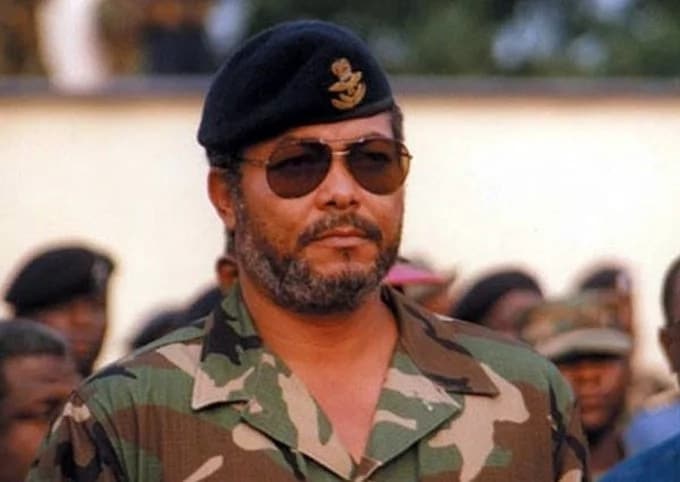
    The reform was developed through collaboration between the Ministry of Lands and Natural Resources and the Lands Commission. Last month, Minister for Lands and Natural Resources, Emmanuel Armah-Kofi Buah, revealed the termination of all incomplete public land deals carried out between 2017 and 2024 that did not comply with required procedures, while unveiling wide-ranging reforms intended to improve accountability, openness, and cost-effectiveness in managing state lands.


    Speaking at a press briefing, the Minister described the decision as “a critical milestone in our collective efforts to strengthen integrity, transparency, and accountability in the administration of public lands, which are held in trust for the people of Ghana.”


    Presidential directive and committee assessment


    He indicated that on January 10, 2025, John Dramani Mahama instructed the Lands Commission to suspend all processes connected to leasing and handling transactions involving public lands.
    He explained that the directive was introduced to protect state lands from misuse, restore order within land management systems, and ensure that such transactions “deliver value for money to the State.”


    Following the directive, a committee led by the Deputy Minister was established on June 5, 2025, to examine public land leases under the Government’s Resetting Agenda.


    The committee reviewed 8,160 lease applications that were either completed or initiated between 2017 and 2024 across all sixteen regions.

    These included:


    4,176 Direct Allocations


    2,799 Regularizations


    19 Direct Allocations relating to State Bungalows
    108 Land Swap or Public-Private Partnership arrangements
    795 Subsequent Transactions


    263 Fresh Allocations


    The review revealed that a number of these allocations did not fully comply with the Lands Commission’s internal procedures, thereby undermining transparency and exposing the system to potential abuse.


    Immediate Cancellations and Case-by-Case Reviews
    Cabinet has approved the Committee’s recommendations and directed their immediate implementation. The Minister announced that:


    All uncompleted transactions within the reviewed categories have been cancelled, and affected applicants will be formally notified.
    Completed transactions will undergo case-by-case review, and any allocation processed without full compliance will be cancelled.


    All uncompleted regularisation applications remain suspended pending a comprehensive review and standardisation of procedures.
    “For the avoidance of doubt,” he clarified, “a transaction will be treated as completed where a formal offer has been issued and accepted by the applicant.”


    Both completed and uncompleted application lists will be published region-by-region, beginning with Greater Accra, on the Ministry and Lands Commission websites.


    Completed transactions under review will be assessed against clear benchmarks, including statutory compliance, value for money, conformity with planning requirements, and enhanced disclosure to prevent misuse of corporate structures.


    “These measures are not intended to unfairly disadvantage anyone,” the Minister emphasised, adding that affected applicants will be allowed to reapply under the new regime.


    Major reforms introduced


    The Minister outlined six major reform pillars.


    Revision of Public Land Application Form (Form 5)


    A key finding was the inconsistent application of Form 5 across regions, resulting in discretionary practices.The Ministry has revised Form 5 to serve as the single mandatory application instrument nationwide. It will be published online and made accessible for electronic submission.


    Overhaul of internal allocation processes


    The Ministry has also reviewed the Lands Commission’s internal procedures to eliminate inconsistencies and strengthen internal checks.


    Under the revised framework, “no public land will be allocated by the Lands Commission without the prior written approval of the Minister for Lands and Natural Resources.”The move, he explained, reinforces ministerial oversight and adds a safeguard against unauthorised allocations.


    Legislative backing


    To prevent a return to past practices, the revised application form and internal processes will be incorporated into a draft Land Regulation currently under review.


    New 70% premium framework


    One of the most significant changes relates to land valuation.
    The Minister revealed that premiums for public land leases had historically ranged between 1% and 30% of market value, significantly undervaluing state assets.


    Under the new framework, “a minimum of 70 per cent of the assessed market value of public land will be payable upfront as a premium, with the remaining 30 per cent structured over the tenure of the lease as ground rent.”


    He further reminded State Institutions, pursuant to Section 235(4) of the Land Act, 2020 (Act 1036), that allocations confer only user rights and do not permit transactions without prior written ministerial approval.


    Publication of market value data


    To enhance transparency, the Ministry and Lands Commission will compile and publish reliable market value data for defined land clusters nationwide.


    The data will serve as a reference for assessing premiums and ensuring objective, predictable decision-making.


    A Public Land Protection Task Force will be established during the reform transition period.


    The Task Force will operate within the framework of the Constitution, the Lands Commission Act, 2008 (Act 767), the Land Act, 2020 (Act 1036), and applicable criminal laws.It will comprise personnel from:

  • Ayawaso East: This win is a fulfilment of my mother’s prophecy – Baba Jamal

    Ayawaso East: This win is a fulfilment of my mother’s prophecy – Baba Jamal

    Mimi, the mother of the newly elected Ayawaso East Member of Parliament, Baba Jamal Mohammed Ahmed, has taken the spotlight following her son’s victory in the just-ended by-elections. 

    The former High Commissioner to Nigeria won against five other contenders in the race for the Ayawaso East election yesterday, Monday, March 3, following the death of MP Naser Toure Mahama.

    Speaking during a post-election victory, the former Akwatia MP revealed that his 93-year-old mother had promised to ensure his return to Parliament, a promise that has now been fulfilled.

    “I want to thank the Almighty Allah for giving us this victory. Let me state that I dedicate this victory to my 93-year-old mother, Mimi, for promising to support me and ensuring that one day I would go back to Parliament,” he declared.

    He noted that for years, she carried the conviction that her son would return to the House. Tuesday’s result, he said, was more than a political comeback; it was the fulfilment of a promise.

    “Today, her vision and wish have come true. And I thank Allah for her life, and I dedicate this victory to her.”

    Although Madam Mimi stayed out of the spotlight during her son’s campaign ahead of the election, he insists that her resilience shaped his campaign. He then went on to remind his supporters that the win belonged to the constituency as much as to his family.

    “I want to state that this victory is not for me, Baba Jamal, alone; it’s for the good people of Ayawaso East. I want to thank all of them for having confidence in me and electing me as their parliamentary candidate-elect,” he added.
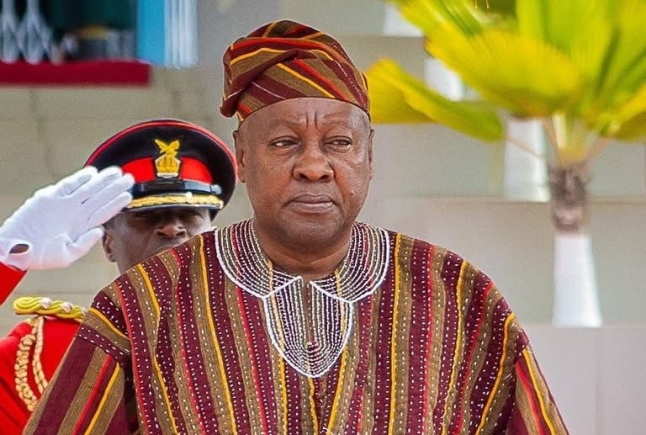
    More than 49,000 registered voters participated in the by-election conducted at 113 polling stations. Baba Jamal polled 10,884 votes to beat the New Patriotic Party’s (NPP) Yussif Baba Ali, who secured 4,009 votes.

    The three other contesters: the Liberal Party of Ghana’s (LPG) candidate, Ibrahim Iddrisu, polled 43 votes, Independent candidate Alhaji Mohammed Umaru Sanda secured 1,885 and another Independent candidate, David Kannor.

    Ahead of the by-election, a poll by Global InfoAnalytics predicted victory for Baba Jamal. The survey projected that the NDC candidate would secure about 75 per cent of the votes, ahead of his main contender, the NPP’s Baba Ali.

    The by-election was marked by low voter turnout. The NDC now has 189 seats in Parliament.

    “At the end of the voting exercise for the parliamentary by-election for the Ayawaso East constituency

    Five candidates contested in the polls, the first one is Baba Jamal Mohammed, and he polled 10,884 votes; the second candidate on the ballot, Ibrahim Iddrisu Mohammed, also polled 43 votes; Yusuf Ali Baba polled 4,009 votes.

    “The fourth candidate, Mohammed Umah Sunda, also polled 1,885 votes. The fifth candidate, Tanoh, also an independent candidate, polled 104 votes.

    “In all, we had 16,928 valid votes, 120 votes were rejected and in that case total votes cast amount to 17048. Looking at the just announced results, I, Samuel Anim Ofori, the retaining officer of the Ayawaso East constituency, hereby announce to you your new MP elect Baba Jamal Mohammed,” the retaining officer stated.

    For months, the constituency had been without representation following the death of its long-serving legislator, Alhaji Mahama Naser Toure. He was reported dead on January 4 after a short illness at the Korle Bu Teaching Hospital. In accordance with Islamic customs, he was buried within 24 hours of his passing.

    Naser Toure Mahama was widely regarded as a grassroots politician whose parliamentary work focused on urban renewal in Nima and youth empowerment within Zongo communities.

    Baba Ali was projected to trail with 21%, independent candidate Umaru Sanda Muhammed expected to poll 3% of the vote, with the other remaining candidates, Ibrahim Iddrisu and David, to garner less than 1%.


    Independent aspirant Umaru Sanda Muhammed, who recently severed ties with the NDC, was projected to secure about 3 per cent of the vote.

    The by-election attracted heightened attention in recent days amid internal developments within the NDC, including allegations of vote buying during its parliamentary primary.

    On February 7, Baba Jamal won the Ayawaso East Constituency primary following the party’s internal primary held.

    After the close of polls, provisional results showed that Baba Jamal polled 431 votes out of the total votes cast, followed by the widow of the late Ayawaso MP, Naser Toure Hajia Amina Adam who secured 399 votes.

    Mr Mohammed Ramne, the Ayawaso East NDC Constituency Chairman, placed third with 88 votes. Dr Yakubu Azindow obtained 45 votes, while Mr Najib Mohammed Sani recorded one vote.

    The closely contested primary attracted more than 1,100 accredited delegates from across the constituency, reflecting the high stakes involved in selecting a candidate for the by-election in a seat widely regarded as a stronghold of the governing NDC.

    Five aspirants contested the race: Hajia Amina Adam, Mr Baba Jamal, Dr Yakubu Azindow, who had previously contested the late MP in the 2023 primary, Mr. Mohammed Ramne, and Mr Mohammed Sani.
    Although the race was initially considered open, it later narrowed into a tight contest among Mr Jamal, Hajia Amina Adam and Dr Azindow.

    Even though the election was peaceful on Saturday, reports of vote buying emerged on the eve of the election and on election day, involving some candidates, including Baba Jamal, who at the time was Ghana’s High Commissioner to Nigeria and allegedly offered television sets and other items to delegates.

    Videos circulating on social media showed some delegates leaving polling centres carrying television sets and other items. Reacting to the vote-buying allegations, the NDC, in a statement signed by its Secretary, Fiifi Kwetey, announced that it would investigate the allegations.

    It noted that a three-member committee had been set up to probe the matter.
    In a statement issued on the same day, the NDC said its national executives had taken note of what it described as widespread incidents of inducement and vote buying allegedly perpetrated by some aspirants.

    The party condemned the acts, describing them as an affront to its values and principles, and announced that it had launched investigations into the matter.

  • Ayawaso East by-election is tomorrow

    Ayawaso East by-election is tomorrow

    Constituents in the Ayawaso East region will elect a Member of Parliament (MP) for the area on Tuesday March 3.

    The by-election follows the death of the constituency’s Member of Parliament, Naser Toure Mahama, leaving the seat unrepresented.

    Meanwhile, the National Democratic Congress (NDC) candidate, Baba Jamal, is projected to win in the upcoming Ayawaso East by-election.


    According to a new poll by Global InfoAnalytics Baba Jamal will secure about 75% of the votes ahead of his main contender, Baba Ali of the New Patriotic Party (NPP).


    The New Patriotic Party’s (NPP) Baba Ali has been projected to trail with 21%, independent candidate Umaru Sanda Muhammed is expected to poll 3% of the vote, with other remaining candidates, Ibrahim Iddrisu and David, to garner less than 1%.


    The survey was conducted between February 28 and March 1, sampling 972 voters across the constituency.


    The EC has scheduled the Ayawaso East by-election for March 3, 2026, the by-election has attracted heightened attention in recent days amid internal developments within the NDC, including allegations of vote buying during its parliamentary primary.


    Mr Baba Jamal Mohammed Ahmed won the Ayawaso East Constituency primary and is set to represent the NDC as its parliamentary candidate in the March 3 by-election, following the party’s internal primary held on February 7, 2026.


    After the close of polls, provisional results showed that Baba Jamal polled 431 votes out of the total votes cast, followed by the widow of the late Ayawaso MP, Naser Toure Hajia Amina Adam who secured 399 votes. Mr Mohammed Ramne, the Ayawaso East NDC Constituency Chairman, placed third with 88 votes.


    Dr Yakubu Azindow obtained 45 votes, while Mr Najib Mohammed Sani recorded one vote.


    The closely contested primary attracted more than 1,100 accredited delegates from across the constituency, reflecting the high stakes involved in selecting a candidate for the by-election in a seat widely regarded as a stronghold of the governing NDC.


    Five aspirants contested the race: Hajia Amina Adam, Mr Baba Jamal, Dr Yakubu Azindow, who had previously contested the late MP in the 2023 primary, Mr. Mohammed Ramne, and Mr Mohammed Sani.


    Although the race was initially considered open, it later narrowed into a tight contest among Mr Jamal, Hajia Amina Adam and Dr Azindow.


    Even though the election was peaceful on Saturday, reports of vote buying emerged on the eve of the election and on election day, involving some candidates, including Baba Jamal, who at the time was Ghana’s High Commissioner to Nigeria and allegedly offered television sets and other items to delegates.


    Videos circulating on social media showed some delegates leaving polling centres carrying television sets and other items.Reacting to the vote-buying allegations, the NDC, in a statement signed by its Secretary, Fiifi Kwetey, announced that it would investigate the allegations. It noted that a three-member committee had been set up to probe the matter.


    In a statement issued on the same day, the NDC said its national executives had taken note of what it described as widespread incidents of inducement and vote buying allegedly perpetrated by some aspirants.


    The party condemned the acts, describing them as an affront to its values and principles, and announced that it had launched investigations into the matter.


    “In line with the Party’s commitment to internal democracy, transparency, and ethical political conduct, the Committee will investigate the allegations and make appropriate recommendations, including sanctions where necessary,” the statement said.


    The Presidency has announced the recall of Ghana’s High Commissioner to Nigeria, Baba Jamal, over voter inducement during the just-ended Ayawaso East primaries held on Saturday, February 7.


    In a statement titled “President recalls Ghana’s High Commissioner to Nigeria,” shared by the Spokesperson to the President, Felix Kwakye Ofosu, and dated February 7, it noted that “President John Dramani Mahama has directed the immediate recall of Mohammed Baba Jamal Ahmed (Baba Jamal) from his position as Ghana’s High Commissioner to the Federal Republic of Nigeria.


    The decision follows allegations of voter inducement during today’s National Democratic Congress (NDC) primaries in the Ayawaso East Constituency, in which Mr Baba Jamal, a candidate, participated.”


    The President stressed that reports of vote buying were made against several candidates seeking to win the Ayawaso East seat, but Baba Jamal stood out because he was the only serving public officer at the time, making his case a peculiar one.


    “In his directive to the Minister for Foreign Affairs recalling Mr Baba Jamal as High Commissioner, the President noted that while allegations of vote-buying were made against multiple candidates who contested the primaries, Baba Jamal was the only serving public officer among them.”


    Consequently, to protect the integrity of public office and to avoid any public suspicion of misconduct or violation of the Government’s Code of Conduct for Political Appointees, the President stated:


    “Without prejudice to the ongoing internal party processes, and strictly in view of the standards of conduct expected of public officers, the President considers it necessary to act decisively to preserve the integrity of public office and to avoid any perception of impropriety or conflict with the Government’s Code of Conduct for Political Appointees.”


    The statement continued that “the recall takes effect immediately, and the Minister for Foreign Affairs has been directed to take the necessary administrative and diplomatic steps to give effect to this directive.”

  • Baba Jamal on track for 75% win in Ayawaso East by-election – Global InfoAnalytics

    Baba Jamal on track for 75% win in Ayawaso East by-election – Global InfoAnalytics

    The National Democratic Congress (NDC) candidate, Baba Jamal, is projected to win in the upcoming Ayawaso East by-election scheduled for Tuesday, March 3, 2026.

    According to a new poll by Global InfoAnalytics Baba Jamal will secure about 75% of the votes ahead of his main contender, Baba Ali of the New Patriotic Party (NPP).

    The New Patriotic Party’s (NPP) Baba Ali has been projected to trail with 21%, independent candidate Umaru Sanda Muhammed is expected to poll 3% of the vote, with other remaining candidates, Ibrahim Iddrisu and David to garner less than 1%.

    The survey was conducted between February 28 and March 1, sampling 972 voters across the constituency.

    The EC has scheduled the Ayawaso East by-election for March 3, 2026, the by-election has attracted heightened attention in recent days amid internal developments within the NDC, including allegations of vote buying during its parliamentary primary.


    Mr Baba Jamal Mohammed Ahmed won the Ayawaso East Constituency primary and is set to represent the NDC as its parliamentary candidate in the March 3 by-election, following the party’s internal primary held on February 7, 2026.


    After the close of polls, provisional results showed that Baba Jamal polled 431 votes out of the total votes cast, followed by the widow of the late Ayawaso MP, Naser Toure Hajia Amina Adam who secured 399 votes. Mr Mohammed Ramne, the Ayawaso East NDC Constituency Chairman, placed third with 88 votes.


    Dr Yakubu Azindow obtained 45 votes, while Mr Najib Mohammed Sani recorded one vote.

    The closely contested primary attracted more than 1,100 accredited delegates from across the constituency, reflecting the high stakes involved in selecting a candidate for the by-election in a seat widely regarded as a stronghold of the governing NDC.


    Five aspirants contested the race: Hajia Amina Adam, Mr Baba Jamal, Dr Yakubu Azindow, who had previously contested the late MP in the 2023 primary, Mr. Mohammed Ramne, and Mr Mohammed Sani.


    Although the race was initially considered open, it later narrowed into a tight contest among Mr Jamal, Hajia Amina Adam and Dr Azindow.


    Even though the election was peaceful on Saturday, reports of vote buying emerged on the eve of the election and on election day, involving some candidates, including Baba Jamal, who at the time was Ghana’s High Commissioner to Nigeria and allegedly offered television sets and other items to delegates.


    Videos circulating on social media showed some delegates leaving polling centres carrying television sets and other items.
    Reacting to the vote-buying allegations, the NDC, in a statement signed by its Secretary, Fiifi Kwetey, announced that it would investigate the allegations. It noted that a three-member committee had been set up to probe the matter.


    In a statement issued on the same day, the NDC said its national executives had taken note of what it described as widespread incidents of inducement and vote buying allegedly perpetrated by some aspirants.


    The party condemned the acts, describing them as an affront to its values and principles, and announced that it had launched investigations into the matter.


    “In line with the Party’s commitment to internal democracy, transparency, and ethical political conduct, the Committee will investigate the allegations and make appropriate recommendations, including sanctions where necessary,” the statement said.


    The Presidency has announced the recall of Ghana’s High Commissioner to Nigeria, Baba Jamal, over voter inducement during the just-ended Ayawaso East primaries held on Saturday, February 7.


    In a statement titled “President recalls Ghana’s High Commissioner to Nigeria,” shared by the Spokesperson to the President, Felix Kwakye Ofosu, and dated February 7, it noted that “President John Dramani Mahama has directed the immediate recall of Mohammed Baba Jamal Ahmed (Baba Jamal) from his position as Ghana’s High Commissioner to the Federal Republic of Nigeria.

    The decision follows allegations of voter inducement during today’s National Democratic Congress (NDC) primaries in the Ayawaso East Constituency, in which Mr Baba Jamal, a candidate, participated.”


    The President stressed that reports of vote buying were made against several candidates seeking to win the Ayawaso East seat, but Baba Jamal stood out because he was the only serving public officer at the time, making his case a peculiar one.


    “In his directive to the Minister for Foreign Affairs recalling Mr Baba Jamal as High Commissioner, the President noted that while allegations of vote-buying were made against multiple candidates who contested the primaries, Baba Jamal was the only serving public officer among them.”


    Consequently, to protect the integrity of public office and to avoid any public suspicion of misconduct or violation of the Government’s Code of Conduct for Political Appointees, the President stated:


    “Without prejudice to the ongoing internal party processes, and strictly in view of the standards of conduct expected of public officers, the President considers it necessary to act decisively to preserve the integrity of public office and to avoid any perception of impropriety or conflict with the Government’s Code of Conduct for Political Appointees.”


    The statement continued that “the recall takes effect immediately, and the Minister for Foreign Affairs has been directed to take the necessary administrative and diplomatic steps to give effect to this directive.”

  • President Mahama signs 24-Hour Economy Bill into law

    President Mahama signs 24-Hour Economy Bill into law

    President John Dramani Mahama has assented to the 24-Hour Economy Authority Bill, 2025, following its approval by Parliament.

    The president approved on Thursday in a brief ceremony held ahead of the 13th Cabinet meeting at Jubilee House.

    The president noted after the signing the Bill, “Cabinet colleagues, I just appended my signature to give assent to the 24-hour Authority Bill. This Bill, which Ghanaians have been waiting for, was one of our flagship strategies for economic transformation”. 

    He added that, “Now we must move from strategy to implementation. The business sector is waiting, Ghanaian investors are waiting, foreign investors are waiting”.

    “They want to see the package of incentives that we can afford, so that they can invest more and expand productivity and also create more employment for our young people, and so it’s my pleasure to assent to this Bill today.”

     On Friday, February 6, the House gave the nod after extensive deliberations and debate between the Majority and Minority caucuses.

    During the debate, members of the Minority caucus cautioned that if not carefully implemented, the policy could pose security challenges and cause inconvenience to Ghanaians.

    In response, the Majority caucus argued that the government has put in place adequate regulatory measures to ensure the smooth and effective implementation of the policy.

    The Association of Ghana Industries (AGI) adds to the majority who are pessimistic about the success of the government’s 24-hour economy policy.

    AGI has pointed to the increases in utility tariffs. Speaking to Citi News, Greater Accra Regional Chairman of AGI, Tsonam Akpeloo, said businesses that will participate in the programme will run at a loss as they will consume much electricity.

    According to him, “If you’re talking about a 24-hour economy, you’re asking industry to work beyond the usual eight hours and continue through the night. That means higher electricity consumption. The cost of power will increase—possibly doubling what we’ve previously paid.”

    “A 2.5% increase under normal production is one thing, but with extended hours, the actual cost impact will be far greater,” he added.

    About the 24-hour economy

    The government’s 24-hour economy policy, a key promise during President John Mahama’s campaign in 2024, was launched today, Wednesday, July 2, 2025.

    The policy’s objective is to enhance economic productivity by encouraging businesses to operate continuously, creating more job opportunities, boosting revenue generation, and improving service delivery.

    Sectors such as manufacturing, transportation, retail, healthcare, hospitality, and financial services stand to benefit significantly from this model.

    Presenting the policy to the Speaker of Parliament, Kingsford Sumana Alban Bagbin, last year, July, Mr Goosie Tanoh, the Presidential Advisor on the 24-hour economy policy, mentioned the move is to officially inform ‘the people’s representatives’ about the government’s readiness to roll out the programme.

    On some details on the policy, Mr Goosie Tanoh said the programme is expanded into three anchors: “production transformation, supply chain and market efficiency, and human capital development.” The three anchors, according to him, are supported by eight sub-programmes.

    “Roll 24 – which is the agricultural component, Make 24 – which is the manufacturing component, Connect 24 – the supply chain component, Aspire 24 – which is the mindset change, the resetting of the Ghanaian and Ghanaian bureaucracy with a strong and powerful attitude to work and productivity,” he explained.

    According to him, the government was set to include strong digital technology training in the TVET curriculum to train and equip an employable workforce with the requisite skills for employment opportunities.

    Another component, dubbed ‘Show Ghana,’ is also set to focus on an intentional effort and approach by the government to give visibility to Ghana’s rich cultural heritage to the rest of the world, to attract more tourists and increase revenue generation through tourism.

    Speaker Alban Bagbin, in response, mentioned that the team’s arrival had been anticipated and his outfit would call on them for any clarity when the need be, urging the legislation to back the programme.

    Earlier, President John Dramani Mahama stated that the 24-Hour Economy Policy is a long-term goal that will keep the country productive on a 24/7 basis, alongside stabilising the economy through the creation of more jobs.

    According to him, the final draft of the policy has undergone review by him, and he is confident it will realise its objectives.

    Meanwhile, Speaker of Parliament, Alban Bagbin, noted that the Parliamentary Service will begin operating under the 24-hour economy policy.

    This initiative, according to the Speaker, will enhance national productivity and address unemployment. He made this known during the presentation of the 24-hour economy policy document.

    He bemoaned the lack of time to tackle the numerous tasks in Parliament and expressed optimism in addressing this issue with the 24-hour economy policy.

    “This means they are going to work more hours; they will be reporting at 8:00 a.m. and may be going home at 10:00 p.m. or sometimes 11:00 p.m., particularly those in the official division of the House.

    This will allow more people to work here and will help reduce unemployment. I can assure you that the load of work here is unimaginable,” Bagbin stated.
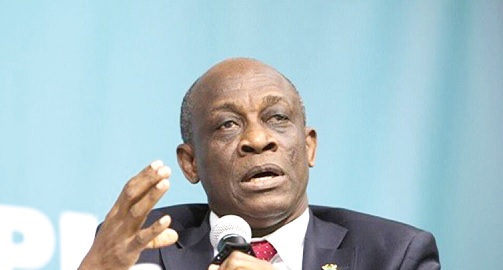
  • Democracy Hub seeks injunction to stop Ayawaso East Poll

    Democracy Hub seeks injunction to stop Ayawaso East Poll

    A suit was filed on Monday, February 16, by the pressure group, Democracy Hub, challenging the Ayawaso East by-election. The group alleges vote-buying during the National Democratic Congress (NDC) parliamentary primaries held on February 7, 2026.
    Democracy Hub has prayed the High Court to direct the Electoral Commission (EC) to conduct a fresh primary in accordance with democratic principles.

    In the suit, the NDC is cited as the first defendant, the Electoral Commission as the second, and the Attorney-General as the third.

    The suit further added, “An order of mandamus directed at the 2nd Defendant to refuse to accept or act upon the nomination of the said candidate unless and until a primary conducted in accordance with democratic principles is held.”

    “A declaration that the parliamentary primary conducted by the 1st Defendant for the Ayawaso East Constituency, having been found to have been characterised by widespread vote buying, inducement and monetisation, did not conform to the democratic principles required under Article 55(5) of the Constitution, and that the continued reliance on the outcome thereof and the presentation of a candidate founded on that process constitute actions contrary to and inconsistent with the Constitution in violation of section 9 of the Political Parties Act, 2000 (Act 574).”

    This development comes at a time when the EC has scheduled the Ayawaso East by-election for March 3, 2026. The by-election has attracted heightened attention in recent days amid internal developments within the NDC, including allegations of vote buying during its parliamentary primary.

    Mr Baba Jamal Mohammed Ahmed won the Ayawaso East Constituency primary and is set to represent the NDC as its parliamentary candidate in the March 3 by-election, following the party’s internal primary held on February 7, 2026.

    After the close of polls, provisional results showed that Baba Jamal polled 431 votes out of the total votes cast, followed by the widow of the late Ayawaso MP, Naser Toure Hajia Amina Adam who secured 399 votes. Mr Mohammed Ramne, the Ayawaso East NDC Constituency Chairman, placed third with 88 votes.

    Dr Yakubu Azindow obtained 45 votes, while Mr Najib Mohammed Sani recorded one vote. The closely contested primary attracted more than 1,100 accredited delegates from across the constituency, reflecting the high stakes involved in selecting a candidate for the by-election in a seat widely regarded as a stronghold of the governing NDC.

    Five aspirants contested the race: Hajia Amina Adam, Mr Baba Jamal, Dr Yakubu Azindow who had previously contested the late MP in the 2023 primary, Mr Mohammed Ramne, and Mr Mohammed Sani.

    Although the race was initially considered open, it later narrowed into a tight contest among Mr Jamal, Hajia Amina Adam and Dr Azindow.

    Even though the election was peaceful on Saturday, reports of vote buying emerged on the eve of the election and on election day, involving some candidates, including Baba Jamal, who at the time was Ghana’s High Commissioner to Nigeria and allegedly offered television sets and other items to delegates.

    Videos circulating on social media showed some delegates leaving polling centres carrying television sets and other items.

    Reacting to the vote-buying allegations, the NDC, in a statement signed by its Secretary, Fiifi Kwetey, announced that it would investigate the allegations. It noted that a three-member committee had been set up to probe the matter.

    In a statement issued on the same day, the NDC said its national executives had taken note of what it described as widespread incidents of inducement and vote buying allegedly perpetrated by some aspirants.

    The party condemned the acts, describing them as an affront to its values and principles, and announced that it had launched investigations into the matter.

    “In line with the Party’s commitment to internal democracy, transparency, and ethical political conduct, the Committee will investigate the allegations and make appropriate recommendations, including sanctions where necessary,” the statement said.

    The Presidency has announced the recall of Ghana’s High Commissioner to Nigeria, Baba Jamal, over voter inducement during the just-ended Ayawaso East primaries held on Saturday, February 7.

    In a statement titled “President recalls Ghana’s High Commissioner to Nigeria,” shared by the Spokesperson to the President, Felix Kwakye Ofosu, and dated February 7, it noted that “President John Dramani Mahama has directed the immediate recall of Mohammed Baba Jamal Ahmed (Baba Jamal) from his position as Ghana’s High Commissioner to the Federal Republic of Nigeria. The decision follows allegations of voter inducement during today’s National Democratic Congress (NDC) primaries in the Ayawaso East Constituency, in which Mr Baba Jamal, a candidate, participated.”

    The President stressed that reports of vote buying were made against several candidates seeking to win the Ayawaso East seat, but Baba Jamal stood out because he was the only serving public officer at the time, making his case a peculiar one.

    “In his directive to the Minister for Foreign Affairs recalling Mr Baba Jamal as High Commissioner, the President noted that while allegations of vote-buying were made against multiple candidates who contested the primaries, Baba Jamal was the only serving public officer among them.”

    Consequently, to protect the integrity of public office and to avoid any public suspicion of misconduct or violation of the Government’s Code of Conduct for Political Appointees, the President stated:

    “Without prejudice to the ongoing internal party processes, and strictly in view of the standards of conduct expected of public officers, the President considers it necessary to act decisively to preserve the integrity of public office and to avoid any perception of impropriety or conflict with the Government’s Code of Conduct for Political Appointees.”

    The statement continued that “the recall takes effect immediately, and the Minister for Foreign Affairs has been directed to take the necessary administrative and diplomatic steps to give effect to this directive.”