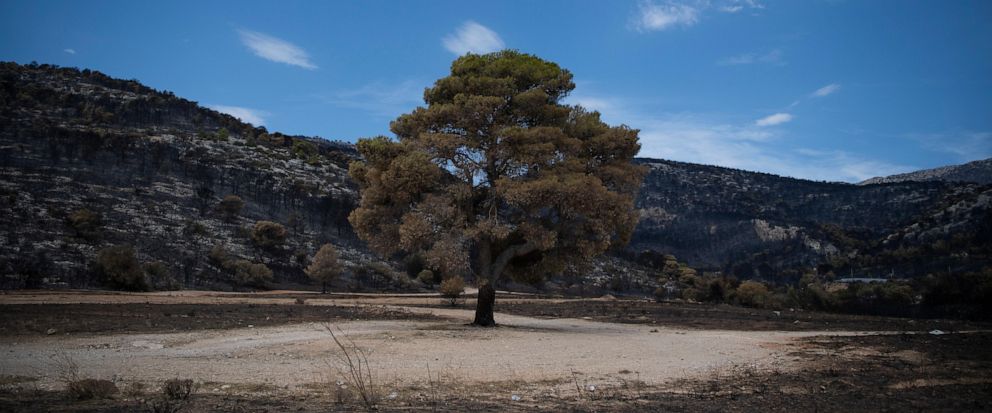
For 11 consecutive days, there has been an extensive fire raging in northeastern Greece. Even though lots of firefighters and planes have been trying to stop it, the fire keeps going without getting any weaker.
After burning through large areas of land, the fire in the Alexandroupolis and Evros region focused mainly on a forest close to the border with Turkey. This forest is hard to reach.
The wildfire in Greece last week was the largest in the EU since they started keeping records in 2000. It caused 20 out of the 21 deaths related to wildfires.
The fire department said that there were six planes and four helicopters helping 475 firefighters on the ground. They also had 100 vehicles supporting them. An additional 260 firefighters and a helicopter were fighting smaller fires that had started from a big fire in a forest on the southern part of Mount Parnitha, near the outskirts of Athens.
Officials are looking into why the fires destroyed a lot of forest, burnt houses, and made many people leave their homes.
In Athens, Prime Minister Kyriakos Mitsotakis led a government meeting to discuss ways to restore the damaged forests in Evros and Parnitha. It planned to locate all the places that had been burnt and need new trees. It also decided to take steps to avoid flooding later on. Additionally, it wanted to make sure that the animals living in the area have enough food and water.
Greece asked for help from other European countries because their firefighters are very busy. Europe sent 12 planes and many firefighters to assist Greece.
France and Spain are sending more airplanes to join the ones from Germany, Sweden, Croatia, Cyprus, and the Czech Republic as part of the EU’s emergency response system.
Over 350 firefighters from different countries, including Romania, France, the Czech Republic, Bulgaria, Albania, Slovakia, and Serbia, were sent to Greece.
The person in charge of handling crises in the European Union, Janez Lenarcic, said on Tuesday that this was the biggest firefighting mission ever done by the EU. It shows that we are determined to act quickly and effectively together during times of crisis.
The Alexandroupolis and Evros wildfire started on August. According to the European Union’s Copernicus Emergency Management Service, a fire that occurred when a person was 19 years old has burned over 81,000 hectares (200,000 acres) of land. Copernicus is a part of the EU space program that looks at Earth and provides information using pictures from satellites.
The European Commission said on Tuesday that it is the biggest and most serious fire in Europe since 2000.
In Greece, firefighters were fighting against 74 wildfires on Monday. Out of these, 27 started between Sunday evening and Monday evening.
Officials believe that some of the fires were intentionally started, and a few individuals have been taken into custody.
Greece makes rules to prevent wildfires. These rules are in place from May to October. They say that people can’t burn dry plants or use outdoor grills.
As of Friday, the fire department arrested a total of 163 people for fire-related offenses. Out of those, 118 were charged with negligence and 24 with intentional arson. This information was shared by government spokesperson Pavlos Marinakis. The police arrested 18 more people, he said.
Tag: northeastern Greece
-
Wildfire in northern Greece continues for the 11th day despite firefighting efforts
-
Greece wildfires: Alexandroupolis hospital evacuates as fire worsens
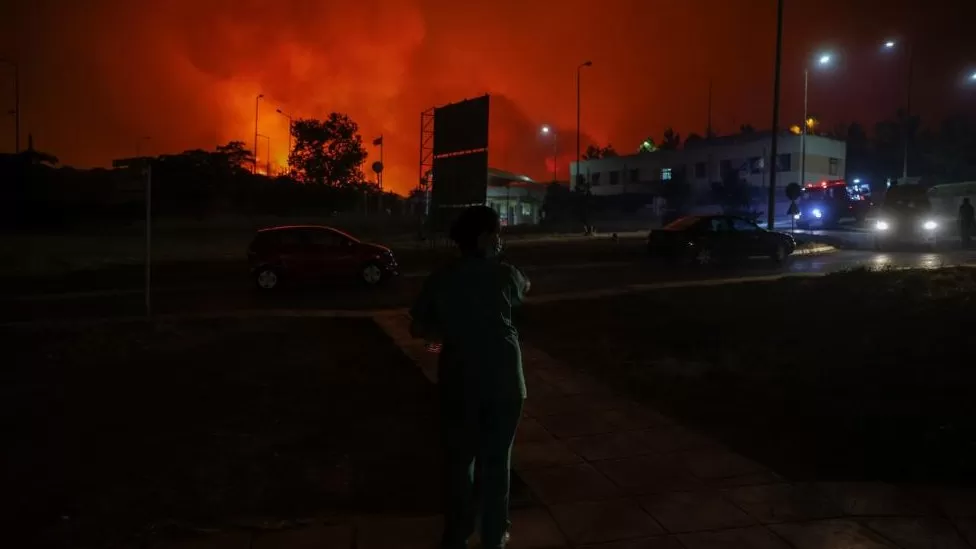
Many patients have been transferred from a hospital in northeastern Greece because of wildfires that have been burning for four days near Alexandroupolis city.
The fire came closer to the university hospital and many people who had to leave were brought to a boat near the port.
Some babies that were just born and patients needing special care were moved.
The hospital area experienced explosions which were said to be caused by oxygen bottles exploding.
Alexandroupolis is a big port near the border of Greece and Turkey. Greece is facing wildfires in several areas, including Alexandroupolis, due to strong winds and high temperatures that will reach 39C (102F) on Tuesday.
There are big fires happening in other places – on the island of Evia and in Boeotia in central Greece. People have had to leave their homes in several villages.
One person has died from the fires near Alexandroupolis.
Greek officials told a group of ambulances and buses to take around 115 patients from the university hospital on the outer edge of the city.
According to reports, fire reached the hospital area during a surgery and the hospital was covered in heavy smoke and ash.
There was a bright red light at night on the edge of Alexandroupolis and pictures from space showed that many parts of Greece had a lot of smoke.Some patients went to different hospitals in the city, but around 90 of them went on a ferry called the Adamantios Korais. The ferry was made into a special place for taking care of very sick patients and new babies.
Patients who needed oxygen had to lie on mattresses on the ship converted into a hospital. Some of them were welcomed on the shore with tents set up for them.
At night, people in eight nearby villages were told to leave their houses and go to a safe place in Alexandroupolis.
Fires are happening far away from the city in Rhodope and Kavala.
France, Cyprus, and Romania have sent additional assistance to support the firefighters in Greece.
In Greece, we often have wildfires during the summer. Scientists have found that the more frequent and intense extreme weather events, like heatwaves, are connected to climate change.
Last month, many people had to run away from fires on the Greek island of Rhodes and in different areas of the country.
“Greece had a very bad July when it comes to wildfires. It was the worst July since 2008,” said Janez Lenarčič, the EU’s Commissioner for Crisis Management, on Monday.
“The area that has been burned is larger, and the fires are stronger and more forceful, resulting in the burning of a larger area than previously. “Ioannis Artophios, a spokesperson for the Greek fire service, mentioned that they were dealing with very unusual events and that it was important for everyone to adjust to this challenging situation.
Greece, along with other European countries, is in great danger of wildfires right now, as stated by the EU’s climate monitoring service, Copernicus.
Firefighters have been working to put out a fire on the island of Tenerife in Spain for nearly a week, but the authorities think the hardest part is over now.
The fire has destroyed a lot of land and made over 12,000 people leave their homes, according to the local government.
Some areas in southern France might have very hot weather soon, and it might break previous temperature records. The Rhone valley and other places will have temperatures over 40 degrees Celsius.