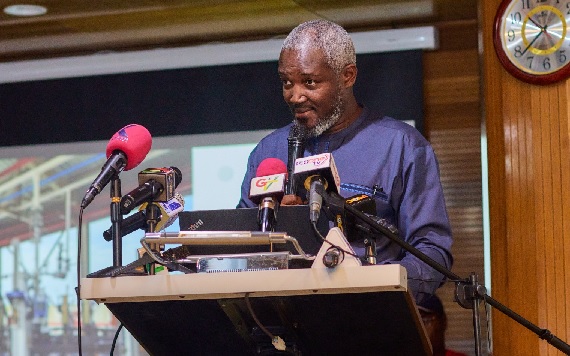
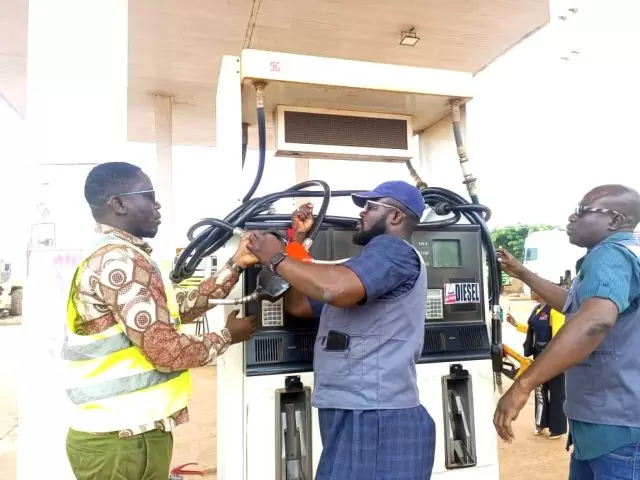
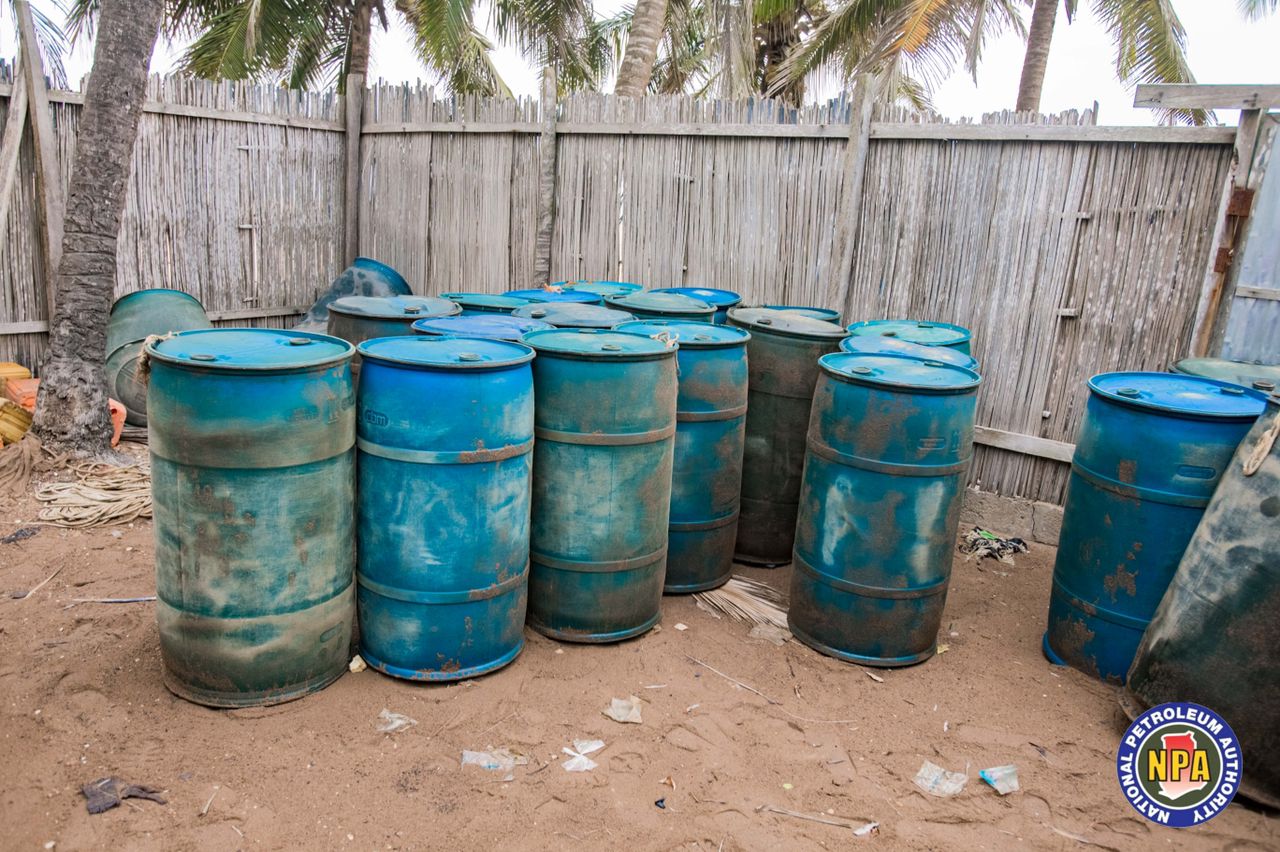
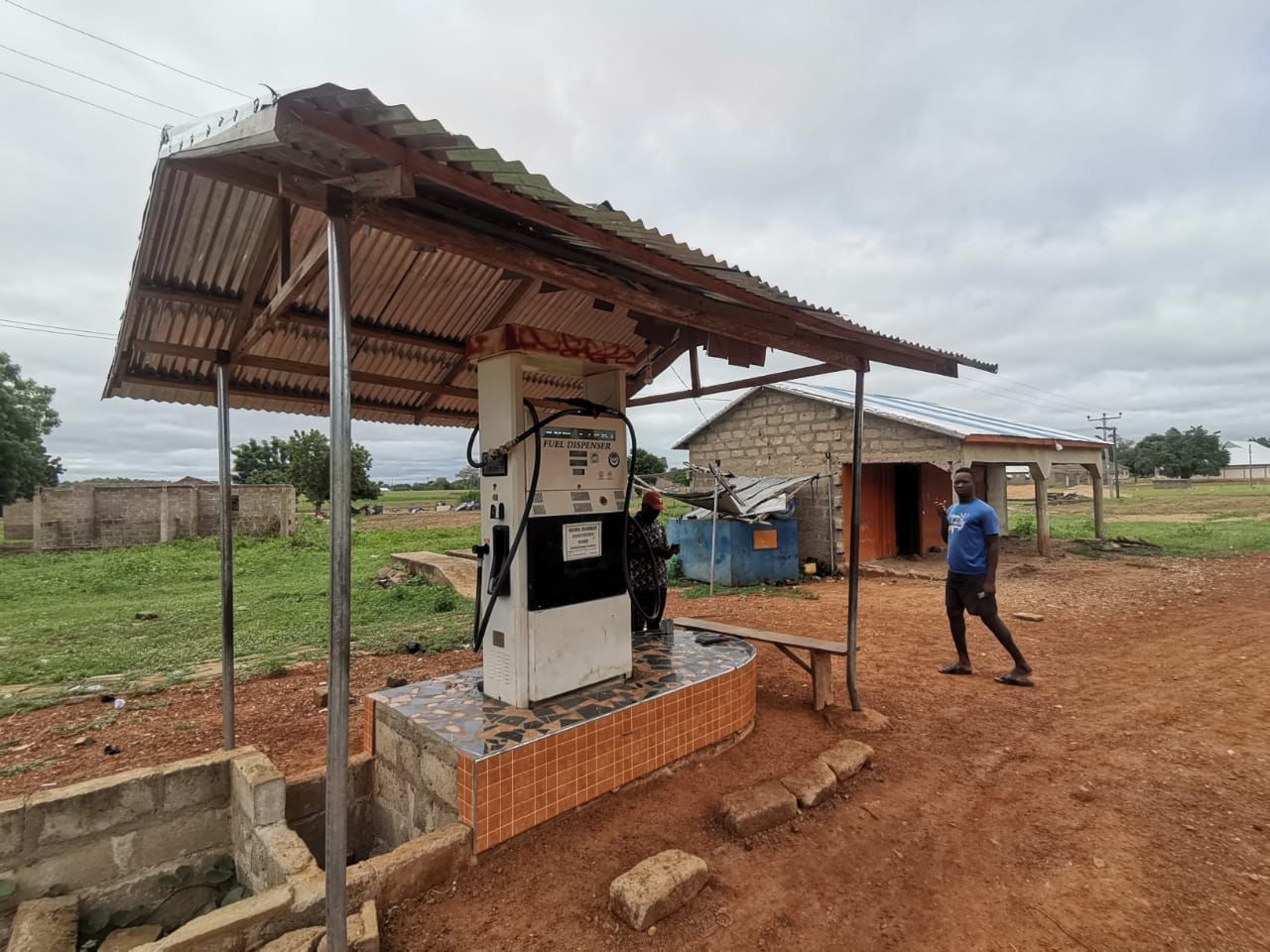
Head of Quality Control at the National Petroleum Authority (NPA), Ubeidalah Saeed, has announced that the Authority is sanctioning the labeling of petrol pumps based on their octane grades.
This decision comes in response to recent concerns about the quality of petrol sold at pumps. Ghanaians have reported damaged spark plugs, attributing the issues to substandard petrol in the market.
Saeed emphasized that there is no tainted petrol on the market but suggested that vehicle owners might be purchasing the wrong fuel for their cars.
He explained as follows; “There are a lot of things that causes a car to jerk; one critical thing is octane level. So when a car vehicle starts to jerk, your first option is to look at the octane level of the fuel.
“It costs about 500 dollars to test for octane so we started testing for octane and realised that all the petrol we’re testing were meeting the octane levels and each of these vehicles have a minimum octane level that the fuel should meet to enable optimal performance.
“And another important point is that every particular car is designed for a certain grade of fuel so in fact the NPA at our last management meeting has sanctioned that next year we’re going to label the pumps for petrol to grade them on octane levels.
“So Ghana we have two grades of petrol, RON 91 which is the red one and the new one which is green. So a lot of people will buy it and think that it’s diesel but that’s a high grade petrol called premium petrol which is RON 95 for high performing vehicles.”
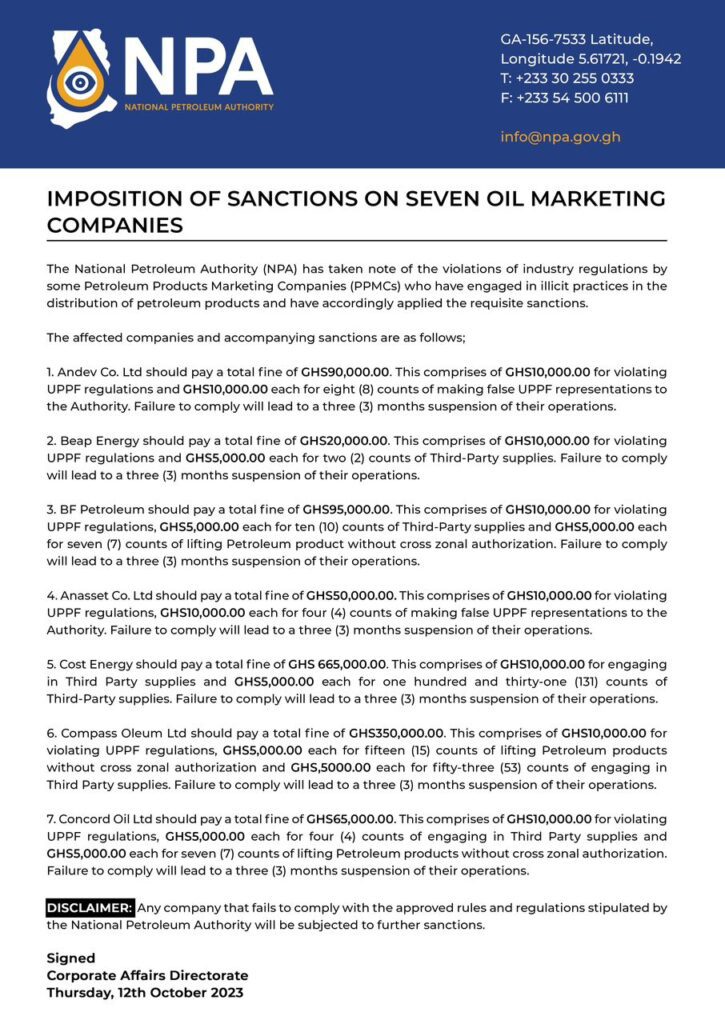
The National Petroleum Authority (NPA) has levied fines on seven Petroleum Products Marketing Companies (PPMCs) for their involvement in the unlawful distribution of petroleum products.
They are obligated to pay fines due to their violations of Unified Petroleum Pricing Fund (UPPF) regulations, false representations related to UPPF made to the Authority, and their involvement in third-party supplies.
Failure by these affected companies to settle the fines will result in a three-month suspension of their operations.
Specifically, Andev Co. Ltd is facing a total fine of GHS90,000.00, which includes GHS10,000.00 for breaching UPPF regulations and GHS10,000.00 for each of eight (8) counts of making false UPPF representations to the Authority.
Beap Energy has been ordered to pay a total fine of GHS20,000.00, comprised of GHS10,000.00 for violating UPPF regulations and GHS5,000.00 for each of two (2) counts of third-party supplies.
For BF Petroleum, the company will pay a total fine of GHS95,000.00, which includes GHS10,000.00 for violating UPPF regulations, GHS5,000.00 for each of ten (10) counts of third-party supplies, and GHS5,000.00 for each of seven (7) counts of lifting petroleum products without cross-zonal authorization.
Anasset Co. Ltd is facing a total fine of GHS50,000.00, which includes GHS10,000.00 for violating UPPF regulations and GHS10,000.00 for each of four (4) counts of making false UPPF representations to the Authority.
Cost Energy, another company, has been directed to pay a total fine of GHS 665,000.00, which includes GHS10,000.00 for engaging in third-party supplies and GHS5,000.00 for each of one hundred and thirty-one (131) counts of third-party supplies.
Compass Oleum Ltd is subject to a total fine of GHS350,000.00, comprised of GHS10,000.00 for violating UPPF regulations, GHS5,000.00 for each of fifteen (15) counts of lifting petroleum products without cross-zonal authorization, and GHS5,000.00 for each of fifty-three (53) counts of engaging in third-party supplies.
Concord Oil Ltd has been fined a total of GHS65,000.00, which includes GHS10,000.00 for violating UPPF regulations, GHS5,000.00 for each of four (4) counts of engaging in third-party supplies, and GHS5,000.00 for each of seven (7) counts of lifting petroleum products without cross-zonal authorization.
The NPA has cautioned that any company failing to adhere to the approved rules and regulations stipulated by the Authority will be subject to additional sanctions.
The UPPF serves the purpose of ensuring uniform prices for petroleum products across the country.
The National Petroleum Authority (NPA) has imposed penalties on seven Petroleum Products Marketing Companies (PPMCs) for engaging in the illicit distribution of petroleum products.
They are obligated to pay fines due to their violations of Unified Petroleum Pricing Fund (UPPF) regulations, false representations related to UPPF made to the Authority, and their involvement in third-party supplies.
Failure by these affected companies to settle the fines will result in a three-month suspension of their operations.Specifically, Andev Co. Ltd is facing a total fine of GHS90,000.00, which includes GHS10,000.00 for breaching UPPF regulations and GHS10,000.00 for each of eight (8) counts of making false UPPF representations to the Authority.
Beap Energy has been ordered to pay a total fine of GHS20,000.00, comprised of GHS10,000.00 for violating UPPF regulations and GHS5,000.00 for each of two (2) counts of third-party supplies.
For BF Petroleum, the company will pay a total fine of GHS95,000.00, which includes GHS10,000.00 for violating UPPF regulations, GHS5,000.00 for each of ten (10) counts of third-party supplies, and GHS5,000.00 for each of seven (7) counts of lifting petroleum products without cross-zonal authorization.
Anasset Co. Ltd is facing a total fine of GHS50,000.00, which includes GHS10,000.00 for violating UPPF regulations and GHS10,000.00 for each of four (4) counts of making false UPPF representations to the Authority.
Cost Energy, another company, has been directed to pay a total fine of GHS 665,000.00, which includes GHS10,000.00 for engaging in third-party supplies and GHS5,000.00 for each of one hundred and thirty-one (131) counts of third-party supplies.Compass Oleum Ltd is subject to a total fine of GHS350,000.00, comprised of GHS10,000.00 for violating UPPF regulations, GHS5,000.00 for each of fifteen (15) counts of lifting petroleum products without cross-zonal authorization, and GHS5,000.00 for each of fifty-three (53) counts of engaging in third-party supplies.Concord Oil Ltd has been fined a total of GHS65,000.00, which includes GHS10,000.00 for violating UPPF regulations, GHS5,000.00 for each of four (4) counts of engaging in third-party supplies, and GHS5,000.00 for each of seven (7) counts of lifting petroleum products without cross-zonal authorization.The NPA has cautioned that any company failing to adhere to the approved rules and regulations stipulated by the Authority will be subject to additional sanctions.The UPPF serves the purpose of ensuring uniform prices for petroleum products across the country.
The National Petroleum Authority (NPA) has imposed sanctions on seven Petroleum Products Marketing Companies (PPMCs) for engaging in the illicit distribution of petroleum products.
These companies are now required to pay fines for multiple violations, including contravention of Unified Petroleum Pricing Fund (UPPF) regulations, providing false UPPF information to the Authority, and partaking in third-party supplies.
Failure to settle the fines will result in a three-month suspension of their operations.
Specifically, Andev Co. Ltd is liable for a total fine of GHS90,000.00, comprised of GHS10,000.00 for UPPF regulation breaches and GHS10,000.00 for each of eight counts of making false UPPF representations to the Authority.
Beap Energy is obligated to pay a total fine of GHS20,000.00, including GHS10,000.00 for UPPF regulation violations and GHS5,000.00 for each of two counts of third-party supplies.
BF Petroleum will be required to pay a total fine of GHS95,000.00, encompassing GHS10,000.00 for breaching UPPF regulations, GHS5,000.00 for each of ten counts of third-party supplies, and GHS5,000.00 for each of seven counts of lifting petroleum products without cross-zonal authorization.
Anasset Co. Ltd is subject to a total fine of GHS50,000.00, composed of GHS10,000.00 for contravening UPPF regulations and GHS10,000.00 for each of four counts of providing false UPPF information to the Authority.
Cost Energy must pay a total fine of GHS665,000.00, which includes GHS10,000.00 for engaging in third-party supplies and GHS5,000.00 for each of the one hundred and thirty-one counts of third-party supplies.
Compass Oleum Ltd is to settle a total fine of GHS350,000.00, covering GHS10,000.00 for UPPF regulation violations, GHS5,000.00 for each of the fifteen counts of lifting petroleum products without cross-zonal authorization, and GHS5,000.00 for each of the fifty-three counts of engaging in third-party supplies.
Concord Oil Ltd is obligated to pay a total fine of GHS65,000.00, consisting of GHS10,000.00 for contravening UPPF regulations, GHS5,000.00 for each of four counts of engaging in third-party supplies, and GHS5,000.00 for each of seven counts of lifting petroleum products without cross-zonal authorization.
The NPA has issued a warning that any company failing to adhere to the rules and regulations established by the Authority will be subject to additional penalties.
The UPPF is instrumental in maintaining uniform prices for petroleum products throughout the country.
National Petroleum Authority (NPA)Dampare is Ghana’s finest IGP till date – Ahafo NPP Chairmanrecently held a three-day workshop on downstream compliance in Accra, with the aim of educating managers and supervisors from oil marketing companies (OMCs) on industry-related matters.
The primary objective of this workshop, organized by the NPA’s Business Development Department, was to enhance OMCs’ adherence to the regulatory requirements established by the authority, thereby helping them avoid potential sanctions.
Deputy Chief Executive of the National Petroleum Authority (NPA), Mrs. Linda Asante, , inaugurated the workshop and emphasised the NPA’s commitment to providing industry players with the essential information necessary to meet operational standards.
Mrs. Linda Asante, Deputy Chief Executive of the National Petroleum Authority (NPA)
She assured participants that the NPA is always available to provide them with direct information and cautioned against involving third parties in such matters.
Mrs. Asante also encouraged OMCs to utilise the authority’s website as a valuable resource for accessing information.
Furthermore, Mrs. Asante acknowledged the challenges faced by the downstream sector during the COVID-19 pandemic, including fluctuations in exchange rates and rising petroleum product prices.
She highlighted the collaborative efforts between the NPA and industry stakeholders to make the sector more resilient and robust in response to these challenges.
Mr. Kwaku Agyemang-Duah, the Chief Executive Officer and Industry Coordinator of the Association of Oil Marketing Companies, emphasized the significance of compliance in ensuring the success and sustainability of businesses.
He commended theNPA for organising the workshop, recognizing it as an opportunity for industry players to exchange ideas and effectively address compliance-related challenges.
The National Petroleum Authority (NPA) has announced the initiation of the first phase of the government’s nationwide Cylinder Recirculation Model (CRM) policy in September 2023, commencing with the Greater Accra and Ashanti Regions. Subsequent phases will gradually extend the program to Ghana’s remaining 14 regions.
Curtis Perry Okudzeto, Deputy Chief Executive Officer of NPA, officially disclosed the implementation date during a briefing with Ghanaian journalists. He explained that this decision follows the completion of four LPG bottling plants specifically constructed for the CRM program.
Mr. Okudzeto provided details of these developments, noting that GOIL Plc has erected two LPG Bottling Plants in Tema and Kumasi, capable of filling 23,000 and 7,600 cylinders per day, respectively. Furthermore, Blue Ocean and New Gas Plants have capacities to fill 24,000 and 20,000 cylinders, respectively.
In addition to these bottling plants, Mr. Okudzeto mentioned that the state-owned Ghana Cylinder Manufacturing Company (GCMCL), APPEB, and Sigma are also prepared to produce cylinders for the CRM program.
The NPA has completed all the necessary regulatory groundwork to ensure the smooth implementation of the program starting in September.
Under the prevailing system, LPG consumers visit retail outlets to refill their cylinders based on their requirements. However, the CRM policy will introduce pre-filled cylinders of five kilograms and above, distributed from bottling plants to cylinder exchange points. Consumers will exchange their empty cylinders for filled ones at these exchange points, based on their preferred LPG quantity.
Mr. Perry Okudzeto clarified, stating, “Consumers will no longer purchase LPG cylinders. All you need to do is identify an exchange point and register as a client of that exchange point. We advise that consumers take proper care of the cylinders.”
Contrary to concerns expressed by LPG Marketing Companies regarding potential job losses and compensation for investments in Bulk Road Vehicles (BRVs), Mr. Okudzeto explained that BRVs would still be utilized to transport LPG to specific consumers and bottling plants.
The CRM policy will operate concurrently with the existing system until full nationwide implementation.
Regarding the transition timeline, Mr. Okudzeto mentioned that discussions are ongoing with stakeholders to determine the exact duration, with suggestions ranging from three to ten years.
He encouraged LPG Marketing Companies to embrace the program, emphasizing that it could potentially increase their revenue. New job opportunities will emerge, with the NPA planning to issue new licenses for the transportation of filled LPG cylinders to exchange points.
Concerning pricing, Mr. Okudzeto assured that the NPA would work to prevent an increase in the cost of LPG and is in discussions with the Ministry of Finance to consider reducing taxes on LPG.
The primary objective of the CRM is to achieve 50% LPG consumption by 2030, emphasizing access to safe, clean, and environmentally friendly fuel. The NPA believes that the CRM represents a safer alternative to the current system.
Starting today, September 1, 2023, the National Petroleum Authority (NPA), in its regulatory capacity, will initiate the National Cylinder Re-circulation Model across multiple locations in the Greater Accra and Ashanti Regions.”
Currently, two bottling plants are prepared to commence the pilot program in these two regions, with the rest set to join in the coming months to expand into additional regions.
The prrogramme, if successful, would exit from the current procurement and distribution system in the next three years.
Mr Perry Okudzeto, a Deputy Chief Executive Officer of the Authority who announced this at a media engagement in Accra said the model was to ensure that the depletion of forests for charcoal and fuelwood were abated and to make LPG accessible to all Ghanaians, even in the rural area.
He said the model, which had been on the drawing board for the past years, after its roll-out would ensure that about 50 percent of Ghanaians had access to the commodity by 2030.
The Deputy CEO said after a pilot roll-out in Ashanti, Eastern and Northern Regions, many lessons were learnt for the implementation of the new system throughout the country.
He said issues initially raised by distributors had also been resolved after many consultative meetings with them and gave the assurance that all safety measures were put in place for a successful roll-out.
He said the acceptance of the programme would help increase LPG use and help in the energy transition from charcoal and firewood to LPG.
The programme attracted Media Executives and Editors from the state and private media organisations.
Communications Manager of the National Petroleum Authority (NPA), Mohammed Abdul-Kudus, has clarified the requirements for individuals and households to take part in the upcoming Cylinder Recirculation Model (CRM) Programme scheduled for September.
It was earlier reported that the Ghana Card is the only document needed for one to purchase gas under the yet-to-be launched programme.
Speaking on the matter, Mr Abdul-Kudus highlighted that relying solely on the Ghana card as the national identification isn’t necessary for enrollment.
During an interview on Citi FM’s Eyewitness News in Accra, he emphasized that although the Ghana card remains an accepted ID, alternative identification methods will also be utilized during registration.
“It was only said among other things as part of the process of the implementation. Currently what pertains to the system is that the individual or household owned cylinders, you take your cylinder to the fuel station, you go and fill it and take it back. CRM is changing ownership and maintenance of cylinders to the bulk filling company. Individuals or households will not own cylinders anymore. So the bulk filling companies will have the responsibility of procuring the cylinders and putting them in the system for use.”
“How do you ensure successful implementation? That is where there is going to be a registration process for individuals and individuals who will be part of the programme…And there will be a need for a national ID. It does not mean any other ID card cannot be used…That particular narrative of the Ghana card or nothing else is absolutely not true,” he explained.
The primary goal of the Cylinder Recirculation Model (CRM) is to optimize the distribution of Liquefied Petroleum Gas (LPG) while also bolstering safety protocols in cylinder handling and distribution.
In this novel approach, individuals and households will transport their empty cylinders to designated fuel stations for refilling. Subsequently, the refilled cylinders will be returned to bulk filling companies for further utilization.
The implementation of the CRM will be led by the NPA and its collaborators, operating under the Ministry of Energy’s guidance.
Meanwhile, the Liquefied Petroleum Gas (LPG) Marketers Association has called on the National Petroleum Authority to suspend the implementation of the Cylinder Re-circulation Model.
According to the Association, an immediate implementation will present several challenges as members of the general public have not been properly briefed over the programme.
Speaking to Citi news, Vice President of the LPG Marketers Association, Gabriel Kumi, said there is already some sort of confusion on how the initiative can proceed effectively.
“NPA has set next month for the implementation, and so we have less than a month and the public confusion indicates that consumers are not ready and so there is a need to educate the public on the model so that we don’t confuse the public in the roll-out of the model.”
“The current system is so entrenched that if you want to introduce a new system, you just don’t throw the old one out and suddenly introduce the new one, we have to do that slowly. Our initial discussion was that we should buy back all cylinders in the system because there are a lot of them out there that are obsolete and need to be changed, and it will be difficult to tell them to simply discard them and get new ones in anticipation of the model’s roll-out,” he said.
The Liquefied Petroleum Gas (LPG) Marketers Association has called on the National Petroleum Authority (NPA) to suspend the implementation of the Cylinder Re-circulation Model in September.
According to the Association, an immediate implementation will present several challenges as members of the general public have not received adequate briefing on the programme.
Speaking to CitiNews, Vice President of the LPG Marketers Association, Gabriel Kumi, said there is already some sort of confusion on how the initiative can proceed effectively, hence the need for more time for clarification.
“NPA has set next month for the implementation, and so we have less than a month and the public confusion indicates that consumers are not ready and so there is a need to educate the public on the model so that we don’t confuse the public in the roll-out of the model.”
“The current system is so entrenched that if you want to introduce a new system, you just don’t throw the old one out and suddenly introduce the new one, we have to do that slowly. Our initial discussion was that we should buy back all cylinders in the system because there are a lot of them out there that are obsolete and need to be changed, and it will be difficult to tell them to simply discard them and get new ones in anticipation of the model’s roll-out,” he said.
The aim of the policy, Cylinder Recirculation Model (CRM), is to ensure that at least 50 per cent of Ghanaians have access to safe, clean and environmentally-friendly Liquefied Petroleum Gas (LPG) by 2030.
It is also meant to improve safety standards, reduce gas leakage and explosion risks, and create more jobs in the LPG sector.
Under this initiative, LPG Bulk Distribution Companies will sell LPG in bulk to Bottling Plants, where empty cylinders are filled and tested for quality and safety.
Filled cylinders will be transported in specialised trucks from Bottling Plants to Exchange Depots, where they are sorted and stored for distribution.
Exchange Depots will then supply filled cylinders to Cylinder Exchange Points (CEPs), where consumers can register with their Ghana Card and pay for any quantity of LPG they want.
The final stage involves consumers exchanging their empty cylinders for filled ones at CEPs, without owning or maintaining the cylinders.
A new model of Liquefied Petroleum Gas (LPG) distribution is set to revolutionise the way Ghanaians access and use the fuel.
Starting from September, consumers in Accra and some regions of the country will have to register with their Ghana Card details before they can buy gas at exchange points across the country.
This is part of the implementation of the Cylinder Recirculation Model (CRM), an initiative led by the National Petroleum Authority (NPA) in collaboration with its partners and supervised by the Ministry of Energy.
The CRM will allow consumers to pick up pre-filled cylinders and pay only for the content, without having to own a cylinder. However, they will have to register with their Ghana Card first.
“We are still going to use the same price build-up for the implementation of the policy. Nothing in the price build-up is going to change..all we need from you is the Ghana Card and money to buy the LP,” Perry Okudzeto, Deputy Chief Executive Officer of the NPA is quoted to have said at a press briefing.
The CRM is expected to start in Accra and Kumasi next month, and then expand gradually to cover other regions.
Mr Okudzeto, explained the extensive preparation that has gone into establishing the CRM. He said the model had been rigorously piloted, and the systems and infrastructure had been developed to ensure the safe and secure distribution and use of LPG within the operational areas.
He said, “The programme taught us quite a number of lessons and that has gone into shaping the framework for the implementation of the new policy.” He also stressed the importance of registering with the Ghana Card during the exchange process, saying it was vital for data collection and consumer traceability.
The implementation has been carefully planned. Four CRM Bottling facilities, including GOIL Bottling Plant in Tema and Kumasi, as well as BlueOcean and Newgas facilities, are ready for operation. Moreover, cylinder production is set to begin at APPEB Cylinder Manufacturing Company, SIGMA Cylinder Manufacturing Company, and the Ghana Cylinder Manufacturing Company.
The CRM operation involves procuring cylinders from manufacturing entities, which are then transported to bottling plants for filling.
The filled cylinders will then be transported in bulk to exchange depots for sorting and storage before reaching cylinder exchange points. Consumers can register and buy any quantity of LPG they need for domestic or commercial use.
The aim of this initiative is to ensure that at least 50 percent of Ghanaians have access to safe and environmentally friendly LPG by 2030.
Besides enhancing access, the CRM also seeks to improve safety in LPG distribution and encourage its adoption. Notably, it hopes to prevent the loss of lives, property, and gas filling stations due to human errors.
Regarding pricing, Perry Okudzeto clarified that the new model will maintain the same price build-up as before. He assured the public that the main change was in the distribution network and access to LPG. Consumers will have the option to buy different quantities based on their needs.
The CRM initiative will operate alongside the existing distribution model until a suitable transition period is determined. Industry stakeholders have been actively involved, and their feedback has significantly influenced the design of the framework.
The NPA is committed to a successful rollout, with ongoing collaboration and support from all parties involved.
A new model of Liquefied Petroleum Gas (LPG) distribution is set to revolutionise the way Ghanaians access and use the fuel.
Starting from September, consumers in Accra and some regions of the country will have to register with their Ghana Card details before they can buy gas at exchange points across the country.
This is part of the implementation of the Cylinder Recirculation Model (CRM), an initiative led by the National Petroleum Authority (NPA) in collaboration with its partners and supervised by the Ministry of Energy.
The CRM will allow consumers to pick up pre-filled cylinders and pay only for the content, without having to own a cylinder. However, they will have to register with their Ghana Card first.
“We are still going to use the same price build-up for the implementation of the policy. Nothing in the price build-up is going to change..all we need from you is the Ghana Card and money to buy the LP,” Perry Okudzeto, Deputy Chief Executive Officer of the NPA is quoted to have said at a press briefing.
The CRM is expected to start in Accra and Kumasi next month, and then expand gradually to cover other regions.
Mr Okudzeto, explained the extensive preparation that has gone into establishing the CRM. He said the model had been rigorously piloted, and the systems and infrastructure had been developed to ensure the safe and secure distribution and use of LPG within the operational areas.
He said, “The programme taught us quite a number of lessons and that has gone into shaping the framework for the implementation of the new policy.” He also stressed the importance of registering with the Ghana Card during the exchange process, saying it was vital for data collection and consumer traceability.
The implementation has been carefully planned. Four CRM Bottling facilities, including GOIL Bottling Plant in Tema and Kumasi, as well as BlueOcean and Newgas facilities, are ready for operation. Moreover, cylinder production is set to begin at APPEB Cylinder Manufacturing Company, SIGMA Cylinder Manufacturing Company, and the Ghana Cylinder Manufacturing Company.
The CRM operation involves procuring cylinders from manufacturing entities, which are then transported to bottling plants for filling. The filled cylinders will then be transported in bulk to exchange depots for sorting and storage before reaching cylinder exchange points. Consumers can register and buy any quantity of LPG they need for domestic or commercial use.
The aim of this initiative is to ensure that at least 50 percent of Ghanaians have access to safe and environmentally friendly LPG by 2030. Besides enhancing access, the CRM also seeks to improve safety in LPG distribution and encourage its adoption. Notably, it hopes to prevent the loss of lives, property, and gas filling stations due to human errors.
Regarding pricing, Perry Okudzeto clarified that the new model will maintain the same price build-up as before. He assured the public that the main change was in the distribution network and access to LPG. Consumers will have the option to buy different quantities based on their needs.
The CRM initiative will operate alongside the existing distribution model until a suitable transition period is determined. Industry stakeholders have been actively involved, and their feedback has significantly influenced the design of the framework. The NPA is committed to a successful rollout, with ongoing collaboration and support from all parties involved.
A new policy that will allow gas consumers to exchange their empty cylinders for filled ones without owning them will be implemented from September this year in Accra and selected parts of the country.
The policy, known as the Cylinder Recirculation Model(CRM), is being spearheaded by the National Petroleum Authority (NPA) and its partners, under the supervision of the Ministry of Energy.
The aim of the policy is to ensure that at least 50 per cent of Ghanaians have access to safe, clean and environmentally-friendly Liquefied Petroleum Gas (LPG) by 2030.
It is also meant to improve safety standards, reduce gas leakage and explosion risks, and create more jobs in the LPG sector.
The CRM involves the following steps
LPG Bulk Distribution Companies (LBDCs) import or buy LPG from local refineries or gas processing plants and store it in their bulk storage facilities.
LBDCs sell LPG in bulk to Bottling Plants, where empty cylinders are filled and tested for quality and safety.
Filled cylinders are transported in specialised trucks from Bottling Plants to Exchange Depots, where they are sorted and stored for distribution.
Exchange Depots supply filled cylinders to Cylinder Exchange Points (CEPs), where consumers can register with their Ghana Card and pay for any quantity of LPG they want.
Consumers exchange their empty cylinders for filled ones at CEPs, without owning or maintaining the cylinders.
What this means for consumers
The CRM policy means that consumers will have more convenience and flexibility in accessing LPG for their domestic and commercial needs.
They will not have to worry about owning or maintaining a cylinder or finding a nearby gas station to refill it.
They will also benefit from improved safety standards and reduced risk of gas explosions.
They will only need their Ghana Card and money to buy any amount of LPG they want from any exchange point across the country.
Deputy Chief Executive Officer of the National Petroleum Authority (NPA), has said that Perry Okudzeto, the Cylinder Recirculation Model (CRM) programme is scheduled for implementation in September this year.
Under the CRM, residents of Accra and other selected areas in the country will no longer be required to own a cylinder to access Liquefied Petroleum Gas (LPG) for their domestic and commercial needs.
“Filled LPG cylinders will be kept at exchange points for customers to pay for the content and pick up the filled cylinders after registering with their National Identity Card”.
The National Petroleum Authority (NPA) and its partners, under the supervision of the Ministry of Energy, will lead the implementation of the Cylinder Recirculation Model (CRM), according to Mr. Perry Okudzeto, the Deputy Chief Executive Officer of NPA.
During a media briefing in Accra regarding the planned implementation of the CRM, Mr. Okudzeto stated that the program is set to commence in September, starting in Accra and Kumasi, with gradual expansion to cover the entire country.
He emphasized that the CRM would coexist alongside the current distribution model until its complete phase-out, and a dedicated 50-member committee has been formed to work on the CRM.
Furthermore, Mr. Okudzeto noted that the LPG Marketing Companies are actively involved in the committee, and their valuable inputs have been incorporated into the CRM framework.
“All industry players have been engaged, their ideas have been taken on board and the framework has been designed with their input and are ready to offer their support to ensure the success of the project,” he stressed
According to Mr. Okudzeto, the CRM’s implementation aims to provide safe, clean, and environmentally friendly LPG to at least 50% of Ghanaians by 2030.
“It is also meant to improve access to LPG, improve safety in the distribution of LPG and increase adoption of LPG.
“Additionally, it is a policy shift to stop the unnecessary loss of lives and property as well as gas filling stations, mostly due to human error.”
According to Mr. Okudzeto’s explanation, cylinders obtained from manufacturing firms would be delivered to bottling plants to be filled.
The filled cylinders will be delivered in bulk to exchange depots where they will be stored and sorted before being delivered in batches to cylinder exchange terminals where customers can register and pay for any quantity for both domestic and commercial consumption.
“Specialised trucks will be used to transport the filled cylinders from the bottling plants to the retail stations or exchange points, where consumers will exchange their empty cylinders for filled ones”.
According to Mr. Okudzeto, the program had been successfully piloted, the system had been streamlined, and the infrastructure had been put in place to ensure the safe delivery and use of LPG throughout the operational areas. He added that registration with the Ghana card at the exchange points was necessary to have data on consumers for traceability.
“The NPA commissioned a pilot programme with the existing infrastructure. The pilot programme was done in the Eastern Region around the Kwaebibem area, in Ashanti Region in the Obuasi zone and then in the Northern Region in the Yendi zone. The programme taught us quite a number of lessons and that has gone into shaping the framework for the implementation of the new policy,” he said.
Four CRM Bottling facilities, including the Blue Ocean and Newgas facilities as well as the GOIL Bottling Plant in Tema and Kumasi, were ready to launch, according to Mr. Okudzeto.
The cylinders will be produced and supplied statewide by the APPEB Cylinder Manufacturing Company in Awutu Senya, SIGMA Cylinder Manufacturing Company in Accra, and the Ghana Cylinder Manufacturing Company at Spintex. All three companies are prepared for the deployment.
“So far, since 2017, the first step had been to construct bottling plants that will be the main pivot around which the policy will operate since under the new policy, cylinders are going to be filled with LPG and sent to exchange points for distribution,” Mr Okudjeto stressed.
Starting from September this year, Accra residents and others in selected areas will no longer need to own gas cylinders.
Instead, they can pick up pre-filled cylinders, pay only for the content, and register using their National Identity Card.
This shift is a result of the Cylinder Recirculation Model (CRM) introduced by the National Petroleum Authority (NPA) and its partners, overseen by the Ministry of Energy.
The CRM rollout will commence in September in Accra and Kumasi before expanding nationwide.
The CRM aims to ensure that at least 50% of Ghanaians have access to safe, environmentally friendly Liquefied Petroleum Gas (LPG) by 2030.
This policy intends to enhance LPG accessibility, safety in distribution, and its overall adoption. The move is a strategic shift to prevent human errors that have led to tragic incidents and property damage at gas filling stations.
Mr. Perry Okudzeto, Deputy Director of the NPA, emphasized that the CRM has been well-tested, streamlined, and established infrastructure to guarantee secure LPG delivery and use.
Under the new policy, manufacturing companies will supply cylinders to Bottling Plants for filling. These filled cylinders will then be transported in bulk to depots for sorting, and subsequently distributed to exchange points where consumers can register and pay for the amount needed.
Specialized trucks will transport filled cylinders from bottling plants to retail stations or exchange points, where customers can swap their empty cylinders for filled ones. This innovative approach is set to enhance convenience and safety in LPG distribution.
The National Petroleum Authority (NPA) has taken action against Mr. Mohammed Bantima Samba, the Northern Regional Chairman of the New Patriotic Party (NPP), by closing down two fuel stations that he owns.
These fuel stations were allegedly being operated without proper licenses and were registered under the name Lilygold Energy Resources Limited.
According to the NPA, the NPP Northern Regional Chairman was illegally selling petroleum products to the public, posing as Lilygold.
Mr. Rashid Dawuda, the Northern Regional Manager of the NPA, addressed the media in Tamale and confirmed that his team had shut down the two fuel stations. The company’s license had been revoked as of October 2022.
He cautioned the general public against conducting any further business with Lilygold Energy Resources Limited.
“We are not shutting down the station because it belongs to the NPP chairman, the law is the law and no matter who you are if you are found operating any illegal station the necessary actions will be taken to stop the business.”
The two fuel stations, according to Mr. Dawuda, will be flagged in their systems, and once that is done, the station won’t be able to accept any petroleum products from any depot across the nation.
LillyGold Energy Resources Limited, an Oil Marketing Company (OMC) owned by the Northern Regional Chairman of the New Patriotic Party (NPP), Mr. Mohammed Adam Baantima Samba, has been closed down by the National Petroleum Authority (NPA).
The NPA took this action due to the company’s illegal operations, even after their license was revoked in October 2022.
Earlier this year, the NPA issued a statement announcing the revocation of licenses for around 30 OMCs nationwide, including LillyGold Energy Resources Limited.
According to Mr. Rasheed Dauda, the NPA’s Northern Regional Manager, the company was legally required to cease its operations, and both its branding and logo were not supposed to be in use anymore.
“For some time now, this retail outlet in Kanvili and another one around the industrial area at Lamashegu have been operating under the name LillyGold. We’re here to come and shutdown the station and caution the public not to do business with LillyGold,” he noted.
“If you’re operating something that is illegal, it is illegal and so action should be brought to make sure that this illegality is remedy,” he added.
The Manager emphasized that this action is not influenced by the identity of the NPP Chairman; anyone discovered to be operating an unlawful site will face similar consequences.
In the meantime, the Manager of the Lamashegu branch stated during an interaction with the taskforce that their facility was operating under the license of an OMC named Famous.
However, the Northern Regional Manager responded, labeling this claim as illegal and challenging them to present supporting documentation, which they were unable to provide.
The Regional Manager advised the public to refrain from purchasing petroleum products from such Oil Marketing Companies, highlighting that no corrective measures are in place.
Furthermore, he noted that the authority would be unable to intervene in case of any issues arising from such transactions.
“By law since the National Petroleum Authority is in charge of the downstream industry, we’re to ensure that such illegal outlets do not operate,” he stressed.
The National Petroleum Authority (NPA) has collaborated with security agencies to implement a robust plan to put an end to fuel smuggling activities along the borders in the Upper East Region.
Working together, the NPA and security services have stationed staff and personnel at strategic smuggling hotspots to effectively combat this issue.
During a recent media engagement in Bolgatanga, Bashiru Natogma, the Upper East Regional Manager of NPA, expressed that this initiative has resulted in a significant improvement in the sale of quality fuel supply in the region.
Fuel smuggling has long been a challenge in Ghana’s petroleum downstream supply chain, causing difficulties for both bulk distribution companies and consumers in terms of pricing and availability.
The Upper East Region, being bordered by landlocked countries, has been a prime target for fuel smugglers who exploit unauthorized routes, often under the cover of night, to transport the product illegally.
To address this issue, Dr. Mustapha Abdul-Hamid, the Chief Executive of NPA, took the lead in implementing measures to curb these illicit activities.
As part of the strategy, tracking systems have been installed on vehicles carrying petroleum products to the Bulk Distribution Companies (BDCs) and at the points of discharge to closely monitor the movement of fuel.
In addition, incentives have been introduced for foreign petroleum transporters who supply fuel to neighboring countries like Burkina Faso, Togo, Mali, and Niger, making it easier for the products to reach their destinations legitimately and discouraging middlemen from engaging in smuggling.
Mr. Natogma emphasized that a rapid response mechanism has also been adopted to promptly address any emerging smuggling activities.
“My team, in partnership with the security agencies, has made fuel smuggling very difficult especially at the border towns because that’s where majority of the smuggling takes place.
“We are therefore sending a strong warning to all identified and those yet to be identified in the fuel smuggling business to stop or face the law. We are not leaving any stone unturned in the fight against fuel smuggling in the border towns and some defunct fuel stations,” Mr. Bashiru cautioned.
Pindaa community in the Kassena Nankana Municipality, Nakolo in the Kassena Nankana West District, Kulungugu in the Pusiga District, Nayagnia in the Kassena Nankana Municipality, Bongo Soe in the Bongo District and some other border communities in the region are among the spots where the exercises are being carried out.
Mr. Natogma urged the public to report to the NPA through its toll-free contact numbers, any illegal and unapproved activities at the fuel stations or the LPG refilling points.
He also advised consumers who fall victim to cheating at the pumps to obtain receipts as evidence.
The Head of Planning at the NPA, Dominic Aboagye, briefed journalists on fuel supply and availability in Ghana. He gave the assurance that the NPA would ensure uninterrupted supply of quality petroleum products to Ghanaians and its clients in Burkina Faso, Togo, Mali and Niger.
The National Petroleum Authority (NPA) is taking proactive measures in collaboration with Ghana’s security agencies to combat fuel smuggling activities along the borders of the Upper East region.
To address this issue, security personnel have been strategically positioned at smuggling hotspots, leading to improved sales of quality fuel supply in the region.
Fuel smuggling has been a major challenge in Ghana’s petroleum downstream supply chain, causing adverse effects on both bulk distribution companies and consumers in terms of pricing and demand.
The Upper East Region, with its proximity to landlocked countries, has become a target for fuel smugglers who use unauthorized routes to illegally transport petroleum products, mostly under the cover of night.
To curb this illicit activity, Dr. Mustapha Abdul-Hamid, Chief Executive of NPA, initiated several measures.
Tracking systems have been installed on vehicles carrying petroleum products to Bulk Distribution Companies (BDCs) and points of discharge.
Additionally, incentives have been introduced for foreign petroleum transporters who send fuel to neighboring Burkina Faso, Togo, Mali, and Niger, discouraging middlemen from engaging in smuggling.
Mr. Bashiru Natogma, the Upper East Regional Manager of NPA, emphasized the implementation of a rapid response mechanism to eradicate fuel smuggling.
He warned individuals involved in this illegal trade to cease their activities or face the consequences of the law. The crackdown on fuel smuggling is not limited to border towns but also includes defunct fuel stations.
Specific areas where the efforts are being carried out include Pindaa community in the Kassena Nankana Municipality, Nakolo in the Kassena Nankana West District, Kulungugu in the Pusiga District, Nayagnia in the Kassena Nankana Municipality, Bongo Soe in the Bongo District, and other border communities in the region.
“My team, in partnership with the security agencies, has made fuel smuggling very difficult especially at the border towns because that’s where majority of the smuggling takes place.”
“We are therefore sending a strong warning to all identified and those yet to be identified in the fuel smuggling business to stop or face the law. We are not leaving any stone unturned in the fight against fuel smuggling in the border towns and some defunct fuel stations,” Mr. Bashiru cautioned.
Mr. Natogma encouraged the public to report any illegal and unapproved activities at fuel stations or LPG refilling points to the NPA through its toll-free contact numbers. He also advised consumers to obtain receipts as evidence if they suspect cheating at the pumps.
The Head of Planning at NPA, Dominic Aboagye, assured journalists that the NPA would ensure an uninterrupted supply of quality petroleum products to both Ghanaians and clients in Burkina Faso, Togo, Mali, and Niger.
The Upper East Regional office of the National Petroleum Authority (NPA) has initiated a campaign to crackdown on sixteen illicit reseller outlets commonly referred to as ‘gao gao’ in the region.
There has been a concerning proliferation of these unauthorized reseller outlets in various locations including Pelungu, Duusi, Gbane Shiega, Tongo, Gaare, Chuchuliga, Bolga Soe, Sirigu, Bongo, Zonno, Namolga, Sakote, Zorko, and Kpale. These outlets have been engaging in the sale of petroleum products without the required authorization from the NPA.
Mr. Bashiru Natogma, the Upper West Regional Manager of the NPA, disclosed this information during an interview with the media.
Mr Bashiru Natogma, the Upper West Regional Manager of NPA
He emphasized that the NPA Act strictly prohibits individuals, except those who possess a valid license under the Act, from being in possession of petroleum products in quantities that unreasonably exceed their immediate needs.
He said those outlets lacked the necessary safety measures and infrastructure to handle and store petroleum products safely.
The Regional Manager enumerated that “some of them often operate in close proximity to public spaces, increasing the risk of accidents and fire outbreaks. The absence of proper or adequate fire prevention systems such as firefighting equipment and trained personnel further exacerbates these dangers.”
A word of caution has been issued to the public, emphasizing the significant hazards associated with keeping cylinders indoors by the National Petroleum Authority.
In case of leakage, the naked eye cannot see gas, hence the need to keep cylinders outside to avert fire outbreak.
A member of the NPA Governing Board and Chairman of the Consumer Services sub-committee, Kwami Sefa Kayi, who made the call at an LPG awareness and sensitization lecture at the Takoradi Technical University, noted that some people did not want to keep their cylinders outside because of the fear that they would be stolen.
“If you have cylinders in any enclosed place, go and bring them out. Don’t complain that it will be stolen”, he urged.
Mr. Sefa Kayi, who is a veteran broadcaster, gave the assurance that the NPA would do everything to ensure the price of PLG remains competitive and “soft on consumers.”
The lecture organized by the Corporate Affairs and Gas Directorates of the Authority was on the theme:”Safe Use of LPG Protects Lives and Property.”
The sensitization exercise on the safe use of LPG and the general operations of NPA involved one-on-one engagements with traders and lectures in educational institutions in the Western and Central regions.
Other institutions visited included the Sekondi Nursing and Midwifery Training College and the Cape Coast Nursing and Midwifery Training College.
Answering a question on NPA’s complaint procedure, the Consumer Services Manager, Mrs. Eunice Budu Nyarko, urged the public to immediately report fuel stations suspected of cheating to the Authority.
She said when complaints are made within 48 hours of purchase of fuel, prompt investigations are conducted to establish the facts before the product is sold out. “Consumers should report within 48 hours. If we delay, we may risk the loss of evidence. Consumers should report and then we can act immediately,” she said.
However, Mrs. Budu Nyarko said consumers could still report after 48 hours of the purchase of the fuel.
“We will still investigate but that product you bought might have been sold out. So what the NPA does is to keep the station under surveillance, meaning the Authority’s inspectors will be visiting there unannounced for sometime.
“The NPA will always protect the interest of stakeholders, consumers and petroleum service providers”, she stressed and announced the customer lines.
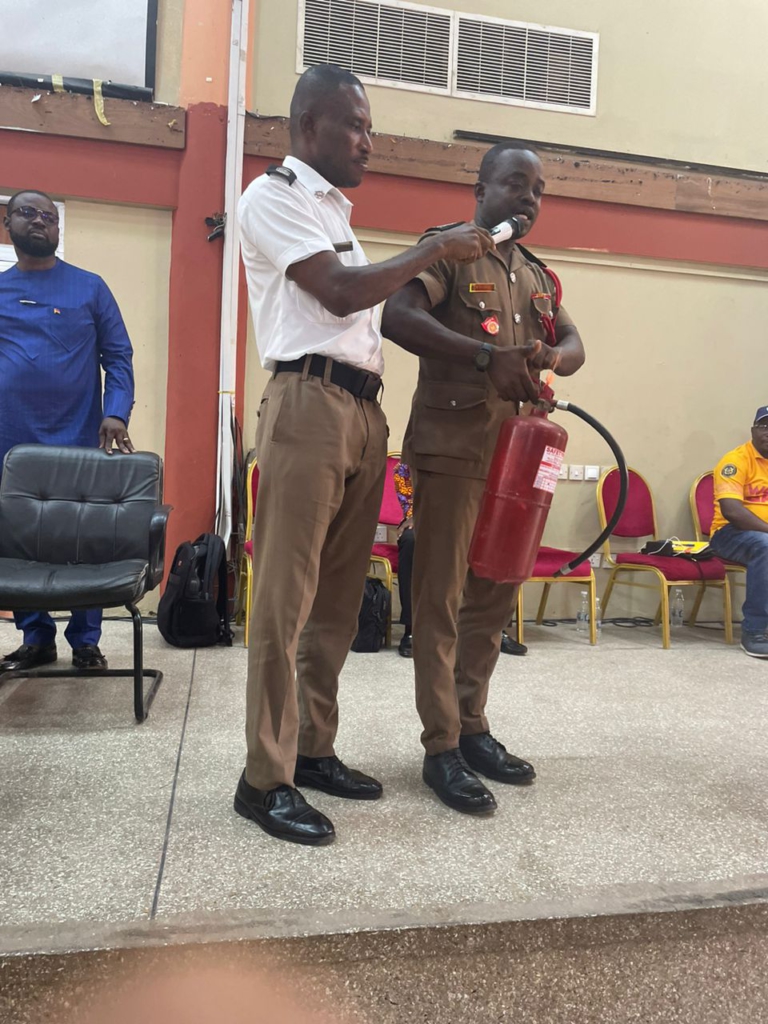
In his presentation, Assistant Divisional Fire Officer Mr. David Essuman, cautioned the public against placing stones and heavy materials on valves to supposedly prevent leakage. He said the heavy materials could not stop the leakage, and indicated that the best thing was for the people to replace the faulty valves.
Welcoming the lecturers and students on behalf of the NPA Chief Executive, Dr. Mustapha Abdul-Hamid, the Communications Manager of NPA, Mr. Mohammed Abdul-Kudus, noted that Europeans and Americans depended solely on gas for their domestic activities but they hardly recorded fires.
Therefore, he said, if gas users in Ghana observed the safety tips, they could reduce gas-related fire outbreaks.
The National Petroleum Authority (NPA) has cautioned the public against the practice of keeping gas cylinders indoors, emphasizing the extreme danger associated with this behavior.
The NPA highlighted that gas leaks are not visible to the naked eye, making it crucial to store cylinders outside in order to prevent potential fire outbreaks.
During an LPG awareness and sensitization lecture at the Takoradi Technical University, Kwami Sefa Kayi, a member of the NPA Governing Board and Chairman of the Consumer Services sub-committee, emphasized the importance of storing cylinders outdoors.
He acknowledged that some individuals hesitate to keep their cylinders outside due to concerns about theft.
“If you have cylinders in any enclosed place, go and bring them out. Don’t complain that it will be stolen”, he urged.
Mr. Sefa Kayi, who is a veteran broadcaster, gave the assurance that the NPA would do everything to ensure the price of LPG remains competitive and “soft on consumers.”
The lecture organised by the Corporate Affairs and Gas Directorates of the Authority was on the theme: “Safe Use of LPG Protects Lives and Property.”
The sensitisation exercise on the safe use of LPG and the general operations of NPA involved one-on-one engagements with traders and lectures in educational institutions in the Western and Central regions.
Other institutions visited included the Sekondi Nursing and Midwifery Training College and the Cape Coast Nursing and Midwifery Training College.
Answering a question on NPA’s complaint procedure, the Consumer Services Manager, Eunice Budu Nyarko, urged the public to immediately report fuel stations suspected of cheating to the Authority.
She said when complaints are made within 48 hours of purchase of fuel, prompt investigations are conducted to establish the facts before the product is sold out.
“Consumers should report within 48 hours. If we delay, we may risk the loss of evidence. Consumers should report and then we can act immediately,” she said.
However, Mrs. Budu Nyarko said consumers could still report after 48 hours of the purchase of the fuel.
“We will still investigate but that product you bought might have been sold out. So what the NPA does is to keep the station under surveillance, meaning the Authority’s inspectors will be visiting there unannounced for sometime.
“The NPA will always protect the interest of stakeholders, consumers and petroleum service providers”, she stressed, and announced the customer lines.
In his presentation, Assistant Divisional Fire Officer, David Essuman, cautioned the public against placing stones and heavy materials on valves to supposedly prevent leakage.
He said the heavy materials could not stop the leakage, and indicated that the best thing was for the people to replace the faulty valves.
Welcoming the lecturers and students on behalf of the NPA Chief Executive, Dr. Mustapha Abdul-Hamid, the Communications Manager of NPA, Mohammed Abdul-Kudus, noted that Europeans and Americans depended solely on gas for their domestic activities but they hardly recorded fires.
Therefore, he said, if gas users in Ghana observed the safety tips, they could reduce gas-related fire outbreaks.
According to Dr. Mustapha Hamid, CEO of the National Petroleum Authority (NPA), all other candidates in the New Patriotic Party’s (NPP) race for flagbearer know that Dr. Mahamudu Bawumia will win, but they are only competing because it is within their legal rights to do so.
“Well, I back Dr Bawumia. He’s going to win the NPP primaries. There is absolutely no doubt about it. Oh yeah! It’s done. I am sure the others [ aspirants to the flagbearer position] know. But it’s a competition so it’s okay for them to show up,” he said confidently.
Other aspirants to the flagbearer position include former Trade Minister Alan Kyeremanten, former NPP General Secretary Kwabena Agyapong, maverick MP Kennedy Ohene Agyepong, and former Agriculture Minister Dr Owusu Afriyie Akoto.
All these persons, according to Dr Hamid, are aware that Dr Mahamudu Bawumia will win the contest. For him, Dr Bawumia’s stellar performance as Vice President and qualities make him the best to lead the NPP.
“First of all, he is arguably the most active Vice President we have had in this Fourth Republic…You would agree that this is the Vice President who has been in the forefront of policy and who has not just taken a back seat as Vice President but who is in the forefront of implementing stuff,” he added.
The NPP flagbearership election is scheduled to take place in November 2023 as campaigns heat up and people make their biases known.
The National Petroleum Authority (NPA) is developing a framework to regulate the importation, storage, processing and marketing of bitumen in the country.
The framework, which will have inputs from the Ghana Standards Authority (GSA), Ghana Highways Authority (GHA) and Customs Division of the Ghana Revenue Authority (GRA), is to streamline the bitumen supply chain and ensure compliance with quality standards specifications.
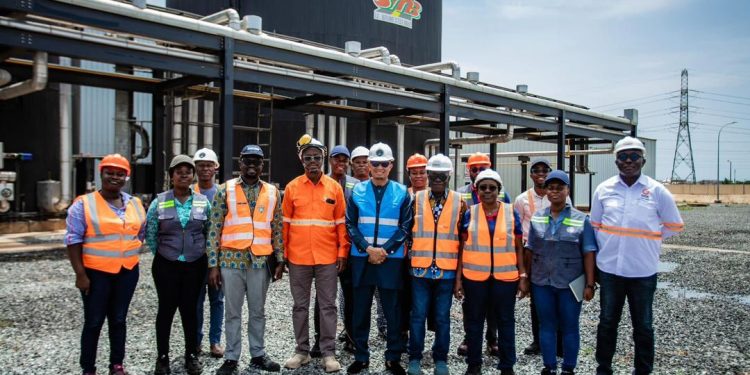
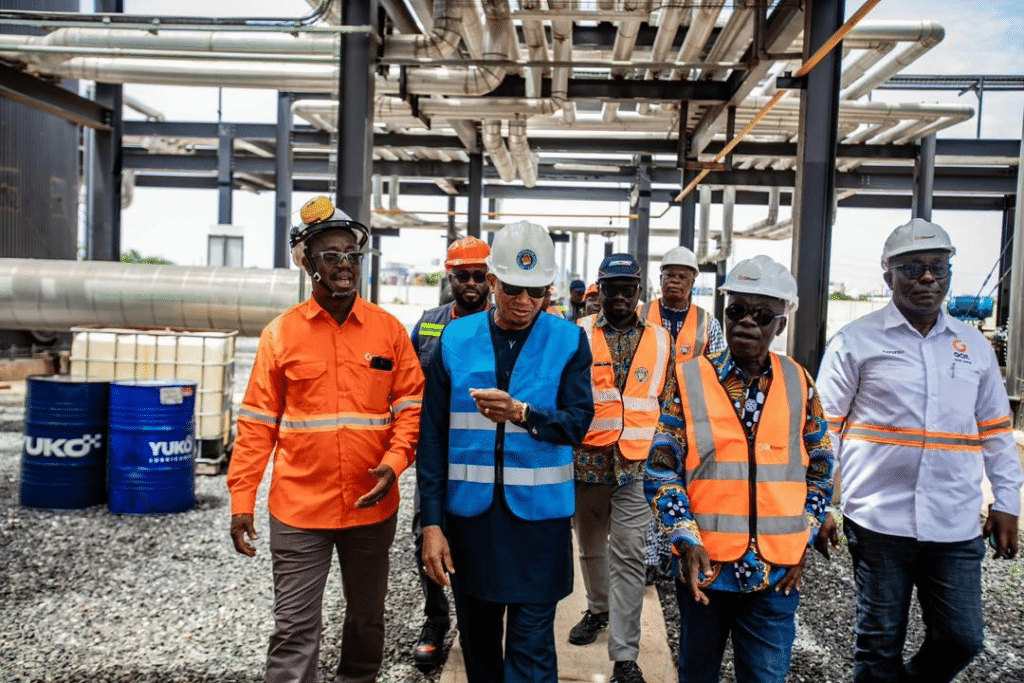
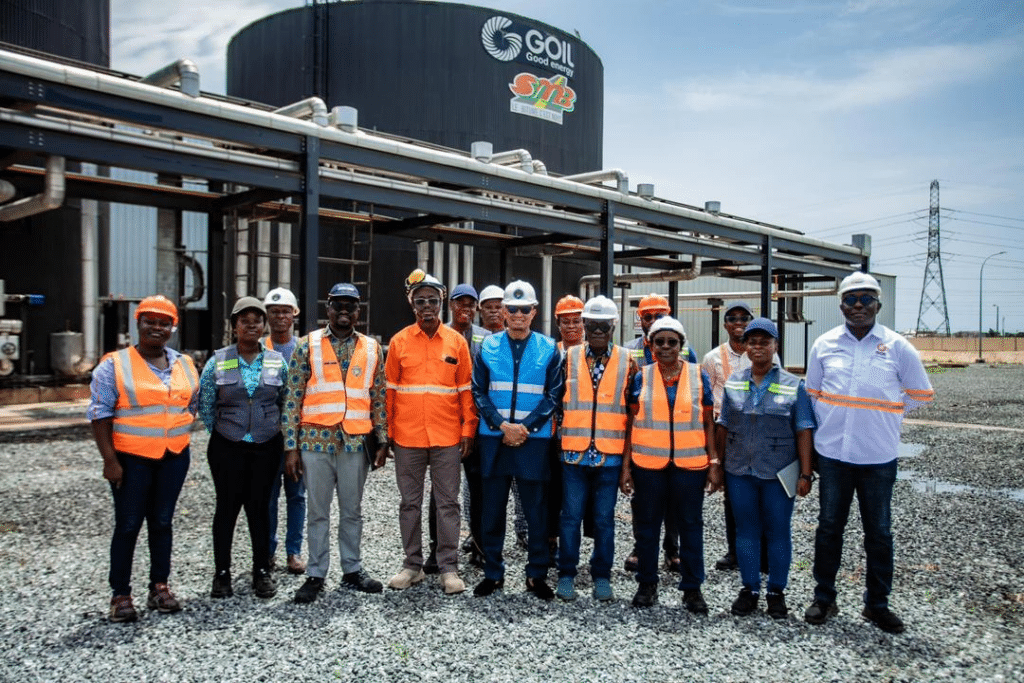
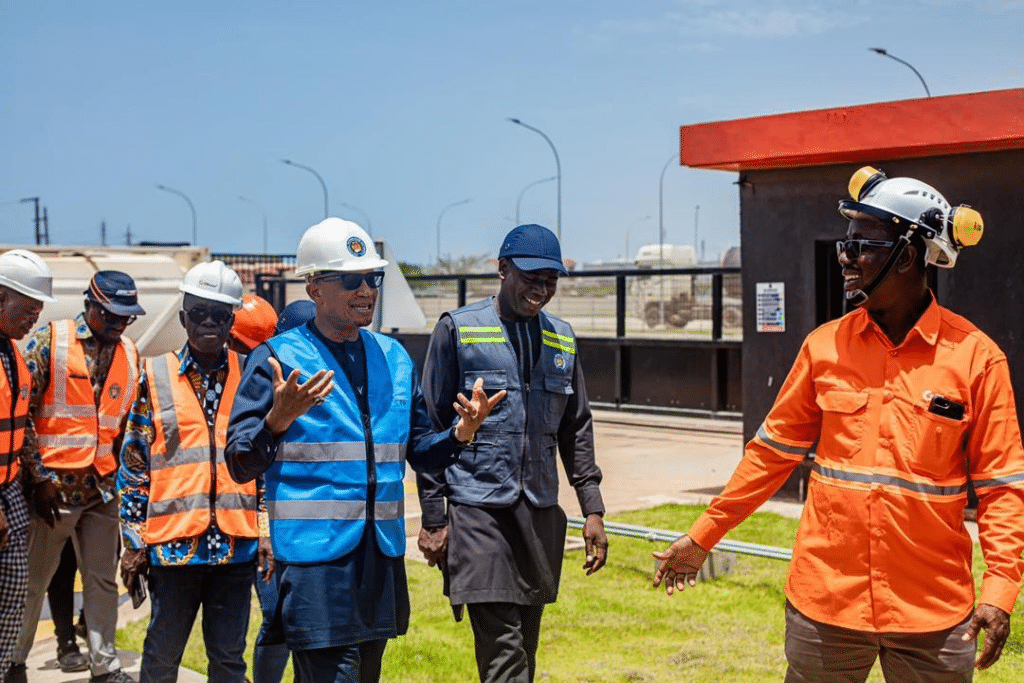
The NPA Chief Executive Dr. Mustapha Abdul-Hamid and management members of the Authority made this known on Wednesday, during an inspection tour of a bitumen storage and production plant at Tema jointly owned by Goil Good Energy and Societe’ Multinationale de Bitimumes (SMB) of Cote d’Ivoire.
The facility has 7,500 metric tonnes installed capacity and takes delivery of bitumen from Cote d’Ivoire.
One component of the facility produces polymer-modified bitumen and bitumen emulsions, which are combinations of bitumen and some chemicals.
Operations started in September 2022, and arrangements are underway for the plant’s official inauguration – possibly by President Nana Addo Dankwa Akufo-Addo and his Ivorian counterpart Mr. Alassane Ouattara this year.
Per the law establishing the NPA, it is mandated to regulate all petroleum products – including bitumen, which is mainly used for road construction.
Dr. Abdul-Hamid affirmed the NPA’s commitment to streamlining the bitumen supply chain to ensure compliance with industry standards.
Giving details of the NPA’s actions, Head of Planning-NPA, Mr. Dominic Aboagye, indicated that the NPA constituted a committee a couple of years ago to look at the entire bitumen supply chain to see how to streamline the sector.
Consequently, he said, the Authority engaged players in the bitumen value chain to understand their operations; and it turned out that much of the supply was from Cote d’Ivoire.
With that information, a team from the NPA led by Dr. Abdul-Hamid visited Cote d’Ivoire in 2021 to study the operations of Societe’ Multinationale de Bitimumes (SMB); the main exporter of bitumen to Ghana.
Mr. Aboagye said the NPA committee had since been developing the framework, and indicated that the Authority will engage the GHA, GSA, Customs Division of GRA and players in the bitumen supply chain to finalise the framework for regulating the sector.
He said all players in the bitumen supply chain will be licenced by the NPA to streamline their operations.
In their presentations, the Group CEO of Goil Company Limited, Mr. Kwame Osei Prempeh, said the plant had been selling the bitumen, polymer-modified bitumen, and bitumen emulsions on demand for road construction.
He welcomed the NPA’s move to regulate the bitumen supply value chain, as it will ensure a supply of quality products in the country.
The NPA team that participated in the tour included the Director of Economic Regulation and Planning, Mrs. Alpha Welbeck; Director of Policy Coordination, Dr. Sheila Addo; Head of Quality Control, Mr. Ubeidalah Kutia Saeed; and Executive Assistant to the CE, Mr. Faisal Ibrahim Cisse.
The National Petroleum Authority (NPA) has announced that it is designing a framework to control the storage, process, importation, and marketing of bitumen in the country.
The framework, which will have inputs from the Ghana Standards Authority (GSA), the Ghana Highways Authority (GHA), and the Customs Division of the Ghana Revenue Authority (GRA), is to streamline the bitumen supply chain and ensure compliance with quality standards specifications.
The NPA Chief Executive, Dr. Mustapha Abdul-Hamid, and Management members of the Authority made this known on Wednesday, April 12, during an inspection tour of a bitumen storage and production plant at Tema jointly owned by Goil Good Energy and Societe’ Multinationale de Bitimumes (SMB) of Cote d’Ivoire.
The facility with 7,500 metric tonnes installed capacity takes delivery of bitumen from Cote d’Ivoire.
One component of the facility produces polymer-modified bitumen and bitumen emulsions, which are combinations of bitumen and some chemicals.
Operations started in September 2022, and arrangements are underway for the official commissioning of the plant, possibly byPresident Akufo-Addoand his Ivorian counterpart Mr. Alassane Ouattara this year.
Per the law establishing the NPA, it has the mandate to regulate all petroleum products, including bitumen, which is mainly used for road construction.
Dr. Abdul-Hamid affirmed the commitment of the NPA to streamline the bitumen supply chain to ensure compliance with industry standards.
Giving details of the NPA’s actions, the Head of Planning of NPA, Mr. Dominic Aboagye indicated that the NPA constituted a committee a couple of years ago to look at the entire bitumen supply chain to see how to streamline the sector.
Consequently, he said, the Authority engaged players in the bitumen value chain to understand their operations, and it turned out that much of the supply was from Cote d’Ivoire.
With that information, a team from the NPA led by Dr. Abdul-Hamid visited Cote d’Ivoire in 2021 to study the operations of Societe’ Multinationale de Bitimumes (SMB), the main exporter of bitumen to Ghana.
Mr. Aboagye said the NPA committee had been developing the framework, and indicated that the Authority would engage the GHA, the GSA, the Customs Division of GRA, and players in the bitumen supply chain to finalize the framework to regulate the sector.
He said all players in the bitumen supply chain would be licensed by the NPA to streamline their operations.
In their presentations, the Group CEO of Goil Company Limited, Mr. Kwame Osei Prempeh said the plant had been selling the bitumen, polymer-modified bitumen, and bitumen emulsions on demand for road construction.
He welcomed the move by the NPA to regulate the bitumen supply value chain as it would ensure the supply of quality products in the country.
The NPA team that participated in the tour included the Director of Economic Regulation and Planning, Mrs. Alpha Welbeck, and the Director of Policy Coordination, Dr. Sheila Addo, the Head of Quality, Control, Mr. Ubeidalah Kutia Saeed, and the Executive Assistant to the CE, Mr. Faisal Ibrahim Cisse.
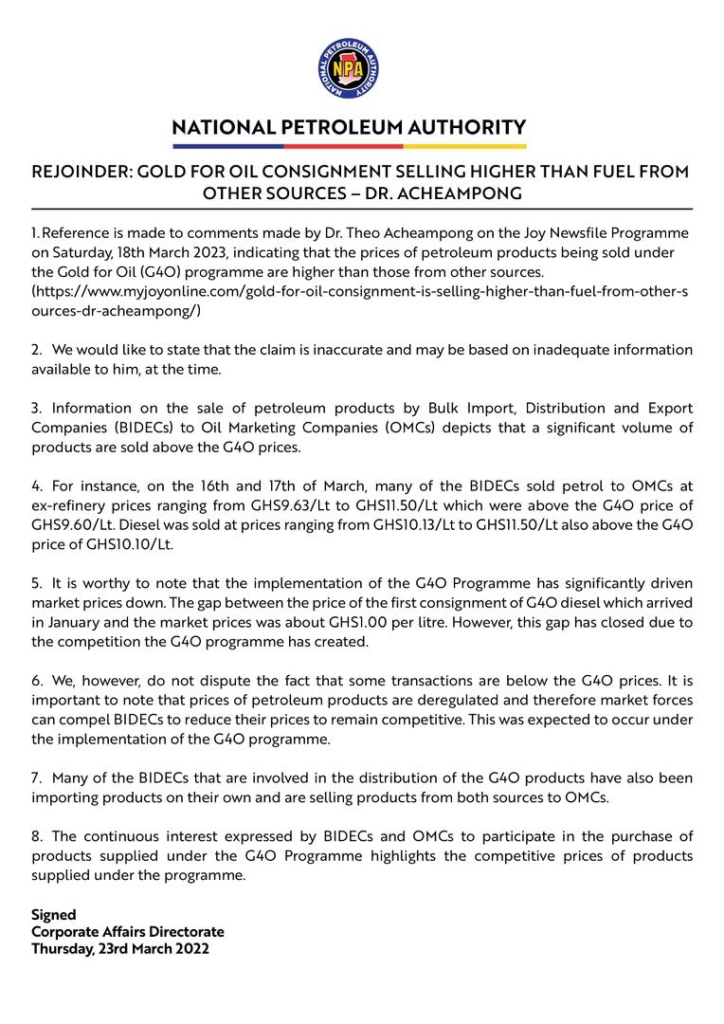
The National Petroleum Authority (NPA) says the claim by Dr Theo Acheampong that prices of fuel under the Gold for Oil deal are higher than those from other sources on the market is inaccurate.
The NPA says the assertion by the Economist and Political Risk Analyst maybe based on inadequate information.
According to the Authority, the contrary is what is currently happening on the market.
In a press release issued on Thursday, March 23, by the Corporate Affairs Directorate of NPA, it urged analysts to seek the right information before commenting on the policy.
“We would like to state that the claim is inaccurate and maybe based on inadequate information available to him, at the time.
“Information on the sale of petroleum products by Bulk Import, Distribution and Export Companies (BIDECs) to Oil Marketing Companies (OMCs) depicts that a significant volume of products are sold above the G4O prices,” part of the statement said.
The Economist and Political Risk Analyst had earlier highlighted some downsides of the gold for oil policy.
Dr. Theo Acheampong pointed out that the Bulk Oil Distributing Companies (BDCs) who did not sign up for the policy are rather selling fuel at lower prices.
This, according to him, does not meet the second objective for the policy, thus to bring down prices of fuel at the pumps.
“As we speak currently, in the recent pricing window, the gold for oil product that came in are actually selling slightly higher than products that are on the market that the normal BDCs who are not participating in this policy programme, are doing,” he stated in an interview on JoyNews Newsfile on Saturday, March 18.
Dr Acheampong added that “Petrol under gold for oil is selling at about 9.6 cedis per litre and from the non Gold for Oil sources are selling it at about 9.1 cedis per litre.
So you got almost like a 50 pesewa difference. Similar thing with diesel.”
But the National Petroleum Authority has rejected his claim insisting it is baseless.
A member of the Mines and Energy Committee of Parliament, Edward Bawa, is requesting information from the government regarding the conditions of the funds used to acquire the first shipment of oil in accordance with the government’s gold for oil policy.
The Member of Parliament for Bongo claims that the central bank pre-financed the purchase of the initial 40,000 tonnes of diesel that came in January under the program, according to information provided by the National Petroleum Authority (NPA).
Speaking to journalists, the lawmaker stated that the government must hold the transaction accountable to the public.
“You recall that the Deputy Minister of Energy, Andrew Egyapa Mercer said that the first consignment was not paid with gold but ore-financed by the Bank of Ghana. Question is, was it a loan to BOST? If it was, what were the terms of the engagement? That has not been made public. If you look at the quantity of petroleum that they bring, it is not enough to take care of the window.”
There have been several calls for government to provide contract details of the recent fuel consignment brought under the gold for oil policy.
What did Mercer say?
Deputy Energy Minister, Andrew Egyapa Mercer, has confirmed that the initial consignment of 40,000 tons of oil brought into the country under the Gold-for-oil policy was purchased with cash instead of gold.
He said the companies they dealt with initially did not have the capacity to exchange gold for oil.
“The policy actually started with an intent to do strict barter for gold and petroleum products, but it became apparent that any of the international oil trading companies that do not have a commodity wing to deal with gold on their behalf will be excluded from the policy.
“We developed the policy such that we were operating two streams, one was direct barter and the second was monetising the gold, so we can pay for IOTs that were not other commodity focused but solely petroleum products…so the test run that we did was actually paid through the second route.”
Some 43 Oil Marketing Companies (OMCs) will be sued by the National Petroleum Authority (NPA) if they fail to comply with the directives of the NPA.
In a statement the NPA cautioned the OMCs that are indebted to Primary Distribution Margin Fund to settle their debts or face legal action.
According to the NPA, “the Authority shall publish the names of the Directors and Shareholders of the defaulting OMCs who fail to settle their debt within the said period as well as take any legal action without further recourse to them.”
The OMCs include Apex Petroleum Ghana Ltd, Black Rock Energy Ltd, Petra Energy Ltd, Rich Oil Company Ltd, and Santol Energy Ltd.
The statement from the Corporate Affairs Directorate of the NPA said the 43 Companies would also face all regulatory laws.
The National Petroleum Authority (NPA) has made it clear that the choice to control fuel prices under the “gold for oil” program is just temporary and will cease if significant quantities of consignment arrive in Ghana.
The Communications Manager of the NPA, Mohammed Abdul-Kudus, in an interview on the Citi Breakfast show on Monday explained that the decision is to ensure that the prices of petroleum products imported under the Gold-for-Oil (G4O) programme reflect at the pumps to benefit consumers.
“Currently they are commingling, what it means is that they are taking from the G4O and what they take from the prevailing market price, so the pricing dynamic is different. So when the volume increases when we have OMCs taking mainly from G40 then we don’t need to put our eyes on it because then the pricing is clear.
“It is because of the non-clarity and difficulty in arriving at the price because of the insignificance of the quantity that has warranted our monitoring. We hope that when the product supply increases over time and hopefully takes off the current arrangement over time and we are able to tell that this OMC is not selling any product apart from G4O then pricing is easier and we are not going to have any difficulty in monitoring,” Mr Abdul-Kudus told host Bernard Avle on Monday.
The NPA has also announced that it will work with the Bulk Oil Storage and Transportation (BOST) Company Limited to negotiate prices with international oil traders to ensure that the landed cost of products procured under the programme is always competitive.
The NPA also disclosed that the initial 40,000 tonnes of diesel that arrived in January under the Gold-for-oil policy were valued at US$40 million.
The clarification by the NPA comes after several calls by industry experts including the Institute of Energy Securities for the government to provide details on how much it spent on the initial consignment.
The National Petroleum Authority (NPA) has sanctioned four Oil Marketing Companies (0MCs) for engaging in illicit third-party trading of petroleum products.
The affected oil marketing companies are Finest Oil, Petro XP, Glasark Oil, and Lilygold Resources Ltd.
A statement by the NPA said “Finest Oil will pay a fine of GHS160, 000.00 comprising of GHS10, 000.00 for engaging in Third Party Supplies for the first time and GHS150,000.00 for the unlawful lifting of petroleum products. Failure to comply will attract an additional one (1) month’s suspension of its operations.
“That Petro XP will also pay a fine of GHS340,000.00 comprising GHS10, 000.00 for engaging in Third Party Supplies for the first time and GHS330,000.00 for the unlawful lifting of Petroleum products. Failure to comply will attract an additional one (1) month’s suspension of its operations.
According to the statement, “Glasark Oil will pay a fine of GHS95,000.00 comprising GHS10,000.00 for engaging in Third Party Supplies for the first time and GHS85,000.00 for the unlawful lifting of Petroleum products. Failure to comply will attract an additional one (1) month’s suspension of its operations.
“That Lilygold Resources Ltd will pay a fine not exceeding five (5) times the License/Permit fee for breaking the Authority’s seals and failure to pay will result in the suspension of its operating license in addition to paying the Penalties meted out to it.”
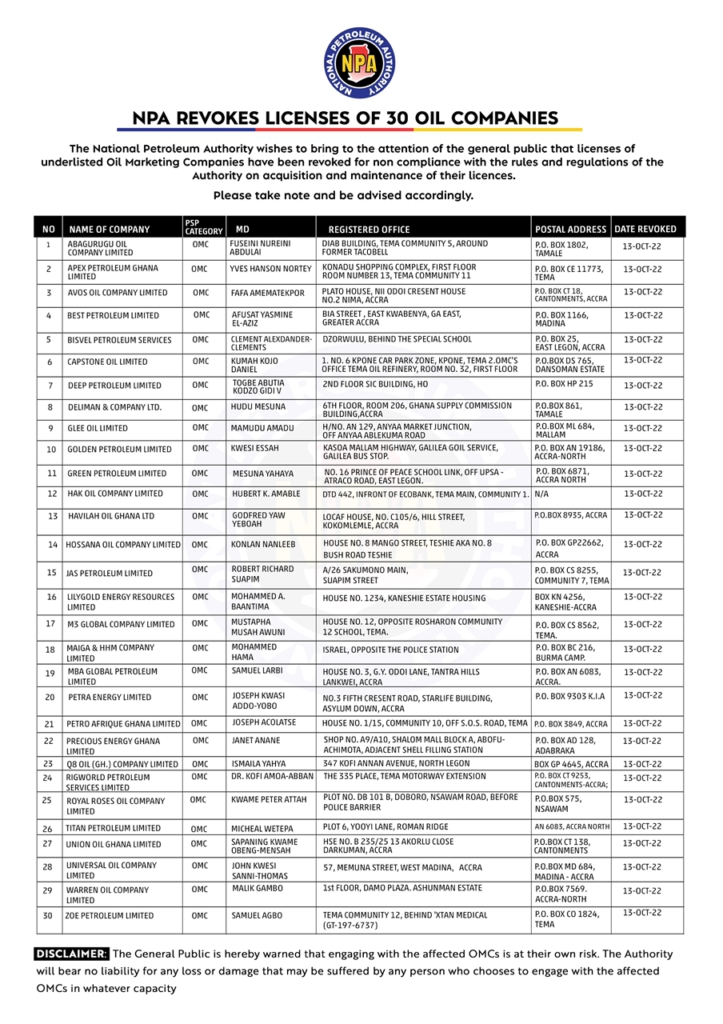
The licenses of thirty (30) Oil Marketing Companies (OMCs) have been revoked by the National Petroleum Authority (NPA) over breaches of the regulations of the industry.
Some of the OMCs are said to owe the government over ¢400 million cedis in the form of unpaid taxes by the end 0f 2022.
A list of the companies published by the NPA said the licenses of the “OMCs have been revoked for non-compliance with the rules and regulations of the authority on acquisition and maintenance of their licenses”.
The NPA cautioned that it will bear no liability for any loss or damage that may be suffered by any person who chooses to engage with the affected OMCs in whatever capacity.
“The General Public is hereby warned that engaging with the affected OMCs is at their own risk”, it added.
Below is the list of the OMCs
NPA goes after OMCs for owing
The NPA in September 2022 went after the directors and shareholders of some 45 Oil Marketing Companies (OMC) over debts running into more than ₵400 million.
These were margins and other levies that have been collected by the OMCs since 2021, but have failed to pay the monies to the NPA.
¢68 million cedis out of the debt was coming from the Primary Distribution Margin Fund These monies were paid by consumers at the pumps, and were supposed to be repaid to the regulator at the end of every operational month.
Proposed actions by NPA The NPA stated that these companies had up until the end of September 2022 to settle these debts.
The authority warned that failure to settle these debts, will result in the publishing of names of the directors and shareholders of these companies in the national dailies.
It had also indicated that it will not hesitate to take the necessary legal against the directors of these firms as an additional action.
By the first quarter of 2023, the much-discussed Cylinder Recirculation Model (CRM) would be completely operational, this is according to a statement from the National Petroleum Authority (NPA).
According to the NPA, this is to eliminate the activities of gas filling stations stemming from the gas explosion at the Atomic Junction in the Greater Accra Region.
On October 7, 2017, a petrol tanker offloading products at the state-owned Ghana Oil Company (GOIL) station caught fire resulting in a large-scale explosion at the site of a Liquified Petroleum Gas (LPG) station located at Atomic Junction in the Madina Constituency of the Greater Accra Region.
The Chief Executive Officer (CEO) of NPA, Dr Mustapha Abdul-Hamid announced the phasing out of the gas filling stations at a press soiree held in Accra.
He said going forward, gas fillings stations will become exchange points where customers will have to exchange their cylinders for a filled one from the cylinder bottling plants.
“We are encouraging investors to venture into the cylinder bottling plant establishments in the county, particularly up north,” he said.
He said already GOIL is doing one in the Kumasi metropolis of the Ashanti Region and one at Tema in the Greater Accra Region.
He added that these two bottling plants will come on stream by the first quarter of next year for the full implementation of the CRM exercise.
He expressed worry over the delay in rolling out the CRM exercise all these years.
He revealed that four other companies have renewed their licences with the NPA to start the processes for the establishment of the bottling plants.
The Chief Executive of the National Petroleum Authority, Dr. Mustapha Abdul-Hamid, has said the Authority’s goalin the energy sector is to help to eradicate energy poverty.
In that regard, he said, the NPA would engage the Cabinet to remove some taxes on LPG to make it more accessible and affordable to Ghanaians, especially the poor.
Dr Abdul-Hamid gave the assurance that he would make a case for tax exemptions for some time for investors who would be establishing cylinder bottling plants in the northern part of Ghana for them to have maximum return on their investments.
The NPA Boss made this known in Accra on Tuesday at the launch of an awareness and sensitization campaign to promote the use of Liquefied Petroleum Gas (LPG).
The aim is to discourage the use of wood fuel (firewood and charcoal) and increase the LPG penetration for domestic, commercial and industrial activities from the current 37 percent to 50 percent by 2030.
Dr Abdul-Hamid said the launch of the LPG campaign was to make LPG affordable, available and accessible to the Ghanaian people.
“We understand that perhaps the majority of the Ghanaian people are poor and most people cannot afford to buy cylinders and gas. So we at NPA in collaboration with our sector ministry are trying very hard to make it easy for people to access LPG”, he said.
The Second Lady, Hajia Samira Bawumia, who launched the LPG Awareness and Sensitization Campaign, urged the public, especially women to adopt LPG as it is a cleaner, safer, and healthier cooking fuel.
She said the use of firewood and charcoal for cooking also contributes to climate change through emissions of greenhouse gases and black carbon as well as deforestation through the harvesting of wood and sometimes even economic trees like shea tree, and oak tree.
She noted that Ghana, like many other Sub-Saharan African countries, relies heavily on solid biomass fuels for domestic and commercial cooking and heating.
Hajia Samira said that women and children travel long distances to collect fuel in the form of firewood in most rural communities, and indicated that this time-consuming and exhausting task did not offer much time for other productive activities.
In addition to being strenuous, she said, there are many risks involved; including bites from venomous animals and increased risk of sexual assault.
That, she said, limits access to education which tends to restrict opportunities for economic growth, in addition to the adverse health impact, and noted that “It is mostly women and children who bear the brunt of this.”
Hajia Samira said LPG as an alternate cooking fuel is clean, safe, and efficient, and expressed joy that the NPA was promoting the use of LPG for cooking to ensure the attainment of government’s effort to increase LPG usage to 50% by 2030.
“Estimates indicate that cooking with LPG saves about four (4) productive hours daily. These extra hours gained daily can be used in productive areas like education, agriculture, and other income-generating activities.
“By increasing access and use of LPG we have an unprecedented opportunity to not only deliver significantly on gender equity, but also improve health, reduce poverty, protect the environment, and enhance livelihoods; all in one go”, she said.
Hajia Samira called for increased education on the safe use of LPG by including information on cylinder expiration dates and when to change or replace the various LPG accessories. I am confident that this campaign will ensure awareness on these issues.
Hajia Samira commended the Ministry of Energy and the NPA for their commitment toward driving awareness, adoption and use of LPG in households and other areas of the economy.
In his remarks, the Deputy Minister of Energy, Mr Owuraku Aidoo, said the timing of the promotional drive was significant given the current debate about climate change with its associated environmental and health effects.
He said Climate change posed a greater responsibility on countries to adapt and adopt more environmentally sound practices to save the environment from further deterioration.
Mr Aidoo said it was, therefore, crucial for Ghana to play a lead role in discouraging any activity that has an adverse effect on the environment and my Ministry is ready to support the NPA and other allied institutions to stem this tide for our collective good.
Oil Marketing Companies (OMC) and other industry players have been directed to increase the Unified Petroleum Price Fund (UPPF) and Bulk Oil Storage and Transportation Company Limited’s (BOST) margin on fuel.
The Unified Petroleum Price Fund Margin is a margin incorporated in the build-up of petroleum prices to compensate transporters who move petroleum products far into the hinterland and other parts of the country, while the BOST Margin is a tax imposed on petroleum products used to cover the maintenance and operating costs of petroleum product depots and undertake expansion programmes at depots.
In a letter dated November 30, the National Petroleum Authority (NPA) instructed OMCs to increase the UPPF margin from 36 pesewas to 47 pesewas on every litre of fuel sold at the pumps.
The reviewed UPPF margin, which was 36 pesewas on petrol and diesel, will now be 47 pesewas each.
Kerosene, LPG, and premix fuel have also gone up by 11 pesewas.
The recent UPPF revision, according to NPA, is to ensure that freight rates reflect the current economic crisis in the country.
The Authority also asked industry players to increase the BOST margin by 2 pesewas, from 9 pesewas to 11 pesewas.
This is the second time this year that the National Petroleum Authority has increased the UPPF.
On July 1, 2022, NPA adjusted the prices of UPPF from 20 pesewas to 29 pesewas for petrol and diesel.
The margin on kerosene and LPG was increased from 21 pesewas and 18 pesewas to 30 pesewas and 27 pesewas, respectively.
This development might force some oil marketing companies to reverse the recent reduction in prices at the pumps.
Prices of fuel products, on November 30, 2022, started seeing some reductions. Diesel was selling at ₵19.77, while petrol went for ₵16.26.
Former Chief Executive of the National Petroleum Authority (NPA), Moses Asaga has shot down the idea of the government’s use of gold to buy oil from the international market.
The former Member of Parliament for the Nabdam constituency in the Upper East Region said that it is not a brilliant idea to buy oil with gold because the total consumption of oil per year against the country’s gold receipts that go through the Bank of Ghana per year do not tally.
“Our total refined product including LPG, petrol, and diesel was almost $4 billion per year which could have even increased by now. So, if we import $4 billion worth of refined products, how can the receipt of gold be able to match the $4 billion? That is where I think the Vice President didn’t really go deep to do his analysis unless this is just a temporary measure.”
The former CEO expressed worry over the deliberate neglect of the National Petroleum Authority from the deal, knowing very well it is the authority mandated to regulate and ensure the supply of petroleum products across the country.
“If you are dealing with gold in exchange for refined products, the NPA should be involved in this because it is the NPA that has all the statistics and figures. Our total bullion gold reserve is 8.7 tons that we have been accumulating all these years. And if you have 8.7 tons and multiply that by 36,000 ounces and further multiply that by $1,700 per ounce, it brings us to $500 million. That is what we are holding today in our bullion at 8.7 tons of gold. So, if you have $500 million, how can this translate into collateral for a product worth over $4 billion?”
The idea of using gold to buy oil was first made by the Vice President, Dr. Mahamudu Bawumia in a Facebook post which he said is needed to tackle the country’s dwindling foreign exchange reserves which have resulted in the depreciation of the cedi.
The Vice President’s post which was widely reported partly said: “The demand for foreign exchange by oil importers in the face of dwindling foreign exchange reserves results in the depreciation of the cedi and increases in the cost of living with higher prices for fuel, transportation, utilities, etc. To address this challenge, the Government is negotiating a new policy regime where our gold (rather than our US dollar reserves) will be used to buy oil products.”
Enumerating the benefits Ghana is expected to derive from the policy, Dr. Bawumia added that “the barter of sustainably mined gold for oil is one of the most important economic policy changes in Ghana since its independence. If we implement it as envisioned, it will fundamentally change our balance of payments and significantly reduce the persistent depreciation of our currency with its associated increases in fuel, electricity, water, transport, and food prices.”
“This is because the exchange rate (spot or forward) will no longer directly enter the formula for the determination of fuel or utility prices, since all the domestic sellers of fuel will no longer need foreign exchange to import oil products. The barter of gold for oil represents a major structural change. My thanks to the Ministers for Lands and Natural Resources, Energy, and Finance, Precious Minerals Marketing Company, The Ghana Chamber of Mines and the Governor of the Bank of Ghana for their supportive work on this new policy. We expect this new framework to be fully operational by the end of the first quarter of 2023.”
On Monday, October 31, 2022, some Oil Marketing Companies (OMCs) adjusted their prices upwards, selling petrol and diesel for about GHS 14 and GHS 18 per litre respectively.
In less than 24 hours, fuel prices hit an all-time high, with petrol selling at about GHS18 per litre and diesel retailing at over GHS 23.
In light of the new price window, agitated Ghanaians called on the NPA to regulate and stabilize fuel prices.
Responding to the call, the NPA has stated that the Authority is not mandated to determine or stabilize the price of petroleum products at the pump.
Speaking to the media, the Communications Manager at NPA, Mohammed Abdul Kudus, disclosed that the mandate to regulate prices of fuel was abolished after the NPA ACT was amended in 2005.
“It appears that people are still living in the past of what they knew the NPA to be prior to 2015 because the determination of the pricing has actually been taken away from NPA, and so we virtually can be called a Police and that still cloaks us with the responsibility of regulation.”
“Regulation is just not about the determination of the prices, but the regulation also involves how the prices are arrived at and that is one critical role that we play at NPA.”
Per the NPA ACT 2005, the object of the Authority is to regulate, oversee and monitor activities in the petroleum downstream industry and where applicable do so in pursuance of the prescribed petroleum pricing formula.
To achieve these objectives, the NPA is mandated to monitor ceilings on the price of petroleum products in accordance with the prescribed petroleum pricing formula.
The Authority, among other things, is also obligated to provide guidelines for petroleum marketing operations; protect the interests of consumers and petroleum service providers.
National Petroleum Authority (NPA), together with other stakeholders in the energy sector, is currently scouting for sources that provide feasible and reliable fuel to feed Oil Marketing Companies (OMCs) in the country.
The Information Minister, who disclosed the exercise embarked on by the NPA and some other agencies, explained that the high cost of petroleum products prompted the need to search for favourable alternatives.
Mr Kojo Oppong-Nkrumah told the media on Monday that Bulk Distribution Companies (BDCs) are obtaining petroleum products at exorbitant prices. Thus, an increase in the imported products is passed down to the OMCs, who in turn increase their prices at the pumps.
“The deregulated market we have here where BDCs import from big companies on high fees from the refinery wherever and bring them in is contributing to the quickened escalation of fuel prices.
“To arrest it, the Energy Ministry working through NPA and other agencies etc has been tasked to find reliable, cheaper sources of fuel for the Republic so that the OMCs locally can tap into and hopefully halt that escalation in fuel prices,” he said.
This goes to affirm comments made by President Akufo-Addoduring his address to the nation on the current stage of the economy last Sunday.
The President stated that his government would tackle the cost of living by working to stabilise prices of petroleum products through new supply arrangements.
At the time Mr Oppong-Nkrumah made the comment, a litre of petrol and diesel cost about GH¢15 and GH¢19 respectively.
In less than 24 hours, fuel prices went up by 20 per cent, with a litre of petrol and diesel selling at GH¢17.99 and GH¢23.49 respectively.
This implies that a gallon of petrol (3.97 litres) goes for GHS68.18, while that of diesel costs GHS89.03.
Meanwhile, the government says it would stabilize the prices of petroleum products to mitigate the effects of increased fuel prices on Ghanaians.
Following the incessant rise in fuel prices, transport fares were adjusted by 19 per cent on October 29, 2022.
The implementation of the new fares has been a hard pill to swallow by several commuters.
Over the weekend, a passenger exchanged punches with a driver and his conductor over why his fare increased by GHS2 at the Lapaz bus terminal.
It is alleged that the middle-aged man died after he hit his head on the pavement after being knocked out by the driver.
A former Chief Executive Officer of the Volta River Authority (VRA), Dr. Charles Wereko-Brobby has called for the dissolution of the National Petroleum Authority (NPA) if it can’t regulate fuel price hikes to protect consumers.
Dr. Wereko-Brobby in an interview on Eyewitness News on Tuesday, November 1, added that the NPA must control the Oil Marketing Companies (OMCs) to follow the laws on deregulation.
“There is a jungle market going on in fuel pricing. Deregulation works because we have set up windows for which price changes will be announced. There are two windows for every month. The NPA as the regulator is supposed to ensure that it announces what is known as maximum retail prices, so no consumer gets cheated by the Oil Marketing Companies.”
“But NPA has reneged on its duty and given it to COPEC which ironically is supposed to be representing the interest of the consumer… COPEC is now the chief cheerleader for marketing companies who keep announcing prices willy-willy. That is not the way deregulation was set up to go, it just keeps piling the pressure on [consumers],” Dr Wereko-Brobby told host Umaru Sanda Amadu.
Dr. Wereko-Brobby who is also a chief policy analyst at the Ghana Institute of Public Policy Options added that “yes Russia-Ukraine war is causing trouble, it has made oil prices go up, but the problem is that the government passes all the cost onto us consumers, so prices are adjusted to reflect the current global prices but the windfall profits nobody wants to talk about it and then somebody says I feel your pain, you cannot feel the pain of Ghanaians when you ride 60 strong SUVs to travel round the country.”
“NPA is the regulator, why do you call them regulators if you can’t do anything? Then dissolve them. Why do we call them regulators, they are to make sure that the interest of the consumer and the business are both protected, you can’t have it one way.”
Fuel prices shot up again on Tuesday, November 1, with diesel hitting GH¢23.49 per litre, while petrol jumped to GH¢17.99 per litre with Kerosene also selling at GH¢14.70.
The new prices took effect on Tuesday, November 1, 2022.
Information Minister, Kojo Oppong-Nkrumah has disclosed that the government has commenced plans to secure cheaper petroleum products onto the Ghanaian market.
The Minister made this revelation while speaking to Evans Mensah on PM Express on Monday.
According to him, the National Petroleum Authority (NPA) and the Ministry of Energy will provide further details about the importation of fuel onto the Ghanaian market in the coming days.
He noted that the Energy Ministry had already begun talks with some major sources and sovereigns in the supply of petroleum products.
“In President Kufuor’s time, we did it with Nigeria, Sahara lifting for us and you could have supply credit lines and a fixed price that you could bank on and it is a very similar arrangement that has already commenced and I am expecting that in the coming weeks the NPA, the Energy Ministry will have the opportunity to provide the details,” he said on PM Express, Monday.
“I am saying that the work has already started, I will want them to come and put out those details…I am not going to preempt what the people responsible for the sector are going to do. We are scheduling for all of them to come and provide their detailed presentations and during those presentations, all of the questions can be put to them,” he told Evans Mensah.
The Minister’s statement comes a day after President Akufo-Addo announced that government is working to secure reliable and regular sources of affordable petroleum products for the Ghanaian market.
The deal, if successful is expected to put some stability to the escalation of the fuel prices in the country.
Currently, petrol and diesel prices are being sold at an average of ¢18 and ¢23 per litre, from the previous prices of ¢15 and ¢19 per litre respectively.
Already, some leading OMCs have adjusted the prices of petroleum products at their pumps.
Petroleum consumers have lamented the high prices of petroleum products on the market as it has affected businesses and plummeted the cost of living in the country.
Speaking to the media on Tuesday, October 18, 2022, the Executive Director of IES, Nana Amoasi VII, said the depreciation of the cedi and the lack of working capital of importers and distributors of fuel to sustain their businesses are the factors for the looming shortage.
“There is something to be much worried about and that’s the likelihood of the shortage of the commodity on the market on the back of a reported shortage of dollars for the Bulk Oil Distribution Companies, the importers and the erosion of working capital of some of these importers. The price of crude oil remains high and the cedi value continues to decline”.
“We first raised these concerns in March this year and in the following month there were reports of the pocket of shortages of fuel across the country”, he explained.
According to Nana Amoasi VII, fuel crisis would be inevitable if the government does not implement measures to avoid the situation.
“This time around any incident of shortage may be widespread if we fail to plan against it. It is more serious”.
Earlier in September, the Bulk Oil Storage and Transportation Limited (BOST) said that there will be no fuel crisis as many have declared.
The company explained that estimations from the National Petroleum Authority (NPA) indicated that the entire amount of fuel as of September 20, 2022, was equivalent to 43 days worth of national consumption, not 13 days as circulated.
“Instead of the expected minimum of six weeks of national demand in storage as per the second mandate, BOST currently has stocks which can only last 13 days in the event no further imports of products are carried.
“At any material moment, the total quantities of product available in the country, thus across all tank farms as tracked by the National Petroleum Authority, includes BOST stocks and stocks of private BDCs,” the release explained.
Petroleum products are now costing more at the pump, some Oil Marketing Companies (OMCs) are selling petrol per litre for GHC13.00 instead of the prior price of GHC11.10, a 16% increase.
Also, the cost of diesel per litre has increased dramatically from its prior price of around GHC 13.90 to roughly GHC15.99. This represents a 12% rise.
Meanwhile, the cost of Liquefied Petroleum Gas (LPG) is expected to increase by 10%.
The National Petroleum Authority (NPA)has attributed the rise in fuel prices to the dramatic depreciation of the local currency against the US dollar.
On Monday, October 17, 2022, some oil marketing companies adjusted their prices upwards, selling petrol and diesel for GH¢13.10 and GH¢15.99 per litre, respectively.
The upward adjustments represent more than a 10% increment from the last pricing window, with diesel and petrol then selling at an average GH¢11.05 and GH¢13.98 respectively.
Explaining the correlation between the exchange rate and the prices of petroleum, the Head of Economic Regulation at NPA, Abass Tasunti, stated that the high exchange rate is affecting the prices of fuel at the international market as well as the cost of importation.
Speaking in an interview, he said, “the cedi is a major problem. The most volatile items in there in determining the ex-pump prices are the exchange rate and the world market price. We are really exposed to the exchange rate, which has continuously depreciated.”
“The rate also affects the supply of the product because if the cedi is not available and the BDCs bring the product, they will not be able to pay the suppliers, and we will have challenges. Availability of the dollar is key,” Mr Abass Tasunti added.
The increase in fuel prices directly affects transport fares and indirectly affects the prices of basic commodities.
The situation could exacerbate the plight of citizens in an already burdened economy.
As such, scores of Ghanaians have called on the NPA to regulate and stabilize fuel prices.
Responding to the call, the NPA has stated that the authority is not mandated to determine or stabilize the price of petroleum products at the pump.
Absolving itself of blame, NPA has asked the Bank of Ghana and the Economic Management Team to take immediate steps to halt the fast decline of the Cedi against the US Dollar to stabilise fuel prices.
Cedi depreciation
Currently, the local currency is sold at GH¢12.45 to the US dollar at the forex bureaus or the retail market.
As of October 14, the Ghana cedi lost 9.03% in value to the US dollar.
In the latest report by Bloomberg, the cedi has been ranked as the world’s worst-performing currency after Sri Lanka’s rupee among 150 economies tracked.
Meanwhile, the energy think tank, Institute for Energy Security (IES) is predicting a shortage of widespread petroleum products across the country.
According to IES, the scarcity of dollars and depreciation of the cedi, which has eroded some working capital of the Bulk Oil Distribution Companies are the reasons that will trigger the shortage.
The National Petroleum Authority (NPA) is concerned about the continuous fall of the cedi and its impact on the price build-up of petroleum prices.
It says the high exchange rate is mainly affecting the prices of fuel at the international market as well as the cost of importation or production of same thus resulting in increases in the cost of petroleum products.
The price of fuelhas recently increased to almost GH¢16 per litre with players in the industry warning that a litre of the product could be sold at almost GH¢20 by the end of 2022.
“The cedi is a major problem. The most volatile items in there in determining the ex-pump prices are the exchange rate and the world market price. We are really exposed to the exchange rate, which has continuously depreciated”, said Abass Tasunti, Head of Economic Regulation at NPA.
The cost of diesel is currently pegged at GH¢15.99 at a top oil marketing company, Total Energies, while the cost of gasoline is GH¢13.10.
This represents a significant increase over the GH¢11.06 per litre for gasoline and GH¢13.95 for diesel earlier in the month.
Speaking on The Point of View on Citi TV, Abass Tasunti said an ‘intervention is necessary to check the cedi to dollar exchange rate.
“The rate also affects the supply of the product because if the cedi is not available and the BDCs bring the product, they will not be able to pay the suppliers, and we will have challenges. Availability of the dollar is key. So the Bank of Ghana needs to do something about the forex so the BDCs are able to get the dollar at a preferential rate to help in stabilizing the ex-pump price”, he added.
The country’s rapidly rising fuel prices, which began in January at roughly GH¢6.5 per litre, have mostly been linked to the increase in the price of fuel on the international market.
Crude oilwas selling for about $75 per barrel in January of this year, but it is now selling for roughly $86 per barrel.
On the other side, the dollar, which cost GH¢6.5 at the beginning of the year, is now worth about GH¢12.
The Ministry of Energy has said it will soon meet the National Petroleum Association (NPA), the Ministry of Finance, and the central bank to find solutions to the rising cost of fuel in the country.
The Ministry’s assurance comes on the back of unprecedented hikes in fuel prices in recent times.
Petrol is currently selling at GHC13 and diesel has closed the Ghc15 mark as the current increment is likely to affect transport fares shortly.
However, speaking on the Morning Starr with Francis Abban Monday, the Deputy Minister for Energy, Andrew Egyapa Mercer indicated that the pricing methodology does not favor the consumer.
He added that the Ministry of Energy is therefore taking pragmatic steps towards ensuring that the pricing methodology does not affect the consumer.
“So the plan is to engage the NPA together with the Bank of Ghana and officials from the Ministry of Finance and Energy to see how these pricing methods will create value for consumers,” the deputy minister stated.
However, the Institute of Energy Security (IES) has predicted a further increase in fuel prices because of the continuous depreciation of the Ghana cedi.
IES also hinged a hike in fuel prices on the decision by Oil Producing Countries to scale down on the production of crude oil.
“I will not say there is an end in sight. I am not convinced because if you look at the international market, Italy and others are cutting down on production of supply. The key one being the crude oil that will impact on price negatively,” the Executive Director of IES, Nana Amuasi VII told Starr News.
The National Petroleum Authority (NPA) has fined nine oil marketing companies GH¢2.22 million for engaging in illicit Third-Party trading of petroleum products, and unlawful lifting of petroleum products.
The companies include Bello Petroleum, Jas Petroleum, Oval Energy, Kros Energy, Safety Petroleum and Santol Energy.
The rest are Riseglobe Energy, Sayon Energy and Cigo Energy.
In a statement, the NPA said it had directed Cigo Energy to pay a fine of GH¢725,000 comprising GH¢30,000 for engaging in third party supplies for the second time, and GH¢695,000 for the unlawful lifting of petroleum products.”
Sayon Energy was fined GH¢425,000, made up of GH¢10,000 for engaging in third party supplies for the first time and GH¢415,000 for the unlawful lifting of petroleum products.
Bello Petroleum was slapped with a fine of GH¢120, 000 comprising GH¢10,000 for engaging in third party supplies for the first time and GH¢110,000 for the unlawful lifting of petroleum products.
TheNational Petroleum Authority (NPA) has shut down three filling stations in Sunyani in the Bono Region for supplying less than the quantity what the customers pays for.
The stations are Frimps Oil at Penkwase, the Goil station close to the Eusbett Hotel, and Engen.
In the case of Frimps, all seven dispensing units functioning at the time of the visit were under-delivering, whilst Goil and Engen had two and four of their nozzles under-delivering respectfully.
The NPA however, noticed that some of the nozzles at these filling stations were dispensing petroleum products in excess of what the customers had paid for.
The random exercise was undertaken after the team led by Kwadwo Odarno Appiah and Eunice Budu Nyarko, Bono Regional Manager and Consumer Services Manager, respectively sensitized commercial drivers and traders at the Nana Bosoma market, popularly known as the Wednesday market in the Sunyani municipal area of the Bono Region.
He further cautioned fuel stations, after seizing two ramps, to desist from using ramps and shaking vehicles during filling, adding that it is an unsafe practice that can cause unwarranted sparks and fire.
“The NPA will not hesitate to lock temporarily stations caught using ramps,” he hinted.
This follows complaints from some motorists concerning the lack of petroleumproducts at some pumps in particular areas in Accra.
In a Citi News interview, Head of Research at COPEC,Benjamin Nsiah noted that NPA must sanction the fuel stations that create artificial fuel shortages.
“COPEC has already been mentioning this particular event to the authorities, specifically NPA to ensure that when prices are about to change, they visit some of these retail outlets to check their tanks and ensure that there are products available. If any retail outlet comes to say there are no products, it means it is an intention to create a shortage.â€
Mr. Nsiah further allayed all fears of fuel shortage, adding that there was enough stock in the system to last a month.
“We believe that there is not going to be fuel shortage in the coming month. What we know is that there is enough fuel to serve the market.â€
Reports have it that, members of the Gas Tanker Drivers and Petrol Tanker Unions will embark on a sit-down strike beginning Monday, August 1.
According to the Association, the decision to lay down their tools has been triggered by what they term as poor working conditions and unfair treatment of drivers by BOST and NPA which stems from the continuous ban on LPG Stations under construction since 2017.
Speaking to Citi News, the Chairman of the Ghana National Petroleum Tanker Drivers Union, George Nyaunu says all efforts to get the government to address their concerns have fallen on deaf ears.
“We intend to embark on a sit-down strike. They have failed to give us tangible reasons for the ban on LPG stations under construction.â€
The drivers declared a sit-down strike on March 4, 2022, for its members who cart LPG products across the country over a similar reason, saying the situation had affected remuneration and other conditions of service.
The industrial action was to push the government to lift the ban on the establishment of new LPG stations following the Atomic Junction explosion in 2017 that claimed lives and destroyed properties.
The strike was suspended following an assurance from the National Petroleum Authority (NPA) to address their concerns.
Government has explained that the ban is aimed at sanitising the space and also ensuring that the required protocols are followed through.
The Head of Economic Regulation at the National Petroleum Authority (NPA), Abass Ibrahim Tasunti, says his outfit is expecting further fuel price reductions at the pumps from August 1, 2022, following the reduction in prices of Petrol and Diesel on the World Market.
Abass Ibrahim Tasunti, who was speaking to Citi Business News on the sidelines of an NPA media interaction in Takoradi assured that the NPA would be monitoring the pumps to see if fuel stations are complying with the pricing formula in changing their fuel prices.
“The fuel price changes are influenced by changes of the price on the world market and the exchange rate in particular. We have seen reductions at the pumps in the past one month purely because the world market prices have dropped. In the next window in which we are going into, we have observed that the price of petrol and diesel have gone down again, and therefore we expect some price reductions at the pumps in the next window which starts from the 1st of August.â€
“Regarding the level of reduction, because of the deregulated pricing, the percentage changes will vary from company to company. So what we do as regulator is that we will allow the marketer to make their price changes and as we will monitor to see whether they follow the pricing formula in changing their prices“, he said.
Already, the Chamber for Petroleum Consumers Ghana (COPEC) has hinted of a six percent drop in prices at the pumps in the coming days.
Currently, diesel is almost GH¢15 per litre while petrol sells for over GH¢11 per litre at the pumps. Some filling stations over the weekend recorded some marginal price drops.
After a rampant increase in the price of fuel at the pumps, consumers seem pleased with the recent drop in prices at some fuel stations and are hopeful of further reductions in the coming months.
This comes as some Oil Marketing Companies across the country reduced their prices by up to 60p per litre over the weekend.
The National Petroleum Authority (NPA) has assured the public of a reduction in the prices of fuel in the coming months locally.
This is based on anticipation of the drop in the price of crude oil on the international market.
Already, the Chamber for Petroleum Consumers Ghana (COPEC) has hinted of a six percent drop in prices at the pumps in the coming days.
Currently, diesel is almost GH¢15 per litre while petrol sells for over GH¢11 per litre at the pumps. Some filling stations over the weekend recorded some marginal price drops.
Speaking to Citi News, the Chief Executive Officer of NPA, Dr. Mustapha Abdul-Hamid was optimistic that fuel prices will drop.
â€We have enough fuel in the country to meet the demands. There should be no concern regarding the supply of diesel, especially.â€
After a rampant increase in the price of fuel at the pumps, consumers seem pleased with the recent drop in prices at some fuel stations and are hopeful of further reductions in the coming months.
This comes as some Oil Marketing Companies across the country reduced their prices by up to 60p per litre over the weekend.
The National Petroleum Authority (NPA) has announced that it is restoring the full Unified Petroleum Price Fund (UPPF) margin on petroleum products.
It made the announcement to players in the industry on Thursday June 30, 2022, indicating that the decision takes effect from Friday, July 1, 2022.
“We hereby wish to inform you that, following the expiration of the period for the reduction of the margins as mentioned in the letter above, the UPPF Margin is being restored to its actual amount effective 1st July, 2022. The restoration of the UPPF Margin has become necessary to ensure that the Fund is able to sufficiently pay the freight cost for transporting petroleum products to retail outlets,†the NPA said.
In March 2022, it announced a downward review of the margin for three months effective April 1, 2022.
Following the expiration of the downward review, the hitherto, removed 9 pesewas will now be restored.
The reviewed UPPF margin which was 20 pesewas on petrol and diesel will now be 29 pesewas each.
The margin on kerosene and LPG will now increase from 21 pesewas and 18 pesewas to 30 pesewas and 27 pesewas respectively.
The National Petroleum Authority(NPA) together with joint security operatives have impounded a vessel carrying one million litres of adulterated diesel smuggled into the country.
The adulterated diesel is said to cost an amount of 10 million Ghana cedis. JoyNews sources say officials of the NPA have been left alarmed due to the alleged involvement of a leading government official.
The joint operation include; the Ghana Maritime Authority, the Ghana Navy, the National Security and the NPA. The vessel carrying the adulterated diesel was arrested upon illegally entering the shores of the country.
JoyNews understands that the adulterated diesel was impounded since January and has been in the custody of the NPA till now.
The National Petroleum Authority (NPA) has fined seven Petroleum Service Providers almost $3 million for illicit third-party trading of petroleum products.
The NPA says the move is geared towards sanitising the sector and ensuring standard practice among businesses in the space.
The authority in a statement said it has “taken notice of infractions by some Petroleum Service Providers(PSPs) who have engaged in illicit third-party trading of petroleum products and has accordingly applied the requisite sanctions.â€
It listed the affected companies and accompanying sanctions as follows:
1. That Moari Oil Co. Ltd pays a fine of GHS50,000.00 comprising of GHS10,000.00 for engaging in Third-Party Supplies and GHS40,000.00 for the unlawful lifting of petroleum products.
2. That Rodo Oil Co. Ltd pays a fine of GHS350,000.00 comprising of GHS10,000.00 for engaging in Third-Party Supplies, GHS340,000.00 for the unlawful lifting of petroleum products, and a one (1) month suspension of operations.
3. That MBA Global Ltd pays a fine of GHS85,000.00 comprising of GHS 10,000.00 for engaging in Third-Party Supplies, GHS75,000.00 for the unlawful lifting of petroleum products, and one (1) month suspension of operations.
4. That Cigo Energy Ltd pays a fine of GHS245,000.00 comprising of GHS10,000.00 for engaging in Third-Party Supplies and GHS235,000 for the unlawful lifting of petroleum products.
5. That Torrid Global Ltd pays a fine of GHS550,000.00 comprising of GHS 10,000.00 for engaging in Third-Party Supplies and GHS540,000.00 for the unlawful lifting of petroleum products.
6. That Naddif Co. Ltd pays a fine of GHS150,000.00 comprising of GHS 10,000.00 for engaging in Third-Party Supplies, GHS140,000.00 for the unlawful lifting of petroleum products, and one (1) month suspension of operations.
7. That GAT Oil pays a fine of GHS120,000.00 comprising of GHS 10,000.00 for engaging in Third Party Supplies, GHS110,000.00 for the unlawful lifting of petroleum products, and one (1) month suspension of operations.
“Any company that fails to comply with the rules and guidelines stipulated by the National Petroleum Authority will be subjected to appropriate sanctions,” it cautioned.