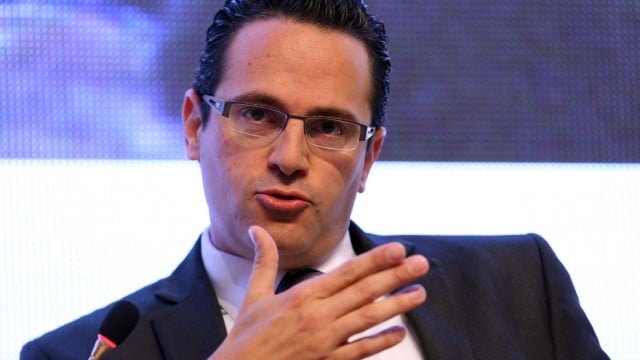
Deputy minister of energy, Herbert Krapa, has remarked that 40% of the oil and gas industry’s new positions are held by Ghanaians. He said that the majority of the employment produced are a result of the Foreign Direct Investments (FDIs) drawn to the nation. The government does not regret enticing foreign investors to explore Ghana’s resources, according to the deputy minister of energy, who was speaking at the CEOs Breakfast Meeting in Accra on Tuesday, August 22, 2023.
However, he asserted that more has to be done by the government in terms of creating partnerships and incentives that will help more Ghanaians.
“The participation of Ghanaians in that sector [oil and gas] has not been a sad story, has not been something that we say we regret attracting the investors to explore resources,” Herbert Krapa said.
“In 2019 when we last counted, we had 40% of the employment in the sector in Ghana being Ghanaians and we’re looking at now focusing more on the managerial and high technical to make sure we have more Ghanaians in that sector as well,” the deputy energy minister stated.
According to statistical data, there was a significant decrease in Foreign Direct Investment (FDI) in Ghana during the year 2022. The FDI figure plummeted from US$2.6 billion in 2021 to US$1.5 billion in the past year.
The World Investment Report for 2023 by the United Nations Conference on Trade and Development (UNCTAD) highlighted a parallel decline in FDI inflows across the African continent. These flows reduced from US$80 billion in 2021 to US$45 billion in 2022.
Consequently, Africa’s contribution to the global FDI landscape shrank to 3.5 percent.
Oil and gas businesses are required by local content rules to give preference to Ghanaians in their hiring procedures in an effort to localize the industry, but skills and knowledge gaps—particularly in highly specialized areas—remain a barrier.
Even after more than ten years of commercial oil production, Egbert Faibille Junior, Chief Executive Officer-Petroleum Commission, laments that international oil companies (IOCs) frequently struggle to find qualified Ghanaians to fill certain roles within the industry.
“When we engage with international oil companies and international service companies that hire our people, they always come back to us and say ‘we want to hire your people; however, we realise that the certifications they hold and qualifications do not meet the required standards’,” he said, calling for closer collaboration between industry and academia to bridge knowledge-gaps in the sector.
He stated that the industry’s qualifications adhere to international standards, which is both a challenge and an excellent opportunity for both industry and academia.
“Those qualifications have to be of international standards, and our educational institutions have a role to play in ensuring that the men and women are well-trained and qualified.”
Mr. Faibille Junior, who spoke at a conference organised by his outfit in Accra themed ‘Utilising trained Ghanaian technicians to achieve job-role localisation in the upstream petroleum sector’, noted that companies will gladly employ locals where the expertise exists – because the cost involved for bringing in an expatriate is way too expensive.
“Much as the world is now a global village and we get expatriates coming in, the truth and sad reality is that for each expatriate you see working in the oil industry in Ghana, the cost of bringing the expatriate, their living and working here, is passed on to Ghana when the crude is lifted,” he added.
On how the country should proceed if it wants to increase the number of highly qualified technical personnel in oil and gas, Mr. Faibille Junior said: “We need to deliberately train our own people, so that over a period of time they will take over the expatriate roles; and by that, the cost of oil and gas production in Ghana will go down.
“This way, our investor friends will make more money and our earnings from oil will also go up.”
Mr. Faibille Junior’s concerns are not isolated. For instance, last year the General Manager-Engineering at state-owned Ghana National Petroleum Corporation (GNPC), Victor Kofi Sunu-Attah, told the B&FT that although some progress has been made in promoting local content in the industry, much more is needed to indigenise the sector.
He lamented that after more than 10 years of production, the country still lacks core competencies and not many local companies are capable of executing fabrication and engineering jobs.
“We have tried all that we could to build capacity; we have upped it a bit, but a huge amount of it stays outside the country. “In the area of service, we need to up our game – although we are doing better in engineering than fabrication,” Mr. Sunu-Attah said.
Employment in upstream petroleum industry
The Petroleum Commission says a total of 3,759 Ghanaians are currently employed in the upstream petroleum sector out of a 4,147 workforce – of which 388 are expatriates.
However, those jobs held by expatriates are highly technical and at the high end of the industry, where local knowledge does not exist.
The Commission said local workers comprise 3,088 males and 671 females with varied technical expertise; including engineering, welding and fabrication, production operators, mechanics and instrumentation.
The Commission last year sponsored 150 technicians at a cost of GH¢4million to enhance their technical expertise at Takoradi Technical University under government’s Accelerated Oil and Gas Capacity Building (AOGC) programme; and they have gained employment in the petroleum industry and allied sectors, said Sarah Quayson Danquah, acting Director in charge of Localisation at the Commission.
She added that the Commission also sponsored nine instructors selected from Cape Coast, Ho and Tamale Technical Universities to undergo a ‘trainer-of-trainers’ programme in Canada to improve their skills, while 10 instructors will go to Singapore this year.
The conference
A symposium conducted by the Petroleum Commission has as its theme “Utilizing trained Ghanaian technicians to achieve job-role localization in the upstream petroleum sector.”
Participants included representatives of global oil and gas companies, corporate executives, government authorities, and service providers.
It sought to address problems with localizing job responsibilities in the upstream oil and gas industry, such as the inability of indigenous people to acquire adequate training and skill development.
Chief Executive Officer of energy giant Shell, Wael Sawan, has argued that cutting oil and gas production would be “dangerous and irresponsible”.
In an interview with the BBC, he indicated that as moves to renewable energy were not happening fast enough, the world still “desperately needs oil and gas“.
“What would be dangerous and irresponsible is cutting oil and gas production so that the cost of living, as we saw last year, starts to shoot up again,” he added.
According to him, increased demand from China and a cold winter in Europe could push energy prices and bills higher again.
Mr Sawan said an international bidding war for gas last year saw poorer countries like Pakistan and Bangladesh unable to afford liquefied natural gas (LNG) shipments that were instead diverted to Northern Europe.
“They took away LNG from those countries and children had to work and study by candlelight,” he said. “If we’re going to have a transition it needs to be a just transition that doesn’t just work for one part of the world.”
In recent times, leaders have pledged to keep the world from warming by more than 1.5C this century and as such are ready to ditch fossil fuels for greener alternatives.
In 2022, the European Commission outlined how the EU would speed up its shift to green energy to end its dependency on Russian oil and gas. Many countries do not have the infrastructure to move to more sustainable forms of energy.
Oil and gas will remain key to development as the country transitions to cleaner energy sources, the Ghana Upstream Petroleum Chamber has said – calling for incentives to expedite exploration and development of domestic hydrocarbon resources.
It said investment into gas infrastructure, in particular, is needed to optimise domestic gas utilisation; while a comprehensive plan to seize opportunities in the emerging decarbonisation solutions will position the country to accelerate oil production and increase the sector’s contribution to economic development amid the global energy transition process.
The need to incentivise exploration, accelerate appraisal and development, the Chamber’s Chief Executive Officer David Ampofo explained during the maiden oil and gas conference in Accra, is underpinned by the prospects of multi-billion-dollars-worth of domestic petroleum assets being stranded due to the energy transition. “It is all about discoveries that actually enter production. We have 14 petroleum agreements with only three producing fields,” Mr. Ampofo said.
He, therefore, noted that: “Our competitiveness largely lies in the business environment that we create for businesses to operate in. We need investors to see Ghana as an attractive investment destination”,
While the norm has always been incentivising new international oil companies (IOCs) to take up opportunities in the upstream industry, the Chamber believes those already operating in the space should be encouraged to increase their stake.
Gas as transition fuel
Ghana is endowed with tremendous gas resources, globally considered a transition fuel. Against this backdrop, Mr. Ampofo said a comprehensive gas strategy to link the upstream sector to the downstream is urgently required.
For his part, the Minister of Energy, Dr. Matthew Opoku Prempeh, in a speech read on his behalf said efforts should be channelled at establishing adequate infrastructure for processing, transportation and utilisation of gas in the county, as the availability of adequate infrastructure will open up gas’ enormous potential. “Gas is already playing a critical role in our domestic and industrial activities, and the availability of additional infrastructure will give it a further boost,” he said.
He added that National Energy Transition Framework anticipates the use of Compressed Natural Gas (CNG) vehicles in place of petrol/diesel vehicles in the coming years, thereby presenting opportunities for the monetisation of natural gas.
Dr. Opoku Prempeh further revealed that a Gas Master Plan, which is still under review, anticipates that gas will be utilised for fertiliser, ceramics, methanol, steel, aluminium and glass production among others. “Increasing gas production and establishing additional infrastructure will be indispensable if this potential gas demand is to be met,” he said.
Maiden oil and gas conference
Organised by the Ghana Upstream Petroleum Chamber, the conference was themed ‘Transitioning to a Low Carbon Economy’.
It brought together explorers, oil and gas producers, and indigenous suppliers and manufacturers in the industry as well representatives from the Ministry of Energy, Ministry of Trade and Industry, Ministry of Public Enterprises and the Petroleum Commission.
Speaking at the event, Chamber Chair and Senior Vice President of Kosmos Energy, Joe Mensah said: “This event is coming at an important time. As we seek to harness the country’s hydrocarbon resources in a time of global energy insecurity, it’s worth pointing out that with the right investment climate Ghana can contribute to providing energy security for the world”.
Minister for Energy, Dr Matthew Opoku Prempeh has asserted that African countries endowed with oil and gas are yet to reap the full harvest these resources provide.
Dr Matthew Opoku Prempeh made the comments on Friday, September 23, 2022, at the official opening of the inaugural Houston Africa Energy Summit last week, where he joined Heads of States, colleague Ministers and Senior Executives of international oil and gas companies for a round- table discussion at the Julia Ideson Library in Houston.
The round-table discussion, hosted by Mayor of Houston, Sylvester Turner, enabled discussions on Africa’s hydrocarbon industry exploration and expansion, the challenges of African countries’ securing funding and investment, and what African countries can do to attract big oil and gas companies to exploit resources for mutual benefit.
Touching on the subject of decarbonization (the reduction of carbon), Ghana’s Energy Minister remarked that “Africans are yet to enjoy the benefits of their oil and gas resources.”
He proposed that “we are going to mindfully engage in cleaner ways of exploiting the hydrocarbons, with assistance from carbon capture technologies” as a way to rectify the anomaly.
“As African energy decision makers, I am hopeful that we shall all, in the interest of our respective citizens, derive maximum economic benefits from our God-given resources,” the minister added.
As of 2021, Nigeria was the leading oil producer in Africa, according to Statista.com. Oil production amounted to roughly 78 million metric tons in the country.
Libya, Algeria, and Angola followed, each with an output above 50 million metric tons.
In the same year, the overall production of oil in Africa, including crude oil, shale oil, oil sands, and NGLs, reached 345 million metric tons, 4.5 percent more than in 2020.
Also, reports by Statista.com reveal that in the first quarter of 2022, Ghana’s revenue from oil amounted to around 984 billion Ghanaian cedis (GHS), roughly 117.5 million U.S. dollars.
Meanwhile, Dr Matthew Opoku Prempeh believes that the recent energy transition conversation presents enormous opportunities to investors within Africa’s energy value chain, especially as “we aim to embark on a rigorous gas monetization drive.”
He revealed that currently, Ghana is working to win investors to check out the country’s Exploration & Production (E&P) acreages and farm-in opportunities, as well as the numerous opportunities in the power sector.
The West African country is also looking at a National Energy
Transition Plan to reduce carbon emissions.
Dr Matthew Opoku Prempeh is expected to bring a fresh perspective to the table as the Summit enabled world leaders to discuss renewable power generation and various innovations including carbon capture and storage, all within the overarching context of the current energy transition.
Uganda’s parliament has condemned a resolution by the European Union parliament entreating the country and Tanzania to halt the work of their oil and gas projects in the East African region.
Uganda’s Deputy Speaker Thomas Tayebwa in a session on Thursday, said the resolution was based on misinformation and deliberate misrepresentation of key facts on environment and human rights protection.
According to him, it represents the highest level of neo-colonialism and imperialism against Uganda and Tanzania’s sovereignty.
It comes as Uganda and Tanzania are building the East African Crude Oil Pipeline (Eacop) project, stretching 1,443km (896 miles) from Lake Albert in western Uganda to the Tanzanian port of Tanga on the Indian Ocean.
Once completed, it will be the longest heated oil pipeline in the world.
The EU parliamentresolution passed on Thursday warned of human rights abuses and the social and environmental risk posed by the Eacop project.
The EU parliament advises its member states not to provide any diplomatic or financial support to Uganda’s oil and gas projects.
Environmentalists have opposed the project as it straddles protected areas and sensitive ecosystems.
NEW YORK, June 17 Oil prices tumbled about 5% to a three-week low on Friday, led by a slump in U.S. gasoline futures, as interest rate hikes from major central banks fuelled worries about a sharp economic slowdown.
Brent futures fell $5.85, or 4.9%, to $113.96 a barrel by 11:02 a.m. EDT (1502 GMT), while U.S. West Texas Intermediate (WTI) crude fell $6.66, or 5.7%, to $110.93.
For the week, Brent was on track for its first weekly dip in five weeks, and WTI was on track for its first decline in eight weeks as concerns grow that interest rate hikes could cause a recession.
Those fears helped pressure U.S. gasoline futures down by over 7% with analysts worrying high gasoline prices will start impacting demand for the fuel.
Automobile group AAA said the price of diesel at the pump hit a record high $5.798 per gallon on Friday, while the price of gasoline hit its record of $5.016 earlier in the week.
Global central bankers, who shared the limelight for skirting a pandemic-driven depression with quick action two years ago, are now stumbling through the aftermath as they try to quell an inflation surge none predicted or have been able to forestall.
“The influence of the macro environment has started to take over from oil specific fundamentals in recent days,” said Investec’s head of commodities Callum Macpherson.
The U.S. Federal Reserve and the European Central Bank both have enough credibility to engineer a reduction in inflation without causing a deep recession like the last time the U.S. central bank battled such fast-rising prices, St. Louis Fed President James Bullard said.
But with the Fed expected to keep raising interest rates, open interest in WTI futures on the New York Mercantile Exchange fell on Thursday to its lowest since May 2016 as investors cut back on risky assets like commodities.
The global oil market continues to show signs of “turbulence”, Russian Deputy Prime Minister Alexander Novak said, blaming the uncertainties over oil production recovery in Libya, Iran and Venezuela and a lack of energy infrastructure.
Much of that turbulence, however, was due to Russia’s actions since its invasion of Ukraine on Feb. 24.
Italy may declare a heightened “state of alert” on natural gas next week if Russia continues to curb its supplies, two government sources said after energy company reported a shortfall in flows from Moscow for the third day in a row.
The European Union’s executive, meanwhile, recommended that Ukraine and Moldova become candidates for membership, a milestone in their potential path from former Soviet republics to developed economies in the world’s largest trading bloc.
Chief Executive of the Petroleum Commission, Egbert Faibille Jnr., has admonished beneficiaries of government-sponsored training programs in the upstream petroleum sector to, as a way of appreciation, decide to work in Ghana after graduation.
He made the charge whiles addressing some 149 Ghanaians who after six months of hands-on technician training in the petroleum industry have graduated.
He stated that the training program which came at a cost of GH¢5.1 million to government has produced internationally certified professionals who can work in various aspects of the petroleum industry.
“Of the 149 persons that have graduated, 43 graduated as City and Guilds International Vocational Qualification (IVQ) level 3 Mechanical Technicians, 22 as IVQ level 3 Electrical Technicians, 44 as IVQ level 3 Process Technicians, and 41 as IVQ level 3 Instrumentation Technicians. It cost the Petroleum Commission US$ 7,500 for each of the graduates in question. In total, the commission spent GH¢ 5.1 million for the entire training program.â€
“The best way graduates can show appreciation, is to commit to working in Ghana, and help reduce the cost of Oil and Gas Production in the country so that the IOC and government will spend less in exploration and production of oil from the standpoint of job role localization,†he added.
Oil and gas deposits have been discovered on the Eban exploration prospect Block 4 of Ghana’s Cape Three Points, Italian oil and gas firm, Eni SpA has disclosed.
In a statement issued on Tuesday July 6, the company said the latest discovery would be the second oil block drilled following the Akoma discovery.
“The Eban – 1X well is located approximately 50 kilometers off the coast and about 8 kilometers Northwest of Sankofa Hub, where the John Agyekum Kufuor FPSO is located. It was drilled by the Saipem 10000 drilling ship in a water depth of 545 meters and reached a total depth of 4179 meters (measured depth). Eban – 1X proved a single light oil column of approximately 80m in a thick sandstone reservoir interval of Cenomanian age with hydrocarbons encountered down to 3949m (true vertical depth),†the statement said.
“The new discovery has been assessed following comprehensive analysis of extensive 3D seismic datasets and well data acquisition including pressure measurements, fluid sampling and intelligent formation testing with state-of-the-art technology,†it added.
It continued, “The acquired pressure and fluid data (oil density and Gas-to-Oil Ratio) and reservoir properties are consistent with the previous discovery of Akoma and nearby Sankofa field. The production testing data show a well deliverability potential estimated at 5000 bopd, similar to the wells already in production from Sankofa Field.”
The company said the estimated hydrocarbon in place between the Sankofa field and the Eban-Akoma complex is now in excess of 1.1 Bboe while additional oil in place upside could be confirmed with an additional appraisal well
So far, initial evaluations, according to the Eni SpA show the Eban-Akoma prospect has a potential of between 500 million and 700 million barrels of oil equivalent.