Tag: Oil Refinery

  • Africa’s largest oil refinery poised to begin petrol production

    Africa’s largest oil refinery poised to begin petrol production

    Africa’s largest oil refinery is nearing a major milestone with its imminent production of substantial volumes of gasoline, a development that could reshape the global fuel market.

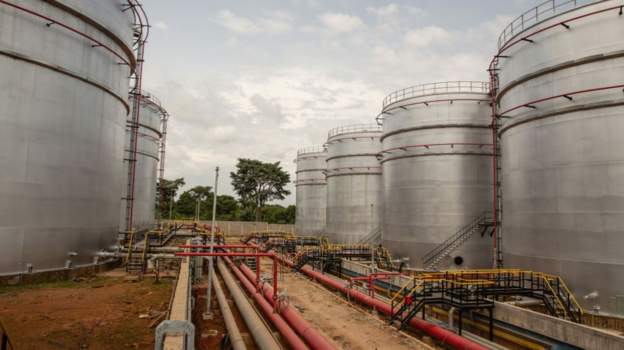
    The new Dangote refinery, located near Lagos, Nigeria’s commercial center, is on the verge of producing significant quantities of gasoline. According to sources familiar with the situation, the facility will have the capacity to process 650,000 barrels of oil per day at full operation, with over half of this amount converted into gasoline.

    This advancement is expected to be a significant boost for Nigeria, where the state oil company—Nigeria’s primary fuel importer—has been struggling with disruptions in gasoline supply due to debt and rising costs.

    Dangote’s gasoline production will influence billions of dollars in fuel trade both regionally and internationally. Last year, Nigeria imported nearly 250,000 barrels of gasoline daily, primarily from Europe, according to data from analytics firm Vortexa Ltd.

    A crucial component in the refinery’s gasoline output is a unit known as a reformer, which produces blendstock for the fuel. This unit has started operating, and gasoline production is anticipated to commence by the end of the week, according to one source. Another source confirmed that gasoline would be available this week.

    At peak capacity, the refinery is expected to produce around 330,000 barrels of gasoline per day, as noted by Randy Hurburun, a senior refinery analyst at Energy Aspects Ltd. This would account for over 1% of global gasoline demand, which stands at approximately 27 million barrels daily.

    However, achieving these production levels will take time. Energy Aspects forecasts the refinery will produce about 90,000 barrels per day in the fourth quarter, with output increasing to nearly 250,000 barrels daily in the latter half of next year. A critical factor in expanding production further is the installation of a residue fluid catalytic cracker.

    The refinery has been gradually increasing its output after years of delays. Aliko Dangote, the plant’s owner, indicated in July that the facility was targeting a start date for gasoline production in August.

  • Ukraine attacks oil refinery and drone manufacturing in Russia

    Ukraine attacks oil refinery and drone manufacturing in Russia

    Ukrainian drones attacked a big oil refinery and a drone factory in Russia‘s Tatarstan province on Tuesday. This is the farthest strike into Russia by Kyiv since the war started over two years ago.

    A recent attack happened near the cities of Yelabuga and Nizhnekamsk in Russia. 12 people were hurt in the attack, which took place about 745 miles east of Ukraine.

    Lately, Ukrainian drones have been launching more frequent attacks on Russian refineries and oil terminals, in an effort to cause more damage on Russian land.

    Ukrainian experts have been making their drones able to fly farther and carry more weapons, because Ukraine needs more powerful weapons and troops on the battlefield. Drones are a cheaper choice for Ukraine until they get more military help from the US.

    Neither side can make a big impact on the 1,000-kilometer front line right now.

    Security and intelligence officials from Ukraine said they attacked a place in Yelabuga, Tatarstan where drones are made. They used long-range drones produced in Ukraine. Tatarstan is well-known for having a lot of factories, and one factory near Yelabuga has made drones that explode, which are designed by people from Iran.

    Ukrainian officials said that spies were part of an attack on the Nizhnekamsk oil refinery.

    The officials talked to The Associated Press but didn’t want their names to be known because they weren’t allowed to talk to the public. It was unusual for officials in Kyiv to admit they were responsible for an attack on Russia, because they usually don’t talk about attacks on Russian soil. Sometimes they might mention them indirectly.

    The Associated Press could not check if the claims were true.

    Russia often uses Shahed drones to launch air attacks on Ukraine. They send a lot of them at once to try and overcome Ukraine’s air defenses.

    Tatarstan officials said the attack didn’t stop factories from working, while Nizhnekamsk’s mayor said the attempt to attack the refinery was stopped by air defenses.

    Russian Defense Minister Sergei Shoigu said that Kyiv is trying to distract people from their losses by trying to attack Russia, in order to show their supporters that they can still fight against Russia.

    During a meeting with top military leaders, Shoigu said that Russian soldiers have taken control of over 400 square kilometers (about 155 square miles) since the beginning of the year.

    Spokesperson Dmitry Peskov from the Kremlin said that the Russian army is doing things to make their defenses stronger against these attacks.

    “The army is trying to make this danger smaller and eventually get rid of it completely,” he said during a phone call with journalists.

    Ukraine has used drones to attack St. and nearby areas before. Petersburg is about 1,000 kilometers (620 miles) north of the border. The facilities in Tatarstan, a province on the Volga River, seem to be the farthest target Ukraine has tried to attack.

    Last year, the President of Ukraine, Volodymyr Zelenskyy, said that his country made a weapon that can reach a target 700 kilometers away. It seems like he was talking about a drone attack on Russia.

    Last year, Ukraine’s minister for digital transformation, Mykhailo Fedorov, said the government wanted to create a high-tech army of drones. He said that their importance in the war will be clear by the end of this year. Last year, Ukraine taught over 10,000 new people how to fly drones.

    Ukraine made dangerous sea drones that hit Russian navy ships in the Black Sea. The attacks that worked well made the Kremlin feel bad. On Tuesday, Russian President Vladimir Putin signed a decree to choose Adm. The Russian Defense Ministry announced that Alexander Moiseyev is the new leader of the navy.

    Putin also chose Vice Admiral as a name. Sergei Pinchuk is now the leader of the navy’s Black Sea Fleet after the previous leader, Adm. , was let go.

  • $2bn Sentuo Oil Refinery commissioned by Akufo-Addo

    $2bn Sentuo Oil Refinery commissioned by Akufo-Addo

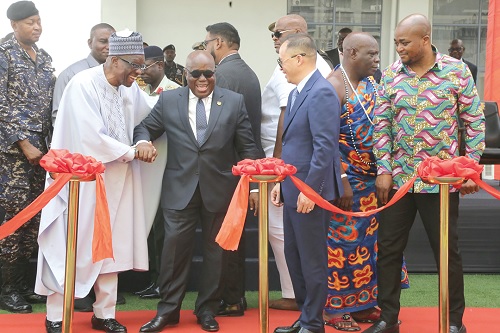
    President Akufo-Addo has officially inaugurated the Sentuo Oil Refinery Limited, a $2 billion project located in the Tema industrial hub.

    The refinery, spanning 100 acres and operating under the One District, One Factory (1D1F) policy, is designed to process five million barrels of oil annually.

    As part of its offerings, the refinery will produce high-quality petroleum products such as finished gasoline (petrol), aviation kerosene, diesel, asphalt, lubricating base oil, solvent oil, polypropylene, liquefied petroleum gas, ammonium sulfide, sulfuric acid, sulphur, and other by-products.

    This flagship project, initiated in 2022, aligns with Ghana’s industrialization goals and is expected to create approximately 1,000 job opportunities.

    The first phase, currently underway, aims to produce 40,000 barrels of refined products daily. The second phase, set for completion next year, will further elevate production to 100,000 barrels daily.

    The inauguration ceremony attracted notable figures, including the President of Guyana, Mohamed Irfaan Ali, Speaker of Parliament Alban Sumana Kingsford Bagbin, ministers of state, Members of Parliament, chiefs, captains of industry, and chief executives of regulatory bodies.

    President Akufo-Addo emphasized the project’s significance, citing it as a pivotal move to reduce the country’s dependence on foreign oil and drive economic growth. He applauded the collaboration between the public and private sectors, highlighting its role in advancing Ghana’s progress, job creation, and industrialization.

    Recognizing the contributions of Chinese promoter Xu Ning Quan and partners, President Akufo-Addo underscored the positive relations between Ghana and China. He acknowledged the 15-year collaboration that resulted in the establishment of both the Sentuo Oil Refinery and the Fujian Sentuo Ceramic Company Limited.

    In addressing the national petroleum sector, President Akufo-Addo reaffirmed the government’s commitment to fully operationalize the Tema Oil Refinery (TOR) to enhance local oil refining capabilities.

    Minister of Energy, Dr. Matthew Opoku Prempeh, praised the management of Sentuo for their investments in the country, expressing optimism about the refinery’s positive impact on the local economy.

    Xu Ning Quan, Executive Chairman of the Sentuo Group of Companies, expressed gratitude to the government for creating a favorable business environment. He reiterated the group’s commitment to contributing to Ghana’s industrial growth.

  • Uganda and UAE company negotiating $4 billion oil refinery

    Uganda and UAE company negotiating $4 billion oil refinery

    The government of Uganda is talking to a company from Dubai, led by a royal family member, to build a $4 billion oil refinery.

    Uganda picked Alpha MBM Investments LLC from five companies for the project, according to Ruth Nankabirwa, the Energy and Mineral Development Minister.

    The two groups are supposed to make an agreement in the next three months.

    Ms Nankabirwa said she hopes they won’t spend much time trying to find money. She believes they can get the money and technology needed to help refine their crude oil and meet environmental regulations.

    The minister said that rules will be made to lower the project’s pollution and lessen its impact on the environment.

    The government says the refinery will help Uganda process some of its crude oil for money. Officials say there will be $20 billion invested in the sector.

    The country plans to start selling crude oil in 2025.

    “So far, the investments have helped the economy by $8. 6bn We expect to get even more, between $20bn-$25bn,” Ms Nankabirwa told Newsday.

    Uganda is working on a new oil project. They want to build a pipeline that is 1,443km long to move oil from Western Uganda to Tanzania’s Tanga port for export.

    More update on this story soon.

  • Dozens killed in fire at an illicit oil refinery in Nigeria

    Many people died after an explosion and fire at a secret oil refinery in the southern part of Nigeria.

    The event supposedly occurred on Sunday night in Rivers state, but it was only widely talked about on Tuesday.

    The leader of Nigeria Security and Civil Defence Corps (NSCDC), Basil Igwebueze, told BBC Pidgin that the incident happened.

    He said that 18 people were completely burnt and couldn’t be identified, but 25 were saved.

    Mr Igwebueze is holding responsible those who damage oil pipelines and run illegal refineries for the tragic accident.

    Many people in the area regularly steal oil from pipelines and sell it, which is against the law.

    Over 100 people died last year after a big boom at an illegal place where they make oil in Imo state.

  • Dangote Oil Refinery to commence fuel production in June

    Dangote Oil Refinery to commence fuel production in June

    Businessman from Nigeria and the richest in Africa, has announced the opening of the ground-breaking Dangote Oil Refinery, which is expected to be the largest vertically integrated petrochemical complex in the world.

    The refinery, which was commissioned today by outgoing Nigerian President Muhammadu Buhari, marks a significant milestone for the nation’s downstream industry and positions Nigeria as a major player in the global oil market.

    With an initial processing capacity of 540,000 barrels per day, the Dangote Oil Refinery is primed to fulfill 100 percent of Nigeria’s refined petroleum needs while producing a surplus for export, which is estimated to generate a staggering $11 billion in revenue annually.

    The $20.5-billion project aims to put Nigeria on track to become a net exporter of refined petroleum products and petrochemicals by 2026, thereby boosting the nation’s economy and reducing its dependence on imported fuel.

    During the ongoing commissioning ceremony, Dangote, chairman of Dangote Group, expressed gratitude to Buhari for his unwavering support throughout the process of bringing the refinery to fruition.

    He highlighted the pledge of support from the Nigerian National Petroleum Company (NNPC), ensuring seamless refinery operations.

    Dangote Group has set an ambitious target of producing the first fuel products from the refinery by June 2023, contributing significantly to the country’s energy independence.

    Originally scheduled for completion in 2016, Dangote Group persevered through numerous challenges to successfully deliver the petrochemical complex in 2023.

    Once fully operational, Dangote Oil Refinery will process a staggering 650,000 barrels per day, surpassing any other refinery on the African continent.

    With 40 percent of the output earmarked for exports, Nigeria is poised to generate billions of dollars in foreign currency. Notably, the Dangote Oil Refinery will serve as a vital source of employment, offering relief to Nigeria’s persistently high unemployment rate.

    Thousands of jobs will be created, providing opportunities for individuals in need and driving socioeconomic growth. While the commissioning ceremony marks the initial phase of refinery operations, full-scale production typically takes several months to ramp up.

    The strategic collaboration between Dangote and the Nigerian government, which owns 20 percent of the refinery through NNPC, underscores the shared vision of bolstering the country’s downstream industry and leveraging its immense petroleum potential.

    By harnessing Nigeria’s oil resources, the Dangote Oil Refinery is poised to revolutionize the nation’s energy landscape, fulfilling domestic demand, creating an export market worth $11 billion annually, and propelling Nigeria toward a more prosperous future.