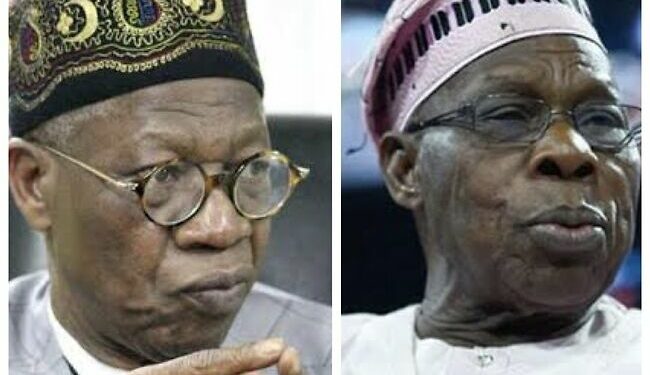
Former president of Nigeria, Olusegun Obasanjo, has been warned by the federal government not to endanger the 2023 General Elections with his allegedly inflammatory and provocative letter on the elections.
In a statement he released on Tuesday, the Minister of Information and Culture, Alhaji Lai Mohammed, said that the former President’s “call for caution and rectification” was actually a deliberate attempt to sabotage the electoral process and a deliberate provocation to violence.
The previous President’s ability to spread unfounded assertions and amplify outrageous claims made on the street against the democratic process shocked the minister.
”Though masquerading as an unbiased and concerned elder statesman, former President Obasanjo is in reality a known partisan who is bent on thwarting, by subterfuge, the choice of millions of Nigerian voters,” Mohammed said.
He recalled that the former President, in his time, organized perhaps the worst election since Nigeria’s return to democratic rule in 1999, hence he is the least qualified to advise a President whose determined effort to leave a legacy of free, fair, credible and transparent election is well acknowledged within and outside Nigeria.
”As the whole nation waits with bated breath for the result of last Saturday’s national elections, amid unnecessary tension created by professional complainants and political jesters, what is expected from a self-respecting elder statesman are words and actions that douse tension and serve as a soothing balm.
”Instead, former President Obasanjo used his unsolicited letter to insinuate, or perhaps wish for, an inconclusive election and a descent
into anarchy; used his time to cast aspersion on electoral officials who are unable to defend themselves, while surreptitiously seeking to
dress his personal choice in the garb of the people’s choice. This is duplicitous,” he said.
The Minister further reminded the former President that organizing elections in Nigeria is not a mean feat, considering that the voter population of 93,469,008 in the country is 16,742,916 more than the total number of registered voters, at 76,726,092, in 14 West African nations put together.
”With a deployment of over 1,265,227 electoral officials, the infusion of technology to enhance the electoral process and the logistical nightmare of sending election materials across our vast country, INEC seems to be availing itself creditably, going by the
preliminary reports of the ECOWAS Electoral Observation Mission and the Commonwealth Observer Group, among other groups that observed the election.
”Therefore, those arrogating to themselves the power to cancel an election and unilaterally fix a date for a new one, ostensibly to ameliorate perceived electoral infractions, should please exercise restraint and allow the official electoral body to conclude its duty by announcing the results of the 2023 national elections.
”After that, anyone who is aggrieved must follow the stipulated legal process put in place to adjudicate electoral disputes, instead of
threatening fire and conjuring apocalypse,” the Minister said.
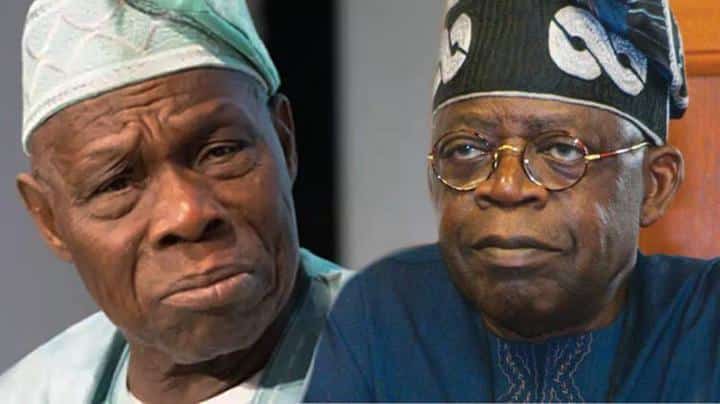
Bola Ahmed Tinubu, the All Progressives Congress (APC) candidate, has slammed former president Olusegun Obasanjo over his call for cancellation of some results of Saturday’s presidential election on the grounds of fraud.
In an open letter on Monday, Obasanjo had called on President Muhammadu Buhari to prevail on the Independent National Electoral Commission (INEC) to cancel results that fail to “pass the credibility and transparency test” and schedule a fresh election for March 4, 2023.
The former president warned that failure by President Buhari and the INEC Chairman, Mahmood Yakubu, to act may pose serious danger for the country as tensions are already building up.
But responding through a spokesperson of his campaign organization, Dele Alake, Tinubu described Obasanjo’s request as “reckless” while further accusing him of seeking to “endanger and derail our democratic process for utterly selfish, egoistic and malicious reasons.”
Part of Tinubu’s response reads: “Obasanjo repeated without the slightest iota of evidence rumours he had picked up that the Bimodal Voters Accreditation System had been compromised and that the results of elections being announced are fraudulent. It is tragic that a former President who ought to be a statesman in comportment and speech will recklessly seek to endanger and derail our democratic process for utterly selfish, egoistic and malicious reasons. He offers not a single credible piece of evidence to prove his laughable and ridiculous allegations against INEC and the credibility of the ongoing process.
“Of course, we are all aware that Obasanjo is not an impartial and disinterested party as far as this election is concerned. On January 1, 2023, he had issued a characteristically lengthy epistle to Nigerians endorsing the candidacy of Mr Peter Obi and asking Nigerian youths to vote en masse for him. Of course our reaction was that the former President was entitled to his view and that the outcome of the elections would demonstrate if he had any electoral value. As fate would have it, Peter Obi was defeated even in Obasanjo’s own polling unit in Abeokuta in Ogun State. But it is now obvious that the only election Obasanjo will agree to being free, fair and credible is one that produces Obi as winner which is ridiculous.
“Is Obasanjo also querying the outcome of the presidential elections in Lagos or Delta where Obi won? If the outcome in Lagos won by Obi is free and credible, on what basis is he querying the outcome of the elections in other places? This is pure mischief and sheer hypocrisy. Obasanjo wants President Muhammadu Buhari to intervene in an undemocratic manner to truncate the ongoing political process just the way he did most shamelessly in the 2003 and 2007 elections widely described as the worst in our political history. Luckily, President Buhari is made of finer and more principled democratic stuff. He will not allow Obasanjo to lure him into tainting his democratic credentials in this regard. We recall that in his last trip to the United States, President Joe Biden praised Buhari ‘s commitment to democratic values and principles. Obasanjo has no such record to be applauded. The world has not forgotten his fraudulent and undemocratic attempt at a third term agenda in violation of the letter and spirit of the Nigerian constitution.
“This is an election in which ASIWAJU Tinubu, for instance, has lost in Lagos state in his South West region while Atiku and Obi have also won elections outside their own regional bases. No true democrat must seek an abortion of the process just because he believes the elections are not going his way. What Obasanjo is subtly calling for in his nefarious statement is a coup against democracy and the constitution. He should be roundly condemned and severely ignored. The constitution has stipulated processes for seeking redress against electoral malpractices in the past and these have been tested several times and used to redress electoral injustice where such has been proven. Nigerians must reject Obasanjo’s dubious and hypocritical advice and stay strictly and firmly on the path of constitutionalism and democratic due process.
Olusegun Obasanjo, a former president of Nigeria, has outlined some strategies African countries might use to capitalize on their expanding populations.
According to him, Africa’s growing population – which is projected to hit 2.5 billion by 2050, has the ability to to serve as a liability to the continent.
Using his own country as an example, Olusegun Obasanjo said that by 2050, Nigeria’s population is projected to be at 400 million, a situation he said is currently troubling.
“We will be the third largest country in the world after China and India. Should the really be a great concern to us? I would say normally that it shouldn’t be because population can be a liability or an asset.
“Now, as we have it today, it is a great liability, and don’t let us deceive ourselves. In my country, Nigeria, where we are 225 million today, 20 million of our children that should be in school are not in school – that is the beginning of insecurity, whichever way you look at it,” he stressed.
Speaking at the Insiders and Outsiders Meeting the African Security Challenge in the 2020s, organised by the Brenthurst Foundation and the Kofi Annan International Peacekeeping Training Centre (KAIPTC), the former Nigerian president said that regardless of the situation, something good can come out of over-population.
He explained that an advantage that Africa can attain with its growing human resource, is to ensure that it equips the population with needed skills, education and knowledge in technology.
“Can we make population an asset? Of course, we can if we nurture our population from the womb; if we have food and nutrition security; if we give every child education. If everybody can acquire skills; if we give science and technology the attention it should be given.
“If we give every child employment, population will cease to be a liability; it will be an asset. But if we are not able to do this, as we have not been able to do it in the past, then there will be no hope, or any great expectation for our population. And once the population is depleted, then we have lack of protection, we have insecurity on our hands,” he stated.
The West African Security Roundtable – Insiders and Outsiders: Meeting the African Security Challenge in the 2020s was hosted by President Olusegun Obasanjo of Nigeria, President Ernest Bai Koroma of Sierra Leone, and Dr. Greg Mills, Head of the Brenthurst Foundation.
The event forms part of a series across the region: Accra, Abidjan, Dakar, Niamey, and Abeokuta.
As a form of expression of its disgust against the shooting of the military generals in 1979, the Federal Republic of Nigeria under the leadership of then General Olusegun Matthew Okikiola Ogunboye Aremu Obasanjo threatened to cut gas supply to Ghana which had Jerry John Rawlings as head of state.
The angst of Nigeria and its leader against the gruesome killings of military generals, Ignatius Kutu Acheampong, FWK Why Nigeria threatened to cut gas supplies to Ghana in 1979
In a bid to register their disgust over the shooting of the military generals in 1979, the Federal Republic of Nigeria under the leadership of then military ruler, General Olusegun Matthew Okikiola Ogunboye Aremu Obasanjo threatened to cut gas supply to Ghana which at the time was led by Jerry John Rawlings as head of state.
The angst of Nigeria and its leader Obasanjo to the gruesome killings of the military generals, Ignatius Kutu Acheampong, FWK Akuffo, AA Afrifa, and Utuka, among others in 1979 was captured in the book titled ‘The Trial of JJ Rawlings”.
The book which was written by the venerable Kojo Yankah captures a letter by the National Union of Ghana Students, NUGS, to the governments of Nigeria, Ivory Coast, Burkina Faso and Togo criticizing their condemnation of the actions of the Rawlings regime.
“We condemn the threats allegedly issued by the Obasanjo government in Nigeria to cut off supplies to Ghana. The clean up exercise here had set a new precedent in African Politics. The pleas of the Paris-teleguided governments in Ivory Coast, Togo and Upper Volta also show the depth of their hypocrisy and how unfair they’ve been to the suffering people of Ghana.
“When our timber, cocoa, gold, rice, maize and essential imported communities were being smuggled to these countries by the few local enemies of the people of Ghana, these ‘good neighbours’ of ours actively collaborated with them”, parts of the statement read.
The book also highlights the response of the United Kingdom under Prime Minister, Margaret Thatcher to the killing of the military generals.
Margaret Thatcher, the then Prime Minister of the United Kingdom is reported to have indicated her ‘abhorrence’ to the execution of the military generals and said that she had been in touch with US, Canada, and members of the European Economic Community to make representations to the Ghana government about their disdain for the murder of leaders of the deposed military regime.
About June 4 Revolution
The June 4 Revolution, otherwise known as June 4th Uprising was incited by the arrest and trial of Flt. Lt. Jerry John Rawlings and other junior military officers by the leadership of the Supreme Military Council II (SMC II). Jerry John Rawlings and the junior officers were arrested and charged with mutiny for a failed coup attempt on the 15th of May, 1979.
Jerry John Rawlings cited a number of reasons for the failed coup attempt on 15th May, 1979. Firstly, the junior military officers, including Jerry John Rawlings, were refused salaries on countless occasions. Also on the broader scale, issues of widespread corruption among Supreme Military Council officials, poor governance, economic hardship and general frustration on the part of populace as well as high levels of indiscipline within the Ghana Army were among the issues highlighted.
One of the main architects of the uprising, Major Boakye Djan, has in later interviews revealed that they deliberately added a political twist to it to help emancipate the whole of Africa. According to Osahene Boakye Djan, after several secret meetings with John Rawlings, the team decided to establish a secret movement known as the Free Africa Movement (FAM) to drive the uprising. Boakye Gyan noted that although Nkrumah fought for the liberation of the whole African continent, Africa still appeared to be under the rule and control of the colonial masters. Boakye Gyan mentions in an interview that though Ghana was independent, the country was not free enough to determine the prices of cash crops like cocoa and other commodities hence the movement.
Trial Day
Prior to the trial was the failed coup attempt by Rawlings and some junior officers on the 15th of May, 1979. On the morning of the day of the coup, there was exchange of fire between the coup plotters and officers of the SMC II. It took the effort and bravery of one senior military officer, Major General Odartey Willington to get to the Ghana Broadcasting Corporation (GBC) to announce that the attempted coup by junior officers of the force had been foiled.
He, Major-General Odartey Willington, one Major Sulemana, other military officers who embarked on the said action at GBC were subsequently rewarded by the SMC II government and Rawlings and the junior officers arrested for trial.
The trial of Rawlings and the Junior officers took place at Burma Hall in Accra. On the day of the trial, as ABC News Ghana gathers, thousands of civilians trooped into the hall to witness the trial. The president of the military tribunal was Col. Aninful and the prosecutor for the state was Flt. Lt. Atiemo.
Rawlings was asked if he wanted a separate trial. His response was “I want to be with my men,” a comment which sparked wild applause in the hall.
Rawlings was found guilty by the tribunal and was imprisoned in a “guardroom”. It was during this time that all his ten fingers were severely damaged.
A key point in the trial was when Jerry Rawlings turned the tables and began accusing the government of massive corruption. He demanded his colleagues accused of aiding him in the treasonable act be set free insisting that he was solely responsible for the attempted coup.
On the day of 4th June, 1979
As has been stated earlier, Rawlings was found guilty and imprisoned in a guardroom. Two weeks later, on the night of June 4th, Captain Boakye Djan led other officers to overthrow the SMC II government and released Rawlings from prison. He was then sent to GBC and the government overthrow was announced. Rawlings was made to speak to allay fears of his death as had been earlier rumoured.
Notable on the day was a display by Major-General Odartey Willington. He entered an armoured car and single-handedly shot for three continuous hours. When he ran out of cartridges, he dashed to the Nima Police Station to surrender.
Unfortunately, he was killed on the spot by military officers immediately he came out of the armoured truck. He was given a somewhat befitting burial by Rawlings.
That incident marked the beginning of the uprising.
After the incident, all military installations were searched and senior military officers who were on the side of the SMC II were killed. It was on the same day that Col. Aninful, the president of the military tribunal that tried Rawlings and the junior officers on 15th May was killed. His wife and children who were also in the same room were shot. Many sympathizers of the previous government fled the country to seek asylum elsewhere.
The coup plotters then set up the Armed Forces Revolutionary Council (AFRC). The membership was as follows;
1. Flt. Lt. Jerry John Rawlings – Chairman
2. Captain Boakye Gyan – Official Spokesperson
3. Major Mensah Gbedemah
4. Lt Commander Akpaloo
5. Warrant Officer 2 Obeng
6. Private Owusu Adu
7. Corporal Owusu Boateng
8. Leading Air Craftsman Gaktipo
9. Lance Corporal Ansah Atiemo among other people.
The Aftermath of the Revolution
The regime introduced what become known as the “House Cleaning Exercise”. The House cleaning exercise was mainly against corruption. Three former military leaders of Ghana, Lt. Gen. Afrifa, Gen. Acheampong and Lt. Gen. Akuffo were all executed together with five other senior officers deemed to have been corrupt by the Special Courts set up by the government. That was when the infamous slogan “let the blood flow” originated. Supporters of the regime used this slogan to rally military support in killing sympathizers of the previous regime who were deemed corrupt.
Numerous business entrepreneurs were also targeted and had their assets confiscated by the government.
Critics of the regime note that the period witnessed high levels of indiscipline among the junior officers towards senior officers and civilians. The Armed Forces Revolutionary Council (AFRC) soon lost control of the soldiers who had gone on rampage. There was total breakdown of law and order, a situation which led to arbitrary arrests, beatings, abductions, killings, detentions, and seizure of money and personal property by soldiers.
The AFRC ruled from June 1979 to September 1979. Power was handed to Dr. Hilla Limann in September 1979. But Rawlings again overthrew Limann on 31st December 1981. Though June 4 became a noted date in Ghana’s history, it has been said to be a date that brings a lot of pain to people who either lost loved ones, lost businesses or had to flee the country for their dear lives, AA Afrifa, and Utuka, among others in 1979 was captured in the book titled ‘The Trial of JJ Rawlings”.
The book which was written by the venerable Kojo Yankah captures a letter by the National Union of Ghana Students to the governments of Nigeria, Ivory Coast, Burkina Faso and Togo over their condemnation of the actions by Rawlings and his military cohorts.
“We condemn the threats allegedly issued by the Obasanjo government in Nigeria to cut off supplies to Ghana. The clean-up exercise here had set a new precedent in African Politics. The pleas of the Paris-teleguided governments in Ivory Coast, Togo and Upper Volta also show the depth of their hypocrisy and how unfair they’ve been to the suffering people of Ghana.
“When our timber, cocoa, gold, rice, maize and essential imported communities were being smuggled to these countries by the few local enemies of the people of Ghana, these ‘good neighbours’ of ours actively collaborated with them”, parts of the statement read.
The book also highlights the response of the United Kingdom under Prime Minister, Margaret Thatcher to the killing of the military generals.
Margaret Thatcher, the then Prime Minister of the United Kingdom is reported to have indicated her ‘abhorrence’ to the execution of the military generals and said that she had been in touch with US, Canada, and members of the European Economic Community to make representations to the Ghana government about their disdain for the murder of the deposed military regime.
About June 4 Revolution
The June 4 Revolution, otherwise known as June 4th Uprising was incited by the arrest and trial of Flt. Lt. Jerry John Rawlings and other junior military officers by the leadership of the Supreme Military Council II (SMC II). Jerry John Rawlings and the junior officers were arrested and charged with mutiny for a failed coup attempt on the 15th of May, 1979.
Jerry John Rawlings cited a number of reasons for the failed coup attempt on 15th May, 1979. Firstly, the junior military officers, including Jerry John Rawlings, were refused salaries on countless occasions. Also on the broader scale, issues of widespread corruption among Supreme Military Council officials, poor governance, economic hardship and general frustration on the part of populace as well as high levels of indiscipline within the Ghana Army were among the issues highlighted.
One of the main architects of the uprising, Major Boakye Djan, has in recent times revealed that they deliberately added a political twist to it to help emancipate the whole of Africa. According to Osahene Boakye Djan, after several secret meetings with John Rawlings, the team decided to establish a secret movement known as the Free Africa Movement (FAM) to drive the uprising. Boakye Gyan noted that although Nkrumah fought for the liberation of the whole African continent, Africa still appeared to be under the rule and control of the colonial masters. Boakye Gyan mentions in an interview that though Ghana was independent, the country was not free enough to determine the prices of cash crops like cocoa and other commodities hence the movement.
Trial Day
Prior to the trial was the failed coup attempt by Rawlings and some junior officers on the 15th of May, 1979. On the morning of the day of the coup, there was exchange of fire between the coup plotters and officers of the SMC II. It took the effort and bravery of one senior military officer, Major General Odartey Willington to get to the Ghana Broadcasting Corporation (GBC) to announce that the attempted coup by junior officers of the force had been foiled.
He, Major-General Odartey Willington, one Major Sulemana, other military officers who embarked on the said action at GBC were subsequently rewarded by the SMC II government and Rawlings and the junior officers arrested for trial.
The trial of Rawlings and the Junior officers took place at Burma Hall in Accra. On the day of the trial, as ABC News Ghana gathers, thousands of civilians trooped into the hall to witness the trial. The president of the military tribunal was Col. Aninful and the prosecutor for the state was Flt. Lt. Atiemo.
Rawlings was asked if he wanted a separate trial. His response was “I want to be with my men,” a comment which sparked wild applause in the hall.
Rawlings was found guilty by the tribunal and was imprisoned in a “guardroom”. It was during this time that all his ten fingers were severely damaged.
A key point in the trial was when Jerry Rawlings turned the tables and began accusing the government of massive corruption. He demanded his colleagues accused of aiding him in the treasonable act be set free insisting that he was solely responsible for the attempted coup.
On the day of 4th June, 1979
As has been stated earlier, Rawlings was found guilty and imprisoned in a guardroom. Two weeks later, on the night of June 4th, Captain Boakye Djan led other officers to overthrow the SMC II government and released Rawlings from prison. He was then sent to GBC and the government overthrow was announced. Rawlings was made to speak to allay fears of his death as had been earlier rumoured.
Notable on the day was a display by Major-General Odartey Willington. He entered an armoured car and single-handedly shot for three continuous hours. When he ran out of cartridges, he dashed to the Nima Police Station to surrender.
Unfortunately, he was killed on the spot by military officers immediately he came out of the armoured truck. He was given a somewhat befitting burial by Rawlings.
That incident marked the beginning of the uprising.
After the incident, all military installations were searched and senior military officers who were on the side of the SMC II were killed. It was on the same day that Col. Aninful, the president of the military tribunal that tried Rawlings and the junior officers on 15th May was killed. His wife and children who were also in the same room were shot. Many sympathizers of the previous government fled the country to seek asylum elsewhere.
The coup plotters then set up the Armed Forces Revolutionary Council (AFRC). The membership was as follows;
9. Lance Corporal Ansah Atiemo among other people.
The Aftermath of the Revolution
The regime introduced what become known as the “House Cleaning Exercise”. The House cleaning exercise was mainly against corruption. Three former military leaders of Ghana, Lt. Gen. Afrifa, Gen. Acheampong and Lt. Gen. Akuffo were all executed together with five other senior officers deemed to have been corrupt by the Special Courts set up by the government. That was when the infamous slogan “let the blood flow” originated. Supporters of the regime used this slogan to rally military support in killing sympathizers of the previous regime who were deemed corrupt.
Numerous business entrepreneurs were also targeted and had their assets confiscated by the government.
Critics of the regime note that the period witnessed high levels of indiscipline among the junior officers towards senior officers and civilians. The Armed Forces Revolutionary Council (AFRC) soon lost control of the soldiers who had gone on rampage. There was total breakdown of law and order, a situation which led to arbitrary arrests, beatings, abductions, killings, detentions, and seizure of money and personal property by soldiers.
The AFRC ruled from June 1979 to September 1979. Power was handed to Dr. Hilla Limann in September 1979. But Rawlings again overthrew Limann on 31st December 1981. Though June 4 became a noted date in Ghana’s history, it has been said to be a date that brings a lot of pain to people who either lost loved ones, lost businesses or had to flee the country for their dear lives
Olusegun Obasanjo, a delegate of the AU and a former president of Nigeria, was supposed to lead the negotiations in South Africa.
The African Union-led peace talks proposed for this weekend to try to end a two-year conflict in Ethiopia’s northern Tigray region have been delayed for logistical reasons, two diplomatic sources told Reuters news agency on Friday.
Ethiopia’s government and rival Tigray regional forces said on Wednesday that they accepted the AU’s invitation to talks in South Africa, which would be the first formal negotiations between the two sides since war broke out in November 2020.
The conflict in Africa’s second most populous nation has killed thousands of civilians and uprooted millions.
The diplomatic sources, who asked not to be named, said the postponement was related to organising logistics and that a new date had not yet been scheduled.
Ethiopian government spokesperson Legesse Tulu; Redwan Hussein, the national security adviser to Prime Minister Abiy Ahmed; Getachew Reda, a spokesperson for the Tigray People’s Liberation Front (TPLF); and Ebba Kalondo, an AU spokesperson, did not immediately respond to requests for comment.
The negotiations will be led by former Nigerian President Olusegun Obasanjo, the AU’s high representative for the Horn of Africa, supported by former Kenyan President Uhuru Kenyatta and former South African Deputy President Phumzile Mlambo-Ngcuka, according to one of the AU’s invitation letters seen by Reuters.