Tag: OpenAI

  • Gates Foundation, OpenAI launch $50m AI partnership to boost Africa’s health systems

    Gates Foundation, OpenAI launch $50m AI partnership to boost Africa’s health systems

    The Gates Foundation and OpenAI have announced a $50 million partnership aimed at supporting African countries to deploy artificial intelligence in strengthening their health systems.

    The initiative, known as Horizon1000, will collaborate with African leaders to identify practical and effective ways of applying AI in healthcare delivery, with Rwanda selected as the starting point.

    “In poorer countries with enormous health worker shortages and lack of health systems infrastructure, AI can be a gamechanger in expanding access to quality care,” Gates said in a blog post announcing the initiative. He has previously described artificial intelligence as one of the most transformative technologies ever developed.

    The Gates Foundation has already rolled out several AI-focused projects, while Rwanda established an AI health hub in Kigali last year to advance innovation in the sector.

    Under the Horizon1000 programme, the partnership aims to support 1,000 primary healthcare facilities and surrounding communities across multiple African countries by 2028, according to Gates.

    The announcement comes at a time when many low-income countries are grappling with significant reductions in international aid. Gates said in December that these funding cuts had contributed to the first increase in preventable child deaths this century.

    Gates noted that AI holds particular promise for countries facing critical shortages of trained health professionals, adding that estimates suggest sub-Saharan Africa lacks about six million healthcare workers.

    The New York Times, a prominent US news organization,filed a lawsuit against OpenAI, the owner of ChatGPT, and Microsoft, alleging copyright infringement in training the language model.

    The lawsuit contends that ChatGPT, along with other large language models (LLMs), unlawfully used “millions” of articles from the New York Times without permission, resulting in damages amounting to “billions of dollars.”

    The lawsuit argued that ChatGPT, by incorporating New York Times content without authorization, is now a direct competitor to the newspaper as a reliable source of information.

    It claims that the language model sometimes generates “verbatim excerpts” from New York Times articles when queried about current events, offering access to subscription-based content for free.

    Additionally, the lawsuit highlights instances where the Bing search engine, powered by ChatGPT, produced results sourced from a New York Times-owned website without proper attribution or referral links. This, according to the New York Times, not only deprives the newspaper of subscription revenue but also impacts advertising revenue from website visits.

    The legal action, initiated in a Manhattan federal court on Wednesday, alleges that attempts for an “amicable resolution” were made in April when the New York Times approached Microsoft and OpenAI. The BBC has reached out to OpenAI and Microsoft for comments on the matter.

    Multiple lawsuits

    It came a month after a period of chaos at OpenAI where co-founder and CEO Sam Altman was sacked – and then rehired – over the course of a few days.

    His sacking shocked industry insiders and led to staff threatening mass resignations unless he was reinstated.

    But as well as the internal issues, the firm is now facing multiple lawsuits filed in 2023.

    In September a similar copyright infringement case was brought by a group of US authors including Game of Thrones novelist George RR Martin and John Grisham.

    That followed legal action brought by comedian Sarah Silverman in July, as well as an open letter signed by authors Margaret Atwood and Philip Pullman that same month calling for AI companies to compensate them for using their work.

    And OpenAI is also facing a lawsuit alongside Microsoft – and programming site GitHub – from a group of computing experts who argue their code was used without their permission to train an AI called Copilot.

    As well as these actions, there have been many cases brought against developers of so-called generative AI – that is, artificial intelligence that can create media based on text prompts – with artists suing text-to-image generators Stability AI and Midjourney in January, claiming they only function by being trained on copyrighted artwork.
  • Elon Musk surprisingly withdraws lawsuit against OpenAI

    Elon Musk surprisingly withdraws lawsuit against OpenAI

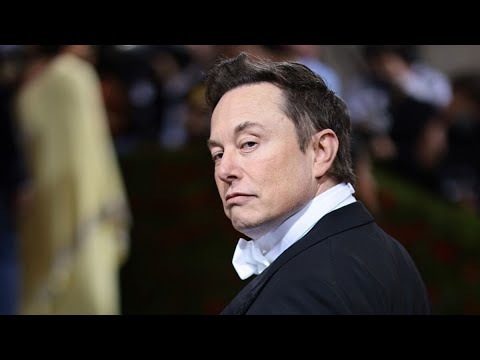
    Elon Musk has made a surprising request to a California court, asking to withdraw a legal case against OpenAI and its CEO, Sam Altman.

    The lawsuit accused them of straying from the original mission of developing AI for the betterment of humanity.

    In the filing submitted by Musk’s legal team, there was no explanation provided for the sudden decision to drop the months-old case.

    This request came just a day before the court was scheduled to address OpenAI’s motion to dismiss the case.

    BBC News reached out to Musk’s lawyer and OpenAI for comment regarding the withdrawal of the case.

    The latest filing asked for the dismissal “without prejudice,” leaving open the possibility for Musk to revive the case in the future.

    The lawsuit, filed by Musk at the end of February, alleged that OpenAI had shifted its focus from altruistic goals to profit-making ventures.

    OpenAI countered Musk’s claims, pointing out that he had previously supported the idea of a for-profit structure and had even proposed a merger with his company, Tesla.

    Tensions escalated further after Apple announced a partnership with OpenAI to enhance its Siri voice assistant and operating systems with OpenAI’s ChatGPT chatbot.

    Musk expressed his disapproval of the collaboration through several posts on his social media platform, X (formerly known as Twitter).

    One of the posts ended with the words: “Apple has no clue what’s actually going on once they hand your data over to OpenAI. They’re selling you down the river.”

    Despite the controversy surrounding the partnership, investors appeared to react positively to the news, leading to Apple’s stock market value reaching a record high of over $3 trillion.

    Elon Musk ventured into the AI domain by founding his own company, xAI, in July 2023, with the stated goal of “understanding reality.”

    In November of the same year, xAI introduced Grok, a chatbot infused with “a touch of humor,” aiming to compete with established platforms like ChatGPT.

  • I was shocked, angered by AI chatbot imitation- Scarlett Johansson

    I was shocked, angered by AI chatbot imitation- Scarlett Johansson

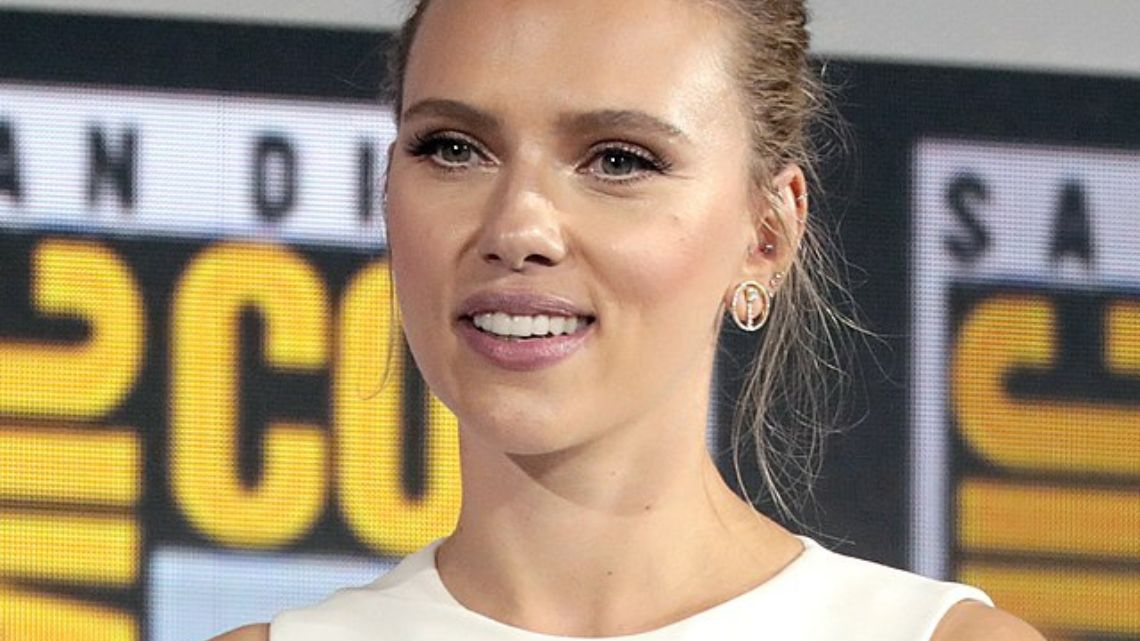
    American actress Scarlett Johansson has voiced her shock and anger after OpenAI unveiled a chatbot featuring a voice she found remarkably similar to her own.

    Johansson revealed that she had previously declined an offer by OpenAI to lend her voice to the new chatbot, named Sky, which reads text aloud to users.

    However, upon the bot’s launch, comparisons were drawn between its tone and Johansson’s performance as the AI in the film Her from 2013.

    OpenAI responded by stating they would remove the voice, denying any intentional imitation of the star.

    Yet, Johansson accused the company and its founder, Sam Altman, of purposefully mimicking her voice.

    “When I heard the released demo, I was shocked, angered and in disbelief that Mr Altman would pursue a voice that sounded so eerily similar to mine.

    “Mr Altman even insinuated that the similarity was intentional, tweeting a single word ‘her’ – a reference to the film in which I voiced a chat system, Samantha, who forms an intimate relationship with a human.”Johansson stated, referring to her reaction upon hearing the chatbot’s demo.

    She disclosed that Altman had con
    tacted her in September to voice the system, claiming her voice would bridge the gap between tech and creativity.
    “[Mr Altman] told me that he felt that by my voicing the system, I could bridge the gap between tech companies and creatives and help consumers to feel comfortable with the seismic shift concerning humans and AI,” Johansson wrote.

    “He said he felt that my voice would be comforting to people.”

    Despite initially declining due to personal reasons, Altman urged her to reconsider just before the chatbot’s release.

    Johansson’s legal team has sent letters to OpenAI seeking clarity on how the voice was created.

    “In a time when we are all grappling with deepfakes and the protection of our own likeness, our own work, our own identities, I believe these are questions that deserve absolute clarity,” she wrote.

    This controversy arises amidst other legal challenges against OpenAI, including allegations of using copyrighted material to train its AI models.

    OpenAI, while acknowledging the concerns, maintains that the Sky voice was not meant to imitate a celebrity’s voice deliberately.

    They are “working to pause” the voice while addressing the questions raised. Johansson’s allegations await a response from OpenAI as the situation unfolds.

  • ChatGPT set to alter voice following comparison to Johansson

    ChatGPT set to alter voice following comparison to Johansson

    OpenAI has announced plans to remove one of the voices used by ChatGPT after users likened it to Hollywood actress Scarlett Johansson.

    The similarity was noticed in the chatbot’s “Sky” voice option, which reads responses aloud to users, during the presentation of features for its new model.

    The conversational upgrade to its AI chatbot drew comparisons to the 2013 film Her, starring the actress.

    OpenAI stated that the voices offered in ChatGPT’s voice mode were meticulously chosen through a comprehensive process lasting five months.

    This process involved collaboration with professional voice actors, talent agencies, casting directors, and industry advisors.

    The film Her, set in the near-future, features Joaquin Phoenix falling in love with his phone’s operating system, voiced by Scarlett Johansson.

    Director Spike Jonze emphasized that the film is not solely about technology or software, but rather about the quest for love and intimacy.

    Addressing the comparisons, OpenAI clarified on Monday that the voice is not meant to be an “imitation” of the star.

    “We believe that AI voices should not deliberately mimic a celebrity’s distinctive voice,” it said in a blog post.

    it is “working to pause” the voice while it addresses questions about how it was chosen in a post on X, formerly Twitter.

    What is AI, how does it work and what can it be used for?


    Despite this, when OpenAI showed off its new model GPT-4o on 13 May, boss Sam Altman referenced the name of the film on X.

    During the demonstration of its more human-like conversational abilities, the chatbot told an OpenAI staff member: “Wow, that’s quite the outfit you’ve got on”.

    It also said “stop it, you’re making me blush” when complimented.

    But amid memes and posts about ChatGPT – featuring gifs of the film’s lonely protagonist Theodore Twombly – were also critical takes on the voice.

    “This is giving such “female character as written by men” vibes,” said one person on X.

    “Why is she so obsequious and flirty?”

    OpenAI’s blog post detailed that the five voices integrated into its chatbot were sourced from collaborative efforts with voice actors.

    The desired traits of being multilingual and possessing an “approachable” or “charismatic” tone, evoking a timeless quality, were focal points in crafting these personalities.

    Before finalizing the voices, OpenAI individually engaged with selected actors, discussing the company’s vision for human-AI interactions and the technology’s capabilities, limitations, and risks.

    While the advanced voice features showcased at the spring update event have not yet been implemented for ChatGPT users, OpenAI plans to offer them to subscribers seeking faster responses and priority access to new features in the forthcoming weeks.

  • New York Times sues OpenAI, Microsoft over copyright infringement claims in ChatGPT training

    New York Times sues OpenAI, Microsoft over copyright infringement claims in ChatGPT training

    The New York Times, a prominent US news organization, has filed a lawsuit against OpenAI, the owner of ChatGPT, and Microsoft, alleging copyright infringement in training the language model.

    The lawsuit contends that ChatGPT, along with other large language models (LLMs), unlawfully used “millions” of articles from the New York Times without permission, resulting in damages amounting to “billions of dollars.”

    The lawsuit argues that ChatGPT, by incorporating New York Times content without authorization, is now a direct competitor to the newspaper as a reliable source of information.

    It claims that the language model sometimes generates “verbatim excerpts” from New York Times articles when queried about current events, offering access to subscription-based content for free.

    Additionally, the lawsuit highlights instances where the Bing search engine, powered by ChatGPT, produced results sourced from a New York Times-owned website without proper attribution or referral links. This, according to the New York Times, not only deprives the newspaper of subscription revenue but also impacts advertising revenue from website visits.

    The legal action, initiated in a Manhattan federal court on Wednesday, alleges that attempts for an “amicable resolution” were made in April when the New York Times approached Microsoft and OpenAI. The BBC has reached out to OpenAI and Microsoft for comments on the matter.

    Multiple lawsuits

    It comes a month after a period of chaos at OpenAI where co-founder and CEO Sam Altman was sacked – and then rehired – over the course of a few days.

    His sacking shocked industry insiders and led to staff threatening mass resignations unless he was reinstated.

    But as well as the internal issues, the firm is now facing multiple lawsuits filed in 2023.

    In September a similar copyright infringement case was brought by a group of US authors including Game of Thrones novelist George RR Martin and John Grisham.

    That followed legal action brought by comedian Sarah Silverman in July, as well as an open letter signed by authors Margaret Atwood and Philip Pullman that same month calling for AI companies to compensate them for using their work.

    And OpenAI is also facing a lawsuit alongside Microsoft – and programming site GitHub – from a group of computing experts who argue their code was used without their permission to train an AI called Copilot.

    As well as these actions, there have been many cases brought against developers of so-called generative AI – that is, artificial intelligence that can create media based on text prompts – with artists suing text-to-image generators Stability AI and Midjourney in January, claiming they only function by being trained on copyrighted artwork.
    None of these lawsuits have yet been resolved.

  • Sacked OpenAI CEO Altman gets a new job at Microsoft

    Sacked OpenAI CEO Altman gets a new job at Microsoft

    In a surprising move, Microsoft Corporation announced the recruitment of Sam Altman, the co-founder and former CEO of OpenAI, just three days after Altman’s departure from OpenAI.

    Chairman and CEO of Microsoft, Satya Nadella, has revealed on X that Altman, along with Greg Brockman and other undisclosed colleagues, will lead a new advanced AI research team at Microsoft.

    Nadella expressed anticipation of providing the necessary resources for their success.

    Nadella wrote: “We remain committed to our partnership with OpenAI and have confidence in our product roadmap, our ability to continue to innovate with everything we announced at Microsoft Ignite, and in continuing to support our customers and partners. We look forward to getting to know Emmett Shear and OAI’s new leadership team and working with them. And we’re extremely excited to share the news that Sam Altman and Greg Brockman, together with colleagues, will be joining Microsoft to lead a new advanced AI research team. We look forward to moving quickly to provide them with the resources needed for their success.

    “I’m super excited to have you join as CEO of this new group, Sam, setting a new pace for innovation. We’ve learned a lot over the years about how to give founders and innovators space to build independent identities and cultures within Microsoft, including GitHub, Mojang Studios, and LinkedIn, and I’m looking forward to having you do the same.”

    Sam Altman, co-founder and former CEO of OpenAI, was dismissed from his position by the board of the company on Friday.

    In response, Chief Technology Officer Mira Murati was appointed as the interim CEO to lead OpenAI while a search is underway to identify a permanent successor.

    The board’s decision to remove Altman was based on a review process that found he was not consistently candid in his communications with the board, impeding its ability to fulfill its responsibilities, leading to a loss of confidence in his leadership.

    Murati, having been part of OpenAI’s leadership team for five years, is deemed uniquely qualified for the interim role.

    In a statement, the board of directors said: “OpenAI was deliberately structured to advance our mission: to ensure that artificial general intelligence benefits all humanity. The board remains fully committed to serving this mission. We are grateful for Sam’s many contributions to the founding and growth of OpenAI. At the same time, we believe new leadership is necessary as we move forward. As the leader of the company’s research, product, and safety functions, Mira is exceptionally qualified to step into the role of interim CEO. We have the utmost confidence in her ability to lead OpenAI during this transition period.”

    As part of the transition, Greg Brockman, who served as chairman of the board at OpenAI, will step down from that role and continue in his position at the company, reporting to the CEO.

    OpenAI, originally founded as a non-profit in 2015 with the mission of ensuring that artificial general intelligence benefits humanity, underwent a restructuring in 2019 to enable it to raise capital while preserving its non-profit mission, governance, and oversight.

    The board, which includes independent directors Adam D’Angelo, Tasha McCauley, and Helen Toner, maintains its responsibility to advance OpenAI’s mission and uphold the principles of its Charter.