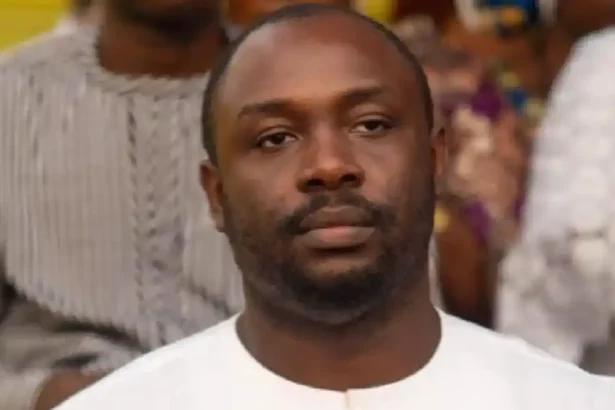
Chabi Yayi, son of former Beninese president and opposition leader Thomas Boni Yayi, has been taken into custody in the aftermath of a failed coup in Benin.
According to a relative who spoke to AFP, Chabi Yayi was arrested in the early hours on Sunday at his residence with no reasons provided.
“At this time, we don’t know what he is accused of,” one relative told AFP.
“We don’t know if it is linked to the events of last Sunday,” said another close friend, a member of the Democrats party, the main opposition party, which Yahi heads.
Former Beninese president Thomas Boni Yayi condemned the failed coup in a video statement released two days after the attempt.
Since the December 7 putsch, authorities have carried out multiple arrests.
Those detained include alleged participants, notably former Defence Minister and opposition leader Candide Azannai.
Azannai has been held in police custody on charges of “conspiracy against the authority of the State and incitement to rebellion.”
If you want, I can combine this with the Chabi Yayi story into a concise TV broadcast script. Do you want me to do that?
Azannai was placed in police custody for “conspiracy against the authority of the State and incitement to rebellion”.
Stellio Gilles Robert Capo Chichi, widely known as Kemi Seba, 44, leads the NGO Pan-Africanist Emergency and is recognized for his outspoken opposition to France and African governments aligned with Paris.
Seba commands a following of 1.5 million on social media. A dual Franco-Beninese national, he was stripped of his French citizenship in 2024. He openly supports military juntas in the Sahel region that oppose Paris and maintain close ties with Russia.
He currently travels using a passport issued by Niger’s military government, a neighbouring country to Benin.
Meanwhile, several individuals involved in the failed coup, including its alleged leader Lieutenant Colonel Pascal Tigri, are still evading arrest.
The speed with which the coup was contained contrasts with other countries where such attempts have succeeded or plunged nations into prolonged political uncertainty. For example, in Niger, a successful military coup took place on July 26, 2023, when the presidential guard detained President Mohamed Bazoum and declared the formation of a new military junta.
General Abdourahamane Tchiani proclaimed himself leader, and Niger has since remained under junta rule. That takeover was widely condemned by regional and international actors but has nonetheless endured, leading neighbouring states to revise diplomatic and security strategies.
Similarly, Burkina Faso has experienced a series of coups in recent years. A military faction led by Captain Ibrahim Traoré assumed power in 2022, ousting his predecessor in yet another example of rapid leadership changes through force. Further reports in 2025 suggested ongoing internal pressure and additional attempted putsch plots against Traoré’s government, underscoring the volatility within that country’s political landscape.
Mali has also been ruled by military juntas following coups in 2020 and 2021, with transitional authorities extending their hold on power through constitutional changes that have delayed a return to civilian governance. In June 2025, Mali’s military government adopted a bill granting its leader, General Assimi Goïta, an additional renewable five‑year mandate, a move that drew criticism from opposition figures and raised concerns about democratic backsliding.
These coups and prolonged military regimes have had significant regional implications. In January 2025, Mali, Burkina Faso and Niger formally withdrew from the Economic Community of West African States (ECOWAS), a regional bloc designed to promote economic cooperation and political stability. The three junta‑led nations formed an alternative alliance known as the Alliance of Sahel States (AES), deepening divisions within West Africa and complicating collective responses to security threats.
The trend is not unique to the Sahel. Guinea and Guinea‑Bissau have also experienced military takeovers, with the latter’s coup occurring as recently as November 26, 2025. These events have contributed to a broader sense of instability across parts of West and Central Africa, prompting strong condemnations from regional bodies such as ECOWAS and the African Union. These organisations have reiterated their “zero tolerance” stance toward unconstitutional changes of government, emphasising the need to uphold democratic norms and constitutional order
International actors, including the United Nations and the European Union, have also condemned the Benin coup attempt and called on all parties to respect constitutional processes. The UN Special Representative for West Africa expressed concern over threats to stability and reiterated support for the Beninese government’s efforts to protect democracy and peace.
The causes behind these coups and attempts are complex and varied. In some cases, it is a reaction to perceived authoritarianism or political exclusion, as critics accused President Talon in Benin of restricting political competition ahead of elections.
In others, security challenges especially the spread of jihadist violence across the Sahel have exacerbated discontent within military ranks and among the broader population. In Niger, for instance, the coup leaders cited insecurity and government shortcomings in addressing insurgent threats as justification for their actions.
Economic hardship, weakened state institutions, and shifting geopolitical influences, including the rise of external partners offering alternative security and economic alliances, have also played roles. Many junta‑led states have distanced themselves from Western partners and embraced new alliances, often with nations that challenge traditional Western influence in the region.
The attempted coup in Benin, though quickly thwarted, highlights both the resilience of constitutional order in some contexts and the fragility of democratic governance in others.
It serves as a reminder that political stability in West Africa remains precarious, and that preventing future coups will require not only strong security responses but also inclusive political dialogue, economic development, and renewed commitment to democratic principles.
As investigations continue in Benin and authorities pursue those behind the mutiny, regional leaders and international partners will likely intensify efforts to address the root causes driving military takeovers and promote sustainable governance throughout the continent.