Tag: Osagyefo Dr. Kwame Nkrumah

  • Flashback: Body parts flying everywhere – Nkrumah’s personal photographer recounts bomb attacks

    Flashback: Body parts flying everywhere – Nkrumah’s personal photographer recounts bomb attacks

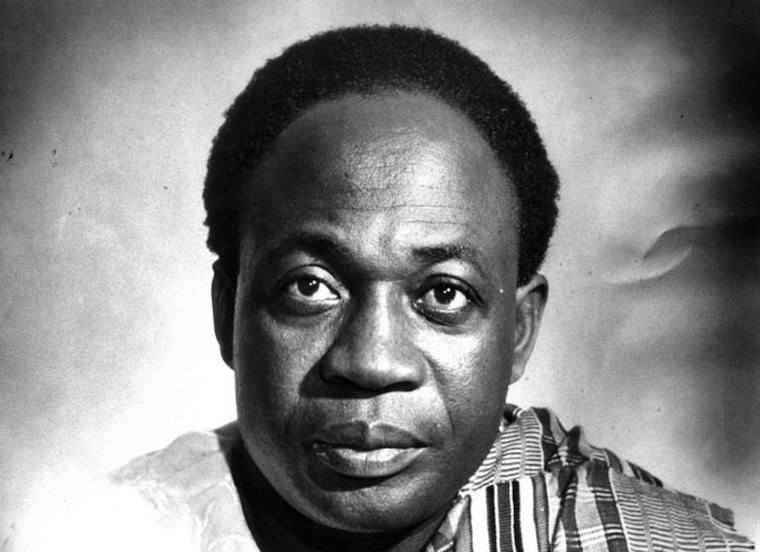
    Recent discussions about the legacy of Ghana’s first President, Osagyefo Dr. Kwame Nkrumah, have sparked considerable debate among Ghanaians regarding his role as the nation’s founder.

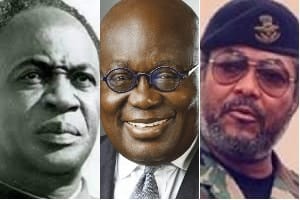
    The controversy intensified after key figures in the ruling New Patriotic Party (NPP), including President Nana Addo Dankwa Akufo-Addo, questioned Nkrumah’s recognition as Ghana’s sole founding figure.

    The division over Nkrumah’s legacy isn’t new—it dates back to his lifetime, during which he faced not only verbal criticism but also numerous physical threats.

    Nkrumah is often cited as the Ghanaian leader who survived the most assassination attempts. In his book, Dark Days in Ghana, Nkrumah himself mentioned surviving at least six such attempts.

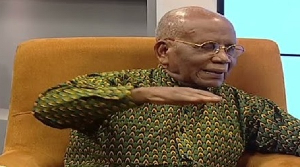
    A throwback of interview of Dr. Chris Tsui Hesse, Nkrumah’s former personal photographer, with Onua TV’s Captain Smart on the “Maakye” morning show around last year, shows how the photographer recounted four bomb attacks that the former president narrowly escaped.

    He highlighted the first attack, which occurred on August 1, 1962, in Kulungugu, a town in the Upper East Region.

    While returning to Ghana from Burkina Faso, Nkrumah stopped his convoy to greet students by the roadside. Tragically, a bomb exploded, killing many of the children.

    Nkrumah’s life was spared thanks to the quick actions of his aide-de-camp, Captain Buckman.

    “When we got to Kulungugu, we knew that there was no stopping there, but Nkrumah saw the kids and stopped. And because of the dust, there were distances between the vehicles.

    So, when he stopped, he sat in the car and waited. So, when I got there, he was there. So, I parked behind him, and he gave me the sign that I should film this.

    So, I prepared my camera and went out. And then he came out and was going towards where the formation was. And then Captain Buckman was then the ADC, and he was following him (Nkrumah) with the security people.

    “… I was in the middle, and the action was in the background. The school kids were performing something beautiful. And on my right side, Nkrumah was moving towards the kids. On my left side, Adamafio and the ministers were moving. I was in the centre.

    So, it was. I had this appetite for not missing. It was so beautiful. I was just standing there to capture because my lens was capturing everything in detail. Then, immediately before Nkrumah passed and the ministers passed, Captain Buckman booted him (Nkrumah) down and put his body on him,” he narrated.

    Dr. Tsui Hesse recounted that just as Captain Buckman shielded Nkrumah, a bomb detonated, sending body parts flying. Despite the explosion, Ghana’s first president sustained only minor injuries and was quickly taken to a health facility in Bawku for treatment.

    Dr. Hesse also described a second bomb attack at the Flagstaff House, the then-presidential residence, where an explosion occurred during a cultural performance for Nkrumah, resulting in numerous casualties.

    The third incident he mentioned took place at Accra Sports Stadium, once again during a cultural performance, where a bomb blast claimed several lives.

    The fourth attack, according to Dr. Hesse, happened at Lucas House, near the UTC area, where a staff member of the Information Services Department lost their life in the explosion.

  • This is how Nkrumah’s 80-year-old blind mother was forced to testify that he was not a Ghanaian

    This is how Nkrumah’s 80-year-old blind mother was forced to testify that he was not a Ghanaian

    The first president of Ghana, Osagyefo Dr. Kwame Nkrumah recounts the severe hardships his family faced following the coup by the National Liberation Council on February 24, 1966, in his book Dark Days in Ghana.

    Nkrumah, who spent his post-coup years in exile, described the intense persecution his family endured under the new military regime. He highlighted the plight of his 80-year-old, visually impaired mother, who was forcibly removed from the Flagstaff House under harsh conditions.

    The regime pressured Nkrumah’s mother to appear before a Commission of Inquiry to falsely declare that she was not his biological mother and that he was not Ghanaian. Despite the coercion, Nkrumah expressed his pride in his mother’s unwavering dignity and refusal to succumb to the regime’s attempts at historical distortion.

    “My mother, 80 years old and almost blind, who was staying at Flagstaff House, was forcibly ejected and told to go ‘where you belong.’ I understand some friends took her to Nkroful where I was born. Later, the actual house in which I was born was burnt down on ‘N.L.C.’ orders.

    “My mother was forced to appear before a ‘commission of enquiry’ with the idea of making her admit that I was not her son and indeed was not a Ghanaian at all. I am proud to know that she resolutely refused to say anything of the sort and conducted herself with the utmost dignity,” Nkrumah wrote on page 25 of his book.

    Nkrumah also recounted how his wife, Fathia Nkrumah, and their children were expelled from their home and sought refuge at the Egyptian Embassy. Soldiers ransacked their residence, seizing personal belongings, including rare books and manuscripts. Although his family was not physically harmed, they were forced to leave without taking any possessions.

    “In the six-roomed two-storey house where I lived with my family, troops were allowed to run riot, seizing clothes and other intimate personal possessions including rare old books and manuscripts.

    “My wife and children, although not physically harmed, were not permitted to take a single thing with them when they were turned out of the house and forced to take refuge in the Egyptian Embassy,” Nkrumah recalled.

    Nkrumah’s account vividly illustrates the personal and familial sacrifices he and his loved ones made during a tumultuous period in Ghana’s history.

  • Nkrumah Memorial Park a place for all – Acting Director

    Nkrumah Memorial Park a place for all – Acting Director

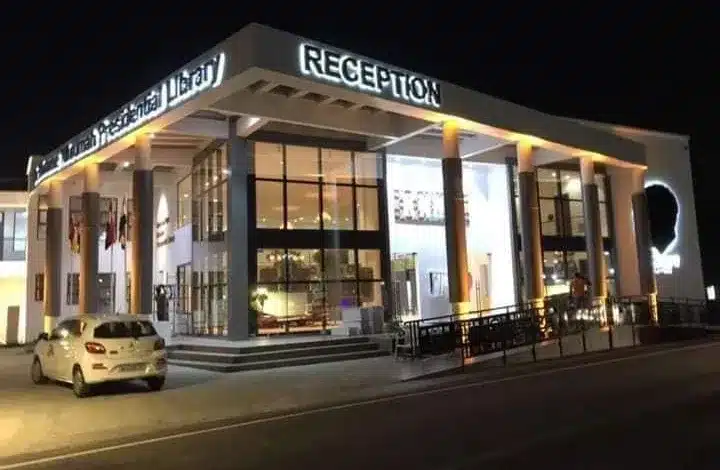
    The acting director of the recently renovated Kwame Nkrumah Memorial Park, Edward Quao, has praised the establishment as unique with a range of items for tourists to enjoy visiting.

    He listed the many features the building can brag of, including a freedom hall, a picnic place for families, and an amphitheater for public events.

    An array of Ghanaians applauded the $3.5 million makeover, which they saw as a suitable tribute to the country’s first president, Osagyefo Dr. Kwame Nkrumah.

    Given that the new structure appears larger, some onlookers believe that the park has been extended.

    “We also have a freedom hall where we have images of Dr. Kwame Nkrumah in a decent mood when he was smiling, a musical fountain-the first of its kind in Ghana, whereby each chime is structured into the system, a flow of the fountain, according to the rhythm being played. We also have a new well-made picnic area for our guests. It’s a new place, very exciting”.

    He said that during the two years of rehabilitation, no new land parcel was developed.

    “We didn’t expand the place, it’s the same area we had. We didn’t encroach on any land. What we had was what we improved on. It’s the same old land we had the new facility you have now. Nothing in terms of space has changed”.

    Edward Quao discussed several initiatives put in place to increase park visitors.

    “With local market, our target mostly is the schools, so we have a team that is going to work around the schools to promote the Park. And also use our social media handles a lot because we have a lot of youth who go on social media. And online ticketing was established for our foreigners.”

    “And we will collaborate more with event organizers. We have an additional gallery where you can watch his videos and listen to his audio, and his famous and favourite quotes. Pictures can also be taken at the rooftop of the Park,” Edward Quao, the Acting Director of the Kwame Nkrumah Memorial Park explained.

  • Akufo-Addo became president without using the ‘mysterious spiritual path’ laid down by Nkrumah – Adom-Otchere

    Akufo-Addo became president without using the ‘mysterious spiritual path’ laid down by Nkrumah – Adom-Otchere

    The host of Good Evening Ghana on Metro TV, Paul Adom-Otchere has said that President Akufo-Addo is the first to eschew from the purportedly predetermined spiritual route put forth by Osagyefo Dr. Kwame Nkrumah, the country’s first leader.

    Speaking on the Tuesday, April 25, 2023, edition of his program, the journalist explained that during the era of Kwame Nkrumah, he laid down some spiritual processes that all presidents after him were supposed to follow, and the failure to do so meant that they would never get to the end of their tenures.

    He explained that it is this path that the likes of Edward Akufo-Addo, Dr. Kofi Abrefa Busia, and Dr. Hilla Limann did not follow in, that led to their overthrow as political leaders of Ghana.

    “You may not believe it, but it is true. This is Osagyefo the president. Now, since Osagyefo the president left, and when he died, it is believed that he determined how every other person should become president of Ghana. It’s a spiritual matter so you’d have to believe it or not; it’s not verifiable.

    “Osagyefo had determined that for you to become president of Ghana, he had determined a certain spiritual path. This story I am telling you has quite a bit to do with our good friend who died, Jake Obetsebi-Lamptey… for the presidents that came after him… Edward Akufo-Addo and Prime Minister Busia, together they formed the executive of the second republic, both of them determined that they would not follow the path, or they probably didn’t even know that Nkrumah had determined some path.

    “For those who didn’t know that Nkrumah had determined a path for you to become a president of Ghana, they were overthrown. Edward Akufo-Addo and Prime Minister Busia were overthrown because they didn’t know, or didn’t use the path that Nkrumah had determined…

    “Then comes Dr. Limann who either did not know or didn’t go along the path to be president of Ghana, so he was overthrown. Then comes the famous JJ. JJ started by a coup d’état and later transferred to a constitutional rule. When he was about to transfer to constitutional rule, he was told that, ‘chief, for you to be president of Ghana, like Nkrumah was elected, you have to go through a certain spiritual path, and also do certain things,’” he explained.

    Paul Adom-Otchere continued his narration by saying that while Jerry John Rawlings started as a military ruler, he also agreed to follow in this strange, mysterious route before he was able to fully complete his democratic two-term political tenure.

    He stated some of the things that, for instance, JJ Rawlings had to do that are evidences of this mystery.

    He added that the coming of John Agyekum Kufuor as president was also through the same path.

    “Flt. Lt. Jerry John Rawlings agreed. That is the Kwame Nkrumah Mausoleum at the old Polo Grounds; that was his creation. It’s related to this story I’m telling you… JJ putting up the Nkrumah Mausoleum to honour Dr. Kwame Nkrumah at the old Polo Grounds, bringing his body from Nkroful to Accra, is related to this story. So, JJ did that for two terms. Then comes John Agyekum Kufuor; he was told that if he did not go through this path to be president of Ghana, ‘you will never be president of Ghana.’ Well, he obeyed.

    “So, during Ghana at 50, billboards were put up of Nkrumah and Kufuor sitting in a chair… laughing… and then the renaming of the Kwame Nkrumah University… President Kufuor restored the Nkrumah name into that university… because if you don’t do something to enhance the Nkrumah name, forget it, if you win the election, they will overthrow you,” he added.

    According to Paul, when President John Evans Atta-Mills also came into office, he did the same things, just as John Dramani Mahama.

    He explained, for instance, that John Mahama restored the Kwame Nkrumah Circle with the statue of Nkrumah, as a way of enhancing the name of the country’s first president, as proof of this spiritual mystery.

    However, the veteran journalist stated that during Nana Addo Dankwa Akufo-Addo’s time, for the first two times he tried to become president (in 2008, 2012), he vehemently fought this spiritual path and paid the price for it.

    “Fast-forward, Nana Addo, as he was then called, was told that to become president of Ghana, you have to pass here, and you have to do something, and he said no. he said he would never do it, and it’s not because ‘I am a Christian or religious; I won’t do it.’ And that’s why I said Obetsebi-Lamptey is in the mix.

    “So, in 2008, when he lost the election, he was told that, ‘Chief, you see why you lost the election? You lost this election because you didn’t do the thing.’ He must have given it a thought, I think. Then comes 2012 and he said he won’t do it, but they said if you don’t do it, you can’t become president of Ghana, but he still insisted. 2012 came and he lost.

    “So, after the election, they went back to him… so, he gave it a thought and so he called some spiritual people. And this story I’m telling you, Ken Ofori-Atta is very involved in this story, because he went to South Africa, met some guy who was talking to him about why it is difficult for his cousin to be president, and this South African person said there is something you people need to do. And Ken said I know; we’ve been told, but it’s difficult for us – that’s not our faith; that’s not our worship, we can’t.,” he explained.

    Paul Adom-Otchere further stated that eventually, it had to take the intervention of some religious leaders in Ghana to break this spiritual aura around the country before Akufo-Addo could rule without any challenges.

    He also claimed that the confusion around the change of date for the national elections from December 7 to November 7 in 2016 forms part of this.

    He added that until that spiritual bondage was broken, Akufo-Addo would not have been able to successfully run a two-term presidency in Ghana.

    The journalist added that it is for this reason that he supports the government of Nana Akufo-Addo.

    “So, Ken came back and organised spiritual people… and said can we go and overturn this thing? Well, about 12 or 16 of them listened and said ok, Mr President, where is the thing? Eh said the thing here; I’ve been there before… they organised cars and went to look at it… They said what we need to do is a prayer chain – a very serious prayer chain… and we have to start now. They start and discover a lot more in the narrative, so they need to move from that spot to other parts of the country.

    “They came and told the president that they were on it and that they could release Ghana from these shackles, however, we need more time. However, we have been told that you and your party want the election on November 7 – this 2016…

    “So, Akufo-Addo is the only president who has ascended the throne not going through that and that is why I stand with him. He’s the only one president who is going to do a two-term, who has not gone through the path, that is why you see the things that are happening happening.

    “The furore against his candidature at the beginning, it came out of the noise of evil; it’s out of the noise of evil… because the spirits knew that he would not obey that path,” he said.

  • I nearly got Nkrumah ‘killed’- Woman recounts

    I nearly got Nkrumah ‘killed’- Woman recounts

    A 13-year-old girl had a terrible experience during the celebration of Ghana’s 7th Independence Day in 1964.

    The young Elizabeth Asantewaa was delighted to be chosen among many schoolchildren to give Ghana’s first president, Osagyefo Dr. Kwame Nkrumah, a bouquet. Little did she know, however, that the day that was to be one of her best would bring her perilously close to death.

    Speaking in a 2021 video, she told Citi TV that till date, she has no idea where the explosion came from; whether it was in what she was holding, or from any of the students around her, but all she remembers is that the explosion sounded like knockouts.

    When it happened, she said she was thrown up into the air and when she hit the ground, she was in extreme pain and could only call out to her mother at that moment.

    She also recalls how she saw the lifeless bodies of several of her other schoolmates lined up at the Accra Sports Stadium, where the ceremony was taking place.

    “The moment he arrived, they played the national anthem and we were asked to march. Let’s assume where the gentleman is sitting, and we were also coming from this side. So, when we got there, we stretched our hands to greet him.

    “I was holding something that looked like flowers and I presented it to him… Nkrumah was holding a stick while standing on the platform with the Big Six. He looked up and shook his head and he said they should leave. The man didn’t say anything and they went.

    “If I had succeeded in shaking him, he would have died. I saved his life… I don’t know where the bomb was. Besides, the students were many. The man got down from the stage and didn’t utter a word: I think Nkrumah had a third eye.

    “When he left, it wasn’t even ten minutes after and we heard series of explosions where we were standing. It took me up in the air and brought me down. I was badly wounded, with blood running all over my head. A hole was created in my calf with bullets and it was really hurting. I shouted and asked where my mother was… I was burned to the point where you could see my bones,” she narrated.

    Elizabeth Asantewaa continued that it was taking forever for an ambulance to get to her and so one of the teachers, who had a car, opted for his car to be used to convey her to the 37 Military Hospital.

    At the hospital, and in an attempt to save her life, her left leg had to be amputated.

    She also recalled how, surprisingly, she was told that Kwame Nkrumah had come to the hospital to visit her.

    She added, in another interview on another channel, that the visit was a very emotional one, with Nkrumah crying by her bedside.

    “I was at the hospital and in real pain when I was told that the president was there to visit me.

    “I couldn’t believe it, but it was true; I saw him by my bedside and in our conversation, he started crying and I saw tears in his eyes,” she narrated.

    Although Kwame Nkrumah promised to help her through life, the overthrow of his government in 1966 cut that dream short, and since then, Elizabeth Asantewaa said she has struggled to get proper attention from state authorities.

  • Ghana was forewarned by Nkrumah against using “begging bowls”- Buah

    Ghana was forewarned by Nkrumah against using “begging bowls”- Buah

    The Deputy Minority leader, Hon. Emmanuel Armah-Kofi Buah, in an interaction with his colleagues in parliament alleged that Ghana’s first president, Osagyefo Dr. Kwame Nkrumah, had warned the West African country against the “begging bowl”.

    According to him, Dr Nkrumah predicted that if the nation turned a blind eye to his warning, it would one day collapse.

    Alas, 57 years down the line after his overthrow, Dr. Nkrumah’s prediction has come to pass with Ghana now classified as a high-risk debt distress country which needed an external help to salvage it from crashing.

    “The Great Osagyefo Dr. Kwame Nkrumah predicted that the begging bowl will only lead us into indebtedness-well we now know”, the deputy Minority Leader noted while eulogizing Dr. Kwame Nkrumah on the 57th anniversary of his overthrow on February 24, 1966.

    A begging bowl is a term used in reference to an earnest appeal for financial help. The Collins Dictionary also explains that, “if a country or organization approaches other countries or organizations with a begging bowl, it asks them for money”.

    To Hon. Buah, if Dr. Nkrumah’s predecessors had heeded to the advice of the former Ghanaian leader and also continued to build on his vision or policies and initiatives, Ghana and the rest of the African continent would have been a better place to live in.

    As at September 2022, Ghana’s public debt was GHS67.4billion. Out of this amount, 42% was domestic debt while 58% was external debt, according to records by the Bank of Ghana.

    This represents more than 100% of the country’s gross domestic product (GDP). The Finance Minister, Ken Ofori-Atta is hoping to bring the ratio down to 55% by 2028 should the country get the external support that it is seeking for.

    Ghana is currently before the International Monetary Fund (IMF) seeking for a three-year bailout program worth US$3billion.

    To Hon. Buah who is also the NDC MP for Ellembelle, the hard lesson Ghanaians must learn from the Osagyefo Dr. Nkrumah’s overthrow is “never to allow themselves to be deceived into discarding great leaders”, stressing that without the leadership of Dr. Nkrumah, Ghana lost its vision as a country and has since been roaming around for 57 years for the answers to her developmental agenda.

    “We never appreciate the value of water, until the well runs dry”, he quoted the American writer, scientist and statesman, Benjamin Franklin, in support of his advice to Ghanaians.

    He said it was through the leadership of Osagyefo Dr. Nkrumah that the Tema Harbour and Tema Motorway were constructed. That notwithstanding, it was through the policies and initiatives of the former Ghanaian leader that the Ghanaian currency, the Ghanaian Industrial Holdings Corporation (GIHOC), and the Volta River Project were all established.

  • Details of the Ghana-USA investor pact Dr. Nkrumah signed in 1958 to allow the flow of dollars

    The disappointing performance of the US dollar against the Ghana cedi, the country’s currency, is now a hot topic in Ghana.

    GhanaWeb has stumbled upon an old newspaper article that describes how the nation’s first president and prime minister, Osagyefo Dr. Kwame Nkrumah, also moved for dollars to be invested in Ghana. This is in response to calls for more foreign currency to be pushed into the system to help with the balance.

    The newspaper from October 1, 1958, with the headline “Ghana and the U.S. Sign Investors’ Pact…
    According to the Daily Graphic account, Peter Rutter, the Charge d’Affaires of the American Embassy in Ghana, met with Nkrumah to “promote the flow of funds.”

    “An Investment Guarantee Agreement Programme designed to encourage private American investment in Ghana was signed between the governments of the United States and Ghana at Government House, Osu, yesterday.

    “Premier Kwame Nkrumah and Mr. Peter Rutter, Charge d’Affaires of the American Embassy in Ghana, signed the agreement on behalf of their governments,” it read in part.

    Content of the signed document:

    The newspaper report also stated the full details of what was contained in the document that the two officials signed on behalf of their countries.

    It stated it as:

    “Under the agreement, private American investment abroad may be guaranteed by the U.S. government against possible losses due to conversions to dollars, expropriation or confiscation and war damages. “The agreement is intended to get both the United States of America and Ghana governments to agree on procedures regarding local currency and other claims which may be invoked by American investors under the investment guarantee programme.”

    More investment into Ghana:

    The report continued that the agreement also meant that investors could begin investing in the country with as low as $10,000.

    It continued that since it was a pact to ensure more investments came into the economy, it was not applicable to existing businesses at the time.

    “A U.S. official explained yesterday that guarantee contratcs had been written for amounts as low as 10,000 dollars. The largest guarantee dollars held by an American oil company on an oil refinery in Italy.

    “The official said that since the purpose of the programme was to encourage additional American investment in Ghana, it was not applicable to existing investments,” it added.

    The Interbank forex rates from the Bank of Ghana today, November 21, 2022, have shown that the Ghana Cedi is trading against the dollar at a buying price of 13.0990 and a selling price of 13.1122.

    As compared to Friday’s trading of a buying price of 13.0991 and a selling price of 13.1123. At a forex bureau in Accra, the dollar is being bought at a rate of 14.50 and sold at a rate of 14.90.

    See the full newspaper clipping below for the full story:

  • Revive TOR now instead of looking for cheaper fuel alternatives – IES to government

    President Nana Akufo-Addo’s recent remark that the government is exploring for cheaper alternative sources of petroleum products to alleviate the cost burden on Ghanaians has been dubbed “startling” by the Institute for Energy Security (IES).

    “I realize that the rising expense of living is the number one issue for all of us,” the president stated in a recent national address on the economic situation.
    It is fueled by rapidly rising gas prices, which are brought on by both our depreciating currency and increasing global crude oil prices.
    I am aware that this is placing families and companies under unacceptable stress.
    He told Ghanaians in a national speech on Sunday night, “I know that individuals are being forced to make decisions that they shouldn’t have to, and I know that it has resulted in the devaluation of traders’ capital and painstakingly collected savings” (30 October 2022).

    As part of the mitigation measures, the president announced that “the government is working to secure reliable and regular sources of affordable petroleum products for the Ghanaian market.”

    “It is expected that this arrangement, when successful, coupled with a stable currency will halt the escalation of fuel prices and bring relief to us all,” he noted.

    However, the IES said in a statement dated Thursday, 3 November 2022 that it is “shocking to hear that the Energy Ministry is actually leading a group roaming the world looking for reliable and regular sources of affordable petroleum products for the Ghanaians, abandoning its role to urgently bring TOR into an operational mode, to provide that reliability to an uninterrupted supply of fuel for the country”.

    The Institute said: “Meanwhile, the search for that heavily-discounted fuel price from elsewhere is an unrealistic hope, and the team may return empty handed, unless the expectation/request is exchanged with something valuable to the would-be supplier”.

    The statement noted: “If His Excellency the President and the handlers of Ghana’s Energy Ministry look within, they would find what they are desperately looking for from outside the country. Indeed the search for reliable and affordable source of petroleum products starts with the Tema Oil Refinery, which has been down since March 2021, due to lack of crude oil which is the refinery’s main raw material”.

    It added: “It beats ones imagination how an oil producing country with a refinery capacity of 45,000 barrels per stream day (bpsd), would have it top government officials abandon its domestic competitive advantage, and rather seek to import refined petroleum product elsewhere, in the name of reliability and affordability”.

    “So soon, we seem to have forgotten about the mandate of TOR, and the dream of our founding father Osagyefo Dr. Kwame Nkrumah, for Ghana’s petroleum industry and the economy as a whole. That is fair! But what about His Excellency President Akufo-Addo’s plan for TOR, which he re-echoed on May Day 2022 thus: ‘Nonetheless, intense efforts are being made to rehabilitate the Tema Oil Refinery, to enable it contribute to stabilizing petroleum prices, which should see the light of day very soon. The plan to enhance the dividends of the Tema Oil Refinery, is part of a raft of measures by government to lessen the current economic hardship in the country’”.

    The IES noted: “The trip to source for reliable and affordable fuel elsewhere defeats the President’s proclaimed intention for TOR and the economy of Ghana. Instead of giving priority to domestic refining of Ghana’s indigenous crude oil, government is rather resorting to gambling on the importation of liquid fuels without giving a thought to the guarantee of sufficient and reliable supply of same”.

    It added that the “government’s sudden appetite for imported fuels to address reliability and cost related issues can best be described as reactionary, morally indefensible, misplaced priority, and a deliberate attempt to increase the fiscal burden of the Ghanaian economy. It must be stated forcefully that ‘the state is better off prioritising local crude refining, instead of importation of refined products’”.

    Read the IEC’s full statement below:

    THE SEARCH FOR RELIABLE AND AFFORDABLE SOURCE OF FUEL FOR GHANAIANS BEGINS WITH TOR, MR. PRESIDENT

    On June 16th 2022, when the Institute for Energy Security (IES) called for His Excellency the President’s intervention to, as a matter of urgency, revive the Tema Oil Refinery (TOR), a gallon of diesel was selling for Gh¢55. As part of the concerns, the IES indicated that the Minister in charge of the sector was failing to provide the required leadership to urgently lift TOR out of its present condition.

    The IES press statement highlighted the possibility of Ghana losing out on the prospects of the Russian-Ukraine conflict, and the potential to generate synergy between the upstream and the downstream sectors of the Ghanaian petroleum industry. The statement captured that “the global economic crisis caused by the Covid-19 pandemic and the Russian-Ukraine war somehow presents an opportunity for the country’s petroleum sector.

    Between June 16th 2022 (when the IES called for the President’s intervention) and now, many undesiring occurrence have been recorded in the downstream petroleum sector, which has brought untold hardship on citizens, and on industries in Ghana.

    – Price of a liter of Diesel and Petrol has seen an astronomical increase of roughly 79 percent and 95 percent respectively.

    – Oil Marketing Companies (OMCs) increased fuel prices thrice in a single pricing-window, a cumulative 46 percent for Diesel and 37 percent for Petrol.

    – Some Bulk Distribution Companies (BDCs) declined to release fuel to the Ghanaian market, forcing some companies to shut down temporary.

    Adding to these unfortunate incidents, is the report of top government functionaries having to leave the shores of Ghana to hunt for what they describe as “reliable and regular sources of affordable petroleum products” for Ghanaians.

    This comes to the IES as shocking to hear that the Energy Ministry is actually leading a group roaming the world looking for reliable and regular sources of affordable petroleum products for the Ghanaians, abandoning its role to urgently bring TOR into an operational mode, to provide that reliability to an uninterrupted supply of fuel for the country.

    Meanwhile, the search for that heavily discounted fuel price from elsewhere is an unrealistic hope, and the team may return empty handed, unless the expectation/request is exchanged with something valuable to the would-be supplier.

    If His Excellency the President and the handlers of Ghana’s Energy Ministry look within, they would find what they are desperately looking for from outside the country. Indeed the search for reliable and affordable source of petroleum products starts with the Tema Oil Refinery, which has been down since March 2021, due to lack of crude oil which is the refinery’s main raw material.

    It beats ones imagination how an oil producing country with a refinery capacity of 45,000 barrels per stream day (bpsd), would have it top government officials abandon its domestic competitive advantage, and rather seek to import refined petroleum product elsewhere, in the name of reliability and affordability.

    So soon we seem to have forgotten about the mandate of TOR, and the dream of our founding father Osagyefo Dr. Kwame Nkrumah, for Ghana’s petroleum industry and the economy as a whole. That is fair! But what about His Excellency President Akufo Addo’s plan for TOR, which he re-echoed on May Day 2022.

    “Nonetheless, intense efforts are being made to rehabilitate the Tema Oil Refinery, to enable it contribute to stabilizing petroleum prices, which should see the light of day very soon. The plan to enhance the dividends of the Tema Oil Refinery, is part of a raft of measures by government to lessen the current economic hardship in the country” – President Nana Addo, 2022.

    The trip to source for reliable and affordable fuel elsewhere defeats the President’s proclaimed intention for TOR and the economy of Ghana. Instead of giving priority to domestic refining of Ghana’s indigenous crude oil, government is rather resorting to gambling on the importation of liquid fuels without giving a thought to the guarantee of sufficient and reliable supply of same.

    Government’s sudden appetite for imported fuels to address reliability and cost related issues can best be described as reactionary, morally indefensible, misplaced priority, and a deliberate attempt to increase the fiscal burden of the Ghanaian economy. It must be stated forcefully that “the state is better off prioritizing local crude refining, instead of importation of refined products.”

    Mr. President, it may interest Ghanaians to know the status of the negotiation between TOR and the strategic partner announced some months ago, and for that matter when the refinery is re-commencing operation after several months of inactivity.

    Once more, the Institute for Energy Security (IES) wishes to appeal to the President to look within— bring back TOR in the shortest possible time, refine Ghana’s crude domestically, work to strengthen the local currency, and ensure an adequate amount of Dollars is made available to importers of fuel.

  • The presidency video rallying Ghanaians to unite to fight economic challenges

    With video snippets teased from as far back as when Ghana’s first president, Osagyefo Dr. Kwame Nkrumah, stood at the Polo Grounds in Accra to declare the country’s independence in 1957, to many others by past presidents, the sitting government has produced what many people believe is a shot in the foot.

    Posted on Twitter by the official account of President Akufo-Addo, the 2 minutes 19 seconds video explores portions of speeches made by past Heads of State, as well as a voice narrative message calling on Ghanaians to rally around the president to solve the current economic hardships.

    This is coming only hours after the president addressed the country through a recorded televised video on the current economic challenges.

    In his address of October 30, 2022, President Akufo-Addo admitted the fact that the country is facing difficult times, while outlining some 12 measures the government intends to explore in dealing with the situation.

    The measures are restoring macroeconomic stability through ab IMF-supported program, tackling cost of living by working to stabilize prices of petroleum products through new supply arrangements, encourage traders to tone down profiteering which is contributing to inflationary pressures, restore debt sustainability by reducing debt to GDP ration to 55% by 2028, and improve national resources and liquidity by raising revenues from 13% to 18%-20% of GDP.

    The rest are to pursue inclusive growth while protecting the poor, energy sector reforms to reduce the risk of the sector to the budget, reduce budget rigidities by capping statutory funds, continue with efforts to reduce central government expenditure through budget cuts of 30%, start the process of discouraging importation of rice, poultry, vegetable oil, fruit juices, etc; tackle currency speculation to limit volatilities to the cedi, ensure no haircuts to treasury bill holders in the debt restructuring strategy.

    In what appears to have been a re-affirmation or a continuation of the president’s address, the new video reminded Ghanaians that the country has been at its worst before.

    “We have travelled down this path before, where we joined forces. When we came together as one people with a common destiny, we rose. In the early 1980s, there was famine, our people were sent back from Nigeria. Food was scarce and there were queues and we survived because we stuck together.

    “In the 200s, we went HIPC and struggled but again, we stuck together and rose together,” the video said.

    It went on to restate the global economic challenges that have contributed to the current economic challenges being faced in Ghana, calling on Ghanaians to once again come together.

    “Due to a combination of global economic challenges: COVID-19, the Russian evasion of Ukraine, and supply chain challenges, we are in a difficult situation. Once again, the forces are pulling us together. Let’s unite around our common challenges and rise together,” it added.

    President Nana Addo Dankwa Akufo-Addo has assured Ghanaians that he would, as he has done before, turn things around for the country.

    Watch the president’s video below:

  • The ‘spiritual’ things Kwame Nkrumah did at night along beaches

    A former bodyguard of Ghana’s first president, Osagyefo Dr. Kwame Nkrumah, has recalled the days when he would accompany his boss to the beach in the dead of the night.

    During those outings, Christian Blukoo said the former president would engage in some spiritual acts.

    Always preoccupied with how to keep the president safe, the former bodyguard explained that he and other reliable guards at the Christiansborg Castle (Osu Castle) – the seat of government at the time- would be dutied to follow him.

    “After I was successful, I was sent to Castle and then they confirmed me as a bodyguard to Nkrumah, and then they put me in protection because Nkrumah at times went out at night. When he was going, those who were smart at the Castle had to follow him because bodyguards will not be in the house at night,” he said.

    Christian Blukoo explained further in an interview with JoyNews that although he could never speak about these things in the past due to the oath of secrecy, he feels safer now to talk about them. He described how on some of those days, Dr. Kwame Nkrumah would spend time on the beach behind the Independence Square, praying and engaging in other spiritual activities.

    “They used it call it secrecy but now, I’m free to speak. At times, he used to go to the seaside at the Black Star Square to consult the spiritual (sic) and like we do here by praying, he also used to do that: he’ll go to the seaside and pray. There were certain other things that he would do,” he narrated.

    The former bodyguard of the president also shared some deep details of some of the security operations he and others undertook for Kwame Nkrumah.


  • 50 years on, the mantra ‘Nkrumah Never Dies” rings on

    “All people of African descent wherever they live, and in whichever part of the world are Africans and belong to the African nation.”- Osagyefo Dr. Kwame Nkrumah

    As fate would have it, the first bullet missed him. The first bombing missed him also, heralding a plethora of assassination attempts on his life. After surviving so many plots, it became apparent to many that indeed, ‘Nkrumah never dies’. Five decades have passed since his passing, but the appellation to his name which casually rings of the lips of African people the world over, is still popular.

    For certain, Francis Nwia Kofi Nkrumah, as were his proper names, will occupy the high and lofty commentary of history as sparking off the Independence struggle against colonialism in Africa. Perhaps the most astonishing feature of his life, was, his audacity to give it to the course of a ‘United States of Africa’ – his vision, scorned as a fantasy by his opposers. His fierce rhetoric on nationalism and socialism would him to be viewed with stern suspicion by Western powers and loathed at home.

    Nkrumah was viewed as pompous and out of touch with reality. In the years following the Independence of Ghana, the effects of the economic downturn began to bite, the voices of descent began to sound louder, with calls for his removal from office.

    After Ghana’s independence, many Ghanaians felt that Nkrumah’s attention had wandered off from issues of immediate concern to the internal affairs of his country, to something more grandeur; the total liberation and unification of the Africa continent. Is there a case to be made for why Nkrumah never dies?

    Well, before Ghana gained independence, the first attempt on Nkrumah‘s life occurred in the early months of 1956. While he was having a meeting with many government ministers, a bomb went off in his Accra home. Nobody was hurt. This was a year before he led to Ghana gaining its independence in 1957.

    Subsequently, four more attempts were made on his life. On August 2, 1962, Nkrumah was injured in another attempt on his life at the Upper Volta border in Ghana when a grenade was hurled at him (now Burkina Faso). Near him amid the crowd, several people were slain.

    On accusations related to the attempted assassination, the Special Criminal Division of the Ghana Court sentenced seven people to death.

    In Ghana’s capital city of Accra, on September 9, 1962, a bomb went off in Kwame Nkrumah’s official mansion, killing a little girl and injuring numerous others. Nearly 2000 visitors were present in Nkrumah’s official residence, Flagstaff House, at the time of the attack to commemorate his escape from a prior assassination attempt in October. As a result of the attack being attributed to the Kumasi Command, a new anti-Nkrumah group, numerous militants were detained nationwide to quell the growing opposition to Kwame Nkrumah’s government, which had chosen “scientific socialism” and one-party dictatorship over multiparty democracy.

    Another attempt was made on January 2, 1964. A shot rang out as Nkrumah left his office at the Flagstaff House for lunch at the Christianborg Castle. He was accompanied by two security guards, one of whom was Dagarti, a British-trained professional police officer, and the other was provided by the president’s party, the Convention People’s Party (CPP). It came from a police officer who had just started working as a guard at the Flagstaff House. Later, he was recognized as Constable Ametewee. Ametewee had fired a shot at the president from a close distance. The president’s car’s driver vanished right away. According to a story, the President and Salifu dove for shelter as the CPP security guard hid behind the car.

    By this time the people had come to realize that Nkrumah was a force to reckon with and there was no way they could get rid of him, the people of the then Gold Coast coined the phrase ‘Nkrumah Never Dies’ which eventually became a song.

    Nonetheless, another assassination attempt was made on Nkrumah’s life. At an Independence Day celebration at Kulungugu, in Ghana’s Upper East Region, on March 6, 1964, President Dr. Kwame Nkrumah narrowly escaped a new murder attempt when a girl gave him flowers that were bombed To survive, Elizabeth Asantewaa, who was just 13 years old at the time, had her leg severed to stop the spread of the bomb explosion’s impact. Elizabeth Asantewaa, who lost her leg in the explosion, was not intended to be the bomb’s target; Ghana’s first president was.

    While Nkrumah survived that, eventually death called and in April 1972 in Bucharest, Romania he gave up the ghost and the people of Ghana mourned the loss of the man whose leadership they trashed and eventually overthrew. That should have put an end to the phrase ‘Nkrumah Never Dies’, but as fate would have it and just like Nkrumah himself said; “As far as I am concerned, I am in the knowledge that death can never extinguish the torch which I have lit in Ghana and Africa. Long after I am dead and gone, the light will continue to burn and be borne aloft, giving light and guidance to all people.”

    He was not wrong, the Pan-Africanist is remembered globally for his efforts to unite Africa and push the African agenda. In his home country, all infrastructures he put up have stood the test of time, and no President after him has been able to match up in that regard.

    Today, not just his memory lives on, but some wish that he was still alive to keep the torch he lit in Ghana burning hot. While that is not possible, the fact cannot be contested that even in death, the mentor to many modern-day Pan-Africanists; Osagyefo Dr. Kwame Nkrumah, the man said to portray himself as a god, never dies.

    Source:face2faceafrica.com

  • Akufo-Addo honors Nkrumah in his UN General Assembly address

    President Nana Addo Dankwa Akufo-Addo, the fifth president under the Fourth Republic, has honored Ghana’s first president, Osagyefo Dr. Kwame Nkrumah.

    He did this during the UNGA, or United Nations General Assembly, which began on September 19 and will be the 77th General Assembly in 2022, an annual gathering of world leaders in New York.

    In his speech on September 21, Akufo-Addo made a special mention of the Osagyefo while also highlighting the necessity of African unity in the face of current global concerns.

    As the first president’s birthday was on September 21, he also emphasized the importance of making the announcement on that day.

    “Mr President, I am contributing to this debate on a date that has special significance for us in Ghana. 21st September is the date we mark the birth of our first President, Dr Kwame Nkrumah.

    “He would have been one hundred and thirteen (113) years old today, and it is worth recalling on this day the driving force of his political career, which was to contribute to the birth of a united Africa, i.e., a United States of Africa.

    “We recognise today, more than ever before, the importance of the strength in unity of Africa, and we are working to shed that image of a helpless, hapless continent,” Akufo-Addo stresed.

    The president harped on the increasing need for Africa to embrace industralization and economic integration to drive collective progress.

    “There is a renewed commitment towards an inclusive and sustainable industrialisation and economic integration and the intensity of the challenges we face today is only matched, like never before, by the immensity of the opportunity before us.

    “We, the current leaders of Africa, should be determined not to waste the crisis that confronts us,” he added.

    Watch Akufo-Addo full address below:

    September 21, 2022 observed a national holiday

    The Minister of the Interior, Ambrose-Dery, declared the September 21 holiday since it marks the birthday of Osagyefo Dr. Kwame Nkrumah.

    Parliament in 2018 passed the new Public Holidays Act, 2018, to amend the Public Holidays Act, 2001.

    The Act replaced three public holidays, including September 21 and introduced two new holidays, January 7 (Constitution Day) and August 4 (Founders’ Day).

    According to the government, the real fight for Ghana’s independence started on August 4, 1947 (the day the United Gold Coast Convention, UGCC was formed), which is why it replaced the September 21 holiday.

  • No NPP member is displeased with how Nkrumah is honored – Presidential staffer explains

    A national holiday was declared on September 21, 2022, to honor Ghana’s first President, Osagyefo Dr. Kwame Nkrumah.

    However, commemorating the day frequently leads to political debates about Nkrumah’s contribution to the creation of the modern-day state of Ghana.

    The phrase “Nkrumah Never Dies” has been used by many to mock people who they feel are hurt by the respect – or primus inter pares status – that Nkrumah receives in comparison to his contemporaries in the infamous “Big Six.”

    Samuel Bryan Buabeng, a presidential staffer weighed into the conversation via a tweet that explained why no member of the New Patriotic Party, NPP, was pained by how Nkrumah was celebrated.

    “No one in the NPP is pained or hurt about how Nkrumah is being celebrated, his contribution or what he stood for.

    “Our forebears brought him and we currently being led by President Nana Akufo-Addo have also celebrated him than those who claimed to love him more than H. R. Fathia Nkrumah,” his tweet of September 21, 2022 read.

    The Minister of the Interior, Ambrose-Dery, declared the September 21 since it marks the birthday of Osagyefo Dr. Kwame Nkrumah.

    Parliament in 2018 passed the new Public Holidays Act, 2018, to amend the Public Holidays Act, 2001.

    The Act replaced three public holidays, including September 21 and introduced two new holidays, January 7 (Constitution Day) and August 4 (Founders’ Day).

    According to the government, the real fight for Ghana’s independence started on August 4, 1947 (the day the United Gold Coast Convention, UGCC was formed), which is why it replaced the September 21 holiday.


  • Africa is still having trouble advancing with intra-trade activity – John Mahama

    John Dramani Mahama, a former president of Ghana, has expressed concern about how the continent of Africa is still unable to advance in terms of trade and freedom of movement.

    On September 21, 2022, Kwame Nkrumah Memorial Day will be observed. Mr. Mahama claimed the nation’s founder had the vision to free Africa from its current economic problems in a Facebook post.

    “It is obvious that we need an African answer to our issues, and that this can only be achieved through African unity.
    Dr. Nkrumah was quoted by the former President as saying, “Divided we are weak; united, Africa may become one of the greatest forces for good in the world.

    According to him, “These visionary words by the Founder of our nation, Osagyefo Dr. Kwame Nkrumah, span the timeless future of Africa.”

    “Many decades later we are still facing the challenges of common currency, intra-African trade, and free movement of people and goods across our continent,” Mr. Mahama added.

    He said truly, Kwame Nkrumah never dies! “Because his words will ring true for Africa over timeless millennia!”

  • Building bearing Kwame Nkrumah’s name, depicted on Tanzanian banknotes

    Due to the widespread affects and legends surrounding Ghana’s first president, Osagyefo Dr. Kwame Nkrumah, his stories may as well be legendary.

    Even in the distant past, Tanzania, an East African nation, honored the contributions and achievements of the pan-Africanist by naming a structure after him and including it on their currency.

    The structure, which is at the University of Dar Es Salaam, houses the works of people who continue to assist the economic and sociocultural growth of the nation, according to information given by Ghana Facts & History on Twitter.

    It is through this, and the distinct impression that the Nkrumah Hall has had on the university community and the country as a whole, that the building once appeared on the Tanzanian 500 shillings note.

    The Nkrumah Hall is now a UNESCO National Heritage Building and has become an iconic symbol of academic enquiry, liberty, and development.

    While researching further, GhanaWeb chanced on another information on how the Nkrumah Hall building got to be featured on the country’s currency.

    According to a user on Twitter, Awakey (@kofiawapo), the symbolism of having Kwame Nkrumah’s name on the building, and then featured on the 500 shillings note, was out of gratitude to the Ghanaian president.

    “… the origin of the 500 shillings note, apparently was given to Nkrumah as a gift by a Head of State. He pledged to give a scholarship to a Tanzanian citizen to study in Kwame Nkrumah University of Science and Technology,” he tweeted.

    Ghana celebrates the birthday of Kwame Nkrumah on September 21.

    While the country has not marked the day as a national holiday in the last few years, because of the new Public Holidays Act, 2018, which was passed by Parliament in 2018 to amend the Public Holidays Act, 2001, a new information from the Minister of the Interior days ago said this year’s would be marked otherwise.

    The new Act replaced three public holidays, including September 21, and introduced two new holidays, January 7 and August 4.

    However, in the statement issued by the minister on Friday, September 17, 2022, it said Wednesday, September 21, 2021, has been declared a statutory holiday.

  • Meet Philip Quaque: The first African to be ordained as priest by the Anglican church

    The advent of Christianity and missionary work in the days of slavery and colonialism was clearly seen in the Gold Coast era.

    While the British merchants and rulers established their presence at the Cape Coast castle and other forts, missionary work was in full force and Philip Quaque, a son of the land became a leading force in the Anglican Church who was later ordained as the first African priest of the church.

    According to the Edward A. Ulzen Memorial Foundation, Quaque, was born in 1741 at Cape Coast and grew up to become one of three Fante children taken to England to further their education and study missionary work.

    This was made possible through a missionary group called the Society for the Propagation of the Gospel (SPG) in 1754.

    The SPG under the Anglican missionaries quickly began to expand their efforts in the Gold Coast in a bid to recruit African missionaries.

    Through the help of family connections, the group chose to send the young Quaque and two others to England for school to study religious and missionary work.

    The two others were Thomas Cobbers, William Cudjoe who later died in 1758 and 1766 respectively. With Philip faring better than the others, he was later baptized at St Mary’s Church, Islington on January 7, 1759.

    Before he was ordained as a minister in the Church of England, Philip was first known as Kweku Quaicoe, a name he later changed when he arrived in England.

    During his time in London, he studied Theology which later earned him the chance to be ordained as a minister of the Church of England in 1976 and also became the first African to attain the feat.

    That same year, Philip Quaque married Catherine Blunt, an English woman. The couple following the wedding ceremony returned back to Cape Coast the following year in 1977.

    Upon arrival, the Royal African Company employed Philip Quaque to serve as the chaplain at Cape Coast Castle. At his residence, he set up a small school focused on training Mulatto children who were growing in large numbers at the time.

    Shortly after arriving, he was faced with a rather deeper problem as he could not speak his native language of Fante as he was taken away to England at a very tender age.

    This made it difficult for him to communicate and connect with the natives of the land. Sadly, within a year another problem was posed to him as his wife, Catherine Blunt passed away at Cape Coast.

    Determined to continue his missionary work, Quaque re-married twice but this time to African women and in 1784, he was able to send his two children to study in England.

    During his time as a chaplain at Cape Coast, he become famous for his African heritage and English training which helped him to navigate the cultural, religious and racial divide which is still very evident for many clergymen to date.

    He is often remembered for his influence on Christian missions and schools established in the then Gold Coast. He helped many Anglican officials, people of African descent, common people and many others in diverse ways.

    At the time, he faced a number of setbacks out of which he wrote many letters to the SPG for support but received only three out of five responses in return.

    He was often times not compensated by either the SPG or the merchant group that ran Cape Coast castle, forcing him to barter trade in the local marketplace for food and supplies.

    While gaining popularity among the natives, the SPG and merchant groups that ran Cape Coast began accusing him of requesting remuneration with little focus on his missionary work.

    But this did not deter him as he become known for training a large generation of students who later rose to prominence in the then Gold Coast.

    Quaque is however associated with the promotion of the Anglican faith in the Gold Goast era which has now grown in many parts of the country.

    On October 17, 1816, Phillip Quaque passed away and was buried at the Cape Coast Castle. Through the years, Philip Quaque’s Day is celebrated at the Cape Coast Castle in remembrance of his works.


    Source: Ghanaweb