The Ghana Medical Association (GMA) has raised serious concerns about the increasing issues of alcohol misuse, drug abuse, and sexual misconduct among some healthcare workers.
During the GMA’s annual general meeting, President Dr. Frank Serebour emphasized the dangers these behaviors pose to patient care, as doctors affected by these issues continue to practice.
He expressed worry that such conduct compromises the quality of service provided to patients.
Dr. Serebour highlighted that the GMA is currently facing several lawsuits, mainly due to allegations of professional and medical negligence.
He pointed out that these legal challenges highlight the urgent need for action.
“We have some health personnel involved in alcoholism and drug abuse, which impacts their quality of life.
“In some cases, we are left off the hook simply because the victims of our unprofessionalism choose to blame the witches and wizards instead of taking on the system,” he said.
The President also noted an increase in sexual harassment cases involving healthcare workers.
Many of these complaints are still under review by the Medical and Dental Council. Dr. Serebour further raised concerns about the rising number of lawsuits against healthcare facilities, which tarnish the reputation of the profession.
He added that; “Is there an overwhelming focus on greed and selfishness? Some workers arrive at 9:00 a.m. and leave by noon, expecting to be paid for a full day,” he remarked.
He also criticized practices such as chronic lateness, absenteeism, and insufficient working hours, questioning whether the healthcare sector has become more focused on selfishness and greed.
More than 1,000 people in Mozambique have died due to a lack of care amid a health workers’ strike, a union leader told the BBC.
The strike, involving 50,000 union members, began three weeks ago after negotiations over working conditions broke down.
Doctors are not participating in the strike, but union leader Anselmo Muchave noted that many health facilities do not employ doctors.
He reported that most of the deaths occurred in the provinces of Inhambane and Sofala. The BBC has not been able to independently verify these figures.
The health ministry has previously accused the Association of United Health Professionals of Mozambique (APSUSM) of exaggeration. The ministry has not responded to a BBC request for comment.
“We receive information every day about deaths,” said Mr Muchave, the chairperson of APSUSM.
“The worst-affected facilities are those staffed only by health workers and not doctors.”
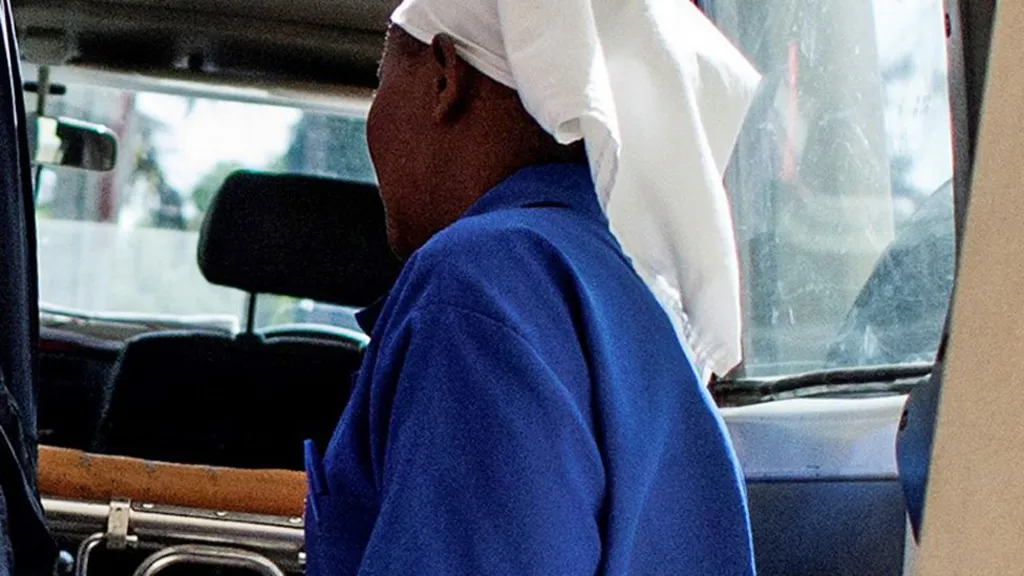
Nurses, psychologists, drivers and cleaners are among those striking for overtime allowances and better medical equipment.
Mr Muchave said the workers were forced to strike because they faced such dire conditions, which the government was refusing to confront.
“There is little to no surgical material, food for patients [or] petrol for ambulances. Workers haven’t received uniforms for years. Something needs to change. Sometimes in the maternity [wards] you will find women sharing beds. It’s very dangerous,” he said.
One woman in the capital, Maputo, confirmed that patients were suffering because of the strike.
“My grandmother was sick and [when] I took her to the public hospital she was only attended to the following day. She was really sick. She said others were also really sick but were not being attended to,” the woman who gave her first name as Sheila told the BBC.
Health infrastructure is limited across Mozambique, with fewer than three doctors per 100,000 people, making it one of the lowest doctor-to-population ratios in the world.
According to the US Agency for International Development (USAID), more than half of Mozambicans walk an hour or more to reach their nearest health facility, and it is common for medicines to be out of stock or in short supply.
Nurses, psychologists, drivers, and cleaners are among those striking for overtime allowances and better medical equipment.
Mr. Muchave stated that the workers were compelled to strike due to the dire conditions they faced, which the government was refusing to address.
As of Sunday, 23 hospitals in Gaza were not working at all. Twelve were only partly working and one was barely working.
The health agency stated that air strikes and a shortage of supplies have made the health system even more stretched.
The Israel Defense Forces (IDF) says that Hamas often uses hospitals and medical centers for its terrorist activities.
The IDF told the BBC that they didn’t attack hospitals, but went into certain areas to stop Hamas from using their equipment and to catch the terrorists. They said they were very careful when doing this.
It said it will let in help for people in Gaza, like medicine.
Help groups, like the WHO, have been stopped from getting to places and not allowed to help.
Gaza’s hospitals are very full and don’t have enough supplies, say healthcare workers. There are reports that some hospitals in southern Gaza are very full and are taking care of more patients than they usually do.
Four hospitals have been built in Gaza with a total of 305 beds, as reported by the WHO.
Israeli forces attacked a hospital in southern Gaza on Sunday, causing it to stop working.
The IDF found weapons and medicines with the names and photos of hostages at the hospital. They also caught many terrorists hiding there. Hamas is putting many innocent people in danger by using hospitals for their own violent purposes. They are not using the hospitals to help people, but to hurt them.
Workers at the hospitals nearby are saying that the operation at Nasser has made their job more difficult.
“The situation was really bad before, so what do you think it’s like now with thousands more people who have been forced to leave their homes and are staying in the hallways and public areas. ”
He said the hospital didn’t have enough beds for the patients who needed treatment. So, the staff were putting sheets over metal frames and wood and putting many patients on the floor with nothing.
Other doctors in different parts of the Gaza Strip have also described similar situations. “We put people with heart problems on the floor and start to help them right away,” said Dr. Marwan al-Hams, the director of Rafah’s Martyr Mohammed Yusuf al-Najjar Hospital.
A group from Hamas chose the leaders of the hospitals in Gaza. Sometimes, these leaders were there before Hamas took over the area.
Medicine and things needed for treatment.
Doctors are having a hard time because they don’t have enough medical supplies to do their work. “We can’t find any oxygen,” someone told the media.
Dr al-Akkad said we don’t have enough medicine for anesthesia, supplies for the intensive care unit, antibiotics, and painkillers. “Many people were badly burned and we don’t have the right medicine to help with their pain. ”
A doctor said that surgeries were being done without pain medicine.
A group of doctors from the WHO met a little girl at a hospital. She had very bad burns on 75% of her body. The hospital didn’t have enough medicine to help her feel better.
“The catastrophe is when the patients have wounds that are decaying because they have been open for more than two or three weeks,” he said.
He said the doctors there had done surgeries using head torches because they didn’t have enough electricity.
Staff are away from their families.
The WHO says there are about 20,000 healthcare workers in Gaza, but most of them are not working because they are having a hard time supporting themselves and their families.
Dr al-Akkad said that the hospital has more staff and volunteers now because people who had to leave their homes came to help. But he said they didn’t have enough to handle all the patients and injuries they were getting.
After the bombings, he said badly hurt people come to the hospital and they look like the dish kofta made with ground meat.
“The hospital sees many people with different injuries like brain injuries, broken ribs, broken limbs, and sometimes even losing an eye. We see all kinds of injuries here. ”
He said that one patient might need five or more doctors who are experts in different areas to treat all of their injuries.
Some doctors are still working and can’t be with their families.
“Dr Salha in northern Gaza misses her family very much. They have been away for over three months and she wishes she could hug them. Her family is staying in the south to stay safe. ”
I am happy that I can help kids, women, and old people get medical care and stay healthy. I feel good about saving their lives.
We do not have space for patients who need long-term medical care.
Doctors told the BBC that people in Gaza with long-term illnesses suffered a lot.
“Really, we don’t have any beds for them, and we can’t keep in touch with them,” Dr. al-Akkad explained
“For anyone who used to have dialysis four times a week, now they only have it once a week. ” If this guy used to work 16 hours a week, now he will only work for one hour.
Some women are having their babies in tents without medical help because the hospitals that provide midwifery care are full.
“A person dies in one department, but a baby is born in the other. ” Babies are born and there is no milk for them. Dr Salha said that the hospital gives every child one box of milk.
People are going to hospitals because they have caught diseases in crowded and dirty places.
“Many people are sick and we can’t find a cure,” said Abu Khalil, who is 54 years old and living in Rafah, southern Gaza.
We have to leave early in the morning and wait in line, you might end up behind 100 people. “You come back with nothing. “
Israel started a mission on Thursday that it said was careful and not too big. The army says it has arrested many people they think are involved in terrorism.
Hamas said the claim was not true.
The WHO said the facility urgently needs fuel to keep providing life-saving services.
These deaths have not been confirmed by another source.
Nasser is the main hospital in southern Gaza. It is one of the few hospitals still open and there has been a lot of fighting between the IDF and Hamas there for days.
On Wednesday, the Israeli army told lots of people who had been staying there to go away.
Tarik Jasarevic, who works for the WHO, said that there are now reports that the orthopaedic unit has been damaged.
“He said it’s harder to give quick medical help. There are still very sick patients at the hospital. ”
“The more the hospital gets worse, the more people die. ”
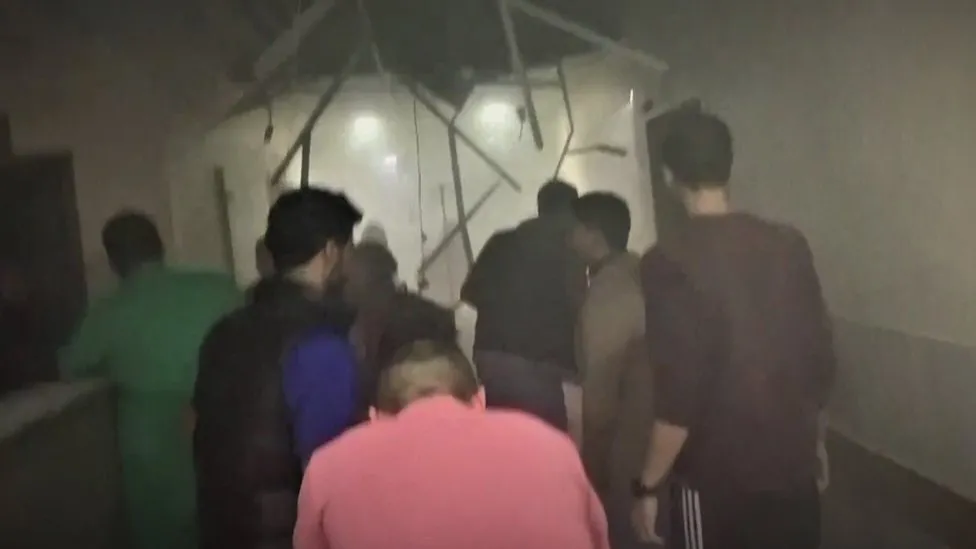
Pictures confirmed by the media showed doctors and nurses quickly moving patients on beds through a hallway that was full of smoke or dust.
“Nasser Hospital is surrounded and we have no water or food,” said Raed Abed, a man who was injured and forced to leave the hospital. He told the Associated Press.
“Trash is everywhere, and there is sewage overflowing in the emergency room. ”
The IDF thinks that Hamas has been using hospitals and other places where civilians go for protection while doing military activities.
“We can’t let Hamas go free, we need to make sure they are found and stopped,” said Lt Col Peter Lerner, spokesperson for IDF, in an interview with the media.
He said the military worked very hard to move people from the hospital to keep them safe and denied targeting civilians.
The IDF caught 20 Hamas members at the hospital who were involved in the 7 October attacks on Israel.
It also reported that it found weapons, like grenades, at the building.
The army is also looking for Israeli hostages’ bodies that might be hidden in the hospital based on information from intelligence.
The Palestinian Red Crescent Society said that Israeli tanks were attacking the nearby Al-Amal hospital and causing a lot of damage to two nursing rooms.
They posted on social media that no one had been injured.
There have been a lot of fights near the hospital lately. The PRCS was “raided” last week because 8,000 people had to leave.
On Friday, they said that two doctors who were taken by the police were let go, but 12 other staff members were still in jail.
Israel started to attack after groups of Hamas fighters crossed into Israel on 7 October. They killed around 1,200 people, mostly civilians, and took 253 others as hostages to Gaza.
The health ministry in charge of Hamas says that over 28,700 people, mostly women and children, have been killed in Israel’s attack.
Israel is being told to be more careful by other countries, but talks to stop the fighting haven’t worked yet.
A top Palestinian official involved in the talks about stopping the fighting said to the BBC that the two sides still disagree on many of the ideas for how to make peace.
Top leaders from the US, Israel, Egypt, and Qatar are in Cairo this week to try to make a deal.
The official said the main problem is the disagreement with Israeli Prime Minister Benjamin Netanyahu about what happens after the war ends. The US wants the Palestinian Authority to be stronger, but Israel doesn’t want one government to control both the West Bank and Gaza.
Another argument is about Israel’s goal of completely eliminating Hamas, which the US believes will be hard to do in the near future.
The US is trying to make both sides agree to stop fighting for a long time, so they don’t start fighting again.
To increase access to diabetes care throughout the country,Sanofi, an innovative global health company and the Ministry of Health (MOH) have signed a memorandum of cooperation.
The three-year initiative under the Sanofi/Ministry of Health Affordable Access to Diabetes Care Programme will enable the country to purchase affordable high-quality Sanofi analogue insulin products.
The partnership also provides for the deployment of diabetes management solutions in four diabetes centres in Ghana where 500 healthcare professionals will benefit from a targeted medical training programme.
It will provide patient support initiatives and measures designed to help strengthen the country’s health system and make diabetes care more accessible to patients in remote areas through regional centres.
Mr Kwaku Agyeman-Manu, the Minister of Health, speaking at the signing ceremony, said diabetes was a major public health challenge that required all to come on board.
Multi-sectoral action, including partnerships between governments, healthcare providers, civil society organisations, and the private sector was encouraged, he stated.
Globally, an estimated 422 million people live with diabetes, the majority of them in low-and middle-income countries, and 1.5 million deaths are directly attributed to diabetes each year.
Studies conducted in Ghana estimate diabetes prevalence between 2.6 per cent to 9 per cent.
The Ghana Health Service records an average of 200,000 cases of diabetes at health facilities annually.
Mr Agyeman-Manu said the numbers could be much higher, considering the poor health-seeking behaviour of Ghanaians and the limited screening opportunity available in the country.
He said with that trend, diabetes could become one of the leading causes of death by 2030.
He said there was high financial burden on persons living with diabetes though the direct cost of care was covered by the National Health Insurance Scheme (NHIS).
This is due to the chronic nature of the disease.
“Indeed, the Sanofi/Ministry of Health Affordable Access to Diabetes Care Programme is a timely intervention necessary to enhance the management of diabetes in Ghana as persons diagnosed with the disease have a greater chance to equitable, comprehensive, affordable and quality care for better outcomes,” the Minister stated.
Ms Olivier Charmeil, the Sanofi Executive Vice President of General Medicines, said Sanofi under the partnership would co-develop a digital solution to help physicians, nurses, pharmacists, and community healthcare workers to better support more than 5,000 people living with diabetes in Ghana.
“Our ambition to deliver better care and improve the quality of life of those living with diabetes knows no borders.
“We see this as a shared responsibility with healthcare systems, and we are committed to fully playing our part.
“In this context, we are proud to work closely with the Ministry of Health in Ghana and look forward to taking the learnings from this alliance forward in other countries.
” More broadly, we continue to examine various healthcare access models to determine, which approaches best meet specific local needs and opportunities,” Ms Charmeil said.
Dr Yacoba Atiase, Head of the Diabetes Centre, Korle-Bu Teaching Hospital and Senior Lecturer at the University of Ghana, speaking on the diabetes disease burden and unmet need in Ghana, said the disease was increasing and must be looked at critically.
She called for intensified public education on how to prevent diabetes, especially type 2 diabetes, and the need for early testing.
Dr Atiase said that was important because, unlike the other predominant diabetes, type 2 diabetes could be prevented