Tag: persons with disability

  • Persons with Disability (Amendment) Bill to be passed by Parliament

    Persons with Disability (Amendment) Bill to be passed by Parliament

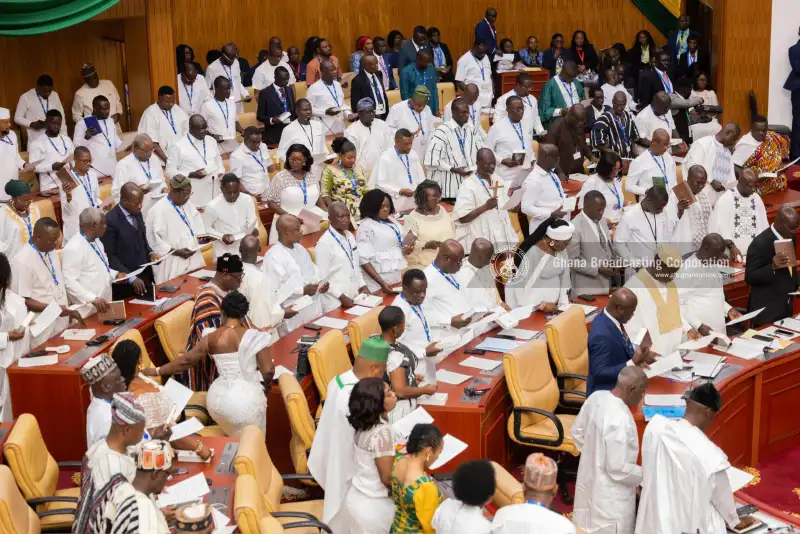
    Parliament is set to pass the Persons with Disability (Amendment) Bill, a move aimed at strengthening legal protections and improving the rights and welfare of persons with disabilities (PWDs) in Ghana.

    The government has also announced plans to introduce a Legislative Instrument (LI) to enhance the implementation of the Persons with Disability Act, 2006 (Act 715), ensuring stronger enforcement of disability rights.

    President John Dramani Mahama reaffirmed the government’s dedication to disability inclusion while delivering his State of the Nation Address in Parliament on Thursday. He emphasized the need for equal employment opportunities and the importance of ensuring PWDs have access to education, social protection, and sustainable livelihoods.

    As part of this commitment, Mahama stated that the government was determined to enforce the law requiring both public and private sector employers to allocate five per cent of their job vacancies to persons with disabilities.

    This push aligns with a Private Member’s Bill tabled in Parliament by Francis-Xavier Sosu, the Member of Parliament (MP) for Madina, on September 5, 2022. The proposed bill seeks to make it mandatory for all public and private institutions to employ PWDs while addressing broader issues related to disability rights.

    Beyond employment, Mahama reiterated the government’s commitment to expanding access to education and financial support for persons with disabilities.

    “… I want to reiterate our commitment to ensuring that individuals with disabilities have access to free tertiary education and equal opportunities to pursue their academic and professional ambitions,” he stated.

    To further enhance social protection, the government is also expanding the Livelihood Empowerment Against Poverty (LEAP) Programme under its “Big LEAP” initiative.

    “As we work towards completing the Ghana National Household Data Census by 2025, we will reassess the status of LEAP beneficiary households to facilitate the enrolment of new beneficiaries,” Mahama added.

    The passage of the Persons with Disability (Amendment) Bill is expected to provide stronger legal backing for disability rights, ensuring greater inclusion and equal opportunities in all sectors of the economy.
  • Ashanti region: PWDs protest to demand orthopedic centres

    Ashanti region: PWDs protest to demand orthopedic centres

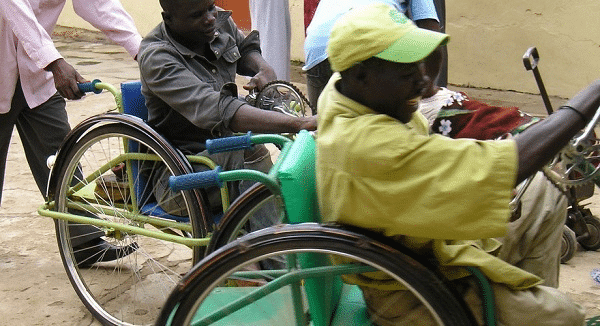
    People with Disabilities (PwDs) in the Ashanti Region have protested the government’s refusal to construct a clinic for their orthopedic care.

    According to the group, government has over the years reneged on its promises to provide quality healthcare for PwDs.

    The current facility for treatment is dilapidated, wears an old painting, benches and tables as furniture, and completely dysfunctional equipment. An uneven road worsens their access to the facility.

    Members of the group took to the streets of Kumasi in their prosthetics legs, wheel chairs and crutches to register their displeasure and present a petition to the Ashanti Regional Director of Health Services.

    Speaking with JoyNews on Friday, Group lead, Vera Kusi Asamoah, who described the situation as disheartening said, “the situation over here is not good at all, we don’t have technicians well trained and committed and lack of mechanism to operate.”

    She complained that the road leading to orthotics and prosthetics centre is terrible, thus hindering their access to the already dilapidated structure.

    Madam Asamoah said the equipment at the centre are all malfunctioning, “we don’t have chairs to sit on… over here we don’t have any good chairs, we sit on benches which is not good for us,” she lamented.

    Receiving their petition, the Director of Health Services, Dr Emmanuel Tenkorang admitted that the region could not boast of a facility for Persons with Disability.

    He therefore assured that plans are afoot to improve the quality of health delivery.

    “We don’t have a good centre in Ashanti Region, it is so dilapidated and its not good for purpose. So, we took a decision that we will use part of the old Bekwai hospital as a new centre at least for orthotics and prosthetics.

    “We have started the process, I have sent a couple of letters to the Director General to see whether we can indicate a new centre, because the one we have in Ashanti region is not good for purpose,” he said.

    He assured the PWDs to expect swift response from the government.

    “I believe that we have to get at least a new orthopedic hospital as part of agenda 111, so if we can convert some of the orthopedic hospital to support you.

    “We will take your petition and put a covering letter on it and send it to our Director General and I believe he will follow it up,” he assured.

  • Ghana is not prospering because the vulnerable have been sidelined – Center for Employment of Persons with Disabilities

    Ghana is not prospering because the vulnerable have been sidelined – Center for Employment of Persons with Disabilities

    Executive President of the Center for Employment of Persons with Disability (CEPWD), Mr. Alexander Tetteh has admonished that Ghana is not getting the development it should have because the country has not been treating the vulnerable people well.

    He expressed worry over how persons with; the aged, disabilities, orphans, widows, and the likes are not treated well in the country that is endowed with all the natural resources needed for social and economic growth of its citizens.

    Mr. Tetteh condemned how about 500 persons with disabilities who lost their livelihood as toll collectors after the cessation of toll collections on the roads have been neglected by the ministry of roads and highways despite the promise to reassign them to other sectors of the ministry.

    Leader of the former toll collectors, Rashad Mohammed Rahmat also revealed that one of their female colleagues committed suicide because she was saddled with debts and couldn’t bear the shame and pressure.

    The Executive President of the Center for Employment of Persons with Disabilities has also described the construction of the national cathedral as a misplaced priority by the government of Ghana.

    “Obedience is better than sacrifice. You have disabled people, down-trodden people who are suffering, who don’t have food to eat and the money to use to buy food for them. You say you are buying brick and mortar, and breaking grounds to build a national cathedral for whom to come and worship in it?” Mr. Tetteh questioned

    According to him, it is more godly for the churches to come to the side of the vulnerable because if the churches can come together to contribute money to build a cathedral, then they should come together and help establish livelihood for the vulnerable in the society.

    “Even those who are coming to worship, if they don’t eat, how do they go to worship? Can’t we worship God in our homes? Won’t God listen? God no longer lives in houses built with human hands. God lives in us. If I am able to live well and pray to God, he will listen and bless this nation  but if I am here and I am hungry and I  am wailing, don’t you think he will bring curses to our nation?” he lamented

    Mr. Tetteh told Helen Appiah Ampofo on the 3FM Sunrise Morning Show that he is afraid things are going to get tougher this year and especially difficult for persons with disabilities living in Ghana.

    “The year is going to be very difficult for everybody, especially persons with disabilities. We are going to face it seriously. It means the kind of life we are having now which is difficult is going to be more difficult and it looks very scary and I don’t know what strategies that government has for the marginalized. Even the common fund for persons with disabilities is not well managed” he feared.

  • ‘Practicalise the beautiful policies on paper ‘– Down Syndrome Ghana

    Executive Director of Down Syndrome Ghana, Ms Agnes Teiko Nyemi-Tei, who is also a parent of a child with the condition, wants Government to as a matter of urgency, practicalise the ‘beautiful policies” drafted to help persons with disabilities (PWDs) so they can live a more meaningful life.

    She said this when the organisation organised an event dubbed:  Family day out and stakeholders  Conference even though there is the Inclusive Education Policy, there seem to be very minimal intervention in the education of children living with disabilities especially those with Down Syndrome.

    “The implementation of inclusive education as enshrined in the Ghana Education Policy Programme backed by the Sustainable Development Goals (SDGs) have been nothing to write home about…

    “Government intervention is minimal. Let’s take education; it is even in the SDGs and in the Ghana Education Policy Programme that there should be an inclusive education but what do we see in our schools, resource and personnel to make the education easier and meaningful for our kids are nonexistent so we go to the schools and see that what we are not getting what we ought to”. She said.

    “My daughter was pulled out of school because the teacher was so overwhelmed with the other children that she is not able to take care of my daughter who has Down syndrome.

    The event which enabled parents of children with Down Syndrome and their families to party and have fun was also used as a platform where some parents of children with Down Syndrome shared their experiences of stigma, societal and family discrimination and how they are managing to raise them.

    Mr Dominic Deenu, father of Elikem Deenu, a 13year old boy with Down Syndrome sharing his journey said he has been a source of encouragement and support for his wife and urged other fathers to get involved in the nurturing of their children with the condition.

    “For the past 13 years, we have been able to go through with support from friends…in Ghana, children with disability of such nature are disregarded… sometimes, if the child tries to mingle with other children they will leave him… nurturing  Elikem hasn’t been easy.” he said

    Mr. Deenu encouraged parents not to give up on their children with special needs.

    Mrs Hannah Awadzi, Executive Director of the Special Mothers Project, an advocacy programme for children with cerebral palsy and their families, encouraged the parents to be optimistic

    She said caring for children with special needs though not easy, is “worth it” as it is a learning curve to acquire many valuable life lessons.

    “…you learn a lot of life’s lessons that helps you….” she told the GNA in an interview.

    Mrs Awadzi said with the effective implementation of existing policies and the formulation of new ones the journey could be a lot more enhanced.

    Nana Yopeyo Dadetsu III, Queen Mother of Dodowa, pledged to become an advocate for persons with Down Syndrome and urged others to do same.

    “We need to accept them but it goes with education. We need to educate religious bodies and other organisations about Down syndrome “She said.

    Down syndrome is a condition in which a person has an extra chromosome. Chromosomes are small “packages” of genes in the body.

    It is a genetic disorder caused when abnormal cell division results in an extra full or partial copy of chromosome 21.

    Source: GNA

  • PWDs in Tain get free training in beads making

    Twelve persons with disability (PWD) made up of eleven females and a male in the Tain District of the Bono region have benefited from free skills training recently conducted by the District Assembly.

    The two weeks training programme which was under the supervision of the District Business Advisory Centre was to provide skills training for the PWDs to empower them economically.

    Read: Government begins disbursement of funds to women with disability

    Addressing the beneficiaries at a graduation ceremony to mark the end of the training, the District Chief Executive, Madam Charity Akua Foriwaa Dwommoh urged the public not to look at PWDs as an object of charity but people who can do better and become productive citizens if given the necessary support, training and resources.

    She noted that the government is committed to providing ample support and assistance for them to be productive as those who do not have any disability at all.

    The DCE gave the assurance that, the assembly will be organizing such training programmes for the people with disability in the District in different areas to enable them to generate income enough to sustain their needs. “Gone were the days when most of them can be seen on the streets begging for arms,” she said.

    Mr. Lawrence Adomako, the District president for the Ghana Federation of Disables commended the DCE for the initiative and the numerous support she has been giving to them to be successful in life.

    Read: Ablakwa Commemorates 2018 International Day of Persons with Disability

    Mr. Adomako urged the beneficiaries to make good use of the training they have received to also create employment for others.

    The head of the Business Advisory Centre (BAC), Mr. Fredrick Amoateng Appraku said his outfit would be monitoring their activities to offer them the needed guidance and support to enable them to succeed in their new trade. He also urged them not to hesitate to contact him whenever his services would be required.

    The beneficiaries received a certificate and start-up kits to set them up in their new trade.


    Source: Yeboah Isaac