Tag: Petrol

  • Petrol now GHS13.27, diesel GHS16.10 per litre following  govt’s intervention

    Petrol now GHS13.27, diesel GHS16.10 per litre following govt’s intervention

    Two Oil Marketing Companies (OMCs), Star Oil and state-owned GOIL have effective Thursday, April 16, reduced fuel prices at the pumps for the second pricing window of April. 

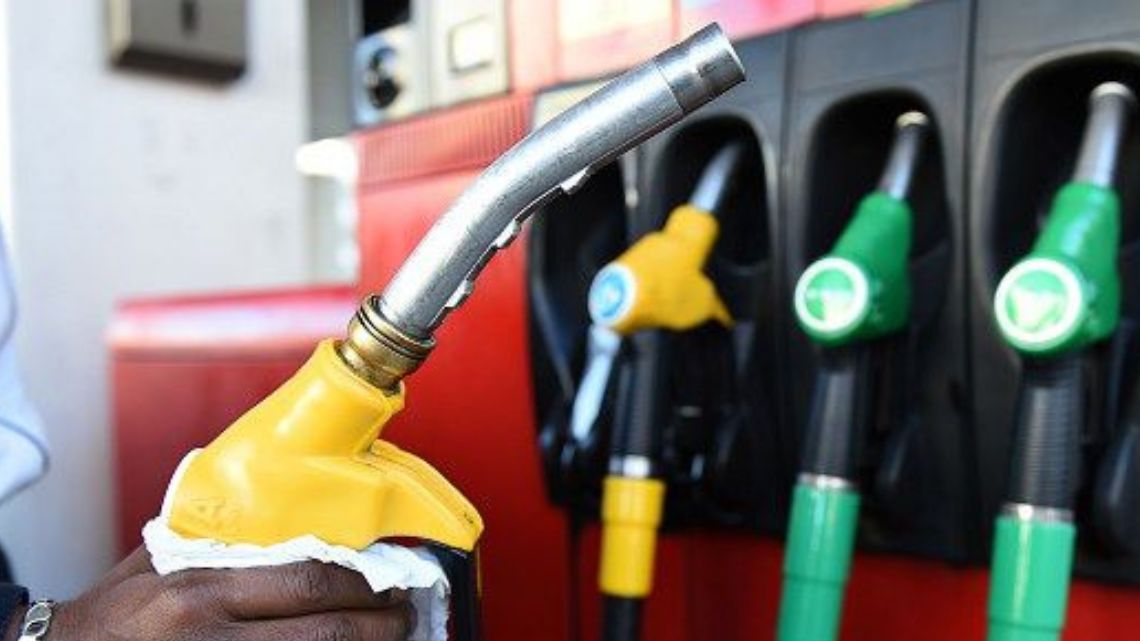
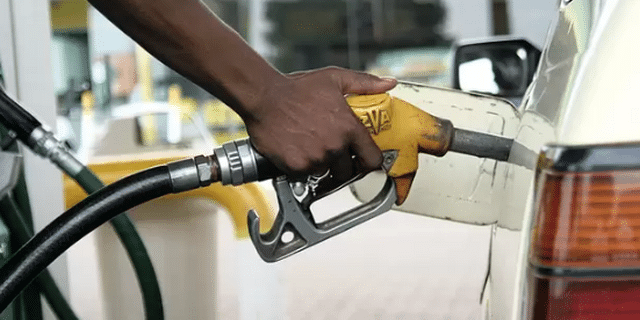
    Petrol is now selling at GH¢13.27 per litre from GH¢13.30, while diesel is going for GH¢16.10 per litre from GH¢17.10. The reduction follows the government’s temporary measures to cushion consumers against rising fuel prices, amid ongoing volatility on the global petroleum market. The government has announced that  it will absorb GH¢2.00 per litre on diesel and GH¢0.36 per litre on petrol for a month.

    During an emergency Cabinet meeting held on Thursday, April 9, President Mahama instructed the Minister for Finance, Dr Cassiel Ato Forson, and the Minister for Energy to immediately begin the process of reviewing and removing the affected taxes.

    President John Dramani Mahama said the decision is aimed at cushioning Ghanaians from rising fuel prices, which have been driven by global supply disruptions linked to tensions involving Iran, Israel, and the United States.

    The ongoing tension has led to the closure of the Strait of Hormuz, a critical global oil shipping route. The ongoing tensions between Iran, the U.S., and Israel have been linked to the death of Iran’s Supreme Leader, Ayatollah Ali Khamenei.

    Ayatollah Ali Khamenei was reportedly killed in strikes by the United States (U.S.) and Israel. This development is significantly impacting travelers from Ghana to Asia, Europe, and North America, as Dubai is a major transit hub connecting travelers through the United Arab Emirates.

    Before petrol and diesel were selling at GH¢13.30 and GH¢17.10 per litre, respectively, at the pumps. In a social media post on Tuesday, March 31, GOIL announced that it had increased petrol to GH¢13.30 per litre from GH¢12.24 and diesel from GH¢15.69 to GH¢17.10 per litre.

    Star Oil also increased from GH¢12.19 to GH¢13.49 per litre. It has also increased the price of Diesel from GH¢14.25 to GH¢17.97. The adjustment follows a new price floor announced by the National Petroleum Authority (NPA) on March 30, directing Oil Marketing Companies (OMCs) to implement the changes from Wednesday, April 1.

    On Monday, March 16, petroleum products at the pumps saw an increase following an adjustment by the NPA for the second pricing window for the month.

    As a result, petrol priced at GHȼ10.46 per litre will now be sold at GHȼ11.57. The price floor for diesel has jumped from GH¢11.42 to GH¢14.35 per litre, and LPG has risen from GH¢9.38 to GH¢10.67 per kilogramme. Meanwhile, Ghana’s petroleum sector recorded a decline in the second half of 2025.

    The data from the Bank of Ghana (BoG), contained in the Central Bank’s Semi-Annual Report on the Petroleum Holding Fund (PHF) and shared on Tuesday, February 3, shows total receipts of US$399.65 million, significantly lower than returns recorded during the same period in 2024.

    The report explains that the amount represents combined inflows from crude oil liftings and petroleum-related taxes. However, it fell below the US$369.25 million realised from crude oil liftings alone in the second half of 2024, pointing to weaker overall performance in the sector.

    “The total amount received into the PHF account for H2 2025 was US$399.65 million (crude oil lifting total of US$198.25 million and other total income of US$201.40 million),” the report indicated.

    The report further indicates that revenue between July 1 and December 31, 2025, was drawn from two main sources. Crude oil liftings from the Jubilee and Sankofa Gye Nyame (SGN) fields generated US$198.25 million, following the lifting of two Jubilee cargoes and one SGN cargo by the Ghana Group, represented by the Ghana National Petroleum Corporation (GNPC).

    Ghana earned US$201.40 million from petroleum-related taxes and interest during the period. The bulk of this amount, US$198.09 million, came from corporate income taxes, while US$3.31 million was earned as interest on the Petroleum Holding Fund.

    The BoG also explained that revenue from the 25th cargo from the TEN field, valued at US$60.79 million, was not included in the report because the funds had not been received by the end of 2025, even though they were expected in November.

    Even though Ghana received less new money from oil during the period, it still spent and distributed a total of US$493.40 million. The spending was cushioned by savings accumulated by the government from previous years to cover the shortfall.

    According to the report, the government used about 57.8% of the total US$493.40 million, amounting to US$285.06 million, to fund its projects and programmes through the national budget.About 23.5%, representing US$115.99 million, was saved to stabilise the economy during difficult times, while US$49.71 million was saved for future generations. Another US$42.63 million was given to the Ghana National Petroleum Corporation to help cover its operational and investment costs.

    The report further showed positive investment performance for Ghana’s petroleum savings. The Ghana Petroleum Funds recorded a net realised income of US$28.11 million, with returns of 2.28 per cent for the Heritage Fund and 2.51 per cent for the Stabilisation Fund.

    As of December 31, 2025, total petroleum reserves stood at US$1.55 billion, with the Heritage Fund accounting for US$1.38 billion.Looking ahead, the Bank of Ghana adopted a cautious outlook for 2026, noting that Brent crude prices declined from US$66.61 to US$60.81 per barrel by the end of 2025.

    While the International Monetary Fund projects global growth of 3.3 per cent, the report warned that Ghana’s petroleum revenues remain exposed to geopolitical developments in the Middle East and OPEC+ production decisions, with oil prices expected to average about US$62.13 per barrel in 2026.

    Meanwhile, in a related development, motorists have started the New Year on a good note, with less pressure on their pockets, as several Oil Marketing Companies (OMCs) have effected a reduction in fuel prices at their respective pumps across the country in the January pricing window.

    The price cuts, which took effect in the early hours of the New Year, signify a continued downward trend in petroleum costs, offering much-needed breathing room for both commercial and private transport users.Among the first OMCs to effect the reduction was market leader Star Oil.It set the pace and a benchmark for other OMCs as it adjusted its digital displays, reflecting a marginal dip from previous prices.Petrol is now selling at GH¢10.86 per litre, diesel is priced at GH¢11.96 per litre, and RON 95 is selling at GH¢13.56 per litre.

    According to Star Oil management, the reduction in oil prices is a result of a “favourable domestic and external cost environment,” citing the cedi’s appreciation and a dip in international refined product prices.

    It said the current reductions may only be the tip of the iceberg for January. The Chamber of Oil Marketing Companies (COMAC) projected a robust outlook for the month, suggesting that competitive pressures will force more OMCs to follow suit in the coming days.

    In its January pricing outlook, COMAC provided a breakdown of the expected percentage declines. It was projected that petrol would fall by up to 4.80 per cent, while diesel was also estimated to drop by approximately 3.77 per cent. LPG, on the other hand, was expected to see a reduction of roughly 2.19 per cent.

    Industry analysts believe that if the cedi maintains its current trajectory and international crude prices remain below US$80 per barrel, Ghanaians could see even more substantial relief by the second pricing window in mid-January.

    While fuel prices are dropping, Ghanaians have had to brace themselves for an increase in utility tariffs, which took effect on January 1, 2026. Following the announcement, there was widespread disapproval, particularly from stakeholders and the general public.

    On December 2, 2025, the Public Utilities Regulatory Commission (PURC) announced an imminent increase in tariffs, with the new rates set to take effect from January 1, 2026. The Commission said the increases—9.86 per cent for electricity and 15.92 per cent for water—had become necessary to meet utility investment needs, respond to macroeconomic pressures, and ensure the long-term stability of the sector.

  • Gov’t to lose GHS200m as fuel prices drop – Energy Ministry

    Gov’t to lose GHS200m as fuel prices drop – Energy Ministry

    The Ministry of Energy, through spokesperson Richmond Rockson, has disclosed that the government would have accrued an estimated GH¢200 million in revenue if fuel prices had remained unchanged.

    Addressing the media on Wednesday, April 15, he stated, “This will lead to a net loss of about GH¢200 million that could have accrued to the government, but it is a necessary sacrifice to bring relief to the people of Ghana”.

    During an emergency Cabinet meeting held on Thursday, April 9, President Mahama instructed the Minister for Finance, Dr Cassiel Ato Forson, and the Minister for Energy to immediately begin the process of reviewing and removing the affected taxes.

    In view of that, effective today, Thursday, April 16, 2026, the government will absorb GH¢2.00 per litre on diesel and GH¢0.36 per litre on petrol in the upcoming pricing window.

    Currently, two Oil Marketing Companies (OMCs), GOIL and Star Oil, have lowered their pump prices. The two companies are now selling petrol at GH¢13.27 per litre, while diesel is going for GH¢16.10 per litre.

    President John Dramani Mahama said the decision is aimed at cushioning Ghanaians from rising fuel prices, which have been driven by global supply disruptions linked to tensions involving Iran, Israel, and the United States.

    The ongoing tension has led to the closure of the Strait of Hormuz, a critical global oil shipping route. The ongoing tensions between Iran, the U.S., and Israel have been linked to the death of Iran’s Supreme Leader, Ayatollah Ali Khamenei.

    Ayatollah Ali Khamenei was reportedly killed in strikes by the United States (U.S.) and Israel. This development is significantly impacting travelers from Ghana to Asia, Europe, and North America, as Dubai is a major transit hub connecting travelers through the United Arab Emirates.

    Before petrol and diesel were selling at GH¢13.30 and GH¢17.10 per litre, respectively, at the pumps. In a social media post on Tuesday, March 31, GOIL announced that it had increased petrol to GH¢13.30 per litre from GH¢12.24 and diesel from GH¢15.69 to GH¢17.10 per litre.

    Star Oil also increased from GH¢12.19 to GH¢13.49 per litre. It has also increased the price of Diesel from GH¢14.25 to GH¢17.97. The adjustment follows a new price floor announced by the National Petroleum Authority (NPA) on March 30, directing Oil Marketing Companies (OMCs) to implement the changes from Wednesday, April 1.

    On Monday, March 16, petroleum products at the pumps saw an increase following an adjustment by the NPA for the second pricing window for the month.

    As a result, petrol priced at GHȼ10.46 per litre will now be sold at GHȼ11.57. The price floor for diesel has jumped from GH¢11.42 to GH¢14.35 per litre, and LPG has risen from GH¢9.38 to GH¢10.67 per kilogramme. Meanwhile, Ghana’s petroleum sector recorded a decline in the second half of 2025.

    The data from the Bank of Ghana (BoG), contained in the Central Bank’s Semi-Annual Report on the Petroleum Holding Fund (PHF) and shared on Tuesday, February 3, shows total receipts of US$399.65 million, significantly lower than returns recorded during the same period in 2024.

    The report explains that the amount represents combined inflows from crude oil liftings and petroleum-related taxes. However, it fell below the US$369.25 million realised from crude oil liftings alone in the second half of 2024, pointing to weaker overall performance in the sector.

    “The total amount received into the PHF account for H2 2025 was US$399.65 million (crude oil lifting total of US$198.25 million and other total income of US$201.40 million),” the report indicated.

    The report further indicates that revenue between July 1 and December 31, 2025, was drawn from two main sources. Crude oil liftings from the Jubilee and Sankofa Gye Nyame (SGN) fields generated US$198.25 million, following the lifting of two Jubilee cargoes and one SGN cargo by the Ghana Group, represented by the Ghana National Petroleum Corporation (GNPC).

    Ghana earned US$201.40 million from petroleum-related taxes and interest during the period. The bulk of this amount, US$198.09 million, came from corporate income taxes, while US$3.31 million was earned as interest on the Petroleum Holding Fund.

    The BoG also explained that revenue from the 25th cargo from the TEN field, valued at US$60.79 million, was not included in the report because the funds had not been received by the end of 2025, even though they were expected in November.

    Even though Ghana received less new money from oil during the period, it still spent and distributed a total of US$493.40 million. The spending was cushioned by savings accumulated by the government from previous years to cover the shortfall.

    According to the report, the government used about 57.8% of the total US$493.40 million, amounting to US$285.06 million, to fund its projects and programmes through the national budget.About 23.5%, representing US$115.99 million, was saved to stabilise the economy during difficult times, while US$49.71 million was saved for future generations. Another US$42.63 million was given to the Ghana National Petroleum Corporation to help cover its operational and investment costs.

    The report further showed positive investment performance for Ghana’s petroleum savings. The Ghana Petroleum Funds recorded a net realised income of US$28.11 million, with returns of 2.28 per cent for the Heritage Fund and 2.51 per cent for the Stabilisation Fund.

    As of December 31, 2025, total petroleum reserves stood at US$1.55 billion, with the Heritage Fund accounting for US$1.38 billion.Looking ahead, the Bank of Ghana adopted a cautious outlook for 2026, noting that Brent crude prices declined from US$66.61 to US$60.81 per barrel by the end of 2025.

    While the International Monetary Fund projects global growth of 3.3 per cent, the report warned that Ghana’s petroleum revenues remain exposed to geopolitical developments in the Middle East and OPEC+ production decisions, with oil prices expected to average about US$62.13 per barrel in 2026.

    Meanwhile, in a related development, motorists have started the New Year on a good note, with less pressure on their pockets, as several Oil Marketing Companies (OMCs) have effected a reduction in fuel prices at their respective pumps across the country in the January pricing window.

    The price cuts, which took effect in the early hours of the New Year, signify a continued downward trend in petroleum costs, offering much-needed breathing room for both commercial and private transport users.Among the first OMCs to effect the reduction was market leader Star Oil.It set the pace and a benchmark for other OMCs as it adjusted its digital displays, reflecting a marginal dip from previous prices.Petrol is now selling at GH¢10.86 per litre, diesel is priced at GH¢11.96 per litre, and RON 95 is selling at GH¢13.56 per litre.

    According to Star Oil management, the reduction in oil prices is a result of a “favourable domestic and external cost environment,” citing the cedi’s appreciation and a dip in international refined product prices.

    It said the current reductions may only be the tip of the iceberg for January. The Chamber of Oil Marketing Companies (COMAC) projected a robust outlook for the month, suggesting that competitive pressures will force more OMCs to follow suit in the coming days.

    In its January pricing outlook, COMAC provided a breakdown of the expected percentage declines. It was projected that petrol would fall by up to 4.80 per cent, while diesel was also estimated to drop by approximately 3.77 per cent. LPG, on the other hand, was expected to see a reduction of roughly 2.19 per cent.

    Industry analysts believe that if the cedi maintains its current trajectory and international crude prices remain below US$80 per barrel, Ghanaians could see even more substantial relief by the second pricing window in mid-January.

    While fuel prices are dropping, Ghanaians have had to brace themselves for an increase in utility tariffs, which took effect on January 1, 2026. Following the announcement, there was widespread disapproval, particularly from stakeholders and the general public.

    On December 2, 2025, the Public Utilities Regulatory Commission (PURC) announced an imminent increase in tariffs, with the new rates set to take effect from January 1, 2026. The Commission said the increases—9.86 per cent for electricity and 15.92 per cent for water—had become necessary to meet utility investment needs, respond to macroeconomic pressures, and ensure the long-term stability of the sector.
  • President Mahama orders immediate cuts in fuel taxes after cabinet meeting

    President Mahama orders immediate cuts in fuel taxes after cabinet meeting

    Certain taxes and levies on petroleum products are expected to be scrapped in the coming days following the intervention of President John Dramani Mahama.

    During an emergency Cabinet meeting held on Thursday, April 9, President Mahama instructed the Minister for Finance, Dr Cassiel Ato Forson, and the Minister for Energy to immediately begin the process of reviewing and removing the affected taxes.

    President John Dramani Mahama said the decision is aimed at cushioning Ghanaians from rising fuel prices, which have been driven by global supply disruptions linked to tensions involving Iran, Israel, and the United States. The ongoing tension has led to the closure of the Strait of Hormuz, a critical global oil shipping route.

    The ongoing tensions between Iran, the U.S., and Israel have been linked to the death of Iran’s Supreme Leader, Ayatollah Ali Khamenei.


    Ayatollah Ali Khamenei was reportedly killed in strikes by the United States (U.S.) and Israel. This development is significantly impacting travelers from Ghana to Asia, Europe, and North America, as Dubai is a major transit hub connecting travelers through the United Arab Emirates.

    Meanwhile, petrol and diesel are selling at GH¢13.30 and GH¢17.10 per litre, respectively, at the pumps. In a social media post on Tuesday, March 31, GOIL announced that petrol is now selling at GH¢13.30 per litre from GH¢12.24 and diese from GH¢15.69 to GH¢17.10 per litre.


    Star Oil, has increased from GH¢12.19 to GH¢13.49 per litre. It has also increased the price of Diesel from GH¢14.25 to GH¢17.97. The adjustment follows a new price floor announced by the National Petroleum Authority (NPA) on March 30, directing Oil Marketing Companies (OMCs) to implement the changes from Wednesday, April 1.


    On Monday, March 16 petroleum products at the pumps saw an increase following adjustment by the NPAfor the second pricing window for the month.


    As a result, petrol priced at GHȼ10.46 per litre will now be sold at GHȼ11.57. The price floor for diesel has jumped from GH¢11.42 to GH¢14.35 per litre, and LPG has risen from GH¢9.38 to GH¢10.67 per kilogramme. Meanwhile, Ghana’s petroleum sector recorded a decline in the second half of 2025.


    The data from the Bank of Ghana (BoG), contained in the Central Bank’s Semi-Annual Report on the Petroleum Holding Fund (PHF) and shared on Tuesday, February 3, shows total receipts of US$399.65 million, significantly lower than returns recorded during the same period in 2024.


    The report explains that the amount represents combined inflows from crude oil liftings and petroleum-related taxes. However, it fell below the US$369.25 million realised from crude oil liftings alone in the second half of 2024, pointing to weaker overall performance in the sector.


    “The total amount received into the PHF account for H2 2025 was US$399.65 million (crude oil lifting total of US$198.25 million and other total income of US$201.40 million),” the report indicated.


    The report further indicates that revenue between July 1 and December 31, 2025, was drawn from two main sources. Crude oil liftings from the Jubilee and Sankofa Gye Nyame (SGN) fields generated US$198.25 million, following the lifting of two Jubilee cargoes and one SGN cargo by the Ghana Group, represented by the Ghana National Petroleum Corporation (GNPC).


    Ghana earned US$201.40 million from petroleum-related taxes and interest during the period. The bulk of this amount, US$198.09 million, came from corporate income taxes, while US$3.31 million was earned as interest on the Petroleum Holding Fund.


    The BoG also explained that revenue from the 25th cargo from the TEN field, valued at US$60.79 million, was not included in the report because the funds had not been received by the end of 2025, even though they were expected in November.


    Even though Ghana received less new money from oil during the period, it still spent and distributed a total of US$493.40 million. The spending was cushioned by savings accumulated by the government from previous years to cover the shortfall.


    According to the report, the government used about 57.8% of the total US$493.40 million, amounting to US$285.06 million, to fund its projects and programmes through the national budget.

    About 23.5%, representing US$115.99 million, was saved to stabilise the economy during difficult times, while US$49.71 million was saved for future generations. Another US$42.63 million was given to the Ghana National Petroleum Corporation to help cover its operational and investment costs.


    The report further showed positive investment performance for Ghana’s petroleum savings. The Ghana Petroleum Funds recorded a net realised income of US$28.11 million, with returns of 2.28 per cent for the Heritage Fund and 2.51 per cent for the Stabilisation Fund.


    As of December 31, 2025, total petroleum reserves stood at US$1.55 billion, with the Heritage Fund accounting for US$1.38 billion.
    Looking ahead, the Bank of Ghana adopted a cautious outlook for 2026, noting that Brent crude prices declined from US$66.61 to US$60.81 per barrel by the end of 2025.


    While the International Monetary Fund projects global growth of 3.3 per cent, the report warned that Ghana’s petroleum revenues remain exposed to geopolitical developments in the Middle East and OPEC+ production decisions, with oil prices expected to average about US$62.13 per barrel in 2026.


    Meanwhile, in a related development, motorists have started the New Year on a good note, with less pressure on their pockets, as several Oil Marketing Companies (OMCs) have effected a reduction in fuel prices at their respective pumps across the country in the January pricing window.


    The price cuts, which took effect in the early hours of the New Year, signify a continued downward trend in petroleum costs, offering much-needed breathing room for both commercial and private transport users.
    Among the first OMCs to effect the reduction was market leader Star Oil.

    It set the pace and a benchmark for other OMCs as it adjusted its digital displays, reflecting a marginal dip from previous prices.
    Petrol is now selling at GH¢10.86 per litre, diesel is priced at GH¢11.96 per litre, and RON 95 is selling at GH¢13.56 per litre.


    According to Star Oil management, the reduction in oil prices is a result of a “favourable domestic and external cost environment,” citing the cedi’s appreciation and a dip in international refined product prices.


    It said the current reductions may only be the tip of the iceberg for January. The Chamber of Oil Marketing Companies (COMAC) projected a robust outlook for the month, suggesting that competitive pressures will force more OMCs to follow suit in the coming days.


    In its January pricing outlook, COMAC provided a breakdown of the expected percentage declines. It projected that petrol would fall by up to 4.80 per cent, while diesel was also estimated to drop by approximately 3.77 per cent. LPG, on the other hand, was expected to see a reduction of roughly 2.19 per cent.


    Industry analysts believe that if the cedi maintains its current trajectory and international crude prices remain below US$80 per barrel, Ghanaians could see even more substantial relief by the second pricing window in mid-January.


    While fuel prices are dropping, Ghanaians have had to brace themselves for an increase in utility tariffs, which took effect on January 1, 2026.
    Following the announcement, there was widespread disapproval, particularly from stakeholders and the general public.


    On December 2, 2025, the Public Utilities Regulatory Commission (PURC) announced an imminent increase in tariffs, with the new rates set to take effect from January 1, 2026.

    The Commission said the increases—9.86 per cent for electricity and 15.92 per cent for water—had become necessary to meet utility investment needs, respond to macroeconomic pressures, and ensure the long-term stability of the sector.

  • Middle East tensions: Ghana’s diesel and petrol stocks to last eight weeks – NPA

    Middle East tensions: Ghana’s diesel and petrol stocks to last eight weeks – NPA

    The National Petroleum Authority (NPA) has revealed that Ghana has sufficient diesel and petrol stocks to last nearly two months in the event of a temporary supply disruption. During a media engagement on Tuesday, April 7, NPA Chief Executive Officer (CEO) Godwin Edudzi Tameklo stated that Ghana remains secure despite ongoing tensions in the Middle East.

    “Today in Ghana, for diesel, we have almost eight weeks of import cover. For petrol, we have almost 6.8 weeks. We just concluded our legal advisory meeting last week, and we have vessels scheduled up to the 19th of April — 10 vessels currently on the high seas.

    “Before the war, a metric ton of diesel cost around $695. Today, the price is $1,337 — almost twice as much. Yet, have pump prices doubled? No. If it weren’t for the relatively stable exchange rate, local fuel prices would have doubled by now,” he added.


    Despite persistent pressures from rising global fuel prices amid Middle East tensions, Ghana recorded a 3.2 percent inflation rate in March. This information was contained in a release from the latest data from the Ghana Statistical Service (GSS)on Wednesday, April 1.

    The figure reflects a decline from 22.4 percent recorded during the same period last year. This represents the 15th consecutive month of decline in Ghana’s inflation rate. February 2026 recorded 3.3 percent in 23.1 percent in February 2025.

    The ongoing tensions between Iran, the U.S., and Israel have been linked to the death of Iran’s Supreme Leader, Ayatollah Ali Khamenei.

    Ayatollah Ali Khamenei was reportedly killed in strikes by the United States (U.S.) and Israel. This development is significantly impacting travelers from Ghana to Asia, Europe, and North America, as Dubai is a major transit hub connecting travelers through the United Arab Emirates.

    Meanwhile, petrol and diesel are selling at GH¢13.30 and GH¢17.10 per litre, respectively, at the pumps.  In a social media post on Tuesday, March 31, GOIL announced that petrol is now selling at GH¢13.30 per litre from GH¢12.24 and diese from GH¢15.69 to GH¢17.10 per litre.

    Star Oil, has increased from GH¢12.19 to GH¢13.49 per litre. It has also increased the price of Diesel from GH¢14.25 to GH¢17.97. The adjustment follows a new price floor announced by the National Petroleum Authority (NPA) on March 30, directing Oil Marketing Companies (OMCs) to implement the changes from Wednesday, April 1.

    On Monday, March 16, petroleum products at the pumps saw an increase following an adjustment by the NPA for the second pricing window for the month.

    As a result, petrol priced at GHȼ10.46 per litre will now be sold at GHȼ11.57. The price floor for diesel has jumped from GH¢11.42 to GH¢14.35 per litre, and LPG has risen from GH¢9.38 to GH¢10.67 per kilogramme. Meanwhile, Ghana’s petroleum sector recorded a decline in the second half of 2025.

    The data from the Bank of Ghana (BoG), contained in the Central Bank’s Semi-Annual Report on the Petroleum Holding Fund (PHF) and shared on Tuesday, February 3, shows total receipts of US$399.65 million, significantly lower than returns recorded during the same period in 2024.

    The report explains that the amount represents combined inflows from crude oil liftings and petroleum-related taxes. However, it fell below the US$369.25 million realised from crude oil liftings alone in the second half of 2024, pointing to weaker overall performance in the sector.

    “The total amount received into the PHF account for H2 2025 was US$399.65 million (crude oil lifting total of US$198.25 million and other total income of US$201.40 million),” the report indicated.

    The report further indicates that revenue between July 1 and December 31, 2025, was drawn from two main sources. Crude oil liftings from the Jubilee and Sankofa Gye Nyame (SGN) fields generated US$198.25 million, following the lifting of two Jubilee cargoes and one SGN cargo by the Ghana Group, represented by the Ghana National Petroleum Corporation (GNPC).

    Ghana earned US$201.40 million from petroleum-related taxes and interest during the period. The bulk of this amount, US$198.09 million, came from corporate income taxes, while US$3.31 million was earned as interest on the Petroleum Holding Fund.

    The BoG also explained that revenue from the 25th cargo from the TEN field, valued at US$60.79 million, was not included in the report because the funds had not been received by the end of 2025, even though they were expected in November.

    Even though Ghana received less new money from oil during the period, it still spent and distributed a total of US$493.40 million. The spending was cushioned by savings accumulated by the government from previous years to cover the shortfall.

    According to the report, the government used about 57.8% of the total US$493.40 million, amounting to US$285.06 million, to fund its projects and programmes through the national budget. About 23.5%, representing US$115.99 million, was saved to stabilise the economy during difficult times, while US$49.71 million was saved for future generations. Another US$42.63 million was given to the Ghana National Petroleum Corporation to help cover its operational and investment costs.

    The report further showed positive investment performance for Ghana’s petroleum savings. The Ghana Petroleum Funds recorded a net realised income of US$28.11 million, with returns of 2.28 per cent for the Heritage Fund and 2.51 per cent for the Stabilisation Fund.

    As of December 31, 2025, total petroleum reserves stood at US$1.55 billion, with the Heritage Fund accounting for US$1.38 billion.

    Looking ahead, the Bank of Ghana adopted a cautious outlook for 2026, noting that Brent crude prices declined from US$66.61 to US$60.81 per barrel by the end of 2025.

    While the International Monetary Fund projects global growth of 3.3 per cent, the report warned that Ghana’s petroleum revenues remain exposed to geopolitical developments in the Middle East and OPEC+ production decisions, with oil prices expected to average about US$62.13 per barrel in 2026.

    Meanwhile, in a related development, motorists have started the New Year on a good note, with less pressure on their pockets, as several Oil Marketing Companies (OMCs) have effected a reduction in fuel prices at their respective pumps across the country in the January pricing window.

    The price cuts, which took effect in the early hours of the New Year, signify a continued downward trend in petroleum costs, offering much-needed breathing room for both commercial and private transport users.

    Among the first OMCs to effect the reduction was market leader Star Oil. It set the pace and a benchmark for other OMCs as it adjusted its digital displays, reflecting a marginal dip from previous prices.

    Petrol is now selling at GH¢10.86 per litre, diesel is priced at GH¢11.96 per litre, and RON 95 is selling at GH¢13.56 per litre.

    According to Star Oil management, the reduction in oil prices is a result of a “favourable domestic and external cost environment,” citing the cedi’s appreciation and a dip in international refined product prices.

    It said the current reductions may only be the tip of the iceberg for January. The Chamber of Oil Marketing Companies (COMAC) projected a robust outlook for the month, suggesting that competitive pressures will force more OMCs to follow suit in the coming days.

    In its January pricing outlook, COMAC provided a breakdown of the expected percentage declines. It projected that petrol would fall by up to 4.80 per cent, while diesel was also estimated to drop by approximately 3.77 per cent. LPG, on the other hand, was expected to see a reduction of roughly 2.19 per cent.

    Industry analysts believe that if the cedi maintains its current trajectory and international crude prices remain below US$80 per barrel, Ghanaians could see even more substantial relief by the second pricing window in mid-January.

    While fuel prices are dropping, Ghanaians have had to brace themselves for an increase in utility tariffs, which took effect on January 1, 2026.

    Following the announcement, there was widespread disapproval, particularly from stakeholders and the general public.

    On December 2, 2025, the Public Utilities Regulatory Commission (PURC) announced an imminent increase in tariffs, with the new rates set to take effect from January 1, 2026. The Commission said the increases—9.86 per cent for electricity and 15.92 per cent for water—had become necessary to meet utility investment needs, respond to macroeconomic pressures, and ensure the long-term stability of the sector.

  • Petrol now GHS13.30, diesel GHs17.10 per litre as GOIL, others implement new pricing

    Petrol now GHS13.30, diesel GHs17.10 per litre as GOIL, others implement new pricing

    Petrol and diesel are selling at GH¢13.30 and GH¢17.10 per litre, respectively, at the pumps today, Tuesday, March 31.  In a social media post, GOIL announced that petrol is now selling at GH¢13.30 per litre from GH¢12.24 and diese from GH¢15.69 to GH¢17.10 per litre.

    Star Oil, has increased from GH¢12.19 to GH¢13.49 per litre. It has also increased the price of Diesel from GH¢14.25 to GH¢17.97. The adjustment follows a new price floor announced by the National Petroleum Authority (NPA) on March 30, directing Oil Marketing Companies (OMCs) to implement the changes from Wednesday, April 1.

    On Monday, March 16 petroleum products at the pumps will saw an increase following adjustment by the NPAfor the second pricing window for the month.

    As a result, petrol priced at GHȼ10.46 per litre will now be sold at GHȼ11.57. The price floor for diesel has jumped from GH¢11.42 to GH¢14.35 per litre, and LPG has risen from GH¢9.38 to GH¢10.67 per kilogramme. Meanwhile, Ghana’s petroleum sector recorded a decline in the second half of 2025.

    The data from the Bank of Ghana (BoG), contained in the Central Bank’s Semi-Annual Report on the Petroleum Holding Fund (PHF) and shared on Tuesday, February 3, shows total receipts of US$399.65 million, significantly lower than returns recorded during the same period in 2024.

    The report explains that the amount represents combined inflows from crude oil liftings and petroleum-related taxes. However, it fell below the US$369.25 million realised from crude oil liftings alone in the second half of 2024, pointing to weaker overall performance in the sector.

    “The total amount received into the PHF account for H2 2025 was US$399.65 million (crude oil lifting total of US$198.25 million and other total income of US$201.40 million),” the report indicated.

    The report further indicates that revenue between July 1 and December 31, 2025, was drawn from two main sources. Crude oil liftings from the Jubilee and Sankofa Gye Nyame (SGN) fields generated US$198.25 million, following the lifting of two Jubilee cargoes and one SGN cargo by the Ghana Group, represented by the Ghana National Petroleum Corporation (GNPC).

    Ghana earned US$201.40 million from petroleum-related taxes and interest during the period. The bulk of this amount, US$198.09 million, came from corporate income taxes, while US$3.31 million was earned as interest on the Petroleum Holding Fund.

    The BoG also explained that revenue from the 25th cargo from the TEN field, valued at US$60.79 million, was not included in the report because the funds had not been received by the end of 2025, even though they were expected in November.

    Even though Ghana received less new money from oil during the period, it still spent and distributed a total of US$493.40 million. The spending was cushioned by savings accumulated by the government from previous years to cover the shortfall.

    According to the report, the government used about 57.8% of the total US$493.40 million, amounting to US$285.06 million, to fund its projects and programmes through the national budget. About 23.5%, representing US$115.99 million, was saved to stabilise the economy during difficult times, while US$49.71 million was saved for future generations. Another US$42.63 million was given to the Ghana National Petroleum Corporation to help cover its operational and investment costs.

    The report further showed positive investment performance for Ghana’s petroleum savings. The Ghana Petroleum Funds recorded a net realised income of US$28.11 million, with returns of 2.28 per cent for the Heritage Fund and 2.51 per cent for the Stabilisation Fund.

    As of December 31, 2025, total petroleum reserves stood at US$1.55 billion, with the Heritage Fund accounting for US$1.38 billion.

    Looking ahead, the Bank of Ghana adopted a cautious outlook for 2026, noting that Brent crude prices declined from US$66.61 to US$60.81 per barrel by the end of 2025.

    While the International Monetary Fund projects global growth of 3.3 per cent, the report warned that Ghana’s petroleum revenues remain exposed to geopolitical developments in the Middle East and OPEC+ production decisions, with oil prices expected to average about US$62.13 per barrel in 2026.

    Meanwhile, in a related development, motorists have started the New Year on a good note, with less pressure on their pockets, as several Oil Marketing Companies (OMCs) have effected a reduction in fuel prices at their respective pumps across the country in the January pricing window.

    The price cuts, which took effect in the early hours of the New Year, signify a continued downward trend in petroleum costs, offering much-needed breathing room for both commercial and private transport users.

    Among the first OMCs to effect the reduction was market leader Star Oil. It set the pace and a benchmark for other OMCs as it adjusted its digital displays, reflecting a marginal dip from previous prices.

    Petrol is now selling at GH¢10.86 per litre, diesel is priced at GH¢11.96 per litre, and RON 95 is selling at GH¢13.56 per litre.

    According to Star Oil management, the reduction in oil prices is a result of a “favourable domestic and external cost environment,” citing the cedi’s appreciation and a dip in international refined product prices.

    It said the current reductions may only be the tip of the iceberg for January. The Chamber of Oil Marketing Companies (COMAC) projected a robust outlook for the month, suggesting that competitive pressures will force more OMCs to follow suit in the coming days.

    In its January pricing outlook, COMAC provided a breakdown of the expected percentage declines. It projected that petrol would fall by up to 4.80 per cent, while diesel was also estimated to drop by approximately 3.77 per cent. LPG, on the other hand, was expected to see a reduction of roughly 2.19 per cent.

    Industry analysts believe that if the cedi maintains its current trajectory and international crude prices remain below US$80 per barrel, Ghanaians could see even more substantial relief by the second pricing window in mid-January.

    While fuel prices are dropping, Ghanaians have had to brace themselves for an increase in utility tariffs, which took effect on January 1, 2026.

    Following the announcement, there was widespread disapproval, particularly from stakeholders and the general public.

    On December 2, 2025, the Public Utilities Regulatory Commission (PURC) announced an imminent increase in tariffs, with the new rates set to take effect from January 1, 2026. The Commission said the increases—9.86 per cent for electricity and 15.92 per cent for water—had become necessary to meet utility investment needs, respond to macroeconomic pressures, and ensure the long-term stability of the sector.
  • Petrol now GHS11.57, diesel GHS14.35 as NPA revises fuel price floors

    Petrol now GHS11.57, diesel GHS14.35 as NPA revises fuel price floors

    Effective Monday, March 16 petroleum products at the pumps will see an increase following adjustment by the National Petroleum Authority (NPA) for the  second pricing window for the month. 

    As a result, petrol priced at GHȼ10.46 per litre will now be sold at GHȼ11.57. The price floor for diesel has jumped from GH¢11.42 to GH¢14.35 per litre, and LPG has risen from GH¢9.38 to GH¢10.67 per kilogramme.

    Meanwhile, Ghana’s petroleum sector recorded a decline in the second half of 2025.

    The data from the Bank of Ghana (BoG), contained in the Central Bank’s Semi-Annual Report on the Petroleum Holding Fund (PHF) and shared on Tuesday, February 3, shows total receipts of US$399.65 million, significantly lower than returns recorded during the same period in 2024.

    The report explains that the amount represents combined inflows from crude oil liftings and petroleum-related taxes. However, it fell below the US$369.25 million realised from crude oil liftings alone in the second half of 2024, pointing to weaker overall performance in the sector.

    “The total amount received into the PHF account for H2 2025 was US$399.65 million (crude oil lifting total of US$198.25 million and other total income of US$201.40 million),” the report indicated.

    The report further indicates that revenue between July 1 and December 31, 2025, was drawn from two main sources. Crude oil liftings from the Jubilee and Sankofa Gye Nyame (SGN) fields generated US$198.25 million, following the lifting of two Jubilee cargoes and one SGN cargo by the Ghana Group, represented by the Ghana National Petroleum Corporation (GNPC).

    Ghana earned US$201.40 million from petroleum-related taxes and interest during the period. The bulk of this amount, US$198.09 million, came from corporate income taxes, while US$3.31 million was earned as interest on the Petroleum Holding Fund.

    The BoG also explained that revenue from the 25th cargo from the TEN field, valued at US$60.79 million, was not included in the report because the funds had not been received by the end of 2025, even though they were expected in November.

    Even though Ghana received less new money from oil during the period, it still spent and distributed a total of US$493.40 million. The spending was cushioned by savings accumulated by the government from previous years to cover the shortfall.

    Semi-Annual-Report-H2-2025Download

    According to the report, the government used about 57.8% of the total US$493.40 million, amounting to US$285.06 million, to fund its projects and programmes through the national budget. About 23.5%, representing US$115.99 million, was saved to stabilise the economy during difficult times, while US$49.71 million was saved for future generations. Another US$42.63 million was given to the Ghana National Petroleum Corporation to help cover its operational and investment costs.

    The report further showed positive investment performance for Ghana’s petroleum savings. The Ghana Petroleum Funds recorded a net realised income of US$28.11 million, with returns of 2.28 per cent for the Heritage Fund and 2.51 per cent for the Stabilisation Fund.

    As of December 31, 2025, total petroleum reserves stood at US$1.55 billion, with the Heritage Fund accounting for US$1.38 billion.

    Looking ahead, the Bank of Ghana adopted a cautious outlook for 2026, noting that Brent crude prices declined from US$66.61 to US$60.81 per barrel by the end of 2025.

    While the International Monetary Fund projects global growth of 3.3 per cent, the report warned that Ghana’s petroleum revenues remain exposed to geopolitical developments in the Middle East and OPEC+ production decisions, with oil prices expected to average about US$62.13 per barrel in 2026.

    Meanwhile, in a related development, motorists have started the New Year on a good note, with less pressure on their pockets, as several Oil Marketing Companies (OMCs) have effected a reduction in fuel prices at their respective pumps across the country in the January pricing window.

    The price cuts, which took effect in the early hours of the New Year, signify a continued downward trend in petroleum costs, offering much-needed breathing room for both commercial and private transport users.

    Among the first OMCs to effect the reduction was market leader Star Oil. It set the pace and a benchmark for other OMCs as it adjusted its digital displays, reflecting a marginal dip from previous prices.

    Petrol is now selling at GH¢10.86 per litre, diesel is priced at GH¢11.96 per litre, and RON 95 is selling at GH¢13.56 per litre.

    According to Star Oil management, the reduction in oil prices is a result of a “favourable domestic and external cost environment,” citing the cedi’s appreciation and a dip in international refined product prices.

    It said the current reductions may only be the tip of the iceberg for January. The Chamber of Oil Marketing Companies (COMAC) projected a robust outlook for the month, suggesting that competitive pressures will force more OMCs to follow suit in the coming days.

    In its January pricing outlook, COMAC provided a breakdown of the expected percentage declines. It projected that petrol would fall by up to 4.80 per cent, while diesel was also estimated to drop by approximately 3.77 per cent. LPG, on the other hand, was expected to see a reduction of roughly 2.19 per cent.

    Industry analysts believe that if the cedi maintains its current trajectory and international crude prices remain below US$80 per barrel, Ghanaians could see even more substantial relief by the second pricing window in mid-January.

    While fuel prices are dropping, Ghanaians have had to brace themselves for an increase in utility tariffs, which took effect on January 1, 2026.

    Following the announcement, there was widespread disapproval, particularly from stakeholders and the general public.

    On December 2, 2025, the Public Utilities Regulatory Commission (PURC) announced an imminent increase in tariffs, with the new rates set to take effect from January 1, 2026. The Commission said the increases—9.86 per cent for electricity and 15.92 per cent for water—had become necessary to meet utility investment needs, respond to macroeconomic pressures, and ensure the long-term stability of the sector.
  • Petrol to sell at GHS12.92, diesel at GHS13.10 from Nov 1 – COMAC predicts

    Petrol to sell at GHS12.92, diesel at GHS13.10 from Nov 1 – COMAC predicts

    The Chamber of Oil Marketing Companies (COMAC) has predicted a dip in petroleum prices at the pumps beginning November 1. According to its latest outlook report, petrol prices at the pumps will sell at GH¢12.92 per litre, representing a 5.21% decrease from the previous GH¢13.93.

    Diesel prices are projected to sell at GH¢13.10 per litre, down from GH¢14.56, reflecting a decline of between 6.03% and 8.13%. Meanwhile, Liquefied Petroleum Gas (LPG) is expected to sell at GH¢13.60 per kilogram, also decreasing by between 6.03% and 8.13%. In Septemebr, Petroleum product prices at the pumps are being adjusted by several major Oil Marketing Companies (OMCs). The price of petrol is now selling at GH¢12.90 per litre from GH¢12.88; a litre of diesel, which was sold for GH¢14.30, is now selling at GH¢13.90 at Goil fuel stations.

    At Shell fuel stations, a litre of petrol is selling at GH¢13.59 from GH¢12.89.  Market leader, Star Oil, is selling petrol at GH¢12.77 per litre and diesel at GH¢13.35. However, Star Oil has declared its intention not to change the prices of its fuel products until September 15.

    Meanwhile, market leader Star Oil says its prices will remain unchanged until September 15, 2025. Currently, Star Oil is selling petrol at GH¢12.77 per litre and diesel at GH¢13.35.The Chamber of Oil Marketing Companies (COAMC) had projected a decline in diesel and petrol prices, with Liquefied Petroleum Gas (LPG) expected to increase at the pumps on Saturday, August 16.

    According to a report by the Chamber of Oil Marketing Companies, petrol at the pumps will increase by between 0.39% and 2.71% per liter.

    On the other hand, diesel and LPG prices have been projected to increase by up to 0.15% to 2.34% per litre.

    “Following the slight dip in crude prices, diesel fell sharply by 5.22%, while petrol and LPG rose marginally by 1.89% and 2.87%, likely due to product-specific demand and supply factors.

    “For 1st August 2025 pricing window (based on average exchange rates from 27th July to 12th Aug), the Ghanaian cedi experienced a slight depreciation against the US dollar. The rate shifted from GHS 10.68 to GHS 10.77, reflecting a 0.87% decline,” part of the statement read.

    However, over the weekend, some major Oil Marketing Companies kept prices unchanged to stay competitive and attract customers.

    COMAC has attributed the adjustment to the depreciation of the local currency, the cedi, against major foreign currencies, especially the US dollar.

    Some Oil Marketing Companies (OMCs) in June, reduced prices of petroleum products at the pumps. Fuel prices have now dropped for the second time this week under the current pricing window for June.

    Leading the trend, Star Oil announced on June 19, 2025, that it had slashed its petrol price from GHS10.99 per litre to GHS10.80. Diesel prices at the same outlets have also been cut, moving from GHS12.77 to GHS12.13 per litre.

    Looking ahead, Allied Oil has indicated it will implement further reductions beginning June 20. Earlier this month, on June 16, Allied was selling petrol at GHS10.97 per litre, but the new price stands at GHS10.75.

    Joining the trend, Zen Petroleum has also reduced its petrol price to GHS10.75. Reports indicate that the reduction in petrol prices is being driven by heightened competition among major OMCs, sparking a price war in the sector.

    Introduced in 2015, the government’s Price Deregulation Policy aimed to encourage competition and help bring prices down, beyond global oil market dynamics.

    Meanwhile, some OMCs have hinted that pump prices could increase from July 1, 2025, if the conflict between Israel and Iran in the Middle East continues.

    Since tensions escalated in the region, crude oil prices have surged from $66 to about $76 per barrel.

    Despite this, some industry insiders argue that if the Ghanaian cedi strengthens further in the coming days, it could help absorb the projected 5 percent or more rise in crude prices.

    So far, petroleum prices have seen over six reductions this year, with industry data attributing much of the decline to the cedi’s appreciation.

    The escalating missile exchanges between Israel and Iran are contributing to rising global crude oil prices, posing a potential threat to Ghana’s fuel costs and overall economic stability.

    President John Dramani Mahama has directed the Ministers for Finance and Energy, Dr Cassiel Ato Forson and John Abdulai Jinapor, respectively, to closely monitor the unfolding conflict between Israel and Iran and provide proactive measures to safeguard the country’s recent economic gains from external shocks.

    However, the Chamber of Oil Marketing Companies (COMAC) has assured that the escalating geopolitical tensions between Iran and Israel will not affect the oil market.

    Speaking to the media, the Chief Executive Officer (CEO) of COMAC, Dr. Riverson Oppong, noted that when prices go up or down in the world market, it takes some time before those changes are seen in local prices.

    A week-old air war escalated with no sign yet of an exit strategy from either side as Israel bombed nuclear targets in Iran on Thursday and Iran fired missiles and drones at Israel after hitting an Israeli hospital overnight.

    The White House said President Trump would make a decision as to whether the United States will join the war or not in the next two weeks.

    “Based on the fact that there’s a substantial chance of negotiations that may or may not take place with Iran in the near future, I will make my decision whether or not to go within the next two weeks,” Press Secretary Karoline Leavitt told reporters on Thursday.

    Government has launched new GHS1 Energy Sector Shortfall and Debt Repayment Levy on petroleum products.

    This move is to settle energy sector shortfalls, reduce legacy debts, and stabilize power supply across the country, following parliamentary approval.

    President John Dramani Mahama assented to the levy on June 5, under the Energy Sector Levies (Amendment) Act, 2025 (Act 1141). GRA had announced earlier implementation of the levy; however, it was postponed after strong opposition from oil marketing companies and transport operators.

    Initially set to take effect on Monday, June 9, it was rescheduled to start on Monday, June 16. It was then rescheduled again due to the tensions between Iran and Israel.

    According to Tariff Interpretation Order (TIO) No. 2025/003, issued by the GRA, the new levy affects several key fuel products. The levy on petrol (motor spirit, super) and diesel (gas oil) will rise from GHS0.95 and GHS0.93, respectively, to GHS1.95 and GHS1.93 per litre.

    Marine gas oil (local) will increase from 0.3 to 0.23, marine gas oil (foreign) from 0.93 to 1.93, and heavy fuel oil by 0.04. However, all cash-and-carry transactions where products are lifted on or after the effective date will attract the revised levies.

  • Petrol, diesel priced at minimum of GHc12.56, GHc13.45 per litre in NPA’s price floor

    Petrol, diesel priced at minimum of GHc12.56, GHc13.45 per litre in NPA’s price floor

    The National Petroleum Authority (NPA) has set a new price floor for petroleum products, enforcing a minimum selling price for fuel in the second pricing window of February 2025.

    Under the new directive, petrol cannot be sold below GH₵12.56 per litre, while diesel has a minimum price of GH₵13.45 per litre. Liquefied Petroleum Gas (LPG) has also been pegged at a minimum of GH₵14.26 per kilogram.

    This measure, effective from February 16 to 28, 2025, mandates Oil Marketing Companies (OMCs) and LPG Marketing Companies (LPGMCs) to adhere strictly to the price thresholds, ensuring market stability in the downstream petroleum sector.

    The NPA asserts that the initiative aligns with the Petroleum Pricing Guidelines, which are intended to enhance transparency and sustainability in fuel pricing.

    While the price floor sets a lower limit, it does not include additional premiums from International Oil Trading Companies (IOTCs) or operational margins for Bulk Import, Distribution, and Export Companies (BIDECs). Similarly, marketing and dealer margins remain independently determined under Ghana’s deregulated pricing framework.

    Industry analysts suggest that the introduction of a price floor will discourage undercutting tactics among fuel distributors, fostering a fairer competitive landscape. By enforcing a minimum benchmark, the NPA aims to create a predictable and balanced pricing structure that benefits both consumers and market players.

    Despite maintaining price deregulation, the directive ensures that companies remain profitable while safeguarding consumer interests. Companies can still set prices above the mandated floor, allowing for competitive flexibility within the sector.

  • Petrol, diesel prices to decline – IES

    Petrol, diesel prices to decline – IES

    The Institute for Energy Securities (IES) predicts a slight drop in the prices of petrol and diesel in the second price window starting February 16.

    However, the price of Liquefied Petroleum Gas (LPG) is expected to remain stable.

    This forecast is attributed to a reduction in the international prices of finished products, despite a 2.18% year-to-date depreciation of the Ghanaian cedi against the U.S. dollar.

    Brent crude oil prices have stayed within the $70 per barrel range, experiencing a gradual decline toward the end of the first pricing window for February 2025. Before the release of the U.S. Energy Information Administration (EIA) report on February 7, Brent crude was priced at $75.93 per barrel. Following the report, it fell to $75.85 due to rising U.S. crude oil inventories and seasonal market adjustments.

    By the close of the first pricing window, Brent crude saw a 5.65% decrease, dropping from $81.08 per barrel to $74.74, with an average price of $75.38 for the bi-weekly period.

    Petroleum price performance data from Standard & Poor’s (S&P’s) Platts, covering the first half of February 2025, reflected global market trends. The closing prices for fuel were reported as $722.17 per metric tonne for petrol, $708.67 per metric tonne for diesel, and $622.46 per metric tonne for LPG.

    In the first pricing window of February 2025, local fuel prices saw increases, marking the third price adjustment of the year. Petrol and diesel prices both rose, with petrol increasing by GH₵0.24 per litre and diesel by GH₵0.45 per litre.

    Based on price data from Oil Marketing Companies (OMCs), the IES computed the national average price for refined petroleum products during this period. As of the first pricing window of February, petrol was priced at GH₵15.61 per litre, diesel at GH₵15.65 per litre, and LPG at GH₵18.79 per kilogram.

  • Petrol prices drop by 1.8%, now selling at GHS15.45

    Petrol prices drop by 1.8%, now selling at GHS15.45

    Petrol prices have started going down at fuel stations, with some Oil Marketing Companies (OMCs) adjusting their rates from November 19, 2024.

    One of the biggest players in the industry, GOIL,reduced the price of petrol by 1.8%, now selling a litre at GH₵15.45.

    This reflects a 29-pesewa decrease compared to two weeks ago.

    However, the price of diesel remains the same, still selling at GH₵15.45 per litre.

    These changes come from routine price reviews based on global market conditions and exchange rates.
    Meanwhile, some other Oil Marketing Companies told the media that they are in the process of reviewing their prices, though the exact margin of reduction remains unclear.

    Ghana currently has over 150 Oil Marketing Companies in operation. The ongoing price adjustments align with the bi-weekly review system for petroleum products at the pumps.

    Since September 2024, local fuel prices have been on the rise, reflecting increases in global crude oil prices.
    However, crude oil prices have recently declined, dropping from around $80 per barrel to the current rate of approximately $72 per barrel.

    Industry experts, including the Executive Secretary of the Chamber of Petroleum Consumers (COPEC), Duncan Amoah, and Energy Analyst Dr. Yusif Suleman, have suggested that the extent of fuel price reductions in the coming days will largely depend on how the cedi performs.

    According to Mr. Amoah, if the cedi continues to strengthen, consumers could see up to a 5% decrease in fuel prices at the pumps.

    The cedi has been performing well against the US dollar recently, marking one of its longest periods of stability.

    This improvement has been attributed to increased dollar support from the Bank of Ghana and reduced demand for foreign currency as the Christmas season approaches.

    As of November 19, 2024, some commercial banks were selling the dollar at GH₵15.90.

  • IES predicts stable prices for petrol, diesel, and LPG

    IES predicts stable prices for petrol, diesel, and LPG

    Petroleum product prices are expected to remain steady on the local market during the second half of August 2024, according to the Institute for Energy Security (IES).

    This stability is attributed to the slowed depreciation of the Ghanaian cedi and trends in the international market observed in early August.

    Petrol and diesel prices saw declines of 2.83% and 4.46%, respectively, while Liquified Petroleum Gas (LPG) experienced a 2.66% price hike.

    The cedi also depreciated by 0.77% against the U.S. dollar. The IES anticipates that, barring any regulatory or policy shifts, fuel prices will stay unchanged for the next two weeks.

    World Oil Market

    Increasing instability in the Middle East, combined with weakening demand from China, has led to a decline in oil prices. Both Brent Crude and WTI experienced further drops during the first pricing window of August 2024.

    While geopolitical risks in the Middle East usually push oil prices higher, the current concerns about reduced demand are having a stronger impact, outweighing the potential for supply disruptions.

    Local Fuel Market Performance

    During the first pricing window of August 2024, liquid fuel prices at the pumps saw a decrease, marking the first drop since May 2024. Petrol and diesel prices per litre fell by an average of GH₡0.20, according to data from local Oil Marketing Companies (OMCs).

    The Institute for Energy Security (IES) reported that the national average prices for this period were GH₡14.00 per litre for petrol, GH₡14.58 per litre for diesel, and GH₡15.22 per kilogram for LPG.

  • A litre of petrol now selling at GHS15.10, GHS15.25 for 1 litre of petrol

    A litre of petrol now selling at GHS15.10, GHS15.25 for 1 litre of petrol

    Several Oil Marketing Companies (OMCs) have begun raising the prices of petroleum products at the pump.

    Shell is at the forefront, with petrol priced at ₵15.10 per litre and diesel at ₵15.25.

    OMCs informed JoyBusiness that the price hikes are attributed to the increasing cost of crude oil on the global market and the depreciating cedi.

    The future outlook for petroleum prices remains bleak as the cedi shows no immediate signs of stabilizing against the dollar in the near term.

    COPEC Analysis

    Previously, the Chamber of Petroleum Consumers (COPEC) predicted a 4.0 percentage point increase in petroleum prices starting Tuesday, July 16, 2024.

    COPEC noted that retail prices for petrol, diesel, and LPG are expected to rise due to the cedi’s depreciation against the dollar, with the exchange rate shifting from $1.2779 to $1.462 (-1.205%).

    Duncan Amoah, COPEC’s Executive Secretary, provided the anticipated price adjustments: Petrol at GHS14.795 per litre, Diesel at GHS15.332 per litre, and LPG at GHS16.205 per kilogram, with a 14.5 kg cylinder reaching GHS234.97.

    COPEC has urged the government to either reduce taxes or subsidize LPG to enhance accessibility and safeguard the environment.

  • OMC’s implement price adjustments despite international price rates

    OMC’s implement price adjustments despite international price rates

    Several Oil Marketing Companies (OMC) have started increasing the prices of petroleum products at the pumps following the commencement of the second pricing window in May.

    Shell has raised the price of a litre of petrol and diesel from 14.69gh to 14.79gh.

    State-owned Goil has also made a slight adjustment, with a litre of petrol now at 14.55gh, up from 14.40gh, and diesel now at 14.70gh, up from 14.65gh.

    Meanwhile, Total Energies has maintained its prices, selling a litre of both petrol and diesel at 14.65gh.

    It remains uncertain whether more Oil Marketing Companies will follow suit and increase their prices.

    This comes despite market analysts predicting potential relief for consumers due to declining average international petroleum prices.

    Analysts attributed the price adjustments to the depreciation of the Cedi against the US dollar, which significantly impacts the pricing of petroleum products.

    The National Petroleum Authority (NPA) earlier introduced new minimum prices for petroleum products that will be in effect from May 1 to May 15, 2024.

    According to a circular issued to Oil Marketing Companies (OMCs) and Bulk Oil Distribution Companies, the minimum price for a liter of petrol is set at GH¢13.63.

    This is slightly higher than the previous price floor of GH¢13.02, which the NPA announced on April 16, 2024.

    The price floor for diesel remains unchanged at GH¢13.07 per liter.

    Additionally, the NPA mandated that the minimum price for a kilogram of Liquefied Petroleum Gas (LPG) should not be less than GH¢10.55 pesewas.

    This adjustment marks a rise from the previous rate of GH¢10.52 noted on April 16, 2024.

  • Petrol price surges to GHS15.22/litre, diesel at GHS14.65/litre

    Petrol price surges to GHS15.22/litre, diesel at GHS14.65/litre

    Consumers of petroleum products should brace themselves for another price hike starting Friday, May 3, 2024.

    State-owned GOIL has announced an increase in petroleum product prices effective May 3, 2024, aligning with the first pricing window for the period.

    The Oil Marketing Company (OMC) is now offering petrol at GH¢15.22 per litre, while diesel is priced at GH¢14.65 per litre across its pumps.

    It is anticipated that other OMCs in the country will also adjust their prices to conform with the pricing window for May.

    This increase comes despite the National Petroleum Authority (NPA) announcing a new minimum pricing for certain petroleum products from May 1 to May 15, 2024.

    In a circular addressed to Oil Marketing Companies (OMCs) and Bulk Oil Distribution Companies, the price for petrol will be set at GH¢13.63 per litre, a slight uptick from the previous GH¢13.02.

    This adjustment is part of the NPA’s strategy to prevent undercutting in the market and maintain stability in the petroleum industry.

  • Price of petroleum products to surge by over 4% – IES

    Price of petroleum products to surge by over 4% – IES

    Petrol and diesel prices are expected to rise by approximately 5% and 4% per liter, respectively, in the coming days due to international market trends and the weakening of the local currency.

    However, the Institute for Energy Security predicts that Liquified Petroleum Gas (LPG) users may experience a reduction in prices by about 8% in the same period.

    “Following the international market changes resulting from geopolitical tensions in the Middle East, OPEC+ decisions on production cuts among other factors have caused a hike in crude oil prices which influences refined product price. Liquid fuel prices have continued rising in a row over the past two pricing windows with April [2024] first pricing window recording 7.27% and 0.69% respectively. Ghana’s economic turmoil continues to put pressure on the local currency leading to its persistent depreciation since February 2024 with the latest being 2.43% in the April first pricing window”, it mentioned.

    According to the Institute for Energy Security (IES), recent national policy changes and directives from the National Petroleum Authority (NPA) have had a notable impact on the local fuel market, with further effects expected in the second half of April 2024 as some Oil Marketing Companies (OMCs) work to implement these changes into their operations.

    Monitoring by Global Standard & Poor (S&P) Platts of refined petroleum products showed closing prices for the first pricing window of April 2024 as follows: petrol at $937.68, diesel at $841.38, and LPG at $517.38 per metric tonne.

    This represented a 7.27% increase in petrol price, a 0.69% increment in diesel price, and a significant 17.52% decrease in LPG price compared to the previous pricing period.

    During this period, the domestic fuel market faced challenges stemming from regulatory directives and international market dynamics. The NPA’s decision to reinstate the price stabilisation levy as a component of the price build-up for refined petroleum products prompted OMCs to adjust prices upwards, following an initial increase due to international market movements and currency depreciation.

    The average price increase for diesel during this period was GH¢0.25 per litre, while petrol saw an increase of GH¢0.30 per litre. However, the price of LPG remained unchanged.

  • Petrol is expensive, continuous depreciation; the mess is deep – Lecturer

    Petrol is expensive, continuous depreciation; the mess is deep – Lecturer

    A senior lecturer at the University of Ghana Business School (UGBS), Professor Lord Mensah, has expressed concerns about Ghana’s current economic outlook.

    In a post on X (formerly known as Twitter) on April 9, 2024, he pointed out the potential negative consequences of a depreciating currency like the Ghanaian Cedi, particularly its impact on the affordability of essential commodities.

    “The depreciation of the Cedi is making the consumption of petrol products expensive. Ghana does not have alternative exports to neutralize this effect.

    “Therefore, the continuous depreciation. Cocoa was doing the trick, but the sector is in comatose. The mess is deep, menua!” he said.

    According to the Bank of Ghana’s interbank forex rates as of April 8, 2024, the Ghana Cedi is trading against the US Dollar at a buying price of 12.9117 and a selling price of 12.9247.

    At a Forex bureau in Accra, the Dollar can be bought at a rate of 13.20 and sold at 13.60.

    Against the Pound Sterling, the Cedi is trading at a buying price of 16.3062 and a selling price of 16.3251.

  • NPA orders OMCs to apply 16 pesewas per litre on petrol, 14 pesewas on diesel

    NPA orders OMCs to apply 16 pesewas per litre on petrol, 14 pesewas on diesel

    The National Petroleum Authority (NPA) has decided to reverse the suspension of the Price Stabilization and Recovery Levy on petroleum products, as outlined in a letter dated April 3, 2024, addressed to various players in the oil marketing and distribution industry.

    According to the directive, effective April 4, 2024, a levy of 16 pesewas per litre on petrol, 14 pesewas per litre on diesel, and 14 pesewas per kilogram on Liquefied Petroleum Gas (LPG) should be applied.

    The reasons behind this reversal are not explicitly stated. The NPA had previously announced the suspension of the Price Stabilization and Recovery Levy on March 28, 2024, following a directive from the Finance Ministry in collaboration with the Energy Ministry. This suspension was intended to be in effect from April 1 to June 30, 2024.

    The decision to reinstate the levy could lead to an increase in the prices of petroleum products from April 4, 2024. This is because the adjustments made by Oil Marketing Companies on April 1 did not include the Price Stabilization and Recovery Levy in their price build-up calculations.

    The Energy Sector Levies Act 2015 (Act 899) empowers the National Petroleum Authority to stabilize petroleum product prices for consumers over a specific period. The current levy rates are 16 pesewas per litre for petrol, 14 pesewas per litre for diesel, and 14 pesewas per kilogram for LPG.

    The government has previously used the suspension of this levy as a means to cushion consumers from the impact of rising international market prices. When prices reach a certain level, the government freezes the application of the levy to mitigate the impact on consumers. However, when prices drop to a certain level, the levies are reinstated.

  • Prices of petrol, diesel to surge by over 6% from tomorrow – COPEC

    Prices of petrol, diesel to surge by over 6% from tomorrow – COPEC

    The Chamber of Petroleum Consumers (COPEC) has projected an increase in fuel prices starting from tomorrow, February 16, 2024. According to COPEC, the price of petrol may rise by 6.63%, while diesel will increase by 8.18%.

    As a result, petrol is expected to be sold between GH¢12.02 and GH¢13.29 per litre, up from the previous GH¢11.87 per litre. Diesel is projected to be sold between GH¢13.21 and GH¢14.60 per litre, up from GH¢12.85 per litre.

    The projected retail price of Liquified Petroleum Gas (LPG) is expected to average at GH¢13.24 per kilogramme, within a ±5% margin of error.

    These increases are attributed to the depreciation of the cedi and the rising price of finished petroleum products on the international market.

    “The imminent increases are largely due to increases in price of petrol on the international market by about 1.75% whilst diesel goes up by 6.02% with crude price increasing by 1.39% from the mean price of $81.30/barrel to $82.43/barrel. The forex or dollar exchange rate has also increased by 2.16% from a previous average of GH¢12.01603 to GH¢12.4230 per $1”.

    In addition to the international price changes, the National Petroleum Authority (NPA) has increased local taxes on petrol and diesel. The UPPF, Primary Distribution Margin (PDM), and BOST margin have been increased by 20 pesewas on a litre of petrol and diesel.

    COPEC maintained that the government should desist from the practice of increasing taxes and margins on all petroleum products as it is currently doing, adding, “this practice of sneaking in tax increases on the price build up only further increases the economic pressure on Ghanaians”.

  • US$1.06bn inflow was recorded by Petroleum Holding Fund in 2023 – Report

    US$1.06bn inflow was recorded by Petroleum Holding Fund in 2023 – Report

    In 2023, despite economic challenges, the Petroleum Holding Fund (PHF) reported a total inflow of US$1.06 billion, marking a slight decrease from 2022’s figure of US$1.43 billion, as revealed in the latest report by the Bank of Ghana.

    The first half of 2023 witnessed a drop in crude oil prices from US$84.97 per barrel to US$75.68 per barrel due to supply constraints by OPEC, a slowdown in China’s reopening, and global recession concerns.

    As the designated public fund at the Bank of Ghana for receiving and disbursing petroleum revenue for Ghana, the PHF experienced substantial inflows of US$521.87 million in the latter half of 2023, slightly less than the US$540.15 million in the first six months.

    In contrast, the same period in 2022 saw higher receipts at US$696.82 million.

    The primary revenue sources for the PHF, including lifting proceeds, surface rentals, interest income, and corporate taxes, remained consistent.

    Ghana’s crude oil liftings in the second half of 2023 generated US$319.74 million from the Jubilee, Sankofa Gye Nyame (SGN), and Tweneboa Enyenra Ntomme (TEN) fields. The Jubilee field contributed significantly with three liftings totaling approximately US$251.41 million, followed by SGN liftings at US$68.33 million.

    In the first half of 2023, the Ghana Heritage Fund (GHF) and Ghana Stabilization Fund (GSF) achieved total returns of 1.79 percent and 2.07 percent, respectively. Realized income across the Ghana Petroleum Funds (GPFs) reached US$15.70 million during this period. By the end of 2023, the GSF balance stood at US$190.4 million, while the GHF reached US$1.05 billion.

    The PHF received a total of US$540.15 million in the first six months of 2023, with allocations including US$125.71 million to the Ghana National Petroleum Corporation (GNPC), US$238.81 million as the Annual Budget Funding Amount (ABFA), and US$71.64 million and US$30.70 million deposited into the GSF and GHF, respectively.

    Other oil-related proceeds, comprising corporate taxes (US$198.69 million), surface rentals (US$0.112 million), and interest income (US$3.32 million), amounted to US$202.126 million. Following allocations, the GHF and GSF received US$68.5 million and US$159.7 million, respectively, out of the US$228.2 million allotted.

    A significant development in the second half was the withdrawal of US$106.5 million from the Ghana Stabilization Fund, indicating strategic reserve utilization for fiscal needs, surpassing the US$83 million withdrawal in the first half of 2023.

    The GPFs’ investment strategy remained prudent, yielding US$18.1 million in investment income amid market uncertainty in the latter half of 2023, aligning with mandated guidelines to uphold fund growth.

  • Diesel selling at GHC13.49, petrol going for GHC12.69

    Diesel selling at GHC13.49, petrol going for GHC12.69

    As of February 2, 2024, some Oil Marketing Companies (OMCs) in Ghana have begun increasing the prices of petroleum products at the pumps.

    The market leader, GOIL, is selling a litre of diesel at ¢13.49, while petrol is priced at ¢12.69 per litre. This reflects a marginal increase from the prices recorded about four weeks ago.

    The upward adjustment in prices is attributed to the recent depreciation of the Ghanaian cedi and the rising prices of crude oil on the international market. Other OMCs are expected to follow suit and implement price increases in the coming hours.

    The National Petroleum Authority (NPA) has revealed that the impending hike in fuel prices will affect all participants in the industry.

    This adjustment is expected to be implemented by various Oil Marketing Companies, with projections indicating that some may increase their prices at the pumps.

    The decision to review fuel prices every two weeks is influenced by global market developments, the cost of crude oil, and the performance of the local currency.

    Earlier predictions by the Institute for Energy Securities suggested a 2% increase in petrol and Liquified Petroleum Gas prices, along with a 3% rise in diesel prices.

    “In the coming days, consumers going to the pumps are likely to see the following changes: an increase in the price of Gasoline [petrol] by 2%, 3% increase in price Gasoil [diesel] and 2% increase in LPG price largely as a combined effect of the Ghana cedi depreciation and the international market price rise for the products”.

  • Delay in transport fare adjustment hampering our operations – GPRTU

    Delay in transport fare adjustment hampering our operations – GPRTU

    The Ghana Private Road and Transport Union (GPRTU) has expressed concern over the adverse impact of a delay in announcing an increase in transport fares on its members’ operations.

    Highlighting the recent surge in spare parts and accessories costs, the GPRTU emphasizes the significant burden on commercial drivers. Godfred Abulbire, the General Secretary of the GPRTU, is advocating for an immediate fare adjustment.

    Explaining the situation, Abulbire stated, “Last year [2023], there were serious tax components that had affected all the spare parts, and the cost of spare parts has gone extremely up. Just this year, we had a direct correspondence from the Ghana Revenue Authority (GRA) that they have revised all their taxes on commercial cars, taking effect in January. And whether we like it or not, all commercial cars will pay,” Godfred Abulbire said in an interview.

    Moreover, Abulbire cited the recently passed Emissions Levy Bill, imposing an annual fee of GHC100 on petrol and diesel car owners from January 2024. The government aims to encourage the use of eco-friendly energy sources, aligning with its commitment to climate-positive actions and carbon offset initiatives.

    In response to these challenges, the GPRTU has submitted a petition to the Speaker of Parliament, urging a reconsideration of the Emission Levy Bill.

  • Energy expert, William Ntim-Boadu joins PETROSOL’s board of directors

    Energy expert, William Ntim-Boadu joins PETROSOL’s board of directors

    Mr. William Ntim-Boadu, a highly esteemed energy finance professional, has assumed the role of a Board Member at PETROSOL Ghana Ltd, a leading Oil Marketing Company (OMC) in Ghana, effective from January 1, 2024.

    Boasting a remarkable 14 years of senior leadership experience in the energy sector, Mr. Ntim-Boadu currently holds the position of Chief Executive Officer at HFields Limited, an oil services firm.

    He also serves as an Executive Director at the Milton Group, a business information technology solutions firm, and sits on the Board of Ebony Oil & Gas Ltd, a prominent bulk oil import, distribution, and export company.

    Despite his relatively young age, Mr. Ntim-Boadu has been recognized at the national level for his expertise in addressing critical energy sector issues.

    Notably, between 2016 and 2017, he contributed to the creation of the ESLA Bond program, a pivotal initiative addressing the energy sector’s financial crisis.

    From June 2021 to June 2022, he served as part of the three-member Interim Management Committee (IMC), appointed by the Government of Ghana, tasked with formulating the strategic direction of the Tema Oil Refinery (TOR).

    His diligent execution of this responsibility involved identifying a strategic operating partner, conducting a technical evaluation of the processing plant, and overseeing the daily operations of the refinery during that period.

    Between 2017 and 2020, Mr. Ntim-Boadu held the position of General Manager at Astra Oil Services Ltd and Commodity Trading & Risk Manager at Zen Petroleum Ltd, contributing significantly to the growth of both companies.

    Additionally, from 2010 to 2017, he served as the Chief Finance Officer

  • Prices of petrol, diesel to fall by about 4% this week – IES

    Starting this week, consumers can expect a slight decrease in the prices of petrol and diesel, attributed to a decline in the prices of finished petroleum products on the global market, according to the Institute for Energy Securities (IES).

    On the flip side, the cost of Liquefied Petroleum Gas (LPG) might experience an upward trend due to a combination of an increased product price and the depreciation of the local currency.

    “In the wake of the price falls recorded for liquid fuels: gasoline (2.84%), and gasoil (4.84%) on the international market, it is expected that the prices of the two commodities will fall on the domestic fuel market. In the final two weeks in December 2023, the price of liquid fuels on the local market are likely to drop marginally given that net price reductions recorded on international fuels market. However LPG could see its price go up following an increased product price coupled with a depreciated local currency”.

    “Specifically, liquid fuels price could go down between 2%-4% respectively, whereas LPG price is expected to go up by about 5%”, it added.

    As of December 11, 2023, the Global Standard & Poor (S&P) Platts reported closing prices for refined petroleum products on the world fuel market. The recorded prices per metric tonne were $767.20 for gasoline (petrol), $810.70 for gasoil (diesel), and $573.20 for Liquefied Petroleum Gas.

    Upon conducting a comparative analysis of the refined petroleum price data, it was observed that the prices of petrol and diesel experienced a decrease of $22.55 and $39.30 per metric tonne, representing a 2.80% and 4.84% dip in prices, respectively. In contrast, Liquefied Petroleum Gas traded at $573.30, indicating an increase of $50.55 per metric tonne, reflecting a 9.71% rise in price.

    During the initial pricing-window of December 2023, the fuel prices in the local market exhibited stability across all petroleum products.

    All Oil Marketing Companies (OMCs) monitored in the first two weeks of December 2023 chose to maintain the selling prices of both petrol and diesel, aligning them with the previous closing prices from the second pricing-window. Similarly, the price of Liquefied Petroleum Gas (LPG) remained consistent with the rates observed in the November second pricing window.

    Specifically, petrol was retailed at ¢12.21, diesel at ¢13.10, and LPG at ¢13 per kilogramme during this period.

  • Price of petrol to increase by 1% – IES predicts

    The Institute for Energy Security (IES) is forecasting an uptick in the prices of all petroleum products, commencing from today, October 2, 2023, during the upcoming pricing window.

    This projection is attributed to a rise in the international market rates for petrol by 0.63%, diesel by 5.40%, and Liquefied Petroleum Gas (LPG) by 2.43%.

    Additionally, the Ghanaian cedi has experienced a 0.59% depreciation against the U.S. dollar in the foreign exchange market over the past two weeks, further contributing to the expected price increase.

    “The specific price increments expected for each petroleum product are as follows: Gasoline [petrol], approximately 1% per litre; Gasoil [diesel], approximately 3% per litre; and LPG, approximately 1.5% per kilogramme”, it explained.

    The price of Brent Crude experienced a pause in its upward trajectory on Thursday, September 28, 2023, following a surge to over $97 per barrel on Wednesday, September 27, 2023. Traders began taking profits, and the market’s focus shifted to the prospect of increasing interest rates.

    Traditionally, higher interest rates have a dampening effect on oil prices, as they tend to reduce demand for oil due to decreased economic activity and rising costs. Interestingly, analysts at Standard Chartered in the commodities sector have argued that a more hawkish stance from the Federal Reserve might actually be beneficial this time. Such a stance is likely to make OPEC+ producers more cautious for an extended period.

    In the midst of the global upswing in crude oil prices, leading to higher costs for refined products on the international fuels market, liquid fuels in the Ghanaian market remained relatively stable during the last pricing window, according to the Institute for Energy Security (IES).

    Specifically, concerning liquid fuels, petrol prices remained unchanged among the monitored Oil Marketing Companies (OMCs). However, several OMCs, including Star Oil, Zen Petroleum, Benab Oil, and So Energy, raised the price of Gasoil by an average of approximately ¢0.40 per liter. Additionally, the price of Liquefied Petroleum Gas (LPG) increased by approximately GH¢0.40 per kilogram.

  • Two French stores to sell petrol at market price

    France‘s largest supermarket chains have announced that they will sell fuel at its original price to assist individuals in managing their living expenses.

    Carrefour and E. Leclerc took action prior to a meeting between the government and fuel sellers.

    ELeclerc, a company that sold fuel at a cheap price during weekends in the summer, announced that it will continue doing the same thing every day starting from Friday.

    Carrefour will continue doing the same thing until the year ends.

    Carrefour said on a social media platform, called X (formerly known as Twitter), that they are having their biggest ever fuel sale at the lowest price.

    Michel-Edouard Leclerc, who is the president of the chain called Leclerc, said they did this to show support for customers who are scared of the rising prices and have less money to spend.

    The fourth largest supermarket group in France, Systeme U, has announced that it will sell products at cost price. However, this will only happen on certain weekends because the company cannot afford to do it every day.

    The CEO, Dominique Schelcher, said that the profit made from fuel is about two euro cents per liter on average.

    Over the weekend, French president Emmanuel Macron announced that he plans to request the fuel industry to sell their products at the same price they purchased them for. Additionally, he also intends to offer 100 euro grants to the workers with low income who rely on driving to their workplaces.

    The president said he will meet with industry representatives this week to request that they don’t make a profit from selling fuel. The government suggested changing the law to allow selling fuel at a cheaper price, but distributors strongly disagreed with the plan.

  • COPEC forecasts increase in petrol, diesel prices within 48hrs

    COPEC forecasts increase in petrol, diesel prices within 48hrs

    The Chamber of Petroleum Consumers (COPEC) has forecasted a potential 5.7% increase in fuel prices during the upcoming second pricing window of August 2023, which is set to commence within the next 48 hours.

    The current selling price of the product at fuel stations averages around GHC12.45 per liter.

    According to COPEC, there will be an anticipated 11.9% rise in the price of LPG during the same timeframe.

    The Chamber indicated that the projected retail prices for the various petroleum products will take effect on Wednesday, August 16, with petrol to be sold at GHC12.97 per liter, diesel GHC13.43 and the mean price for petrol and diesel GHC13.20 per liter while LPG will go for GHC12.30 kilogram.

    The Executive Secretary of COPEC, Duncan Amoah in a statement said: “The Second pricing window of the month of August, 2023 is set to commence by the next 48 hours. Indications are that pump prices of Petrol and Diesel are likely to increase averagely by about 5.7% over the current mean price of GH¢12.45/L across the country whilst LPG prices increase by about 11.9%.”

    “The following basic information forms the basis of projections for the coming window, that; prices of finished products on the international market have shot up averagely around 11% for both petrol and diesel whiles Crude price has been increased by 6.79% from the mean price of $80.67/barrel to $86.15/barrel, even though the forex or Dollar exchance rate has relatively decreased from a previous average of GHS11.7185 to GHS11.4538 (-2.26%) per $1”.

    Read below the full statement by COPEC

    CHAMBER OF PETROLEUM CONSUMERS – (COPEC)
    ACCRA
    14 August 2023

    FUEL PRICES SET TO GO UP BY ABOUT 5.7% FOR THE SECOND WINDOW OF AUGUST 2023.

    The Second pricing window of the Month of August, 2023 is set to commence by the next 48 hours.

    Indications are that pump prices of Petrol and Diesel are likely to increase averagely by about 5.7% over the current mean price of GHS12.45/L across the country whilst LPG prices increase by about 11.9%.

    The following basic information forms the basis of projections for the coming window, that; prices of finished products on the international market has shot up averagely around 11% for both petrol and diesel whiles Crude price has been increased by 6.79% from the mean price of $80.67/barrel to $86.15/barrel, even though the forex or Dollar exchance rate has relatively decreased from a previous average of GHS11.7185 to GHS11.4538 (-2.26%) per $1.

    The following shall likely be the projected retail figures for Petroleum products starting from Wednesday the 16th of August 2023.

    Petrol .. GHS12.97/L
    Diesel .. GHS13.43/L
    The Mean Price for Petrol and Diesel..GHS13.20/L

    LPG.. GHS12.30/kg

    Thus for a 14.5 kg LPG cylinder, is expected to be selling at GHS178.36 within the window.

    All Pump Prices are expected to be within (±5%) error margin of COPEC’s prediction.

    Find below the details of the projections for the window.

    Petrol
    With the international price increasing from $898.55/MT to $965.58/MT (7.46%), the retail price works up to GHS12.97/L

    Thus, Petrol is expected to increase by 4.37% of the current mean Pump retail price of GHS12.40/L, to close selling between GHS12.32/L and GHS13.62/L within ±5% of COPEC’s prediction.

    Diesel
    With the International benchmark prices increasing from $786.73/MT to $902.15/MT (14.67%), the expected mean retail pump price for the next window shall be GHS13.43/L

    Thus, Diesel is expected to increase by about 7.0% of the current Mean Pump retail price of GHS12.49/L to be selling between GHS12.76/L and GHS14.10/L within ±5% of COPEC’s projection.

    Mean Price of Petrol and Diesel
    The Mean price of Petrol and Diesel for the coming window per the numbers shall be 13.20/L with mean pump retail price range of GHS12.54/L and GHS13.86/L, within ±5% of COPEC’s prediction.

    LPG
    With the international benchmark price increasing from $423.75/MT to $547.79/MT (29.27%) the projected retail price of LPG is expected to be selling averagely at GHS12.30/kg.

    Thus, within ±5% error, LPG is expected to be sold between GHS11.69/kg and GHS12.92/kg

    Remarks:
    1. Government is still encouraged to do all it can to reduce taxes on LPG or to subsidise the price of LPG to promote or encourage its nationwide accessibility and usage which will eventually help save the environment.

    2. In addition, currently, the total taxes and levies is about 25% of the retail prices of Petrol and Diesel.

    COPEC is by this advocating for reduction or to take off some of the fuel taxes to lessen the burden on consumers.

    Signed.

    Duncan Amoah.
    Executive Secretary.

  • Petrol import in West Africa dipped 30% in Q2 – Report

    Petrol import in West Africa dipped 30% in Q2 – Report

    The second quarter saw a 56% decrease in the average monthly imports of gasoline into West Africa, according to statistics from Refinitiv Eikon.

    According to Refinitiv statistics, June loadings from the Amsterdam-Rotterdam-Antwerp hub to West Africa decreased to 629,000 tonnes from 895,000 tonnes in 2017.

    Loadings decreased from 1.5 million tonnes in July of last year to 627,000 tonnes in July of this year.

    “The key point is that demand from West Africa is drying up,” said Refinitiv Lead Oil Analyst Raj Rajendran.

    Since the removal of petrol subsidies on May 29, the demand for petrol from Nigeria has seen a reduction. Despite this decrease in demand, foreign refiners from Russia, the Middle East, and Europe are now in competition to increase their exports of refined petrol to Nigeria.

    Last week, The PUNCH reported an 84% surge in the importation of petrol from Russia over the past year.

    Data obtained by The PUNCH from Argus on Nigeria’s gasoline European trade overview indicates a significant rise in the share of Russian petrol finding its way into Nigeria.

    In 2023, the volume of Russian petrol imported to Nigeria has reached 24,000 barrels per day, compared to 3,700 b/d in 2022.

    This increase in direct Russian gasoline flows into West Africa commenced in January, with cumulative volumes growing from almost negligible levels in recent years to approximately 800,000 tonnes year-to-date, as reported by Refinitiv Eikon data cited by Reuters. Despite the growth, the overall volumes remain relatively small for now.

    “One of Europe’s main markets for gasoline has shrunk, threatening to squeeze European refiners, after Nigeria removed fuel subsidies, which destroyed much of the country’s domestic demand and a regional market for smuggled fuel.

    “North America and West Africa, with Nigeria at the helm, historically have been the top two destinations for petrol exports from Europe, which produces more gasoline than it uses, meaning its refiners rely on exports to support profit margins.

    “A steady decline in European refining margins in recent years, as competition from the Middle East, the United States and Asia grew, was reversed when fears of fuel supply shortages boosted profits after Russia’s invasion of Ukraine,” the report said.

    According to Refinitiv Eikon data, benchmark profit margins for gasoline in northwestern Europe have remained steady at around $27 a barrel. These margins have been supported by factors such as demand from North America, a shortage of high-quality blending materials, disruption caused by low wave levels inland, and local refinery outages.

    However, analysts anticipate that the reduction in petrol flows following the recent upheaval in Nigeria could add pressure on European refiners. The potential winners in this situation are likely to be newer Middle Eastern refineries.

    Since the removal of subsidies, Nigeria’s petrol demand has reportedly declined by 28%. As a result, onshore gasoline stocks in the country have increased significantly, climbing to 960,000 tonnes from an average of 613,000 tonnes between January and June, as reported by Jeremy Parker of CITAC consultancy, which specializes in Africa’s downstream energy market.

    Due to its inadequate domestic refining capacity, Nigeria heavily relies on petrol importation.

  • Fuel prices on the rise with petrol selling at GHS12.45 per litre

    Effective from July 17, 2023, several Oil Marketing Companies (OMCs) in Ghana have adjusted the prices of petroleum products at the fuel pumps.

    TotalEnergies has increased the price of diesel and petrol to ¢12.45 per litre, up from the previous price of ¢12.30.

    GOIL, the market leader, is now selling diesel at ¢12.45 per litre, while petrol is priced at ¢12.40 per litre, compared to the previous price of ¢12.30.

    Shell has also raised the price of diesel to ¢12.45 per litre, previously ¢12.30, and petrol to ¢12.40 per litre, previously ¢12.40.

    As a result, prices for some petroleum products have increased by 10 to 15 pesewas per litre.

    The recent increase in petroleum product prices at the pumps in Ghana has been attributed to different factors by the Oil Marketing Companies (OMCs).

    Total Energies has stated that the increase is to align with the cost price of the Bulk Oil Distribution Companies (BDCs). On the other hand, GOIL, the market leader, has cited the slight depreciation of the Ghana cedi against the US dollar as the reason for the adjustment.

    Initially, it was expected that prices would remain stable at the pumps from July 16, 2023. However, the unexpected increase has exceeded industry expectations and projections for the second pricing window of July 2023.

    This price hike could have a negative impact on inflation in the coming months. However, the National Petroleum Authority (NPA) has expressed disagreement with the OMCs’ explanation, stating that there has been no depreciation of the Ghana cedi based on the reports from banks, as confirmed by an anonymous senior official at the NPA.

    According to information provided by the Bulk Oil Distribution Companies (BDCs) to Joy Business, there have been marginal changes in the international market prices of finished petroleum products during the pricing window from June 7 to July 11, 2023, compared to the previous window.

    The BDCs have indicated that these changes are reflected in the premiums used for pricing petroleum products from July 16 to 31, 2023.

    They have further stated that crude oil prices on the world market slightly increased by approximately $1.48/barrel per day (2.13%) to around $75.85/bbl during this period. This increase is mainly attributed to a reduction in supply by major oil-producing countries such as Saudi Arabia and Russia.

    Additionally, the BDCs have informed Joy Business that the price of liquefied petroleum gas (LPG) experienced a slight rise in this window, following a consistent decline over the past five windows.

    Despite the global economic uncertainties, including the bleak economic outlook and rising interest and inflation rates in the US during the second quarter of 2023, petroleum product prices were impacted by the volatile nature of the market. The uncertainties surrounding the US debt ceiling bill also contributed to the fluctuations in petroleum product prices, which, in turn, affected local pump prices.

  • Over 7.6m liters of fuel trapped in tanks as Tankers Drivers’ Union strike

    Over 7.6m liters of fuel trapped in tanks as Tankers Drivers’ Union strike

    Following the Ghana National Tankers Drivers’ Union strike, the Tema petroleum Company has reported that more than 7.6 million liters of petroleum are stuck in its tanks.

    The drivers are demanding rehabilitation works on various roads near fuel depots across the country.

    Head of Finance and Stock at the Tema Fuel Company, Nana Adwoa Kumi Duah, says their operations may grind to a halt if the strike continues.

    “We have an empty track that was supposed to be loaded today as a result of the tanker driver union strike, which means that we have lost revenue.

    Additionally, when we load the big tanks, we create space for the vessels to discharge their products into the tank. If we are not loading, then we are not able to create the space, and the vessels will have to lie down for longer periods than anticipated,” she added.

    Meanwhile, the Ghana National Petroleum Tanker Drivers Union in the Ashanti Region has clarified that its nationwide strike is not aimed at sabotaging the Akufo-Addo government.

    In an interview with the media on June 26, the Ashanti Regional Chairman of the Union, Edmund Baba, emphasized that the strike is primarily aimed at safeguarding the country’s road networks from further deterioration.

    “What we are doing, we are not trying to sabotage the government, we are not politicians, we are not talking politics, we all have our individual political opinions. We want to save Mother Ghana from what is happening,” Edmund Baba clarified.

  • Fuel prices shoot up; Goil now selling a litre of petrol at GHS 12.45

    Some Oil Marketing Companies (OMCs) have started increasing prices of petroleum products at the pumps.

    Goil has taken the lead, selling at litre of diesel and petrol at GHS12.45 pesewas from its old price of GHS12.30 pesewas a litre.

    The increase is in line with the biweekly review of prices at the pumps.

    The latest increase, according to some stakeholders is due to the cedi’s performance and crude prices on the international market.

    It is expected that more OMCs will also adjust prices upward later today.

    IES prediction

    Earlier, the Institute for Energy Security (IES), predicted that prices of petrol and diesel may remain unchanged.

    The institute however predicted that the price of Liquefied Petroleum Gas (LPG) may decline by about 5% during the same period.

     “The Institute for Energy Security’s (IES’) review of prices over the past two weeks as monitored by Global Standard & Poor (S&P) Platts platform indicate the prices of Gasoline [ptrol] and Gasoil [diesel] have increased at 4.20% and 2.70% respectively whereas Liquefied Petroleum Gas (LPG) decreased by 5.80%”.

    “The Ghana cedi also gained 5.42% against the U.S dollar over the two weeks trading period on domestic forex market”, it added.

  • Prices of petrol, diesel to fall by 5% in the next 72 hours

    Prices of petrol, diesel to fall by 5% in the next 72 hours

    On April 1, 2023, fuel prices will drop between 2% and 9% for the third time in a row, with Liquefied Petroleum Gas (LPG) projected to experience the greatest drop in recent times.

    The Institute for Energy Security predicts that the price of LPG would decrease by roughly 9%, while the price of petrol and diesel will fall by between 2% and 5%.

    The institute attributes the decline to the cedi’s stability against the dollar and the lowering of finished goods prices on the global market.

    “Fuel consumers must expect another round of fuel price drops in the coming days. The imminent price drop is a reflection of happenings on the world fuel market over the past two weeks which shows decline in prices of gasoline [petrol], Liquefied Petroleum Gas and some other finished products”, Nana Amoasi VII, Executive Director of the Institute for Energy Security told the media.

    “In the last 14 days, the price of gasoline [petrol] on the world market posted a drop of $21 per metric tonne. Gasoil [diesel] also dropped by roughly 3.6% from the previous price of $813 per metric tonne”, he added.            

    Nana Amoasi VII furthered that LPG is the product that posted the biggest drop in price over the last two weeks on the world market.  The commodity’s price fell by a whopping $95 per metric tonne, about 15% drop.

    He concluded that Ghanaians should expect some relieve from the high fuel prices recorded in the past six months, noting “households that rely on LPG will be the most beneficiaries as the commodity may post a hefty drop in prices in the coming days”.


  • Pump prices for fuel decrease

    Pump prices for fuel decrease

    The leading OMC, GOIL, sold a litre of gasoline for $12.95 and a litre of diesel for $13.49. This was discovered during checks this newspaper conducted yesterday at a few filling stations in Accra.

    Diesel and gasoline rates from TotalEnergies and Shell, respectively, have been lowered to 13.49 and 12.95 pounds per liter.

    Petrosol charges 12.97 for a litre of gasoline while charging 13.37 for a litre of diesel.

    The Institute for Energy Security (IES) predicted on Tuesday that gas prices would decrease by between three and ten percent.

    The prices of all three major petroleum products—gasoline, diesel, and liquefied petroleum gas (LPG)—were forecast to decline, according to IES.

    The IES said, “The last two weeks have seen price indicators on both the domestic and interna­tional fronts falling and this can translate into some price reduc­tions at the pumps for various petroleum products”.

    The domestic fuel market prices are projected to fall be­tween ¢12.60 for petrol, ¢13.40 for diesel and ¢14 per Kilo­gramme for LPG. Some Oil Marketing Com­panies (OMCs) have started reducing the prices of petro­leum products at the pumps.

    Checks at some filling stations by this paper in Accra yesterday saw the leading OMC, GOIL, selling a litre of petrol at ¢12.95 and diesel at ¢13.49.

    TotalEnergies and Shell also have dropped their prices for both diesel and petrol to ¢13.49 and petrol, ¢12.95 per litre

    Petrosol is selling a litre of petrol at ¢12.97, whereas diesel is going for ¢13. 37 per litre.

    The Institute for Energy Se­curity (IES) on Tuesday projected that fuel prices will fall between three per cent and 10 per cent at the pumps.

    IES predicted that the prices of all three key petroleum prod­ucts – petrol, diesel and Lique­fied Petroleum Gas (LPG) were expected to fall.

    The IES said, “The last two weeks have seen price indicators on both the domestic and interna­tional fronts falling and this can translate into some price reduc­tions at the pumps for various petroleum products”.

    The domestic fuel market prices are projected to fall be­tween ¢12.60 for petrol, ¢13.40 for diesel and ¢14 per Kilo­gramme for LPG.

  • Petrol to hit GH₵ 9.50 per litre, diesel, GH₵11.60 from January 2023 

    Prices of petroleum products are expected to further decline come 2023, according to the Institute for Energy Security (IES).

    IES believes the cedi’s recent appreciation in value against major trading currencies, as well as the 5.28% and 5.09% drops in the cost of petrol and liquefied petroleum gas, respectively, will be the major reasons why prices will reduce.  

    “Despite the marginal rise in the price of gasoil [diesel] on the international market, the Ghana cedi’s appreciation against the dollar will force prices down locally.”

    “Prices are, therefore, set to reach ¢9.50 and ¢11.60 per litre for gasoline [petrol] and gasoil [diesel] respectively, and ¢9 per kilogramme for LPG in the coming days,” the Institute stated.

    After a series of astronomical hikes in the prices of petroleum products, the prices eventually began to fall during the second pricing window of December 2022.

    This was ascribed to the strengthening of the cedi against the dollar as well.’

    Prior to the fall in the price of the product, a litre of fuel was selling for an average national price of GH¢12.68, down from GH¢15.16 over the same time period.

    Also, diesel was estimated to have a national average price per litre that decreased by around 17.20%, from GH¢15.55 to GH¢18.78.

    On the international market as well, Brent fell by 0.51% over the previous window’s average price of $81.90 per barrel to the present average price of $81.48 per barrel.

    Source: The Independent Ghana

  • Prices of petroleum products to reduce by 10% effective December 1 – IES projects

    The Institute of Energy Security (IES) has predicted a fall in the price of petroleum products effective December 1, 2022.

    IES, in a statement, has projected that consumers of petroleum products will see a reduction of about 8 to 10 percent from Thursday.

    The projection, made by the Institute of Energy Security (IES), will be the second consecutive period that will see consumers witness a reduction in the price of petrol and diesel products.

    They, however, indicated that despite the estimated reduction, the price of Liquefied Petroleum Gas (LPG) will remain stable due to the depreciation of the local
    currency against major trading currencies.

    “Prices of the various finished products will be affected by the 13.45% fall in the price of gasoline [petrol], the 11.63% fall in the price of gas oil [diesel], and the
    1.88% fall in the price of LPG. However, the 3.09% depreciation of the cedi against the US dollar is expected to erode portions of the gains from the reductions in international fuel prices.

    The price of LPG is however expected to remain stable on account of the cedi’s depreciation,” the IES added.

    The price of petroleum products has witnessed significant surges since the beginning of the year.

    This has then resulted in a high cost of living, inflationary pressures, and rampant increases in transportation costs for commuters.


  • Ghana’s current economic woes due to Akufo-Addo’s reckless borrowings – John Jinapor

    A member of the Finance Committee in Parliament has laid the country’s current economic crisis solely on the doorsteps of President Akufo-Addo.

    John Jinapor said the woes is due the unprecedented and reckless borrowings by his government.

    According to him, despite the global economic situation, there is nothing to show for the huge borrowings.

    President Akufo-Addo
    President Akufo-Addo

    “The [crisis] is a Nana Akufo-Addo problem. There is a problem and what we are witnessing now is unprecedented. Something must be wrong somewhere because of excessive borrowing. We are borrowing as if there is no tomorrow. Going forward, government must move away from reckless borrowing”, John Jinapor said in an interview with Citi TV on Monday.

    The Yapei Kusawgu MP added that the government’s failure to invest in productive sectors is sinking the economy.

    “Managing an economy is not only about today but the short, medium and long term. If you borrow and invest it in productive sectors, it spurs economic growth, creates jobs and generates more revenue and can deal with the headwinds”, the MP added.

    Recent international ratings that saw Ghana’s economy downgraded to reflect the country’s inability to fix its liquidity and debt challenges.

    With limited access to the international financial market and challenges with domestic revenue mobilization to rescue the situation, Ghana has now turned to the International Monetary Fund (IMF) for a US$ 3 billion bailout.

    However, President Akufo-Addo addressed the nation on Sunday, October 30, about measures his government was taking to curtail the current economic crisis.

    In his address, the President hinted at possibly securing a deal with the IMF by the end of the year.

    According to him, the country is likely to arrive at an agreement by December to get the crucial bailout it seeks.

    Amidst the general economic difficulties facing Ghanaians, the President in the address to the nation on Sunday insisted that the government is committed to ensuring that the economy is back on track.

  • Petrol now sells at ¢18 while diesel goes for ¢23 per litre

    Some Oil Marketing Companies (OMCs) have started increasing prices of petroleum products at the pumps from this morning, November 1, 2022.

    Petrol and diesel prices are going for an average of ¢18 and ¢23 per litre, from the previous prices of ¢15 and ¢19 per litre respectively.

    Already, some leading OMCs have adjusted their prices of petroleum products at the pumps.

    They attribute the significant increase in the price of fuel to the sharp depreciation of the cedi over the past two weeks.

    Presently, the price of crude oil on the world market is relatively stable, selling at $94 per barrel.

    But the price of fuel has gone up by more than 100% since the beginning of the year. Petrol and diesel sold at about ¢7.5 per litre at the beginning of 2022.

    The Institute for Energy Security (IES) had earlier stated that petrol and diesel prices were expected to go up further to ¢18 and ¢20 per litre by the middle of November 2022.

    It also projected a further increase in the price of Liquefied Petroleum Gas despite a 1.43% fall in the commodity on the world market.

    But this latest increase in the prices of petroleum products indicates that the new prices have come too early.


  • Fuel prices to go up further by 10% effective October 16 – COPEC

    Prices of petroleum products are expected to see a rise again beginning Sunday, October 16 as part of the adjustments for the 2nd pricing window of this month.

    Fuel prices across pumps within the country are projected to see an increase of an average of 10% for both petrol and diesel, according to the Chamber of Petroleum Consumers (COPEC).

    From observed figures within the downstream industry, and forex movements, COPEC anticipates an average price escalation of about 10.12% for both petrol and diesel based on the increase in price of crude oil on the international market and the depreciation of the cedi.

    “Between the current window and the next window due, 16 Oct 2022, Crude oil price is observed to have seen an increase of 3.66% from $89.46 to $92.73 per Barrel, whilst the Dollar index has further gone up by about 4.08% from GHS10.21 to GHS10.627 per Dollar as per Government rate (Conservative figures) though actual market rates are quite higher currently,” COPEC observed.

    The corresponding international processed Petroleum prices for the next window averages as follows:

    Petrol: $964.75/MT (up by 15.72%)
    Diesel: $1,097.15/MT (up by 9.60%)

    Internally, the projected average price of both Petrol and Diesel for the next window are expected to be GHS13.77/L, showing a price jump of 10.12% over the current Mean fuel Prices for both products across the various OMCs trading.

    From observed data, Petrol, which is currently selling at an industry average of GHS11.06/L is likely to be sold at GHS12.38/L (11.88% higher) from 16 October 2022 whilst Diesel currently selling at an industry average of GHS13.95/L is likely to be sold at GHS15.16/L. (8.72% higher)

    For LPG, the international price is estimated to hit $618.34/MT (up by 3.81%); the price of LPG is likely to go up by 5.04% to sell around GHS10.21/kg.

    Considering no sudden jerks in Crude Oil pricing, that may lead to changes in Petrol, Diesel and LPG Prices on the International market, the Mean Ex-pump prices are expected to be within the projected figures by +/-2% as indicated below:

    Petrol: GHS12.12/L to GHS12.63/L
    Diesel: GHS14.86/L to GHS15.46/L
    LPG: GHS10.01/kg to GHS10.41/kg

    COPEC in a statement, therefore, implored the petroleum service providers to be considerate of applying the full force of the indexes in their pricing.

    It added: “We are without equivocation, mindful that, the projected figures are conservatively lower than what the actuals could be due to the continuous depreciation of the local currency.”

    It further admonished: “Government to do whatever it deems necessary, to ensure an urgent stabilisation of the cedi to the Dollar exchange rate in order to prevent pricing of petroleum products getting to an impending disaster as the effect of these steep increases in fuel prices cuts across all sectors of the local economy and to also further ensure some drastic reductions of some of the existing taxes and levies on Petroleum products to help ease the burden on consumers.”

  • The period in 1975 where fuel was banned for private cars on weekends in Ghana

    The usually bustling streets of Accra during the weekends became a thing of the past as the increase in oil prices compelled then-General Ignatius Kutu (I.K) Acheampong’s government to ban the use of petrol by private vehicles on weekends.

    The ban on October 22, 1975, was from 6.00 pm on Fridays to 6.00 pm on Sundays.

    The rationale behind the ban on the use of petrol by private vehicles on weekends was to help conserve fuel following a 10 per cent increase in oil prices announced recently by the Organisation of Petroleum Exporting Countries (O.P.E.C.).

    This was also a way for I.K. Acheampong’s government to cut down on petrol consumption which would assist Ghana’s balance of payments.

    The government in a statement explaining why the ban had been imposed said: “it was not going to pass on the total price increase, estimated at between five and six million pounds sterling.”

    Effects of an increment in oil products

    An increment in oil or petroleum products usually affects inflation and reduces economic growth. In terms of inflation, oil prices directly affect the prices of goods made with petroleum products. It also affects costs such as transportation and manufacturing.

    The increase in these costs in turn affects the prices of a variety of goods and services, as producers may pass production costs on to consumers. The extent to which oil price increases lead to consumption price increases depends on how important oil is for the production of a given type of good or service.

    Oil price increases can also stifle the growth of the economy through their effect on the supply and demand for goods other than oil. Increases in oil prices can depress the supply of other goods because they increase the costs of producing them.

  • Petrol price rise warning after Opec oil output cut

    Some of the world’s top oil-producing countries have agreed to cut the amount they export in a decision expected to raise petrol prices around the world.

    Members of Opec+ – a group that includes Saudi Arabia and Russia – said they would slash production by two million barrels per day.

    The group said it wanted to stabilise prices, which have fallen in recent months as the world economy slows.

    But the decision raised fears that prices for motorists will climb.

    Expectations that countries were planning to pump less had already pushed oil prices higher this week, including by almost 2% to more than $93 a barrel on Wednesday.

    A spokesman for the RAC motoring group said the reduction announced Wednesday would “inevitably” lead to higher oil prices, forcing up the wholesale cost of fuel.

    “The question is when, and to what extent, retailers choose to pass these increased costs on at their forecourts,” spokesman Simon Williams said.

    The cut announced by the Organization of the Petroleum Exporting Countries (Opec) and allies marks the biggest reduction by the group since the height of the pandemic in 2020.

    It comes despite pleas from the US and others to pump more, after oil prices spiked this spring when the war in Ukraine disrupted supplies.

    In a statement, the White House said US President Joe Biden was “disappointed by the short-sighted decision”. The US pledged to continue to release oil from national stockpiles “as appropriate” and look at other ways to try to rein in prices at the pump.

    The move is also likely to disrupt US-led efforts to set a price cap for oil from Russia, a plan the US had suggested as a way to limit money flowing into the country and being put toward military use.

    Opec members defended their decision as a response to significant “uncertainty” about future demand for oil, amid fears that the global economy is headed to a recession.

    “The decision is technical, not political,” United Arab Emirates Energy Minister Suhail al-Mazroui told reporters as Opec+ members gathered in Vienna to discuss the plans.

    Source: BBC


  • NPA locks 3 cheating petrol stations at Sunyani

    The National Petroleum Authority (NPA) has shut down three filling stations in Sunyani in the Bono Region  for supplying less than the quantity what the customers pays for.

    The stations are Frimps Oil at Penkwase, the Goil station close to the Eusbett Hotel, and Engen.

    In the case of Frimps, all seven dispensing units functioning at the time of the visit were under-delivering, whilst Goil and Engen had two and four of their nozzles under-delivering respectfully.

    The NPA however, noticed that some of the nozzles at these filling stations were dispensing petroleum products in excess of what the customers had paid for.

    The random exercise was undertaken after the team led by Kwadwo Odarno Appiah and Eunice Budu Nyarko, Bono Regional Manager and Consumer Services Manager, respectively sensitized commercial drivers and traders at the Nana Bosoma market, popularly known as the Wednesday market in the Sunyani municipal area of the Bono Region.

    He further cautioned fuel stations, after seizing two ramps, to desist from using ramps and shaking vehicles during filling, adding that it is an unsafe practice that can cause unwarranted sparks and fire.

    “The NPA will not hesitate to lock temporarily stations caught using ramps,” he hinted.

  • Non-essential petrol sales halted for two weeks in Sri Lanka

    Sri Lanka has suspended sales of fuel for non-essential vehicles as it faces its worst economic crisis in decades.

    For the next two weeks only buses, trains, and vehicles used for medical services and transporting food will be allowed to fill up with fuel.

    Schools in urban areas have shut and officials have told the country’s 22 million residents to work from home.

    The South Asian nation is in talks over a bailout deal as it struggles to pay for imports such as fuel and food.

    On Monday, the government said it will ban private vehicles from buying petrol and diesel until 10 July.

    Bandula Gunewardena, a spokesperson for Sri Lanka’s cabinet, said Sri Lanka “has never faced such a severe economic crisis in its history”.

    The cash-strapped country has also sent officials to the major energy producers Russia and Qatar in a bid to secure cheap oil supplies.

    Sri Lanka’s economy has been hit hard by the pandemic, rising energy prices, and populist tax cuts.

    Without enough foreign currencies to pay for imports of essential goods, an acute shortage of food, fuel and medicines has helped to push the cost of living to record highs.

    Over the weekend, officials said the country had only 9,000 tonnes of diesel and 6,000 tonnes of petrol to fuel essential services in the coming days.

    It has been estimated that the stocks would last for less than a week, under regular demand.

    “We are doing everything we can to get new stocks but we don’t know when that will be,” power and energy minister Kanchana Wijesekera told reporters on Sunday.

    Alex Holmes, a senior economist at Oxford Economics, told the BBC the fuel restrictions were “yet another small sign of a worsening crisis”.

    “Mobility appears to have already been severely limited given that people were waiting in [long] queues for fuel. But the complete ban for private vehicles goes one step further, and will compound the economic pain,” he added.

    In May, the country defaulted on its debts with international lenders for the first time in its history.

    Last week, a team from the International Monetary Fund arrived in Sri Lanka for talks over a $3bn (£2.4bn) bailout deal.

    The government is also seeking assistance from India and China to import essential items.

    Prime Minister Ranil Wickremesinghe said earlier this month that the country needed at least $5bn over the next six months to pay for essential goods such as food, fuel and fertiliser.

    In recent weeks, the government has also called on farmers to grow more rice and given government officials an extra day off a week to grow food, amid fears of a shortage.

    Source: BBC

  • Government to restore PSRLs on petrol, diesel and LPG effective February 1

    The National Petroleum Authority (NPA) has indicated its decision to restore the Price Stabilisation and Recovery Levies (PSRL) on petrol, diesel and Liquefied Petroleum Gas (LPG) products effective February 1, 2022.

    President Akufo-Addo had directed the National Petroleum Authority to extend the removal of the Price Stabilisation and Recovery Levies on petrol, diesel, and LPG to the end of January.

    Following the exhaustion of the grace period, the NPA has restored the PSRLs.

    “We hereby wish to inform all Oil Marketing Companies (OMCs) and LPG Marketing Companies (LPGMCs) that effective 1st February, 2022, the PSRLs on petrol, diesel and LPG have been fully restored,” it said in a statement.

    Government to restore PSRLs on petrol, diesel and LPG effective February 1

    Source: myjoyonline.com