Tag: PhD

  • I wouldn’t advise anybody to choose a Dutch passport over PhD – Randy Abbey

    I wouldn’t advise anybody to choose a Dutch passport over PhD – Randy Abbey

    Host of “Good Morning Ghana,” Dr. Randy Abbey, recently addressed the ongoing debate concerning the perceived value of holding a Ghanaian PhD versus possessing a Dutch passport. This discussion was sparked by a controversial assertion from Kofi Gabs, a Ghanaian residing in the Netherlands, who argued that a Dutch passport holds more significance than a Ghanaian PhD.

    During his show, Dr. Abbey offered a nuanced perspective, acknowledging that Kofi Gabs’ viewpoint is shaped by his personal experiences and should be understood within that context. However, he firmly expressed his disagreement with the notion that a Dutch passport is inherently more valuable than a Ghanaian PhD. He cautioned against accepting such beliefs, especially when it comes to influencing younger generations, emphasizing that his own reality and beliefs differ significantly.

    The controversy arose when Mr. Happiness, another Ghanaian in the Netherlands, claimed that the opportunities afforded by his Dutch citizenship far surpass what a Ghanaian PhD holder could access. He specifically mentioned ease of obtaining visas, such as for the United States, as a key advantage of his Dutch passport.

    This assertion led to a strong backlash from the academic community in Ghana. Many academics argued that the value of a PhD should not be reduced to financial benefits but rather focused on its potential to contribute to knowledge and societal impact. Chris Atadika, a PhD student at the University of Ghana, emphasized the importance of a PhD in advancing knowledge and influencing policy, highlighting that the monetary aspect should not overshadow these core principles.

    Senior government official Sandra Ewool also chimed in, noting that while a Dutch passport might have certain conveniences, it’s not a guarantee of superior opportunities compared to a Ghanaian PhD.

    Overall, the debate underscores differing perspectives on the significance of academic achievements versus citizenship privileges, highlighting the complexities surrounding notions of value and success in today’s global landscape.

  • Manasseh Azure Awuni Writes: A Dutch Passport or a Ghanaian PhD?

    Manasseh Azure Awuni Writes: A Dutch Passport or a Ghanaian PhD?

    The young man who said having a Dutch passport is better than having a Ghanaian PhD spoke about his reality. And you do not need to argue with him. You can speak about yours.

    But if we look beyond the emotions, his perspective is the reality of many Ghanaians. It’s the reason getting a visa to travel tops the list of miracles for which Christians give testimonies in church and offer thanksgiving donations to pastors and prophets.

    We don’t have to limit such comparisons to PhDs from Ghana. It can be someone with a PhD from any of the world’s best universities living and working in Ghana. This man would not say the same about someone with a Ghanaian PhD and teaching in a Dutch university.

    Maybe, we don’t have to limit it PhD holders. He could have said a medical doctor, or a lawyer or a top journalist, and he would have been right from his standpoint. If holding a Dutch passport offers him better prospects than holding a PhD in Ghana, we should not interpret it to mean an attack on PhD holders in Ghana. It is an indictment on Ghana as a nation, a vote of no confidence against our miserable republic.
    Advertisement

    The reference to a PhD may be erroneous because a PhD does not always determine success or excellence in a field. I have met incredible PhD holders here in Ghana. We also know many PhD holders who are shallower than the water in a kitchen sink. Having a PhD does not necessarily make one an intellectual.

    How do we treat the best of our PhD holders, some of whom also teach in the world’s best universities? A young man who graduates from a university in Ghana and loiters in the corridors of power is more likely to accumulate more money and own more properties in four years than a Ghanaian PhD holder from Harvard who has taught in Ghana for 40 years.

    Some of our medical doctors and specialists are leaving in droves because the lives of their seniors do not inspire any hope in the profession. We are losing some of our sharpest minds to the United States, Canada and Europe. Why? The state of Ghana treats them like rubbish.

    And have our elders not said if you call your calabash worthless, you lose your right to complain if someone uses it to fetch rubbish?

    Instead of attacking those calling us rubbish, let us hold those who have made us look like rubbish accountable for our miserable state. And some of the people we must hold accountable are those we see when we look in our mirrors.

    I see the young man’s comparison as an indictment on Ghana, on us as a people. With all humility, I can say I am among the highly regarded journalists in Ghana. But a Ghanaian who migrates to the United States to do a cleaning job can easily look down on my salary. If he says being a cleaner in the United States is better than being a journalist in Ghana, I won’t insult him. I will understand him.

    My perspective may be different from his, but that doesn’t mean he is wrong. I may argue that my journalism and its impact give me gratification beyond my salary, but that’s an argument a tiny fraction of Ghanaians are prepared to listen to. Instead of insulting people like this man and Twene Jonas, let’s subject their comments to critical introspection irrespective of how crudely they express them.

    A professor—after being promoted from assistant lecturer, lecturer, senior lecturer, and associate professor— earns between 9000 and 12,000 cedis. Even if the allowances are added, it still will not give them the kind of living standards they deserve considering the ever-rising cost of living in Ghana.

    If you’re a cleaner or salesperson at a shop in some states in the United States, for instance, you can earn $15 an hour. If you work 8 hours a day, that will amount to $120 a day. The cedi is now 15 to a dollar, so that will translate into 1,800 cedis a day.

    In 30 days, this cleaner or salesperson will have 54,000 cedis. If you consider taxes and the cost of living out there and add the fact that some of these people do extra hours and live together to cut costs, this cleaner can save and come back to Ghana to build a house, which a university professor may never dream about.

    That is not because the professor is useless. It’s because our nation is hopeless.

    Many Ghanaians and Africans I have met in the United States have asked me what next after my studies. Anytime I have said I am heading home after completing my fellowship, the response has been as though I said the stupidest thing in the world.

    If we sink so low that going back to your country after schooling in Europe or America is treated like an act of madness, then the problem does not lie with the individual professionals working here in Ghana or their qualifications.

    We must look at it as our collective failure. The politicians—the main architects of our woes—are not the only ones to blame for this failure. The journalists who look away and allow politicians and their cronies in business to loot are part of the problem. The judges who take money or consider their promotion and party affiliation before determining who gets justice are part of the problem. The health worker who steals drugs or charges illegal fees or diverts fees into private hands while the hospital becomes a death trap is part of the problem.

    The professors from the University of Ghana and UPSA who mounted a staunch defence of the stinking SML scandal ought to realise that if the over $100 million a year betrothed to that company—in Ken Ofori-Atta’s sweetheart deal and the monies wasted in many other such shady deals—were properly channeled into the development of Ghana, our country would be different.

    And Ghanaian professionals, including PhD holders who mainly teach in our universities, would receive salaries and enjoy living conditions that would be better than merely holding a Dutch passport.

    Note: The Dean of the Graduate School of the University of Professional Studies, Accra (UPSA), Professor Samuel Antwi, and Professor Ransford Gyampoh of the University of Ghana are among the university lecturers who have defended the SML scandal.

    Source: Manasseh Azure Awuni

    DISCLAIMER: TIGPost.co will not be liable for any inaccuracies contained in this article. The views expressed in the article are solely those of the author’s, and do not reflect those of The Independent Ghana.

  • Ghanaian student earns PhD admission after 4.0 GPA at Ohio University

    Ghanaian student earns PhD admission after 4.0 GPA at Ohio University

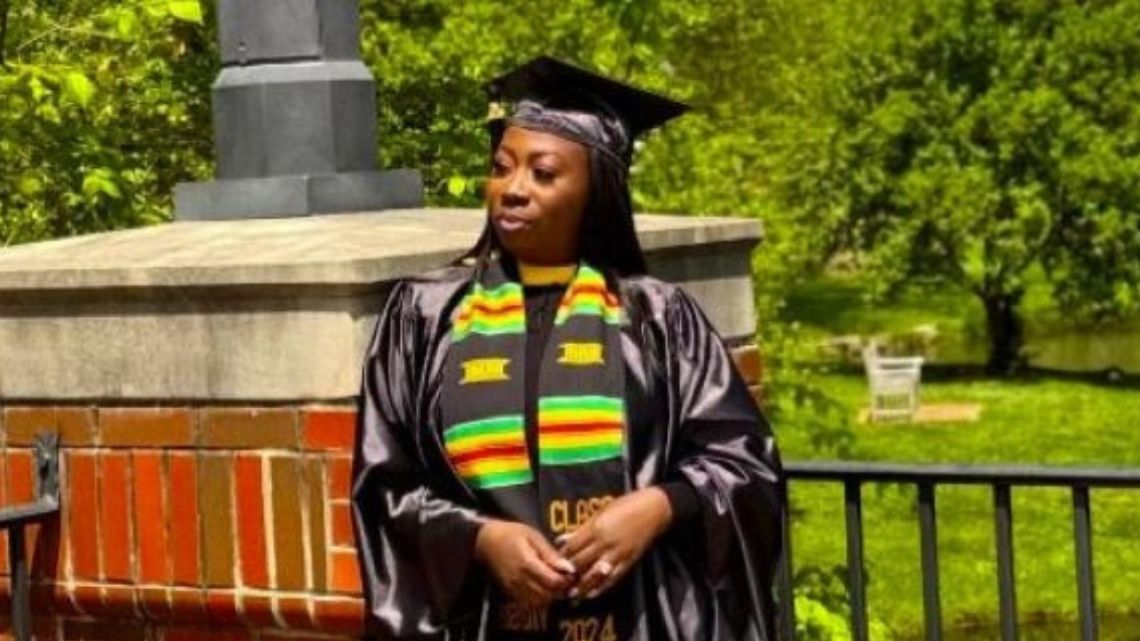
    Crystal Kafui Asimenu, a Ghanaian student at Ohio University in the United States, has distinguished herself as one of the top graduating students.

    This past weekend, Ms. Asimenu achieved a remarkable 4.0 GPA throughout her Master of Social Work program, bringing pride not only to her home country of Ghana but also to Ghanaian students studying abroad.

    Her academic accomplishment is one of the highest GPAs ever attained by an international student at the university. Ms. Asimenu’s dedication to academic excellence has earned her admission to pursue a 4-year PhD in Higher Education and Student Affairs at the same institution.

    Expressing her passion for imparting knowledge, she desires to venture into teaching to shape her students’ personal academic journeys, fostering their growth and success. Drawing from her experiences in social work and as a correctional officer, Ms. Asimenu aspires to contribute to shaping higher education policy.

    She aims to address critical issues such as access, equity, and affordability. Pursuing her PhD in higher education and student affairs, she hopes to inform policies that will positively impact the educational landscape, ensuring that all students have the opportunity to thrive.

  • UCC visually impaired student successfully graduates with PhD

    UCC visually impaired student successfully graduates with PhD

    Dr. Ben Nyanihorba Ayamba, the inaugural visually impaired UCC PhD graduate, successfully completed the rigorous seven-year journey in Guidance and Counselling, earning his doctorate degree.

    The achievement was celebrated at the university’s 56th Congregation, where he was one of 103 PhD graduands among 3,034 postgraduate students.

    Acknowledging his determination, Dr. Ayamba received the Special Chancellor’s Award of US $2,000. UCC, in its 56th congregation, graduated a total of 18,539 undergraduate and postgraduate students.

    Despite losing his sight in 1995, Dr. Ayamba persevered through rehabilitation and pursued education, eventually attaining his PhD in 2023.

    His journey, marked by faith and resilience, underscores the importance of supportive environments, with UCC’s resource center for Persons with Disabilities playing a crucial role in facilitating his academic success.

    “The Lecturers were also helpful; knowing our situation, especially those of us with visual impairment, they put the right methodologies in place to help us get the content and the necessary skills and competencies before completion,” he said.

    Instead of keeping their disabled child hidden from society, Dr. Ayamba pleaded with parents to seek advice and assistance so they can enroll their child in the right institutions and discover their potential and interests.

    “Some parents think once the child is disabled, he cannot do anything. They should contact the social welfare and the Ghana Blind Union and other organisations for the physically challenged,” he said.

    “There are a lot of educational facilities and rehabilitation centres to assess the capabilities of the child to know where they fit best; whether in an inclusive school, a mainstreaming school or to be placed in a special school,” he added.

    Despite his retirement in 26 days, Dr. Ayamba said he was still available for the country because he had earned a PhD in guidance and counseling.

  • Pursue a direct PHD in the USA with your Bachelor’s Degree, here are a few tips

    Pursue a direct PHD in the USA with your Bachelor’s Degree, here are a few tips

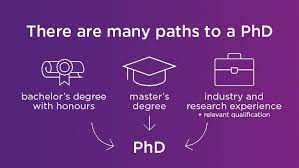
    1. You must have a plan that includes the number of schools you want to apply to.

    2. Get all the basic documents required for the process

    3. Go through the schools you have selected, their various websites, and check their general requirements and department/programs requirements.

    It’s important to check the programme requirements on that particular program’s department website because there might be additional requirements needed by the department.

    4. Always check for funding, scholarships, or graduate assistantships on the school’s website before you apply.

    5. Talk to the people who are supposed to put in the recommendations and get a green light from them.

    6. Remember that you are an international student. You can either go for a bachelor’s, master’s, or PHD, depending on your qualifications.

    7. Start putting in your applications to the schools you have finally chosen and can meet their requirements. You might pay an application fee or not, depending on the school so always check for that. You can always apply for application fee waivers, it can be honoured or declined.

    8. Make sure you successfully complete an application by filling out all relevant portions and uploading all relevant documents.

    9.GRE/SAT and transcript evaluation are not compulsory and you can always dodge😅 them by looking for schools that do it insist on those requirements. But these documents help boost your funding/scholarship chances. You can still get funding or scholarships without them.

    10. Also, focus on the public universities and colleges because, comparatively, their cost of attendance (COA) is comparatively better as compared to the private institutions.

    11. You do not need to pay fees before you can go to school in the USA so we keep hitting on getting funding or scholarships for the process.

    12. You can also use the cold emailing format to email program coordinators and graduate coordinators before applying to make certain inquiries before putting in your application. Not all of them will respond but never give up, keep on emailing others in different schools.

  • List of schools in USA with fully funded scholarship in specific graduate programs

    List of schools in USA with fully funded scholarship in specific graduate programs

    1.State University of New York Upstate Medical University
    PhD Biomedical Sciences (Bsc-PhD)

    2.No publication, no app fee, no GRE, no IELTS
    WES evaluation after you have been accepted.

    3.Wayne State University. Molecular Genetics and Genomics. Fully funded. No GRE & English Test. Request for App Fee waiver after starting the application. WES is required after admission.

    4.University of Delaware. MS Human Nutrition
    GRE required, TOEFL waived, app fee waived, but $75 without waiver.

    5.Arizona State University. PhD Materials Science and Engineering
    GRE,no toefl, application fee depends on department but I was given fee waiver

    6.University of Delaware, PhD Art History, Fully Funded. NO APP FEE, NO ANY TEST

    7.Ohio University, MA, Art History, Fully Funded, NO APP FEE, NO ANY TEST.

    8.Florida State University, MA, Art History, Fully Funded, WES REQUIRED, $30 APP FEE, NO TEST.

    9.Kent State University, MA, Art History, Fully Funded, NO APP FEE, NO ANY TEST.

    10.Virginia Tech University, Chemistry PhD fully funded, App fee $75, No Tests(GRE Optional)

    11.West Virginia University, Chemistry PhD. No Tests, App fee waived (All achieved with good communication with the GC).

  • List of 24 USA schools offering PhD programs in Public Health

    List of 24 USA schools offering PhD programs in Public Health

    1.Boston University School of Public Health

    2.Brown University School of Public Health

    3.Columbia University Mailman School of Public Health

    4.Emory University Rollins School of Public Health

    5.Harvard T.H. Chan School of Public Health

    6.Johns Hopkins Bloomberg School of Public Health

    7.New York University College of Global Public Health

    8.The Ohio State University College of Public Health

    9.Oregon Health & Science University-Portland State University School of Public Health

    10.Tulane University School of Public Health and Tropical Medicine

    11.University of Alabama at Birmingham School of Public Health

    12.University of Arizona Mel & Enid Zuckerman College of Public Health

    13.University of California, Berkeley School of Public Health

    14.University of California, Irvine Program in Public Health

    15.University of California, Los Angeles Fielding School of Public Health

    16.University of California, San Diego Herbert Wertheim School of Public Health and Human Longevity Science

    17.University of California, San Francisco School of Medicine

    18. University of Georgia College of Public Health

    19.University of Hawaii at Manoa Office of Public Health Studies

    20.University of Illinois at Chicago School of Public Health

    21.University of Iowa College of Public Health

    22.University of Kansas Medical Center School of Population Health

    23.University of Kentucky College of Public Health

    24.University of Louisville School of Public Health and Information Sciences

  • DAAD Scholarships in Germany for Postgraduate Studies in Development

    DAAD Scholarships in Germany for Postgraduate Studies in Development

    DAAD
    Masters/PhD Degree

    Deadline: Aug-Oct 2023 (annual)
    Study in:  Germany
    Next course starts AY 2024/2025

    Brief description: 

    The German Academic Exchange Service (DAAD) offers foreign graduates from developing and newly industrialised nations with at least two years of professional experience the opportunity to pursue a postgraduate or Master’s degree at a public or state-recognized German university, and in exceptional circumstances to pursue a doctoral degree, and to earn a university qualification (Master’s/PhD) in Germany.

    Host Institution(s):

    German Universities offering development-related postgraduate courses

    Level/Field(s) of Study:

    Masters or PhD courses in Economic Sciences/Business Administration/Political Economics; Development Cooperation; Engineering and Related Sciences; Mathematics; Regional and Urban Planning; Agricultural and Forest Sciences; Natural and Environmental Sciences; Medicine and Public Health; Social Sciences, Education and Law; and Media Studies.

    Number of Scholarships:

    Limited

    Target group:

    Students from eligible countries

    Scholarship value/inclusions/duration:

    The scholarships include monthly payments of 861 euros for graduates or 1,200 euros for doctoral candidates; payments towards health, accident and personal liability insurance cover; and travel allowance, unless these expenses are covered by the home country or another source of funding.

    The scholarship duration is 12 to 24 months (depending on the particular institution) for Masters and 42 months for PhD.

    Eligibility:

    The typical scholarship holder:

    • Is currently working either for a public authority or a state or private company in a developing country and, as such, is engaged in the planning and execution of directives and projects with emphasis on development policies having a bearing on technological, economic or social areas

    • Holds a Bachelor’s degree (normally four years) in a related subject.

    • Has completed an academic degree with far above average results (upper third) and at least two years of related professional experience after the first degree (bachelor) at the time of application

    • His/her academic degrees should normally not be more than six years old.

    • For study courses in German (scholarship includes a 6-month German language course): Successful passing of the language examination DSH 2 or TestDaF 4 before the start of the study course. Therefore a minimum German language level of B1 at the time of application is a requirement, that needs to be proofed by providing a certificate.

    • For courses in English: Proof of adequate language skills, according to the regulations of the respective courses

    Application instructions:

    Applications must be made directly to the respective course. Please refer to the respective course websites for the application procedure, the application deadline, and the documents to be submitted. Deadline varies depending on the course but falls around August-October 2023.

    It is important to read the FAQs and the 2024/2025 brochure and visit the official website to access the application form and for complete information on how to apply for this scholarship.

  • 15 schools in the US that offer master’s and doctoral degrees in sociology

    15 schools in the US that offer master’s and doctoral degrees in sociology

    University of California, Berkeley

    • University of California, Los Angeles

    • University of California, San Diego

    • University of California, Santa Barbara

    • University of California, Irvine

    • University of California, Davis

    • University of Michigan, Ann Arbor

    • University of Wisconsin-Madison

    • University of Minnesota, Twin Cities

    • University of Chicago

    • Northwestern University

    • University of Illinois at Urbana-Champaign

    Harvard University

    • Stanford University

    • Yale University

  • Meet Ghanaian scholar who failed WASSCE to attaining PhD from a UK university

    Meet Ghanaian scholar who failed WASSCE to attaining PhD from a UK university

    There are many inspirational tales, but few are as amazing as this one. George Asiamah’s entire world fell apart in 2003. His results from the West African Secondary School Certificate Examination, if he had any, would not even make his opponents proud.

    Mathematics F, Integrated Science E, Social Studies E, English Language F, Economics F, Geography F, and Government E are the grades he received.

    According to George himself, there were two reasons for these terrible outcomes. His truancy was the first, and possibly a self-inflicted one.

    In a post he made in 2018 detailing his experience in Secondary School (now High School), George Asiamah, who was a student of the Atwimaman Secondary School, identified a disinterest in the General Art course he was ‘forced’ to pursue and truancy as the two issues that stood between him and academic excellence.

    “Now, getting to the end of the first year, we were told that the school did not have the capacity for the business program, so it would be abolished in the following year. To that effect, all business students were to search for schools during the vacation for us to be transferred in the following academic year.

    “The next academic year began, and here I come, the only business student who didn’t get a new school. I actually didn’t get the communication proper, I thought my school was to look for the new school for us. So coming to second year, I was forced to join the General Arts class. Oh boy! I didn’t take delight in that development. That was when my old (truant) character re-manifested.

    “Here, it was an advanced stage of truancy – I no longer stay home for weeks, but in months. One could practically count the number of days I will be in school in a term. Funnily, any day my friends see me coming to class, they will be shouting “Ebon! Ebon!!” (teasing me with the name of my village). Others will ask jokingly, “enti school no wo ka ho?” (Are you part of the School?),” he said in the post.

    But like as has been said, life is not how many times you fall down but how many times you get up, so, faced with this academic adversity, George Asiamah picked himself up and set out to right the many wrongs in his life.

    With renewed mindset and verve, George navigated the academically demanding job of being a student at the Kwame Nkrumah University of Technology.

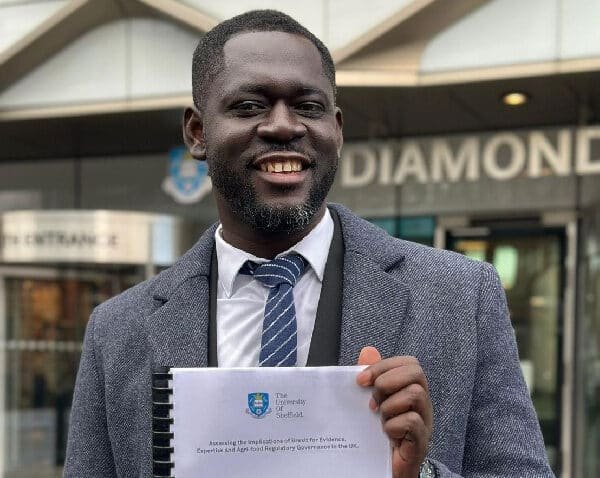
    He then furthered at Queen’s University, Belfast before moving on to The University of Sheffield where he pursued PhD.

    As published by a Facebook user, Shadrack Dare, George earlier in the week successfully defended his thesis which was on Brexit, Scientific Evidence and Agri-food Regulatory governance.

    With his thesis defense out of the way, George Asiamah has gone from a ‘tiwuii’ in 2003 to a PhD holder who will now respond to the title ‘Doc Doc’.

  • Ph.D. Women likely not to find men to Marry –Studies

    Education has been identified as one of the major factors that affect the marital decisions of women. Most women are caught between acquiring higher education and getting married early and they have to decide to choose one or find themselves being forced to be married (Coontz, 2012). Hence, there used to be a huge trade-off between choosing education and a husband. Three-quarters of the total number of women who graduated from College before 1900 in the United States remained unmarried (Coontz, 2012). This shows that those women have forgone marriage to pursue their educational aspirations Coontz (2012).

    Though there is a debate about educated women intentionally choosing to be single, there is also the belief that others do not consciously delay or reject marriage.  For this group of women, their achievements including higher educational attainment intimidate men. The educated woman is viewed in some communities as an intimidating figure to men and so unconsciously drives away prospective suitors. This belief or perception is linked to the assumption that the educated woman develops an assertive, independent character that makes it impossible for her to love, honor and “obey” a man as “real” wives should do (Coontz, 2012).

     Some people even joke that when they meet a woman with a Ph.D., they need not find out what her area of specialization is. This is because, they assume that Ph.D. means “Putting Hubby Down” (Coontz, 2012). University education is considered a factor associated with later and fewer marriages for most women. Hence, there is the perception that higher education is negatively related to marriages (Raymo, 2013).

    These have led some Ph.D. supervisors on African continents to even advise black women pursuing their Ph. Ds to marry before completing their degrees. This is because they feel their chances of finding a suitable suitor decline after completion. They feel black men feel uncomfortable marrying such women, probably due to ego issues. Other studies also explained the market is slim for such Ph.D. black women as they turn to also marry men in their class with a higher portfolio. Besides, men with PhDs or Professors would want to marry women who are not in their class. Singh and Samara (1996) argue that the level of education of a woman tends to influence the time and age at which she will commit to marriage.

    I have also read numerous studies suggesting that the higher our black women acquired terminal degrees the higher their chances of not getting married.  It is interesting how acquiring a terminal degree will affect their chances of getting a suitable spouse as compared to white women who also acquire a terminal degree.   For instance, (Boyd et al. 2020) found an unavailability of partners for educated black women as men prefer women of other races with similar education. This leads black women to compromise more to acquire their wants if they have the means to get their wants and deem that it is valuable enough to take a risk.

    For highly educated Black women, their negotiation of partner scarcity can directly influence their engagement in or acceptance of compromising behaviors. Given that there is an acknowledgment within the research that educated Black women perceive a lack of ideal available partners, it is asserted that these women may perceive that they must compromise some aspect of their partner selection criteria and ensuing expectations and beliefs. As such, these women may be less likely to leave unsatisfying relationships or renegotiate personal values or perceptions of an ideal partner to “fit” what is currently available. This could happen at various stages of the relationship and could directly shape the power dynamics within the couple. This also has implications for negative outcomes, depending on the degree to which a woman perceives herself as having power in the relationship.  Also, research from Yale University suggests that highly educated black women are twice as likely to have never been married by the age of 45 as white women with similar education.

    Niambi Carter, 31, has a Ph.D. and is an assistant professor of political science at Purdue University, admits that she has been hard-pressed to find a black mate with a similar level of education. A similar study(Muntari-Sumara, B, 2015) from Ghana also revealed that the majority of educated women prefer marriage to singlehood and cohabitation. Companionship and societal expectations were identified as the major influencers of women’s marital decisions. Also, education was found to affect the marriage preferences of women to some extent. There was a direct relationship between higher educational aspiration and marriage desire.

    The Pew Research Center, also reports that College-educated adults are more likely to be married than less-educated adults. Among those who were ages 25 and older in 2014, 65% of those with a bachelor’s degree or more were married, compared with 53% of adults with less education, according to a Pew Research Center analysis.

    While the research does not address reasons these marriages last longer, we do know that college-educated adults marry later in life and are more financially secure than less-educated adults.

    Though such women struggled to find suitors, research also found that such women who finally marry have lower divorce rates ( McLanahan, Sara. 2004. “Diverging Destinies: How Children Fare Under the Second Demographic Transition.” Demography. 41(4): 607-627.) There are several reasons for this. Less educated individuals typically marry at an earlier age, which is associated with higher divorce rates.  Additionally, the lower incomes and greater economic insecurity of those with less education increase stress, affecting divorce.

    A previous study found a different association( Casey et al. 2012) and estimate that 78% of college-educated women who married for the first time between 2006 and 2010 could expect their marriages to last at least 20 years. But among women who have a high school education or less, the share is only 40%.


    England and Bearak(nd) found that early in the life cycle, those who ultimately get more education are less likely to have married than their less educated counterparts.  This is because those staying in school longer also delay getting married longer.  But by age 40, the well-educated have caught up with the less educated and even surpassed them in the percentage that has married.  The education differences in whether people ever marry are small for whites, but quite large for blacks, owing partly to the very low marriage rates of the most disadvantaged blacks—those without a high school or less.


    Living together and Divorce


    The Pew Research Center also reports that couples who lived together before getting married had a slightly lower chance of having a long-term marriage than those who did not live together.

    Among women who did not live with their spouse before getting married for the first time, 57% can expect to still be married after 20 years. For women who lived with their spouse before marriage, the probability of being married for at least 20 years is somewhat lower – 46%. Whether the couple was engaged when they lived together didn’t make a difference in women’s chances of long-lasting marriages.

    For men, the patterns are slightly different. In this case, it matters whether men are engaged to a partner they lived with before getting married. Men who lived with their future spouse without being engaged had a slightly lower chance of having a long-term marriage (49%) than those who were engaged first (57%). Men who didn’t live with their partner before getting married had a 60% chance of celebrating their 20th anniversary.


    Marriage longevity by Race

    Marriage survival is also dependent on race and ethnicity. Some of these differences could be related to educational differences among adults with different racial or ethnic backgrounds. The Pew Research Center also found that Asian women, who are among the most educated, are more likely than any other racial or ethnic group to have a long-term marriage.  “For Asian women who were married for the first time between 2006 and 2010, the chance that they may celebrate their 20th wedding anniversary is nearly 70%. By contrast, about half of Hispanic and white women may see their marriages last that long. And for black women, the chance is 37%.

    Among men, Hispanics have the highest likelihood of being in a long-lasting marriage (findings about Asian men are not included because the sample size was too small to be nationally representative). For those who married for the first time between 2006 and 2010, about six-in-ten Hispanic men (62%) could expect their marriages to last at least 20 years, compared with 54% of white men and 53% of black men”.


    Take Home

    Studies have found that the higher a woman, especially a black educated herself, the less she is to get a suitor. For instance, Frazier et al. (1996) found out that more educated and financially secure women exhibit less desire for marriage. Singh and Samara (1996) found different reasons in their study. Others such as Goldscheider and Whaite, (1986) and Oppenheimer (1988) likewise argue that women who have a college education and have strong work orientation or relatively high income may delay their time of marriage but that does not interfere with their desire for marriage. They also state that this category of women has stronger marriage desirability but may delay marriage because they need to build the capability in helping to reduce some of the economic burdens that are borne primarily by their partners.

    Hayward et al. (1995) and Botkin et al. (2000) also found that women with a college education have classless marriage role expectations and this keeps increasing as they further their education because increasing education allows the women more time in searching and choosing their desired marriage partners. The findings of Hayward et al. (1995) and Botkin et al. (2000) have been downplayed by researchers like Gordon (2003).

    Gordon (2003) argues that highly educated women’s lower desire for marriage may be highly linked to the perceived lack of high-quality mates desired by these women and not necessarily their educational level.   Bledsoe, (1990) also centered on women’s fertility issues and education and found that fertility is somehow lower among educated women in Africa as young women who manage to get more education to tend to avoid pregnancy. Bledsoe (1990) also found out from Brandon’s 1984 survey that educated women in Freetown have the longest marriage delays.

    This Might Surprise You.  This means that our women pursuing PhDs and other higher education; have limited suitors but when they get married, they have higher chances of lasting marriages according to studies.

    By  Prof. Raphael Nyarkotey Obu


    The writer is a Professor of Naturopathic Healthcare, President, of Nyarkotey College of Holistic Medicine & Technology (NUCHMT)/African Naturopathic Foundation. E-mail: collegeofholisticmedicine@gmail.com.

    DISCLAIMER: Independentghana.com will not be liable for any inaccuracies contained in this article. The views expressed in the article are solely those of the author’s and do not reflect those of The Independent Ghana


  • NDCs Peter Otokunor bags PhD in Agric Economics and Policy

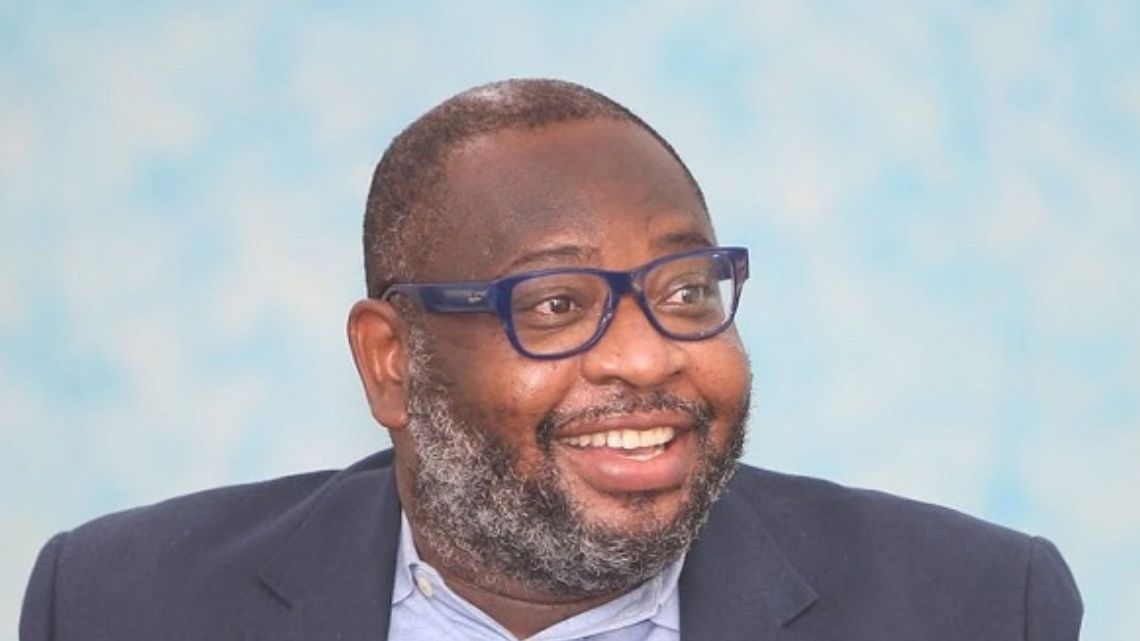
    A Deputy General Secretary of the National Democratic Congress (NDC), Peter Boamah Otokunor, has successfully obtained a doctorate degree in Agric Economics and Policy from the University of Ghana.

    Mr. Peter Boamah Otokunor successfully graduated on Friday, July 29.

    The Deputy NDC scribe in a post on June 21 celebrated the successful defense of his PhD thesis.

    The subject of his thesis was centered on “Technical efficiency and competitiveness of irrigated and rain-fed production technologies in Ghana.”

    A video on his Facebook page showed him interacting with his supervisors for the oral defense of his thesis.

    The accompanying caption of the post read: “Romans 8:28 All things work together for good to those who love God …We made it. I came, I saw and conquered! PhD Agric Economics and Policy bagged successfully.”

    NDC's Peter Otokunor bags PhD in Agric Economics and Policy

    On June 22, he posted another video of the moment the examination panel declared his results.

    “The declaration of my results by the examination panel Chaired by Prof. Irene Egyir after the presentation of my viva at the University of Ghana yesterday. An exciting moment it was, the emotions were overwhelming. Glory be to God!” the caption of the video read.

    NDC's Peter Otokunor bags PhD in Agric Economics and Policy

    “I thank God Almighty for the support, the protection, the courage, the assistance in making this dream come true and I consider it as one of the biggest dreams of my life,” he said.

    Source: Myjoyonline

  • Ghanaian student who started PhD in the US last month dies in University pool


    A young man full of promise Adam Gafaru has passed on in the United States of America after struggling through his first degree to land a PhD at Arizona State University in the US. He passed on in a swimming pool incident.

    Adam Gafaru who got his visa and started his PhD last month, August 19th 2021 was a former biochemistry student of Kwame Nkrumah University of Science and Technology (KNUST) where he completed in 2020 with first-class honours.

    Witnesses say not long ago, Adam shared his life story to inspire younger students who are going through one form of difficulty or the other following from his own struggles in life as a student who barely had enough to eat. MyNewsGh.com has attached the post.

    Adam had a full scholarship for his PhD in Biochemistry at Arizona State University, USA and even started classes on August 19, 2021, but alas.

    Tributes have been pouring in for him all over social media.

    Source: mynewsgh.com