Tag: Philipines

  • China, Philippines agree on a peaceful resolution of South China Sea solution

    China, Philippines agree on a peaceful resolution of South China Sea solution

    During their meeting in Beijing, Xi and Marcos decided to settle their differences regarding the South China Sea “through peaceful means.”

    According to a joint statement from the two nations, China and the Philippines have decided to establish a direct communication channel on the South China Sea to settle disputes over the disputed waterway “through peaceful means”.

    The deal was reached on Thursday, a day after Philippine President Ferdinand Marcos Jr. met with Chinese President Xi Jinping in Beijing. The two leaders were trying to patch up their strained relationship as a result of Manila’s decision to request an arbitration ruling in 2016 regarding China’s sweeping claims in the South China Sea.

    Beijing has disagreed with the tribunal’s decision that China’s claims are invalid.

    Since then, Manila has continued to raise concerns over reported Chinese construction activities on islands in the South China Sea – as well as the transformation of disputed reefs into artificial islands – and “swarming” by Beijing’s vessels in the disputed waters, which are rich in oil, gas and fishery resources.

    The joint statement on Thursday said Xi and Marcos had an “in-depth and candid exchange of views on the situation in the South China Sea” and “emphasized that maritime issues do not comprise the sum-total of relations between the two countries”.

    The two leaders also “agreed to appropriately manage differences through peaceful means”.

    Both countries reaffirmed the importance of maintaining peace and stability as well as freedom of navigation and overflight in the South China Sea, and establish “a direct communication mechanism” between their foreign ministries, the statement added.

    Marcos’s three-day trip to Beijing, his first official visit to China as president, comes as the country re-emerges from a self-imposed border shutdown since the pandemic started in 2020 which has disrupted trade and hurt its economy.

    The Philippine president is the first foreign leader hosted by China in 2023, and this “speaks volumes about the close ties” between the two countries, Xi told Marcos, according to China’s official Xinhua news agency.

    In a video address released by his office on Wednesday, Marcos said both sides discussed “what we can do to move forward, to avoid possible mistakes, misunderstandings that could trigger a bigger problem than what we already have”.

    Marcos also said he made the case for Filipino fishermen who have been denied access to their traditional areas of operation by China’s navy and coastguard.

    “The president promised that we would find a compromise and find a solution that will be beneficial so that our fishermen might be able to fish again in their natural fishing grounds,” he said.

    The joint statement added that the coastguards of China and the Philippines would meet “as soon as possible” to discuss “pragmatic cooperation”, and that the two countries will hold an annual dialogue on security.

    It said both sides also agreed to resume talks on oil and gas exploration in the South China Sea and discussed cooperation on areas including solar, wind, electric vehicles and nuclear power.

    On the economic front, China agreed to import more goods from the Philippines with the aim for bilateral trade to revert to or surpass pre-pandemic levels. The two sides are finalising rules for imports of fruits from the Philippines, which Marcos said would start to balance the trade.

    Both sides also promised to boost tourist numbers and flights between both capitals, the statement said. Last year, only about 9,500 Chinese visited the Philippines, down from about 1.6 million before the pandemic.


    Source: Aljazeera.com
  • Philippines: Exam hats with ‘anti-cheating’ inscriptions by students go viral

    Images of students wearing “anti-cheating caps” for college examinations have gone viral on social media in the Philippines, eliciting laughter.

    Students at one college in Legazpi City were asked to wear headwear to prevent them from peeping at the papers of their classmates.

    Many others replied by making their own contraptions out of cardboard, egg cartons, and other repurposed items.

    Their tutor told the BBC she had been looking for a “fun way” to ensure “integrity and honesty” in her classes.

    Mary Joy Mandane-Ortiz, a professor of mechanical engineering at Bicol University College of Engineering, said the idea had been “really effective”.

    It was implemented for recent mid-term exams, which were sat by hundreds of students at the college in the third week of October.

    A student wears a homemade hat made of egg boxes during a college exam in the Philippines
    IMAGE SOURCE,MARY JOY MANDANE-ORTIZ1px transparent line

    Prof Mandane-Ortiz said her initial request had been for students to make a “simple” design out of paper.

    She was inspired by a technique reportedly used in Thailand some years previously.

    In 2013, an image went viral to show a room of university students in Bangkok taking test papers while wearing “ear flaps” – sheets of paper stuck to either side of their head to obscure their vision.

    Prof Mandane-Ortiz said her engineers-in-training took the idea and ran with it – in some cases innovating complex headgear in “just five minutes” with any junk they found lying around.

    Others donned hats, helmets, or Halloween masks to fulfill the brief.

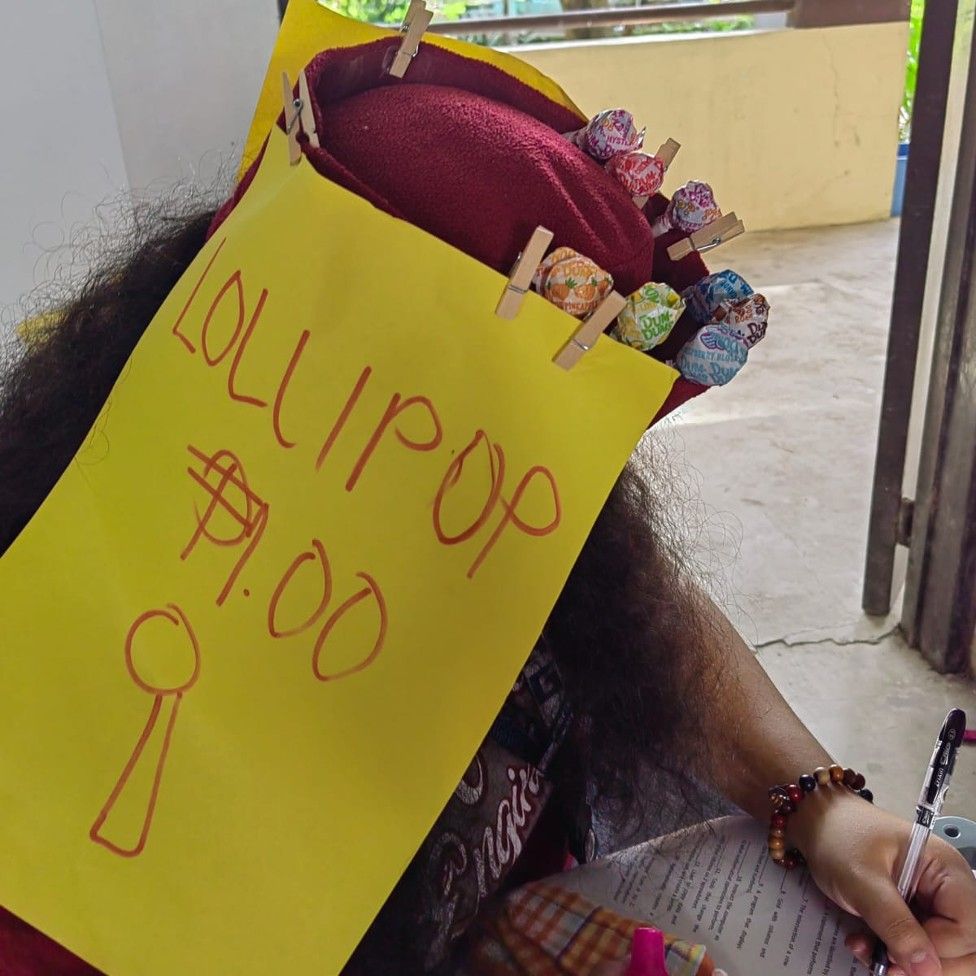
    A student wears a homemade hat adorned with lollipops during a college exam in the Philippines
    IMAGE SOURCE, MARY JOY MANDANE-ORTIZ

    A string of the professor’s Facebook posts – showing the youngsters wearing their elaborate creations – garnered thousands of likes in a matter of days, and attracted coverage from Filipino media outlets.

    They also reportedly inspired schools and universities in other parts of the country to encourage their own students to put together anti-cheating headwear.

    Prof Mandane-Ortiz said her tutees performed better this year, having been motivated by the strict examination conditions to study extra hard.

    She added that many of them finished their tests early – and nobody was caught cheating this year.

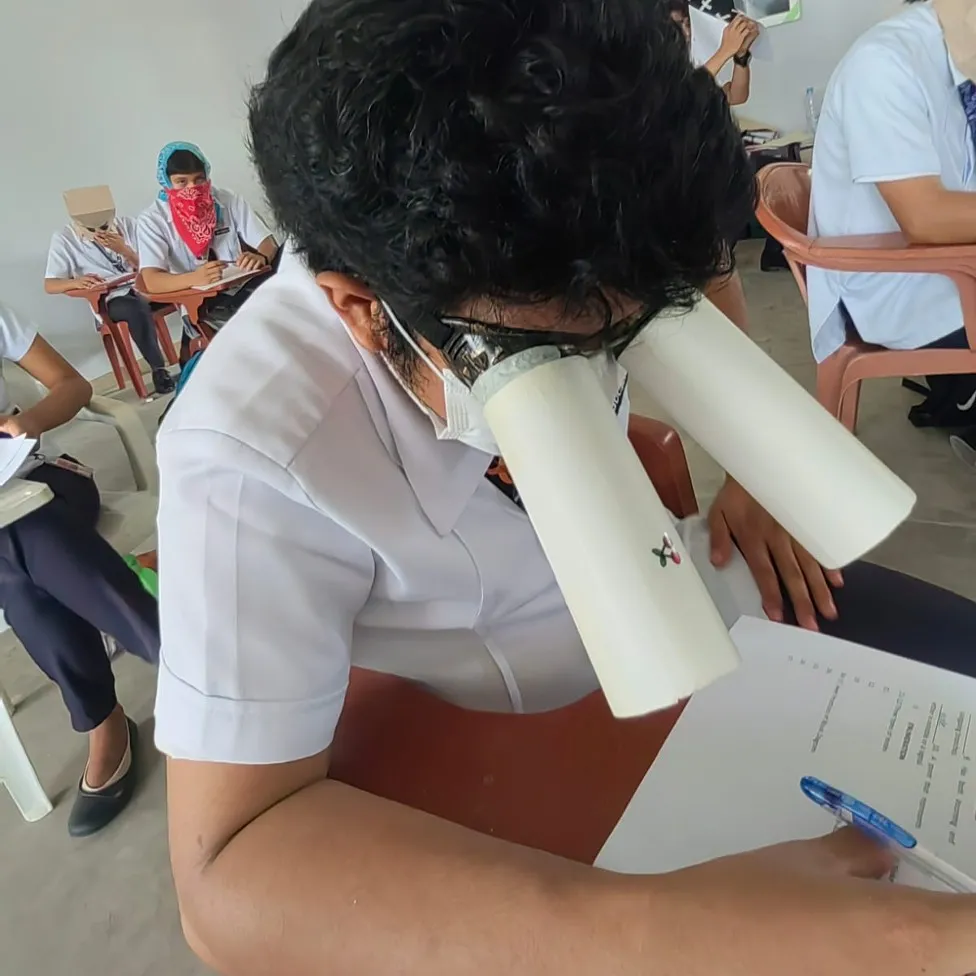
    A student wears homemade goggles during a college exam in the Philippines
  • Typhoon Noru kills five rescuers in the Philippines

    In the Philippines, a storm that left homes underwater and millions without electricity claimed the lives of five rescue personnel.

    They were operating in the San Miguel district, north of the Philippine capital of Manila, when sudden floods washed them away.

    The district was among those hit hard by Typhoon Noru, with some residents seen stranded on their roofs, while others waded through chest-high garbage-strewn waters, attempting to pass on supplies.

    The typhoon caused gusts of up to 240km/h (149mph) on Luzon, where more than half of the country’s 110 million population live.

    Noru, known locally as Karding, first made landfall as a super typhoon, but later weakened at 20:20 local time (12:20 GMT) on Sunday. It is expected to leave the Philippines by Monday evening.

    In San Vincente, a village in San Miguel, one man was seen futilely trying to brush water away from his door.

    Another, standing on top of the rooftop of her home, shouted that the country’s leaders needed to “focus on climate change”.

    Floods in the village peaked at around 04:00 in the morning, and waters are said to be receding.

    More than 74,000 people had been evacuated from the typhoon’s path, and officials had earlier issued warnings of “serious flooding” in areas of the capital, Manila.

    But so far there have been no reports of severe damage or widespread loss of life.

    “I think we may have gotten lucky, at least this time,” said Philippines president Ferdinand Marcos during a briefing on Monday. “I think it’s clear from what we did these last two days is that, very, very important, is preparation,” he added.

    “It’s not yet over. I think the point when we can stand down is when the majority of evacuees are already back in their homes,” he said.

    Mr Marcos has ordered that supplies be airlifted and clean-up equipment provided to communities that have been most affected.

    In Quezon Province, east of Manila, fishermen had earlier been prevented from heading to sea, and there were reports of some areas being without power.

    Flights and ferry services have been canceled. On Luzon, President Marcos suspended all government work and school classes were also canceled.

    In Dingalan municipality, northeast of Manila and on the Pacific coast, residents were forced to seek shelter.

    Trading on the country’s stock exchange will also be suspended on Monday and Mr Marcos warned that the energy ministry had placed on high alert all energy-related industries in the county.

    Thousands of volunteers are monitoring river levels, bridges, and mountains for landslides which could hamper rescue efforts, said Dick Gordon, chairman of the Philippine Red Cross.

    Information will be crucial in getting help to where it is needed, he said.

    The Philippines, an archipelago of more than 7,000 islands in the Pacific Ocean, is highly vulnerable to storms. It sees an annual average of 20 tropical storms.

    An estimated 400 people died when Typhoon Rai hit the country in December 2021, with rescue teams describing scenes of “complete carnage”.

    And in 2013, Typhoon Haiyan, one of the most powerful tropical storms ever recorded, killed some 6,300 people.

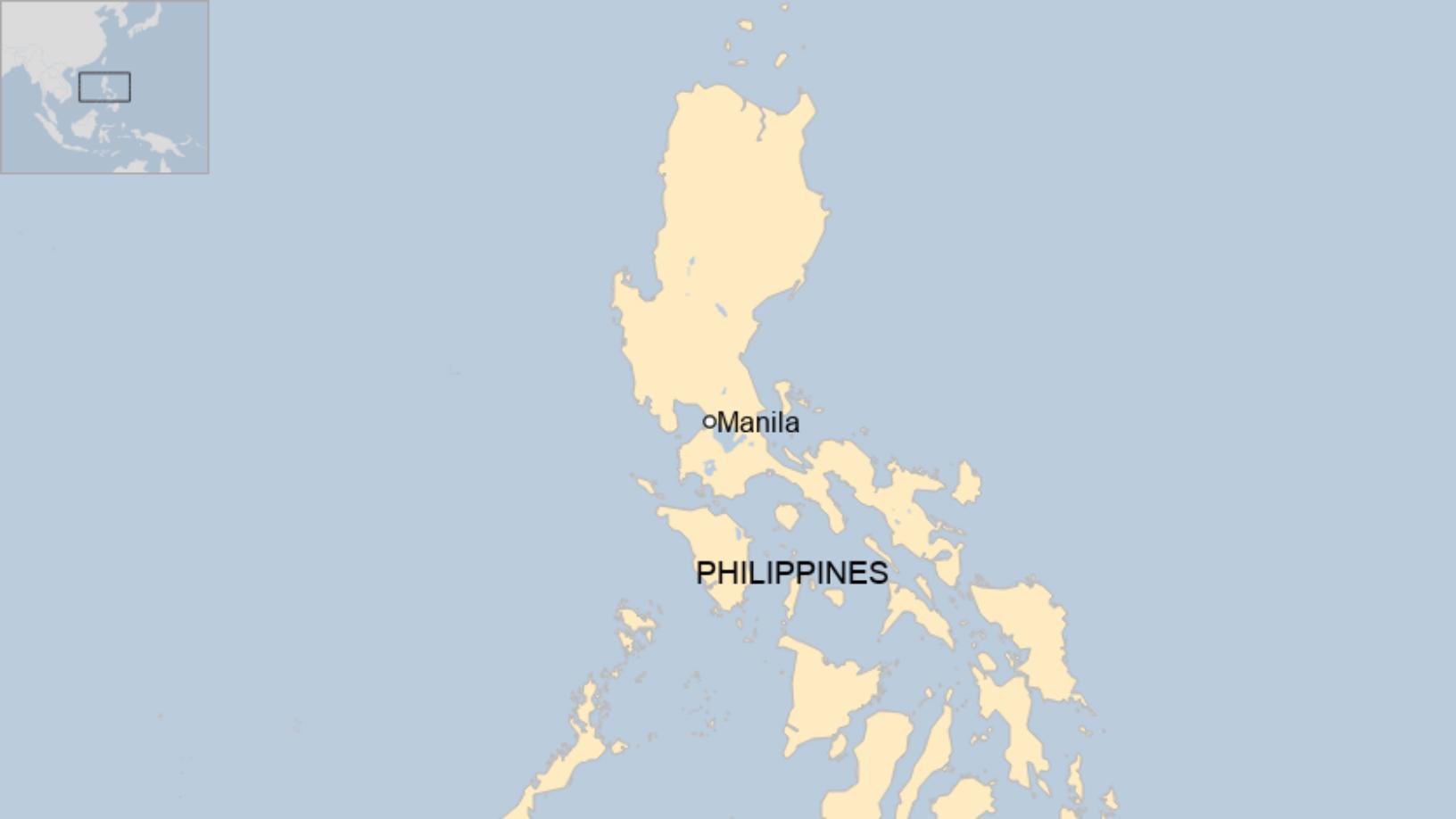
    Map