Tag: Platinum Jubilee

  • UK Royal Family: Who is in it and what does the Queen do?

    The UK is having a four-day bank holiday weekend in June as part of celebrations for the Queen’s Platinum Jubilee.

    In February, the Queen became the longest-serving British monarch, and the first to reach 70 years on the throne.

    Queen Elizabeth II has been the UK’s head of state since 1952, when her father King George VI died. She is also the head of state for 15 Commonwealth countries.

    But this could change. Last year Barbdos removed the Queen as its head of state and became a republic. Since then, six Caribbean nations have indicated they plan to follow suit: Antigua and Barbuda, the Bahamas, Belize, Grenada, Jamaica, and St Kitts and Nevis.

    What is the Queen’s Jubilee?

    The Queen was born on 21 April 1926 but she celebrates two birthdays every year. The second is the day the official celebrations take place and is usually on the second Saturday in June.

    This started with her great-grandfather Edward VII, who was born in November, to make it more likely that there would be good weather for a public celebration.

    This year’s jubilee will be the Queen’s fourth – she celebrated her Silver Jubilee in 1977, her Golden Jubilee in 2002 and her Diamond Jubilee in 2012.

    There are several events planned throughout the year, but the main celebrations are during June’s four-day bank holiday weekend, and include a special Trooping of the Colour, a concert outside Buckingham Palace, and a pageant.

    Thousands of street parties will be held across the country. Pubs, bars and nightclubs will also be able to stay open until 01:00 BST.

    As part of the opening celebrations for the Jubilee, the Queen will be joined by members of her family on the balcony of Buckingham Palace on 2 June.

    The Palace has confirmed that Prince Harry and Prince Andrew will not be present as it will only be for “members of the Royal Family who are currently undertaking official public duties”.
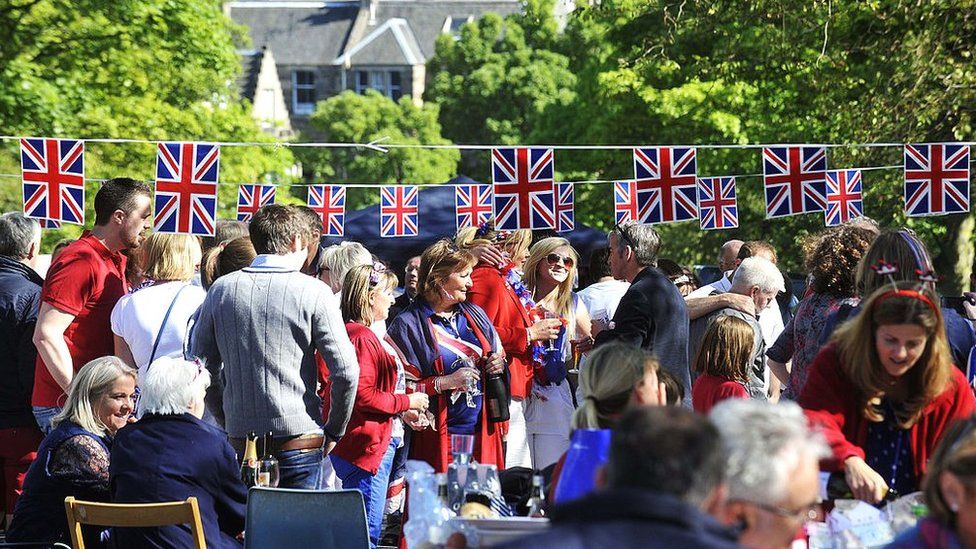
    Revellers with Britain's Union flags during a party to celebrate the Queen's Diamond Jubilee in Edinburgh on June 3, 2012Getty Images: Many street parties were held to celebrate the Queen’s Diamond Jubilee in 2012

    How popular is the monarchy?

    A recent poll by YouGov suggested that 62% think the country should continue to have a monarchy, with 22% saying it should have an elected head of state instead.

    Last year, two Ipsos Mori polls gave broadly similar results, with only one in five believing that abolishing the monarchy would be good for the UK.

    However, the YouGov poll suggested that there had been a decline in those in favour of the monarchy in the past decade, from 75% in 2012, to 62% now.

    While there was majority support for the monarchy among older age groups, the poll indicated this might not be true for younger people.

    In 2011, when YouGov first started tracking the issue, 59% of 18 to 24-year-olds thought the monarchy should continue, compared with 33% today.

    When was the Queen crowned and what happens at coronation?

    When a monarch dies, the heir immediately becomes king or queen. The coronation is the ceremony at which the monarch is formally crowned. It takes place after a period of mourning for the previous sovereign.

    Elizabeth II was crowned on 2 June 1953. Her coronation was the first to be broadcast live on TV. More than 20 million people tuned in.

    The central elements of the ceremony have barely changed for hundreds of years. The coronation is performed by the Archbishop of Canterbury. The monarch is anointed with “holy oil”, receives the orb and sceptre – symbols of royalty – and is crowned with the St Edward’s Crown, the centrepiece of the Crown Jewels.
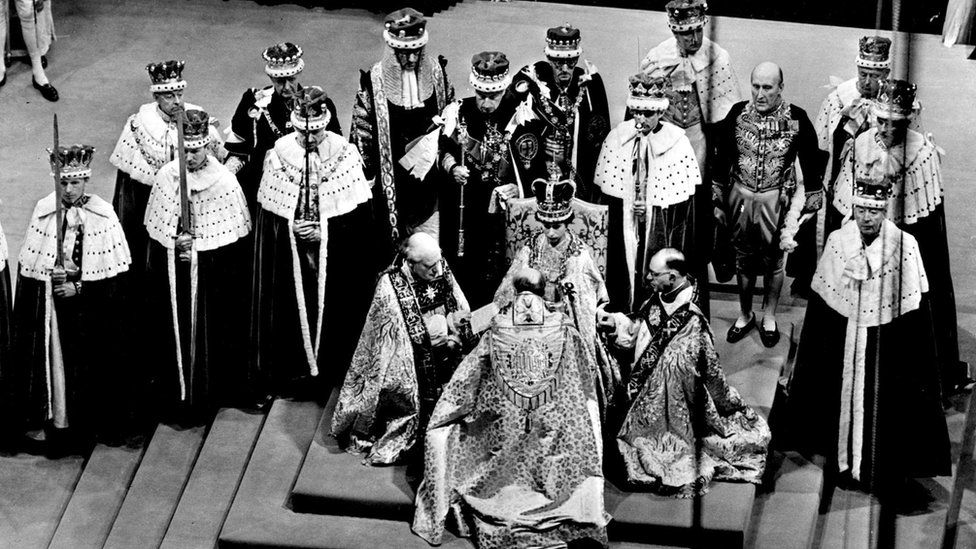
    The coronation of Queen Elizabeth, June 1953PA Media: More than 20 million people watched the Queen’s coronation on television on 2 June, 1953.

    How many children and grandchildren does the Queen have? And how does succession work?

    The Queen was married to her late husband, Prince Philip, who died in April 2021, for more than 73 years. They had four children, eight grandchildren and 12 great-grandchildren. Prince Charles is her first-born, followed by Princess Anne, Prince Andrew and Prince Edward.

    The order of succession sets out which member of the Royal Family takes over as monarch when the existing one dies or abdicates. First in line – the heir to the throne – is the monarch’s first-born child.

    Royal succession rules were amended in 2013 to ensure that sons no longer take precedence over their older sisters.

    Prince Charles is the Queen’s heir. His eldest son, Prince William, is second in line, and William’s eldest child, Prince George, is third.

    Prince Charles would act as “regent” if his mother was not able to perform due to ill-health. This means he would take on the role of the monarch, without officially taking the position.

    Source: BBC
  • Platinum Jubilee: Crowd cheers Queen at palace as Jubilee begins

    Roaring crowds cheered the Queen as she joined other royals on the balcony of Buckingham Palace on the first of four days of Platinum Jubilee celebrations.

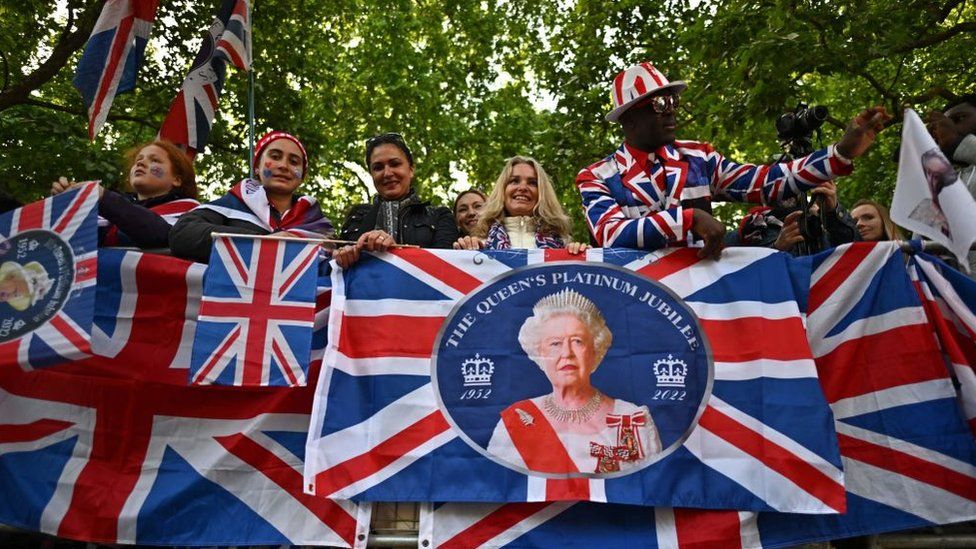
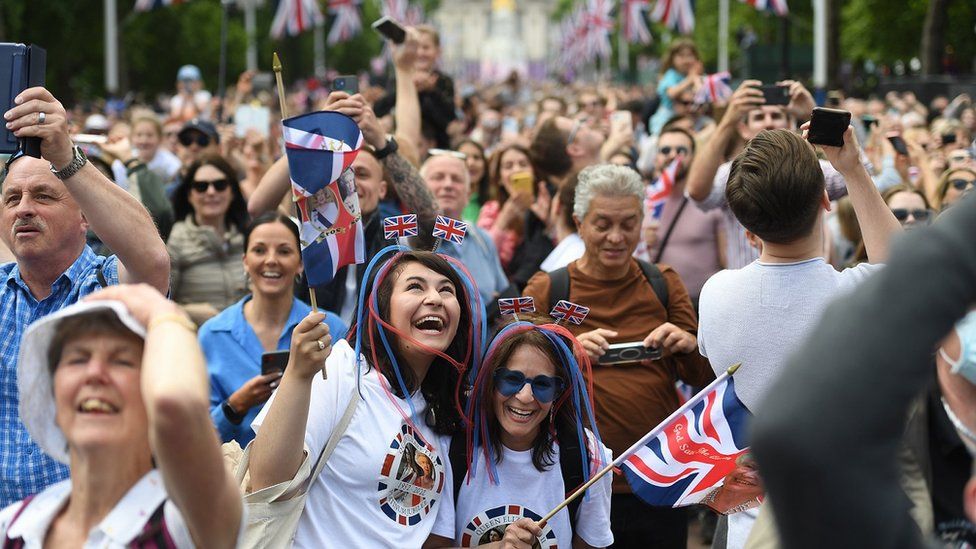
    Thousands flooded The Mall, waving flags in the brilliant sunshine to celebrate the Queen’s 70-year reign.

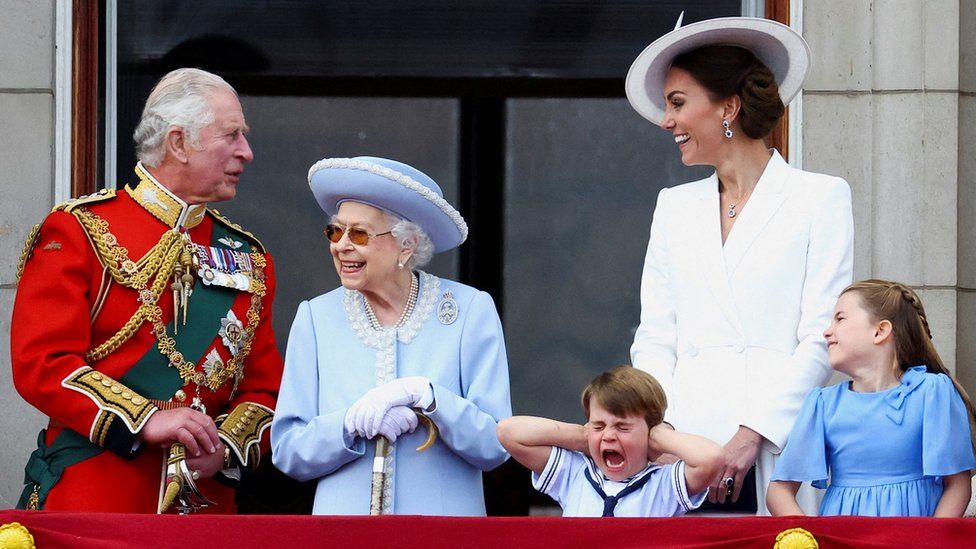
    The 96-year-old watched a flypast with 17 other royals and was immediately flanked by Prince Charles and four-year old great-grandson Prince Louis.

    The Queen looked delighted as she and Prince Louis chatted during the event.

    But the noise of the 70-aircraft flypast was too much for the young prince, who was pictured covering his ears and tightly shutting his eyes.

    The parade marked the start of a long bank holiday weekend of events celebrating the Queen’s reign – the longest by a British monarch.

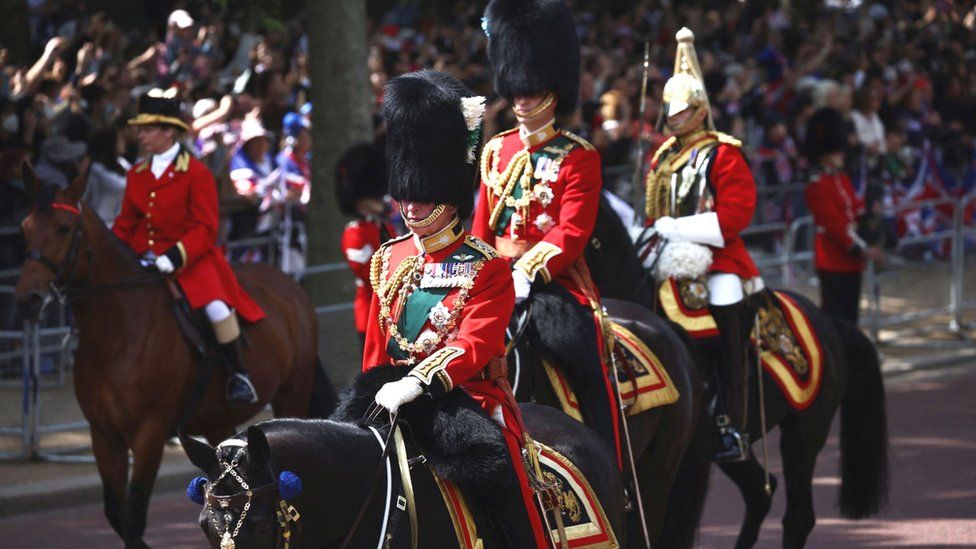
    Riding on horseback and wearing the Platinum Jubilee medal with his uniform, the Prince of Wales inspected the troops in his mother’s place.

    The Queen, who was using a walking stick, has limited her appearances in recent months due to mobility issues.

    As the soldiers marched towards Buckingham Palace at the end of the parade, the Queen emerged on to the balcony, accompanied by cheers from the crowd.

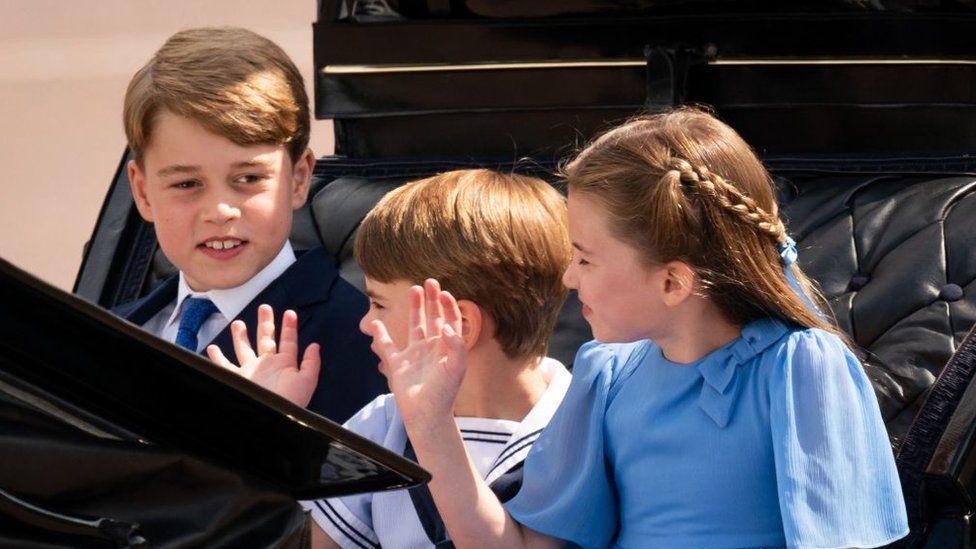
    Princes George and Louis, Princess Charlotte, the Duchess of Cambridge and Duchess of Cornwall arriving at Horse Guards' Parade by carriageIMAGE SOURCE, GETTY IMAGES
    Image caption, Princes George and Prince Louis with Princess Charlotte arrived by carriage with their mother, the Duchess of Cambridge, and Camilla, Duchess of Cornwall
    Prince Charles and Prince William on horseback during Trooping the ColourIMAGE SOURCE, REUTERS
    Image caption, Prince Charles and Prince William rode on horseback during the parade
    Crowds on the Mall for Trooping the ColourIMAGE SOURCE, GETTY IMAGES
    Image caption, A large crowd lined the Mall, some of whom had camped overnight for the best spot

    More than 1,500 officers and soldiers along with 350 horses from the Household Division took part in Trooping the Colour, the first time the parade has been staged in full since the pandemic.

    After the parade, more than 70 aircraft – including Spitfires from World War Two, Apache helicopters, Typhoons and the Red Arrows – took part in the flypast over Buckingham Palace.

    Several jets flew in formation to form the number 70 in honour of the Queen’s long reign

    Flag-waving spectators look up as a group of planes fly in formation to spell out '70' to mark the Queen's reignIMAGE SOURCE, GETTY IMAGES
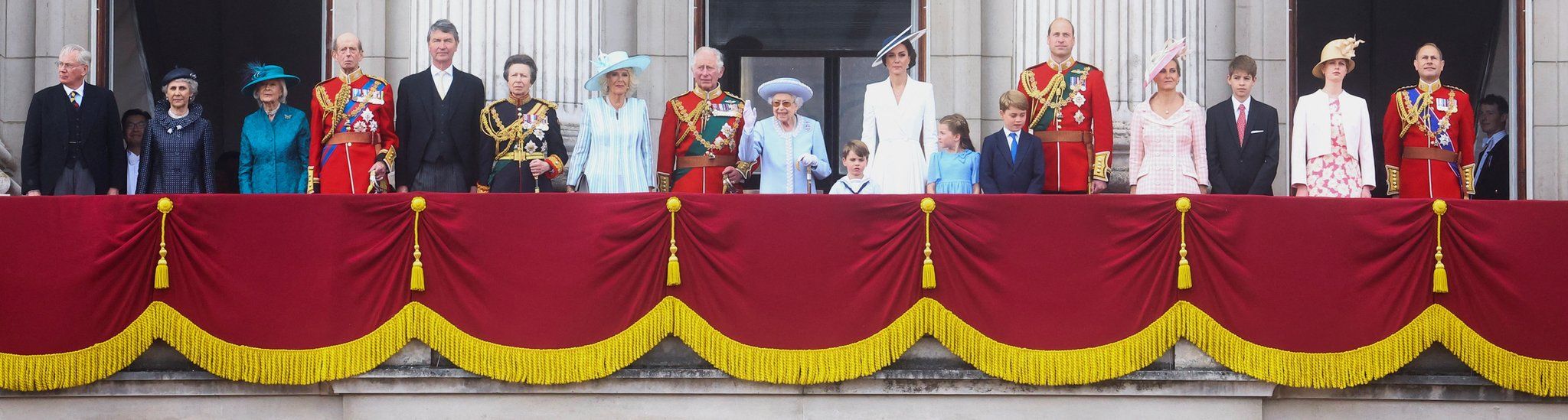
    The Queen flanked by 17 other senior royals on the balconyIMAGE SOURCE, REUTERS
    Image caption, The Queen’s youngest son, Prince Edward, took up a position on the far right of the balcony, standing with his immediate family, meaning he was cropped out of many pictures seen on the day

    Prince Charles, the Duchess of Cornwall, the Princess Royal, the Duke and Duchess of Cambridge and their three children – Prince George, Princess Charlotte and Prince Louis – flanked the monarch on the balcony – the Royal Family’s first gathering there since 2019.

    It had been decided only “working royals” would appear, which excluded the Duke and Duchess of Sussex, and the Queen’s son, the Duke of York.

    Prince Andrew, whose royal titles were returned to the Crown amid a lawsuit in the US, did not attend. He had been due to attend Friday’s thanksgiving service, but on Thursday afternoon Buckingham Palace said he would miss it as he had tested positive for Covid.

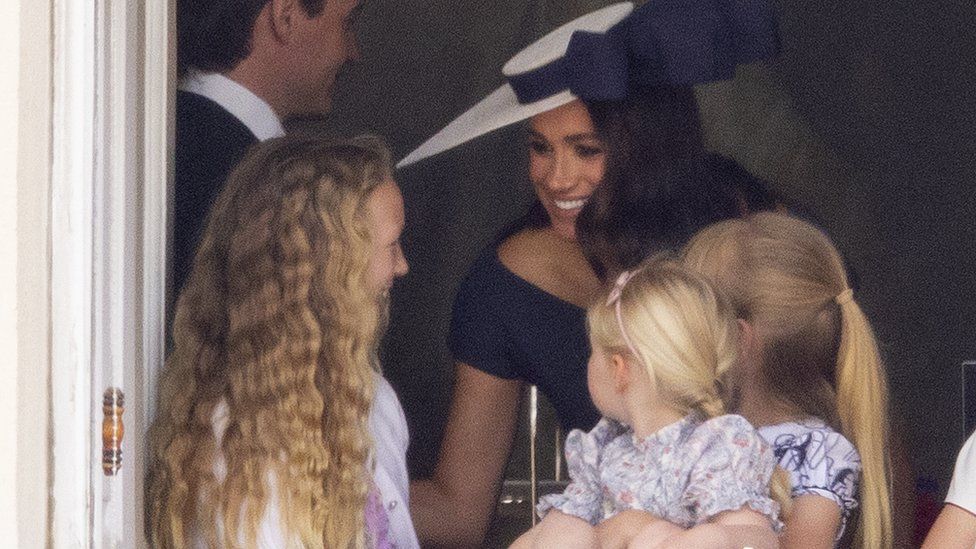
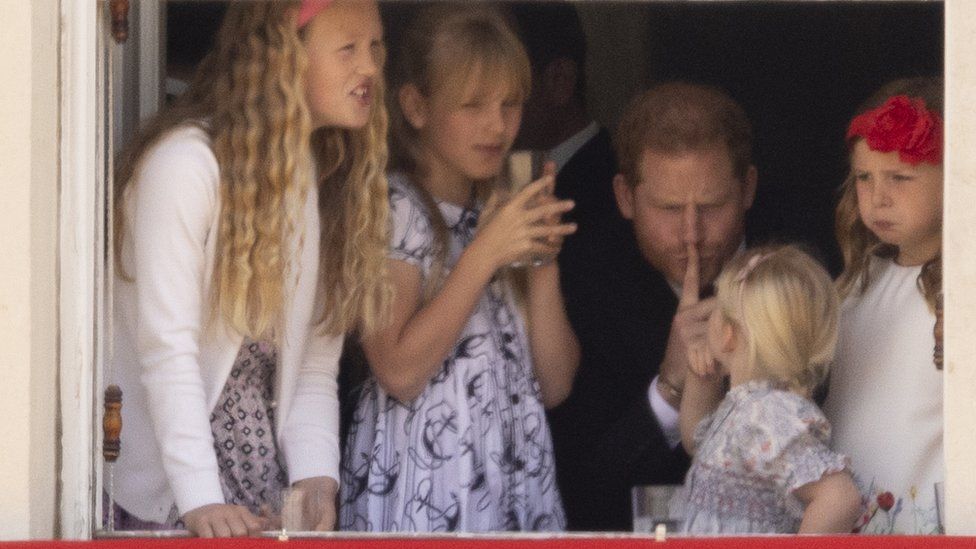
    Prince Harry and Meghan, who now live in the US, watched Trooping the Colour from a vantage point in the Duke of Wellington’s former office, overlooking Horse Guards Parade.

    They travelled with their children Archie, three, and Lilibet, who turns one on Saturday. Lilibet is the family nickname for the Queen.

    Meghan Markle with Savannah Phillips and Mia TindallIMAGE SOURCE, KELVIN BRUCE
    Image caption, Meghan appeared at the window of the Major General’s office overlooking the Trooping of the Colour
    Prince Harry puts his finger to his lips with Savannah Phillips and Mia Tindall in the Major General's office overlooking The Trooping of the ColourIMAGE SOURCE, KELVIN BRUCE
    Image caption, Prince Harry was also spotted with Savannah Phillips and Mia Tindall at the same window
  • Platinum Jubilee: Queen pulls out of St Paul’s Cathedral service

    The Queen will not attend Friday’s Jubilee service at St Paul’s Cathedral after experiencing discomfort while watching Thursday’s parade at Buckingham Palace.

    The decision was made with “great reluctance” after considering the “journey and activity required”, the palace said.

    However, she did take part in a beacon lighting ceremony on Thursday evening.

    Four days of celebrations marking the Queen’s 70-year reign began earlier.

    The 96-year-old monarch appeared twice on the Buckingham Palace balcony, flanked by other senior royals, as they watched a military parade and waved at thousands of well-wishers gathered on The Mall.

    Hours after the ceremony, the palace confirmed she would not attend Friday’s thanksgiving service, but said she “would like to thank all those who made today such a memorable occasion”.

    The next Jubilee event the Queen is due to attend is the derby at Epsom race course on Saturday, although it is yet not known whether she will still appear at the horse race.

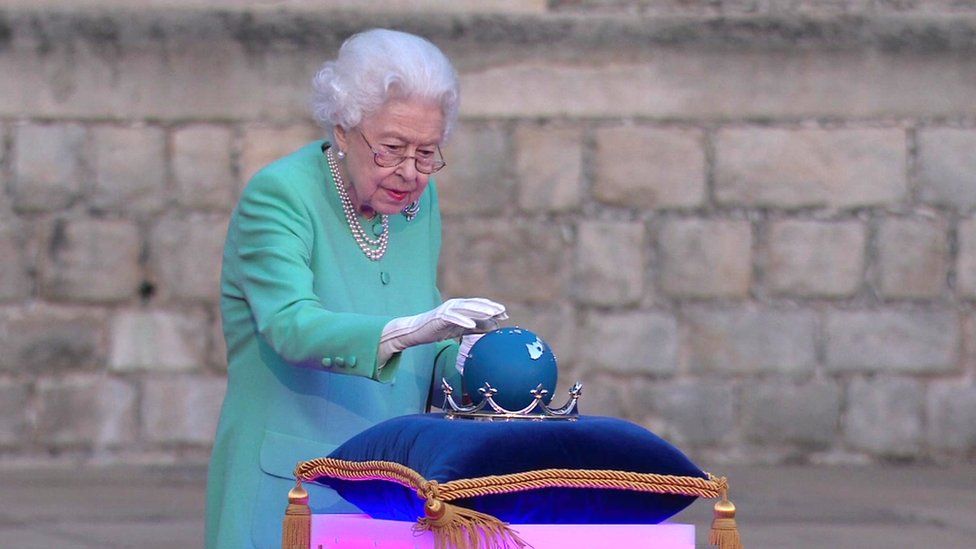
    The Queen touching a globe to light the "Tree of Trees"
    Image caption, At dusk on Thursday the Queen took part in a beacon-lighting event, touching a symbolic globe to start the ceremony

    The service at St Paul’s in central London will give thanks for the Queen’s seven decades as monarch.

    Senior royals including the Prince of Wales, Duchess of Cornwall and the Duke and Duchess of Cambridge will all attend, with Prince Charles officially representing the Queen.

    The Duke and Duchess of Sussex – who have flown over from California – will also join. It will be Prince Harry and Meghan’s first royal event together since leaving the UK two years ago.

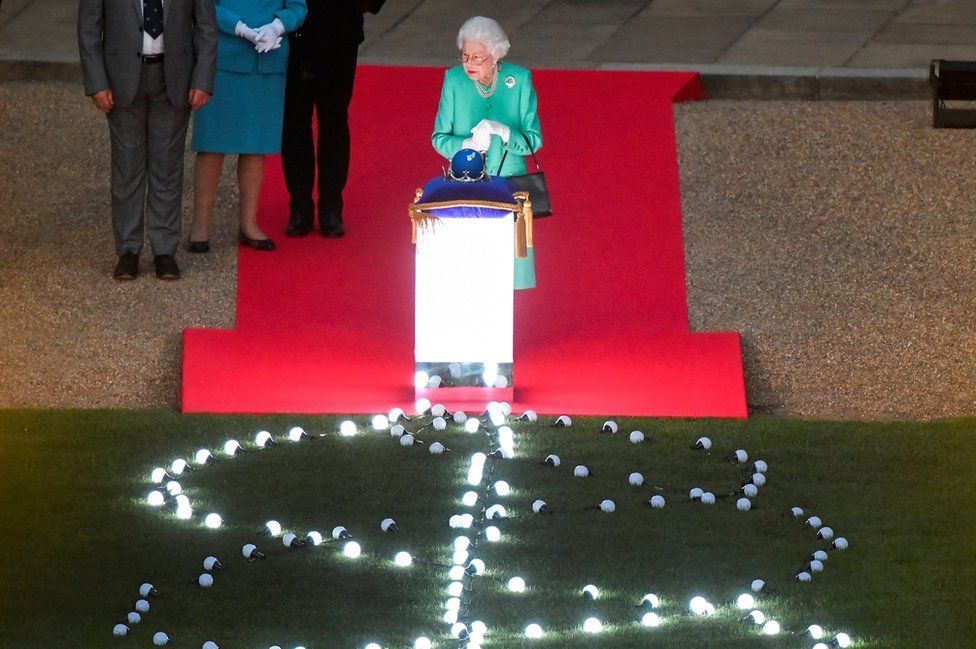
    The Queen standing in front of the globeIMAGE SOURCE, REUTERS
    Image caption, The Queen set off a river of lights which lit the principal beacon, rounding off the first day of celebrations

    However, Prince Andrew will be absent after testing positive for Covid.

    The royals will be joined by more than 400 honours recipients, including NHS and key workers, public servants and representatives from charities and the Armed Forces.

    Prime Minister Boris Johnson will give a reading from the New Testament, while the sermon will be given by the Archbishop of York Stephen Cottrell, after Archbishop of Canterbury Justin Welby tested positive for Covid-19.

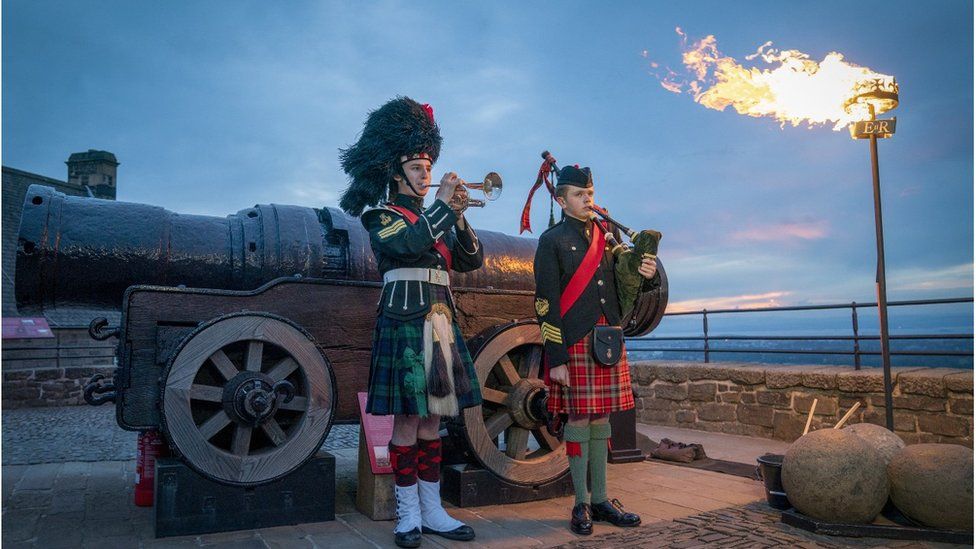
    Edinburgh Castle beaconIMAGE SOURCE, PA MEDIA
    Image caption, The Platinum Jubilee beacon at Edinburgh Castle

    The largest church bell in the UK, the 16-tonne Great Paul, will ring continuously for four hours after the service. The event begins at 11:30 BST on Friday, with coverage starting on BBC One from 09:15.

    Other political attendees will include Labour leader Sir Keir Starmer, cabinet members, former prime ministers and the leaders of the devolved administrations in Scotland, Wales and Northern Ireland.

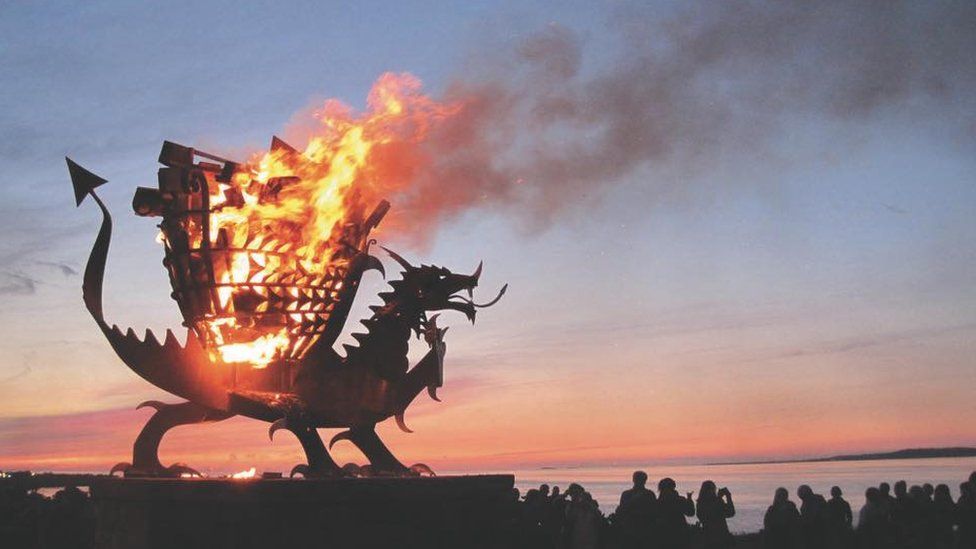
    Bagillt beaconIMAGE SOURCE, FLINTSHIRE COUNTY COUNCIL
    Image caption, In Wales, a striking dragon-shaped beacon was lit in Bagillt, Flintshire

    Young people representing countries where the Queen is head of state will lead an ‘Act of Commitment’ to celebrate her life and reign.

    Thursday evening’s beacon lighting event saw the Queen symbolically touch a globe to begin the ceremony at Windsor Castle.

    The head of state illuminated the globe, sending a chain of lights from her Windsor Castle home to Buckingham Palace, where Prince William watched as a sculpture, the Tree of Trees, was bathed in light.

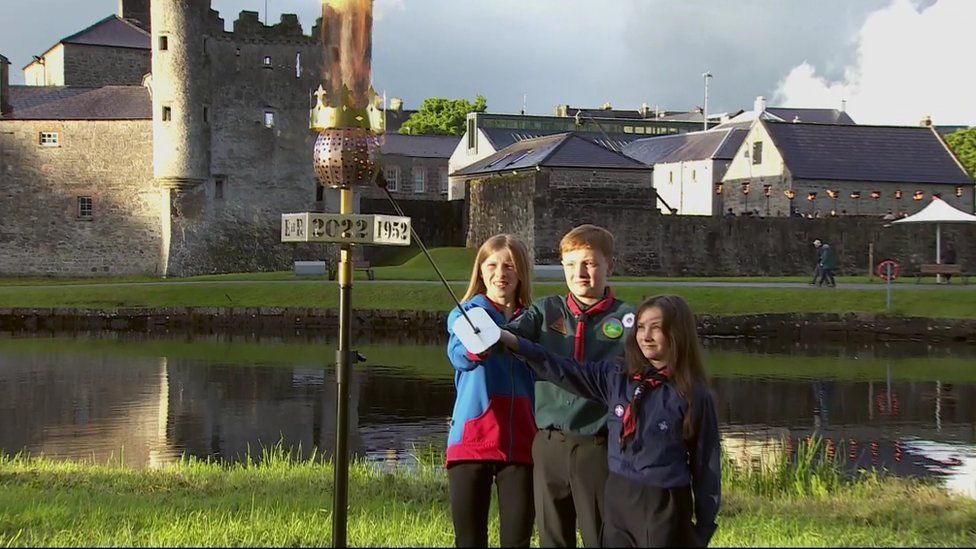
    Local scouts Hayley Woods, Erin McCullough-Daley and Evan Clarke light beacon at Enniskillen CastleImage caption, A beacon being lit at Enniskillen Castle in Northern Ireland

    Thousands of beacons were also lit across the UK and the Commonwealth to mark the Queen’s Platinum Jubilee.

    Beacons were visible around Scotland to mark the occasion, with tributes being lit at landmarks from Edinburgh Castle to Ben Nevis – Britain’s highest mountain.

    One of the main flames to be lit in Wales was outside the Pierhead building in Cardiff Bay, where the evening’s celebrations were capped with a firework display over the water.

    In Northern Ireland, 13 beacons were lit at Enniskillen Castle, while the building was illuminated purple and two beams of light were projected into the night sky.

    The service is not the first engagement the Queen has had to miss in recent months because of health problems.

    In May, she missed the State Opening of Parliament because of “episodic mobility problems” and in February she caught Covid, which she said left her feeling “very tired and exhausted”.

    The Prince of Wales, the Queen, Prince Louis, the Duchess of Cambridge an Princess CharlotteIMAGE SOURCE, REUTERS
    Image caption, While the Queen seemed delighted, the noise of the 70-aircraft flypast was too much for four-year-old Prince Louis
    Two women with blue and red hair extensions and Jubilee t-shirts wave union flags on a packed Mall outside Buckingham PalaceIMAGE SOURCE, EPA
    Image caption, Thousands of people flocked to The Mall in the June sunshine to celebrate

    Source: BBC

  • Platinum Jubilee of Queen Elizabeth II: Eight towns to be made cities

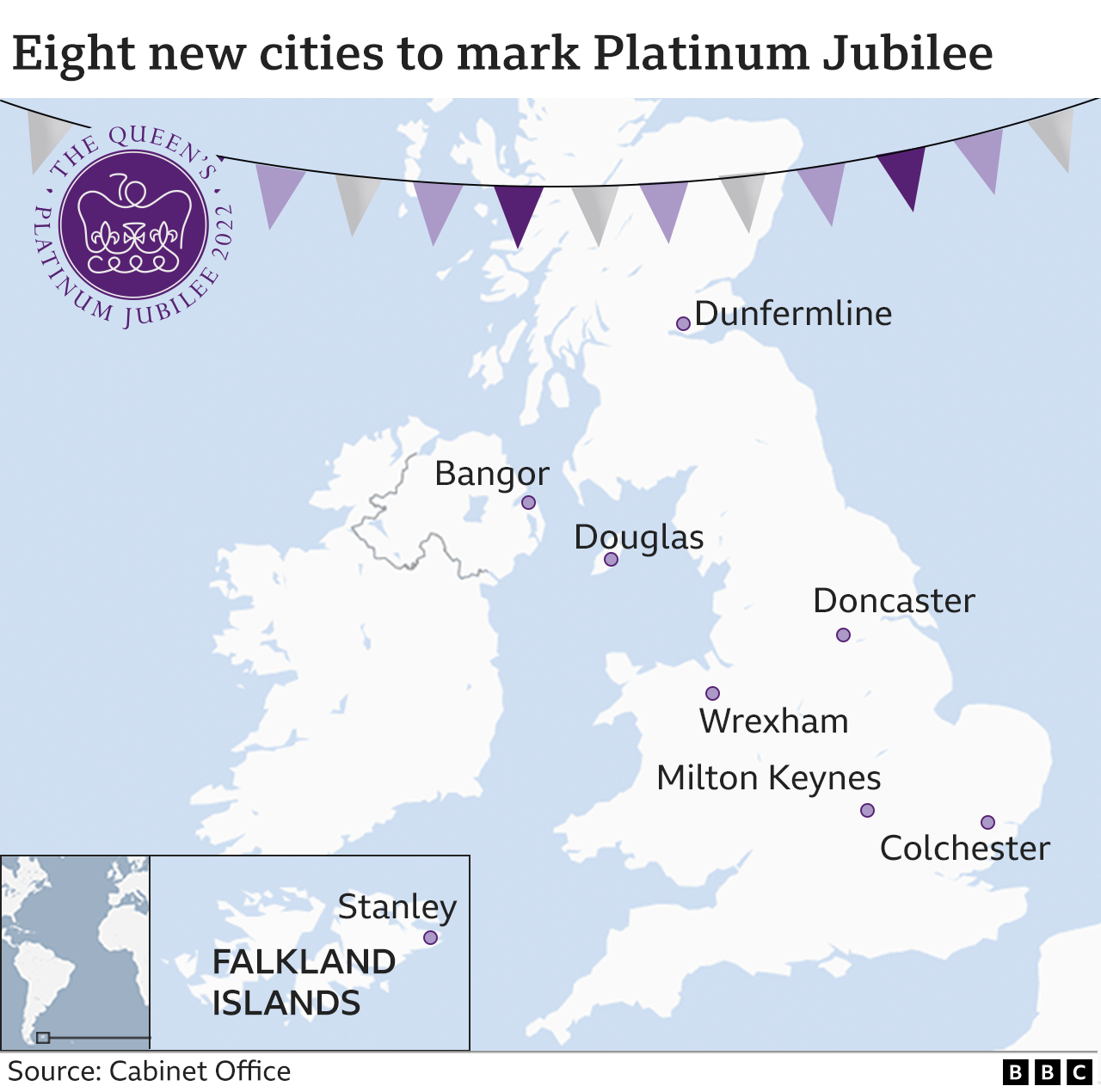
    Eight new cities have been named for the Queen’s Platinum Jubilee, with at least one in every UK nation – and on the Falkland Islands and Isle of Man.

    Milton Keynes in England, Dunfermline in Scotland, Bangor in Northern Ireland and Wrexham in Wales all get the title.

    It is a first for places in an Overseas Territory – Stanley, in the Falklands – and a crown dependency – Douglas, in the Isle of Man – to win city status.

    Colchester and Doncaster complete the list getting the royal honour.

    The Platinum Jubilee civic honours competition required applicants to show their cultural heritage and royal links as well as how their local identity and communities meant they deserved to be granted city status.

    The new cities can expect a boost to local communities and the opening up of new opportunities for people who live there, the Cabinet Office said.

    It cited research that suggested previous winner Perth, in Scotland, saw the local economy expand by 12% in the decade it was granted city status, after it put them on the international map as a place to do business.

    Map showing new Jubilee cities

    The last competition to win civic honours in 2012 marked the Queen’s Diamond Jubilee. For the first time this year, Crown Dependencies and Overseas Territories were allowed to apply.

    The announcement of the latest civic honours takes the number of official cities in mainland UK to 76, with 55 in England, eight in Scotland, seven in Wales and six in Northern Ireland.

    The winners and details from their bids for city status include:

    Bangor, County Down, Northern Ireland

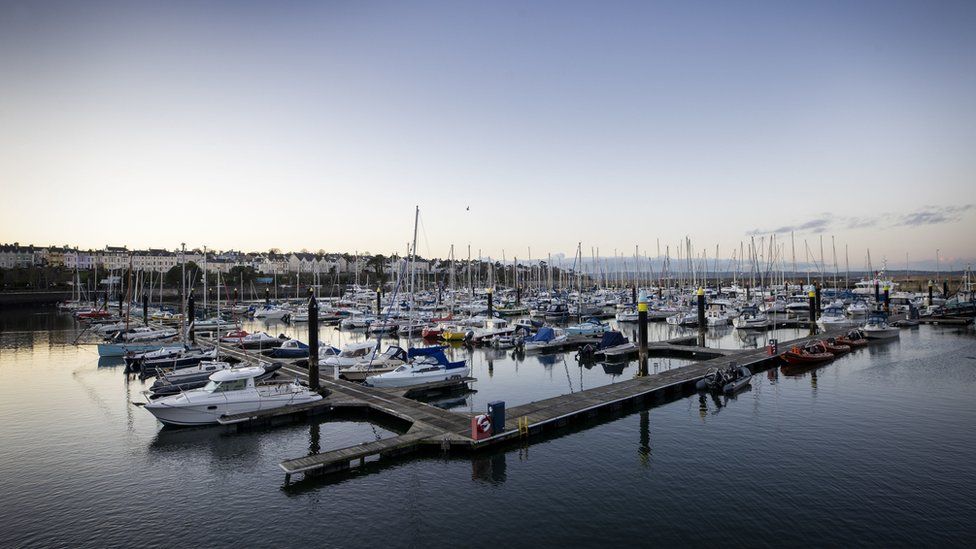
    BangorIMAGE SOURCE, PA MEDIA
    Image caption, Due to its location at the mouth of the Belfast Lough, Bangor was a key site for the Allies during the Second World War
    • Due to its location at the mouth of the Belfast Lough, Bangor, with a population of 61,011, was a key site for the Allies during the Second World War
    • In May 1944, Supreme Commander of Allied Forces Dwight D Eisenhower, who later became US president, gave a speech to 30,000 assembled troops in Bangor shortly before ships left for Normandy and the D-Day landings
    • The Queen and Duke of Edinburgh visited Bangor Castle in 1961 and, after lunching at the Royal Ulster Yacht Club that day, the duke took part in a regatta race

    Colchester, Essex, England

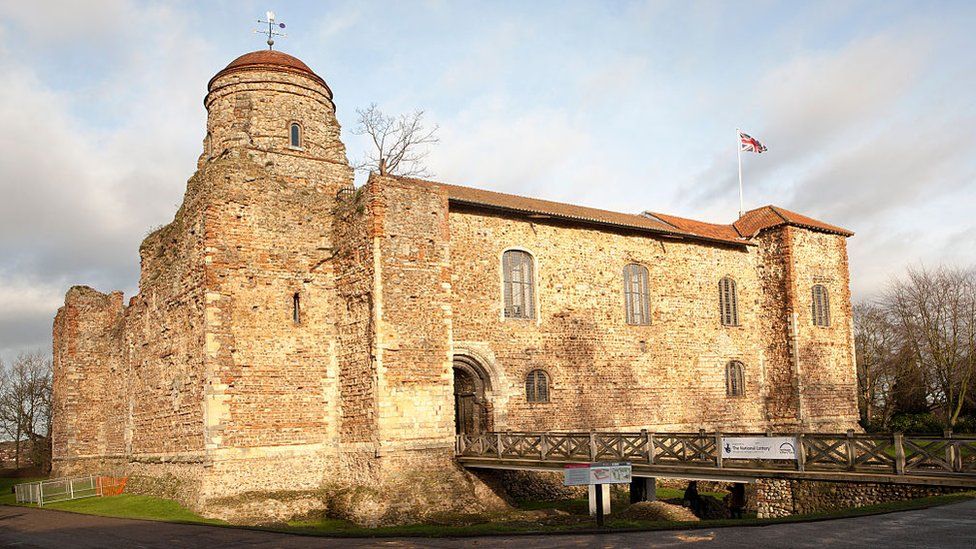
    Colchester CastleIMAGE SOURCE, GETTY IMAGES
    Image caption, Colchester Castle was built on the foundations of a Roman temple
    • Colchester, with a population of 119,441, is Britain’s first recorded settlement and its first capital
    • It has been a garrison town for the past 165 years and for the past 21 years has been home to 16 Air Assault Brigade, the UK’s rapid response force
    • It is the second Essex town to become a city this year after Southend was given the status in October following the death of MP Sir David Amess, who often championed its campaign for city status

    Doncaster, South Yorkshire, England

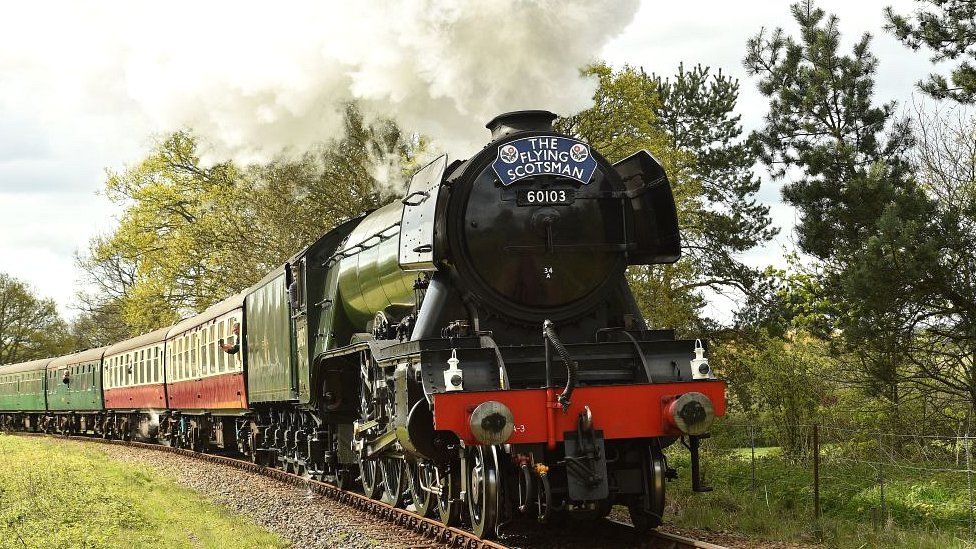
    Flying ScotsmanIMAGE SOURCE, GETTY IMAGES
    Image caption, The Flying Scotsman locomotive was built in Doncaster
    • Originally a Roman settlement, Doncaster, which has a population of 110,000, is almost 2,000 years old
    • Noted for its railway heritage, the Flying Scotsman and the Mallard locomotives were both built there
    • It is also home to the St Leger flat course. Founded in 1776, it is the oldest classic horse race in the world and has been attended by the Queen and other royals throughout history

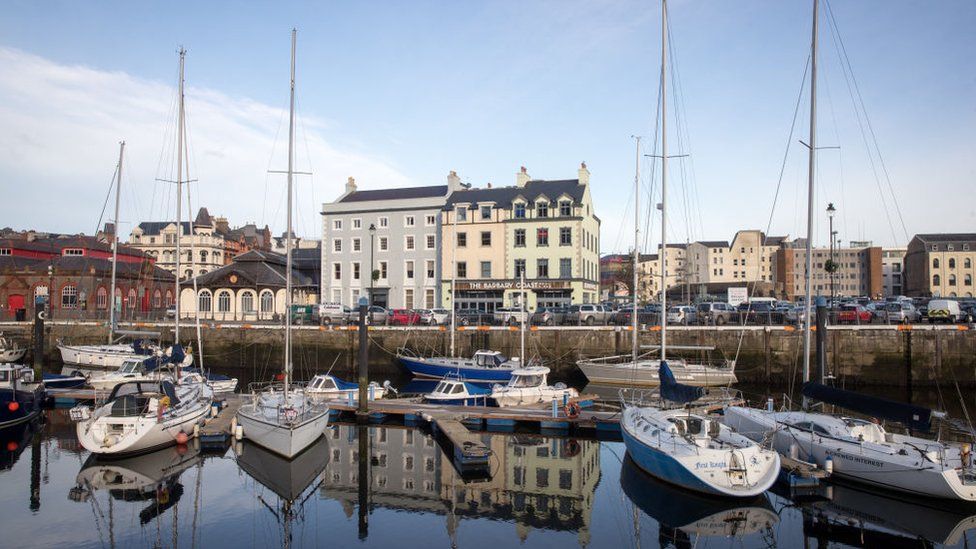
    Douglas, Isle of Man

    Douglas Isle of ManIMAGE SOURCE, GETTY IMAGES
    Image caption, Douglas is the island’s main port
    • The Queen is patron of the Royal National Lifeboat Institution (RNLI) which started in Douglas, which has a population of 26,677 (2021 census)
    • Its Royal Hall plays host to annual flagship concerts by the Isle of Man Symphony Orchestra, the Isle of Man Choral Society and the Manx Last Night of the Proms

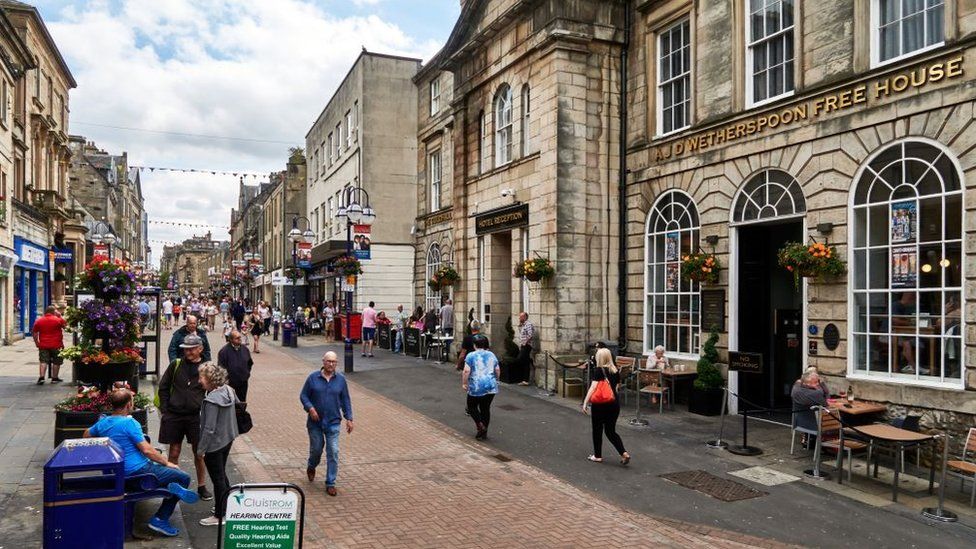
    Dunfermline, Fife, Scotland

    DunfermlineIMAGE SOURCE, GETTY IMAGES
    Image caption, Dunfermline’s most famous son is Andrew Carnegie,whose steel industry helped build America
    • Its annual fireworks display attracts some 30,000 local people, while the Christmas light event packed the town centre with 10,000 people
    • Dunfermline’s most famous son is Andrew Carnegie whose steel industry helped build America. His philanthropy started the world’s public library system, and he gave away the equivalent of £65bn in today’s money
    • Dunfermline, with a population of 58,508 was one of the seats of the kings of Scotland in the middle ages. Robert the Bruce was buried in Dunfermline Abbey after his death in 1329

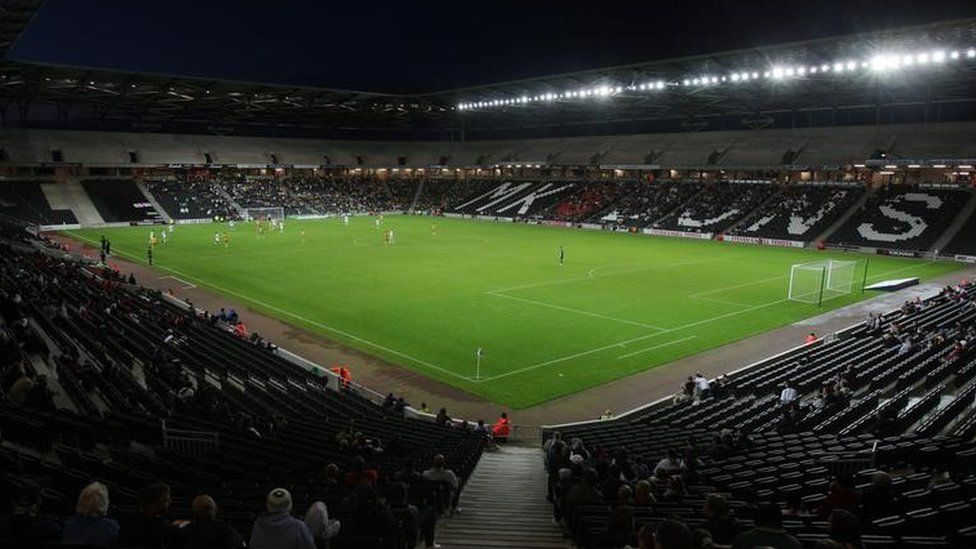
    Milton Keynes, Buckinghamshire, England

    MK Dons stadiumIMAGE SOURCE, PA
    Image caption, Milton Keynes is the home of MK Dons, formed in 2004
    • It was created in 1967 to alleviate housing shortages in overcrowded London
    • With an urban area population of 171,750 (2011 census), it has 27 conservation areas, 50 scheduled monuments, 1,100 listed buildings and 270 works of public art
    • The Open University, the world’s first degree-awarding, distance learning institution, was set up in Milton Keynes in 1967; and its University Hospital NHS Foundation Trust established the nation’s first independent medical school

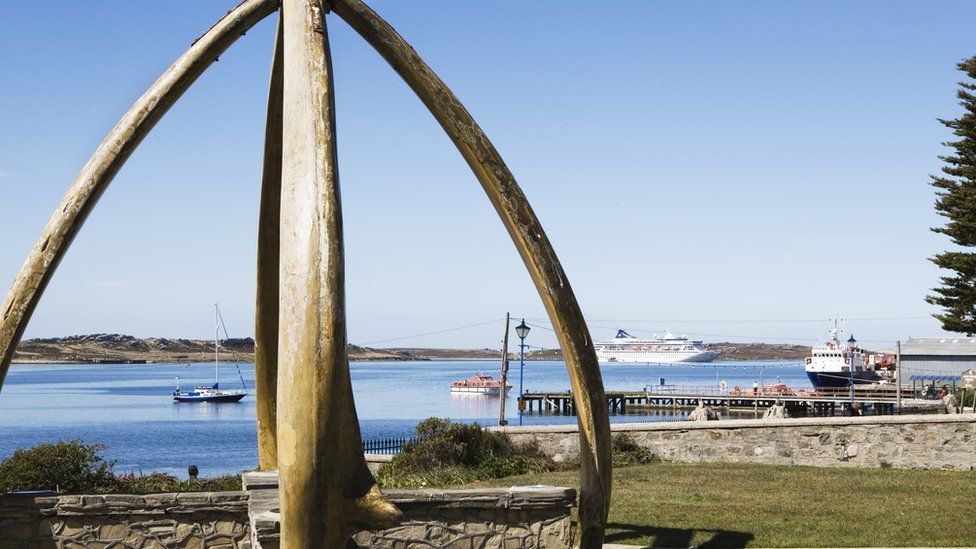
    Stanley, Falkland Islands

    Whalebone Arch at Port StanleyIMAGE SOURCE, GETTY IMAGES
    Image caption, The Whalebone arch in Stanley was erected in 1933 to mark a century of British administration
    • Members of the Royal Family have regularly visited the islands, including the late Duke of Edinburgh in 1957. In 2016, the Duke of Cambridge spent six weeks on the islands as a search and rescue helicopter pilot
    • Holidays and events specific to the islands, which had a population of 2,458 in 2016 (according to its most recent census), are held annually – such as Peat Cutting Monday. The sacrifices made during the Falklands War are also remembered – 2022 marks 40 years since the conflict

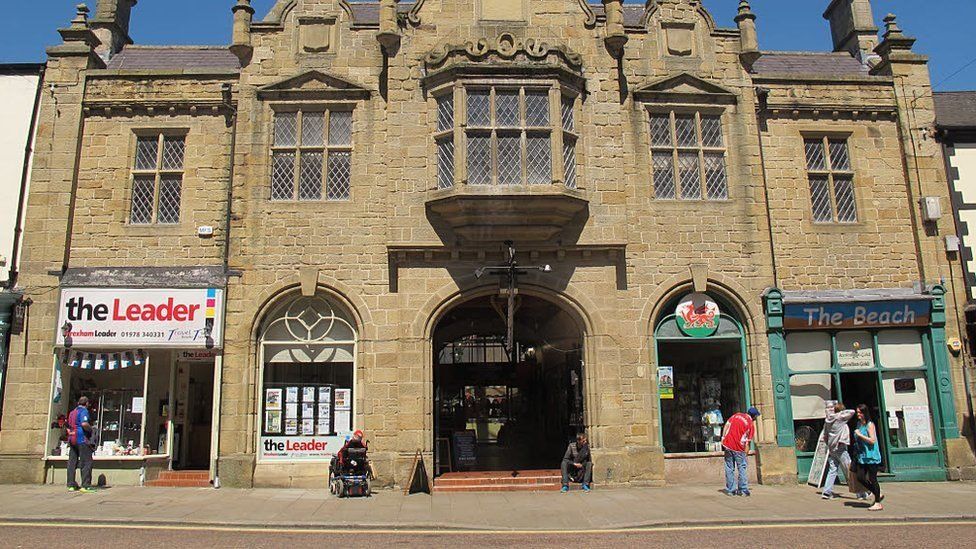
    Wrexham, north east Wales

    Wrexham Butchers MarketIMAGE SOURCE, STEPHEN CRAVEN/GEOGRAPH
    Image caption, Wrexham has tried to become a city three times since 2000
    • Established in 1864, Wrexham Football Club is among the oldest professional football clubs in the UK and is owned by Hollywood stars – the actor Ryan Reynolds and Rob McElhenney, creator of It’s Always Sunny in Philadelphia
    • The area, with a population of 61,603, is home to the Pontcysyllte Aqueduct, a Unesco World Heritage site

    Almost 40 locations submitted bids for city status when applications opened last year.

    City status is often associated with having a cathedral, university, or large population, but there are no set rules for being granted the status, which is awarded by the monarch on advice of ministers.

    Chelmsford, in England, Lisburn in Northern Ireland and Newport in Wales were among previous winners of the competition for city status – which has taken place during each of the last three jubilee years.

    Each new city will receive the award formally through a Letters Patent, which will be presented later in the year.

    Meanwhile, the city of Southampton has won the competition for Lord Mayoralty status – which means the mayor can be called Lord Mayor – joining the ranks of previous Jubilee competition winners including Chester, Exeter and Armagh.

    Source: BBCÂ