Tag: polls

  • Police arrest individuals in security uniform at Ablekuma North polling station

    Police arrest individuals in security uniform at Ablekuma North polling station

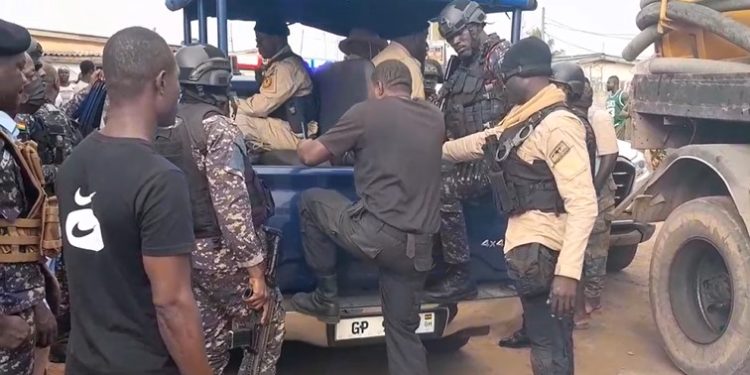
    Several individuals posing as security personnel dressed in brown uniforms near the Awoshie DVLA polling station in the Ablekuma North Constituency have been arrested by the police.

    According to reports, their apprehension stems from their failure to provide proper identification.

    The victims are in Odorkor Police Station for further investigation.

    For years, security agencies have cautioned members of the general public against wearing their uniforms without their authorisation.

    Despite the continuous education and warnings issued to the general public to desist from these practices, the trend rather appears to be on the increase.

    These unauthorised acts are in contravention of the National Liberation Council Decree (NLCD) 177 of 1967, which is still in force.

    This Decree in part states that; “no person shall wear or use any military uniforms, equipment, or accoutrements or other material unless he or she is a member of the Armed Forces of Ghana.”

    On the matter, the Ghana Armed Forces (GAF) has noted that it would not allow this situation to persist and will henceforth effect the arrests of culprits to face the full rigours of the law.

    The Electoral Commission (EC) is holding an election in 19 polling stations of the Ablekuma North to provide its constituents a representative after the 2024 parliamentary elections.

    After the 2024 polls, Ablekuma North remained the only constituency in Ghana without a sitting MP, due to unresolved disagreements over the outcome of the parliamentary vote.

    On December 10, 2024, three days after the national polls, the EC declared Ewurabena Aubynn of the NDC the winner of the Ablekuma North parliamentary seat, defeating the New Patriotic Party’s (NPP) Nana Akua Owusu Afriyieh.

    However, the EC later revoked the announcement, revealing that results from 62 of the 281 polling stations had not been included in the initial collation.

    Efforts to restart the collation in January 2025 were disrupted by multiple challenges.

    These included interruptions due to the submission of unverified pink sheets and a violent intrusion at the collation centre that heightened security concerns.

    The Electoral Commission (EC), after extensive deliberations, in July noted that it will hold the rerun election because the 19 scanned polling station results used for the collation, though approved by agents of both political parties, were not verified by the presiding officers responsible for those polling stations.

    The EC arrived at this decision after it met with the representatives of the National Democratic Congress (NDC) and New Patriotic Party (NPP) on Tuesday, July 1.

    Ahead of today’s election, the EC called on the Ghana Police Service to provide the needed security to ensure a safe environment for the conduct of the election.

    Deputy Chairman of the Electoral Commission (EC) in Charge of Corporate Services, Dr Bossman Asare, has affirmed that the Ghana Police Service and the National Election Security Taskforce have pledged to ensure security before, during, and after the upcoming Ablekuma North parliamentary rerun.
  • No soldier will be at Ablekuma North polls – Defence Minister

    No soldier will be at Ablekuma North polls – Defence Minister

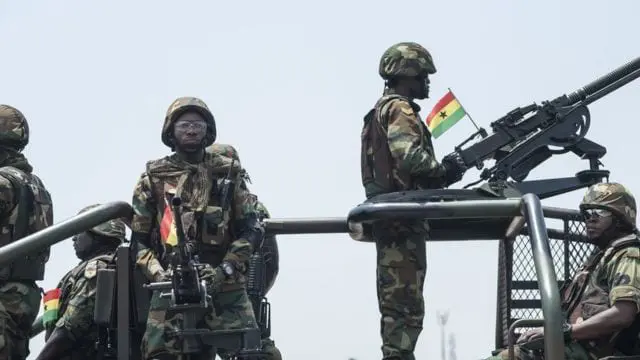
    No military will be deployed to oversee the Parliamentary rerun elections in the Ablekuma North Constituency scheduled for today, Friday, July 11, the Minister for Defence, Dr Edward Omane Boamah, has assured.

    In a Facebook post, he noted that, instead, the Ghana Police Service will be responsible for maintaining law and order during the process.

    “The Ghana Police Service is trained to handle electoral security, and we trust them to do their job.

    “To ensure a peaceful and democratic process, the Ghana Police Service will be fully in charge of security for today’s elections in Ablekuma North Constituency,” the Defence Minister stated.

    The Electoral Commission (EC) will today hold a rerun election in 19 polling stations of the Ablekuma North to provide its constituents a representative after the 2024 parliamentary elections.

    After the 2024 polls, Ablekuma North remained the only constituency in Ghana without a sitting MP, due to unresolved disagreements over the outcome of the parliamentary vote.

    On December 10, 2024, three days after the national polls, the EC declared Ewurabena Aubynn of the NDC the winner of the Ablekuma North parliamentary seat, defeating the New Patriotic Party’s (NPP) Nana Akua Owusu Afriyieh.

    However, the EC later revoked the announcement, revealing that results from 62 of the 281 polling stations had not been included in the initial collation.

    Efforts to restart the collation in January 2025 were disrupted by multiple challenges.

    These included interruptions due to the submission of unverified pink sheets and a violent intrusion at the collation centre that heightened security concerns.

    The Electoral Commission (EC), after extensive deliberations, in July noted that it will hold the rerun election because the 19 scanned polling station results used for the collation, though approved by agents of both political parties, were not verified by the presiding officers responsible for those polling stations.

    The EC arrived at this decision after it met with the representatives of the National Democratic Congress (NDC) and New Patriotic Party (NPP) on Tuesday, July 1.

    The EC’s decision to hold a rerun met opposition from the NPP, leading the party to head to court for an interlocutory injunction application. The High Court dismissed the application.

    The NPP noted that it won the 2024 Ablekuma North parliamentary election and, as such, will not participate in the rerun. According to the Deputy General Secretary, Haruna Mohammed, this is so because contesting in the election will set a dangerous precedent and compromise future elections.

    However, the party’s parliamentary candidate, Nana Akua Owusu Afriyie, has indicated that she will fully participate in the Parliamentary election

    “I appeal to all the constituents to come out and vote massively for me so the glory of God will manifest. I have put my trust in God, and I know He will not disappoint me. I won the election by 440 votes, and I believe God will let the truth prevail tomorrow,” she stated.

    Meanwhile, the National Democratic Congress (NDC) has expressed its decision to participate in the rerun election. The NDC will be represented by Ewurabena Aubyn.

    Greater Accra Regional Director of Elections for the National Democratic Congress (NDC), Joshua Alabi, is optimistic that no challenges will be experienced during the election.

    “There were security lapses in the last elections. The EC itself also failed to live up to its bidding in the last elections, but I believe they have done its homework. The security has also done their homework very well, so this time around, the tags we are going to use will have our names on them, which is one of the means too.”

    “I am very much convinced that with the few I have seen on the ground, I don’t think we are going to have the lapses we experienced the last time. If we are able to be on the ground ourselves, we are part of the security, nothing untoward is going to happen, and it is only 19 polling stations. I don’t foresee any challenge. If there is one, the security will take care of them,” he said.

    Ahead of today’s election, the EC called on the Ghana Police Service to provide the needed security to ensure a safe environment for the conduct of the election.

    Deputy Chairman of the Electoral Commission (EC) in Charge of Corporate Services, Dr Bossman Asare, has affirmed that the Ghana Police Service and the National Election Security Taskforce have pledged to ensure security before, during, and after the upcoming Ablekuma North parliamentary rerun.
  • All our materials are on the field, we are ready – EC on Dec 7 polls

    All our materials are on the field, we are ready – EC on Dec 7 polls

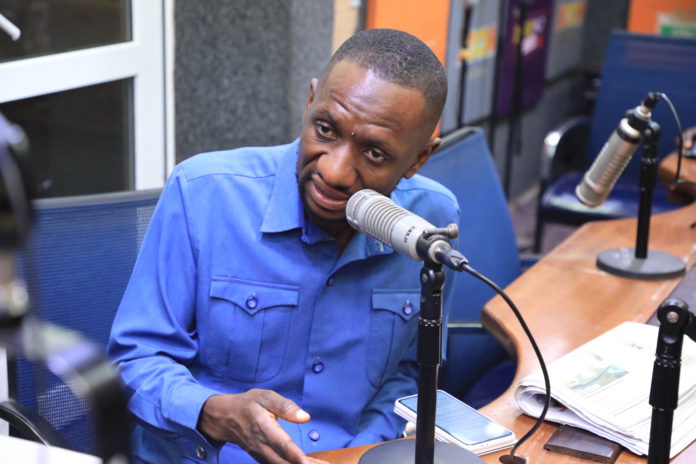
    The Electoral Commission (EC) has announced its readiness for the 2024 general election scheduled for December 7, with all election-related processes, deployments, and training set to conclude today, November 29.

    Speaking to Joy News on the sidelines of a peace ceremony in Accra, where all 12 presidential candidates pledged to uphold peace, EC Chairperson Jean Mensa reaffirmed the Commission’s commitment to transparency and fairness.

    “On the part of the Commission, we commit to carrying out transparent, robust electoral processes and elections, and as indicated during my presentation, we will announce the will of the people that is expressed at the polls. And we entreat all the presidential candidates to accept the outcomes of the result. I think we are ready. All our materials are on the field, our training is taking place. We are ready,” she stated.

    The assurance comes amid reports of a shortage of presidential and parliamentary ballot papers for five constituencies in the Volta Region: Keta, Ketu North, Ho Central, Hohoe, and Ho West.

    To address the shortfall, the EC has outlined plans to print additional ballots at Acts Commercials Printing House in Accra. In a letter to the representatives of all presidential candidates, the Commission detailed its resolution strategy and invited political parties and independent candidates to send two representatives each to observe the process.

    The observation, set for Friday morning, aims to ensure transparency and build trust in the electoral process. Samuel Tettey, the EC’s Deputy Chair of Operations, assured the public that the Commission is taking all necessary steps to uphold the credibility of the elections.

    “The Commission is committed to conducting a free, fair, and credible election,” he emphasized.

    This proactive approach, coupled with calls for peace from the EC and presidential candidates, underscores the importance of ensuring a smooth electoral process as Ghanaians prepare to cast their votes.

  • Trust poll projections only done by Professor Smart Sarpong – NEIP Boss

    Trust poll projections only done by Professor Smart Sarpong – NEIP Boss

    The Chief Executive Officer (CEO) of the National Entrepreneurship and Innovation Programme (NEIP), Kofi Ofosu Nkansah, has advised Ghanaians to trust poll projections conducted by Professor Smart Sarpong over those from Mussa Danquah’s Global Info Analytics.

    In a Facebook post on Thursday, November 21, Mr. Nkansah highlighted the exceptional accuracy of Professor Sarpong’s research, particularly his 2020 general election predictions, which achieved a remarkable 99.6% accuracy rate.

    “Based on historical data, we trust Prof Smart Sarpong, the Professor of statistics, over Baba Mussa the Accountant. Prof. Smart Sarpong’s 2020 prediction accuracy level was 99.6%,” he stated.

    The NEIP CEO underscored the importance of relying on the most scientifically sound and credible data when forming opinions or making electoral decisions ahead of the December 2024 elections.

    Mr. Nkansah encouraged the public to place their confidence in Professor Sarpong’s research outcomes, describing them as the most reliable source for understanding electoral trends.

  • Ensure no lives are lost in December polls – NDC to IGP

    Ensure no lives are lost in December polls – NDC to IGP

    The National Democratic Congress (NDC) has vowed to hold the Inspector General of Police (IGP), Dr. George Akuffo-Dampare, and other security leaders accountable for any lives that will be lost during the upcoming December polls.

    The party has called on the IGP and relevant security agencies to enhance measures that ensure the safety of citizens during the upcoming elections.

    At a press conference on November 19, 2024, Sammy Gyamfi, the NDC’s National Communications Officer, highlighted the need for strong protections to prevent casualties during the electoral process.

    “The NDC and by extension, the people of Ghana will hold the IGP, the Chief of Defence Staff and our security heads responsible for the loss of a single life in the 2024 general elections.

    “Elections are about counting heads and not cutting heads. No person must lose his or her life on the altar of elections.”

    He also expressed optimism about the party’s prospects, affirming that Ghanaians would make the right choice by electing John Dramani Mahama as their next president.

    “We have no doubt that Ghanaians will choose an honest leader who upholds the virtue of truth over one who is completely allergic to truth,” he added.

  • Female vice presidential candidates for December polls

    Female vice presidential candidates for December polls

    As Ghana approaches the 2024 general elections, there has been a notable rise in the involvement of women within the political arena.

    Historically, men have dominated the nation’s political landscape, with women playing a marginal role in leadership at the highest levels of governance.

    However, this trend is shifting, with women increasingly making their mark in the upper ranks of Ghana’s politics.

    In this article, GhanaWeb highlights three women who stand a chance of making history as potential candidates for Ghana’s first female vice presidency.

    1. Professor Naana Jane Opoku-Agyemang

    A prominent figure in the National Democratic Congress (NDC), Professor Naana Jane Opoku-Agyemang first made headlines when she was chosen as John Mahama’s running mate for the 2020 elections.

    She is the former President of the Forum for African Women Educationalists (FAWE) and Chairperson of its Africa Board. In 2008, she broke barriers as the first woman to become Vice Chancellor of the University of Cape Coast (UCC), a major milestone in Ghana’s higher education sector.

    Additionally, Prof. Opoku-Agyemang has represented Ghana on UNESCO’s Executive Board and served as the Minister of Education under John Mahama’s administration.

    1. Margaret Obrine Sarfo

    Margaret Obrine Sarfo is the vice-presidential candidate for the Liberal Party of Ghana (LPG). A staunch advocate for women’s empowerment, she has been inspired by the pioneering role of Nana Konadu Agyemang-Rawlings, the National Democratic Party (NDP) presidential candidate.

    Margaret Obrine Sarfo hails from Cape Coast in the Central Region and continues to push for greater representation of women in Ghanaian politics.

    1. Dr. Maryam Esaka Kriesie

    Running alongside Nana Kwame Bediako as his vice-presidential candidate, Dr. Maryam Esaka Kriesie brings a wealth of expertise from Ghana’s financial sector.

    She previously held a senior managerial role at the Securities and Exchange Commission (SEC) of Ghana, where she oversaw investment management and helped shape regulatory policies within the capital markets. Beyond her work at the SEC, Dr. Kriesie has an academic career, lecturing at the University of Ghana Business School and the University of Professional Studies, Accra.

    With a PhD in Finance, an MBA, and certifications in Islamic Finance and ERP software, Dr. Kriesie is poised to contribute significantly to Ghana’s political and financial landscape.

    These women are breaking new ground in Ghana’s political space, and one of them could make history as the country’s first female vice president.

  • We will work professionally to ensure peace and stability in December polls – GAF

    We will work professionally to ensure peace and stability in December polls – GAF

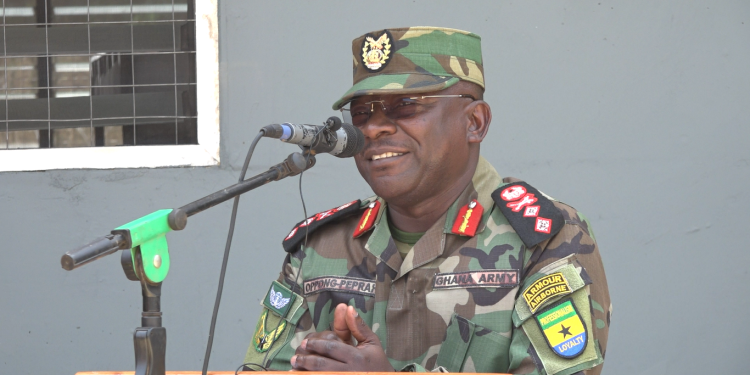
    The Chief of Defense Staff, Lieutenant General Thomas Oppong-Peprah, has affirmed that the Ghana Armed Forces (GAF) are committed to ensuring peace and stability during the upcoming December elections.

    He emphasized that GAF, in collaboration with other security agencies, will safeguard Ghana’s borders against external threats.

    During a meeting with the National Chief Imam Sheikh Osman Nuhu Sharubutu, Lieutenant General Thomas Oppong-Peprah assured that Ghana’s peace will be protected before, during, and after the elections.

    “We want to assure our father and everyone that together, we will continue to maintain the peace and security of this country and we will continue to perform our duties as the Ghana Armed Forces to ensure that this country’s safety, stability, and peace are all well maintained and we will need his prayers in this direction.

    “As we prepare for this year’s elections, we want to assure everyone in Ghana that we will play our role professionally to ensure that peace and security are maintained.”

  • Upholding professionalism is crucial as we head towards December polls – Bawumia urges police

    Upholding professionalism is crucial as we head towards December polls – Bawumia urges police

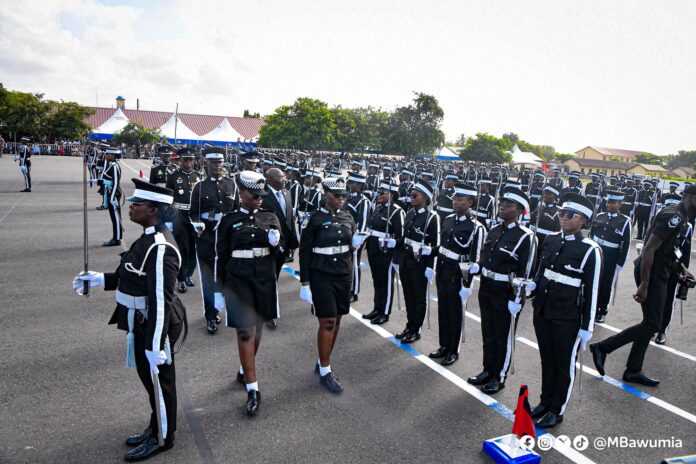
    Vice President, Dr. Mahamudu Bawumia has emphasized the importance of professionalism among Ghana Police Service personnel as the country approaches the general elections.

    Speaking in Accra on July 17, he praised the significant role of the Police Service in maintaining peace and highlighted Inspector General of Police Dr. George Akuffo Dampare’s efforts in revitalizing the institution.

    Dr. Bawumia also called for increased dedication from the service members, noting the administration’s achievements in enhancing community engagement, intelligence operations, and readiness for the elections.

    “The people of Ghana have witnessed a significant transformation of the Police Service under our administration, a community and stakeholder engagement, enhanced intelligence operations and ensured a more responsive preparation, especially in the general elections,” Dr Bawumia said.

    Minister for the Interior Henry Quartey issued a stern warning against social media threats aimed at destabilizing the electoral process, promising legal action against offenders.

    “Often times, we read in the papers, and we see people threatening on social media. Very soon, anybody who makes a threatening statement to incite violence before, during and after the elections we will make sure the law deals with the person in a court of competent jurisdiction,” he said.

    Meanwhile, Dr. Dampare reaffirmed the Police Service’s commitment to ensuring a peaceful electoral environment through collaboration with other security agencies.

    “Under the National Election Committee, we will do our utmost best working once again with all security agencies to ensure that this year’s elections are peaceful. And the country will continually be seen as a trail blazer and the rest of the continent will know, and we will go all out to ensure there is peace,” Dr Dampare said.

    Later, Dr. Bawumia inaugurated the Ghana Police Shop, which will provide officers nationwide with uniforms and essential equipment, enhancing their operational capabilities.

    “The Police Shop is a dedicated shop where officers of the Police Service can purchase additional uniform items in support of what their respective institutions can provide, this will ensure officers always come out smart in their uniforms and also procure additional logistics to deliver on their mandate,” Dr Bawumia stated.

  • EC must collaborate with all parties for free and fair December polls – Nimako

    EC must collaborate with all parties for free and fair December polls – Nimako

    A private legal practitioner and the Director of Legal Affairs for the ruling New Patriotic Party (NPP), Gary Nimako, has called on the Electoral Commission (EC) to collaborate with all political parties for the benefit of the country.

    He stressed the importance of the election management body positioning itself in a manner that fosters trust among political parties and the public as the December 7 general elections approach.

    Nimako made these remarks during an appearance on TV3’s political analysis program, The Key Points, on Saturday, June 1.

    He also voiced support for the EC’s proposal to designate the Ghana Card as the sole identification document for registration, expressing concern over the increasing number of applicants utilizing the guarantor system.

    The EC successfully concluded the 2024 limited voter registration exercise, with provisional figures indicating approximately 747,000 registrants, surpassing the Commission’s target of 623,000, according to the Director of Electoral Service at the Commission, Dr. Serebour Quaicoe, in a media interview on Thursday.

    Dr. Quaicoe mentioned that the Commission is contemplating a mop-up exercise following the ongoing voter transfer and card replacement activities.

    “We have to resource the National Identification Authority very well to they can roll out more people onboard and then capture a lot of people so that we will not rather require this guarantor system again and people should be encouraged to go and get the card.

    “If there is a gradual toll on, 15 years you get a card, I think that bit by bit we will be facing out this kind of regime where people must get the guarantor system to be on the voter register.

    “Let’s move on gradually and let the EC get the buy-in of all political parties…so the EC has to come down and work with al the political parties just in the interest of the country so that the at the end of the day they can do a good job.”

  • US has ‘serious doubts’ about Equatorial Guinea polls

    The US says it has “serious doubts” about the credibility of Equatorial Guinea’s election results that saw the world’s longest-serving president continue his 43-year-rule.

    Teodoro Obiang Nguema Mbasogo, 80, secured almost 95% of votes, according to election officials.

    “Given the scale of irregularities observed and the announced results giving the [ruling party] PDGE 94.9% of the vote, we have serious doubts about the credibility of the announced results,” said US State Department spokesman Ned Price.

    It said there were credible allegations of “significant election-related irregularities, including documented instances of fraud, intimidation, and coercion”.

    President Obiang seized power in 1979 after a military takeover and has survived several coup attempts. He has a strong grip on the oil-rich central African nation.

    Source: BBC

  • European far-right AfD anticipates a boost during crisis

    The nationalist Alternative for Germany party hopes to capitalise on economic unease to achieve similar electoral success as far-right groups do so across the EU. The results of the polls imply that the plan is effective.

    Earlier this month, during a Bundestag debate on the potentially devastating situation for businesses and families amid soaring inflation and an energy crunch, AfD lawmaker Harald Weyel was caught on a hot mic saying he hoped that the situation would continue to deteriorate.

    This harks back to 2015 when the far-right populist Alternative for Germany (AfD) utilized fears of a massive refugee influx to stage protests, especially in the east of the country. It went on to become the most successful far-right party in the country since World War II.

    Since then, however, the AfD has struggled to find a rallying cry that connected with as many voters. They took to the streets in protest against COVID-19 restrictions but failed to stop a decline in support, especially in the West of the country.

    The AfD was founded in 2013 as a euroskeptic party. And still, their position is that Germany should leave the EU, even as other nationalist parties, like the Sweden Democrats and the Brothers of Italy, have quietly abandoned such stances.

    “Now, they are focusing on the government’s sanctions against Russia,” Wolfgang Schroeder, a political science professor at the University of Kassel, told DW. “They are saying that corrupt lawmakers are ignoring the needs of the people. They’re arguing that elites in Moscow aren’t the victims of these sanctions policies, but the German people are.”

    The message that the AfD is trying to send to the governing coalition of the center-left Social Democrats (SPD), the Green Party and the neoliberal Free Democrats (FDP) is clear: “You are not in charge of Russia — you’re in charge of this country.”

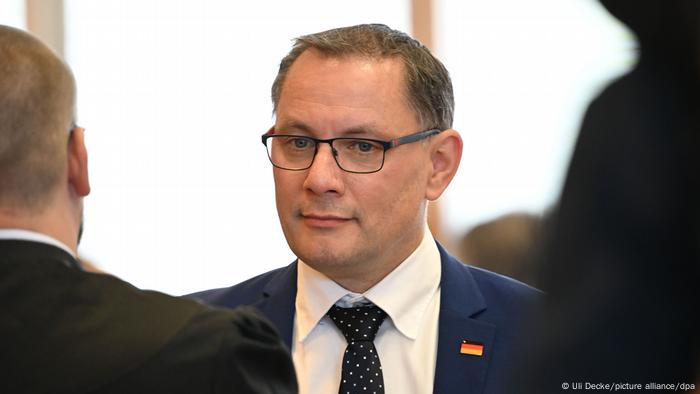
    Indeed, AfD co-chair Tino Chrupalla has repeatedly accused Chancellor Olaf Scholz’s government of fighting an “economic war” against Germans as inflation has risen to over 10%. The sanctions “are not in Germany’s interest,” Chrupalla has insisted, predicting that “throughout the fall, support for the government’s policies will continue to sink.”

    Chrupalla’s projections are echoed in opinion polls. According to figures published by research firm INSA, national support for Scholz’s party has fallen from 25.7% in last year’s federal election to 18% on Monday, the FDP has been reduced by half to 7% and even the Green Party is now experiencing a backlash against their plans to mitigate the gas shortage.

    The AfD, in the same time frame, has risen in the national polls from 10% to 15%, one of its highest levels ever.

    As households across Germany are shocked to receive their heating bills, the right-wing populists see golden opportunities ahead. The situation calls to mind another hot mic moment. In 2020, former spokesman Christian Lüth was caught by a documentary team saying “the worse things are for Germany, the better things are for the AfD.”

    AfD co-chair Tino Chrupalla wears a German-flag lapel pin
    Chrupalla has accused the government of being responsible for soaring energy costs

    Scholz’s communication problem

    Schroeder said the biggest mistake Scholz’s coalition had made was its lack of coherent communication.

    “They have not offered clear answers about what people are actually gaining from domestic relief packages,” Schroeder said, nor exactly how sanctions affect Russian President Vladimir Putin and his war machine. “The government has left communication gaps for right-wing populists like the AfD to jump into.”

    Schroeder feels that the SPD, Green Party, and FDP should put some of the principles aside that were enshrined in the 2021 coalition agreement.

    Last year’s plans have “become outdated since February 24, 2022,” the day Russia invaded Ukraine, the political analyst said. “The invasion has changed everything: It is now what is steering our policy” — and the parties need to recognize that priorities have shifted significantly.

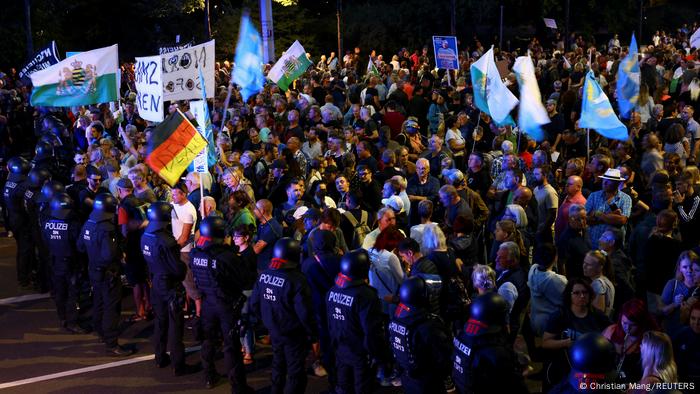
    Police stand blocking people taking part in a right-wing protest against increasing energy prices and rising living expenses in Leipzig, Germany, September 5, 2022.
    Thousands have taken to the streets over the past few weeks, protesting against price hikes


    Deep divisions likely to stymie success

    Schroeder does not expect the AfD’s popularity to soar. He does not see the current situation panning out like the xenophobic sentiment in 2015, “when opposing a refugee influx was something that spoke to people across the entire country.”

    “The AfD is deeply divided between those who are pro-Russia and those who aren’t,” Schroeder said, “and this is creating a rift between their supporters in the west of Germany and the east, where they are more friendly to Moscow.”

    The party has indeed been hemorrhaging membership since 2020.

    For now, however, AfD leaders have seized the opportunity offered by Germany’s edging closer to a recession to foment discontent by encouraging protests throughout the fall.

    Under the slogan “a hot autumn against cold feet,” the AfD has announced plans to hold weekly anti-government marches in the coming months, alluding to mass protests that helped bring down the communist regime in East Germany at the end of the Cold War. Across eastern Germany, tens of thousands have taken to the streets to protest government policy.

    The AfD leader announced a concerted protest movement against the government’s energy and Russian policies. From October, the AfD wants to take to the streets with the rallying cry “Our country first!” Chrupalla declined to confirm that this was modeled on Donald Trump’s “America first” campaign.

    “Demonstrations are already taking place in many places. In this respect, Monday is a good time to stretch your legs after the weekend,” he said.


  • Final day of flawed voting in Ukraine under Russian control during the war

    Tuesday marks the penultimate day of a vote for regions of Ukraine controlled by Russia, which the government in Kyiv and its Western allies call a fraud.

    Nearly four million people from the eastern regions of Donetsk and Luhansk, and the southern regions of Kherson and Zaporizhzhia, are being asked to attend polling stations and vote in so-called referendums on joining Russia.

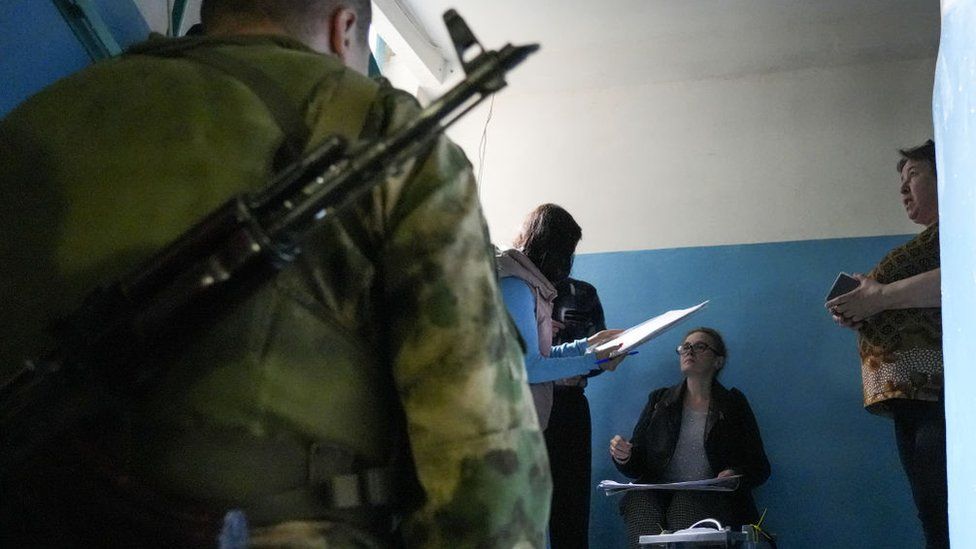
    This follows four days of early voting during which allegations of intimidation multiplied as election officials went house to house accompanied by armed guards.

    The votes, called with just a few days’ notice, serve a deadly serious purpose as they will be used by the Kremlin to legitimise its invasion aims.

    If Russia absorbs these regions, making up about 15% of Ukraine’s territory, it could take the war to a new and more dangerous level, with Moscow portraying any attempt by Ukraine to regain them as an attack on its sovereign territory.

    There is now speculation that Russian President Vladimir Putin may announce the four regions’ annexation in a speech to a joint session of Russia’s parliament on Friday.

    In March 2014 he announced that Ukraine’s Crimea Peninsula had been annexed just a few days after a likewise unrecognised referendum was held.

    ‘At gunpoint’

    Were the guns there to protect you as you voted, or to cow you into voting? That was a question passing through people’s minds in recent days as election officials escorted by soldiers come to knock on their doors.

    Serhiy Haidai, the governor-in-exile of the Luhansk region, accused the separatist authorities there of taking down the names of people who voted against joining Russia or who refused to vote at all.

    “Representatives of the occupation forces are going from apartment to apartment with ballot boxes,” he said, quoted by Reuters news agency. “This is a secret ballot, right?”

    Talking separately to the Associated Press news agency, he suggested the Russians were using the process as a pretext to search homes for men they could mobilise as soldiers as well as checking for “anything suspicious and pro-Ukrainian”.

    One woman described for BBC News how her parents had voted in the city of Melitopol in the Zaporizhzhia region.

    Two local “collaborators” had arrived with two Russian soldiers at their flat to give them a ballot paper to sign, she said.

    Voting in Donetsk, 23 September
    IMAGE SOURCE, GETTY IMAGES Image caption, Soldiers are escorting electoral workers going door to door in Donetsk

    “My dad put ‘no’ [to joining Russia],” the woman said. “My mum stood nearby and asked what would happen for putting ‘no’. They said, ‘Nothing’. Mum is now worried that the Russians will persecute them.”

    Another woman in the embattled town of Enerhodar, where the Zaporizhzhia nuclear power station is located, told the BBC: “You have to answer verbally and the soldier marks the answer on the sheet and keeps it.”

    Ukrainian journalist Maxim Eristavi tweeted to say that his family had been “forced to vote at gunpoint” in southern Ukraine.

    “They come to your house,” he wrote. “You have to openly tick the box for being annexed by Russia (or for staying with Ukraine if you feel suicidal). All while armed gunmen watch you.”

    Petro Kobernik, who left Kherson just before the voting began, told AP in an interview by phone: “The situation is changing rapidly, and people fear that they will be hurt either by the Russian military, or Ukrainian guerrillas and the advancing Ukrainian troops.”

    The vote on paper

    The questions on the ballot papers (there is no digital voting) differ according to region.

    This is because pro-Russian separatists have been running parts of Donetsk and Luhansk since 2014 when they held unrecognized independence referendums.

    Voters, there are being asked whether they “support their republic’s accession to Russia as a federal subject”.

    In the parts of Kherson and Zaporizhzhia occupied by Russian forces since the invasion in February, people are being asked if they “favour the region’s secession from Ukraine, creation of an independent country and subsequent accession to Russia as a federal subject”.

    The ballot papers there are printed in both Ukrainian and Russian whereas in the eastern regions they are printed in Russian only.

    Voting was spread over five days to allow for ballots to be “organized in communities and in a door-to-door manner for security reasons”, Russian state news agency Tass reports.

    Refugees now scattered across Russia can vote in as many as 200 polling stations there.

    The vote is being heavily guarded by Russian or Russian-backed security forces and with reason.

    Not only have Ukrainian forces been pushing the Russians and their separatist allies back in both the east and south, but attacks on figures associated with the Russian occupation have mounted.

    Voters in Rostov-on-Don, 24 September
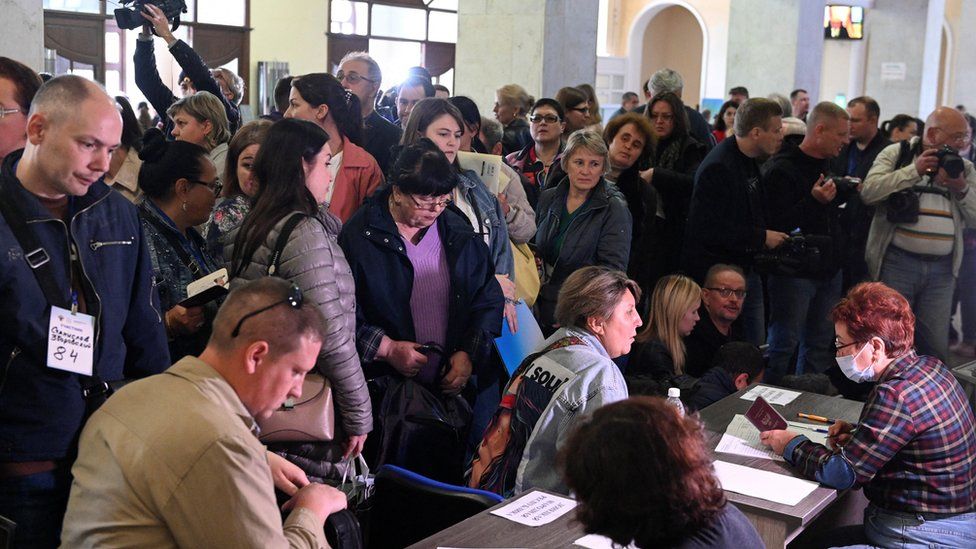
    IMAGE SOURCE, REUTERS Image caption, People voted at a polling station in the Russian city of Rostov-on-Don

    Former Ukrainian MP Oleksiy Zhuravko, who championed the Russian invasion, was killed along with another person in a missile attack on a hotel in Kherson on Sunday.

    Reports say that Russian journalists who were also staying at the hotel escaped uninjured.

    In the city of Berdyansk in the Zaporizhzhia region, the deputy head of the city administration and his wife who headed the city election commission were killed in an attack a week before the referendum.

    Members of a guerrilla group called the Yellow Band have spread leaflets threatening anyone who votes and urging others to send photos and videos of anyone who does in order to track them down later, AP reports.

    The guerrillas have also sent around phone numbers of election commission chiefs in the Kherson region, asking activists to “make their life unbearable”, the agency reports.

    Ukraine has threatened anyone organizing or supporting the so-called referendums with eventual criminal prosecution, saying they face up to 15 years in prison if convicted.

    International outcry

    Even Serbia, which has close ties with Moscow and is one of the few European countries not to join sanctions on Russia, has announced it will not recognise the results of the voting.

    Foreign Minister Nikola Selakovic said that to do so would be “completely contrary” to his country’s policy of “preserving territorial integrity and sovereignty and… commitment to the principle of inviolability of borders”.

    But in the face of international opposition, Russia’s Foreign Minister, Sergei Lavrov, insisted that the votes were “the expression of the will” of the people who lived in the regions.

    He confirmed that if the four regions joined Russia they would have the same protection as any other part of its territory, including protection with nuclear weapons.

    The White House says the US will never recognise “Ukrainian territory as anything other than part of Ukraine”.

    In its view, the referendums are a “sham – a false pretext to try to annex parts of Ukraine by force in flagrant violation of international law”.

    The UK has responded with new sanctions targeting top Russian officials involved in enforcing the votes among others.

  • Ukraine’s ‘referendums’: Soldiers canvass homes for votes in sham votes

    Armed soldiers have reportedly gone door-to-door in Ukraine’s seized regions to solicit votes for sham “referendums” on joining Russia.

    “You have to answer verbally and the soldier marks the answer on the sheet and keeps it,” one woman in Enerhodar told the BBC.

    In southern Kherson, Russian guardsmen stood with a ballot box in the middle of the city to collect people’s votes.

    The door-to-door voting is for “security”, Russian state media says.

    “In-person voting will take place exclusively on 27 September,” Tass reported. “On the other days, voting will be organized in communities and in a door-to-door manner.”

    One woman in Melitopol told the BBC that two local “collaborators” arrived with two Russian soldiers at her parents’ flat, to give them a ballot to sign.

    “My dad put ‘no’ [to joining Russia],” the woman said. “My mum stood nearby and asked what would happen for putting ‘no’. They said, ‘Nothing’.

    “Mum is now worried that the Russians will persecute them.”

    The woman also said there was one ballot for the entire apartment block building, rather than per person.

    Although the evidence is anecdotal, the presence of armed men conducting the vote contradicts Moscow’s insistence that this is a free or fair process.

    Experts say the self-styled referendums, taking place across five days, will allow Russia to claim – illegally – four occupied or partially-occupied regions of Ukraine as their own.

    In other words, a false vote on annexation, seven months into Russia’s invasion.

    The self-styled “annexation” could lead to Russia claiming that its territory is under attack from Western weapons supplied to Ukraine, which could escalate the war further.

    British Foreign Secretary, James Cleverly, said the UK had evidence that Russian officials had already set targets for “invented voter turnouts and approval rates for these sham referenda”.

    Mr Cleverly said Russia planned to formalize the annexation of the four regions – Luhansk, Donetsk, Kherson, and Zaporizhzhia – by the end of the month.

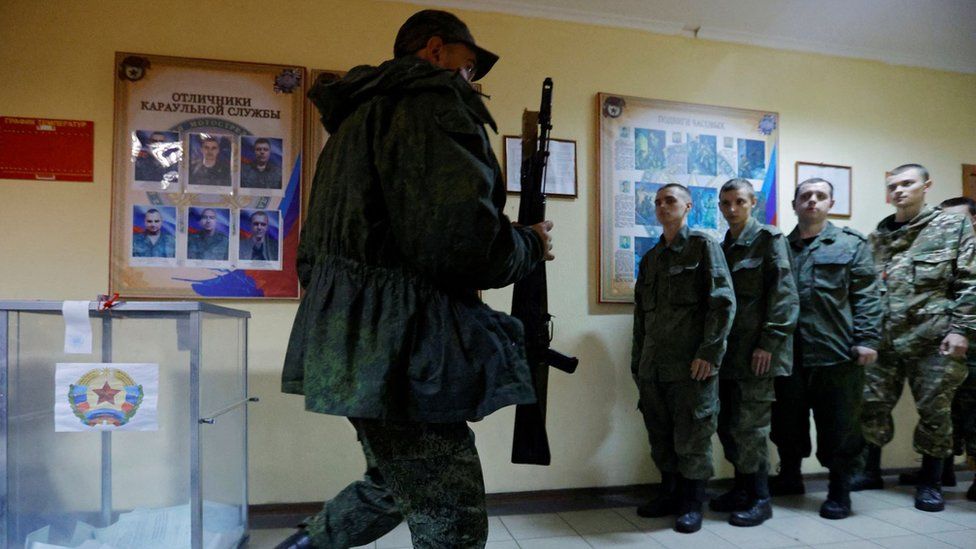
    Armed soldier walks past ballot box as people line up to vote
    IMAGE SOURCE, REUTERS Image caption, Ballot boxes being guarded by armed soldiers in Luhansk

    A source in Kherson told the BBC there was no public effort to encourage voting, apart from an announcement on the Russian news agency that people can vote at a port building, which had been disused for 10 years.

    Another woman in Kherson said she saw “armed militants” outside the building where the vote seemed to be taking place. She pretended to forget her passport, so she didn’t have to vote.

    The woman said all her friends and family were against the referendum. “We don’t know how our life will be after this referendum,” she said. “It is very difficult to understand what they want to do.”

    Kyiv says the referendums will change nothing, and its forces will continue to push to liberate all of the territories.

    Women line up to cast vote in referendums on bus.
    IMAGE SOURCE,REX/SHUTTERSTOCK Image caption, These women in Luhansk voted in a converted bus

    Meanwhile, Russian President Vladimir Putin’s recent mobilisation of at least 300,000 extra troops has caused many Russian men of fighting age to flee.

    One young Russian man who left St Petersburg for Kazakhstan to avoid the draft told BBC World Service that most of his friends were also on the move.

    “Right now, I feel like it’s a total collapse. I know only maybe one or two folks that don’t think about exile right now,” he said.

    He said some, like him, are travelling across the border, whereas others have gone to small Russian villages to hide.

    “The big problem of Russia is that we didn’t think about the war in Ukraine in February as we think about it right now,” he said.