The Ghana Ports and Harbours Authority (GPHA) has warned that Ghana risks losing a significant share of its transit trade to Togo and Côte d’Ivoire if the government does not reconsider the imposition of COVID-19 tax and VAT on transit cargo.
The authority says the high cost of doing business at Ghanaian ports is pushing landlocked nations such as Burkina Faso and Mali to seek alternative routes through neighbouring ports that offer more competitive tariffs.
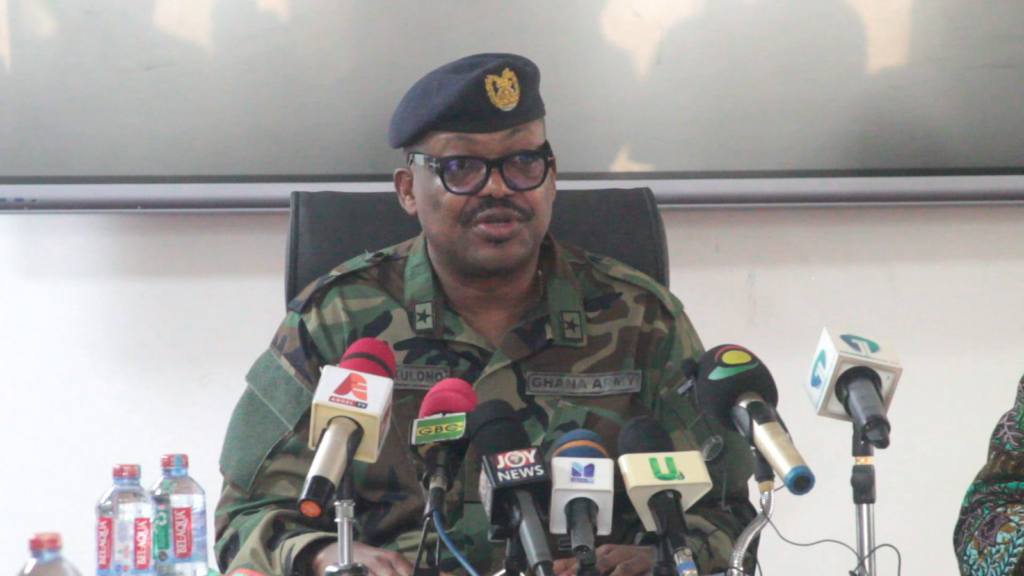
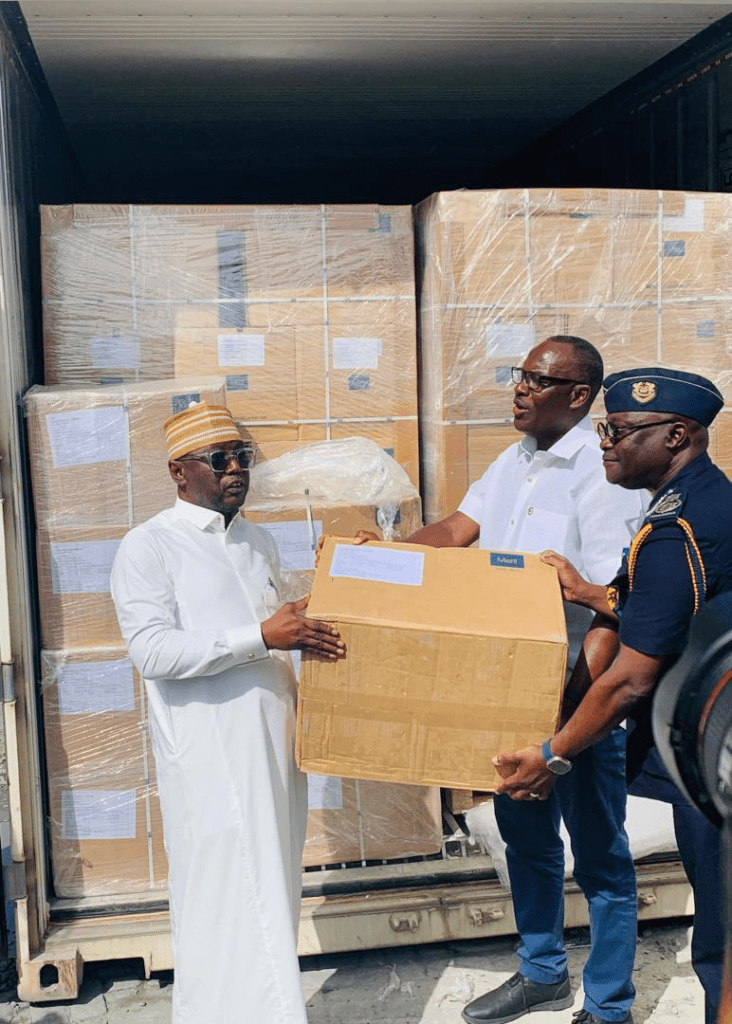
Speaking during a working visit by Transport Minister Joseph Bukari Nikpe to the Tema Port, Brigadier General Paul Seidu Tanye-Kulono, Director General of GPHA, stressed the urgency of reviewing port charges to retain transit trade.
“The transit market is highly competitive, and any disruption can lead customers to shift their business to neighbouring Lomé in Togo and Abidjan in Côte d’Ivoire,” he cautioned.
He urged the government to reconsider VAT and other levies on transit cargo, emphasizing that removing these costs would enhance trade and create more jobs.
Ghana has long been a key transit hub for West and Central Africa, but increasing port charges are making its ports less attractive compared to those in Togo and Côte d’Ivoire.
Despite repeated pleas from traders and freight forwarders for a tax reduction, Ghana’s ports remain more expensive than their competitors. This pricing gap is driving business away from the country’s maritime industry.
In an effort to better understand the competitive advantages of neighbouring ports, GPHA has deployed a fact-finding team to study operations in Lomé and Abidjan.
“Currently, we have a team in Lomé trying to understand the processes there because we understand they don’t charge these levies. Earlier, they were in Abidjan for the same mission, and after the trip, they will submit a report for policy direction,” Brig. Gen. Tanye-Kulono disclosed.
Responding to the concerns, Transport Minister Joseph Bukari Nikpe assured GPHA that the government is committed to keeping Ghana’s ports regionally competitive.
“If goods are not meant for our economy, I’m not sure we have any business charging them. This is a worthy point for us to look at,” he noted.
On the COVID-19 tax, the Minister acknowledged the need for a reassessment, indicating that discussions between the Transport and Finance Ministries would explore possible adjustments.
“It’s important to incorporate the ideas of our partners, especially the landlocked countries that do business with us. If Ghana’s rates are not competitive, they will simply choose ports in Francophone countries,” he warned.
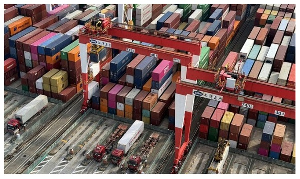
As part of the visit, officials from GPHA and the Transport Ministry toured key sections of Tema Port, including the Shipyard and Terminals 2 and 3, to align government policies with industry needs.
With Ghana facing mounting competition from its regional neighbours, industry experts emphasize that tax reforms and business-friendly policies are crucial to maintaining Ghana’s relevance in the maritime sector and sustaining transit trade.
Minister for Energy and Green Transition has raised concerns over the Electricity Company of Ghana’s (ECG) procurement decisions, which have led to thousands of containers being stranded at Ghana’s ports, accumulating demurrage costs amounting to GHS 1.5 billion.
John Abdulai Jinapor, speaking in an interview on TV3, described ECG’s procurement practices as excessive and poorly managed, resulting in financial losses and inefficiencies within the power distributor.
“It’s all because they are engaged in what I call very frivolous procurements. Now, they have about 3,000 containers stuck at the ports, generating demurrage of about GHS 1.5 billion, which is very unacceptable. Some of the things they’ve procured will last them ten years, some will even expire in five years,” Jinapor stated.
In response to the situation, the Minister announced the formation of a committee to investigate ECG’s procurement processes and assess the financial impact of the stranded containers.
“So we’ve commissioned a committee to investigate ECG’s procurements and the cost of these containers stuck at the ports. The committee is doing a very good job,” he added.
Jinapor further indicated that preliminary findings point to serious lapses in procurement practices under past ECG management.
“So far, the preliminary reports I have gotten indicate that there’s massive rot at ECG.”
As part of efforts to reform the sector, the Minister outlined plans for a broader audit beyond financial reviews, including human resource and technical assessments.
“But beyond that, there will be another technical report. What the PwC has done is a financial audit. We want to do a human resource audit, a deeper audit of the entire energy sector, which will then give us a clear picture of the inefficiencies so that we can tailor that in terms of our policy objective and policy directive to address this.”
Through these measures, the Ministry seeks to enhance efficiency, enforce accountability, and improve the overall performance of the energy sector.
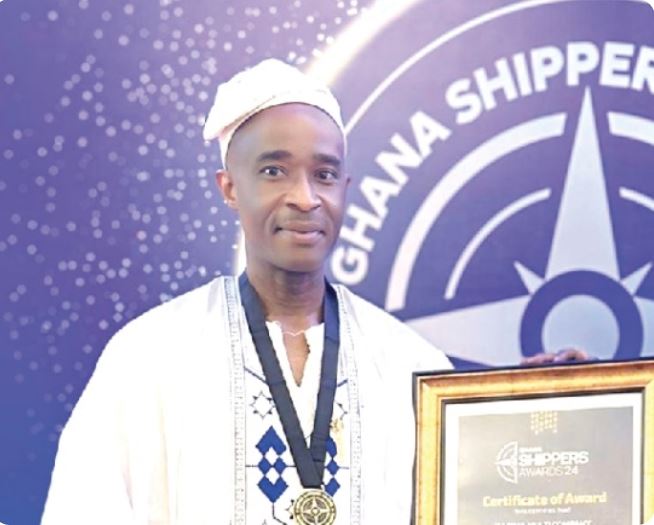
A shipping and logistics firm, honored as the most promising company at the 2024 Ghana Shippers Award, has urged the government to cut down on port bureaucracy to enhance business operations.
Karima Multi Company highlighted that excessive bureaucratic procedures at the ports cause unnecessary delays in goods clearance, adversely affecting businesses nationwide.
The company’s Founder and CEO, Mohammed Osman, stated “There is too much bureaucracy at the ports, with so many agencies, basically doing the same thing.”
“After one agency has checked the goods, another will tell you something was not done right and also do the same checks on the same container, delaying the whole process,” he said.
Competitive taxes
Mr. Osman also called on the government to lower duties and taxes at the ports to increase the country’s competitiveness.
He noted that the high taxes on goods act as a deterrent for businesses and often result in excessively high prices for the final consumer.
“The duties charged at the ports are also killing businesses. The duties charged on goods should be competitive among neighbouring countries in the sub-region,” he added.
He refuted the idea that lowering taxes and charges at the ports would negatively impact government revenue, arguing that such measures could significantly boost government earnings.
“If the duties and charges at the ports are competitive, it will increase the revenue of the government as people will not have any incentive to use the ports of neighbouring countries and smuggle them into the country,” he said.
Motivation
Mr. Osman mentioned that Karima Multi Company, encompassing Karima Shipping and other subsidiaries, received the award due to its exceptional performance and innovative practices over the years.
He elaborated that the company specializes in shipping a wide range of goods and providing various logistical support services from the United States to Ghana.
He noted that the award serves as both a motivation and an encouragement for the company to continue excelling.
“We won this award based on our performance, innovation, excellent customer service and social impact programmes, which have had a positive impact on society,” he said.
Mr Osman said this was not the first time the company had been recognised for its sterling performance, stressing that it had won two awards in the US.
“In 2016, we were awarded the best exporter of the year in New York by the Small Business Administration of New York, while in 2021, we were awarded the Best Shipper in Bronx, New York, by the Bronx Award programme,” he said.
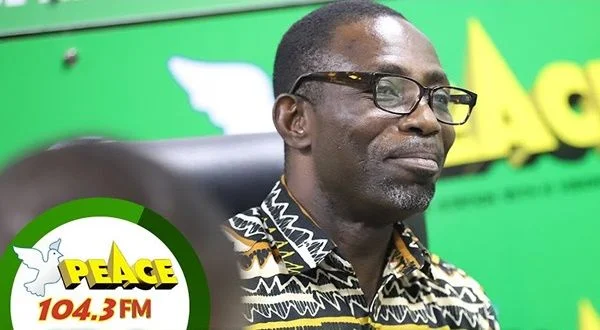
Head of the Center for Ageing Studies, Professor Joseph Osafo, has alleged that there has been a delay in clearing some containers containing medical supplies at the Tema Port due to some mischievous individuals who sought to make money from the situation.
Engaging Kwame Sefa Kayi on Peace FM’s Kokrokro Show, Professor Osafo noted that some individuals sought to take advantage of the bureaucracy involved in ensuring the containers are cleared.
He expressed surprise that the government spent over 6 months to clear some containers it received for free.
“This is for the government and there are numerous challenges. These are not our individual items, so imagine if government faces this challenge in clearing its goods, then what will happen to the average Ghanaian. These are essential items. These are medicines donated to the country.
“Sometimes, there is bureaucracy because someone wants to make money from somewhere. I have said it and it is true. Did you see the placards used by some aggrieved nurses in Kumasi. One of the placards read that we will not pay any fee for special placement. What is this?” he quizzed.
The Ghana Revenue Authority (GRA) has eventually cleared some 14 out of 182 containers at the Tema Port, holding antiretrovirals, Tuberculosis (TB) and malaria medicines that were donated by the Global Fund.
The Government of Ghana received 435 containers at the Tema Port between August 2023 and February 2024 containing anti-HIV, TB and malaria medicines and mosquito nets for distribution across the country.
The clearance comes after intense pressure was mounted on the Ministry of Health by stakeholders in the health sector and members of the general public over the delay in the release of the drugs.
The Ministry of Health (MoH) assured its stakeholders and the public that significant progress has been made in clearing the remaining containers holding antiretrovirals, Tuberculosis (TB) and malaria medicines by Friday, 12th April 2024.
The Health Ministry pledged that some 20 containers would be cleared on Friday, but only 14 containers were cleared. A handing-over ceremony was held to announce this latest development.
At the ceremony, Deputy Commissioner of the Customs Division of Ghana Revenue Authority (GRA), Emmanuel Ohene, revealed that a special provision of GHC40 million was made by the Ministry of Finance to cover transnational taxes, AU and ECOWAS levies on the containers.
What remained outstanding were third-party charges, which the donors, per reports, had decided to take up.
“Unfortunately, upon arrival of the consignment at the port, the associated charges could not be paid. This information was also not communicated to the Ministry of Finance on time,” Emmanuel Ohene said.
Earlier, the Coalition of Civil Society Organisations in Health raised concerns about the government’s ability to resolve the issue of delayed lifesaving drugs stuck at the port.
Executive Director of the Africa Center for Health Policy Research and Analysis, Dr. Thomas Anaba, has revealed that the delay in clearing medical supplies donated by the Global Fund has resulted in a significant increase in tuberculosis, malaria, and HIV/AIDS cases.
“There is an increase in the cases of tuberculosis and HIV/AIDS from last year’s figure, and the complications of people dying from AIDS have also increased. Women getting malaria during pregnancy have increased because of this.”
Meanwhile, the Health Ministry has assured that the remaining containers will be cleared this week.
The Ghana Ports and Harbours Authority (GPHA) is initiating the development of a maritime single-window system for efficient vessel traffic management, according to Mr. Michael Achagwe Luguje, the Director General of GPHA.
This system is aimed at enhancing the working relationships with key stakeholders in the clearance chain.
Mr. Luguje unveiled this plan during GPHA’s media forum, emphasizing that it would complement the existing Integrated Customs Management System (ICUMS) and paperless port clearance system, revolutionizing port transactions.
Speaking about port clearance in 2023, Mr. Luguje highlighted the GPHA’s commitment to retooling the ports, despite handling one million tonnes less cargo than in 2022.
The director revealed significant investments in modern machinery and equipment, including marine crafts, cranes, reach stackers, and forklifts.
Infrastructural projects, such as the expansion of MPS Terminal 3 in Tema and the completion of the multi-purpose and container terminal in Takoradi, contributed to the enhancement of port capabilities.
The director general reported that the oil and gas terminal is slated for completion by the end of 2024, with the ultra-modern Dry Bulk Terminal in the Port of Takoradi equipped with state-of-the-art conveyor systems and eco-hoppers to handle various bulk cargoes effectively.
These developments in Takoradi align with GPHA’s master plan to diversify service offerings to meet growing demand.
Highlighting the priority of the Keta Port project, Mr. Luguje stated that it is currently undergoing environmental, social, and impact assessment. He emphasized the GPHA’s dedication to making the ports the preferred choice in West and Central Africa, urging importers and exporters to maintain trust in their services.
The Ghana Ports and Harbours Authority (GPHA) has given assurance to residents in the Keta area that it will fully adhere to the country’s local content policy during the implementation of the Keta Port project.
Mr. Sam Dzackah, the Project Coordinator for Coastal Ports Development at GPHA, affirmed that the Authority would employ a similar approach to the local content law in the oil and gas sector when engaging local residents for the project. He stated that “Keta is a place of experts.”
The Petroleum (Local Content and Local Participation) Regulations of 2013 emphasize the prioritization of local residents in terms of employment in the petroleum industry and ensuring that they benefit from the country’s natural resources.
Mr. Dzackah provided this reassurance during a public engagement focused on the Environmental and Social Impact Assessment (ESIA). The event was organized by GPHA in collaboration with Coastal and Reclamation Engineering Services (CARES) Ghana Limited, the consultants responsible for the ESIA of the Keta Port project. This engagement is part of the process leading to the construction of the Keta Port.
The separate engagements took place in Dzelukope, Kedzi, and Havedzi and aimed to allow local residents to voice concerns about potential adverse social and environmental impacts of the proposed port. The goal was to identify suitable mitigation measures.
Residents from various communities, including Keta, Adzido, Vodza, Kedzi Agorta, Havedzi, Horvi, Blekusu, and Anlo-Afiadenyigba, attended the forum.
Among the concerns raised were compensation for families that would need to relocate to accommodate the project, the preservation of livelihoods for fishing-dependent communities, the safeguarding of cultural heritage, and the promotion of tourism.
Mr. Dzackah highlighted that the Keta area (Anlo) has a reputation for producing some of Ghana’s best human resources. Therefore, the project would create numerous opportunities to benefit the local population.
“Put yourselves in readiness for the project. The Keta Port, which will have a port city and industrial enclave, will incorporate the tourism aspect,” he said.
“There will be proposal for measures of safeguarding the communities in terms of alternative livelihood including opportunities for people to own businesses. For local content, indigenes will be recruited for manual labour, semi-skilled and at expert levels.”
Mr. Mathew Baker, the Technical Manager at CARES Ghana Ltd, emphasized the importance of stakeholder engagement, highlighting its critical role in evaluating the project’s potential positive and negative effects on local communities.
The Ghana Ports and Harbours Authority (GPHA) has outlined the project as a commercial harbor that will encompass a container terminal, fishing harbor, tourism hub, and other pertinent facilities.
The Social and Environmental Impact Assessment, constituting the project’s second phase following the completion of the feasibility study, is expected to extend over a period of six months. Subsequently, construction will commence.
There has been violence throughout Sudan, not only in the capital. There have also been clashes between the Sudanese army and the RSF paramilitary group in other towns and cities.
Fighting in the north-eastern city of Port Sudan, however, appears to have ended.
Othman Abu Bakr, an engineer and resident of the city, has told the BBC that “life was normal in the city” on Saturday until around 22:00 (20:00 GMT), when he heard clashes had erupted in some areas.
He and his family gathered in one room as fighting broke out at around 02:00.
“At around 06:30, I woke up to the sound of fighter jets hovering above my neighbourhood.
“Seeing the planes in the sky, the RSF started targeting them with anti-aircraft missiles. The land was shaking… literally.
“Again my whole family gathered in one room. We were really scared. But at around 8.30 this morning we could no longer hear [sounds] of fighting and it seemed the army had managed to gain control of the RSF’s two bases in the city. It seemed they eventually surrendered. There were no reports of casualties.
Quote Message: I went down to the street at around 9am this morning and saw army soldiers celebrating in the streets, firing into the air. The fighting seems to have ended.” from Othman Abu Bakr Port Sudan resident
I went down to the street at around 9am this morning and saw army soldiers celebrating in the streets, firing into the air. The fighting seems to have ended.”Othman Abu BakrPort Sudan resident
The President of the Republic, Nana Addo Dankwa Akufo-Addo, has been assured that the US$330 million Boankra Integrated Logistics Terminal project, popularly referred to as the Boankra Inland Port Project, which has been on the drawing board for some eighteen (18) years, will be completed by the first quarter of 2024.
The concessionaire, Ashanti Ports Services Limited, a joint venture of Afum Quality Limited of Ghana and DSS Associates of the Republic of Korea, made this known on Sunday, 16th October 2022, when President Akufo-Addo visited the site of the construction.
Covering a total land area of 413 acres, the President was informed by the Concessionaire that “we are working to deliver this job within the schedule date. By the end of 2023 eighty percent (80%) will be done, and, by the end of the first quarter 2024, we will finish the project.”
The Concessionaire was hopeful that the eastern and western railway lines will be completed on schedule, which will further improve the viability of the Boankra inland port.
The idea of the Boankra Integrated Logistics Terminal project has been in the pipeline since the days of the Government of the 2nd President of the 4th Republic, His Excellency John Agyekum Kufuor. In attempting to bring it into fruition, it encountered a number of challenges, a significant one being the exit of the NPP government in 2009.
2020 Sod-cutting
Cutting the sod for the construction of the Port on Thursday, 5th November 2020, the President explained that the Boankra Inland Port project has been initiated to provide service to importers and exporters in the middle and northern parts of the country, and also to act as a major conduit for the efficient transportation of transit traffic to and from our neighbouring landlocked countries of Burkina Faso, Mali and Niger.
After completion of the Terminal, it will be fitted with an inland clearance depot, customs bonded and unbonded estates, commercial areas such as banks, offices and trading facilities, vehicle parking areas, light industrial areas, and an administration complex.
The Project will also offer significant employment opportunities for both skilled and unskilled labour during the two phases of construction and operation. Beyond the creation of jobs, there are other ancillary small and medium scale businesses that will be located within the enclave to support the operations of the Terminal.
“It is noteworthy that the transformation of the Ghanaian economy, from a raw material producing and exporting one, to an industrialised one, will be given a huge impetus with the coming on stream of this facility.
Government’s commitment to establishing firmly the economy of Ghana on a solid path of industrialisation, with the view to delivering a vision of self-reliance, development and prosperity for all, is unwavering,” he added.
The Concessionaire, Ashanti Ports Services Limited, a joint venture of Afum Quality Limited of Ghana and DSS Associates of the Republic of Korea, according to President Akufo-Addo, is committed to investing a total of $330 million for the realisation of this project.
Additionally, the Concessionaire is expected to design, engineer, finance, procure, construct, operate, and maintain the project, and transfer title to the Government after a thirty (30) year period.
“It is my hope and expectation that the Concessionaire will not renege on the confidence reposed in it, and will take all the necessary actions to deliver the project on schedule and on budget,” he added.
One of the success stories of the Africa economic integration agenda is the coming into force of the Africa Continental Free Trade Agreement (AfCFTA).
The objective of the AfCFTA is to promote trade among African countries, with the President stressing that “this will be buoyed by the presence of an effective and efficient transport system, especially as Ghana is playing host to the Secretariat”.
President Akufo-Addo was hopeful that “this project and other similar infrastructure projects, such as the development of the Keta Port, the Tema-Akosombo Railway Line, and the ongoing port expansion projects at Tema and Takoradi Ports, would make a positive contribution in ensuring that Ghana derives maximum benefits from the AfCFTA.”
Findings have shown that the Federal Government failed to capture the Apapa and TinCan Island port reconstruction projects in the 2023 budget presented to the National Assembly last week.
In the budget, the sum of N20m was allocated for agencies under the Federal Ministry of Transportation such as Nigerian Ports Authority, Nigerian Maritime Administration and Safety Agency, Maritime Academy of Nigeria, Oron; and Nigerian Shippers Council for other consultancy services.
Meanwhile, agencies like MAN in Oron and the Council for the Regulation of Freight Forwarders in Nigeria got N1.5bn and N775m respectively.
It will be recalled that the Managing Director of the Nigerian Ports Authority, Mohammed Bello-Koko, had said that a whooping sum of about $600m (N258bn) was needed for the rehabilitation of Nigerian ports. However, this figure was not captured in the budget as only N10m was allocated for implementation of strategies for the rehabilitation, utilisation and patronage of Eastern ports.
The seaports being considered included: Apapa, and Tin Can Island Ports in Lagos; Calabar Port in Cross River as well as Warri, Koko and Burutu ports in Delta State.
Bello-Koko had said that not all the terminal operators had the financial capacity to handle the reconstruction of the quay aprons.
“Like I said before, not all of them have the financial capacity to reconstruct because it is no more rehabilitation but full reconstruction. While some of them might be able to have financing in the next few months, others might not be able to meet up and then you need to have uniformity in terms of the constructionplans and so on. We also didn’t want the terminal operators to come up with their own engineering designs.
“So, we are coming up with a holistic engineering design of the ports. When we do that, we also have an estimated cost of over $600 million. Now, we are looking at the funding options. The first option is for the terminal operators to reconstruct those berths. Either we give them time to recoup their investments or we extend their leases.
“The other alternative is for the NPA to reconstruct those quays and to do that, we are going to fund it ourselves. We are working towards requesting the government’s approval to use a certain per cent of our revenue to fund the reconstruction of Tin Can.
“We are just being proactive. When the government decides to go that way, we know that we have already done some of the work. The other option is to just get a multilateral lending agency to fully fund that reconstruction. The FMOT has been pushing and giving timelines in terms of the starting of the reconstruction of Tin Can.”
Meanwhile, a source close to the NPA told THE PUNCH that though one of two terminal operators wanted to undertake the project, it was still the responsibility of the ports authority.
“It is the responsibility of the NPA. The agency is looking for funding options. Some terminal operators like one or two want to undertake the project, but if one person does it and the other does not do it, there will be distortions of the whole system. This is why NPA wants to do it itself. So, if it is not in the budget, I don’t know who they want to do it with.”
Reacting to this, Vice President of Business Action Against Corruption, Integrity Alliance, Lagos, Jonathan Nicol, questioned why shippers were charged a seven percent development fee if the ports would not be developed.
He said that it was the duty of terminal operators to develop the terminals.
“Shippers pay a 7 per cent surcharge for port development levy across the country. The 7 per cent surcharge is a levy for every cargo that comes into the ports. Shippers have been paying that levy for 30 years. It is enormous money for development of the ports, which has not been used, looking at the state of the ports. The question is, why do shippers have to pay for port development levies when the port has been concessioned. This is because concessionaires are supposed to develop their own spaces at the ports, which they rented from the Nigerian Ports Authority. It is their duty to develop them and not that of the shippers to do it for anybody.”
Nicol said NPA had the right to request money to develop the ports from what they had been paying to the government.
“The NPA has a right to request funds from what it has paid to the government. If the government is saying they are not going to fund the NPA, NPA has the right to hold the funds and remit part of what they collect to the government and use the rest for salaries and development of the ports.”
According to him, “With the way it is, if care is not taken, the NPA might increase its tariffs. Government is introducing, increase the cost of doing business instead of decreasing it. The 7 per cent surcharge is a levy for every cargo that comes into the ports.”
He said that the government was increasing the cost of doing business instead of reduction, noting that it was not healthy for port development.
“The government is increasing the cost of doing business instead of decreasing it.”
Meanwhile, the General Secretary of the Association of Bonded Terminal Operators of Nigeria, Haruna Omolajomo, lamented poor infrastructural maintenance by the government, stressing that it was not good for the growth of the industry.
“As far as I am concerned, it is very painful that the Nigeria government, through its agencies and other parastatals, is very poor in maintenance culture. If infrastructure is not obsolete, decayed, collapsed or totally dilapidated, no one will be bothered.”
According to him, “Even where budget provisions are even made, the money would be diverted or cornered by some bad eggs in the country.”
According to him, “One is therefore not surprised to see the dilapidated ports and quay aprons of our premier ports, especially those of Lagos ,TinCan and Onne just to mention a few. They are not being attended to or accommodated in 2023 budget.”
Omolajomo noted that the government was only concerned when the crisis involved the big men and the powerful in the society.
“But let there be a disaster or killing that involves one of the big men in the governmental or higher authority, you will see the speed with which those in authority would put things in order.”
He said that a state of emergency should be declared on the dilapidated quays aprons at the ports.
He added that if the matter was not taken seriously, it would attract international maritime operators.
“In actual fact, without further delay, we have suggested, and we are still suggesting that all the dilapidated ports and a state of emergency should be declared on quay aprons in the above stated premier ports. If this is not done or taken seriously, it will soon attract international maritime operators or the world in general.”
According to him, “Our premier ports can be declared a no-go area or unsafe for foreign investors and vessels. This will definitely have adverse effects on the people, the government and our economy that is already down.
“It is not yet too late for the Minister of Transport as well as the National Assembly to do the needful now. Let them quickly accommodate these facilities involving restructuring in the 2023 budget.”
He urged the government to use the time of concession renewal to ensure that the terminal operators participated in improving the port infrastructure.
“Like we suggested, there is a need to review the renewal of the concessionary agreement with the current terminal operators. They should be made to show concrete commitments and make money available for the restructuring of these dilapidated ports.
“They cannot just be milking the country and carting away the money they get freely to enjoy themselves somewhere else.”
According to him, “The premier ports of Apapa and Lagos and the newly constructed Lekki port are advantages to these agencies to get adequate funds and funding. The Lekki port will definitely be a huge economic blessing not only to these agencies but also to the people of Nigeria. These agencies would definitely get a lot of money from the barge operators, truck owners, agents, importers , indigenous bonded operators around the axis . Business will definitely blossom in this Lekki port axis.”
Also speaking, a member of the National Association of Government Approved Freight Forwarders, Start Ezenga, said, that the government might have removed that from th agreement.
“When the Federal Government concessioned the port, they cleverly removed the repairs of the ports from the agreement. They may be expecting the concessionaires to do that. One of the terms in the agreement would be for the government to maintain the ports. Hence they may have removed that budget or from the government pulse.”
The Acting National President of the Association of Nigerian Licensed Customs Agents, Kayode Farinto, said, “That is very funny. If the government does not look at the infrastructure, it will be very funny. If they didn’t capture it in the budget, it is not a good omen,” he said.
The Port of Felixstowe says it “regrets” the impact of the strike and cites a warning from the Unite union about significant supply chain disruption. The strikes, however, were predicted to simply be “an inconvenience, not a catastrophe,” according to a port source.
In the most recent round of labor unrest that has affected numerous economic sectors, nearly 2,000 employees at the largest container port in the UK quit their jobs on the first day of an eight-day strike.
The strike at Felixstowe port on the east coast rounds off a week that saw various strikes by thousands of transport workers in disputes over pay, as the cost of living crisis bites.
The union has warned the stoppage at the port, which handles almost half the container freight entering the country, will have a significant impact on UK supply chains and the logistics and haulage sectors.
But a port source downplayed the warning, telling the PA news agency the strikes will be an “inconvenience, not a catastrophe”.
The supply chain is used to disruption following the pandemic, he claimed.
“Disruption is the new normal. The supply chain has moved from ‘just in time to just in case,” he added.