South Africa’s President Cyril Ramaphosa has sent 2,900 soldiers to help fight against armed rebel groups in the eastern part of the Democratic Republic of Congo.
The soldiers will go to Congo as part of a mission from southern African countries. It was approved by a group of countries in that region in May of last year.
Malawi and Tanzania will also send soldiers to help with the mission.
The mission is taking the place of the East African regional force, which left DR Congo in December because the government thought it wasn’t working well.
The deployment will cost South Africa 2 billion Rand ($105 million; £83 million) and will last until December this year, according to a statement from the presidency.
The announcement comes as there is more fighting happening, which has caused many people to leave their homes in DR Congo. About seven million people have been forced to leave their homes because of different conflicts.
Tag: President Cyril Ramaphosa
-

2,900 soldiers from South Africa to be sent to Democratic Republic of Congo
-
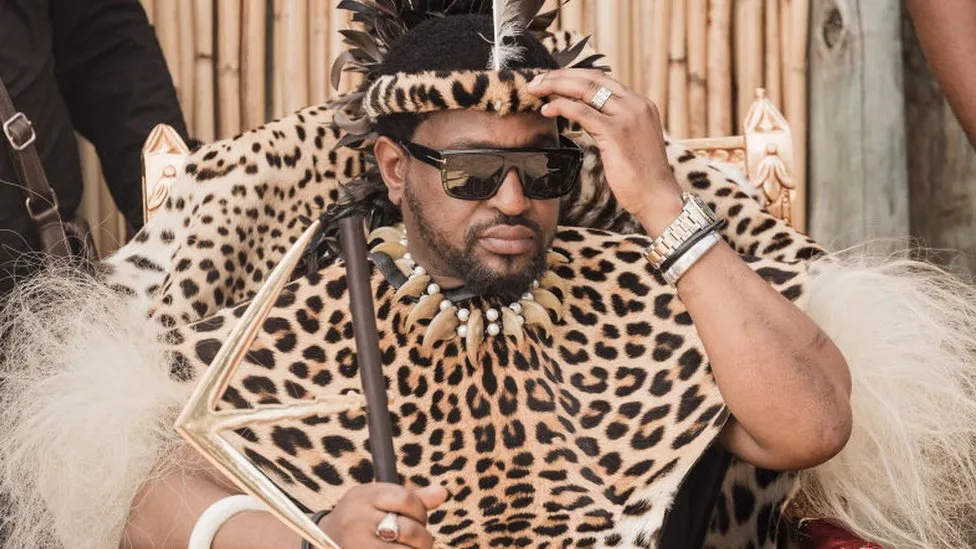
State coronation of Zulu king was unconstitutional – Court
A court in South Africa said that President Cyril Ramaphosa did not have the right to officially make the new Zulu king last year.
The court told him to investigate if King Misuzulu ka Zwelithini followed the traditional rules when he became the king.
The king’s half-brother, Prince Simakade Zulu, is taking legal action because he believes he should be the king.
The death of their dad in 2021 caused a big fight in the family about who would take over.
The late King Goodwill Zwelithini was the Zulu king for nearly 50 years. He had six wives and at least 26 children.
King Misuzulu seemed to have won the fight to become the next king, especially after his traditional crowning in August 2022. Two months later, Mr. Ramaphosa gave him a certificate of recognition at a big ceremony in front of many people.
In South Africa, the president officially acknowledges the new king, which allows him to be treated like a king under the country’s laws and to receive financial support from the government.
The king has a lot of land in South Africa that he controls according to the law.
Prince Simakade said that Mr. Ramaphosa made a quick decision without following the right traditional and legal steps when he recognized his younger half-brother as the leader.
Mr Ramaphosa has not said if he will agree with the decision or try to fight it in a higher court.
His spokesperson said his lawyers are still analyzing the decision made by the Pretoria high court on Monday.
The court said it wasn’t deciding who the real king is, but if the president did the right things before calling King Misuzulu the ruler.
It was said that Mr Ramaphosa did not follow the law, which told him to start an inquiry into complaints about entering a position.
The 49-year-old Zulu king’s office has not said anything about the decision.
It has caused mixed feelings among people in South Africa, and may create more problems for the Zulu royal family.
Some are worried that it could make the situation worse in a country that has had problems with poisoning and killings since the previous king died.
King Misuzulu’s followers believe he is the true king, and this includes the leader of South Africa’s third largest political party, Julius Malema.
“King, my one and only King. ” “Praise the King,” said the leader of the Economic Freedom Fighters (EFF) after the ruling.
However, some people who are on Prince Simakade’s side believe that he will become king one day. They see the current ruling as the first step in helping him become the ruler.
In Zulu tradition, the oldest son doesn’t always become king. In the past, there have been fights for control of the throne.
South Africa has eight kings and queens that are approved by the government and paid for with taxpayer money. -
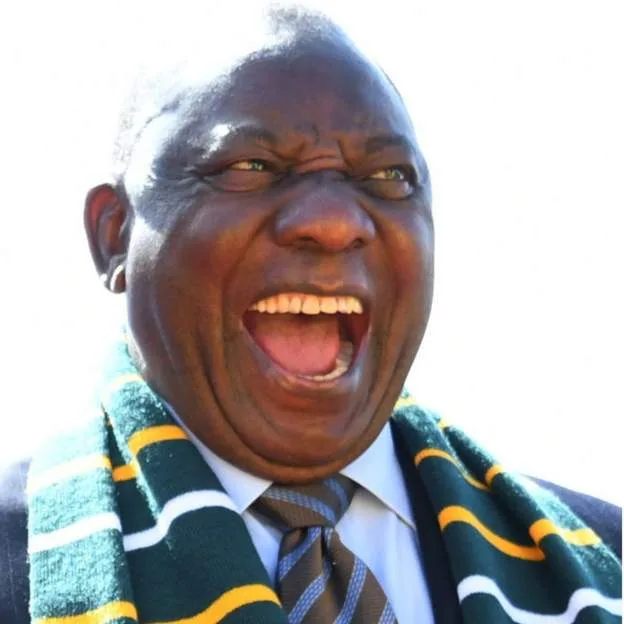
Think like China and stop disparaging your nation – President of South Africa
President Cyril Ramaphosa said that South Africans can learn from Chinese people about supporting their own government.
Everyone has to be a messenger. We should act like China. In China, almost everyone represents their country and always speaks positively about it. “Don’t say bad things about your country,” he said at a meeting in Durban.
China is a country where only one political party is in charge. If people speak out against the government, they can be arrested and held in jail without a fair reason, according to organizations that protect people’s rights.
South Africa has a good relationship with China and is a democracy with multiple political parties. The African National Congress has been in charge of the government since apartheid ended in 1994. -

US accuses South Africa of supplying arms to Russia
The United States has accused South Africa of sending armaments to Russia in a secret naval operation, creating a foreign policy dilemma for President Cyril Ramaphosa over the country’s links to the Kremlin and its stance on the Ukraine conflict.
Reuben Brigety, US ambassador to South Africa, told local media on Thursday that the US believed weapons and ammunition were loaded on to the Lady R, a Russian vessel under sanctions that docked at Simon’s Town naval dockyard near Cape Town in December.
“Among the things we noted was the docking of the cargo ship . . . which we are confident uploaded weapons and ammunition on to that vessel in Simon’s Town as it made its way back to Russia,” he said, in comments reported by South Africa’s News24.
“The arming of the Russians is extremely serious, and we do not consider this issue to be resolved,” he added.
“The US embassy and South Africa’s foreign ministry did not immediately respond to requests for comment. Ramaphosa’s office said it would respond “in due course”.
The rand dropped 2 per cent to 19.2 to the US dollar on the reports, its weakest level since April 2020.
South Africa has said it is non-aligned in the war, but Ramaphosa’s government is under pressure over signs it is favouring Russia, for example by holding joint naval exercises this year.
Ramaphosa has also extended an invitation for Russian president Vladimir Putin to attend a Brics leaders’ summit in Johannesburg in August — a move that has backfired on Pretoria after the International Criminal Court indicted Putin for war crimes. South Africa, a member of the ICC, would be legally obliged to arrest Putin if he travels there.
Sydney Mufamadi, Ramaphosa’s national security adviser, recently visited the US to explain South Africa’s stance and to try to preserve trade links.
The scandal over the Lady R is likely to overshadow these efforts.
Owned by Transmorflot, a company placed under sanctions by the US last year, the Lady R appeared to switch off its transponder as it made the stop in Cape Town after a voyage down the west coast of Africa.
After the ship left port, South Africa’s defence minister said it had delivered a consignment for the country’s defence forces, but provided no details on what the vessel may have picked up in Cape Town.
The South African government in January officially denied that it had approved any arms sales from South Africa to Russia since Moscow began its full-scale invasion of Ukraine in February last year.
-

We are not withdrawing from ICC – SA Presidency
The International Criminal Court (ICC) withdrawal plan announced by President Cyril Ramaphosa has been clarified by the South African administration.
On Tuesday, Mr. Ramaphosa announced that the ruling African National Congress (ANC) had decided to leave the ICC due to “unfair treatment” during a state visit by the president of Finland.
But the presidency acknowledged in a statement on Wednesday that Mr. Ramaphosa had regretfully erred.
South Africa remains a participant in the International Criminal Court [25/4/2023] https://t.co/ERwN1kDymu
— Presidency | South Africa 🇿🇦 (@PresidencyZA) April 26, 2023It was stated that the nation still formally ratifies the Rome Statute.
With Russian President Vladimir Putin scheduled to visit South Africa later this year, there is pressure on the government to make a decision.
A warrant for his arrest has been issued by the ICC in relation to the situation in Ukraine.
-

South Africans worried energy crisis could prevent promised investments
Over the next five years, South Africa has been able to secure new investment commitments from investors totaling around 84 billion US dollars.
President Cyril Ramaphosa met with investors as part of the fifth South Africa Investment Conference. The Chief Executive Officer of the South African Breweries, Richard Rivett-Carnac explains that their investment pledge is expected to create forty thousand jobs in the country.
“ We are committing R5.8 billion and will invest the full amount by the end of this year. It’s primarily for the expansion of our brewery in Gqeberha. It was a project that was started last year and will be completed this year. And this is at the back of last year’s investment commitment to invest in 4 point five.,”
While President Ramaphosa has put forward his multibillion-dollar US investment target, South Africans on the street believe that he needs to focus on eradicating electricity blackouts in order to boost investor confidence.
“I feel like President Ramaphosa should be focusing on sorting out our electricity problem because in terms of business, we are losing more than we are profiting because of the extra provisions we have to make for electricity,” explains Miles Thomas, a South African citizen
Kavish Ramanand, also a South African citizen raises concerns regarding the expenditure of the funds injected by investors.
“If people are willing to invest then that’s great. The first thing they need to look at is the issue of corruption and protecting the funds. I think also load-shedding.” said Ramanand
Cebo Ngema, a South African citizen insists that President Ramaphosa’s energy investment plan will turn around the country.
“They can invest and the electricity crisis will be alright meaning they can continue with the business. Not everything is about electricity. We do have generators now to boost businesses,”
The South Africa Investment was first introduced by President Cyril Ramaphosa in 2018 to help attract more investors to the country.
-
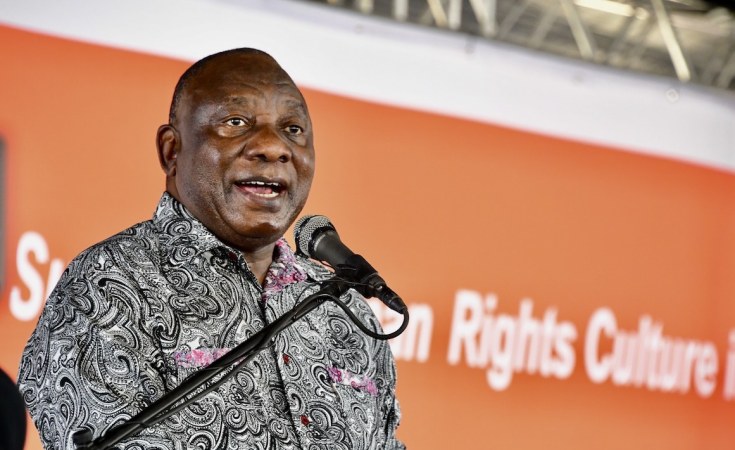
South Africa observes human rights day
On Tuesday, South Africans observed Human Rights Day. President Cyril Ramaphosa used his keynote address to criticize the EFF’s unsuccessful shutdown attempt on Monday.
In his address to the nation from De Aar in the Northern Cape, Ramaphosa accused unnamed parties of trying to “diminish this democracy”, and wanting to “abuse the rights of others, intimidate them, compel them to participate in a protest, compel them to participate in days when they should not go to work.
“I am happy that the majority of South Africans did not heed the call, but they exercised their rights as South Africans,” he added.
He also emphasised that a country cannot claim to respect human rights if it does not ensure that all citizens have access to basic necessities such as land, housing, food, water, healthcare, and education.
The event is held annually in remembrance of the Sharpeville Massacre, which took place on 21 March 1960.
During the protest against Pass Laws, which required black South Africans to carry identification documents at all times, police opened fire on a crowd of around 7,000 people, killing 69 individuals.
The day is also a commemoration of the Langa Massacre, which occurred on 21 March 1985, when state police killed 35 people during a commemoration of the 25th anniversary of the Sharpeville Massacre.
Human Rights Day serves as a reminder of the country’s past struggles and the ongoing fight for equality and justice for all.
The day provides an opportunity for South Africans to reflect on the progress made towards upholding human rights and the work that still needs to be done to ensure that every individual’s human rights are protected.
-
South Africans demand Ramaphosa’s resignation amid high cost of living
South Africans have flocked to the streets to demonstrate against the country’s high cost of living and President Cyril Ramaphosa’s resignation.
According to the international media, soldiers have been sent in to help secure critical infrastructure throughout the demonstration.
The president also issued a warning to protesters not to cause bodily harm or property damage.
In the meantime, the EFF’s leader has urged South Africans to take part in the protest by participating in the nationwide shutdown.
He adds that the protest will be “peaceful and vibrant” and will end at midnight.
“It’s just the beginning; now, let’s go out and join the picket lines,” Julius Malema tweeted.
-
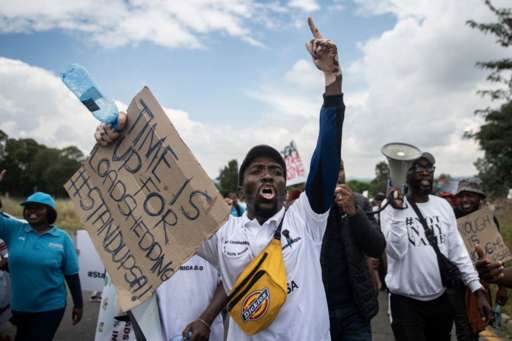
South Africa absorbs power firm’s debt amid crisis
The struggling South African government has announced that it will assume nearly two-thirds of the $23 billion (£19 billion) total debt of the state power company.
This occurs at a time when malfunctions at Eskom’s power plants have caused unheard-of power outages that are harming the nation’s economy.
The national treasury’s decision should release funds for distribution, transmission, and maintenance.
This month, President Cyril Ramaphosa declared a state of disaster due to the energy crisis, enabling the government to take immediate action.
Eskom has been plagued by corruption and mismanagement. It has received more than $14 billion worth of bailouts since 2008.
The latest move by the government comes as the outgoing Eskom chief executive, who was due to exit the company next month, leaves with immediate effect.
The firm’s board resolved on Wednesday that Andre de Ruyter would not be required to serve the balance of his notice period.
In an interview with a local TV station on Monday, Mr De Ruyter questioned the government’s ability to deal with the corruption at the utility firm.
-
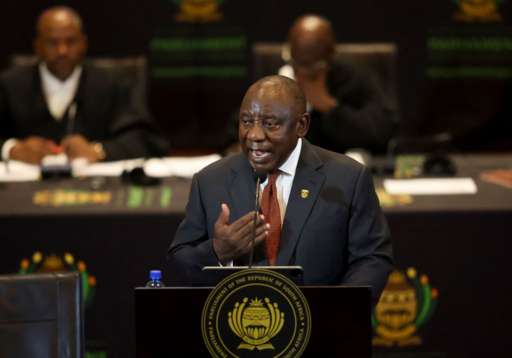
Ramaphosa reinforces disaster law in response to the power crisis
In an effort to address an energy crisis, the president of South Africa has declared a state of disaster.
The government now has more authority to address the crippling electricity shortages that have gotten worse recently thanks to Cyril Ramaphosa’s announcement on Thursday.
He insisted that South Africa would have an energy network that was more effective.
The opposition repeatedly interrupted the president’s annual speech to the legislature.
There was chaos in the chamber before his speech. At one point members of the Economic Freedom Fighters stormed the podium, before being forced to leave.
Mr Ramaphosa also said access to the witness protection programme for whistle-blowers that exposed government corruption was under way.
But that brings little relief to those whose relatives were murdered for exposing maladministration.
To address the rising cost of living, Mr Ramaphosa extended the relief funding which is earned by more than eight million unemployed South Africans.
-
Ramaphosa faces Mkhizein tight ANC party elections
President Cyril Ramaphosa of South Africa is locked in a tight party leadership race with his former health minister, whom he forced to resign amid corruption allegations.
According to reports, Zweli Mkhize is enjoying a last-minute surge at the African National Congress conference in Johannesburg.
The candidates are competing for the votes of 4,426 delegates.
The victor will steer the party into the 2024 general elections.
Mr Mkhize would become ANC leader if he wins, but Mr Ramaphosa would remain president.
Mr Ramaphosa had faced calls to resign ahead of the conference over an alleged cover up of theft of a large sum of foreign currency that was hidden in a sofa at his private farm.
An independent report commissioned by the speaker of parliament said Mr Ramaphosa may have broken the law but he has denied any wrongdoing.
On Tuesday, ANC MPs were instructed to back Mr Ramaphosa and vote down an attempt to start an impeachment process. Only a handful defied the whip clearing a huge hurdle that would have locked him out of the party leadership race.
On Friday, some delegates heckled Mr Ramaphosa, with some displaying the name of his Phala Phala farm where the theft took place.
Mr Mkhize’s supporters also chanted “change” and “He [Ramaphosa] is not coming back!”
The former health minister was forced to leave office last year after allegations emerged that a communications company linked to his family benefited from a contract at the height of the Covid pandemic. He has denied any wrongdoing.
Supporters of candidates running for the party’s presidency and other six top seats have been involved in intense lobbying ahead of the vote which is expected to be completed later on Sunday.
-
Ramaphosa pegged to win ANC race despite cash scandal
On Friday morning, the ruling ANC of South Africa begins the national conference that will elect its new leadership.
After avoiding an impeachment hearing earlier this week, President Cyril Ramaphosa is seeking to be re-elected as party leader.
This came after members of the ANC voted against the acceptance of a report that suggested he might have violated the nation’s anti-corruption laws after a significant amount of foreign currency was stolen from his own game farm.
For the top position, Mr. Ramaphosa will compete against former Health Minister Zweli Mkhize.
The party’s integrity committee is anticipated to provide its report on the “Farmgate” incident, which nearly cost Mr. Ramaphosa his job, as well as a corruption scandal that included his rival.
It is reported that Dr. Mkhize benefitted from a Covid-19 government tender where his associates were given communication contracts.
The acceptance of credentials, which might take hours and is sometimes fought by different factions because it defines which delegates are permitted to participate and vote, will come next.
Mr Ramaphosa is likely to retain his position despite recent the setbacks.
-
South Africa’s Ramaphosa escapes impeachment after parliament votes against move
Despite allegations of misconduct and a breach of the oath of office against the president, the majority of parliament resolved against opening impeachment proceedings against him.In response to a report that claimed President Cyril Ramaphosa kept unreported foreign currency at his farm in 2020, the South African parliament voted against initiating impeachment proceedings against him. On Tuesday, the lawmakers rejected the motion to impeach Ramaphosa 214 to 148. Ramaphosa was largely supported by the majority-holding African National Congress (ANC), which prevented the motion from obtaining the two-thirds majority required to move forward with impeachment.
However, four ANC lawmakers demonstrated their disapproval of Ramaphosa by voting in favour of impeachment, and a few more chose to abstain from the vote.
The crucial vote came after a damning parliamentary report alleged that Ramaphosa illegally hid at least $580,000 in cash in a sofa at his Phala Phala game ranch. It said he did not report the theft of the money to the police in order to avoid questions over how he got the foreign currency and why he had not declared it to authorities.
The report has brought Ramaphosa’s opponents – opposition parties and even rivals within his ANC party – to call for him to step down.
The parliamentary vote comes in a week where Ramaphosa will also be fighting for his political life as he seeks to be re-elected the leader of the ANC at its national conference starting in Johannesburg on Friday.
The conference will also elect members of the party’s National Executive Committee, which is the party’s highest decision-making body.
Ramaphosa must be re-elected as the ANC leader in order to standfor re-election to a second term as South Africa’s president in 2024.
-
Ramaphosa to face parliament vote on corruption scandal report
Tuesday’s special session of the South African parliament is scheduled to discuss a legal experts’ panel report that suggested President Cyril Ramaphosa may have violated his oath of office.
This has to do with the Phala Phala farm scandal that the president is currently dealing with, in which Mr. Ramaphosa has been charged with covering up the theft of foreign currency from his own game farm back in 2020.
The outcome of the vote on President Ramaphosa’s impeachment by MPs will determine the future of the president.
Calls for his resignation have been fueled by evidence of possible misconduct following accusations that he covered up the theft of foreign currency from his game farm.
Mr Ramaphosa has repeatedly denied any wrongdoing.
The governing ANC party has instructed its 230 lawmakers, including those known to be against the president, to reject the report because its findings have been challenged in court.
But some could break ranks and side with opposition parties for impeachment proceedings to get under way.
If Mr Ramaphosa survives the encounter in parliament, he is likely to be re-elected as ANC president at the party’s elective conference which starts on Friday.
-
Parliament hold-up vote on President Ramaphosa scandal report
A parliamentary debate on a damning report that suggested South African President Cyril Ramaphosa may have breached the constitution was scheduled for Tuesday but has been pushed back by a week.
Ramaphosa allegedly concealed a theft from his farm, according to the report. His spokesperson called the story “flawed,” and he denied any wrongdoing.
According to a decision made by the House of Representatives programming committee on Monday night, the discussion will take place on December 13 to allow lawmakers to travel to Cape Town, where parliament is located.
Although the ruling ANC party has stated it would vote against any attempt to impeach President Ramaphosa, the debate over the report may determine whether or not to do so.
A court ruling stating that any actions made by parliament in response to the publishing of the report are unconstitutional and unlawful was requested by the president on Monday.
If approved, the order would be applicable to the parliamentary vote on whether to begin impeachment proceedings.
This is coming days after President Cyril Ramaphosa’s spokesman said he will not resign over allegations that he kept large sums of cash on his property then covered up its theft.
“President Ramaphosa is not resigning based on a flawed report, neither is he stepping aside,” Vincent Magwenya said.
-
Ramaphosa scandal: Opposition demands early elections in response
South Africa’s opposition Democratic Alliance (DA) party plans to introduce a motion in parliament calling for an early election as President Cyril Ramaphosa deals with a controversy that could cost him his job.
The president is accused of kidnapping the thieves and paying them to keep quiet in order to cover up a $4 million robbery on his property in 2020. He maintains that he did nothing wrong.
The nation’s parliament will review a report on the scandal and decide whether or not to initiate the impeachment process next week.
DA leader John Steenhuisen said the country cannot leave it up to the ruling party to “choose the future of our country” – referring to the upcoming ANC conference where Ramaphosa will seek a second term as the leader of the ruling party.

John Steenhuisen “The party of Nelson Mandela has become a cess pit of corruption, greed and dishonesty from top to bottom,” said Steenhuisen.
He noted that in order to call for an early election, the resolution for dissolution of the government would require a simple majority of 50% plus one in the national assembly.
Coming two weeks before the ANC holds its crucial conference, where it is due to elect new leadership. The president has also cancelled a scheduled question-and-answer session in parliament Thursday afternoon, his office said.
The president’s written request to cancel said that “implications for the stability of the country required that the President take the time to carefully consider the contents of the report and the next course of action to be taken”, parliamentary authorities said.
The three-person panel set up in September to probe the alleged cover-up of a theft at Ramaphosa’s farmhouse said that the information it gathered shows that Ramaphosa possibly committed serious violations and misconduct.
These include not reporting the theft directly to the police, acting in a way inconsistent with holding office and exposing himself to a clash between his official responsibilities and his private business.
-
Ramaphosa should step aside over scandal – Tourism Minister
South Africa’s tourism minister says President Cyril Ramaphosa should step aside in line with the ruling party’s rule about members linked to corruption scandals.
President Ramaphosa is embroiled in an corruption scandal dubbed “farmgate”. It is about an alleged cover-up of a robbery that took place at his private farm, Phala Phala, back in February 2020.
The president denies any wrongdoing.
In an interview aired on Sunday night by the public broadcaster SABC, Lindiwe Sisulu said she intended to put the scandal on the agenda of the ANC conference in December.
She said there needed to be a discussion about President Ramaphosa’s fate and the application of the step-aside rule.
Quote Message: I would propose as we go into the next conference [that] anybody who we feel has serious allegations against them should step aside. For instance, the Phala Phala issue for me would call for that until all of us are quite certain that there is nothing wrong, nothing illegal about that.”
The ANC is set to pick its presidential candidate for the 2024 election and Mr Ramaphosa is under increasing scrutiny.
Source: BBC
-
South Africa refuses to seize sanctioned Russian superyacht
South Africa says it will allow a sanctioned Russian oligarch to dock his superyacht in Cape Town.
The $521m (£472m) vessel, which belongs to Alexei Mordashov – an ally of Russian leader Vladimir Putin – left Hong Kong earlier this week.
South African opposition leaders had urged the government to seize the 465ft long (141m) yacht called The Nord.
But a spokesman for President Cyril Ramaphosa said he saw “no reason” to comply with Western sanctions.
“South Africa has no legal obligation to abide by sanctions imposed by the US and EU,” Vincent Magwenya told reporters in Pretoria on Tuesday.
“South Africa’s obligations with respect to sanctions relate only to those that are specifically adopted by the United Nations,” Mr Magwenya added, noting that Mr Mordashov is not under any UN-sponsored sanctions.
Western countries and their allies have imposed sanctions on more than 1,000 Russian individuals and businesses in response to Russia’s invasion of Ukraine.
Like many other African countries, Mr Ramaphosa’s government has so far avoided directly criticising Russia, abstaining in several UN votes that have expressly condemned the war. Pretoria has also called for a negotiated settlement to end the conflict.
On Monday, Cape Town Mayor Geordin Hill-Lewis – a member of the opposition Democratic Alliance party – urged officials to block the superyacht’s entry, writing on Twitter that there could be “no place in our city for accomplices to, and enablers of, Putin’s war”.
“It must be said that so far, our country’s foreign policy conduct in relation to Russia’s illegal, imperialist war has been nothing less than shameful,” Mr Hill-Lewis added in a further statement. “Here is an opportunity to correct some of those errors of judgement and stand up for what is clearly right.”
It is unclear whether Mr Mordashov is actually onboard the vessel. Speaking to local media on Sunday, Mr Hill-Lewis suggested that the billionaire was travelling on his yacht.
But last week a spokesperson for the oligarch told Bloomberg News that he had been in Moscow since his yacht arrived in Hong Kong.
Hong Kong’s government recently offered similar justifications when refusing to prevent the entry of the superyacht, with Chief Executive John Lee saying the city would be accountable to UN sanctions but not “unilateral” ones imposed by “individual jurisdictions”.
Prior to the war, Mr Mordashov was Russia’s wealthiest man. The 57-year-old built a fortune of some $29.1bn (£25.92bn) through his steel and mining company Severstal.
Early in the conflict he was targeted by extensive Western sanctions due to his links with Mr Putin. But the billionaire has questioned the value of the moves, saying he had no involvement in Russian politics and maintains little influence with the Kremlin.
Mr Mordashov has already lost one of his smaller vessels, the 215ft Lady M, to Western sanctions after it was seized by Italian police in March.
But The Nord is believed to be his biggest yacht asset. The vessel is larger than a football field and is described as one of the world’s most extravagant boats, according to Forbes.
Shortly after the outbreak of the conflict in Ukraine, the yacht – which features two helicopter pads, a swimming pool and a cinema – left the Seychelles for the far-eastern Russian port of Vladivostok. The move was seen as a bid to avoid the fate of the Lady M.
But experts say owners like Mr Mordashov face serious issues finding international ports capable of maintaining superyachts. Most are in Europe, where the vessels would be instantly seized.
Source: BBC
-
Ramaphosa outlines steps to tackle state capture in South Africa
South African President Cyril Ramaphosa has addressed the nation detailing the steps his government will be taking in implementing a commission’s report on state capture.
The six-part report sought to uncover corruption, fraud and the weakening of state institutions under the administration of former president Jacob Zuma.
State capture describes a form of corruption in which businesses and politicians conspire to influence a country’s decision-making process to advance their own interests.
In a bold admission, President Ramaphosa accepted the findings by the commission of inquiry led by Judge Raymond Zondo that state capture did happen.
He announced that the commission made over 300 recommendations, some of which the government was responding to ranging from criminal prosecutions of accused persons, legislative changes, as well the establishment of an anti-corruption commission.
President Ramaphosa however was thin on detailing how his government would be implementing the commissions findings. No mention was made of members of his cabinet implicated in the report.
The corruption and fraud uncovered by the state capture report is estimated to have cost the country over $27bn (£24bn).
Mr Ramaphosa said the stolen money robbed South Africans of their future.
Source: BBC
-
Ramaphosa cancels free power and water for ministers
South African President Cyril Ramaphosa has removed controversial benefits for cabinet ministers and their deputies, including free energy and water.
The incentives sparked popular outrage because they were deemed callous at a time when South Africans are dealing with daily power outages and increased living costs.
In a press briefing on Monday evening, a spokesman said the president “acknowledges and appreciates the public sentiments on the matter”.
The ministerial handbook, which outlines ministerial benefits, will be “aligned to the realities that many South Africans face”, presidential spokesman Vincent Magwenya said.
He said the intention behind the perks was “not a nefarious one”.
“The intention was to try and find some form of balance between what ministers could afford versus some of the costs that they have,” he is quoted as saying the by the state news agency.
-
King Charles III to host South African leader in state visit
King Charles III will welcome South African President Cyril Ramaphosa to the U.K. for three days of high-level talks next month.
This is to celebrate the first state visit of his reign with the leader of a Commonwealth member with close ties to the royal family.
Ramaphosa has accepted Charles’s invitation for a state visit from Nov. 22-24, Buckingham Palace said Monday. The South African leader will be accompanied by his wife, Dr. Tshepo Motsepe.
Charles has visited South Africa on several occasions since 1997. At Nelson Mandela’s funeral in 2013, he said the world would be a “poorer place” without the man who led South Africa’s transition from apartheid to multi-ethnic democracy, adding that Mandela was owed “an enormous debt of gratitude” for his achievements.
The King and Camilla, the queen consort then the Prince of Wales and the Duchess of Cornwall welcomed former South African President Jacob Zuma to the U.K. at the start of a state visit in 2010.
Charles’ sons, Princes William and Harry, have also visited South Africa a number of times.
Source: Africanews
-
Power cuts in SA won’t end soon – Ramaphosa
South Africa’s President Cyril Ramaphosa has informed citizens that there is no end in sight to rolling power cuts being experienced in the country.
However, he said things are changing, albeit slowly.
Mr Ramaphosa said in in his weekly newsletter said “We are making progress in the implementation of the additional actions I announced in July, even though the effects may not be immediately felt.”
South Africa is enduring acute energy shortages, with its state energy provider, Eskom, suffering from a lack of investment amid allegations of corruption.
Coal is used to generate 80% of South African electricity but a new deal signed last week will increase the country’s renewable energy output by 10% through private investment in wind and solar projects.
These are not expected to come online until 2024.
As we work with greater urgency to fix the immediate problem of an unreliable power system, we are also busy laying the groundwork for a sustainable, lasting solution to the country’s electricity woes.https://t.co/ILcDTuzKrs pic.twitter.com/xKaQU7qElE
— Cyril Ramaphosa 🇿🇦 (@CyrilRamaphosa) September 26, 2022
-
Ramaphosa and Biden to hold talks at White House
On September 16, South African President Cyril Ramaphosa and the US President Joe Biden will engage each other at the White House.
Issues to be discussed will hover around trade and energy.
In a statement on Thursday, the White House wrote “The leaders, building on their productive call in April and the US-South Africa Strategic Dialogue in August, will discuss opportunities to deepen our cooperation on trade and investment, infrastructure, climate and energy, and health.”
It added that the presidents would also reaffirm the partnerships between their two countries.
They will also “discuss our work together to address regional and global challengesâ€.
-
The scandal engulfing South Africa’s president
South African President Cyril Ramaphosa facing calls to step down over claims that he tried to cover up the theft of millions of dollars in U.S. currency that was hidden inside furniture at his game farm.
The allegations made by the former head of South Africa’s intelligence agency also include that the suspects in the robbery two years ago were tracked down and kidnapped by Ramaphosa’s presidential protection unit, interrogated on his property, and bribed to keep quiet about the existence of the cash, and nothing was reported to the police.
The accusations badly undermine Ramaphosa’s reputation as a leader dedicated to fighting corruption.
“I’ve never stolen money from anywhere” Ramaphosa breaks silence https://t.co/ZzIxrHVq1d
— africanews 😷 (@africanews) June 6, 2022
The scandal, dubbed “farmgate” by the South African press, threatens to end Ramaphosa’s presidency and destabilize Africa’s most developed economy.
-the cash-
Former State Security Agency director Arthur Fraser walked into a Johannesburg police station on June 1 and laid a criminal complaint against Ramaphosa over the theft of what Fraser says was more than $4 million in cash that was concealed on the ranch.
Fraser also claimed that the suspects in the robbery were kidnapped and bribed to stay silent, and Ramaphosa hid the incident from the police and tax authorities.
Fraser said he submitted “supporting evidence” to the police that included photographs, video footage and bank account details. He said the robbery happened in February 2020.
-the spy boss-
The fact that it was Fraser who made the allegations against Ramaphosa suggests they are politically motivated. Fraser is a well-known loyalist to former President Jacob Zuma and a faction of the ANC that wants Ramaphosa out. Zuma, Ramaphosa’s predecessor, was forced to resign as president in 2018 and is now on trial for corruption.
S.A: “No rest” for Ramaphosa over corruption allegations, opposition vows https://t.co/EgwAGwo768
— africanews 😷 (@africanews) June 10, 2022
That trial is seen as an indicator of Ramaphosa’s commitment to confront corruption at the highest level.
Fraser was also in the news headlines last year when, as head of the department of corrections, he granted Zuma medical parole from prison against the recommendation of a parole board which advised that Zuma should not be released early after he was convicted of contempt of court. Fraser was South Africa’s spy boss under Zuma from 2016 to 2018.
-the president-
The allegations have forced the 69-year-old Ramaphosa to fight for his political life. He has admitted the robbery did happen at his Phala Phala ranch in the northern province of Limpopo but said it was reported to the head of his protection unit, which falls under the South African Police Services. He said the money came from the sale of game animals at the farm and he was “not involved in any criminal conduct.”
Those answers have been seen as woefully inadequate, though. Ramaphosa has refused to say how much money was involved, why it was stashed at his ranch, and if the foreign currency was declared to authorities. He sidestepped a plethora of questions over the scandal at a 90-minute press conference at Parliament last week, where he cut an exhausted, under-pressure figure. He said he wouldn’t comment before a police investigation.
“I’d like the due process to unfold in this matter,” Ramaphosa said.
-the fallout-
Ramaphosa was shouted down in Parliament on two consecutive days last week by lawmakers from the Economic Freedom Fighters, the second biggest opposition party. The EFF has since upped its criticism by demanding Ramaphosa resign over the scandal.
Two other opposition parties applied this week for Parliament to put Ramaphosa on “sabbatical leave” and start a parliamentary investigation. That was rejected by the speaker of Parliament.
No criminal charges against Ramaphosa have been announced by the police, although a unit that deals with serious and high-profile crimes is investigating Fraser’s allegations.
Source: Africanews
-
Ramaphosa backs women farmers in new land reforms
South Africa will give priority to women and youth in a new programme to lease idle state land.
President Cyril Ramaphosa said women who were allocated farms under the existing Pro Active Land Acquisition Strategy (PLAS) had run them successfully and moved into commercial production.
He said it was important to ensure land leased for farming is used for that purpose and that farmers are supported to boost production.
The new reforms will see 700,000 hectares of under-utilised or vacant state land given to farmers.
The president tweeted his full statement:
Source: bbc.com
-
South Africa opens borders to African countries, limits others
South Africa will reopen its borders to all African countries from Thursday while barring tourists from around 50 nations with high coronavirus infection rates, the government said on Wednesday.
The continent’s most industrialised economy shuttered its borders at the start of a strict nationwide lockdown on March 27 to limit the spread of the virus.
Restrictions on movement and business have been gradually eased since June, but borders stayed sealed to avoid importing the virus from abroad.
Foreign Minister Naledi Pandor said the country would “gradually” open borders, but that restrictions were in place for around 50 countries categorised as high risk include Britain, the US, India, Russia and France.
“Only business travellers with scarce and critical skills, diplomats, investors and professional sports people coming for events from the high-risk countries will be permitted into the country,” she said.
Meanwhile, “travellers from all African countries are allowed,” Pandor added.
The country will reopen some land borders and its three main airports in Cape Town, Durban and Johannesburg.
All travellers will be required to present a negative coronavirus test taken less than 72 hours prior to departure.
They will be screened upon arrival and asked to install a coronavirus tracing app on their mobile phone.
The travel restrictions will be reviewed every two weeks.
South Africa has been particularly hard-hit by the coronavirus pandemic, with 672,572 infections and 16,667 deaths recorded to date, around half the total number of cases detected on the continent.
The countries with restrictions have a greater number of infections and deaths compared with South Africa, Pandor said.
Source: africanews.com
-
South Africa leader to face probe over campaign funding
South Africa’s governing party officials have said President Cyril Ramaphosa will appear before an integrity commission to answer questions about a controversial campaign donation.
But Jessie Duarte, a senior member of the African National Congress, did not specify when Mr Ramaphosa would present himself before the party panel.
In a report, South Africa’s anti-corruption watchdog alleged that Mr Ramaphosa had misled parliament about money he received in 2017, worth more than $36,000 (£27,000).
Mr Ramaphosa maintains it was a donation towards his campaign for the ANC leadership.
As President, Mr Ramaphosa has staked his reputation on cleaning up South African politics since he replaced Jacob Zuma.
Source: bbc.com
-
Ramaphosa warns of ‘difficult decisions ahead’
South Africa’s President Cyril Ramaphosa has warned of “difficult decisions and difficult days” ahead in dealing with the economic effects of the coronavirus pandemic.
He also said there are “no quick-fixes” to recovery even as the government gradually reopens the economy following three months of restrictions.
The president, in a statement, said the finance minister will this week table a revised budget in parliament which would prioritise some programmes and scale back on others.
Businesses have been retrenching staff because of heavy losses while others are closing permanently. President Ramaphosa acknowledged the challenge of balancing safety measures and saving businesses from collapse.
“We would urge that the difficult decisions to be taken are taken with care and with due regard to balancing the sustainability of companies and the livelihoods of workers. It is important that whatever is done is underpinned by ensuring a just transition to all concerned,” he said.
Source: bbc.com
-
Ramaphosa urges South Africans not to be alarmed at rise of coronavirus
South Africa’s President Cyril Ramaphosa has urged South Africans not to be scared by the rising numbers of coronavirus cases.
The country has recorded more than half of the current total number of cases in the last two weeks.
The president in his weekly newsletter said the numbers will keep rising and people should be “concerned, but not alarmed”.
Quote Message: Like many South Africans, I too have been worried as I watch these figures keep rising. While these numbers are broadly in line with what the various models had projected, there is a big difference between looking at a graph on a piece of paper and seeing real people becoming infected, some getting ill and some dying.”President Ramaphosa said individual households should prepare and look at how to protect the elderly and those with pre-existing conditions.
He said so far many people had started to think about safe ways to continue working, schooling and changed their shopping and worship behaviours to protect themselves from infections.
Schools in South Africa have begun gradual resumption of the school year with grade 7 and 12 learners returning to school on Monday.
Places of worship have re-opened but with strict guidelines to prevent the spread of coronavirus.
South Africa has 48,285 coronavirus cases including 24,364 recoveries and 998 deaths.
Source: bbc.com