In an attack on an army base in the province of Norte de Santander, at least nine Colombian soldiers were murdered.
The National Liberation Army (ELN) rebels, according to the authorities, fired handmade mortar bombs at the base in the El Carmen municipality.
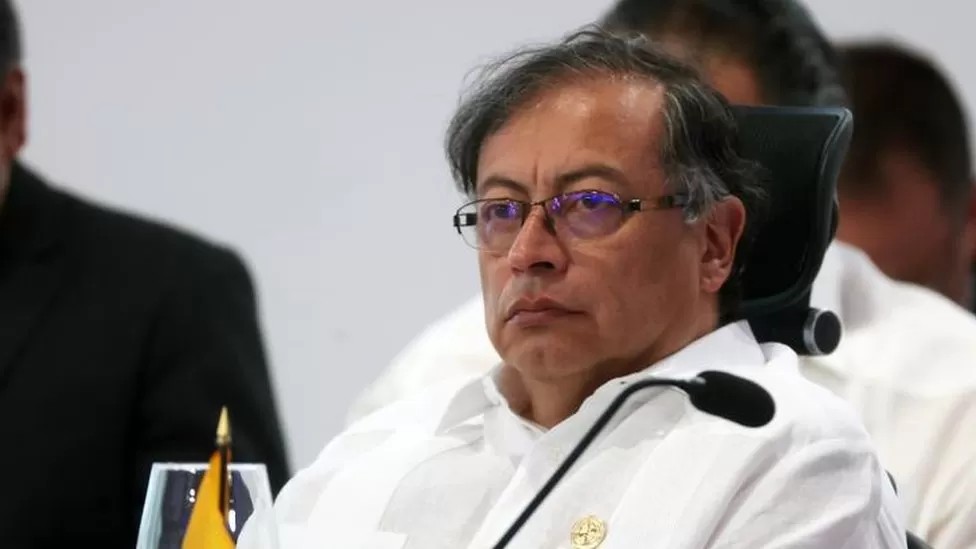
The incident occurs while the government and the ELN are engaged in peace talks as part of President Gustavo Petro’s plan to bring “total peace” to Colombia.
The offenders, according to Mr. Petro, are “still utterly far from peace.”
Seven of the nine fatalities were enlisting in the military as required. Additionally, the strike injured eight soldiers.
Since November, peace talks between the two parties have been ongoing, although no bilateral ceasefire has been reached.
The incident took place in a region that is considered to be an ELN stronghold.
The assault—the worst since the three-year pause in peace talks—is another setback to President Petro’s goal of persuading all of Colombia’s illegal armed factions to lay down their arms permanently.
The government broke the ceasefire it had arranged with the Gulf Clan, Colombia’s major drug trafficking group, last week.
The first left-leaning candidate to be elected president of Colombia is Mr. Petro.
After the ELN detonated a car bomb at a police academy in the nation’s capital, Bogotá, in 2019, his right-wing predecessor in government, Iván Duque, halted negotiations with the group. In that explosion, 22 individuals perished.
The government delegation and guarantor nations involved in the peace negotiations have been invited by Mr. Petro to a meeting on Monday where they will debate the future of the peace process.
According to the attorney general’s office, “three sources” provided information that “indicated that there would be a terrorist attack” intended for Mr. Barbosa.
Days after an ELN-government truce went into effect, word of the suspected conspiracy surfaced.
Since 1964, the ELN has been operational.
The attorney general’s office claimed that the military’s intelligence division, a police department that deals with organised crime and has its own investigative branch, had forewarned it.
It stated that all three told it about a meeting they claimed “five high-ranking ELN members” had last month in neighbouring Venezuela.
According to the claims, a person going by the name “Rolo” was in charge of ELN fighters who were being prepared to shoot Attorney General Barbosa with a sniper rifle.
Additionally, accounts associated with “Rolo” allegedly had “suspicious transactions” worth up to $750,000 (£588,000).
However, one ELN faction involved in peace talks with the government regarded the assertion to be “false” and rejected it. Additionally, the attorney general was accused of “trying to sabotage the peace process”.
Colombia’s attorney general for the past three and a half years is Mr. Barbosa, 49.
He has criticised President Gustavo Petro’s “total peace” proposal and the negotiations with armed groups, claiming that any agreements would make it more difficult for his office to arrest persons accused of committing major crimes.
Additionally, he has plans to offer criminal gang members shorter prison terms in exchange for their disbandment.
The main guerrilla organisation still operating in Colombia is the ELN. It has been at war with the state since 1964, and prior efforts to negotiate a peace agreement with it have been unsuccessful.
However, a bilateral six-month ceasefire between the government and the ELN went into effect on August 3. The following round of peace talks is scheduled to take place in Venezuela on August 14.
In Colombia, hundreds of families must decide whether to leave their homes and way of life or risk the destruction caused by a forthcoming volcano eruption.
One of Colombia’s tallest mountains, Nevado del Ruiz resides in a heavily populated farming region and is notorious for its enormous 1985 eruption, which claimed the lives of tens of thousands of people.
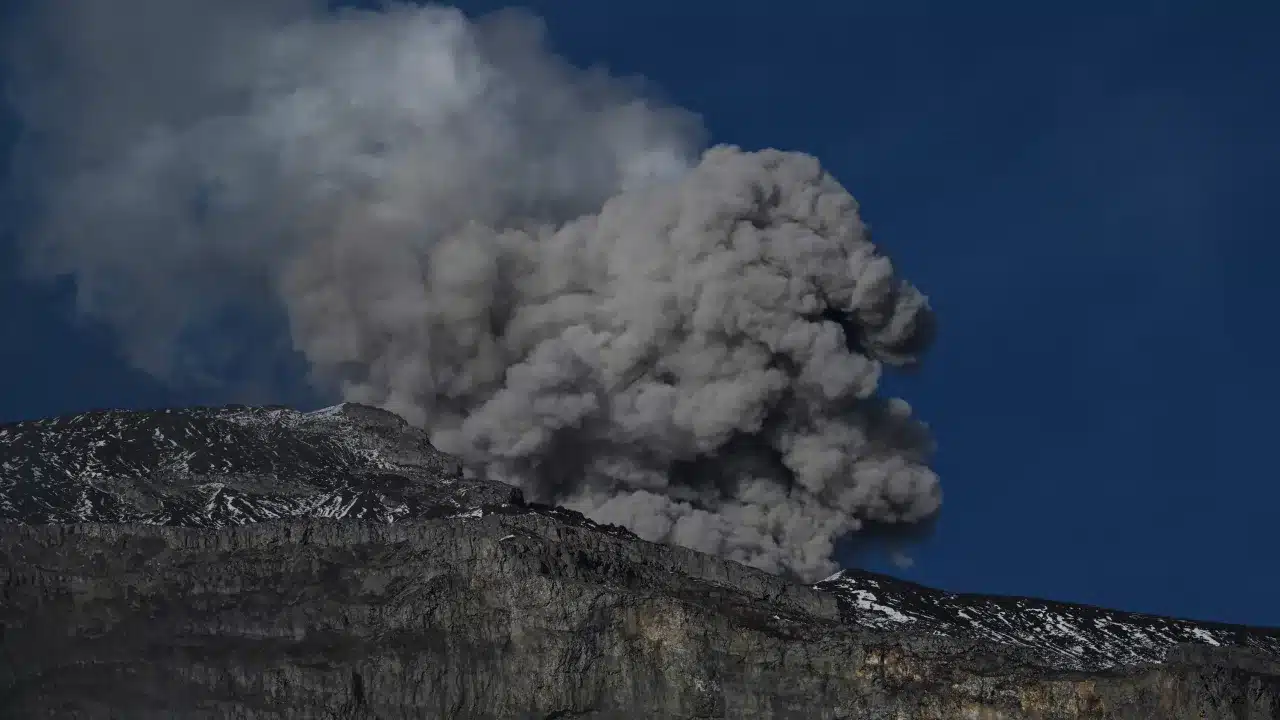
According to Colombia’s Geological Service, the volcano has been on orange alert since March 30 and this indicates that “an eruption is likely within days or weeks.”
Towns and villages around the mountain have been asked to evacuate, with local and national authorities declaring a state of emergency. Most nearby schools have gone back to pandemic-era home learning plans and local municipalities are stockpiling first aid kits.
On April 5, Colombian President Gustavo Petro ordered the voluntary evacuation of about 2,500 families in the area as a precaution, but many locals have refused, saying they are more worried about leaving their livelihoods and belongings behind than about potential lava flows.
While it’s unclear how many families in total have evacuated, Tolima’s civil protection unit director Luis Fernando Velez told local newspaper El Tiempo on Thursday that only a small fraction – just 87 people – had left their homes under his agencies’ watch.
The slopes of the Nevado del Ruiz, located between the Tolima and Caldas provinces in central Colombia, are fertile grounds for local farmers, who say leaving their cattle behind would ruin them.
The local government in the province of Tolima has announced plans to evacuate up to 12,000 cattle, out of a total of over 43,000.
Omar Valdes, Tolima’s rural development secretary and the officer in charge of the cattle evacuation, said farmers were resisting the evacuation order because of previous bad experiences.
“In previous occasions they evacuated, floods [caused by the volcano] didn’t affect their farms and when they came back the farmers found that most of their goods and cattle had been stolen,” he explained.
Eruptions from the Ruiz volcano can be particularly lethal, according to scientists at the Smithsonian Institute’s Global Volcanism Program, because the top of the peak is permanently capped by a layer of snow and ice. Once in contact with the lava, the snow and vice would instantly melt, flood over the slopes of the mountain in torrential mudslides called lahars.
Such a tragedy struck on November 13, 1985, the last massive eruption of the volcano, which is collectively known in Colombia as the Armero Tragedy. On that occasion, just a couple hours after the Ruiz volcano began to erupt, a river of mud, rocks, lava, and icy water swept over the small town of Armero. The flood killed over 23,000 people in a matter of minutes.
Many local residents still remember the trauma of that day, but few are willing to gamble their livelihoods on geologists’ warnings alone. The same volcano erupted in 2012 without causing any deaths.
While Tolima and Caldas are part of the relatively wealthy coffee-growing region of Colombia, most economic activity is run by small-scale farmers who own a limited number of animals and tend to small parcels of land and for whom the cattle and agricultural equipment they own are their most valuable belongings.
Though the increasingly active volcano is monitored daily by dozens of probes, it is impossible to forecast exactly whether it will erupt, let alone when. Still, there are troubling signs.
“Right now, the volcano is ejecting steam, ashes, gases, and closer to the crater there’s been a high level of seismicity,” said Luis Fernando Velasco, the Director of Colombia’s risk management unit UNGRD, in a video statement last week.
Recently, the ground around the volcano has been shaken by hundreds, sometimes thousands of small tremors per day. And on Friday, a column of ashes and smoke originating from the volcano rose onto the sky for over 1500 meters (approximately 5000 ft), according to a report by the Colombian Geological Service.