Tag: president John Dramani Mahama

  • Let’s address basic needs first, not Anti-LGBTQ Bill – President Mahama urges

    Let’s address basic needs first, not Anti-LGBTQ Bill – President Mahama urges

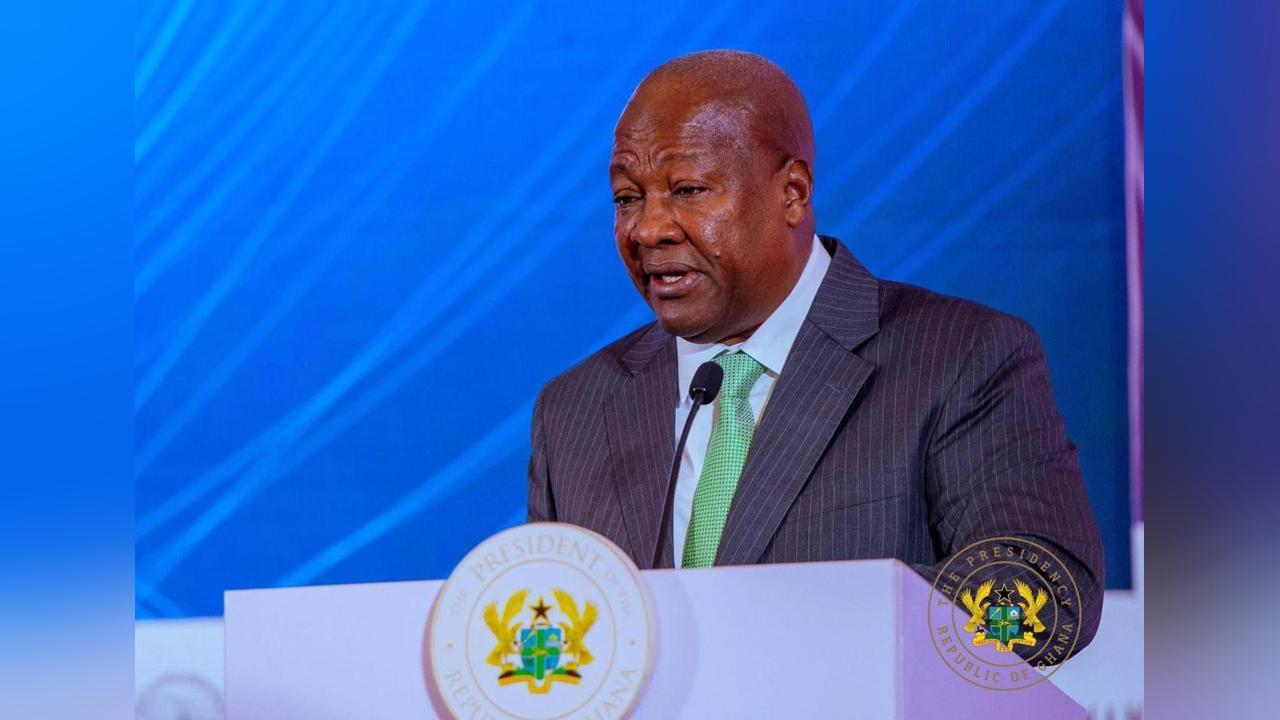
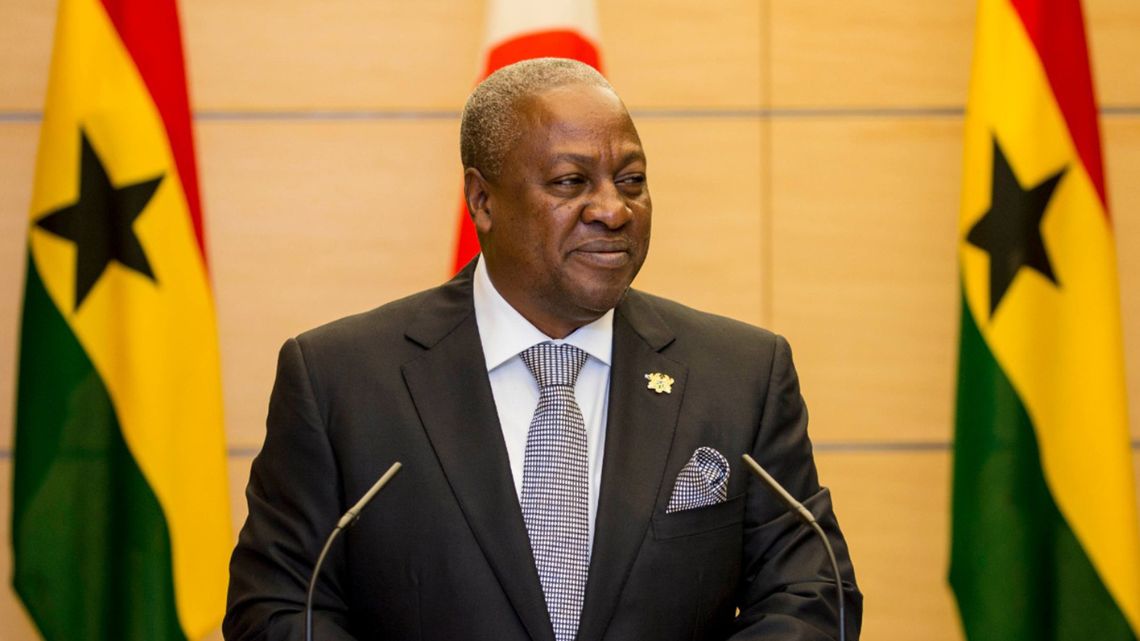
    President John Dramani Mahama has clarified that, although he would not hesitate to sign the Human Sexual Rights and Family Values Bill, popularly known as the anti-gay Bill which is currently before parliament into law, he believes Ghana must first address its pressing issues.

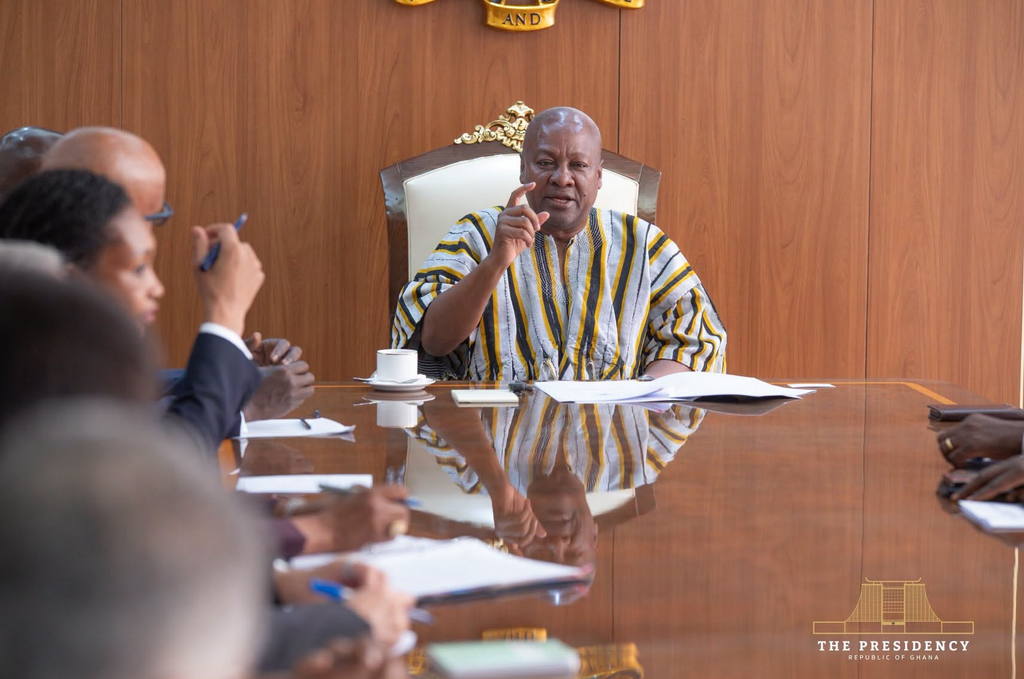
    During a Presidential Dialogue with Civil Society Organisations at Jubilee House in Accra on Monday, March 30, president Mahama urged restraint and constructive engagement in ongoing national discussions on LGBTQ+ issues.

    “LGBTQ+ issues it remains a highly emotive and a sensitive issue even in the most advance liberal democracies. I explained during my recent engagement with the World Affairs Council that it is not the most important issue we face as a nation, we are still grappling with the provisions of basic needs of education, healthcare, jobs, food, clothing and shelter.

    “Nevertheless, the private bill introduced in Parliament has sparked a complex and sensitive national conversation. Our position is guided by our constitution, respect for human rights and dignity for all persons and the need to preserve social cohesion. While there are strong and differing views within our society, we believe that issues must be addressed through democratic processes, our core values, dialogue, and the rule of law.

    “I am also mindful of reactions from my international partners including the recent development such as Lincoln University’s withdrawal of their honorary decorate. These developments underscore the importance of continuous dedication and mutual respect and situating our national decisions within our constitutional and cultural context,” he said.

    https://www.facebook.com/share/v/1B4C5JcG4m/

    Meanwhile, president Mahama has stressed that Ghana’s policies are shaped by its legal framework, cultural values, and national consensus, therefore, international partners must respect Ghana’s sovereignty and democratic processes.

    According to President Mahama, the passage of the bill will be driven by the Ghanaian people, not imposed by his government.

    “What the eventual nature of the bill would be, nobody can second-guess Parliament, and I, as President, cannot anticipate Parliament in respect of that bill. But I believe that our democracy will work out. Memoranda are being accepted from people from all walks of life.

    “Civil Society Organisations are presenting their papers to Parliament and I believe that the representatives of the people will make the will of Ghanaians reflect in whatever eventually comes out.

    “That level of tolerance in the political atmosphere is what has given Ghana the advantage it has. We have a relatively independent judiciary that we have confidence will adjudicate matters fairly,” he added.

    President Mahama made the statement after receiving the ‘International Statesperson Award’ from the World Affairs Council of Philadelphia.

    His comment was a reaction to a recent decision taken by the Lincoln University in the United States (U.S.) against him.

    Management of Lincoln University in the United States (U.S.) on Tuesday, March 24, took a u-turn over its decision to confer an honorary doctorate (honoris causa) on President John Dramani Mahama.

    According to the University, revocation follows calls from one group alleging President Mahama’s view on Ghana’s Human Sexual Rights and Family Values Bill, popularly known as the anti-gay Bill.

    However, Ghana’s Embassy in the United States expressed profound disappointment following the development.

    The embassy in n a statement released on Tuesday, March 24, noted “It is both surprising and regrettable that such concerns have surfaced at this late stage, particularly with the President already in the United States in anticipation of the visit”.

    President Mahama was expected to have paid a visit the Lincoln University on Wednesday, March 25. President Mahama on several occasions has pledged to sign into law the anti-gay Bill.

    Having expired with the conclusion of the previous 8th Parliament’s session, the Speaker of Parliament, Alban Bagbin, has directed the Business Committee to schedule the reintroduced bill for parliamentary deliberation.

    The bill, which aims to outlaw LGBTQ+ activities and criminalise their promotion, advocacy, and funding, was previously passed by the 8th Parliament.

    Meanwhile, President John Dramani Mahama has confidently stated that he will sign anti-LGBTQ bill once it is successfully approved by parliament.

    During a courtesy visit by the Christian Council of Ghana on Tuesday, November 18, at Jubilee House, the president mentioned all the factors that must come to play for him to assent to the bill.

    “I believe that we have no questions or equivocations about what we believe. I believe that we are completely aligned with the Christian Council in terms of your belief. We agree with the Speaker to relay the bill and let Parliament debate it.”
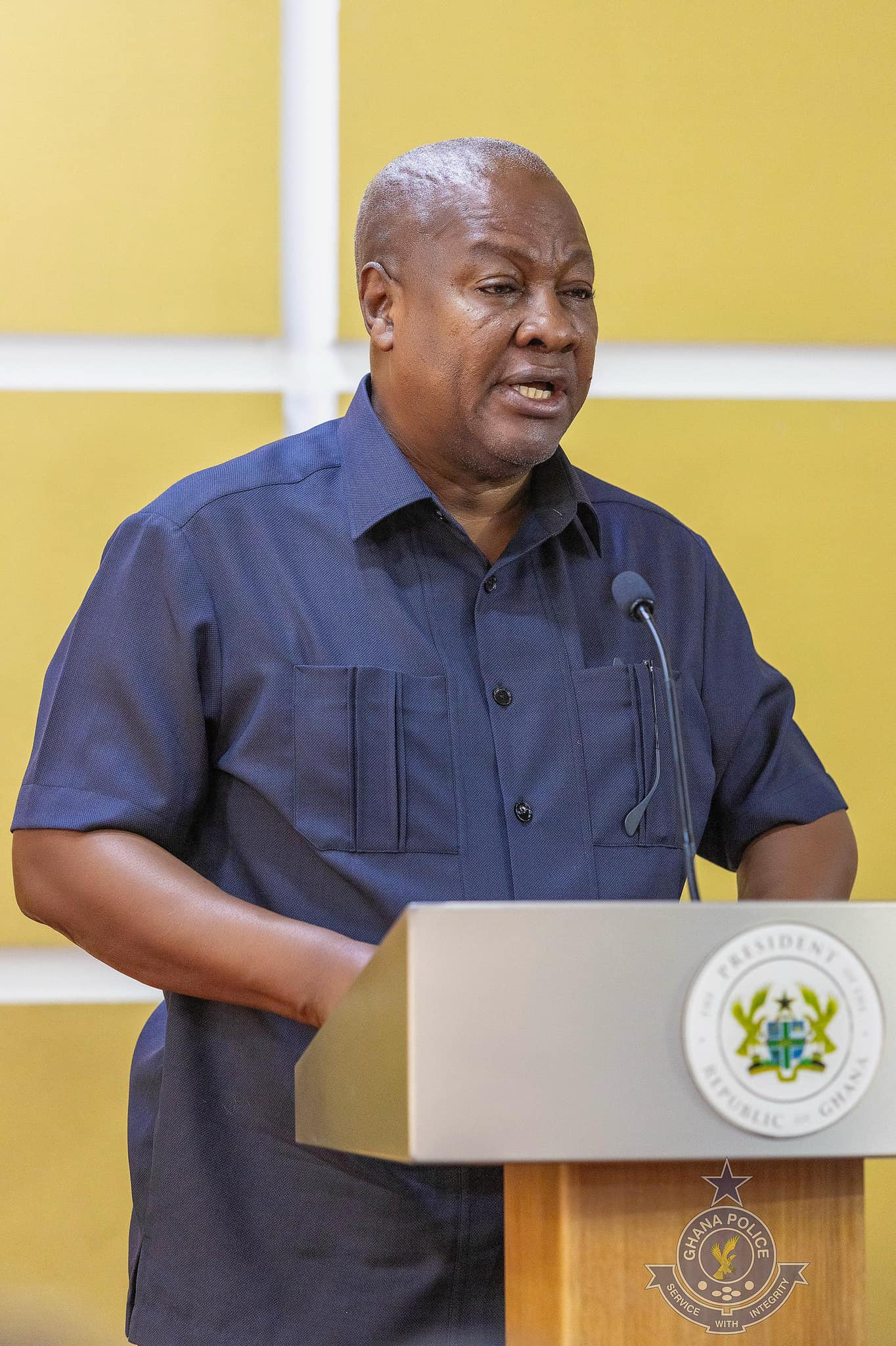
    “And if there are any amendments or adjustments that need to be made, if the people’s representatives in Parliament endorse the bill, vote on it, and pass it, and it comes to me as president, I will sign it,” President Mahama said.
    Before his return to office, President Mahama had already expressed a cautious approach toward the bill, emphasizing the need for a constitutional review.

    Speaking with BBC Africa on December 4, he elaborated: “It is not an anti-LGBTQI Bill; it is a Family Values Bill. It was approved unanimously by our Parliament. [LGBTQI] is against our African culture, it is against our religious faith, but I think we must look at the Bill, and the president must indicate what he finds wrong with that bill and send it back to Parliament or alternatively he must send it to the Council of State and get the Council of State’s advice.”

    When asked if he would sign the bill into law if elected, Mahama responded cautiously, stating, “It depends on what is in the Bill.” He emphasized that any decision would be based on a thorough examination of the bill’s content and legal compliance. “That is what I would have done,” he affirmed.

    While proponents argue the bill is necessary to safeguard Ghanaian cultural and moral values from external influences, human rights advocates have raised concerns, stating it infringes on freedoms of expression, association, and equality under the law.

    The bill previously faced legal opposition from journalist Richard Dela Sky and academic Dr. Amanda Odoi, who contested its passage, citing a lack of parliamentary quorum.

    The Supreme Court, however, dismissed their challenge, with Justice Lovelace Johnson clarifying that a bill can only be subject to constitutional scrutiny after receiving presidential assent.

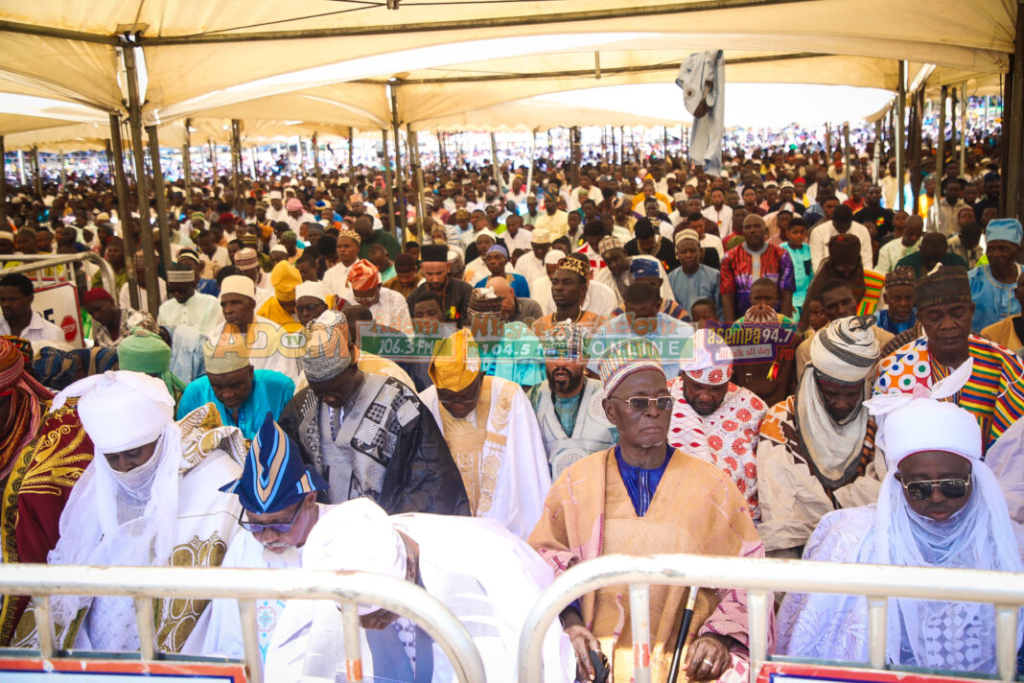
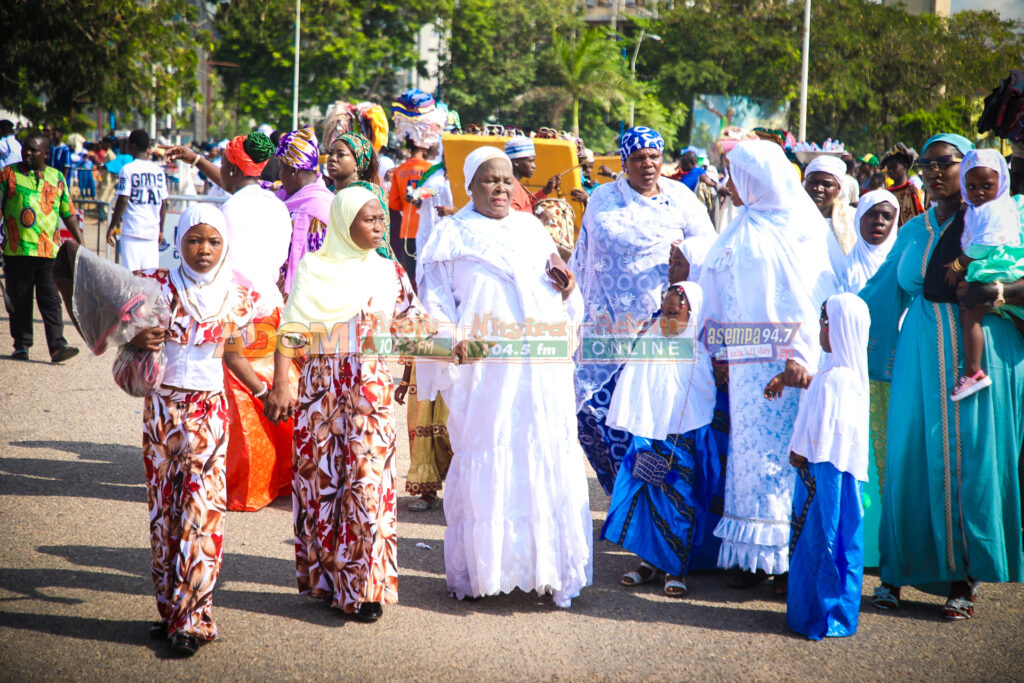
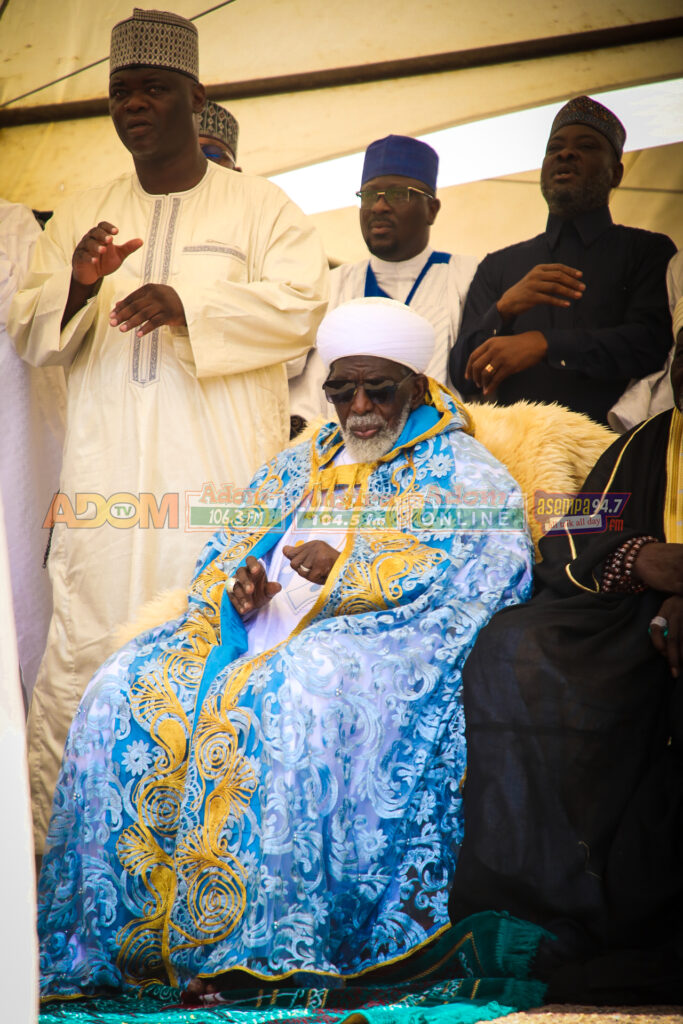
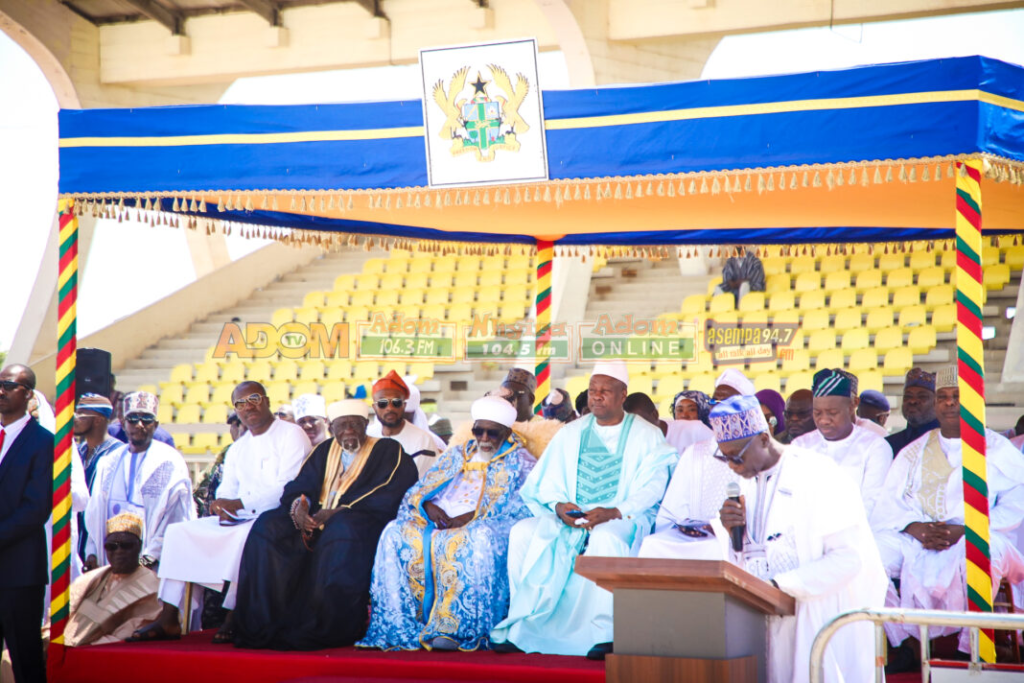
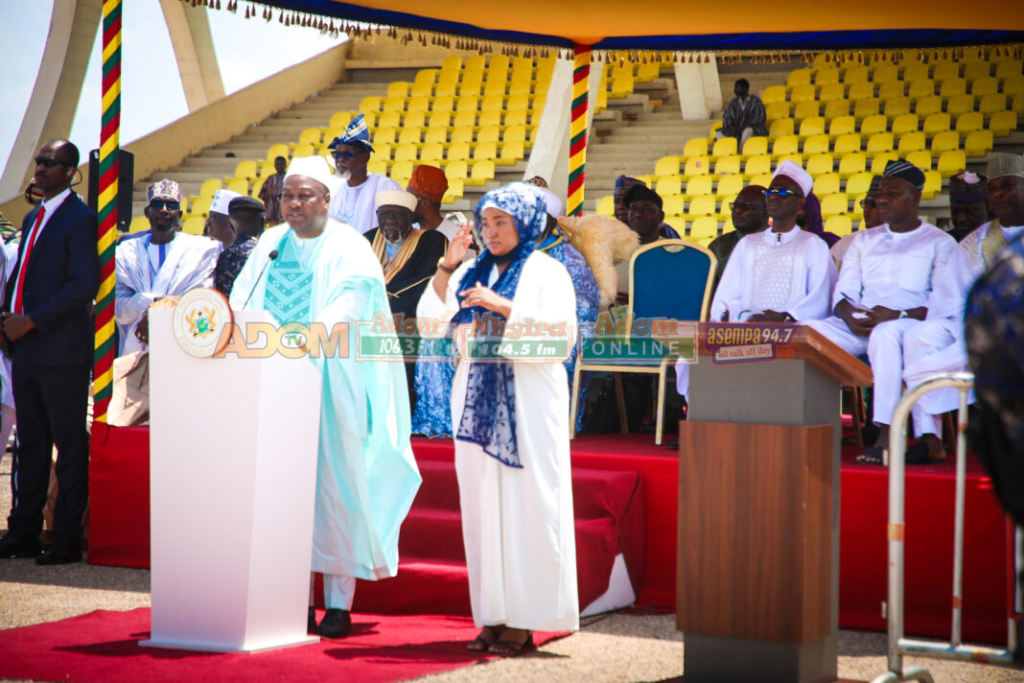
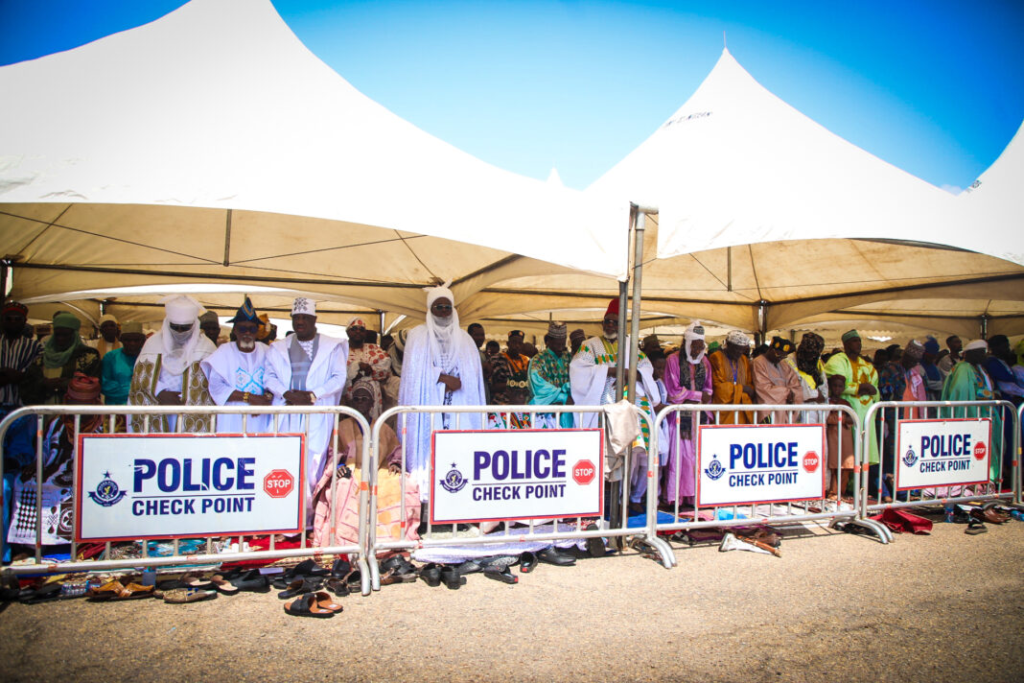
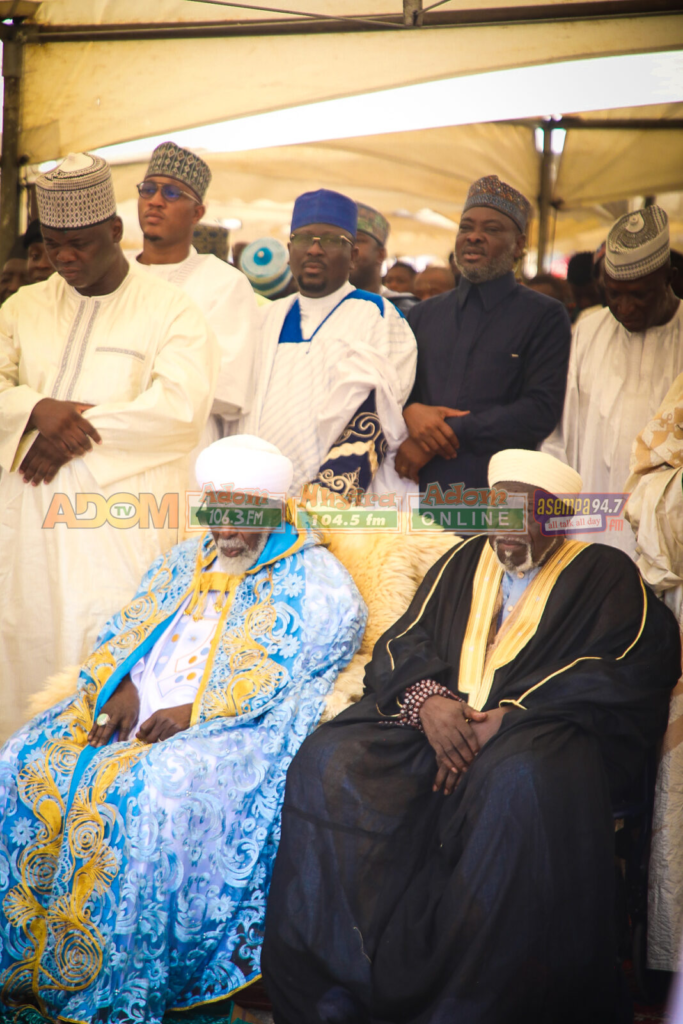
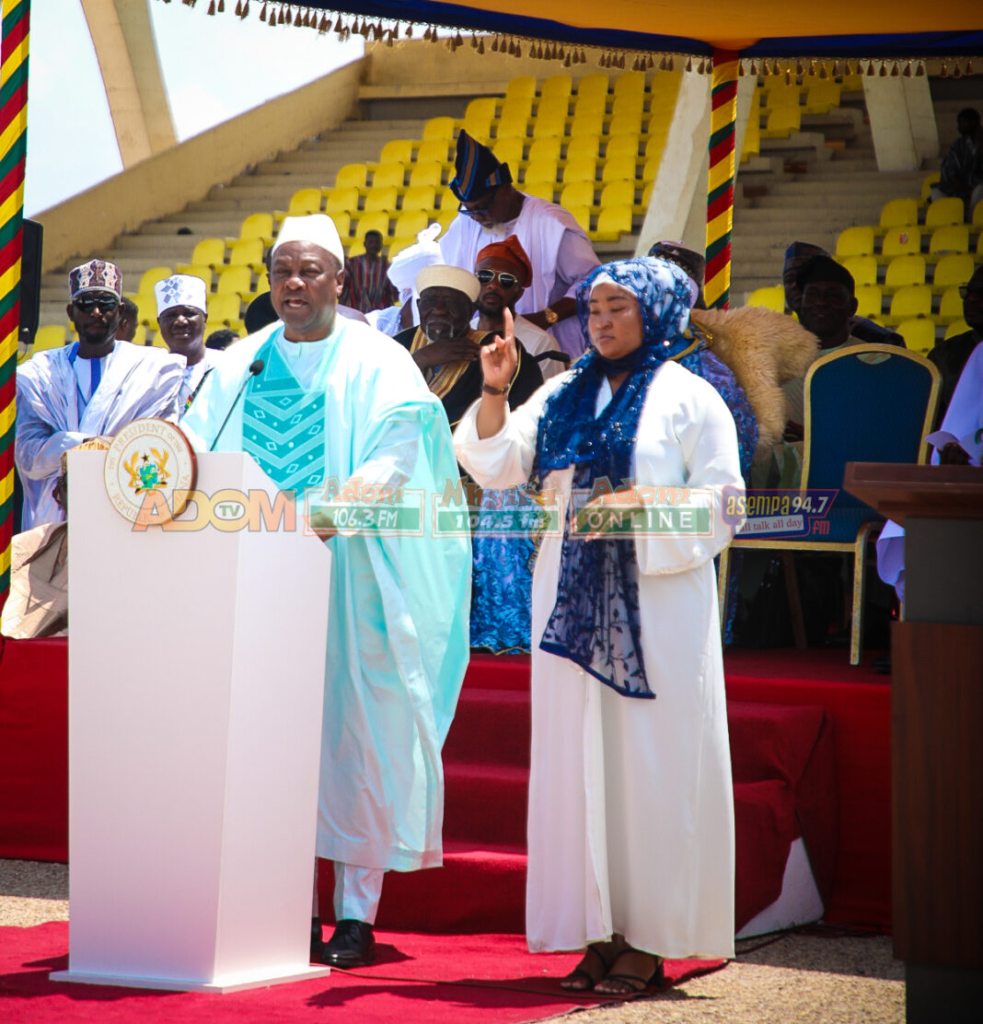
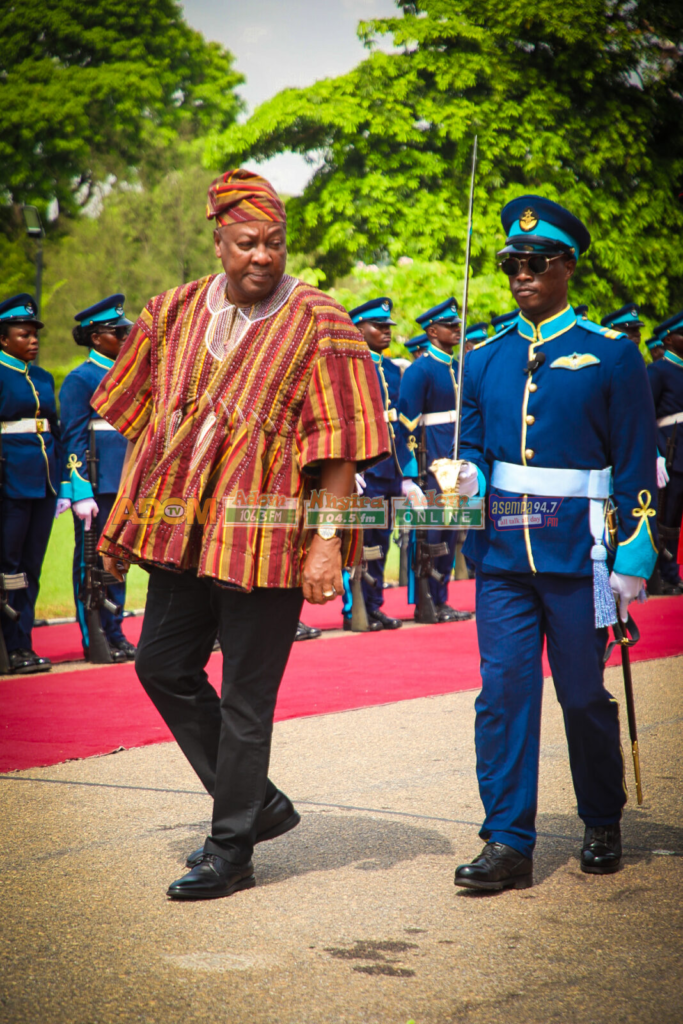
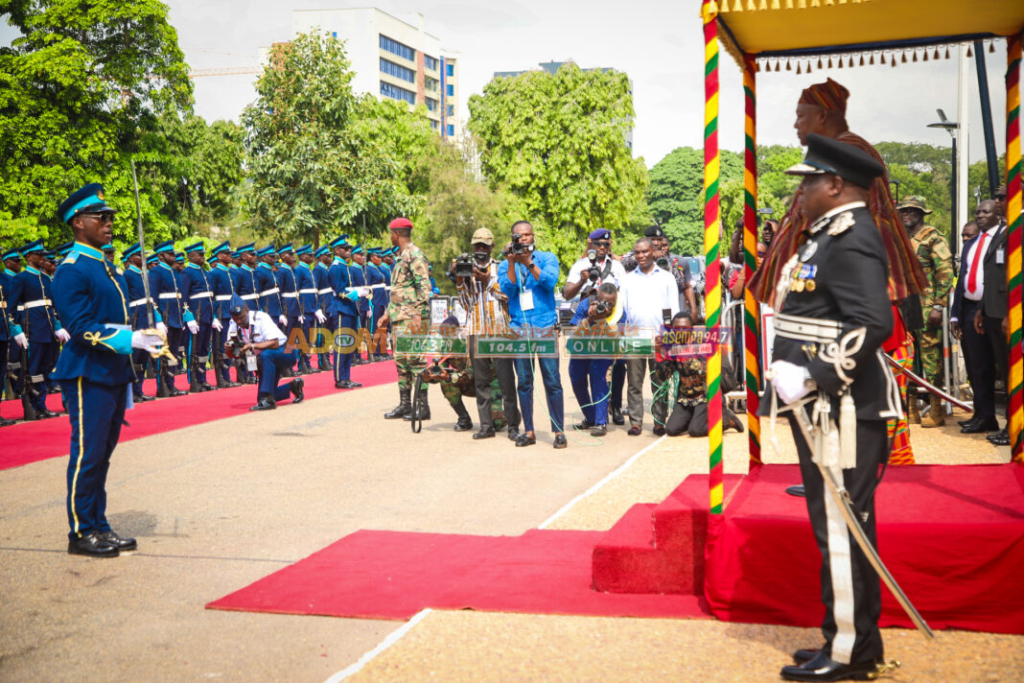
  • See photos of Muslims at Independence Square as they  mark Eid al-Fitr

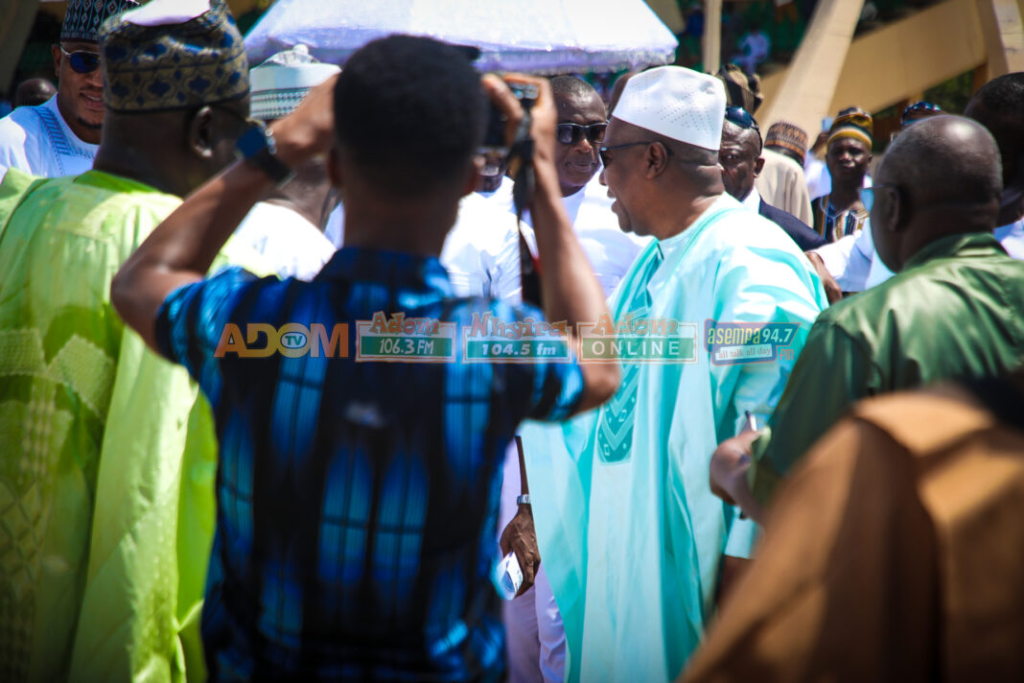
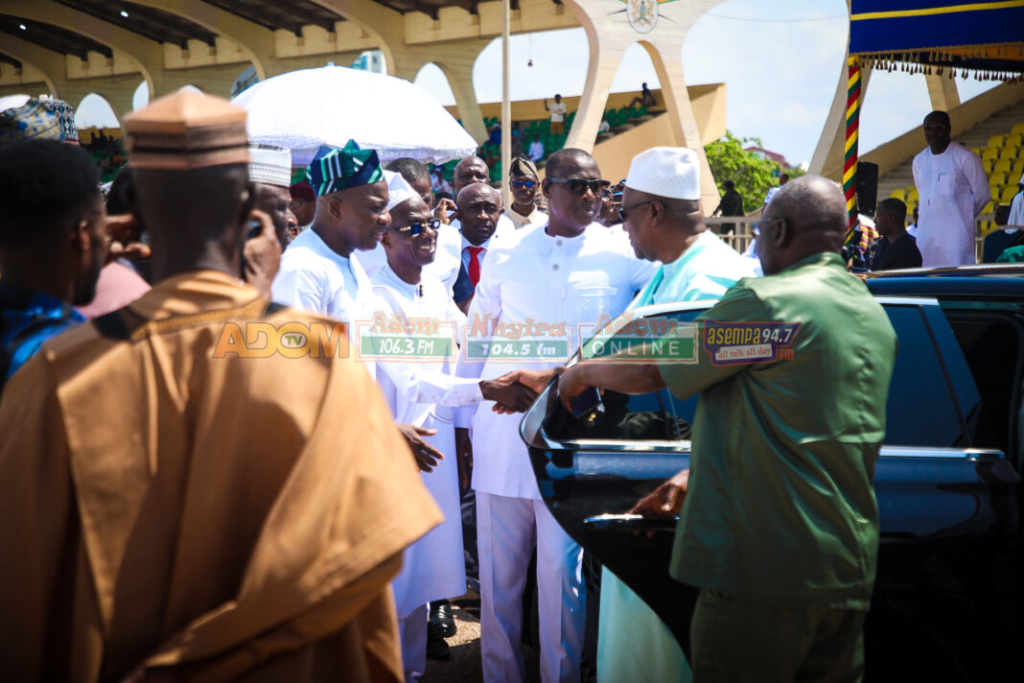
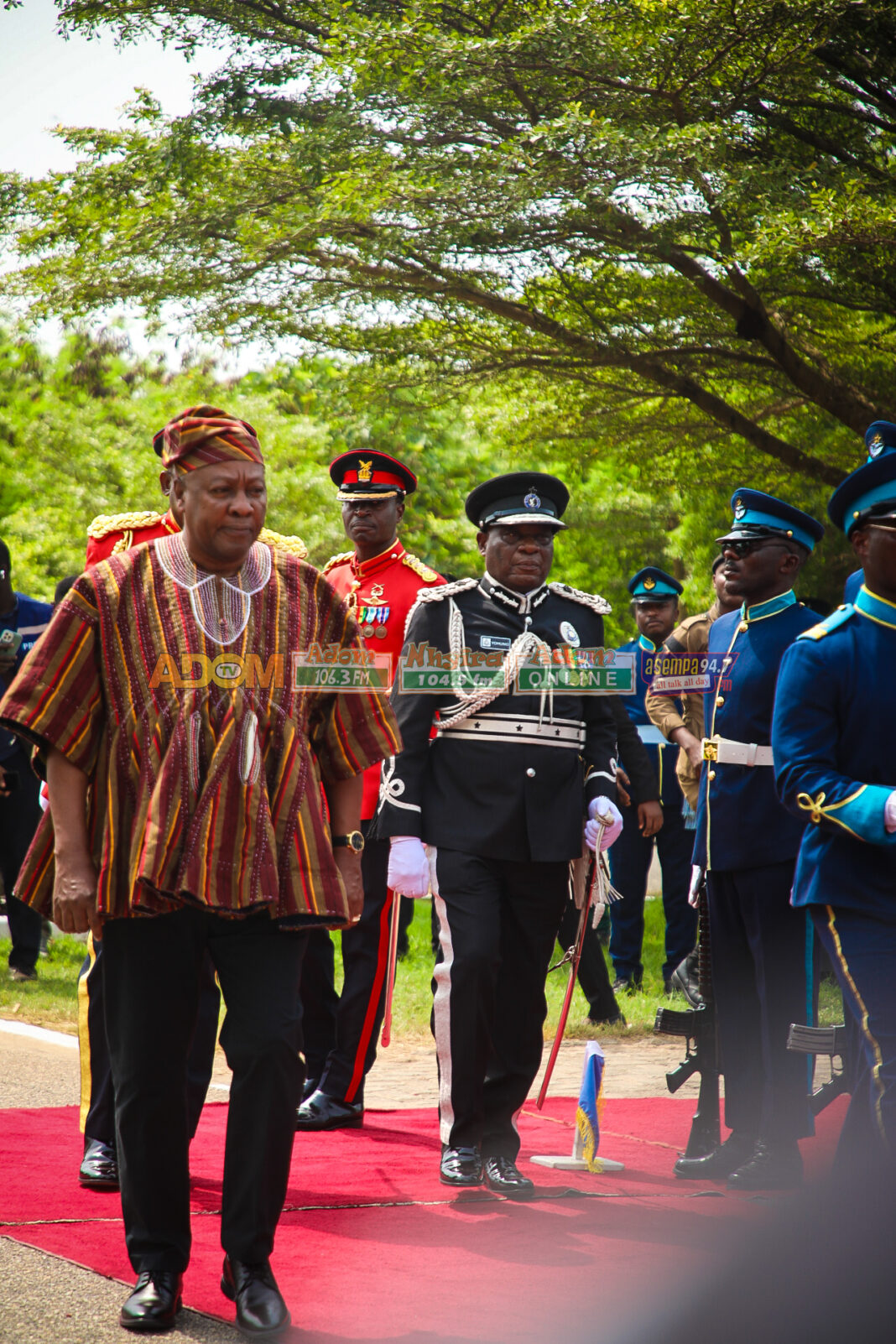
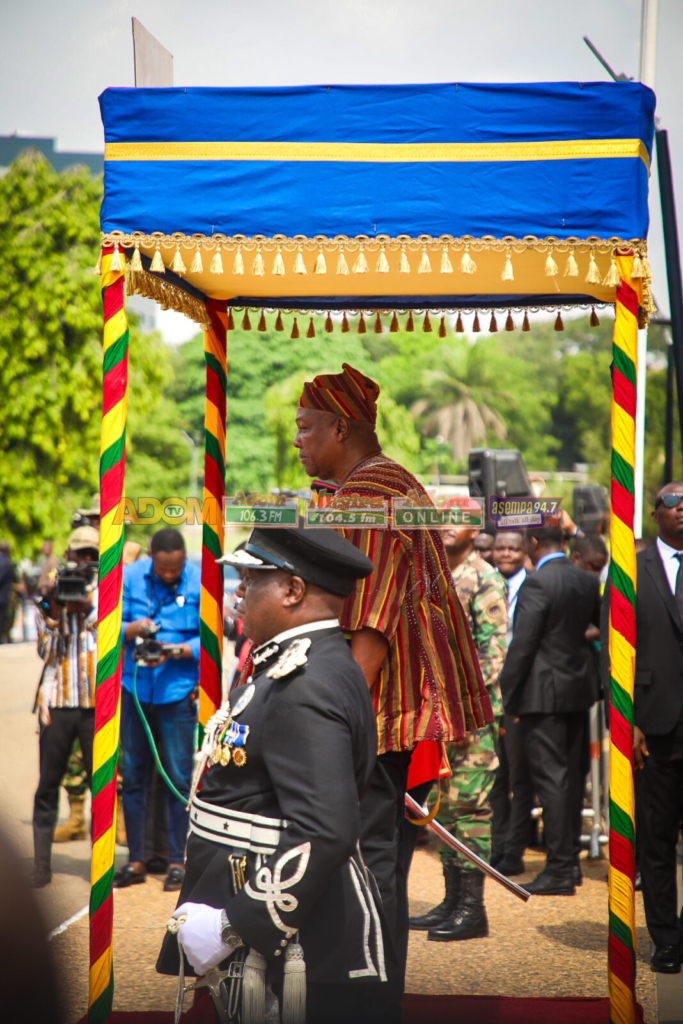
    See photos of Muslims at Independence Square as they mark Eid al-Fitr

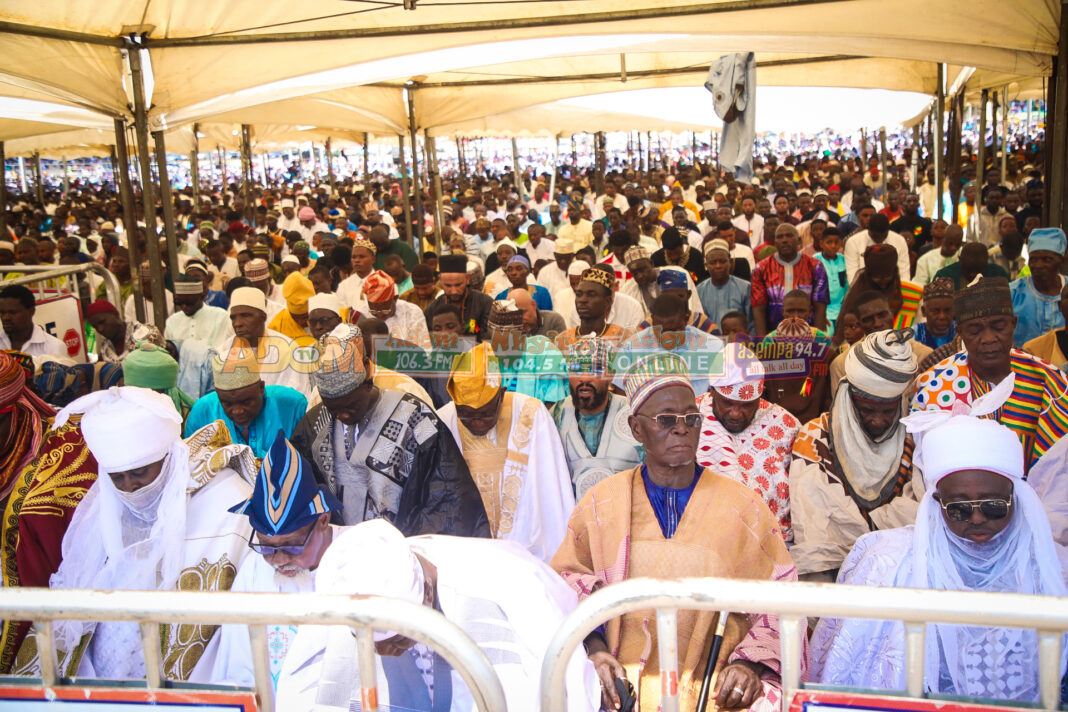
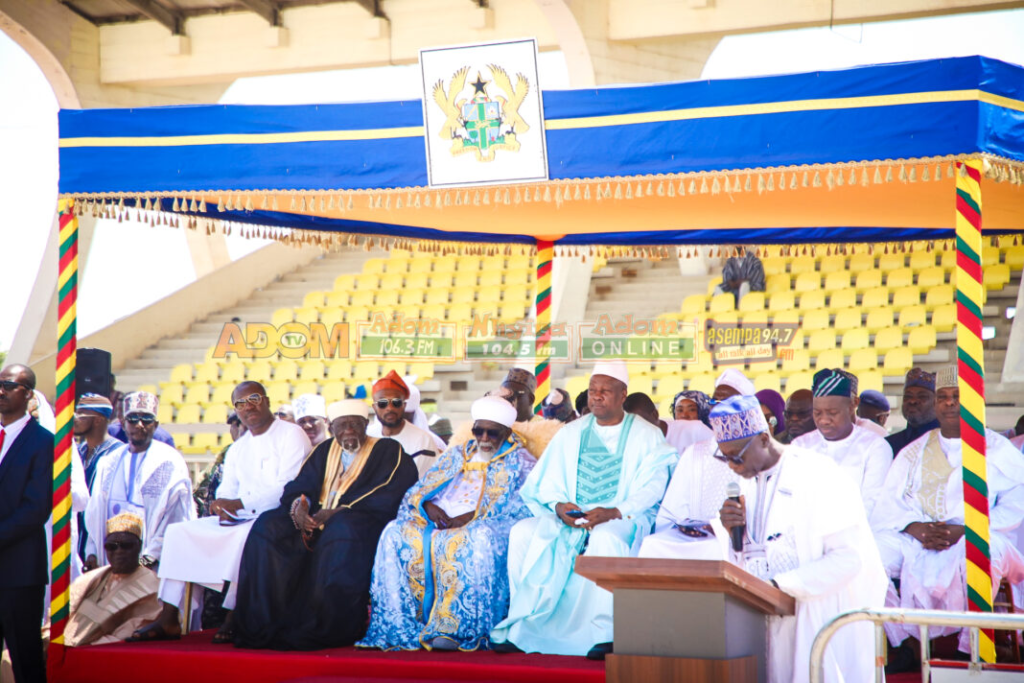
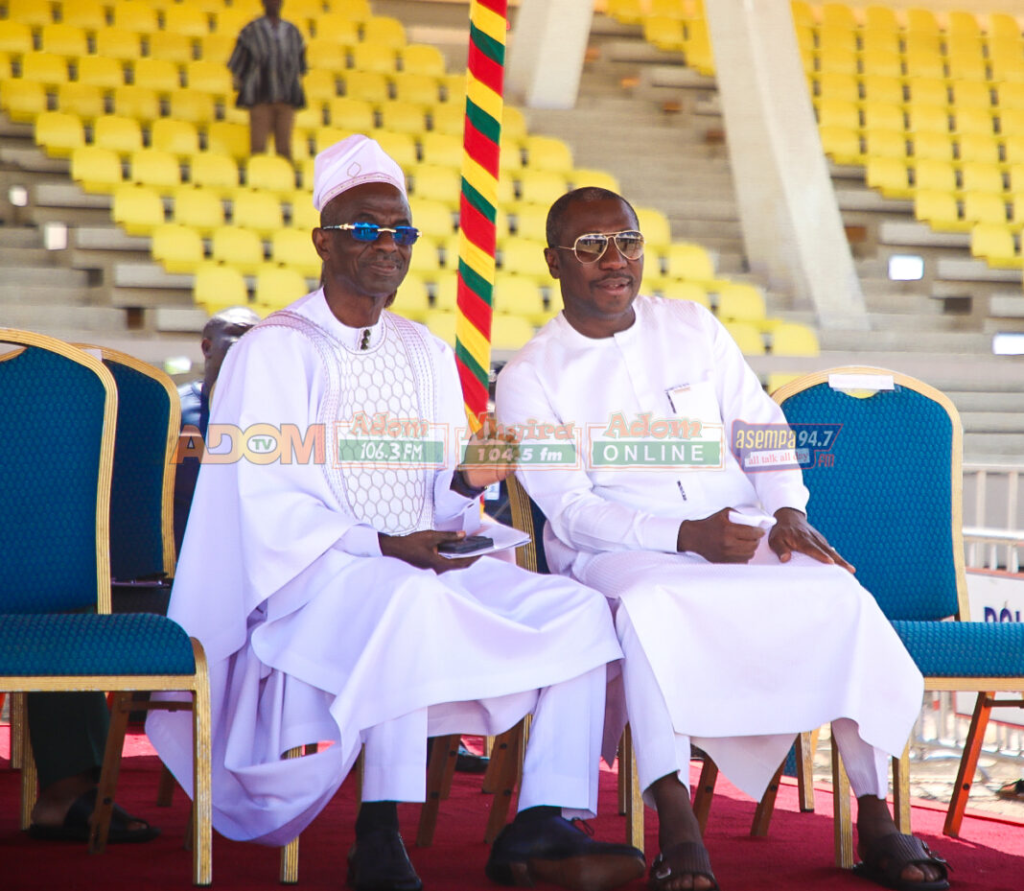
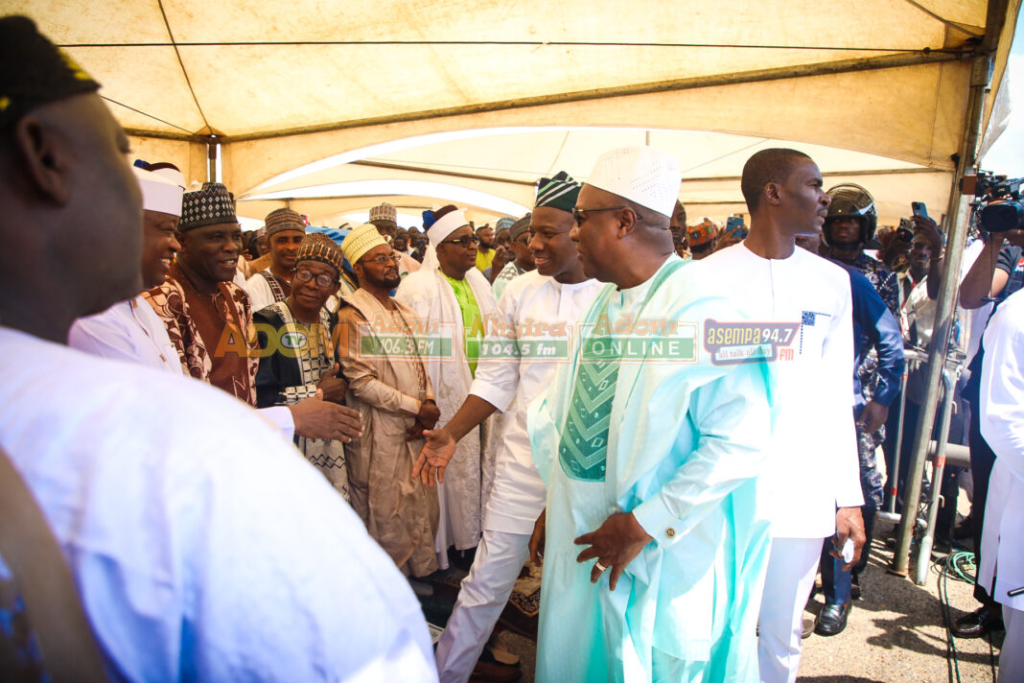
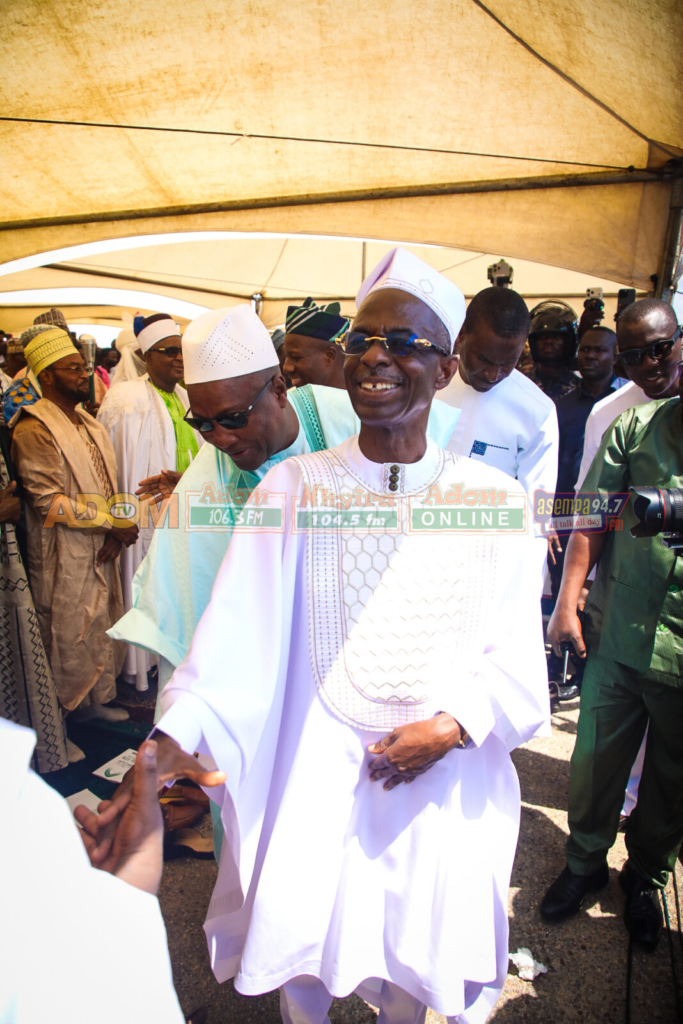
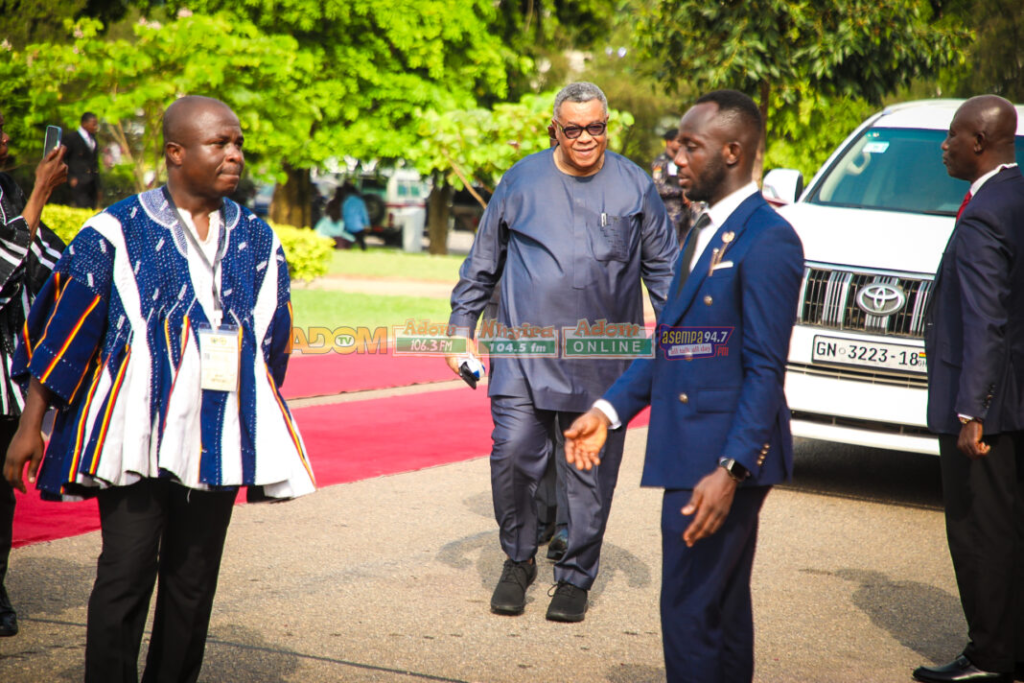
    It was a colourful sight to behold yesterday at Independence Square as Muslims from across the nation, particularly from the capital, thronged the venue to join the Eid al-Fitr celebrations.

    Marking the end of the month of Ramadan, they gathered in unity, clad in colourful and elegant traditional attire, including jilabiyas and matching outfits worn by families.

    Eid-ul-Fitr marks the conclusion of Ramadan, a sacred period during which Muslims fast from dawn to sunset, engage in prayer, and extend charity to the less privileged.

    The day is traditionally characterised by communal prayers, official receptions, and private gatherings where families and friends exchange greetings and gifts.

    Speaking at the ceremony, President John Dramani Mahama told them to sustain the values imbibed during Ramadan, citing the need for them to uphold unity, modesty and compassion even after the fasting had ended.

    On the other hand, the National Chief Imam, Sheikh Osmanu Nuhu Sharubutu, expressed concern over rising indiscipline among the youth, cautioning that it poses a serious threat to the country’s future leadership.

    He also drew attention to the growing menace of drug abuse, especially within sections of the Muslim community, describing the situation as both painful and urgent, and calling for collective action to address it.

    Also, in a pre-Eid-ul-Fitr guidance message to the Muslim community on Thursday, March 19, the Imam noted that the conclusion of the Holy Month of Ramadan should serve as more than just a period of celebration.

    He urged Muslims to ensure their festivities remain “within the bounds of decency, modesty, and legality”.

    The Grand Imam explained that the true essence of fasting, as outlined in the Quran, is for believers to attain a state of piety, that is, to become spiritually pure and devoted to God, and once this is attained, it is expected to be evident in one’s daily conduct and behaviour adding that “mould us as people whose behaviours conform to the norms of society and the laws of the state”.

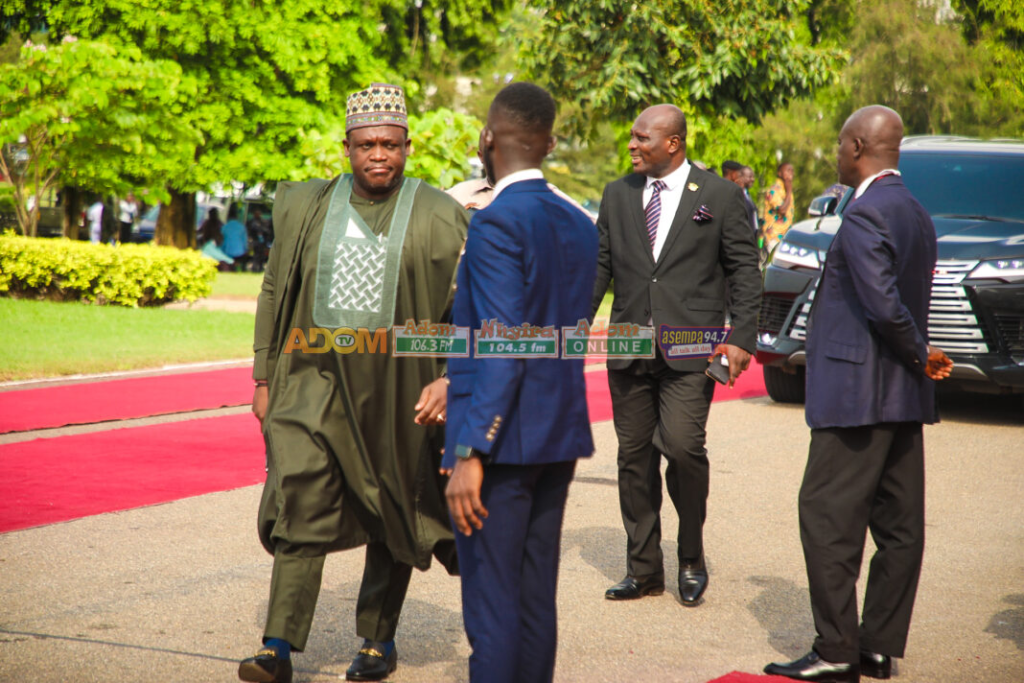
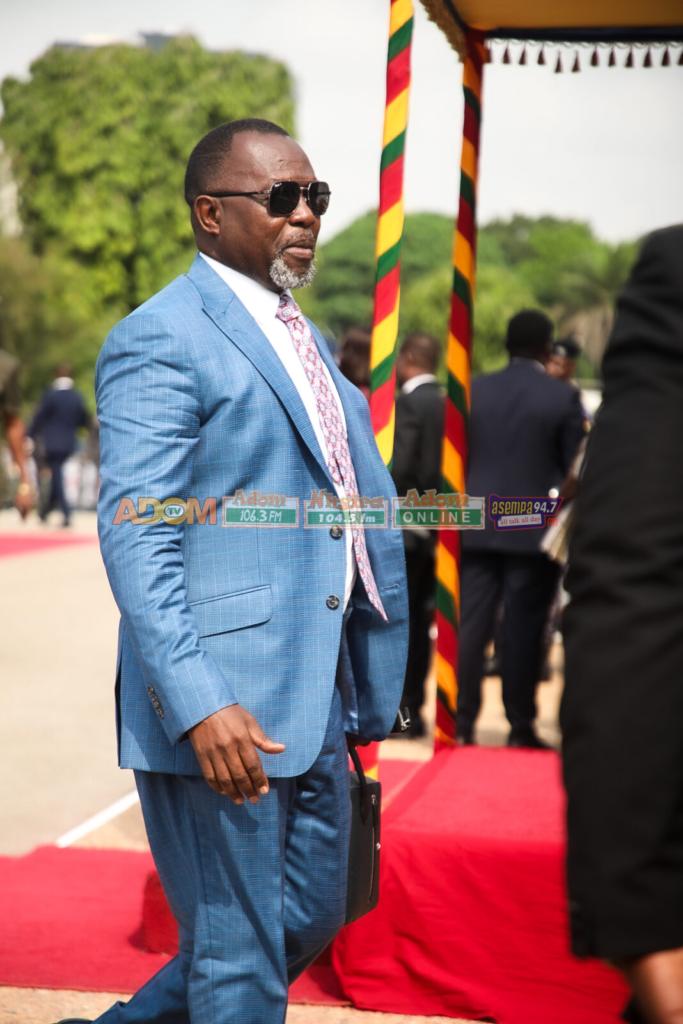
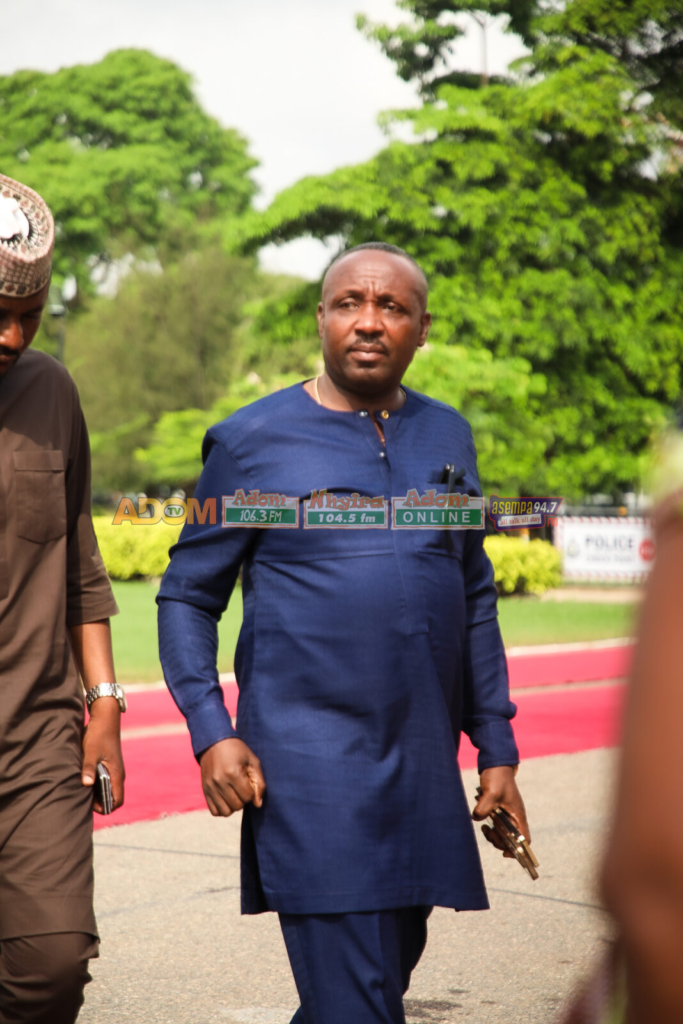
    The high-profile event attracted a host of dignitaries, including Majority Leader Mahama Ayariga, Minority Leader Alexander Afenyo-Markin, Deputy Minority Chief Whip Jerry Ahmed Shaib, Supreme Court Justice Amadu Tanko, and ACP flagbearer Hassan Ayariga, among others.

  • Ghana would have incurred billions of debt in the absence of Cocoa price reduction – President Mahama

    Ghana would have incurred billions of debt in the absence of Cocoa price reduction – President Mahama

    President John Dramani Mahama has defended the recent upward revision of cocoa prices, describing it as a critical measure to shield the country from sliding into fresh debt running into billions of dollars.

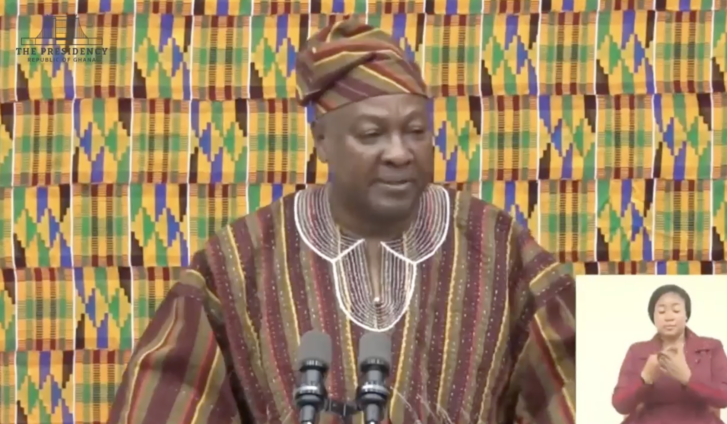
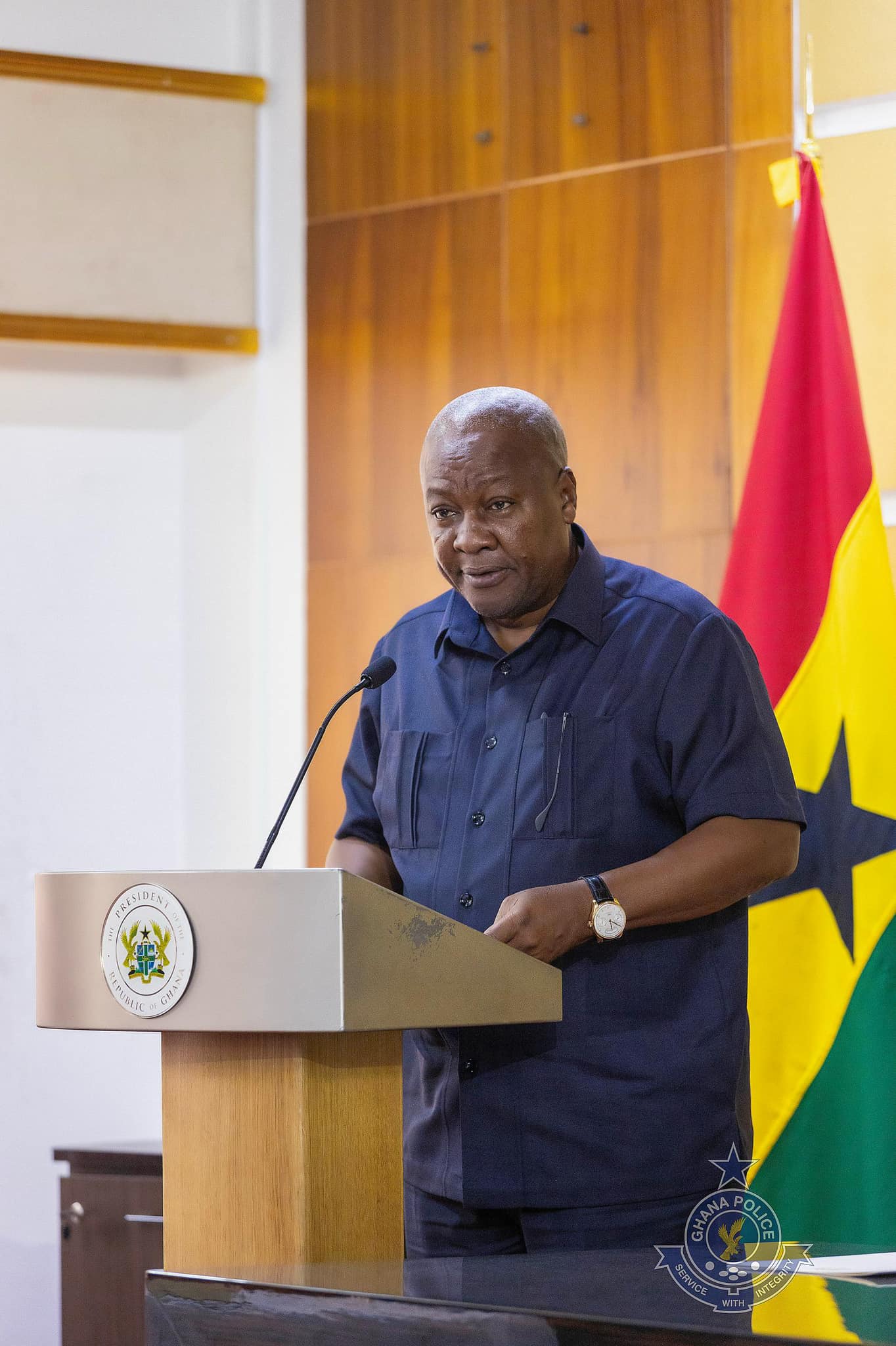
    Delivering the 2026 State of the Nation Address (SONA) in Parliament on Friday, the President said the decision formed part of difficult but necessary steps aimed at stabilising the economy and preventing a return to recent fiscal turmoil.

    “We revised the prices of cocoa to achieve competitive pricing. Failure to do this would have meant borrowing billions in borrowed funds. This unplanned expenditure would have taken us right back to the very devasting economic problem we have only recently began to escape,”

    He further assured cocoa farmers that these adjustments are not merely fiscal corrections but the foundation of a structural overhaul, the benefits of which will be realised in the long term.

    “I can firmly assure farmers that the reforms announced by the government will see the total transformation of the sector and ensure they achieve more from the cocoa… These are difficult decisions, but, Mr Speaker, I had to take them,” he said.

    The Majority Caucus in Parliament held a press briefing today, Thursday, February 19, to address concerns surrounding the recently announced cocoa prices. The farmgate price of cocoa was reduced from GH¢3,625 to GH¢2,587 per bag to align with movements on the international market.

    The reduction is part of the government’s reforms to revive the Ghana Cocoa Board (COCOBOD), which faces several challenges, triggering the Ghanaian cocoa fraternity and cocoa farmers repeatedly call on the government to settle months of unpaid arrears.

    Ghana, the world’s second-largest cocoa producer after Côte d’Ivoire, depends heavily on cocoa as a major source of foreign exchange and livelihoods for more than 800,000 farming households. The sector also supports millions of people through transportation, processing, and other related economic activities.

    The cocoa industry has recently experienced major global price swings. Prices rose to record highs of over $10,000 per tonne in 2024 before declining following improved production forecasts and market adjustments. These changes have created uncertainty for both farmers and policymakers.

    President Mahama stressed that decisions on cocoa pricing and reforms must take into account the conditions farmers face, since their earnings depend largely on producer prices announced annually by the Ghana Cocoa Board.

    He noted that policies affecting cocoa farmers directly influence rural incomes, access to education, and household welfare, adding that reforms must focus on sustainability, fairness, and long-term sector growth.

    The summit, organised with support from the Ghana Tree Crops Authority, seeks to attract investment into major tree crops such as cocoa, cashew, rubber, coconut, and oil palm as part of efforts to diversify Ghana’s agricultural sector and increase value addition.

    President Mahama reaffirmed government’s commitment to improving the cocoa industry through better pricing systems, increased productivity, and measures aimed at ensuring farmers receive fair compensation for their produce.

    He added that aligning policies with the lived experiences of farmers will be key to protecting the future of Ghana’s cocoa sector and maintaining its competitiveness on the global market.

    The President has unveiled major reforms that will have Ghana buying its cocoa with local currency and ending the export of unprocessed mineral ores by 2030, signaling a bold move toward greater economic independence.

    At the conclusion of his high-level side event, “Accra Reset’s Addis Reckoning,” held alongside the 39th African Union Assembly of Heads of State, President Mahama outlined urgent measures aimed at freeing Ghana’s cocoa industry from long-standing reliance on restrictive foreign financing.

    “One of the key decisions we’ve made is to stop accepting foreign funding for the purchase of our cocoa. We are going to raise domestic bonds. We have enough Cedis in Ghana to pay for our cocoa,” President Mahama declared, outlining a radical departure from decades-old practices.

    The President explained that Ghana’s cocoa crisis highlighted long-standing problems in the system. When the government set the cocoa price while international cocoa was $7,200 per ton and the Ghana Cedi was 11.5 to the dollar, changes in the market caused big losses as prices dropped to $4,200 and the Cedi strengthened to 10.7 per dollar.

    President Mahama also pointed out that relying on foreign funding has limited Ghana’s ability to add value to its cocoa.

    “You know what the collateral for the funding is? Our own cocoa beans. You collateralise the beans with the financier, buy them, ship them, and they pay you the international market price,” he explained.

    “You know the interesting part? We have the capacity to process 400,000 tons of those beans in Ghana, but because they are collateralised, we cannot even allocate them to local processors. We must ship all the beans outside.”

    Under the new arrangement, Ghana will raise domestic bonds in Ghana Cedis to purchase cocoa directly from farmers, eliminating the need to pledge the beans as collateral. This will immediately unlock 400,000 tons of cocoa beans for local processors, creating thousands of jobs and retaining significantly more value within Ghana’s economy.

    President Mahama went further, setting an ambitious yet firm deadline to end the export of unprocessed minerals from Ghana.

    “I say by 2030, there won’t be any raw mineral ores leaving Ghana. You’re not going to ship raw manganese ore out of Ghana. You’re not going to ship raw bauxite ore out of Ghana. You’re not going to ship raw iron ore out of Ghana. You must process all that locally,” he stated emphatically.

    The announcement represents what President Mahama says is a comprehensive application of the Accra Reset philosophy, his continental initiative aimed at scaling up development across Africa by asserting sovereignty over natural resources and building domestic processing capacity.

    The President framed his bold moves in the context of mounting pressure from Africa’s youthful population, which is increasingly desperate for economic opportunities.

    “That is the only way we can provide opportunities for our young people. Our young people are less patient than our generation. They want to see that progress and prosperity today,” he said.

    He connected the urgency of implementation directly to the migration crisis: “That is why Accra Reset needs that urgency to stop our young people from braving the dangers of the Sahara and the Mediterranean as they try to reach Europe in search of opportunity.”

    Acknowledging that continental transformation requires immediate action rather than endless planning, President Mahama endorsed a proposal for rapid implementation through willing partners.

    “We come with the decisions. We agree. We do the frameworks. What is missing is urgency and implementation. We take time. And we behave like time is waiting for us,” he said, channelling concerns raised during the discussion.

    “That is why Accra Reset is a good idea. But let’s implement urgently. If parts of the continent are not ready, let’s form a coalition of the willing to move this as quickly as possible. And let all the others follow and join.”

    The Accra Reset initiative, introduced by President Mahama, aims to reshape Africa’s economic ties with the rest of the world, focusing on processing resources locally, building industries, and taking control of the continent’s natural wealth to boost prosperity for Africa’s 1.4 billion people.

    Ghana’s statements in Addis Ababa show that the country plans to set an example, putting real actions in place that other African nations can follow as part of a wider movement across the continent.

    “From Addis, we must stop talking and start implementing,” President Mahama concluded, crystallising the theme of the gathering he dubbed “the Addis reckoning.”

  • SONA 2026: See some photos

    SONA 2026: See some photos

    President John Dramani Mahama on Friday, February 27, delivered his second State of the Nation Address (SONA) in his second term before Parliament.

    The SONA delivery is in accordance with Article 67 of the 1992 Constitution, giving the President the opportunity to update the state on the economic, social, and financial state of the country, highlighting achievements, challenges, and outlining government plans for the year. It serves as both an accountability mechanism reporting to citizens through Parliament and a policy roadmap setting out the government’s agenda.

    At today’s delivery, President Mahama declared that Ghana’s economy is stabilising and returning to growth, telling Parliament that “Ghana is back” and “Ghana is working again.” He also mentioned that his government will tackle one of the country’s setbacks, i.e., the “no bed syndrome” in the country’s health facilities, which has recently claimed the life of 29-year-old engineer Charles Amissah, who reportedly died after being turned away from multiple hospitals due to a lack of beds.

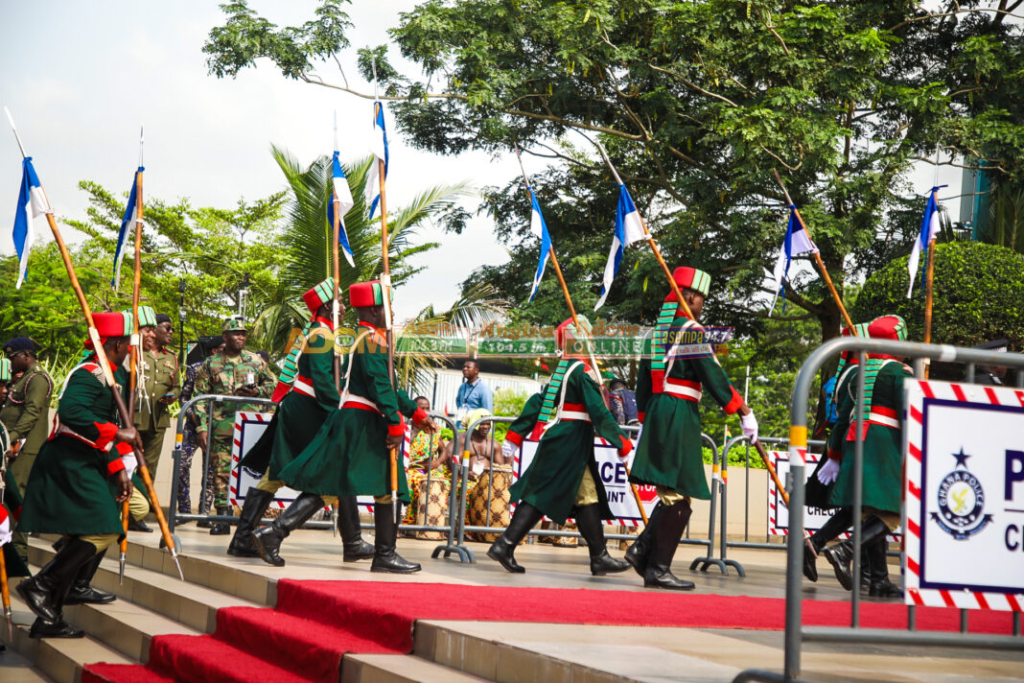
    The address was attended by Vice President Naana Jane Opoku-Agyemang, Chief Justice Baffour-Bonnie, Chief of Staff Julius Debrah, First Lady Lordina Mahama, members of the Council of State, heads of security agencies, the diplomatic corps, and other dignitaries.

  • SONS 2026: President Mahama to deliver address on Feb 27

    SONS 2026: President Mahama to deliver address on Feb 27

    President John Dramani Mahama is set to deliver the  State of the Nation Address (SONA) on  Friday, February 27.

    The SONA delivery is in accordance with Article 67 of the 1992 Constitution. The date for the SONA was announced by the Majority Leader and Leader of Government Business during the Friday, February 21, Parliamentary sitting, while presenting the Business Statement to the House.

    He noted that the President will formally be welcomed to the Chamber by 10 am, hence he charged Members of Parliament (MPs)  to be seated by 9:15 a.m. 

    The address covers the economic, social, and financial state of the country, highlighting achievements, challenges, and outlining government plans for the year. It serves as both an accountability mechanism reporting to citizens through Parliament and a policy roadmap setting out the government’s agenda.

    The Speaker of Parliament, Rt. Hon. Alban Kingsford Sumana Bagbin, is expected to preside over the sitting, which would bring together Members of Parliament, government officials, the diplomatic corps, and other invited dignitaries.

    This will mark President Mahama’s second SONA since he assumed office after winning the 2024 elections. His maiden address was delivered on Thursday, February 27, 2025. That address highlighted challenges the country was facing at the time, such as high inflation, unemployment, and financial distress, promising fiscal discipline and reforms to restore stability.

    He also highlighted measures his government is set to undertake to restore investor confidence, which was lost during the Akufo-Addo-led administration due to the heavy depreciation of the cedi, an increase in tax rates, among other economic crises.

    Addressing one of the major environmental challenges, galamsey, which is eating into the cloths of the Ghanaian forests and water bodies, he vowed to ensure stronger enforcement to protect water bodies and the environment.

    On corruption, he vowed to bring all corrupt officials to book, both those under his government and those who worked under the erstwhile government. His administration had already launched a flagship anti-corruption initiative in December 2024, after the elections. The initiative called Operation Recover All Loot (ORAL) is aimed at recovering misappropriated state funds, properties, and assets from previous administrations and ensuring accountability.

    On education, highlighted reforms to improve access, infrastructure, and teacher support while pledging expanded healthcare and support for vulnerable groups such as Persons with Disabilities (PWDs).

    Also, during his 2025 SONA address, President John Dramani Mahama reassured bondholders of the government’s commitment to fulfilling its debt obligations, emphasising that every pesewa owed will be repaid in full.

    He highlighted the government’s proactive approach to debt management, including the creation of financial buffers to ensure the timely repayment of both domestic and external debt.

    “As we have done previously, we are building buffers in the sinking funds and adopting prudent debt management practices to ensure the prompt repayment of upcoming domestic and external debt maturities,” he stated.

    Mahama further disclosed that the government had successfully settled a matured coupon payment amounting to $6.081 billion in cash and $3.46 billion in kind for all domestic debt exchange programme bondholders due in February 2025.

    “The good news is that we have built additional buffers in the sinking funds to honor the maturing bonds due in July and August. Bondholders can rest assured that they will be paid to the last pesewa that is owed them,” he affirmed.

    His assurance comes amid heightened concerns about Ghana’s debt sustainability and the government’s ability to meet its financial commitments.

    Under the previous government, bondholders faced payment issues due to economic challenges and delays in debt servicing efforts by the government. Ghana’s financial difficulties strained its ability to meet debt obligations, leading to delays in payments. The government initiated a Domestic Debt Exchange Programme (DDEP) to restructure its public debt, causing uncertainty and payment delays.

    The terms of the debt restructuring resulted in significant investor losses, which led to resistance and a lack of participation in the program. Additionally, a general lack of confidence in the government’s ability to manage the debt restructuring process effectively further complicated the situation. These factors collectively caused the payment problems experienced by bondholders, resulting in frustration and protests among the affected investors.

    When did SONA start in Ghana?

    The Address, which is a constitutional requirement, was first implemented during the former President J. A Kuffour’s tenure. He delivered the first SONA in January 2001, shortly after he assumed office as the second President of the Fourth Republic.

    Although Article 67 of the 1992 Constitution had always required the President to deliver a message on the state of the nation at the beginning and end of each parliamentary session, President Jerry John Rawlings never complied during his 18 years in office.

    Kufuor was the first to strictly adhere to the constitutional provision, thereby establishing the practice as a regular fixture in Ghana’s democratic governance.

    Since then, every Ghanaian president has delivered SONAs annually, making it a key accountability and policy-setting tradition.

  • 56% of Ghanaians report better living conditions under President Mahama – Global InfoAnalytics

    56% of Ghanaians report better living conditions under President Mahama – Global InfoAnalytics

    President John Dramani Mahama’s administration has been applauded by a majority of Ghanaians for its efforts in improving living standards and boosting the economy.

    A new national tracking poll by Global InfoAnalytics, released on Monday, December 29, shows that a decline in living standards was reported by just 12% of respondents, with 5% offering no opinion.


    Meanwhile, 56% of respondents reported an improvement in their standard of living over the past year, while 27% said it had not changed. Seven in ten voters believe their standard of living will improve in 2026, compared to 18% who expect no improvement.


    The Mahama-led administration is yet to roll out a number of policies for next year. These policies are expected to bring relief to Ghanaians by easing economic pressures and improving daily living conditions. As part of these efforts, President John Dramani Mahama on Wednesday, December 10, officially assented to the COVID-19 Health Recovery Levy Repeal Act, 2025.


    Last month, Parliament approved the government’s decision to scrap the COVID-19 Health Recovery Levy, which was introduced during the pandemic era. Introduced on March 31, 2021, under Act 1068 during the tenure of former President Nana Addo Dankwa Akufo-Addo, the levy imposed a 1% charge on the supply of goods and services in Ghana, excluding certain items, as well as on imports of goods and services.

    According to the New Patriotic Party (NPP), the levy was intended to help the government raise funds to fight the pandemic and support recovery efforts.


    However, presenting the 2026 Budget Statement and Economic Policy to Parliament on Thursday, November 11, Finance Minister Cassiel Ato Forson disclosed that the government had abolished the levy with immediate effect. According to him, the move will save individuals and businesses GH₵3.7 billion in taxes—money that can instead be invested back into their businesses or personal ventures.


    The Finance Minister further added that after months of detailed analysis and broad consultations with stakeholders, the Ministry has completed the design of a modernised Ghana Value Added Tax (VAT) system fit for the country’s economic transformation agenda.

    He mentioned that if approved by Parliament, the VAT reforms will make Ghana’s tax system more equitable, transparent, and business-friendly.


    “As the new VAT reforms will do the following, we will abolish the COVID-19 Health Recovery Levy, Mr Speaker; we will abolish the decoupling of GetFund and National Insurance Levies from the VAT tax base. The current VAT rate will be reduced from 21.9% to 20%.


    “In the 2025 budget, in the mid-year fiscal policy review, the government made a firm promise to reform Ghana’s Value Added Tax (VAT) system to make it fairer, simpler, and more efficient. We pledged to remove distortions, address the cascading effects inherited in the VAT system, strengthen compliance, and create a tax regime that supports both businesses and fiscal stability. These distortions have negatively impacted overall welfare, increasing the deadweight loss in the economy and reducing VAT compliance.


    “Today, Mr Speaker, I am proud to report to this House that we have finally delivered on that promise. After months of detailed analysis and broad consultations with stakeholders, we have completed the design of a modernised VAT system fit for Ghana’s economic transformation agenda. Government is therefore submitting to this House today, for approval, a bold package of VAT reforms that will make our tax system more equitable, transparent, and business-friendly.


    “The new VAT reforms will do the following: we will abolish the COVID-19 Health Recovery Levy. We will abolish the decoupling of GetFund and National Insurance Levies from the VAT tax base. We will abolish VAT on the recognition of minerals. We will reduce the effective VAT rate from 21.9% to 20%. We will raise the VAT registration threshold from GH₵200,000 to GH₵750,000.


    “We will extend VAT zero rating on the supply of local manufacturing textiles to 2028. Mr Speaker, for emphasis, we promised to abolish the COVID Levy, and with the support of this House, I am proud to say that today, the COVID Levy is accordingly abolished. By abolishing the COVID-19 Levy, the government is putting GH₵3.7 billion in the pockets of individuals and businesses in 2026 alone,” he added.


    While delivering the 2025 Mid-Year Budget Statement to Parliament on Thursday, July 24, the Finance Minister assured Ghanaians that the VAT Act was undergoing a series of reforms to eliminate successive charges that increased the cost of goods and services.

    As such, the COVID-19 Levy, Ghana Education Trust Fund (GETFund), and National Health Insurance Scheme (NHIS) levies assented to by former President Akufo-Addo during the NPP-led government will be scrapped next year.


    He noted that his ministry would conclude the review process by the end of September, adding that the new bill would then be submitted to Parliament in October to be included in the 2026 Budget Statement.

    The development is aimed at reducing financial burdens on Ghanaians, thus improving economic conditions. The current VAT flat-rate scheme, the minister asserted, should be replaced with a unified VAT rate for all businesses.


    Additionally, the VAT registration threshold will be raised, a measure expected to exempt small and micro enterprises from registering for and paying VAT, as well as encourage growth in the informal sector. To ensure compliance and transparency, the government plans to roll out fiscal electronic devices such as e-invoicing systems and electronic cash registers. Furthermore, public education campaigns and awareness programmes will be implemented.


    “Rt. Hon. Speaker, the Ministry of Finance hopes to complete this process by September 2025, prepare a new VAT bill by October 2025, and submit it to Parliament as part of the 2026 Budget Statement. Mr Speaker, I would like to reassure Ghanaians that under the reforms, at a minimum, the COVID-19 levy will be abolished, the effective VAT rate will be reduced, and the punitive cascading effect of the GETFund and NHIS levies will be removed.


    “VAT flat rates will be removed, and a unified VAT rate will be implemented; the VAT registration threshold will be increased to exempt small and micro businesses; and compliance will be improved through public education, awareness creation, and the introduction of fiscal electronic devices,” he said.


    Earlier this year, President John Dramani Mahama’s administration repealed the betting tax, emissions tax, and other levies. The Electronic Transaction Levy (E-Levy), introduced in 2022, imposed a 1.5% tax on electronic transactions.

    Although it was later reduced to 1%, the levy remained unpopular, drawing criticism from businesses, consumers, and political stakeholders who argued that it stifled digital transactions and disproportionately affected low-income earners.


    The removal of the tax was a core pledge in the NDC’s manifesto, aimed at reducing the cost of living and encouraging business expansion. With the repeal bill now signed into law, many Ghanaians can breathe a sigh of relief. Supporters of the repeal argue that eliminating these levies will promote digital transactions, stimulate economic activity, and improve disposable income for households and businesses.


    However, economist Dr. Adu Owusu Sarkodie has argued that the abolition of the COVID-19 Levy and removal of key taxes in the 2026 budget will create a significant revenue gap for the economy. He noted that the government is placing its hope on compliance at a time when it has already abolished the E-Levy, which previously fetched the government a little over GH¢2 billion.


    He added that the betting tax, which brought in “roughly about ¢300 billion,” has also been abolished. However, the most severe hit to government revenue comes from the removal of the COVID-19 levy, which was expected to bring in about ¢3 billion next year.


    “Covid-19 was giving us almost the same amount as the total royalties from oil and gas. This year, total royalties from oil and gas are estimated to be ¢2.9 billion. Covid-19 levy will be giving us ¢2.8 billion,” he stated.


    He warned that removing the COVID-19 levy, on top of the ¢2 billion E-Levy, could slash government revenue by about ¢5 billion. He noted, however, that the government believes it can still raise funds by widening the tax base.


    “When you increase the base, if more people are paying, it’s better than a few people paying higher rates,” Dr. Sarkodie explained.

  • ‘I am not the owner of Chain Homes Residence’ – President Mahama clarifies

    ‘I am not the owner of Chain Homes Residence’ – President Mahama clarifies

    President John Dramani Mahama has dismissed claims that he owns the Chain Homes Residence, explaining how he and his family came to live in the estate.

    According to the President, his family moved into the neighbourhood after struggling to find a place to rent. He explained that the option of Chain Homes only came up after several unsuccessful attempts elsewhere.

    “And so while we roamed and we were looking for a place to rent, and we didn’t get it, finally they said there’s a place at Chain Homes. There is Chain Homes so go and check there,” President Mahama made the remarks while speaking to his neighbors in a colorful ceremony.

    He recounted that when they visited the area, it was his daughter, Akua, who received his wife, Lordina. He explained that a private individual had constructed a house at the corner of the estate and handed it over to Chain Homes to be rented out.

    President Mahama said the property was offered to them as a rental option at a time when they had limited choices.

    “So Akua said, ‘oh there is this property in the corner there, see if you like it.’ And so Lordina went and said, ‘oh look, we have no choice anyway, so it’s not about whether we like it, we will take it. And so that’s how we came to this neighborhood,” he added.

    The President further explained that after settling in the area, residents of the estate encouraged his family to make the place their permanent home. He said they were later granted land within the estate, which officially made them part of the community.

    “Adei and all of them convinced us to make our permanent home in this estate and so they very graciously granted us that land in the centre. And so we are part of this neighbourhood,” President Mahama said.

    However, he noted that the misconception that the estate belongs to him has persisted over the years. Speaking humorously, he dismissed the claim and joked about its implications.

    “Indeed, they believe the estate belongs to me so all of you who bought these houses, you bought them illegally because you should have paid the money to me,” he said.

    President Mahama added jokingly, “They say this is Mahama’s estate. So if you have paid your money to Adei and co, please… you better ask for a refund and bring my money.”

    The President’s clarification comes amid ongoing public speculation about his association with the estate, which he insists is based on misunderstanding rather than fact.

    President John Dramani Mahama has been forced to dismiss several claims since assuming office on January 7.

    One of the most recent occurred on Tuesday, December 9, when the Minority Caucus staged a protest in Parliament, chanting, “No Third Term, Mahama! We want peace, Mahama.” The Minority said the protest was triggered by what they described as growing calls from some members of the ruling National Democratic Congress (NDC) for President Mahama to seek a third term in office.

    The Minority argued that such calls pose a threat to Ghana’s constitutional order and national peace.

    This is not the first time such concerns have been raised. In early May, following President Mahama’s nomination of seven justices to the Supreme Court, Minority Leader Alexander Afenyo-Markin claimed the move pointed to what he described as “a deeper, more dangerous political ambition—a third-term agenda in disguise.”

    However, the demonstration in Parliament marked the first organised parliamentary action against the alleged third-term agenda.

    Reacting to the protest, the Minister of State in Charge of Government Communications, Felix Kwakye Ofosu, strongly rejected the claims, describing them as “absurd” and without basis. Speaking on Channel One TV’s Face to Face programme on Tuesday, December 9, he said President Mahama has consistently proven himself to be a committed democrat.

    “It’s an absurd fantasy they’re getting themselves into. The NPP have whipped itself into needless frenzy. President Mahama has stated emphatically that he will respect the Ghanaian Constitution. Because he’s a consummate democrat, there’s no third term anywhere for him or any other person as far as the constitution is concerned. Anyone can say what they want,” he stated.

    Mr Kwakye Ofosu added that although some individuals on social media have called on President Mahama to seek a third term, the President has clearly ruled out such intentions.

    “The fact that some people have gone on Facebook to say he should go for a third term doesn’t mean that will happen. The man himself has said he’s not interested,” he said.

    He urged the opposition to stop what he described as needless speculation, stressing that the President has shown no intention of pursuing a third term.

    “So NPP should stop wasting their time and everybody’s time, and purporting to be angry. The President has not expressed any intent. Any talk about it is a complete waste of everybody’s time,” he added.

  • Mobilisation payments not reason for Big Push roads delays – Kwakye Ofosu

    Mobilisation payments not reason for Big Push roads delays – Kwakye Ofosu

    Minister of State in charge of Government Communications, Felix Kwakye Ofosu, has noted that the government has made the necessary arrangements to ensure the successful implementation and full funding of the Big Push road agenda for 2025–2026.


    The clarification comes at a time when reports have emerged suggesting that the Big Push road agenda is stalling over missing mobilisation payments. According to him, President John Dramani Mahama will honor his promises of making Ghanaian roads safer, more efficient, and accessible for all citizens.

    “One of the major campaign promises that President John Dramani Mahama put before the people of Ghana was a Big Push agenda. And since we have been in power, at least GHC43 billion has been earmarked for that expenditure. GHC13.9 billion in 2025 and GHC30 billion in 2026.


    “Indeed, as I speak to you, there are about 30 different roads that are at various stages of construction. Some of those roads are roads that we inherited, that the NPP, as usual, left no money for, did not leave any funding mechanism for. So that has been packaged and added to new roads that are being constructed.


    “We have said that we will not pay mobilisation fees, because there are instances where contractors have been paid mobilisation [fees], and they have not done the work. However, if a contractor raises a certificate after doing work, and it is certified to reflect the actual work done, within a matter of 30 days, the certificates will be honoured.


    “And the Finance Minister [Dr Ato Forson] has made that very clear. So those who claim that Big Push is not being done because mobilisation has not been done are clearly wrong on that one. This year alone, another GHC30 billion has been allocated for Big Push roads to be contracted. Because roads are one of the biggest problems we have in this country,” he added.


    The government has allocated GH¢30.8 billion to its flagship Big Push road construction initiative in the 2026 national budget. President John Dramani Mahama revealed this while cutting the sod for the Wa Big Push Project on Tuesday, November 11.


    The allocation is more than double the funding for the same program this year, which was GH¢13.8 billion. According to President Mahama, the recent allocation is aimed at reviving stalled projects, specifically in the northern transport corridors, as well as developing new road networks.


    “This initiative is a cornerstone of our long-term national development agenda,” he declared, emphasising that the success of the Big Push depends on quality work, fiscal discipline, and public accountability.


    “To our contractors and engineers, let me be clear: the day of poor construction, inflated claims, and abandoned projects is over. Ghana deserves better. You must deliver quality on schedule and within budget, and the Ghanaian taxpayer must see value in every kilometre of road we construct,” President Mahama said.


    Meanwhile, the Minister for Roads and Highways, Kwame Governs Agbodza, has projected a two-year timeline for the completion of all current and upcoming road projects under the government’s “Big Push” initiative.


    In an interview with the media on Friday, July 31, Mr. Agbodza stated that the days when road projects were abandoned midway are over, as the government is committed to completing all ongoing and future works within the stipulated timeframe.

    According to him, all “Big Push” projects will begin by the end of August, excluding the Dambai Bridge, which will commence once its structural work has been finalised.


    “The average Ghanaian has come to accept something that is completely unacceptable, because they see road projects start around their backyard, and no one can tell them when it will be completed. We want to reset. ‘Reset’ means we need to change that narrative. All the projects have been deliberately structured to span two years, 24 months, and we will not go beyond that,” he said.


    “Sometimes, a contractor is awarded 100 kilometres of road. People forget that constructing 100 kilometres is not a small undertaking. There may be people who are more interested in how much it costs — they focus on the money involved. So contractors take the job, and for seven or eight years, they do nothing. We want to avoid that,” he added.


    Parliament on July 30 unanimously endorsed the government’s proposal to divert all royalties received from oil revenues and mineral royalties to support the implementation of the Big Push Programme.


    This comes after the government requested Parliament to approve committing funds to assist in the construction of certain road projects.


    Mr. Isaac Adongo, the Chairman of the Parliament’s Finance Committee, while presenting the report by the Budget and Finance joint committee to the plenary, said, “The Committee has carefully considered the Referral, and it is of the opinion that the request is in the right direction.”


    The Committee also noted that Parliament had already approved the policy and the allocation to the “Big Push” Programme in the 2025 Budget Statement. Granting the request would enable the government to enter into multi-year contracts to execute the road infrastructure projects under the programme.


    “The Committee accordingly recommends to the House to approve the Request for the multi-year commitments for the selected road projects under the ‘Big Push’ Programme contained in the Mid-Year Fiscal Policy Review of the 2025 Budget Statement and Economic Policy of the Government of Ghana, in accordance with Section 33 of the Public Financial Management Act, 2016 (Act 921),” Mr. Adongo said.


    The initiative, aimed at improving road infrastructure across the country, is estimated at GH¢13.8 billion, and it is expected to be completed by 2028 with support from the country’s own financial resources.

    According to the 2025 budget, GH¢5.75 billion is owed by the Road Fund, with an allocation of GH¢2.81 billion programmed for road maintenance.


    This represents a 155.5% increase from the 2024 allocation of GH¢1.1 billion, underscoring the government’s emphasis on sustaining Ghana’s road network.


    The Minister for Roads and Highways, Kwame Governs Agbodza, on Wednesday, July 30, revealed that his ministry has undertaken studies and prepared comprehensive engineering interventions and cost estimates for road projects under the Big Push Programme.


    The Ministry of Finance has since issued commitment authorisations for some twenty-nine (29) road infrastructure projects under the Big Push Programme, which include: Upgrading of Akosombo-Gyakiti-Kudikope Road, Dualization of Winneba-Mankessim Road, Rehabilitation of Mankessim-Ajumako-Breman Asikuma-Agona Swedru, Construction of Enchi-Elubo Road, and Rehabilitation of Atimpoku-Asikuma Junction Road.


    The government has also selected a number of abandoned road projects for which no dedicated funding was allocated by the previous administration.


    These include rehabilitation and upgrading of Kasoa-Winneba Road, construction of Suame Interchange and local roads, reconstruction of Navrongo-Chuchuliga-Sandema Road, and upgrading of Tumu-Chuchuliga-Navrongo, including construction of a 36m-span reinforced concrete bridge over the Kanyibie River and a 24m-span reinforced concrete bridge over the Bechelihu River.


    The government will, by the end of July, settle GH¢4 billion out of the large debt owed to road contractors. Currently, the government owes road contractors GH¢21 billion, according to the Roads Minister.

    President John Mahama emphasized his government’s commitment to infrastructure development under his administration’s 24-hour economy agenda.


    He noted that prioritising road construction and the swift resumption of stalled road projects is key to promoting economic growth and productivity by ensuring adequate regional connectivity.


    The announcement has been met with excitement and optimism by many stakeholders in the construction sector. The Ghana Institute of Engineers and the Association of Road Contractors have largely welcomed the president’s announcement, but they have called for transparency.


    They have urged the government to publish clear timelines and payment schedules to ensure that contractors can plan and mobilise resources effectively.


    In March this year, Deputy Minister for Roads and Highways, Alhassan Suhuyini, acknowledged the significant financial burden facing the government to clear outstanding debts owed to contractors and suppliers.


    His remarks followed the presentation of the 2025 budget by Finance Minister Dr. Cassiel Ato Forson, who disclosed that the government’s total commitments to contractors stand at a staggering GH¢67.5 billion.


    He emphasized the importance of prioritising road maintenance, a sector that has suffered due to poor upkeep. “The minister has stressed that a significant portion of these funds will be directed toward road maintenance. This is a smart move because our poor maintenance culture has resulted in roads deteriorating within 8 to 10 years instead of lasting longer,” he explained.


    Mr. Suhuyini noted that, in addition to paying off some existing road maintenance debts, the government is looking at a broader infrastructure push.

    “With GH¢10 to GH¢13 billion allocated under the ‘Big Push’ initiative, several new road projects will commence, while some outstanding debts will also be retired,” he added.

  • President Mahama receives petitions to remove Kissi Agyebeng – Report

    President Mahama receives petitions to remove Kissi Agyebeng – Report

    Special Prosecutor Kissi Agyebeng has joined the list of government officials whom some individuals have allegedly petitioned President John Dramani Mahama to remove.

    A report by Citi News suggests that private citizens cited various forms of misconduct as grounds for their call for his removal. 

    The group has reportedly accused the Special Prosecutor of abusing the powers of his office and demonstrating incompetence. President Mahama is said to have referred the petitions to the Chief Justice, Justice Paul Baffoe-Bonnie for further review. 

    Last week, President John Dramani Mahama formally received a petition seeking the removal of the Electoral Commission (EC) Chairperson, Jean Mensa, and her two deputies, Dr. Bossman Eric Asare and Samuel Tettey, over allegations of misconduct.

    Among the 12 counts of stated misbehaviour are allegations of cronyism, abuse of office, and gross incompetence.

    The petition, submitted by a staff member of the Electoral Commission, Joseph Blankson Adumadzie, emphasised that the credibility of Ghana’s electoral system is at stake due to the alleged illegal actions of the officials.

    According to a statement issued on Monday, November 24, by the petitioner, Article 146 of the 1992 Constitution provides the basis for requesting the removal of public officials, particularly those serving in independent constitutional bodies.

    The former Chief Justice, Gertrude Torkornoo, faced a similar challenge and was later replaced by President Mahama after an investigative committee found the allegations levelled against her to be valid.

    The Chief Justice was earlier suspended by President Mahama on Tuesday, April 22, after a prima facie case was established, following separate petitions calling for her removal.

    A series of petitions were filed against Chief Justice Torkornoo, beginning with one from a group known as Shining Stars of Ghana. The group alleged she violated Article 144 of the Constitution by personally recommending judges for promotion to the Supreme Court and further claimed she ruled on a case involving the Speaker of Parliament without granting him a hearing, despite his refusal to respond to the suit.

    Another petition, filed by a police officer who is also a lawyer, accused the Chief Justice of manipulating evidence and abusing her authority, following an incident during a Supreme Court session where he was reportedly reprimanded, arrested, and detained.

    However, court records suggest the lawyer’s conduct during proceedings prompted a unanimous caution from the bench, not just the Chief Justice.

    The third petition, submitted by a private individual, listed 21 alleged misconducts and four claims of incompetence. Among the accusations was the misuse of public funds—specifically, that she spent over GH¢261,000 and $30,000 on a family trip abroad in 2023 and misused an additional GH¢75,580 and $14,000 during another foreign assignment without proper accountability.

    Subsequent reports indicate two more petitions were added, intensifying pressure on the judiciary. Chief Justice Gertrude Torkornoo, in her written response to President Mahama, strongly denied allegations of misconduct and abuse of office brought against her by a senior police officer, describing them as baseless and lacking grounds for her removal from office.

    Meanwhile, President John Dramani Mahama has sworn in Justice Paul Baffoe-Bonnie as Ghana’s Chief Justice. The swearing-in ceremony occurred on Monday, November 18, at the presidency.

    His swearing-in comes after Parliament, following several deliberations, approved his nomination. The Speaker of Parliament, Alban Bagbin, confirmed his approval on Thursday, November 11, during the 15th Sitting of the 3rd meeting.

    “This Honorable house has accordingly approved the nomination of Justice Paul Baffoe-Bonnie as Chief Justice of the Republic, in accordance with Article 114 clause 1 of the 1992 Constitution respectively.

    “I will want to take this opportunity to, on behalf of the House congratulate the nominee on his approval by Parliament. I urge the nominee to take all that has happened right up from the day of the nomination up to his prior approval by Parliament into consideration in his tenure of office. Once again congratulations,” he added.

    Parliament concluded his nomination after a headcount, where the Majority in Parliament counted 163 and the Minority 69.

    On Monday, November 10, Justice Paul Baffoe-Bonnie appeared before the Appointments Committee of Parliament for his vetting.

    In October, President John Dramani Mahama submitted Justice Baffoe-Bonnie’s name to the Council of State for consideration in accordance with Article 144(1) of the Constitution, which requires the President to act in consultation with the Council of State and with Parliament’s approval when appointing a Chief Justice.

    Justice Baffoe-Bonnie, the most senior member of the Supreme Court, was appointed to the apex court in June 2008 by then-President John Agyekum Kufuor. He studied law at the University of Ghana and was called to the Bar in 1983. His judicial career spans roles as a Circuit Court Judge in Kumasi, a High Court Judge at Duayaw Nkwanta, and a Court of Appeal Judge before his elevation to the Supreme Court.

    Born on December 26, 1956, in Goaso, Justice Baffoe-Bonnie had his secondary education at Konongo Odumase Secondary School before pursuing law at the University of Ghana and the Ghana Law School.

    However, speaking on the floor of Parliament on Friday, November 7, Minority Leader Alexander Afenyo-Markin said it would be inappropriate to proceed with the vetting of Acting Chief Justice Paul Baffoe-Bonnie while the former Chief Justice awaits a court verdict on her pending lawsuit.

    In October, Gertrude Torkornoo initiated legal action to prevent the vetting and appointment of Justice Baffoe-Bonnie as Ghana’s next Chief Justice. She is seeking the nullification of all activities carried out by the Justice Gabriel Scott Pwamang Committee, which was set up under Article 146 to review petitions seeking her removal from office.

    She wanted the court to overturn all proceedings undertaken by the said Committee and to declare the Presidential Warrant authorizing her dismissal as unlawful and without legal effect. The legal move came as Parliament’s Appointments Committee prepared to vet Justice Baffoe-Bonnie for the top judicial position.

    Afenyo-Markin emphasized that commencing the vetting of the appointed CJ would breach judicial propriety. According to him, given the ongoing disputes surrounding the revocation of the former Chief Justice from office, proceeding with the vetting process could undermine Articles 125 and 127 of the Constitution.

    “Proceeding to vet a new person to fill that office will be rendering the application of justice. We are not into blows; we are here to argue law and for you to determine. This kind of attack, ‘it will happen, it will happen,’ is inappropriate. They should take it easy,” Afenyo-Markin said.

    Article 125 gives judicial power only to the courts and not to Parliament or the Executive. Article 127, on the other hand, requires all other state institutions not to interfere with the Judiciary’s work but to protect its independence.

  • President Mahama humorously narrates how he met Lordina Mahama

    President Mahama humorously narrates how he met Lordina Mahama

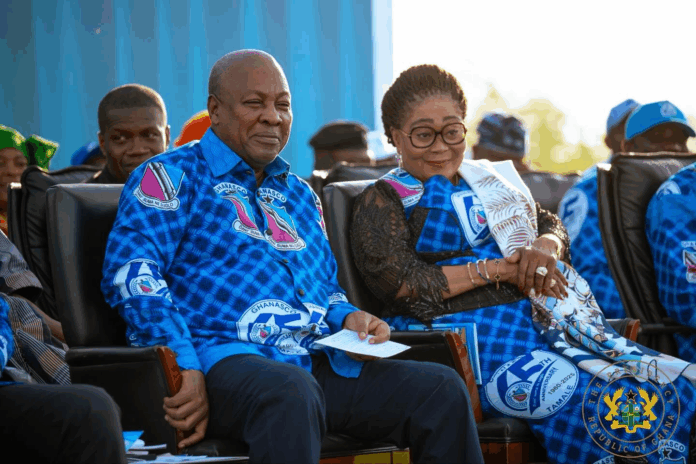
    President John Dramani Mahama has humorously narrated how he met his wife, First Lady Lordina Mahama, during their days in Ghana Senior High School (GHANASCO.

    President Mahama explained that during his National Service, he worked as a teacher, and Madam Lordina was one of his students.

    After that stage of their lives, their paths crossed again, and that marked the beginning of their love story.

    “At the time, Lordina was in Form Four. I know the girls will like to hear this story. And so I taught her for my national service year, and then she finished GHANASCO and went and became a teacher in Juabeng Primary. And so when I came back and I met her again, she had finished school, and of course I was also a very handsome man, and so the rest is history,” President Mahama ended his narration with laughter while addressing guest at the 65th anniversary celebration of Ghana Senior High School (GHANASCO).

    Several other public figures have shared the genesis of their love story including Member of the Movement for Change, Hopeson Adorye, who revealed that he met his wife, Empress Gifty Adorye, at a funeral in the year 2018.

    He made this known during their TikTok live session after Mrs Adorye clinched the ‘Best Traditional Gospel Song’ award at the 2025 Telecel Ghana Music Awards (TGMA).

    “I met my wife in 2018 at a funeral. A friend of my father had passed, and I was invited to the ceremony. At the event, my friend told me Empress Gifty was around. I joked that I was actually looking for her. When we were introduced, the moment she shook my hand, I didn’t want to let go,” Mr Adorye shared.

    Mr Adorye added that he was initially hesitant to pursue Empress Gifty after noticing a ring on her finger.

    However, it appears they connected well despite his initial reservations.

    Adding more context to the story, Empress Gifty disclosed that she had to return a car gift she received from Mr Adorye at a point in time in their marriage.

    According to her, it was after she returned the car that Mr Adorye took a decisive step, visiting her family to formally ask for her hand in marriage.

    “When he gave me the car, I took it home and told my mother. I also told her I was interested in marriage, not just dating. My mother told me clearly, ‘if it’s marriage you want, return the car.’ I listened to her advice and returned it,” she stated.

    She said her decision to return the car turned out to be a turning point in their relationship.

    “Just two days after returning the car, he came to my house and asked for my hand in marriage. That’s when we proceeded with the traditional ceremony. Sometimes, when you meet someone, don’t let material things cloud your judgment. Focus on building a future together,” she said.

    Gospel musician Joe Mettle also revealed details about how he met his wife, Salomey Selassie, during an interview with Roselyn Felli on JoyPrime.

    Mettle explained that he initially met his wife online but did not specify which platform they used.

    He went on to say that he would often spot Selassie at his events, recalling a time when he was going through one of his old videos online and saw her.

    He added that he always had a strong feeling that she was the one for him but initially ignored it.

    Mettle credited social media for helping him connect with his wife, stating that “this social media thing has helped.”

    He revealed that his wife had attended one of his programmes and approached him after the event to say, “God bless you,” marking the first time they spoke to each other.

    The Founder and Leader of the Liberal Party of Ghana (LPG), Kofi Akpaloo, also opened up about the charming love story that led him to meet his wife during his tenure as a bank accountant.

    Recalling the moment, Akpaloo expressed experiencing love at first sight when a lady entered the bank to deposit money, captivated by her corporate elegance.Determined to connect, he strategically orchestrated an accidental encounter, leading to the start of their romantic journey.

    The political figure shared that after dating, he travelled to the United States, and within six months, his now-wife joined him.The couple went on to build a family with six children, and Akpaloo fondly described his wife as a pillar and an exceptional life partner.

    This heartwarming revelation took place on Adom FM’s morning show, Dwaso Nsem, as Akpaloo shared his love story just in time for Valentine’s Day.

  • “Your most urgent task is to strengthen integrity within the judiciary”- Chief Justice Baffoe-Bonnie told

    “Your most urgent task is to strengthen integrity within the judiciary”- Chief Justice Baffoe-Bonnie told

    President John Dramani Mahama has urged the newly sworn-in Chief Justice Baffoe-Bonnie to make it a priority to ensure that the judiciary remains honest, trustworthy and free from corruption.

    This followed the swearing-in of the Chief Justice at the Presidency on Monday, November 17, 2025.

    President told the new Chief Justice that one of his immediate responsibilities is to ensure the judiciary upholds strong integrity.

    “My Lord Chief Justice, one of your most urgent tasks is to strengthen integrity within the judiciary,” the President said.

    He added that “An independent judiciary is not a favour to the courts; it is a constitutional necessity sometimes criticised.”

    He also pointed out that, “Our people want institutions that work, but they also demand institutions that they can trust. The judiciary in particular must be above reproach. One single act of corruption by a judicial officer can undermine years of hard work and erode public confidence in the entire system.”

    Detailing four arears that needs the attention of the Juciary, the President mentioned “firm but fair disciplinary standards for judges and staff”, as well as “transparent and predictable procedures for case assignments and management”.

    He further stated the need for “strong internal mechanisms to address allegations of misconduct” and “a culture where ethical conduct is rewarded and wrongdoing is swiftly sanctioned.”

    President Mahama stressed that the justice system must be fair and open to all people.

    “Our citizens must know and feel that justice in Ghana is not for sale, and that no one, regardless of their power or status, is too powerful or too humble to be held accountable under the law.”

    President John Dramani Mahama has officially sworn in Justice Paul Baffoe-Bonnie as the new Chief Justice.

    Justice Baffoe-Bonnie was officially sworn into office on Monday, November 17, 2025, at a ceremony held at the Jubilee House.

    He is now mandated to occupy the seat of the former Chief Justice Gertrude Torkonoo, who was dismissed by the President.

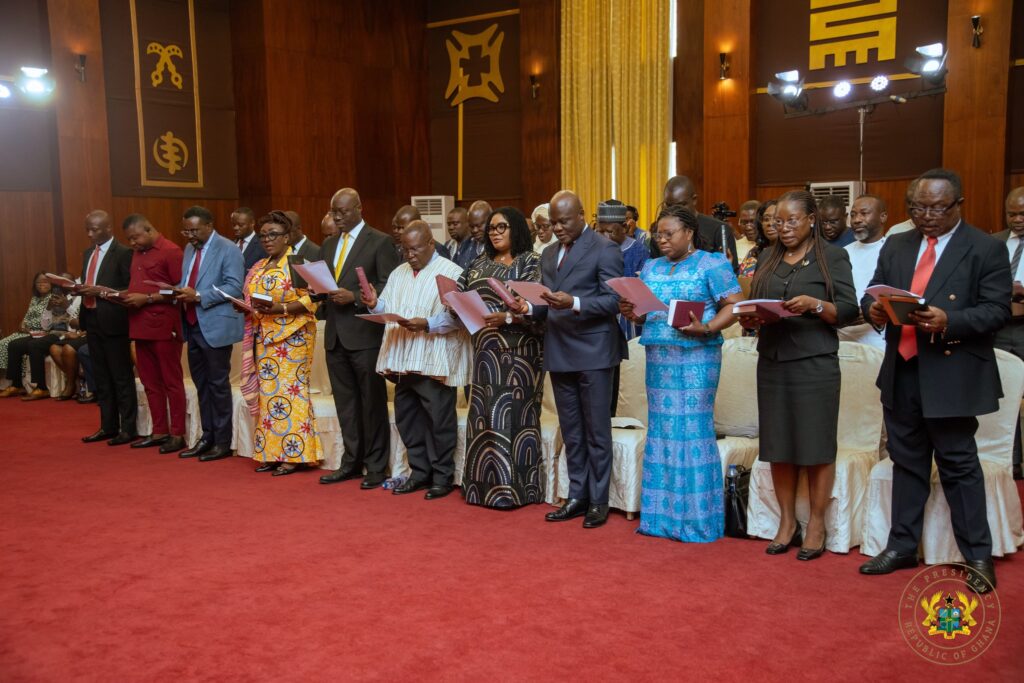
    The ceremony was attended by high-ranking dignitaries, including the Vice President, members of the Council of State, the Attorney-General and Minister for Justice, the leadership of Parliament, and a full complement of Supreme Court Justices, alongside the new Chief Justice’s immediate family.

    President Mahama, in his address, hailed Justice Baffoe-Bonnie’s valuable experience and commitment to the rule of law, urging him to prioritise judicial independence and the accelerated disposition of cases.

    Accepting the mantle of leadership, the new Chief Justice took the prescribed oaths and immediately outlined his vision for the third arm of government, centred on comprehensive institutional reform.

    Meanwhile, one of the leading contenders for the NPP’s National Chairmanship, John Boadu, had warned Parliament not to downplay the Chief Justice nominee, Justice Paul Baffoe-Bonnie’s, remarks on notorious criminal Atta Ayi’s prison sentence.

    In 2005, Justice Paul gave Atta Ayi a 70-year prison sentence, convicting Atta Ayi of multiple counts of robbery and conspiracy to rob.

    Twenty years later, he addressed the issue, citing it as an example in response to a question about sentencing guidelines and recent concerns over lengthy sentences for minor, non-violent offences during his appearance before Parliament’s Appointments Committee for his appointment as Chief Justice nominee.

    According to him, the unusually lengthy sentence he gave Atta Ayi was to ensure the safety of his family; a shorter sentence could have allowed the criminal to target them after his release. emphasised that while sentencing guidelines provide a framework, judges must sometimes exercise discretion to address the broader context of a case, including public safety and the protection of vulnerable parties.

    “The judges and magistrates, they are trained, they have sentencing guidelines,” he said. “But sometimes they have to go beyond it. In my youthful days, I gave somebody 70 years, Atta Ayi.

    “I gave him 70 years. And what I told myself was that if Atta Ayi was given 30 years and he comes back, my family will be the first he will attack. So by the time he comes back after 70 years, I will be dead and gone,” he said lightheartedly to laughter in the audience,” he noted.

    NPP’s aspiring Chairman is not content with the Justice’s answer, raising concerns about his reputation as the soon-to-be highest judicial officer in Ghana and his impartiality in future cases.

  • “Nkoko Nkitinkiti” programme to be launched today in Kumasi

    “Nkoko Nkitinkiti” programme to be launched today in Kumasi

    One of the government’s flagship programmes, “Nkoko Nkitinkiti”, is set to be launched today, Wednesday, November 12. This was announced by the Minister of Government Communications, Felix Kwakye Ofosu.

    He confirmed the launch of the programme in a Facebook post on Sunday, November 9, through a Facebook post and subsequent media briefings, noting Kumasi as the venue for the launch. The post explains the purpose of the programme and its anticipated impact on the country’s poultry sector.

    “This week is a very important one for our country. On Wednesday, November 12, President John Dramani Mahama will launch one of the government’s flagship programmes, Nkoko Nkitinkiti, in Kumasi. This initiative will boost poultry production, reduce imports, and create jobs for thousands of households,” adding that “Later in the week, the Finance Minister will present the 2026 Budget to Parliament. We will also receive the final report on the Adansi helicopter tragedy. A week of accountability and progress.”

     Though the exact operational details of the programme remain undisclosed, it is expected to focus on community development and youth empowerment initiatives in line with the government’s social intervention agenda.

    The  Nkoko Nkitinkiti initiative, which is also labelled as ‘backyard poultry programme’ by the Minister for Food and Agriculture, Eric Opoku, is set to empower about 60,000 households in all the 276 constituencies nationwide to produce 3 million birds. According to him, the programme is targeted at single mothers, Persons with disabilities and other vulnerable people in the community during an address on October 16.

    Speaking during a media briefing ahead of the launch tomorrow, Mr Opoku clarified that “the government’s Nkoko Nkitinkiti policy, which is to be launched, does not cover commercial poultry farmers. The policy is purposely for households. While the government is starting with the Nkoko Nkitinkiti initiative, the public must understand that it is just one aspect of the government’s poultry production plans. We have another program under which we are targeting existing poultry farmers.”

    However, he noted that the government has other policy directives that will be rolled out to support large-scale and medium-scale poultry farmers.

    The policy is part of the broader Feed Ghana strategy and includes training, access to feed, and improved breeding stock. Originally set for July, it was delayed to October for stakeholder engagement. By reducing the $300 million spent annually on poultry imports, the initiative seeks to revitalise agriculture, empower youth, and strengthen Ghana’s self-sufficiency in protein production.

    The Minister for Food and Agriculture stated that technical staff from the ministry are engaging stakeholders in the poultry industry to gather data and information on how best the policy can be rolled out, noting that the information received from the field officers will guide them as to who gets to be selected to benefit from the policy rollout.

    “What we are doing now is dealing with backyard poultry farming. That has nothing to do with the commercial farmers. It has nothing to do with the commercial farmers. In fact, the technical people are already in the field. We are selecting the beneficiaries based on their capacities in their various places.

    “So, in Bono Ahafo, for instance, the people have submitted their reports. They have gone to their places of work and have identified those people we can work with. Now, we have to engage with them based on the information that we have before we roll out that one”, the Minister said.

    Hon. Opoku then noted that there are other plans underway that are purposely for large-scale and medium-scale commercial farmers, emphasising the need for an overall increment in poultry production in the country to reduce imports and over-reliance on imported poultry and poultry produce.

    The minister noted that there is an existing program from last year where some poultry farmers were provided with the logistics and financial support, with the understanding that they would pay back after harvest.

    In an earlier address in April by President Mahama, he revealed that the policy will be implemented in collaboration with Poultry Farmers Associations, which will support “hatcheries, feedmills, veterinary services and poultry processing centres.

    This year, 50 anchor farmers will be supported to produce four million birds, which will be equivalent to 10,000 tonnes of chicken. Additionally, a supplementary programme will involve the registration of 55,000 households across this country, and each of these households will produce 500 birds every year. We believe that this will rear over 1 million birds to improve the income of women and the nutrition of their children”.

    Meanwhile, while farmers have commended the government for the initiative to deal with poultry importation, they have expressed concerns about being sidelined in designing the programme. Some farmers also expressed their dissatisfaction with the government’s decision to exclude commercial farmers, who have described themselves as a crucial party in ensuring the effectiveness of the programme. The National Poultry Farmers Association (NPFA) have also warned that the government may incur losses if the programme is not effectively implemented.

     They are calling for a balanced household empowerment with support for commercial farmers, and to ensure proper training and monitoring so the initiative doesn’t backfire.

    Meanwhile, the Minority Leader, Alexander Afenyo-Markin, who also represents the people of Effutu Constituency in January this year expressed his belief in the government’s proposed poultry programme.

    Speaking during the vetting of Agriculture Minister-designate, Eric Opoku, Mr Markin described it as a potential solution to the country’s high youth unemployment rate.

    Mr Afenyo-Markin noted that, as an entrepreneur, he recognises the pressure the youth unemployment crisis places on the political class and believes the programme could offer a viable solution.

    “I heard it from President, Mahma, and for me as an entrepreneur, knowing the pressure from our youth on all of us as a political class, beyond the political rhetoric, I believe that if it [nkoko nketenkete] is implemented, it will help the youth because a lot of them are dejected in this country. They don’t have jobs, and the pressure is on us,” he stated.

  • Acting CJ Baffoe-Bonnie to be vetted by Appointments Committee today

    Acting CJ Baffoe-Bonnie to be vetted by Appointments Committee today

    Justice Paul Baffoe-Bonnie will be vetted by the Appointments Committee of Parliament for the position of Chief Justice today, Monday, November 10.

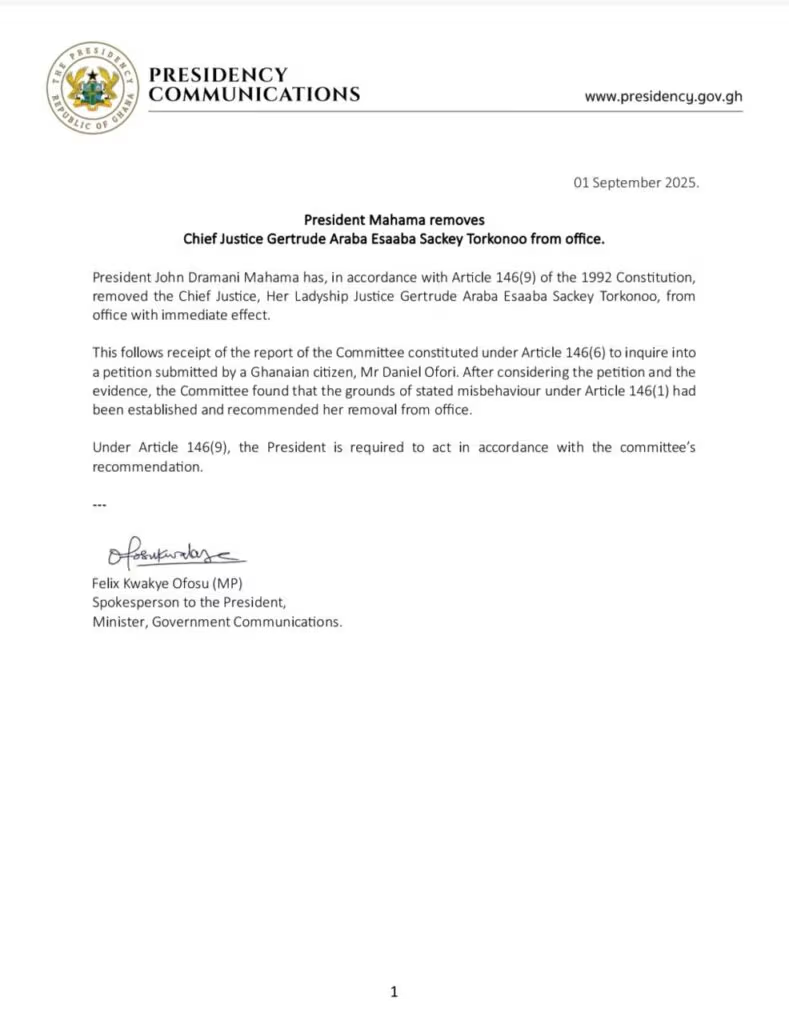
    The vetting, scheduled to begin at 11:00 a.m., seeks to find a replacement for former Chief Justice Gertrude Torkornoo, who was relieved of her duties by President John Dramani Mahama in September following recommendations from a committee that probed petitions seeking her removal.

    The Presidency justified its decision to dismiss the Chief Justice, citing findings from the Article 146 Committee of Inquiry.

    According to a statement, the Committee found that the grounds of stated misbehavior under Article 146(1) had been established and recommended her removal from office.

    “President John Dramani Mahama has, in accordance with Article 146(9) of the 1992 Constitution, removed the Chief Justice, Her Ladyship Justice Gertrude Araba Esaaba Sackey Torkonoo, from office with immediate effect.

    “This follows receipt of the report of the Committee constituted under Article 146(6) to inquire into a petition submitted by a Ghanaian citizen, Mr. Daniel Ofori. After considering the petition and the evidence, the Committee found that the grounds of stated misbehaviour under Article 146(1) had been established and recommended her removal from office.

    “Under Article 146(9), the President is required to act in accordance with the Committee’s recommendation,” parts of the statement read.

    In October, President John Dramani Mahama submitted Justice Baffoe-Bonnie’s name to the Council of State for consideration in accordance with Article 144(1) of the Constitution, which requires the President to act in consultation with the Council of State and with Parliament’s approval when appointing a Chief Justice.

    Justice Baffoe-Bonnie, the most senior member of the Supreme Court, was appointed to the apex court in June 2008 by then-President John Agyekum Kufuor. He studied law at the University of Ghana and was called to the Bar in 1983. His judicial career spans roles as a Circuit Court Judge in Kumasi, a High Court Judge at Duayaw Nkwanta, and a Court of Appeal Judge before his elevation to the Supreme Court.

    Born on December 26, 1956, in Goaso, Justice Baffoe-Bonnie had his secondary education at Konongo Odumase Secondary School before pursuing law at the University of Ghana and the Ghana Law School.

    If approved by Parliament, he will formally assume leadership of the Judiciary during a sensitive period following the removal of his predecessor. His appointment will mark a new phase for the Judiciary as it undergoes a leadership transition amid ongoing constitutional and ethical reforms.

    However, speaking on the floor of Parliament on Friday, November 7, Minority Leader Alexander Afenyo-Markin said it would be inappropriate to proceed with the vetting of Acting Chief Justice Paul Baffoe-Bonnie while the former Chief Justice awaits a court verdict on her pending lawsuit.

    In October, Gertrude Torkornoo initiated legal action to prevent the vetting and appointment of Justice Baffoe-Bonnie as Ghana’s next Chief Justice. She is seeking the nullification of all activities carried out by the Justice Gabriel Scott Pwamang Committee, which was set up under Article 146 to review petitions seeking her removal from office.

    She further wants the court to overturn all proceedings undertaken by the said Committee and to declare the Presidential Warrant authorizing her dismissal as unlawful and without legal effect. The legal move came as Parliament’s Appointments Committee prepared to vet Justice Baffoe-Bonnie for the top judicial position.

    Afenyo-Markin emphasized that commencing the vetting of the appointed CJ would breach judicial propriety. According to him, given the ongoing disputes surrounding the revocation of the former Chief Justice from office, proceeding with the vetting process could undermine Articles 125 and 127 of the Constitution.

    “Proceeding to vet a new person to fill that office will be rendering the application of justice. We are not into blows; we are here to argue law and for you to determine. This kind of attack, ‘it will happen, it will happen,’ is inappropriate. They should take it easy,” Afenyo-Markin said.

    Article 125 gives judicial power only to the courts and not to Parliament or the Executive. Article 127, on the other hand, requires all other state institutions not to interfere with the Judiciary’s work but to protect its independence.

    But the Speaker of Parliament, Alban Bagbin, dismissed the motion presented by the Minority caucus. According to him, granting such a request would create a dangerous precedent, explaining that “any litigant could hold Parliament hostage—that is, file a case and freeze the work of Parliament and its committees.”

    He ruled that “there is no constitutional or standing order basis for Parliament to halt the process simply because there are pending cases in court. The motion is inadmissible and has been returned to the sponsor, the Minority Leader, Honorable Alexander Afenyo-Markin, as stated clearly by our Standing Orders.”

    The five-member committee, backed by Article 146, concluded its investigations last month and recommended the Chief Justice’s removal from office. Acting on the committee’s recommendations, President Mahama relieved Justice Gertrude Torkornoo of her duties with immediate effect on Monday, September 1.

    The Chief Justice was earlier suspended by President Mahama on Tuesday, April 22, after a prima facie case was established following multiple petitions calling for her removal.

    Among the petitions was one filed by a group known as Shining Stars of Ghana, alleging that she violated Article 144 of the Constitution by personally recommending judges for promotion to the Supreme Court. The group also claimed she ruled on a case involving the Speaker of Parliament without granting him a hearing, despite his refusal to respond to the suit.

    Another petition from a police officer who is also a lawyer accused the Chief Justice of manipulating evidence and abusing her authority during a Supreme Court session where he was reportedly reprimanded, arrested, and detained.

    Court records, however, show that the lawyer’s conduct during proceedings prompted a unanimous caution from the bench, not just from the Chief Justice.

    A third petition, submitted by a private individual, listed 21 alleged misconducts and four claims of incompetence, including the misuse of public funds—specifically, spending over GH¢261,000 and $30,000 on a family trip abroad in 2023, and misusing an additional GH¢75,580 and $14,000 during another foreign assignment without proper accountability.

    Subsequent reports indicate that two more petitions were later filed, intensifying pressure on the Judiciary.

    Chief Justice Gertrude Torkornoo, in her written response to President Mahama, strongly denied allegations of misconduct and abuse of office, describing them as baseless and lacking grounds for her removal.

    In July, an application for review filed by the embattled Chief Justice at the Human Rights Division of the Accra High Court was dismissed. The court, presided over by Justice Amoako on Thursday, July 31, ruled that several claims—such as the illegal composition of the committee and wrongful conduct of proceedings—were already before the Supreme Court.

    Justice Amoako stated that relitigating these issues would result in duplication and abuse of court processes and therefore dismissed the case.

    The Chief Justice’s judicial review application, filed on June 9, sought nine reliefs, including declarations that the Article 146 Committee acted unlawfully and violated her right to a fair hearing.

    As the Article 146 Committee’s proceedings are held in camera in accordance with Article 146(8) of the Constitution, the court noted that it could not inquire into certain matters raised by the suspended Chief Justice.

    Following these developments, Justice Gertrude Torkornoo proceeded to the ECOWAS Community Court in Abuja, Nigeria, seeking $10 million in compensation over her suspension.

    Her application includes 10 reliefs, among them a request for precautionary measures ensuring she continues to enjoy the entitlements of her office pending the final determination of the case.

    Meanwhile, government spokesperson Felix Kwakye Ofosu has refuted Justice Torkornoo’s claims, insisting that her suspension aligns with the Constitution.

    On Thursday, August 14, the Bar Council of England and Wales and the Commonwealth Lawyers Association jointly called for the immediate reinstatement of Ghana’s Chief Justice by President Mahama and the Executive arm of government.

    “Immediately and without delay, reinstate the Chief Justice of Ghana to her office, consistent with both the hitherto strong attachment to the rule of law demonstrated by Ghana and the constitutional duties incumbent upon them,” the statement said.

    The groups further urged a fair and transparent investigation into the disciplinary charges against her and the establishment of clear procedural rules with a definite timeframe for the Committee’s work.

    However, Attorney General Dr. Dominic Ayine has emphasized that his office can only act after the Committee concludes its work and submits its report to the President. “The suspension will, therefore, remain in effect until the inquiry committee completes its work and submits its report, to which His Excellency the President will adhere,” he stated.

  • Prison reforms: Govt to review parole system, bail conditions, and introduce new sentences for minor offences

    Prison reforms: Govt to review parole system, bail conditions, and introduce new sentences for minor offences

     President John Dramani Mahama has announced a set of prison reforms set to be undertaken by his administration. The Prison service in Ghana is swaddled with several challenges, including overcrowding, poor infrastructure facilities and limited resources, which mostly affect their feeding.

    The conditions in Ghana’s prisons are generally reported as unfavourable, prompting President Mahama’s announcement of a reform agenda.

    Speaking at the commissioning of the Damongo Prison Camp on Wednesday, November 5, he mentioned that, “it rests on a fundamental belief that no Ghanaian should be stripped of their humanity, even when they are in prison. We’re therefore implementing far-reaching reforms”. 

    He also added that there will be an “expansion of the use of alternative sentencing for minor and non-violent offences; reviewing bail conditions to avoid undue hardship, especially for the poor; introducing a parole system to reward good behaviour and accelerate reintegration”.

    Mostly in Ghana, it is a reported challenge that many governments tend to abandon or delay projects started by their predecessors, especially when there is a change in political leadership. The president, Mahama, during his first term, began the construction of an 800-inmate capacity remand prison at Tamale in 2014. It stalled in 2016 due to funding issues and political discontinuity after the change of government, leaving it incomplete to this day. 

    However, President Mahama has announced that his government will complete the facility and develop a modern correctional centre for men, women and juveniles.

    “…completing the 800-inmate capacity remand prison at Tamale initiated by my previous administration in 2016, which has been left abandoned…”, he added.

    While their facilities are being improved, the condition of service for the officers is also set for a change.

    “We’re enhancing the conditions of service for our prison officers, modernising prison infrastructure, and expanding rehabilitation programs connected to sustainable livelihood and employment after release,” President Mahama added.

    Additionally, conditions of service for officers are to be enhanced, and the expansion and rehabilitation programmes connected to sustainable livelihoods and employment after release.

    “The Prison Service will contribute to the 24-hr economy policy by running prison enterprises, including manufacturing, sewing school uniforms, agro processing to generate income for the Service and prepare inmates for life after prison,” he stressed.

    Speaking on the church’s contribution to building the society, President Mahama lauded the Church of Pentecost’s gesture, highlighting that it was a demonstration of what could be achieved if faith-based organisations partnered with the State in its development drive.

    “It affirms the timeless truth that nation building is not the sole responsibility of the government but the collective moral endeavour of all who believe in the inherent dignity and potential of every human being,” President Mahama underlined.

    In the view of the President, faith involves more than worship as it encompasses practical compassion and transformative action.

    “We’ve all shown that when we work together, Ghana works better,” the President said, adding that the facility would serve as a sanctuary for rehabilitation, a centre for a second chance at life and a workshop to transform lives.

    The Damongo facility is the third correctional centre being built by the Church of Pentecost and forms part of its safety and security project under the ‘Possessing the Nations Agenda’, focused on constructing state-of-the-art facilities in selected locations across the country.

    “From our ministry’s perspective, transformation involves both conversion of souls and society through the Gospel. This is because, as we all know, human beings are not isolated individuals but persons in communities embedded in complex socio-economic structures,” Apostle Eric Nyamekye, the Chairman of the Church of Pentecost, noted.

    He said the Church considers the agenda as the “Kingdom project” designed not only to save souls but to foster the transformation of society and pursue the incarcerated, which humans call sinners.

    “For us, sinners are our clients. And we look for them wherever they can be found. Our objective as a church is to redeem their souls for heaven, empower them, facilitate their transformation and ultimately reintegrate them as productive members of society,” he added.

    The facility is equipped with quarters, classrooms, a workshop, health care units, and digital learning facilities.

    Before President Mahama’s proposed reforms, Ghana’s courts often imposed custodial sentences even for misdemeanours such as petty theft or minor fraud. According to research conducted by Dalhousie University in April 2019, offenders for minor offences mostly serve up to 3 years’ jail term. Conditions of bail, such as high sureties or cash deposits, become a challenge, particularly for the poor or disadvantaged, keeping them in custody while the relatively advantaged suspects secured release.

    Also, the parole system in Ghana was not properly structured. Ghana did not have an official, structured program or legal process that allowed prisoners to be released early under supervision for good behaviour or rehabilitation progress. Prisoners served full sentences unless granted a presidential pardon or remission

    Parole is a system of conditional release from prison before the full sentence is served, allowing an inmate to re-enter society under supervision. Female inmates are housed in dedicated wings of major prisons like the Nsawam Female Prison. Facilities remain limited and often overcrowded. 

    Ghana has only one Senior Correctional Centre for young male offenders in Accra, and one Juvenile Correctional Centre for females managed by Social Welfare. These centres provide vocational training and education, but are few in number and under-resourced.

    In a related development,  President Mahama, on August 18, granted amnesty to 998 prisoners across Ghana’s correctional facilities, marking the first major exercise of the presidential prerogative of mercy under his current administration.

    The move was in accordance with Article 72 (1) of Ghana’s 1992 Constitution, which empowers the President to grant amnesty in consultation with the Council of State. The offenders were released based on consultations and recommendations from the Prisons Service Council. The president granted amnesty to 998 inmates out of 1,014 recommended.

    The beneficiaries of the president’s pardon include 787 first-time offenders, 36 elderly inmates over 70, 33 seriously ill prisoners, and 2 nursing mothers. He also commuted 87 death sentences to life imprisonment, reduced 51 life sentences to 20 years, and approved 2 special petitions.

  • Ghana leads Africa as 1st to contribute financially to International Fund for Public Interest Media

    Ghana leads Africa as 1st to contribute financially to International Fund for Public Interest Media

    Ghana has currently set a record as the first African country to make a financial contribution to the International Fund for Public Interest Media (IFPIM), President John Dramani Mahama has announced.

    The Fund, which was established in 2022 by a coalition of governments, philanthropic organisations, and media development experts to address the crisis in media sustainability, particularly in countries where independent journalism is most at risk. It aims to increase resources for trustworthy journalism, support long-term solutions to media financing, and promote democracy, peace, and security through informed public discourse.

    Speaking at the High-level International Conference on Information Integrity and Independent Media on Tuesday, October 29, in Paris, France, President Mahama announced that, as a demonstration of his government’s commitment to promoting and ensuring independent media freedom, reliable information dissemination and the war against misinformation, Ghana will be the first country to contribute financially to the Fund.

    “In addition, I’m proud to declare that Ghana will become the first African country to make a financial contribution to the International Fund for Public Interest Media. This gesture reflects our conviction that independent journalism and reliable information are indispensable public goods,” he announced.

    He called on all other global leaders to move from words to action in their shared commitment to fight for the public media interest and ensure the genuineness of information shared in our world.

    “ The time has come for all of us to translate our shared ideals into tangible action, to demonstrate genuine commitment to supporting public interest media and safeguarding the integrity of information,” he added.

    The President also announced that Ghana is set to become a full member of the Partnership for Information and Democracy, noting that the necessary processes have been initiated for the country’s membership to be granted soon.

    The Partnership for Information and Democracy is a non-binding intergovernmental agreement launched in 2019 during the United Nations General Assembly. It builds on the International Declaration on Information and Democracy, aiming to protect and promote reliable, pluralistic, and independent information as a cornerstone of democracy.

    ” This decision has been officially communicated through the appropriate diplomatic channels, affirming Ghana’s unwavering commitment to the principles of transparency, accountability, and open governance. Our landmark decision sends a clear message to the international community that Ghana remains steadfast in advancing the frontiers of freedom, upholding the rule of law, and serving as a model nation in promoting democracy and good governance”, President Mahama noted.

    President Mahama was happy that the conference achieved tangible outcomes, including, “The endorsement of the Paris Declaration on Multilateral Action for Information Integrity and Independent Media, reaffirming our collective commitment to free, independent, and pluralistic information ecosystems; renewed political and financial commitments to replenish the International Fund for Public Interest Media, targeting €130 million between 2026 and 2028 to support independent journalism worldwide; the establishment of a Consultative Committee to enhance coordination among states, civil society, and the Forum for Information and Democracy; and, above all, a shared understanding that the defence of truth must now be a sustained and collective endeavour, transcending national and institutional boundaries”.

    Meanwhile, over the last three years, since the establishment of IFPIM, several countries, including France, have stood out as one of the founding contributors to the fund. Germany, the United Kingdom (UK), Canada, Australia, as well as Sweden and the United States, but the US’ financial support has varied over time, though there have been several funds donated through philanthropic foundations.

    In addition to state contributions, several major philanthropic organisations have played a crucial role in funding the initiative. These include the MacArthur Foundation, Luminate, the Gates Foundation, Craig Newmark Philanthropies, and the Open Society Foundations.

    Following these contributions, the Fund by the end of 2024 had accrued over $50 million USD in total funding, aiding their assistance to 122 media organisations across 31 countries, with an average grant size of approximately $275,000 USD. Consequently, 63% of grantees reported an increase in total revenue, while 88% expanded their audience reach.

    In a related development, President Mahama’s latest commitment to media freedom through a financial contribution to the International Public Interest Media Fund comes at a time when assaults on journalists are rife, particularly in Ghana, which has affected the country’s global ranking on media freedom. He has pledged his commitment to media safety, freedom and a compensation package for journalists who have been assaulted over the years while on duty.

    Speaking during the GJA’s courtesy call on Friday, September 5, Mr Albert Dwumfuor, the Association’s president, reminded the president to uphold his promise to ensure the safety and sustainability of the media in Ghana. He appealed to the president to take concrete steps to end assaults on media professionals.

    “Unwarranted attacks on journalists must end. We call on you to ensure that perpetrators of violence against media personnel are held accountable,” he stressed.

    During a media engagement on August 16, 2024, then-presidential candidate Mahama had pledged to journalists that, once in office, his government would protect media freedom and ensure their safety.

    “The best thing you can give the media is to give them the freedom to do their work. Unfortunately, that hasn’t happened under this government. Media people have been hounded, some have run into exile, some have been threatened, their lives have been threatened, and indeed some have paid the ultimate price like Ahmed Suale did,” he said.

    He continued with a personal pledge: “You can trust that as a person who is a member of the Ghana Journalists Association (GJA) myself, I am not the kind of person who would hound the media, and so one gift I can give to you is the freedom to do your work without anybody intimidating and harassing you.”

    Consequently, Mr. Dwumfuor urged President Mahama to exercise his executive powers by enacting stronger laws to empower security agencies to protect journalists. According to him, attacks on journalists are often premeditated, making them aggravated offences that require tougher punishment.

    “Your Excellency, we encourage you to invoke your executive powers to enact a law to empower security agencies to protect journalists. Since most of these attacks are premeditated, they must be treated as aggravated offences. If we continue to treat them as misdemeanours, it will not serve as a deterrent,” he noted.

    President John Dramani Mahama, at the same event, revealed that he has received a report from the Ghana Police Service containing records of all victims of electoral violence. He stated that after a thorough review of the report, victims would be duly compensated. Additionally, he assured that the compensation package would also cover journalists who have suffered repeated attacks during elections.

    “…And so once that is done, I’m sure that if there were journalists involved, they would also be considered for compensation,” he added.

  • Defence Ministry to get substantive head soon – Kwakye Ofosu

    Defence Ministry to get substantive head soon – Kwakye Ofosu

    A substantive Minister for Defence will be appointed by President John Dramani Mahama in due course, the Minister in Charge of Government Communications, Felix Kwakye Ofosu, has announced.


    Engaging the media on Monday, October 27, Kwakye Ofosu, shot down claims suggesting that President Mahama is being reluctant to replace the late Defence Minister due to the relationship he had with him.

    He emphasized that President Mahama is working to ensure that the Defence Ministry has the best of leadership and policies.

    He noted that “President Mahama fully understands his responsibilities and whereas he had a close relationship with the late Minister Omane Boamah, the president is pragmatic and professional enough to understand that life has gone on.


    “Whatever needs to be done will be done to ensure that the Defence Ministry has the best of leadership and the policies that they implement contribute to the overall development of our country and ensure our safety and security. In due course, that announcement will be made.”


    In July, President John Dramani Mahama directed the Finance Minister, Hon. Cassiel Ato Forson, and the Minister for Lands and Natural Resources, Hon. Emmanuel Kofi Buah, to act as caretaker ministers for the Ministry of Defence and Environment, Science and Technology Ministers, respectively.


    The order followed the tragic helicopter crash at Adansi Akrofrom in the Ashanti Region, which claimed the lives of eight individuals, including the Defence Minister, Dr. Omane Boamah, and the Minister for Environment, Science, and Technology, who also serves as the Member of Parliament (MP) for Tamale Central, Ibrahim Murtala Mohammed.


    The other six individuals who are deceased include acting Deputy National Security Coordinator and former Minister for Food and Agriculture Alhaji Muniru Mohammed, Vice Chairman of the National Democratic Congress Dr. Samuel Sarpong, former Parliamentary candidate Samuel Aboagye,Squadron leader Peter Bafemi Anala, Flying Officer Twum Ampadu, and Sergeant Ernest Mensah.


    The Government of Ghana laid to rest six out of the eight victims after holding a state funeral at the Black Star Square on Friday, August 15.


    At the state burial, tributes were read by the bereaved families, who expressed the love and peace they felt while living with the deceased. President John Mahama eulogised each of the victims, revealing their contributions and outstanding characteristics.


    “Dr. Edward Omane Boamah, Minister for Defence — a trusted friend, a man of sharp intellect and deep conviction. As Minister, he began bold reforms to modernize our Armed Forces, enhance their capabilities, and uphold the highest standards of professionalism. His energy, clarity of vision, and patriotism were unmatched.


    Hon. Ibrahim Murtala Muhammed, Minister for Environment, Science and Technology — passionate, eloquent, and deeply committed to protecting Ghana’s environment while advancing scientific innovation. He believed the fight for our planet’s future was also the fight for Ghana’s future.


    Alhaji Mohammad Muniru Limuna, Deputy National Security Coordinator — calm, discreet, and courageous. His work, much of it unseen, played a vital role in safeguarding the peace and stability of our Republic.


    Samuel Sarpong, Vice Chairman of the National Democratic Congress — a man of humility and loyalty, respected by colleaguesand opponents alike. He was a tireless organizer and a faithful servant of our democracy.


    Samuel Aboagye — a young and promising politician, who served as Deputy DirectorGeneral of NADMO with dedication and pride. He loved and cherished the opportunity to serve his country wholeheartedly.


    Squadron Leader Peter Bafemi Anala, Flying Officer Manaen Twum Ampadu and Sergeant Ernest Addo Mensah — The three gallantcrew members of the Ghana Armed Forces were disciplined, highly skilled airmen whose lives were defined by the military values ofhonour, courage, and commitment.


    They were the silent guardians of our skies, ensuring the safety of every mission they undertook. Each of these men had a story. Each had a family they cherished, a vision they pursued, and a heart that beat with love for Ghana,” the president said.


    He announced the posthumous promotions of Squadron Leader Peter Analaa, Flying Officer Tsum Ampadu and Sergeant Ernest Addo, elevating them to their next ranks as a tribute to their commitment, professionalism, and sacrifice.


    Their new ranks are Wing Commander Peter Baafemi Anala, Flight Lieutenant Manaen Twum Ampadu, and Flight Sergeant Mensah Addo Ernest.


    It was a solemn and heartwarming ceremony that saw families and friends, as well as mourners and representatives of international organisations from near and far, in attendance.


    After the interfaith funeral service was held at the Black Star Square, the gathering proceeded to Military Cemetery in Tse Addo, Greater Accra Region, where a burial ceremony took place.


    Taking turns, the president, Vice President Professor Jane Naana Opoku-Agyemang, the families of the deceased, Ghana Armed Forces, government officials, National Democratic Congress (NDC) and other dignitaries laid wreaths in memory of the victims of the tragic incident.


    Meanwhile, the Investigative Board tasked with probing the circumstances surrounding the August 6 helicopter crash in Adansi Akrofuom District of the Ashanti Region is expected to submit its findings in the coming days.


    According to Citi News, the preliminary report is currently under internal review. The committee was aided by aviation experts from China as well as other relevant institutions in decoding the black box.


    In August the Ministry of Defence announced that it has officially begun a probe into the unfortunate incident, following the establishment of an investigative Board.


    The Board is chaired by the National Security Coordinator, with membership drawn from the Ghana Air Force and the Aircraft Accident and Incident Investigation and Prevention Bureau of the Ghana Civil Aviation Authority (GCAA).


    This was contained in a press statement issued by the Acting Defence Minister, Ato Forson.


    “The Ministry of Defence hereby informs the public that the Investigation Board established to inquire into the recent Z-9 helicopter crash has formally commenced its work,” parts of the statement read.


    According to the Ministry, “the United States of America is providing advice and assistance to the board through visiting investigators from the U.S. Air Force”.

  • We must follow in the footsteps of Morocco – President Mahama to Black Stars

    We must follow in the footsteps of Morocco – President Mahama to Black Stars

    President John Dramani Mahama hopes the Black Stars will aim higher beyond their qualification for the 2026 FIFA World Cup. He has urged the team to emulate Morocco and, in broader terms, envision doing more.

    He cited Morocco as a model because they made history at the 2022 FIFA World Cup by becoming the first African nation to reach the semi-finals.

    Ghana sealed their place at the 2026 World Cup with a hard-fought 1-0 victory over Comoros courtesy of a decisive goal from Mohammed Kudus in their final Group I qualifier at the Accra Sports Stadium on Sunday, October 12, marking the country’s fifth appearance at football’s biggest tournament.

    Referring to an unforgettable situation in the history of Ghana football, where Asamoah’s penalty miss cost Ghana’s place in the semi-finals, he urged the team, 

    “We must follow in the footsteps of Morocco by going beyond the semi-finals and, who knows, with fingers crossed, bring the World Cup trophy home to make Ghana and Africa proud”.

    He further went on to call on Ghanaians to support the team without any bias.

    “We must all rally behind the Black Stars. We must support them to the hilt. Let’s not bring in any partisan or ethnic considerations. Let’s give them our full support,” he added.

    The Black Stars will discover their group-stage opponents during the World Cup draw on December 5, 2025, at the John F. Kennedy Centre for the Performing Arts in Washington, D.C.

    Following a group-stage exit at their previous World Cup in Qatar, Ghana now hopes to make a lasting impact in the 2026 tournament, which will be jointly hosted by the United States, Canada, and Mexico.

    FIFA President Gianni Infantino congratulated Ghana for securing its ticket to the 2026 FIFA World Cup.

    In a congratulatory message shared via video on the football governing body’s Instagram, Infantino praised the four-time African champions for their achievement and expressed excitement about their return to the world stage.

    “Congratulations to the Black Stars on reaching the FIFA World Cup for the fifth time in history. Your fans will bring colours, style and passion to the greatest FIFA World Cup ever in 20226 in Canada, Mexico and the United States.

    “We expect that your team will establish more global stars to follow in the footsteps of the famous team that made the quarterfinals of the tournament in South Africa in 2010, but for now, enjoy this special moment, and we cannot wait to see who the Black Stars will face when we have the final tournament draw on the 5th of December.

    “See you very soon and well. Congratulations!”

    Ghana’s qualification marks their fifth appearance at the World Cup, following previous campaigns in 2006, 2010, 2014, and 2022.

    Among African nations, only Cameroon (8), Morocco (7), Tunisia (7), and Nigeria (6) have made more appearances on the world stage.

    The Black Stars accrued 25 points after their final World Cup qualifier. Initially sitting in third place after two rounds of matches, Ghana began their campaign against Madagascar on November 17, 2023, securing a 1–0 home victory on Matchday 1, before suffering a 1–0 away loss to Comoros on Matchday 2, November 21, 2023. The team bounced back strongly on March 21, delivering a convincing 4–0 win over Chad.

    This set the tone for another win against Madagascar on March 24, 2025. Ghana defeated Madagascar 3–0 in Morocco, with a brace from Thomas Partey and Mohammed Kudus bringing the team’s points to 15. They remained atop the group until their last game yesterday

    Ghanaians were in high anticipation to know whether the Black Stars would qualify for the World Cup following their heavy win against Chad on October 9, at N’Djamena, hence there was a mad rush for tickets to the Black Stars’ clash against Comoros.

    To reduce congestion at the Accra Stadium, where the game happened, the National Sports Authority (NSA) announced a reduction in the number of tickets it will made available.

    The Accra Sports Stadium, which has a capacity of about 40,000, the NSA boss said, “will have its attendance capped to 35,000, with extra fan parks created to reduce congestion in the stadium”.

    He disclosed a media engagement on Thursday, October 9, in Accra, during a press engagement where he addressed questions and clarified misconceptions surrounding the organisation and preparations ahead of the match.

    According to him, the ticket prices for Sunday include VVIP GH₵1,000, the popular Stand will cost GH₵50, and GH₵100 for centre line, GH₵25 for lower VIP and GH₵500 for upper VIP.

    “The stadium can hold just under 40,000 people, but we’re not printing tickets for full capacity. A total of 35,000 tickets will be printed. Ticket samples are here, and there will be security features added”, Mr Ampofo noted.

    Also, the Ministry of Sports and Recreation earlier announced the ticket prices, explaining that “the pricing structure is designed to make the game accessible to fans from all walks of life.”

    Ghana’s last home match in the 2026 World Cup qualifiers against Mali on September 8 was marked by chaotic ticket sales, with fans crowding the stadium gates in a last-minute rush to buy tickets on the match day.

    To prevent a recurrence, Yaw Ampofo Ankrah confirmed that ticket sales for the upcoming match against Comoros will officially close at 3 pm on Sunday, even though the match starts at 7 pm.

    According to him, “Please note that on match day, tickets will not be sold after 3 pm. The match is at 7 pm, and the reason for this is that we don’t want the challenges we had the last time, where fans were crowding around the stadium looking to purchase tickets. It must be very clear. We intend not to have a rush as we did in the Ghana versus Chad game, where a lot of fans came to the gates without tickets, intending to buy tickets on the day.”

    “Almost everybody wants to be present to watch the Black Stars game on Sunday. That is the reason why we’ve called you, to give you an update on what we’re doing and to ensure that the right communication goes out there. I’ve read and seen so many things, and it’s a bit worrying because if we’re not careful, we may have too many people showing up, claiming they were told to come”

  • I’m not personally involved in galamsey, I don’t gain any benefit – President Mahama

    I’m not personally involved in galamsey, I don’t gain any benefit – President Mahama

    President John Dramani Mahama has intensely dismissed claims that he is benefiting from illegal mining, also known as galamsey.

    His comment comes to rebuild public trust and counter political narratives that accuse the ruling administration of serving as a cover-up for illegal mining kingpins.

    During a critical stakeholder engagement with Civil Society Organisations (CSOs) at the Jubilee House in Accra yesterday, October 3, the President sought to calm public doubts and reassure civil groups of his full dedication to tackling the issue, even as calls grew for him to declare a state of emergency.

    “We will continue to fight. I believe we will win the fight against galamsey. We have nothing to hide; I don’t gain anything from galamsey. I’m not personally involved in galamsey. I have no interest in galamsey continuing,” the President stated emphatically.

    Meanwhile, the Government has announced that 600 suspects are currently standing trial for their alleged involvement in illegal mining mining popularly known as galamsey.

    According to the Attorney-General (A-G) and Minister for Justice, Dr. Dominic Ayine, his department is currently managing court cases from 65 different files, several of which include more than one accused person.

    While addressing a high-level stakeholder forum on illegal mining in Accra on Friday, October 3, Dr. Ayine disclosed;

    “Currently, we have initiated prosecutions in 65 dockets, and there is a difference. When we say 65 dockets, it is not 65 individual persons who are being prosecuted,” Dr. Ayine clarified, highlighting the scale and complexity of the cases before the courts.

    The Attorney General further revealed that some files cover over 10 accused persons.

    Adding that one notable case in the Western North Region involves the prosecution of 28 suspects under a single charge sheet.

    “By my calculation, the 65 dockets contain about 600 illegal miners that are being prosecuted,” he stated.

    Meawhile President Mahama has responded to calls, urging him to declare a state of emergency over the grave damages illegal mining has brounght to the nation’s water bodies.

    The President noted that he can only declare a state of emergency when his government’s advisors give him the approval.

    During a meeting with Civil Society Organisations (CSOs)on Friday, October 3, President Mahama said he cannot act ahead of his advisors, as that would go against established governance procedures.

    President Mahama pledged to honor scores of Ghanaians’ calls by declaring a state of emergency when his advisors give him the nod to do so.

    According to him, government advisors believe the country can overcome galamsey by adopting best practices in small-scale mining, including technologies that help neutralize or remove harmful chemicals from water bodies.

    “While we are fighting the menace, I am also saying we should uptake technology in order to protect the environment. So yes let’s fight the illegal mining but at the same time, let’s bring the new technology that will help us protect our environment.

    “Now with the elephant in the room, state of emergency, yes, I have the power to do it, but the president acts on the advice of the National Security Council, and as at now, this moment, the National Security Council believes that we can win the fight against galamsey, declaring a state of emergency. I want to assure you that the day they advise me otherwise, that boss, now we need a state of emergency, I won’t hesitate,” he added.

    President Mahama believes that the country can eradicate the long-term canker if it deploys more troops as well as invests more resources in the fight. He concluded that the battle seems to be a long one, but his administration is committed to fighting it.

    “While we are fighting the menace, I am also saying we should uptake technology in order to protect the environment. So yes let’s fight the illegal mining but at the same time, let’s bring the new technology that will help us protect our environment.

    “Now with the elephant in the room, state of emergency, yes, I have the power to do it, but the president acts on the advice of the National Security Authority, and as at now, this moment, the National Security Authority believes that we can win the fight against galamsey, declaring a state of emergency. I want to assure you that the day they advise me otherwise, that boss, now we need a state of emergency, I won’t hesitate,” he added.

    Individuals present at the meeting include government officials and civil society leaders. The engagement comes at a time when there is mounting pressure on the Mahama-led administration to declare a state of emergency regarding the issue, due to its adverse effects on the environment.

    The menace continues to threaten not only Ghana’s waterbodies, food crops and forest reserves but also the country’s energy infrastructure.

    Parliamentary Select Committee on Energy has given a stern warning about the potential future repercussions of galamsey if the country fails to find a lasting solution to the menace.

    During a visit to the Anwomaso Thermal Power Station in Kumasi on Wednesday October 1, Deputy Ranking Member, Collins Adomako-Mensah, starling revelation about how Ghana’s power installations are being tempered with by illegal miners.

    According to him, the country’s electricity generation authorities including the Ghana Grid Company (GRIDCo), the Bui Power Authority (BPA), WAPCO Gas Pipeline and the Volta River Authority risk shutting down over attacks on their infrastructure.

    “When we were engaging the other participants, two things came up- one has to do with galamsey and it is having a heavy, heavy toll on the energy sector, not just about water. Gridco complained about galamsey. Their pylons, people are digging where they have a lot of their pylons. Yesterday we were at Bui and the Bui water situation is deteriorating because of the galamsey situation surrounding their water bodies.

    He added, “Gridco complained about galamsey. Their pylons, people are digging where they have a lot of their pylons. Yesterday we were at Bui and the Bui water situation is deteriorating because of the galamsey situation surrounding their water bodies.”

    In September, GRIDCo expressed grave concern over the encroachment on its transmission tower sites by galamsey operators, who are digging dangerously close to the foundations.

    Acting Deputy Chief Executive Officer of Engineering and Operations, Frank Otchere, made this known at GRIDCo headquarters in Tema on Thursday, September 25.

    Mr. Otchere stated that maintenance teams now face attacks when they attempt to access certain areas.

    “Unfortunately, there are some areas that even when our maintenance teams go there, they get shot at. And some of them have had to run away,” he disclosed, adding that the situation has made it impossible for GRIDCo to operate in certain locations without security support.

    He added that the galamseyers are weakening the towers, which are carefully engineered to withstand immense weight and pressure. He appealed for urgent assistance from national security agencies to protect transmission corridors and avert the potential collapse of towers.

    “This engagement aims to provide a platform for frank and constructive dialogue between the Government and civil society on the menace of illegal mining, with a view to harnessing collective expertise, perspectives, and solutions to address this national challenge,” the letter stated.

    Ongoing research by a forensic histopathologist and former Head of Pathology at KNUST and Komfo Anokye Teaching Hospital (KATH), Prof. Dr Paul Poku Sampene Ossei, has revealed alarming trends in the rising cases of spontaneous abortions among pregnant women in Ghana.

    Approximately five hundred cases of spontaneous abortions (miscarriages) have been recorded in research that links these cases to severe contamination of placentas and the presence of heavy metals, such as lead and mercury, resulting from galamsey activities.

    A spontaneous abortion is the unintentional expulsion of an embryo or fetus from the uterus before it is viable.Speaking on JoyNews’ Newsfile on Saturday, September 27, Prof. Sampene warned that galamsey is poisoning unborn babies and endangering the lives of mothers.

    “I have about 500 cases where women go to the hospital and abort their babies because of the concentration of these heavy metals in their placenta,” he disclosed.

    According to him, his research involved over 4,000 placentas examined from different regions across Ghana. The results showed dangerous levels of heavy metal contamination on both the maternal and foetal sides. “The placentas are all contaminated, polluted with heavy metals,” he said.

    The dangers of these metals extend beyond pregnancy losses. Another effect of galamsey is the excessive use of alum to address the increasing turbidity of water.

    Ghana Water Company Limited, the nation’s largest water supplier, has resorted to using higher concentrations of alum. Prof. Sampene cautioned that high levels of aluminium hydroxide pose serious health risks.

    According to him, one of the consequences of excessive alum use is kidney disease, which is already on the rise. He warned that if left unchecked, “Ghana will be in big trouble.”

    “Of course, people are talking about turbidity, and then the Water Company is saying that they are using more alum. Alum is aluminium hydroxide, that is the full name, aluminium hydroxide, and this aluminium hydroxide, when taken for a long period, in fact at higher concentration, has a lot of what you call health effects. One of them is kidney problems.

    “When you use alum, that’s aluminium hydroxide, which is used to purify the water, especially when they are using that concentration, which I believe is so high, it’s going to cause kidney problems, it’s going to irritate the respiratory tract, and it’s going to cause what we call neurological defects.

    “All these things have been proven, have been studied and proven to be important, and we have to be very careful about them now. This goes apart from the effects that we are seeing around,” he explained.

    Among the recent measures taken to protect water bodies from illegal miners is the deployment of the National Anti-Illegal Mining Operations Secretariat (NAIMOS).

    The Secretariat includes the Ghana Armed Forces, the Ghana Police Service, the Ghana Immigration Service, the National Intelligence Bureau (NIB), the Narcotics Control Commission, and the National Security Secretariat.

    Addressing the security forces, the Minister for Lands and Natural Resources, Emmanuel Amarh Kofi-Buah, directed the team to ruthlessly counter the activities of galamsey operators as they are the enemies of the state.

    “Any recalcitrant entering into these zones is not merely a trespasser. They are an enemy of the state. You are to be firm. You are to be resolute. You are to be ruthless.

    “And please, take it from me, you will take no obstructionist instruction from any big man. Remember, the biggest man in Ghana is the President of the Republic, and he’s the one who has sent you,” Mr Kofi-Buah charged.

  • We have to be concerned – President Mahama on youth’s growing taste for military regime over democracy

    We have to be concerned – President Mahama on youth’s growing taste for military regime over democracy

    There were louder cheers and applause for the leaders of the military junta during his inauguration in January this year, a phenomenon that Ghana’s President John Dramani Mahama has described as troubling, given the large youth population in Africa.

    With approximately seven military coups occurring in Africa over the last three years, President Mahama has called on stakeholders to address the challenges facing Africa’s democracy with urgency, to sustain the rule of law and make it attractive to the youth again.

    He made these remarks while delivering a keynote speech at the just-ended two-day Democracy Dialogue 2025 held at the Accra International Conference Centre under the theme “Why democracies die”. In his speech, he highlighted a 2024 survey conducted by Afrobarometer and released in July last year, which suggested that more of the youth prefer a military regime over democracy.

    President Mahama noted, “For those who attended my inauguration: if you were not on Black Star Square but were locked in a room and only heard the announcements of presidents coming up to greet me, you would have noticed that the loudest applause was for the countries that have overthrown democracy and are under military dictatorship. That should give us pause for thought. That should make us ask ourselves why democracy is dying.

    That’s why today’s topic is relevant: What are the things we need to do to sustain democracy? Democracy will not survive by itself if we don’t work for it. Surveys such as Afrobarometer show that many young people now say they would prefer to live under a military government. That should give us pause for thought”.

    He warned African leaders of the need to address the challenges faced by their citizens or risk losing their democracies to military rulers and other anti-democracy forces.

    In reference to the recent topplings, particularly in the Sahel, mostly referred to as the “Coup Belt”, President Mahama recommended the need to strengthen African institutions, including the judiciary, parliaments, and electoral bodies, adding the need to deliver development by providing proper roads, educational and healthcare facilities, as well as providing jobs for the youth.

    He said, “The first is that we must strengthen institutions; independent courts, parliaments, and our electoral bodies. The second is that we must deliver development, because democracy without development, democracy without roads, schools, hospitals, and jobs, will always be at risk. Third, we must educate our citizens.

    “As Thomas Sankara said, a soldier without political education or ideological training is a potential criminal. The same is true of leadership without ethical grounding.
    Fourth, we must protect media and civic space. A free press is democracy’s immune system. Finally, we must build regional solidarity, because the fall of democracy in one nation weakens democracy in all others”.

    He added, “Like Amadou Toumani TourĂŠ said: whatever system of government you have, autocracy, democracy, theocracy, if it does not deliver opportunities and prosperity to the people, it will not survive”.

    President Mahama outlined weak institutions, leadership deficits, exclusion and inequality as some of the challenges confronting Africa’s democracy in particular.

    After outlining the challenges confronting Africa’s democracy, President Mahama called for more forums like the ‘Democracy Dialogue’ to identify, discuss, and solve them to make democracy attractive to the youth.

    He said citizens have grown weary of corruption, tired of misgovernance, and tired of the lack of opportunity, hence the need for accountability among leaders.

    “That is why I said we need a reset of our democracy, our economy, and our governance. We need to make governance accountable. Anybody who wants to serve in public office must be prepared to account to the people. ….Those of us who believe in democracy must continue to use dialogues like this to see what is wrong with our implementation of democracy so that we can make a reset that makes the youth continue to have faith in democratic governance and not romanticise unconstitutional government,” he stressed.

    President Mahama also mentioned that it is for all the stated reasons why he has called for a reset. The Mahama-led administration assumed office with what he describes as a “reset agenda,” an economic recovery and social transformation move to help stabilise and ensure economic growth.

    Before he assumed power, one of the major highlights in his campaign message was to reset the country, and after just nine months in power. Many have lauded his efforts so far, despite challenges such as galamsey and other poor road networks marring his measures.

    In the educational sector, he announced free tuition for freshers entering university and other public tertiary institutions by allocating GH¢452.9 million via the Ghana Education Trust Fund (GETFund).

    In the transport sector, the Mahama-led administration has paid GH¢809 million to the contractor working on the Pokuase-Nsawam Road (Greater Accra to Eastern Corridor) for four interchanges planned for Amasaman, Pobiman, Medie, and Nsawam Junction.

    Also, the government, on September 16, cut sod for the construction of the Afienya road, promising a one-year completion.
    During the event, Roads Minister, Kwame Governs Agbodz, affirmed that “This is not a campaign promise, it’s a bold intervention. The contractor on this stretch can deliver in less than 24 months.”

    In the health sector, the government has invested GH¢2 Billion in Medical Equipment & Training between 2025 and 2028, as announced by the Ministry of Finance in April.
    Also, the Ga North Municipal Hospital (Accra) received $1.5 million worth of equipment in September 2025. The equipment includes anaesthesia machines, incubators, ECGs, sterilisers, delivery sets, and more.

  • President Mahama lifts ban on state land transactions

    President Mahama lifts ban on state land transactions

    President John Dramani Mahama has lifted the temporary ban on state land transactions, which was imposed earlier this year.

    The ban was announced in an official statement dated January 10 and addressed to the Executive Secretary of the Lands Commission, citing the need to protect public lands for the benefit of current and future generations. 

    Eight months on, President Mahama, yesterday, Tuesday, September 2, announced that he has lifted the ban on all land transactions.

    He made this announcement during his speech at the inauguration of the newly constituted Board of the Lands Commission on Tuesday, September 2, highlighting that the pause exposed major shortcomings in the country’s land transactions, which called for a reset.

    “In pursuit of this reform agenda, my government placed a temporary ban on all state land transactions to enable a thorough review of existing processes. That exercise has yielded valuable insights into the weaknesses of our current system and the urgent reforms that are required. So today, with the integration of the new commission and the adoption of robust accountability measures, I’m pleased to announce that the ban on land transactions has been lifted,” President Mahama explained.

    Following the review, the President urged all stakeholders to join the reset train and not to return to business “as usual,” citing four major reset pillars set to be implemented to sanitise land transactions in Ghana.

    “Henceforth, all land transactions—allocation, lease, or sale—must strictly comply with transparent processes, digital verification, and oversight mechanisms. The lifting of this ban must not signal a return to business as usual. It is a signal that a new, disciplined era of land management has begun

    “That is why we are embarking on a bold reset, an agenda that is rooted in four pillars: To restore public confidence in land administration through transparency, fairness, and justice. To reverse illegal land transactions, reclaim encroached lands, and protect public assets. To digitise, modernise, and decentralise land services to ensure access and efficiency. To harmonise customary and statutory land systems to promote equity and coherence,” he noted.

    Consequently, President Mahama has directed the Ministry of Lands and Natural Resources and the Lands Commission to immediately undertake a comprehensive audit of all state lands allocated, leased, or sold, particularly between 2017 and 2024.

    According to him, “This audit will cover lands acquired for schools, hospitals, public institutions, forests, and ecological zones unlawfully converted to private use. Any transaction tainted by conflict of interest, abuse of power, or political patronage will be reversed, and the land will be recovered by the government by law”. 

    The president expressed his disdain for the current land administration system, describing it as broken and riddled with confusion, corruption, and violence, which has sunk public trust in land governance to an all-time low.

    “Our land administration system has become a symbol of everything we seek to change in Ghana: confusion, conflict, and expropriation. Public confidence in land governance is at an all-time low. Land acquisition is fraught with multiple sales, unending litigation, extortion, and even violence.

    “These problems persist in rural, peri-urban, and predominantly urban areas, nowhere more pronounced than in the Greater Accra Region, which is the capital region. From the illegal alienation of forest reserves in the Eastern Region to the conversion of public lands in the North, we’ve witnessed a national tragedy of greed, impunity, and dysfunction,” he added.

    He blamed the country’s “broken” land administration system on individuals connected to the corridors of power, who wield their influence for personal gain rather than for the good of the general public, lamenting the takeovers of prime lands by these individuals.

    “Ladies and gentlemen, the unrestrained dissipation of state lands is not the work of the ordinary Ghanaian citizen. It is spearheaded by influential individuals who wield public office not as a trust but as a personal entitlement.

    “ Prime government lands, ecological buffer zones, school land reserves, forest enclaves, Ramsar sites, and even lagoons have been appropriated by individuals who had been given the responsibility of protecting them. This must end with this commission,” he lamented. 

    “Over the years, these actions by corrupt individuals have consistently led to Ghana’s land administration system being flagged as one of the most corrupt, making it one of the institutions most in need of urgent reform.

     â€œIndeed, no area of our national life is in greater need of a reset than our land administration system. Our ancestors taught us that land is sacred. However, successive years of mismanagement, compounded by political interference and institutional decay, have left our land governance system broken and vulnerable. Independent anti-corruption surveys have consistently ranked the Lands Commission amongst the most distrusted institutions in our country. Public lands made for the benefit of all Ghanaians have been illegally sold, rezoned, or encroached upon with little accountability or consequences,” he lamented.

    Meanwhile, following the president’s announcement on the ban on state land transactions, the Minority caucus in Parliament demanded the immediate reversal. Speaking on the floor of Parliament on Tuesday, July 15, the Member of Parliament (MP) for Subin, Kofi Obiri Yeboah, admitted the President’s intention to safeguard public lands.

    However, he expressed concerns about the potential of the directive to halt economic activity and disrupt the works of legitimate land owners.

    “Although the President’s decision may aim at safeguarding public lands, these directives may also affect individuals and corporate entities who may have legitimately acquired interests in these lands,” the MP said. They further argued that if the government genuinely believes the private sector is the engine of growth, then such a ban undermines its own economic principles.

    Consequently, the MP admonished the government to “…as a matter of urgency, should lift the ban”. 

    The MPs also expressed concern about potential revenue losses to the state, noting that the Lands Commission generates significant income through stamp duties, consent fees, and lease preparations, all of which contribute to the Consolidated Fund.

    “Revenue generated by the Lands Commission through stamp duties, consent fees, lease reparation fees, premium costs, and all charges embedded in offer letters will, by virtue of this directive, become non-existent. This revenue loss will adversely affect the Consolidated Fund,” they warned.

  • President Mahama strips Fmr Chief Justice Gertrude Torkonoo of Supreme Court Justice title

    President Mahama strips Fmr Chief Justice Gertrude Torkonoo of Supreme Court Justice title

    President John Dramani Mahama announced the removal of the Chief Justice from office on Monday, September 1, after receiving recommendations from the committee probing petitions seeking the removal of Chief Justice Gertrude Araba Esaaba Sackey Torkornoo.

    Having violated Article 146 (9), as mentioned in the Committee’s report and recommendations, President Mahama dismissed Madam Torkonoo not only from her position as Chief Justice but also as a Supreme Court Judge.

    In a statement dated September 1, the Presidency justified the dismissal of Gertrude Torkonoo as in accordance with Article 146 (9) of the 1992 Constitution.

    “NOW THEREFORE, KNOW YE ALL MEN that I, JOHN DRAMANI MAHAMA, President of the Republic of Ghana, in pursuance of the said Article 146(9), do hereby REMOVE the said Chief Justice, Justice Gertrude Araba Esaaba Sackey Torkornoo, from the office of Chief Justice and Justice of the Supreme Court, with effect from the date hereof,” parts of the statement noted.

    According to Article 146 (9), “A Justice of a Superior Court or a Chairman of a Regional Tribunal shall not be removed from office except for stated misbehaviour or incompetence or on grounds of inability to perform the functions of his office arising from infirmity of body or mind.”

    In the case of Madam Torkonoo (Esq), the committee found her guilty of stated misbehaviour, including unlawful expenditure of public funds, abuse of discretionary power, and interference in judicial appointments. These findings were tied not just to her role as Chief Justice, but also to her conduct as a Justice of the Supreme Court. Therefore, the committee recommended her complete removal from both roles, and President Mahama was constitutionally obligated to act on that recommendation.

    Outlining the charges against the Chief Justice on unlawful expenditure of public funds, the Committee’s report suggested that, “In the opinion of the committee, the travel expenses which the Chief Justice heaped on the Judicial Service when she travelled on holidays in September 2023, first to Tanzania with her husband and second, to the United States of America with her daughter, together with the payment of per diem to the spouse and daughter of the Chief Justice, constituted unlawful expenditure of public funds.”

    “Those acts… constitute avoidable and reckless dissipation of public funds and, in the view of the committee, to have been occasioned by the overall head of the Judiciary and the Judicial Service, whose duty is to guard public resources allocated by the Government, is caught within the spectrum of stated misbehaviour.” 

    According to the Committee, she abused her powers as a Chief Justice in the transfer of one Mr Baiden, adding, “The committee also stated without fear or favour that the Chief Justice unjustifiably breached the provisions in Article 295 (a) and (b) of the Constitution, 1992, in the way and manner that she transferred Mr. Baiden. It said her conduct amounted to misbehaviour.”

    On interference in judicial appointments, the Committee highlighted the Chief Justice’s deliberate actions of bypassing the designated system of selecting Spreme Court Judges.  Hence, the Committee labelled her as unacceptable and counted it as misconduct.

    “Justice Torkornoo… cannot lay claim to ignorance of the nomination process and procedure, notwithstanding the fact that the process and procedure are not spelt out in the Constitution but case law”

    “Therefore, to seek, wittingly, to outwit this known process and procedure for appointing Supreme Court Justices amounts to misbehaviour in the eyes of the Committee and the Committee finds it as such,” excerpts of the Committee report read.

    The committee, chaired by Supreme Court Justice Gabriel Scott Pwamang, includes Justice Samuel Kwame Adibu Asiedu, former Auditor-General Daniel Yaw Domelevo, Major Flora Bazwaanura Dalugo of the Ghana Armed Forces, and Professor James Sefah Dzisah of the University of Ghana.

    In July, an application for review regarding an ‘abuse of court processes’ by the embattled Chief Justice, Justice Gertrude Torkornoo, was dismissed by the Human Rights Division of the Accra High Court.

    The court presided over by Justice Amoako on Thursday, July 31, revealed that several claims, such as illegal composition of the committee and wrongful conduct of adversarial proceedings, were already before the Supreme Court.

    Justice Amoako argued that relitigating these issues would result in duplication of litigation and abuse of court processes. As such, such claims were dismissed. The judge also dismissed reliefs such as an order of certiorari to quash the committee’s proceedings and nullify its sittings on the basis that the Chief Justice did not receive a fair hearing, on jurisdictional grounds.

    The judicial review application filed on June 9 this year sought nine reliefs, which included a series of declarations that the Article 146 committee set up to probe her removal from office had acted unlawfully. She wanted the court to prevent the committee from proceeding with its work without providing her with authenticated copies of the petitions seeking her removal and the subsequent responses.

    The Chief Justice notes that the president’s purported prima facie determination contained no reasons or justification and was entirely devoid of the elements of judicial or quasi-judicial reasoning expected under the Constitution.

    As the proceedings of the Article 146 committee are to be held in-camera in accordance with Article 146(8) of the Constitution, the court noted that it could not inquire into matters raised by the suspended Chief Justice.

    In response, Justice Gertrude Torkornoo proceeded to the ECOWAS Community Court in Abuja, Nigeria, seeking compensation worth $10 million over her suspension from office by His Excellency President John Dramani Mahama.

    This forms part of the 10 reliefs being requested. The Chief Justice’s recent suit follows several unsuccessful cases at the Supreme Court this year after her suspension.

    The suspended Chief Justice wants the court to ensure she continues to enjoy the paraphernalia and entitlements of her office as the Chief Justice of Ghana pending the hearing and determination of the case.

    The measures are: “That the Republic of Ghana suspend the disciplinary removal from office as Chief Justice process against the Applicant, pending the hearing and determination of the complaint on the merits.”

    “That Ghana refrains from taking any other measures that may harm the rights claimed by the Applicant and /or aggravate or extend the dispute submitted to the Court, or compromise the implementation of any decision that the Court may render.”

    “Given the urgency of the situation, the Applicant respectfully requests the Court to hold a hearing on this request as soon as possible, and that the President of the Court ask Ghana to act in order to allow any order that the Court may issue on the Request for Assignment of Precautionary Measures to have its appropriate effect.”

    The other reliefs are as follows: “ A declaration that the panel instituted by the Respondent (Ghana) to investigate and determine the allegations of misconduct against the Applicant was not constituted to guarantee its independence and impartiality and as such has violated the Applicant’s human right to fair hearing guaranteed by Article 7 of the African Charter on Human and Peoples’ Rights.”

    “A declaration that the purported suspension of the Applicant as the Chief Justice of the Republic of Ghana by the President of the Respondent State on 22 April 2025, constitutes a violation of her human right to fair, equitable and satisfactory conditions guaranteed by Article 15 of the African Charter on Human and Peoples’ Rights.”

    “A declaration that the purported suspension of the Applicant as the Chief Justice of the Republic of Ghana by the President of the Respondent State on 22 April 2025 has exposed her to public ridicule and odium locally and internationally and the said act constitutes a violation of her human right to dignity guaranteed by Article 5 of the African Charter on Human and Peoples’ Rights.”

    “A declaration that by subjecting the Applicant to an illegal and unfair investigation and trial since April 2025, the Respondent has inflicted injuries on her professional standing and image, thereby ‘exposing her and her family to immeasurable public ridicule.”

    “An order to the Respondent Republic to act immediately to prescribe the rule of procedure to govern the investigation of allegations of misconduct against the Chief Justice of the Republic of Ghana in conformity with the right to fair hearing guaranteed by the Constitution of Ghana and the African Charter on Human and Peoples’ Rights.”

    “An order directing the Respondent to immediately lift the suspension and restore the Applicant to full office until the conclusion of fair constitutional proceedings.”

    “An order restraining the Respondent from continuing with the purported inquiry for the removal of the Applicant as the Chief Justice of the Republic of Ghana in its current form, until it conforms to fair hearing guarantees.”

    “An award of USD 10 million as compensation for moral and reputational damages suffered by the Applicant as a result of her illegal suspension and unfair investigation, and lastly, “Any other relief(s) as the Honourable Court deems just.”

    On Thursday, August 14, the Bar Council of England and Wales and the Commonwealth Lawyers Association called for the immediate reinstatement of Ghana’s Chief Justice by President John Dramani Mahama and the Executive arm of government.

    “Immediately and without delay, reinstate the Chief Justice of Ghana to her Office. consistent with both the hitherto strong attachment to the rule of law demonstrated by Ghana and also the constitutional duties incumbent upon it.

    “And afford the Chief justice due and fair process in the investigation and determination of the disciplinary matters brought against her, including but not limited to full and transparent access to that process by her legal representatives,” the group demanded in a joint statement issued on August 14.

    Additionally, the group asked the government for a proper and impartial investigation of the disciplinary charges against her, with her lawyers given full and transparent access to the proceedings.

    Also, both groups demanded the establishment of transparent procedural rules to guide the disciplinary process, including a definite timeframe within which the investigative committee must conclude its work and communicate its decision.

  • President Mahama assents to Fisheries and Aquaculture Bill 2025

    President Mahama assents to Fisheries and Aquaculture Bill 2025

    President John Dramani Mahama on Thursday, August 21, assented to the Fisheries and Aquaculture Bill, 2025.

    The new Fisheries and Aquaculture Act, 2025, Act 1146, introduces bold reforms aimed at ensuring sustainability, compliance, and improved livelihood, especially among the small-scale fishers.

    Parliament prior to its recent recess passed the following bills: the Fisheries and Aquaculture Bill 2025, the University for Development Studies Bill 2025, the Ghana Medical Trust Fund Bill 2025, also known as MahamaCares, and the Social Protection Bill 2025.

    The first two bills were approved by the House on July 19. Minister for Fisheries and Aquaculture Hon. Emelia Arthur was present in Parliament for the approval of the Fisheries and Aquaculture Bill 2025.

    The sector minister revealed to the House that the bill has been revised to reflect Ghana’s commitment to the Blue Economy agenda by harnessing marine and aquatic resources sustainably to support economic growth, social inclusion, food security, and environmental protection.

    Chairman of the Parliamentary Select Committee on Food, Agriculture, and Cocoa Affairs, Hon. Jasaw Seidu Godfred, while presenting the committee’s report, noted that the sustainable management, utilization, and exploitation of the fisheries and aquaculture resources require the existence of a robust legal framework that governs fishing activities, regulates resource extraction, and ensures compliance with international and national environmental standards.

    He indicated that the fisheries and aquaculture sectors contribute significantly to national development in areas such as job and wealth creation, poverty reduction, gross domestic product contribution, and foreign exchange.

    Key Highlights of the Fisheries and Aquaculture Act 2025, Act 1146:
    Independent Fisheries Commission: Establishment of a fully autonomous body to develop, manage, and conserve fisheries and aquaculture resources.

    Strengthen Legal and Regulatory Framework: Alignment with international best practices, enhancing Ghana’s reputation and securing access to global markets.

    Safeguarding Seafood Exports: Protection of over $425 million in annual seafood exports by closing compliance gaps and avoiding trade sanctions.

    Stricter Enforcement Measures: Introduces tougher penalties against illegal fishing to restore depleted fish stocks and protect marine biodiversity.

    Protection of Fisherfolk: Improved safety, security, and welfare standards for crew and workers on fishing vessels.

    Expansion of the Inshore Exclusive Zone (IEZ): Extends the IEZ from 6 to 12 nautical miles, protecting breeding grounds and ensuring more catches to sustain the livelihoods of over 2.7 million artisanal fishers and food security.

    Minister of Education, Honourable Haruna Iddrisu, also appeared before Parliament for the approval of the University for Development Studies Bill 2025. Explaining the purpose of the bill to the House, Honourable Haruna Iddrisu noted that the bill seeks to establish the University for Development Studies (UDS) through the re-enactment of P.N.D.C.L. 279.

    This, he said, will help to restructure and empower the University for Development Studies to provide quality and higher education to meet the diverse and developmental needs of the country.

    On his part, Chairman of the Education Select Committee of Parliament, Honorable Peter Nortsu-Kotoe, acknowledged the significant structural changes that have taken place since the establishment of the UDS over the past 32 years of its existence.

    He highlighted the need to review P.N.D.C.L. 279 to bring the law into conformity with current policy and best practices adopted in public universities in Ghana to enhance the effectiveness of tertiary institutions in achieving their mandate.

    The Ghana Medical Trust Fund Bill, 2025, also known as MahamaCares, which was laid before Parliament on Monday, July 21 and subsequently approved, was opposed by the Minority. The caucus warned that it could put a strain on the National Health Insurance Scheme (NHIS) budget and its operations.

    The Mahama Cares fund is expected to play a pivotal role in enhancing healthcare access for many Ghanaians, particularly those battling chronic diseases and unable to afford the necessary medical treatment. The Bill seeks to end favoritism in awarding scholarships, ensuring allocations are based on merit and need.  

    The Social Protection Bill 2025 will provide a legal framework for social protection programmes that will enhance accessibility and equity in the delivery of social services to the impoverished communities.

    “This bill will give legal backing and strengthen regulations of many social intervention initiatives in the country,” the Minister for Gender, Children, and Social Protection, Agnes Naa Momo Lartey, said on the floor of Parliament on Thursday, July 31. 

    The Bill was passed after it faced strong opposition from the Minority in Parliament on Wednesday, July 30, who claimed that the proceedings lacked the required quorum. However, it has paved the way to set up the Social Protection Fund aimed at providing financial resources to tackle emergencies and the mobilisation of funds for social protection delivery.

    The programmes include the Livelihood Empowerment Against Poverty (LEAP), the Ghana School Feeding Programme, Basic Education Capitation Grants, and the National Health Insurance Exemption, among others.

    Parliament, however, halted the consideration of the Ghana Scholarships Authority Bill, 2025, to allow for further consultations with stakeholders.

    Meanwhile, Parliament is set to introduce the Ghana Investment Promotion Authority (GIPA) Bill, which aims to amend the Ghana Investment Promotion Centre (GIPC) Act. Among the key changes is the proposed renaming of the institution from “Centre” to “Authority,” along with revisions to other core provisions.

    The Ghana Deposit Protection (Amendment) Bill is next on Parliament’s agenda. The Bill proposes to change or improve certain parts of the order that protects people’s savings in case a bank fails.

    The Exemptions (Amendment) Bill is a proposed law that intends to enhance how tax and duty exemptions are given in Ghana, ensuring that benefits are given to individuals who deserve them.

    The other Bills yet to be deliberated by Parliament include the Customs (Amendment) Bill, the Income Tax (Amendment) Bill, the Revenue Administration (Amendment) Regulations, the Public-Private Partnership Regulations, Fees and Charges (Miscellaneous Provisions) Amendment Regulations, the Exemptions Regulations, and the Conduct of Public Officers Bill.

    Also, the Criminal and Other Offences Procedure (Amendment) Bill, Economic and Organised Crime Office Bill, Ghana Industrial Property Office Bill, Intestate Succession Bill, Legal Education Reform Bill, Legal Profession Bill, Notaries Public (Amendment) Bill, Presidential Transition (Amendment) Bill, State Property and Contract (Amendment) Bill, and Tribunals Bill are set to receive Parliament’s attention.

  • Your absence leaves a void in my leadership – President Mahama’s tribute to the fallen 8 heroes

    Your absence leaves a void in my leadership – President Mahama’s tribute to the fallen 8 heroes

    President John Dramani Mahama has penned a heartfelt tribute to the eight individuals who lost their lives after a helicopter crash incident at Adansi Akrofuom in the Ashanti Region on Wednesday, 6 August 2025.

    While speaking at the State funeral organised for the victims on at the Black Star Square on Friday, August 15 at the Black Star Square, President Mahama emphasised that the deceased played a valuable role in his leadership, one difficult to replace.

    He described them as individuals who were embodied by integrity, humility, loyalty and other other values.

    “I recall many private moments — late-night calls to discuss pressing matters of state, quiet words of encouragement before a difficult decision, shared laughter in moments of relief after challenges overcome. They were not only men of duty, but men of warmth, kindness, and humanity. 

    “They believed in the Ghana we are building — a nation of opportunity, justice, and unity. Their absence leaves a void in our leadership and my heart. But the values they lived by — integrity, humility, loyalty — will remain a guiding light for all who follow in their footsteps,” he added.

    The deceased were Dr. Edward Kofi Omane Boamah, Minister for Defence; Samuel Sarpong, Vice Chairman of the National Democratic Congress; Samuel Aboagye, Deputy Director-General of NADMO; Squadron Leader Peter Anala of the Ghana Air Force; Flying Officer Tsum Ampadu of the Ghana Air Force; and Sergeant Ernest Addo of the Ghana Air Force.

    Among the eight victims, two Muslims — Minister for Environment, Science, Technology and Innovation, Dr. Ibrahim Murtala Mohammed, and Acting Deputy National Security Coordinator in charge of Human Security, Alhaji Muniru Limuna Mohammed — were laid to rest earlier, on Sunday, August 10, where Janazah prayers were also held at the Forecourt of the State House in Accra before they were buried at the Military Cemetery in Tse Addo.

    President John Mahama eulogised each of the victims, revealing their contributions and outstanding characteristics.

    “Dr. Edward Omane Boamah, Minister for Defence — a trusted friend, a man of sharp intellect and deep conviction. As Minister, he began bold reforms to modernize our Armed Forces, enhance their capabilities, and uphold the highest standards of professionalism. His energy, clarity of vision, and patriotism were unmatched.

    Hon. Ibrahim Murtala Muhammed, Minister for Environment, Science and Technology — passionate, eloquent, and deeply committed to protecting Ghana’s environment while advancing scientific innovation. He believed the fight for our planet’s future was also the fight for Ghana’s future.

    Alhaji Mohammad Muniru Limuna, Deputy National Security Coordinator — calm, discreet, and courageous. His work, much of it unseen, played a vital role in safeguarding the peace and stability of our Republic.

    Samuel Sarpong, Vice Chairman of the National Democratic Congress — a man of humility and loyalty, respected by colleaguesand opponents alike. He was a tireless organizer and a faithful servant of our democracy.

    Samuel Aboagye — a young and promising politician, who served as Deputy DirectorGeneral of NADMO with dedication and pride. He loved and cherished the opportunity to serve his country wholeheartedly.

    Squadron Leader Peter Bafemi Anala, Flying Officer Manaen Twum Ampadu and Sergeant Ernest Addo Mensah — The three gallant crew members of the Ghana Armed Forces were disciplined, highly skilled airmen whose lives were defined by the military values ofhonour, courage, and commitment.

    They were the silent guardians of our skies, ensuring the safety of every mission they undertook. Each of these men had a story. Each had a family they cherished, a vision they pursued, and a heart that beat with love for Ghana,” the president said.

    He announced the posthumous promotions of the three officers with the Ghana Air Force.

    Squadron Leader Peter Analaa, Flying Officer Tsum Ampadu and Sergeant Ernest Addo have been promoted posthumously, elevating them to their next ranks as a tribute to their commitment, professionalism, and sacrifice.

    Their new ranks are Wing Commander Peter Baafemi Anala, Flight Lieutenant Manaen Twum Ampadu, and Flight Sergeant Mensah Addo Ernest.

    The president also announced the creation of an Educational Children’s Support Fund for cater for the wellfare of the children of the deceased.

    It was a solemn and heartwarming ceremony that saw families and friends, as well as mourners and representatives of international organisations from near and far, in attendance.

    After the interfaith funeral service was held at the Black Star Square, the gathering proceeded to Military Cemetery in Tse Addo, Greater Accra Region, where a burial ceremony took place.

    Taking turns, the president, Vice President Professor Jane Naana Opoku-Agyemang, the families of the deceased, Ghana Armed Forces, government officials, National Democratic Congress (NDC) and other dignitaries laid wreaths in memory of the victims of the tragic incident.

    Meanwhile, Minister for Foreign Affairs, Samuel Okudzeto Ablakwa, has revealed that the relevant authorities in the United States of America have expressed interest in aiding the government of Ghana in getting to the bottom of the Z9 airforce helicopter crash on August 6 that claimed the lives of eight (8) individuals, including Ministers of State.

    Engaging the media on August 14, the Foreign Minister noted that a request was only made after an order by His Excellency President John Dramani Mahama.

    “I can confirm to you that on the instruction of His Excellency President John Dramani Mahama, we have formally requested the Americans to come in and assist. We all know that they have considerable expertise when it comes to these matters, and so the indication we have received from the Americans is that they are very much willing to assist.

    The minister added that “we are expecting the arrival of American experts soon to help us with the investigations.”

    Emphazing the need for independent experts, Mr Okudzeto Ablakwa explained that it is to “ensure that the outcome of the investigations will be acceptable to all, so that there will also be confidence in the process.”

    “It is important that this process is done in a very thorough manner, in a manner that will be at par with best practice, the international gold standard. That is what President Mahama wants us to achieve. So I can assure you that our note has long been issued,” he added.

    Already, President John Dramani Mahama has revealed that the flight data and cockpit voice recorders of the airforce helicopter Z9 have been retrieved. He made this known when he addressed the nation on Thursday night, August 7, a day after the tragic incident.

    The Ghana Armed Forces has already begun investigations into the incident, the Deputy Minister for Defence, Brogya Genfi, announced on August 13.

    In his interaction with the media, the Foreign Minister Okudzeto Ablakwa did not indicate the exact institution in the United States that has been engaged.

    In the U.S., the main authority that investigates plane crashes is the National Transportation Safety Board (NTSB). ​​​​​​​​​​​​​​​​​​​​​​​​​​​​​​​​​​​​​​​​​​​​​​​​​​​​​​​​​​​​​​​​​​​​​​​​​​​​​​​​​​​​​​​​​​​​​​​​​​​​​​​​​​​​​​​​​​​​​​​​​​​​​​​​​​​​​​​​​​​​​​​​​​​​​​​​​​​​​​​​​​​​​​​​​​​​​​​​​​​​​​​​​​​​​​​​​​​​​​​​​​​​​​​​​​​​​​​​​​​​​​​​​​​​​​​​​​​​​​​​​​​​​​​​​​​​​​​​​​​​​​​​​​​​​​​​​​​​​​​​​​​​​​​​​​​​​​​​​​​​​​​​​​​​​​​​​​​​The National Transportation Safety Board is an independent federal agency charged by Congress with investigating every civil aviation accident in the United States and significant events in the other modes of transportation—railroad, transit, highway, marine, pipeline, and commercial space.

    ​​S​​​ince its inception in 1967, the NTSB has investigated more than 153,000 ​​aviation accidents and thousands of surface transportation events. The NTSB investigates accidents and events to determine their probable cause, examine safety issues, and develop recommendations to prevent similar accidents and events in the future. The Board has issued more than 15,500 safety recommendations to more than 2,470 recipients in all transportation modes. The recommended action has been implemented for 82 percent of the over 12,700 recommendations that have been closed.

    In Ghana, the Aircraft Accident and Incident Investigation and Prevention Bureau (AIB) handles the investigation of plane crashes.

    On 6th July, 2020, former President Nana Akufo-Addo granted executive approval for the laying in Parliament of the Aircraft Accident Investigation and Prevention Bureau Bill, 2020, pursuant to which an autonomous Aircraft Accident Investigation Bureau shall be established as an institution for the conduct of investigations into aircraft accidents and incidents in accordance with the International Civil Aviation Organization (ICAO) Standards and Recommended Practices (SARPs).

    According to the AIB, Article 26 of the Chicago Convention requires every State in which an aviation accident occurs to investigate the event. Sequel to this convention, the International Civil Aviation Organization (ICAO) Annex 13 requires that the investigation must be professionally done and devoid of any interferences and biases.

    The capacity for the investigatory body must not only be legal, but also well structured, resourced and autonomous in its operations and findings. Additionally, in 2019, when ICAO conducted a Validation Mission to test Ghana’s level of Effective Implementation (EI) of ICAO SARPs, Ghana obtained an EI score of 89.89 percent.

  • I officially became Ghanaian in 1999 – Ambassador-designate to Korea Kojo Choi

    I officially became Ghanaian in 1999 – Ambassador-designate to Korea Kojo Choi

    Ghana’s Ambassador-Designate to Korea, Kojo Choi, has revealed that he officially obtained Ghanaian citizenship in 1999 after completing the country’s legal naturalisation process.

    Speaking to Channel One on Tuesday, August 12, Kojo Choi shared that he moved to Ghana at age 14 after his parents were transferred to serve as Korean Presbyterian missionaries. Choi, who was born in Seoul, speaks few Ghanaian languages such as Twi and Frafra.

    Choi attended SOS College in Tema and later furthered his studies in the United States. “I was born in South Korea, I came here [Ghana] when I was 14 years old, I followed my parents. I lived in Seoul, the province where I was born. My parents were sent here as Korean Presbyterian missionaries. Ever since I came here, I have actually lived a unique life.”

    “I had the opportunity of going to study in the US. At SOS college, everybody had the opportunity to apply to 15 to 20 universities to get admission. I was going to apply, and my father one day called me and sat me down, and said, ‘Son, why do you want to leave Ghana. You could stay here, and you could be a different person altogether. Honestly, I wanted to leave but decided to stay. And made a solemn vow to myself that I was not going back, and that was when I naturalised in 1999,” he added.

    Kojo Choi’s clarification comes at a time when some critics have questioned his eligibility following his appointment by President John Dramani Mahama.

    In July, President John Dramani Mahama appointed Kojo Choi together with seven others as Ghana’s new Ambassadors and High Commissioners to various countries.

    This was contained in by a formal communication issued by the Secretary to the President, Dr. Callistus Mahama, on Monday, July 21.

    Their appointment is expected to boost Ghana’s influence and partnerships around the world.

    The nominees are as follows; Alhaji Abdul-Rahman Harruna Attah will serve as Ambassador-designate to the Republic of Namibia.

    Dr. Kwame Ampofo will represent Ghana in Hungary, he was a member of the Seventh Parliament of the Fourth Republic under the National Democratic Congress (NDC). He represented the Sene West Constituency in the Brong-Ahafo Region. He graduated from Montclair University and Essex University.

    Mona Helen Kabuki Quartey will serve as Ambassador to the Italian Republic, bringing nearly 25 years of experience in banking and mining. Magnus Kofi Amoatey has been appointed as Ambassador-designate to the Democratic Republic of the Congo. He holds a B.A., B.L., and a Diploma from the University of Ghana, as well as a Certificate A from Methodist Training College.

    Kenneth Akibate is Ambassador-designate to Burkina Faso, Acting Deputy Clerk in charge of Finance, Administration at the Human Resources Pan-African Parliament (PAP).

    Said Sinare is a member of the National Democratic Congress (NDC). He is the former National Vice Chairman of the party. This is his second appointment as Ambassador to Saudi Arabia.

    Paul Evans Aidoo will head Ghana’s mission in the Republic of Kenya. He is the Member of Parliament for Sefwi-Wiawso and is the Minister for the Western Region of Ghana. The newly appointed adds to the earlier fifteen (15) appointed by the President, bringing the total to twenty-three (23).

    Among the nominees are Benjamin A. Quashie for the Republic of South Africa, Kojo Bonsu for the People’s Republic of China, Kalsoume Sinare Baffoe for the Kingdom of Spain, Hammed Rashid Tunde Ali for the United Arab Emirates, Hon. Captain George Kofi Nfojoh for the Togolese Republic, and Grace El Mahmoud Marabe for the United Arab Emirates–Dubai.

    The others are Prof. Ohene Adjei for the Federal Republic of Germany, Abdul Nasiru-Deen for the Republic of Turkey, Theresah Adjei-Mensah for the Czech Republic, Prof. Kwasi Obiri-Danso for India, Dora Francisca Edu-Buandoh, Ph.D., for Canada, Dr. Margaret Miewien Chebere for Denmark, Labik Joseph Yaani for Equatorial Guinea, Nii Amasah Namoale for the Federative Republic of Brazil, and Dr. Felix Kumah Godwin Anebo for the Republic of Senegal.

    The letter instructed the Ministry of Foreign Affairs to initiate all required procedures to ensure the nominees’ appointments are successfully processed.

    Profile of the 15 nominees

    Benjamin Kofi Quashie is a prominent entrepreneur and philanthropist, founding the BKQ Foundation to support education, healthcare, and disability initiatives in the country. He chairs the NDC Council of Elders in South Africa and leads Allied Consortiums, demonstrating strong leadership in both political and business spheres.

    He is academically grounded with studies at the University of Ghana, LSE, and Robert Kennedy College; he brings a wealth of global insight to the diplomatic service.Kojo Bonsu is a seasoned public servant and businessman, having served as Kumasi’s Metropolitan Chief Executive (2013–2016) and as managing director of GOIL, where he led the company’s rebranding.

    He holds a diploma in Sports Business and Marketing through Adidas in Germany and speaks fluent French, giving him cross-cultural expertise. A former presidential aspirant for the NDC, Bonsu’s broad experience in governance, sports administration, and entrepreneurship positions him well for advancing Ghana-China relations

    Kalsoume Sinare Baffoe is a former model and a veteran actress who has appeared in over 50 films, notably Babina, Trinity, and Sala. She has won awards, including Golden Actress at the Golden Movie Awards. She holds a Master’s degree in International Relations and Diplomacy from GIMPA (2023), following a first degree in Public Service and Governance (2021), demonstrating her academic commitment subsequent to a successful screen career.

    Known for her advocacy in women’s empowerment, education, and youth development, she brings a blend of cultural diplomacy and public engagement to her ambassadorial role.

    Hammed Rashid Tunde Ali is a distinguished figure in public service or business. Hammed Rashid Tunde Ali brings extensive experience in international relations and management.

    His career is expected to include leadership within commercial or diplomatic sectors relevant to Ghana–UAE ties. He is appointed to promote bilateral collaboration in trade, tourism, and investment between Ghana and the UAE.

    Capt. George Kofi Nfojoh is a respected Ghanaian politician who served as the member of parliament for the 4th parliament of the 4th republic of Ghana. He represented the National Democratic Congress of the Ho Central Constituency. He was a captain and worked with the Public Relations Department of the Ghana Armed Forces.

    His career spans maritime or military roles, giving him insight into regional cooperation. He’ll be responsible for strengthening Ghana-Togo relations in areas of trade and regional diplomacy.

    Grace El Mahmoud Marabe brings a wealth of leadership experience both at home and abroad. She was voted Entrepreneur of the Year at the 2021 BlackExcellence Awards and named among the Top 10 Business Coaches by Herald Magazine in 2020.

    Her global engagement includes serving as a speaker at the 13th World Cancer Conference in Paris in 2019. From 2013 to 2016, she contributed to national policy as a Board Member of the Ghana Revenue Authority. Earlier, in 2008, she made history as an elected Virginia State Delegate for President Barack Obama..

    Professor Ohene Adjei is an esteemed academic who holds a senior faculty position in Ghana, with specialization likely in economics, science, or engineering. His scholarly work and leadership in higher education make him adept at promoting scientific, educational, and technological cooperation with Germany. His appointment reflects Ghana’s ambition to deepen ties in research and innovation.

    Abdul Nasiru‑Deen brings a professional background in diplomacy or international business. His skills and experience position him to foster stronger economic, cultural, and educational ties between Ghana and Turkey. His appointment is aligned with Ghana’s goals to diversify partnership in Eurasia.

    Theresah Adjei-Mensah is a seasoned diplomat and or an international relations expert. Her role will involve advancing Ghana–Czech interests in trade, tourism, and academic exchange. Her appointment signals Ghana’s growing outreach in Central Europe.

    Professor Obiri‑Danso is the former Vice‑Chancellor of KNUST, known for his expertise in biotechnology and higher education leadership. During his tenure, he enhanced KNUST’s research output and global linkages. His diplomatic role will emphasize educational partnerships, tech collaboration, and innovation between Ghana and India

    Dora Francisca Edu-Buandoh is a seasoned development practitioner with advanced academic credentials and extensive public service experience. She has held leadership roles in academia or international NGOs, earning respect for her analytical and policy-making skills. Her appointment aims to deepen Ghana–Canada ties in education, migration, and diaspora engagement.

    Mahama appoints Ambassadors

    Dr. Margaret Miewien Chebere is a public health specialist or international development expert with a Ph.D. and a strong record in project implementation. She has worked with development partners to enhance health systems and community resilience in Ghana. Her diplomat role will emphasize cooperation on health, climate change, and renewable energy.

    Labik Joseph Yaani is a senior Foreign Service officer with extensive experience in regional diplomacy. His expertise in West/Central African affairs positions him to manage relations with Equatorial Guinea. He is poised to advance Ghana’s interests in energy, regional security, and policy coordination.

    Nii Amasah Namoale has served as Ghana’s Minister for Food and Agriculture and as an MP, bringing extensive experience in agriculture, trade, and policy development. He is credited with advancing agricultural modernization and rural development. His role in Brazil will focus on strengthening cooperation in agribusiness, biofuels, and technical exchange.

    Dr. Felix Kumah Godwin Anebo is a medical doctor and former health official or public health specialist with advanced qualifications. His work has involved strengthening Ghana’s health systems, health security, or disease control initiatives. His diplomatic appointment to Senegal reflects Ghana’s commitment to regional collaboration in health and development.

  • LIVESTREAMING: Swearing-in of Deputy Ministers of State

    LIVESTREAMING: Swearing-in of Deputy Ministers of State

    The final batch of President John Dramani Mahama’s deputy ministerial nominees are being sworn in at the Jubilee House.

    They were earlier vetted by the Parliament’s Appointments Committee on Friday, July 25. The ceremony today follows their approval by Parliament following a recommendation by the Appointments Committee.

    The nominees include Dorcas Affo-Toffey as Deputy Minister for Transport, James Gyakye Quayson for the Ministry of Foreign Affairs, Mohammed Adam Sukparu for Communication, Digital Technology, and Innovation, and Grace Ayensu-Danquah as Deputy Minister of Health.

    Dorcas Toffey has been nominated to serve at the Ministry of Transport; James G. Quayson will work at the Ministry of Foreign Affairs; Mohammed Adams Sukparu will work at the Ministry of Communication, Digital Technology, and Innovations; and Grace Ayensu-Danquah will serve at the Ministry of Health.

    Their appointment is in accordance with Articles 78(1) and 79(1) of the 1992 Constitution, which empower him to appoint ministers and deputy ministers with the prior approval of Parliament.

  • Govt to start paying debt owed contractors this month – President Mahama

    Govt to start paying debt owed contractors this month – President Mahama

    President John Dramani Mahama has announced government’s plan to begin paying debts owed to road contractors within this month.

    This, he said, would help revive road construction projects that have been abandoned.

    “The Ministry of Finance has made dedicated financial allocations to address a substantial portion of the outstanding debts. We expect this to bring much-needed relief to the contractors and help accelerate the delivery of critical infrastructure,” the President stated.

    He made these revelations during a meeting with members of the Council of State at the Presidency on Monday, July 7.

    President Mahama emphasized his government’s commitment to infrastructure development under his administration’s 24-hour economy agenda.

    On his part, prioritising road construction and the swift resumption of stalled road projects holds the key to promoting economic growth and productivity by ensuring adequate regional connectivity.

    The announcement has been met with excitement and optimism by many stakeholders in the construction sector.

    The Ghana Institute of Engineers and the Association of Road Contractors have largely welcomed the president’s announcement, but they have called for transparency.

    They have called on the government to publish clear timelines and payment schedules to ensure that contractors can plan and mobilize resources effectively.

    In March this year, Deputy Minister for Roads and Highways, Alhassan Suhuyini, acknowledged the significant financial burden facing the government to clear outstanding debts owed to contractors and suppliers.

    His remarks follow the presentation of the 2025 budget by Finance Minister Dr. Cassiel Ato Forson, who disclosed that the government’s total commitments to contractors stand at a staggering GH¢67.5 billion.

    This amount comprises GH¢49.2 billion in unpaid Interim Payment Certificates and invoices from Ministries, Departments, and Agencies (MDAs), as well as GH¢18.3 billion in outstanding Bank Transfer Advice at the Controller and Accountant-General’s Department.

    Speaking to The Independent Ghana on Tuesday, Suhuyini admitted that while the government is committed to addressing some of these debts, it cannot clear the full amount immediately.

    “They should have absolute confidence that we will settle some of the debts,” he assured. “However, we obviously cannot clear everything at once. The total financial commitment stands at about GH¢100 billion, with unpaid certificates alone amounting to GH¢21 billion. The decision to uncap the Road Fund is a step in the right direction, but it will only make GH¢2 billion available—far from enough to cover even the unpaid certificates.”

    He emphasized the importance of prioritizing road maintenance, a sector that has suffered due to poor upkeep. “The minister has stressed that a significant portion of these funds will be directed toward road maintenance. This is a smart move because our poor maintenance culture has resulted in roads deteriorating within 8 to 10 years instead of lasting longer,” he explained.

    Suhuyini noted that, in addition to paying off some existing road maintenance debts, the government is looking at a broader infrastructure push. “With GH¢10 to GH¢13 billion allocated under the ‘Big Push’ initiative, several new road projects will commence while some outstanding debts will also be retired,” he added.

    As Ghana’s economy is valued at GH¢1.2 trillion, stakeholders are keen on seeing how the government will balance infrastructure development with financial obligations. if you look at the big push and the amount that is allocated, about GHC10 to GHC13 billion, many of the projects under the big push are road projects so that will enable us, you know, start new projects and also retire some of the old debts,” he said.

  • No Ghanaian will be denied tertiary education due to financial constraint – President Mahama

    No Ghanaian will be denied tertiary education due to financial constraint – President Mahama

    President John Dramani Mahama has stated that his government will ensure financial challenges do not bar Ghanaian students from attaining higher education after completing Senior High School (SHS).

    “Let it be known across this land that, from today, no Ghanaian child will be denied tertiary education simply because they cannot afford the academic fees,” he said during the launch of the government’s flagship initiative, the No Fees Stress policy.

    The event was held on Friday, July 4, at the Eastern Regional capital, Koforidua.

    President Mahama noted that his administration cares about restoring dignity to the Ghanaian student.

    “This policy is not about welfare. It is about fairness. It is about affirming that the right to education is not a privilege for the wealthy, but a shared national inheritance,” he added.

    Prior to the launch, Vice President, Professor Naana Jane Opoku-Agyemang, while speaking at the 58th Special Congregation of the Kwame Nkrumah University of Science and Technology (KNUST) said more than 100,000 students have finalized their applications.

    “The government continues to implement funding models that improve access to quality education. One of these is the No Fees Stress policy, under which first-year students in public institutions are exempt from paying academic user fees.

    “Data from the Students Loan Trust Fund, which manages the programme, shows that by mid-June, nearly 130,000 students had accessed the portal, with over 100,000 completing their applications,” she said.

    The “No-Fee Stress” initiative was a major campaign promise by then-presidential candidate John Dramani Mahama, who pledged to absorb academic fees for all Level 100 students within the first 120 days of his administration.

    To support the rollout of the “No-Fee Stress” policy, GH¢499.8 million has been allocated under the 2025 national budget, which was presented to Parliament by Finance Minister Dr. Cassiel Ato Forson on Tuesday, March 11.

    Meanwhile, 35,608 tertiary students across 130 public and private institutions nationwide have received financial support from the Students Loan Trust Fund (SLTF) for the 2024/2025 academic year.

    The SLTF, conversely, has reiterated its resolve to release funds on time to allow students to gain admission into their preferred tertiary institutions without financial hindrance.

    Earlier this year, the Fund approved financial aid for 9,433 students enrolled in 62 public and private tertiary institutions nationwide.

    The Ministry of Education has made accessible a registration portal to help first-year students at public tertiary institutions in Ghana apply for financial assistance under the government’s new No-Fees-Stress Policy.

    Launching the portal on Monday, April 29, Education Minister Hon. Haruna Iddrisu described the policy as a bold and strategic move by the government to improve access to tertiary education and invest in the country’s future workforce.

    The SLTF explained that the new system will make it easier for eligible students to register, submit their details, and be assessed for financial support. 

  • President Mahama names Kalsoume Sinare as Ambassador to Spain

    President Mahama names Kalsoume Sinare as Ambassador to Spain

    Celebrated actress and filmmaker Kalsoume Sinare Baffoe has been nominated by President John Dramani Mahama to serve as Ghana’s ambassador to the Kingdom of Spain.

    Her nomination, part of a wider list of diplomatic appointments announced on June 21, 2025, was officially communicated through a letter signed by the Secretary to the President, Dr. Callistus Mahama.

    The latest diplomatic reshuffle includes 15 individuals selected to represent Ghana as ambassadors, high commissioners, and a consul-general designate in various countries.

    Sinare joins this group of high-profile appointees, bringing with her a distinguished career in the creative industry and a strong background in public advocacy.

    Known for her dynamic performances in iconic films like Out of Sight, Crossfire, Ties That Bind, and Trinity, Kalsoume Sinare became a staple of Ghanaian cinema in the late 1990s and early 2000s.

    Her powerful screen presence and ability to take on diverse roles earned her numerous awards, including accolades at the Ghana Movie Awards and recognition at the Golden Movie Awards Africa in 2021 for her longstanding contribution to the industry.

    Beyond her work in film, Sinare is also a producer and vocal advocate for social change, particularly in areas of gender empowerment, education, and youth development.

    She holds a diploma in Theatre Arts from the University of Ghana, Legon, as well as a bachelor’s degree in Public Service and Governance (2021) and a master’s degree in International Relations and Diplomacy (2023) from the Ghana Institute of Management and Public Administration (GIMPA).

    At age 58, her appointment marks a continued effort by the Mahama administration to strengthen ties with key international partners.

    Spain remains an important ally to Ghana in sectors such as trade, tourism, renewable energy, and migration cooperation.

    Sinare is among several high-profile appointees named in this diplomatic shake-up, including Benjamin A. Quashie as High Commissioner to South Africa, former Kumasi Mayor Kojo Bonsu as ambassador to China, and Prof. Kwasi Obiri-Danso, former Vice-Chancellor of KNUST, as ambassador to India.

    All nominees are subject to the usual vetting and confirmation procedures before they officially take up their new assignments.

    Her nomination adds to the growing trend of prominent creatives being tapped to serve in governance roles under the Mahama administration.

  • Heavy reliance on primary commodities holding back our economy – President Mahama

    Heavy reliance on primary commodities holding back our economy – President Mahama

    President John Dramani Mahama has bemoaned the country’s continuous reliance on its primary commodities without exploring diversification and value addition.

    To rectify this anomaly, President Mahama today inaugurated the 8th National Development Planning Commission (NDPC), tasking the body with creating a unified long-term national development plan that transcends political cycles.

    “Nearly 70 years after independence, our economy continues to rely heavily on a narrow range of primary commodities, with limited diversification and value addition,” President Mahama stated.

    “This reality reflects the persistence of structural constraints that continue to hold us back—proof that, in many respects, we remain ‘prisoners of our past.’

    In a Facebook post, the president further wrote: “Ghanaians deserve a stable and predictable future. Drawing inspiration from Osagyefo Dr Kwame Nkrumah’s vision, we must address our structural challenges and diversify our economy.”

    He urged the NDPC, now chaired by Dr Nii Moi Thompson, who led the development of the 40-Year National Development Plan in 2017, to consolidate these efforts into a single, coherent plan.

    “This must be done in close collaboration with Parliament and the people’s representatives,” President Mahama stressed, emphasising the importance of inclusivity and a broad national consensus.

    President Mahama highlighted the significance of the NDPC’s work, stressing that its collaboration with the government in preparing the Coordinated Programme of Economic and Social Development Policies, due to be presented to Parliament within two years.

    “This Programme will reflect not only the vision and policy priorities of this government but also the collective aspirations of the Ghanaian people,” the President stated.

    He further clarified that this Coordinated Programme would form the foundation for the next medium-term national development policy framework, guiding the operations of government ministries, departments, agencies, and local assemblies for the next four years.

    President Mahama expressed his confidence in the NDPC’s expertise, and urged “them to work together to deliver a transformative plan for Ghana’s future.”

    The President highlighted the existence of multiple long-term development frameworks, including the Ghana Beyond Aid Charter, the Ghana@100 Long-term Development Framework, and the Vision 2057 Perspective Framework.

    The Ghana Statistical Service (GSS) in the 2024 trade report reported that Ghana reported exports worth GHC294.9 billion.

    The country recorded GHC44.7 billion trade surplus due to an import value of GHC250.2 billion.

    Ghana’s top commodities were gold, petroleum, oils, cocoa, and cocoa products.

    These commodities exported are not finished goods, limiting the value they could fetch.

    Experts say that Ghana could be generating more should it add value to its exported goods. Such calls necessitate a thriving manufacturing or industrial sector.

  • Mahama unveils bold plan to make farming central to Ghana’s economy

    Mahama unveils bold plan to make farming central to Ghana’s economy

    President John Dramani Mahama has introduced the ‘Feed Ghana Programme’ as a major part of his plan to improve farming and make Ghana’s economy stronger.

    At the launch in Techiman on Saturday, April 12, Mr. Mahama highlighted the importance of taking bold steps to make farming central to Ghana’s progress.

    “Mr. Chairman, the time has come for bold and decisive actions. We must no longer treat agriculture as an afterthought. Agriculture must be placed at the center of our national economic transformation,” he stated.

    He said the Feed Ghana Programme is just the beginning of a bigger plan called the Agriculture for Economic Transformation Agenda (AETA), which aims to grow and modernize farming, create jobs, reduce food prices, and make sure there is always enough food in the country.

    Mr. Mahama added that the programme would be the main framework guiding all agricultural projects and initiatives. It is focused on boosting food production, encouraging modern farming methods, improving farm infrastructure, and building agro-industrial areas around the country.

    He also talked about how COVID-19 changed the world, pointing out that more countries are protecting their own markets and this affects international trade, making it important for Ghana to rethink how it handles food supply.

    “Since the onset of the COVID-19 pandemic, the world has shifted. Global protectionism is rising. Tariff wars are being waged among the world powers, and new trade tensions are emerging between nations,” he said.

    Mr. Mahama emphasized that the Feed Ghana Programme shows his government is serious about making farming a priority and investing in it.

    “It represents a bold commitment to put our resources where our ambitions lie,” he concluded.

  • Win these games and restore Ghanaians’ faith after AFCON disappointment – Mahama to Black Stars

    Win these games and restore Ghanaians’ faith after AFCON disappointment – Mahama to Black Stars

    Former President John Dramani Mahama has encouraged the Black Stars to regain the trust of Ghanaians by winning their 2026 FIFA World Cup qualifying matches against Chad and Madagascar.

    He shared this message during a visit to the team’s training session at the Accra Sports Stadium on Wednesday, March 19.

    Speaking to the players, he urged them to make up for their 2025 AFCON disappointment by securing victories in their next two games.

    “If you win these two games, I’m sure Ghanaians will be ready to put the disappointment of AFCON behind them and rally behind you,” he said.

    The Black Stars will continue their World Cup qualifiers with games against Chad and Madagascar on matchdays 5 and 6.

    These will be their first matches since their disappointing 2025 AFCON qualifiers, where they finished last in Group F.

    Ghana is currently third in the group with 9 points, having won three of their four qualifying matches.

    They will play Chad, who are at the bottom of the table, in Accra on Friday, March 21, before traveling to Morocco to face group leaders Madagascar on March 24, 2025.

    Ghana’s journey in the Africa Cup of Nations (AFCON) has hit a rough patch recently. For the first time in over two decades, the Black Stars failed to qualify for the 2025 AFCON tournament, which will be held in Morocco later this year. This marks a significant setback for a team that has historically been one of the continent’s football powerhouses, with four AFCON titles to their name.

    The failure to qualify has sparked disappointment among fans, players, and officials alike. Former Ghanaian football star Michael Essien described the situation as “sad” but urged the nation to move forward and focus on future competitions.

  • Hajj 2025: Mahama announces plans to transport 5,000 pilgrims to Mecca

    Hajj 2025: Mahama announces plans to transport 5,000 pilgrims to Mecca

    President John Dramani Mahama has announced plans to arrange the airlifting of 5,000 Ghanaian pilgrims to Mecca for the 2025 Hajj.

    Speaking at the foundation-laying ceremony for the Hajj Village on Friday, February 28, 2025, he reaffirmed the government’s commitment to facilitating a smooth and well-coordinated pilgrimage.

    “After we pay off the millions of dollars of debts that have accumulated in Saudi Arabia from earlier Hajj operations, this year, we intend to airlift exactly 5,000 pilgrims to the Holy Land. And the taskforce has announced March 13, 2025, as the deadline for payment,” he stated.

    President Mahama also revealed that the government has secured a pre-financing agreement with a local bank to guarantee full coverage of all deposits for accommodation, transportation, and other essential services for the pilgrims.

    “We have facilitated a pre-finance arrangement with one of the local banks. And so, I’m pleased as I speak to you to announce that all deposits for accommodation, transport, and other facilities have been paid,” he said.

    He also directed the Hajj Task Force to strictly adhere to the set limit of 5,000 pilgrims.

    “I’ve instructed the Hajj Task Force that they should cut off at exactly 5,000 and not go beyond 5,000. We don’t want the previous situation where people rush with late payments and we are unable to airlift them and become complaining,” he stated.

  • TUC calls on President Mahama to end mass termination of workers

    TUC calls on President Mahama to end mass termination of workers

    Trade Union Congress (TUC) has urged President John Dramani Mahama to stop the mass dismissal of public servants immediately.

    In their statement, the TUC condemned the directive, highlighting its impact on teachers, nurses, and other professionals who have dedicated years to their education and faced challenges in securing employment.

    The TUC cautioned that terminating these appointments could have severe consequences for young Ghanaians and damage the country’s democratic image.

    “The mass termination of employment of teachers, nurses, and others, who have been educated at great cost to their families and the nation and who may have stayed at home for years struggling to obtain employment, can be devastating for these young men and women,” portions of the statement read.

    The TUC’s concerns follow a directive issued by the Chief of Staff, Julius Debrah, on February 10, 2025, instructing all government institutions to revoke appointments made after December 7, 2024.

    The directive argued that the appointments were not in line with established good governance practices and principles, resulting in widespread job losses.

    However, the TUC has urged the President to prevent the country from descending into what it described as a “partisan slippery hill.”

    “This will be the greatest political settlement of the 4th Republic. It will ripple in eternity and reset the politics of Ghana,” the statement added.

  • “And so what?” – Opeele slams critics over Mahama using his brother’s private jet

    “And so what?” – Opeele slams critics over Mahama using his brother’s private jet

    Former coach of Asante Kotoko, Isaac Opeele Boateng, has jumped to the defence of President John Dramani Mahama for using his brother, Ibrahim Mahama’s, private jet.

    According to him, since using the jet does not cost the nation any money, there should not be a problem.

    He noted that President Mahama has been gracious to the nation compared to how the previous government spent heavily on private jets for international travels.

    Coach Opeele chided those criticizing the president and rejected claims of conflict of interest.

    “What is so wrong with President Mahama using his brother’s private plane to save Ghana money?

    “Some say it will bring conflict of interest. And so what? We saw one family do worse to Ghana in eight years. Mahama is even charitable; I wish he chartered Emirates Airline instead,” he wrote on X.

    This comes after some Ghanaians expressed concerns over President Mahama’s use of a private jet for his recent state visits to Gambia and Senegal.

    The president, who embarked on the visits, used the “Dzata” private jet, an aircraft owned by his brother, Ibrahim Mahama.

  • Mahama seperates sports ministry from youth ministry; here’s why

    Mahama seperates sports ministry from youth ministry; here’s why

    President John Dramani Mahama has decided to split the Ministry of Youth and Sports to address sports and youth issues separately.

    During his 2024 election campaign, Mahama pointed out that combining the two areas under one ministry has often left the youth neglected, limiting the ministry’s effectiveness.

    He explained that creating a separate ministry for the youth would allow more focus on their needs and ensure attention across all sectors of the economy to benefit them.

    Mahama highlighted that this move would help introduce strategies to create more job opportunities for the youth and improve their livelihoods.

    “We’re going to separate youth from sports because it’s a youth and sports ministry. However, over the years, the focus has been solely on sports, and even then, only on the Black Stars.

    “My vision for this ministry is to mainstream youth interests in all sectors of the economy. It will focus on mainstreaming youth interests and concentrate on rolling out strategies to create jobs for young people,” he said.

    Mahama fulfilled his promise by separating the ministry into the Youth Development and Empowerment Ministry and the Ministry of Sports and Recreation.

    About the separation of the Ministry of Youth and Sports

    President John Dramani Mahama has announced the separation of the Youth and Sports Ministry as part of efforts to reduce the number of ministries in his government.

    In a directive issued on January 11, 2024, the Mahama-led administration split the ministry into two separate entities: the Youth Development and Empowerment Ministry and the Sports and Recreation Ministry.

    The Ministry of Youth and Sports has been a combined institution since 1981, originally called the PNDC Secretary for Youth and Sports. It became a full ministry in 1993 when Ghana returned to constitutional rule under the late President Jerry John Rawlings.

    The late Enoch Teye Mensah, a former Member of Parliament, was the first to serve as Minister for Youth and Sports.

  • Video: Hear Bullgod’s prayer for Mahama

    Entertainment expert and strong supporter of the NDC, Lawrence Nana Asiamah Hanson, better known as Bullgod, has once again expressed his admiration for President John Dramani Mahama.

    In an Instagram video shared on January 7, 2025, Bullgod was seen praying for Mahama’s success as he took office to lead the country.

    He prayed for God’s guidance and strength for Mahama to carry out his duties, adding that the country had been left in a poor state by the New Patriotic Party.

    “May God bless him and grant him strength, and transform him into someone from whom everyone can benefit.

    We are praying for him; although these people have damaged many things, we hope that God will empower him to accomplish his work,” the entertainment expert stated.

    He expressed his hope that President Mahama will lead positive changes despite the current challenges.

    On Tuesday, January 7, 2025, Ghana saw President John Dramani Mahama take the oath of office at the Independence Square in Accra.

    The ceremony was attended by 21 heads of state, international dignitaries, and thousands of citizens, marking an important milestone in the nation’s democratic history.

  • Opambour blasts organisers for mishandling Mahama’s inauguration event

    Opambour blasts organisers for mishandling Mahama’s inauguration event

    Prophet Ebenezer Yiadom, popularly known as Opambour, has voiced his displeasure with the organizers of President John Dramani Mahama’s inauguration ceremony.

    In a video circulating on social media, Prophet Opambour criticized the setup of the location where President Mahama and Vice President Jane Naana Opoku-Agyemang took their oaths, describing it as poorly planned.

    He expressed concern that the President and his Vice stood under the scorching sun throughout the ceremony, emphasizing that the organizers should have provided adequate shade to ensure their comfort.

    “The organisation didn’t go well. When the President and his Vice were taking their oath, they were in the sun, and that was bad. Even the Chief Justice was also in the sun. That was one of the things I didn’t like about the ceremony. For now, I will only mention this, but I’ll speak about the other issues at a later time,” he said.

    Prophet Opambour also disclosed what he did when he got home after the event.

    “After the inauguration ceremony, I finished the work God gave me concerning John Dramani Mahama. As soon as I got home, I sat on the floor to give thanks to God for not allowing the evil deeds of some pastors in the country to manifest,” he added.

    About Mahama’s swearing-in ceremony

    The inauguration of President John Dramani Mahama on Tuesday, January 7, 2025, attracted widespread attention both locally and internationally.

    Held at the Black Stars Square in Accra, the historic event marked Mahama’s return to the presidency after previously serving from 2012 to 2016, making it a significant political moment in Ghana’s history.

    The ceremony was attended by 21 Heads of State, three Vice Presidents, four Ministers, and 24 foreign envoys, underscoring the global recognition of Ghana’s peaceful transition of power.

  • Video: Batakari, dazzling kente dress – Check out how Mahama’s children showed upfor their dad’s inaguration ceremony

    The inauguration of President John Dramani Mahama on January 7, 2025, was a grand and joyous event held at Independence Square in Accra, marking one month since his victory in the 2024 election.

    Amid the colorful celebrations, Mahama and his family captured attention as they arrived looking elegant and poised for the historic occasion.

    Videos of Mahama’s children making their way to their seats quickly circulated on social media, drawing admiration.

    His daughter, Farida Mahama, dazzled in a beautifully tailored green kente gown featuring bold patterns in yellow, white, and black.

    She completed her look with gold accessories, including a handbag and matching shoes.

    Mahama’s sons—Shafik, Sharaf, and Shahid—opted for traditional ‘batakari’ attire, paired with formal trousers and shoes, showcasing a blend of culture and sophistication.

    The family joined First Lady Lordina Mahama and a host of dignitaries to mark this significant and memorable day in Ghana’s history.

  • Bringing back Mahama will be a setback for Ghana – Prince David Osei

    Bringing back Mahama will be a setback for Ghana – Prince David Osei

    Ghanaian actor Prince David Osei has urged Ghanaians to reconsider voting for former President John Dramani Mahama, the flagbearer of the National Democratic Congress (NDC), suggesting that his return could lead the country towards negative outcomes.

    In a social media post on August 6, 2024, Osei highlighted that despite the current challenges, Ghana is in a relatively stronger position compared to many other African nations and has significant potential for development.

    He emphasized the importance of forward-thinking leadership and expressed confidence in Dr. Bawumia’s ability to guide the nation towards a more promising future.

    Osei warned that reinstating a former president might not only hinder progress but could also exacerbate existing issues.

    “I know there are many opinions about the current state of Ghana, and it’s easy to feel disheartened. But let’s take a moment to appreciate that, despite our challenges, Ghana is still in a better position compared to many other African countries. We have the potential for growth and improvement, especially with Dr. Bawumia leading us forward.

    “Choosing to bring back a former president would not only be a setback but could potentially lead us down a path of disaster. We need to think critically about our choices and remember that the alternatives may only deepen the challenges we face.

    “Let’s commit to a brighter future for Ghana with leadership that inspires progress. Stay hopeful and keep pushing for a better tomorrow,” he said on August 6, 2024.

    He urged citizens to carefully evaluate their choices and to support leadership that fosters progress and optimism for a better future.

    See below post:

  • I’ll vote against Mahama if he debates Bawumia, Bawumia is chronic, unrepentant and untruthful – Bridget Otoo

    Media personality Bridget Otoo recently stated that she would withhold her vote from former President John Dramani Mahama in the upcoming December 7 general elections if he agrees to debate the New Patriotic Party’s flagbearer, Dr. Mahamudu Bawumia.

    Otoo expressed strong reservations about giving Dr. Bawumia the platform and attention she believes he does not deserve, labeling him as “chronic, unrepentant, untruthful.”

    “I will vote against John Mahama if he debates Bawumia! We are not giving a platform to that chronic, unrepentant, untruthful person,” parts of her tweet read.

    Instead, she suggested that if the NPP desires a debate for their flagbearer, it should be organized among candidates from various parties excluding the National Democratic Congress (NDC).

    “They can organize a debate for other candidates with him!,” Otoo suggested.

    Otoo referenced President Nana Addo Dankwa Akufo-Addo’s election success despite not participating in debates, noting that presidential debates have been a fixture in Ghana’s electoral process since 2000, organized by the Institute of Economic Affairs (IEA).

    “Nana Addo stayed away from debates and he did just fine!!!,” the broadcast journalist said.

    See post below:

  • Mahama should have been in jail if he truly stole tax payers money- Blakk Rasta

    Mahama should have been in jail if he truly stole tax payers money- Blakk Rasta

    Ghanaian media personality Blakk Rasta has emphasized that baseless accusations against former President John Dramani Mahama should not be given credence.

    Blakk Rasta pointed out that such claims are likely coming from the New Patriotic Party (NPP) to tarnish Mahama’s reputation, urging people not to take them seriously. He stated, “If Mahama had truly misused public funds, he would have faced legal consequences by now. These allegations are politically motivated and shouldn’t be believed.”

    He also highlighted Mahama’s commitment to fighting corruption, citing the former president’s pledge to prosecute corrupt officials within the NPP upon returning to power. Blakk Rasta suggested that Mahama’s willingness to take on corruption demonstrates his integrity.

    Blakk Rasta’s comments have generated diverse reactions on social media.

    Watch video below:

  • ‘Mahama doesn’t talk basabasa, whatever he says is grounded in research’ – Bridget Otoo

    ‘Mahama doesn’t talk basabasa, whatever he says is grounded in research’ – Bridget Otoo

    Media personality Bridget Otoo has voiced support for former President John Dramani Mahama‘s recent proposition to employ Artificial Intelligence (AI) in combating illegal mining in Ghana.

    Otoo emphasized that Mahama’s assertions are well-founded and research-backed, urging the public to anticipate further details from Mahama’s campaign team regarding the implementation of this policy.

    In a social media post on May 15, 2024, she stated, “You should know by now that @JDMahama doesn’t talk basabasa, whatever he says is grounded in research.”

    “Even when I heard about AI in the fight against mining I had to raise an eyebrow and then started reading.”

    “It’s fascinating, and I cannot wait in the coming days for them to break it down because we really need our water bodies cleaned. People are getting all kinds of diseases because of illegal mining, and if investment in AI will help us identify illegal sites and deal with it to save lives… why not…”

    As the 2024 elections draw near, Mahama has pledged to harness advanced technology to tackle the pressing issue of illegal mining, also known as “galamsey,” which has caused severe environmental degradation and health issues in various communities.

    Speaking at the 3rd Annual Transformational Dialogue on Small-scale Mining at the University of Energy and Natural Resources (UENR) in Sunyani on May 15, 2024, Mahama emphasized that if elected in the 2024 general elections, his administration would utilize Artificial Intelligence (AI) to identify and monitor all small-scale mining and galamsey operations.

    “We will introduce and encourage technological innovation to improve capacity for coordinated monitoring of the small-scale mining sector and reduce environmental impact.

    “This will include using AI to locate all small-scale mining and galamsey operations, track excavators, and geo-fence all concessions to ensure mining operations are not conducted in unapproved areas, including water bodies,” he said.

    See tweet below:

  • Ghanaian leaders must emulate Mahama’s unwavering support for the creative arts community – LilWin

    Ghanaian leaders must emulate Mahama’s unwavering support for the creative arts community – LilWin

    Renowned Ghanaian actor Kwadwo Nkansah, known as LilWin, is advocating for increased support for the arts and entertainment sector in Ghana.

    He specifically pointed out the exemplary contributions of former President John Dramani Mahama in nurturing and promoting the creative industry.

    LilWin praised Mahama for his consistent backing of creative professionals, citing Mahama’s purchase of 200 tickets for the premiere of LilWin’s film, “A Country Called Ghana,” as a significant gesture of support.

    “Leaders in Ghana could greatly benefit from observing John Mahama’s generous spirit, particularly his unwavering support for the arts community. His contributions have been substantial, and I make it a point to acknowledge this. My remarks transcend political discourse and serve as a societal appeal for emulation by our nation’s leaders,” he stated.

  • Mahama vows to set-up district mining offices in all mining areas nationwide – Mahama on galamsey

    Mahama vows to set-up district mining offices in all mining areas nationwide – Mahama on galamsey

    Former President John Dramani Mahama has strongly criticized the Akufo-Addo administration, alleging mishandling of Ghana’s mining sector.

    Speaking at the ‘3rd Annual Transformational Dialogue on Small-scale mining,’ Mahama accused the government of neglecting the needs of small-scale miners, resulting in equipment confiscations and even loss of lives.

    Mahama outlined a comprehensive plan to revamp the sector, starting with the establishment of district mining offices across mining areas.

    These offices, staffed with officials from relevant agencies, aim to streamline licensing processes and enhance transparency.

    “To support these efforts, we plan to amend the Minerals and Mining Act to grant district mining offices a legal mandate to issue mining licenses. This would decentralise the licensing regime and increase the number of regulated small-scale mining companies and youth employment, particularly under the 24-hour economy policy,” he said.

    “As part of our broader economic transformation model and a burning commitment to creating more sustainable and decent jobs for the Ghanaian youth, my administration intends to ensure the active involvement of mining engineers and graduates from the University of Mines and Technology and the University of Energy and Natural Resources, Sunyani, in the small-scale mining sector, creating opportunities for them. These professionals will be attached to the newly created district mining offices and small-scale operators to provide guidance and support.”

    Additionally, Mahama proposed amendments to the Minerals and Mining Act to empower these offices to issue licenses, decentralizing the system and boosting youth employment.

    In a bid to integrate expertise and foster sustainable practices, Mahama pledged to involve mining professionals from universities in the sector.

    “One of the impacts of illegal mining, including galamsey, has been the destruction of forests and cocoa farms. We will protect the destruction of cocoa farms for mining and effectively ban the issuance of entry permits into forests. Mining in water bodies will be outrightly prohibited. Recognising the invaluable role of traditional leaders in our society and as a testament to our commitment to inclusivity and respect for all stakeholders, I intend to have traditional leaders included in the crucial process of granting mining licenses in their communities.

    “Therefore, we must strengthen regulatory institutions such as the Minerals Commission, the EPA, the Geological Survey Authority, and the Natural Resources Universities to further this.

    “This will involve laws, policies, regulatory enforcement, and education. Miners must be aware of the regulations and their reasons. They must be partners in this transforma>on and not adversaries.

    “It is also my vision to reform the mining sector structurally. Ghana’s small-scale mining sector is perhaps the only economic sector with only two categories—small and large. Some mines within the small-scale category have grown beyond ‘small’ but are not large enough to qualify as large-scale. My government will structurally reform the entire mining sector through a comprehensive re-categorisation into Small-scale (SSM), Medium-scale (MSM), and Large-scale (LSM), each with specifically tailored operational, environmental, and safety requirements,” he said.

    This move aligns with his vision of creating more jobs for Ghanaian youth while promoting responsible mining practices.

    Highlighting environmental concerns, Mahama vowed to protect cocoa farms and forests from mining activities, with strict prohibitions on mining in water bodies.

    He also emphasized the inclusion of traditional leaders in the licensing process, aiming for a collaborative approach with all stakeholders.

    Mahama criticized the current aggressive tactics against illegal mining, labeling them unsustainable and prone to exploitation by some political actors.

    He proposed a structural overhaul of the mining sector, advocating for categorization into Small-scale, Medium-scale, and Large-scale operations, each with tailored regulations for operational, environmental, and safety standards.

    Mahama’s proposals signal a comprehensive strategy to address longstanding issues in Ghana’s mining sector, aiming for sustainability, inclusivity, and responsible practices.

  • Mahama purchased 200 tickets for my upcoming movie premiere – LilWin

    Mahama purchased 200 tickets for my upcoming movie premiere – LilWin

    Ghanaian actor Kwadwo Nkansah, popularly known as LilWin, has shared a heartwarming story of former President John Dramani Mahama‘s kindness towards him.

    LilWin disclosed that Mahama purchased 200 tickets for his upcoming movie premiere, ensuring that those who couldn’t afford tickets could still attend.

    The actor expressed gratitude, noting Mahama’s desire to be present at the premiere if his schedule permitted.

    In a recent Twitter post, LilWin recounted a late-night call from Mahama, expressing initial concerns about potential political themes in the film.

    In a Twitter post, LilWin recalled a late-night call from Mahama, saying, “I was surprised by a call from Mahama around midnight. He was concerned my film might be politically charged, but after I explained, he supported it. He bought 200 tickets and suggested I give them away. He also mentioned he’d try to attend the premiere if possible.”

    However, after clarifying, Mahama not only supported the movie but also bought tickets for those in need and expressed interest in attending the premiere.

    This act of generosity isn’t new for Mahama, as LilWin recalled an earlier instance where Mahama facilitated the acquisition of a school bus worth over GH¢300,000 for LilWin’s educational institution through his son.

    While Mahama preferred to keep this gesture private, LilWin felt compelled to share it publicly, hoping to inspire others to follow suit.
    LilWin stated, “Following my interview about our school bus issues, Mahama’s son kindly bought us a new Benz bus valued at over GH¢300,000. He preferred not to publicize it, but I think it’s important to recognize such kindness to encourage more.”

    The premiere of LilWin’s movie, ‘A Country Called Ghana’, is scheduled for Friday, May 17, at the National Theatre, with screenings continuing until May 25, 2024, at KNUST in Kumasi.

    Watch video below:

  • VIDEO: Shatta Wale shares warm exchange with Mahama, Dr. Lawrence Tetteh after apology

    VIDEO: Shatta Wale shares warm exchange with Mahama, Dr. Lawrence Tetteh after apology

    During a recent flight to London, Dr. Lawrence Tetteh played a pivotal role in a heartwarming reconciliation between musician Shatta Wale and former President John Dramani Mahama.

    Dr. Tetteh recounted the emotional moment on a GTV program, describing how Shatta Wale tearfully sought forgiveness from Mr. Mahama for past disrespect.

    Despite the presence of other passengers, Dr. Tetteh helped foster a sincere apology, which Mr. Mahama graciously accepted, marking a significant moment of unity.

    In the aftermath, as recounted by Dr. Tetteh, the former president accepted Shatta Wale’s heartfelt apology, which was conveyed through Dr. Tetteh.

    They commemorated the occasion with a series of photos and videos.

    Watch video below:

  • 24-hour economic policy will be an easy way to increase vacancies for employment generation- Mahama

    24-hour economic policy will be an easy way to increase vacancies for employment generation- Mahama

    Former President John Dramani Mahama has revealed plans to introduce a 24-hour economy as a strategic move to enhance job creation.

    The National Democratic Congress (NDC) flagbearer mentioned that this initiative would open up numerous employment vacancies, which he discussed while addressing members of the Oti Regional House of Chiefs on Monday, March 18.

    During his speech, Mahama emphasised that the policy would be formally introduced with detailed plans before he assumes office.

    He clarified that while the 24-hour economy proposal is a significant avenue for job generation, it would not be the sole strategy for employment.

    He assured that participation in this initiative would be optional, asserting, “If you want to join, you join.”

    “It is an easy way to increase the vacancies for employment generation while we add on more avenues. It doesn’t mean that that is the only strategy for employment.

    “We will outdoor it before we come into government and when we come into government we will hit the ground running with it. As I said, it is not going to be compulsory. If you want to join, you join,” Mr. Mahama said.

    The proposed 24-hour economy aims to provide additional opportunities for employment while diversifying avenues for economic growth, as outlined by Mahama in his recent address.

  • Mahama didn’t run away from his responsibilities – Sammy Gyamfi on Dr. Bawumia’s “driver-mate” analogy

    Mahama didn’t run away from his responsibilities – Sammy Gyamfi on Dr. Bawumia’s “driver-mate” analogy

    The National Communications Director of the National Democratic Congress (NDC), Sammy Gyamfi has strongly urged members of the New Patriotic Party (NPP) to refrain from drawing comparisons between former President John Dramani Mahama and Vice President Dr. Mahamudu Bawumia.

    Gyamfi emphasised that, unlike Dr. Bawumia, former President Mahama demonstrated a willingness to accept responsibility for his actions during his tenure.

    Sammy Gyamfi criticised Vice President Bawumia, asserting that he lacked credibility in comparison to Mahama.

    “John Dramani Mahama has served as a running mate to the late Professor Mills and as a vice president before. Did you ever hear John Mahama dismiss his roles or claim to be just a mere mate to Professor Mills? Anytime there was a problem, he took blame as he was meant to. So, please don’t lump us together with Mahama and NPP; we can’t be part of such hypocrisy,” Gyamfi stated.

    Dr. Bawumia, the Vice President, appeals to Ghanaians to support his bid for power in the upcoming December 7, 2024, general elections.

    He emphasised that, if granted the opportunity, he intends to lead the nation independently, free from the directives of President Akufo-Addo.

    “As Vice-President, I am like a driver’s mate. But if, by the Grace of God, you make me President, I will be in the driver’s seat with constitutionally mandated authority to pursue my vision and my priorities,” he said at a lecture on Wednesday.

    Watch video below:

  • Don’t soil your hands with blood – Rev Dr. Opuni Frimpong warns Bawumia, Mahama

    Don’t soil your hands with blood – Rev Dr. Opuni Frimpong warns Bawumia, Mahama

    Respected religious leader Reverend Dr. Opuni Frimpong has issued a strong warning to Ghana’s powerful political figures, Vice President Dr. Mahamudu Bawumia and former President John Dramani Mahama, urging them to desist from any acts that could incite violence as the nation gets closer to the impending elections.

    Delivering his message at Peace FM, Rev. Dr. Opuni Frimpong stressed the imperative of maintaining a peaceful political atmosphere, urging both leaders to prioritise the well-being and safety of the Ghanaian populace.

    The religious leader emphasised the unnecessary nature of violence in achieving leadership recognition, stating, “If you are a good leader, the whole world will know; you need not soil your hands in any form of violence.”

    He further cautioned against disregarding the lives lost in elections, highlighting the responsibility of political leaders to ensure a peaceful electoral process.

    Pointing to Ghana’s history of peaceful elections, Rev. Dr. Opuni Frimpong urged political figures to uphold and protect this legacy.

    He called for the prosecution of anyone who breaks the law instead of mere lip service, emphasising the accountability of leaders for the lives lost in the pursuit of power.

    Addressing political parties and their supporters, the religious leader advocated for restraint and peaceful dialogue, emphasizing that the nation’s progress and stability hinge on a united front.

    Rev. Dr. Opuni Frimpong’s message gains significance amidst rising political tensions in the lead-up to elections.

    Ghanaians, political analysts, and civil society groups have welcomed his appeal for peace, expressing hope that it will resonate with all stakeholders and contribute to a peaceful electoral process.

    As the nation keenly observes, the call for responsible and peaceful political engagement reinforces the paramount importance of a united and stable Ghana.

    See video below:

  • You are “incapable” and “incompetent!”- Kwamena Duncan blast Mahama over honeymoon statement

    You are “incapable” and “incompetent!”- Kwamena Duncan blast Mahama over honeymoon statement

    The Central Regional Minister and a member of the New Patriotic Party (NPP), Kwamena Duncan, has slammed former President John Dramani Mahama as ‘incapable and incompetent’ over his request for a grace period if he wins the 2024 elections.

    The criticism comes in response to a statement made by former President John Mahama urging Ghanaians, particularly trade and labour groups, to grant him a grace period if he successfully regains power.

    “And you will realise the harm that the NPP administration has done to Ghana’s economy. This country is broke, and so we will beg you that when we come into office give us a bit of a honeymoon, let’s put things in place so that we bring the economy back onto its feet,” former President Mahama stated.

    Duncan, not one to mince his words, swiftly responded, asserting that Mahama’s proposal is a clear indication of his incapability to address more pressing issues facing the nation.

    He argued that the former president’s focus on honeymoon requests demonstrates a lack of understanding of the country’s priorities and exposes his incompetence.

    Duncan said in a local dialect “ anyone listening to me now, see God has exposed him, he finds himself incapable he finds himself incompetent so already he is putting out the excuse there. It is a whole psychology that is confronting him and that is why he is emphasising that this that is ahead of me , it is something that if they had any expectations at all, they were not going to materialise so give me a honeymoon,” Kwamena Duncan stated.

    The critique has sparked a heated debate within political circles, with supporters of Mahama defending the former president’s statement as an expression of empathy for the challenges faced by ordinary citizens.

    Meanwhile, Duncan’s backers view his remarks as a valid criticism of what they perceive as misplaced priorities.

    This latest exchange adds fuel to the ongoing political rivalry between the major political parties in Ghana thus the NPP and the National Democratic Congress (NDC).

    See video below: