Tag: President Joko Widodo

  • Jakarta forces public employees to work remotely to combat rising pollution

    Jakarta forces public employees to work remotely to combat rising pollution

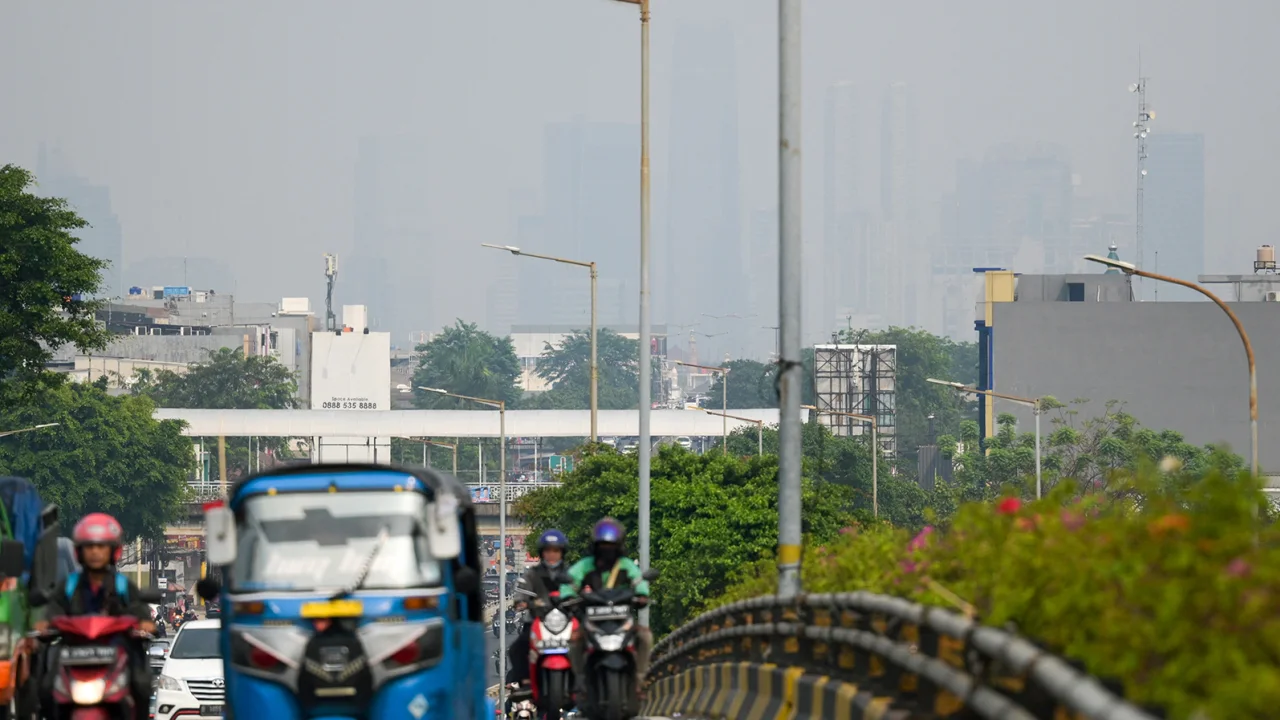
    Some government employees in the capital of Indonesia started working from home on Monday as part of initiatives to ease traffic congestion and lessen the terrible air pollution that has gripped the city and is thought to be the cause of President Joko Widodo‘s ongoing cough.

    With a population of 10.5 million, the megacity of Jakarta has seen its air quality worsen to alarming levels recently. On August 9, the Swiss technology company IQAir named Jakarta the most polluted city in the world.

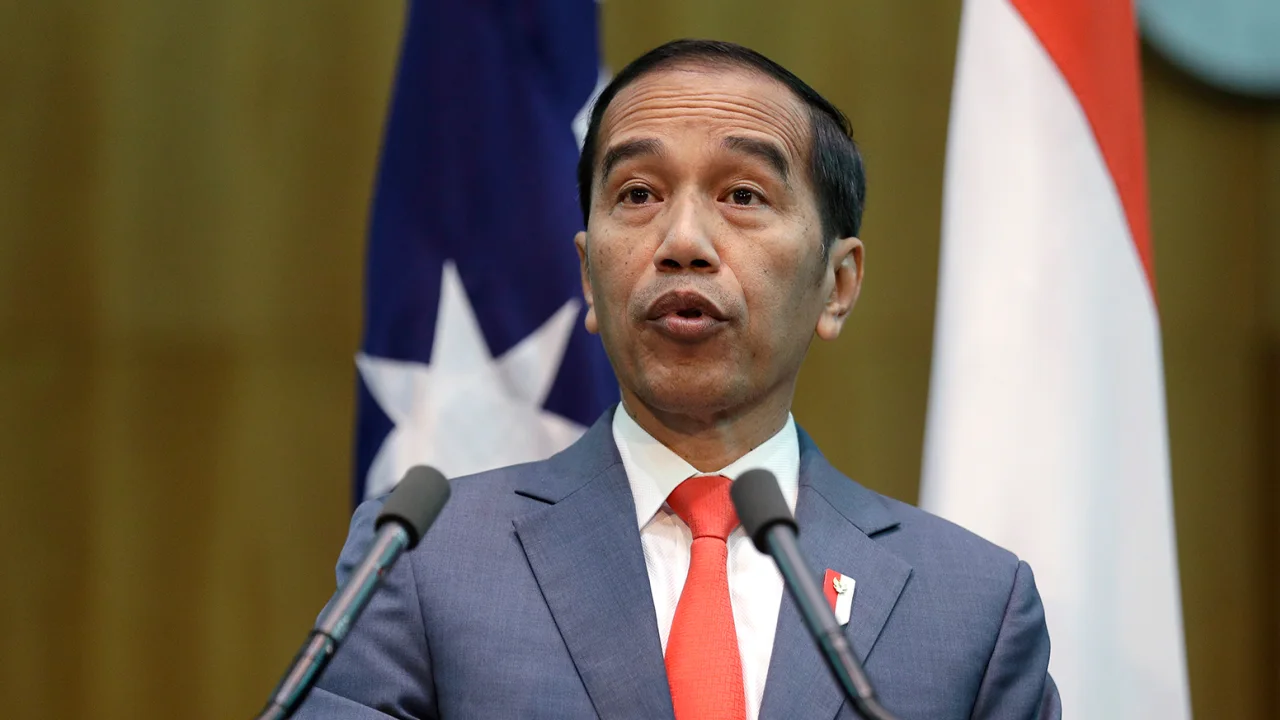
    Widodo has called for urgent government action, and on August 14 he presided over an emergency cabinet meeting with ministers to tackle the deteriorating air quality. He also made an appeal to workers in the capital to reduce traffic by working from home.

    “The air quality in the Greater Jakarta Area has been very, very bad,” remarked Widodo. “Pollution levels have increased due to the prolonged dry season, which has lasted for the past three months… We will promote a hybrid work system in offices, which combines on-site and remote work, if it is judged required.

    Heru Budi Hartono, the interim governor of Jakarta, issued an order mandating that half of the public service begin working from home on Monday. From September through October 21, the percentage of employees who work from home would progressively rise to 75%.

    According to Sigit Wijatmoko, a spokeswoman for the Jakarta provincial government, the restriction will only apply to government offices and not to hospitals, fire and rescue services, or public transportation.

    According to Wijatmoko, “work from home arrangements won’t disrupt public services,” in remarks carried by CNN affiliate CNN Indonesia. The work will go on.

    Distance learning will be required of students at nearby schools starting in September, noted Wijatmoko.

    The 43rd ASEAN Summit, which will take place at the Jakarta Convention Centre in early September, is putting pressure on Indonesian politicians. Ten Southeast Asian nations are part of the regional bloc known as ASEAN, many of which have long struggled with high pollution levels in their major cities.

    President Widodo’s cough has been bothering him for weeks, according to ministers in the Southeast Asian nation, who also claimed it might be due to the deteriorating air quality in Jakarta.

    According to experts, industry, coal-fired power plants, and traffic jams all contribute to the air pollution that has long plagued the Greater Jakarta area.

    Sandiaga Uno, the minister of tourism, told reporters following last week’s emergency cabinet meeting that the government was considering “concrete steps” to long-term improve Jakarta’s air quality.

    Sandiaga Uno, the minister of tourism, earlier remarked, “If we look at Beijing’s success, I am very confident that with the collaboration of local governments and businesses, we can also improve the air quality in Jakarta.” She was referring to the Chinese government’s success in doing the same in its capital.

    The health costs of Indonesia’s air pollution cannot be understated, experts previously told CNN.
  • Jakarta, Indonesia’s capital become world’s most polluted city

    Jakarta, Indonesia’s capital become world’s most polluted city

    According to a recent research, Jakarta, the capital of Indonesia, is the most polluted city in the world, and the president of the nation could have the cough to prove it.

    President Joko Widodo has been suffering from a cough for weeks, according to ministers in the Southeast Asian nation, who also speculated that it may be tied to the growing air pollution in the 10 million-person city.

    The information was announced just days after Swiss business IQAir published statistics demonstrating that Jakarta’s air quality had gotten significantly worse in recent weeks, ranking it as the worst in the world.

    President Joko Widodo has requested that action be taken in the form of concrete measures to combat air pollution within a week. After a parliamentary discussion between ministers on Monday in Jakarta, Indonesia’s Minister of Tourism and Creative Economy Sandiaga Uno told reporters that the man had been coughing for almost four weeks and claimed he had never felt this way.

    According to CNN affiliate CNN Indonesia, Uno stated that physicians were still determining the source of Widodo’s cough but added that it might be connected to the deteriorating air quality.

    The president was reportedly noted to be suffering from a cough the next day by Health Minister Budi Gunadi Sadikin, who also stated that his ministry was speeding up examinations in the general populace to determine whether lung and respiratory illnesses like asthma had increased in severely polluted areas.

    We are keeping an eye on the situation, Budi told the media.

    He continued, “All reports about how air pollution affects public health will be coordinated to the relevant ministries and official agencies for examination.

    According to experts, industry, coal-fired power plants, and traffic jams all contribute to the air pollution that has long plagued the Greater Jakarta area.

    A group of 32 locals filed a civil case in 2019 against Widodo, often known as Jokowi, and a number of his cabinet colleagues, claiming he had not acted to reduce air pollution and maintain their right to clean air.

    Two years later, the Central Jakarta District Court ruled in their favour, giving them a landmark win. It claimed that the government had broken the nation’s environmental protection rules and urged senior authorities to take more steps, including the creation of a national ambient air quality standard.

    However, according to statistics provided by IQAir, a Swiss company that specialises in air quality technologies, the capital’s air quality has gotten notably worse in recent weeks, worsening to the worst in the world.

    After reaching “unhealthy” air pollution readings nearly every day, Jakarta topped the company’s list of dirty cities on August 9. Since May, it has constantly been classified among the top 10 most polluting cities worldwide, according to IQAir.

    In order to debate the deteriorating air quality and demand immediate government action, Widodo presided over a cabinet meeting on Monday.

    He attributed the pollution to “excessive road traffic, a long dry season, and energy sources – mainly those using coal” and recommended solutions including requiring automobile emissions tests and promoting remote work as a way to lessen the issue.

    A pollution fee, he added, was under consideration.

    The Greater Jakarta Area’s air quality has been extremely poor for the past week, according to Widodo. In order to cut emissions, he continued, “Supervision must be exercised in the industrial and electricity generation sectors, and we also must educate the people).

    After the discussion, Tourism Minister Sandiaga Uno told reporters that the government was considering “concrete steps” to enhance Jakarta’s air quality over time.

    “If we look at Beijing’s success in doing that, I am very confident that with the collaboration of local governments and businesses, we can also improve the air quality in Jakarta – it will have a long-term impact on public health,” he said, referring to China’s success in doing the same in its capital.

    The government’s position has been praised by experts.

    Bridget Welsh, a political analyst from the University of Nottingham, declared that air pollution is a significant issue in Southeast Asia.

    Welsh stated that although there have been improvements in Jakarta in areas like public transport, these need to be intensified along with better enforcement against (fossil fuel) burning and controlled automobile use.

    Although the government intended to move the capital to Nusantara, in the East Kalimantan province on the island of Borneo, she claimed that this move was still years away and would not resolve the pollution issue.

    Moving to a different capital “will only temporarily offset the issue,” Welsh added. It is impossible to understate the enormous costs of Indonesia’s air pollution to human health.

  • Papuan fighters kidnap a New Zealand pilot

    Papuan fighters kidnap a New Zealand pilot

    The New Zealand pilot Philip Mehrtens who is being held captive by separatist rebels in Indonesia’s troubled Papua area has made an appearance in a video claiming to be “alive and well,” but fears are growing for his safety as conflict with Indonesian security forces escalates.

    Mehrtens speaks calmly to the camera in both Indonesian and English for the whole of the one and a half minute film while seated between two unarmed Papuan men and wearing a black T-shirt and shorts.

    It’s been over three months since they (separatist fighters) abducted me from Paro, Mehrtens stated. “Good afternoon, today is Monday, April 24, 2023,” he added. I am still alive and healthy, as you can see. I’ve been eating and drinking good,” he said.

    “I live with the people here – we travel together as required, we sit together, we rest together.”

    He then called on the Indonesian authorities to stop ongoing airstrikes in the Nduga Regency where he is being held, saying the attacks could put his life as well as others at risk.

    “Indonesia’s been dropping bombs in the area over the last week,” Mehrtens said. “Please, there is no need, it is dangerous for me and everybody here. Thank you for your support.”

    In a statement accompanying the video, the West Papua National Liberation Army (TPNPB) called on the New Zealand government to mediate and initiate negotiations for Mehrtens’ release and urged Indonesian authorities to stop its military operations in Papua.

    “We emphasize that the pilot’s release must go through negotiations – not through military operations,” the group’s spokesperson Sebby Sambom said.

    “Therefore, Indonesian President Joko Widodo must stop military operations in Ndugama immediately – if not (it will) endanger the life of the New Zealand pilot.”

    Fighting and unrest continue to escalate in the impoverished but resource-rich region of Papua, where the Indonesian military maintains a heavy and controversial presence.

    Designated as a terrorist group by the Indonesian government, TPNPB has periodically released updates about Mehrtens – who was captured by fighters in February after landing a commercial Susi Air charter flight at Paro Airport.

    They have not disclosed Mehrtens’ location.

    Indonesian security forces previously said they would refrain from any action that could endanger Mehrtens’ life but launched a military search operation for the pilot that resulted in clashes.

    Last week separatist rebels claimed they killed at least 13 Indonesian military soldiers – a figure dismissed as “fake news” by Indonesian military chief Admiral Yudo Margono who confirmed one fatality and said four soldiers had gone missing while the rest had returned to their posts.

    In a statement following the attacks, the rebels said they shot dead 13 Indonesian military and police officials and were in possession of 12 bodies, without providing proof.

    CNN has reached out to Indonesian army officials for further comment about the latest hostage video and updates on the search mission for Mehrtens.

    New Zealand’s Prime Minister Chris Hipkins said he had received reports of the increased military confrontations and again called on the separatist group to release Mehrtens, reported CNN affiliate RNZ.

  • ASEAN summit: EU pledges $10bn investment in Southeast Asia

    In light of the conflict in the Ukraine and China’s challenges, Brussels is the spot for the leaders of Southeast Asian nations.

    In Southeast Asia, the EU has pledged to invest billions of dollars as leaders sought to strengthen ties at a summit in the face of the conflict in the Ukraine and challenges from China.

    In Brussels on Wednesday, the European Union and the Association of Southeast Asian Nations (ASEAN) held their first formal summit.

    “There might be many, many miles that divide us, but there are much more values that unite us,” European Commission President Ursula von der Leyen told the gathered leaders.

    But different opinions about Russia’s war in Ukraine and concerns about tensions with China over a key shipping route for global trade loomed over the meeting.

    The EU has been on a diplomatic push to galvanise a global front against Moscow as its invasion has sent economic and political shock waves around the world.

    ASEAN’s 10 nations – nine of which were represented, after Myanmar’s military leadership was not invited – have been divided in their response to the Kremlin’s war on Ukraine.

    Singapore has gone along with the West on Russia, while Vietnam and Laos, which have close military ties to Moscow, have remained more neutral.

    Along with Thailand, they abstained from a United Nations vote in October condemning Russia’s attempted annexation of regions of Ukraine seized since February.

    Final declaration

    The diverging views led to intense wrangling over a final declaration from the summit as the EU pushed for stronger language to condemn Moscow.

    A draught of the final statement said “most members” decried Russia’s war, but conceded there were also “other views and different assessments”.

    While Europe pressed for a tougher response to Russia, another global giant figured prominently at the summit.

    Chinese claims over the South China Sea have set it against some neighbours and sparked fears in Europe over trade flows through the key global thoroughfare.

    But China remains the biggest trade partner for ASEAN and many in the region are wary of distancing themselves from their giant neighbour.

    The EU is eager to pitch itself as a reliable partner for southeast Asia’s dynamic economies amid the growing rivalry between Beijing and Washington.

    The EU and ASEAN are each other’s third-largest trading partner and Europe sees the region as a key source of raw materials and wants to increase access to its booming markets.

    Europe’s vulnerabilities

    EU nations are pushing to diversify key supply chains away from China as the war in Ukraine has highlighted Europe’s vulnerabilities.

    Von der Leyen offered an investment package over the next five years worth 10 billion euros ($10.6bn) under the EU’s Global Gateway strategy designed as a counterweight to China’s largesse.

    “There is a battle of offers today in the geopolitical arena, not only a battle of narrative,” said EU foreign policy chief Josep Borrell. “We have to offer more.”

    Heads of State pose for a family picture at the EU-ASEAN summit
    Heads of state pose for a family picture at the EU-ASEAN summit [John Thys/AFP]

    ASEAN and the EU suspended their push for a joint trade deal more than 10 years ago, but the bloc’s top officials said they hoped to relaunch efforts for a broad agreement.

    So far, deals with Vietnam and Singapore are in place, and the EU is looking now to make progress with ASEAN’s largest economy Indonesia and to resume talks with Malaysia, the Philippines and Thailand.

    One issue that risked clouding discussions was a new law in Indonesia criminalising sex outside marriage that has sparked fears for foreign visitors to the country.

    Indonesia’s President Joko Widodo insisted though that the EU-ASEAN relationship needed to be based more on “equality”.

    “There must be no imposition of views,” he said. “There must not be one who dictates over the other and thinks that my standard is better than yours.”

    Source: Aljazeera.com