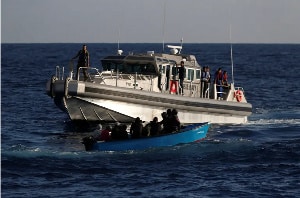
In the most recent tragedy on the Mediterranean Sea, at least 14 individuals from sub-Saharan African nations have drowned in Tunisia while attempting to travel by boat to Europe.
In a statement released on Thursday, Tunisia’s coastguard reported that police had caught “a group whose boat had sunk, saving 54 persons of various sub-Saharan African nationalities and recovering 14 bodies” the previous night.
Later on Thursday, AFP news agency was informed by Faouzi Masmoudi, a spokeswoman for the court overseeing the probe, that the deceased were from two sunken boats.
Masmoudi said three people died and 34 were rescued in one sinking on Tuesday, followed on Wednesday by 11 deaths in a separate incident with 20 rescued.
Hundreds of people have drowned in Tunisia in recent months as attempted crossings from Tunisia and Libya to Italy have increased.
The coastline at Sfax in east-central Tunisia has become a major departure point for people fleeing poverty and conflict in Africa and the Middle East for a shot at a better life in Europe.
Life in Tunisia has progressively worsened since President Kais Saied said on February 21 that migration from sub-Saharan Africa aimed to change Tunisia’s national identity.
The remarks, which drew international condemnation, have led to what has been described by advocacy groups as a racist backlash against people from sub-Saharan African countries as well as Black Tunisians.
The far-right Tunisian National Party has led a campaign calling for the expulsion of sub-Saharan African immigrants, framing immigration to Tunisia from other parts of Africa as being part of an effort to initiate demographic change in the country.
The deaths announced on Wednesday add to the grim toll of refugees drowning as they attempt the perilous crossing of the Mediterranean, the world’s deadliest migration route.
More than 25,000 people have died or have gone missing since 2014, according to data collected by the International Organization for Migration’s Missing Migrants Project.
Italy said in February that more than 32,000 people, including 18,000 Tunisians, reached its shores from Tunisia last year, while thousands more have departed from neighbouring Libya.
European governments, particularly Italy, have pressured Tunisia to stem the flow, and the Tunisian coastguard regularly intercepts boats carrying refugees in its territorial waters.
President Kais Saied has assured sub-Saharan Africans living in Tunisia of their safety in spite of his stance against migrants.
He however noted that he would not stand for illegal migration into the country as it is causing “demographic” changes.
The president spoke during a meeting with the interior minister about the security situation in the country.
On Tuesday, Mr Saied had ordered security agencies to crack down on illegal migration from sub-Saharan African countries.
His reported remarks that illegal migration was interfering with the demographic make-up of the country was criticised by human rights groups in the country as racist.
The Tunisian Forum for Economic and Social Rights (FTDES) was quoted on Wednesday as referring to Mr Saied’s remarks as “drowning in racism and hatred”.
But Mr Saied on Thursday denied it, saying that those accusing him of racism were seeking to create discord and damage relations with other countries.
Tunisia is a key transit point for migrants seeking to move to Europe crossing through the Mediterranean sea.
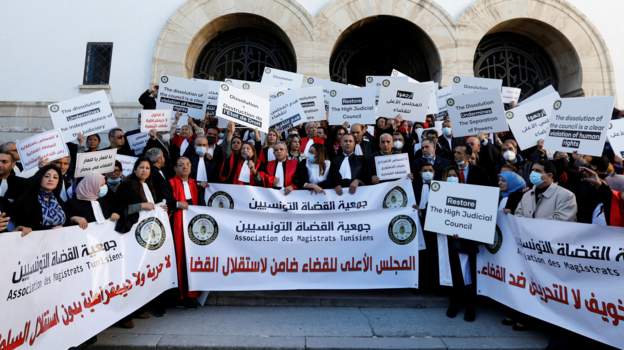
According to reports, two former judges who were fired by President Kais Saied last year have been detained in Tunisia.
Bechir Akremi and Tayeb Rached, who were among the numerous judges and members of the judiciary fired in 2022, were seized by the police, a lawyer familiar with the proceedings said the Reuters news agency.
The ex-judges were taken into custody on Sunday, the second day in a wave of high profile individuals being detained, raising fears about the country’s political liberties.
The police detained well-known lawmakers and a businessman with political connections on Saturday.
The arrests were reportedly based on suspicion of conspiracy against state security.
The president was accused of a power grab after shutting down parliament in 2021 before taking control of the judiciary and pushing through a new constitution that gave his office almost unlimited powers.
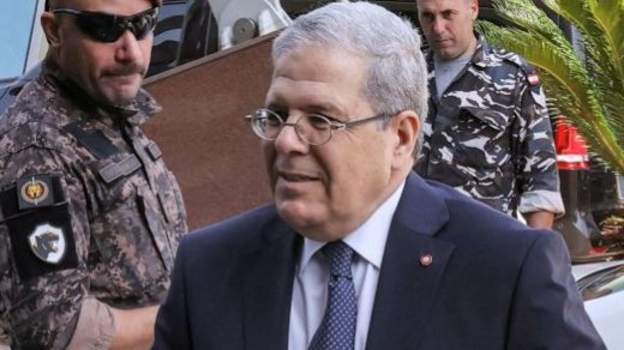
Foreign minister for Tunisia,Othman Jerandi has been dismissed by President Kais Saied.
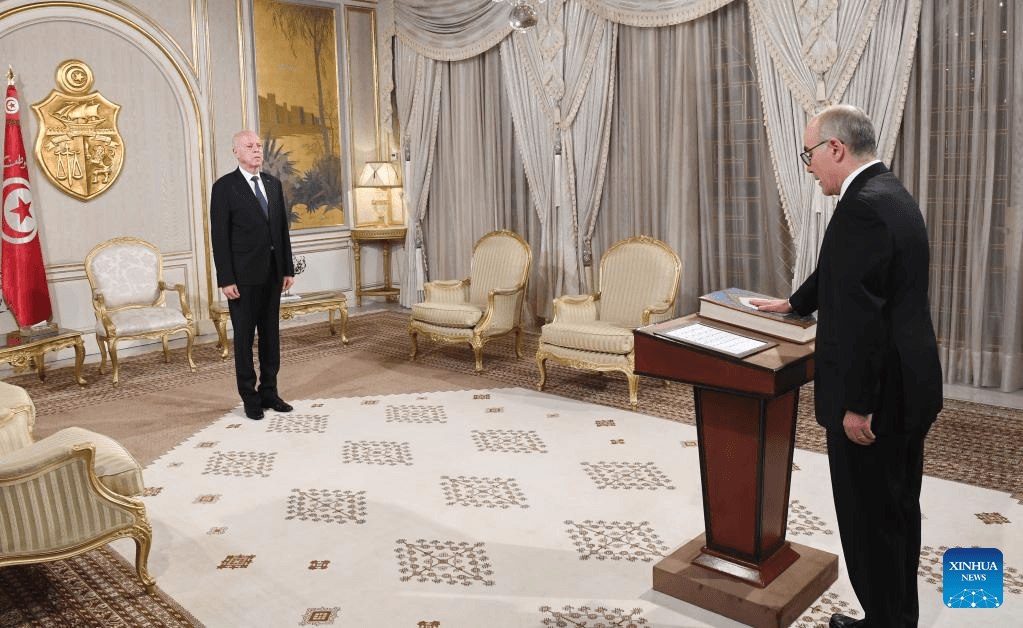
The president appointed Nabil Ammar, Tunisia’s ambassador to the European Union, to replace Mr Jerandi. He did not give a reason for Mr Jerandi’s dismissal.
A career diplomat, Mr Jerandi became foreign minister under Mr Saied in September 2020.
He becomes the fourth minister to lose his position this year, with the trade, agriculture and education ministers having already been replaced.
President Saied carried out a series of measures in 2021 to enhance the power of the presidency at the expense of parliament and the judiciary.
Opposition parties boycotted the 2022 parliamentary elections, accusing the president of staging a coup after shutting parliament in 2021 and giving himself almost unlimited executive powers.
Just about 11% of Tunisians turned out for a second round of parliamentary voting last month.
There has been a deepening political and economic crisis, amid protests by Tunisians increasingly frustrated with the state of the economy and against Mr Saied’s seizure of near total power.
He didn’t provide a justification for firing Mr. Jerandi.
With the replacement of the ministers of trade, agriculture, and education, Mr. Jerandi is the fourth minister to lose his job this year.
President Saied implemented a number of measures in order to increase the presidency’s power at the expense of the legislative and judicial branches in 2021.
Opposition parties boycotted the 2022 parliamentary elections, accusing the president of staging a coup after shutting down parliament in 2021 and giving himself almost unlimited executive powers.
Just about 11% of Tunisians turned out for a second round of parliamentary voting last month.
رئيس الجمهورية #قيس_سعيّد يقرّر إنهاء مهام السيد عثمان الجرندي، وزير الشؤون الخارجية والهجرة والتونسيين بالخارج، وتعيين السيد نبيل عمّار، وزيرا للشؤون الخارجية والهجرة والتونسيين بالخارج. #TnPRpic.twitter.com/l3ASMie2vh
— Tunisian Presidency – الرئاسة التونسية (@TnPresidency) February 7, 2023
In protest of President Kais Saied, thousands of Tunisians have taken to the streets as the political and economic situation in the nation worsens. In order to demand the overthrow of his government, a crowd gathered in Tunis’s capital.
Since Mr. Saied took office in 2021, the Tunisians who backed him have grown increasingly disenchanted with the state of the economy.
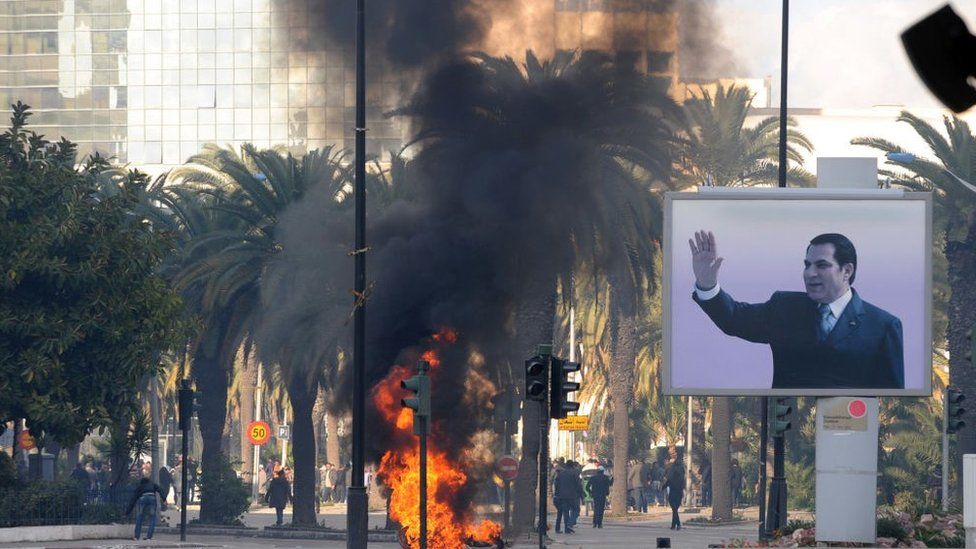
The demonstrations coincide with the exile of former dictator Zine al-Abidine Ben Ali 12 years ago today.
Tunisia’s uprising is often held up as the sole success of the Arab Spring revolts across the region – but it has not led to stability, either economically or politically.
With debts piling up, the country has struggled to import basic goods, including staples such as coffee, milk and sugar.
The government has so far unable to secure an international bailout leading one protester to tell the AFP news agency “the coup has brought us famine and poverty”.
In Tunis’ central Habib Bourguiba Avenue, a traditional site for demonstrations, Said Anouar Ali, 34, said: “Tunisia is going through the most dangerous time in its history.
“Saied took control of all authorityand struck at democracy. The economy is collapsing. We will not be silent,” he added.
The protests in the capital were organised by two different opposition groups with a heavy police presence outside the Interior Ministry to prevent scuffles.
Separately, protesters also marched against Mr Saied’s seizure of near total power.
In 2021, the president sacked the prime minister, suspended parliament and pushed through a constitution enshrining his one-man rule.
The new constitution replaced one drafted soon after the Arab Spring in 2011, which saw Tunisia overthrow late dictator Zine al-Abidine Ben Ali. It gave the head of state full executive control and supreme command of the army.
Mr Saied has justified his actions by saying he needed new powers to break a cycle of political paralysis and economic decay.
After less than 9% of eligible voters participated in the country’s parliamentary elections, Tunisia’s main opposition coalition demanded that President Kais Saied step down.
Nejib Chebbi, the leader of the National Salvation Front, called Saturday’s election a “fiasco” and called for large-scale demonstrations to demand immediate presidential elections.
The majority of opposition parties abstained from the vote.
They charge Mr. Saied with rolling back the democratic gains made since the 2011 uprising, which he vigorously refutes.
After sacking the prime minister and suspending parliament in July 2021, a year later Mr Saied pushed through a constitution enshrining his one-man rule after a vote that was also boycotted by the main opposition parties.
The new constitution replaced one drafted soon after the Arab Spring in 2011, which saw Tunisia overthrow late dictator Zine al-Abidine Ben Ali. It gave the head of state full executive control and supreme command of the army.
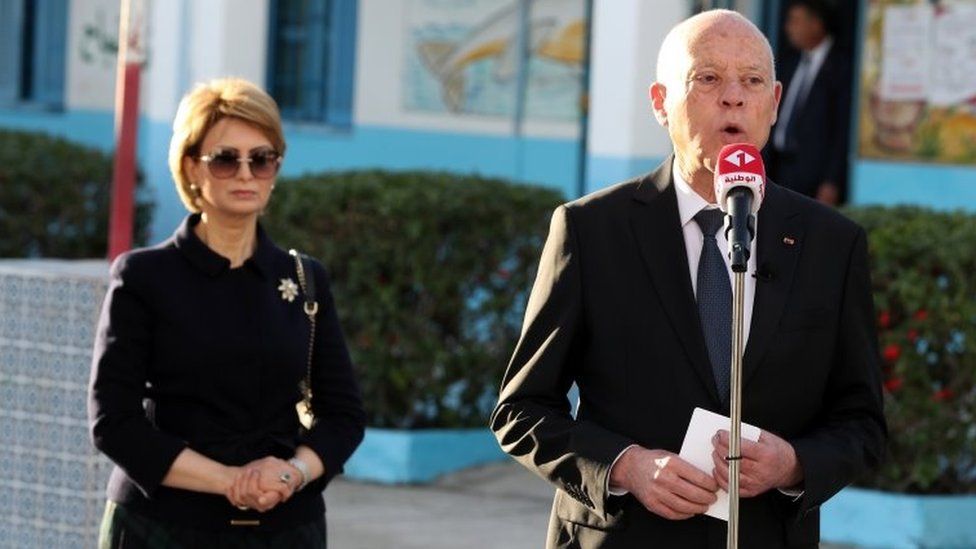
IMAGE SOURCE,EPA Image caption, A former law professor, Kais Saied (right) has been in power since 2019
Mr Saied, 64, says such powers were needed to break a cycle of political paralysis and economic decay.
His supporters agree with him, saying the impoverished North African nation needs a strong leader to tackle corruption and other major issues that hinder the country’s development.
Tunisia’s electoral officials said late on Saturday that 8.8% of the roughly nine-million-strong electorate had voted in the parliamentary elections.
Speaking shortly afterwards, Mr Chebbi said: “What happened today is an earthquake, From this moment, we consider Saied an illegitimate president and demand he resign after this fiasco,”
He told the AFP news agency that Mr Saied should leave office “immediately”, saying the poll proved that there was “great popular disavowal” from the public of his style of governing.
The National Salvation Front, a coalition of several political parties, also called for mass rallies and sit-ins.
President Saied has so far made no public comments on the issue.
Tunisia’s uprising 11 years ago is often held up as the sole success of the Arab Spring revolts across the region – but it has not led to stability, either economically or politically.
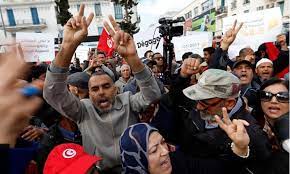
Thousands of demonstrators have marched to the streets of Tunisia’s capital to protest the president.
Parallel demonstrations by diametrically different political movements were organized in Tunis.
Both organisations condemned Kais Saied as an autocrat who is undoing the democratic gains gained since the 2011 revolt.
They also demanded accountability for the country’s economic crisis which has seen food and fuel shortages.
Critics of Mr Saied accuse him of staging a coup and attempting to turn Tunisia back into an autocracy – a system of government run by one person with absolute power.
After sacking the prime minister and suspending parliament in July 2021, a year later Mr Saied pushed through a constitution enshrining his one-man rule after a vote boycotted by the main opposition parties.
The new constitution replaced one drafted three years after the Arab Spring in 2011 which saw Tunisia overthrow late dictator Zine al-Abidine Ben Ali.
It gave the head of state full executive control, the supreme command of the army, and the ability to appoint a government without parliamentary approval.
Mr Saied has said it was needed to break a cycle of political paralysis and economic decay.
He said his reforms were being done in the spirit of the 2011 revolution and would ensure a better future.
His supporters welcomed his actions, saying the country needed a strong leader to tackle what they see as a fractious and corrupt system.
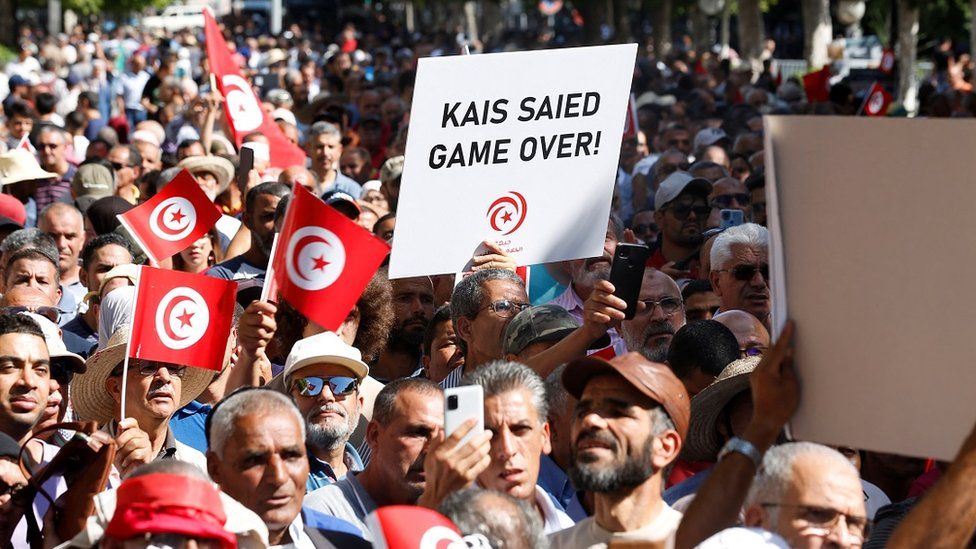
On Saturday, protesters in central Tunis chanted, “down, down”, “revolution against dictator Kais” and “the coup will fall”.
One of the marches was organised by the National Salvation Front, a coalition of opposition parties including the Islamist-inspired Ennahda that had dominated Tunisia’s parliament before its dissolution by Mr Saied.
Ali Laarayedh, Tunisia’s former prime minister and a senior Ennahda official, told AFP news agency that the protest was an expression of “anger at the state of affairs under Kais Saied”.
“We are telling him to leave.”
IMAGE SOURCE, REUTERS Image caption, Protesters call for President Kais Saied to go.
He added that if Mr Saied remains in power, “Tunisia will have no future”, citing growing despair, poverty, and unemployment.
The National Salvation Front has announced it will boycott a December vote to elect a new parliament with limited powers.
Ennahda’s deep ideological rival, the secular Free Destourian Party, also organized a protest in the capital on Saturday.
Some of its protesters carried empty containers to symbolise the rising cost of water due to inflation, which hit 9.1% in September.
Mr Saied “is doing nothing, and things are only getting worse”, said Souad, a pensioner in her 60s.
Around 1,500 people joined the Ennahda-led demonstration, while nearly 1,000 attended the PDL protest, the interior ministry told AFP.
Tunisia’s revolution in 2011 is often held up as the sole success of the Arab Spring revolts across the region – but it has not led to stability, either economically or politically.
The cash-strapped country reached a preliminary agreement with the International Monetary Fund on Saturday for a rescue package loan of $1.9bn (£1.7bn) to help it restore economic stability and strengthen social safety nets.
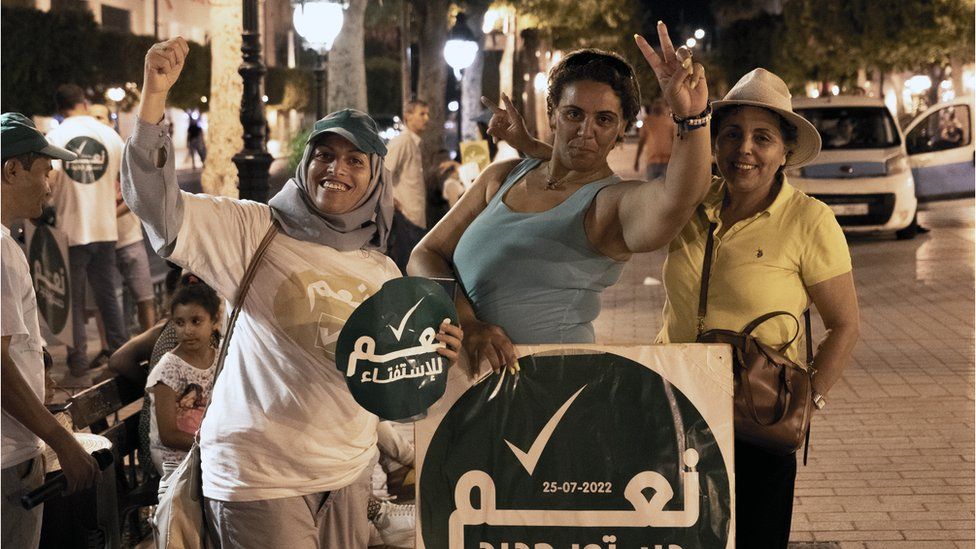
Tunisia’s President Kais Saied has been celebrating his apparent victory in a referendum on a new constitution that gives him almost unlimited powers.
Mr Saied appeared in front of jubilant supporters after an exit poll indicated more than 90% of those who had voted had supported the president’s plan.
But turnout was only 27.5%, with main opposition parties boycotting the poll.
The president’s opponents say his changes would just entrench the personal powers he seized a year ago.
Mr Saied said turnout – announced by the country’s electoral commission – have been higher if voting had taken place over two days.
He promised that Tunisia would now enter a new phase after a decade of political deadlock. But his opponents will cite the low turnout as denying legitimacy to what they see as a worrying move back towards autocracy.
Tunisia became the birthplace of the Arab Spring when it overthrew its long-serving ruler Zine al-Abidine Ben Ali in 2011.
The date of the referendum was chosen by President Saied to mark a year to the day since his dramatic move to suspend parliament and dismiss the government.
Since then, he has effectively ruled by decree.
The new constitution, which replaces one drafted in 2014 three years after the Arab Spring, would give the head of state full executive control, supreme command of the army and the ability to appoint a government without parliamentary approval.
Mr Saied has said it was needed to break a cycle of political paralysis and economic decay.
He said his reforms were being done in the spirit of the 2011 revolution and will ensure a better future.
“Our money and our wealth are enormous, and our will is even greater, to rebuild a new Tunisia and a new republic, one that breaks with the past,” the president said after voting on Monday morning.
His many critics say it could lead Tunisia back to dictatorship in all but name.
Although President Saied still has a core of support among Tunisians who believe the country needs a strong leader to address its problems, there seemed little enthusiasm for the referendum.
After dismissing parliament and largely ruling by decree a year ago, Tunisia’s President Kais Saied is asking people to vote on Monday on a controversial constitutional referendum that will increase his powers. While he has some support, many Tunisians see this is a betrayal of the Arab Spring.
Wael and Jewaher locked eyes and ran towards each other. He had just been released from a police cell, and she’d spent the last 20 hours outside, singing protest songs while she waited for his release.
As they hugged tightly, someone in the crowd handed him a fresh T-shirt to replace the torn one he’d been wearing since his arrest at an anti-referendum protest the night before.
Tunisia is no stranger to demonstrations. Back in 2011 the Arab Spring was born here, before spreading across the Middle East.
Mohamed Bouazizi, a young man without a job, was selling vegetables on the street to make ends meet. When the police told him he had to stop, he set himself on fire. It was an image of desperation which resonated so deeply that crowds of people began to gather together. They too were sick of economic hardship, political corruption and their autocratic ruler.
Now though, the country’s freedoms are moving in reverse. A year ago, in July 2021, Tunisia’s President Kais Saied made sweeping changes. He sacked the prime minister, dissolved the government and suspended parliament. On Monday Tunisians will vote on a new constitution that gives him even more control over the country.
That’s why Wael and Jewaher are demonstrating once again.
“We were in a parliamentary system,” Wael tells me. “Now we are in a presidency, a system for Kais Saied to hold all the power in his own hands.”
The pair protested together in the original Arab Spring marches in 2011, as a young couple, not yet married. Now they have a son, Yasar, which translates in English to “left”, in honour of their political views.
“We have been protesting for 11 years for the same demands,” explains Jewaher. “That is what’s frustrating. It’s a pattern we have to repeat. Here every year we have to protest for our freedom and dignity and rights.
“The regime is in power with the force of the police, with the force of dictatorship, with the force of violence. So nothing ever really changed”.
Image caption, To many of Kais Saied’s supporters, he is a saviour
But to focus only on the protests doesn’t show the full picture here.
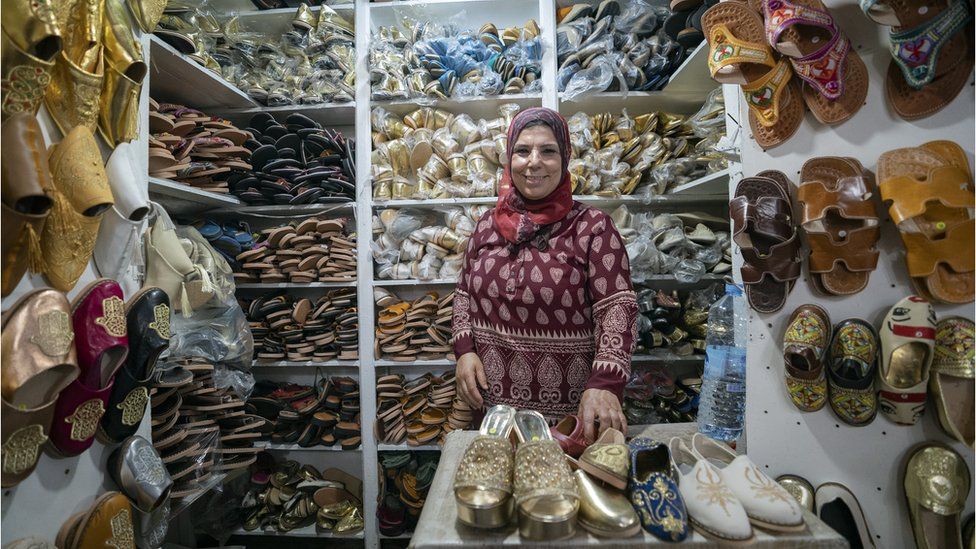
In the narrow alleys of Tunis’s bustling Medina market, among piles of gold leather sandals and colourful rugs hanging overhead, people have firm ideas about what’s best for their future. Once again they’re poor and struggling, but they see Kais Saied as a saviour – not a dictator.
Even though the new constitution has been internationally criticised for not protecting people’s rights, they’re still voting for it.
I meet Mohsen strolling with his son among the fountains in the square. He is, like many here, a big supporter of the president.
“Kais Saied is a straightforward man, he loves Tunisia,” he tells me. “I like the constitution very much, it will improve the situation in the country. I will be the first one to go and vote”.
“I will vote yes, yes, yes,” exclaims Ali, standing among the racks of traditional women’s clothes in his shop. “The president will improve our conditions, I pin high hopes on Kais Saied’.
Saida, surrounded by shoes at her market stall, has no doubts.
“He’s a good person. I have faith in him. He does not do bad things. He does not steal or anything. I hope all people are like him. He’s working to improve the situation, he’s purging the state. I will go and vote yes in the referendum so that the country moves forward. This is for the future of our kids”.
For some people, Kais Saied’s power grab has been life-changing. Two months ago the president granted himself the ability to fire judges at will, and immediately dismissed 57 of them.
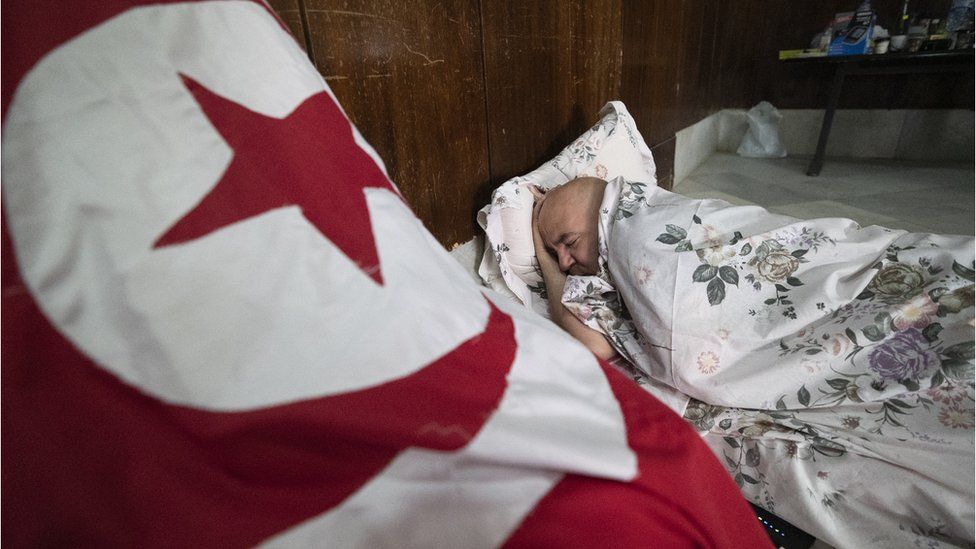
Mohamed al Kenzari and two of his colleagues are among them, and now they’re on a hunger strike to protest at the way they’ve been treated. I meet them at the judges’ club in Tunis, where they’re now living in a darkened room filled with posters promoting their cause.
Mohamed hasn’t eaten for 33 days, and is now so weak he can’t stand up. He lies on a mattress on the floor, covered by a thin pink floral sheet.
“I’m so exhausted. You try to resist as much as you can, but nobody feels you. You call for your rights, but nobody feels you,” he tells me, and starts to cry. He says he won’t end his strike until the decree which led to the judges’ dismissal is reversed.
More than 80% of Tunisians have registered to vote in the referendum on Monday 25 July. In many ways, this is a ballot on democracy, rights and freedoms, and whether they continue to have oxygen here.
And for the people who demonstrated a decade ago – sparking a movement that enveloped a region – it simply signals the death of a dream.
President Zine El Abidine Ben Ali was forced out, and a new chapter began for Tunisians.
The preliminary hearing before an investigative judge lasted nearly 10 hours and followed warnings from activists that the authorities were contemplating arresting the 81-year-old Ghannouchi to hold in pre-trial detention.
However, a lawyer for Ghannouchi and an Ennahda party official said the judge had released him pending further investigation.
About 200 people gathered in front of the court, chanting “Down with the coup”, referring to Saied’s seizure of powers, and “Ghannouchi, you are not alone”. They raised banners that read “stop political trials” and celebrated after his release.
A judiciary official told Reuters the judge was investigating suspicions of money laundering relating to foreign funds paid to an Ennahda-linked association. Local media have also reported that he would also be investigated for suspected links to terrorism.
The judge has ordered a freeze on the financial assets of Ghannouchi, who is the speaker of the parliament that Saied has dissolved, as well as former prime minister Hamadi Jebali and several other people.
Last week, Ghannouchi told Reuters the investigation into him was politically motivated and said Saied was using the referendum to push Tunisia towards dictatorship.
He said in a statement on Tuesday that “the malicious charges fall within the framework of passing a constitution that enshrines tyranny”.
He added that he had been tried and imprisoned during the tenure of two former presidents, Zine El Abdine Ben Ali and Habib Bourguiba, and was also now “subjected to the worst forms of injustice”.
Saied has said his moves since last year, when he closed the parliament and started to rule by decree before rewriting the country’s democratic constitution, were necessary to end years of political stagnation.
Ennahda has led opposition to President Kais Saied who has effectively introduced one-man rule, with a referendum on changing the constitution due to be held this month.
A military appeal court in Tunisia has sentenced a prominent political opponent of President Kais Saied to one year in prison and banned him from practising law for five years.
A lawyer for Seifeddine Makhlouf said his client had been charged with insulting a judge, and that the verdict was a real farce.
He said President Saied had created a judiciary that he could control and use against opponents.
Makhlouf heads the conservative Karama party, which is allied to the Islamist Ennadha party.
He has been one of the strongest critics of Mr Saied’s moves to establish what is effectively one-man rule.
Earlier this month, Mr Saied sacked dozens of judges, accusing them of protecting Islamists.
A former Tunisian MP and vocal critic of President Kais Saied has been sentenced by a military court to five months in prison for assaulting police officers last year, his lawyer told AFP on Tuesday.
The verdict by the Tunis military court was announced on Monday evening, his lawyer, Anouar Ouled Ali, told AFP.
Makhlouf has appealed against the sentence, the same source said.
Six other people, including three members of the political group, were sentenced to between three and six months in prison in the case, Ouled Ali added.
On 22 September 2021, the military justice had already arrested this former deputy for “attacking the dignity of the army” after an argument with judges of a military court.
He was released “under judicial supervision” in January 2022.