Tag: President Pedro Castillo

  • Peru protests :Stranded tourists stuck in Machu Picchu airlifted out

    Authorities in Peru have flown stranded tourists to the city of Cusco from the Inca mountaintop citadel of Machu Picchu.

    As protesters blocked roads and forced airports to close, thousands of tourists and Peruvians were trapped for days in various locations.

    After President Pedro Castillo was removed from office, a wave of protests swept across Peru.

    On whether to move up elections, Congress will vote later today.

    A month-long state of emergency remains in place but Peruvian authorities appear to have made some headway re-stablishing disrupted transport links.

    Officials in the South American country organised helicopters to evacuate tourists considered “vulnerable” from the ancient Inca citadel located at a height of 2,400m in the Andes.
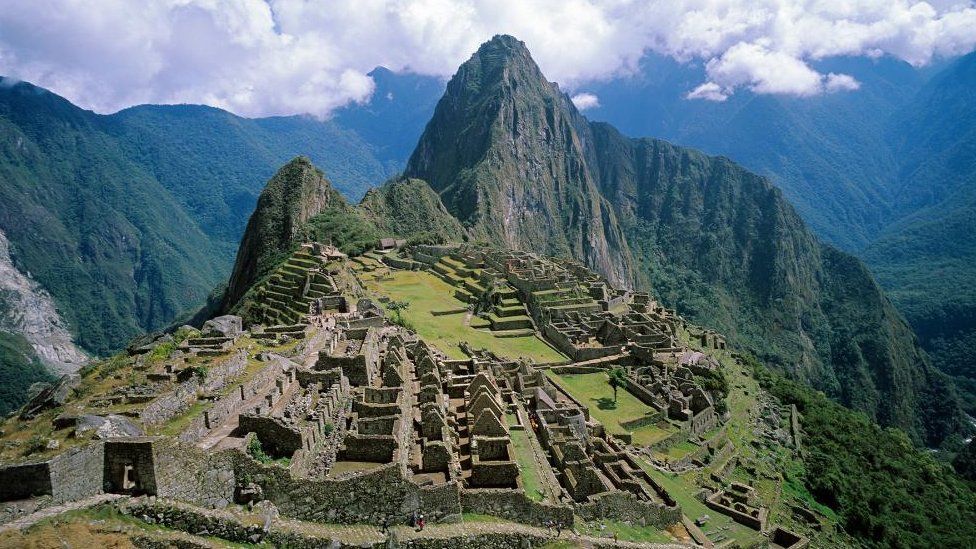
    The ruins of the ancient Inca city of Machu Picchu, Peru. September 2000.
    Image caption, Machu Picchu is one of the main draws for tourists visiting Peru

    Hundreds had been stuck there for almost a week after the train line which many tourists take to the 15th Century site was cut by protesters placing boulders on the track. Some tourists had to walk along parts of the track before the boulders could be cleared.

    On Monday, the airport in Peru’s second largest city, Arequipa, reopened. The transport minister said the airports in the cities of Juliaca and Ayacucho would follow suit on Tuesday, while that in Cusco, which is used by many tourists visiting Machu Picchu, had reopened on Friday.

    The airports had closed after supporters of impeached President Castillo stormed them.

    The protesters are demanding that Mr Castillo – who is being held in pre-trial detention as prosecutors investigate him for alleged rebellion – be freed.

    They also want a general election to be held as soon as possible.

    The current political crisis was triggered by Mr Castillo’s attempt on 7 December to dissolve Congress and introduce a state of emergency, before the legislative body could hold an impeachment vote.

    The move was denounced as an “attempted coup” by the head of the constitutional court and Mr Castillo was detained as he tried to make his way to the Mexican embassy in Lima to seek political asylum.

    In the protests which followed more than 20 people have been killed and more than 600 injured, according to Peru’s ombudsman.

    Protesters also blockaded the border with Bolivia.

    Dina Boluarte, Mr Castillo’s former vice-president who was sworn in after he was impeached, wants general elections to be brought forward to December 2023.

    Congress voted against the earlier date just a few days ago but is due to hold a fresh vote later on Tuesday.


  • US says it ‘looks forward’ to working with new Peru president

    Secretary of State Antony Blinken urged Peruvian political figures to lower tensions and seek “reconciliation.”

    After top US diplomat Antony Blinken spoke on the phone with the troubled South American leader, Washington said it “looked forward to working closely” on shared goals with the newly appointed Peruvian President Dina Boluarte.

    In light of the ongoing unrest in Peru following the ouster of President Pedro Castillo earlier this month, the US Department of State confirmed the talks between Blinken and Boluarte on Sunday. Two days earlier, the call had been made.

    “Secretary Blinken encouraged Peru’s institutions and civil authorities to redouble their efforts to make needed reforms and safeguard democratic stability,” the State Department said in a statement.

    Boluarte was sworn in by Peru’s Congress to replace Castillo on December 7 after lawmakers ousted the former president, who had announced plans to “temporarily” dissolve Congress and rule by decree in what he said was an effort to “re-establish the rule of law and democracy”.

    Boluarte previously served as vice president to Castillo, who has been arrested on charges of rebellion and conspiracy after his removal. On Thursday, a Peruvian court extended the left-wing leader’s pre-trial detention to 18 months.

    Castillo had faced multiple crises during his short tenure as president. Sworn in July 2021, the teacher and union leader from rural Peru faced corruption allegations, a grim approval rating, and a stillborn legislative agenda thwarted by an opposition-dominated Congress.

    Now Boluarte is facing a crisis of her own as demonstrators demand her resignation.

    Blinken’s call with Boluarte came amid political chaos and ongoing anti-government protests calling for early elections and Castillo’s release.

    “The United States looks forward to working closely with President Boluarte on shared goals and values related to democracy, human rights, security, anti-corruption, and economic prosperity,” the State Department said.

    “Secretary Blinken stressed the need for all Peruvian actors to engage in constructive dialogue to ease political divisions and focus on reconciliation.”

    In a national address on Saturday, Boluarte called on Congress to authorise early elections “in line” with the demands of the people of Peru.

    Boluarte’s administration had declared a nationwide state of emergency on Wednesday, suspending freedom of movement and assembly in a bid to quell the unrest, which has left several people dead.

    Earlier this week, Mexican President Andres Manuel Lopez Obrador slammed the measure, calling for respect for human rights and civil liberties in Peru.

    “Force must not be used, the people must not be repressed and freedoms must be guaranteed,” Lopez Obrador said during a news conference.

    Source: Aljazeera.com 


  • Peru deadly protests forces closure of Andahuaylas airport

    Violent protests in Peru forces authorities to airport. According to authorities two people have lost their lives in the protests.

    Social media photographs showed smoke billowing from the Andahuaylas airport in the country’s south.

    The transport ministry said in a statement that demonstrators surrounded 50 police officers and airport workers.

    Protests against President Pedro Castillo’s impeachment have continued in Lima.

    Police fired tear gas on Sunday to disperse demonstrators in the city.

    Peru’s aviation body Corpac – part of the ministry of transport – said Andahuaylas airport had been seriously affected since Saturday afternoon, experiencing attacks, vandalism and fires being started.

    It said 50 airport workers and police officers had been surrounded in the airport terminal, and added that some people had been taken hostage.

    Peru’s national police later said officers had been to the airport with state police, and that one officer had been injured.

    One protester was killed, police said, adding that they were taking steps to clarify the situation around the death. Peru’s ombudsman said the person killed was an adolescent.

    The death of a second person in the unrest in Andahuaylas was later reported by Interior Minister César Cervantes.

    Both police and the ombudsman appealed for an end to recent violence.

    Hundreds of people marched through Lima on Thursday and Friday, demanding Mr Castillo’s release and the resignation of his successor, Dina Boluarte.

    Three thousand people protested in Andahuaylas on Saturday. Some tried to storm a police station, according to state media.

    At least 16 protesters and four police officers were injured in marches in the city, the ombudsman reported.

    Mr Castillo had widespread support in the south of the country.

  • Pedro Castillo: Peru’s embattled president is up against new legal battles

    Peruvian President Pedro Castillo is now engaged in new judicial struggle following the filing of constitutional complaint against the left-wing leader by the nation’s attorney general.

    Attorney General Patricia Benavides accused Mr Castillo of leading a corruption ring.

    The president has denied any wrongdoing and says it is an attempt by his political rivals to unseat him.

    He has already survived two impeachment attempts since taking office last year.

    “I am filing a constitutional complaint against José Pedro Castillo Terrones, in his capacity as president of the republic, as the alleged perpetrator of crimes against the public peace in the form of a criminal organization aggravated by his position as leader,” the official complaint posted by Ms Benavides reads.

    Ms Benavides alleged that there were “serious indications of a criminal organization that has taken root in the government”.

    Under Peru’s constitution, presidents enjoy immunity from prosecution while they are in office except for treason, dissolving Congress, or preventing elections from being held.

    The constitutional complaint is a way to hold accountable presidents and members of Congress who enjoy this immunity from prosecution.

    It will now be up to Peru’s Congress to examine the complaint and to decide whether it will go any further.

    The complaint filed by Ms Benavides will be examined by parliament and could lead to President Castillo’s suspension from office if more than 65 of the 130 members were to vote in favour.

    The threshold for the suspension is lower than that for the impeachment of the president, which needs 87 votes in Congress.

    Congress is controlled by parties opposed to Mr Castillo but so far the president has managed to see off two impeachment attempts.

    In March, 55 members of Congress voted to oust him, well short of the 87 votes needed.

    Mr Castillo and his family and close advisers have been battling allegations of corruption for months.

    As part of Tuesday’s constitutional complaint, two of his ministers have been accused of influence peddling, and the house where the president’s mother and sister live was searched.

    His sister-in-law meanwhile is in pre-trial detention while investigators probe allegations of influence peddling. She has not been charged with any crime.

    President Castillo told journalists that these acts amounted to a “political persecution” and promised to remain firm in the face of it.

    Peru has seen a number of presidents ousted from office in recent years. In 2020, it had three presidents within the space of five days.