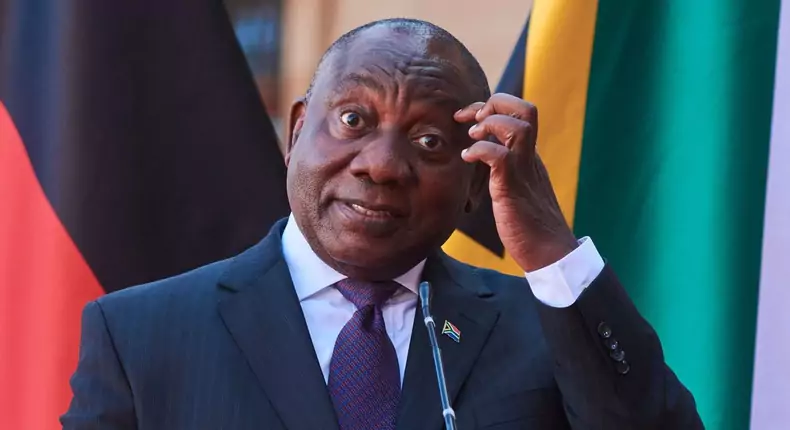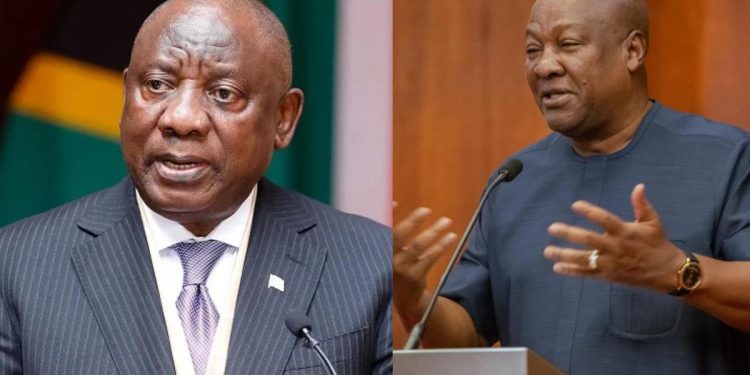
South African President Cyril Ramaphosa has sent a delegation to Ghana to engage President John Dramani Mahama on measures to address the recurring xenophobic attacks against foreign nationals in South Africa.
During the meeting, President Mahama expressed concern over the recent attacks and called for a permanent end to such incidents. President Mahama stressed the need to protect the rights and safety of all foreign nationals living in South Africa. This information was made public by President Mahama when meeting with the Chairperson of the African Union Commission (AUC), H.E. Mahamoud Ali Youssou, at the Jubilee House in Accra on Wednesday, July 22.
He added, “On, July 21, President Cyril Ramaphosa sent a delegation to me, and I explained the reason why we need to discuss it. Sometimes these things happen, and we want to sweep them under the carpet, but when we do that, we do not cure what the problem is,” he said.
“I told them that Ghana does not harbour any malice against South Africa, but we are raising it so it gives them the platform to explain what they are doing to the world.”
Weeks ago, the Ghanaian government declined a planned state visit by South African President. According to reports, the decision was influenced by xenophobic attacks targeting Ghanaians in South Africa, with the government fearing possible reactions from some citizens to President Ramaphosa’s presence in Ghana.
The recent anti-immigration protests across parts of South Africa have claimed the life of a Ghanaian national. The incident was confirmed by Ghana’s High Commissioner to South Africa, H.E. Benjamin Quashie, while addressing the media on Wednesday, June 1.
Meanwhile, authorities are yet to disclose victim’s identity and details on the circumstances surrounding the shooting. South African citizens intensified protests against foreign nationals residing in the country on Tuesday, June 30.
Earlier this month the xenophobic attack in South Africa has left a Ghanaian woman battling for her life. Addressing the media on Wednesday, June 3, the High Commissioner said the victim is in intensive medical care after she was assaulted for refusing to pay a group that demanded money from her.
According to him, the group had earlier requested documents from the woman, which she provided. However, the situation escalated after they ordered her to give them money.
“There’s a Ghanaian who has been in the ICU until now, beaten to a pulp by these South Africans.When they went to her shop and asked for her documentation, she gave them the documentation. Then they said, ‘Give us money.’ She said, ‘No, but you asked for documentation, and I’ve shown you the documentation,” he added.
Meanwhile, Ghanaians repatriated from South Africa could face severe legal consequences if they attempt to return to the country. More than 900 Ghanaians have so far been evacuated from South Africa.
Days ago, the government announced voluntary evacuation programme in response to the rising violent xenophobic attacks on foreign nationals in South Africa.
Prior to the exercise, the Commission announced the temporary suspension of the repatriation registration exercise to allow it to complete the screening of the growing number of people who have currently registered for the voluntary repatriation.
In a notice to Ghanaians in South Africa, the Commission released a list of registered evacuees who are set to be airlifted on Sunday to report to the Commission by Saturday, June 6, for briefing, verification and other pre-departure procedures.
“All individuals scheduled for evacuation on Sunday, 7 June 2026, are required to report to the High Commission on the evening of Saturday, 6 June 2026, for pre-departure arrangements, verification, and briefing”, parts of the notice read.
It also admonished that all persons on the list who have changed their minds about returning home should inform the consular by tomorrow, Thursday, June 4, to aid arrangements for other interested persons.
“Individuals whose names appear on the approved evacuation list but no longer intend to travel are kindly requested to notify the High Commission no later than 12:00 noon on Thursday, 4 June 2026. This will enable other eligible applicants to be accommodated on the flight”, the notice added.
Luggage requirements and guidelines for parents and guardiansUnder the travel guidelines, each passenger will be permitted to check in two bags, with a maximum weight of 23 kilograms per bag. Any luggage exceeding the stipulated limit will not be accepted.
Parents and guardians travelling with children have been advised to carry all required travel documents, including consent letters where necessary.
“Each traveller is entitled to two pieces of checked luggage with a maximum weight of 23kg each. Any baggage exceeding the prescribed weight limit will not be accepted for travel. Parents or guardians travelling with children are required to bring all necessary travel documentation, including consent letters (where applicable), Road-to-Health Cards, and/or child weighing cards.
“Travellers issued with Emergency Travel Certificates (ETCs) will receive their documents at the airport on the day of departure”, the notice added.