Tag: President Ruto

  • President Ruto calls protests in Kenya “treasonous”

    President Ruto calls protests in Kenya “treasonous”

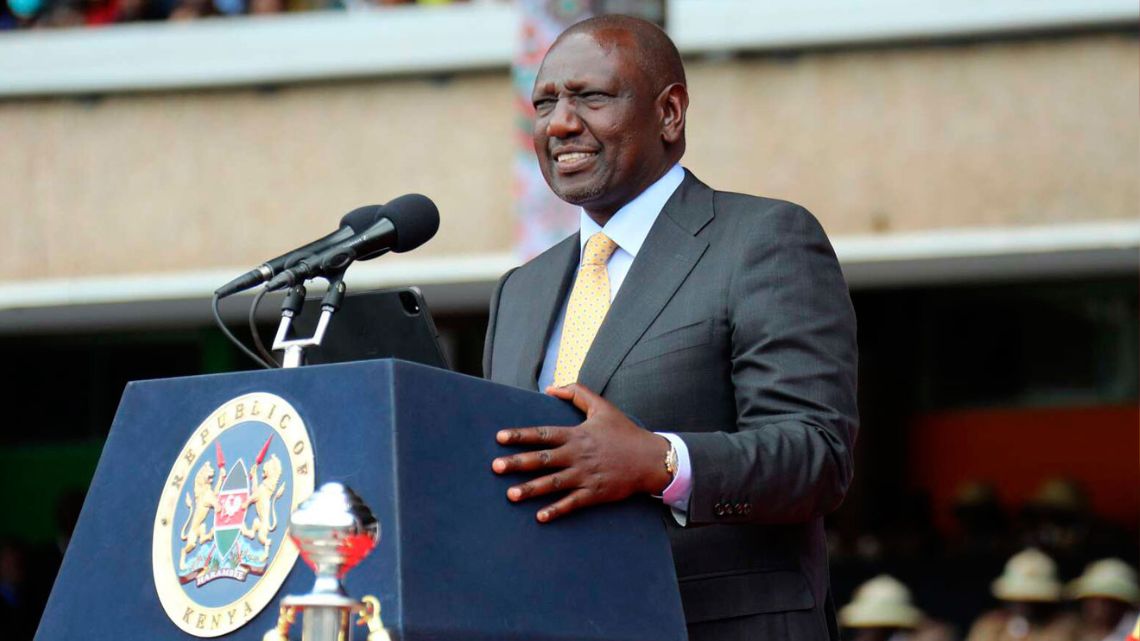
    President William Ruto has announced a stringent crackdown on those protesting against the Finance Bill, labeling the demonstrations in Kenya as “treasonous.”

    In a press briefing held at State House, Nairobi, the president condemned the actions of the protesters, particularly the breach of Parliament, and vowed to take decisive action against the organizers and financiers of the unrest.

    President Ruto accused “dangerous people” of hijacking the discussion around the Finance Bill and causing significant disruption and damage.

    “It is unfortunate that this conversation has been hijacked by dangerous people who have caused us the kind of loss witnessed today,” he stated, referring to the storming of Parliament as a “desecration of Kenya’s emblems and institutions.”

    The president’s strong remarks came shortly after Defence Cabinet Secretary Aden Duale announced the deployment of the Kenya Defence Forces (KDF) to assist the National Police Service in managing the protests. Duale described the situation as a “security emergency,” underscoring the severity of the government’s response.

    President Ruto emphasized that the protests were an affront to constitutionalism and the rule of law, branding the protesters as criminals.

    “The government will therefore uphold its constitutional mandate to secure our nation and its development and shall treat every threat to national security and the integrity of our state as an existential danger to our republic,” he said.

    He assured Kenyans of a robust and swift response to what he called “treasonous actions.”

    While commending the police for their conduct during the protests, Ruto ignored allegations of police brutality against initially peaceful demonstrators, as well as reports of indiscriminate shooting outside Parliament.

    He also did not address the reported abductions of pro-demonstration Kenyans, which have drawn criticism from human rights organizations.

    Concerns of possible state reprisals grew throughout the evening, with reports of KDF officers being deployed to the Nairobi Central Business District.

    Former President Uhuru Kenyatta, addressing the nation with a “heavy heart,” called for calm and restraint from the leadership and urged his successor to listen to the people.

    “Listening to the people is not a choice but a mandate enshrined in the principles of our constitution and in the very basis and philosophy of democracy. Leaders must know that the power and authority they have is donated to them by the people,” Kenyatta said, appealing for understanding and dialogue.

    Amid the turmoil, there were fears of media and internet shutdowns. Many Kenyans reported significantly reduced internet speeds, which network providers attributed to damage to two underwater fibre optic cables.
  • Supreme Court backs President Ruto’s Healthcare Fund

    Supreme Court backs President Ruto’s Healthcare Fund

    In a notable decision, the Kenyan Court of Appeal has overturned a previous ban and given the green light to the Social Health Insurance Fund (SHIF), a contentious healthcare insurance levy championed by President William Ruto.

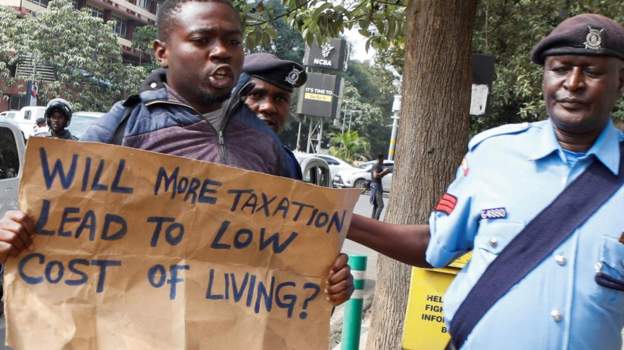
    The SHIF aims to provide affordable healthcare to all Kenyans but has faced widespread criticism, with many viewing it as a new tax that could exacerbate the cost-of-living crisis, leading to protests last year.

    The High Court had halted the SHIF’s rollout in November following a petition by businessman Joseph Enock Aura, challenging certain aspects of the scheme.

    The suspension, along with the halting of a controversial housing levy, prompted President Ruto to accuse unnamed judges of corruption and claim that the judiciary was colluding with the opposition to hinder government projects, triggering protests from lawyers.

    Replacing the decades-old National Health Insurance Fund (NHIF), which has suffered significant losses to corruption, the SHIF has undergone legal scrutiny.

    The three-judge bench, while lifting the ban, suspended sections requiring mandatory registration to the scheme, citing concerns about the potential harm to the health rights of citizens not involved in the litigation.

    President Ruto has taken a series of unpopular measures since he took office in 2022

    All workers are expected to contribute 2.75% of their salaries towards the new health fund.

    The new law does not address what happens when individuals cannot afford contributions but President Ruto said his government would pay for those unable.

    Critics of the new health plan say the 2.75% deduction is a huge increase on what they paid to the NHIF, coming on top of the recent rise in fuel prices and living costs.

    Some also fear that the new social healthcare body will spend most of the collected funds on administrative expenses like the current NHIF, leaving few resources for direct healthcare costs.

    In June last year, Mr Ruto signed the Finance Act, another unpopular piece of legislation that introduced a 1.5% housing levy payable by both employers and employees.

    The government says it seeks to provide affordable housing to low income earners. The levy has also been challenged in court.

  • Kenya receiving criticism for its “hectic” visa-free access

    Kenya receiving criticism for its “hectic” visa-free access

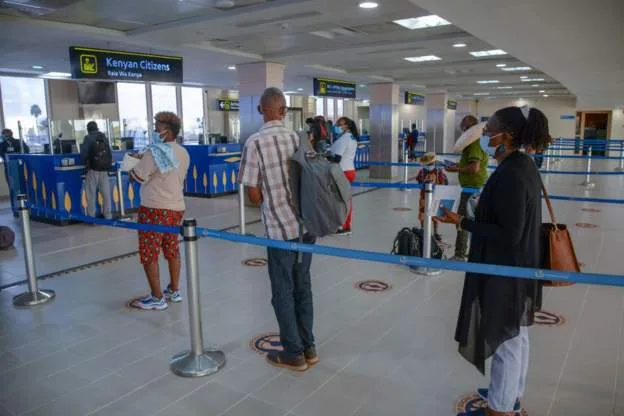
    Kenya is getting negative feedback for allowing all foreigners to enter the country without a visa. Some people think it’s too busy.

    Last month, President William Ruto said he wants people to be able to travel around Africa without needing a visa.

    Kenyan officials have said that people can enter the country without a visa, but they still need to get permission to travel by filling out a form and paying a $30 fee.

    This rule also applies to countries whose citizens used to be able to go to Kenya whenever they wanted.

    By Sunday, Kenya got over 9,000 visa requests online, according to officials.

    However, some people from other countries are now complaining about the government. They say that the new rule has caused problems and made it harder and more expensive to travel to Kenya.

    “Hey Africans, Kenya is lying about being visa free. It’s actually harder for Africans to visit now. ” – Hopewell Chin’ono, a well-known journalist from Zimbabwe, said on X.

    “Until 24 hours ago, I could easily wake up, buy a ticket, and fly to Kenya from Malawi without needing a visa. ” “Kenya no longer requires a visa for people visiting, but now everyone has to pay a $30 fee 3 days before traveling. ” What Busy,” Malawian business owner Jones Ntaukira said on X.

    Some people in Kenya are worried that the strict rules could make foreigners not want to visit, or that other countries might make their rules stricter too.

  • Commander of RSF in Sudan meets with Kenyan President Ruto

    Commander of RSF in Sudan meets with Kenyan President Ruto

    Sudan’s paramilitary leader Mohamed Dagalo talked with Kenya’s President William Ruto about the conflict in East Africa.

    Gen Dagalo, also known as Hemedti, said on social media that he shared his plan to end the war and start talking with the Sudanese army.

    Gen Dagalo has been trying to make regional leaders like him by visiting them. He wants to get more power than his rival, Gen Abdel Fattah al-Burhan. He even visited Ethiopia’s Prime Minister Abiy Ahmed.

    He has talked to Sudan’s old Prime Minister Abdallah Hamdok and promised to release many prisoners. He also said he would open up ways for humanitarian aid to reach areas hurt by the fighting.

    Gen Dagalo and Gen Burhan took control of the government in a coup in 2021, stopping Sudan’s progress towards democracy under Mr Hamdok.

    Last year, two men got into a fight and it caused a civil war in the country. Many people have died and millions have had to leave their homes because of it.

    The RSF is in charge of a lot of land in Khartoum, Wad Madani, and western Darfur.

  • Four African countries listed as climate leaders including Kenya’s President Ruto

    Four African countries listed as climate leaders including Kenya’s President Ruto

    Time Magazine has named Kenya’s President William Ruto as one of the top 100 leaders in the world who are making a big difference in helping the environment.

    He announced the list during the week when he organized a national holiday to plant 100 million trees in one day.

    Mr Ruto was chosen with the mayor of Freetown, Yvonne Aki-Sawyerr.

    Architect Francis Kéré from Burkina Faso and entrepreneur Kidus Asfaw from Ethiopia were also on the Time list.

    The “Time 100 Climate” ranking was released on Thursday. It’s the first time the magazine has tried to name people who are important in addressing climate change around the world.

    Time chose those who have made big progress in fighting climate change while also creating value for their businesses.

    The magazine chose the honourees because they have recently made successful and measurable progress in fighting climate change, instead of just making promises and announcements.

    Mr Ruto has been speaking out about helping with the effects of climate change in Kenya and Africa.

    The special day to plant trees on 13 November was a small part of his big goal for Kenya to plant 15 billion trees in 10 years.

    In September, he held the first Africa Climate Summit in Kenya’s capital, Nairobi. They asked big polluters to give more help to poorer countries.

    Some environmentalists say Mr. Ruto is a hypocrite because he promotes planting trees but doesn’t stop illegal logging in public forests.

    Last month, a court that deals with issues about the environment stopped Mr Ruto from lifting a ban on logging that was put in place in 2018.

    In October, he said that people should be made to leave the 380,000-hectare Mau Forest.

    Some people who care about the environment think it’s good to protect the forest. But others say the government kicked out the Ogiek people, who have lived there for a long time, just to make money from carbon offsetting.

    MrRuto is being recognized as a leader for taking action on climate change. The World Bank said on Friday that if Kenya doesn’t do something about climate change, its economy could shrink by 7. 25%

    Time named Francis Kéré an architect for his creative and environmentally friendly building designs. He worked on projects like state houses in Benin and his own country, Burkina Faso.

    In 2022, he was the first black person from Africa to win the important Pritzker Architecture Prize.

    Mr Asfaw has a small business that turns old plastic into cheap and eco-friendly building materials.

    Time magazine said that his new company provides a fast and long-lasting way to fix the lack of houses as the population in Africa keeps increasing.

    Mayor Aki-Sawyerr was recognized for “working to protect the environment and make the city better prepared for climate change. ” She did things like creating a plan to deal with climate change in Freetown and hiring someone to help with extreme heat in the city, which had never been done in Sierra Leone or Africa before.

  • Raila Odinga declines President Ruto’s invitation for talks

    Raila Odinga declines President Ruto’s invitation for talks

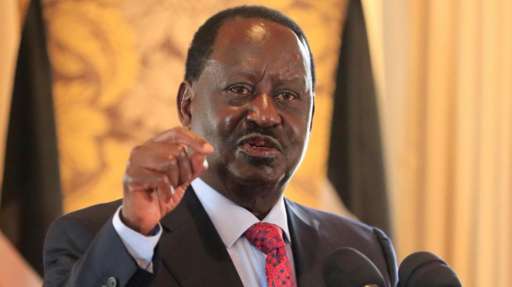
    The head of the opposition in Kenya, Raila Odinga, called President William Ruto’s offer to hold discussions over anti-government demonstrations “not serious at all” and rejected it.

    Following weeks of demonstrations against the growing cost of living and the implementation of new levies, Ruto stated on social media on Tuesday that he was ready to see Odinga “anytime.”

    Nevertheless, the leader of the opposition Azimio alliance claimed to Al Jazeera on Wednesday that the president’s offer to hold discussions was merely a “public relations exercise”.

    “If he wanted to meet with me he would not have invited me through social media,” Odinga said, speaking from Nairobi. “He knows my address, he knows my telephone number. He is basically just playing games.”

    “We have a crisis in this country that requires a serious approach,” Odinga said. “We are ready anytime, when they are ready for those talks”.

    Critics accuse Ruto of increasing taxes at a time when the economy of the nation is collapsing due to spiraling inflation and of going back on his election campaign pledges from 2022, when he ran as the candidate for the underprivileged Kenyans and promised to improve their economic circumstances.

    Since the opposition leader asked Kenyans to demonstrate in the streets in March, his coalition has organized nine days of anti-government demonstrations, with the gatherings occasionally degenerating into looting and violent altercations with the police.

    Human rights organizations report that at least 30 individuals have died. Odinga, who claims that the presidential election from the previous year was “stolen” from him, has charged the government with “unprecedented police brutality.”

    Human rights activists have denounced the police for using live ammunition and tear gas to disperse demonstrators throwing rocks.

    Amnesty International and more than two dozen other rights organizations said last week that they had proof of 27 “extrajudicial, summary, and arbitrary executions” in July alone.

    Accusations of “extrajudicial executions and/or excessive use of force… are malicious, false, and intended to distort public opinion,” the interior ministry stated on Tuesday.

    Odinga canceled his protests in April and May when Ruto agreed to talk, but after the negotiations stalled, this month saw a number of protests.

    On Wednesday, Odinga also urged Kenyans to attend vigils in memory of anti-government demonstrators who had died in the protests.

    His coalition urged “Kenyans to come out and light candles and lay flowers, preferably white, in remembrance of and respect for the victims.”

  • Kenya’s contentious tax increases  signed into law by Ruto

    Kenya’s contentious tax increases signed into law by Ruto

    First financial bill passed by Kenya’s administration, signed into law by President William Ruto, aims to increase revenue by hiking taxes on a variety of commodities.

    One of the most controversial changes approved by parliament last week was the doubling of value-added tax to be charged on fuel – it’s rising from 8% to 16%.

    Employees will also hand over 1.5% of their gross pay for a housing levy that will go into a fund that will then pay to build homes for low-income people.

    President Ruto, who was elected last year, has said that the government needs more money in order to be able to pay off the debts racked up under the presidency of his predecessor, Uhuru Kenyatta.

    But the opposition have said they would call for protests if the tax rises came into effect.

  • President Ruto calls for calm in Sudan

    President Ruto calls for calm in Sudan

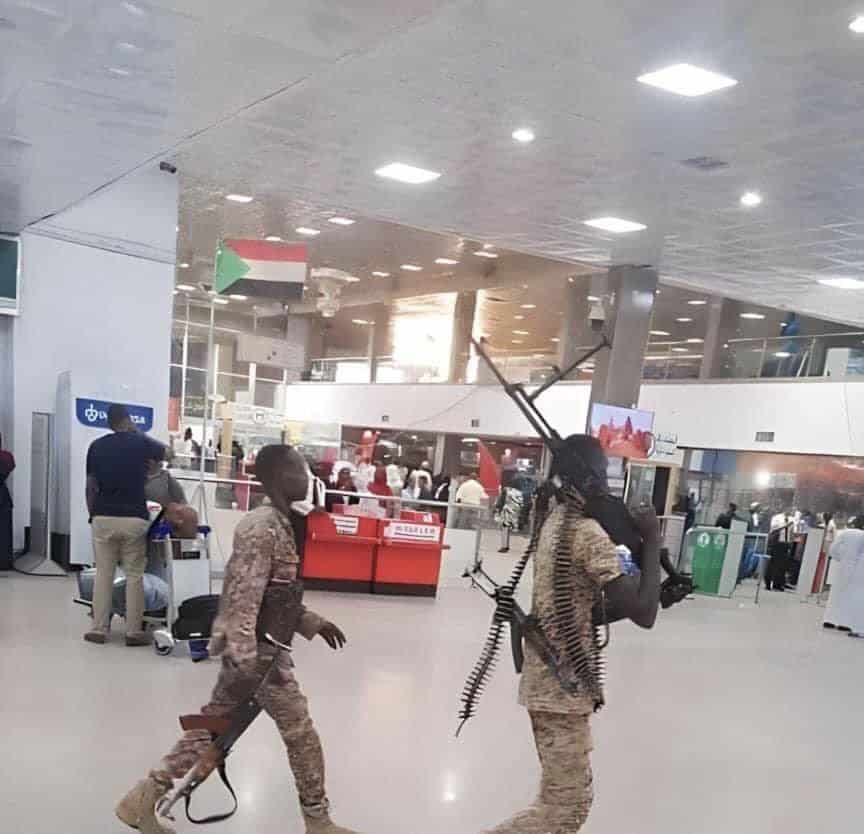
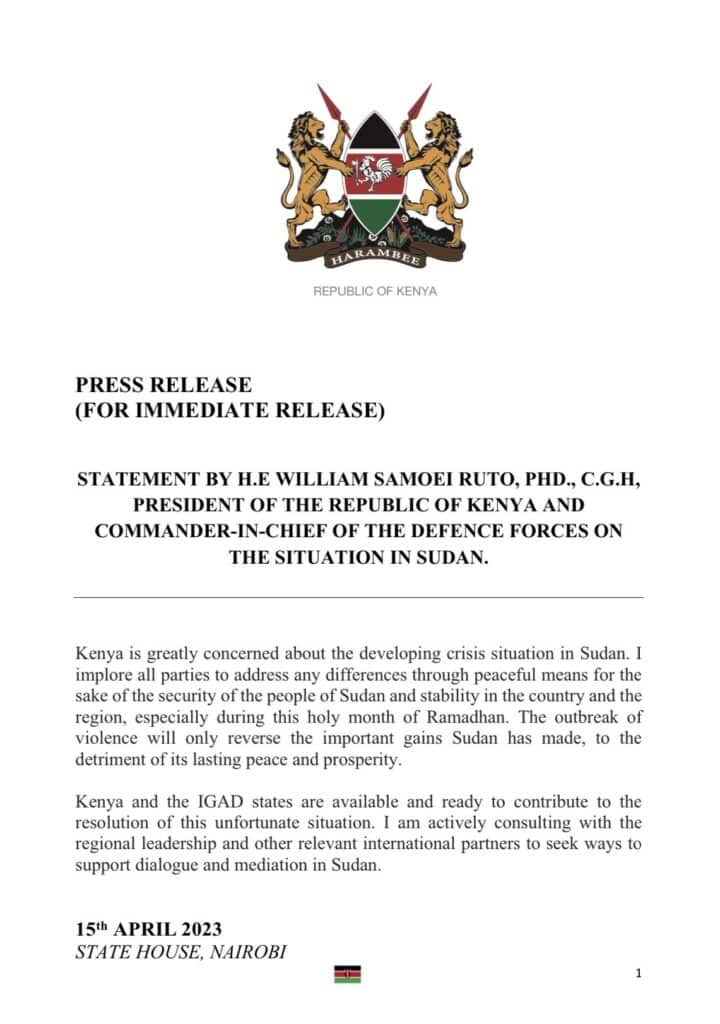
    Kenyan President, William Ruto has called for calm in Sudan as the army and  Rapid Support Forces (RSF) engage in fisticuff.

    Per reports, there has been a lot of shooting in the capital and other cities of Sudan

    In response, President Ruto who is concerned about the happenings have urged the parties to “address any differences through peaceful means.”

    According to him, the security of the people and the stability in Sudan cannot be jeopardized.

    The recent incident comes after several days of tense relations between the army and the RSF, which stoked concerns of a potential conflict.

    The divisions between the two parties became apparent on Thursday when the military alleged that the most recent RSF actions were unplanned and unlawful.

    Source: The Independent Ghana