Tag: President Yoon Suk Yeol

  • South Korea gets ready for an ageing populace

    South Korea gets ready for an ageing populace

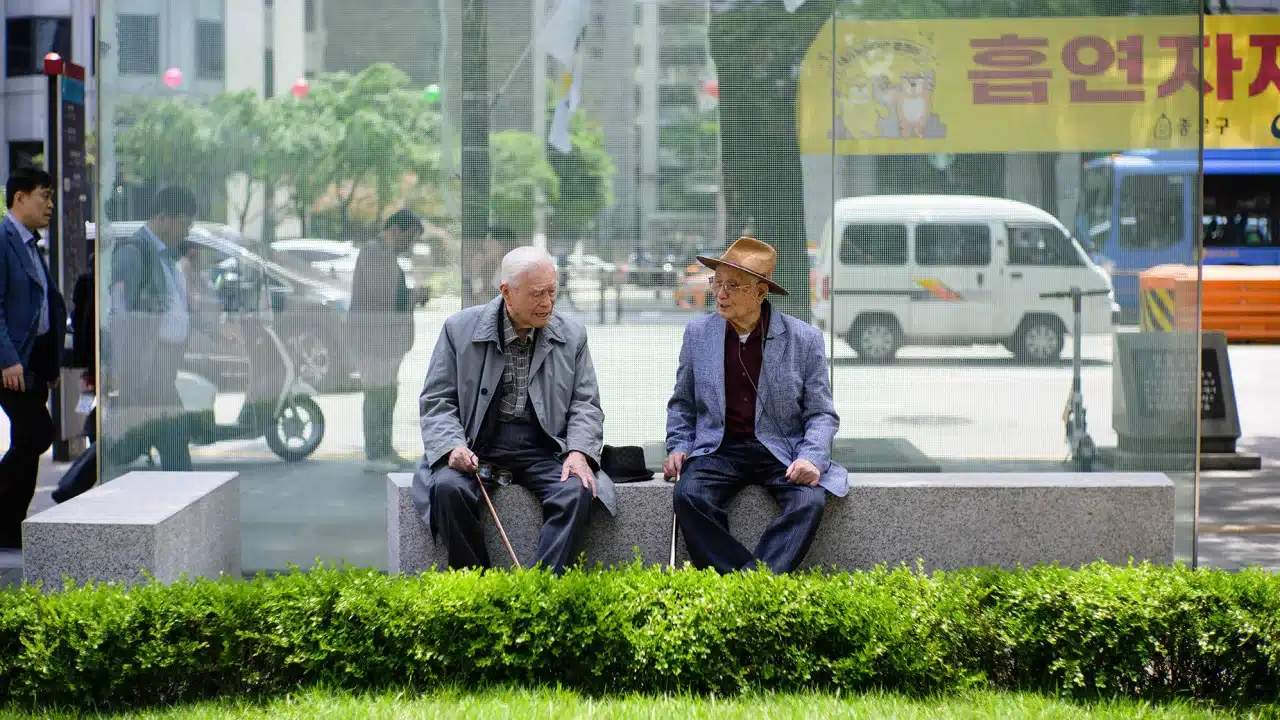
    In just a few years, the number of child care centres has decreased by over a quarter, showing government efforts to stimulate more births but to no avail.

    New government statistics released on Friday show that there were more than 40,000 child care facilities in 2017; at the end of 2016, that number had decreased to about 30,900.

    The number of ageing facilities has increased as well, from 76,000 in 2017 to 89,643 in 2022, according to the nation’s health and welfare ministry.

    Elderly facilities include senior care homes, specialized hospitals, and welfare agencies that help the elderly navigate social services or protections. Meanwhile, the child care facilities listed include public services as well as private and corporate ones.

    The shift illustrates a years-long problem South Korea has thus far failed to reverse. It has both one of the world’s fastest aging populations and the world’s lowest birth rate, which has been falling continuously since 2015 despite authorities offering financial incentives and housing subsidies for couples with more babies.

    Experts attribute this low birth rate to various factors, including demanding work cultures, stagnating wages, rising costs of living, the financial burden of raising children, changing attitudes toward marriage and gender equality, and rising disillusionment among younger generations.

    By the late 2000s, the government had begun warning that policy measures were needed to encourage families to grow. Last September, South Korean President Yoon Suk Yeol admitted that more than $200 billion has been spent trying to boost the population over the past 16 years.

    But so far nothing has worked – and the effects have been increasingly visible in the social fabric and day-to-day life.

    Many elementary, middle and high schools are closing around the country due to a lack of school-age children, according to Korean news agency Yonhap, citing the education ministry. Figures from the country’s official statistics body show the overall number of middle and high schools have remained stagnant for years, only rising by a few dozen since 2015.

    In Daejeon, south of Seoul, one such abandoned school has become a popular spot for photographers and urban explorers; images show eerily empty hallways and a school yard overgrown by wild grass.

    Similar crises have been seen in other East Asian countries with falling birth rates. One village in Japan went 25 years without recording a single birth. The arrival of a baby in 2016 was heralded as a miracle, with elderly well-wishers hobbling to the infant’s house to hold him.

    Meanwhile, South Korea’s expanding elderly population has meant an explosion in demand for senior services, placing strain on a system scrambling to keep up.

    South Korea has the highest elderly poverty rate among the OECD nations (Organisation for Economic Co-operation and Development), with more than 40% of people over 65 years old facing “relative poverty,” defined by the OECD as having income lower than 50% of median household disposable income.

    “In Korea, the pension system is still maturing, and current generations still have very low pensions,” the OECD wrote in a 2021 report.

    Experts point to other factors such as global economic trends, the breakdown of old social structures that saw children looking after their parents, and insufficient government support for those struggling financially.

    That means a number of homeless elderly people – part of a generation that helped rebuild the country after the Korean War – having to seek assistance from shelters and soup kitchens.

    The rapid rise in elderly facilities in recent years may help alleviate some of these problems. But longer-term concerns remain about the future of Korea’s economy, as the number of young workers – who are crucial in propping up the health care and pension systems – slowly dwindle.

  • South Korea doesn’t need nuclear weapons to combat the North – Prime minister

    South Korea doesn’t need nuclear weapons to combat the North – Prime minister

    Even as public opinion turns against nuclear weapons amid Asia’s escalating arms race, South Korea’s Prime Minister Han Duck-soo claimed in an exclusive interview with CNN that the country doesn’t need them to counter the danger from North Korea.

    There is no doubt that we should re-arm ourselves, according to several recent public surveys.
    Han told Richard Quest, a CNN anchor and business editor-at-large, during a sit-down in Seoul, “(The surveys say) we should go farther in terms of nuclear capability.

    One such poll, released last February, found that 71% ofmore than 1,300 respondents in the country were in favor of South Korea developing its own nuclear weapons – a once-unthinkable idea that has become increasingly mainstream in the past decade, with rising tensions in the Korean Peninsula and dwindling confidence in South Korea toward US protection.

    However, Han insisted the country has enough in its arsenal to stave off North Korea’s “preposterous ambitions” – and that developing nuclear capabilities was not “the right way.”

    “We have built up a quite adequate level of our deterrence capabilities in close cooperation with the United States,” he said, adding that the government had “put a lot of emphasis” on strengthening its deterrence since President Yoon Suk Yeol took power last year.

    “We should work together with the international community… to put a lot of continuous pressure on North Korea to denuclearize,” he said. “We would like to let North Korea know that developing and advancing nuclear capabilities will not guarantee the peace and prosperity in their country.”

    Relations between North and South Korea have worsened in recent years as Pyongyang ramped up its weapons program, firing a record number of missiles last year – including one that flew over Japan, the first time North Korea had done so in five years, prompting international alarm.

    And for months, the US and international observers have warned that North Korea appears to be preparing for its first underground nuclear test since 2017. The country’s dictator Kim Jong Un also intensified his rhetoric last year; he declared his intention to build the “world’s most powerful” nuclear force, warned adversaries that North Korea was fully prepared for “actual war,” vowed to “never give up” nuclear weapons and dismissed the possibility of negotiating denuclearization.

    In response, the US and its allies South Korea and Japan have stepped up their own military drills and cooperation. Yoon, who has publicly taken a tough stance against North Korea, even raised the prospect of South Korea building its own nuclear arsenal, saying in January it could “deploy tactical nuclear weapons or possess its own nukes.”

    And despite Han voicing opposition to such a plan, he too emphasized South Korea’s preparedness in confronting its nuclear-armed neighbor – as well as its openness for further talks, under certain conditions.

    “We are not disarming ourselves against North Korea,” he said. “But we are not closing the dialogue channel with North Korea … as long as North Korea is abstaining from their very strong nuclear ambitions.”

    Kim Jong Un calls for ‘exponential’ increase in country’s nuclear arsenal

    Han also discussed China’s role in the region, saying the superpower was “not the country it used to be,” in past decades that ushered in economic reforms and liberalization.

    “China is a huge and important global player,” he said. “Including Korea, I think many countries would like to see (China) be more compliant with global rules.”

    He added that though China “will contribute a lot in solving global problems,” the country often doesn’t meet the “expectations a lot of countries would like to have – for example, we hoped that China would be more aggressive and more active in reducing tensions in the Korean Peninsula.”

    For years, China has been North Korea’s biggest trading partner and an economic lifeline, with Pyongyang isolated from much of the world.

    But Beijing, too, is a major player in the Asia arms race.

    In January, US and Japanese ministers warned of the “ongoing and accelerating expansion of (China’s) nuclear arsenal.” Just days later, Japan’s prime minister expressed concern over China’s military activities in the East China Sea, and the launch of ballistic missiles over Taiwan that landed in waters near Japan in August.

    China’s military buildup, aggressive foreign policy and multiple disputed territorial claims haven’t gone unnoticed in Seoul – where attitudes toward Beijing are fast souring.

    In the 2022 survey on South Korean nuclear armament, more than half of respondents said China would be the biggest threat to the country in 10 years, and many cited “threats other than North Korea” behind their support for a domestic nuclear arsenal.

    Han acknowledged that Seoul was closely watching these territorial disputes.

    “Peace in the Taiwan Strait is also very important for the security and peace of the Korean Peninsula,” he said. And though South Korea is “committed” to the one-China policy, he said, “at the same time, we (expect) China to be more rule-based, not behaving as a country … being condemned by international community.”

  • After a fatal crowd crush, South Korea guarantees a ‘thorough’ investigation

    Mourners pay their respects as 154 people are confirmed dead in the Seoul disaster, which occurred during Halloween celebrations.

    South Korean Prime Minister Han Duck-soo has promised a thorough investigation into the weekend Halloween crush in Seoul, which killed more than 150 people and plunged the country into mourning.

    Officials announced on Monday that the death toll had risen to 154, with 149 people injured, 33 of whom were in critical condition.

    Tens of thousands of people crowded into the narrow streets and alleyways of Seoul’s popular Itaewon district on Saturday for the first major Halloween festivities since the COVID-19 pandemic struck three years ago.

    Many of the revellers were in their teens and dressed in Halloween costumes.

    But chaos erupted when people poured into one particularly narrow and sloping alley, even after it was already packed, witnesses said.

    On Monday morning, people laid white chrysanthemums, drinks, and candles outside an exit of the Itaewon metro station, a few steps away from the site of the crush.

    “It doesn’t matter how they died, or why they died. Those poor people, all at similar ages to my grandchildren, they died anyway,” said Jung Si-hoon, a retiree and a church elder, who placed an old wooden cross at the makeshift altar.

    “What more should we say? We should pray for them and wish them to rest in peace.”

    Shops and cafés nearby were closed, and police cordoned off the site of the tragedy as they continued their investigations.

    Schools, kindergartens, and companies around the country scrapped planned Halloween events. K-pop concerts and government briefings were also cancelled.

    “The government will undertake a thorough investigation into what caused this accident and do its best to make necessary institutional changes so that such an accident is not repeated,” Prime Minister Han said as government officials met on the disaster.

    “Identification has been completed for all of the 154 deceased except one, and I believe it is time for follow-up measures such as funeral procedures to be carried out in earnest,” Han said. “We will do our best to provide necessary support by reflecting the opinions of the bereaved families as much as possible.”

    In black suits with white gloves, South Korean President Yoon Suk-yeol and his wife Kim Keon-hee hold white flowers as they visit a memorial altar for victims of the Itaewon crush in Seoul, South Korea.
    South Korean President Yoon Suk-yeol and his wife, Kim Keon-hee, were among those paying their respects at a memorial altar set up outside Seoul city hall [Yonhap via Reuters]

    President Yoon Suk-yeol, who has declared a period of national mourning and designated Itaewon a disaster zone, visited a memorial altar outside the Seoul city hall with his wife on Monday to pay his respects to those who died. Former United Nations Secretary-General Ban Ki-moon was also among those expressing their condolences.

    The crush of partygoers came as Itaewon, a symbol of freewheeling nightlife in the South Korean capital for decades, was beginning to recover from prolonged pandemic restrictions with new restaurants and shops opening.

    The disaster is the worst in South Korea since the Sewol ferry sank in 2014, killing 304 people, most of them high school students.

    The sinking of the Sewol and criticism of the official response sent shockwaves across South Korea, prompting widespread soul-searching over safety measures that are likely to be renewed in the wake of Saturday’s crush.


  • South Korean President: Denies US insult caught on hot mic

    President Yoon Suk-yeol of South Korea has denied making insulting remarks to the US Congress following his meeting with US President Joe Biden last week in New York.

    He was recorded using a hot mic and appeared to be referring to US lawmakers with a phrase that may either be translated as “idiots” or something considerably heavier in Korean.

    The footage quickly went viral in South Korea.

    But his spokeswoman says he had “no reason to talk about the US or utter the word ‘Biden’”.

    The remark is said to have occurred as part of a conversation about Mr Biden’s drive to increase the US contribution to a global initiative known as the Global Fund, which would require congressional approval.

    “How could Biden not lose face if these [expletive] do not pass it in Congress?,” Mr Yoon apparently said to his aides afterward.

    Presidential spokeswoman Kim Eun-hye said in New York on Thursday Mr Yoon did not actually say “Biden”, but a similar-sounding Korean word, and that he was referring to the South Korean parliament, not the US Congress.

    Many were unconvinced by the government’s defense – an opposition MP said it was like telling Koreans they were “hearing impaired”.

    Mr Yoon is a former prosecutor who only entered politics last year and won the presidential elections earlier this year by less than 1%.

    He is known as being prone to gaffes and has been struggling with low approval ratings soon after being elected, correspondents say.

    He also drew criticism for failing to attend the Queen’s lying-in-state on his first day in London, for which his office blamed traffic issues.

    Last year, he had to backtrack on his comment that the authoritarian president Chun Doo-hwan, who was responsible for massacring protesters in 1980, was “good at politics”.

  • South Korean President told to ‘shut his mouth’ by Kim Jong Un’s sister as she rejects economic aid

    Kim Yo Jong, a member of North Korea‘s politburo, also described President Yoon Suk-yeol as “really simple and still childish” after he offered phased economic aid if the north ends nuclear weapons development.

    The sister of North Korean President Kim Jong Un has told South Korea’s President to “shut his mouth” as she rejected an offer of economic aid in return for nuclear disarmament.

    Kim Yo Jong, a member of North Korea’s politburo, also described South Korean President Yoon Suk-yeol as “really simple and still childish”.

    “No one barters its destiny for corn cake,” she added in a statement released by state news agency KCNA.

    South Korea’s unification minister, Kwon Young-se, described her comments as “disrespectful and indecent”.

    It is the first time that a senior North Korean official has commented directly on what Mr Yoon has called an “audacious” plan.

    He has said he is willing to provide phased economic aid to North Korea if it ends nuclear weapons development and begins denuclearization.

    But Ms Kim was scathing in her denouncement of the idea, saying of Mr Yoon: “It would have been more favorable for his image to shut his mouth, rather than talking nonsense as he had nothing better to say.”

    Last week, she threatened retaliation following an outbreak of COVID-19 in the north – something claimed to have been caused by southern activists dropping leaflets and other items from balloons.

    Speaking to a large audience in Pyongyang on 10 August, she said: “What matters is the fact that the South Korean puppets are still thrusting leaflets and dirty objects into our territory.

    “The main culprit who gravely violated our people’s safety inflicted pains and caused anxiety to millions of parents in our country, who had to endure all the hardships to protect the lives of their precious children, were the despicable South Koreans.”

    She added: “We have cleared out the virus spread by the South Korean scum. We must counter it toughly. We have already considered various counteraction plans but our countermeasure must be a deadly retaliatory one.”

    The south’s offer of economic aid was first proposed in May – and Mr Yoon talked about it again on Wednesday as he marked 100 days in office.

    He has also pushed to increase his country’s military deterrence against North Korea, and Seoul has resumed long-suspended joint drills with the United States, including major field exercises due to begin next week.

    Source: Skynews

  • President Yoon wants South Korea to become one of world’s top weapons suppliers

    South Korea plans to become one of the world’s top four weapons suppliers, President Yoon Suk Yeol said Wednesday as he addressed reporters in a speech marking his first 100 days in office.

    “By entering the world’s top four defense exporters after the United States, Russia and France, the (South Korean) defense industry will become a strategic industrialization and a defense powerhouse,” Yoon said at the presidential office.
    In 2021, South Korea ranked 10th in the world in arms transfers, according to the authoritative Stockholm International Peace Research Institute (SIPRI).

    With arms exports valued at $566 million, according to SIPRI’s unique trend-indicator value monitoring system, Seoul was well behind last year’s No. 4 exporter, Italy, which sold arms worth $1.7 billion.
    For comparison, US arms transfers were calculated to be $10.6 billion.
    South Korea has already taken steps to achieve its top four ambitions.
    Late last month, it signed its biggest-ever arms deal to supply Poland with almost 1,000 K2 tanks, more than 600 pieces of artillery and dozens of fighter jets.

    A South Korean-made FA-50 multirole light fighter aircraft of the Philippine Air Force performs a fly-past during a ceremony prior to landing at the Clark Air Base in Angeles City on November 28, 2015.

    And in February it inked a $1.7 billion deal with Egypt to supply it with K9 self-propelled howitzers and support vehicles.
    Late last year, South Korea made another massive deal to supply Australia with K9s.
    If South Korea meets Yoon’s goal, it will surpass not only Italy, but regional power China as well as Germany, Spain, Israel and the United Kingdom, according to the SIPRI rankings.
    “I believe this is a very ambitious goal,” said Chun In-Bum, a retired South Korean general turned military analyst.
    “South Korea and its arms industry have to do a lot of work,” he said.
    Source; CNN