Tag: prices

  • Diesel prices to drop; petrol, LPG prices to rise today

    Diesel prices to drop; petrol, LPG prices to rise today

    Prices of diesel and petrol are expected to decline, with Liquefied Petroleum Gas (LPG)increasing at the pumps today, Saturday, August 16, as reported by the Chamber of Oil Marketing Companies (COMAC).

    According to a report by the Chamber of Oil Marketing Companies, petrol at the pumps will increase by between 0.39% and 2.71% per liter.

    On the other hand, diesel and LPG prices have been projected to increase by up to 0.15% to 2.34% per litre.

    “Following the slight dip in crude prices, diesel fell sharply by 5.22%, while petrol and LPG rose marginally by 1.89% and 2.87%, likely due to product-specific demand and supply factors.

    “For 1st August 2025 pricing window (based on average exchange rates from 27th July to 12th Aug), the Ghanaian cedi experienced a slight depreciation against the US dollar. The rate shifted from GHS 10.68 to GHS 10.77, reflecting a 0.87% decline,” part of the statement read.

    COMAC has attributed the adjustment to the performance of the local currency, the cedi, against major foreign currencies, especially the US dollar.

    This is also a result of the relatively stable crude oil prices on the international market. On the international market, a barrel of oil fell by about 0.28% from US$70.62.

    Diesel fell by 1.22%, LPG recorded 1.80% and prices of petroleum increased by 0.43%.

    Some Oil Marketing Companies (OMCs) in June, reduced prices of petroleum products at the pumps. Fuel prices have now dropped for the second time this week under the current pricing window for June.

    Leading the trend, Star Oil announced on June 19, 2025, that it had slashed its petrol price from GHS10.99 per litre to GHS10.80. Diesel prices at the same outlets have also been cut, moving from GHS12.77 to GHS12.13 per litre.

    Looking ahead, Allied Oil has indicated it will implement further reductions beginning June 20. Earlier this month, on June 16, Allied was selling petrol at GHS10.97 per litre, but the new price stands at GHS10.75.

    Joining the trend, Zen Petroleum has also reduced its petrol price to GHS10.75. Reports indicate that the reduction in petrol prices is being driven by heightened competition among major OMCs, sparking a price war in the sector.

    Introduced in 2015, the government’s Price Deregulation Policy aimed to encourage competition and help bring prices down, beyond global oil market dynamics.

    Meanwhile, some OMCs have hinted that pump prices could increase from July 1, 2025, if the conflict between Israel and Iran in the Middle East continues.

    Since tensions escalated in the region, crude oil prices have surged from $66 to about $76 per barrel.

    Despite this, some industry insiders argue that if the Ghanaian cedi strengthens further in the coming days, it could help absorb the projected 5 percent or more rise in crude prices.

    So far, petroleum prices have seen over six reductions this year, with industry data attributing much of the decline to the cedi’s appreciation.

    The escalating missile exchanges between Israel and Iran are contributing to rising global crude oil prices, posing a potential threat to Ghana’s fuel costs and overall economic stability.

    President John Dramani Mahama has directed the Ministers for Finance and Energy, Dr Cassiel Ato Forson and John Abdulai Jinapor, respectively, to closely monitor the unfolding conflict between Israel and Iran and provide proactive measures to safeguard the country’s recent economic gains from external shocks.

    However, the Chamber of Oil Marketing Companies (COMAC) has assured that the escalating geopolitical tensions between Iran and Israel will not affect the oil market.

    Speaking to the media, the Chief Executive Officer (CEO) of COMAC, Dr. Riverson Oppong, noted that when prices go up or down in the world market, it takes some time before those changes are seen in local prices.

    A week-old air war escalated with no sign yet of an exit strategy from either side as Israel bombed nuclear targets in Iran on Thursday and Iran fired missiles and drones at Israel after hitting an Israeli hospital overnight.

    The White House said President Trump would make a decision as to whether the United States will join the war or not in the next two weeks.

    “Based on the fact that there’s a substantial chance of negotiations that may or may not take place with Iran in the near future, I will make my decision whether or not to go within the next two weeks,” Press Secretary Karoline Leavitt told reporters on Thursday.

    Government has launched new GHS1 Energy Sector Shortfall and Debt Repayment Levy on petroleum products.

    This move is to settle energy sector shortfalls, reduce legacy debts, and stabilize power supply across the country, following parliamentary approval.

    President John Dramani Mahama assented to the levy on June 5, under the Energy Sector Levies (Amendment) Act, 2025 (Act 1141). GRA had announced earlier implementation of the levy; however, it was postponed after strong opposition from oil marketing companies and transport operators.

    Initially set to take effect on Monday, June 9, it was rescheduled to start on Monday, June 16. It was then rescheduled again due to the tensions between Iran and Israel.

    According to Tariff Interpretation Order (TIO) No. 2025/003, issued by the GRA, the new levy affects several key fuel products. The levy on petrol (motor spirit, super) and diesel (gas oil) will rise from GHS0.95 and GHS0.93, respectively, to GHS1.95 and GHS1.93 per litre.

    Marine gas oil (local) will increase from 0.3 to 0.23, marine gas oil (foreign) from 0.93 to 1.93, and heavy fuel oil by 0.04. However, all cash-and-carry transactions where products are lifted on or after the effective date will attract the revised levies.

  • Petrol, diesel selling at GHS15.49 after 9.0% drop in prices

    Petrol, diesel selling at GHS15.49 after 9.0% drop in prices

    Fuel prices at the pumps have dropped slightly for the third consecutive time, offering some relief to consumers.

    The latest reduction took effect two days into the second pricing window for March.

    Leading the adjustment, Total Energies has lowered the cost of petrol and diesel from GHS15.79 per liter in the first pricing window to GHS15.49 per liter in the second.

    This marks the third successive decrease, extending a trend that began in late February.

    Industry analysts link the reduction to declining crude oil prices on the global market and the relative steadiness of the Ghanaian cedi against the US dollar.

    With this price drop, other oil marketing firms are likely to follow suit in the coming days.

    The Chamber of Oil Marketing Companies (COMC) had earlier projected a possible decrease in fuel prices, citing falling crude oil prices as the main factor.

    Data from the Chamber indicates that the price of crude oil has fallen by 4.16%, declining from $75.49 per barrel to $71.94 per barrel.

    Analysts attribute this decline to rising trade tensions under US President Donald Trump’s administration, which have sparked concerns over global economic growth and energy demand.

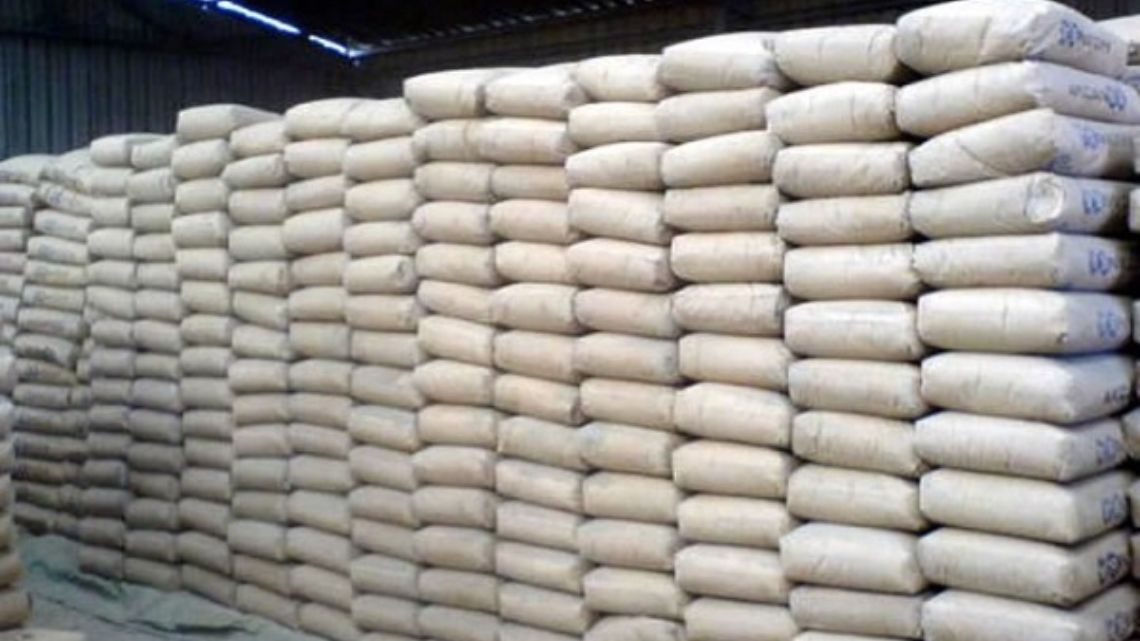
  • An analysis on price controls on cement

    An analysis on price controls on cement

    A battle over cement pricing in Ghana reached a new stage this week when the Chamber of Cement Manufacturers (COCMAG) hit back at proposed government regulation. Frédéric Albrecht, the chair of the association, told a meeting that about 80% of local production costs linked to cement manufacture are related to the local currency exchange rate. So fixing the price would do little to address the main cause behind rises.

    Albrecht was speaking at a stakeholders’ forum organised by the Ghana Chamber of Construction. The group was convened to discuss the government’s proposed Ghana Standards Authority (Pricing of Cement) Regulations 2024 that were formally presented in the country’s parliament in early July 2024.

    The association argues that the cement sector has not been consulted properly over the proposal and that introducing it could have negative consequences for the construction sector as a whole. It says that imported clinker is subject to numerous taxes and that the average price of cement has actually lagged behind the rate of inflation.

    The government is dealing with an economic crisis that forced it to default on its external debts in 2022 and ask the International Monetary Fund for support. This has led to depreciation of the local currency and high inflation.

    Around the same time the authorities have also been attempting to regulate the cement sector more closely. In 2022 the Ghana Standards Authority (GSA) took action against a brand of cement, Empire Cement, that appeared to be on sale without any of the required permits.

    Then in the autumn of 2023 the Ghana Revenue Authority (GRA) shut down Wan Heng Ghana’s grinding plant in Tema after the company failed to pay a major tax bill. Action by the GSA followed when it shut down three more plants in the Ashanti Region – Xin An Safe Cement Ghana, Kumasi Cement Ghana and Unicem Cement Ghana – for using inferior materials in cement production.

    In April 2024 a nine-member committee was established to monitor and coordinate the local cement industry. Notably, cement producers have been required to register with the committee in order to secure a licence to manufacture cement.

    Kobina Tahir Hammond, the Trade and Indus¬try Minister, then said in late June 2024 that the government wanted to intervene in cement pricing to protect consumers from what he described as the ‘haphazard’ increment in cement prices by manufacturers.

    A legislative instrument doing just that was presented in parliament on 2 July 2024. Around the same time the GSA reportedly threatened to close down ‘several’ more cement plants for non-compliance.

    The cement industry in Ghana is particularly vulnerable to currency exchange effects as it is dominated by grinding plants. One integrated cement plant, Savanna Diamond Cement, was launched in the north of the country in the mid 2010s.

    However, this compares to 14 licensed grinding plants in the country reported in the local media. This includes units run by Ciments de l’Afrique (CIMAF), Dangote Cement, Diamond Cement (WACEM) and Heidelberg Materials subsidiary Ghacem and its CBI Ghana joint-venture amongst others.

    This makes it one of the countries in Sub-Saharan Africa with the most grinding plants, along with places such as Mozambique and South Africa. When the Ministry of Trade and Industry started a consultation on regulating the cement sector in late 2023 it calculated that the country produced 7.2Mt of cement in 2021 and that the country had an overcapacity of 3.5Mt. This gives the country an estimated cement production capacity of just below 11Mt/yr.

    Some sense of the growing costs that the cement sector in Ghana is facing can be seen in the Ghana Statistical Trade Report for 2023. Clinker was the country’s third biggest import by value at US$206m. It was only exceeded by diesel and other automotive oil products.

    The Ghana Statistical Service reported that most of the country’s imported clinker in 2023 came from Egypt, South Africa and its neighbours in West Africa. Both Dangote Cement and Heidelberg Materials flagged up the country’s economy as being hyperinflationary in their respective annual reports for 2023.

    Argument and counter-argument over cement pricing is prevalent around the world especially in Africa. Fellow West African country Nigeria, for example, has endured plenty of very public dialogue and debate about the price of cement.

    In Ghana’s case it seems more likely than not that factors beyond the control of the local cement companies are driving the prices given the grinding-dominated nature of the sector with lots of different companies involved.

    Negative currency effects and inflation look more likely to be driving cement prices than anything else, although one should always be wary of the potential for cartel-like behaviour by cement producers. The economic crisis in Ghana certainly fits the bill for the conventional introduction of price controls on selected commodities but getting the fine tuning right could be difficult in practice.

    Fixed prices will reassure consumers in the short term provided supplies hold. Beyond this the actual causes of the high cement prices should emerge in time.

    Source: globalcement.com

  • Prices of Cement: We tried to engage cement manufacturers morally but they did not listen – Trade Minister

    Prices of Cement: We tried to engage cement manufacturers morally but they did not listen – Trade Minister

    Trade Minister KT Hammond has stated that before the Legislative Instrument (L.I.) to regulate cement prices was introduced, he had urged cement producers to lower their prices.

    However, he noted that the producers did not respond to his appeals, which led to the introduction of the L.I. to enforce price reductions.

    Speaking to journalists in Parliament on Wednesday, June 26, he said “So I asked them to ensure that something was done about it. In my absence I was told that the minister was not going to be able to do anything. They would not listen. They would not do it. They will go the way they want. Well, I have only one other avenue. I mean encouraging them to do it is a moral persuasion.”

    “If moral persuasion fails, there is a system in the country. There is a constitution in the country. We all play by rule of law. You come to parliament and you make sure that there are laws. We have the constitution. So if the constitution mandates me to bring an airline, I bring an airline to ensure that somebody abides by…err..errm…If we don’t accept the moral principle, at least some sort of economic principle. The good people of Ghana must benefit,” Mr Hammond expressed.

    His comments come after the Executive Secretary of the  Cement Manufacturers Association of Ghana (CMAG) Rev. Dr. George Dawson-Ahmoah said that  Mr K T Hammond did not engage them the Legislative Instrument.

    “Why is the Minister avoiding or just running away from this discussion? Previously, our position has been that these prices of  cement, the increase of prices of  cement, it is not done in a vacuum. It is not done just because we wake up in the morning and do it,”  he said.

  • Yam prices have surged over 200% in a year – GAWU General Secretary

    Yam prices have surged over 200% in a year – GAWU General Secretary

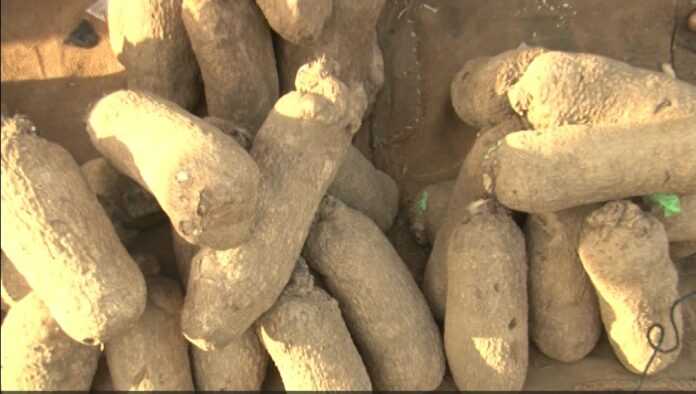
    The prices of yam in various markets have more than doubled compared to the beginning of the year.

    Previously selling at 15 cedis, yam is now priced between 40 cedis and 50 cedis depending on the market location.

    Traders attribute this steep increase to scarcity, rising transport costs, and overall increases in the cost of living.

    A visit to Mallam Atta Market in the Greater Accra Region revealed that a single tuber of yam is now priced between GH20.00 and GH55.00.

    A trader, Madam Comfort, explained how the price of yam has risen significantly over the past few months.

    Madam Comfort attributed the price surge to the exchange rate between the dollar and the cedi.

    She noted that, “the least price you could get here is GHC25.00, the increase is as a result of the increase in transportation fare and all of that. So, if something could be done to ensure that the transport cost is reduced, I believe that the cost of yam could come down,” she stated.

    “The more the cedi depreciates, the more everything else, including fertilisers imported into the country also go up, which is resulting to high cost of production and they are passing the cost to us and we also pass it to the final consumer,” she added.

    Reports from the Northern Region, known as Ghana’s food basket, indicate that three tubers of yam previously sold for GHC25.00 are now priced at GHC70.00. Similar situations were observed in the Western Region.

    General Secretary of the Ghana Agricultural Workers Union, Mr. Edward Kareweh, linked the soaring yam prices to the current economic challenges.

    He expressed concern over the unprecedented 200 percent price increase, stating, “this reflects the poor state of Ghana’s economy.”

    Mr. Kareweh concluded by highlighting systemic issues in Ghana’s agricultural sector, noting, “We have been monitoring the price increases in the foodstuffs in general, including yams. And apart from yams, all other foodstuffs are experiencing unexpected price increases. This is not a season for yam. We expect price of yam to be up, but not at this level.”

    He concluded that nothing is working well, “But the unfortunate thing is that whereas we have always experienced other sectors of the economy not working well, this time around, it is at the heart of the economy, that is agriculture. And if we are unable to address the challenge within the agriculture sector, it means that we are failing to address problems that are hitting at the core of the economy.”

  • Building materials prices shoot up

    Building materials prices shoot up


    The market prices of iron rods and cement have notably surged in the first quarter of the year, contrasting with other building materials such as roofing sheets and paints.

    A survey conducted by the Ghana News Agency (GNA) revealed a consistent uptick in cement prices among traders, even amidst stable or slightly decreasing fuel prices.

    Mr. Selasi Pomenaya, a building materials trader, highlighted that all three grades of cement from Ghana Cement (GHACEM) have witnessed price hikes.

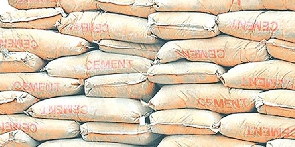
    For instance, Super Cool, previously priced at GH¢82, now stands at GH¢88; Super Rapid, formerly GH¢87, now retails at GH¢95; and Super Strong, previously GH¢95, is now GH¢105.

    However, Mr. Pomenaya noted a decrease in roofing sheet prices since December 2023, with stability observed since then. Similarly, paint brands have shown no price fluctuations this year.

    For instance, a packet of rough aluminum sheet now sells at GH¢2,300, down from GH¢2,500, while smooth aluminum sheets are priced at GH¢2,100, up from GH¢1,900.

    Shield paint in 20-liter and 10-liter containers sells at GH¢650 and GH¢350 respectively, while Leyland paint in 10-liter containers retails at GH¢220.

    Mr. Pomenaya expressed uncertainty regarding the causes of price changes, stating that fluctuations occur even when dealing directly with producers.

    “I don’t know what is causing the changes in prices, when we go to the producers and prices have increased or decreased, we buy and also increase or decrease the prices,” he said.

    Despite sluggish business, Mr. Pomenaya emphasized the need to remain active rather than staying idle at home.

    Additionally, the GNA discovered a surge in the price of iron rods, which were previously sold at GH¢6,500 per tonne but now exceed GH¢7,000. Iron rod traders highlighted the high volatility of prices, making it challenging to determine specific selling prices.

    Meanwhile, the Ghana cedi has continued to depreciate against major currencies like the US Dollar. For instance, in January 2024, GH¢1 equated to $11.91, whereas by April 2024, the same amount was approximately $14.42.

    The Ghana Statistical Service reported fluctuations in the country’s inflation rate, which rose from 23.5% in January 2024 to 25.8% in March 2024, amidst a brief dip to 23.2% in February 2024.

    These factors, including inflation and currency depreciation, have fueled the rising prices of goods and services in the country. Additionally, unstable fuel prices have led to increased transportation fares, contributing to a higher cost of living.

  • Global food prices to decrease significantly in 2025 – World Bank

    Global food prices to decrease significantly in 2025 – World Bank

    The World Bank has recently published its April 2024 Commodity Outlook Report, projecting a significant decrease in global food prices for 2024, with an estimated 6 per cent decline, followed by an additional 4 per cent drop in 2025.

    This reduction is primarily attributed to lower prices for grains, oils, and meals, while other food categories are anticipated to experience price increases in 2024.

    However, 2025 is anticipated to witness widespread decreases in food prices.

    The grains price index is expected to decrease by 11 per cent in 2024, fueled by increased global grain supplies. Wheat prices are predicted to fall by 15 per cent in 2024 due to heightened production, with an additional 2 per cent decline projected for 2025.

    These forecasts coincide with intense export competition and slightly higher production, counterbalanced by somewhat increased consumption and the lowest end-of-season stocks-to-use ratio in eight years.

    Global maize production is poised to reach a record high in the 2023–24 seasons, while global rice production in 2023-24 remains steady, accompanied by a decrease in the stock-to-use ratio to its lowest level in three years.

    Rice prices are expected to climb by 8 per cent (year-on-year) in 2024 due to tight global markets and export restrictions imposed by India.

    In the Ghanaian context, a reversal in food disinflation is evident as the food inflation rate surged from 27.0 per cent in February to 29.6 per cent in March 2024.

    This uptick in food inflation occurs amidst persistent concerns about food insecurity in the sub-Saharan region.

    As global food prices are projected to decline, it remains to be observed how these developments will impact Ghana’s food market and the overall food security situation in the country.

  • CGCI calls for fair pricing and equity in cocoa Industry

    CGCI calls for fair pricing and equity in cocoa Industry


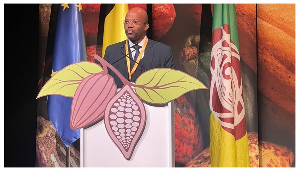
    Executive Secretary of the Cote d’Ivoire Ghana Cocoa Initiative (CGCI), Mr. Alex Asanvo, has confronted major cocoa marketing corporations on their reluctance to offer fair prices to farmers and producers.

    Speaking during a panel discussion at the ongoing World Cocoa Conference in Brussels, Mr. Asanvo questioned why purchasers of cocoa have consistently failed to honor prevailing market prices often reported by global news outlets.

    According to the Executive Secretary of the CGCI, global cocoa buyers have habitually exploited the market for their own gain, leaving farmers and producing nations at a disadvantage within an unjust trading system.

    Amidst the rising cocoa prices on the global market, farmers and civil society organizations in producing nations are advocating for buyers to adopt a base price of $10,000 as a reflection of current market trends.

    Mr. Asanvo believes that this demand is exerting pressure on governments in terms of domestic pricing but is not being reflected in the market.

    “Today, all the global news cables are quoting $10,000 Dollars as price for cocoa on the international markets; this has put pressure on governments of producing countries as farmers and civil society groups push for local prices to be set at prevailing figures on the international markets but let’s ask ourselves if buyers are willing to pay same” Mr. Asanvo observed as he joined panelists on Monday to discuss the topic “The quest for the living income of smallholder farmers: why are we stuck and how can we fix it?”

    Mr. Asanvo highlighted that there is an imbalance between the demands imposed on producing countries by buyers and the actions taken by market players themselves. He emphasized the lack of trust, consistency, and stability across all aspects of arrangements among the key stakeholders in the global cocoa value chain. This lack of cohesion has hindered the effective implementation of policies and programs, including the Living Income Differentials (LID), designed to benefit farmers.

    While acknowledging significant progress in advocating for a living income for farmers, with the introduction of the LID being a notable achievement in the past five years, the Executive Director of CGCI emphasized that more efforts are needed to ensure farmers receive fair compensation for their labor and dedication.

    “We all know, that from whatever position we’re seeing it from, we owe farmers a living income. We cannot shun our responsibilities and capabilities – because we know we can make it. So yes, things have changed tremendously, hence my nuance on “why we are stuck”. We are not stuck. We are in a dynamic process. The peripherical idea of a living income for farmers – has come to the center of the conversation. And this panel is illustrative of that” he emphasized.

    On the question of whether the LID has failed its intended purpose or not, Mr. Asanvo likened the policy to pointing to a moon and actually reaching it, arguing on the affirmative that despite the criticisms, “the circumvention and the weaknesses encountered as a results of origin differential downsides, the policy has still survived and continues to target a floor price to enable farmers get a living income”


    Mr. Asanvo suggests that to foster trust, all stakeholders must prioritize accountability and transparency. He points out that producing countries have already taken steps in this direction by regularly publishing the average achieved forward sale price and implementing traceability systems to track not only volumes but also prices.

    He argues that companies, like producing countries, should also embrace greater accountability and transparency.

    “This, they can do Disclosing how much they source at country level every year; how many farmers are in their sustainability programmes and how much they’re earning. We need some data to get to the moon. What cannot be measured cannot be fixed”. he said.


    The Executive Director of the CGCI further emphasized the importance of consistency regarding sustainability, highlighting that the concept of a living income should be integrated into the sustainability standards of both exporting and importing countries.

    He suggested that voluntary sustainability programs should incentivize farmers with a living income or a price equivalent to a living income. According to him, achieving sustainable cocoa production is impossible without ensuring that farmers receive a living income.

    Mr. Asanvo advocated for a stable and predictable market forces to help shape expectations towards an ambitious plan that guarantees a living income for farmers, asserting that “producing need a predictable floor price, with a dedicated mechanism to deliver it irrespective of terminal market prices since history shows that commodity markets are prone to price falls as sudden as price rises – and sadly for farmers, falls are way longer than rises.”

  • Supply constraints drive cocoa prices higher for fifth consecutive day

    Supply constraints drive cocoa prices higher for fifth consecutive day


    Cocoa futures surged for a fifth consecutive day, driven by anticipated tightening supplies in the upcoming months, propelling prices to near record highs.

    The primary contract in New York experienced a significant uptick of up to 2.9%, mirroring a similar upward trend in London.

    Concerns over dry weather conditions in West Africa pose a threat to the ongoing mid-crop harvest, as highlighted by The Hightower Report.

    A global cocoa shortage has propelled futures to surpass $10,000 per ton, more than doubling since the beginning of the year, and reaching a historic peak earlier this month.

    The substantial surge is starting to exert pressure on certain traders, albeit encouraging growers to re-enter the market.

    Ghana, a leading cocoa producer, has initiated discussions with traders to defer deliveries due to bean shortages, as informed by sources familiar with the negotiations.

    Challenges in meeting contractual obligations have plagued Ghana in recent seasons due to diminished output, necessitating the rollover of deliveries and exacerbating strains on the global market.

    Similarly, Ivory Coast has appealed to buyers to postpone purchases until the mid-crop period to alleviate the scarcity pressure.

    You

  • IES proposes 3-pronged strategy for stable,  affordable petroleum prices in Ghana

    IES proposes 3-pronged strategy for stable, affordable petroleum prices in Ghana

    The Institute for Energy Security (IES) has suggested a three-pronged approach to ensure stable and affordable petroleum prices in Ghana.

    This involves maintaining a strong currency, establishing a viable domestic oil refinery to decrease fuel imports, and achieving a delicate balance between the downstream and upstream petroleum sectors.

    Nana Amoasi VII, Executive Director of IES, presented this proposal during an interview with the Ghana News Agency on Friday, April 5.

    This recommendation follows the recent surge in fuel prices in Ghana, which have surpassed GHS14 per litre, marking the highest level in approximately 14 months. The last time fuel prices reached such levels was in February 2023, when they peaked at GHS15.

    “A more sustainable approach is to have a very strong Cedi, make use of our indigenous crude oil, and build a synergy between the upstream and downstream petroleum sectors.” Nana Amoasi VII said.

    He elaborated that the nation had experienced a 14-month period of elevated fuel prices and indicated that a significant decrease before December 2024 was improbable. Instead, he suggested that what was foreseeable would be a degree of stability.

    “Between February 2023 and now, we still have been dependent on oil export; our refinery capacity continues to be low since the coming of Sentuo, which is also having erratic production due to power outages, exposing us to international market risks,” he said.

    He also said: “Our cedi stabilised for a while, however, over the last month, there’s been a consistent decline in the value of the cedi against the importing currency – the Dollar, leading to a forex exposure, which is also working against us.”

    The Executive Director of IES observed that the Price Stabilisation and Recovery Levy on petroleum products had proven ineffective in stabilising fuel prices. Therefore, he emphasized the necessity for substantive efforts to address the sector’s challenges.

    He asserted that addressing these issues would contribute to stabilizing the prices of petroleum products in the country, especially petrol and diesel, which currently average almost GHS15 per unit.

    “Let’s work at bringing back our Tema Oil Refinery (TOR) and ensure that we’re refining some of our crude domestically, and that could give us some savings from the forex,” he said.

    Nana Amoasi VII remarked that fuel importation incurred additional expenses. However, with a well-integrated connection between the upstream and downstream petroleum sectors, taxes would be minimal, leading to reduced production costs.

    “If the Sentuo Oil Refinery is working efficiently, we’ll get 45,000 barrels, and if we bring back TOR, we will get another 45,000 barrels. With this, we’ll be able to meet more than 90 per cent of our domestic demand of petroleum,” he said.

  • Kenkey price Analysis: Kenkey at Dzorwulu, Spintex most expensive, Osu, La remain affordable

    Kenkey price Analysis: Kenkey at Dzorwulu, Spintex most expensive, Osu, La remain affordable

    A recent survey conducted on Kenkey prices has sparked discussions across Accra regarding the varying costs of this beloved Ghanaian dish.

    The findings, known as the Kenkey Index, have revealed notable price differentials across different areas of the city, prompting speculation about the factors driving these variations.

    According to the Kenkey Index, areas such as Spintex, Dzorwulu, Circle, Dome, Ofankor, Achimota, Lapaz, and North Kaneshie consistently rank as the most expensive locations for purchasing Kenkey.

    Kobina Aidoo, the creator of the Kenkey Index, discussed these findings during an interview with Accra-based Citi TV host Bernard Avle.

    Aidoo expressed curiosity about the underlying factors contributing to the high Kenkey prices in Dzorwulu and other identified areas, suggesting that immigrant communities might play a role in shaping these economic dynamics.

    He highlighted the diversity in Kenkey affordability, noting that coastal areas tend to offer more affordable options.

    Locations such as Haatso, Madina, Sakumono, Nungua, Cantonments, Labone, Odorkor, Awoshie, and Weija were identified as places where Kenkey is available at relatively reasonable prices.

    Overall, the Kenkey Price Index sheds light on the economic landscape surrounding this traditional Ghanaian dish, providing valuable insights into the affordability and accessibility of Kenkey across different regions of Accra.

    Expensive Kenkey Selling Places: Circle, Makola, Ofankor, Dome, Achimota, Dzorwulu, Tesano, and North Kaneshie.

    Not-so-expensive Places to Get Kenkey: Haatso, Madina, Sakumono, Nungua, Cantonments, Labone, Odorkor, Awoshie, and Weija.

    Cheaper Places to Buy Kenkey: Osu, La, Mamprobi, Laterbiokorshie, Ablekuma, Kaneshie, Ablekuma, and Teshie.

    Kenkey, a traditional Ga dish typically served with black or red pepper, fish, sardines, canned beef, shrimp, referred to as ‘komi’ or ‘dokono’ in Fante, remains a cherished staple in the culinary culture of Ghana. Its popularity extends across economic divides within the Accra Metropolis, showcasing its enduring significance in Ghanaian cuisine.

  • Govt paying cocoa farmers meager amount amidst high world market price – NDC

    Govt paying cocoa farmers meager amount amidst high world market price – NDC

    The primary opposition party, the National Democratic Congress (NDC), has accused the government of exploiting cocoa farmers by undervaluing their produce throughout the country.

    According to the NDC, cocoa is presently commanding a price of $3,600 per bag on the international market. However, the government is compensating Ghanaian farmers only GHS 1,308.00 per bag, a situation that the NDC deems unfair.

    At the commencement of the 2023/2024 cocoa season, the government declared a new cocoa price. The price per bag was raised from GH¢800.00 to GH¢1,308.00, and the per-ton price surged from GH¢12,800.00 to GH¢20,943.00. This represented a substantial 63.5 percent increase compared to the previous price.

    The NDC asserts that this price adjustment is insufficient and amounts to exploitation of hardworking cocoa farmers.

    Mr. Eric Opoku, the Ranking Member on the Food and Beverages Committee of Parliament, expressed his concerns about the government’s offer during an interview on The Citizens Show on Accra 100.5 FM, hosted by Nana Ama Agyarko on September 14, 2023.

    Mr. Opoku pointed out that there is a scarcity of cocoa on the international market, a fact acknowledged by the International Cocoa Organization (ICO). This shortage has driven cocoa demand to unprecedented levels. He further explained that such a significant price surge has not been witnessed since 1970, primarily due to production shortages in premium cocoa from Ghana and Ivory Coast.

    Under normal circumstances, Mr. Opoku argued, cocoa farmers should be reaping significant benefits from the high cocoa prices spurred by the global shortage. However, he believes that the government’s actions are unjust, as it is providing farmers with a meager sum while profiting immensely from the unprecedented cocoa prices.

    According to Mr. Opoku, this situation represents a clear case of the government taking advantage of ordinary farmers at the expense of their rightful earnings.

  • Increase in pork prices on the markets

    Increase in pork prices on the markets

    On September 1, 2023, there was a small increase in the price of pork of GH4.

    1 kilo of pork, which was being sold for GH26, is now being sold for GH30.

    Augustine Naah, the Ashanti Regional Organiser of the Pig Farmers and Producers Association, claims that the price increase was mostly caused by the high cost of feed.

    He stated that, “soya beans, maize, drugs, transport, and labour costs among others have all gone up.”

    “To ensure the sustainability of their businesses, pig farmers found it necessary to align their prices with the increased cost of production,” Mr Naah said.

    He pleaded with customers to be patient and continue buying their items so that they could stay in business.

  • Nigerian government has no plan to increase fuel prices

    Nigerian government has no plan to increase fuel prices

    Nigeria’s President, Bola Tinubu, has provided reassurance to the nation’s citizens, confirming that the existing petrol price will remain unchanged as there is “no intention to raise fuel prices at present.”

    This affirmation comes in response to warnings issued by certain oil marketers, predicting a potential third increase in petrol prices since President Tinubu’s assumption of office in late May. These warnings were attributed to Nigeria’s ongoing foreign exchange challenges.

    However, President Tinubu’s spokesperson, Ajuri Ngelale, conveyed to BBC News that both Mr. Tinubu and industry stakeholders are firmly convinced that they can uphold the current pricing structure without making any adjustments.

    “Reversing our deregulation policy by swiftly cleaning up existing inefficiencies within the midstream and downstream petroleum sector”.

    Similarly, Nigeria’s state oil company, NNPC, posted a statement online, explaining that “we do not have the intention to increase our pump prices as widely speculated”.

    Since the government harmonised the exchange rates, the naira has continued to plunge on the foreign currency market, driving up the price of getting petroleum to customers.

    Nigerians have been dealing with rising food prices and higher transportation costs due to high inflation rates since the elimination of the gasoline subsidy.

  • GUTA describes 2023 mid-year budget as empty

    GUTA describes 2023 mid-year budget as empty

    President of the Ghana Union of Traders Association (GUTA), Dr. Joseph Obeng, has called the 2023 mid-year budget read in front of lawmakers on Monday, July 31, 2023, “empty.”

    He claimed that neither the high cost of doing business nor the high taxes paid on commodities were addressed by the government.

    Dr. Obeng continued by saying that the recent spike in utility prices was hurting the business community.

    Speaking in an interview on TV3’s Ghana Tonight programme, the GUTA President said, “The budget did not touch on the high cost involved in doing business, no revision on taxes, high interest rate and high inflation issues have not been solved. Inflation from 53% to 42% is not acceptable, nothing has changed, there is no new thing in the budget.”

    “Effects of the IMF and high exchange rate did not help; utility bills have gone up to 50% all these are not good for businesses,” he stated.

    Dr. Obeng advised the government to implement expenditure cuts to alleviate the financial burden on the country.

    Amidst the economic crisis, he expressed concern that Ghanaians were facing significant hardships and suggested that the government should implement more stringent measures to bring relief to the citizens.

    The mid-year budget review statement, presented by Finance Minister Ken Ofori-Atta, was a requirement under the Public Financial Management Act 2016. Its purpose is to update the Parliament and the public on the country’s economic progress and to outline any necessary adjustments to budgetary allocations and policies.

  • COPEC to increase increase fuel prices in first pricing window of August

    COPEC to increase increase fuel prices in first pricing window of August

    In the current pricing window, the Chamber of Petroleum Consumers (COPEC) has projected a slight increase in fuel prices.

    According to the Executive Secretary of COPEC, Duncan Amoah, petrol and diesel prices are anticipated to rise by approximately 9% compared to the current pump prices.

    Furthermore, the price of liquefied petroleum gas (LPG) is expected to see a 20 percent increase.

    The primary reason behind the increase in petroleum products is the surge in international market prices for fuel.

    Duncan Amoah pointed out that crude oil also witnessed a rise of 10.53 percent, with the mean price escalating from $75.85 per barrel to $83.84 per barrel.

    As a result, petrol is projected to be sold at GH¢13.27 per litre at pumps, while diesel is expected to be priced at GH¢13.93 per litre.

    Previously, petrol was being sold at GH¢12.45 per litre, and diesel was priced at GH¢12.55 per litre.

  • Nigeria: CSOs call on FG to rescind increase in fuel prices

    Nigeria: CSOs call on FG to rescind increase in fuel prices

    The Federal Government has been urged by civil society organizations to stop the current rise in fuel prices and move quickly to implement palliative measures.

    Additionally, the CSOs urged the government to declare a national emergency on youth unemployment.

    These were revealed at a news conference conducted on Friday in Abuja by the CSOs that make up the Nigeria International NGO Forum and the Civil Society Networks in Nigeria, both of which are supported by the Development Research and Projects Centre.

    According to The PUNCH, Premium Motor Spirit, often known as gasoline, had its pump price increased on July 18 from N537 to N617 at the nation’s filling stations.

    Speaking at the briefing, the Chairman of the North-Wast Civil Society Network, Ahmed Shehu, said “We want the government to declare a state of emergency on youth unemployment and economic resuscitation to enhance skills and create jobs to make them self-reliant. We believe this will reduce their vulnerability to recruitment into criminal activities.

    “On subsidy removal, we are urging the government to reverse the recent increase in fuel price and expedite actions in introducing palliative measures and consider measures like rehabilitation of refineries, introducing affordable transportation, exploring other alternative means of energy, review workers salary and include CSOs into the presidential steering committee on palliative to represent the interest of the non-working class.

    “We call on government at all levels to improve on its engagement and sensitisation of citizens before taking major decisions, especially on issues of national importance. The government should leverage the presence of the National Orientation Agency and CSOs and its partners in enlightening the citizens to understand its policies and programme, their roles, rights, and responsibilities, this will help in ensuring good governance, inclusiveness, and effective service delivery.

    “On security, we call on the government to employ community policing and the use of technology in the fight against banditry, insurgency, and kidnapping. Multi-security coordinated attack should be introduced in wiping away red spots using land and air forces, particularly across all the volatile areas in the Northwest, North Central, and North Eastern parts of the country.”

    The networks also urged the government to adopt the National Policy on the protection of civilians, as a mark of deliberate action to reduce the likelihood of harm to civilians and infrastructures during all phases of military operations.

    Also speaking, the representative of the Humanitarian Country Team, Peter Egwudah said, there is a need to improve the humanitarian aid for internally displaced persons in the country.

    “People are displaced across the country and there is a need to reach them with humanitarian aid,” he said.

  • Experts call for action to combat skyrocketing food prices in Mid-year budget review

    Experts call for action to combat skyrocketing food prices in Mid-year budget review

    Economic, governance, and agricultural experts are urging the government to formulate a comprehensive plan to support agriculture in order to tackle the soaring food prices in the country.

    Such a plan, they argue, would not only address the growing hardships caused by increasing food prices but also help reduce borrowing and tackle the infrastructure deficit hindering the country’s development.

    According to data from the Ghana Statistical Service, food inflation reached 54.2 per cent in June 2023, the highest rate in several years.

    In light of this situation, Dr. John Kwakye, the Director of Research at the Institute of Economic Affairs, Dr. Kojo Pumpuni Asante, the Director of Advocacy and Policy Engagement at the Ghana Centre for Democratic Development (CDD-Ghana), and Dr. Charles Nyaba, the Executive Director of the Peasant Farmers Association of Ghana, have shared their expectations for the 2023 Mid-year budget review.

    They are calling on Finance Minister, Mr. Ken Ofori-Atta, to present measures aimed at improving revenue mobilization, controlling the growing public debt, increasing investment in capital expenditure, and reducing corruption.

    Finance Minister Ken Ofori-Atta is scheduled to present the Mid-year Budget Review to Parliament, as required by Section (28) of the Public Financial Management Act, 2016 (PFMA) Act 921. This review will be the first one since the government sought a three-year Extended Credit Facility with the IMF for $3 billion in 2022, with the goal of restoring macroeconomic stability and ensuring debt sustainability.

    Dr. Kwakye emphasizes the need for concrete strategies to boost revenue mobilization in order to reduce the government’s reliance on borrowing to meet its revenue requirements.

    “Plugging the tax loopholes, paying attention to property tax, addressing under declaration by importers and tackling tax evasion, cutting the size of the government can help raise the tax envelope much higher,” he stated, adding that government could also raise much revenue from the extractive sector.

    The Director of Research at IEA proposed that in the Mid-year budget, the Finance Minister should present plans to support food processing and preservation to tackle post-harvest losses. Additionally, he recommended offering incentives to aid the transportation of food items from food-producing areas to cities.

    Dr. Asante emphasized the need for the Finance Minister to outline specific policies and plans that the government intends to implement to address food inflation. He pointed out that citizens have been expressing general concerns about the rising food prices, but there has been no clear indication of the government’s actions to tackle this challenge.

    According to Dr. Charles Nyaba, the surge in food prices is due to the high cost of production, with food production expenses increasing by over 100 percent due to the withdrawal of subsidies on inputs like fertilizers and farm machinery.

    The data from the Ghana Statistical Service for June 2023 indicates that food price inflation led the inflation basket at 54 percent, making it one of the highest inflation rates in Ghana in recent times.

    Dr. Nyaba recommended that in the Mid-year budget review, the government should consider reintroducing the withdrawn subsidies and providing tax waivers on the importation of farm inputs.

  • Cocoa prices surge in New York after 12 years

    Cocoa prices surge in New York after 12 years

    The cost of cocoa, a crucial raw material for chocolate production, surged to its highest level in over 12 years in New York on Tuesday, July 18.

    This rise in prices comes shortly after cocoa reached its highest point in 46 years in London. The situation has put traders and chocolate manufacturers in a challenging position due to limited supplies.

    During the trading session, the benchmark cocoa contract at the Intercontinental Exchange in New York reached $3,429 per metric tonne, the highest level since March 2011. It closed at $3,407, representing a 1.4% increase.

    Cocoa has become one of the most sought-after agricultural commodities, primarily because of an unusual decline in production in the western part of Africa. This region is a major supplier of raw cocoa to chocolate makers worldwide.

    Moreover, the prospect of potentially adverse weather conditions in the future is also impacting the market.

    Analysts have expressed concerns about the areas of Ghana, Ivory Coast, Nigeria, and Cameroon, where drier-than-normal weather is anticipated for the coming months due to the developing El Nino pattern. These factors have combined to drive cocoa prices to their current soaring levels.

    “Cocoa production is usually weaker in an El Nino year. We don’t know how strong this current El Nino will be, but forecasters say it will probably be strong,” said Rabobank cocoa analyst Paul Joules.

    “The 2023/24 mid crop could be affected, as well as the 2024/25 main crop,” he added, referring to the two annual cocoa crops African countries harvest.

    On Monday, exporters estimated that the volume of cocoa arriving at ports in Ivory Coast, the world’s leading cocoa producer, has decreased by 4% compared to the previous year, indicating a smaller production for the season.

    In London, cocoa futures settled with an increase of 18 pounds, equivalent to 0.7%, reaching 2,532 pounds per metric tonne.

    As for other commodities, raw sugar settled up by 0.3% at 23.86 cents per pound, remaining within a recent narrow range and below the 11-year peak above 27 cents reached in late April.

    Arabica coffee experienced a rise of 0.3%, settling at $1.563 per pound, while robusta coffee, on the other hand, settled down by $20, or 0.8%, at $2,532 per metric tonne.

  • Dispute between bakers, millers over  increased flour price

    Dispute between bakers, millers over increased flour price

    The Premium Bread Makers Association, representing bakers, has disputed the claim made by flour millers that the price of flour has remained unchanged in the past year. This disagreement arises as the Association of Master Bakers and Caterers of Nigeria announced a nationwide 15 percent increase in bread prices starting from July 24.

    Emmanuel Onuorah, the President of the Premium Bread Makers Association, stated in an interview with The PUNCH that flour millers had implemented a price increase for flour following the devaluation of the Nigerian currency.

    He emphasized that rising input costs in recent months have further compounded the challenges faced by bakers, who are already grappling with various macroeconomic difficulties.

    Onuorah also highlighted that many of their members have been forced to exit the breadmaking business due to the numerous challenges prevailing in the operating environment.

    Onuorah said, “They are gouging price. They just do whatever they want, they were telling us before now that they source their forex from the black market. Now that the government has taken away the official window we have discovered that they were getting forex from the banks.

    “They’re going to implement the increase in the price of flour in tranches. They have added N2,000, with the possibility of adding another N3,000. I don’t know when, but that’s their plan. In the last three months, they have added N10,000 to the price of sugar. 150kg bag of sugar has gone up by N10,000.”

    He claimed that the recent elimination of fuel subsidies and devaluation of the naira had significantly increased the overhead expenses of breadmakers, forcing them to produce at less than full capacity.

    He added, “Many of our distributors are using fuel. If they were using N4,000, today if they buy N4,000 fuel it doesn’t go anywhere. So it is affecting distribution. Most of them are leaving this business.”

    Onuorah said the leadership of the union had already instructed the members to adjust prices in light of the recent developments in order to keep up with production costs.

    “We have started doing it individually without necessarily giving any percentage adjustment. If any bakery does not adjust price, they will close down.

    “Mind you, PBAN members are not increasing price, but making marginal adjustments to be able to match escalating costs with revenue, which by the way is disproportionate in terms of revenue.”

    Reacting, the Corporate Communications Manager at Flour Mills of Nigeria, Modupe Thani, denied the claim by PBAN that the price of flour had been increased

    “The price of four has not gone up, and it hasn’t gone up in recent times. I’m not sure where that story is coming from. I also spoke with my people in-house and they said nothing like that has happened. The price of flour has not been increased for more than one year.”

    The General Secretary of the Flour Mills Association of Nigeria, Saliu Olalekan, refused to comment on the matter on the ground that the association would not get involved in matters revolving around the price of the product.

  • Government advised to review rising food prices as June’s inflation rises slightly to 42.5%

    Government advised to review rising food prices as June’s inflation rises slightly to 42.5%

    Government statistician, Prof. Samuel Kobina Annim, has counseled decision-makers to critically examine the issues causing the rise in food inflation.

    He emphasized that compared to non-food inflation, food inflation has regularly increased by around 20 percentage points.

    Speaking to journalists after revealing that June’s inflation rate jumped slightly to 42.5 percent from 42.2 percent in May, Prof. Annim stated that prices for everyday staple foods like vegetables and seafood have been rising over the past few months.

     “At the minimum we see a widening of the gap between food and non-food inflation. We need to focus on why we see food inflation going up.

    We have seen about a 20 percentage point change between food inflation and non-food inflation”, he said.

    He mentioned that the price of food had risen by 54.2 percent more than the national average, with imports rising by 43.8 percent and domestically produced goods rising by 36.2 percent.

  • Rot-causing disease affects Cocoa output, hiking prices

    Rot-causing disease affects Cocoa output, hiking prices

    Cocoa prices have surged to a 13-year high due to heavy rainfall across West Africa, which has accelerated the spread of a rot-causing disease, posing a threat to cocoa output in major producing countries.

    Farmers in Ivory Coast, Ghana, and Nigeria have reported the presence of blackpod disease, causing cocoa pods to blacken and rot. This disease can have a significant impact on the quality and quantity of cocoa beans, potentially disrupting the supply chain. According to Fuad Mohammed Abubakar, the head of Ghana Cocoa Marketing Co., the disease can be devastating for cocoa production.

    Farmers in Ivory Coast are concerned about the mid-crop’s output and quality, expecting it to be disappointing compared to the previous year. This raises worries that the smaller harvest may not be sufficient to offset any shortfall from the main crop.

    Cocoa is harvested twice a year, with the main crop harvested mostly from October to March and the mid-crop from May to August.

    London cocoa futures have experienced a remarkable surge of over 20% this year. On Monday, the most active futures reached £2,544 per ton, marking the highest level since mid-2010.

    In Nigeria, farmer Sola Ogunsola reported significant damage to cocoa farms in coastal areas, resulting in the loss of developing pods. Additionally, heavy rainfall has made roads impassable, hindering the application of chemical treatments in plantations and the transportation of cocoa to ports.

    Ivory Coast farmers have sent 2.24 million tons of cocoa to ports during the current season, slightly below the estimated 2.29 million tons from the previous year.

    Furthermore, the return of El Niño conditions is adding support to cocoa prices, as the weather phenomenon typically brings hot and dry conditions to West Africa, increasing the risk of a potential 10% drop in output, according to Bloomberg Intelligence estimates.

  • IES projects marginal fall in diesel, LPG prices

    IES projects marginal fall in diesel, LPG prices

    In the first pricing window of July, the Institute of Energy Security (IES) has forecasted a minor decrease in the prices of diesel and Liquefied Petroleum Gas (LPG).

    The IES attributes this slight reduction to the decline in the prices of gasoline and LPG. However, petrol prices will remain unaffected.

    Over the past month, gasoline and LPG have experienced a 2.6% and 3.09% decrease in their prices.

    However, due to the depreciation of the cedi, the price decline does not significantly impact the overall pump prices.

    “The various changes in the price of the commodities on the international fuel market are expected to affect local market prices in Ghana. For the first two weeks in July, following a price decrease of 2.64%, 3.09% for Gasoil and LPG,” the IES projects.

    According to the data provided by the Global Standard & Poor (S&P) Platt platform, the Institute of Energy Security (IES) has reported the closing prices for Gasoline, Gasoil, and LPG in the second pricing window of June 2023. The prices per metric tonne are as follows: Gasoline – $811.80, Gasoil – $709.84, and LPG – $306.25.

    In comparison to the previous pricing window, there was a slight increase of 0.95% in Gasoline prices, while Gasoil and LPG experienced decreases of 2.64% and 3.09% respectively.

    It is worth noting that the current crude oil prices remain significantly below the projections made by analysts at the end of June 2023.

  • El Nino’s threat to production and supply issues in Ivory Coast cause spike in cocoa prices

    El Nino’s threat to production and supply issues in Ivory Coast cause spike in cocoa prices

    Due to mounting worries about how an El Nino weather phenomenon would affect the world’s chocolate output, cocoa prices increased last week.

    Last Friday, cocoa prices reached their highest level in a month for nearest-futures contracts, building on the gains observed on Thursday due to worries about the El Nino weather event. It is worth noting that cocoa prices soared to a 12-year high in 2016 when a previous El Nino event caused a drought that severely affected global cocoa production.

    This is particularly significant as the Ivory Coast, the world’s leading cocoa producer, is already facing a decline in supply.

    The U.S. Climate Prediction Centre announced last Thursday that sea surface temperatures in the equatorial Pacific Ocean were 0.5 degrees celsius higher than usual, and wind patterns indicated the presence of El Nino conditions. In the previous month, the Climate Centre raised the likelihood of an El Nino weather pattern occurring between August and October to 94 percent, up from 74 percent in April.

    Reduced supply from the Ivory Coast is another factor supporting cocoa prices, as reported by Barchart – a platform that monitors the Cocoa Futures Market. In the first two weeks of May, the Ivory Coast government disclosed that farmers had delivered a total of 2.09 million metric tonnes (MMT) of cocoa to the country’s ports during the 2022/23 marketing year, representing a 3.0 percent year-on-year decline.

    According to a statement from the Ivory Coast agriculture minister on March 31, the mid-crop – which is the smaller of the country’s two annual harvests and began on April 1 – is expected to decrease by 25 percent compared to the previous year, reaching 450,000 metric tonnes (MT).

    Quality concerns about the Ivory Coast mid-crop led to a rally in cocoa prices last month, with prices reaching their highest level in 6-3/4 years. Barchart commented that farmers had reported poor cocoa quality, with an average bean count of 120 per 100 grammes. Exporters generally prefer a count ranging from 80 to 100 per 100 grammes, with lower bean counts indicating better cocoa quality.

    The decrease in cocoa supplies from Nigeria has also contributed to the price hikes. The Cocoa Association of Nigeria reported on May 24 that the country’s cocoa exports in April declined by 46 percent compared to the previous month – and 20.6 percent compared to the previous year, amounting to 9,924 metric tonnes (MT). Nigeria ranks as the world’s fifth-largest cocoa bean producer.

    Cocoa prices have received additional support from projections made by the International Cocoa Organisation (ICCO) last month. The ICCO predicted that global cocoa stockpiles for the 2022/23 period would decrease by 3.5 percent year-on-year to 1.653 MMT. The organisation also highlighted the impact of weather variations, particularly in West Africa, which have compounded the expectation of a supply deficit. On the other hand, the ICCO forecasted that global cocoa production for 2022/23 would increase by 4.1 percent year-on-year to 5.017 MMT, while global cocoa grindings would decline by 0.6 percent year-on-year to 5.027 MMT.

    The quarterly report released by the ICCO on December 1 provided a bullish outlook for cocoa prices. The report indicated that global cocoa production for the 2021/22 period had declined by 8.0 percent year-on-year to 4.823 MMT due to unfavourable weather conditions and diseases affecting cocoa yields.

    Furthermore, the ICCO revised its previous estimate for global cocoa production downward by 419,000mt since September. The organisation also raised the projected global cocoa deficit for the 2021/22 period to 306,000mt, up from the September forecast of 230,000mt. In the previous season, global cocoa production reached a record high of 5.242 MMT, resulting in a surplus of 209,000mt in the global cocoa market.

    Nevertheless, an increase in cocoa inventories is negatively impacting prices. Monitored cocoa inventories held in U.S. port warehouses reached an 8-year-3/4 month high of 5,730,012 bags on May 22. Similarly, cocoa inventories held in European port warehouses reached an 8-3/4 month high of 147,440mt on May 15, according to ICE monitoring data.

    Stronger global cocoa demand

    Growing global cocoa demand is driving bullish price trends in the market. According to recent reports, there are positive indicators supporting this upward trajectory. The National Confectioners Association disclosed on April 21 that cocoa grindings in North America during Q1 rose by 2.4 percent compared to the previous month, although there was a year-on-year decline of 4.4 percent totalling 109,666 metric tonnes (MT). Similarly, the Cocoa Association of Asia reported on April 20 that Q1 cocoa grindings in Asia increased by 4.09 percent year-on-year, reaching 222,028mt.

    The European Cocoa Association shared its findings on April 13, revealing that cocoa grindings in Europe during Q1 experienced a 0.5 percent year-on-year growth, amounting to 375,375mt. This figure represents the highest Q1 grindings since 1999. Additionally, a cocoa exporter group, consisting of six major cocoa grinders, reported on April 19 that its Q1 cocoa processing surged by 22 percent year-on-year, totaling 189,405mt.

    Weather condition

    The Pacific Ocean usually experiences normal conditions when trade winds blow westward along the equator, carrying warm water from South America to Asia. As a result, cold water rises from the depths through a process known as upwelling, replenishing the water cycle. However, this natural pattern can be disrupted by two opposing climate phenomena called El Niño and La Niña, collectively known as the El Niño-Southern Oscillation (ENSO) cycle.

    These events have significant global implications, affecting weather patterns, wildfires, ecosystems and economies. Typically, El Niño and La Niña episodes persist for around nine to 12 months; but there are instances when they can persist for several years. Although El Niño and La Niña events occur on average every two to seven years, there is no set schedule for their frequency. Generally, El Niño events tend to occur more frequently than La Niña events.

  • Benin’s gasoline prices skyrocket as Nigeria takes away subsidies

    Benin’s gasoline prices skyrocket as Nigeria takes away subsidies

    Petrol prices in Benin have nearly doubled since it was announced that fuel subsidies would be phased out in neighboring Nigeria.

    Nigeria is one of Africa’s oil giants and subsidised petroleum products are routinely smuggled into Benin, where they’re mostly sold by the roadside and serve a large part of the population

    Popularly called kpayo – which means “unoriginal” in Goun, a native language – it is cheaper than fuelling up at stations, local media reported.

    Nigeria’s new President Bola Tinubu had in his inauguration speech said fuel subsidy was “gone”, an announcement that triggered panic-buying and a surge in fuel prices.

    It was later clarified that it would be phased out in the coming weeks.

  • Energy bills remain high despite decrease in prices

    Energy bills remain high despite decrease in prices

    Experts have cautioned that despite a price decrease in July, energy bills are likely to remain high.

    A typical household will pay £2,074 a year for gas and electricity from July, £426 a year less than currently, after the regulator cut the energy price cap for England, Scotland and Wales.

    Government help in recent months has limited bills to £2,500.

    However, prices are not expected to fall much further over the rest of the year, and could edge up in winter.

    MoneySavingExpert’s Martin Lewis said that later on in 2023 bills would be similar to last winter because, although prices are cheaper, households will not get the same £400 discount from the government they previously received.

    “People will still be paying double what they used to pay before the energy crisis hit,” he added.

    Kate Mulvany, from energy analysis firm Cornwall Insight, also said further substantial falls in bills would be unlikely particularly if there was a cold winter across Europe with the UK competing to buy energy with other countries.

    “Our forecasts suggest until the end of this decade, higher and more volatile prices are going to be seen, and that includes the impact they’re going to have on domestic bills unfortunately,” she told the BBC’s Today programme.

    Earlier this week, Qatar’s energy minister warned the “worst is yet to come” for gas shortages in Europe, suggesting prices could rise again.

    In an interview with Sky News, Chancellor Jeremy Hunt was asked if he would take action to support households if energy bills started to rise again.

    He said the government’s actions over the past few months demonstrated that it was “willing to do what it takes”.

    “We are very aware of the pressures that families are facing, and we want to do what we can to support them”, he said.

    There are hopes that the fall of the price cap below the government’s guaranteed level could lead to the return of competition in the market, with people able to shop around for the best deal.

    But Mr Lewis said that he did not expect to see firms publicising new offers immediately, with energy firms instead offering existing customers bespoke offers, with no new deals across the market.

    The boss of energy regulator Ofgem Jonathan Brearley urged people to contact their supplier if they were struggling to pay their bill.

    “In the medium term, we’re unlikely to see prices return to the levels we saw before the energy crisis,” he added.

    Michael Houghton
    Image caption,Michael Houghton is worried he will struggle again with bills this winter

    Michael Houghton says the Emmaus charity in Ipswich helped him apply for grants to pay his soaring energy bill last winter.

    He says his gas bill rose to almost £30 per week, forcing him to cut down on food shopping and entertainment.

    But Mr Houghton says that prices remaining high is a concern in the long term. Without more support he worries he will not be able to afford to pay his energy bills if they remain at a similar price this coming winter.

  • COPEC predicts drop in fuel prices

    COPEC predicts drop in fuel prices

    In the second pricing window of this month, May 2023, the Chamber of Petroleum Consumers Ghana (COPEC) forecast a decrease in fuel prices.

    In a press release signed by the Executive Secretary of COPEC, Duncan Amoah, and sighted by GhanaWeb Business, petrol is expected to drop by 4.94 percent to sell at GH¢11.67 per litre.

    Conversely, diesel will sell at 11.51 per litre after witnessing a 6.53 percent decrease.

    Duncan Amoah attributed the reduction in fuel prices to the drop in prices of crude on the international market.

    “Crude price has seen a decline from the main price of $85.29/barrel to $76.64/barrel (-10.14%),” he said.

    LPG is expected to be sold between GH¢10.10/kg and GH¢11.16/kg

    He however called on government to either reduce the taxes on LPG or subsidize the prices to promote its usage by many.

    Below is COPEC’s full statement:

    CHAMBER OF PETROLEUM CONSUMERS
    14 May 2023

    REVIEW OF FUEL PRICES FOR THE SECOND WINDOW OF MAY 2023.

    The second pricing window of the month of May 2023 is set to commence in a few hours from now, indications are that pump prices are likely to decline for fuel products across the country.

    The following basic information forms the basis of projections for the coming window, that; Crude price has seen a decline from the main price of $85.29/barrel to $76.64/barrel (-10.14%) whiles the forex or Dollar exchange rate has slightly decreased from a previous average of GHS12.0060 to GHS11.9963 (0.08%) per $1, the following shall be the predicted retail figures for Petroleum products.

    Petrol .. GHS11.67/L
    Diesel .. GHS11.51/L
    Current Price for Petrol and Diesel*..GHS11.59/L

    LPG.. GHS10.63/kg

    Thus for a 14.5 kg LPG cylinder, is expected to be selling at GHS154.10 for the window.

    All Predictions are within (±5%) error margin.

    Below are the details of the projections for the window.

    Petrol
    With the international price declining from $868.14/MT to $795.31/MT (-8.39%), the retail price works up to GHS11.67/L

    Thus, Petrol is expected to decline by 4.94%* of the current Mean Market price of GHS12.28/L, to close selling between GHS11.09/L and GHS12.26/L within ±5% of this prediction.

    Diesel
    With the International benchmark prices declining from $747.93/MT to $673.25/MT (-9.98%), the expected mean retail price for the next window shall be GHS11.51/L

    Thus, Diesel is expected to also decline by some 6.53%* of the current Mean Market price of GHS12.31/L to be selling between GHS10.93/L and GHS12.08/L within ±5% of projection.

    The Mean price of Petrol and Diesel for the coming window per the numbers shall be 11.59/L ± 5%

    LPG
    With the international benchmark prices declining from $522.77/MT to $452.75/MT (-13.39%) the projected retail price of LPG is expected to see a reduction by about 1.02% from the current average of 11.64/kg to GHS10.63/kg.

    Thus, within ±5% error, LPG is expected to be sold between GHS10.10/kg and GHS11.16/kg

    Government is however encouraged to do all it can to reduce taxes on LPG or to subsidise the price of LPG to promote or encourage its nationwide accessibility and usage which will eventually help save the environment.

  • Cutting energy prices will take years – power boss

    It “will take years” to get energy prices back to pre-Ukraine war levels, the boss of one of the world’s biggest energy firms has told the BBC.

    Enel’s Francesco Starace said bringing prices down depends on new sources of energy such as renewables and heat pumps.

    Governments across Europe are spending billions helping business and households afford energy bills.

    They are also scrambling to secure new supplies.

    Mr Starace said the company, which produces and distributes electricity and gas, tried to shield its 20 million European customers from energy market volatility this year.

    It did its best to stick to the fixed-price contracts it had agreed, he said.

    Breaking customer trust would inflict greater damage on the firm than a hit on one year’s results, he said.

    The Italian energy giant sells power to more than 70 million homes and businesses in over 30 countries.

    But Enel is planning to leave many of those countries as it focuses on renewable energy and becoming carbon neutral by 2040.

    It also wants to cut its huge debts of around $63bn (£52bn).

    It is investing heavily in making solar panels as it expands an existing factory in Sicily and builds a new one in the US.

    Enel CEO Francesco StaraceImage source, Getty Images
    Image caption, Enel’s Francesco Starace says that new supplies of renewable energy are key to cutting prices

    Soaring energy prices have been the biggest contributor to inflation and the cost of living crisis in the UK, the US and the eurozone.

    The global energy crisis triggered by Russia’s invasion of Ukraine “showed very clearly how dependence on one single source of energy is dangerous for Europe”, Mr Starace said.

    The future will be “extremely decarbonised” and depend on nuclear and renewable energy, he said.

    However, that shift to renewables also has risks.

    In July, the International Energy Agency said that China’s dominance of solar and wind turbine production creates “potential challenges that governments need to address”.

    Mr Starace said the West has been over-reliant on China for renewables and other goods.

    “Some rebalancing needs to be happening because it is healthy,” he said, when asked about geopolitical tensions interfering with energy supplies.

    This has helped drive Enel’s investment in solar panels, although the expansion of the Sicilian factory will still meet only 10% of Europe’s needs, he said.

    Political leaders have also acknowledged that Europe needs to get its energy from more places.

    According to the European Council on Foreign Relations, the EU and its member states have signed 56 energy deals with 23 countries this year.

    Among the latest was a 15-year deal for Germany to get liquefied natural gas (LNG) from Qatar through a contract with ConocoPhillips.

    Norway is also boosting natural gas production and the world’s biggest producer, the US, has been pumping out record amounts.

    This means the chances of Europe repeating its dependence on Russia with another country are “quite low”, according to Megan Richards, a former director of energy policy at the European Commission.

    “A lot of work has been done” to replace Russian energy, she added, before warning: “I think Europe will not be completely domestically independent for a very, very long time, if ever” even though “renewables will increase dramatically”.

    You can watch Francesco Starace’s interview in full on Talking Business with Aaron Heslehurst on BBC iPlayer.


    Source: BBC

  • Fix crippling economy – Ken Thompson kneels to beg Akufo-Addo

    The Chief Executive Officer of Dalex Finance and Leasing Company Limited, Mr Kenneth Thompson, has dramatically begged President Nana Addo Dankwa Akufo-Addo to take decisive actions and save the economy from total collapse.

    Speaking on Face to Face on Citi TV, Mr Thompson went down on his knees and called on the President to put in place measures that will ensure that majority of Ghanaians are not plunged into poverty and further suffering.

    “His Excellency Nana Addo Dankwa, what I can see coming is not good, I can see poverty I can see job losses, I can see business closures, I can see prices of electricity going up, I can see it. I lived through the 70s and I saw it,” Mr Thompson said.

    The 61-year-old businessman added, “I can’t do much about the problem now but you can and I am begging you, please take decisive actions because I believe that you are capable of doing something and let’s move this country forward.”

    Prices of fuel, goods and services have rapidly soared in the last few months plunging several households into a living crisis.

    In October, Ghana’s currency depreciated as much as 3.3%, before paring the loss to 11.2750/$ in the capital, Accra. That took its losses this year to more than 45%, the most among 148 currencies tracked by Bloomberg.

    President Akufo-Addo on Sunday admitted to Ghana’s economic crisis, describing it as a ‘historic’ development. Addressing the nation on Sunday evening, the President conceded to the country’s ballooning debt stock, rising inflation, free fall of the local currency, and the depletion of macroeconomic variables.

    According to him, the situation is due to many ‘malevolent forces’ which are currently working together. In his speech, he, however, reiterated the commitment of the government to dealing with the present economic decline.

    “We are in a crisis, I do not exaggerate when I say so. I cannot find an example in history when so many malevolent forces have come together at the same time. But, as we have shown in other circumstances, we shall turn this crisis into an opportunity to resolve not just the short-term, urgent problems, but the long-term structural problems that have bedevilled our economy”, the President said.


  • Fuel hikes: Energy Ministry to engage stakeholders over price methodology

    The Ministry of Energy has said it will soon meet the National Petroleum Association (NPA), the Ministry of Finance, and the central bank to find solutions to the rising cost of fuel in the country.

    The Ministry’s assurance comes on the back of unprecedented hikes in fuel prices in recent times.

    Petrol is currently selling at GHC13 and diesel has closed the Ghc15 mark as the current increment is likely to affect transport fares shortly.

    However, speaking on the Morning Starr with Francis Abban Monday, the Deputy Minister for Energy, Andrew Egyapa Mercer indicated that the pricing methodology does not favor the consumer.

    He added that the Ministry of Energy is therefore taking pragmatic steps towards ensuring that the pricing methodology does not affect the consumer.

    “So the plan is to engage the NPA together with the Bank of Ghana and officials from the Ministry of Finance and Energy to see how these pricing methods will create value for consumers,” the deputy minister stated.

    However, the Institute of Energy Security (IES) has predicted a further increase in fuel prices because of the continuous depreciation of the Ghana cedi.

    IES also hinged a hike in fuel prices on the decision by Oil Producing Countries to scale down on the production of crude oil.

    “I will not say there is an end in sight. I am not convinced because if you look at the international market, Italy and others are cutting down on production of supply. The key one being the crude oil that will impact on price negatively,” the Executive Director of IES, Nana Amuasi VII told Starr News.