Ethiopian Prime Minister Abiy Ahmed said that people are not starving in the conflict-affected areas of Tigray and Amhara, even though there is a food crisis.
“Mr Abiy said on Tuesday that no one in Ethiopia is dying from hunger. ”
He said that some people may have died because they were sick from not having enough food to eat.
The Prime Minister said that drought is affecting people in many parts of the country like Tigray, Amhara, and Oromia. He also said that we should not make this issue into a political one.
The Federal Ombudsman Institute, which is appointed by the state, said last month that almost 400 people have died of hunger in the northern areas of Tigray and Amhara. The leader of the institute, Endale Haile, told the media that the deaths happened in the last six months.
The EHRC says the government did not give enough help to the people who needed it the most.
The UN says that about 20 million people in Ethiopia need help getting food because of fighting, lack of rain, and floods.
Tag: Prime Minister Abiy Ahmed
-
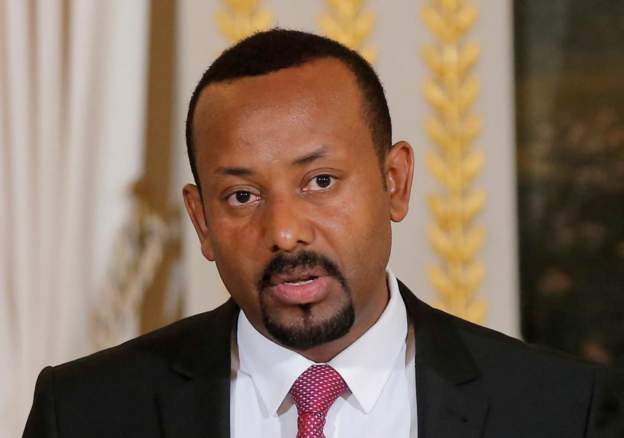
No one is starving to death in Ethiopia – PM
-
Ethiopia disregards peace talks with Oromo rebels
Peace talks with rebels in Ethiopia’s restive Oromia region have been ruled out by the Ethiopian government. Federal negotiators sat down and struck a deal with the Tigray People’s Liberation Front (TPLF) to end the two-year-long civil war in the north.
The Oromo Liberation Army (OLA), which is also fighting the federal government, once allied with the TPLF.
However, Hailu Adugna, a spokesman for the Oromia regional government, has since told local media that the government has no plans to meet with a group “that has no chain of command or political agenda.”
An OLA spokesperson has denied the claim and stated that the organisation will continue to fight.
The rebels in Oromia have been accused of being involved in a number of deadly attacks, which it denies.
The authorities say that despite there being no talks they will continue to receive OLA youth who have opted to lay down their arms.
The situation in Oromia, the home region of Prime Minister Abiy Ahmed, has been overshadowed by the war in Tigray, but attacks by different armed groups have continued unabated.
The authorities have been blamed for not protecting civilians.
The OLA is a splinter group of the Oromo Liberation Front, which is now a legally registered political party. As well as making an alliance with the TPLF, the OLA has also made deals with other rebels in the western part of the country to put pressure on Mr Abiy’s government.
The OLA says it is fighting to secure full autonomy for the Oromo people and has been labelled a terrorist organisation by the government.
-
Ethiopia’s Prime Minister Abiy Ahmed promises Tigray war will come to an end
Ethiopian Prime Minister Abiy Ahmed has stated that the conflict in northern Tigray “will end and peace will prevail.”
He made the remarks during the inauguration of a talent development centre in the Oromia regional state on Thursday.
“The situation in northern Ethiopia will come to an end, peace will prevail. We will not continue fighting forever. I believe that in a short period of time, we will stand with our Tigrayan brothers for peace and development,” Mr Abiy said.
He urged Ethiopians to work together for the country’s prosperity and not to be divided along ethnic and religious lines.
On Thursday, the Ethiopian government accepted an invitation by the African Union to participate in peace talks to be held on 24 October in South Africa to end the war that has killed an unspecified number of people and displaced millions.
It came on the same day Tigrayan rebels accused Ethiopian and Eritrean forces of killing seven youths in a town that was captured by the federal army on Tuesday.
-
Ethiopia’s civil war: Inside Tigray’s capital Mekelle
As the war in Ethiopia’s Tigray region escalates once more, civilians are increasingly becoming involved in the fighting.
Tigray rebel commanders have embarked on a new recruitment campaign, having previously been accused of forcing people to join the war effort.
Similar accusations have been levelled against Eritrea, which has entered the war on the side of Ethiopia’s government.
The BBC has received an exclusive report from a journalist in Tigray’s capital, Mekelle, on how residents are coping.
Drones fly over the skies of Mekelle, which has a population of around 300,000, almost every day. I can hear one now as I write this article. It makes me feel very insecure. In the last few weeks airstrikes have hit playgrounds and residential areas – it is not clear what the targets were.
This week the Tigray army called on every able-bodied person to join the fight – and as war-weary, as people are after 23 months of violence, they are taking up the call.
“It is considered taboo not to join the military,” says a resident, whose name the BBC is withholding for safety reasons.
Many Tigrayans remain defiant, saying they will no longer accept the federal rule, while Ethiopia’s Prime Minister Abiy Ahmed accuses the region’s leaders of rebelling in a bid to regain the power they lost when he took office in 2018.
Everyone here wants to defend their rights. The latest surge in violence started in late August after the collapse of a five-month-long humanitarian truce.
People from all walks of life, including women and young people, are answering the call to join the army of the Tigray People’s Liberation Front (TPLF).
Women have received military training, and say they are ready to fight if called up.
They include a 23-year-old who told me she was “proud to be Tigrayan and excited to have been trained to protect my rights and preserve my land”.
Tigray has been under a blockade since June 2021, and living conditions have been steadily worsening.
It’s now been more than a year since telephone lines and internet services stopped, disconnecting us from the rest of the world.
People have gone back to using paper to write messages to their families and friends – or they go to the border with Ethiopia’s Amhara region to make calls and receive money from relatives abroad.
Groups gather around a single radio on the side of the road to find out what’s happening. Everyone talks about the peace process and follows attentively the news about that but many people here believe that the Ethiopian government isn’t ready for peace talks, because they have not stopped bombing.
People here cannot make money, or withdraw cash from banks because they have been closed. So businesses are not functioning.
It has led to the emergence of open-air markets, which were illegal before the war, and the movement of cash through the black market, with brokers charging a commission of at least 30%, down from 50% a few months ago.
My own neighbours live on money sent by their families in the US and Canada.
One of the neighbours says he can’t feed his five children if they don’t send cash. He has two sisters in the US, and he has received money from his siblings four times since the start of the siege.
The conflict has prevented essential goods, including fuel, from reaching Tigray. Many people go around on foot, or in donkey carts.
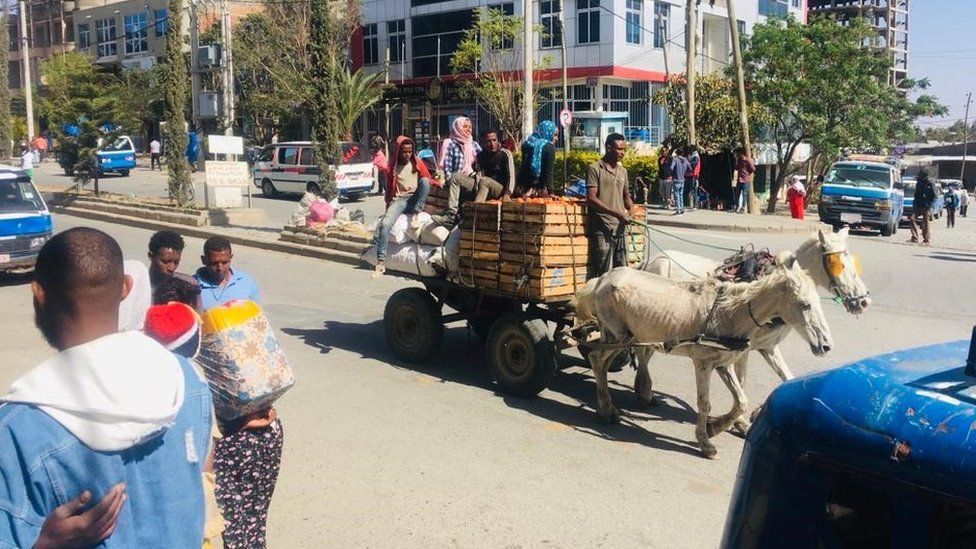
Image caption, Mekelle has been cut off from the rest of the world Prices keep increasing. Teff, the grain we commonly use to make the traditionally baked bread known as injera, goes up every week. The current price of 100kg (220 lb) is around $265, compared to $85 a year ago.
People are dying due to a lack of medication that can’t be brought in because of the siege. The cost of medicines for chronic diseases has increased tenfold.
As every new airstrike kills more civilians, more young people are driven to join the military.
A 29-year-old woman told me that three of her family members – two brothers and a sister – have now joined the Tigray army.
For the past two months she has been spending her time, and using the little she has, to prepare food for fighters on the frontline.
Other residents are sharing their food with the families of those who’ve gone to fight.
When news broke last week that African Union-brokered peace talks could start in South Africa, people were happy.
But the talks failed to get off the ground for reasons that are unclear. Many here are just desperate for peace and churches and mosques are full every night, with people praying for this war to end.
The BBC has withheld the name of the journalist and interviewees for their own safety.
DISCLAIMER: Independentghana.com will not be liable for any inaccuracies contained in this article. The views expressed in the article are solely those of the author’s, and do not reflect those of The Independent Ghana
Source: bbc.com
-
President Ruto visits Ethiopia for bilateral meeting
Kenyan President William Ruto met with Ethiopian Prime Minister Abiy Ahmed on Thursday to discuss bilateral cooperation and deepen the economic and strategic ties between the two countries on regional issues.
This is President Ruto’s first visit to Ethiopia after being elected.
It is to be recalled that Prime Minister Abiy Ahmed had taken part in the inauguration ceremony of President William Ruto in Nairobi on September 13/2022.
Ethiopia and Kenya are countries that have long-standing friendship and cooperation based on mutual benefit.
The visit also comes amid the ongoing war between Ethiopian troops and the Tigray People Liberation Front (TPLF).
Talks about the ongoing Tigray conflict are expected to take centre stage in the meeting between the two leaders.
Earlier on, President Ruto had affirmed that his administration would play an active role in spearheading the peace talks between the region.
Already, the African Union has organized high-level talks in South Africa on the protracted conflict, with Kenya’s former President Uhuru Kenyatta set to be part of the mediators.
Source: Africanews