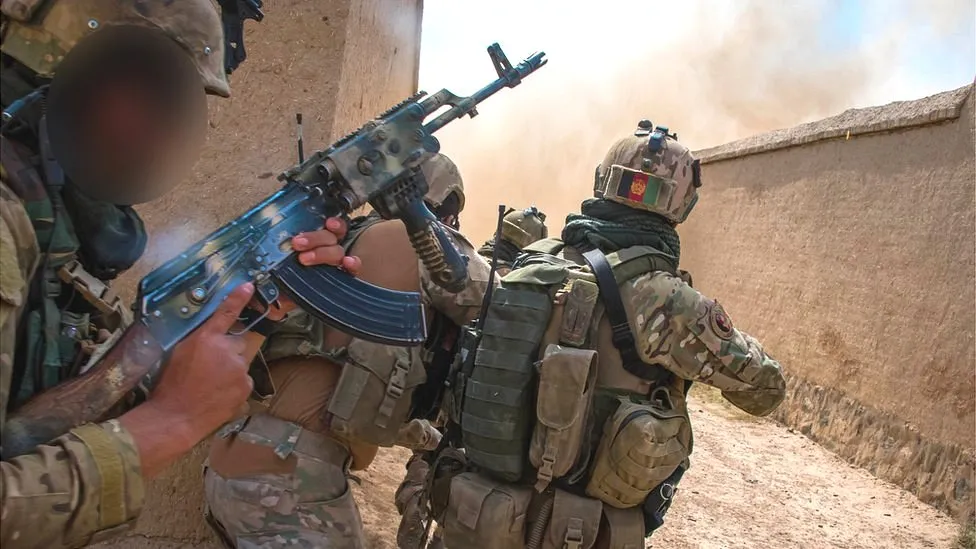
The UK has trained and paid for about 200 Afghan special forces members, but now they may have to go back to their country, which is controlled by the Taliban.
The numbers, collected by a group of Afghan soldiers, show how bad the situation is, according to a former UK general. He calls it a “betrayal” and a “disgrace”.
The soldiers ran away to Pakistan. Now Pakistan says it will make Afghan refugees leave.
The UK says it has helped many Afghans to be safe. Gen Sir Richard Barrons, who worked for the British Army in Afghanistan for over 12 years, told the media that it’s embarrassing that the UK has not been able to move these soldiers. He said it shows that either we are lying as a country or not capable.
“He said that both are not okay. ” “It’s a betrayal, and because of that betrayal, our friends will either die or go to prison. ”
MPs talked about the issue in the House of Commons on Monday.
In 2021, Prime Minister Boris Johnson told Parliament that the Afghan special forces’ service was very important. He said the UK would do everything possible to help them get to safety.
The Afghan commandos are worried because the government said no to helping Afghan civilian leaders who are in danger.
The media has received a secret letter sent in March 2022 to the Foreign Office. The letter asked for immediate help for 32 ex-governors, prosecutors, and officials who worked with the UK and US in Helmand Province from 2006 to 2014.
Two government sources told CNN that Britain and the EU have achieved an agreement on new trade regulations in Northern Ireland in an effort to settle a contentious issue that has stoked post-Brexit tensions in Europe and on the island of Ireland.
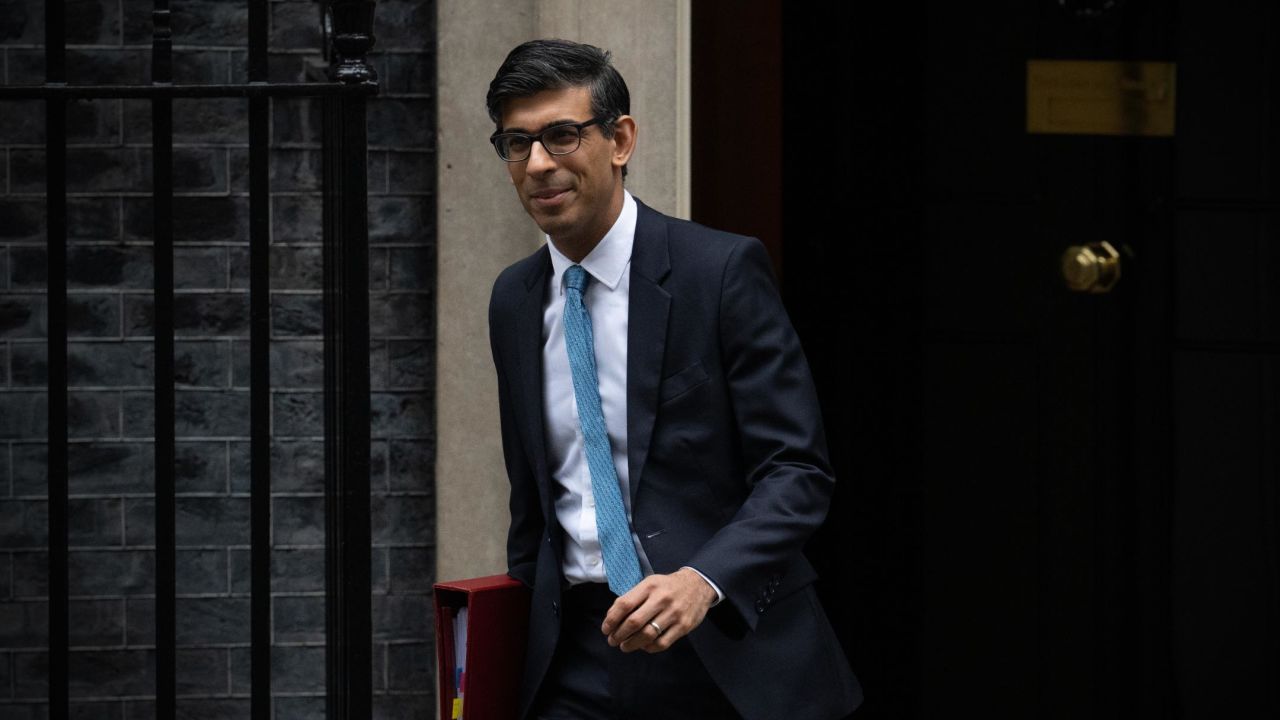
Prior to a declaration regarding the agreement in the House of Commons, European Commission President Ursula von der Leyen came in the UK on Monday for final discussions with British Prime Minister Rishi Sunak. According to Buckingham Palace, Von der Leyen will also have tea with King Charles III at Windsor Castle.
Negotiations intensified in recent weeks, after months of impasse over how to handle border checks in Northern Ireland, which is part of the UK but shares a land border with the Republic of Ireland, an EU member state.
Now that a deal is done, Sunak faces a political backlash from hardline Euroskeptics in his Conservative Party.
Von der Leyen’s meeting with the King has proved controversial. “The King is pleased to meet any world leader if they are visiting Britain and it is the Government’s advice that he should do so,” the Palace said when it announced the sit-down.
According to a royal source, the meeting would be an opportunity for King Charles to discuss topics including the war in Ukraine and climate change.
But it was criticized by some prominent unionist figures.”I cannot quite believe that No 10 would ask HM the King to become involved in the finalising of a deal as controversial as this one,” former Northern Ireland First Minister Arlene Foster wrote in a tweet. “It’s crass and will go down very badly in NI.”
A new deal would update the arrangements known as the Northern Ireland Protocol, signed with Brussels by former Prime Minister Boris Johnson, which attempted to recognize the delicate situation that Brexit created in Northern Ireland.
Ordinarily, the existence of a border between an EU member state and a non-EU nation like the UK would require infrastructure such as customs posts. But during the period of sectarian strife known as the Troubles, security posts along the border between Northern Ireland and the Republic of Ireland became a target for paramilitary groups fighting for a united Ireland.
In theory, the Northern Ireland Protocol was intended to do away with the need for border infrastructure. It was agreed that Northern Ireland would remain within the EU’s regulatory sphere, and that goods entering Northern Ireland from Great Britain would be checked before they arrived – effectively imposing a sea border.
That enraged the pro-British unionist community in Northern Ireland, who argued they were being cut off from the rest of the UK and forced closer to the Republic. Disputes about the arrangements, in part, have been a barrier to the restoration of the Northern Ireland Assembly, which has been suspended since 2017. The sharing of power between unionists and republicans is a key part of the Good Friday Agreement – the peace deal that marked the end of the Troubles.
The wrangling has also affected trade between Great Britain and Northern Ireland to the extent that the UK has not fully implemented the protocol.