India’s government is looking into a security problem at its parliament. Two people got into the building and caused a disturbance by yelling and releasing colored smoke.
At least four people have been taken by the police and it’s said that two others are being held.
We still don’t know why they did it.
Opposition leaders didn’t like that security failed on the anniversary of a previous attack on the parliament.
They want Pratap Simha, a member of the BJP, to be punished for allegedly allowing the intruders to enter the public gallery in parliament.
MrSimha and his party have not said anything officially. The BBC sent an email to the MP to ask for their thoughts.
Attackers release colored gas in India’s government building.
On Thursday, there were more security measures around the parliament building. There were barriers outside the building to stop people from getting in.
The meetings in both houses were stopped because the opposition politicians wanted to talk about the incident and hear from the prime minister and the home minister.
“They should have at least criticized the incident,” said Congress MP Adhir Ranjan Chowdhury to reporters afterwards.
Derek O’Brien, a member of the opposition in the upper house of parliament, called for Home Minister Amit Shah to make a statement. As a result, he was suspended for bad behavior.
Before the meeting ended, defense minister Rajnath Singh said in parliament that everyone had criticized the incident. “We, including both ruling and opposition MPs, need to be cautious about who we give passes to enter parliament,” he said.
A police officer told Reuters that people can’t visit the new parliament building until they make sure it’s safe.
The news says that four people, three men and a woman in their 20s and 30s, will go to court on Thursday. The police have not said for sure who they are, but their families have talked to the local news and their pictures and names are in the newspapers.
The event happened on Wednesday when politicians were working in the Lok Sabha, which is the lower part of India’s parliament. Earlier today, President Droupadi Murmu, Prime Minister Narendra Modi, and other leaders honored the nine people who were killed in the 2001 attack. All five of the attackers were also shot and killed.
Lawmakers said that two men jumped into the room from where the public sits and released cans of colored smoke. One man was seen jumping from one table to another while the lawmakers and security officials tried to catch him.
Another man and woman shouted chants outside the parliament and released colored smoke from containers. They were caught on camera being taken away by the police.
Who are the people being charged.
“Four people from different states in India have been arrested. Some media reports say they met on Facebook, but the BBC couldn’t confirm this independently. ”
Some reporters outside the government building talked to one of the people accused of a crime as she was being taken away by the police. “My name is Neelam, and I am not part of any organization,” she said. She also said she was just a regular person without a job and wanted to protest against the government for being too harsh on the people.
Her family talked to ANI news agency from their home in Jind district, northern Haryana. They said they didn’t know she went to Delhi. Her brother said that we only knew she was in Hisar for her studies.
Neelam’s family said she had many degrees, including a master’s degree in education, but they were worried that she might not find a job.
“Her mother told ANI that she used to say she’s very qualified but can’t find a job, so it’s better to die. ”
The man she was protesting with is named Amol Shinde. He comes from Latur district in Maharashtra state. A government official said to the press that Mr. Shinde has been trying for the past few years to pass tests to become a police officer. The police say that his family did not know where he was.
The two men who went into parliament are named Manoranjan D from Mysore, in southern Karnataka, and Sagar Sharma from Lucknow, in northern Uttar Pradesh.
Devaraju Gowda, Manoranjan’s dad, said he didn’t approve of his son’s actions to the reporters.
“This is not right. ” “He said you can protest outside parliament but you can’t do this,” He also said that Manoranjan has a degree in engineering and will raise chickens, sheep, and fish on the family’s land.
“He reads many books about Vivekananda, who is an intellectual and philosopher. “Gowda said he just wanted to help society and people in need. The family is from the area where Mr. Simha works as a lawmaker, and he is accused of allowing the men to enter.
Sagar Sharma was the guy who was caught on camera jumping on tables in parliament. His mother, Rani Sharma, said that he drove a tuk-tuk in the city of Lucknow.
“He left two days ago,” she told the news agency ANI. “He said he was going with his friends for a job. ”
Reports say the fifth person accused was arrested in Gurugram outside of Delhi, while another man was found in Rajasthan. Both guys are accused of aiding the four protesters.
Tag: Prime Minister Narendra Modi
-

India launches investigation into parliamentary security breach
-

Court in India maintains removal of Kashmir’s special status
India’s highest court has agreed that the former state of Jammu and Kashmir should no longer have its special status.
In 2019, Prime Minister Narendra Modi’s government removed Article 370 from the Indian constitution, which had given the region a lot of freedom to make its own decisions.
The land where over 12 million people live was divided into two parts run by the government.
The court said that the government needs to have elections in the area by September 2024.
The five judges decided that the region should become a state again as soon as possible.
“The state of Jammu and Kashmir is not independent from other states,” Judge DY Chandrachud said while giving the decision.
Justice SK Kaul suggested that a fair truth and reconciliation commission be created in Kashmir to look into human rights abuses by both government and non-government groups over the last few decades.
Mr Modi promised to revoke something in 2019, and the court’s decision comes before he tries to get elected for a third time. Local leaders in the area are not happy about the decision.
Omar Abdullah, who used to be the leader of a state, wrote on X that he felt sad but not discouraged.
The pretty area of Jammu and Kashmir used to be ruled by a prince, but it became part of India in 1947 after Britain left and India was divided.
India and Pakistan, who have nuclear weapons, have fought two wars and a small fight over Kashmir. Each group has taken control of various parts of the land, and they have agreed on a line to stop fighting.
More guards have been placed in Kashmir since Monday morning to keep it safe.
“We must make sure that there is peace in the Kashmir valley at all times,” VK Birdi, the inspector general of Kashmir zone, told PTI news agency.
Security was increased and the region had no communication when the revocation happened.
On 5 August 2019, the Indian government took away most of the special rights given to the people of Jammu and Kashmir state through Article 370 of the Indian constitution.The group that managed the state’s money, jobs, schools, and economy was disbanded. A new leader was chosen to take care of the area until people could vote for their own leader. Many people who speak out against the government were taken by the police.
Article 370 gave the state the power to have its own set of laws, its own flag, and freedom to make its own rules. The federal government was in charge of foreign relations, protecting the country, and communication.
As a result, Jammu and Kashmir could create its own rules about who can live there, who can own property, and what rights people have. It might also stop people from India who don’t live in the state from buying land or living there.
The constitutional rule has supported India’s difficult relationship with Kashmir, the only region with mostly Muslim people that became a part of India when it was divided.
MrModi and his political party, the Bharatiya Janata Party (BJP), have been against Article 370 for a long time. They promised to remove it in the 2019 election.
They said it should be removed to unite Kashmir with the rest of India. After winning by a lot in the election, the government quickly started working on its promises.
Critics say the BJP wants to change the population of the Muslim-majority area by letting non-Kashmiris to purchase land there.
In August, the Supreme Court started listening to about 23 petitions that questioned the government’s decision.
The people who signed the petition had emphasized how special Kashmir’s connection is to India. They said that Article 370 helped connect the laws of India and Jammu and Kashmir.
The state included the Muslim-majority Kashmir valley, the Hindu-dominated Jammu region, and the high altitude Buddhist area of Ladakh.
The people who signed the petition said that the government’s plan to change Jammu and Kashmir and Ladakh into federally controlled territories goes against India’s constitution because it needs the state’s legislative assembly to agree before making this kind of change.
The people who signed the petition said that when Article 370 was removed, it also took away the region’s ability to make its own decisions without asking the people who live there. However, the government said that they gave up their power to India in 1947.
After the special status was removed, a lot of the rules in Kashmir were made less strict. As a result, more than 16 million tourists visited the beautiful Kashmir valley in 2022. The government is prepared to have state elections and give back the status of statehood.
However, the government often limits people’s ability to communicate in the area for safety reasons. Rights groups say this is to stop people from speaking out against the government. -
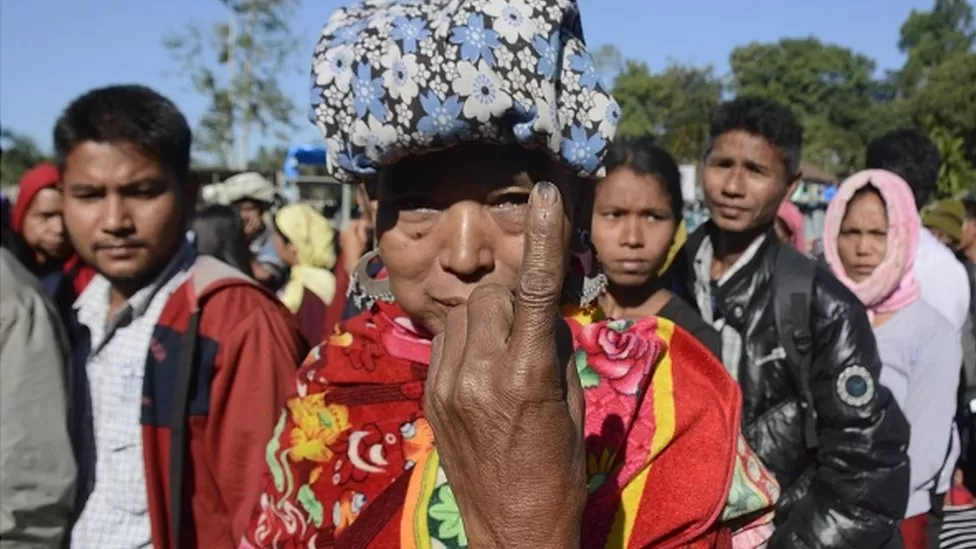
Assembly elections 2023: Significant state elections to be held in India today
Many people have been voting in Mizoram and Chhattisgarh as important state elections started in India.
They are one of five states having elections from November 7 to November 30. Vote counting has to be done by 3 December.
These surveys are considered as an early indication of the upcoming national elections in the following year.
Experts believe that they will provide information on how well the ruling and opposing parties will do in the upcoming 2024 general election.
This month, there are also elections in Madhya Pradesh and Rajasthan in the north of India, and Telangana in the south.
Prime Minister Narendra Modi’s political party, the Bharatiya Janata Party (BJP), only holds power in Madhya Pradesh. The Congress party is in charge of governing Chhattisgarh and Rajasthan, and they are not the ruling party at the moment.
Voting started on Tuesday morning in Mizoram and 20 areas in Chhattisgarh.
At 1:00 PM IST (7:30 AM GMT), 44. 5% of voters in Chhattisgarh and 52. 73% of voters in Mizoram had cast their votes.
This is the first vote in the country’s north-eastern area after fighting between different ethnic groups broke out in Manipur state in May. More than 200 people have died in the fights.
Manipur, a state that borders Mizoram, is under the control of the BJP political party. Around 12,000 people who were forced to leave their homes because of the violence have relocated to Mizoram since May, according to information provided by the government.
Last month, Mizoram Chief Minister Zoramthanga gave an interview to the BBC’s Jugal Purohit. He criticized the way the BJP is dealing with the crisis and stated that he would not stand on the same platform as PM Modi during his election campaigns.
Mr Zoramthanga’s political party, the Mizo Nationalist Front (MNF), is competing against the Zoram People’s Movement (ZPM) and the Congress Party in the election as it tries to regain power.
In Chhattisgarh, the ruling Congress party is competing against the BJP. The state is one of just four states where the Congress is in control.
The party has revealed many plans to help women, farmers, and tribal communities in the state during its election campaign.
Twelve out of the 20 seats that were voted on Tuesday were in the Bastar region. This area is controlled by Maoist rebels. Many extra soldiers were sent to make sure everything was safe.
Before the voting on Tuesday, a soldier who is a part of a military group got hurt in a blast. The blast was believed to be caused by the rebels according to the police. The incident took place in the Sukma region of the state.
According to news agency ANI, three security personnel were hurt in a gunfight with the rebels in a different area of the district. -

Indian Member of Parliament involved in ‘cash-for-query’ controversy
A Member of Parliament from India, who often strongly disagrees with Prime Minister Narendra Modi and his political party (BJP), is involved in a disagreement over claims of bad behavior in the parliament.
Nishikant Dubey, a member of the BJP party, is saying that Mahua Moitra, who is an MP from the TMC party, is taking money to ask questions in parliament.
Mr Dubey is saying that Ms. Moitra asked questions about the Adani Group, which is a big business owned by a wealthy man named Gautam Adani, in return for receiving presents and money from a businessman.
Ms Moitra has said that she didn’t do what she’s accused of and is willing to be investigated. A group of lawmakers who make decisions about what is right and wrong in politics began discussing the situation on Thursday.
Political experts say that the committee cannot punish Ms. Moitra, even if it decides against her, because it doesn’t have the authority to enforce its decisions. The house will need to review the recommendation and decide if they want to approve or refuse it. If Ms Moitra is forced to leave parliament, she can question the decision in court.
In January, the money activities of the Adani Group were looked into after a company called Hindenburg Research accused them of cheating and making false financial records for many years. Hindenburg Research is a company from the US that focuses on making money by betting against certain stocks. The Adani Group said the allegations are not true and called the report mean-spirited.
Since then, Ms Moitra and many lawmakers from the opposition have requested the government to investigate the accusations against the Adani Group. India’s market regulator, called the Securities and Exchange Board of India (Sebi), is currently looking into the accusations against the company.What has occurred up until now.
On 15 October, Mr Dubey sent a letter to the head of the parliamentary group, sharing information he got from a lawyer called Jai Anant Dehadrai.
Mr Dubey said that Mr. Dehadrai, who Ms. Moitra called a bitter ex-partner, had provided undeniable proof of bribes being exchanged between her and businessman Darshan Hiranandani. The intention behind this was to target the Adani Group and Mr.
People think Mr. Adani is friends with Mr. Modi and politicians from the opposing party have accused him of unfairly benefiting from this friendship. Adani and the BJP party deny these allegations.
Mr Dubey said that until recently, 50 out of 61 questions asked by Ms. Moitra in parliament were about the Adani Group. He also accused her of taking bribes totaling 20 million rupees ($240,542; £197,700) from Mr. Hiranandani.Ms Moitra has said that the accusations are not true and she has taken legal action against Mr Dubey, Mr Dehadrai, and various news organizations for damaging her reputation.
The Hiranandani Group denied the allegations. On 20 October, it was said that Mr. Hiranandani gave a written statement to the parliament’s ethics committee. In the statement, he changed his position and said that Ms. Moitra had purposely focused on Mr. Adani and his businesses to gain fame.
He also said that Ms Moitra shared her parliamentary login information with him so he could ask questions for her when needed.
News agencies quickly reported on the supposed affidavit, but Ms. Moitra expressed doubts about its authenticity in a press release on X.
The paper that the document is written on is not official or certified. Why would a highly respected and educated businessman from India agree to sign a letter like this on plain white paper, unless someone forced him to do it by holding a gun to his head.
Darshan Hiranandani has not been asked to come for questioning by the CBI, the Ethics Committee, or any other investigative agency in India so far. Who did he give this written statement to, she added.
The day after Mr. Dubey made his claims, a representative for the Adani Group said that Mr. Dehadrai’s complaint shows that there has been a plan since 2018 to damage the reputation and interests of the Adani Group and its Chairman Gautam Adani.
The TMC has not made a clear decision on the matter. Derek O’Brien, a lawmaker from the party, said that the leaders of TMC will wait for the report from the ethics panel before making a suitable choice.
The disagreement has become a big news story because Ms Moitra is seen as an important politician who has connected with both city and countryside voters in West Bengal. Her supporters say that the BJP is creating this controversy as a strategy to harm Mr. Moitra’s popularity with voters before the general elections in 2024.
From someone who works with money to someone who makes decisions in the government
Before joining the TMC in 2010, Ms. Moitra worked as a banker. At the beginning of her political career, she mainly focused on the state level and worked closely with ordinary voters.
In the 2019 parliamentary election, she ran for office in Krishnanagar, West Bengal. She had to show that she could represent the many voters in poverty. Poverty line is a way to measure how well someone or their family is living.
Ms Moitra won the elections with a lot more votes than the other candidates, almost 60,000 more votes.
Ms Moitra, in her first speech in parliament, said that India had been seeing “indications of fascism” under the BJP government. The speech became very popular on social media and people had different opinions about it. Some people praised her for being honest, but others criticized her for scaring people.
Ms Moitra has now become a well-known person in the TMC, a political party that already has Mamata Banerjee, a powerful female leader in charge.
Ms Banerjee, a strong speaker, is part of a group that wants to challenge Mr Modi’s BJP in the upcoming election. In 2021, she openly criticized Ms Moitra for causing conflicts within their party. People who study politics are paying attention to what Ms. Banerjee will say or do in response to the ongoing problem. -

Indian opposition party debates motion of no-confidence in the government of Prime Minister Modi
The opposition parties have filed a resolution of no confidence against Prime Minister Narendra Modi’s administration, which is currently being debated in the Indian parliament.
The debate was started by Gaurav Gogoi, a legislator from the Congress party who had introduced the motion on July 26.
After the discussion is over on Thursday, lawmakers will vote on the proposal.
Given that his Bharatiya Janata Party (BJP) and its allies hold a majority in parliament, Mr. Modi’s government won’t lose the vote.
But according to opposition leaders, the discussion will compel Mr. Modi to address the current ethnic tensions in the state of Manipur.
Mr. Gogoi stated in front of the chamber that the opposition had introduced the resolution in an effort to “break Mr. Modi’s silence” regarding Manipur. He inquired as to why Mr. Modi had not yet made a trip to the state.
Opposition politicians have protested during the current legislative session, which got underway on July 20. They have demanded that Mr. Modi speak to the house about the violence in Manipur.
Since the beginning of May, when ethnic violence between the Meitei majority group and the tribal Kuki minority group erupted, more than 150 people have killed and tens of thousands have been displaced in Manipur.
Amit Shah, the federal home minister, stated that the government was willing to talk about the matter and accused the opposition of “running away.”
Despite the unrest and protests, certain important measures were passed with little discussion.
Rahul Gandhi, the leader of the Congress, who was re-instated as a lawmaker on Monday, was scheduled to start the opposition’s debate in parliament on Tuesday. He will reportedly talk at a later time today.
Since taking office in 2014, Mr. Modi’s administration has faced a motion of no confidence twice. A resolution to grant Andhra Pradesh state special category status was made by a politician in 2018. After a 12-hour argument, it was lost.
The no-confidence vote will be an opportunity for INDIA, a freshly established opposition alliance of 26 parties, to show their cohesion. The coalition, which was established in July, intends to challenge Mr. Modi’s BJP in the upcoming general election.
On Thursday, Mr. Modi is anticipated to respond to the discussion.
-
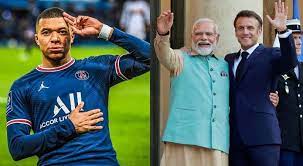
Mbappe more famous in India than he is even in France – Indian Prime Minister
Prime Minister Narendra Modi addressed the Indian community in Paris on Thursday during his visit to France.
He emphasized the strong bond between India and France while also highlighting the increasing popularity of French footballer Kylian Mbappe among Indian fans.
Modi stated that Mbappe has a larger fanbase in India than in his home country of France.
The Prime Minister further noted that the young Indian players consider Mbappe a tremendous success. His remarks were made during his tour of France.
Narendra Mod on Mbappe
French football star Mbappe is a superhit among the youth of India.
Quoted by Sportskeeda Modi said:
“Indians know Mbappe more than people in France,”
According to Indian Prime Minister, Modi, Kylian Mbappe is incredibly popular among the youth in India. PM Modi suggested that Mbappe may be more widely recognized in India than in his home country of France.#SportsGist
— Sports Gist (@theSportsGist) July 14, 2023
Bernardo Cancelo Lasmid Malo Gusto pic.twitter.com/v7FLDj2GsYThe audience received the Prime Minister’s words with applause.
Mbappe’s rise to stardom
Mbappe, 24, shot to fame at AS Monaco during the 2016/17 campaign as an 18-year-old.
He registered 26 goals and 14 assists in just 2633 minutes of action, spread across 44 appearances.
He also led his team to a memorable Ligue 1 triumph and the UEFA Champions League semi-final stage, beating Pep Guardiola’s Manchester City on the way.
Following a stellar season-long loan spell, the Frenchman permanently moved to Paris Saint-Germain (PSG) for a fee of €180 million ahead of the 2018/19 season.
Before starting the campaign, he guided France to their second FIFA World Cup victory in Russia, bagging the Young Player Award in the process.
At the 2022 World Cup in Qatar, Mbappé’s spectacular performance made him more popular. The forward was the top scorer in the tournament with eight goals.
With a hat-trick in the final, Mbappe was able to mount a tough challenge against Lionel Messi’s Argentina. Later, Mbappe’s France lost the title in a penalty shootout.
-
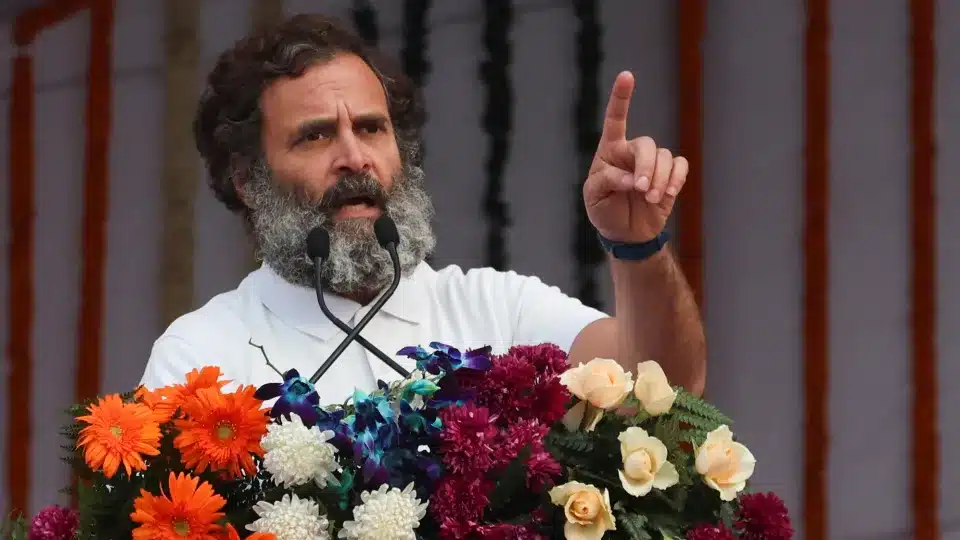
Rahul Gandhi loses standing as a legislator in India over defamation case
A day after receiving a two-year prison sentence for defamation, the former leader of India’s largest opposition party was found ineligible to serve as a lawmaker in a decision that his supporters claim is politically motivated.
Rahul Gandhi “stands disqualified from the membership,” according to a statement from India’s lower house, the Lok Sabha, which cited his most recent conviction.
It is the second blow for the opposition Congress party in India in as many days, and it may be the end of one of the few individuals with the star power and name recognition necessary to take on Prime Minister Narendra Modi.
On Thursday, Gandhi was found guilty of defamation by a court in western state of Gujarat for a speech he made in 2019, in which he referred to thieves as having the same surname as Modi.
The 52-year-old politician was granted bail, according to his Congress party, which decried his conviction, accusing Modi of using the courts to silence his critics.
“Everyone knows that Rahul Gandhi… is raising his voice against the dictator. He’s showing the courage to call out what is wrong,” the party said in a statement on Thursday.
The convictionopened up an opportunity for his opponents, particularly within Modi’s Bharatiya Janata Party (BJP).
Under Indian law, a member of parliament can be disqualified for offenses such as “promoting enmity between two groups, bribery and undue influence or personation at an election.”
If a lawmaker is convicted for any other offense and sentenced to a period of two years or more, they can also be disqualified.
“He (Gandhi) stands convicted and as per law conviction leads to automatic disqualification. The Congress knows this,” BJP spokesperson Amit Malviya told CNN affiliate News18.
Following his disqualification Gandhi will be unable to contest future elections unless his sentence is either stayed or he is acquitted.
“We will fight this battle both legally and politically. We will not be intimidated or silenced,” senior Congress politician Jairam Ramesh tweeted.
Indian parties from across the political spectrum have condemned Gandhi’s disqualification as an MP.
Mamata Banerjee, chief minister of West Bengal state and chairperson of the All India Trinamool Congress, tweeted, “In PM Modi’s New India, opposition leaders have become the prime target of BJP! While BJP leaders with criminal antecedents are inducted into the cabinet, Opposition leaders are disqualified for their speeches. Today, we have witnessed a new low for our constitutional democracy.”
MP Derek O’Brien, also of the All India Trinamool Congress, posted a video on Twitter, saying, “The BJP is desperate to silence the voice of the opposition… We know they will go to all kinds of lows but this is the low of the low… BJP, shame on you.”
Manoj Jha, an MP with the regional Rashtriya Janata Dal party, wrote on Twitter that democracy had been “declared dead.”
“How bizarre and obnoxious. Shamelessness has got a new address. Yet don’t say democracy is dead in India. Parties in opposition must see that it is not about ‘elections’ alone but the fight must be to resuscitate democracy…” Jha wrote in a separate tweet.
Shashi Tharoor, an MP from Gandhi’s party, expressed his shock on Twitter, saying: “I’m stunned by this action and by its rapidity, within 24 hours of the court verdict and while an appeal was known to be in process. This is politics with the gloves off and it bodes ill for our democracy.”
Gandhi stood against Modi to contest the country’s top seat in the 2019 general election but he lost heavily.
He subsequently stepped down as Congress’ president but remains an influential figure within the party.
He is the son of former Indian Prime Minister Rajiv Gandhi.
His grandmother Indira was India’s first female leader, and his great-grandfather, Jawaharlal Nehru, was the country’s founding Prime Minister.
His grandmother was assassinated while in office, and his father was killed by a bomb blast while he was campaigning in the southern state of Tamil Nadu.
-

Indian opposition is detained after allegedly criticising PM Modi
A senior Congress party official in India has been detained on charges of insulting Prime Minister Narendra Modi.
Following his alleged reference to troubled businessman Gautam Adani when he named Modi “Narendra Gautamdas Modi,” Pawan Khera was detained at the Delhi Airport along with other party members.
Last month, following a report by financial research and short seller firm Hindenburg Research levied accusations of stock market manipulation and fraud on the Adani Group, Adani, one of the richest individuals in the world, had his net worth decrease by half in less than two weeks.
The Adani Group criticised the research, calling it “malicious” and “baseless.”Adani is seen as a close ally of Modi.
In recent months, Modi has been accused of silencing his critics after the country banned a documentary from the BBC that was critical of the prime minister’s alleged role in deadly riots more than 20 years ago.
Indian tax authorities raided the BBC’s offices in New Delhi and Mumbai earlier this month citing “irregularities and discrepancies” in the BBC’s taxes. The BBC defended its documentary and said it was complying with the tax investigation.
Police from the state of Assam said they had deployed a team to New Delhi to arrest Khera for questioning after a case was registered on Wednesday for his “objectionable remarks about the Prime Minister.”
“[Khera] was trying to disturb the communal harmony in the society, sections of the Indian Penal Code under criminal conspiracy,” Prasanta Kumar Bhuyan, Assam police spokesperson, told CNN.
On Thursday, India’s Supreme Court ordered Khera to be released on interim bail. CNN has not yet been able to reach Khera and his lawyers.
The Congress party labeled Khera’s arrest as “undemocratic,” saying in a statement, “We vehemently oppose this dictatorial behavior.”
-

Big money is choking India’s free press — and its democracy
The recent resignation of anchor and Modi critic Ravish Kumar underlines how monopolization is threatening Indian media.
When popular Indian television journalist Ravish Kumar announced his resignation from New Delhi Television Ltd (NDTV) — the country’s oldest private broadcaster — at the end of November, it was a grim reminder of the vanishing independent news media landscape in the world’s largest democracy.
It was no ordinary departure. Kumar had been a popular voice on NDTV for a quarter of a century and is known for his fearless, hard-hitting reporting and willingness to take on those in power. Of late he has criticised other news outlets for taking a stance explicitly in favour of Prime Minister Narendra Modi’s government and for stoking communal discord between Hindus and Muslims.
Yet Kumar felt compelled to quit after the world’s third-richest man, Gautam Adani, became the majority shareholder of NDTV. Adani is considered close to Modi, who used the tycoon’s aircraft for campaigning ahead of the 2014 national election. Since 2014, when Modi came to power, Adani’s wealth has jumped from $7bn to $110bn.
Adani has insisted that NDTV under his ownership will retain its independence to call out the government when it has “done something wrong”. But the worries about his takeover of one of the few Indian TV channels seen as brave enough to challenge the Modi government reflect broader fears centred on a question that journalism around the world has been grappling with: what happens when the ownership of platforms meant to protect free speech is concentrated in the hands of a few elite businesspeople?
Or as Kumar said: “How can a channel, bought by a corporat[ion] whose success is seen to be linked to contracts granted by the government, now criticise the government? It was clear to me I had to quit.”
A global problem
To be sure, this isn’t a problem unique to India.
Corporate monopolisation of media has increasingly been under scrutiny in the United States. In 2017, Bernie Sanders wrote of how Comcast, News Corp, Disney, Viacom, Time Warner and CBS — just six companies — owned 90 percent of the media in the country. Forbes wrote in 2016 that 15 billionaires owned all major national newspapers, including The New York Times, The Wall Street Journal and The Washington Post.
In the United Kingdom, the Media Reform Coalition has described “concentrated ownership” in the sector as a “significant problem for any modern democracy”. In 2015, 71 percent of the UK national newspaper market was dominated by three companies – News UK, Daily Mail Group and Reach. By 2019, their market share had grown to 83 percent, and by 2021, to 90 percent.
Some countries have regulatory measures in place to curb media monopolisation. In Germany, for instance, no single company can control “more than 30 percent of all TV audiences”.
But the landscape varies across Europe: In Italy, the holding company Fininvest, which is controlled by the family of former Prime Minister Silvio Berlusconi, owns all three of the country’s main TV channels as well as the nation’s largest publisher for newspapers and books.
Canary in the Indian media mine
India’s economic boom since the 1990s has spawned a fast-growing media industry, with a market size expected to grow from $21.5bn in 2021 to $54bn in 2026. This has resulted in a news media landscape that now boasts more than 100,000 newspapers and 380 news channels. Add the rapid growth of internet and social media usage, and a wide variety of news platforms ought to be available to the Indian consumer.
But like in the West, Indian media too is increasingly owned by a select few corporations. The first warning bells were sounded a decade ago when Reliance Industries – India’s largest company in terms of revenue – entered the media sector.
In 2011, the Indian parliament passed the Cable Television Networks (Regulation) Amendment Bill that made “digitisation of cable television across the country mandatory in three years”. But as Arvind Rajagopal, professor of media studies at New York University pointed out at the time, the bill also effectively paved the way for concentrated corporate control of media since “the largest cable service providers [were] already owned by broadcasting companies”.
In January 2012, Reliance — headed by Mukesh Ambani, the world’s eighth-richest man — invested in the heavily debt-ridden Network18 media group. The result was the creation of India’s largest media conglomerate which included a bouquet of general news and business channels in English, Hindi and several regional languages. Journalists and analysts raised concerns over how this would impact the media coverage of a company, Reliance, whose decisions influence the nation’s economy. In 2014 Reliance took complete control of Network18 in a hostile takeover. Rajdeep Sardesai, the editor-in-chief of the company’s flagship channel CNN-IBN, resigned. In his farewell email, he wrote : “Editorial independence and integrity have been articles of faith in 26 years in journalism and maybe I am too old now to change!”.
Today, the ties between big business, politics and Indian media extend beyond any one company. Zee Media Corporation, another influential TV network, is part of the conglomerate Essel Group, which is led by Subhash Chandra, a former member of the upper house of the Indian parliament. His candidature was supported by Modi’s Bharatiya Janata Party (BJP).
A 2019 report by Reporters Without Borders found many other similar examples. Odisha TV is owned by the family of Baijayant Panda, who is the BJP’s national vice president and spokesperson. News Live, one of the most popular TV channels in India’s northeast, is owned by Riniki Bhuyan Sarma, wife of the BJP chief minister of the northeastern state of Assam, Himanta Biswa Sarma.
‘Godi media’
Ravish Kumar coined a term that captures this unholy mix of news, money and politics: Godi media. “Godi” means lap. Godi media refers to the lapdog nature of the many pro-establishment mouthpieces that the Modi years have birthed. And looking at how the mainstream Indian media has celebrated events like the BJP-led demolitions of the homes of Muslim activists or criticised farmer protests in 2021, it’s hard to get away from a sense that Kumar is spot on.
Meanwhile, amid a spate of attacks on journalists and government critics, India is slipping in the World Press Freedom Index, where it is now ranked 150 among 180 nations.
It’s important to cling to the hope that the tide will turn. Yes, good journalism needs money. But it also needs freedom. If media monopolisation cuts out critical voices like Kumar’s, it can never be healthy for Indian democracy.
DISCLAIMER: Independentghana.com will not be liable for any inaccuracies contained in this article. The views expressed in the article are solely those of the author’s, and do not reflect those of The Independent Ghana
Source: Aljazeera.com
-
Foxconn and Vedanta to build $19bn India chip factory
Foxconn and Vedanta have announced $19.5bn (£16.9bn) to build one of the first chipmaking factories in India.
The Taiwanese firm and the Indian mining giant are tying up as the government pushes to boost chip manufacturing in the country.
Prime Minister Narendra Modi’s government announced a $10bn package last year to attract investors.
The facility, which will be built in Mr Modi’s home state of Gujarat, has been promised incentives.
Vedanta’s chairman Anil Agarwal said they were still on the lookout for a site – about 400 acres of land – close to Gujarat’s capital, Ahmedabad.
But both Indian and foreign firms have struggled in the past to acquire large tracts of land for projects. And experts say that despite Mr Modi’s signature ‘Make in India’ policy – designed to attract global manufacturers – challenges remain when it comes to navigating the country’s red tape.
Gujarat Chief Minister Bhupendrabhai Patel, however, said the project “will be met with red carpet… instead of any red tapism”.
The project is expected to create 100,000 jobs in the state, which is headed for elections in December, where the BJP is facing stiff competition from oppositions parties.
According to the Memorandum of Understanding, the facility is expected to start manufacturing chips within two years.
“India’s own Silicon Valley is a step closer now,” Mr Agarwal said in a tweet.
India has vowed to spend $30bn to overhaul its tech industry. The government said it will also expand incentives beyond the initial $10 billion for chipmakers in order to become less reliant on chip producers in places like Taiwan, the US and China.
“Gujarat has been recognized for its industrial development, green energy, and smart cities. The improving infrastructure and the government’s active and strong support increases confidence in setting up a semiconductor factory,” according to Brian Ho, a vice president of Foxconn Semiconductor Group.
Foxconn is the technical partner. Vedanta is financing the project as it looks to diversify its investments into the tech sector.
Vedanta is the third company to announce plans to build a chip plant in India. A partnership between ISMC and Singapore-based IGSS Ventures also said it had signed deals to build semiconductor plants in the country over the next five years.
Source: BBC