Alexei Navalny was supposed to be released in exchange for another prisoner when he died, as said by his friend Maria Pevchikh.
She said the Russian opposition leader was going to be traded for Vadim Krasikov, a Russian hitman who is in prison for life in Germany.
Two Americans in Russia were also going to be included in the agreement, according to Ms.
She said that talks will be finished on February 15th.
The day after, Mr Navalny passed away in his prison cell in Siberia. He was serving a 19-year sentence for charges that many people believed were brought against him for political reasons. The 47-year-old got sick after going for a walk, according to prison officials.
In a video on Mr. Navalny’s YouTube channel, Ms. Pevchikh, who leads his Anti-Corruption Foundation (FBK), said they had been talking about exchanging prisoners for two years. She said that when Russia invaded Ukraine in 2022, it was clear that Putin would do anything. She also said that Mr. Navalny needed to be released from jail no matter what and right away.
Ms Pevchik said Mr. Navalny was going to be released because of a humanitarian swap, and American and German officials were part of the negotiations.
She said they finally made a solid plan to exchange prisoners in December.
Vadim Krasikov, a Russian man, was found guilty of shooting a former Chechen rebel leader in the head in Germany in 2019. He was going to be included in the agreement.
Two people from the US who are currently being detained in Russia are also going to be traded, Ms. Pevchikh said, but she did not say who they are.
In February, President Putin said he was talking to the US about releasing American journalist Evan Gershkovich, who is in jail for spying.
President Putin suggested that Russia would welcome a person who, for patriotic reasons, killed a criminal in a European city during the conflicts in the Caucasus. This almost certainly refers to Krasikov.
Ms Pevchikh says that Russian President Vladimir Putin changed his decision about the deal at the very end. She said he didn’t want Navalny to be free. Since there was a tentative agreement for Krasikov’s release, Mr Putin decided to get rid of the bargaining chip and offer someone else instead.
“Ms Pevchikh said that Putin hates Navalny very much. ” “He knows that Navalny could have beaten him. ”
President Putin used to work for the KGB. He often says he will do something, but then does the opposite.
He and his government have been following this policy for almost 25 years.
Before Russia attacked Ukraine, President Putin and some Russian officials kept saying they did not plan to invade the country.
We don’t know what happened to Navalny in prison, but the Kremlin has a history of pretending to negotiate for someone’s release without actually planning to let them go.
Ms Pevchikh’s video got hundreds of thousands of views within an hour of being published.
The Kremlin has not responded yet to the claims made by Ms Pevchikh. President Putin’s spokesman, Dmitry Peskov, has said before that the accusations of government involvement in Navalny’s death are “ridiculous”.
At first, the authorities didn’t want to give Navalny’s body to his mother. They finally agreed to do so eight days after he died.
On Monday, Navalny’s spokesperson Kira Yarmish wrote on social media that his friends are searching for a place where people can gather to say goodbye to him later this week.
The government will keep a close watch on this event, if it’s allowed to happen.
A group that protects people’s rights said that 400 Russians were arrested all over the country for putting flowers to honor Navalny after he died.
Tag: prisoner swap
-

Navalny was to be released in prisoner swap before his death – Ally
-
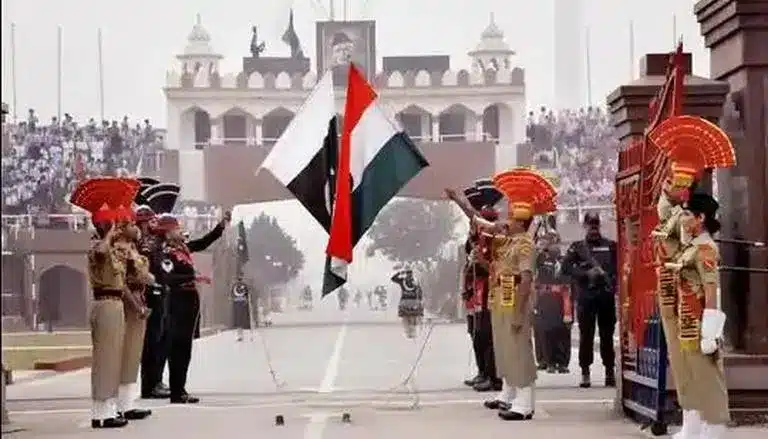
India and Pakistan swap prisoner and nuclear facility
Since 1992, the practice has been followed, and on January 1 of each year, the list of nuclear installations is amended.
According to a long-standing agreement between the two nuclear-armed rivals, Pakistan claims to have sent the Indian embassy in Islamabad a list of its nuclear installations and facilities.
In a statement released on Sunday, Pakistan’s foreign ministry said that India had simultaneously given a list to the Pakistani embassy in New Delhi.
It stated that lists are traded yearly on January 1. Since 1992, the custom has been in place.
The neighbours have fought three wars and have had a number of military skirmishes in recent years. Last year an Indian missile accidentally landed in Pakistan, setting off alarm bells across the world.
“The list of nuclear installations and facilities in Pakistan was officially handed over to a representative of the Indian High Commission in Islamabad at the Ministry of Foreign Affairs today [Sunday],” Pakistan’s foreign office said.
The annual exchanges come at a time diplomatic ties between the two are near non-existent.
India’s foreign ministry did not immediately respond to a Reuters news agency’s request for comment.
Pakistan first officially tested nuclear weapons in 1998 and has since developed a significant stockpile of nuclear capable missiles, as has India.
With the help of China, Pakistan has recently increased its use of nuclear energy to meet the rising demand for electricity.
In a separate statement, Pakistan’s foreign office said the two countries had also exchanged a list of each other’s citizens held in prisons.
The list included 705 Indian prisoners imprisoned in Pakistan, including 51 civilians and 654 fishermen, the statement said.
It added that the Indian government also shared with the Pakistani mission in New Delhi a list of 434 Pakistani prisoners in India, including 339 civilians and 95 fishermen.
Pakistan has requested the early release and repatriation of 51 of its civilian prisoners and 94 fishermen who have completed their sentences. A request for special consular access to 56 civil prisoners has also been made.
Fishermen from each country are often arrested when they stray into the other’s waters.
Source: Reuters
-
Released Russian arms dealer Bout now an ultranationalist party member
Viktor Bout was released from a 25-year US prison sentence last week in exchange for basketball star Brittney Griner.
According to the party’s leader, a Kremlin loyalist, Russian arms dealer Viktor Bout, who was released from US custody last week in a prisoner swap for American basketball star Brittney Griner, has joined the ultranationalist Liberal Democratic Party (LDPR).
On Monday, LDPR leader Leonid Slutsky said on Telegram that “the Liberal Democratic Party’s party card” had been “personally handed” to Bout.
“I am sure that Viktor Bout – a strong-willed and courageous person – will take a worthy place in it. Welcome to our ranks!,” he wrote in a post that included a picture of the two men.
Founded in 1991, the LDPR espouses a hardline, ultranationalist ideology that demands Russia reconquer the countries of the former Soviet Union.
It has been one of the most vehement supporters of the invasion of Ukraine, often calling for a more severe approach from Moscow.
In recent years, the party has assumed a subordinate role in Russia’s political system but provides token opposition to the ruling United Russia bloc while remaining aligned with the Kremlin on most issues.
Bout returned to Russia on December 8 after being released from a 25-year prison term in exchange for Griner, who was arrested in mid-February after officials at Moscow airport when cartridges containing cannabis oil in her luggage.
Griner, who the US State Department has said was “wrongfully detained”, was sentenced to nine years in prison in August.
Bout had been arrested by US authorities in Thailand in 2008, with prosecutors charging that his extensive arms smuggling in hotspots across the world amounted to material support of “terrorism”. The Kremlin has maintained the arrest was politically motivated.
Dubbed the “merchant of death”, Bout has also been implicated in violating or contributing to violating UN arms embargoes in Angola, Sierra Leone, Liberia and the Democratic Republic of the Congo.
The prisoner swap came during the ninth month of Russia’s invasion of neighbouring Ukraine, a conflict that tanked already strained ties between Washington and Moscow and complicated release negotiations.
In Russia, Bout’s release was viewed as a victory for Moscow.
Meanwhile, the administration of US President Joe Biden faced criticism for agreeing to the exchange, with detractors citing the disparity in the severity of charges against Bout and Griner.
Biden critics were particularly upset that US officials were unable to secure the release of Paul Whelan, a former marine serving a 16-year sentence for alleged espionage in Russia, in the deal.
The LDPR has a history of recruiting controversial personalities into Russian politics, with its founder and long-time leader Vladimir Zhirinovsky gaining a reputation as a political showman for his outrageous stunts and eccentric behaviour before his death in April.
In 2007, Andrey Lugovoy a former KGB agent wanted in Britain for the murder the previous year of former Russian spy Alexander Litvinenko, was elected to parliament for the LDPR.
In his first interview since his release, Bout told the state-run Russia Today channel that the West sought to “destroy and divide Russia” in the years since the dissolution of the Soviet Union.
-
Kremlin: Prisoner swap talks must be confidential
The Kremlin says it keeps the door open for talks on a possible prisoner swap with US basketball star Brittney Griner but reiterated that discussions must be kept strictly confidential.
Kremlin spokesman Dmitry Peskov was asked if Griner could be freed as part of a prisoners swap with Washington and said, “We always say that any contacts about possible exchanges can only be conducted in silence under a tight lid on any information.”
On Tuesday, Russian courts rejected Griner’s appeal against her nine-year sentence for drug possession.
-
Ukraine war: Moscow and Kyiv exchange women detainees for sailors
Russia has swapped 108 Ukrainian women detained as prisoners of war for 110 Russian hostages held by Ukraine according to officials on both sides,
As per reports, 37 of the women were caught after surrendering during the siege of the Azovstal steel factory in Mariupol, which ended in May.
Most of the Russians freed are sailors from merchant ships held in Ukraine.
They also include members of pro-Russian separatist military units from the Donbas in eastern Ukraine.
Daylight photos were released of the Ukrainian women boarding coaches in an unspecified area and later of them arriving after dark in government-held territory in the southern region of Zaporizhzhia.
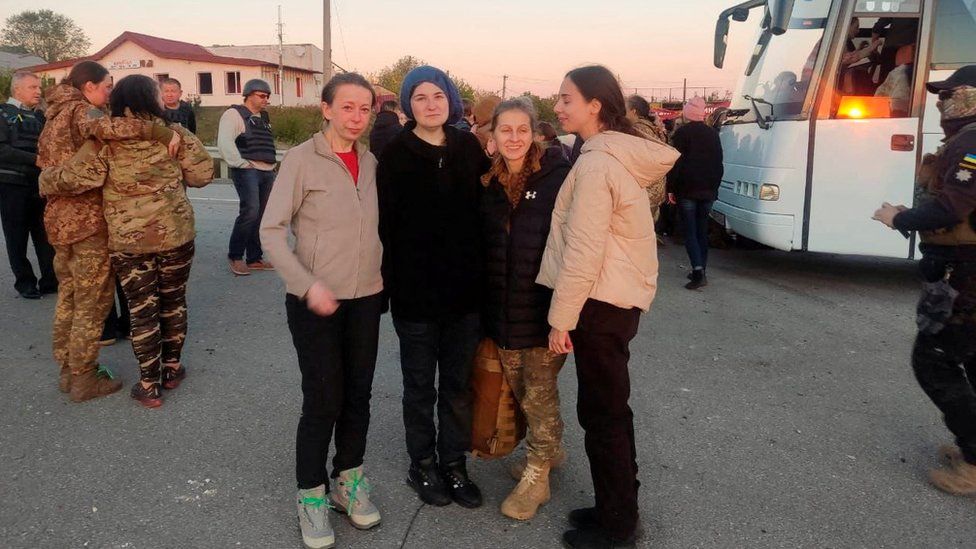
IMAGE SOURCE, REUTERS Image caption, The freed Ukrainians were taken to safety in coaches 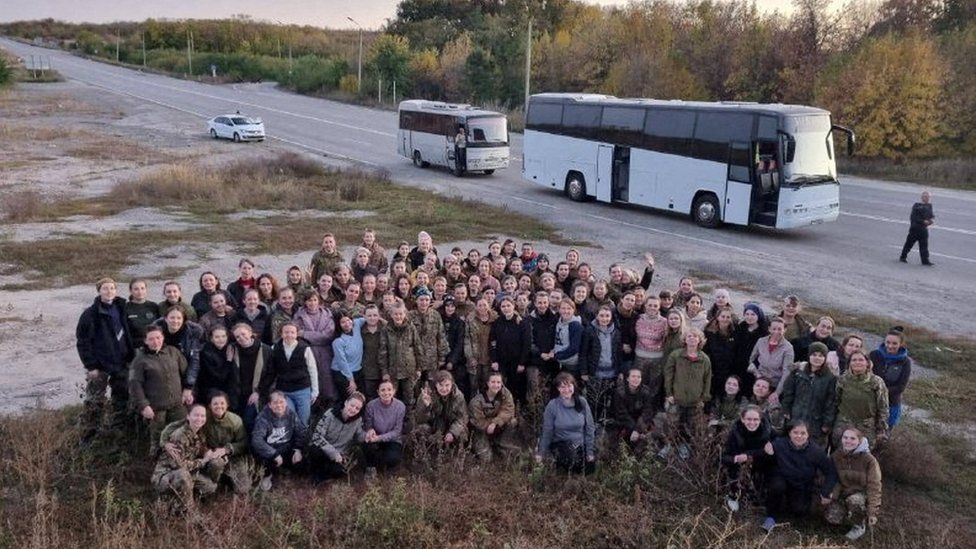
IMAGE SOURCE, REUTERS 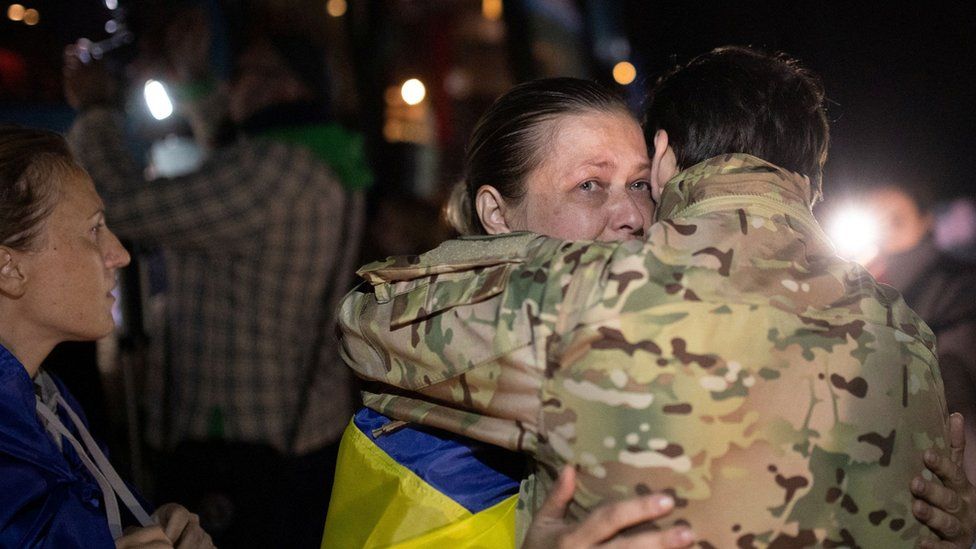
IMAGE SOURCE, REUTERS The Ukrainian presidency’s chief of staff, Andriy Yermak, confirmed on social media that 108 women had been released in the “first all-female exchange”.
He said they included mothers and daughters who had been held captive together. All but 12 of them are servicewomen, he said.
Denis Pushilin, the top Russian-backed official in the breakaway part of Ukraine’s Donetsk region, confirmed the swap but said two detainees had decided to remain in Russia. Kyiv has not commented on this.
According to Mr Pushilin, the prisoners freed by Ukraine are 80 sailors and 30 service personnel.