Tag: Prisoner

  • GHS1.80 feeding allowance for prisoners is inhumane – Muntaka

    GHS1.80 feeding allowance for prisoners is inhumane – Muntaka

    The Minister-Designate for the Interior, Mohammed Muntaka Mubarak, has voiced deep concerns about the troubling state of Ghana’s prisons, particularly the meager funds allocated for feeding inmates.

    During his vetting by the Parliamentary Appointments Committee on Friday, January 24, Muntaka committed to making prison reforms a central focus if approved for the position.

    The Asawase legislator criticized the GH¢1.80 daily feeding allowance per prisoner, describing it as grossly inadequate and an affront to basic human rights.

    He questioned how such a negligible amount could sustain proper nutrition for inmates, remarking that household pets often receive better care.

    Muntaka also stressed the severe health challenges arising from poor nutrition, especially in overcrowded and unhygienic prisons where inmates are highly vulnerable to diseases.

    He reassured the Committee that increasing the feeding allowance and improving overall prison conditions would be top priorities under his leadership.

    “I was shocked when I heard that the rationing for feeding a prisoner in Ghana is GH¢1.80 for the whole day and I doubt with the greatest of respect that even the cats and dogs in our houses, how much food do we give them that we will put our own compatriots because of one mistake or the other, in trying to corect them, we feed them with GH¢1.80 and expect them to be healthy.?”

    “It is a very serious thing and I assure my colleagues that I will pay attention to it and address it.”

    Muntaka also shed light on the extensive challenges confronting Ghana’s prison system, particularly the issue of extreme overcrowding.

    A significant number of the nation’s correctional facilities are stretched far beyond their designed limits, fostering conditions that accelerate the spread of infectious diseases such as tuberculosis, scabies, and other ailments.

    The Ghana Prisons Service has consistently urged the government to intervene and resolve these pressing issues, but progress has been noticeably delayed.
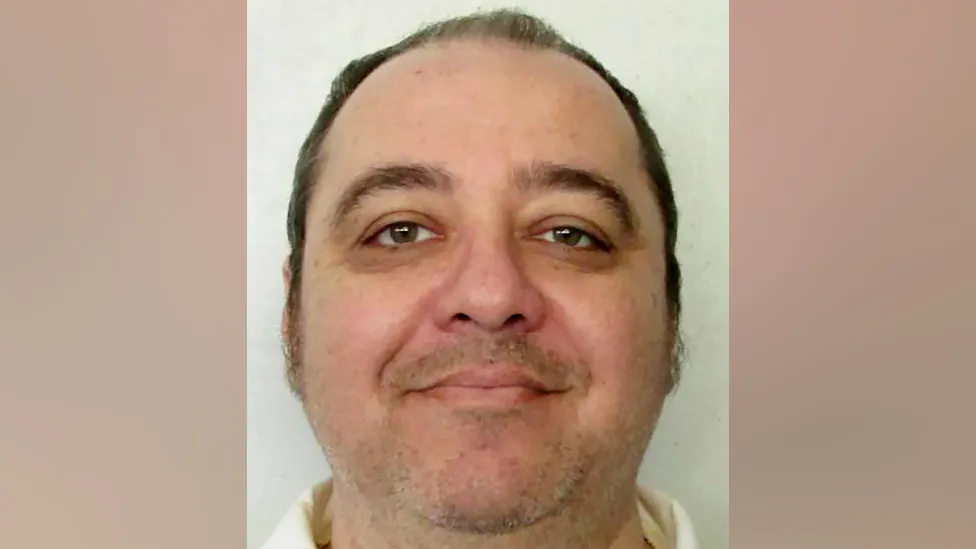
  • US prisoner who lost last-minute appeals faces his first nitrogen execution

    US prisoner who lost last-minute appeals faces his first nitrogen execution

    A person in Alabama who has been sentenced to death is likely to be the first in the US to be executed using nitrogen gas, even though they tried to appeal their sentence.

    The highest court in the US and another lower court decided not to stop a punishment that Kenneth Eugene Smith‘s lawyers said was too harsh.

    Some people argue that using nitrogen could make others suffer and a leak could hurt people in the room.

    Smith, who is 58 years old, was found guilty in 1989 of killing Elizabeth Sennett.

    Alabama has until Thursday at 0600 GMT (0100 ET) to execute someone by pumping nitrogen gas through a mask for 30 hours.

    Earlier this week, he told the BBC that waiting felt really awful.

    Smith will be the first person to be killed using this method in the US and in the whole world.

    The prisoner’s lawyers, who have been representing him since 1996, told the media on Wednesday that they were making a new request to the highest court in the country in the hope of stopping the execution at the last moment.

    Inhaling only nitrogen without oxygen can make cells break and leads to dying. Alabama said in a court document that they think he will pass out very quickly and die shortly after.

    However, some doctors say it is not safe and could cause serious problems like seizures or being in a coma.

    Alabama and two other states in the US have said it’s okay to use nitrogen hypoxia instead of lethal injections when executing people. This is because it’s getting harder to find the drugs needed for lethal injections.

    Two years ago, Alabama tried to execute Smith by injecting a deadly drug, but they couldn’t find a vein before the time to kill him expired.

    Smith was found guilty of killing Sennett for money in March 1988.

    She was hit with a tool from the fireplace, and stabbed in the chest and neck. Her death was made to look like someone broke into her home and stole things.

    Her husband, who owed a lot of money, had planned the scheme to get insurance money. He took his own life when the police were about to catch him.

    Smith’s friend who also kills people for money, John Forrest Parker, was put to death in 2010.

    At the trial, Smith said he was there when the victim was killed, but he didn’t actually join in the attack.

    The UN’s top human rights official said that using gas on Smith could be considered torture or other cruel, inhuman, or degrading treatment, and called for it to stop.

    Smith’s lawyers asked the Supreme Court to stop multiple execution attempts because they believe it is cruel and against the Constitution.

    On Wednesday, the judges said no to his request to stop the execution. No one spoke out against the decision in public.

    Smith also went to another court to challenge the legality of Alabama’s nitrogen gas protocol.

    However, the court denied the prisoner’s request for a temporary order in a decision on Wednesday night.

    Smith’s legal team said they will ask the Supreme Court to review the case again.

    His lawyers say that the nitrogen gas method is new and not proven. They worry that he could choke on his own vomit.

    State lawyer Steve Marshall said it was possibly the kindest way to carry out an execution.

    Smith’s religious counselor, Reverend Jeff Hood, will be in the room when the execution takes place. He thinks he could be in trouble if the nitrogen leaks, but he would rather risk his life than give up his job.

    Alabama executes a lot of people compared to other states in the US. Right now, there are 165 people waiting to be executed in Alabama.

    Since 2018, the state has tried three times to give lethal injection to prisoners, but it didn’t work and the prisoners didn’t die.

    The mistakes made by the prisoners caused the authorities to review the situation and mostly blame the prisoners.

  • Hushpuppi owned a 15-acre catfish farm in Ghana – Report

    Nigerian national Ramon Olorunwa Abbas, 40, a prisoner, owned 15 acres of land in Ghana, Abbas is known on Instagram as “Ray Hushpuppi.”

    The notorious prisoner, who is doing more than 11 years in a federal state prison in the United States of America for money laundering and fraudulent crimes, was reportedly fishing in Ghana, according to the reports.

    The prolific international fraudster’s catfish farm is also said to have been discovered after documents were found in his home, according to thisis50.com.

    The information also showed that Hushpuppi was in the process of expanding operations on the farm.

    The documents also showed that once, Hushpuppi gave a female waitress $5,000 as a tip, as receipts found in his apartment during his arrest at the Palazzo Versace in Dubai showed.

    Hushpuppi was arrested in Dubai in 2020 over an extensive fraud scheme that has robbed victims of their money in the U.S., Qatar, the United Kingdom, and other places.

    He was extradited to the US, where he was charged with fraud and money laundering. He pleaded guilty to all charges levelled against him.

    The socialite, however, bagged only 11 years in prison after he appealed to US Judge Otis Wright to tamper justice with mercy and a lighter jail term after scoring high in cleaning activities while in prison.

  • Prisoners ask for isolation centre, freedom for minor offenders

    Inmates of the Ho Central Prisons have appealed to the Government to provide the Prisons with isolation centres in the wake of COVID-19.

    They also appealed for minor offenders to be freed to make room for social and physical distancing in the cells.

    The prisoners made the appeal when Mr Prosper Pi-Bansah, Ho Municipal Chief Executive, donated assorted personal protective equipment, including an infrared thermometer gun, alcohol-based hand sanitizers, liquid soaps, and packs of tissue paper to the Prisons.

    The inmates commended the MCE for the gesture and government for efforts at containing the pandemic and said it was time attention was given to “us too.”

    They said despite social distancing being a major protocol in preventing the spread of the virus, they continued to “sleep in groups of 70/80 in a cell with no isolation centre for inmates who are very sick.”

    The prisoners said though people the world over were adapting to a new normal, it was business as usual for the inmates with “overcrowding everywhere. Overcrowding in cells, pavilion, everywhere…”

    They also lamented on the sanitation situation in the Prisons and called for support.

    The Ghana News Agency observed that the pavilion in the male prisons was jam-packed with only about five inmates wearing nose masks.

    A few of them were also spotted eating together and others singing and shouting in close proximity.

    Last month, the Prisons allegedly threatened to shut its gates to new inmates due to overcrowding.

    The MCE urged inmates who had nose masks to wear them regularly to stop the spread of the disease, stressing, “nose masks are now the new pattern of dressing for our safety.”

    Mr Andrews Dzokoto, Deputy Director of Prisons, Volta Regional Commander of Prisons commended the MCE and the Assembly for the support.

    He said the Ho Central Prisons, designed for 150 inmates had 423 prisoners with some sleeping under the beds of others.

    Mr Dzokoto said the major challenge was overcrowding and that all inmates had nose masks and were regularly encouraged to wear them.

    The MCE made similar donations to the Police, Immigration, and military in Ho.

    He observed that some security officers were not observing the safety protocols, especially the wearing of nose masks, and said, it was affecting enforcement.

    Mr Pi-Bansah said the Assembly was, therefore, forming a multi-taskforce to ensure all safety protocols were observed strictly to curb the spread of the virus.

    Ho, Volta Regional capital as of May 31, 2020, had 23 COVID-19 positive cases out of 84 in the Region.

    The Region is said to have also recorded two COVID-19 deaths and 35 recoveries at the end of May.

    Source: GNA

  • Prisons Service starts release of 808 prisoners on amnesty

    The Ghana Prisons Service has activated the process for the release of the 808 prisoners who have been granted amnesty by President Nana Addo Dankwa Akufo-Addo.

    “The list has gone to the stations and they are doing the documentation and then release them,” the Chief Public Relations Officer (PRO) of the Prisons Service, Mr Courage Atsem, told the Daily Graphic in Accra.

    Although he could not give figures, he said his “checks are that all those granted amnesty at the Nsawam Medium Security Prison have been released”.

    He said the release of the prisoners depended on when the documentation would be completed.

    “It depends on how far the officer in charge and his team are able to do the documentation for the release, but I believe that by now a lot of them have gone out,” the PRO stated.

    The amnesty

    On Thursday, March 26, 2020, President Akufo-Addo granted official pardon to 808 prisoners based on the recommendation of the Prisons Service Council and in consultation with the Council of State.

    A statement issued by the Director-General of Prisons, Mr Patrick Darko Missah, explained that the list included 783 first-time offenders who had served half of their sentences, 11 seriously ill prisoners and three aged (very old) prisoners.

    The others were seven prisoners on death row whose sentences have been commuted to life imprisonment and four prisoners serving life sentences whose sentences have been commuted to 20-year definite terms.

    Process

    Explaining the process for the release of prisoners granted official pardon by the President, Supt. Atsem said: “When the President comes with the list of inmates who have been granted amnesty, the Prisons Headquarters submits the list to the various stations for them to implement the amnesty.”

    “The stations have to check their records to be sure that they are releasing the right people,” he added.

    Details

    Providing further details of the amnesty, the PRO said those whose life sentences had been commuted to 20 years would have their 20-year sentences take effect from the time the amnesty was granted.

    “It means they will now start afresh,” he said.

    He said per the law, for one to qualify for amnesty from death row to a life sentence, that person might have done at least 10 years on death row.

    Source: graphic.com.gh