Tag: Prisoners

  • Fatal accident kills 2 female prison officers, leaves two injured at Akuse

    Fatal accident kills 2 female prison officers, leaves two injured at Akuse


    A tragic crash between the Akuse Junction and the VRA Junction has claimed the lives of two female prison officers, while two male prison officers sustained multiple injuries. The unfortunate incident, which happened early on Saturday, December 6, has plunged the Akuse township into grief. Meanwhile, the two male officers are receiving treatment at the hospital.

    Ghana has reported a surge in the number of fatalities resulting from road crashes. In the first half of 2025, the National Road Safety Authority (NRSA) recorded one thousand, five hundred and four (1,504) deaths, compared to one thousand, two hundred and thirty-seven (1,237) fatalities reported in the same period in 2024, representing a 21.58 percent increase.

    According to provisional data released by the National Road Safety Authority in collaboration with the Police Motor Traffic and Transport Department (MTTD), a total of 7,289 road crashes were recorded between January and June this year. Per the data, a total of twelve thousand, three hundred and fifty-four (12,354) vehicles were involved in these crashes.

    As a result of these incidents, eight thousand, three hundred (8,300) individuals sustained injuries. Additionally, one thousand, three hundred and one (1,301) pedestrians were knocked down across the country.

    According to recent data provided by the National Road Safety Authority, on average, eight (8) lives are lost every day due to road crashes. Each day, forty (40) road crashes are recorded, and forty-six (46) individuals sustain injuries. Daily, sixty-nine (69) vehicles and motorcycles are involved in road crashes.

    To help combat the rising number of road crashes, the National Road Safety Authority has called for stricter enforcement of traffic regulations and increased public education. The NRSA has emphasized the need for stronger enforcement to curb the alarming trend.

    The Road Traffic Act 2004, an Act to consolidate and revise the Road Traffic Ordinance, 1952 (No. 55), provides for more comprehensive regulation of road traffic and road use to ensure safety on the roads and to address related matters.

    A person who drives a motor vehicle dangerously on a road commits an offence and is liable on summary conviction: (a) where (i) a bodily injury does not occur, or (ii) a minor bodily injury occurs to a person other than the driver, to a fine of not less than one hundred penalty units and not exceeding two hundred penalty units, or to a term of imprisonment not exceeding nine months, or to both;

    (b) where bodily injury of an aggravated nature occurs to a person other than the driver, to a minimum fine of two hundred penalty units and not exceeding five hundred penalty units, or to a term of imprisonment of not less than twelve months and not exceeding two years, or to both.

    (c) where death occurs, to a term of imprisonment of not less than three years; (d) where there is damage to state property, to a fine of not less than one hundred penalty units and payment for the damage caused in an amount determined by the Court.

    The Court may, upon conviction of a person under subsection (1), (a) order the payment of appropriate compensation to an injured person or to the estate of that person, or (b) order the withdrawal of the driver’s license for a period of not less than three years and not more than five years.

    A person who drives a motor vehicle on a road without due care and attention, or without reasonable consideration for other persons using the road, commits an offence and is liable on summary conviction to a fine not exceeding two thousand penalty units or to a term of imprisonment not exceeding five years, or to both.

    A person commits an offence if, without lawful authority or reasonable excuse, that person: (a) causes anything to be on or over a road; (b) interferes with a motor vehicle, trailer, or cycle; or (c) interferes, directly or indirectly, with traffic equipment, where it would be obvious to a reasonable person that doing so would be dangerous.

    A person who commits an offence under subsection (1) is liable on summary conviction to a fine not exceeding two hundred and fifty penalty units or to a term of imprisonment not exceeding twelve months, or to both.

    Meanwhile, over one-third of emergency cases at the Komfo Anokye Teaching Hospital (KATH) have been linked to road crashes, according to statistics from the facility.

    Speaking to the media, Deputy Medical Director of KATH, Dr. Yaw Opare Larbi, noted that road crash victims brought to the emergency unit often do not survive because their injuries are very severe.

    “A little over 30 per cent of the cases that come to this facility, this Accident and Emergency Unit, are due to accidents, and most of the accidents, a few are domestic, but the majority of them are road traffic accidents.

    “Now in Ghana, we know that our statistics, a lot of our road accidents are from errors, driver errors, pedestrian errors. And then we know that we have some percentage that is attributable to maybe things like faulty vehicles or maybe road conditions, but a lot of the accidents are preventable,” he stated.

  • Prisoners escape as floods wreak havoc on Nigerian prison

    Prisoners escape as floods wreak havoc on Nigerian prison

    Nigerian officials have reported that over 270 prisoners remain unaccounted for after a prison break triggered by severe flooding in Maiduguri, a city in the northeast.

    So far, seven inmates have been recaptured.

    The flooding occurred after a dam collapsed due to heavy rainfalls.

    In Maiduguri, the capital of Borno state, hundreds of thousands have been displaced by the rising floodwaters, with at least 30 lives lost.

    Governor Babagana Zulum of Borno state described the scale of the destruction as “unimaginable.”

    ‘I thought I would die with my six children’ – dam collapse survivor
    This is the first time that the Nigerian authorities have admitted to the numbers who fled custody.

    The Nigerian Correctional Service (NCoS) announced on Sunday that following damage to the medium-security prison’s walls, inmates were being transferred when some escaped during the “relocation to a secure facility.”

    Earlier, Governor Zulum informed the BBC that members of the Boko Haram militant group were among those who escaped.

    However, the exact number of fugitives linked to jihadist activities remains unclear.

    NCoS spokesperson Umar Abubakar reassured the public that efforts are underway, in collaboration with security agencies, to recapture the escapees. Photos of the missing prisoners have been released, and the public is urged to remain calm as the prison break poses no threat to public safety.

  • Thirty-four prisoners participate in 2024 BECE

    Thirty-four prisoners participate in 2024 BECE

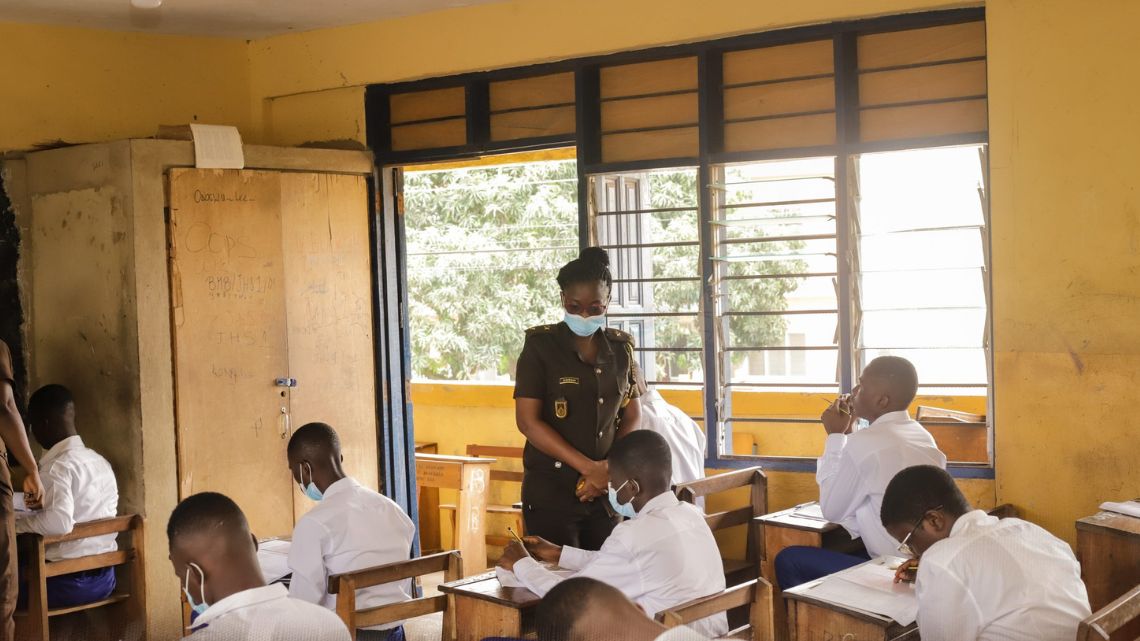
    Thirty-four prisoners are set to participate in this year’s Basic Education Certificate Examination (BECE) in Ghana, marking their transition from Junior High Schools to Senior High Schools and Technical Institutions.

    All candidates are male, comprising 27 juveniles from the Senior Correctional Centre (SCC), 5 from Nsawam Maximum Security Prison, and 2 from Sunyani Central Prison.

    According to the Greater Accra Regional Public Relations Officer, DSP Loretta Valentina Amoah, the inmates have received thorough preparation from qualified teachers of the Ghana Prisons Service and the Ghana Education Service.

    She expressed confidence in their abilities to excel in all subjects.

    However, she also noted challenges such as insufficient teaching and learning materials, hindering the inmates’ preparation.

    DSP Valentina Amoah called on the public to support the inmates, especially the juveniles, by donating textbooks and past exam papers to aid their studies.

    In interviews, inmate candidates expressed gratitude to their teachers for the rigorous preparation and pledged to perform well in the exams, aiming to make their educators proud.

    The Ghana Prisons Service introduced formal education on a pilot basis at the Senior Correctional Centre in 2007, extending it to other prisons later, to equip inmates with basic literacy skills and certificates for easier reintegration into society.

    Since the first batch of 21 juveniles and young offenders successfully sat for the BECE in 2009 with a 100% pass rate, subsequent cohorts have also achieved perfect pass rates, including last year’s 51 prisoners who sat for the exam.

  • Russia and Ukraine swap prisoners of war for the first time in three months

    Russia and Ukraine swap prisoners of war for the first time in three months

    Ukraine and Russia traded prisoners of war on Friday. Each country sent back 75 POWs. This is the first swap of its kind in the past three months, officials said.

    The Ukrainian prisoners, including four people who were not soldiers, were brought back to the northern Sumy region on buses. They shouted happily as they got off the boat and called their families to say they were back home. Some people knelt down and kissed the ground, while others covered themselves with yellow-blue flags.

    They hugged each other and started crying. Many looked very thin and wore clothes that were not good.

    The exchange was the fourth time this year that prisoners were swapped, and it was the 52nd time since Russia invaded Ukraine in February 2022. The Foreign Ministry in Kyiv said that the United Arab Emirates helped to arrange the release of 150 prisoners of war.

    Both sides are blaming each other for a decrease in the swaps.

    Ukraine has asked Russia before to exchange all prisoners and there are weekly protests in Ukraine asking for the release of prisoners of war. A Ukrainian official named Vitalii Matviienko said that Ukraine is always prepared to coordinate exchanges at the headquarters.

    Tatyana Moskalkova, who is responsible for protecting people’s rights in Russia, said that Kyiv is asking for new things without explaining what they are.

    On Friday, one of the people who came back to Ukraine was Roman Onyschuk. He works in IT and he joined the Ukrainian forces as a volunteer when the Russian invasion began. He was caught in March 2022 in the Kharkiv area.

    “I just want to listen to my wife and son talking. ” He said he missed his friend’s birthday three times. He was in captivity for over 800 days and did not talk to his family. He doesn’t know what city they are in now.

    “It’s a bit too much to handle,” Onyschuk said.

    Ukraine has received a total of 3,210 Ukrainian soldiers and civilians back since the war began, including those coming back on Friday.

    Ukraine and Russia do not say how many prisoners of war there are.

    Dmytro Kantypenko was taken as a prisoner on Snake Island in the Black Sea at the beginning of the war. He was one of the people who were released on Friday. He called his mother to tell her that he was back in Ukraine.

    “He said he will come home soon and wiped his tears. ” He found out that his wife had gone to Lithuania with their son. The Kantypenko family is from Izium in the Kharkiv region, which was taken over by Russia.

    Kantypenko said that the Russians unexpectedly woke him up in the middle of the night without saying why, and gave him only a little time to get dressed before leaving.

    The UN found out that most Ukrainian prisoners of war are not getting proper medical care, they are being mistreated and even tortured. The reports also discovered a few cases of Russian soldiers being mistreated, usually when they were captured or being taken to internment sites.

    The Coordination Headquarters for the Treatment of POWs says that at least one-third of Ukrainians who came back home had injuries, severe illnesses, or disabilities.

    On Friday, 19 Ukrainian fighters came back from Snake Island, 14 people were released from Chernobyl Nuclear Power Plant, and 10 fighters returned from Mariupol city which was taken by Russia.

    Five women were released from being prisoners in Ukraine. One of them was Nataliia Manuilova, who was a cook in the Azov regiment and was held captive for over two years. The Russians grabbed her from her home in Mariupol, put a bag over her head, and tied her hands, she said.

    I don’t like them. “They stole two years of my life,” she said, hugging her son on Friday. Nataliia Manuilova said, “I can’t believe how much he has grown up. ”

    The prisoners traveled through little towns. Then they went to Sumy where they would go to hospitals for two weeks to get better.

    Ukrainians with blue and yellow flags went out on the streets and cheered loudly for their military members returning home.

  • Over 100 prisoners escape from old Nigerian prison after heavy rain

    Over 100 prisoners escape from old Nigerian prison after heavy rain

    Over 100 prisoners got away from a run-down prison near Nigeria‘s capital after a heavy rain wrecked part of the prison. Security teams are looking for the escaped prisoners.

    The heavy rainstorm on Wednesday night broke the fence around the medium-security prison in Suleja. 119 prisoners escaped because of this. Suleja is about 30 miles northwest of Abuja. Adamu Duza, who works for the prison, said this.

    The prison and other organizations found 10 of the escaped prisoners and are looking for the others.

    The Suleja prison only had one floor and its walls were cracked and damaged. It was supposed to hold 250 inmates, but it had 499. This information was given by Nigeria’s Interior Minister Olubunmi Tunji-Ojo, who visited the prison after some inmates escaped.

    This means we have to move many of our jails to new places. The minister said they want to make improvements to the space, security, and infrastructure.

    “We will take new measures to make the prisons safe and prevent this from happening again in Nigeria,” he said.

    People were worried that the escaped criminals might hide in the big forests between Suleja and nearby states, where criminal gangs are known to hide.

    Most prisons in Nigeria are very full, with 70% of the prisoners still waiting for their trial. These prisons are also very old, built before Nigeria became independent from Britain in 1960.

    The buildings are not fixed up very often, so it’s easier for prisoners to escape when they break out of jail. Many prisoners have gotten away from jails in big breakouts. In Abuja, almost 900 prisoners got away in 2022.

  • Body-to-body: A cringing video of how Nsawam inmates sleep at night

    Body-to-body: A cringing video of how Nsawam inmates sleep at night

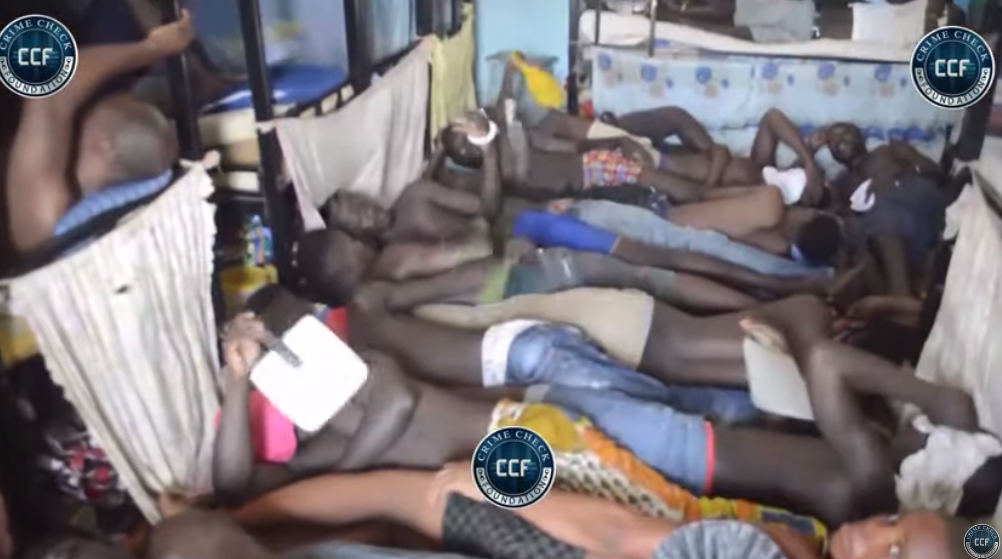
    In a disturbing video that has surfaced online, the cramped and uncomfortable conditions of Nsawam Medium Security Prison in Ghana have been brought to light.

    The footage reveals inmates packed closely together, with no significant space between them as they sleep side by side.

    Heads facing feet, the prisoners use their shirts to fan themselves in the absence of electric fans, highlighting the lack of basic amenities in the prison. The video serves as a stark reminder of the harsh realities faced by those behind bars, especially in overcrowded prisons like Nsawam.

    This video was shared alongside the story of Charles Twumasi, a former accounts clerk (bursar) of a school in Accra. Twumasi was sentenced to 15 years’ imprisonment for allegedly defiling a 12-year-old pupil and impregnating her.

    Despite being acquitted and discharged by the Court of Appeal after spending seven years in prison, Twumasi shared the harrowing experiences he faced during his time in Nsawam.

    Now, Mr Twumasi believes he was set up.

    “The police came to the school where I work. They ransacked my office. I don’t close my office. They came for me and said I needed to be interrogated. I went with them. I was just made to sit there and I never returned home. I was initially sentenced to 10 years.

    “I made an appeal, and 5 more years were added,” Twumasi recounted how his ordeal began.

    He is now in his 40s. He noted that during trials, he was optimistic about being released since he was never cuffed.

    While in prison, he noted that he almost gave up, but his 2-month-old child gave him hope. His wife abandoned him since she did not believe him. According to him, it was not an easy period in life as family almost abandoned him.

    Twumasi’s story sheds light on the challenges faced by innocent individuals caught up in the criminal justice system.

    Below is the video where Twumasi shares his experience in prison.

  • Nana Ama McBrown gives out GHS10K to Crime Check for release of prisoners

    Nana Ama McBrown gives out GHS10K to Crime Check for release of prisoners

    Ghanaian actress and host of Onua Showtime, Nana Ama McBrown, a celebrated figure with numerous awards to her name, generously donated GH¢10,000 to support the release of prisoners in Ghana.

    During the cooking show, McBrown’s Kitchen, the seasoned actress presented a cheque of GH¢10,000 to the Crime Check Foundation (CCF) to aid their petty offenders project.

    The cheque was handed over to the foundation’s Executive Director, Ibrahim Oppong Kwarteng, during the show’s broadcast.

    Mr. Oppong Kwarteng, accompanied by a female ex-convict, shared her poignant story on the show, which deeply moved Nana Ama.

    The presence of the ex-convict on the cooking show aimed to convey the message that individuals should not face stigma for their past mistakes leading to imprisonment.

    Instead, they should receive support to reintegrate into society successfully.

  • Europeans in custody in Iran freed after prisoner swap

    Europeans in custody in Iran freed after prisoner swap

    Austrian officials have expressed their relief following the release of two Austrian-Iranian dual nationals who had been imprisoned in Iran for several years.

    Kamran Ghaderi and Massud Mossaheb were freed as part of a prisoner swap arrangement that involved European nations and an Iranian diplomat.

    The detention of Ghaderi and Mossaheb had drawn international criticism. Additionally, Belgium confirmed the release of a Danish citizen as part of the swap.

    The trio is now flying into Belgium. Austrian Foreign Minister Alexander Schallenberg expressed his relief on Twitter, emphasizing the end of their arduous imprisonment, while Chancellor Karl Nehammer stated that their prolonged suffering has now come to an end.

    Kamran Ghaderi was arrested in Iran in 2016 on spying charges and was sentenced to ten years in prison, with his family asserting that his confession was coerced.

    Massud Mossaheb, believed to be in his 70s, was arrested in Tehran in 2019 and was sentenced for vague national security offenses, as noted by Amnesty International.

    Ghaderi spent 2,709 days in confinement, while Mossaheb spent 1,586 days.

    The Danish national released in the swap has not been identified.

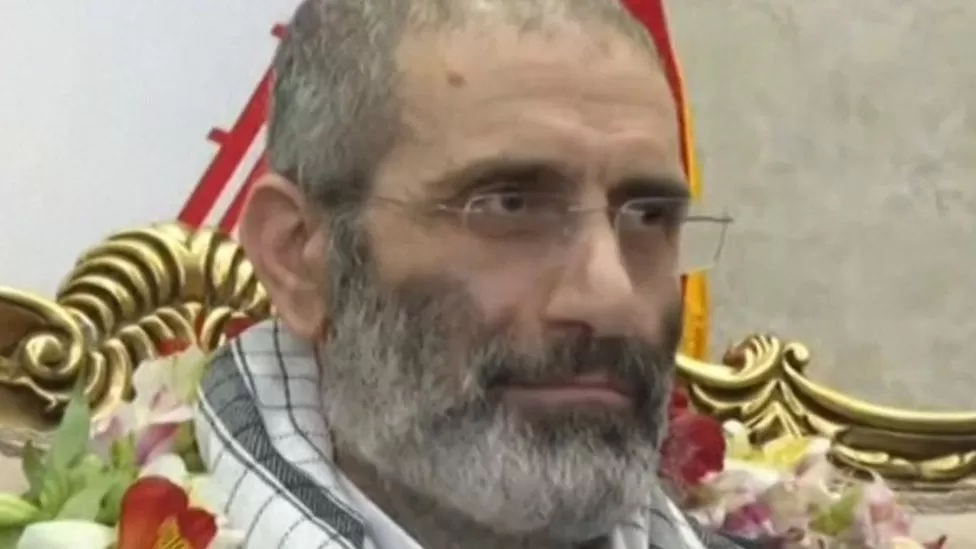
    The earlier prisoner exchange between Belgium and Iran involved the release of Belgian aid worker Olivier Vandecasteele and Iranian diplomat Assadollah Assadi.

    Vandecasteele had spent 455 days in prison after being convicted of espionage and other charges, which he denied. Assadi, on the other hand, was convicted in Belgium in 2021 on terrorism charges related to a failed bomb plot in France and had been sentenced to 20 years in prison.

    The release of the Austrian-Iranian citizens was announced on Friday following mediation talks facilitated by Oman, which had also brokered the previous prisoner exchange.

    Austrian Foreign Minister Schallenberg described the day as “very emotional” after years of discreet diplomatic efforts and expressed gratitude to the Austrian embassy in Tehran, as well as his Belgian and Omani counterparts.

  • Over 4,000 prisoners in Zimbabwe pardoned to decongest jails

    Over 4,000 prisoners in Zimbabwe pardoned to decongest jails

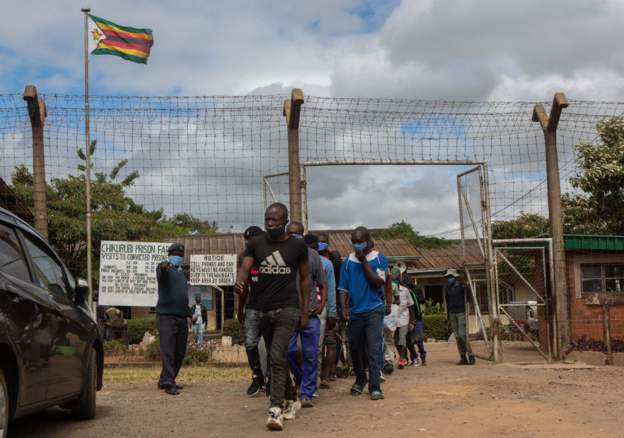
    In an effort to alleviate the issue of overcrowded prisons in Zimbabwe, the country has implemented a presidential amnesty order resulting in the release of approximately one-fifth of all prisoners.

    The Zimbabwe Prisons and Correctional Service (ZPCS) disclosed that over 4,000 inmates, predominantly men, were granted their freedom in what was described as a commendable gesture.

    However, it is important to note that the amnesty excluded individuals convicted of violent crimes, robbery, treason, and public order offenses.

    The prisons in Zimbabwe have been grappling with severe overcrowding, making this initiative a necessary step towards addressing the problem.

    This action has been taken in anticipation of general elections scheduled for August. President Emmerson Mnangagwa is currently facing numerous challenges including a high cost of living, inflation, and power cuts.

    The release of prisoners serves as part of the government’s broader efforts to tackle these issues and promote stability within the country.

  • Ukrainian prisoners ‘being forced to fight for Russia’

    Ukrainians held by Russian forces are being sent “en masse” to a network of prisons and filtration camps, according to Poland’s special service. 

    It claims that in these camps, people are “verified” and checked for whether they have combat experience, whether they are officials of the Ukrainian administration, and what their attitudes are towards Russia.

    Those who do not raise objections are deported to Russia – and some are then “forcibly conscripted” into the Russian army and sent to the front in Ukraine, the special service said.

    People who do not comply are “forced to testify or make statements against Ukraine, or they are brought to court as part of propaganda”, it added.

    The Polish special service also said it had geolocated some of the Russian prisons and filtration camps.

    Source:newsky.com

  • Inmates asked to take advantage of skills training in prisons

    Ibrahim Oppong Kwarteng, the Executive Director of Crime Check Foundation (CCF), has advised inmates of the Awutu Camp Prison to take their skills training seriously.

    He said such skills would facilitate their reintegration into society.

    Mr Kwarteng gave the advice when the Foundation with support from Rabotec Group organised a party for inmates of Camp Prison in Kasoa in the Awutu East Municipality in the Central Region.

    The all-male prisoners were treated to delicious Ghanaian foods and drinks.

    In addition to the food and drinks, the Camp was given 1,000 dollars.

    The CEO of Rabotec Group, Mr Ibrahim Ali, also donated GHc30,000 to the Foundation to support the petty offenders project.

    The Camp offers skills training in Bakery, Crop and Livestock farming, Tailoring and ICT.

    Mr Kwarteng, who is also the Ambassador Extraordinaire of Prisons, said the skills acquired would help in the rehabilitation and reformation of the inmates.

    He appealed to the leadership of Parliament to pass the non-custodial Sentencing bill into law, adding the bill had been in Parliament for a long term.

    Mr Kwarteng expressed the commitment of the Foundation to continue to support ex-convicts to reintegrate into society.

    Mr Ali said the Company decided to support the inmates as part of the Corporate Social Responsibility.

    He urged the inmates to refrain from the various crimes that had brought them into prison and to focus on the skills acquisition.

    Mr Ali said he was in talks with authorities of the Camp to see how best he could assist to address some of the challenges.

    “Hold on to God and believe that He will see you through,” he said.

    The Officer in Charge of the Camp, Mr William Thomas Anaman expressed gratitude to the donors.

    He said the Camp had maize, beans and vegetable farms, where the inmates were taught good farming practices.

    “The boys are trained in good farming practices, so that by the time they leave prisons, they will be well-equipped to support themselves through farming and be useful to themselves and society,” he added.

    He said the management of prison inmates must not be left in the hands of only Prison Officers, saying, “While we manage theme for the angle of the law, individuals, faith-based organisations and other companies can also support to take care of them,” he added.

    He appealed to the public to come to the aid of the Camp with infrastructural development.

    The in-charge said the Camp had 120 inmates but it could take up to 400 inmates when more infrastructure was provided.

    Source: GNA

  • Peru to release 3,000 prisoners under virus amnesty

    Peru will release under amnesty about 3,000 prisoners including those who are particularly at risk from the coronavirus pandemic, the justice minister has said.

    The disease has killed at least seven inmates, and infected more than 40 in Peru’s overcrowded prisons along with 26 wardens.

    “We are going to amnesty approximately 3,000 detainees who fall into the groups vulnerable to the coronavirus,” Minister Fernando Castaneda said Wednesday on the ATV channel.

    He said the government would issue a decree on Thursday formalizing the measure.

    Among the prisoners who will benefit from the decision are pregnant women, inmates with children under the age of three, those serving sentences of less than four years, and those over the age of 70 who have not committed serious crimes.

    The amnesty also includes those with just six months left to serve and those who have conditions that increase their risk from the coronavirus.

    Last Friday, two prisoners died in a riot at a jail in northern Peru triggered by fear of the virus after the death of another inmate due to the disease.

    As of Wednesday, Peru had 19,250 coronavirus infections and 530 deaths.

    Source: France24

  • Accept and assist pardoned prisoners reintegrate – Prisons

    The Ghana Prisons Service has appealed to Ghanaians to accept and assist the inmates granted amnesty by President Akufo-Addo.

    Public Relations Officer (PRO) of the Service, Courage Astem bemoaned the discrimination and exclusion of ex-convicts.

    Such acts he lamented deprive these persons the opportunity to reintegrate.

    Courage Astem in an interview on Nyankonton Mu Nsem on Rainbow Radio 87.5Fm said the pardoned prisoners need our support and assistance to reintegrate.

    He said the inmates released are qualified persons by the criteria used and do not pose a threat to society.

    A lot of diligence he explained went into the selection considering the fact that the president and the service were mindful of the threats.

    President Nana Addo Dankwa Akufo-Addo has granted amnesty to some 808 prisoners.

    They include 783 first-time offenders, who have served half of their sentences, 11 seriously ill and very old prisoners.

    Seven (7) prisoners who have been sentenced to death, had their sentence converted into a life sentence.

    The pardon was issued on the recommendation of the Prisons Service Council in consultation with the Council of State, a statement issued Thursday by the Director-General of Prisons, Patrick Darko Missah, has said.


    Source: rainbowradioonline.com

  • Government commended for passage of Narcotics Control Commission Law

    The Management of Crime Check Foundation (CCF), a Prisons NGO, has commended government for the passage of the Narcotics Control Commission Bill into Law.

    Mr Ibrahim Oppong Kwarteng, the Executive Director of CCF, in an interview with the Ghana News Agency, said the Foundation has been advocating for the passage of the Bill into law for many years.

    “I think it is unfortunate because this is purely a health and human rights issue,” he said.

    Mr Kwarteng, who is also the Ambassador Extraordinaire of Prisons, said smokers have their human rights and should not be bundled into prison-like criminals.

    He said, moreover, there were so many reasons, why some people smoke “we know that many people do not abuse the substance and many people use it for working purposes”.

    The Executive Director said: “That is why we have been knocking on the doors of government and Parliament for so many years. So at long last, we are happy that the bill has been passed into law”.

    He said many children have dropped out of school, because their fathers went to smoke wee and have been put behind bars.

    “We think that government or the law should be tackling on the barons, those who have been exporting the drugs for commercial purposes and making lot of money out of it,” Mr Kwarteng added.

    He expressed the hope that stakeholders in the justice delivery chain would adhere quickly to the provisions of the law and not take the law into their own hands and continue to imprison people who smoke wee.

    “The most important thing is that law is the law and it behoves on stakeholders in the justice delivery chain to religiously adhere to the tenets of the law,” he said.

    The law transforms the Narcotics Control Board (NACOB) into a Commission with enhanced powers.

    The Commission will have the mandate to control and eliminate trafficking of prohibited narcotic drugs to ensure public safety.

    It will also oversee the rehabilitation of people who become addicted to drugs. The bill also ensures that drug abuse will be treated as a public health issue and not only a law enforcement one.

    The law additionally, de-criminalises the use of some narcotic substances for health purposes.

    He said the Foundation and other civil society organizations through its documentaries has brought to light many people, who are serving outrageous jail terms for a joint of wee.

    Source: GNA

  • Pretty 20-year-old prisoner wins beauty pageant for prisoners

    A lady prisoner from Sierra Leone has won a beauty pageant that was held for prisoners all over the country.

    BBC reported on their Focus on Africa programme that the contestants all looked well-fed, happy and excited.

    Out of the 10 contestants that were selected from prisons across the country, eight were imprisoned for manslaughter. The reports explain that other inmates were brought out to witness the joyous moment.

    Read:Kanye West moves prisoners to tears with powerful worship

    The winner whose full name was withheld was a 20-year-old from the south of the country. She got crowned as Miss Correctional.

    In an interview with the BBC, the winner narrated how she was convicted, the crime she committed and her hopes and plans for the future, and how the crown made her feel. “I am very happy about winning.

    Now I know society considers us even though we are in jail. It gives me hope. The crown makes me feel like I am out of prison. We know that when we eventually get released, we will become better people.

    Read:Sudan to release all prisoners

    “I want to go and show off with the crowd but I am in prison. When I get out of prison, I want to return to school and also make peace with the family whose son I killed. It was a mistake but I know I have wronged them.”
    The beauty queen is serving a five-year jail term for killing her partner with whom she had a two-year-old child. She has 15 months of her jail term remaining.

    Meanwhile, in what appeared to be a very touching tribute, a lady by name Dzifa has stirred social media with her brave heart as she posed happily in her graduation picture with her father who lost his life just two weeks earlier.

    Source: Yen.com.gh